The Discipline of Not Dying — The One Rule That Kept Him Alive for 18 Years | Ed Viesturs, 66
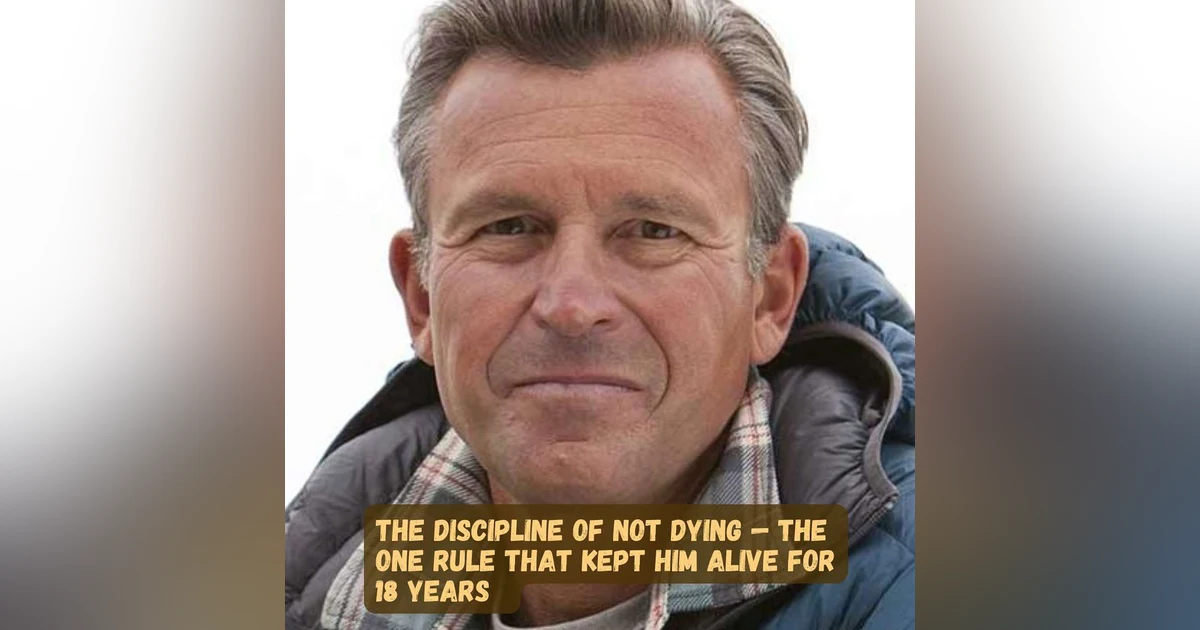


Ed Viesturs was a childhood hero of mine. When I was younger—dreaming about mountains—his story helped shape what I thought “greatness” actually was: more than bravado, but also patience, judgment, and the discipline to come home.
In this episode, Ed takes us inside an 18-year mission: climbing all 14 of the world’s 8,000-meter peaks without supplemental oxygen—with Annapurna as the final, most dangerous obstacle.
We talk about the real risk near the end of any long goal: when attention, pressure, and expectations tempt you to break the rules that kept you safe in the first place—and the one rule Ed used to survive.
What we cover
- The “long game” mindset that lasts decades
- Why Annapurna was “off the charts” dangerous
- How pressure (fame/sponsors/ego) makes people “step over the edge”
- Why the summit isn’t the finish—getting down is
References
- No Shortcuts to the Top: Climbing the World’s 14 Highest Peaks — Ed Viesturs (with David Roberts)
🎥 Longevity insights + behind-the-scenes.
Ageless Athlete on Substack - 1-2x / month. No spam.
🎥 Want the full experience?
YouTube — full-length video. free.
📍More clips + behind-the-scenes
Ageless Athlete on Instagram - follow along.
🚀 Love the show? Here’s how to support it
If something you’ve heard here has stayed with you, made you smile, or helped you keep going, I’d be honored if you’d consider supporting the show. 👉 https://buymeacoffee.com/agelessathlete
Topics: longevity, fitness over 40, endurance training, aging athletes, recovery, injury prevention
22:23 - [Ad] Resilience Podcast Series
22:47 - (Cont.) The Discipline of Not Dying — This Survival Code Kept Him Alive for 18 Years | Ed Viesturs, 66
Ageless Athlete - Ed Viesturs
===
Kush: [00:00:00] Ed, I always start with this question, which is, where are you right now and what did you have for breakfast this morning?
Ed: I am in, uh, Ketchum, Idaho, which is also known as, , sun Valley. I'm not a big breakfast eater, so I had a couple of cups of coffee, and then I go exercise, and then right after that I have, like a light lunch, a sandwich or something like that.
And we had some chicken leftover, so I had a chicken sandwich.
Kush: Okay. For some reason I thought that you might be in Seattle, and it was probably just my, my brain stuck in the two thousands when I, when your book that I just finished rereading
Ed: mm-hmm.
Kush: Was set in, so at some point.
Did you change residences or is this place just another lovely home for you?
Ed: I did live in Seattle for 30 years, which was, the bulk of my climbing career. I went to college there. and then once we started having kids and the kids got a little older, we discovered this place.
uh, [00:01:00] we moved here about 15 years ago. the beauty of where we live now is literally everything that you wanna do is out the door.
You, you walk out the door and you go hiking and skiing and biking and fly fishing. And it's the convenience and the lifestyle that we chose.
Kush: Amazing Ed. as a kid dreaming about the mountains, reading about your climb, they lit something up in knee. This is over about 20 years ago. And it really is a dream. Coming through to have you here, across from me. uh, such an honor to have you on the podcast.
For those of us who may not be as familiar with you, how do you describe yourself these days?
Ed: That's, people often ask me, you know, what do I do? And it's, kind of a hard answer for me because I do so many different things. I would say the bulk of my history is the fact that I chose to follow a path of climbing mountains.
Ed: and, after I learned how to climb and I started guiding, I decided I wanted to [00:02:00] go to the bigger, higher mountains, the 8,000 meter peaks, and then I spell, spent the bulk of my climbing career, climbing the 14, 8,000 meter peaks without oxygen. And that, that was a project that took almost 20 years. And so do I call myself a professional climber?
that's a hard answer because to be a professional climber, what you have to do is figure out how to pay for all these climbs and nobody's just gonna send you money to go climbing. So you have to work for the money that you earn to go climbing. And to do that, you, what I figured out to do was to work with companies that are creating the products that I use, outdoor companies, and in return for them, supporting you, you work for them, you design, you develop, you prototype.
So I be became a design consultant to fund my climbing. Then once that was all kind of wrapped up, then I was starting to being invited to speak to corporations, you know, to talk about [00:03:00] teamwork and risk management and leadership and motivation and inspiration. And so now primarily at what I would say is I'm a motivational speaker, which is kind of a odd term by default.
But, the most of my life was as a professional climber. And I still do both and I still guide and I do speaking. So I do a lot of different things.
Kush: the term professional climber has the word professional before climber. So
Ed: yeah,
Kush: you have been able to craft this beautiful life and turned climbing as your profession, and you were.
One of the first people in the US to do that. And I want to ask you more about that later.
Ed: Yeah.
Kush: But I thought a good starting point might be to just ask you about your crowning accomplishment, this incredible odyssey that you set out to achieve. Can you tell us more about that?
Ed: Yeah. That was, a project which I called [00:04:00] Endeavor 8,000.
You know, early in my career, I started as a guide. I started to get invited to go on bigger climbs as an assistant guide. And then some of my teachers and some of my mentors, the people that I was working for, Eric Simonson, Phil Eschler, George Dunn, they started to bring me along on bigger Himalayan expeditions.
And that's where I learned. From them how to do these large trips. And I got invited to go to Everest. I got invited to go to kga, which is the third highest. So I climbed Everest then and the third highest. And then I decided to try to climb K two, which is the second highest, which I managed to do. And having climbed then the three highest peaks, you know, I thought, I'm not done with this.
I wanna do more. And at the time, only two or three other people in the world had done all the 8,000 meter peaks without oxygen, which is something that I wanted to do. So there's a another level, above. And so I decided then and there, I'm gonna [00:05:00] go on this journey. This is my mission. I'm gonna spend as long as it takes to climb the 14, 8,000 meter peaks.
And I joke about, I said I had three done. I only had 11 left. And. I said to myself, I don't care how long it takes, will it take 10 more years, 15 more years? I don't care. I love what I do. And it's a journey and it's a process. And again, the hard part was figuring out how to pay for it all. But in the end, it all fell into place.
And after an 18 year journey, you might say, I did the 14th peak. And to me, that was literally a dream come true. You know, to do something, to have a vision, to do it, to stay with it, to figure out how to pay for it, to survive it, and more importantly, how to stay motivated to keep going back and forth, right?
Because you don't succeed on every climb. there's hits and misses. And I felt when I climbed to the summit of Anna Perna, my 14th peak in the end,[00:06:00] it was an amazing feeling of accomplishment. And I was very proud of what I did and how I did it. And frankly, I couldn't have cared less who was watching 'cause I did it for me.
Kush: And at an 18-year-old project that span close to two decades, uh, that's, that bogs the mind. You know, in a world that you know where, uh, people's attention spans get shorter and shorter, you set out to achieve this. So let's go to that moment. You are standing on top of Una. This is the last of the 14, 8,000 ERs.
And. You have achieved there with a bit of work. Can you take us to the top to that moment? What do you remember first? What do you see over there? How do you feel and what did you say to yourself?
Ed: Yeah, that was a big day. and in fact, I had attempted Anaperna [00:07:00] twice before in my career, and in, in the end it was kind of my stumbling block because of, out of all of the 8,000 meter peaks, it has a, a notoriety of being the most objectively dangerous, you know, out of only 180 people that had climbed it, there were 60 deaths.
So that's one out of three. And during my career, earlier I had attempted anaperna twice. I'd seen the risk, I'd seen the avalanches and for my level of what I call acceptable risk, I thought this mountain is off the charts. Even though I wanted to climb it, I thought, it might not be worth it. And so I keep going through my career and in the end, I had 13 done, and Anna Perna was still there on the list.
And I thought, oh, I've gotta go try again. But I'm, I'm gonna promise myself and my partner and my family, we're gonna go and we're gonna sit at the bottom of the mountain. We're not gonna go to go. We're gonna go and let it tell us what to do. And I've always learned how to [00:08:00] listen to the mountain, which is a term that I learned as a younger climber.
It's gonna tell us what to do. And somehow by miracle that season in 2005, the conditions were phenomenal. It was safe. And my partner and Ive auguston, we climbed to the summit of Anna Perna thinking we might never get there. And I thought I might never get there. And there we were sitting there and it was an amazing moment to say, wow, look how long it took.
Look how hard it was. And the perseverance and the patience and the fact that I just kept going. I felt amazing up there. But I reminded myself, and this is something I talk about as well on this summit, you can't celebrate. You have to get to the bottom. So the celebration was in internal and I said, oh, and there was still some anxiety, like we still have to get down to base camp.
That's gonna be two days from now. And when you're at the bottom, that's when the emotions come. That's when the, the celebration occurs. And, [00:09:00] and I remember walking into base camp thinking I'm the happiest man on earth. And it was snowing and my friends were there and, and it felt like Christmas and I just gotten the best Christmas present ever.
Kush: And it seems like such an ethereal moment. You are at the top of this mountain. You had tried this before. You are completing days and weeks and months of toil for that particular effort to get up there. And I'm just wondering okay, so what do you see over there? Describe most of us listening. We have not been to the top of any 8,000 meter peak, much less under.
Can you describe to us what's in front of you?
Ed: Yeah, it is. A literal summit, right? I'm, there's so many people that talk about summiting a virtual summit, right? Achieving a goal. I mean, it's the perfect term, of accomplishment. And we, when we are on one of those giant summits, 8,000 meter summit, you are looking down.
Not up at anything, you are looking [00:10:00] down on everything around you. And that is an amazing feeling because when you're journeying into that particular mountain, you're looking up at it and it is this giant thing in front of you and you're this tiny little back of protoplasm thinking, how am I gonna get my little thing of me to the top of that big thing there?
And again, it's weeks, it's months, and it's hundreds of steps and thousands of breaths. And when you finally take that last step and you get to that point, you know you're there ' cause there's no place higher. And you take a 360 view and you're looking down on everything. And it is so that that literal visual summit of accomplishment.
Kush: How long did you stay on the summit?
Ed: We didn't stay long. It was, we reached the summit at two o'clock in the afternoon, which is my turnaround point. And so we, we spent maybe 10 minutes, 15 minutes, not too long, because again, the focus is like, we've got to the summit, [00:11:00] we're gonna take a few pictures, but we're not gonna sit here and relax.
We've got a job to do. And that means we've gotta get back down to our high camp before it gets dark. So you don't linger too long. You wanna stay there forever, but you don't stay too long. and I'd say 10 or 15 minutes and that was it.
Kush: Was the descent back? Was it? Smooth sailing or it was not present. Some challenges,
Ed: we had some challenges on the way down, and I write about it in my book, no Shortcuts to the top, which you talk about. we had joined forces with some Italian climbers early on, four climbers.
They were wonderful people and they had fixed some ropes and some critical sections. And as we were climbing up on that summit day, I always mark the trail with markers. And these are three foot bamboo stakes with a little piece of red flag on top. And you know, if you're going up a mountain in nice weather, you can't guarantee you're gonna go down in nice weather.
Visibility is critical. And I remember at the top of this fixed [00:12:00] rope section, which was critical to get through a small ice cliff. I planted a couple of flags saying, this is the top of the fixed rope. We need to find this place. And as we were coming down that day, it had snowed and the weather wasn't perfect.
And we searched for that marker. And for some reason it was not there. The top of this critical section of the fixed rope, did it fall over? Did the wind blow it over? Did it melt and collapse and have the snow? We, I still don't know to this day. And we're like, we can't find the top of this critical piece of rope.
And I remember we wandered around and I scraped my crampons through the snow trying to think, I'm gonna snag the rope somehow some way. And eventually I did. I snagged the rope. We found the rope. And that was the critical section that that took us to camp. and we spent the night and then the next day we.
Went all the way to base camp and once again, the critical section to cross this Cava [00:13:00] glacier just to get to base camp. we'd put those wands in several days before, you know, the markers. And of course they had collapsed, fallen over and a fog bank rolled in and we're sitting there going, oh my God, Anna Perna is not letting us go.
She is saying, you have to earn this. That's what I was thinking, I'm not just gonna let you walk off. You're gonna have to use all your skills to get home. And in fact, we sat there a while waiting for the fog to, to dissipate, and finally the fog dissipated we could see of the path, and we got to base camp.
So it wasn't simple, easy sailing, you know, we weren't in severe danger, but. It took patience and dedication to get ourselves off the mountain. and the mountain tested us. That's what I always say. The mountain tested us.
Kush: What was that pointed when you felt that the mountain had stopped testing you and released you to safety?
Ed: When I got to base camp and my friends were there, we had a group of friends that were waiting for us. And you know when once you [00:14:00] walk off the glacier and you're on a trail and you're on solid ground and you're surrounded by your friends and they have Pringles and pizza and beer, waiting for you, that, that's when, that's when you're safe.
that's when you feel like the mountain has let you go. and something I always do when I walk away for the last time from any mountain, the last view I get of that mountain I turn around. And I say thank you. I thank the mountain because I don't think we anchor mountains. We are allowed to climb them, with humility and thoughtfulness and respect, and the mountains kind of let you go.
and, and I always thank them not only just for the, for what the event was, but for the experience.
Kush: Ed, you chronicle your entire project so beautifully in such cinematic detail.
Ed: Yeah.
Kush: In your book. No Shortcuts to the top, which I [00:15:00] went and reread and I felt I was transported into what you were going through, into that era, that time of, climbing those 8,000 meter peaks.
20, 30 odd years ago. One thing that I would love to ask you is what made this project so meaningful to you?
Ed: You know, I tend to grab onto things that I like to do, and I'm not happy until I'm done. Once I decide to do a project, whether it's a building project thing, I love building as well, whether it's a climbing event, it's my own personal desire to finish something that motivates me. I could give up, I could quit and say I don't want to anymore.
I just think it's my own personality that I like things that are long-term. I like the process of or getting myself ready for that event, the training, the logistics. Who am I gonna do [00:16:00] it with? getting the equipment organized and then just going and doing it. And if I don't finish that thing, it bugs me.
'cause I think about it, you know, it's like a thing undone. The last nail in the deck hasn't been put in. and it's in my head. And so I think once I decided to do this project, it became part of my life. It was my life, the fabric of my life, for almost 20 years.
Kush: Slightly contrarian question.
The examples you use, let's say a building, building a building, even one which could be really big and complicated, has a fair. Degree of chance of completion, but you started something which seemed so almost inconceivable for that time and even today. What made the Elevation 8,000 project, what made it so unfathomable to the [00:17:00] world of climbing?
Ed: there's multiple factors, right? The time that it takes, who's gonna dedicate that long, that much time to accomplishing a goal, right? You think you're gonna want to, you start to do it, life gets in the way. You lose motivation, you get distracted, right? So there's the focus. And saying, no, this is the path and I'm not gonna sway from the path.
So that's a big factor. risk management, something I talk about surviving it, not dying for the sake of success, right? Knowing when it's okay to turn around and when it's okay to keep going. and you know, I went on 30 Himalayan expeditions to climb to 21 summits, so I was two out of three. And I knew that was the rules of engagement.
Success was not guaranteed. And if I had to walk away based on risk, I would walk away and I'd just say, I'm coming back next year. Patience was a big factor. the other part [00:18:00] is financial, right? How are you gonna pay for this? How are you gonna live a life? Support yourself? I started to have a family. You got house payments, you got groceries, you got education to pay for, plus pay for expeditions.
Ed: who can have a normal job and ask their boss every, every several months, Hey, can I have three months off? So you have to figure out how to self-support yourself financially to do what you're doing. So all those things had to kind of fall in place to do this. And it wasn't easy, but it was interesting.
Kush: An insane number of things have to come together to even allow you to set out on this goal. Maybe putting up on this one for a second, you just said two out of three people were actually. Succeed and maybe one out of three may not survive this particular type of goal, which is climbing. Yeah, a big Himalayan peak.
So [00:19:00] what makes this kind of endeavor worthwhile when there is a one-third chance that you could pay with your life?
Ed: No. The one-third chance, maybe I misspoke, is, was on anaperna. the batting average when you climb these big mountains for me was two out of three. For every three expeditions I went on, I had two successes.
One was not a success based on conditions beyond my control. I would just walk away based on that. So again, that patience and perseverance was a key, knowing how to deal with the risk. But what I saw a lot, especially in my peer group, is, you know, when you're getting close to finishing a goal like this, something like climbing all 14, 8,000 meter peaks without oxygen, as time goes on, you become famous, right?
The media starts following you. You might have financial pressure from your [00:20:00] sponsors to succeed. And in those moments, as you're getting closer to being and your own personal ambition, you may tend to break the rules that you've been living by for the sake of success, or you become complacent. Like I've done this 50 times.
Never anything has happened. And then you are tempted to what I call, step over the edge and break those rules for the sake of success. And what I had to learn to do was to tell myself, I don't care what other people think, how I'm doing, what I do, why I do it, I'm doing it for myself and not to be pressured by others, to change how I've been doing what I'm doing.
And those were, I think, those essential things that helped me to survive this for as long as I did.
Kush: And Ed, you started climbing at a, at an earlier age before you started, uh, going to the Himalayas. Yeah. And I'm guessing that this particular vision didn't [00:21:00] manifest itself right away, so. Talk to us about that point of your life.
Where were you when this started crystallizing, when you thought that, hey, this absolutely insane goal is something that might be within my grasp if I decided to go pursue it?
Ed: Yeah, it was a long, slow process. You know, I grew up of all places in Illinois, the great mountaineering state of Illinois.
and I started reading, there are some
Kush: rocks in southern Illinois, some sandstone there
Ed: I know. But I started reading adventure books and reading mountaineering books. And the one book that really inspired me was Anna Perna. Written in 1950, you know, the first ascent of an 8,000 meter peak. And that book said, told me to go climbing it.
It just, this is something I wanted to do because of that book. And I said eventually after reading that I wanna actually, hopefully [00:22:00] try to climb Anaperna or K two or Everest, but I was, realistic saying that's not gonna happen right away. Give me 10 years of training, gaining experience, and maybe by then I could be in what I call the big leagues.
So I moved to Seattle, went to college there. Started climbing. I said, climbing's gonna be a hobby that will be my hobby. I'll have another profession, which was gonna be veterinary medicine. That was my dream, and I started climbing. I gained more experience. I found people that were willing to teach me.
Then I started guiding. I got a job as a guide. I worked as a guide for 10 years. So I was slowly climbing the ladder of experience, you know, being very methodical and thoughtful about working my way up to higher altitudes. And after 10 years I got invited by one of my mentors, Eric Simonson, to go to Mount Everest.
I mean, that was like, wow. I am finally at the level of being able to go to Everest. And it took 10 years and I didn't know [00:23:00] where it would go from there, Would I climb Everest and then walk away and then have a normal co career? that was a possibility, but for me it wasn't. 'cause once I climbed Everest and I climbed Kga and I climbed K two, I said, this is my path.
This is where I'm going. Again, it didn't happen overnight.
Kush: Ed. You know, just underscoring this point, the power of the written word to inspire people.
Ed: Yeah.
Kush: You read this book.
Ed: Yeah.
Kush: And it galvanized you to set out on this path and to change your life around it.
Ed: Mm-hmm.
Kush: And I'm just wondering if any other medium has that type of power. People watch movies, people listen to music.
Ed: I think all of those mediums do. you know, when I talk to young people, or other people, what inspires you Quite often it's, it's a parent, it's a teacher, it's a mentor. It's a book you read. It's a movie you saw. It's a song you [00:24:00] heard. people, and the hard part though is once you're, that switch gets flipped, follow it.
Right? A lot of people, I think are hesitant to say, wow, I kind of think I might wanna go do that, but it's not normal and it's gonna be hard. Nobody else that I know is doing that. People tend to follow the normal path of life 'cause it's safe and comfortable and everybody else is doing it. I think it's the people that step out of that norm and are willing to risk something, you know, knowing that you know it's gonna take a long time.
Right? There's really no overnight successes. People kind of all of a sudden show up as successful musicians or movie stars, but they've been in the trenches for a long, long time, right? And all of a sudden it's like, boom, there they are. that's kind of what it is. It's the dedication and the passion, right?
That I don't care how long this takes, I don't care how hard it is. This is something I'd love to do. Passion is the key, [00:25:00] and patience goes along with that.
Kush: And yes, this is such an. Interesting topic and it makes me think you know, we live in the society, in the western world, the most prosperous in many ways the world has ever been.
And like you said, one can follow this path and we, a quote unquote, comfortable, happy life.
Ed: Yeah.
Kush: So what is the point of chasing these big, uncertain, audacious goals?
Ed: It's living a life that is, I think, more fulfilling. again, it's accidental. Had I not read that book as a kid, I did go to school.
I did get a degree in veterinary medicine. I would be working as a veterinarian right now, completely happy, right? With the life that I chose. following a different path, I would guess is very accidental. Somebody, something directs you to go in a different direction and it's making the right [00:26:00] turn versus the left turn that you can't look back on that and say, well, what if I had gone the other way?
I don't know. And I'm really happy that I went the way that I went. I did have moments of doubt, right? I had a career as a veterinarian. I, I went to school, I paid for my education. And there came a point in my career where I had to choose a career as a veterinarian or as a career as a mountain climber.
'cause I couldn't do both. Well. There wasn't enough time in the day and I couldn't dedicate. And so I walked away from something that would be relatively comfortable, a career as a veterinarian. And I said, Nope, I'm gonna walk away from that and I'm gonna dirt bag it, scrape money together, live in a basement and go climb mountains.
Kush: inspiration sometimes surrounds us, and I'm sorry, but. Maybe I will disagree a little bit. It sounds like there was something about your personality that when you saw that it lit something in you [00:27:00] and you chose to follow that spark. So What is it about you? Because I, yes, who knows who, what you might be doing had you not read that book, but something makes me think that you would still have found a life that was a little bit different.
Ed: Yeah. I don't know. What that book showed me was it was this physical, mental challenge. It was the adventure, it was the camaraderie, doing something hard, doing something with a bit of mystery. Again, there's never, there was, I knew there would not be a guarantee of success. and maybe I needed something to push me that kind of a thing.
And maybe that's why I went down that path based on my personality, right? Other people have read that book and said, yeah, that's great, but I'm, I don't wanna do that. It's a great story. And I've talked to people that are armchair mountaineers, they love reading about it, but they're never gonna go do it.
but they love the stories and they love how it inspires them in their own [00:28:00] world.
Kush: Ed, you took us through this entire project in this lovely book of yours. I want you to take us into maybe one season of your life during those years when you had to maybe make some big decisions about, changing some things in your life.
Maybe you were midway and you were having to make sacrifices. You talked about at the early stages you gave up your a promising career as a wet.
Ed: Mm-hmm.
Kush: So maybe fast forwarding a few years. What might be one of those seasons where you were enmeshed in this project and you were doing everything possible to make it come to fruition?
Ed: Yeah, there is, there was a point, and this was, I remember it was in 1992, I, climbed, K two and I was thinking of what's gonna be my next project. or it was probably a little bit later [00:29:00] than that and it was almost as if I'd come home from an expedition. You know, it was a lot of hard work. I had raised the money to get to that one trip, but there was no consistency in the finances.
I'd have to start from zero, you know, I was working as a carpenter in those days and I was like, okay, I have a vision of another climb. How do I go, how do I start raising the money again? In, in those days, in the early mid nineties, there was no internet. You couldn't Google, you couldn't. How do I find the people that I need to talk to at a head of a company to say, hi, I am Ed Sters.
I wanna work with your brand. I use your product. how do I get to that person and convince them working with me, is gonna be beneficial to them, right? Otherwise they're not gonna give you any money. And I remember thinking, oh my God, what I'm, uh, I'm living in a basement, going, what have I done?
Right? Moments of doubt. And I think anybody, any entrepreneur, anybody that has a startup, and that, this is what I relate to people in business. [00:30:00] As a startup, you're doing the same thing, right? You walk away from a normal, comfortable. Job and you say, Nope, I'm gonna, I'm gonna quit. I'm gonna start my own business, but now I need to find investors.
And you're scraping along, right? It's bootstrapping. And I had a friend that, I had met as a guide on Mount Rainier. And unbeknownst to me during that period, he and his father, uh, his father was quite wealthy. They had, they were funding the startup business called Mountain Hardware. one of these coming outta nowhere, outdoor product category.
And, but they had a good group of people that were gonna work there. They had left other companies, so they were really solid. And he called me one day out of the blue. I hadn't talked to him for several years. Hi Ed John coming here. We're starting this company and we would like you to be our athlete. And that to me was this, he was my messiah because somebody, people out there were watching, they were [00:31:00] listening, they were saying, this guy is doing something that is worthy and, we want him to be part of us.
And that was, for me, it was a tipping point. It was a, a real tipping point for me saying, I feel like what I'm doing is worthy. And this first foot in the door with this brand called Mountain Hardware, I think I can keep moving down this path. and I think everybody has that tipping point. You know, that, that just, that break that you need, that pushes you over the edge that, that says, okay, keep going down that path.
Kush: I suppose that, uh, official endorsement. Backed by money. Very importantly.
Ed: Yeah.
Kush: Provided the right boost where financially and otherwise you felt like this was a project worth taking to the end and
Ed: right.
Kush: Slightly contrarian question again, so if you had not climbed Una, how disappointed would you have been?
Ed: Thankfully I [00:32:00] don't have to answer that question, you know? because I do think about that. I do think about had we gone on that third attempt and had the mountain been just as horrendously dangerous as it had been those first two attempts, and had I walked home saying. She didn't let me do it. She didn't let me do it.
I don't know. What would I have done? Would I have said, I'm good, I'm done. I'm great. And I convinced myself that, you know, by the way, who cares other than me? Nobody. You know, there's no gold medal, there's no trophy. Who else cares if I only did 13 out of 14? Really? it doesn't matter to anybody other than me.
And, could I have been content with that? I don't know. Would or would I have thought, eh, god, man, I gotta try the fourth time. I don't know. And I'm really glad I don't have to think about it.
Kush: Well, we are very glad that, you had the, uh, this heroes ending. the journey took you to the end of the goal.
Ed:
Kush: I loved [00:33:00] the part about your journey into becoming a professional climber. And you talked about Martin Hardware, and I'm guessing that was, that was not the end of the hustling, because you had to go and, uh, continue supporting yourself. What part of being. A paid professional climber is it that people don't understand?
Ed: Yeah, I think, it's different than an NFL player. you get paid to play football, you're a playing for a team, you get a amazingly gigantic salary, right?
Well earned, we don't get paid to climb mountains. Right. and the endorsement level, professional athletes, football, basketball, baseball, I mean, it is astronomical the amount of money that a professional athlete gets for endorsing a product. Right. In my world, it's minuscule compared to that.
And you know, even though I had that initial spark with Mountain Hardware, that was. A [00:34:00] 10th of what I needed to keep doing what I did, I needed to find other support. So what I started to do was to say, okay, this category is covered by Mountain Hardware, the clothing, the outerwear, the tents, and the sleeping bags.
Now I've gotta find a company that makes backpacks but I have to work for these companies. They're not just gonna send me checks. Within those endorsement contracts, there's a given amount of days per year that I have to go work for these various companies, right? The checks aren't just coming in the mail.
And with the work that I did for those companies on the road doing slideshows, trade shows, public events with the money then that I earned, I paid myself to go climbing. That's kind of how it works. It's completely different than any other professional sport.
Kush: It sounds like it. And it sounds like you have to earn your paycheck.
Ed: You do
Kush: every day or every time
Ed: you do. [00:35:00] Yeah.
Kush: And I am curious if there were any moments in that journey where even you were surprised at maybe some things you were being asked to do?
Ed: Oh, yeah.
Kush: As a paid professional,
Ed: you know, there was companies and I was very selective about the people and the companies that I wanted to be associated with.
in fact, you know, when I talked to Mountain Hardware, I said, listen, I can't guarantee a hundred percent success. I'm gonna go, I'm gonna do my best, and I'm, there's gonna be hits and there's gonna be misses. And they understood that this is a journey. This is a long-term project. And the beauty of that, I think, is the marketing, right?
The messaging is like, we're gonna develop with Ed, we're gonna grow with Ed, and we're gonna follow along on this multi-year story, right?
But again, I had to find other sources of income as well with other brands and other companies that made different products. Products that weren't conflicting. You know, a sunglass company, [00:36:00] a boot company, an ice ax company, you know, a back and then you have to decide are the, do these people in these other companies understand how I do what I do and the, the decisions that I make.
So, you don't wanna just take the money and, and, and say, and promise the world. Right. Because you, that's false. The beauty of the people that I did work with at Mountain Hardware and the, eventually the other brands I worked with, they understood how I did what I did, why I did it, and that it was gonna be a long-term event, not a one, and done that kind of a thing.
Kush: maybe, uh, just for, uh, contrast, maybe you can take us into a point of time, maybe, maybe one conversation with a potential partner. A sponsor who didn't quite understand.
Ed: Yeah.
Kush: What is it that you were selling?
Ed: I had been, I'm not gonna name names, but I had been with a, no
Kush: no, no names neither.
No names.
Ed: Yeah. I had been with a, uh, a tech company for several years. And, the people that were running it, the CEO and the [00:37:00] president, they were embracing what I was doing, how I was doing it, understanding the methods, you know, that, you know, success rate was two out of three. And then they brought in a new head of marketing, right?
And I, I was always working with the person in marketing, right? 'cause that's where the advertising and all that, you know, why are they working with aed? How are we gonna advertise and promote ad and benefit us as a company? And that's where the money comes from. Marketing. And this person, I remember going in, this person was brand new, didn't understand the history, and I had failed on my most recent Anaperna trip.
So I was a two time failure on Anaperna in their view. and this person said, I don't know. I don't know that we can work with you anymore because you failed. And I was like, you know, it's not my fault, but we'll call you, we'll give you a call. Meaning basically, we're done.
and so that was fine, you know, and I had [00:38:00] fortunately what I call a portfolio of sponsors, I had a grouping, I had 10 or 11 companies that I worked with, and nobody gives you a giant amount. So you have to have a small cluster of portfolio of income. But if you lose one or two, it kind of hurts, but it's not gonna sink the ship.
And then you can fill in the blanks as you need. And that's kind of how I looked at it.
Kush: I can almost see their point of view as well, because Yeah. If they are not mountaineers and they are pitting you against other athletes
Ed: Yes.
Kush: Who are going to certain sportive sporting events and coming back medals.
Ed: Yeah.
Kush: it's difficult to compare one type of discipline or the other. And what you were setting out to do was indeed, so different than mainstream athletic events.
but we are glad that, you know, you did have that roster because it did allow you to continue on your journey. And one more question about your journey Indeed, [00:39:00] uh, is that again, over 18 years of trying to literally climb uphill and managing all these facets, not just the climbing, but.
All the other things as well to allow you to climb. There must have been some dark moments where you thought perhaps the goal was slipping out of your grasp. Maybe it was just too hairy, maybe things were just not flowing the right way. Can you maybe take us into one of those moments?
Ed: You know, I never really had those dark moments as far as the climbing goes.
I mean, the harder part actually was the financial part. raising the money, keeping that ball rolling, always hustling. You know, the climbing for me was like, oh, I get to go climbing now. And I was, I understood, you know, the rules of engagement. You know, I'd go, I would try and if I didn't get to the summit, you know, I, I can honestly look back on all those.
Turnarounds and say, it wasn't for my lack of planning or preparation, that would've bothered [00:40:00] me. But if something beyond my control, which typically always was, turned me around the risk, a storm, avalanches, whatever, I was completely okay with that because I liked what I was doing. And if I came home and said, well, geez, I never said I have to go back, I always said, I get to go back.
'cause, uh, you know, Shishapangma took me a couple of tries. Nanga Parbat, broad Peak, Everest took me three tries. Anna Perna took me three tries. That was part of the game. And I, and again, when I talk about Anna Perna, that was the mystery. That one was the, the one that I thought, because of the risk, maybe I can't do it.
One thing which is so compelling about just being a mountaineer or being, let's say a mountaineer for life, is that for every successful, summit there are usually many. That are not so successful.
Yeah.
Kush: And the efforts and the sacrifices that go [00:41:00] into even attempting are so colossal.
Ed: Yeah.
Kush: You are living in the us you are making these trans Atlantic trips to Asia, to Nepal.
You are leaving your family behind. You are literally losing death. So what is it about this activity that is so compelling that keeps pulling you back, keeps wanting you to keep coming and trying it? And just like you said, it seems that most of the motivation is indeed intrinsic. Because you are not going getting Olympic medals.
You will likely have to come back and convince yet another potential sponsor of what your sport is.
Ed: Yeah.
Ed: we have a saying that it goes, if you have to ask, you'll never know. If you know, you know, if you don't. And try to explain it to somebody.
It's impossible. Why do certain people do certain things? It's, it's something that you've discovered, fulfills you [00:42:00] for whatever reason or for no reason. And what I did, like I said, it wasn't financial, it wasn't for fame, it wasn't for notoriety. I didn't care if I was the first or the fifth or the eighth or the 10th.
I was gonna be the first me. That was my thing. This is the me discovering what I could do. And, that's why I did it, and that's why I invested my life into doing it. and it was interesting. It was challenging, you know, it was the whole ball of wax. And a lot of people ask me, you know, after I climbed Anna Perna, God, how did you feel?
You know? And I said, I felt like amazing. But immediately after that I was like, Ooh, now what? Because that big thing that had been, I've been so invested in for 18 years, it was gone. It was a giant hole. now what do I do? This is what I lived for. This is what I talked about. This is what I did.
This is what I worked for, and [00:43:00] now it's gone. and the big question that I had when I came home was like, everybody's like, what next? Because I'd been living this life of elevating and elevating and elevating and, and you're supposed to keep elevating, right? That's business, that's life. But in my world, if you keep trying to do that too long for the wrong reasons, just to keep doing it, that's not a good thing to, that's not the right reason.
I had to just say, I'm good. I'm great. I did what I wanted. I lived a dream. I still want to go climbing and stuff, but it doesn't have to be at that level. So I had to learn how to redirect my energy.
Kush: There is a teachable moment here, ed, for us, where again, we live in a world that is so goal oriented.
Ed: Yeah.
Kush: Where if one doesn't accomplish the goal, one sometimes turns back and abandons it. And I'm just wondering if you, if you, if you have something to say about how does one find joy in that process where you come back because you like what you're doing?
Ed: [00:44:00] Yeah. Again, if you understand how things work, you know, especially in, well, other teams go through this as well. Football teams, basketball teams, hockey teams, they think they're ready. They go into a game, they're as prepared as possible, and they don't win because something happens that they either didn't expect.
Or they didn't plan on, or there's an injury or there's something that happened beyond their control. Do they give up? No. They go back. They live to fight another day. Right. that's what sport is all about. That's what human perseverance is all about. You try and try and as long as you are doing something that you are passionate about, you don't care how long you're gonna keep trying.
Because you know that's why you're doing it. It's the, that's what, where the cream rises to the top, all the other people that kind of go, eh, it's too hard. I'm too uncomfortable. It's taking too long. It's not any fun. They're not gonna do it for a long time. It's the people that choose that path.
They're [00:45:00] like, I don't care. This is hard, but. I want it to be hard And that's what I got out of what I do. Right. And there's so many people that do the same thing in different arenas, right? I'm no different from a lot of other people. I just do it in a different place.
Kush: And you gave up a perfectly good career in veterinary medicine.
You went all in on climbing the mountains. Was there any point at which you regretted giving up being wet?
Ed: No, no regrets. No regrets. I mean, I did have moments of doubt early on when I did make that decision. oh my God, what have I done? You know, this isn't working. I have no money. I'm trying to do something that people are like asking me, why are you doing this?
You have a perfectly good career. I did have moments of doubt, but once things started to slowly get better and better, I never looked back and said, I made the wrong choice. I, I have no regrets. Absolutely zero. I didn't know I would take this [00:46:00] path. I don't regret going to veterinary school and paying for all that.
I mean, I self paid. I had jobs, I had loans, I had work study. I didn't have anybody else that I was beholden to, you know, that paid for that. So I didn't know I would go down this path. So I can't regret doing that, you know? Moving in a different direction.
Kush: Yeah, I guess the power of conviction of going all in. One other thing that is well described in your book is over this long period being in the Himalayas, you saw a lot of tragedy around you.
Ed: Mm-hmm.
Kush: And I have a couple of, uh, questions on that theme. So I think the first thing I wanna ask you is, there were so many gifted athletes, climbers, smart people with all kinds of talent.
What is it that. They did not do correctly. And I [00:47:00] recognize that you at the mercy of the mountains
Ed: mm-hmm.
Kush: And there are all kinds of things that come into play here, but you think personally there were some things that allowed you to succeed in number one, just staying safe over the years that others just as competent.
Ed: Yeah. You know, I don't, I don't like to judge people for how they do what they do. I do say that something I talk about as well, we all have our own level of acceptable risk. To achieve a goal, I might, might not be willing to risk as much as you. Or even in the financial world, right? There's different levels of acceptable risk.
The more you risk, the more you gain, but also the more you can lose. my risk tolerance was always pretty low, and I always hoped to partner with people of that same risk level because if you climb or partner up with somebody that's willing to push it harder and risk a lot more, there's gonna be [00:48:00] conflict at the end of the day, right?
Are you gonna go that way or are they gonna have to go your way? They're, you know, and you're gonna end up doing something you don't wanna do because you want to please somebody. I'm fortunate and happy that on all of the trips that I've gone on, 30 plus Himalayan expeditions, mountaineering teams, whatever, I never lost a partner, never lost a teammate, never had an injury, never needed to rescue.
I'm so happy about that. I've seen other people on the same mountain with me that had that needed rescue that did die friends of mine, but on different teams and you can look back and an analyze, you know, why did that person make a mistake? Why did they die? Why did they do what they did? it's really hard to question that, and for me it's pretty personal.
I can analyze it and say, I wouldn't have done what they did. Right? So you can kind of assure yourself that they did make a mistake based on my view, but again, you weren't with them at that moment. you can't [00:49:00] second guess why a certain event happened. I have seen instances where I have looked and said, I think that person was doing it for the sake of satisfying the media.
Satisfying the public. Social media now is a huge driver, satisfying their sponsor, being very, very close to a goal and having that sunk cost and not wanting to turn away from that investment. But again, everybody has their own level of how hard they wanna push and you can't, I can't say I'm so perfect and right.
And you weren't. I don't like to do that. I think I did it the right way for me. It's not the right way for everybody. And does luck play a part of it? Sure. Being at the right place at the right time, having a little bit of luck works. Karma, right? Going to help people rescue people. You put money into the Karma National Bank, and then you take a withdrawal now and then, I can't say I was perfect and other people weren't, But for me, I tried to do it the way I felt was the way I wanted to do [00:50:00] it.
Kush: You make a, a very astute point that, you were not in their shoes at that moment, on that particular point of that particular mountain.
Ed: Yeah.
Kush: And there are , so many factors that play into that decision making.
Ed: Yeah.
Kush: That are not obvious.
it's not always right for people on the outside to be able to evaluate and assess on why certain decisions were made personally I have led a very charmed life.
I have not had to deal with too many deaths in my life and over your long career in that zone.
You were witness to a lot of tragedy Ed, and I'm just wondering like, what tools did you. Develop to be able to, deal with those things, process them, and come back the next year.
Ed: Yeah. You know, I had a lot of acquaintances, I made a lot of friends internationally.
I climbed with people from different nations. I became very close with [00:51:00] them. as I said, a lot of those people aren't around today. They did die in the mountains, and I did analyze and think, why, how did they die? And, the thing that I could say for me when that situation happened was I probably wouldn't have done what they did.
Again, this is all hindsight. and, and I think that way I can, I can, I could deal with it in a better way. and the sad reality of mountaineering is a dangerous sport, but I break it down into the risk. And I, and I talk about this as well there, I think there's two categories of risk in mountaineering.
There's the objective risk, which we accept, avalanches, storms, rockfall, things that are ever present that the mountain's gonna do, whether we're there or not. And you've gotta figure out how to deal with those risks. But sadly, the biggest risk is subjective. It's decision making by large. the choices that people make in the [00:52:00] mountains cause accidents and cause deaths.
It's, if you have to say it, it's self-inflicted. People have chosen to do something at a certain time for a certain reason, whether it's ambition, whether it's that, and investment of money and time, I can't turn around. I, I, I put so much time and energy and money into this. I have to keep going.
Ed: social media drives people. it's group think that drives people. 20 people are going for a summit push, and you're like, I'm gonna go because 20 other people are going. And I've looked back on those events and said to myself, I wasn't there again. I can't decide why they just, I can't understand it.
But I probably wouldn't have done what they did. And I don't know if that's good or bad or right or wrong or selfish, but that's kind of the way I've looked at a lot of those incidences.
Kush: for one thing. It certainly is or has been an important tool for you because if you were not able to process those things in a rational way, then [00:53:00] I am guessing that might have affected your decision making to even embark on future trips. because then you would not have known on what were the things that you were better at, at controlling versus the others.
And on that note, the kind of success you had over this period, over this long period, both in being able to get to the top, but also being able to come back safe down. Mm-hmm. It speaks to the kind of. Margin you must have also developed in being able to allow for things to happen and still allow you to get back safe.
So can you talk about some of that process, some of that training, some of those elements that allowed you to be so capable to achieve both objectives?
Ed: You know, and this is something I learned early in my career as a guide, I [00:54:00] was taught something that what we call listening to the mountain, We have goals, we have ambitions, we travel far distances, we spend a lot of money, time, energy.
That doesn't mean we get to a summit the mountain. Decides and what we mean by listening to the mountain is as you are climbing day by day, minute by minute, you are, we have been, especially as a guide, we learn how to evaluate all the stuff that's happening around us and take in that information, right?
It might be great, perfect weather now, but what that, what's that storm front in the distance? Is it coming towards us? Will we have time to get to the summit and get down? What are the snow conditions like? They're good here, but what are they above? What's the time day? how strong is my group? What's our pace?
Will we have time to get to the summit and get back? All that stuff means that you are, evaluating in the moment trying to prevent something from happening rather than [00:55:00] waiting for it to happen and then trying to figure out how to get out of it, right? Situational awareness. I think the biggest lesson that I learned as a young guide was how to listen to the mountain.
'cause it ultimately tells us do we keep going or do we turn around? Right. That's how you do it. Not me deciding, not the, not my ambition, not my investment. It's the mountain. And that's what I think how I thought about all of my climbs. You know, the mountain will let me go. It'll tell me or it'll shut me down.
And that's, that's the way it is.
Kush: What about some of the physical preparation, ed, on how you could be spending time in the US while not being in the mountains and be battle ready? When you hopped off the plane, got to the approach, got to the base camp, that allowed you to be supremely fit for the task.
Ed: Yeah, I mean you, when you hop off the plane and you start hiking into the mountain, that's it.
You have to [00:56:00] be ready, right? You're not gonna get fit or stronger from then on that base of strength and endurance, the money in the bank has to be there. And it was, it was me knowing, like, you know, when I planned on a, on a, on an expedition, I said, you know, I'd come home from one, and I go, nine months from now, eight months from now, I'm going back, I'm going back to Everest, I'm going to K two, I have eight, nine months to get ready.
And it was always my fear of failure on that particular event. That actually was my motivator. Right. I'm gonna start training tomorrow for nine months from now, because if I don't, and if something happens, and if I don't succeed nine months from now, who's at? Who's at fault? Me. That's fine. I only have myself to blame, but my personal motivator was the fear of failure.
So I would spend the time, day in, day out, month after month after month, building strength, building endurance, mentally preparing myself for something. That's gonna be really hard, [00:57:00] knowing that once I get there, it's go time. Right? So I do my homework and then I'm ready to take the test.-
Kush: Can you maybe take us into one of those days of training when you were back home, but you had this call ahead of you?
Ed: It was very consistent. It was very methodical. I would typically, I would, you know, I was living in Seattle, I don't think you need to live at altitude to train for altitude because you're building strength and endurance. And that's what I did. I would go running every day. I would run seven, eight miles a day.
five, six days a week. You know, you can't run every day. You can't work out every day. Life gets in the way. But I was trying to do it five, six days a week. I would go to the gym three days a week. Upper body strength, and again, it was more just getting a base of strength and a base of endurance, teaching my body to do something hard every day.
Because when you're in the mountains, you are doing something hard every day. And the whole idea is to hopefully maybe over. Train [00:58:00] yourself and overthink yourself that it's gonna be so hard and it's gonna be so difficult that you're ready for that. And then if it's not as hard or as difficult, you're okay.
Ed: Instead of under preparing, you try to over prepare a little bit mentally and physically.
Ed: And I feel good about that. And I think that set me up and the lifestyle that created of me living and doing something every day, physical, to train for a climb became my lifestyle. And it's still my lifestyle. I still exercise every day. I go hiking, I go biking, I go climbing.
It's more normal for me to do that. Rather than it, I feel like if I don't go, I'm like, whoa, wait, I didn't go do something today. And I think that is the beauty of what I did. It created for me this lifestyle. And I'm 66 now, and I'm still doing it, and I'm still climbing and I'm still guiding, and you know, I've got people to take care of.
I've got mountains to climb. And those are now my motivators, right? [00:59:00] Because I have to be stronger than my clients and I've gotta be ready to climb these mountains. So I still have these goals and these objectives, right? And as strong as I'm still as strong as they are, if not stronger, and I still like what I'm doing, I'm gonna keep doing it, right?
It's that day when I'm the last guy into camp, when people are like waiting for Ed, Then I'm gonna quit. 'cause then something happened, right? I still need to be the first guy into camp.
Kush: yeah, that's remarkable. the investment pays off now decades later. Not just in, the adaptations, in your, in your, uh, physiology, but also just these habits that you have develop where moving every day is just so important for you.
Can you tell us a little bit about what type of training are you doing today? You talked about going hiking, but I'm just curious if you are doing anything specific when it comes to working with weights, working with, cardio that you protect, that you [01:00:00] find has become more important as you have gotten older.
Ed: for me, it's more just consistency. I've figured out what I need to do, what I do every day, keeps me fit, allows me to still go to a level that I need to go to, especially when I'm guiding. climbing big mountains is kind of slow and methodical, and if anything, it's endurance and patience, right?
So I don't need speed skills. I need endurance skills. And as long as I'm going out every day and moving my body and, and climbing and carrying a pack or snowshoeing for two hours a day at a consistent pace where I'm, you know, I live at 6,000 feet and I might climb up to 8,000 feet. and as long as I'm breathing hard and my heart rate gets pushed up, That seems to work for me and I think as well as you gain experience as a climber, and learn how to be efficient, right? I know how to get from point A to point B during a day, probably more efficiently than my clients just because of my [01:01:00] training, right? So I'm gonna spend less energy doing that.
I know my equipment, so I'm not stressing using stress, energy. So all of those are energy savers, right? And through the years, I've learned how to train myself to be ready for a particular event. If somebody said, ed, we're gonna go to Everest in four months, I would ramp it up, right? I would definitely start ramping it up.
To a higher level, higher. But for, for what I'm doing today and the, the mountains I'm guiding today, I know what level, to push myself to, again, consistently that base. and that allows me to do what I do.
Kush: Are there any things that have gotten harder with age?
Ed: Running is harder. You know, I'm not as fluid. I used to run all the time. I do more hiking now, biking, you know, lower impact. I do gravel riding, road biking, you know, as you age. the fluidity of running isn't quite what it used to be. Strength. I think [01:02:00] I'm as strong as I used to be. I think I still have the same endurance that I used to have. I can still carry a 60 pound pack all day long. again, it's the slow methodicalness of what I do and what we do in the mountains that I'm able to maintain that pace and that rhythm. yeah, you get sore easier.
You're a little stiffer more often than not. the funny thing my wife and I talk about is I'll wake up and I go, God, I injured myself sleeping. You know, I'm, how did I hurt myself last night? and I try to joke about it, but it is just part of the aging process. But mentally. I still think I'm 35.
Honestly, I, I don't think of myself as my age, and maybe that's, uh, delusional. but I think it's the mindset that like, I still wanna keep doing what I'm doing at the level that I'm doing, and I'm completely happy with that.
Kush: Why is that mindset important?
Ed: I have friends that go, well, I'm 65.
I can't do that anymore. I'm too old. I mean, I think that's a, it's like a, an [01:03:00] excuse, right? the mindset of thinking, well, you, if you don't act your age, you're not gonna be your age. Act and be an age that you wanna try to, I mean, time does things that, I mean, you can't stop time and you can't pretend that you're not 66, which is what I am.
I'm not what I was when I was, but the mindset helps you, I think, to keep doing things instead of going, I can't do it anymore. Yeah, you can, but you can't get up off the couch after 20 years and start doing it. But if it's, again, it's that consistency. And I think a lot of athletes try to maintain some level of athleticism, but knowing they're not their 30 5-year-old self Right.
But still doing something reasonable at your age
Kush: everybody's reasonable can be different.
Ed: Absolutely. Absolutely. Yeah.
Kush: What has actually become easier with age?
Ed: What has become, you know, the biggest thing [01:04:00] I've learned from what I did was patience. just being patient to let things happen and taking my time and not rushing to accomplish something.
I think that those are the things I've learned and knowing that if you wanna do something and you enjoy doing it, take your time and do it well. No shortcuts. and it'll, it'll, more than likely it'll work out. and also being realistic, like, There's certain things I can do still and there certain things that I probably can't do or can't do as well as I used to.
Right. That's the reality. we're not gonna be perfectly the way we were.
Kush: Ed, moving on to the last part of our chat. Thank you so much for, staying with us. Yeah. This far, this is what I call the ageless section. What is one habit or routine that you have developed in the last few years that grounds you every [01:05:00] day
Ed: it is going out and exercising for me, I mean, I wake up and I have my coffee and, and I give my wife a look and she's, she's like, she knows like. It's go time, right? My, my day isn't complete until I get out the door and go do something, and then the rest of the day is, is like whatever happens, happens, right?
But if I don't do it early in the day, I think about it. I think about it. I think about it, and it's like by the end of the day I was like, we haven't gone. I haven't gone to do what I'm supposed to do. Right? It's like, that is my thing. That is the thing that I need to do just to kind of go, okay, now I can move forward.
Kush: Are you an early morning person?
Ed: I am. Yeah, I am. We get up early, I like to get it done, get out, do it, because it's, you're fresh and then again, you don't want it kind of hanging over. I don't like it just out there hanging and waiting. I, I want to kind of get it done and then that it kind of refreshes me and it, it kind of gives me, it kind of [01:06:00] grounds me, like you said, and it, it gets me mentally ready for the rest of the day.
Kush: And are your workouts most days outside doing some kind of running or biking activity? Or are you mixing in sometime in the weight room?
Ed: Well, I have a little weight room in the, in the garage. I don't go to a gym. I even, you know, we live in a wintry place and I go outside every day. I have the gear, I have the equipment, I've got the clothing, I've got snowshoes.
I don't care. I'd rather go outside and battle the elements rather than going to a gym and riding a stationary bike. I don't do that anymore. I'd rather do it outside. I, I get, I get bored inside, working out and, and I've got such a great environment, thankfully, that I, I can do it right out the door.
and that was, that's the beauty of, and the convenience as well. You know, I think there's a lot of people that live in my community, they live here for the convenience of being able to do that, right? A [01:07:00] lot of people don't have that. You gotta get in the car, you gotta drive to the gym, you gotta drive to the trailhead.
And that creates one extra added step where you're like, I don't wanna do it today. Whereas if you can step out the door, there it is. There's no excuse for saying you can't do it. You're like, open the door and, and there you go.
Kush: I'm sure it isn't just luck. You have designed this environment that allows you to reduce friction.
Yeah. And go play and exercise the way you play. What about diet ed? How are the things that you have held onto things that you've stopped doing when it comes to nutrition?
Ed: You know, I think through the years, and I think as you get older you discover what works and what doesn't work, I'm not a foodie.
I, I look at food as. Keeps you alive, gives you energy. But do I have to have a certain kind of food? I don't, and I've always, and [01:08:00] I, I think the thing I've learned the most is everything in moderation, right? Have a little bit of that, have a little bit of this, but not a lot of that or whatever.
And my wife tends to be more vegetarian, and so we tend to eat more basic vegetarian meals with, I like some protein, fish, chicken, beef, not too much, but occasionally, again, everything in moderation. And if you moderate your diet and you are consistent with your exercise. I think that's the perfect combination, right?
You don't do anything in extreme, extreme diet, extreme this, it's just all in moderation, but it's the consistency of, eat just enough what you need and go exercise and it all kind of, I think in the end you learn how that balances out.
Kush: that, uh, philosophy does not need to be simply tied to, let's say one, one season in life, right?
I think it can be applied across, uh, an entire lifetime. What are you trying to get [01:09:00] better at, at this stage of your life?
Ed: Wow. what am I trying to get better at?
Kush: And it doesn't have to be just bored.
Ed: Yeah, no. Um, I think. What I'm trying to do now is, is stay in, in touch with my friends. you get to an age and things start to happen.
Age starts to happen, disease starts to happen, and you kind of, you lose a friend or something, you know, at this age, and you go, God, I wish I would've called that person. I was thinking about saying hello and connecting and calling and reaching out, and I didn't. And and I've just this weekend gathered with friends that are my age and we've known each other since our twenties.
And we'd laugh and we talk about our age. Yeah. I went to the doctor the other day and he had this and this, I mean, we're laughing about, but we're being honest about it. it is, and we used to. In our twenties, we'd look at people at that were 50 and we'd say, oh my God, that's, that guy is old.[01:10:00]
And you know, now we're in our sixties and we're laughing about our age. And I think that's fun. But again, it's staying connected with those people and realizing that, the clock is ticking, time is getting shorter. and you don't wanna miss out on those moments and just to call and say hello, how you doing?
and maybe seeing more of those people making an effort to do that.
Kush: the fact that you are managing to hang out in person with friends you've had since the twenties.
Ed: Yeah.
Kush: it does speak to your consistency in that spectrum as well. Because, because Yes. One will not find those friends again.
Ed: Yeah.
Kush: And. What feels different about fulfillment today compared to when you were this, uh, you know, swb, buckling, uh, Emily and Charger,
Ed: you're easily more easily fulfilled. You know, simple things, smaller goals, accomplishments, you know, watching your kids [01:11:00] accomplish things, you know, those moments are fulfilling.
the goals are still there, but they're not as big. I think those, you know, that, but I still like projects. I still like goals, you know, things that I look forward to. Mountains. I'm still gonna climb people, I'm still gonna guide adventures.
I'm still gonna go on with my wife or my family. those little things that you get to plan on and look forward to, and then accomplish, you still, I still need those. Yeah. But they're smaller.
Kush: Sure. What might have been, okay, this is a fun question. What might have been the best use of a hundred dollars or a similar amount in recent memory?
Ed: what was the best use of a hundred dollars recently? Um, yeah. well. Part of it is, you know, we just went to a fundraiser at our kids' school and, we give more than a hundred dollars. and what it is, we brought our kids here because of the school and it, and the outdoor programming that it provides, and the outdoor [01:12:00] programming is part of the school. It's part of the curriculum.
And I've seen what it's done for my kids. I mean, I could show my kids, I could teach my kids, but when they go with their classmates on adventures and with their teachers on adventures and they get a packing list, you know, my 15-year-old goes into the garage with a packing list and she loads up her pack by herself and she walks out the door with 45 pounds and, and, and doesn't blink an eye part of that.
Yes. What I emulated to her or taught her. But a big part of it is from the school that they go to. You wanna maintain that and give back to others and help others experience that as well. And I think it's when you start to be able to donate to things like that, to youth and to, to, to the perpetuation of, the outdoors and to adventure and to healthy lifestyle.
I mean, I think that is, important. so that's probably where that little bit more than a hundred dollars went.
Kush: Sure. Good, good investment.
Ed: Yeah.
Kush: And last couple of questions. [01:13:00] What does being ageless mean to you, ed?
Ed: I think a, again, it's the mindset. If your mindset is ageless, I think, you'll be ageless.
we're not gonna live forever. I understand that. but I wanna be the best that I can be at the age that I'm at, and not look for, a reason not to do something and try to maintain a lifestyle that, that I'm so happy that I had, knowing that it's not gonna be at the same level, but it's a lifestyle that kept me happy.
It, it kept, it kept me healthy, it kept me mentally and soulfully fulfilled. I think that's what Agelessness is, is just keep going and keeping, having, goals and, and reasons to get up every day and things to look forward to.
Kush: I love it. Ed, you are a speaker and you get, you've given so many talks and interviews over the years.
Is there a question that you wish you would get asked more [01:14:00] often?
Ed: Wow. I've gotten asked almost every question you can imagine. the biggest thing I get out of, at the end of my talk is when people come up and say that I've inspired them. and that is a gift for me. You know, having gone out and climbed all these mountains, something that I wanted to do for me and then.
Talk about it or write about it, and in the end, get people writing letters and sending me emails or coming up to me saying how what I did and what I talked about changed their life. That is amazing, right? Because somehow I affected people and I never, ever thought that because of what I did, it would affect people in such a positive way.
that to me is, is more than anything, The funniest questions I get after talks is like, how do you go to the bathroom? things like that. And the hardest one to answer is, what's my favorite mountain? I don't have a favorite mountain. and then the [01:15:00] more complicated is always what next.
Right? What's next? Again, that's a hard one as well. You know, you live a certain le level of life and then they go, well, you gotta do something bigger and harder and longer and you can't always do that. You gotta pull your expectations down a little bit.
Kush: Certainly, ed, you have written these lovely books and you are still guiding and you are possibly still available for speaking.
Ed: Yeah.
Kush: If people wanted to know where to. Start from, where should we send them?
Ed: You go to my website, vester.com. It's got my phone number, it's got my email. People write me, people call me. You know, I don't have an agent. just me sitting at home, call me or send me an email or send me a text. you know, most of the business that I get as a speaker or groups that I go climbing with, they come to me.
It's [01:16:00] word of mouth. It's very organic. I get a lot of referrals. I get a lot of repeats. you know, I do a lot of business talks what my goal, you know, I'm not a trained business speaker. I talk about what I've learned, right? And I say that at the beginning. These are. Bonus things that I learned as a climber, and these are these things that I want to talk to you about today, about how to manage risk and how to have a goal and plan and prepared and be passionate.
Those are my messages, right? And I think all of those topics, work in any arena in the business world, in the financial world, in the sporting world, right? It's all relatable. But my objective is to get people out of the room and take 'em on a journey and get 'em out of that business meeting and take 'em, someplace they've never gone before.


