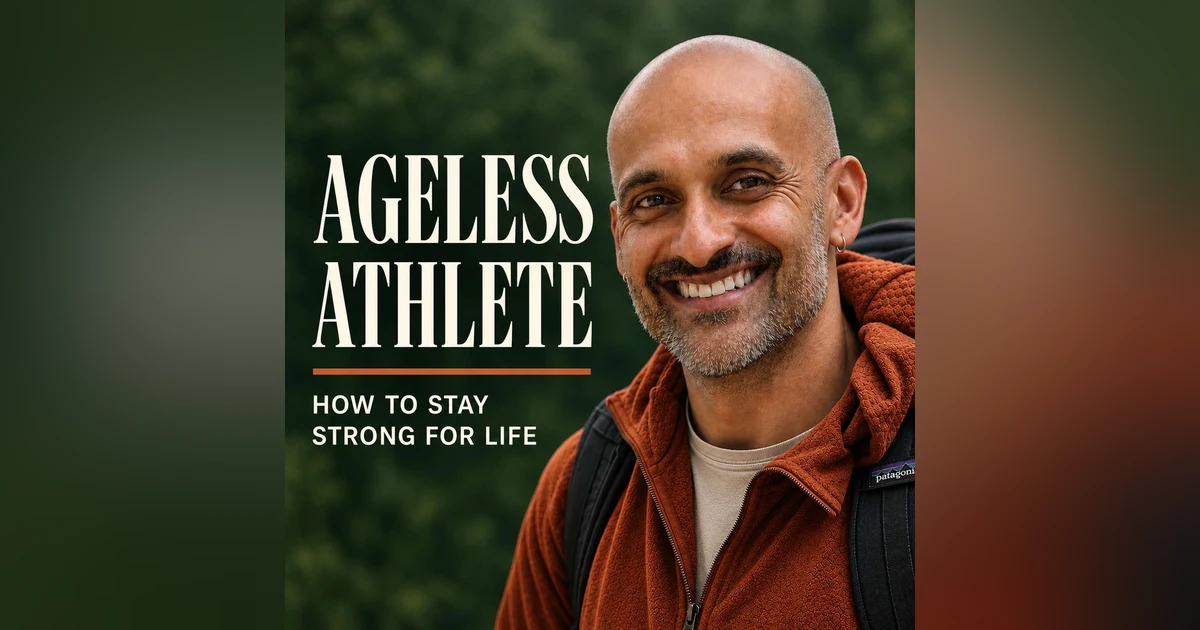
Stop Playing It Safe — Here’s What It Costs | Cedar Wright, 51


What happens when the moment that changes your life doesn’t come from the “dangerous” thing… but from an ordinary day at home?
Cedar Wright has spent decades in the vertical world—professional climber, storyteller, and filmmaker whose adventures helped bring climbing culture to a wider audience. But in this conversation, the sharpest lesson isn’t about climbing at all. It’s about how quickly capability can disappear—and how “next year” is never guaranteed.
In this episode
- The freak accident that broke Cedar’s neck—and the clarity it forced
- Why “playing it safe” can still cost you the life you want
- The difference between reckless risk and chosen risk (and how to live with consequence)
- Watching a friend lose the ability to climb—and what it taught Cedar about urgency
- Staying hungry at 51: identity, edge, and how to keep moving forward without pretending you’re invincible
- Cedar’s “fetal attempt at immortality”: leaving something behind that outlasts him
Cedar’s films + storytelling
Cedar talks about using small cameras, self-shooting, and editing to tell stories that go beyond climbing—and how the “Sufferfest” films resonated with people because they were about having a big-hearted adventure close to home.
Follow Cedar on Instagram
Support Cedar’s Dirtbag Fund!
Cedar founded The Dirtbag Fund to give small grants to young climbers who are scrapping by, contributing to adventure culture, and pushing their craft forward. Cedar describes it as a big part of the legacy he wants to leave behind—and a way to keep the door open for the next generation.
How to give back: (and yes—Cedar notes it’s tax deductible, and even $1 helps). Go to https://www.thedirtbagfund.com/
📰 Subscribe to the Ageless Athlete newsletter !
1-2x a month, no spam. We share behind-the-scenes reflections, longevity tips, and athlete wisdom you won’t find anywhere else. You can sign up at https://www.agelessathlete.co/newsletter/ 📩
🚀 Love the show? Here’s how to support it
If something you’ve heard here has stayed with you, made you smile, or helped you keep going, I’d be honored if you’d consider supporting the show. 👉 https://buymeacoffee.com/agelessathlete
20:06 - [Ad] Resilience Podcast Series
20:30 - (Cont.) Stop Waiting for the "Perfect" Season—You Pay This Price | Cedar Wright, 51
Ageless Athlete recording with Cedar Wright
===
Kush: [00:00:00] Cedar, I always start with this question, which is, where are you right now and what did you have for breakfast this morning?
Cedar: Ah, I am in Boulder, Colorado, and I had coffee for breakfast and a scone.
. I'm not a big breakfast guy.
Cedar: I never have been.
Kush: that is a tasty breakfast.
Cedar: Works for me.
Kush: I know that, you've been traveling a lot and, uh, I wanna ask you a little bit more about, uh, where you've been and, uh, I believe Boulder is home for you.
Cedar: Yes. Yeah. Boulder, Colorado. Yeah. For the last 15 years I've been in Boulder, but I, I'm from California originally.
Kush: Oh, somehow I did not, know that from what part of California?
Cedar: So I'm from Central California. My parents were crazy hippies, and they bought some land in the Central Valley and they bought a school bus and they moved the school bus onto the land, and they plan was to live off the land, which they did for several years.
I was conceived in a school bus [00:01:00] in Central California, and uh, they named me Cedar. My sister's name is Willow, so, hippie roots, hippie California roots.
Kush: Wow. I didn't quite know that story. not such a rebel after all. Zero, because it sounds like you've only taken the, uh, the journey and the aspirations further.
Cedar: my, my parents were, Pretty alternative minded. , They had me reading, , Siddhartha and Ram Doss and Alan Watts, as a kid. And,, they were just very alternative minded people. And so they definitely, set me on a path, that was not conventional,
Kush: that sounds different, but also beautiful that they exposed you to these writings and these thinkers.
More removed and more interesting in many ways than a typical North American reading repertoire.
Cedar: Yeah.
Kush: before we get too far ahead, Cedar.
Cedar: Yeah. For
Kush: those of us who may not know you, [00:02:00] how do you. Describe yourself these days.
Cedar: Oh, these days. uh, professional climber, filmmaker, adventurer, paragliding, pilot, musician, human being artist,influencer, madman, yeah, soloist.
yeah, lots of labels. But, uh, yeah, I, , at my, , at my heart, I'm an adventurer, I love adventure.
Kush: Yes, I was gonna say that, uh, you have more things there than would fit in a normal old fashioned resume or, or maybe a, a LinkedIn profile these days. And, uh, yeah,
Cedar: fuck LinkedIn.
Kush: I agree.
Yeah. Quote me
Cedar: on
Kush: that a side note, like, yeah, side note. Like, I used to work in corporate America and that was, that's kind of bread and butter, right? Like, you go there and you talk about humble brag about all the things that you've been doing. One of the best parts about stepping Away is, uh, deleting my LinkedIn app
Cedar: [00:03:00] Yeah. Well, I mean, if you're lucky enough to be able to not have to live on LinkedIn, obviously some people they gotta do that. I, I probably have a LinkedIn profile still up there somewhere, , that hasn't been logged into in like 10 years.
But luckily, , , I've been able to live this alternative lifestyle, and,thanks to some amazing support, from the North Face. , I've done the climbing team with them for the last like. 22 years or something. I've been able to like live this alternative lifestyle.
So very lucky, that I pulled that off. Very grateful to, uh, be supported in that way where, yeah, I don't have to have a real job.
Kush: Peter, 20 plus years as a sponsored North Face athlete.
Cedar: Mm-hmm.
Kush: Particularly given how dynamic your life and career has been. I, it is remarkably consistent and it's difficult in one conversation to talk about or ask you about all the things you've been up to.
But I thought I would just ask you this, if someone has never heard of you, [00:04:00] what's the one story you would tell that actually captures you?
Cedar: one story that captures me. I I'm sort of the sum of like, years and years of adventure.
I don't have like the Alex Honnold, free solo el Cap, like everybody knows me for this one thing. I'm not really known for one thing per se, although certainly I, I think a lot of people would know me from, my adventures that I've had with Honnold. I did these, these adventures that we call the Suffer Fest adventures, where, we did all the Fourteeners by bike and then we did like 50 Desert Towers by bike.
And as a filmmaker also, I, was, documenting and then edited together these short films that. Had some success in the mainstream media. And so a lot of people know me from that. But I mean, honestly, if I was gonna tell you one story that, it was like before I was a climber. I was, uh, traveling Mexico through Mexico and, and we had to get back to California to go, I was going to college and we had to get back for like the start of the, uh, spring semester and we were driving [00:05:00] across Mexico and um, we pulled over on the side of the road at one point, um, to go pee.
My buddy was asleep in the back. I went pee. I got back from the car, drove another like 30 miles. And then I realized that, uh, um, that I had left my buddy on the side of the road and, uh, he'd, uh, just, uh, taken a bunch of acid and was basically tripping balls on the side of the road, um, in the middle of Mexico.
Yeah, if I was gonna pick one story, that'd be it. Kush.
Kush: that's a great story.
Cedar: yeah, exactly. but yeah, I mean, but so many crazy stories.
I've been lucky to travel the world I mean, I'm a rock climber. I started in Yosemite, as a dirt bag climber, living, in caves and getting by on next to nothing. And, and perfecting my craft and getting really good at traditional style climbing, which is like climbing cracks and that sort of thing.
and then I started taking it around the world, and I, I was able to do big rock climbing, first ascents in all seven continents. And I just have crazy adventures with my friends and then bring those stories back and use my filmmaking [00:06:00] skills to share those stories with the world.
And yeah, that's kind of me, that's kind of how I've been able to keep it going and, um, have made a name for myself
Kush: Cedar, you have indeed crafted this very unique career for yourself.
if we were to go back to the 12-year-old Cedar living in Tracy ManTech or wherever in Central Valley where you grew up reading those, books that your parents introduced you to if you were to go back, what did you think you wanted to be as an adult?
Cedar: I wanted to be like a doctor or a lawyer.
Kush: No way.
Cedar: Something conventional. I was just told like, yeah, you can make money. And, and at that point I was just like, well, I think I need money to survive. So like, maybe 10, 11-year-old Cedar, maybe by 12, I was starting to think well I don't really wanna work at all.
You know what I mean? Work seems like it's stressful. certainly by the time I was. Off. I was off to college. I was like, well, maybe I'll be a writer. but I never [00:07:00] had, honestly, I just never had like a, a strong sense of what I wanted to be when I grew up. I wasn't a, i, I didn't start climbing until I went off to college.
And so I spent kind of my, my adolescence just sort of really unsure of what I wanted to do with my life, frankly. I just, I just didn't really know. Um, and nothing had really with that spark for me. Um, and nothing really did until I was like 20 and I was like, uh, going to school up in Northern California in Humboldt, and I saw people climbing, on the sea Cliffs there, and I saw it looked like the craziest thing.
I've like seen climbers before, but I've just never been like that close to it. And I just was like, God, that looks so wild. Like, they're just like climbing up the cliff. Like I bet you that would be something I could do. 'cause as a kid, I. I would climb trees, I would climb, I mean, I climbed like rocks, I would just scramble around.
'cause I grew up on like, 11 acres in the middle of like, rural California. So I was just this, I was just this feral kid running around and climbing trees. And, I remember as a young kid, my mom was like, basically she was like, I was climbing up this huge like, [00:08:00] backstop, like at the, uh, football field.
probably a 30 foot tall chain link fence, backstop or whatever, right? all the parents were like, oh my God, your son's gonna fall to die. My mom was just like, yelled up to me like, you better be able to climb back down from that thing, And that just kind of became, she didn't care what I climbed up as long as I could climb back down I just had that, I had that kind of, upbringing, but I just wasn't introduced to anything like climbing as a young kid.
But. Once I discovered it in, in college and like then was lucky to have some friends take me out. I, it was just, my life was forever changed. I, for the first time in my life had a real sense of this is what I wanna do. unfortunately, I found the thing I discovered wasn't like computer programming or something lucrative.
It was rock climbing, which had absolutely zero financial, uh, upside that, that anybody could have ever foretold, by some miracle I managed to squeeze a little cash out of it, but it, it's by quite a miracle for sure.
Kush: it sounds like for a moment you were trying to buck the future and do something more mainstream, but like it somehow pulled you right back in [00:09:00] and, uh, you are now fulfilling this destiny that all of us are lucky to enjoy and.
Partake in some ways and to delight in through these, uh, incredible movies, sir. And this life that you have, uh, created that I think is inspiring, people are invited. Was there a point, sir, when you figured out, or decided, or it transpired that, climbing or this path could be like a full-time, viable thing for you?
Cedar: it was, I was so obsessed. So once I discovered climbing, I was like, I had a couple more years of college to go and I was just spending e every single minute. I managed to finish my, uh, bachelor's in English with a minor in creative writing. but I, every single spare second was spent out at the C Cliffs climbing.
I was completely obsessed. Um, and the minute I was done with school, I moved into my truck. And at that point I'd been to Yosemite with some friends a couple times, and I, and I knew that basically there were these people called the Rock monkeys who lived in Yosemite, and they would live in [00:10:00] caves and dive in dumpsters and like, like go go to the local pizza spot and like grab pizza scraps outta the trash and stuff.
And they were just surviving on next to nothing and climbing all the time. And so to me that was just like the only option I, I went, I was just like, that's where you have to go. So I went to Yosemite, dove into that dirt bag climbing culture, I was living in a cave and, uh, yeah, going, going and, grabbing tourists like scraps when they were like their leftovers when they were done eating and just getting by on next to nothing.
And, and climbing all the time. And then that, like, I slowly met a lot of people in the community and that led to me getting on the Yosemite Search and Rescue team. And that was kind of my first like, oh, well, like now I'm making a tiny bit of money. I had this like tent cabin right in Camp four in Yosemite.
So right in the heart of all the best climbing, I had this little tent over my head and to me it was like I had like arrived. there was no better like place to be. and yeah, that was sort of in some ways, Yosemite Search and Rescue was sort of like my first sponsor. It was the first time I was making a tiny bit of money and um, I [00:11:00] was in the valley but I was still, just like working on my craft.
Cedar: but during that time I started to, because it's just like in Yosemite, it's all the best climbers are coming through. I started to meet some of these folks like Alex Huber, Dean Potter, who were professional climbers. They had sponsors, they had people who gave 'em free climbing shoes and even a little bit of money and that sort of thing.
And I just, I saw people like that and I was like, man, that is the dream, If there was a way. I could somehow pull that off and be a pro climber, like that would be my dream, and yeah, so it wasn't really until I was in my mid twenties that I really had realized, or decided what my dream was, which was, my dream was to be a professional climber and to basically yeah, get paid to go rock climbing.
Which, I didn't even realize that was a thing, And it really wasn't a thing until I kind of started to come up, in, in Yosemite, it was, climbing was starting to become more popular. They were starting to be more money in the industry of climbing, and there was starting to be like, sponsored athletes in the United States were getting, getting, uh, a little bit of money, um, to basically do the sport that they loved.
So yeah, it was all like, it was all very [00:12:00] unplanned at the start. And then just all kind of came together and my focus just started to kind of, hone in and laser in over time.
Kush: You were climbing at the cliffs up in Humboldt. I have climbed, uh, uh, a couple hours north of here, like Salt Point and some of the spots.
Cedar: Yes.
Kush: I'm guessing you might have gone to like Humboldt State. is that where you were in college? Yes, I went
Cedar: Humboldt State University.
Kush: Got it. So you were at the Sea Cliffs Humbold State, and then you decided to make this pilgrimage. Yes. Like many of your peers did in those days to Yosemite. What point c did you realize that you actually had talent for the sport because you were there with like, the best of that era?
Cedar: I just slowly chipped away. I mean, honestly, I probably didn't have talent, I was never like naturally like super strong. everything just came through hard work to me. nothing was like, I never felt like a natural,I just slowly chipped away at it.
I slowly worked my way through the grades. but what I did discover over time or what, kind of [00:13:00] became maybe my specialty a little bit, was that I was, I did have a boldness and a willingness to run it out or to have no gear at all. And I started really, um, soloing and, and climbing at a relatively high level and free solo.
And so I just had this like, kind of like mindset, um, and this boldness that a lot of climbers, especially nowadays don't have.
Kush: Sorry, this just made me think of your mom for a second. And she's watching you climbing and all she's saying is, I hope, yeah, I just want you to come down. Did your folks ever see you free solo?
Did they understand the kind of climbing you were getting into?
Cedar: yeah, I don't know. My, my, it's funny, my parents were just like, oh yeah. I mean, they knew I was like climbing without a rope and things like that. And I think it was just sort of that same mentality of like, well we always trusted him to climb back down.
And so he seems to know what he's doing and he's, and, and, probably for the best, they didn't maybe have a full concept of what it was. I was up to you like cleaning to vertical faces with no protection. they weren't too worried. I mean, that my parents were, were just like, really?
If, if they instilled in me in one thing, it was like [00:14:00] that, you have to follow your heart and be yourself and nothing else really matters. Right. 'cause if you don't do that, then you know, nothing else falls into place and you can't, build off of a, anything but a solid foundation.
Right. And so, a solid foundation is in, is is being true to you, true to yourself, and true to your path. And so that's what. I gained from them. So they weren't too worried and they didn't necessarily know, they weren't, what I was up to per se.
, It's about falling your heart and, and making sure that, uh, you don't run out of the basic needs and then everything else is,
Cedar: I think I should say, I, I would like to say that, I have been very fortunate, and to live this basically hedonistic kind of Peter Pan lifestyle and, that's because, I was very lucky to, have been born into this like, somewhat stable,society, with like a lot of wealth and a lot of, like, there's a lot of luck.
and, and to be clear, a lot of gratitude for the life I've been able to live. And obviously, if you're, Weren't so lucky, and you're growing up in like, a poverty stricken part of the United States. the chances of you ending up in [00:15:00] Yosemite as a dirt bag, right?
Like, it's sort of like elective suffering, elective homelessness, as it were. I could always go back to my parents. They always had my back. So, I don't wanna like over romanticize my past or make it seem like just anybody could do this. I had a lot of support and had a lot of luck to, to get where I'm at, And obviously, if, if you're worried about bombs raining down over your head or, or even just where your, your next meal's gonna come from, then rock climbing doesn't matter. It's just like, it's, it is just a fun thing to do when all your, your real basic needs are met, So
Kush: I can relate like a hundred percent. I am currently living and traveling in a van. Yeah. And, uh, but again, this is elective.
Cedar: Yes.
Kush: and, uh, in San Francisco there are many people, I mean, all over the country who don't have a home and are forced out of a home and , they're living if they're lucky, maybe in an automobile or, or not even.
And, uh, this is really, I mean, for me, this is a dream that I can do this.
Cedar: Totally
Kush: my choice. And it sounds like you have also been following your heart and [00:16:00] realizing this dream. one thing about this that is interesting, like, like rock climbing and all the doors that it opened to you, I think I, it's that it also opened this perspective that, sure, you read the books and all, but I think it's allowed you to see all these facets of the human condition and.
Gain this perspective. Yeah. Do you wanna, do you wanna talk about that for a second?
Cedar: yeah. Well, so I mean, you can read a book and talk about, being present or being here now. but in climbing, there's a necessity to be in the moment and to be in the now, right? It's actually really dangerous not to be aware and in the moment.
um, and the risk can be really high and, and, uh, and so the, the presence is just becomes this incredibly, important skill to have. And so it's sort of like, almost like, forced meditation, it forces you into this zone. there's a power in that. There's like a real like, kind of experience of being in the now and being in the moment, and I, I think that's why, after.
15, 20 years of climbing when I discovered paragliding and started flying [00:17:00] paragliders, um, one of the things I loved about it so much was that, I would have these flights, I would be like flying for four or five hours over hundreds of kilometers of distance. And it would be like, I'd be like, man, like I, that like went by in the blink of an eye.
Like I would just in the moment, like just reacting and just interacting with the environment and just being, without thinking. and so, there's something to be learned from nature about, flow, about like, being in that zone about, and it's not even to, to, it's not even to learn it, it's just that it requires it, that it, it elicits, it elicits it.
And that's, I think that's why so many of us people get into extreme sports, And, and so many people chase it like that is because, you get that real raw in the moment, experience, so there's something there.
Kush: I want to talk to you more about that.
before I forget, I
Cedar: Yes,
Kush: absolutely. Wanna talk to you about your free soloing life. And in some ways, the culture of free soloing, at least in the modern era, is somehow indelibly linked to you because you made some of those early movies [00:18:00] with the free solos. All of us know, I Cedar personally, I think learned about you.
I followed your work over the years, but I might have learned about you way back when I was first starting to climb in Yosemite and Yeah. Uh, we were either going to climb or had climbed the Nutcracker. And those were the days when you didn't automatically pull up the phone and pull up one project to look up beta.
Right. Like, those were like, you might Google the name of the climb, you may not, but somehow I did. And this, this clip of you, popped up, you guys crazy, uh, speed solo of Nutcracker this morning I thought I would go back and rewatch it and I couldn't easily find that, uh, clip anymore on, on Google.
Maybe it's somewhere buried, how did you get into free soloing in such a fast way? And like it sounds, it seems like you put a lot of work into your climbing, but maybe you did have some talent for being able to approach climbing with in this kind of creative. [00:19:00] There's more maybe extreme and bold way where you were not just free soloing, but you were doing it really, really fast.
I think you did that thing in maybe four or five minutes. And for people who are listening, I think that climb, at least the first time, climb Nutcracker, it took me a few hours at least. So
Cedar: yeah,
Kush: and just for perspective,
Cedar: yeah, I mean, that's the power of, um, lots and lots of mileage on granite. it's like, it's like somebody like me, right?
I was just living in Yosemite. I was climbing every day. I was following in the footsteps of like some of my heroes, like Peter Crop. there was sort of like a, a little bit of an ethos of like, the ultimate form of climbing is free solo. it's like, it's cool that you can lead climate, but can you solo it, right?
Because that's the ultimate control in the ultimate, performance in your sport. Yeah, so I just kind of had it in my head that like, if you wanna be a really good rock climber, you had to be able to solo. And not only that, but like, like once you start to learn to solo in Yosemite, it just gives you this incredible freedom, And we'd like, me and my friends would go run [00:20:00] up like, the royal Arches, which is like this big long, easy climb that goes to the very top of the rim in Yosemite. And, you could climb all the way from the valley floor to the rim of, of Yosemite Valley, in like, a matter of minutes, um, less than an hour you'd be up there.
that was just magical and it was just so much fun, And then, we'd be, we'd start to race each other a little bit, right? Like, we'd start being like, oh, well, like, like I, my cardio's better than yours. I can like, see if you can keep up, and then someone would be like, oh, well I have a better line.
And they'd get ahead and I'd get ahead and we'd started racing each other, Dean Potter was a big influence on me and Sky, Timmy O'Neill, and, we all would just go out and go soloing together and then we would race. And that's kind of how eventually I found my way to more like, speed climbing and setting some like solo speed records eventually kind of came out of just this like, this dedication, but also this like, just addiction to the freedom that soloing gives you, right? Like, it's just the ultimate freedom of like, I don't, I, all I need is a chalk bag and shoes, and I can be at the top of that thing in no time, And it's [00:21:00] fun and exhilarating and, uh, Yeah, I mean, it's a, it is an amazing form of climbing, It is not for everyone.
Kush: See. Sure. But I can also imagine the, the sort of bubble that you guys had created because like right now, this term free solo, like it's, it is such a, um, a huge kind of term in, in, in the zeitgeist.
Like people who have never even climbed, they kind of have an opinion on free soloing, but you were living in this bubble, right? And for lack of a better expression. Yeah. You didn't know any better. Just like this, like, hey, your fears are doing it. People who you looked up to are doing it and well, why shouldn't you also
Cedar: be doing
Kush: take a step at it?
Cedar: Well, yeah. And it was just like, it was just sort of like, I think that it, that was the thing was back then it was just sort of normal. I was going back and forth between Joshua Tree and Yosemite and both of those places have, they have really easy climbs first of all. Right? So you can, like, you start like just climbing up like a five two or a five three, like the easiest,like the easiest of, of rock climbing, right?
And you're like, oh, well, this is so easy. Why would I bring a rope? Right? And then as you get better, you're just like, well, this is so easy. [00:22:00] Why would I bring a rope? And the number, the difficulty numbers go up, but the experience of just feeling totally locked in, in control stays the same. And as long as you're locked in and feeling control, then it doesn't feel dangerous.
It feels fun and it feels free. and then, yeah, it's, it's just the modern age, right? Everything's online. People who have absolutely no,idea what they're talking about, or entitled to an opinion now about everything. And, soloing, it's like Honnold ruined it in a way because he, free solo became such a big, huge thing that, um, now like, everyone has an opinion on solo.
And I remember like at one point, like when Free Solo came out, like everyone was like, oh, well, somebody's gonna follow in his footsteps. people are gonna go and try to solo who don't know what they're doing. And. Honestly, the film had quite the opposite. If anything, it was like people recoiled from it and it somehow, like Honnold gets this pass.
He's allowed to go solo, but anyone else does it. It's really irresponsible and you're risking your life. and then even in like, as like mainstream climbers now, right? Like, even like people, it's like it's, most gym climbers are like, ugh, like soloing is crazy.
And I would never, and [00:23:00] it's just like they're, it, it was just, they're not coming up with this sense of like, oh, you wanna be a good climber, then you need to know how to solo. They're coming up more with this ethos of, of like, why would you solo? It's dangerous. You're risking your life. That's stupid.
and so, yeah, the ethos has changed and surprisingly, like the. Yeah, the, the free solo thing. If anything, it sort of de popularized soloing and yeah, and then of course, in the mainstream, everybody has an opinion. I was just like randomly watching some podcast with Amy Poer being like, oh, people who free solo.
Like, what's wrong with them? they should just stop, And I'm just like, I'm more like, I mean, so any, polar has an opinion on free soloing now, it was like there was no mainstream celebrity having an opinion on free soloing,back in my day. but you know, that's the nature.
The, it's just every, I mean, the, the, the world has changed in crazy ways since I started climbing. And I've been, my, my evolution through climbing was also this kind of, came with this evolution of media and this evolution of technology, So like, when I first started climbing, I didn't even have a flip phone, [00:24:00] I didn't have a, it was like if I needed to call somebody, I had to like either go to a payphone or go to my landline or borrow someone's landline. That's the only way I had to contact somebody. Right. I was lost all the time. I'd like have to like stop and like look at road atlases and stuff, it's so funny.
Cedar: and it was just like the only way I basically got inspired, by other climbers and got my media was through the magazines. I picked up Climbing magazine and I, I read about like Peter Croft,free Soloing Asman. And I was like, well, that's the most badass thing I've ever heard of.
Like, and so now it's like, it's, it's like the sheer amount of media is like, it's, it has to be like a hundred thousand times as much media as it was when I started. It's crazy. .
Kush: well see to trust you to bring this, uh.
This very unique perspective on free soloing and how it might have actually discouraged the movie and, and all of ha's, uh, televised accomplishments from , from not pursuing it, turning them off it versus actually pursuing it.
Cedar: I think so. I think so. I think that, free solo made, made free soloing less [00:25:00] popular, weirdly, you
Kush: know,
I wanna ask you this because you've had a front row seat.
Like you have, you have been a, a talented free soloist yourself. You've been a front row chronicler of free soloing at the highest levels.
Cedar: Yeah.
Kush: And I was wondering like his, in, in today's day, not like 15 years ago or 10 years ago, even today's day,
Kush: , it seems that Han's accomplishments seem way above any other free soloist of this generation. So I kinda have two questions. One is, do you think there are free soloists of, of kinda his or similar caliber who are just not on social media who are doing things which are equally badass or, okay, lemme just start with that.
So do you think there are people out there doing stuff
Cedar: like, um, I don't think that there's anyone quite like Connell. Do know. I mean, so, for instance, like, I made a film called Safety Third about Brad br Free soloing, this really difficult route called hairstyles and attitudes, [00:26:00] 12 plus,in El Dorado Canyon. definitely one of the harder free solos that's been done in America.
definitely one of the hardest free solos that's been done in Colorado. Actually just recently there is a climber who repeated that free solo of hairstyles and attitudes, and I know who he is, but I can't tell you. And it's because he doesn't want his parents to know that he's solo. Oh.
very talented climber. but, but he's, he's, we'll see what the future brings. He's very young. He's certainly capable,at this point, right? It's sort of like, you, if you look at the history of it, when Peter Croft, free Soloed, Asman, um, which was this very difficult rock climb in Yosemite, it didn't get repeated for a very long time.
And even now to this day, it's only been done by two other guys since then, since Peter, right. So. It's like for people who are capable of soloing at that level, like, a higher level than I was ever willing to, uh, or capable of, of risking,it just becomes rarefied air, [00:27:00] right? So we're waiting for the next person to free solo El Capitan until you basically free solo the free rider, or maybe one up it and free solo, a more difficult route on El Capitan than the free rider.
Until you do that, right, you're just, you're just not competing, So eventually someone will step to the plate and compete with Honnold, but, uh, at, at, currently speaking, Honnold is, kind of the top dog. That being said, you're into the history of re soloing, Honnold was just hanging out with Elaine, Robert, Elaine.
Robert is actually. Back in the nineties, soloed at a higher peer difficulty level than Hoel ever has. And was, was soloing at a very, a very elite level back then. And he was just sort of this crazy French dude, who was soloing at very hard level. Now, he wasn't doing like, quite like these big long, big wall style free solos that Hoel has done.
A lot of the things he was doing was like one or a few pitches in the verdone or, or single pitch limestone, mostly soloing. So a different style of soloing, a different style of rock, but, um, certainly like very futuristic level of [00:28:00] difficulty. And definitely Alan Roberta was ahead of his time and, one of the great soloists of all time, undoubtedly.
But yeah, I mean, it's just like, you're talking about, um, a pretty special individual who wants to compete in this realm, right? Because the ultimate, fuck up as you die, right? And that's like a lot of people just can't handle. That a lot of people don't wanna handle that. And then now, it's like, it's like, it's not really necessarily celebrated, the way it once was.
Now we're just kinda like, oh, these the, this crazy irresponsible person. Right? So even some of the, maybe motivation is changed for people. So, yeah, we'll see. We'll see. I'm, I've always, as somebody who came up looking up to Prof and who, was able to discover their own personal soloing journey and their own limits, um, I, I, I have a lot of love for the history and and for the kind of the lineage of soloing.
And so I'm very excited to see what comes next. And I would love to see, somebody, , one up on that'd be legendary.
Kush: , In a way you might have actually just [00:29:00] illustrated. On why it might have just gotten harder to follow in ho's footsteps because this person who just, repeated go bright's, climb horseshoe and latitudes does not want that to be known.
And I'm just thinking, when you were like that young charger in Yosemite and people didn't really understand what pre soloing is, you could just tell them and they would just, climbing jargon, right? Just like roll, roll their eyes. But now if you were to mention it, or if I was to tell my parents, oh, boom.
Like they would know right away. So it's, yeah. I mean, I
Cedar: It's changed a lot.
Kush: Yeah.
Cedar: Nobody, nobody, before free solo, no one knew what free soloing was. Right? Like, like people and and it's like on our terminology is kind of messed up, right? Because free climbing is climbing with a rope. Oh yeah.
Free soloing is climbing without a rope. Everybody was just like, oh, well you don't free climb, do you? And you'd be like, no, I free climb. I climb with a. You know what I mean? It's like the technology, but now everyone, pretty much everyone knows what free soloing is. and that's a, it's the modern age, it's like, uh, people have all the information.
And it's also like, we went from climbing [00:30:00] being underground counter-cultural sport full of people dropping acid and climbing up the side of El Cap to, professional athletes training and, taking, drinking protein shakes and hanging from their fingertips on hang boards and like campus boards and stuff.
it's just like, the sport has changed and it's not, underground anymore at all. It's completely mainstream, and climbing gyms had a huge,impact on that because a climbing gym. Allows anybody who doesn't even live remotely near a rock to experience the sport and to even get very strong and very good at climbing.
so yeah, it's just like climbing gyms and mainstream media and all those things have changed the sport in ways that it'll, it'll never go back to the way it was. And that's fine, but it just is what it is,
Kush: Yeah. Such a fascinating topic, uh, because I guess those of us who have been, uh, climbing for that long, we have seen the sport evolve so quickly and compared to what it was, from like your, uh, early days to today, ba you have been, documenting this for a long time.
Yes. And, [00:31:00] uh, what was maybe like your breakout as a, filmographer? Like when did you first also realize that, gosh, I can make a living off this thing?
Cedar: I was introduced to filmmaking, From being in films like, so, you were talking about that like short clip, which is actually from Masters of Stone, , which was a climbing, one of the original climbing films.
And it was me and my friend Sean Leary speed soloing up the Nutcracker in five minutes. And that was one of my first like experiences being in front of the camera. And I was like, oh wow. He like films and then he edits and then he releases these things. I was like, how interesting. and I was coming from a writing background, so I sort of understood like storytelling and I understood,being creative and all those things and.
So, and then I was, went on to appear in first descent, which was a sender films, film that went on the Real Rock tour, which became like, the Real Rock Tour is like the biggest rock climbing film tour, in the world. And everybody in skiing used to go to Warren Miller films.
it's like we all go to real rock and we see these films. And I appeared in a view [00:32:00] of those films, in these real rock film tour, like rollouts. And so anyways, I worked with the folks from Real Rock, this guy Peter Mortimer and Nick Rosen. and then also started to work with my buddy, my, one of my climbing partners also started to become a filmmaker.
So anyways, all these people in my life were filmmakers. And at some point also like camera technology was getting smaller. You started to be able to just like carry a pretty nice camera with you on the climb. And I was like, oh, well I'm going on this trip. I should bring a little camera and I'll film it.
And I came back and I was like, well, I should figure out how to put this all together in iMovie. and I went and made like some little clips of me and Renan climbing in Alaska and put it together and, and yeah, so it was all started just like from being in front of the camera and then slowly realizing, oh, well I could like tell stories, about my adventures,that aren't being filmed by a professional film crew, if I just bring a small camera and edit.
And that's how it all kind of started. And then eventually, I did these sufferfest adventures with Ho and at that point had gotten a lot better at documenting, and I hired someone to follow us around a little bit, um, and get like some actual professional footage. And then I [00:33:00] like would just be on the climb with, with my little camera, like filming hod or filming me and narrating and kind of taking people along for the adventure.
And then when I released those supper vest films, they were successful people. It resonated with people because it was like, oh, you can just have this crazy hearted adventure close to home, right? You don't need to get on a plane necessarily. you can just like get on your bike and start riding and like have an epic, And climb a bunch of mountains and have a wild adventure. And, and so yeah, those films resonated. They got on like the Banff Mountain film tour and, um, toured around and, thousands of people saw them and, they were successful. And I made a little bit of money, not much, but then that was like, the start of like, oh, well I could also tell someone else's story.
and maybe I could get a sponsor and maybe I could sell the film. And, and yeah, eventually, filmmaking would become, a bigger part of my income than, uh, my professional, climbing, sponsorship, stuff. so yeah, it was kind of lucky that I, uh, discovered that 'cause it paid the bills and I love it.
I love, I love sharing stories. I love being creative. I'm just a very creative person. [00:34:00] and I love expressing myself and sharing and all those things. So yeah, filmmaking became that outlet for me, , As a climber I have loved, and I, I can probably say that for like most climbers I know who have seen your climbing movies and, but, uh, do you hear from non climbers as well?
Kush: because I feel like your movies kind of have that, like just the name Surfer Fest, it, it, uh, invites curiosity and when you watch it, you can see that it's, uh, bigger than just climbing.
Cedar: I I'm not a household name like Honnold, but I have been able to break out of the.
The climbing world and reach a larger audience and inspire people outside of climbing. I've inspired a lot of people to get into climbing. Um, I think, from seeing these films and different, there's people who just like to go and see they, they go to Banff just to see some crazy films about adventures or outdoors, and then they see a climbing film and they're like, oh, maybe I wanna try climbing.
or, or even they're just like, wow, that's so entertaining. and so yeah, I've been able to reach folks who aren't climbers and that's, um, pretty cool, I've been able to inspire some people to have a suffer fest of their own, which is always like, when someone reach out, reaches out and they're like, I'm planning a suffer fest.
I'm like, [00:35:00] hell yeah. Like, that's like kind of the highest compliment because that's like, they're genuinely being inspired by the film to do something similar, which is so cool. And, uh, yeah. So yeah, I love that I can share the stoke and actually motivate people through my films.
Kush: Did you ever think that, the filmmaking was maybe taking you away from your climbing, which I think was your first love?
Cedar: Not really. So, so most of the filmmaking I've, I've done,has been,take you along for the adventures to style stuff's like the sever vests, films, I just, me and ho were just along for the adventure and mostly I'm just pulling out the camera and filming. And I always kind of had this ethos of climbing first, filmmaking second, right?
And so, I've definitely seen people get end up in these big productions and they're like, it's kinda like, it's com commodification of the sport. And next thing they're like, okay, well we gotta get our walking shot. And you're like walking back and forth for the camera.
Shit like that. And I just like, that was just never me. I was always like, okay, we'll film when we can and, uh, but we're not gonna get in the way of the [00:36:00] adventure. Or even when I started to tell people climbing stories, it was like, oh, I'd go out with like Brad film some soloing and then, I'd get a couple pitches in myself.
You know what I mean? It was always like, pretty organic and, and I just, I just never like, cared enough to go full mainstream, I was always about staying grassroots and keeping it fun and so yeah, no filmmaking never really got in the way. I think it was just like a nice kind of addition.
and, uh, honestly, if anything got in the way of my climbing, it was paragliding, and that came later, after I was very deep into filmmaking. But paragliding really got in the way of my climbing for a number of years because I, I've just found this other sport that was like absolute crack.
It was like after like, 20 plus years of, of, working really hard at climbing. I was certainly at this. I was good at it, but I wasn't necessarily gonna get any better. it was pretty exciting to have discovered the sport where I was getting better and better almost every time I went out.
And it was just this whole new set of experiences. It was different experiences. It was like a different community. and also I [00:37:00] think, with Paragliding it reminded me of when I first came into climbing, where it was this small kind of like motley crew of people. Very core, everyone's very committed.
you're really part of a crew, because it's a very small sport, and the barrier of entry is high risk and extreme. And, so all those things kind of like came together and I got really addicted to paragliding. for a while was kind of, I was still climbing, but it was like, it was taking, it was taking a backseat to my flying for sure.
Kush: So when a lot of us think about, known climbers who start taking up like a second sport, a second more extreme sport, and maybe even a sport that involves aviation of some kind. Like we think of, uh, people page jumping.
Cedar: Yes.
Kush: At least in my mind, that sounds like that's been more popular, uh, eye.
Cedar: Totally. So
Kush: is paragliding, is it becoming kind of like a, kind of a, known second sport in a way for a certain group of climbers?
Cedar: Yes, [00:38:00] definitely. paragliding, when I was coming up in Yosemite, Dean Potter was starting to learn the base jump.
there was the flying Monkeys, people were jumping off El Cap and stuff. paragliding was still a sport at that time, but it wasn't really on the radar for whatever reason of the climbing community as much. I, I definitely wasn't by any means one of the first climbers to, uh, start paragliding.
And in fact, some of the original, uh, paragliders were brought to the United States by John Bouchard, who was a climber. And in fact, there was a time, this is very old history, this is before my time. but like back in the day, you could go into Climbing magazine and you could just literally like cut out the little, like, mail in like order thing and you could order a paraglider to your house.
And it just came with some instructions, which were basically like, run down the mountain until you're flying, and then pull on the brakes to land. And so, paragliding has always been,wrapped up in climbing, but then it, they did sort of separate. Paragliding really kind of became its own unique sport for quite some time, but now they are coming back together and cer, certainly I, I [00:39:00] made like this film called The Fledglings, where I documented me learning to fly.
And because of my audience, I definitely, rose awareness about the sport. And a lot of people, I think it's fair to say, got into paragliding, inspired by seeing, uh, me in my adventures and now, yeah, definitely there's more and more climbers, who are looking at paragliding as a way to get down.
and then what happens is once you realize it's a way to get down, you're like, well, cool, but it's also a way to get up. And, so people are also doing these like multi-sport like combo things where they're, they're thermally up climbing up in like the rising air and then going and landing on the mountain and climbing something or skiing down something.
And so, yeah, there's a lot. Really exciting kind of things happening right now, in the combo kind of aspect of paragliding climbing, paragliding skiing. it's all pretty new days. but yeah, it's becoming more of a known but factor. actually for just getting down, it can be a superior tool in a lot of scenarios.
with base jumping, you need a big steep cliff to jump off with paragliding, you, you can glide off a mountain, right? [00:40:00] you just need it to be steep enough that you can glide away from it. and so it opens up a lot of possibilities for what you can fly off. and you can also fly in maybe slightly more of a variety of conditions than in base jumping.
you can, you, you can like launch a paraglider in a decent amount of wind, um, whereas you have to be a little more careful with wind and that sort of thing. base jumping. So, it's got a lot of potential for climbers who wanna have a add to their adventure.
It's also extremely dangerous. Not as dangerous as base jumping, but it's certainly up there and it's to be respected and, but yeah, the adventures I've had, yeah.
Kush: I did not know that Paragliding was starting to get combo with these other Martin sports. I just had this guy, Jason Hadit on the podcast mm-hmm.
Who is an accomplished, very talented, uh, mountain runner scrambler, even a climber. And he talks about, he does the same thing, I think in a way. Like he, he goes and does this big, like rich alpine scrambles, and then he does this thing called speed flying.
Cedar: Yeah.
Kush: Which maybe is like [00:41:00] another, uh.
Cedar: Flying is just a form of paragliding, but it's a very small paraglider, basically.
Kush: Okay.
Cedar: It's a little tiny paraglider. So it glides, it glides down more and it goes fast. And it's less about getting out and away from the mountain and more about like, carving down the mountain, like flying as close to the train as you can, almost like wingsuit uh, proximity flying, under a canopy.
So that's speed flying, which has become very popular with a lot of people. and there's so many different, there's all these different aspects of paragliding. So there's the speed flying, which is like little wings flying down. And then, what I'm really into these days is cross country paragliding, which is a larger wing, but you know, one, you can still carry up a mountain and launch off the top of a mountain, but then you're like, you're, look, you're catching thermals, which is the rising hot air coming up, and then you're like going and looking for the next thermal and you're, and you're seeing how far you can go.
And, uh, yeah, I just, I, last year I had my personal best, for distance and paragliding and I flew 420 kilometers in Brazil, so pretty wild to but to, to take off and then land over 200 miles, from where you started, is pretty insane. [00:42:00] and, uh, and yeah, and it's just like such a crazy adventure.
you land in the middle of nowhere and villagers come and you befriend 'em and it's just like, and then you're like, all right, how do I get outta here? And, uh, it's just a big adventure. And I, at the really, it's like that's, I love an adventure and so it's got that built into it, that cross country style paragliding.
Kush: Have you yet done the, uh, climbing combo with, uh, yeah.
Cedar: I've done, I, I've done some Colombo stuff for sure. Like early on, I climbed up Pico to ora and flew off of it. which is the highest, uh, peak in Mexico, third highest peak in North America. So that was a big adventure. I went to Pakistan we like flew in and landed in this valley.
That would've been like a three day approach and it took us like an hour and a half to get in there. And then we like climbed, uh, the first ascent of this rock tower. Nothing huge, but pretty cool. And then we flew out the same day. And so, we like went into this area that was pretty remote and would've taken a lot of effort to get into just thanks to the magic of thermals.
yeah, so I, I've, I've like toyed with it, for sure. but right now a lot of my [00:43:00] passion is more in just like purely in the sport of cross country. And then also I've been getting into cross country racing. And so there's a whole World Cup circuit, just like we have like a climbing world cup circuit, there's a paragliding World Cup circuit and I've gotten really seriously into it.
And now I'm competing at a top level, um, on the World Cup circuit. And so actually. there's kind of like, basically the Super Bowl of paragliding is happening. this May and I qualified. they have these World Cup competitions, so 135 pilots will enter. And then to qualify for the super final, which I'm going to in May, you have to get top 15 in one of these competitions, which is not easy to do.
And, um, but I actually got eighth place and 13th place in two different World Cup competitions. And so pretty good, like, that's like, I'm like now competing with the world's best pilots. And, super fun. It's really interesting. 135 people launch at once and then they all race in the thermals at the same time and try to get to the goal.
And so you're usually, you're tagging like the little GPS way points and you're flying a task somewhere between probably 50 [00:44:00] and 150 kilometers, in distance. And, uh, yeah, whoever gets there first for the day wins the task. And then usually it's about seven days of competition and whoever basically has the best performance over the seven days wins the, uh, competition.
It's tons of strategy. It's super cerebral. It's like crazy adventurous. It's also really intense. Sometimes, some, there's people run into each other, people are throwing their reserve parachutes. it's wild. It's like a wild gladiator sport. And, uh, yeah, I've become totally addicted to it and, uh, yeah.
And so, yeah, I'm getting quite competitive, um, in the sport of paragliding, which is pretty cool and pretty neat, right? I'm like a 50-year-old man who is, now, like still able to like, go into a World Cup, uh, situation and compete and there's not many sports. Where you can do that. But paragliding is one because it's less purely physical and it's just tons of strategy.
And, that old man wisdom actually comes in handy. And, uh, yeah. Anyways, I'm, I'm obsessed with, uh, with Paragliding. Yeah. And with that kind of stuff.
Kush: No, [00:45:00] clearly, I, I did not know much about Paragliding, but I have this, uh, good friend Josh, who's also a climber, and he's been learning how to paraglide the last, uh, few years.
And his longest flights, I think are nowhere as long as yours. And he told, he tells me that, you are like cedar is, at the higher levels of the sport. And I'm thinking that he's more talented than I am at climbing. And he is just basically a better athlete. yeah.
He's having to put in like all the work in trying to get better at it. like, what has allowed you to get good at the theater?
Cedar: just the same, same thing in climbing. I had, when I first started paragliding, I had no real talent. I was like, you have to kite your wing basically.
So it means you bring, you bring the canopy up and then you, you have your breaks and you kind of are constantly reacting to the wind as it changes and stuff to keep the canopy overhead. I could not figure it out for the life of me. It was so hard. I was like, kiting made no sense. yeah, it was like really, everything felt really hard for me.
And I think climbing was sort of the same. It wasn't, I wasn't naturally good at it, but I was like, that was part of what made me wanna get good at it, was I was like, [00:46:00] this is so frustrating. It's so hard. Like, how can I, how can I get good at this? And, um, I just basically am extremely, once I'm like, if I have one superpower, it's, I'm obsessive and when I get into something, I get into something 100, and 1000000%.
And so, yeah, I just got completely obsessed with paraglide. And then I also had the, uh, benefit of being able to kind of parlay my lifestyle of like having lots of free time into the sport. And so I put hundreds and hundreds of hours, every year into paragliding, I eventually reaped the rewards and got good at it, but it was a very slow process, honestly.
compared to other people I've seen get good really fast, I, I had peers who, I was like, at the start I was better than them and then they got better than me and I was like, ah, that was really frustrating. And then now I'm better than them again. And, I'm, I'm, I definitely have this super competitive side to myself.
I definitely wanna be the very best that I can be at everything that I attempt. and I've also run up against my own personal limitations and the different sports that I've tried. [00:47:00] And, but yeah, it's just that like striving and working hard towards something, is like, is something that's inherent in me and that's how I got.
Pretty good at paragliding, basically. Yeah.
Kush: Is there like a similar bubble in paragliding? the, the kind that you found in Yosemite, you found these, uh, highly accomplished peers who took you with them, or you joined them, or you followed them and they sounds like they inspired you. Go, did you taught you and is there like a similar kinda community that also pulled you up?
Cedar: I really fell in love with the community and it really reminded me of like the rock monkey community. When I came to Yosemite, it was this tight knit band of weirdos, it felt pretty counter-cultural. and when I found that community in Paragliding, I was like, oh, I feel so lucky to have been like there for this like, golden age, of the community of the sport, And so, yeah, I had like, I was like quickly met like the country's best pilots. They became good friends. They took me under. Their wing, literally. and taught me, everything that they knew. And, yeah, I had some incredible mentors,in the sport, including this guy, Matt [00:48:00] Hensey, Nick Greece, bunch of others who are these legends of the sport here in the United States and became great friends.
And I think it's like it's a lot more rare for someone to really go all in and get good at paragliding,because it's so much more dangerous. There's not paragliding gems. yeah. So when, so when you see someone coming in really motivated, it's sort of exciting for you because it means you have someone else to push you, someone else to fly with someone else to carry the sport forward.
And so I think. it's just a much, much smaller community than the climbing community. Much more close knit and, um, just a, a lot weirder at this point, than your, climbing's still weird. There's still, we're a lot of weirdos out there, but there's also like a lot of like, kind of full on Normies now.
And, um, there's less of those in, in paragliding, which is pretty fun. So I love the community. I love both communities, for what they are. But yeah, it, it reminds me of the old days.
Kush: Yeah. Maybe until a, a Paragliding movie wins the Oscars. Your, yeah. Your sport is, a little bit, maybe safer.
Cedar: My friend Bill Belco once said, you can't retro bolt bolt the sky. [00:49:00] 'cause he's a climber too, and 'cause retro bolt is like, when you like, add bolts to something to make it safer. And basically what he's saying is that, that paragliding will never be like climbing because it will always inherently be dangerous and there's no way to really like.
so much of climbing is very safe, right? Like relatively speaking, like sport climbing, bouldering, you might sprain an ankle. obviously you have to be, systems are important, and we do have fatalities in the sport, but they're pretty damn rare. and they're, and it's, it's because you screwed up, you didn't tie your knot or you wrap off the end of the rope or something like that.
But, um, but in paragliding there's just inherent dangers. there's like snakes in the grass. The air is invisible. Things can happen that are kind of outta your control. And, , you're in the air. You're not a bird. It's, it is incredibly dynamic. it's just more dangerous. There's more injuries, there's more fatalities.
It's just the reality of the sport. and so because of that, it's a little more of a certain type of person that's willing to take on those risks and who's, yeah, who is able to look at that sport and say, that's for me, it's not something you can do recreationally.
You need to really treat it like you're a sport a little more. I mean, you [00:50:00] can of course do it recreationally, but, it's just, it's not like climbing. It's not like, oh, I just, like, sometimes I climb on the weekends and that's fine and I can be safe doing it. You need to take it pretty seriously.
Kush: Yeah. I feel you can, uh, get away with, being a weekend warrior and climbing if you keep in shape at the gym and you, if you go and clip both on the holidays,
Delete: yes.
Kush: but if you want to be like a, like a good track climber or like Yes, a good mountain athlete, I think you kind of have to stay with it.
Like you have to have your systems dialed and see, um,
Cedar: yeah, and that's where like paragliding and like alpine climbing or like big adventure, traditional climbing, that's now you're starting to, they're starting to be more parallels and like the risk profiles start to be similar. And that's why I think you see a lot of people coming into paragliding from more of the adventure climbing.
background usually. and, uh, but yeah, anyways,
Kush: talking of like risk and danger, like have you, have you ever gotten hurt yourself or, or been around? Uh,
Cedar: oh yeah. Other, yeah. No, I mean, no, I've been, I've been around a lot of really horrible accidents, fatalities. I had a pretty bad wreck where I almost broke my [00:51:00] pelvis.
My wife is currently, has a pretty bad spinal cord injury from paragliding. It's been a really difficult road for me, the sport. I, I have like deep, huge conflicted emotions about it at this point, but it's also, I'm so deep into it. It's tough to walk away. But yeah, last year my, my. My, my, we're, I'm, I'm very lucky that my wife isn't in a wheelchair.
she had a really bad, uh, paragliding accident last spring, and I spent months at the hospital with her, um, while she learned to walk again. So it's, it was a really, really, last year was like the worst year of my life. and it was kind of unfortunately thanks to the sport that I love very much.
And it was tough to come back to paragliding, with my wife in a wheelchair. And now she's learning to walk in. She's walking with crutches. We're very lucky that her spinal cord injury wasn't complete and she's on her feet and, um, can walk with crutches and like, is doing physical therapy every day.
And there's a real good chance that she's going to walk again without assistive devices. But imagine, that you have that in the back of your head every time you launch a paraglider. It's a really heavy, situation for me. And so I have to be, even more mindful 'cause it's like we just can't [00:52:00] have two of us, injured and, Yeah, it, it definitely puts a, it's just, unfortunately it's a very dangerous sport unfortunately, it's hit, it hit as close to home as it possibly can, and it makes it all very complicated. But, I've been paragliding for over 10 years now, and it's like where I express myself.
It's where I push my limits. It's where I'm competitive. , and I love it so much, and so it's just, it is what it is, but there's this weird darkness to it all and a little bit of that, like, why do some of us need to take these risks and why are some of us this way?
I don't fully have the answers, but we are this way and we need to do these things. And for me it's gives my life so much meaning and so much joy. But it's also taken so much away and brought so much pain. And the highs and lows of paragliding are unparalleled. Yeah. But anyways, so there's that.
Kush: Yeah. No, see dark one thing. dark road. One thing, which is you're trying, just trying for a second to be a little bit like, um, analytical or rational, like in climbing. I know there are many climbers I know personally, who have stopped free soloing. I did a tiny bit of free soloing myself, when I was much [00:53:00] younger.
But then I kind of don't do it because I guess for me, I think I have to do a lot of climbing to kind of be in that zone to
Cedar: Totally,
Kush: yeah. And I think that's true. So at, at least in climbing, you can dial it back pretty easily, right? You just put, start putting gear in or you, you clip boths.
Is there a way to dial down the risk aperture in.
Cedar: I mean, to a point, but you'll never, it, you'll never dial it down. as much as you can dial climbing down, it's just inherently a more dangerous sport. You know what I mean? And even people who feel like, my wife was very cautious and she kind of just got unlucky.
I mean, she made a pilot error, but she got unlucky. And, um, and so there's just this unlucky, and climbing, and unlucky and paragliding is, tends to be a lot more severely unlucky and paragliding. , It's just like more dynamic. You're in the air, you hit the ground. I, it's just like the chance of hitting the ground seem to be higher.
It's just, you'll, you'll never dial it back as much. and I don't know, I, I also, I think like, there's this actual and perceived risk. You think you're dialing something back, but are you, it's hard to know. [00:54:00] where the real risks are versus the perceived risks.
So it's all, it's all very tricky, to figure out. And even in climbing, I think sometimes people think they're, dialing something back and then they're, but they're just losing currency and they're actually, less on the ball and more likely to have something happen. And it's all very nebulous and hard to know,
yeah, and it, I don't know. I'm just not like a dial it back kind of guy.
Kush: it's really, because I guess in some ways I see this other kind of parallel climate, because let's say you are, you're not picking up, uh, this incredible sport in your, maybe , your second season as an athlete.
Yes. And because in some ways, yeah. It allows you to, let's say, optimize your skills and your experience and your talents in a way, and then. Many of us, we get to that point in life and like you start picking up ports which are safer and
Cedar: Yes.
Kush: Yeah. And I'm, I'm just interested, like, what makes your psyche a little bit different that you want
Cedar: to Yeah, I don't know why I am this way,
and I have friends that are this way, but even like, sometimes I've been reflecting on this [00:55:00] recently, 'cause right now I'm 51 years old and I still have this, this hunger. I still wanna go out. Like, like I just made, like, I'm, I'm still going out in the Boulder Canyon and having fun. Like, I've got like these like weird free solo goals.
Nothing super crazy extreme, but I still wanna do it. I'm like, and I remember like just recently reflecting. I'm like, yeah, I'm a little unique or weird that way where like, I do feel like even like some of the most bold and extreme athletes, by the time they're getting to my age, they're having kids.
They're settling down, they're dialing it back. and I am, and I, I guess in like some ways I'm not maybe like, I'm definitely not like, it's like. Just like ball of the walls I was when I was in my twenties, but I still have this real, this edge to me that's just this who I am and it's what I need to do.
And I think I'm unique in that way, and I don't know why exactly, but, uh, it's, it's in me, in a way that I can't fully explain, but I just need that kind of extreme experience in my life, And, um, yeah, and I don't wanna get hurt and I don't wanna die, and I wanna live to be old. And,I value this life very much, but at the same time, I'd be [00:56:00] miserable without like, kind of having these, like, these exciting moments that I have, because of these sports.
So it's, yeah, I'm a weirdo, I, I don't know, I'm probably, Probably should see a therapist.
Kush: Yeah. All of us should, but I kind of person totally agree with you. No, I totally agree with you because I personally feel like, at least with my climbing, or, , I think it's gotta be like the juice has gotta be worth the squeeze.
if you love it enough, there's so many ways to get hurt in this world, but if you love it enough Yes. Then you owe it to yourself to be able to go and live your dream.
Cedar: Yeah. I mean, for instance, you know about like five years ago I was messing around in the living room and I had my wife on my shoulders and this child childhood friend, this young girl on Nelly's shoulders, right?
Like we were in a human pyramid and we were taking a photo and uh, the kid on top started to kind of spazz out. She was scared 'cause she was kind of high. And we toppled over and they both landed in my head and I broke and dislocated my neck. I was rushed to the hospital and had to have emergency spinal fusion surgery.
I had a spinal cord injury. I was like laying on the ground. I couldn't move my legs for a second. I thought I was done. I thought I was gonna be a quadriplegic for a second. [00:57:00] And luckily the surgeon did a hell of a job and like, here I am today, but I broke and dislocated my neck in, in the living room.
Cedar: Like, and, and, and in a weird way that really, I was really like, well, what am I worried about? All this dangerous stuff I'm doing? It's just sort of like life comes for you when it comes for you. I also, um, I have this friend Mason Earl, who was one of the best crack climbers in the country, and then he just got this weird autoimmune disorder.
And now dude, I like, I, I just saw him actually, yeah, a couple weeks ago in Joshua Tree, and he's, he's like, yeah, he's all, I'm pretty much, I can't climb anymore. He is all like, it's just like if I, like, if he exerts himself too much, he just has to go lay down for days, He spent. He spent it over a year just like in his bedroom with the lights off.
Like he couldn't even like look at a book or a TV without like getting nauseous and getting vertigo and stuff. Like he can you imagine like, how terrible. And, and that's like, I think about him a lot because I'm just like, yeah, we are all worried about taking risks and we're like, oh, maybe I should dial it back.
And maybe all these things and I'm all, man, it's like [00:58:00] you never know when, when your time can come, you could just like wake up and have cancer and die the next day and or, some crazy autoimmune dis, disease like Mason or you just break your LEC neck in the, I don't know.
And of course you don't wanna like then justify, well then I should just like crank the wrist to the max because something bad could happen in your everyday m in life. But it's something to think about, right? That like, we get so fixated on like safety and like, all these things and then it's like life just comes for you, in the most random and weird ways sometimes.
I think, that lesson really that I, that I kind of learned from watching Mason in his journey is just, man, if, if you have something you wanna do, do it. Because you never know, you put these things off thinking, oh, well I can always do that next year. Well, maybe you can't, maybe next year that shit doesn't get done.
It's impossible to do next year because life comes at you in this way you didn't expect. And so, that's part of like why I am the way I am, is 'cause I think I really know that, and I've had these weird, crazy experiences like breaking your fucking neck in the living room that where I'm just like, well, fuck it, let's go.
[00:59:00] And I'm not like, I'm not like a crazy, like lunatic or anything, but I just like, I just also am realistic knowing I'm doing these things that are dangerous. it could, something bad could happen doing these things. But also, I. don't know. It's like you need to break your neck in the living room.
Kush: , I saw this movie with, , Mason Hurl and Connor Sen, like, I think Mason had bolted, I think this route and, and told me that, ultimately Connor went and did the, fa off the free sent off. Yeah. And that, that thing is beautiful and sad and poignant and Yeah. Also, I kind of had the same realization that you're talking about, which is you could be at the top of your game and you could follow the,
Cedar: it could all be stolen from you in a second.
It could, he was ba got robbed. He got fucking robbed and it fucking sucks. You know what I mean? It's not his, his life is fucking hard and he feels like shit all the time. And it's like, I have this friend, Quentin, so like, my, my wife was like, we thought she was gonna be in a wheelchair.
At one point we thought my wife was gonna be in a wheelchair and with a amputated leg. 'cause she had such a bad accident. She [01:00:00] shattered her ankle, she blew her knee out. She like burst fracture, lower lumbar spine. It was really touch and go for a second there. I mean, I wasn't sure if she was gonna live for a little bit.
It was really scary. And we met all these people's spinal cord injuries through this. But, she ended up at Craig Hospitals, was a spinal cord injury hospital. the last time I'd been there was to visit my friend Quinn. And Quinn had a, a huge fall on LCAP and is now in a wheelchair thoracic, injury to her spine complete.
well, unless we, unless advances happen in spinal cord injury research, when's most likely gonna be in a wheelchair for the rest of her life. And it fucking sucks. It sucks. It's like it's, everything's a pain in the ass. You're like, it's, the world isn't made, for people in wheelchairs, it's, it's tough.
also at the same time, life is amazing and you're here and she's doing all this incredible stuff and having a really good time, and like making the best of it and ripping around on her mountain bike and, and it's like Mason is making the best of it, his situation. And,and then all these other friends that I have in wheelchairs now, because of spending so much time over at Craig,there's like, there's a certain like, uh, [01:01:00] superpower that I got from all that, which is like this ex, this reminder, right?
It's impossible to be grateful in every moment. we get caught up in our human condition and we think about this or that, and like, how, I wish this was this way, or, it's not fair, this or that. And like, but like, man, when you see someone. Who's in an electric wheelchair, steering around with their mouth, right?
And they've got the best attitude, and they're laughing and they're making the best of life, and they're just doing what they can with the cards that have been dealt to them. you should get over yourself and like, you don't have real problems. Most of us don't have real problems, right?
like 90 plus percent of humanity has no real problems compared to that, right? and so, yeah, that's a, that's a, that's an amazing gratitude inducer. And if you can touch back in with that gratitude, right? And be like, wow, I am here. This is incredible that I get to be alive and I can do all these things, right?
Whatever the, like, I feel like in my heart is something I wanna do. I can do it. And that is powerful. And [01:02:00] so, I have a lot of, of gratitude for people like Quinn. and, like Mason. Who remind me how lucky I am and that I should be, using these passions and using these talents that I have and using this time that I have, to do things that feed my heart.
And so, yeah, that's like kind of, um, kind of like something that's really, empowered me in the last like several years, And especially in the last years I've really dove into the, um, uh, the spinal cord injury community and, and met a lot of people with real problems, right? As opposed to my fake problems.
Like, I went to the gym and I had, I, like, I, there's this like climb I wanted to do and I fell off the top and I was like, so pissed. You know what I mean? Yeah. And it so doesn't matter. Right? Like who gives you shit, And you should not complain or else you, you're a fucking idiot.
Like, but anyways, yeah, I think it's a good thing to think about like, do I have real problems? The answer probably is no. And then for some people the answer is yes. Like for Mason, for Quinn, yeah. Yeah. You got some real problems. Like you can't walk, that's a real [01:03:00] problem. you got fired from your job and, maybe kind of a problem, but maybe not a real problem 'cause you're probably gonna get a different job.
Or you got dumped by your girlfriend. Kind of a problem maybe, but you know, maybe you can find a different girlfriend or, you know what I mean? There's levels to the problem game.
Kush: Peter. No. So, one thing which is, so interesting is that to the outsider, it might seem that there is this, your dichotomy because you have been surrounded.
Or at least you have, you continue to be exposed to accidents, to tragedy, to consequences of, yes, the lifestyle that you have adopted, but instead of like backing away, it's almost like you have doubled down
Cedar: a little bit.
Kush: Yeah. Like I've kept
Cedar: going, at least, I don't know if I've doubled down, but I've certainly just been like, well, we kind of knew that could happen and it fucking sucks.
It did. But also, man, this has been a fun ride and I wanna keep, I wanna stay on the ride, it's a tricky one, right? I mean, you can live to be a [01:04:00] hundred, what did you do? You know what I mean? Like, you could live to be 30. What did you do? and maybe you did a lot.
You know what I mean? Like, which, which ride would you have wanted to get on? Like, let's say you can get on any human experience ride, right? And like one goes to 30, but it's like, it solos up, like, like, let's think about Brad brt, and it's like, it's, it, it does all this like cutting edge soloing and like all this high-end rock climbing and, has these awesome friendships and relationships and it's just like living life.
And then, the ride's a little shorter, but man, what a ride. Right? Or you could go on this ride to 110 where you're miserable and you're bitter and you, you have enemies and your heart's filled with like jealousy and hatred for others. And like, I don't wanna go on that ride.
It's a long ride. I mean, people are like, they wanna live forever. Like ideally maybe, but like, it's like I'd rather go on a good ride than a long ride. You know what I mean?
Kush: Yeah. I mean, no, a long ride with our healthcare system and our habits in the US the last decade could be very miserable.
Cedar: Oh yeah.
I mean, that's my, my [01:05:00] grandma,bless her, but like, she, she didn't exercise really a day in her life in the last, like, 10 years of her life were miserable. she, like, she was fully there, in her mind, but her body just gave up on her and it just, I was like, that looked pretty miserable, frankly.
So it's like, yeah, it's, uh, yeah, I down, I was at the gym, just like the, sometimes I just go and lift weights and stuff. And I saw this like, 70-year-old skinny Asian dude, and he's like doing front levers and pull-ups and stuff. And I was like, man, that's impressive. And he like, put me through all this, like, he's all, Hey, you wanna try some of my like exercises?
And I tried some of his workout. It was really hard, I was like, oh, I just like can't do some of these things the 70-year-old guy can do, it's like crazy calisthenic stuff. but he was like, yeah. And I guess I, for whatever reason, I, I'm, most people maybe have heard of this concept of lifespan and healthspan, right?
And, uh, but he was the first person that made me aware of like, the difference, And he is like, yeah, he's all, what I care about is my health span. he's all screw, screw living to be a hundred if I can't, you know what I mean? Like, squat down and pick a pencil up off the ground or whatever, right?
Or like get out of bed and get up and down out of a chair and things like that, right? Like [01:06:00] you, your health span is the real,that's the best possible thing that you can have. but you know, but then again, it's like, I don't know. I, it's also like, seeing people, who, who are in, quadriplegics and wheelchairs who are literally steering around with like these sip and puff.
systems, right? So you basically, you can barely even move your head. So you're like steering around just by like sucking and blowing on this little straw, basically. And still better than not being here, right? So it's like, I don't know, I go back and forth on it all, but like, obviously I'd love to have my health until my old age, but also, better to be here than not, right?
stick around if you can, in whatever form you can. Like, you'll sit and some people will be like, oh, if I was a quadriplegic, like I would kill myself. it'd just be the death t it's the worst thing. And I'm like, fuck you, you like, you don't value your life enough. Like, no matter what, you gotta stick around 'cause it's the only one you get,
and, uh, and it's amazing to be here and there's always like something to experience, even if it's just like reading a book or looking at a painting, there's, or listening to music or those sort of things that, you don't necessarily need, your, Vitality for, I mean, there's still just value in being here.
So anyways, [01:07:00] back and forth on it all.
Kush: Peter, you, you do these, uh, these high octane sports. Is there like maybe a more mundane thing that brings you peace and grounds you? Uh, every day
Cedar: I make music. Yeah. I, I like, I like produce music. Actually, one of the things I'm doing, and it's gonna be like, this fun new chapter.
I've like done it before. I've released some of this music. I go down, I, I like produce on Ableton. I make beats. I love electronic music, I play guitar. Um, most people don't know this about me, but I produce music. And even like in a lot of my films, there'll be a song that I produced, in there. And, um, and so, but now I've really, in the last year and a half gotten, like, I've been spending a lot of time in my home studio making music and I have a lot of songs that are getting close to being done and I'm like going in and tweaking on 'em.
And at some point I'm gonna start,I'm gonna release an album and put it out into the world. But man, just like, I love making music and that is, not much risk of hurting yourself. And, uh, it's extremely wonderful. And so, yeah, I love that expressiveness. I love going, and in the last year and a half I've been going and seeing a lot of live music and seeing a lot of [01:08:00] electronic music, and it's been awesome.
just seeing people perform and, and also coming together like with a large group of people and like dancing and like, having that tribal experience for me is so powerful and, and therapeutic. yeah. So there's some of the things I love to do. What does, uh, time,
Kush: what does making music give you that, flying or climbing is not,
Cedar: I don't know if it gives me anything different per se.
I mean, it's a way to express yourself and to be lost in the moment. Um, I'm not sure it's necessarily different. It's like sort of a different path. To the same destination in a way. Um, which is like being in the moment and being immersed in something. yeah. So I'm not sure if there's anything necessarily different that it gives me, it just gives me the same things in different ways, you know what I mean?
It's like, uh, it's like the ultimate kind of thing you can get is being in the moment and being happy. Like, I don't know, not, not anything better than that, really. Like being in the moment and being, having joy, [01:09:00] So it gives me that, just the way like a good flight does or a good, good climb does, but they're different and they're different for sure.
In a lot of like unique and subtle ways.
Kush: you come across as such a self-aware person, Cedar, like, uh, do you have like a, a meditation practice or something else that, uh, you tap into?
Cedar: Yeah, I've, I've like, tried all different types of spiritual practices over the years from meditation, to like crazy breath work, to,yeah, I mean, I've definitely searched spiritually.
I've done a lot of reading. I've, I've read most of the religious texts. I was way into religious studies during college. I, am also an atheist and, but I'm also extremely mystical and kind of a cosmic dude at the same time. I have a lot of duality and a lot of self contradictions and, but I also know that I have 'em.
I'm a deeply spiritual person. I mean, RA raised on Rom Doss and Alan Watts and, I, I believe in being in the moment and I. That you really can create your reality. those are two of my, like, kind of central tenets [01:10:00] I'm, I'm a, uh, I'm a walking contradiction like, every person is.
Yeah, I got all kinds of, and I'm open to new things, and to new experiences. So we'll see. We'll see what the world brings to me in the future.
Kush: talking of, spirituality and even mysticism.
We overlapped when we were both in India. Mm-hmm. I was there, family, staff and some other stuff, and you were there to fly. First of all, it was eyeopening to me that India was on the world flying radar.
Cedar: Yes. World class paragliding.
Kush: Wow. But beyond that, did you pick up or did you learn about any spirituality or similar practices?
Because in many ways, that like India has, had this kind of place in the western eye where you go to, to learn about, that side of humanity. The mystical
Cedar: path. Yeah. I mean, dude, yeah. India's crazy man. India, it's a mystical place, right? Like, there's just like, it's built into the culture.
It's like, it's a different [01:11:00] experience. It wasn't my first time to India. but yeah, I mean, even just visually speaking, it's like kind of mystical, right? Like even just the, uh, the dress, the. the crazy like, spiritual people who are just like on the side of the road with a beard, with face paint and just like, whoa, wild, like out there, the intensity, like the first day I got there, there's like, 50 dudes with face paint banging on drums.
You know what I mean? I'm just like, man, there's just this place, just, it's in the blood of, of the country. This kind of, there's this beating heart of mystical kind of energy, in India that you feel when you go there, and, but there's also all the same old bullshit of any country. And there's fuckheads everywhere.
There's amazing people everywhere, but yeah man, I love India. it, it's gotta be, India's gotta be one of the most. like sensory overload places on the planet for sure. it's just like the noise, the people, I mean, it's like the most populated,country on the planet.
It's just intense to be in India in a lot of ways. but yeah, it's a beautiful country. I [01:12:00] can't wait to go back.
Kush: How did the flying, uh, event go?
Cedar: Went good. I, I like, uh, yeah, I got eighth place out of a hundred plus pilots. I did well at the, at the World Cup competition there, and the flying was amazing.
The organization was dialed, yeah, it's called nch Gani. It's this flying area kind of outside of Mumbai and um, it was an incredible experience. Yeah, it was wild at times. I mean, the one thing about Indi the pollution is. Was horrible. the air quality is awful in a lot of India. And it was like kind of wild.
'cause at times you'd be like, just like couldn't see the ground when you climbed all the way to the top of, of a thermal or, people would just disappear into like the smog at times. but yeah, it was a rad experience. I, I definitely look forward to going back and flying in India again and exploring more of the, of the place.
There's just so many places, we'll see what I tick off in my, my short little life,
Kush: Yeah. And I guess what, what we are learning from you is just like climbing or other, uh, adventure sports. Flying also takes you to all these beautiful, far away [01:13:00] amazing places and this whole canvas that opens up,
Cedar: yeah, it's like a framework for traveling the world and seeing the world and like, I mean, honestly like, one of the things I love is just traveling, right?
It, it is not like it, it's just climbing. And paragliding is just a vehicle for that. It's just a way to. It's a vehicle to go explore the world and, and see what's out there. And, uh, yeah, I love, I've always been like, I, I like revisiting places. Some of the classics, I like, I'll always go back to Yosemite and those sort of things, but there's this, I've always been this person who wants to know, wants to go to the Knicks place, I wanna hear the new song.
I wanna, do the new climb. I don't necessarily wanna always spend my time on the same path that I was on before. it's just me. Like at my heart, I'm somebody who wants to go see what's on the other side of the next hill. Then once I get to that hill, I wanna go to the next hill. And I'm always like, I wanna see new things, explore new places.
and then yeah, climbing and, and Paragliding is a vehicle for that, it's exciting. Yeah. To go, to get on a plane and go to this, crazy place and, and experience the culture and the people and. and [01:14:00] people are people everywhere you go.
I think that's something that a lot of people don't maybe fully understand until they've traveled a lot, that, we think of so much as people as being different everywhere around the world. they're all the same, mostly
Kush: I think you, you have to have traveled a little bit to honestly gain that perspective. Because I think for most of us, we leave, uh, a cozy little hometown or whatnot of the, of wherever we grew up. And you go outside, you're like, oh, oh gosh, everybody's so different. And then like, the more you travel, the more you see the world, you realize the differences actually, just, uh,
Cedar: the, the differences are a lot less than the similarities, and the human condition.
And human nature is just overpowers cultural. differences on, on so many different levels, and, and, and it's just like, it's just like, there's just incredibly wonderful and decent people all over the world. Something something to rem to remember, and to, uh, keep in mind, so, there's so much demonizing and so much other ism happening in this modern age, but people are people, and they're, and most of them are good.
It's just these shitty people in power fucking [01:15:00] everything up, honestly. But, uh, anyways, I wax philosophical, but, yeah.
Kush: Yeah. Awesome. See, coming to the end of the chat, but I did wanna ask you, you have created, and again, this, beautiful lifestyle for yourself. How do you find yourself?
Cedar: like, it's funny, like, uh, a friend of mine recently was like, do you feel like you've done it? You know what I mean? Have you done it? Are you there? Like, and I was like, yeah, like, I could drop the mic, right? And be like, I, I life well lived, right? Like, I'm happy with what I've accomplished.
in the last like five years, I started this thing called the Dirt Bag Fund. it's this charitable organization that I started called The Dirt Bag Fund. And I give away small grants to young climbers, coming up in the game who are contributing, to the culture, pushing the limits of climbing.
more and more, a lot of my, kind of sense of purpose comes from giving to others and inspiring others and helping others. And man, I love, I love this work I'm doing with the Dirt Bag Fund right now. It's something I'm really, uh, proud of anybody still [01:16:00] listening, um, and wants to go to the dirt bag fund.com and check it out.
You can see the work that we've done and some of the, uh, climbers that we've supported. yeah, like, it's a big part of my legacy and something I wanna leave behind. the first ascent that I've left in Yosemite and around the world, and this work I've done with the Dirt Bag Fund will be my legacy after I leave this planet.
And it is some, there's this like, kind of this part of me that, never wants to die. And that's kind of my, like my fetal attempt at Immortality is to leave some things behind, and to, uh, to leave a mark however I can that hopefully, at least lasts longer than I do.
And, um, yeah. Yeah, I'm proud of what I've done and I'm, proud of who I am, and I'm like very fortunate to have the friends and, uh, my incredible partner, Nellie. And, I'm a, I'm a lucky son of a bitch. And, uh, yeah, I could drop the mic tomorrow and be like, all right, I had a good run.
Kush: so you, I'm so glad. But I
Cedar: don't want you, I wanna live to be 150 if I can.
Kush: Yeah. Yeah. No, same, same. No. So as Cedar, uh, thank you so much for reminding us about this work that you do with the Dirtbag Fund. Absolutely. Want to put [01:17:00] links and remind people that, there's a way all of us can help by Yeah.
Sponsoring by chipping in.
Cedar: Yeah. It's tax deductible too. So if you're a billionaire and you're listening,
Kush: that's right. That's why
Cedar: I remember, if you throw a hundred grand in the fund, we're off,
Kush: dirt
Cedar: bags, we're gonna, we're, it all just goes right to the young climbers and supporting those dreams, so.
Kush: Yes. And even if you're not a billionaire, you're listening to this composition and you can, contribute a few bucks. I think it's,
Cedar: yeah, even, every dollar helps. we really appreciate it. and it's really easy. Just go to the dur bag fund.com. You can Venmo us a dollar and we'll be grateful, Um, and there's a link right there on the website.
Kush: you started by supporting this with your own funds, and I'm sure you still put a lot of your money in. why is it important to preserve and maybe celebrate dirt back culture?
Cedar: Yeah. I mean, it's important to me to preserve and celebrate Dirtbag culture.
It, it is, it's a little bit of a dying breed in a way. it's the modern age of climbing is way more mainstream. It's like a lot of like, there's a lot of what, like, people in like, [01:18:00] $200,000 spinner vans who are dirtbagging around the country and stuff, and that's great and like, more power to 'em.
but you know, there's also, there are those people who are like, they don't have a lot of money and they have a big dream and they're scrapping by, and they're working really hard to be good at this sport. And that is, it's like, that's like at the very roots of the history of climbing is the dirtbag climber.
The person who is like, they. They forego the mainstream, to go a different path. They sacrifice, money for experience. And I think that, especially in this day and age, that's a really awesome thing to think about and to think about, like, how much do I need and what are, what is important to me?
And so, yeah, the Dirt Bag fund kind of is that little reminder that, hey, you could just, move into your Subaru and start driving around the United States and seeing what you can climb, especially when you're a young person, take a gap year and go cruise around and like chase after those dreams a little bit and, and get after it.
That's kind of what the, the Dirt Bag Fund stands for. And, um, and supports, it's like, there's plenty of people who can have mainstream success. Somebody's gotta be a dirt bag loser, And we wanna support [01:19:00] that.
Kush: most of the people listening to this podcast probably won't qualify because they're a little bit older than Yeah.
Typical, typical 20-year-old, uh, in a beat up, truck. But
Cedar: it's never
Kush: too late
Cedar: to be a dirt bag though.
Kush: Exactly. So my question is, why, why do you think those of us who are maybe a little bit more seasoned, why is it important for us to also try to capture that same dream?
Cedar: it really comes down to , when you step outta your van or outta your tent and you look up and you see the stars. And you're just kind of out there in nature and maybe your muscles are really tired 'cause you had this like crazy day of climbing and you're excited for tomorrow and, and you're in the moment and life is simple and you're just out there.
Like, that's such a rad place to be. And that's good for everyone, especially people like, maybe 'cause I know this is ageless athlete and this is, maybe your audience is more of these older folks who are like, how do I keep the wheels on? Or how do I keep doing the thing? and uh, but you know, there's just, it's never too late to [01:20:00] get out and get after it.
And there's just always gonna be value in being out there in nature and having the experience, and so, even to this day for me, who's been like, I've been living this lifestyle forever and still, now I live in a house, my wife, and it's when I get out and in the van and.
Like simplify things again and kind of get back to those dirt bag roots. It just feels amazing it just feels simple and it feels pure uh, it feels great. And so, just a reminder to get out and get after it and, boil things down, even if it is just for like a week. But, but maybe, you know what I mean?
You're like, you could also be like, you know what? I got enough money. maybe I'm not retirement age, maybe I'm in my fifties, but you know what, I, there's some things I always wanted to do. I, like, I'd rather like, I'd rather work in my seventies than in my fifties, frankly. I've always been like, oh, I'll get a job, I'll get a job in my seventies if I have to, if I can't, like, piece together all this, uh, the cash that I have and the dreams that I have and making it all happen.
something to think about, for folks listening, should I quit my job?
Kush: Yeah. maybe. If you're lucky. I mean, yeah. I mean my, I, you've already given me my. My [01:21:00] health span North Star, which is a front lever at 70. But I agree that, uh, yeah. but I agree that, these days when we are still younger, like when we still have a hold of our physical faculties and we can go and perform, I totally agree.
I think society has retirement, in reverse. I think we should go play and do amazing movement things when you're younger. Yes. And then, can do all the, all the desk work,
Cedar: especially. Yeah. Like if, if, Like you can sit at a desk in your seventies and like tap away at a keyboard and, you know what I mean?
but you cannot necessarily go, free climb, el cap, so it's like, do the things Yeah. Like take advantage of, of having like that health and having that vitality. if it feeds you, whatever, not everybody has that dream, but if you have it, you should, you should listen because life guy, life goes by quick and you never know when, like just some like random curve ball's gonna get thrown at you and take that option away.
So, of course life is complicated, but, and there's no one answer for [01:22:00] any, there's no one answer, right. It's just different for everybody. The path is different. But I do feel like I have some good points.


