Stop Numbing Out — Awe, Presence, and Feeling Alive Again | Caroline Paul
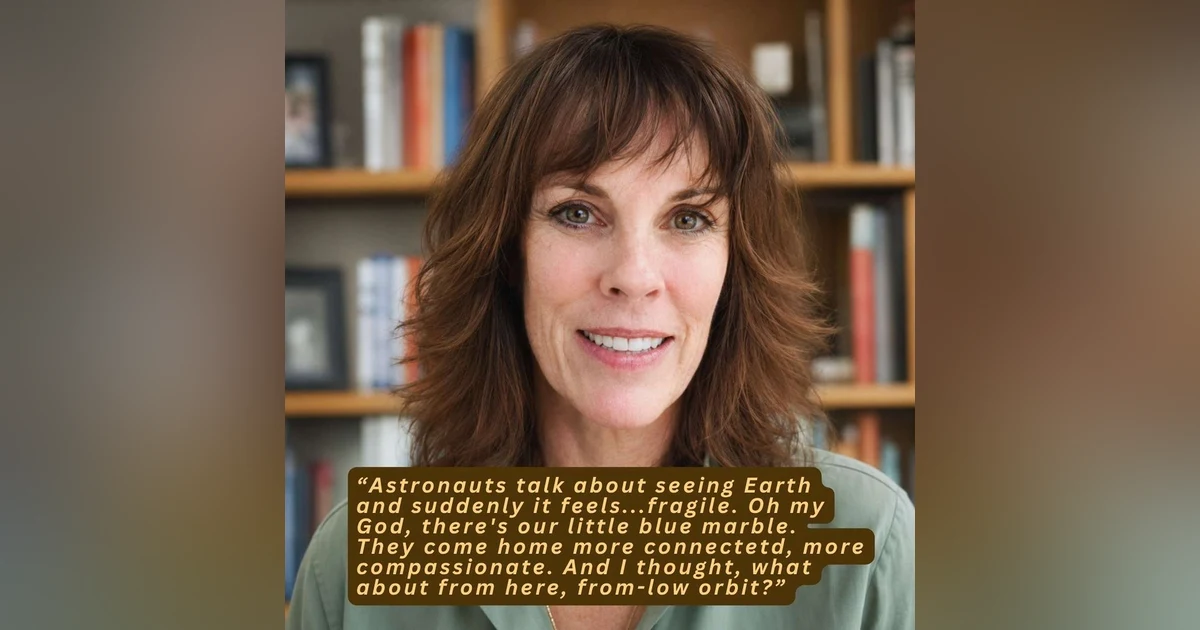


Astronauts come back from space describing the same strange shift:
a sudden connection to humanity, compassion for living things, and this visceral understanding of how fragile Earth really is.
They call it the overview effect.
Caroline Paul has spent years thinking about a version of that shift closer to home—through flying, through attention, and through awe. And her new book, Why Fly, is built around that question: what changes in us when the world suddenly feels bigger than our problems?
In this conversation, we get into the takeaways you can actually use: how to practice presence without turning your life into a self-improvement project, why awe can act like a mental reset, and how adventure—done thoughtfully—can help you move through hard seasons with more clarity and courage.
If you enjoy conversations that are equal parts story and usable insight, you’ll probably want Why Fly on your nightstand.
Caroline’s work is a gift. Enjoy!
Why Fly: https://www.carolinepaul.com/why-fly
🎥 Longevity insights + behind-the-scenes.
Ageless Athlete on Substack - 1-2x / month. No spam.
🎥 Want the full experience?
YouTube — full-length video. free.
📍More clips + behind-the-scenes
Ageless Athlete on Instagram - follow along.
🚀 Love the show? Here’s how to support it
If something you’ve heard here has stayed with you, made you smile, or helped you keep going, I’d be honored if you’d consider supporting the show. 👉 https://buymeacoffee.com/agelessathlete
Topics: longevity, fitness over 40, endurance training, aging athletes, recovery, injury prevention
21:52 - [Ad] Resilience Podcast Series
22:16 - (Cont.) Fear Is Stealing Your Life — Here’s How to Take It Back | Caroline Paul, 62
Ageless Athlete Recording - Caroline Paul - Part II
===
Kush: [00:00:00] Caroline, just like before, I always start with this question, which is, where are you right now, and what did you have for breakfast this morning?
Caroline: So I am in my home in San Francisco. My dog is sleeping next to me, so if she begins to snore, that's, that's not my... That's not me, so. Uh, and for breakfast, I actually have a new routine now.
I think last time I know exactly what I told you, 'cause I, I tend to be very routine-oriented, and I think you have to start your day with the same thing. So usually I wake up, I get coffee, I read, and nowadays I'm eating oatmeal with, protein powder because I'm watching my glycemic spikes.
That's how I sort of am staying, uh, you know, within fighting weight and feeling good, is basically I have a monitor on my arm right [00:01:00] now, and, uh, I just watch what spikes my, uh, glucose and avoid it. And turns out oatmeal, which you'd think would spike your glucose, doesn't, especially when it has protein in it,
Kush: that's very interesting. I have... I've had other people... Actually, it's funny, I've had other people tell me that their oatmeal spiked their glucose. And upon further questioning, I live on oatmeal. one third of my diet is oatmeal. And I found out that they were eating pre-sweetened oatmeal.
Yeah. Right? Yeah. So I'm like, "Wait a second," like, "your oatmeal has a lot of sugar in it," Yeah. So So actually, I'm curious, I've always thought of you as, like, very healthy, right? What made you start tracking your glucose?
Caroline: Well, my best friend is She owns a CrossFit gym in Napa.
Wine Country CrossFit. She's... I've known her for 40 years. We were whitewater rafters together. She's just rad, and she's just s- always so fit and strong. I remember once stopping [00:02:00] somewhere on the way back from Burning Man with her, and this young kid was doing pull-ups on this thing, showing off to some girls, and we were stopping to get some food, and she immediately started doing pull-ups.
And we were in our 50s. So she's always been very fit, and, but I'm very resistant to a lot of her advice because she's my best friend. It's sort of like your mom teaching you how to drive. I've known her for so long. So for my birthday, I think it was last summer, maybe it's two summers ago, she simply gave me a book about glucose and, uh, managing, you know, your health and fitness- using,glucose monitor, and she gave me a glucose monitor.
So right there I sort of just- You know, she sort of just threw it at me, and instead of being resistant, I read it and found it really interesting. So I wear a glucose monitor every now and then just to recalibrate sort of my eating and stuff. 'Cause I, oh, no, I love sugar, and I used to never check what had sugar in it.
I used [00:03:00] to be poo-poo, that kind of person. And I, and you know, it's not for everyone. You don't have to be. But I, I really did find, uh, my, a sweet tooth runs in my family with my twin and my father. And so this is just a good way to remind what you've just done to your body. You've just sort of shocked it in a way that's not healthy.
Kush: Sure.
Caroline: Yeah.
Kush: You have- So
Caroline: really- ... hard numbers ... eating, like I... Well, I'm not somebody who wears like one of those, I have sort of an Oura Ring, or I have, I don't have a watch that keeps track of every single number. I never count... When I fly, I don't know how high I went or fast or far. I mean, I write in my log book, but it's pretty basic.
I am not one of those people who writes everything down at all in order to, look at my health and fitness. Have never been like that. I found it always a bit stressful. But for some reason, this really works.
Kush: Wow, amazing.
last time you came on, [00:04:00] Tough Broad became one of the books I have recommended the most over the last couple of years. I love that book. So when your most recent book came out, Why Fly?, I couldn't wait. What made you write this book?
Caroline: I never thought I would write a book about flight, ever. I mean, I've been flying since I was, uh, 20. I learned in a Cessna, and then I was like... And I l- I lo- I've always loved flight. Or I've always r- really... It's always improved my life. So I've threw, I flew Cessnas in my 20s, and then switched because I, it k- kind of felt like flying in a soup can.
It didn't quite trigger my needs for adrenaline. So I switched to paragliding, which for those of you who don't know, is when you sort of run off a cliff with a parachute-like thing, wing shape, and fly around. Uh, and then, the, it was just, [00:05:00] there was a lot of what we called parawaiting when I was paragliding, 'cause you had to wait for the wind parameters to be just right.
So I decided to add a motor again, and I started flying a hang glider with a motor. and that was through my 40s. And then when I was 58, I picked up a new aircraft called a gyrocopter, and I suddenly became obsessed with flight. And so it seemed naturally that, it seemed natural that I, my next book would be about flight.
Kush: a lot of people listening, they would have heard about Cessnas, and they would have... And you also just described what paragliding is. But, uh, a gyrocopter- Yeah ... that is something a bit new to people. So would you mind describing what is that, and how does it fly?
Caroline: Yes. Uh, so those of you who aren't looking on video, my cat just jumped on my lap, so she's gonna purr a little.
Is that a problem? I
Kush: love it.
Caroline: Okay.
Kush: Yeah, no, it's great.
Caroline: She's [00:06:00] got a loud purr. So a gyrocopter, I think of as a cross. It looks like a tiny helicopter. it's a little bit, if you just see it from afar, it looks like a praying mantis mated- ... with a go-kart. It's a very strange-looking machine. When I first saw it, I just thought, "That doesn't fly."
but it does, in fact, and it flies very well. It's nimble. It goes very, very slow if you want it to. it's, I fly an open cockpit, which for me is m- mandatory, though some of them come enclosed. I mean, you've read the book, so you know, Kush, that I actually you know, again, loved flight.
It was part of my adventurous life, as we say, among other things that I did on land and water. I, I also flew. Uh, but I wasn't obsessed like a lot of pilots are. I just wasn't. It was just... But when I became obsessed with the gyrocopter, it also coincided with a really difficult time in my life. It was when my [00:07:00] marriage was ending.
And so I don't think it's a, it's a coincidence that- That those two came together. The gyrocopter's amazing, but I think that it was really the circumstance in my life that made me suddenly obsessed with flight, and also I think allowed me to write a better book.
Kush: very interesting. both the particular type of, aviation craft that you talk about and the circumstances.
many of us when we're dealing with a, a difficult situation, and the one that you describe can be so traumatic, taking to the skies and let's say amping up the aperture on, on, on risk and adventure isn't the first thing that people do. So what is it about you, Caroline, which made you want to use that as a tool for, like you said, healing?
did you find healing when you went up?
Caroline: Uh, well, I will say when I first did it, I didn't think I was going to find [00:08:00] healing. I think I was casting about to sort of... honestly, to sort of control something, to learn to re-control something. it was so powerful for me at a time when life on the ground was out of control for me.
Nothing was going the way I wanted. I could command this little yellow helicopter-looking thing to go into the air and learn how to make it do as I ask, like turn left, turn right, land softly, go over the ocean, go over the beaches. So there's no question that on a subconscious level, that's... I think a lot of people do that when they're in a time of grief, if they can move, if they can actually get themselves out of bed, that I think we look for things that'll make us feel just more in control of our life.
and I, but I was also very aware that what it, it was offering me was escape, and that's what I was trying to do, and literally it offers you escape 'cause you take off and you're, you know, a thousand feet from the [00:09:00] Earth. The Earth gets smaller and smaller, and the Earth is where all the problems are, and the air is not.
There's also something about adventure, which I know you can relate to, where it demands all your concentration, and it demands all your focus, and so for once you're not thinking about the things that are troubling you, and especially if you're learning something. So as I was trying to get better and better, I think, uh, it offered me just that sort of emotional escape as well.
Kush: Caroline, I'm gonna ask you a, a, a zoom out question. So one thing that- Certainly enabled this particular kind of, uh, modality was that you had spent the prior decades immersed in adventure, and also having, become, a good aviator, no mean feat. You spent so much of your life invested in this process.
So for those amongst us, you know, who don't have flying at our fingertips, do you have [00:10:00] any recommendations on how people can, let's say, prepare themselves a bit better for unexpected and difficult life changes that will come our way at some point?
Caroline: I'm not good at advice, Kush. Even though I wrote a whole book on, like, sort of personal experience, I can tell you that, that they will happen. Like, I think they've mostly already happened to a lot of people, and you learn from experience about how best to take care of yourself. and I think that what adventure, I thought, had always offered me was more a distraction. When I was young, I think it was often a distraction, 'cause it's adrenaline, and you're like, "Oh my God, I almost died," especially 'cause I made a lot of bad decisions sometimes.
And but as you get older, what I'm looking for is more of the [00:11:00] sublime, like more happiness in the small things. And so when I get in my gyrocopter, for instance, it's not the adrenaline and the, "Oh my God, I alm- might almost, I might crash 'cause this funny-looking aircraft is so odd." It's the beauty that it offers me, the small moments, the, the sort of focus and concentration, and the confidence.
Like, I got my confidence and kind of a new identity. It's not a totally new identity. It wasn't an i- I mean, I was already an aviator. I was already a pilot, but I suddenly had this sort of little new n- niche that I could look to and say, "Oh, that's mine. That's... I do that." And again, I think it's small. It's, it seems small, but it's was powerful in terms of getting perspective on my life and simply getting the confidence back, I think.
Kush: Amazing. it's a [00:12:00] wonderful book, but it hit me in an unexpected way. Hmm. having, uh, you know, devoured some of your prior writing, I may have built up this expectation that I was gonna read about, a lot about, like, again, building courage you know, hearing of other people's stories and those kind of things.
But then I started getting immersed in this, uh, history and story of flying and aviation. And I think right off the bat, something that struck me was that I think you say something to the effect of,that we don't fully understand what flight is. And so much of our modern life depends on flight and, now we are, you know, we are launching wars that are run entirely on flight maybe.
But here we don't even understand what flight is. So can you, yeah, can you talk a little bit about that?
Caroline: Yeah. It actually took me by surprise too. I mean, I only figured that out as I was , writing this book. Because when I w- learned to fly in 1982, I was taught the [00:13:00] principles, the natural forces that keep, that put a plane in the air and keep it up there, which is, at the time I remember the Bernoulli principle, which basically says that when you have air rushing over a wing, which is shaped in a way to make the air on top go faster...
Oops, I'm gonna forget this. And the air on the bottom go slower. And when you have a differing pressure, uh, when you have a pressure differential like that, so the air on top is less dense, that means the air below is more dense, and so it's gonna, like, keep you up as you, if you think of it as being pushed into the lower density air.
That's the Bernoulli principle. That's why wings are shaped in this way, called an airfoil, where they're a little bit rounded on the top in the leading edge, and that's to disrupt the air in a way to make it, go at different speeds. But that doesn't fully explain [00:14:00] things, because, uh, planes fly upside down all the time, and they fly really well upside down.
So if that's what's going on, then it should just fall out of the sky. So they, there is another, uh, physics principle called, uh, Newton's third law of motion, which means that for every reaction, there's an equal and opposite reaction. So the idea is the wing pushes the air down, therefore, there is something pushing the wing up.
That also doesn't totally explain everything. So it's not that we don't, it's not that flight doesn't work, it's just that we haven't figured out a full way to explain it. So I love this because every time I take off, whether it's foot launching a paraglider or in my gyrocopter down a runway, that moment when I leave the earth feels miraculous It always does.
Mm-hmm. Even though I'm been a pilot for 40 years, and when I tell people this, that, "Oh, you know, there's this... We just [00:15:00] can't fully explain flight," they get kind of petrified. Whereas for me, it's pretty wonderful. Like, I love that idea that there's something mysterious there that we don't know. It works, don't worry, but we fully, we can't fully, just can't fully explain it, which is...
Caroline: I think that's perfect.
Kush: I think even as, as just, pedestrian passengers, so many people get onto passenger planes every day, and I think, every time, and it doesn't happen every time, but whenever I take a, take a moment to take stock of what's happening, it also does, catch me by wonder that, uh, wait a second, you know, like I'm going up in the sky, and it's only something that we have accomplished and come so far ahead with in the last century.
Kush: I want to call upon a quote in this book because I want to, hear a little bit more about what it feels to be [00:16:00] flying instead of just being a passenger up in the sky. you know, you quote this person, Florence Pancho Barnes. okay, uh, there's a quote from her. Well, quote the
Caroline: person, quote the person before first 'cause she's more sublime, and then Pancho Bar- uh,
Kush: Florence Barnes.
Okay. I don't have... I made a note of that quote, but I will preface this by saying that, yes, what she said is kinda unhinged and, uh, and a little spicy, so I'm going to beep out some words. so she said, "Flying made me feel like a beep in a beep" - "... with a stack of $20 bills." Oh,
Caroline: you can say, you can say it.
The FAA, the FCC won't be mad at you.
Kush: Well, I don't know who's listening to the podcast- Okay. Okay ... and if they're in a, in a car with kids, so I just wanted to. Okay. But I th- I think people get the gist. So what is the clean version of what she's describing?
Caroline: Well, the quote before that, if I remember correctly, [00:17:00] is a, is another pilot in the 1920s who said that, some version of, "When I fly, it makes me feel as if my spirit has left my body."
because it feels sort of transcendent and also otherworldly. It is confusing. We, you know, we are, two-legged, gravity-bound, unfeathered creatures, and yet we're- We wanna f- we wanna fly. We wanna be— and we've been trying to fly for a very long time. It wasn't until, you know, 1903 that the Wright brothers actually got a plane into the, the air.
But w- actually, they were not the first, which, to get an aircraft into the air. They were the first, and this is what they're lauded for, but this sometimes gets lost, they were the first to master safe and controlled flight. That's what they were the first to do. People were jumping off things, well, with feathers attached to their arms or with s- crazy contraptions that would go pretty far, but then of course they'd crash.
this is what the Wright brothers did. But we've been [00:18:00] trying for so long, and what I love about that is just, it's such an embodiment of the human spirit, that we're just... And also our dissatisfaction. It's like we watch birds, we're like, "We wanna do that. We're on the ground walking. That's cool, but let's do that now."
I find that to be inspiring. I mean, it's also led, I think, to things, that hubris has led to many bad things, but- ... but it has led to this, uh, this effort to get in the air, and people with, Back then they couldn't tell each other, "Oh, I think I've figured out a little bit of the physics of flight." No, they were, most of them were just kept starting anew.
Well, they got balloons in the air in the 1800s, or even earlier. I think it was earlier than that. But again, that wasn't controlled flight, so I love this, this idea that humans have been trying to fly for a long time, and then we've finally done it. It is... So it's, it is wondrous. so for me, so w- I'm sorry, now I got so excited about that I d- I don't know what your [00:19:00] question was.
Sorry.
Kush: No, I think- This is what flight does to me. No, I think that, that, that was a great, No, I love that, love what you just spoke about be- because you're right. Like, that's a very important, uh, complete descriptor of what the older brothers achieved because, yes, people had attempted flying before that, but they were l- like, the first people to do it in that controlled and safe manner, and in many ways maybe heralded, like, this modern era of aviation.
But, uh, because, uh, because, Callan, you're so articulate, I was trying to get a sense of like, you know that quote and the person before that, like, the spirit leaves the body. somebody who hasn't flown, I haven't, and someb- and many people may not fly ever, but like, maybe can you describe that in your own words?
Like, how does that feel? Like, uh, how, how does your body feel as you're taking off? What's going through your... You know, the sensations, as you take off and you- [00:20:00] you reach a certain altitude, , , how did that change, like, your, uh, sense of, just sense of self, sense of being?
Caroline: that first moment where you actually achieve lift, you can feel it.
You feel it in your body, and it's this lightness that is, something that you don't experience. Uh, maybe when you're jumping rope maybe. I'm not a jump roper. Or you do Double Dutch or something and you have that feeling of lightness at moments. But there's something that I, that you can't get this feeling anywhere else.
And then as you're rising from the Earth, it feels as if sort of the Earth is molting away from you. and then you're, you're heading into the sky, and it's... Honestly I didn't know this for a long time, uh, but what you feel is awe, pure and simple. And we've talked about awe because I covered it in Tough Broad, and we talked a lot about it on that podcast.
but I re-remembered... and awe I think is something that [00:21:00] I had always been a part of my adventures, but I was young and callow, and I think I- it was so subsumed by the adrenaline that I used to feel.
So I always thought that what I got out of adventure was this adrenaline and this sort of new perspective because I had come so close to this other side almost sometimes in some of the adventures I did, and that that was what was making me a better person, and that's what was giving me perspective.
But now from this side of life, I see that really a lot of what I enjoyed about adventure at the time then and s- what I've understood now is that it's awe that I get out of it, something way more sublime than adrenaline and trying to be the first at something. And so flying is just a, it's just an automatic awe trigger, like nature is, as I wrote about in Tough Broad.
But flying is so [00:22:00] awesome because it's so out of our... Our DNA has spent so many millions and trillions of years developing legs, and suddenly we're airborne. So our brain, uh, is filled with wonder about that. And so to just repeat the definition of awe- it's really that feeling of wonder in the face, and a little bit of fear, in the face of something that's more powerful than you, more mysterious.
And I think on a kinetic level, flying feels very mysterious to our body.
Kush: I can imagine it does. And, uh, yes, the last conversation was quite powerful. In fact, in, I think in some ways it helped reframe what I was maybe seeking out there doing adventure sports because I think, yes, I still, I think I was chasing adrenaline and maybe I still do. But I think, I was also chasing that feeling of awe because I found it over there, but then I think just like, [00:23:00] you describe it, like, you know, you, you talked about some common practices in everyday life when one can find awe, and I actually find that for myself as well, like, when I cannot be outside doing big things, just being in nature.
And I, I advise everybody else also that, hey, listen to that podcast. And so ca- you can hear it from Caroline, but if you don't, then yes, you know, doing those nature walks and there are some other things that one can actually systematically, uh, find awe every day and how awe can be so powerful.
Caroline: Yeah, you...
I mean, but you need to cultivate it because I think we're bombarded with sort of un-awe all the time. And as I said before, like, we're surrounded by devices that are actually anti-awe devices because awe opens up... It's like a way to open up your mind, and all our devices narrow them. And awe makes you feel less in control.
It's not that you're out of control, it's just that control is not, you see that control is not your purview [00:24:00] anymore, whereas our devices make us feel powerful and in control. And the other thing that awe does is that it resets. it runs along a different neural groove in your brain because our brain runs in patterns.
And so our brain is always seeing things, "Oh, I've seen that before. Uh, oh, these stairs, I know how to navigate them quickly." So you can run down those stairs 'cause your brain has seen it before. But when your brain hasn't seen something before, it needs to reroute and do, like, other things in order to make sense of what they're seeing.
And what... one of the aspects of awe is that your brain has not experienced this before, and so it often, it needs to go through different neural pathways. And that's why they call awe a reset button for the brain because it, it tends to make you more open-minded, because it's actually literally- Short, it's like those pathways didn't work.
We're gonna go [00:25:00] through new neural pathways. And so you are, you're opening up your mind, literally. and so awe is powerful in so many ways. And of course, awe makes you feel compassion, more compassion, more connected to the world. So in the book I talk about awe from a different point of view than I did in Tough Broad, because there's this, uh, phenomenon called the overview effect, which, it turns out that astronauts feel and have been studied for.
It's the feeling that you get when you see our planet from far away. So we don't often see our planet from far away. We're walking around on our planet. We're... We can't see the forest for the trees, basically. uh, when I read about the overview effect, I wondered. It- so the overview effect, just to, to back up, they've, they've in- interviewed astronauts about what it feels like to see Earth from their, the space station, for instance, or from the Artemis, [00:26:00] for instance, and they re- they...
Not everybody feels this, but a lot of them feel a sudden connection to humanity. They feel, uh, compassion for all living things, , they come home, honestly, and become environmentalists. They see how fragile our Earth is. So it, it is a profound shift in their thinking about their place in the world, too.
I think, like what awe does, it makes them feel small, but not insignificant. Of course you'd feel small if you're like, "Oh my God, there's our little blue marble hung against black universe." But not insignificant. So it's a, it's a profound experience for astronauts. And I was wondering, "Oh, well, if astronauts feel that, and space is 62 miles above Earth, can we feel that in low level orbit?"
And in other words, from my gyrocopter. And when I connected the, sympt- or the, um, the effects of the overview effect [00:27:00] with awe, I realized, oh yeah, we can s- totally feel, feel the overview effect from our little airplanes or aircraft, whatever we decide. And we can even find awe when we're surfing or walking in a, you know, beautiful little forest and looking closely at flowers.
So the way you cultivate awe basically is you look... I- if it's, if it seems like something that you've seen before, like, "Oh, here I am in the park," the same old park, and your brain's like, "Same old park," the way you blow out your neural pathways a little bit is you try to look at everything with what they, what the scientists called fresh childlike eyes.
And that's how you cultivate awe So you could do it on the ground, you can do it from space, and you can do it in a gyrocopter, and you can do it in a passenger plane. Of course, when you look out the window, allow yourself to be awed by how miraculous this is, that you're in this metal tube. [00:28:00] Yes, it's uncomfortable and annoying and loud, and yes, they're not gonna feed you food like they used to.
And your seat doesn't recline, but wow, you're up there, and you can see the clouds and the colors of the sky and your home below you. Uh, that's awe.
Kush: that was this masterclass that you just gave us on awe. that was beautiful. And I was about to say that we don't always have to be in the pilot seat because, yes, I remember, you know, as kids, my brother and I fighting to get into the window seat so just we could like, uh, paste our cheeks against the window glass and look outside because I think that's exactly what was happening.
And even now, I mean, one of the best things about, like, taking a daytime flight out, away from San Francisco going, going east on a clear day is flying over the Sierras. And again, just as a humble passenger, just being able to look down and see those mountain ranges [00:29:00] and identify formations and features, yeah, that is powerful.
So yes, uh, we can find awe in aviation even as passengers. Thank you for that. One thing about your book that I loved is that, So I'm sure, like many listeners like me, you know, we learned about aviation history again as, as kids, as school kids, but then over time, you know, we forget about these things.
But you share that in a way that it doesn't feel like a, a textbook, and there were many parts of the book that, uh, I was like, "Whoa, whoa," you know, like, uh, "This is so fascinating." And so one of those, I think, was the fact that, that women played such a central role, more than I knew, in aviation. Maybe even more than people are, are taught about.
Like, I had heard of Amelia Earhart, like many people have, but there were other such important figures. okay, I'll just ask one question about [00:30:00] this because we could go on and on. Okay, who's one woman from that era that people should know about, besides Amelia, of course?
Caroline: I mean, this is, this is a no-brainer.
So just as to back up a little, I, too, when I was growing up, had no idea, well, that there were any real women adventurers at all. And in fact, Amelia Earhart was the only female adventurer that I'd ever heard about- As I was growing up, a kid, seven, eight, nine years old, and I wanted adventure. I'd read about adventurers.
I loved reading about men too, don't get me wrong. You know, these big barrel-chested marine biologists who go diving or who row weird boats across the ocean. I followed all those weird adventure sort of things that were going on in the 70s and 80s. And, but the only female adventurer I ever heard about was Amelia Earhart.
And so that, I think that gave me the, the idea, oh, well then I could fly 'cause she kinda looks like me. She's female. [00:31:00] And I was like, I could maybe do that. And that's the power, of course, of a role model. But when I started researching this book, and really over the years I'd heard of others, uh, of course, but you're right.
Like, there are so many women who wanted to fly and were instrumental in wars around the world, et cetera. But the one I think people should h- hear about, because I... If she had been... She was super famous in her day, and her name was Bessie Coleman, also known as Queen Bess, and she flew around the same time as Amelia Earhart.
She got her license in 1920, 20s or something around there. but the reason we don't hear about her today is because she was Black. And in fact, at the time, no one would teach her to fly because she was Black. She was also part, uh, Native American. So she had to go to France to learn to fly, which she did.
And of course, in order to learn to fly, she had to learn French. So [00:32:00] to me, she already embodies, like, the American spirit. Like, we, we give Amelia Earhart up as the sort of embodiment of a certain kind of, you know, American gumption. But no, the, Bessie Coleman had way more. So she came back and realized, oh, now I'm a pilot, but I can't earn any money unless I'm a barnstormer.
That means doing loops, barrel rolls, hammer heads over small towns and traveling around with your little biplane, Jenny. And so she, uh, still no one would teach her to do that 'cause she was Black and female and poor and Native American. And so she had to go back to France, and then came back, and then became pretty much one of the most famous pilots of her day.
So it's kind of crazy to me that we don't hear about her. We... The first time I heard about her was when the astronaut Mae Jemison went into space with a photo of her, and I was curious, like, who is that? And, but otherwise... And I, [00:33:00] as I say in the book, I'm curious, if we had been offered up Queen Bess as this female adventurer role model like Amelia Earhart was offered up, I feel like that would've changed our American culture Certainly would have- Wow
my childhood as a w- little white privileged kid looking to, to have role models to guide me through the world. Imagine all my, peers of color. Like, how inspiring would that be for little girls of color to see Queen Bess? Or everybody to see Queen Bess. I just feel like that would have changed us, but that's not the way it went.
We got Amelia Earhart. No, I, really I, I think she's amazing too, of course. But as contemporaries, uh, I wish they'd pick Queen Bess. She was by far a better pilot, by the way. I mean- Wow. Uh, yeah, so on so many levels I find that story to be heartbreaking and inspiring.
Kush: Yeah, I was blown away [00:34:00] by reading about, the story of Queen Bess, and then I was equally wowed at, some of the other, uh, commanding, influences that w- women pilots have had through the, uh, decades.
A- again, I really want people to go read the book and, uh, get into the- Can we talk
Caroline: about the Night Witches, though, because I love them.
Kush: Yes.
Caroline: Yes. Oh my God. I came across the Night Witches- Yes,
Kush: the Night Witches. Yes ...
Caroline: when I was trying to write a book years ago of fiction, and I came across them, and I've just been fascinated by them.
So the Night Witches are, are Russian women who, uh, in 19- the 1940s, weren't allowed to fight for their country even though Russia said, we're all about ega- egalitarianism," it wasn't true. They were very patriarchal. But Lenin needed pilots when the s- when the Nazis were surrounded Leningrad, or St.
P- Petersburg at the time. And so he recruited, He allowed for about 200 female pilots. And one of the [00:35:00] battalions of those women were all women, so that was a pilot and a navigator, and they were given a 1927 wood and canvas biplane to fight against the Nazi Luftwaffe, which were the- It's ridiculous
best technology of the time. Yeah. It's, they were basically like, "Uh," they didn't wanna give them better planes because they were women, "So here, have our little biplanes." The biplanes went, like, a top speed of 70 miles per hour. Meanwhile, the Luftwaffe, or maybe that was a, their cruise speed was 70, and meanwhile, the Luftwaffe was zipping around the skies at s- you know, over 300, 350 miles per hour with incredible ammunition.
These women couldn't even carry pistols to defend themselves. No parachutes, no radios, no nothing because the biplanes needed, were too underpowered to carry anything more than two women and two bombs. And so the story's incredible because of- [00:36:00] How they had to fly these biplanes in these, the incredibly vicious Russian winter, navigate in darkness 'cause they flew- Oh my God
all their missions in darkness. And they were called The Night Witches because what they did is they pulled back on their engine at 4,000 feet and then dove to 2,000, and then they would let their bombs go. And they couldn't go lower 'cause if their bombs would incinerate their paper planes, basically.
and what the Nazis would hear before this happened was the wind whistling through the wires of the biplane, and it sounded like a broom going through the air. So they thought they were- Wow ... witches. And, uh, so when they- ... realized they were women, because they did, they would shoot them down and they'd be like, "Oh, these are women."
So they were called The Night Witches, and they absolutely terrified the Germans. They just seemed otherworldly. And they they really successfully, I don't know if you could say fought against, but they eluded the [00:37:00] Luftwaffe. And the reason they did is fantastic. Just shows, like, you can have all this fancy flight stuff, all your incredible arminet- armaments and your speed, but you need to understand the basics of flight.
And because the stall speed of the Messerschmitt was higher than the fastest speed of the biplane, that meant... And a stall speed is the speed under which a plane cannot fly because it will fall out of the sky. It will no longer generate lift. So the biplane could go 70 miles per hour, while the stall speed of a Messerschmitt, I don't know exactly what it was.
Let's say it's 150. So now all a little slow, poky little biplane had to do was make a quick right turn, and the Messerschmitt could not slow down enough to catch it. which I just kind of love, that these women who were given this,antique equipment [00:38:00] basically to be cannon fodder, managed to make the best use of it.
Kush: just, yeah. otherworldly. the skills and the courage and just the, the prowess that these women had in, being able to... I, I, I don't know if people even grasp, the, Yeah, just the Otherworldliness of what these women were accomplishing because like, you know, like, we drive in a car, and today we have GPS and, you know, we have, like, all these other things in our, in our fingertips.
And even then, accidents happen all the time. And then next level is, modern aviation with planes and, like, all the tech wizardry. And then maybe another level is, Caroline, what you're doing, is flying, in, in a more pure way. Low tech, open cockpit, and, aircraft that look like praying mantises, right?
But,but, but what these women were doing, like, flying at night, you know, like, without any instrum- like, minimal instrumentation, no maps, [00:39:00] just flying by feel. Feel and courage and-
Caroline: They had maps. They had paper maps, and they had- Paper maps,
Kush: yes ...
Caroline: to look at these paper maps in the howling Siberian winter- Yeah.
Kush: I mean, how many of us have even driven our cars in the last, little while with a paper map, right? Imagine doing that, yes, Siberian skies at night above your enemies who are trying to like, shoot you down. And these women did that so successfully. So I mean, in some ways, I know that you didn't intend this part.
I know,it's just making me think of how this book maybe relates to some of the prior work that you have done because these are some tough, badass women.
Caroline: Yes, they
Kush: are.
Caroline: brave.
Kush: You know? just like- Yeah ... next level brave.
Caroline: I- What I love about their flying too was that it was so basic.
Like, I do fly only very ba- I, I do take some advantage of the instrumentation that we have, but mostly I'm looking outside, which a lot of pilots, they do less and less of these days. They don't [00:40:00] look outside the windows. Yeah. And you know, I, I fly just to fly.
I'm not really trying to get anywhere. I have done long cross-country trips, which I write about, to try to explain sort of the wonders of, of flight and seeing our Earth from above. But, in general, I'm just poking around just to fly. Like, if I could have nothing at all to use to get in the air, I would do it.
If I could just launch myself like Superman or Supergirl, I guess, uh, I would do it, but I can't.
Kush: do you also fly at night? You know, when you don't have,uh, visibility and being able to... You do that sometimes?
Caroline: So I don't- Yeah ... I fly under a different ticket. I fly under something called sport pilot, which doesn't allow me to fly at night.
Though I used to be a private pilot, which would have allowed me to fly my gyrocopter at night But, we have, even my partner Paul, , who, um, shares our gyro, who, which, who we call Woodstock 'cause it's yellow and like the little yellow bird in [00:41:00] the Peanuts cartoon, he can fly at night because he's, uh, more experienced than I and has a different ticket.
He flies under a private pilot ticket. So he can fly at night, but he doesn't really like it 'cause, you know, if something happens, it's hard, and you have to put down. you can see certain things really well, like roads and stadiums maybe, but otherwise everything else is just dark.
Kush: Caroline, one thing that I loved asking you the last time we spoke was, uh, and I'm gonna ask you this again, is i- in the process of writing this book, did this change how you think about, about aging and about bravery?
These stories that you wrote about, have they had this effect on you and how you live your life today, and how you want your, you know, your, your, your, your future seasons to be?
Caroline: Well, let me first say that when I first started, like [00:42:00] I really wanna w- write a book about flight, I also realized that I would have to write a book about my marriage, which was obviously a big reason why I had become obsessed.
And I had that. I did realize that, that I was obsessed with flight. coincidentally, it wasn't coincidence, you know? It was a, it was a way to divert or heal. Well, it was a way to divert, but as I wrote the book, I realized how much healing the f- flying offered, and how much of a footing, ironically, that it gave me, even though I was up in the air, i- in who I was in my own life.
and in fact, when I first started, first couple drafts I gave to, uh, my first readers, Bonnie Tsui, who you know,
I would give it to my first readers, and they would say, "Caroline, you mention that your marriage is fraying, and then you don't mention it again for 100 pages." Like, I didn't really wanna write about my personal life. I wanted to bi- write about the wonders of flight.
But I realized [00:43:00] how inextricable, the healing was, to flight really only through the writing of the book. And I reluctantly was-- And as Wendy says, my lovely ex, she said, "This is your most personal book yet." Because I do, you know, write about our marriage. I ended up writing, putting in m- But it's not a, it's not a, it's not a huge part of the book, but it is a thread throughout the book.
So I would say I think I realized through the writing of this book, you know, how much devoting yourself to getting better at something, which is what I was doing with the gyrocopter, can really help in so many unexpected ways. I thought I was just learning to fly a gyrocopter better, but I learned a lot more about myself.
Here's one great example, and I didn't realize this until as I was writing the book. But I was trying to get better at [00:44:00] radio communication. So that means talking, specifically talking to air traffic controllers. Because through all my aviation years, usually I either had no radio at all, like when I flew paragliders, or I had a radio but I was only talking to other pilots as I neared an airport.
Because very few big airports would allow us to land. They hated hang gliders with motors, and we weren't allowed to land in a lot of places, so I never really got good again at radio communication. I obviously learned it in my 20s, but I forgot. So I was trying to really get better at talking to tower, and one of the things that you have to do when you talk to air traffic control as you approach an airport is you, you say the five Ws.
Who you're talking to, Santa Rosa Airport. Who you are, 747 Romeo Delta Gyro. where you are, uh, 10 miles out at 1,000. What you want, inbound- Mm ... for [00:45:00] one touch and go. And the last W is weather. So a s- a, a indication that you know the weather at the airfield, which is, uh, something you can radio in and find out.
Uh, so with information kilo. All of the five Ws I got really good at during, uh, communication with towers, so you know who I'm talking to, who I am, where I am. Terrible at that on the ground. What I want, even worse. could never really communicate that really well with my partner. And the weather, often really d- could not gauge w- the emotional sort of interchange that we were having.
So as I got better at radio communication, I was just realizing all my flaws on the ground. Yeah. About radio comm- communication, which is cool. When you're talking to towers, you have to repeat everything back to them, and you have to repeat it back because it's so important that you know what they're saying.
And [00:46:00] it mimics what everybody who's been to couples counseling has to do, which is basically listen closely to your partner and then repeat back what they say. And as I got better and better at radio communication and repeating back what tower would tell me, I wasn't getting very good at it on the ground.
You know, you're not allowed to, like, um... when tower's talking to you, it's stripped of all emotion. You know, they're just telling you in verbs and nouns what you need to do. 'Cause radio communication's really short in the air, because so many planes- Right ... are up there. You gotta keep it short. Yes. On the ground- Yes,
yes
no. How many adjectives, adverbs, you know, high emotion? Yeah. It's all that. Like, the communication difference between me on a pilot radio and me on the ground was stark. You know, you had to- No, that- ... I really look at myself and, uh, and take some responsibility for that.
Kush: I think people need to read this book also, yeah, yeah, just to get a closer look at, like, how does this [00:47:00] wondrous act of flying take place?
Because, yes, th- what you talk about, radio communications, about being able to do these things successfully, like there's so much that goes into that, that people again have... People gloss over or they have forgotten. And I think, I think reading your book, like, just made me understand that this is, yes, indeed just this marvel of modern life, of modern science, of our ability to take risks and, like, lean into awe.
Kush: actually one thing that- But y- Uh, go ahead, please.
I was just gonna say, I wrote this, I wrote this book for non-pilots actually, so that... And, you know, who's interested in flying? Not many people. pilots are incredibly boring when you get them together to talk about flight.
Caroline: They'll go on about their pitot tubes and their whatever, shiny this and that, their, all their avionics. It's, as with many subcultures, it's not that interesting [00:48:00] in general. And so I think by threading in this personal aspect, where you can really see the parallels between flying and human relationships, uh, and the metaphors of flying with love, or the descent of love, the crash landings of love.
I think that makes the book more powerful to people and they understand, Yeah, you get more of a sense of flight, but you also get more of a sense of human relationships.
Kush: I, I agree. you know, you get all of that. And yeah, just one... again, yeah, the storytelling and the history and, also what you said earlier about, uh, how maybe leaning into this, cultivated passion on something new and, helped you heal.
you know, there are many ways people can benefit from this book. you know, when we started, I learned about, uh, the fact that you have this, uh, this medical pr- procedure coming up and, we [00:49:00] don't have to get into that in too much detail, but you are somebody, Caroline, who I think, you know, leads this life of adventure and you're a, you... You know, even when you go and do book tours, you will often, at least sometimes, fly to them.
So talking about healing again, maybe a different kind of healing that you will have to, uh, you'll have to face over the next, period, how are you hoping to, keep your sanity, you know, keep your spirits up? are there some, some things that you're planning on which will allow you to continue, being, uh, productive and, and, and happy over this period?
Caroline: Yeah. I'm, I'm having my knee replaced. This is not the first time. I've... This is an old firefighting injury. So, I... So I talk about an injury in the book. You know, I had a very bad accident, which I'm not proud of. It was one of the hardest chapters to write because I'm so humiliated about that accident, which was pilot error through and [00:50:00] through.
It was just like I made mistakes months back, uh, about my hang glider wing. Just, uh, refused to look at the fact that it, there was something wrong with it and kept thinking with the typical human optimism bias I think it's called in scientific terms, that e- everything was fine before. I'm a good pilot, so it'll be fine for this flight.
And then I kept... Then it was fine, and I kept doing that, and then finally it wasn't fine, and I had a very bad accident. And at, during that, um, time, that was a... I basically decimated my left ankle among other things. So it took me a long time to recover, but one of the things I became kind of fascinated with because I was...
And I don't write about this in this book, but I was super depressed. Like, not only was I humiliated about the accident, but the depression was real, and there was a real fragility That I had not experienced before. Like, I thought that my ankle would just blow apart in a million pieces at the slightest [00:51:00] movement.
I thought a piano would fall on my head at any moment. Like, I just felt really vulnerable, and that's always stayed with me. And partly it's the drugs they give you, partly it's the trauma, and partly f- at that time, it was the emotional sort of regret of having put myself in this situation. And this time around, I'm just a, I'm just a pro, man.
I'm not gonna be depressed. I'm just not. And, you know, if, uh, if it starts coming on, then I'll, ditch whatever medicines are doing it, Vicodin, whatever the, is doing it. and I'm looking at it as a time of quiet, like an opportunity, which I did not before. Because of course, it was so sudden, you know, I was not expecting it.
But now it's just an opportunity to quiet, to be more quiet, read. not have to do anything.
Kush: Sure. Do, do you have, let's say, a cultivated meditation practice or something similar that will again be [00:52:00] important over this period?
Caroline: You know, for my meditation practice, Kush, I do have a meditation practice, and it's, um, a little bit based on TM, so I repeat-
Kush: something in my head. But I... It's also a nap, honestly, 'cause I always fall asleep. I do it lying down. I almost fall asleep on purpose because it's so restful. So I don't know if that's meditation. I, I mean, in the middle of the day, I'll lie down and I'll start this word over and over, and then within a...
Caroline: Very quickly I'll be asleep for 20 minutes, and then I wake up and feel better. So I don't know if... That's sort of a meta nap. I don't know what we... A napitation. It's something, uh... So I probably won't need to do that when I'm- Okay. Yeah ... lying in bed. That will not, that won't, that won't... But maybe, maybe I'll want that.
Sure. Um, more I think it's just gonna be, not having to get up and go.
Kush: wish you the best of healing.
Caroline: Thank you.
Kush: And, uh, yes, it's going to [00:53:00] be an interesting period, and I'm sure you will, uh, you will share a bit more about it as, time and energy allows. And yeah, we'll be cheering you on.
Caroline: Oh, I will, I will say one thing. Now let me just, uh, put in one thing, that I did do after my other accident that would still maybe be in the cards for this, is that after my, my trike crash, I was...
wanted to fly again, but of course there's all this PTSD that happens. I think people who've been in car accidents understand this. And I wasn't well aware of it. I I sublimate fear. I try to change it into something else, and it came out as irritability and anxiety and not, having fun flying.
And so I got hypnotized and, uh, ha- had a practice of tapping, which I think people maybe know if, uh, they're familiar with, uh, ter- h- hypnosis or if they've had a fear of flying and went and got hypnotized and [00:54:00] use a tapping technique, or EMDR, uh, eye roll, eye, movement. Uh, anyway, I don't know what it stands for, but EMDR where you use eye movements to get rid of past traumas.
So I, I was hypnotized. I would've done I- EMDR if it had been around or if I'd known of it at the time. But, uh, that, that got me back to flying and that got me out of the trauma that is, uh, an injury. Oh. An injury that you self-inflict- Sure ... especially. I don't, I don't expect, uh, any, a need for hypnosis this time around, but you never know.
Kush: Sure. I mean, it's good to have, maximal number of tools available, and if you don't have to use them, then that's okay, right? but it's , nice to know that, you know, one is, like, over- over-ammoed going into something, uh-
Caroline: Yeah ...
Kush: serious, uh- It worked ... sure. Yeah. Caroline, um, you know, one of the things I, as I've learned about you over the last couple of years, one of the things that, struck [00:55:00] out to me was that, you seem like someone who practices what you care about.
So I thought I would ask you this maybe, uh, what's a value you have gotten more serious about as you have gotten older?
Caroline: Being present. actually being very present in the moment. it's a hard practice. I think when you do adventure sports, you're automatically thrust into the moment, so that's probably why I even began to do it.
But now I'm trying to be present even w- and be grateful. I know that sounds a little bit sappy, but be full of gratitude for that present moment. yeah. Sometimes I'll... So for instance, sometimes when I have to be in line somewhere, uh, let's say I'm at Walgreens and I have to be in line, I just don't look at my phone, 'cause I don't think you're present when you're looking at your phone.
I just look around and I am grateful for being alive. [00:56:00] It's a practice that is, doesn't have a specific mantra, but I'll take a couple breaths and be like, "This is cool." And it is cool. It's cool to be... It's a privilege to be standing in a long line in Walgreens- I don't know. And- I don't
Kush: know. The
Caroline: other thing that I see...
I walk my little old dog, and I try not to look at my phone because I'll pick it up maybe to... I do sometimes listen to podcasts as I walk, but I... And even then, I think I'm sort of only half present that way, 'cause I'm not hearing birds, and I'm not, you know, hearing my dog walking next to me. if I was, you know, even more pure about this, I wouldn't even listen to a podcast while I walked her, but I definitely don't stare at my screen.
I'm looking around. I'm aware of her and what she needs. And I see so many people walking their dogs and staring at their phone. And it's amazing to me, 'cause here's this opportunity to bond with your cute little animal and just be outside and be away from things, [00:57:00] and they don't seem to be taking advantage of it.
I don't wanna judge, 'cause I know everybody's... Maybe they're escaping, like, you know, a house full of toddlers. I don't know. but, so I'm not judging, but I just, For me, I try not to look at my phone.
Kush: I think what I or most of us can take away from that is that, one, starting a meditation practice can feel heavy, and I know many people try that.
They'll get an app, and they will start that. And then, you know, life happens and, the first thing that can go is, you know, goes, and that practice gets, gets abandoned. But I think what you're giving us is, like, this really, uh, easy to, s- get started steps- Mm ... which is, you know, you don't have to sit in a corner and, you know, uh, learn all about TM or something else, you know?
One can just do what you described as, honestly, like, uh, not look at one's phone and be immersed in another activity. And like you said, it could be, uh, One could be out doing errands, or one [00:58:00] could be out just taking a walk, just simple things. And, uh, yeah, learning to be, like you said, present.
I, I mean, it is, it is harder than, uh, it sounds, but I think, I think what you're saying is, like, you know, small steps. You know, anyone can kind of maybe build that, uh, awareness muscle.
Caroline: Love that. I didn't think of that. Yeah. I mean, it's a meditat- it is kind of a meditation in its own, just being present and looking around and absorbing kinetically, like, through your body.
I think a lot of us are... I was with someone recently who said she's very disembodied, and I think that's very true for a lot of people, especially if you're not... You don't have a practice of working out, that you can be really disembodied. And that means, like, you're not aware of the feel of the wind on your face or the, the way it feels to take a step and to walk.
and I think it's, um, too bad, because this is the way we experience the world is through our bodies. And so, yeah, just not... Just trying to be more present that way is a, a [00:59:00] gift And I- Yeah ... you know, it's funny, after every surgery, I feel that even more. So this is another, this is another opportunity that I can be really grateful, that...
'Cause I'm, forced basically to be just around the house, and I can be grateful for every little incremental, you know, progress. And so I think that happens to a lot of people after, like, a close call in their car. They're suddenly like, "Oh, life is so precious," and wanna take advantage. But really we should be doing that all the time.
Not that I can. I'm not saying I can, but I try. I see the opportunities, standing in line, don't
Kush: look at your phone. Sure. For sure. No, uh, Carolyn, overall, like, you're... full of, like, optimism, I think that word came up earlier. And one, one thing I- You know what?
Caroline: Optimism bias
Kush: Yeah, yeah, optimism bias I was so
Caroline: helpless, uh, uh-
Kush: Yes, yes
completely. Yeah Yes. And, uh, one thing that I think, you know, made a mark on me when we spoke last and maybe I've heard about, heard you speak about it, uh, is that, [01:00:00] you know, you are... I think you're in your 60s now.
Caroline: 62.
Kush: But you don't look it. Okay. Well, yeah. Okay. Happy 60s. And, uh, one thing that you said, you know, made an impression on me, and you said that, the 60s can be your best decade.
And maybe in your case you're like, "I am looking forward to this as my best decade." And I thought that was such a powerful statement, because people don't think of approaching, you know, let's say the second half of one's life with that kind of attitude. How did that outlook get shaped? And maybe I'll ask actually an even more pointed question. Is there something that you have learned about aging and, courage maybe, y- now that, you didn't know 20 years ago? Something that has, changed, impacted, redefined your outlook.
Caroline: So I think 20 years ago I wasn't thinking of being [01:01:00] 62 at all. Yeah. Even at 42, I wasn't thinking. It just seemed like a long way away. But So when I wrote Tough Broad, where I was looking at the research behind aging, for women especially, but as you kindly say, it's good for men, too, for sure. I went on all these adventures, different adventures with women in order to sort of embed the science in interesting stories and personalities.
And over and over again, these women said The '60s were their favorite decade, and this was... It kind of gobsmacked me because we think of, like, people yearning for the '20s or the '30s or even the '40s, you know, our youth. But no, these women said the '60s were their favorite decade. And I wasn't that surprised ultimately because my mother had been such a beacon of successful, healthy, fulfilling aging for me, and I [01:02:00] write about that in Tough Broad.
She just became more and more fulfilled, and I feel like for... And maybe I'd love to hear from men about this, but for women certainly, the 60s is a time when, in general, we're still healthy. We're menopausal, so we're past, the sort of being, um, not gonna say run by, but definitely part of our life is, is our hormones.
You're either pregnant hormones, adolescent hormones, your period every month. Like, we are often just really our, our hormones are a big part of our life. And as now in our 60s, they're very much evened out, and so we're not experiencing those highs and lows. The- also, you know, the children are gone.
Hopefully, we are set ourselves up financially to some degree. We've often, we're maybe not working or we are at the epitome, we're at the height of our career. So in all these different ways, we're at a zenith. We're at a high point of who we [01:03:00] are. We've learned so much, and we're also freer. We also give less of a flying care.
Kush: Mm.
Caroline: We just don't. and I think hopefully the same is for men, where all the things we've worked for are suddenly sort of intersecting and again, that is barring, you know, severe, uh, illness, severe financial situation, you know, all those. But those happen at any time in our life. In general, the '60s are an incredibly powerful time of peace and calm, and you really know who you are and exploration if you take advantage, if you don't listen to the messaging that, of course, in our culture really, just worships youth.
And it's just funny. It's funny to me 'cause the '60s, uh, I came into the '60s having written my book, so I was even more psyched about them. And I was already not, uh, like most of my peers were dreading them, [01:04:00] but not me, and after interviewing all those women, certainly not.
Kush: Carolyn, you have studied like so many people and, yeah, the stories of these women, you know, they are like so impactful.
But I'm wondering if somebody l- is listening and let's say they are still in their 40s, maybe what is one change they can make in their lives today so they can, like, plan to, you know, have their 60s or even later be just positive and, and fulfilling?
Caroline: I mean, this might come as no surprise to you, but it would involve getting healthier physically.
So obviously one of the things, of course, and this is facile maybe, but you should start lifting weights now. You must start lifting weights. That kind of wisdom is boring but, on so many levels, getting stronger physically and muscularly is important [01:05:00] for us as we age. But of course, the other thing I would say is go outside.
ado- adopt a practice that involves getting outside, whether it's something like surfing or running, which is badass, or just taking walks, joining a, a bird watching club. Anything that gets you outside and more connected to n- nature will, will combat, as I talk about in Tough Broad, like all the ba- the terrible, the difficult messaging that we get as we age for men and women, as, you know, we find ourselves sort of supposedly less powerful in all these ways, externally.
I think internally you can really nurture yourself and be, just so, I don't know, well-situated psychologically.
Kush: I got a listener comment because they found out about Tough Broad through the podcast, and they left a comment that, Yeah, they was, they, they so loved [01:06:00] the bird watching part of that, that they took their two young daughters to a bird watching event because they just thought that, wait a second, you know, this is something that, uh, can bring not just joy to the kids, because that's what a parent would think, but that could also actually, uh, bring this joy in learning to them.
And one other thing that I notice as one of your values is compassion. And, uh, let's see, somebody listening who wants to be more compassionate towards themselves, towards others, towards the planet, but, uh, but feels stretched thin, any advice on one place- They can start
Caroline: Ooh, that's such a good question.
Caroline: they f- they wanna feel more connected to this, this world somehow?
Kush: Feel more connected or [01:07:00] just, you know, just, people, people want... And I'm sorry, I'm, I'm always, I'm putting, I, I keep putting you in this box of like, "Hey, advise us," but, but, p- you know- I'll tell you right now.
You advise me ... because I think, I think most of us are trying to do good. You know, most of us are trying to find ways where they can reduce their impact, and they can make their life more meaningful and more beneficial for the planet and people around us. But sometimes, you know, beyond just, giving some money to charity when they can, people feel that they don't know where to start.
again, like, I feel like you and your sister, you know, you guys, seem to, in some ways, lead by example. So I was just curious , if you had, uh, maybe one simple thing that people can be mindful of or can take some small steps towards.
Caroline: one thing I remember when I was a firefighter, and I would go in these situations that this little privileged white girl from Connecticut had never been in.
I'd walk into someone's house, and it [01:08:00] was a hoarder's house. or I would, you know, be interacting with people who are in- unhoused and maybe on, heavily on drugs. They'd woken us up at 2:00 in the morning with an overdose or... And I struggled. Compassion was hard because I was trying to be a competent firefighter, but I was...
And in some ways maybe I didn't need to understand their situation, but sometimes it was baffling how people got into the situations that they did for, like, little naive me. and I remember being, , dealing with somebody on the street and realizing that they were way more like me than I thought. They had a community.
They had friends. They had a little dog that they loved. And realizing that we don't know what other people go through. We don't know what got them there. We have no idea. And for the grace of God, most of the time our luck of birth go I. You know, that kind of thing. [01:09:00] So I, I'm not an expert on compassion, but I've realized my flaws in it because I was always trying to find that line as a firefighter.
How do I be compassionate and also treat this person, who's yelling at me, by the way, and also maybe, needs to be hosed down because they haven't- They haven't washed in months and months, and there's blood all over the place or feces or something. Like, the situation was always very extreme on the street.
And so you're, you're simultaneously trying to do your job, and you don't need to find compassion, I guess, but it's such an opportunity to find compassion because, uh, which is one of the reasons I loved being a firefighter so much, is that it put me in these situations where it always stressed me emotionally, not bravery-wise.
I never had a problem with that. Things... If I was scared, I knew how to deal with that, but I had less tools to deal with the need to be understanding and compassionate for these people. And I [01:10:00] gradually learn them. As, as we age, we, we learn them that how lucky are we, and you don't know how, you know, people got into this spot.
so the, the answer is I have no answer.
Kush: Yeah.
Caroline: It's a struggle that I've, I have had. But I do realize, like, the benefit of the doubt is always best. just you do not know. You think you know, but you do not know what people are going through. I've had situations where people s- Oh, one thing that I, I used to love.
I used to walk into the firehouse sometimes and say hello, and no one would answer me. Now, this was the, uh, late '80s, early '90s, and of course, at the time I was one of the few females and there was, there was a lot of resistance to women being in the fire department. And I'd be like, "Oh, man, they hate me."
Well, actually, it turned out they were deaf. Firefighters, old-timers, are often deaf. You can't just whisper hello in the morning. They don't hear you. I was not being ignored. [01:11:00] they were hard of hearing. And when I started to realize that, it was like, "Oh, okay, yeah." It's not always the, Try not to jump to the worst conclusion.
It's often not helpful.
Kush: Two powerful stories, Caroline, that you are leaving us with, and that is such an important message. Not what I expected, but such a key message that, is easily forgotten, that yes, we are quick to judge and maybe even quicker to judge than we have ever been because we are not meeting people face-to-face.
You know, we are, uh, absorbing some version of them online. Got any, Yeah, people should read this book. I love it. And, uh, you've written all these great books. Start with this book, start with Tough Broad, and then, yeah, just get hooked into Caroline's world of storytelling. Any, any parting words for us before we wish you happy healing, and, uh, see you again?
Caroline: no. This was great. Thank you. I really appreciate it. I always love talking to you. It's almost- It's gonna be worth it to figure out my next book so that we can talk again. Yes. [01:12:00] I don't know when the book's gonna be, but we will talk again.


