#16 Staying Alive on the Edge — Risk, Awareness, and What Struggle Teaches
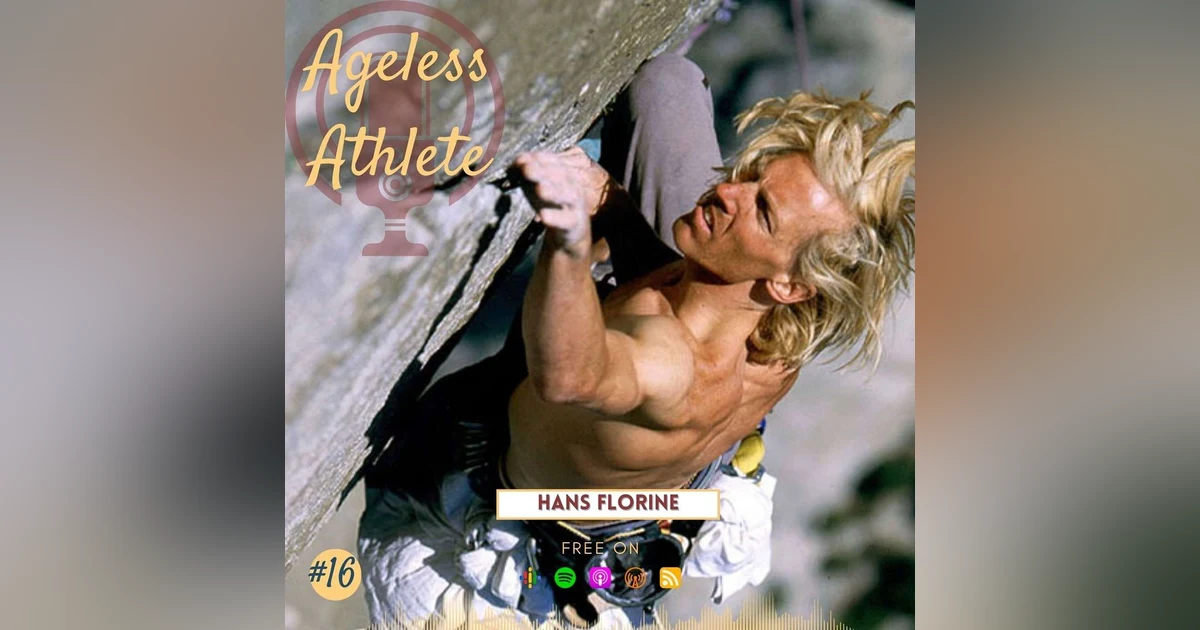

⛰️"It's the struggle on those 3,000 feet that matters, the journey IS the climb."🧗♀️ Hans Florine has a lifelong love affair with Yosemite's El Capitan, setting and breaking speed records on its iconic face, having climbed it almost 200 times. We talked about his climbing philosophy, staying safe on big walls, and what makes an ideal climbing partner. Hans opened up about why he loves partnering with new people up El Cap and his passion for making climbing more accessible to everyone....


⛰️"It's the struggle on those 3,000 feet that matters, the journey IS the climb."🧗♀️
Hans Florine has a lifelong love affair with Yosemite's El Capitan, setting and breaking speed records on its iconic face, having climbed it almost 200 times. We talked about his climbing philosophy, staying safe on big walls, and what makes an ideal climbing partner. Hans opened up about why he loves partnering with new people up El Cap and his passion for making climbing more accessible to everyone. 🧗♂️🧗♀️
We’ve great giveaways from Coros, Physivantage, and Hans Florine himself. Tune into the podcast for deets! 🎙️
- ⛰️Power of visualization
- 🧗 Do Hard Things (DHT) and TNT…what the heck??
- 🤝 Hans’ tips for lifelong safety on the walls
- 🤪 Hans’ favorite and worst climbing partners LOL
- 🥶Cryotherapy for Outdoor Athletes
References:
- Hans’ Instagram @hansflorine
- Hans’ website https://www.hansflorine.com/
- DHT Challenge https://www.dhtchallenge.com/
- Hans Florine 100 ascents: https://www.youtube.com/watch?v=qHktkAx9SFE&ab_channel=OutsideWatch
- On The Nose (co-authored with Jayme Moye @jaymemoye) https://www.hansflorine.com/?page_id=252
- Coros Smartwatches https://us.coros.com/watches
- Physivantage Nutrition https://physivantage.com
---
🚀 Love the show? Here’s how to support it
If something you’ve heard here has stayed with you, made you smile, or helped you keep going, I’d be honored if you’d consider supporting the show. 👉 https://buymeacoffee.com/agelessathlete
📰 Subscribe to the Ageless Athlete newsletter !
1-2x a month, no spam. We share behind-the-scenes reflections, longevity tips, and athlete wisdom you won’t find anywhere else. You can sign up at https://www.agelessathlete.co/newsletter/ 📩
34:22 - [Ad] Resilience Podcast Series
34:46 - (Cont.) Staying Alive on the Edge — Risk, Awareness, and What Struggle Teaches | Hans Florine
1:16 Folks welcome back to the ageless athlete podcast. This is your host Kush Khandelwal. And in today's pod, we visit Yosemite national park with none other than Mr. El Capitan. Hand flooring himself. Hans has repeatedly set and broken. One of the most coveted speed records in the world, the nose of El Capitan. The most. Storied big vol in the world. Eight different times. In 2012 hands alongside climbing partner, Alex. Honnold. To good record again in two hours and 23 minutes lowering the previous record by a full 30 minutes. Hence also holds numerous other speed records in Yosemite national park.
2:00 And all over the globe. Hence also won the first international speed climbing championships in 91. And has held the us national title 11 times. He won gold at the ESPN X games three years in a row. Hans is a pleasure to chat with knowledgeable articulate. Get humble and funny in a way only the most successful and grateful amongst us can be. Hence shared stories previously untold. Including advice on staying healthy. Taking on hard challenges, willfully. And his reflections on aging gracefully.
2:40 And stay tuned until the end, as we have some exciting giveaways to announce from handsome self. As well as the sponsors. Coro smartwatches and fizzy vantage nutrition. Products. Monday Morning, April 1 today but today is not an April fool's day joke. We really do have Hans Florine, Mr. El Capitan on the show. Excited to dive into different topics with Hans. Hans is obviously known for. Climbing a lifetime in Yosemite. Hans, let me begin by just asking you this. Is climbing on El Capitan and the nose is a still as captivating to you.
3:25 As the first time you. laid your eyes on it. Oh yeah. I mean, captivating is a great word to use. I mean, there's thousands of words to use for El Cap and none of them will really capture unless you're standing there at the base and maybe you have to climb it too, but, I'm up to 177 ascents of the nose, so I'm not the nose, sorry, of El Cap, I've done 26 different routes on El Cap, 117 times on the nose, the others are all the other smattering of roots, I'll point out often, uh, when I'm go around speaking, whether it's a bank or construction company or, you know, REI or, uh, climbing gym, like where, where is Yosemite and why is Yosemite this Mecca where it draws people from around the world?
4:08 And I point out that, you know, 3000 feet is. An amazing giant chunk of granite and it's, you know, a mile and a half wide rocks that tall and that big do exist in other places in the world. if you go to Baffin Island, you're talking about a float plane or a sailboat or something to get to the base, right? If you're talking about, Kazakhstan, you're talking about, a three day trek with Yaks, or if you're daring enough, get into a Russian helicopter, right? To get to the base. Yosemite. you have a 15 minute walk from your car door to the base of the 3000 foot cliff, which is just this combination of wild terrain and crazy easy accessibility, right?
4:52 That those are the two things combined that make El Capitan amazing. Huge, gigantic, wild, and it's really accessible, right? I named more things there than I wanted to, but just basically, fantastic, big, really accessible. It is absolutely. a marvel of nature that, there's this beautiful valley that people can drive right into and set their eyes on El Capitan. a short walk, if they decide to do that, or if they take their binoculars out, they can actually, actually maybe even with the naked eyes, they can spot people on the climb. And, uh, I think that is one huge reason, like you said, like just the approach for all kinds of people, climbers and non climbers alike.
5:42 Yes, I've climbed a bit in Yosemite, but then also taking people out there for the first time and having their faces, uh, light up. that is such a pleasing sight. talking, of taking people, new people to Yosemite. You have taken all kinds of people over the years and taking them up the nose. You have taken beginners. You have taken adaptive climbers. I can only imagine how much work that must be. What compels you to put in so much hard work to share this climb with others? I think that any guide, or someone who introduces something, an activity to people that are new to it, whether it's, like surfing, you take people out surfing and they're just so psyched and, you know, maybe amazed by your skill, it's really helpful.
6:33 They're just so big, bright eyed, this natural free ride that the waves give them, or it could be kayaking, or it could be rappelling a guide knows this, that, like you're getting to relive how crazy, you know, obsessed you were with climbing those first months and years that you climbed and how, cool it is. I mean, for climbers, it's the physical movement. You're problem solving with the tip of your fingers to the tip of your toes and using your head. And it's also. You know, outdoor climbing takes you to places that are amazing. Right. that's, that's why I say those two different things. You know, there's a physical experience of you're using every muscle in your body, a beginner, when they come down, they've been holding on for dear life.
7:15 Right. And for that, whatever they can hold on for two to seven minutes to get to the top of a 20 foot wall in a climbing gym, they were thinking about. One thing, that wall, how can I get up? How can I not maybe die? They're so scared and they come down and every muscle in their body is tight. And it's kind of this physical meditation, right? So that's this one part is the physical. And the other is just Taking control of your scene as part of the nature thing. Like I want to climb that rock over there, that. Mountain or that terrain and I'm going to find a way to get up it. So there's this not so much puff your chest out of conquering things. I mean, we all know the famous quote from Warren Harding, you know, El Cap look a lot better than me.
7:58 Um, all this to say that, you know, you're getting to venture out into these incredible places and experience incredible places. So not pairing up with the same old experience partner on El Cap means I get to see and be part of this. Amazing first time with people on El Cap. I mean, when you get to the top of the cliff after being on it two days, three days or a long day, and being on it, it's, you see it in people's face and you're reliving it yourself. You get all that same energy. I experienced the same kind of pleasure when I take people climbing. I haven't taken anybody up El Cap but I've taken some new people up some multi pitch routes, single pitch routes and to see their, their reticence and their nervousness and their fear slowly transform into joy.
8:48 and delight. That gives me, just so. much pleasure. It makes me think that whatever I'm doing, has some worth. So I just love asking this question and particularly asking you because this is not just a multi pitch climb or a single pitch climb. This is taking somebody up, maybe the most iconic rock climb. And, uh, yeah, thanks for, uh, introducing this climb to, to so many people. Could you just summarize Hans, if you can, because we have listeners to the show who are not all avid rock climbers that obsess over, El Capitan. Could you just summarize if it's possible, what does it entail?
9:31 a normal ascent versus some of the ascents you do when you're climbing the nose Really quickly you know, if people get to check out pictures and stuff, I'm going to just hold up the book, but we'll put pictures on the post for Instagram and stuff. you know, let's for that person that's out there in the world, listen, doesn't, they don't, they're starting at zero. Yosemite, El Capitan is in Yosemite. Yosemite is in California and Yosemite is about a four hour drive from San Francisco. Um, If the listener doesn't know where San Francisco, you can, of course, Google, you can Google El Capitan, of course, but there's the verbal description, right? We're in Yosemite Park, which is in California, which is four hours from San Francisco, which is in the United States, the Western Seaboard.
10:16 this wall was first ascended by Warren Harding, um, Wayne Mary and George Whitmore in 1958. They spent 33 days, spread out over 18 months, rigging lines on it and got two thirds of the way up. And they did a final push of 12 days. They were lived eight slept on the wall for 12 days and they made it to the top. It's 3000 feet tall. And so if you look at the tallest building in New York, it's twice as high as the tallest building in New York. Um, the Dubai tower, which is the tallest building in the world, also known as the Burj Khalif, is 2, 550 feet. So El Cap is 500 feet taller than or about 500 feet taller than the Bird Khalif.
11:02 Since 1958, people have climbed it in over multiple days. The first time it was climbed in a single day was 1975. And they coined that as Nose in a Day or NIAD is a big abbreviation a lot of people use. This season, 2024, the average party. We'll take not two days or three days or four days. The average party will fail to climb it. That's what's something pretty amazing about is that half the parties or third, the parties that go to the base and try to climb it will back off because it was too hard for them. So that makes the average infinite, right? But those that succeed still, the average is probably two or three days, three days to climb the route.
11:48 And. Nose in a day is commonly done by exceptionally experienced Yosemite climbers. Nice, Amazing. Thank you for Indulging us with that Description that book of yours on the nose.
13:01 Hans,. I'll confess It had been sitting on my bookshelf And then our, uh, recording just got scheduled on the last minute and I scrambled to dust it off and start reading it. And I have heard you speak and I have seen videos and it's been, present or omnipresent all through my 20 year long climbing career. But I started reading it and I was captivated. The. your story of, of starting of your first trip there and of your first attempt there and the writing as well. It, it really is gripping storytelling, whether you are a climber or you're not a climber.
13:43 I think it's a, it's a wonderful book. And, uh, I'm 45 percent through as what Kindle tells me. And I know that we will finish recording And uh, tonight I'll get back to that book so I can get back to the rest of the story And for, hey, your listeners, it's on Audible and iTunes, and you can also download it straight from my house, my uh, my website. Yeah. and, uh, even more exciting please stay on till the end because we have, uh, some fun giveaways and one of them is going to be a signed copy of the book by Hans himself. So, so stay tuned in. So moving on, Hans,, one other question that I, I was thinking about when I was reading this book is in the climbing community, we will sometimes go and do these climbing trips with people we have just met.
14:34 I have done that. I've looked. Found people on mountain project. I found people at campsites and have tied in and, uh, and gone on and have had a beautiful adventure to non climbers. That sounds, seems kind of ludicrous that we would trust our life, quote unquote, with somebody we don't know very well. And I was reading how, I think it was, I forget who, but you have done that on the nose as well. you have gone and climbed this. 3000 foot wall with somebody you may not have known well. I want to ask you this. So how do you or how do climbers end up trusting somebody they don't know they might have just met and do something like climb 3000 feet of vertical rock you know, anyone can, Watch somebody belay someone else at the gym and go, okay, I see they're safe, um, or see that they're not safe.
15:37 And then you could approach them and ask if they want to go outside climbing with you. So there's always, you know, interview and test physically. I think of it as like, you know, Warren Buffett, he's famous. Investor. He can probably look at a few key things about a business and investment and tell you, you know, and know whether he's going to invest in it or not. I think as we climb, you've been climbing 20 years, you can assess by just the way people talk and, maybe you wouldn't even have to watch them climb. You'd know from things they say that, you know, safety is important to them. I mean, by the mere fact that somebody's climbed 10 years, that's good. And they're standing in front of you, not in a wheelchair. That's probably.
16:18 Number one, but did they climb once in the last 10 years or every weekend for 10 years? You know, there's all these little things, but I think I'm kind of like Warren Buffett. Now I've been climbing 40 years and probably within a short amount of time, I can assess somebody's skill level. And, you know, I probably wouldn't say no to climbing with somebody that I thought was I'm not going to say unsafe. I'm going to say their experience with climbing is maybe they don't pay enough attention to how serious it is. Cause somebody who is unsafe right now doesn't mean that I couldn't make them safe when they're climbing with me. safety is super important, right? And, I've seen stories of people who just don't get it.
17:00 Maybe their attention span, maybe their attitude, whatever. And may climb with them never or once and that's it. all you people that I haven't called back for the second time climbing, it's because I love climbing with different people, not because you're unsafe or you weren't fun to climb with. yeah, I, I can't, you know, I can't, I don't know what advice to give people that are searching on Mountain Project or, um, Facebook or whatever groups online, um, It's been proposed, you know, by the American Alpine Club to have a AAC universal belay card that you've been tested to the same standard as everyone else in the, well, the country could be the world if we did it right, but, um, and it's frustrating for gym owners, right? Like, and people going to a new gym, it's like the ski pass, you have a bunch of ski passes on your thing, you go to a climbing gym, you got 17 belay cards, you're like, look, you don't really need to test me, do you?
17:49 I've got all these belay cards, universal belay card. I'm intrigued by the concept. I'm also a little bit scared of how it might be implemented if it ever, uh, sees light of day And talking of belay cards, one of my favorite things to notice is you go outside climbing to some remote part of the world and people pull out their harnesses from their bags. And right on their belay loop, they might have like a touchstone belay card on it or whatever gym they go to. And they're like, and then, you know, I will ask them, Hey, what's your name? Which Tustin gym you climb at and they, are so surprised that I'm like, you know, you never took your belay card off before you boarded the plane to come climb in Greece. So no surprise there.
18:30 I try to be goofy and will wear mine most of the times at crags, just so that no one else feels uncomfortable. I don't know, but it's a great, it's kind of like a great conversation starter too, you know, like. What t shirt you wear, or, you know, if you're a Washington Redskins fan, or I don't know, something like that, having your belay card, I think we shouldn't give people a bad time. Absolutely. yeah, safety is such an important part of our sport. You have spent more time on vertical terrain than, In some ways, most people alive. What may be a couple of specific things Hans, that you have adopted into your, uh, climbing routine that have kept you safe? I know that you may have had a couple of, uh, little skirmishes while climbing For the most part, knock on wood, you've been a safe climber.
19:19 Are there certain things that have kept you safer despite being able to climb really, really fast? I think of them is, um, the advantage of embracing many, many partners is you learn different ways. And I'm actually going to the AMGA. SBI, Which is a single pitch instructor course in May a month from now. and I know that there's certain little nuances of ways to do things that they might prefer, and they say specifically in their thing, there is more than one way to be safe. And I really appreciate reading that in their, intro manual is that there's more than one way to be safe. And if you learn by rote, at a climbing gym, you know, past the figure eight through this way, this way, and it comes out this way.
20:06 I've seen people, you turn the figure eight upside down and they'll be like, Hey, that doesn't look right. Okay, let me flip it over for you. And they're like, Oh, I know they've never looked at it from the other side. simple things like that, you know, that's kind of. Not being fair to people, but I've seen, you know, the Europeans will wear the, they'll use a, um, a screw link or a quick link that you'd find at a hardware store here in a lot of their clipping into things with aid, aiders and stuff. And partly because I think it's cheaper, but it's a surefire locked steel ring. Um, and they may have some other reasons for doing it. But my point more is that when you learn these other ways that are safe, Then you aren't uncomfortable when you see something well new because you're like well I've seen this is safe three ways, and here's a fourth way I haven't seen before, but if you only know one way you'll be scared and you know being scared or Ignorant is an unsafe Attitude or feeling to have you need to constantly educate yourself on new ways to do things or new to you anyway They might not be new to the other people Yeah, one can learn all kinds of techniques, including safety practices, and usually they are kind of fused together.
21:25 The way people climb safety or adherence to safety is is embedded in those routines and the more one climbs. with different people and approaches new partners with that spirit of learning and curiosity can help that person pick out those, those skills, which could help them with not only the climbing itself but also become a better, safer climber. And I think it takes a certain amount of experience to recognize that, you know, one can't just learn everything from one person and maybe one person does.
22:07 ABC really well, but then XYZ may not as well. And, uh, pick and choose the best practices from the best people. And I think you have done that, you know, with some of your early partners slash mentors, you were able to learn and do, uh, You know, obviously, uh, some pretty trailblazing things talking of having many partners you've had, you know, you've had a diversity of partners over the years. Fun question. What might be two or three favorite qualities about that partner? And. two or three qualities that were not your favorite.
22:52 And sorry, not just from one partner, but from different partners. Some things you loved about your climbing partner, some things you absolutely detested. And I say that also with not just time on the rock, it could be time outside the rock because, because as people know, you know, when you sign up to climb with somebody, you are You're married to that person for the time of the climbing trip. So you share experience, observe all kinds of things. So yeah. Curious. What, what are some of those, things that you have, you have enjoyed or not enjoyed over the years well, let's, let's start with not enjoyed because I mean, if effectively I can say quite.
23:35 solidly that if there's people that have qualities I don't enjoy, then I experienced it with them once And I don't climb with them again or don't adventure with them again. I don't try to change people too much. So, um, cause I don't like people lecturing to me either. something might be, this sounds very like philosophical, but somebody who's, interested in the summit or the end, and not so much, being present during the journey. Um, it sounds very philosophical, but I point out that Yosemite is a ditch. And when you quote, top out on El Cap or Half Dome, you're not on top of a peak, like, you know, some, uh, 2001 Space Audi on top of an obelisk.
24:16 You've all, all you've done is crawled out of a ditch. You're not even at the highest point on the rim. You still have to hike another couple hundred feet to get to. Quote, the highest altitude point. Nobody does. Um, it's about that face of climbing the struggle for those 3000 feet, which that is a excellent representation of about the journey, not the end. Right? so people that go up with me for a half day or three quarter day and we get rained off and we're laughing as we're getting soaking wet and we're shivering, you know, that type person that is like, you. Instead of crying, they're laughing, you know, like we're going to have a good story to tell when we get back to the bar, if we get back to the bar tonight and have a hot chocolate or whatever, hot toddy, that's the type of person I like to go climbing with.
25:00 And, you know, to that, although I have suffered, Often when I do public speaking for a bank, I always say bank or pharmaceutical or whatever, I have to explain I'm not the m word climber, which is mountaineer. I'm a t shirt and shorts climber. I've dabbled in quite a bit of mountaineering, but I really like being present there with shirt off or t shirt and shorts in the sun. Over, you know, shivering in a snow cave and then bragging to my buddy in the bar, like I've suffered more than you, I know you haven't, I suffered even worse, you know, there was a time I was stuck in this snow cave for seven days or something, you know, um, and I do think, I don't know, I, when someone says everyone should try it once, I don't know, maybe you shouldn't try mountaineering once, I've done it more than a couple of times and done type two or one, whatever fun suffering, and it's, it's interesting, but, um, yeah.
25:56 95 percent of my climbing the last couple of decades has been t shirts and shorts, sort of sunny climbing weather. so there I did, I get to that question about partners. Partners need to be competent, which doesn't mean they need to climb hard. They just need to be competent at the skills of the adventure we're on, you know, and, and that goes from every grade to five, one to five, 14 need to be competent and then they need to be easygoing, easygoing, which means Outcome doesn't matter. We're, we're going to have fun applying the skills we have with us to this, you know, this terrain, whatever it is in front of us. Mindset is indeed, uh, so important.
26:37 maybe even Trump's climbing skill. Just, just being somebody who can fundamentally appreciate where they are and what they're doing and take things in a positive light, then they're not. Because end of the day, climbing is a recreational activity. And, uh, just the fact that we're able to climb is such a privilege. One thing I was reading in your book, Hans, and, uh, which struck a note was, I think it was. with Peter Croft or I forget who, I think it might've been him or maybe somebody else. But anyway, you were 25 and, uh, you were about midway up the nose and, uh, you were, I think, quite exhausted or, nervous for some reason, and you were not, ready to lead some pitch and you asked your partner to switch off with you and you reflected that you had that kind of self awareness at that age, which I was also impressed by when I was reading that because I know that my ego has sometimes kept me from acknowledging some of those constraints, fear, uh, fatigue, et cetera, when I'm climbing.
27:56 And I've sometimes made. Decisions to continue climbing instead of stopping or switching leads because I was afraid to look bad. So I just want to say that that is one quality that I also love in a climbing partner, which is just acknowledgement of where they might be, because if they undertake something that they're not prepared for, it just puts the entire team in jeopardy. Yeah. And I'll say that at age 25 I was probably 15 years of experience as an athlete, although I had only been climbing six years then. So I knew how to inventory my physical body probably better than most climbers that had been only climbing five or six years.
28:40 just because I, I've been a lifelong athlete since, you know, I started doing organized sports, I guess, at age whatever. 7, 8, 9, 10. and I look back and like I did a lot of things that a normal 20, 20 something 30 something would do, you know, over their head. But, um, yeah, I, I commented on that very one because, you know, it's probably more the exception that I turned back and let someone else take the lead. And that's a figurative as well as literal thing is that let someone else take the lead that I'm impressed with my younger self that I did that. Super. This, maybe last question on this topic, Hans. Any, any two or three best practices to stay safe yet efficient on, on like big walls or even a short multi pitch or single pitch climb?
29:31 I know, you know, we need to tie a good figure eight. So inspect your partner, tie a good knot. Any other things you, you have learned that you You may want to share with, with listeners. Yes. Um, this is, I think super important is no matter how experienced you are. Um, here's a classic introduction for the someone I've climbed with the first time. I'm like, Hey, I know I'm this celebrity climber. You've seen me on the cover of climbing magazines and in videos and all that. But like I fall sometimes and you can look at my crotch. And check the knot check the belay thing and all that and I won't be insulted, um, cause I'm going to check yours and I don't want you to be insulted.
30:12 I will check yours. I don't want you to be insulted when I look at your crotch and I've just added a little bit of humor there because, Oh, why are you staring at my crotch? Um, and that humor, is glue that, that glues the idea, the concept in your head, like check people's crotch. A lot goes on there. The belt is doubled back, the belay device is correctly loaded on the rope and on your belay loop, and your knot's tied. Um, so, there is a lot going on right there, and being humble is another great word. I'm humble enough to let you stare at my crotch and to see if I am being safe. I'll never be insulted by you checking me for safety. I, you know, I may slip up, but I invite people when they arrive at a, say a multi pitch anchor.
30:54 Hey, look here, this is the way I set it up. Is this feel okay for you You know, Thanks. Absolutely. Yes. One is never too famous or one should never feel too intimidated either in the company of somebody who's famous to ensure that, they are doing the right thing because we have had famous climbers in our midst who have made, you know, simple mistakes that either have been fatal or could have been fatal. A hundred percent agree with what you just said. One other thing I was, pondering, Hans, about speed climbing on the nose. We have had so many records that have been set and broken over the last, let's say, three, uh, three odd decades of, doing speed climbing.
31:45 I haven't seen Many, or maybe any women, and I could be wrong because I haven't made it through to the end of your book yet. Have there been any women? And if there have or haven't been,what do o you think is stopping women from embracing, let's say, speed climbing? Given that the first person to free the nose was Lynn Hill, a woman. And there are many women I think who go and climb nose in a day and do, you know, slower, but still commendable ascents on El Cap. So, curious, uh, where are women with speed climbing on the nose? So, I mean, we all know that, you know, Lynn Hill beat, whatever, men, to free climbing the nose.
32:31 So it's, the physicalness of it is not the challenge. And by the way, the, the season prior to Lynn. Freeing the nose. She climbed the nose with me and me and her set the speed record for female male ascent It's okay. I think whatever I'm okay with saying female male ascent and double female ascent and transgender ascent, whatever. Keep all these records It's great to give people recognition I think the female record is somewhere around five hours. So there is a lot of women climbing fast up there. and the male female record now is four and a half hours, um, set some 10 years ago, I think, or more.
33:12 what else do I want to say? I've recently, this last season, I climbed the nose six times and I got passed and I climbed alongside of a number of women that are on the search and rescue crew at Yosar, Kate and Michelle, and, And they're, they just go out for like their day off and climb the nose in you know, 11, 12, 13 hours, like bada boom, no problem.
34:28 and they're not trying to get a speed record. That's just casual for them. So I'm sure if they put their skills to it, Um, it would have a result, you know, more than just, you know, naming them as females or whatever you won't see anyone get the speed record on the, on any El Cap root that's under the age of 20, even though gymnastically. Kids 18, 19, 20 are winning world cups. They won't win the speed record on El Cap because they don't have a driver's license, right? Until they're 16 or 18 and women have had a more difficult time living in the outdoors, um, in remote areas.
35:09 Uh, historically, and that's, you know, changing, you see just as many women doing van life as men almost now, and at crags, and so they're getting out there and being more and more comfortable. And that's what it takes is time in Yosemite and getting good at those skills. And they have that ability more so now than they did before, you know, Lynn was an anomaly. She could move around in the climbing world with, uh, More exceptionally than most men. and I mean move not only on the rock, but amongst the communities and the camping and the climbing world so that she could make the connections. It takes a huge support crew to, climb the nose free and she has the personality that could manifest that. So, That's being more and more the case now.
35:52 I, yeah, I, watch later this season. I am hoping to do some things with women on El Cap. Um, um, yeah. Amazing. Yes. I, I shrug my shoulder and like I'm cowering a little bit because I am a white privileged male and I, I, I wanna everyone can have access to climbing. But I just paused because I'm a white privileged male and I, and why does it have to be, you know, I'm Why does it have to be him that's teaching us? And I'm like, well, I, I'm offering, you know, so White, privileged and blonde to boot. yeah. Sorry. Couldn't resist that. Absolutely. Thank you for, thank you for that answer. Really appreciate it.
36:32 And. You have done so much to open the doors to climbers and just people of all abilities and levels to access the sport of climbing that we love so much. You have taken the time out, the resources out to do that. And, uh, yes, awaiting What's to unravel this year with, uh, what you're just talking about. Excited to see, I'm turning the big six zero for your ageless athlete podcast, people six zero and two and a half months here. I'll see if my body can hold up to do some. fun things. you are ageless. Hans happy early birthday to you.
37:15 talking of, doing different things over the years, you started a family while you were still peaking, let's say as a climber, as an athlete, how did that change you? and did you think you made any sacrifices with your climbing to be a family person? Yeah, um, well, sacrifice. Yeah, I don't want to get into dictionary too deep, but sacrifice is an interesting word. I like trade better. you trade one thing for another because trade is like, you know, it's the beaver quilt isn't worth the loaf of bread. Then you go, okay, I want three loaves of bread. And now it's even, it's not a sacrifice.
37:56 It's an even trade, you know, um, spending time with babies and toddlers and little kids and teenagers is crazy rewarding. it's harder than climbing the work, get in to get that. reward, but, it's a different reward than going out And, you know, running up a 514 at a sport clag or, climbing Mount Everest or climbing a long multi pitch route in Red Rocks. Um, it's different. Uh, it's not a sacrifice. It's just different. But I will say that the things or the climbing that I think. 95 percent of what people know me for those things, those feats of climbing that I've done. I did after I was a parent.
38:39 I believe that the reason is when you are obsessed and love something as much as climbing and you have all these other obligations like raising kids. Um, when you go climb, you plan much more and you go like, okay, I've got a hall pass from the family on, you know, Sunday. So let's see, I'll plan it and I'll get the right partner together and we'll go up, you know, Saturday night and we will launch. And I can't tell you how many of my friends, you know, Peter Coward, Greg Murphy, Jim Herson that are all working 50 hours a week in a white collar job in the Bay Area That's four hours from El Cap and kids and we would they would you know, we'd team up and like, okay We're leaving Friday at 6 p.
39:23 m. We get into Yosemite at you know Midnight sleep for six hours and then climb all day Saturday Drink coffee and drive home Saturday night, mow the lawn, play with the kids Sunday, and then you'd have blood read bloodshot eyes Monday morning at work, you know, you did something really big and incredible because You planned all week. You thought about it. You imagined it You visualized it and you know, maybe you got into the climbing gym Tuesday and Wednesday night, you know during the week To keep yourself fit but and limber, but I think that is I've done all my biggest most notable things people know me for Since I became a parent because I focused the time I was climbing to do the big things that I wanted to.
40:06 I think if I had just been a knucklehead bachelor roaming around in my van, I would have been, Oh yeah, I'm climbing today. I'm climbing tomorrow. I'm in the next day. I climbed last week. know. I don't know how much planning I might've done pull off bigger things. Yeah. Thank you for that. Uh, love the answer. And actually just to flip the question, do you think that having a career, having a family, having that all rounded aspect of your life has actually helped you perhaps? Succeed in a greater capacity with your climbing goals. Absolutely.
40:46 Yeah. Yeah. I mean, I I, questioned like, Hey, I don't want to Be a guide or I don't know run a climbing gym because that would mean I'm Mixing my climbing with my sustenance meaning or my work people use the word work Your work is different than what you are or your work is different than your play climbing I love so much. I want I didn't want it to be Reliant on it for my income. So, and I've worn a lot of hats, um, accountant, project manager, health club, climbing gym manager. Finally, I did run a climbing gym from 2010 I was mature enough at that point that I, Really, really enjoyed the business part of, you know, cause running the climbing gym is more managing people than it is, you know, guiding people at climbing.
41:38 So You have certainly reinvented yourself as a professional. you have done a few different things, maybe starting in a white collar profession to doing other things. Many professional climbers that. we know, like you said, you know, they are living out of vans and they're still doing extraordinary things. How have you found that. balance or what's allowed you to keep shifting into new thing? Is it, has it been just drive to keep learning new things? Is it been something else that's allowed you to manage your climbing and your family, better?
42:20 What's, what's been sort of that catalyst to Hans. doing different things with, uh, your career. And actually I should, I should ask you last question there to add one on is what are you doing now when you're not climbing? not much. Um, actually I became a grandfather, four months ago. So, um, we've gone up and, you know, we're being supportive of, my daughter, Katie. she's got a little baby Arwin and, um, moved up to Arcata. So that's, um, we're there geographically to be supportive grandparents is one thing. of course. mom and pop want most of the baby time.
43:01 So we get to do other stuff. okay. One of the things is the mindset of a beginner, right? Like, if you're a beginner, you're going to make mistakes cause you're trying something new. Right. you know, this is very philosophical, you know, professional speaker stuff, but like the people who are the most successful in the world, other people who have made the most failures, right. They're, they're not afraid to fail. Right. And like, I just went surfing for my first time at age 59 last month. We went down to Nicaragua and I failed to get up on the surfboard many times, but I did get up on it by the end of the week. And yeah, I did. All right. Cause just various skateboarding and snowboarding skills over the past long lifetime I've had. but yeah, I'm a five, a five, two surfer.
43:44 Um, now after one week in Nicaragua, maybe five, one, I don't know. some surfers would say I'm not even fifth class, but yeah, I noticed, uh, your trip to Nicaragua, Hans. And, I think you had titled your, uh, post with something like, you know, trying something new or something on those lines. And it was so great to see that you were up for, jumping into a new sport for you. What is, uh, what is important about, uh, trying new things? Why is it important for you to be learning surfing, which, you know, is kind of intimidating for many people, just like climbing is, but, you know, Also for somebody who is a new grandfather.
44:29 um, well, let me help everybody remember this with a acronym TNT, which is dynamite, right? Try new things. You've said it three times or four times already, but TNT dynamite. It's a real dynamite. It's good for your, for your life. Try new things. Um, and I'm. I'm going to, I'm going to plug here DHT, which is do hard things. Um, DHT challenge is the thing I came up with in 2010, which just, we made a list of things to do for the year. And at first it was like, Hey, let's do something hard. Like let's do five thirteens or let's do V nine or let's do a marathon or let's challenge people to go to five different gyms.
45:10 Um, and then. Someone said, well, could we do something like serve three hours at a soup kitchen or a volunteer at, you know, hospice or something? I'm like, uh, that'd be hard. And they're like, yeah, it's do hard things, right? I'm like, okay, so he'd add things like that and we'd add things like Write a handwritten note and mail it to somebody because people don't do that anymore call three friends you haven't talked to in three months and just say hello. I appreciate you in my life, you know That actually may not sound hard to some people, but to others, it's like, Oh, okay. You know, and we made a list of things for people to do at the gym and people would come up to me like, that's so cool. I called a friend that I hadn't talked to. And I'm so glad you, you know, suggested that to me. And I'm like, well, I didn't suggest it to you.
45:51 The community made up this list. It wasn't just me because I can come up things like I think are hard for me, 513 or whatever, and people will be like, well, sounds like. Serving three hours in a soup kitchen is harder for you Hans. I'm like, yeah, you're right. All right, that would be hard for me But I think yeah willing to go and look like a beginner and I not only looked but was a beginner at surfing is Mindset that's good to have and I get I'm thinking of the classic sort of, you know 27 year old person out in their van, trying to get that next grade, the 13 C or 14 B or whatever they're trying for. And, and that's their focus, just that, and that's what they're good at.
46:35 it is wonderful to master something or become expert at and spend 10, 000 hours at it. At the same time, it's refreshing to go and try, you know, bow and arrow archery or something. And you're can't even hit the haystack. and it's great to see. Rapid, recruitment of skills in another thing. And I often find that that rounding out of your skills only is going to help your climbing. And I do go around and teach clinics, and this is a very important is, uh, the Karate Kid movies, they call it. Kung fu in the later versions of the karate kid movies is like everything is kung fu, right? Everything is karate hanging your jacket on the hook is kung fu.
47:17 Well, I say everything is climbing, you know, i'm washing I'm washing the dishes I spread and do the splits on the ground because i'm so tall Otherwise i'm arching my back over to get my hands in the sink to clean the dishes So i'm spreading my feet and doing the splits and trying to stay flexible and stuff and yeah Washing the dishes is climbing, you know, whatever. So, trying new things, keeps you learning, I guess. You can always bring it back to climbing. I love that, Hans. I like that so much. Uh, try new things, TNT and DHT, do DH, yeah, DHTchallenge. com. Go there. It's free. Um, it's a fun community trying a bunch of wacky stuff from, That is a great inspirational nugget there.
48:02 here we go. I'm holding the sticker up of the little, our little, goat. Our goat is our mascot. that's a, it's a great sticker. And, for people who are not watching this, uh, Hans has a great, Shirt as Well, Hans you can really, can you wear A Mr. El Cap shirt if you haven't climbed El Cap? Is that, Is that like not allowed? Well, gosh, it's killing me. I I'm trying, I hope I remember this kid's name. A young man was wearing this shirt and El Cap and he, he walked up to me and I pointed at him like, I kind of gave him an odd look because I'm kind of funny and he's like, I know I shouldn't be wearing this shirt, you should. I'm like, no, no, I mean, have you climbed El Cap? And he's like, oh, nothing like you. And I'm like, what do you mean? You know, whoever smiles the most is the best climber.
48:44 Anyway, he, he. Came back a week later when we were there for actually a memorial on El Cap Meadow and he happened to know I was there and he went home laundered this shirt and then gave it to Oh, uh, that's so cool. Yeah, I've never seen this shirt anywhere. But, um, I guess they got it in the gift shop. it. it's it's great talking of El Cap And, talking of speed climbing, you were doing speed climbing on plastic. you were winning competitions, Hans. as a young athlete and you were climbing on El Cap and setting records on El Cap on the weekends and I was just thinking that is such a extraordinary combination.
49:25 if you think of speed climbers today, I think they barely climb outside perhaps and they certainly don't climb big walls. What allowed you to transfer skills from L CAP over to speed climbing Yeah, over the weekend. versa? Yeah, it's just such a, curious to hear your reflection on that. I'm in the right place at the right time is one thing. there was a time in the 1800s where the same person could win the hundred meter dash and the marathon because the sport was young. That's basically my luck of the draw of being early on in the sport. Diane Russell.
50:06 She's a woman climber who was competitive at the same time as me. She was the only other person to win speed climbing and difficulty at the same national event. and again, that goes back to, you know, whatever. somebody probably could win the 100, the 200, the 400 and the mile all at the same track meet because the sport was so young. um, there was a young lady actually in the last five years that won speed climbing and difficulty climbing and whoever you were, young lady, I think I gave you kudos online. It's amazing that much bigger, crazy achievement now than back then. It was in the right place at the right time. And yes, I actually set the speed record on the nose with Steve Schneider one weekend and the following weekend won the nationals championships at city rock jam in Berkeley.
50:52 Um, not the best training, you know, for one for the other, but, that was the state of the sport then we surmised that, the final route that I sent at that thing was probably 13 B cause we, they left it up in the gym and we checked it and, you know, nowadays. 13 B is like the qualifier before the semifinal or something you have to send. so it's, you know, just different time. that makes sense the way you explain it. Different time and, uh, the degree of specialization doesn't. Didn't exist back then as it does today. Curious. Do you follow competitive sports actually competitive climbing? And, Uh, because you used to compete in speed, wondering how you think about how remarkable that is.
51:41 The athletes are today who are, I think, climbing the speed wall in a matter of, in a handful of seconds. Like, I wonder what goes through your mind when you see those people and they're flying up these, this wall And when you were saying those records, I think you were amazing for that time, but maybe a little bit slower. Uh, I know all the numbers, so it's easy for people to quantitatively compare us. the first, uh, the second X games, the wall was about 45 feet high or 40 feet high. Um, and the world cup is 12 meters, I believe, which would be more than that. Maybe 45 or 50 feet high. Anyway, it's. Five feet longer than the speed route we did back then.
52:22 And they do it in five and a half or now five seconds flat. We did it in 17 and 18 seconds, first and second place back then. So it took us three times as long to get up a wall that, was just, you know, five or 10 feet shorter than what they're doing now. and you know, they changed the grade or the route every. Every competition back then, so it might have been a 5. 9 one time and a 5. 12. Vividly remember in France. They like okay. Let's let's make it so the difficulty climbers have a chance at speed Let's make it a 12b route And I think I took third there instead of first and some young Spanish climber sighting 513s at the time yeah, but it wasn't, particularly fast.
53:04 You can imagine speed kind of, 512 B wouldn't be five seconds. It was more like, I don't know, 50 seconds or You specialize in speed climbing and you specialize in big walls, but you also have this, you rigorous approach to training hands from what I can see and you have been so quantified. and plan with the approach to keep keep improving upon your climbing on the nose. I'm curious as to how you didn't take that approach and your natural personality to something like sport climbing bouldering. to be honest, I'm not completely sure where you are with other kinds of climbing these days.
53:46 with your talent, if you had, I don't know, if you ever focused on the difficulty end of the sport, you would excel as well. Is it, is it, the fact that you were not as inspired by sport climbing or is it paucity of time? Because for example, like some of the people that you have roped up with over the years, people like Eugene Hirayama, for instance, you know, he was also known for excelling with difficulty and, and single pitch climbing. what is it that has maybe kept you from, uh, also pushing the boundaries with, with sport climbing? wow. Yuji is a excellent person to call out, to, um, talk about here on this particular angle, because Yuji lives in Japan, mostly now, and there is no Yosemite there.
54:38 There's no, I think they have a handful of multi pitch routes there, but they might be two or three pitches. He's so proximity wise, he lives in his raising a family operating businesses, near a place that doesn't have multi pitch long endurance climbing. it has single pitch and And bouldering problems. And he excels at those because that's what his home area is. And he loves climbing and he's got to have an outlet near where he lives. So I don't know. I, I just saw a thread, which is another app born from Instagram for you. Uh, older people like me. And I saw, Yugi said, you know, people see that I'm bouldering and sport climbing, but trad climbing is something that's always been historically great for me.
55:22 And I hope people do go out and experience. experience, trad climbing. Cause there's really a lot to be enjoyed from it and this, that, and the other. And so I think his heart is there, but, um, he just loves the movement of climbing like I do. And, obviously he loves competition. Um, he just crushed in competitions all over the world as well I was a competitor before climbing and track and field and soccer and other things. And so that was a timing thing. Again, you ask, you know, how come I haven't been known? Well, I mean, I won two or three national. Comps. I did it purely, purely out of my ability to train and be competitive because you got to remember in 1990, 91, 92, up to 95 and beyond that those early days, a lot of the climbers, I remember Jeff Lowe trying to decide who would go to the 1980, 89 Snowbird and nationals.
56:15 And he's like, well, send your resume. And, you know, like Jim Karn and these people like, well, I sent a 513B yet. Smith rocks. It was like this very, very subjective resume you could send in, you know, and I'm like, Oh, I climbed the nose once. I won a local competition in Los Angeles where there was 12 people in the comp. You know, so what does that mean? You know, maybe they're all five, six climbers. Yeah. So it was a bit silly. What I'm getting to is that there were climbers that were, There was a dozen climbers at a national competition that were better climbers than me, and I would place first, second or third because I knew the climbing competition was coming up.
56:57 So I trained for plastic climbing competition, which was very hard to do in 1990 because there was only two gyms in the country, and I happened to be near City Rock, right, wherever there was one, by 91, there was like, you know, 10 climbing gyms, which is still not many, right? So, Nobody knew, including myself, how to train exactly for a climbing competition coming up, but I, it was so important to me that I not only climbed so hard that I didn't look like I was a good climber at the gym, but I knew, duh, you rest two or even three days before a comp and a lot of Climbers, you know, picture cut off blue jean shorts and they go climbing because they love nature and stuff. They probably climbed Friday before the comp on Saturday and I would beat them because simply I rested longer and I, I attacked the plastic in a way that was more, I was just more experienced at plastic nowadays that's no such thing, you know.
57:52 Competitors at a climbing competition. They're all crazy experienced at plastic, right? we used to joke that you go to climbing competition and you see, you know, whatever, there's only 60, maybe a hundred, maybe only 60 different holds in the world or certainly in the U S. So you knew every hold on the route when you looked up it before you got to, you knew that they, um, but now you don't know holds. There's so many, there's, tens of thousands of different handholds, right? you know, you were training with an intensity and you were somehow able to balance your career and family and weekend warrioring at the nose with this certain things hands that you adopted with your training, which had you excel with climbing on the nose because you were not living in.
58:42 Yosemite Meadows, you know, as a full time climber, you were training at the gym. And I'm just curious, like how, what kind of training were you doing back then? And also, what kind of training are you doing today? Because you still have El Cap ascents on the horizon. One last thing I will throw in there, you know, many years ago I remember, uh, I think I met you at, uh, one of the Touchstone Climbing Comps or something and, uh, this could be totally apocryphal, but I heard somebody say that, oh Yeah. Hans, you know, he will only allow himself to watch television if he's also doing sit ups. Thanks. As watching television. So is that, is that true?
59:25 Not entirely. No. Um, I, I, I kick back sometimes. That's funny. We added a challenge to our list. We have this list every year that comes out and changes every year. This year it was watch a 12 series episode on next flicks or whatever, Amazon, or, and, um, do whatever, 240 reps of an exercise of your choice during the episodes. Cause it's year 2024. yeah, we had that challenge. Um, but no, I don't, uh, do exercises all the time when I watch movies, but it is a good way to pass the time while you're watching a movie. And to that point, like how, how do you train when you have all these other things going, there's always somebody.
1:00:09 training harder than you. That's truth. And there's always someone in a crate, more crazy. I think of triathletes, like, what a, what a crazy choice as a parent. I mean, you gotta train your cycling, you gotta train your swimming, you gotta train your running, and the hours that you gotta spend on a bike to be fit on a bike is just nuts. I mean, you hear of a parent, Getting up at, you know, 3 a. m. And going swimming for two hours or whatever. And then they get on their bike for twice. Then they, they take the kids to school and then they go to work for eight hours. And then the evening they come back and do a run and you're like, okay, that's way more than I would train for climbing, you know? So why would they do that?
1:00:50 do they have the energy to do that? when I was training for the nose record with UG, I was working. 30 hours, maybe 40 hours, sometimes a week at an architect engineering firm. And I would get up at four. Luckily there was a gym in Oakland, great Western power company. I would go in and I would train for three hours, five to eight. And then I'd take a shower and I'd head to work. And I'd found like, Oh, you know, exercise is way better than coffee for make waking you up and keeping you psyched. and I'd get home and I'd have dinner with the wife and kids and then. Put them to bed and I'd probably go to sleep fairly early, eight 30, nine o'clock. And I wouldn't repeat because the next day I'd need a rest after that.
1:01:33 But I, you know, I only trained twice a week for, doing the nose record, but I do like three, four hours in the morning, really, really hard. And the reason I was, able to motivate or inspire myself to do that was I just saw the smile on Eugene's face. And I saw the, in my head, I envisioned, you know, the excitement I would feel in the butterflies at being at the base of El Cap and looking up there and, know, visualizing those 31 pitches. anybody that has been obsessed with something knows that you will change, you The regular course of human activity to pursue that obsession. So, five to 8:00 AM in the morning before, uh, before going to work and, uh, making sure to, uh, get your, uh, good night's rest by going to bed at eight 30 or nine.
1:02:23 And uh, I think the only way for me to be able to put in that kind of focus is when I have a goal. in front of me, otherwise it's hard to, to motivate. I think you, indirectly pointed to the power of, uh, goal setting. Any specific things you were doing in your training routine, Hans, which allowed you to maintain that kind of fitness. We don't have to get into specifics, but were you climbing a lot of routes at the gym? How did you balance, let's say on the wall training with off the wall training besides doing those countless sit ups? right.
1:03:03 well, one thing is great is that like Kung Fu karate climbing, it uses every part of your body. So no matter what part of your body is tired, you can train something else. And you know, sit ups, Actually, the front of your body core strength is not as important as the rear part of your body core strength. And so you want to work everything core strength sides and front and back. Um, why am I saying that? And we didn't want to get into details everything is climbing. Everything is karate. when I'm doing sit ups in the gym for that three hours in the morning, I visualize like I'm holding some position. And if you're watching the video, I'm like holding my hand up my toe down here, which is, myofascial train in your body, you know, it's length and all core strength.
1:03:51 And I'm envisioning the climbing part of it. to, that end, though, more specific is that there was cracks at, The touchstone gyms that I went to and I would put my stuff, my hands in cracks and climb up and down repeatedly and try to do the route the hard way. Do my thumbs down, my thumbs up, my palms face left, my palms face right. So that I'm kind of making the crack different. Every time I go up using the footholds around the crack, not using the footholds around the crack, all that sort of stuff. and you know, I climbed just regular face climbs in the gym as well, but just volume of climbing and. The whole time I'm envisioning, perhaps it's a pitch or two on the nose while I'm doing it. It's your body visualizing why you're doing something is hugely helpful.
1:04:34 I've seen interviews with people that, you know, high end martial artists that do movies with Jackie Chan. And they're like, Oh yeah, when I'm doing the dishes, I'm on the splits, one foot up on the counter. Well, you know, that sort of thing. Everything's karate. You're just, so without getting specifics, I, when I teach clinics, I say, Hey, if you're doing a crunch, if you're doing a. a plank, whatever. Think, feel, visualize what move on whatever bouldering project you're doing or climbing route or goal you have and think like, yeah, I, I need this core strength or this fitness for that. I'm going to apply this later. You know? For sure. You were able to think of specific kinds of movement needs and strength needs and find a way to train for them.
1:05:23 Within the, uh, walls of a climbing gym. And sounds like, yeah, that paid off, paid off well. And I love that, uh, expression again. Everything is karate. just made me wonder, there is this. Sort of famous book climb in, uh, in Bishop at Pine Creek called Everything is Karate. I think F8 by Chris Sharma a few years ago, and now it's seen a few more ascents. Yeah, I, I was just wondering if there's a connection between that expression. Oh, I didn't know he did that way to go. Sharma. Is it hard? 14D, not, not hard, not so hard for him maybe, but yeah, for the rest of us. yeah.
1:06:03 yeah. Yeah. not, not, not easy for, uh, For anybody really, with so much climbing volume over the decades, you have been so consistent. Have you had injuries? Are there, any kind of limitations that You have to work through? Curious as to how you have maintained to stay in fine fettle over the years. How I've had um, overuse injuries, strained tendons. I've had three knee operations, all of them orthoscopic. uh, when we rotate our knees in the Egyptian sort of drop knee position from sport climbing and then put pressure on it, it's, you know, anatomically really terrible on your meniscus.
1:06:44 Your bones are aligned really well. to rip your meniscus And I I ripped both of my meniscus. Luckily for me, good genes or whatever, they just went in and cleaned out the rip and I just have less cushion in my knees than most people. So I had those operations. and then, uh, I broke my thumb one time in Patagonia taking a, a fall that probably should have broken my back, but I ended up with a broken thumb. interesting side note, the emergency visit in, uh, Porto Natalis was 35. They splinted my thumb and x rayed it. After 35 years of climbing had my first large enough accident that I needed to be rescued.
1:07:25 I broke my right heel and my left tib fib falling about 17 feet on El Cap, hit a ledge. That was 2018. That was tough, wheelchair for two months, crutches for two months, um, knee scooter for a month, yeah, and fortunate for me, everything came back, I was running a year afterwards, yeah. How about today? Are there, uh, any injuries or. Maybe overuse, stresses that you have to work around as you train and climb. right now I'm in Tahoe, as I'm talking to you, and, I just got foot surgery for five days ago. Five days ago. elective, it's called Morton's neuroma.
1:08:06 It's very common in women who wear, it's usually women who wear high heel, very tight shoes because it squeezes your forefoot together, much like climbing shoes. So it's, it's probably we'll see a lot more climbers getting this operation decades into wearing tight shoes. It's just a pinch nerve between your second and third toe. And, for me, 99 percent of the time, it doesn't bother me, but just the right twisting, of course, in a crack or, oddly on a foothold makes it feel like a knife is being driven into your foot. But as soon as you take your foot off of that position, for me anyway, the pain goes away rather quickly. Um, so I don't have to get the operation, but I did. And, now I'll have a little teeny one inch numb spot between those two toes, uh, maybe forever, but maybe it'll come back.
1:08:50 But, that's kind of the most recent thing. Um, but I've been, um, Biking and hiking and climbing all through that and surfing, um, paddle boarding. You mentioned it's elective, what I'm, uh, gauging is that without the surgery, you would still have been able to do most things, but maybe jamming your foot in contorted positions. Was not something you were able to do. not, um, not with an, Uh, with boldness that I will be hopefully if the surgery works. mean, we all feel discomfort in our climbing shoes after a while wearing them, if we're wearing tight shoes and we feel discomfort stuffing in the crack. But, you just like hand jamming you.
1:09:31 You get used to it, you learn how to place your hand in there and squeeze on it so that the pain isn't detrimental to breaking your bones or breaking the skin. And with feet, it's the same way. I mean, yeah, my feet hurt stuffing them in the crack, even when they were at their healthiest, but it was something that you can mitigate by just rotating your foot and taking it out after a while. But with this Morton's neuroma, it was so painful that like, it just, you're in, Enough pain that you would, might jump out of the crack and being on lead. That wouldn't be a good idea. You know, it just, it's so distracting. It's, it's not worth the climbing pain. the way You described it, uh, you know, Made me certainly want to make sure that if I have ever have those issues come up, I tackle them early.
1:10:17 Any kind of prehab drills, Hans, that you do today I'll say the number one thing that kept me healthy when I was sport climbing at my best. Was, contrast bath for my hands. Cause your hands are the thing, forearms and hands and elbows are the most likely thing to get an overuse injury from bouldering and sport climbing, I think. and so I would, if I was on the road, I'd find a cold stream to soak my hands in at the end of the day, and then let them thaw and then put them back in again. Um, Let them thaw, put them back in again. plug for Physivantage. Collagen has been shown and proven that it takes collagen right to your mucus polysaccharides area is what the building blocks of tendons are.
1:11:04 and it takes it there to your fingers. it's like all your body parts, your tendons and your muscles, you stress them and then they grow stronger for you. Humans are amazing. And it, by the way, it works when you're 60, uh, well, I'm not 60 yet, but it works when you're 20 and it works when you're 30 and 40. Maybe not at the same level, but you're stressing your tendons, your muscles, and then your body says, Oh, I got to make those stronger to be ready for the future. So one way is fueling yourself with good food and supplements. The other is, your body responds to hot cold onn parts of your body. I've heard recent things about like, don't put ice on a swollen ankle or this, that, cause your body's swelling up because that's what it's supposed to do.
1:11:49 I don't want to say I know which is better cause I don't, but I do know when my hands are not injured, but I'm just stuck in a cold bath and then in a warm water and then cold bath, they are way more flexible and just feel more alive. And, um, And you don't have that claw hand when you go to sleep at night. that can only be good to flush it. Basically you're flushing the area, right? Hot, cold, hot, cold. You're flushing fluids through your hands. There's a lot of small capillaries and small blood vessels and to help the body carry stuff through the lymph node systems is just good. And hot and cold does that. Those compression sleeves do that as well. So if you can afford a massage, then get one.
1:12:30 what I gather is if you're watching Netflix and you're not doing sit ups instead, you should be doing those contrast baths by dipping your fingers in alternatively in a hot versus cold, environments. It's interesting that you do that. and cryotherapy, you know, has taken off in the last decade, I think where sometimes people have ice baths installed in their houses. Now I see that as becoming somewhat, uh, popular in the surfing world. where a lot of like pro surfers have, uh, ice baths and maybe access to saunas and they're going back and forth.
1:13:14 Given the all body demands, that climbing induces. I yeah, I'm curious if climbers are also adopting a whole body cryotherapy to recover from, intense climbing sessions, because like what you said makes You know, it's science, you know, you, you stimulate your body in a different way when you put it through those, uh, those extremes of hot and cold, it has helped you and others also recover from, the use of their fingers and their limbs and their, uh, arms maybe cryotherapy is being adopted by climbers more mainstream. I don't know if you knew any, I think all athletes, all athletes are investing time and, and it looks like it's, it's a win for any athlete is cold therapy.
1:14:04 I mean, this, the Hoff method of, dealing with cold is certainly popular, makes it sound less than what it is, but I mean, it's, it's good science and a good human mind. Some of it's mind over matter, but, Definitely, they're even showing like you're going to lose more weight by dropping yourself in a cold plunge every day than if you do, you know, get your heart rate over 135 for an hour and sweat, you'll be better off. Your calories will burn off because you're trying to you know, adapt from that cold sensation. And I'm hearing all these wonderful things about cold therapy Now you're going to have, um, Eric Hirscht on. After me, or I don't know if you'll broadcast for him, but he's, he's like, Mr.
1:14:48 Science about all this stuff. And, I installed a red infrared sauna at my house after visiting his place. Um, infrared saunas are really good for you and at least the science shows and cold water therapy is really good for you too. throw it all at it man. Absolutely. and and Hans, uh, if you ever decide to take your newfound surfing skills and come surf with me in San francisco and around. And if you. decide to not wear a wetsuit, I will understand where that is coming from. Yeah, 81 degrees water down in Nicaragua. I like that. That was nice. I spent a month, a month and a half in Nicaragua, like six years ago on a surf trip.
1:15:33 Yeah, the surface, it's obviously warm, but it's also really, really good. yeah, great that. you were able to fit That in. you know, you are about around 60 from the rest of the world's perspective, you are still accomplishing exemplary things. You just mentioned that you have trips to climb the nose planned out for this year. So you are certainly not slacking, but from your own perspective, Hans Are you aging gracefully? Well, that's a matter of opinion, I guess. from your opinion, you know, we all have seasons the answer is, I, I don't know, but I, of, I, my biggest, or I think everyone's most important, that's the right word, most important critic should be yourself.
1:16:18 if you don't trust your own judgment of yourself, then, I don't know, it seems like a pop psychology thing. You need to do some work on yourself. I just think that like, why would you let anyone else decide? whether you're doing a good job aging gracefully, um, you should decide. and I'm pretty, happy with how I'm doing it. I'm pretty good with it. I raised some kids. Um, I've been, I know that parenting's lucky. I've been super lucky that my kids are wonderful. I had a decently long marriage of 17 years to get those kids out of the, so I've been, partially effective at the classical Western monogamous marriage. I don't know. Some people would say it's a failure.
1:16:59 I'd say it's a, you know, a success of 17 years of good family stuff. and you know, I'm trying other sports. I'm biking a little bit more than I used to, and I'm paddle board sporting more than I used to, and tried new surfing. I don't know what grace is, but I think TNT embracing new things or trying new things is good. Congrats on, uh,accomplishments so far. And, uh, for those yet to come, any significant goals you have for the next five to 10 years, either with climbing or outside, the thing I mentioned about, I didn't really say it this way because it's tricky is that, you know, taking people up the nose, you're going to be part of a time in their life that they'll never forget.
1:17:40 So you're, you become quote unquote, immortal or memorable in their life. I'm going to, I'd like to move more to. Taking people climbing in places like Greece and Kalimnos. I'm actually teaming up with Heidi Wurtz, who's in her 50s, and she's been guiding her whole life. A wonderful spirit. She is, living the guide climbing life, and, um, she takes people to Cuba and Puerto Rico and Mexico and Colorado and Kalimnos, Greece, and all over the place, and does yoga climbing retreats, and so she's kind enough to partner with me to do some of that, so. I think I enjoy, you stay young by taking people that it's new to them.
1:18:23 It doesn't have to be younger people I'm taking climbing, it has to be people, it should be people that I'm introducing to something new or just introducing to a new crag, a new place to climb. I've been fortunate. I've gotten to climb around the world and it's introduced me to some of the incredible things to see around the world. I again appreciate that I'm in a privileged place that I get to travel, but I'm going to take advantage of it and show other people it. gives me great joy and I think it inspires other people and motivates them to explore the world. plug, plug there. Um, look me up for guiding trips, Smile Mountain Guides. I'm teaching a multi pitch climbing class in May this year. I don't know if the podcast come up by then, but it is such a honor to be able to pass on one's love for climbing.
1:19:10 And I'm. not just for your sake, but for everybody else's sake, who is going to be lucky enough to be able to climb with you and learn with you and from you. And it just also makes me marvel at the sport of hours where somebody like you, who's, you know, so accomplished in the world of climbing can personally impart your knowledge to some. new climber. This is not true in other mainstream sports. most of us cannot aspire to go and learn how to swing a golf club with Tiger Woods or Or play ball with Michael Jordan, so wow, we are on the same track.
1:19:55 I use that example all the time, whatever controversies there are about Tiger Woods, set those aside. It's like, you're not going to go golfing at your local club and then run into him at the tee off and he's going to give you some tips, you know, so. John McEnroe at the tennis club, you know, yeah, it's not going to happen, but you could, you might well run into Lynn Hill at the crag, and she might, give you a tip on how to tie your chalk bag better. Extraordinary how special our sport is Hans, if you were to go back in time, maybe 20 or 30 years ago, what would you tell the young Hans on something that the young Hans should do either differently or double down on what he was doing?
1:20:43 You know, as soon as I am about to open my mouth to say, I wish I had spent more time on this. I'm like, but you know what I was doing, it was just as hell of fun. And, yeah. brought my life to a different path. I mean, one thing I think about is like, Hey, you know, I climbed the nose with Lynn the season before she freed it. Why didn't I just help her out and, you know, give it a try myself back then. I was nowhere near the free climbers here, but like maybe I could have gotten the second ascent seasons later and been the first male to free climbing. But I just, at that time, you know, I just didn't have the commitment for that sort of climbing. I had, That, at least that played out in my sport climbing.
1:21:23 I'd go around to sport climbing areas and anything I could on site that's what I'd get on and like, eh, you know, try it on site at 13A, okay, but I'm not going to try 13B, C, Ds, because those take me two or three tries too distracted. I want to go do more stuff rather than the same thing. so, I don't, you know, Don't have regrets and things that I tell my previous self that, Hey, spend more effort here or there. you know, uh, I got super lucky. I invested in touchstone climbing and that was something I didn't need to tell myself. And, you know, it's like invest in Apple stock, you know, I don't know. Um, it's been absolute joy. To be involved with the Touchstone Climbing Gym community the whole time and just feel super lucky that I was there when they were building Mission Cliffs, you know.
1:22:09 and I've gotten to climb with the founder, Mark Melvin many times. Just a joy to see true core climbers are at the base of this, Credible company. I mean, that's just one aspect. there's just so many fortunate things. I can only, I just get so overloaded with all the things I'm fortunate and appreciative of rather than what I missed out on, I think the fact that you double down on your passion, I, I, I think that it's hard to have regrets of that. I mean, it sounds like it paid off well for you to invest in the, climbing community. If it's something one loves, then it doesn't feel like such an effort. And I'm finding that actually with this podcast while I'm taking quote unquote, a break from, uh, you know, a normal full time career that pays the bills.
1:22:54 Yeah. And I'm doing this, this show where honestly, even if this doesn't go anywhere, just the fact that I'm having the The joy and the honor of uh, speaking with people such as yourself. I'm like, I will never regret this. It's it's just fun because I love doing this reading your book over the weekend, quote unquote, which could be work it's not work because I might be doing that on the weekend anyway. So, yeah, no, I think, I think putting the effort into your, uh, passion is, such a, such a good, uh, way to, uh, Set oneself up for whatever else is there to come. And just closing out one of the other questions, any great habit or behavior over the last five years that has most impacted your life and the try new things is certainly huge, but I sense that you've been doing that for most of your life, you have been doing different, exciting things, but maybe something in the last few years that's been impactful.
1:23:58 you know, like meditation or, um, not meditate. I don't, I have done some meditation, but, I'm trying to think of the, I always kind of poke fun at Mill Valley, Berkeley. wooty, poof, de I dunno, hippie eastern stuff. yet lots of my friends are involved with it one level or another. But, um, journaling is, is something really interesting and it, I, I mean, I, I've written down in the back of my book on the nose every single ascent I did and who they were, and a sense or two about what this scent was. I mean, this book marks my. 100 percent of it. And there's chosen stories in the book of those things, but it's about, journaling is measuring, monitoring, managing, manifesting, uh, motivating.
1:24:43 These M's are really easy to remember. It allows you to see where you were so you can improve on your past self. I don't know if people think that's competitive or, or, um, ambitious or whatever, but like, it's neat to measure, you know, your hand strength one week and then. Check it the next week and I didn't improve. But if you measure a bunch of things something's going to improve. Like, uh, my flexibility improved. Oh, my squats or my bench press or my speed up this route. Or, you know, we assign quantitative numbers to the difficulty of routes. And like, oh, I did three, five, sevens. Or I did more, more to my journaling as I like. Oh, I did. Five, five 11s rather than I did a 513.
1:25:27 it's not that it's more important to me. It's just, that's just more my swing. Is that so the Ms, um, I think is really important is to journal what you do. Like people have a climbing journal of the routes. They did. I heard Alex Honnold journals every climb he does. And he writes things down like, Oh, I didn't eat enough. it was. Umid out or hot out and I didn't bring enough clothing or something like that notes to himself and in my day and age We used to have Day planners and which I see they're still for sale nowadays But I would write in a day planner like I climbed this route at this time And I would have business notes in there too, but I did a lot of Physicality things and it's cool to look back in those journals, those day planners from 1992 and look like, Oh yeah, look at this.
1:26:13 I climbed, holy shoot. I climbed 12 routes in a day at a sport climbing area. Like how did I have the fitness to do that? And, so journaling and measuring where you're at, so you can see where you're going, if, if it's just that simple, a torpedo doesn't hit a target, by not knowing where it is. It's always correcting back to. Hit the ship or something. I don't know. It does seem like, many over achievers out there do seem to have a consistent writing or journaling practice. I am surprised, actually, that this practice is somewhat new to you, given that you have been a So meticulous and quantified in your approach, at least when it came to, uh, tracking your climbing, tracking your, uh, your, a sense of the nodes and the way you planned for it and the way you found ways to, assess improvement.
1:27:13 I would have thought that you have been journaling all through the decades. Well, certainly there's a huge amount of journaling. you keep as memory in your head. You don't write it down anywhere. so there's that. And all of us have different levels of capacity to store those things. I think kind of a basic thing that I learned as an athlete, and by the way, I didn't start climbing until I was 19, so I had a lot of life before I started, and I didn't full time climb until I was 24 or 5, and people say, oh, you were a pro climber. I'm like, no, I was a full time climber, but I wasn't a pro climber. one basic thing about training, I guess, and looking at a goal is track and field.
1:27:55 You lift weights in October, November, December, then you go out and you, um. And you still kind of lift weights a little bit, which has nothing to do with running or pole vaulting or throwing a javelin, right? Lifting weights in the weight room. And it has nothing to do with rock climbing, but you, uh, you stress your body, you gain muscle mass and then come springtime, and I'm using that as both figuratively and literally, come springtime when you're going to go do whatever it is you're going to, do, you start doing the technique and you now coordinate those muscles that you stressed and grew in the fall. you coordinate them You then apply them to the performance, you know, and as track and field season goes on in the spring, you lift less and less.
1:28:37 And then the last month or two of track and field, you lift no weights at all. You're only doing technique. You're only coordinating those muscles. You grew in the fall and then you repeat it in the year. And, um, it's really simplistic, some climbers don't come from an athletic background. They don't think of it that way. It was certainly not back in the nineties. thanks for that. How can people find you on the interwebs? And you shared some information about, coaching and, sorry, not coaching maybe, but climbing trips, a guided climbing that you've coming up. If people are interested, how can they get on those trips? Would you mind sharing some of that information so this is where we, I dunno, shame.
1:29:20 I'm gonna shamelessly plug because I, I enjoy, I enjoy meeting new people and climbing with new people. smile Mountain Guides is brave enough to let me guide for them in Colorado in the front range. Uh, that'll lead May 14th. You can go to Smile Mountain. God. Oh, gosh, I think it's com, but, my most engaged platform is Instagram. People can, you know, you can't probably direct message Tiger Woods, but you can direct message me on Instagram. I'm on Facebook occasionally, but mostly Instagram. And I have a website, Hansfloring. com, which has stuff and you can buy my audio book there, speed climbing and on the nose. I'd say just if you're plugged into my social media, Instagram, you'll You see the announcements to go climbing with me in Greece or Mexico or, wherever I might be going, for those people who are timely and And fortunate enough, you might get to climb and, learn with, Hans himself.
1:30:16 So yeah, absolutely encourage people to go check your social feeds, your website for more information. We will put those links in the show notes of this podcast. And lastly, Hans, I believe there is an exciting. Giveaway and I will announce the specifics of what people need to do, but what are we giving away with? The show well, we might give away more than we know right now because I keep asking some people I have relationships with, but right now we're going to give away some Physivantage product, Eric Hurst, The best research person known to doing cool physical things for climbing. He's got an awesome Physivantage brand of supplements.
1:30:59 Um, and then we're going to give away, one of my books on the nose. I'll send to you. then Koros, interesting enough, Koros watches. it's a smart watch. I use it to. measure, monitor, manage, all of my stuff, and manifest goals. Um, it measures everything, altitude gain, all that stuff, and climbing pitches. We're going to give away a Khoros heart rate monitor. And we'll have the details when we post on Instagram, the podcast being broadcast. perfect and I think there's also possibly a signed copy of your book on the nose Yeah, So be up for grabs. yep. Being that this is podcast listeners, I think we've, you know, given the choice of the audio version of the book too.
1:31:39 Or maybe I'll give, throw that in too, so they can listen to it. Because I was lucky enough to record it. And I should say a shout out, um, because you complimented this writing. It's beautiful. Jamie Moy. Um, I was so lucky to meet her before she became super uber famous. Um, she's won so many journalism rewards And she, uh, she made my stories readable and fun. So shout out to Jamie Moy for that. The book is, I, the book is eminently readable. I, I like reading and, it is a page turner even for somebody who, who is already obsessed with, climbing. I also recommend people watch this video that you have of you taking Jamie along with one other person.
1:32:21 up the nose. It's a great video. I'll make sure to add that link in the show notes as well. Hans, it's been a pleasure having you on the show. Good luck with the healing Thanks. Thanks. all the best, uh, for your upcoming birthday. Uh, thank you for the, uh, inspiration over the years. You're so welcome. And I know you're local to the Bay area. So, uh, when I come through, let's try to rope up together. That would be amazing, Hans. It would be such, such an honor. A lot of folks, that was the one and only Hans Florine sharing his incredible stories about our captain and what it takes to be a safe and successful climber.
1:33:08 hope you found his insights as inspiring as I did. If you want to dive deeper, grab a copy of Hans's fantastic book. On The Nose. Now get ready for awesome giveaway. Sorry. Only us residents are eligible for this raffle. We have got some. Incredible prizes for you, including. Uh, chorus, heart rate monitor. $2 50 gift certificates, do fuzzy vantage products. And of course a signed copy of on the nose by hands flooring himself. Here's how to enter. I create a post on Instagram. Diking bought this bought gas handled.
1:33:50 and hands is happy. Leave a review or rating. For the ages. At the podcast in your favorite podcast app. Send screenshots of both your Instagram post. And your review rating to my email. To kush@agelessathlete.com. We will announce the winner soon. this raffle is only eligible for people in. The U S now, if you get a chance, head over to Yosemite yourself and see all climb on the breathtaking. Uh, capita before you go. For course, if you enjoyed this episode, I would really appreciate if you could subscribe to the podcast. And also leaving us a rating and review.
1:34:31 Goes a long way. And helping us get the stories out to more folks. Thanks for listening. And until next time. Stay adventurous. Stay safe and stay ageless.