She Stopped Lifting Heavy for 2 Years — What Happened Completely Changed Her Mind | Kit DesLauriers, 56


📺 Watch on Youtube!
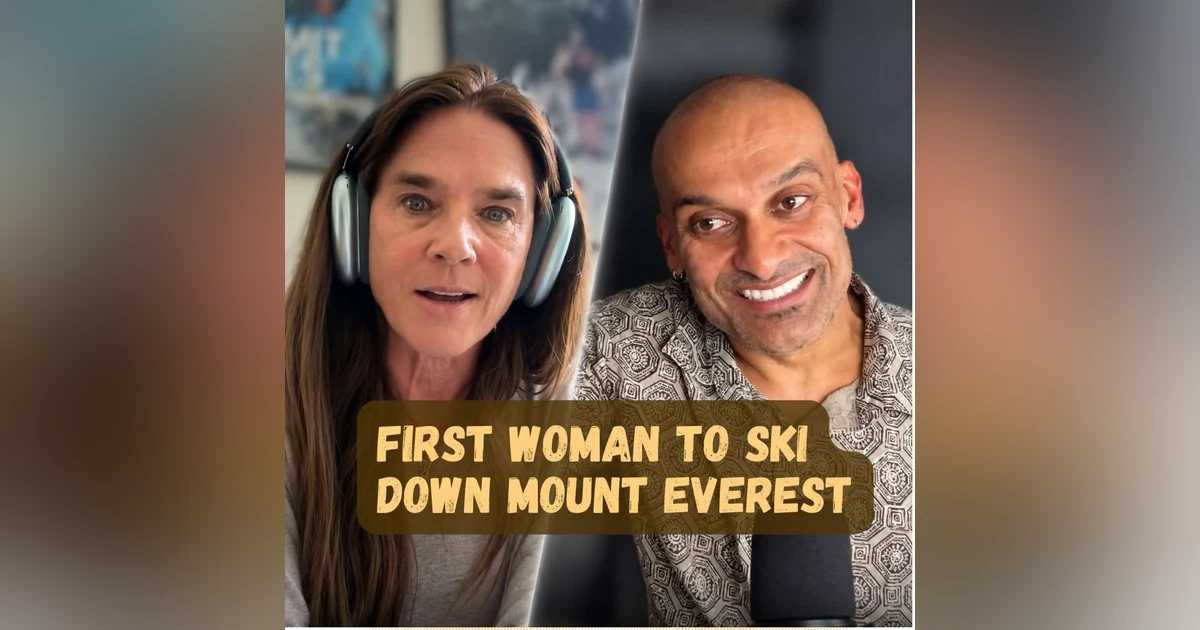
Twenty years ago, Kit DesLauriers skied from the summit of Everest, completing her goal of becoming the first person to ski the Seven Summits. Today, at 56, she’s still asking a compelling question: how do you stay strong and capable enough to keep doing the things you love as you get older?
A two-time World Freeskiing Champion, National Geographic Adventurer of the Year and U.S. Ski & Snowboard Hall of Famer, Kit joins me to talk about strength, fear, big goals, parenting, non-attachment — and why she believes her best decades are still ahead.
Kit:
Website: https://kitdeslauriers.com/
Instagram: https://www.instagram.com/kitdski/
Read Kit's wonderful memoir: Higher Love: Skiing the Seven Summits
Marek Health: Deeper look at your health with comprehensive bloodwork and personalized guidance. 10% off with code AGELESS at https://agelessathlete.short.gy/marek
Timeline: Support cellular renewal and mitochondrial function with Mitopure, featuring Urolithin A. Up to 20% off at timeline.com/AGELESSATHLETE
Support The Show Love the show? Here’s how to support it https://buymeacoffee.com/agelessathlete
Ageless Athlete is a podcast about healthy aging for people who want to stay strong, active and capable for life. Conversations explore strength, endurance, mobility, recovery, VO2 max, muscle and bone health, and what it takes to keep doing the things you love as you get older.
Follow Ageless Athlete — How to Stay Strong, Curious & Capable for Life for new episodes each week.
Ageless Athlete Recording - Kit DesLauriers
===
Kit: [00:00:00]
Kush: Kit, I can see that there are many variables that play into your routine but are there any non-negotiables for you?
Kit: I have a special little room off of my closet. When I moved into this house, it was somebody, the previous owner had been using it as storage and it is my Sacred space. It's my quiet space and I fill it with... It's filled with candles and sound bowls and sculptures and books and, all sorts of different things that I decide to bring in and out of it at any moment.
But I light at least one candle, sometimes many, in there every morning, and I do a combination of breathwork, meditation, intention setting for the day And it can last from two [00:01:00] minutes at a minimum, but it's a non-negotiable, to 20 minutes or more
Kush: Kit, that sounds special indeed. How did you come upon this practice?
Kit: This is going to take us right into my Seven Summits journey and skiing Everest. When I was getting ready to leave for Everest, I Checked in with a friend of mine, Dr.
David Schlim, who lives here in the Jackson Hole Valley, and he's a world-renowned travel medicine specialist. He used to run the CEWEC clinic in Kathmandu for many years, and he's also a practitioner of Tibetan Buddhism and has many good friends in Nepal still. And so I had already been friends with David and a patient of his for all the vaccines and every advice I [00:02:00] needed for going to different places in the world.
And when I had a meeting with David about my upcoming trip to Ski Everest on the same medical, platform, he said, " I won't accept payment from you, but I am organizing a really special Tibetan Buddhist teacher, a Rinpoche even, a high-level lama, named Pakchok Rinpoche. He's coming to Jackson, and you will already be over there.
It's like you're flying across... You're gonna be, like, exchanging homes, right? You're going over to his home, and he's coming here, and I need a place for him to stay." So I arranged that, and it began this energetic relationship with Pakchok Rinpoche, who later became a friend, my teacher, visited many times, um, has [00:03:00] stayed with me, I'm fortunate enough to say.
and Rinpoche in many ways has been a very, very special advisor for me, if you will. and on that journey, he got to know me so well, like, like a therapist, if you will, but not a therapist, right? So, you know, if I would... He would come to visit, and we'd sit down, and he'd say, "What's on your mind? You know, what do you wanna talk about?"
in a, like a special private session. And I might... I'm... Not might, I did, I often spill whatever was going on for me. And some of the pieces of wisdom that he shared with me have changed my life for the better. And often when I would go back saying, "Okay, well, it's this or this," and he would ask me, "Have you been meditating?"
And I could say, " Ugh, not really." Or, you know, I mean, I would answer honestly. That's what I do. But [00:04:00] my point is there's always room for improvement. There's very much room for improvement, upon my current routine in that dimension. Yet I can say that it's... So it's been 20-year journey
Kush: Wow, what a profound meeting or opportunity that came your way.
You embraced this, chance to be hospitable to this visiting person. This thing you said, I have to ask about, which is the Rinpoche offered you s- like you said, some wisdom that has deeply impacted your life. Could you share more?
Kit: Sure. he Well, the first part stands on its own that I just shared some of that I think deserves a bit more, and that is about his question to me, "Have you been meditating?"
And [00:05:00] that journey is
It's not a static one for me. it's, how might I say this? I don't fit in a box in any place in my life. So I have... While I have tried, or I experimented with traditional Tibetan Buddhism teachings and forms of meditation, they didn't, to this day, so far at least, I ca- can't predict the future, but they don't sit entirely aligned with me.
my... Yet the instinct, the general concept of meditation that I do follow is to not judge myself. We are, we always all have thoughts, And I like to be good at what I do. So if I sit to meditate, and for those moments early on in my journey when I got attached, it's all about non-attachment. When I got attached to whether I could do this or not, or find the space, it didn't work.
So the concept [00:06:00] really for me is to have just moments and not judge how long they are of observing the space between the thoughts. And in specific, pith instructions, of shared wisdom pieces, one in particular came from a actual larger group setting that I was a participant in, in listening to him speak, and it was this concept of taming negative emotions.
And so I translate it when people ask me how I handle fear, I would give this as an example. and the concept is if there's a thief that is going to enter your house, would you rather see that individual or individuals at the top of your driveway, in your driveway, at your front door, inside your hallway At your bedroom door, presuming you're in bed already, coming [00:07:00] over to your nightstand, standing right over you, grabbing your phone or your grandmother's ring or whatever off your bedside table.
And the concept when I relate it to fear, or if you will, any other emotion that most of us would consider a negative emotion, when we allow those in, all the way in right away, without seeing it from a distance first, we often become consumed and paralyzed by it, and the first thing we have to do is figure out how to get rid of it.
otherwise it's like all that's in front of us. It's controlling our next move
So that concept is one that I wanted to mention when you asked would I go deeper on some others. there's that one, and there's another one when I was having a particularly difficult time with my then mother-in-law. [00:08:00] May she be listening to this, I don't believe she even knows this story. And it had been going on for a while.
There were some things said and done that hurt me deeply, and I was getting ready to welcome her back into my home. And I'm juggling two little kids and, you know, making dinner and other people in my house all of a sudden, and I was, like, terrified of the Um, emotional situation I could imagine myself being in and the additional burdens should things continue to go the same the way that they had been going.
And I talked to him about that and it... I went deep with the whole story, and he sat there and his response was, "Kit, there is an, a lot of I in your story." And I said, "Well, of course it is. It's a s- my story. It's about me. This is how I'm feeling." And he said it again. And then he said, " The I [00:09:00] there is you associating with your identity in the story, and it might not be about you at all.
And what I would like you to do is go back into your house," it was happening that day, "and when she comes over, I want you to think, feel, completely embody on a cellular level, love. Whatever you need to do to stay there." And I was like, " This is the last thing I wanna do," right? Kush, I did this, and it was so difficult that I have a clear recollection of like juggling one kid on a hip, making dinner, trying to watch the other, standing there in super close proximity to my then mother-in-law and asking her questions to engage in conversation.
And in order for me to stay in that love place, I actually couldn't even listen to her answers. It was like there were two of me, and I [00:10:00] was operating on this one level, and the other level I was just like, "Love. love."
It melted everything with our, within our relationship
Kush: Wow
Kit: And it maintained all the way through
Kush: you're leading me If I'm following you, just by just by almost forcing this, you know, tangible Act of maybe using the physiology of love around this person.
Kush: is that what it was? you would just... I don't want to oversimplify, but just by saying this expression over and over again, it somehow allowed you to transcend the negativity-
Kit: Absolutely. And it wasn't just me. It was our interpersonal dynamic. It was... And I didn't say it out loud. Like, as far as she's concerned, we were having a conversation, and we were.
Like, I [00:11:00] had to listen just enough to be able to pick up a thread and continue the conversation. And I remember my brother-in-law nearby, and I would just be like, "Oh, that's good. That's nice. Tell me more about that." Like, I would hear something, and I would be able to, put somebody's name in with her story, like I was tracking.
But I also wasn't tracking to the point where like, the other person in the room was like, "No, Kit, that's not good. That's not okay. I don't believe..." it was funny because it, it was surreal, is what it was. And I'd love to add that experience, I think like any difficult ones, offers a lot of opportunity for becoming how an, a changed person really.
like the story that comes to mind is being on top of a ski line for a consequential commercial shoot in Greenland. It was the end of a five-day window. We hadn't [00:12:00] had the conditions to put down what we needed to put down, to capture what we needed to capture until this moment. It was evening on the fifth day because the best light, et cetera, and how where we needed to pivot after a few days of experimenting with up and down other things.
And there were three of the best drone operators in the world below us flying their drones right there. I was the principal being filmed. There was one other, however, that he had a dual role, right? He was also filming. so he was an athlete and filming, and my only job was to ski this line.
And then there were two still photographers on slope with me Plus that other person. So six cameras and the-
Kush: No pressure.
Kit: No. And the director-producer on slope adjacent to me. [00:13:00] And when he asked me if I was ready and I said yes, then he gave me a 12-second countdown. 12 seconds. This is gonna tie back into the sitting and looking at a candle and finding a space in between each thought, and it's also gonna tie into the love story, and taking the ego out of it and putting yourself into a different place.
Because-
Kush: And to be clear, uh, 12 seconds because you might have wanted more time. 12 seconds seems like a- Less time ... really... You want less time?
Kit: That's a good question. It's usually all about the athlete. Like, it's like, "Are you ready?" "Three, two, one, go." Or even you let the athlete count down and say, "Dropping."
Kush: Ah.
Kit: But it was more time because there were so many cameras that needed advance notice. So I get these, buzzing drones c- doing, saying, hello," you know? These great
Kush: throwing off readers. And this is not like a recording studio [00:14:00] in an urban metropolis. This is, like you said, this is in Greenland at the top of, like, a ski line.
So yes, ma- makes sense that there are so many other, like, factors to, to manage for- Right ... the team.
Kit: Right. So the punchline is that I did not premeditate this. However, when I heard the 12 seconds, I was immediately shocked, whoa, that's a l- never been in that situation, and it wasn't communicated to me that it would be that long.
And then when he said 11, I thought... You know, my mind started to spiral, like, holy cow, like, n- there's a lot of consequence. I'm gonna have to sit here for 10 more seconds. Anything could happen. I've gotta make sure I'm... How am I gonna get in control of my mindset right now? Like, I was in control for three, two, one, but now we're adding 3x.
And then when it, after the eleven and that thought [00:15:00] happened I went into this place of love, and like I say, it was not meditated. It was like, there's been other times in my life where mantras have come to me from nowhere from somewhere, from angels, right? and this was one of them, but this one was about love.
It was... The first thing that came to me was, "I love where I am." And instead of, like, focusing on my line, I lifted my eyes and I looked at this absolutely amazingly beautiful expanse. You know, there's water like several thousand feet below me, and, fjords, and ice, and sea, and it was just incredibly beautiful.
I love where I am. Then I somewhere, like the love story with my mother-in-law, I somewhere heard the next number, right? But I wasn't focused on it. It was a next number countdown. " I love what I do," is what came to me, and that's when I, like, looked down at the ski line, and I looked down at my skis, and I was, like, [00:16:00] focusing in on what I d- what I do and what I'm about to do.
Another number came. " I love who I'm with." And I started looking around At the people with me. And it went like that, and I can't even tell you the details because I didn't focus on them, of the other numbers or how many iterations I might have taken of different numbers with different concepts. But by the time...
Then I kind of popped back in at around the three, two, one, and I skied exactly the way I wanted to ski, and it worked out so beautifully, and I had so much fun. Like, I was so present and grounded. Yeah. And the other time of, of a great mantra story was skiing Everest, skiing the Lhotse face on Everest.
Kush: I wanna get to that, Kit, but I am s- I'm still, absorbing what you shared, and what it seems like this unusual diktat from the team where they, [00:17:00] they were gonna tell you when you were gonna launch down this thing, you somehow turned that to your advantage, and you found that space in that, I'm sure 12 seconds sounds long...
So- sorry, it sounds short, but it can likely also feel so long because you are at the edge of this precipice about to, about to start exploding downwards. And you leaned into the mantras that you were taught. let me see if I can remember them. The place you're at, what you're about to do, and the people you're with.
Kush: I think this somehow, sometimes I think this upends some of the, you know, the popular, self-help guidance around facing fear because what you're saying is that, yeah, you're just coming from, like, this orthogonal place, which is think of love. Kit, for the everyday person listening, you know, who's not about to start, skiing down massifs in Greenland, how can they bring [00:18:00] this, principle, this lesson into moments that they might be or we might be facing that can help us get past?
Kit: We all do things, we all put ourselves in situations that are challenging
Whether we're, for me, I'm like, oh yeah, I'm about to... I have a public speaking commitment next week, and it's like I can already picture myself taking the stage, and I enjoy doing it, and I'm good at it, and I like to be good at what I do. And there will always be some, even though I enjoy it, there will always be some degree of like apprehension, right?
Of like, okay, I hope I'm gonna execute this well. It could be you're walking into, you have a difficult conversation to have with somebody that's important to you, whether it's your child, your friend, a coworker. There's something that needs to be addressed You can go there then. [00:19:00] You can go there when you're rock climbing.
Like I often, before I... After I'm tied in and I've got all my lead climbing gear on me, and I, go through the communications with my belayer, if it's something that is gonna challenge me, if it's an easy climb, I don't even think about it usually. But if it's a challenging climb, I kiss the rock. Like
Kush: Oh, wow.
Kit: And I've done, I've done that since before, before I had these experiences with Pak Chok Rinpoche and, and his advice and wisdom, or the Greenland trip, which came probably a good five years after that. yeah, so there's all these things that we do. Anybody can, can think of anything. You could be... I- if you're into mountain biking, you know, you're about to drop a line, or you come over a hill and you see some- you see something in front of you.
You know, it happens fast, right? That you're not... You're just like, "Oh, my gosh," you know? And immediately, like, [00:20:00] you might start to go, "Oh, I should throw on the brakes. Am I gonna get off? Am I gonna walk this section?" You know. Or a couple weeks ago, I was driving down the street, and I didn't witness the accident, but I came upon a two-vehicle car accident that had happened most likely about 30 seconds before I turned that corner.
And it was like, yeah, the first instinct is, "
can I get around this fast enough so that I'm not stuck here for two hours in traffic while the EMS comes and everything else is going on?" But the thing that comes in is, " Deep breath." "You got this, Kit. Somebody needs your help. You're trained in this."
You know, and I looked through my... Uh, I gr- grabbed for a first aid kit and I was like, "Oh, man, I'm not even sure where it... W- why is it not where I thought it was? Maybe I put it in my van. oh well, I'm gonna go do the right thing," right? And then just, I'm like, I'm just gonna jump out and... Yeah, a- at that moment, like I'm, I'm just all about honesty.
I can tell you, I wasn't, [00:21:00] in the love. It didn't go to the love mantra there. But it was a feeling of that. "Hey, I would want this, somebody to help me if they were skilled." And, uh, yeah, and I jumped in and was able to add significant value to, uh, what was probably long-term care for somebody, on the front end before, before EMS showed up.
So there's a lot of things that we do that we might not focus on that are difficult or scary for us, and if we can, take a deep breath and, and look at it from another perspec- come at it from another perspective, like really embody another perspective. I think something that I know we're here to talk about being In the ageless athlete space, and I actually love that we're starting off down this path because for me, being an athlete at any age and specifically at, an age with more numbers after it than before, [00:22:00] um, or a larger number I should say, than at any point in history, that's the way it goes with numbers and age.
I feel like tapping into our mindset and what our potential is that is really unknown and moves, it's far beyond us. It's far beyond really what we can understand and comprehend, therefore far beyond what we tap into, is incredibly important. It's the reason that I can still do things that, the things that I do.
You know, I can, lifting heavier weights than I ever have at my age. I can still... most of my friends that I go out and adventure with in the mountains are 10, if not 20 years younger than me, and it's no problem. In fact, you know, they would laugh and just be like, "Would you please slow down?" Not that I'm trying to go fast, but like, [00:23:00] I hope, I think, I hope, I trust that you and the audience is picking up on what I'm saying is that Age and is directly related to our mindset, yet it's also directly related to the actions that we take towards what we want.
It's not just calendaring a workout, it's the mindset we take to that workout. It's the mindset when we step up there to pick up an Olympic barbell, you know, loaded with 280 pounds as 140-pound human at age 56. It's like, yeah, sometimes I have to walk away until I get my mindset back. And, I think my wolf taught me a lot about this too, now that I'm chatting through it.
I raised a wolf from 14 weeks old, starting pretty much the day I graduated from college. And to do that, to have that experience [00:24:00] required you need to learn a lot about mindset and love. So it's a lot of iterations through there, and every single experience has been important. Pabongka Rinpoche's teaching was very important, and I'm now just like, "Oh, yeah, let's take that all the way back to Wolfie."
Like-
Kush: Yeah ...
Kit: he was probably my greatest, biggest teacher.
Kush: Sure.
Kit: Taking... Learning- Yeah ... to take away a raw steak on, on a bone from a wolf is no joke. And yeah, I had to get a mind- I had to have the mindset through and through.
Kush: I believe I know some of that story, and that happened when you were a young college graduate of 21.
But Kit, you shared so much in just a couple of minutes. I want to unpack a couple of things here. One of the things you said was that you learned about the power of non-attachment and how you have brought that into your life. So you are [00:25:00] obviously goal-oriented, like the kind of mind-bending feats that you have
wowed us with over the decades. Those would not have been possible without that kind of drive. So how do we reconcile that? Like, how does somebody accomplish the kind of things you have without being attached to accomplishing them?
Kit: Mm-hmm.
how?
I would say it's a combination that's in some ways not dissimilar from the story about being able to hear the countdown while inserting a mantra, or listen to the mother-in-law while embodying, vibing love all the way through and through. It's like you have your goal, you know what you want to [00:26:00] do You try hard, you commit, you have your routines.
you know, you go to the gym on these days, and yet if you don't make it on a Monday, Thursday, maybe you're gonna switch to a Tuesday, Friday that week. But when Friday afternoon comes around, you better go get yourself in there for your second round because you've got this goal, right? And you can't-- You've gotta stick to some degree of discipline and routine.
Kit: and so it's like that. It's like you have to let... What are you willing to let go of in the moment for what you're c- I guess I wanna land on the fact that you said a goal. Whoever has just one goal, right? So there are multiple goals, right? So in my life, it's like, okay, I'm gonna have this athletic goal, multiple different ones, and I'm very seasonal and long-term, short-term, right?
I'm all these things. And then I'm a mother, and then I'm a business owner, and then [00:27:00] I'm a professional athlete in the space where, you know, I do contract work, like for The North Face. and now I own a home, and that's like I've got maintenance, and I don't wanna defer that piece till next year because when...
So we- we all have multiple goals going on, so we have to be able to hold an awareness of them all, allow some things to juggle around, allow some things to let go if you decide at the, in the moment that can be done later or it's actually not that important, and hold your primary goal, which I would think is living the life with intention that is your design, right?
And so it's those things, right? Like I remember a yoga class when I was deep in training for Everest actually, and I was into yoga at the time. At the moment, [00:28:00] it's not a big call for me. It hasn't been for a little while. However, I was really into it then. But I'm training so hard. Like, how could I possibly be good at yoga, right?
My job is to like... But here's, here's what the yoga teacher said that embodies it right there, is she said, "Honor your stiffness. You've worked hard to get it." So there I am, like I'm on this journey Oh, wow. Yoga fills this... it's a step on it. I need it for some balance and it's okay if I'm never gonna be able to do it looking like that.
If I did that, I wouldn't actually be on my own authentic journey, but I'm here, right? So that's a bit of the detachment and, or the non-attachment, right? Detachment from the outcome, but clear intention along the journey
Kush: Okay. I think this is really good because I sense that we'll keep learning about that as we go through our journey.
But I will remember that part [00:29:00] about, yeah, this nugget which your yoga teacher shared with you and you've brought to us, which is, honor one's aches and pains and scars because they didn't just show up. They came because we
We went and did something and we earned them. So yes, uh, I'll remember that tomorrow morning when I'm doing my, my ankle revision rehab, Kit. And that- Yeah ... the reason why I have, we all dealing with these things because, uh, they are not a curse. They are, uh, part of who we are. Kit,
Kit: they're an opportunity.
Kush: Opportunity.
Kit: Not just a curse, they're an opportunity.
Kush: Fair. No, that's, that's what I was saying. They're, they're not a curse. They're all these other things. The, the reframing is, uh, is so vital So when we were planning to get this conversation together, you [00:30:00] mentioned that we are coming up on the 20th anniversary of your Everest ski, which also completed your Seven Summits project.
What does this anniversary mean to you?
Kit: It is not something that I think about often over time. Like I, I can honestly say like, if it was a year ago, three years ago, whatever, it'd be like, "Ah, yeah, that was a long time ago." And now that it's coming up closer, it's helping me celebrate
It's helping me celebrate who I am and feeling like it's, that's still who I am, you know? It's like it helps me look at the hard things that I've done and the hard things that I am always looking at doing, and that honestly can be physical, [00:31:00] it can be emotional, and I'd be like, "Yeah, I... That was incredible."
And it's informing me, like at an even deeper level of what I was saying earlier, is that we are capable of so much more than we ever knew. So that's an important piece, and then honestly, I can tell you, I gave an interview recently for Backcountry, Backcountry Magazine. They're doing a large scale piece that I believe is o- out in October, and, um, it's about basically snow sliding on Everest and the history of it.
And I was interviewed for my story, and I honestly didn't even know until that moment that I'm still the only woman to have ever skied Everest. And even though there were two descents, two spectacular descents this year, 2026, good friend Jim Morrison in, um, the autumn season of [00:32:00] 2025, so there's three right there.
Rob, Jimmy, and myself count three in 2006. I mean, I just named six people there, right? There's only been 10 ever, whether alive or no longer on this earth. There's only been 10 ever. And so those things just solidify for me. They shock me. I never, I re- never paid attention to those numbers or the fact that I'm still the only woman to do it.
Maybe somebody's gonna be out there this October doing it, and that's and great. That'll stand revised, and that's what everything should do is, is the... Life should change, and people should continue to go, you know, do big, bold things, challenge themselves in the way that they're drawn to. but yeah, that's what it's done for me is like it's reminded me that we're all capable of more than we, than we know in, in any realm.
Kush: Kit, for someone who doesn't know the whole story if I, if I may ask what were you [00:33:00] trying to do with the seven summits?
Kit: There's different levels for that. One is I was trying to adventure around the world with skis as my medium to the high places because that's where I feel connected. I'm between heaven and earth. it's like in, in Buddhism when you touch foreheads, it's like this high place that you... And you get to meet all these people, and that's one level.
And another was to see if I could do something that was so big and bold and brave and scary and on a lot of levels improbable. And, yeah, to see if I could do it. And skiing is being out in big mountains is in community, is my medium, one of my favorite mediums. but that's it basically was like challenging myself.
I had just come off of the two years on the World Free Skiing Tour, and if you asked me the question then
Kit: I had just come off of [00:34:00] two years on the World Freeskiing Tour, and that experience was me, that experience was about me wanting to see what it felt like to win something. And then the Ever- the Seven Summits experience was to step it up a little bit and see if I could do something that seemed super improbable and that nobody had done before.
And it-- once I thought of it, it just, it didn't let go of me.
Kush: Sure. It's been 20 years, and the standards in human performance, in adventure sports, the ceiling keeps rising, like almost at a dizzying pace. But here we are, you are still the the only female to have done this. Why do you think nobody has repeated this?
Kit: First of all, some amount of other people, whether it's two or more, have skied the [00:35:00] seven summits, did finish it within a year or two of me, I believe.
I'm the first person irrespective of gender to ski from the highest mountain on each continent as the seven summits, so that will never change.
I'm the first woman to have skied Everest, and I'm still the only woman to have skied Everest. So is your question, why do you think another woman hasn't-
Kush: Honestly, you have improved upon my question. I was just going after one of those records, but you have, elucidated that there are multiple things.
You reminded us that there are multiple things that you accomplished 20 years ago. those things still stand. So my question really is in this time when everything, the... Yeah. like all these things keep getting better and better, people are doing incredible things all over the place.
Is it a question of maybe lack of ambition [00:36:00] from others? Is it a question of, is it some-something else on why do these records that you have still endure?
Kit: Well, something like skiing Everest has been done on bigger, bolder lines and in what I could say unarguably faster and better style, and certainly filmed better and everything else,recently. So in that way, it has been done and continued to be improved upon. I think And people are going towards, skiing all the 8,000 meter peaks or something like that, right?
So that's bigger. I think the simplest thing for me to unpack on that is the female aspect because that's the one that I can say
Isn't, hasn't been repeated. And why do I think that? I was asked that
[00:37:00] Actually, with this recent interview that I was just citing, and the fastest answer off the tip of my tongue is because Hillary Nelson is no longer earth side.
Kit: and I also know that there's others like that have it in their radar, but I don't know. I'm not inside of their experience on this special planet. I don't, I don't know exactly except for that it's incredibly bold, brave, took huge amount of commitment, took resources that like an, an angel literally dropped in my lap.
Kit: we're all here for a reason, and there's no Really no benefit and no place, and I truly believe nothing should be judged. That's, I think comparison is the root of just about all evils. but, and that said, we are all unique [00:38:00] and we are, we all share a lot of... We all share a lot, I'd love to get there, as humans on this planet, yet we're all unique, so I don't know, it's just, I don't know, man.
I was called to do it and a lot lined up, and I was super committed, and it's an improbable, crazy thing. You know? It was, it was a huge commitment, and so many things could have gone wrong. Um, I definitely got curve balls, and I just was able to adapt and overcome. The only one I had to go back to a second time, didn't get the first time, was, Kilimanjaro, and that was seasons, to have snow as well as permits.
But yeah, I don't know. I, it just, it was just my journey. It was my journey- Sure ... of, of shaping my life, and I think everybody should honor what theirs is and not compare.
Kush: Again, 20 years hence, Kit, when you [00:39:00] reflect back on this vast undertaking, are there some moments that immediately come to your mind which are just more vivid than others? Care to take us into one of them?
Kit: Deciding to do a single carry up to high camp on Vinson Massif in Antarctica, and then getting trapped there for more than three days by a gnarly storm
And then eventually, and try- trying to go for the summit attempt days are the worst Sorry, what is a single
Kush: carry? E- uh, tell us what it's-
Kit: you kinda, you got enough... Y- you have to carry your stove, your fuel, your tents, your food, your gear. A single carry means a backpack that weighs 92 pounds instead of 46.
Kush: So like everything in one go instead of, gradually, share point-
Kit: Yeah, i- instead of two- Take- Instead of two loads. Yeah. Instead of two loads, we did it in one load. That's a single carry. [00:40:00] It was so, I mean, I, I was a stonemason for 12 years, and I raised a wolf. I know exactly what 90 to 96 pound load feels like.
Um- It's a lot, yes ... my backpack was- ... on the high end of that. I couldn't pick it up. Wow. I had to ask for help to get it up, and then I could carry it. It was that heavy. and then we got up there, and then this storm came in, and, you know, we're rationing food. By the time we... The summit attempt day was absolutely horrific.
It's very difficult to decide to turn around. I've had those on a couple mountains. And when we actually went for the summit, by the time we were on, like, day four, I think, which was our summit day, if not five, um, we were out of food. Breakfast was a chocolate-covered espresso bean in a cup of hot water And we were driven to this point of going to dig up an old cache, uh, of food [00:41:00] that had been there for like 25 years by some Polish climbers or something like that.
I, those numbers are not exact, but it was crazy. yeah, that was a really difficult one. So that speaks for me to the commitment, and Everest was very much that also. For on Everest, I mean, I could talk about so much like dropping into the Lhotse Face and the commitment there. it was over 5,000 vertical feet that quickly increased to over 50 degrees without a single feature on the face that allowed for an obvious rest.
Kush: I just wanna ask one question about Everest and then we can move to the present. Actually, one thing that I think, I think listeners should know, if it wasn't clear, maybe I'll repeat it, is that Mount Vinson is in Antarctica. So you were not climbing a peak in a more accessible part of the world where the, some of the other ones were.
You were in [00:42:00] some of the most remote and inhospitable- Yeah ... parts of the planet. And-
Kit: Well, if I could paint the scene for Antarctica, it was 6,000 feet below at base camp or 7,000 feet below. It was minus 35 with winds to 60 and 70, and so we were in far more extreme than that, sleeping in tents without adequate food
Kush: And you mentioned very scarce rations outstanding Were you afraid of your life at any point?
Kit: Yes. However, there's some things that I feel like the way that I get over that is back to our detachment, a bit of detachment at the onset, right? It's like actually there's times when we've even just flat out called it [00:43:00] out, that- We might, somebody might not make it back down. So however, that's the level of commitment.
Like we go into that holding, as I was saying, holding these two things. We're, you know, holding a total commitment to doing the right thing, being as safe as we can. Yet when you go into these risky situations and these consequential situations, you have to detach from the outcome while putting everything you've got, mind, body, heart, soul, into your ideal outcome.
Can never let go of that. That's the goal. And then along the way you have to be like, it... Yeah, that's what it takes if you- If you wanna do something big. And it reminds me at the bottom, I have to say something else about Pak Chok Rinpoche, because at the bottom of the Lhotse face, I [00:44:00] grabbed Jimmy's camera, his DSLR full camera, and I...
'Cause all the, he's taking photos of us and stuff, and I was like, "I need to document this," like these massive grins on our face, and this feeling that I had was just, just just almost too much, right? And I grabbed his camera and held it up for, you know, the classic selfie, but this is, 20 years ago with a full-sized camera.
And that photo often makes it into, some of these public speaking events that I do and things like that. And I used to say, " This is what it feels like to feel the most alive. This is what it looks like to feel the most alive," when I felt the most alive. On one of Rinpoche's visits, I asked him for-- to expand upon that, and I showed him the photo.
And I said, "Could you give me your perspective of what I'm trying to say here, of what I was feeling?" And he thought about it for probably a solid minute of silence, and then he said, "This is when you experience the greatest degree of [00:45:00] impermanence."
And you have to risk something to experience impermanence. And, you know, a lot of us think of impermanence with, in the concept of this life on Earth or something like that, right? But impermanence is, it's much more than that, and it kinda goes into our non-attachment concept, right? So-
Kush: Sure ...
Kit: impermanence is everything.
And, um, yeah, that's also partly, I guess, what I'm s- what I celebrate with this anniversary is that impermanence and, like, really we have to be, we have to be so grateful, and we have to live our lives, like, with so much intention. And, um, when we do risk something big, we have to try super hard for the right outcome, and we have to have some detachment to it, to the outcome.
And that... Not saying, you did hear me say clearly that comparison is the root of all evil.
Kush: Kit, one of [00:46:00] those things , I love about your story, which is, which makes you honestly such an outstanding guest for the show, is that, uh, even going back to when you were younger You became one of the best free skiers in the world, right? And you were not 22, you were 35 And if you can think back, do you think being older gave you some advantage in those championships when you became the world's best skier?
Free skier, if I'm being more accurate
Kit: physically, no because even if I was The same age as those other competitors, I wouldn't have had the experience because I didn't have it as a child. [00:47:00] So physically, I don't know. I don't think so. However, I also think that, you know, looking back at my life, like in my mid-30s, I was I had tuned my body into doing what I love to do, uh, into being strong in many other ways, right?
Like, I believe that, I even believe there's, I'm under the impression that there's science that supports this, that the more sports that we do, the more activities, and frankly, sport activities that we do, that we're exposed to as a young person, the better athlete we w- we will be forever And I had that as a kid, right?
I, I played soccer, softball. I ran cross country at a high level. I ran track. I played tennis. I swam. I played Badminton. I played [00:48:00] everything like crazy you can think of, like at a, as well as I could. Like, I'm talking like on high school teams. And then I got into rock climbing and mountain biking and...
So I had... And so many more. And then I was a professional stonemason for 12 years. I'm gonna call that not a sport, but incredible training. so yeah, I had exposed my body to a lot of activity in the physical realm and a lot of sport. But I did not have an advantage because I was never trained as a skier, besides a few ski lessons when I was 15 to barely understand how to make a turn.
I could, I can tell you right now how to make a ski turn, and it's not rocket science. However, I, I wasn't even really taught that. It was like I still didn't understand for a really long, really long time. So I don't think that... I think the answer actually is if it's yes, it's because I ha- was old enough to have [00:49:00] applied.
And this doesn't just come with age, this comes with like the concept of knowledge is wisdom. W- I'll say wisdom is born from knowledge, but it's not enough. You have to look at it. You have to use your mind. You have to apply it, right? And I, I am z- absolutely not perfect in any of this. There's plenty of times when I, like, lose the plot.
but I pay a lot of attention to what's going on around me, and I adapt, and I am willing to change, and I can change many things. I've been able to change if I want to quite quickly about, like, how I am in a sc- in a situation or how I'm responding to something. Some things have their strings on me a little harder.
Takes me longer. But yeah, that, my ability to look at how my mind is operating and for the most part be able to decide the approach that I would actually like [00:50:00] to take as opposed to the one that's, like, coming right at me, you know, walking in that front door, standing over my nightstand, that, that part would be a advantage for age.
But it's only because I applied it in my age
Kush: And I have heard the same thing about the diversity of sports at an early age can only allow us to excel at, at that one thing at a later age because of all the science around the exposure and around how as, as we mature from different stages of life, that we don't peak too early if we find the right sport, but we practice it exclusively too early.
Kit, you were accomplishing these things early, and now coming to the present, this is Kit in [00:51:00] her mid-50s.
And we heard a little bit about your fitness or your training routine, but I would love to hear what does staying fit and capable look like for you at 56?
Kit: The dedicated strength training is a non-negotiable, and I experimented with letting that go at a certain point for a couple of years, trying to switch it up, and, that was not a good thing. and so I'm, like, been back at it, committed, consistent for the last two and a half years now. that piece is there.
A lot of time with my feet on the earth, and it's seasonal, right? But so it's uphill skiing, so I can go downhill in the winter. It's back to that blend of these How a blend of activities in [00:52:00] sports makes you better. I do that still. I'm very... I allow myself to be very seasonal, and that goes back to early on when you were like, "What does a Thursday look for you?"
It's the, the weekdays are seasonal, and the seasons are seasonal. I wanna... I move in alignment with what's feels right and in the natural world. So I get my greatest grounding, creativity, deepest happiness when I'm outside.
Kush: you just mentioned, something really, I think something really key, that there was a period when you were not strength training, and you learned something, and you came back to it. can you walk us through that? What- Mm-hmm ... the specifics, like what, what was happening? What did, what did you go through?
What did you learn?
Kit: Well, I had a... I learned a few things, and every... I think you're realizing, and to some degree I am, although I'm, I'm cognizant of it, that any one [00:53:00] answer for me is not going to be about, my body and my body performance or a number or anything like that. it's a blend. It's what did I learn as a human being, basically, with a body and a mind, and then a consciousness that's beyond that, right?
So what did I learn? Um, I stopped working with that particular trainer at that moment because I was in a weird place, getting... just before realizing that, yes, it, we did need to go through with dissolving our marriage. And I, um... There was something said from my trainer that I took not the way he intended it, and I was like, "I'm out.
I don't wanna be around this anymore." And simultaneously had met another person who works in the training space who was really into mobility and things like that, right? [00:54:00] So I was like, "I'm gonna try this other thing," right? Like, it's good to try other ways, other sports, and other ways of doing things. I learned that I do actually need to lift heavy weights.
I think everybody needs to lift heavy weights. I learned that mobility is also really important
Kush: can I, can I ask, can I put a pin on that, Kit? Yes. How did you find that realization that you needed... Because, again, from the outside, you know, you are this high- high functioning athlete,it would thi- one would think that because of just this, this volume of work at the highest level, you have developed all kinds of capacities.
Yet you came upon some re- realization that just spending all that time In the outdoors, doing all these amazing things was somehow not sufficient. So I just wanna understand this one little thing- Mm-hmm ... which is why did you find that [00:55:00] you wanted to be at the gym? Because most people who are, again, outdoor athletes, they don't wanna be at the gym.
They wanna be out there playing.
Kit: Yeah. I have developed a love for the gym, but I still could say it's like, "I don't wanna be at the gym. I'd rather be outside." you know, the answer to your question is that is back to the awareness and the mirror that I'm willing to turn on myself, and my desire to challenge myself.
and my overarching goal, which we haven't even hit on yet, which is that I wanna do the things that I do for Every year and every day I have left blessed to live this life. Those are the... And it has nothing to do with being recognized as a professional or... it's what I, it's who I am and what I love to do.
It's where I get my greatest, happiness and connection and creativity and, and everything. And in order to do that, I need to stay strong. [00:56:00] And when I was doing this other form of training There were certain aspects of it that were challenging for me, but not really enough. I didn't have the,when I was really honest with it, there were two things that came up.
One was I needed the accountability. I wanted the... I was a part of a group training, like we all did our own thing and, but we checked in once a week and we had these calls, but we had our program and, nobody was really paying that close attention if I followed my program. And I train at home most of the time.
I've, I kicked myself out of my garage. I like to say I finally grew up a couple years ago. I got... My garage is my gym. Two and a half car garage is maybe half gear or one Well, maybe 20% gear workshop and the rest of it is gym. I'm not kidding. I've got like hip thrusters, a full depth rack. I've got yeah, an assault bike.
I've got, kettlebells of every [00:57:00] imagination, that's up to 70 pounds at least. Um, I've... Like my gym, I've put a lot into my gym and, my point is that when I would tr- when I train like this, and with this particular trainer, I'm sure I can find another one, but with this particular trainer who I got back together with, right?
Finally went and went to him and said, "Can we talk?" I wanna talk about what happened for me, you know, when I left and how I'd like things to be going forward, and if we can... I wanna know what happened for you in that moment that these sentiments were shared." and yeah, then that's how we got back together.
So it was this mental piece and this physical piece. But the physical piece, training in this way, not only do I see the results in my sport, like I can still go uphill so comfortably that I can't put a number or age or a year on it. I can still [00:58:00] lift/lift more than in the past and nothing hurts, and I've had big knee surgeries.
I've had all these things go on, right? I've, I've had a lot. I mean, I know you... I've been hearing you talk about your ankle. I've had a lot. Like I like to say, I play hard and I rehab harder. but when I was doing this other program for a couple years, besides the accountability wasn't there, I didn't have the results that made me feel like I had just done something really hard.
And so this goes back to like the mind piece also. It's physical and mental. Like I need to be challenged. I need to challenge myself, and doing, lifting heavy weights challenges me mentally and physically, and this other movement wasn't translating enough to my time in the mountains, wasn't boosting my performance in the time in the mountains.
Lifting heavy weights does, and it wasn't challenging me mentally enough.
Kush: Kit, you know, you spoke earlier [00:59:00] about how so much of what you live your life by is by, by feeling, by perception. But I'm curious, as you were, as, as you were evolving your training methods- Did you find some benefit in being rigorous with, let's say, maybe taking notes on this is what I am doing when I'm out on the slopes or the wall.
These, this is my performance today. This is what it used to be, and if I want to continue not declining, I need to start adding these things. And then let's say you realize that strength training was one input and then you brought that back into your schedule, like you spoke about, and then you found corresponding gains.
Is-- So I just wanted to understand, like, was it just, was it just, was [01:00:00] it feeling and then experimentation? Was it s- was it note-taking and measurements? Was it a combination of some of these things?
Kit: It's no to the note-taking and measurements It's, I mean, of course I like... I go back and look on my training app of like the history of, what was I lifting?
What was my max? You know, whatever. But I-
Kush: So you were recording, you were recording a lot of those. Because I think a lot of people didn't
Kit: train, you know, they- I, I'm not recording it. No. Historically I have not. I'm saying in the last couple years of training with this, back with my trainer, and autonomous with my trainer, right?
Like, I don't train at his gym, I train at my gym, my home gym, my garage. But the app tracks my weights, right? what I... The answer is I'm a macro, like I'm a meta macro visionary, and don't do the micro notes that you're saying. [01:01:00] Like, there's enough in my life that like to me that feels like bookkeeping, which I do because I have to, but I'm not gonna do that s- It does- That's just not who I am.
I
Kush: get it.
Kit: And I know that's got a lot of application, right? I know. I think you might do that. I know Alex Honnold does that. Like, I know I could be a better athlete if I did that, but that's n- doesn't make me happy. It's not how I wanna be. So I prefer to like just kind of go, "Huh, yeah, this feels good," and, "Oh, wow, look at that."
Like, I was kind of off the couch for trail running and I just did my annual 20-mile loop, through the park and felt good. And, it, so it's like that. It's like how do I feel? I'm kind of a, not just I'm a direct navigator, whether I'm in the outdoors or looking at whether something is the right fit for me
Kush: To be honest, I don't do that either, and that's something I need to work on.
But I also do believe that there's something to be said about some of these highly developed, powers maybe you have [01:02:00] of, attunement, which can compensate or even more for like rigorous note-taking. And actually, I will say that I think that it is not just perception because you have seen those results transfer to your, chosen sports, like some of these, barometers that you've been tracking, and you can sense that, hey, I, I feel differently doing this now.
I know that I perform better carrying those loads over that loop that is part of maybe your, your, uh, seasons of life. Kit, this is really important. people can learn so much here
So I want to learn, how do you divide your time in the gym? do you have some principles on, like, how do you train different parts of your body? Again, so that you're covering your bases because you are not at the gym, you know, multiple hours every day. You want to be very efficient so you can be,
Kit: Mm-hmm
Kush: [01:03:00] outside performing. It- So what does that efficiency- Yeah ... look like?
Kit: Well, it, it do- to be fair, it does take me... When I'm on a two-day-a-week gyms program, which is my preferred... Uh, sometimes I like three, but most of the time it's two. Those sessions can last two hours. Certainly every bit of an hour and a half.
I'm never out before an hour and a half.
again, I'd rather be outside, but I do it because it increases my capacity and longevity for being outside. It makes my brain feel clearer, my entire nervous system is balanced and I'm happier. I know it's good for me on a lot of levels.
Here's the keystone. I greatly appreciate experts.
I believe anybody who's an expert in their field is in the right place. They're doing what they're here to do. I have [01:04:00] no problems Being not an expert in something, because it's almost like being able to say no to something, right? if you say yes to everything- Mm ... d- that- that's a complete fallacy.
Or yes to most things, because it actually means you're saying no to something if you're saying yes to everything, right? So, like, this concept of like, I'm not gonna spend all my time, so much time documenting on a micro level, because what am I saying no to? I'm saying no to going taking my dogs on a hike this afternoon for a few hours, right?
Like, uh, it just doesn't... So in this way, I am super happy giving the expert programming- ... lead to my trainer. That said, when I am out walking the dogs, do you wanna know what I'm listening to if it's not something like you? Like your podcast. It's, it could be... It's everything from, Andy Galpin on to, Huberman and Attia and everybody else that I can [01:05:00] find that is, you know, I'm like, I go deep into a two and a half hour Brett Contreras podcast, right?
About, hips and glutes, and then I'll send it to my trainer.
Kush: Ah.
Kit: And I'll be like, "What do you think about what... He said this," or, you know, my trainer taught me, 'cause I sent it to him, and he goes, "What about that podcast? What do you wanna talk about in that podcast?" So, like, I'm listening to these things, and I'm absorbing this information, and this is the stuff I'm focused on.
I'm not listening to, like, Bitcoin, blah, blah, blah, whatever, you know, or even news. uh, this is the stuff that I spend my spare time on, and my spare time is usually outside, and in m- in movement. So I will go and ask the expert, "What do you think about this?" Or, "Is it time to change this up? Why am I not seeing gains here?"
And sometimes he'll come back with, like, a nugget, "Strength is not linear," Or whatever, you know, 'cause I'm, and it's applicable across the board with everything. But [01:06:00] yeah, that's it. So I just, I let him program
Kush: You know,
Kit: I
Kush: actually, uh- And I do all
Kit: body, all body happens each time, so.
Kush: Sure.
Sure. Kit, I actually like that you pushed back on, on me asking you to gi- to, to simply prescribe something that is part of your, routine because I think you're giving us something more profound, which is, which is go to the experts,
Kit: right?
Kush: And- Yeah ... we can be good at this one thing, and there are experts out there who can understand what we- Yeah
need so much more than we could even because they can look at what they- who we are. They can look at all the expertise, and I can, I can only imagine, like, working with you as a client is so different than so many other cases I hear about where people need to be spoon-fed on what they need to get done at the gym because here you are sending, sending three-hour podcasts to your trainer and asking them to help break it down [01:07:00] into what is useful to you.
I, I think that this itself is super useful. Let me see if I wanna ask you, a bit more about that. I know you- Uh, I,
Kit: I need to say one thing- Yeah ... on that. You always, what I can say that I do know is you do first what's most important for your goals. So if, for me it's after a warmup, it's usually a deadlift or a back squat depending on the day, 'cause those are the things that...
And they are full body, but those are the places that I wanna continue to have gains that are the most translatable for me. If somebody is like, for whatever reason, they're all about biceps, well, you put that at the top of your workout, right? that's the one thing I can say on programming, and that's as much as I'll say.
So therefore, I can answer objectively that I'm not focusing on that. Am I working that? Absolutely. And, [01:08:00] I... Partly genetics and partly what I have done for my whole life, is work really hard in all ways. Like, when I say I'm connected to the earth, it's like, yeah, I wanna be out on trails, but you wanna know what?
I'll, I get super happy going out and running a pickaxe for six hours and digging a new garden for raspberry transplants that my friend just gave me, and then lining it with the perfect rock, and hauling this and hauling that, right? I was a stonemason for 12 years. I love working hard in all ways. Those things require very much full body.
It's not just legs. you know, if you're gonna do... And I, I don't really do machines unless there's something that needs to be focused on specifically for, like, a rehab. But yeah, full body functional. Like, I'd rather do, you know, a farmer carry than, something commensurate on a machine or something.
To me, it it [01:09:00] needs to translate to my whole life. Like, you know, I got a pile of rock out the back of my house. Yeah, I'm gonna go, like, build this, pathway that is on my list before the snow falls. Like, yeah, I don't wanna go do that and not have my upper body strength and all of my strength.
So yeah, it's everything.
Kush: Good. you do practice, a full body and- A full human lifestyle because you are active in all of these ways. I know we are coming close to time. You've been so generous. Are we able to stay a few minutes over so we can close this out?
Kit: Yes, and I have one thing that I would really love to say before we finish as well.
Kush: Okay. Okay. Awesome. You, you
Kit: go for it.
Kush: yes. I want to touch on this one thing that, um, I think again, is, is quite extraordinary that a lot, along with all of these things, Kit, you have [01:10:00] also created and nurtured this beautiful family.
Kit: And it is, it was fantastic. the marriage was served a great purpose and yes, we have two beautiful children and it was, we learned a lot and we came together for a reason and our season didn't last for the rest of this lifetime.
Kush: I just ask one question about Your daughters
Kush: if I was to ask them if they thought what their mother has done is so cool, what would they say?
Kit: I have art up and around in special places of my house for the different things that they've said at different times. And
In general
what would they say? In general, they would say, "Yeah, she's..." maybe they would say, "Yes, she's intense." and I feel like They would also say that [01:11:00] In many different ways, so therefore this part would be more Take up appropriately more space.
she's brave
In more ways than one. She's brave. She's kind. She tries to be kind all the time. She's kind. She cares. She's always got my back. She will always drop anything, no matter what-
Kush: Mm ...
Kit: it might impact in her life towards her goals. She will drop anything And she cared enough in our early years to make sure that we understood that the natural world is our home
Kush: It sounds like your daughters also have your gift of both clarity and [01:12:00] thoughtfulness Actually, I lied. I have one more question here which is what has parenting taught you, Kit, that the mountains couldn't?
Kit: That the mountains couldn't. I might choose to, shift that and say the mountains could teach this, and they have certainly reiterated it. Yet parenting has been the greatest, quickest, toughest way to absorb it, is that, is egolessness. It's not about me. The mou- Right? Like this is the parallel. The mountains don't care.
It's actually sup- something super important, I believe, for- the concept of your podcast. The mountains don't care about your age, your gender, your skin color, your background, [01:13:00] your skills even. The mountains care how you show up And even then They don't really care. And that is like You know, just can and should pierce right through all of us, that all we have really control of is how we show up, and even then it's not up to us.
So parenting is that, right? It's like you have to let go of so much that would be attached to your identity, to so many things in favor of, if I can, we'll go circle back to, to love. To love and caring and nurturing and supporting one another. So yeah, that's what, that's what parenting... And that's why I had two, because if you have one, [01:14:00] absolutely anything's possible.
And I know a really special only child, person who's very important to me who somehow absorbed this, but I'll never forget when I, um, as a single child, and I'll never forget when I was intentionally pregnant with the second one, and I mentioned it, right? 'Cause mine are 18 months apart. That was a challenge.
Uh, and it was intentional. And I s- I mentioned it to m- my pediatrician or that I was pregnant with my second, and what I got was, " Wow. Well, that's gonna be really hard for the next three years, and that's the greatest gift you can give your firstborn, for them to realize that the world doesn't revolve around them."
Kush: Ah. You know, my parents would say that they planned their two sons Three and a half years apart. But Yeah. Yeah, maybe, maybe if that, if that duration was shorter, I c- I, I would have not, I would have been less precocious as a-
Kit: So the mou- [01:15:00] the world does revolve around you still.
Kush: Um, coming to the last part of the conversation, what I like to call the ageless session Do you still need big goals to drive you?
Kit: Do I still need big goals to drive me? Yes. And
We'd have to define big there.
Kush: I mean, I don't know if it gets bigger than trying to ski down the Seven Summits.
Kit: Yeah, that I'm not interested in again. my big goals do drive me. it's more that I get excited about the challenges when I think of a goal, that if the goal really resonates with me, it could be something like, whatever.
It could be, yeah, it could be going to ski another couple of mountains up in the Brooks Range that I really care about, or, you know, less and, less and less, but it's still there. Are they specific lines, you know, that call me or things like that to ski? Yeah, there [01:16:00] are still some of them. I feel like my goals are becoming, uh, I'm allowing them to be more diverse and in my continued practice of, detaching from any particular outcome, right?
Like into being a full person. Like, you know, I wanna build a house, or I wanna... You know, I have different things. I'm like, yeah, huge challenges. wanna make a shape shift to add something else in my career. Those are really big goals, and they're scary and hard, and they're in some ways not dissimilar.
So yeah, I still need, I still do need big goals. and I can tell you that I know that from having a period of an absence of a big goal. Yeah. So I do, because then I find my, my, that's harder for me to stick to a routine if I don't... To a routine in pursuit of something. but I can tell you that I will always have the [01:17:00] biggest goal that, or one of the biggest goals in, in, in a active pursuit type category, which is my goal is to be able to do what I do at the highest level possible for the longest period of time in my life, and it is not some crazy, longevity hack thing or anything.
It's that I want to be in the mountains, and I want to be outdoors, and I want to be active, and I want to be able to do these things for as long as possible, and that's my goal. That's always my driving goal.
Kush: This is a natural segue to my next question and you may have already answered this, but in case you have something to add there, which is what I ask everybody, what does being ageless mean to you?
Kit: It means to me that you know your real self
Because our... [01:18:00] That's our spirit, that's not our body, and that is ageless
Kush: Got it
Kit: And when I am, when I move from that place, I don't have this attachment, whether positive or negative, and I think most of us could associate that usually by the time we get older, it takes a negative connotation. The soul has no age.
form isn't what's important, content is, right? It's how you show up in life, to go back to that. And so that's, yeah, that's ageless. That's what being ageless means. It's like not living in, in fear of some construct that our society gave us. we always have something to give.
Kush: And I'll make this the last question, which is Do you think your best decades are behind you or ahead of you?
Kit: ahead of me
[01:19:00] And you earlier said big goals, and I was like, you get to define big if you wanna go down that path, and if you wanna, you know, define best," it's okay, we're down that path. But, and ahead. Like, I'm excited for what's ahead, and I feel like I'm going to be able to continue to challenge myself and Honestly, I think that's something that I have to offer is in a way that my choices in life may be of benefit to others is to
Not be attached to your age, your gender, your socioeconomic status, you know, what you were... opportunities were given to you or you've had. Like, y- just be who you are, and who we are is so much more than we can ever realize. And so it kind of goes all the way back to, like, Rinpoche and, like, a detachment [01:20:00] from Yeah, that detachment, I'll just say.
The, the detachment allows for, infinite outcomes, right? It's the attachment... Detachment allows for infinite outcomes. Attachment limits us.


