Brain Puzzles Won’t Keep You Sharp After 50 (What Actually Will Work) | Dr. Kirk Erickson, Neuroscientist


Brain puzzles may make you better at brain puzzles. That doesn’t necessarily mean they’ll keep you sharp as you age.
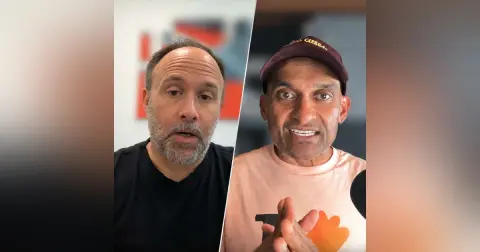
Dr. Kirk Erickson is a neuroscientist who has spent decades studying how exercise, fitness, and lifestyle shape the aging brain, including landmark work on hippocampal plasticity and cognitive aging.
If you’re in your 40s or 50s, he argues this may be the period when what you do now starts to matter most for your cognitive future. We talk about what actually seems to protect the aging brain, why exercise matters, where its benefits may start to level off, and why being fit doesn’t make you immune to decline. We also get into intellectually demanding activities, brisk walking versus more complex sports, and what the science still can’t tell us with confidence.
- Dr. Kirk Erickson — Advent Health Research Institute
- Exercise training increases size of hippocampus and improves memory — PNAS
Marek Health: Deeper look at your health with comprehensive bloodwork and personalized guidance. 10% off with code AGELESS at https://agelessathlete.short.gy/marek
Timeline: Support cellular renewal and mitochondrial function with Mitopure, featuring Urolithin A. Up to 20% off at timeline.com/AGELESSATHLETE
Support The Show Love the show? Here’s how to support it https://buymeacoffee.com/agelessathlete
Ageless Athlete is a podcast about healthy aging for people who want to stay strong, active and capable for life. Conversations explore strength, endurance, mobility, recovery, VO2 max, muscle and bone health, and what it takes to keep doing the things you love as you get older.
Follow Ageless Athlete — How to Stay Strong, Curious & Capable for Life for new episodes each week.
Kirk Erickson - Round 3 Cuts
===
[00:00:00]
Kirk: the changes that happen, that we end up calling dementia in late life, that happens over a very lengthy and protracted period over several decades or more So the time period where it's actually seems to be most important to be changing the, that inflection point, changing the trajectory, might be right around 40s and 50s .
Kush: Fascinating and also scary.
Kirk: ...
Kush: for folks who don't know you, how do you describe yourself and the work that you do?
Kirk: I am a director of Translational Neuroscience Research at AdventHealth Research Institute, so I'm a scientific director of the department that we run here.
and I'm a neuroscientist. I'm a neuroscientist/psychologist. so I've been trained in both,basic and fundamental neuroscience as well as, [00:01:00] psychology.
Kush: great. I have to ask, how did this work become your life's work?
Kirk: this is a great question. when I was in college, going back all the way to when I was a, a university student,and early on in my graduate career, I was very fundamentally interested in how the brain, changes over time and, what things that we can do to optimize brain health or maximize brain health,and essentially alter some of the age-related downward trajectory of...
that we see with,cognitive function and brain deterioration. And at the time I was just broadly interested in what factors, drive some of these changes and, we quickly discovered that, cardiorespiratory fitness, physical activity engagement,exercise behaviors were very clearly related to brain function.
at that point it was pretty, a pretty open field. We didn't, we didn't have much work in [00:02:00] humans at that point. A lot of work in rodents, but not that much, really good, rigorous, solid, work in humans. And so I just kept going down this direction and it was question after question and, it just continued to spawn my curiosity and build my curiosity to identify the extent that we could take this, this field in.
Kush: Kirk, I started this podcast honestly as a selfish pursuit to get answers that I care about, But I think that, there are many people out there who are curious about some of these topics. I am 48, and I'm pretty active. I feel cognitively quite fine Why should I care about brain aging now?
Kirk: yeah.
This is an important question, and the answer actually has become even more important, over the last several years. the issue that we faced a number of years ago is that, people like you [00:03:00] and I, I'm... I- by the way, I'm turning 50 this, this week actually, I turn 50. Wow. And- Happy early birthday.
Thanks. it was-- it, it took a lot of convincing, for a long time to,to convince people of our age that we should be really concerned and thinking about our cognitive, future. a few years ago we discovered several biomarkers, for Alzheimer's disease and neurodegenerative pathways and processes.
and we could identify these in the blood. And so this has really actually revolutionized the way that we're thinking about Alzheimer's disease, cognitive decline, and this type of aging trajectory, downward trajectory that we often think about. and the reason why it's altered our thinking is that we now have much more sensitive instruments, markers, and measurements available to us, and a number of studies have, [00:04:00] indicated and identified that we can see subtle changes in these markers up to about 20 years prior to any significant cognitive impairment.
In other words, the changes that happen, that we end up calling dementia in late life, that happens over a very lengthy and protracted period over several decades or more that, that this is actually happening. So the time period where it's actually seems to be most important to be changing the, that inflection point, changing the trajectory, might be right around 40s and 50s actually.
so this is,this is... comes back to your question. The reason why we should be caring about our brains when we're... how they turn out when we're older, why we should be caring about them when we're in our 40s and 50s is because what we do in our 40s and 50s is [00:05:00] largely predictive of how that, how they're going to be functioning when we're in our 70s, 60s, 70s, and 80s
Kush: Fascinating and also scary.
Kirk: Yeah.
Kush: And is that broad age range, is that across the board or do those signs start appearing at different times for different people? Because we all live-
Kirk: Oh, yeah ...
Kush: different ages.
Kirk: Yeah. Absolutely they occur at different times. there's a, a, a really significant amount of heterogeneity, individual variability here.
and we're really still trying to understand this. why do some people show decline, cognitive decline earlier in their lifespan than others? what factors precipitate this? and can we identify some of those factors to predict who's more likely to, to convert to a dementia state later on in life?
And if we can [00:06:00] identify some of those factors and some of those, variables that explain some of the heterogeneity, can we then identify better treatments, better approaches? can we develop more targeted approaches, so that we're not having a blanket, prescription for everybody, but rather particular, more precise prescriptions for some subgroups of people?
and this is, I think, a lot of the way the, the field is moving in right now
Kush: Got it. So that, that sounds really pointed and helpful that instead of generic advice, we can be quite pointed. So is there a way, Kirk, that somebody in our age range-
Kirk: ...
Kush: can identify whether we have reached that point?
that 20-odd year thing where we know that 20 years from now, our brain is going to decline precipitously. Ha- hate that word.
Kirk: Yeah. Yeah. But,
Kush: but we can see [00:07:00] those signs today.
Kirk: Yeah. So yeah, that, that's exactly where the field is going,and what we're trying to identify is what kinds of things are happening in midlife around our age range that are predictors of these long-term outcomes, and then can we modify them?
So for an example, the big topic here is exercise behaviors. Um, can exercise behaviors earlier in the lifespan alter the course of your brain later in life? Um, and at what age do you need to start? Is there an age that becomes, um, too late? Is there a window of opportunity in which, the, the beneficial effects of exercise are, are maximized?
and so these are, these are really important questions, but we do know that, uh, physical activity, exercise behaviors play a very, very important role in [00:08:00] predicting late- later life outcomes, including cognitive function and risk for dementia.
Kush: Yes, we will get to some of those exercise-type interventions.
But just staying in this,in this field for a second around what science is coming up with-
Kirk: ...
Kush: on those early signs. So are there any early signs that we can look out for that can tell us whether there is some of that decline already happening?
Kush: Mm-hmm.
So these changes, these physical changes in our brain, do they happen in a even pattern, in an even pattern-
Kirk: Yeah ...
Kush: through our lives? Or are there,more, dramatic changes at different point? we have talked about- Yeah ... midlife, but, even if you go back A few decades, I'm guessing that our brains are maybe growing, [00:09:00] right?
yeah. As we're physically growing.
Kirk: Exactly.
Kush: So is there, yeah, is there like a more dramatic, change that happens?
Kirk: Yeah. Yeah. You're absolutely right. Yeah, and if we ignore childhood for a bit and our, and adolescence, our brain, when our brains are growing with our bodies, right around, actually early adulthood in your 20s, late 20s, early 30s, we can start for a lot of time, a lot of people, we can start to detect some subtle changes.
Now, the brain doesn't change uniformly with aging, and it doesn't necessarily change linearly with aging. And so there's some brain regions that, do seem to decline with increasing age relatively linearly, although I'll get back to a caveat of that in a second. Other brain regions seem to be maintained well up into our age range or even longer and then deteriorate and show changes later on in life.
So there's variation. It doesn't, it, the brain does not simply change uniformly, across [00:10:00] all of its regions. and so that's a, a complication when we start thinking about how can we modify brain trajectories. We have different underlying trajectories that we're trying to modify actually. the other thing that I wanted to mention coming back to this is that there, there, there are these kind of average effects that we have documented, us and many others have documented over time, that, as we get older, we see these differential changes in the path or in the trajectory of the, the structure of the brain itself.
Like I was just saying, some brain regions may, are maintained until even closer to late adulthood, and other brain regions seem to deteriorate and start to shrink earlier on in the adult life, in,in the adult period of the lifespan. but one thing to note,be very aware of is that there's a lot of variability here.
So what I mean by that is that I sometimes see some people who are 70 years of [00:11:00] age come in, and they have a brain that looks like somebody who's 30 years of age. And I have other people that come in who are 30 years of age, and they have a brain that looks like somebody who's much, much older. So there is, there's quite a bit of variability in, the trajectories and the amount of brain tissue, the amount of aging we essentially see, in, in the brain images that we collect
Kirk: Let's pivot to something which might be more actionable. Whether our brains are already declining or whether we want to arrest future brain decline, you have done some exciting work in this area. I would love to dive into Some of those things you have studied and what we can learn from on what are interventions the everyday person can start making-
Mm-hmm
Kush: [00:12:00] to, again, arrest brain decline or, hey, even better, maybe get smarter as we get older.
Kirk: Yeah. Right, right. Even better. Yeah, yeah. I think this is a really, important question as well that, that we've been addressing and others have been addressing now for a few decades. And recently there's been some, framework that, around this that, that are called modifiable risk factors.
in other words, it's difficult, it's difficult to modify genetic risk, right? that's something that,people are working on in some ways. But,and to some extent, lifestyle changes may modify genetic risk as well. But in any case, we can think we have our genes. this is what we, this is what we're, what we're born with.
These are, this is our genetic background. This is our gene- genetic profile, and if we have a risk factor gene that's associated with increased risk for developing Alzheimer's disease, then we're stuck with that. But can we modify that risk and genetic risk in other [00:13:00] ways? Or what other modifiable risk factors, what other factors are influencing our risk, for long-term changes or changes happening in late adulthood?
And so we know that, lifestyle factors, and there's some things that can be changed pharmaceutically. blood pressure, for an example. High blood pressure is a risk factor for subsequent cognitive decline and dementia. type two diabetes,is a risk factor for dementia. mid, at least midlife obesity, is a risk factor for, dementia.
So we have a number of things w- that we know are risk factors that are modifiable. Like you said, we can modify these, right? We can take blood pressure medication. We can change our dietary habits and g- dietary patterns. we can go on medications that affect and control type two diabetes. So we have these things in hand, and this is the part of the reason why they're referred to now as modifiable because we can modify them.
and so this is where it becomes quite interesting because how much of this risk [00:14:00] can we modify, and, and what are the best behaviors or what are the best approaches that we can take, the most effective, the most profound, approaches to influence subsequent risk?
Kush: Okay. There are things that we can modify. and I wanna, wanna dive a little bit deeper, but-
Kirk: ...
Kush: I'm also curious, Are there some, some areas where we have been oversold on how... Or maybe there's some, some exercises that people have been doing, some interventions people have been making which actually are not effective?
Kirk: Yeah. I think this, it's an important question in terms of,is your question in terms of exercise behavior, or is it just in terms of modifiable risks? any- anything that we're doing, any behaviors?
Kush: Yes. So for example, I don't know why my mind goes there, but I think I remember a while [00:15:00] ago these, these brain games were- Yeah
becoming quite popular, right?
And hey, do these challenges, do these games, and it will help you stay sharper. Is there any- Yeah,
Kirk: yeah ...
Kush: game?
Kirk: yeah. That's a, this is a good question. basically, the- I have two, two kind of answers for you here. One is that, there's very limited evidence that these brain games themselves are effective at altering the course of dementia.
So there's very little evidence of that. That being said, is there evidence that over the course of your lifespan, are there benefits associated with cognitive stimulation, more education, a intellectually engaged atmosphere and curiosity? Yes. Hands down yes, right? The issue is that obviously experimentally we can't put somebody into [00:16:00] a, an intellectually enriched environment early on in the course of their life and then randomize another person into an in- intellectually impoverished environment and follow them through their lives,and test whether there's differences in dementia risk, right?
So those experiments are impossible to do. We can't do them. So we have to rely on different sources of data and different levels of analysis to better understand that. so again, these... I have two answers here for you. there's I think a lot of evidence that remaining intellectually active, creating intellectually stimulating environments, greater years of education, and that kind of intellectual stimulation, all of these things tend to be powerful and really important predictors of later life outcomes, including cognitive function and risk for dementia.
however, when we turn our attention to these very specific brain games that, train your [00:17:00] cognitive function on very specific behaviors, the transfer of that training is very limited. You get better at the games that you are trained on, but that doesn't- Yeah. ... necessarily always transfer to real world activities or to broader aspects of cognitive function
Kush: Right on.
So- Yeah ... no, that makes a lot of sense that if one is engaged in intellectually stimulating exercises, then if one is doing some sort of, brain puzzles, they will likely not hurt. But if one is not challenging oneself on a, at a more macro level, and then just doing these puzzles may not actually be that valuable.
Kirk: Exactly. and, harm is an important question that you're bringing up. and I've had some conversations with some colleagues about [00:18:00] this. let's cr- let's create a, a scenario in which an individual has purchased a brain game for the sake not just of playing the game for fun, but for the point of protecting their brain or maximizing their brain, and as a result, they spend a significant portion of their day sitting down on the couch playing this game at the expense of socializing or even going out for a brisk walk.
So- As we think about the benefits of our activities and the choices that we make, has the, that level of engagement in that brain game actually produced some potential harm because that person is now choosing some behavior that they think is going to be promotional for their brain, promoting better brain [00:19:00] health, when in fact it's taking them away from behaviors that might have more and stronger and better evidence for actually promoting brain health?
Kush: I was looking through some of the work that you've done, and I came across this hippocampus study, I think from a decade plus ago and-
Kirk: Yeah ...
Kush: and,I think the s- study was fo- focused around how exercise can increase the size of the hippocampus- Yeah ... and maybe improve memory. So- So this is like a decade plus ago.
how do you interpret that finding today?
Kirk: Yeah, this is a, it's a very important question because it was a really, it was a very important finding that I think had a big impact on the field because it really reshaped the way that we thought about, brain aging, essentially. a lot of us at [00:20:00] that point kind of thought that the brain was not easily moldable, not easily malleable, not very malleable, and, and that a lot, and a lot of us were trying to identify ways to intervene and change its structure.
so that, that finding was really quite a breakthrough because it indicated that the older adult brain actually retains some capacity for plasticity, and that is now, I think, a, a fairly well-established, phenomenon and well-established, effect. We know that the older adult brain remains plastic.
How plastic still, and how far we can push that plasticity remains a matter of scientific discussion and debate. But we know that the brain is still plastic in late adulthood. now what, so that was one important finding, and that really helped shape the way that a lot of subsequent science in geriatric medicine, neuroscience, exercise neuroscience, and other related fields really, really started [00:21:00] thinking about the older adult brain.
Kush: Besides looking at the imaging and looking at- ... like what are the physical changes, when you do these Types of evaluations. Do you actually put adults through any kind of,cognitive execution scenarios where people are asked to do certain things, undertake tasks which would help you understand whether their brain is actually functioning at that level?
Kirk: Yeah. Yeah, we do. I have... Again, like I, I think I... The trend is on this, on this call here, I have two answers for you. One is that, yes, we very comprehensively try to understand their cognitive function. So how well are they doing cognitively? And we measure them before they start in an exercise intervention, and then we measure them again after they've completed the exercise [00:22:00] intervention.
So we're able to then examine changes in memory function, or changes in attention, or executive function, or visual spatial function, or working memory. We're able to really understand, the magnitude of those changes, whether there's particular cognitive domains that change first, or whether there's some that are sensitive or less sensitive.
And that can also tell us maybe some brain areas that may be more sensitive or less sensitive. So yes, we do these very very well controlled objective neuropsychological assessments and evaluations before and after. Now, the second point is that what's done less frequently are more real world, what I would call real world scenarios.
And that's what actually, what we're really more interested in, right? is if you exercise, are you going to be re- able to recall your grocery list more [00:23:00] easily when you're at the grocery store, right? That's like a real world scenario that is very infrequently examined in these types of studies.
We take our laboratory tests, we examine neuropsychological and cognitive function, but we very infrequently ask, does this translate to remembering your grocery list or, you get up from the couch, you walk into your kitchen, and then you can't remember what you walked in there for. does exercising actually improve your memory function in that, in those contexts?
Kush: Talking about exercise, so what I wanna understand is what have you learned about what types of exercises?
Give us the most benefit or brain health
Kirk: yeah
Kush: For humans
Kirk: This is a, so this is a really important question. Most of the work has been done with aerobic activity, and the most common and the, the most easily accessible and [00:24:00] cost-effective aerobic activity is brisk walking. So that's what most studies have done.
So we have by far the most definitive and most conclusive evidence around that type of movement behavior. so if you ask me, if you get into the nuances and ask me,Kirk, does, does brisk walking, have a different impact on the brain compared to swimming?" Or, "What about, playing tennis?"
Those types of studies are much more difficult to conduct, right? and because you need to have the resources, you need to have the infrastructure, the skills. The, it's, they're generally not gonna happen. but, if you compare, if, So most of the time, most of us are thinking of aerobic activity more generally.
Now, if we compare aerobic activity to more of a strength training, more of a resistance program that includes strength training, there, there's been a growth amount. There, there's been a [00:25:00] really a growing amount of work being done on examining the benefits of strength training on the brain. And what hasn't been done is, are s- are really more definitive, programs of research examining or comparing aerobic versus strength, and under what conditions is one better than the other, or are they, are the, the combination of both engaging in aerobic, some aerobic and some strength training gonna have some synergistic benefits to the brain?
We don't have quite enough information on that to be able to say, one way or the other, in any conclusive manner. However, by far the majority of the work is on aerobic. We know aerobic has many benefits. most of that work is in, brisk walking, and there's a significantly growing amount of work in strength training also showing the benefits.
Kush: Kirk, I want to politely challenge you on this one [00:26:00] because- Yeah ... it seems like the easiest study to conduct is with brisk walking, and- Yeah ... that's where we have drawn these you know, drawn these conclusions from. And we are still... So why- Okay, and we are still awaiting results on the benefits of,cognitive health With strength training.
So is it because we have only, we've only been able to study brisk walking that we have come across this, or is it because that we just haven't studied other exercise interventions? And where I'm going to is there so many other kinds of exercise as well, right? Yep.
Kirk: Yep.
Kush: you live in Florida, and you're surrounded by water sports.
And I like to rock climb, and I surf, and I mountain bike, [00:27:00] and many of people around us also do some of those things. So I don't think what you're saying is that we should abandon those things.
no, absolutely not. we should... and we should just, we should start, running circles or walking circles around the block.
Yeah. So wh- what can we infer from what you're telling us?
Kirk: Yeah, so most people right now, most scientists right now don't think that, that it's... So let me say, certainly there's going to be some nuances with the type of exercise that you do that are gonna have some differential impact on the brain.
I think everyone thinks that. So for an example, let's just think about tennis and,the social, the skill, the planning, the strategy, all of these things end up taking up an incredibly important amount of the game of tennis, right? So when you're now engaging in tennis, you're engaging different levels of brain function that maybe going for a brisk walk around the block is [00:28:00] not engaging.
So those, those types of behaviors resulting or included in that tennis game, in that tennis match are gonna be different than brisk walking, and so there's gonna be benefits from that. However, it's very difficult to do the science where you are randomly assigning people to tennis and then randomly assigning people to walking and then examining.
Those studies really have not been done and have not been done, very rigorously or with the sample sizes that would really be definitive or allow us to make conclusive statements. So most of the time, what we're thinking about in terms of the people in this field, the scientists in the field, is that we're focusing less on tennis versus brisk walking around the block and focusing a bit more on the intensity of the activity, the frequency that you engage in that, the amount of time that you spend in that activity.
and so these are really some of the, the key features of [00:29:00] the parameters of the exercise. So if you're doing an activity, if you're playing soccer or you're playing basketball and we're measuring the intensity of the activity, of that activity, we're measuring the amount of time you're spending in that activity- then we can actually really quantify those metrics and examine how those metrics, whether those metrics meet a level where we think it's now impacting the biological drivers that are then influencing cognitive performance.
Kush: That is fair that the exact exercise or activity is not the point. Yeah. it is what are the changes that we can measure and evaluate. And the reason I guess I, I talked about walking for a moment is,for, first of all, like I personally support all kinds of exercise. Sure. And I think walking is amazing because it's accessible to like almost everybody.
Kirk: Yeah.
Kush: But there are other [00:30:00] types of exercise, like tennis is one example. and, and there are others. A couple of the ones that we just spoke of, which also require a greater level of mindfulness, of thinking- Yeah ... of planning. Yeah.
Kirk: Yeah.
Kush: and I'm just, maybe we haven't been able to study them as, comprehensively, but given your background and your experience, can you speculate or can you advise us whether an exercise that is more cognitively engaging is also Commensurately more powerful- Yeah
than something like, sorry, sorry all my walking friends, than just walking.
Kirk: yeah. No, I think it's a very fair and very good question. Like I said,I think we have to be careful, 'cause I don't think that the science exists at a level where we can conclusively say that. But I would [00:31:00] argue that, that there will likely be more benefit, either the magnitude of the effect, maybe the number of brain regions that are affected by the exercise, by the sport activity that you're engaged in, that will be broader.
So the breadth, maybe the depth, the magnitude, all of these things will likely be affected because you're engaging other elements of y- of your brain and body, right? So like I said, with either y- you can think about it like you said, mindfulness, the, the planning, the skill, the other types of muscle groups, right?
So if you're doing things that involve more, agility, maybe more, rapid responses, so you're, you're driving your body and you're driving behavior in a way that you just don't get from a brisk walk. And so it's very likely that the combination and the accumulation of these things are going to be adding to the exercise benefit that you would normally get.
So I completely [00:32:00] 100% agree with you. but I think where we just have to be cautious is if you say, "Is there really good scientific data to really demonstrate this?" I would have to say the answer is no. So if there's not a lot of good data behind it, it still remains an opinion, right? So it's an opinion.
I think it's an educated opinion. I think that we're framing our opinion around a lot of the data and what's out there. But has there been really good scientific data demonstrating that this is indeed the case? I would have to say no, not right now.
Kush: I appreciate that, Kirk. thank you for entertaining that question.
Kirk: Sure.
Kush: And I wanna ask this, so-
been, one, be extremely fit. getting in a lot of exercises or m- yeah, getting in, like checking the boxes on, intensity, variety, all of that a- and still aging their brain [00:33:00] badly.
Kirk: Yeah. it's th- as I was, we were talking earlier, there's a lot of heterogeneity.
There's a lot of individual variation, and, just because you, are, you exercise a lot doesn't mean that you're not gonna die of a heart attack either, right? and so
Kush: there's- If you take away, if you take away, again, sorry, s- simplify, oversimplifying, but if you take away the genetic markers- take a- take away our predispositions, like two people being the same, can somebody who's a, a voracious exerciser can somehow be- be more at risk of brain decline?
Kirk: we know that somebody who's exercising is at, is generally at a reduced risk across the population and across, right? But there's a lot of individual variation, and it's, it's, it's a intellectual exercise to eliminate genetics.
In reality, we don't have that, right? We have to... We all have genetics in all of our studies. [00:34:00] So it's always a combination of genetic predispositions and factors with other, other factors that are contributing. So you can think of your educational opportunities, your environment that you've grown up in, whether it's been impoverished environment, the type of adversity that you experienced.
were you abused as a child? Those things have protracted and long-term impacts, on the brain. Are there, are there, experiences with your family and caregiving and the stress associated with caregiving that alter your brain in a way that might increase or diminish risk in various ways? So it's a very complex system, and that's what's contributing to all of this individual variation, right?
Not all of us, every single one of us, we're all very different human beings, and we've had very different lives, and we're gonna have very different futures. And so all of these things are interacting at multiple layers, creating this [00:35:00] multidimensional fold of, of risk and benefits that, or risks and, and, mitigation of risks, that influence, influence our brain trajectory.
So yeah, I think that it's just because you are fit and active doesn't mean that we've eliminated risk. there's always many other factors at play. however, this is one of the areas that we know, being physically active, being physically fit Across many years of data, this is one of them that will help at least mitigate or reduce that risk.
Kush: I really appreciate that answer because it seems like we live in this world where if you just keep listening to fitness influencers, they will tell you that exercise solves everything.
Yeah. And what you, what I'm, what I [00:36:00] think what we're learning from you is that exercise is a very powerful lever-
Kirk: Yeah
Kush: but one has to be mindful of all these other really important things, and some of those things can possibly be brought under our control, and some of those things may never be. But I think what you're, again, educating us is that, yes, exercise is powerful.
And just on that note,
And we talked about exercise.
Kirk: is there a certain amount of volume, again, that you have found is optimal? people pressed for time.
Kush: if they do this, they get the most result. If they do less, if they do more than that, then it might still be fine for other, Yeah ... for other benefits. Yeah. But when it comes to brain health, it may not be as effective.
Kirk: It's, what you're asking is, an incredibly important question, especially for public [00:37:00] health policies, guidelines, that get created.
it's really important for prescriptive purposes, right? the way I often think about it is, you go to the, you go to your physician tells you, "You need to get more physical activity. You need to get more exercise." but your physician is rarely telling you exactly the details of how much you should be getting, the frequency that you should be getting it.
should you be taking this once in the morning and once in the evening? there is no pill, for exercise. It's not that, it's not that the prescription, it looks very different right now, but we often think about exercise as a form of medicine. And so without that, the parameters that you mentioned, talking about how much is needed, when you should get it, the intensity that you should get, without this information, there is no script, right?
There is no script for this. So we can rely on general public health guidelines right now, which are [00:38:00] generally, try to achieve at least 150 minutes per week of moderate intensity exercise, and that should be the minimum, right? That minimum, do we see benefits if we go and achieve more than that?
or is your brain more sensitive in some ways, and even when you're engaging, and even if you get 60 minutes a week, you start seeing some benefits. If you go from zero to 60, you're probably gonna actually see some benefits, right? It's not that you only see benefits at 150. so I think that we need to be thinking very carefully about this.
The other complication, of course, is that what the amount that's needed in children is very different than the amount needed in late adulthood. But let's take even older ad- let's take adults. The amount of activity that you need to get per week is probably very different than a 75-year-old frail woman, right?
so when we talk about the amount of activity that you need to get, we need to think carefully [00:39:00] about the different populations and the different conditions that people are actually currently in. If you're really deconditioned and you are not engaging in much activity per week, even moving up to 30 minutes is actually gonna probably have a very significant impact on your health and wellbeing.
there's also a point, I think, as you raise in your question, there's a probably a point of diminishing returns Where, your brain can't just continue to grow and get larger and larger. And you're not gonna just go get, infinitely smarter the more you exercise.
So there's a point where there's gonna be a plateau. There's gonna be a point where you start to level off and you start seeing diminishing returns. What is that point and where does it differ across individuals is a really important question as well. and, and so this is a lot of where the discussion currently is in the field, and can we identify some of those points for some of those people and provide [00:40:00] physicians, healthcare professionals, public policymakers with more precise information for that script, essentially?
If exercise is medicine, can we give people a more presc- precise prescription or script for that exercise?
Kush: I am familiar with your work around, or the little that I'm familiar with your work around brain health and then its connection to exercise. Are there any specific
Kush: Understandings that you have developed around some other modifiable lifestyle factors that we can learn from. And if there aren't any, that's fine, we can move on. but Let's say diet- Yeah ... let's say recovery, let's say sleep. Are there some things that are interesting in your studies that you [00:41:00] would like to share?
Kirk: Yeah, absolutely. all of those that you just mentioned, we know are critical elements of our overall health wellbeing, and that they affect the brain. and sleep is a natural element of brain function, of course, right? so we shouldn't be thinking of sleep as separate, but sleep is a, is an integral part of what we think about in terms of brain health.
how sleep in turn relates to cognitive function or how sleep relates to mood, I think are really also key questions. but very cl- it's very clear that,as we were talking earlier, the... we need to be thinking about this from a very complex perspective. whenever we take time and throw our, put our time towards exercise and engaging in that physical activity, we're taking time away from doing something else.
It might be sleep, right? It might be fr- taking time away from just sedentary behavior, sitting on the couch, and not [00:42:00] doing anything, or sitting in a chair. Maybe that sedentary time, however, is actually spent, reading and being intellectually engaged in something. And so is that type of sedentary behavior very different than, watching some silly TV show or doing something that is not intellectually engaging?
Nutrition, like you said, the... our diet,is also altering our sleep. It's altering our energy levels and our fatigue. It's, it's having, it's also having such a profound impact on our brain and cognitive function that we cannot be dismissive of our dietary changes, or our dietary habits.
so yeah, all of these things are working in tandem and potentially influencing one another with how the brain is ultimately affected. So if y- you can see the multidimensionality here and the complexity. but yeah, our research and others have very clearly shown that we can't... If we start and if we only are looking at [00:43:00] exercise behaviors essentially in a vacuum outside of all of these other types of behaviors, then we're not really getting a very clear or very complete picture of how our behaviors shape the brain.
Kush: Kirk, we spoke about wearables earlier. Do you see a not too distant future-
Kirk: ...
Kush: when we can Be constantly informed by our biomarkers, by devices. Yeah. Because today, our biomarkers- sorry, our devices will tell us, like yeah, all these numbers around,amount of exercise,some sort of measure of quality of sleep.
Yeah. maybe even like some indication of like stress levels. But do you see-
Kirk: Yeah ...
Kush: do you see a future where o- on a regular basis our biomarkers can tell us- yeah ... that, hey, didn't, you didn't get enough sleep, you didn't [00:44:00] do- you did A- ABC well, but not XYZ well. Yeah. And you also did or didn't do these things that will affect your chance of Even getting dementia- Yeah
25 years from now.
Kirk: Yeah. I really actually think quite positively that, we're moving in that direction. the, if you think about the evolution of our technology and our wearable sensors and the accuracy over the last even 10 years, or five years even, is just really remarkable, really profound.
And the amount of elements of our behavior and physiology that we're able to now detect and measure and track, and then give that feedback almost immediately to the person,it's really remarkable. And yeah, I really hope that we're on a pathway where, the wearable information is giving us almost immediate feedback about the [00:45:00] behaviors.
Or in a summary format, right? your trend over the past month has been this. All of us have days where either we don't eat as healthy, as we generally like, but the, the key isn't that we don't have a day like that, the key is that we don't have a month or several months or years of eating unhealthy foods.
The same thing goes with activity, right? There's days where, yes, unfortunately we are really sedentary. Maybe we're forced to be sedentary. The goal isn't to just have that one day eliminated, the goal is to have the habit and the pattern altered. And so I think that these wearables, if they're used in the right way, can track our behaviors, track our physiology, and probably track our cognitive function and brain function, or at least give proxies of those in ways that we just didn't have before.
And that, then we have it in, somewhat in our hands to then be able to re- shape or behave differently. or to get, if we need physician involvement, we can [00:46:00] actually get that more quickly. Kirk,
Kush: how many years are we away from that- ... future?
Kirk: if you'd have asked me 10 years ago where we would be, with our wearables,I don't think I would be pre- I would've predicted that we would've been where we're at r- right now.
So it's difficult for me to predict, but I think if we say if we're on the same kind of rapid trajectory 10 years from now, we're gonna be very close to this stage
Kush: Last few questions. It's been amazing so far. Okay, I have this, I have this question. Do you think we will ever reproduce the brain benefits of exercise in a pill?
Kirk: Oh, that's a good question. exercise mimetics and,is this possible? the, the... I've got a couple answers for you.
one is, the short answer is probably not, right? Exercise has a profound impact across thousands of different molecular and cellular systems. Every tissue type in our body is affected. and, and so it's gonna be difficult, [00:47:00] and even within the brain, if we think about just within the brain, from animal studies, even from our human studies, we know that exercise, influences different brain areas differently than,like one area is affected differently than another area.
And so it's a highly complicated, complex system. trying to id- trying to identify a single pill that has such a profoundly complicated and complex pattern is gonna be very difficult. However, can we or are we developing, mimetics that will or could potentially mimic very particular effects of exercise on our physiology, on the brain, on the, on our peripheral, on our muscles, on our heart?
Yes, I think that is very much, what a lot of the, a lot of the field is going in and trying to better understand and what some pharmaceutical companies or some device companies, biotech companies are trying to [00:48:00] develop.
but I think we aren't too far away from having, like I said, very specific mimetics that at least attempt to mimic, some of the molecular benefits of exercise
Kush: Let's say that pill was to become available in the near future, would you take that pill yourself?
Kirk: probably not. Probably not, especially if exercise is available to me. I'm,I, am healthy. I'm able to walk around, so I'm ambulatory. I have, the accessibility to, exercise equipment and things that are... All of these things are available to me right now. So I don't see myself, altering my behavior that way, just simply so I can sit on the couch longer and still reap some of the small molecular benefits of [00:49:00] exercise.
so yeah, for me, I don't think. But I... there, there clearly are cases in which people are not ambulatory or which people maybe live in environments where they actually don't feel safe to go outside and exercise, or they don't have the equipment, the resources, the facilities. there's... I think we could think of many, situations in which, we may want to be able to mimic some of the benefits of exercise in a very controlled manner.
So I don't, I don't wanna be dismissive of these attempts. I think that they're well-placed and well-positioned for people that could really benefit and really need that.
Kush: Appreciate that segue into just the last part of the question. I call this the ageless section. So Kirk, you are, like you said, you are coming to the cusp of this landmark birthday.
How do you feel you will be changing your own [00:50:00] lifestyle?
Kirk: one of the things that, I think really important to all of us is our brain. It's who we are, right? We as a human being, each one of us identifies ourselves only because it's our brain that's identifying ourselves, right?
Our, our past, our history, the way that we engage with our jobs and our career opportunities, the way we, like to do things, that enjoyment, whether it's sitting on the couch watching a football game or going to the field and actually playing a football game. Whether,our sleeping patterns, our behav- so many of our behaviors, our triumphs, our memories, our personality, all of these things are brain-derived.
and so I think all of us have a, an investment in our brains. What the question is, the question it comes, really comes down to is, how can we [00:51:00] positively influence these outcomes, right? So how can we positively influence and ma- make sure that we are interacting with our environment, that we're performing our job to our best levels?
And, how are, how can we prepare our children for the best and highest academic achievement and the best job placement? And how can we make our children and our families be happier and enjoy life more? These are all brain. What we're talking about here is our brain. And, and so it seems, based on the evidence, that this is very complicated, but I think we can unequivocally say that exercise behaviors, physical activity behaviors, have a very, very profound impact on all of those outcomes.
So for me, if I was learning right now that being engaged in exercise behaviors would have such a profound impact on my brain, on my risk for [00:52:00] neurodegenerative conditions, on my risk for psychiatric conditions, I would be starting to exercise immediately. and this is how I hope to have shaped humanity, shaped public health in some positive way.
Kush: Wise words. last couple of questions. What do you think society gets wrong about aging?
Kirk: About aging, one of the things that has bothered me for many years is that the science, the, our language, our hospital systems, the way that we frame aging is always in the negative. It's always talking about, dementia, and it's always been referred to as we, we think about decline, we think about- changes to our physique, our physical function, the arthritis, the high blood pressure, the high cholesterol, all of these things that accompany aging, risk for [00:53:00] cancer.
everything is in the context of kind of these negative really, and very important, but negative outcomes. We very rarely flip aging on its head and think about the many positive attributes of experience and wisdom and, and the ways in which, we can think positively about aging and that not everybody experiences dementia.
Not everybody goes through,and experiences type 2 diabetes. Not everybody experiences cancer. Not everybody experiences Alzheimer's disease. It's not that these are rarities anymore, right? We have to be thoughtful and, a- and cautious about the way that we frame these things because of course these are risks.
This is why we... how our system has developed. But not everybody experiences these, these things, and we have to be keeping in mind our mental health, our wisdom, the experience,the, many attributes of aging that are often forgotten in this [00:54:00] pool of negativity. so this is something that I try to spin and part of what has really, has had a big impact on my career and the way that I and how I think about, my own research is I don't go...
I didn't get into this field just to understand what triggers dementia or what triggers, what causes cognitive decline. There's enough people out there doing that. The way I started thinking about things was those people that don't develop much cognitive decline, those people that don't develop dementia, what are the causes of that?
And we better understand those people to better understand, how to prevent the dementia from occurring. So for me, that positive perspective and that positive thinking is,is a different way of viewing aging that in our medical atmosphere often gets overlooked
Kush: We are so aligned on this, [00:55:00] Kirk.
Thank you for sharing that. just final question. What does being ageless mean to you?
Kirk: Being ageless. to me, being ageless is being happy with how you're currently functioning. and, and when we talk about, when we talk about age, and the aging process as we were just talking about, it's often in a, from a negative perspective, right?
Of like, "Oh, I wish I was, I wish I was still young like you," or, "I wish I was... I, c- could still do these things." But for me, it's being happy in your own skin. It's being happy with who you are and your functioning. So I can still function well. I just said I'm turning 50 here in a few days, and I'm very happy with how I'm functioning.
I don't have high blood pressure. I don't have high cholesterol. I'm physically active. I can... I don't have arthritis. I'm moving around well. I'm very happy with how I'm functioning. And, and so for me, this is,this is what it means. That we [00:56:00] wanna be focusing not on lifespan but on healthspan, maintaining health.
And then this question about being, about ageless or about what age you feel you are, I think becomes, less relevant.
Kush: Beautiful answer, Kirk. Thank you so much for coming on the podcast today. You shared so much wisdom. Really appreciate it.
Kirk: thank you for having me. it's really been a pleasure.
I've really enjoyed the conversation, and, and,I've also learned quite a bit. it's really great to engage in this way.