Before You Take Another Supplement, Listen to This


I’ve spent thousands of dollars on supplements over the years. Some probably helped. Some may have done absolutely nothing.
At 48, I still take several, but I’m much more skeptical than I used to be.
In this solo episode, I break down what I currently take, including creatine, protein, vitamin D, magnesium, Urolithin A, BPC-157 and TB-500, along with why I use them, where the evidence feels strong, and where I’m still experimenting.
I also get into collagen, glucosamine, omega-3s, probiotics, and the bigger question behind all of it:
What problem are you actually trying to solve, and how good is the evidence that this solves it?
Because supplements can support the foundation. They can’t become the foundation.
Marek Health: Deeper look at your health with comprehensive bloodwork and personalized guidance. 10% off with code AGELESS at https://agelessathlete.short.gy/marek
Support The Show Love the show? Here’s how to support it https://buymeacoffee.com/agelessathlete
Ageless Athlete is a podcast about healthy aging for people who want to stay strong, active and capable for life. Conversations explore strength, endurance, mobility, recovery, VO2 max, muscle and bone health, and what it takes to keep doing the things you love as you get older.
Follow Ageless Athlete — How to Stay Strong, Curious & Capable for Life for new episodes each week.
Kush: [00:00:00] I posted something recently that got more attention than I expected. I said I have probably spent thousands of dollars on supplements over the years. Some probably helped. Some probably did absolutely nothing. And at forty-eight, I am more skeptical of supplements than when I was at twenty-eight. Not less interested, just more skeptical.
That post started as an essay I wrote for my Substack. Then I put some of my ideas on LinkedIn, and people had opinions. One person basically said we all take supplements because even when the evidence is thin, they appeal to common sense. Another person went almost completely in the other direction.
Forget the pills, eat real food, get sunlight, train, and sleep. And one comment made a point I really liked. Maybe the people in their sixties and seventies who take twelve supplements are also the same people who also train consistently, sleep well, and eat carefully, and generally pay a lot of attention [00:01:00] to their health.
In other words, the supplement cabinet may be a marker for... Of the lifestyle, not necessarily the cause of the health. That is exactly why this subject is so challenging. People have very strong opinions about supplements, but confidence and evidence are not the same thing. And through more than one hundred and fifty conversations now with athletes, SuperAgers, coaches, physicians, researchers, and nutritional professionals on Ageless Athlete, I have heard almost every version of the supplement philosophy.
some extraordinary, all athletes take almost nothing. Others take what sounds like a small pharmacy. So in this episode, I want to do three things. I want to tell you what I actually take at forty-eight. I want to explain in plain English what some of these things even are, because terms like urolithin A, chondroitin, and peptides can sound like another language.
And most importantly, I want to separate three categories. Things where the evidence seems fairly solid, things where [00:02:00] the evidence is promising, and things where I am basically experimenting and hoping. I am not a physician. I'm not an Olympian. I am just someone living this in real time who wants to keep rock climbing, mountain biking, lifting, and moving for as long as I can.
And that last part matters. Rock climbing and mountain biking are still the activities I organize some of my physical life around. I strength train because I know I should. I want to maintain muscle, bone balance, and durability. Could I probably do more strength training? Yes. But I also think we sometimes optimize ourselves into lives we enjoy less.
I get far more joy from being outside, climbing, riding, hanging out with my friends and doing fun things than I do from adding another gym session. So my version of longevity is not about creating the theoretical perfect fitness program. It is about staying capable enough to keep doing the [00:03:00] things that make me want to be alive for a very long time.
That is the lens I use for supplements too. The question I keep coming back to is: Why am I taking this? Creatine. Okay, let's start with the easiest one for me, I started lifting weights seriously when I was twenty-three, and that is around when I started taking creatine. I've taken it on and off ever since.
Creatine is one of those words almost everyone in the gym has heard, but the basic biology is quite simple. Your body naturally makes creatine. Most of it is stored in muscle. It helps your cells rapidly generate ATP, which is basically the immediate energy currency used during short, hard efforts. Think lifting a heavy weight, sprinting, jumping.
You also get some creatine naturally from meat and fish. When you supplement with it, you increase the natural amount stored in muscle. That is why it has been [00:04:00] studied so much in strength and power sports. I have never done anything particularly elaborate with it. I do not do a huge loading phase. I do not cycle it according to some complicated protocol.
I just take a regular amount fairly consistently. When I was younger and lifting much more heavily, I carried more muscle. By around thirty, when rock climbing had become a much bigger part of my life, I was roughly one fifty pounds and quite lean and quite fit. Over the years, I drifted closer to the low one-forties, particularly after shoulder problems reduced how much heavy lifting I could do.
I was still pretty fit and even leaner. My weight otherwise has been consistently stable for the past fifteen years or so. Yes, I think I am quite lucky that way. At twenty-three, I took creatine because I wanted to lift more. At forty-eight, I take it because I want to stay strong. And creatine has [00:05:00] something many supplements do not have, a large human evidence base.
Recent systematic reviews in older adults generally find that creatine combined with resistance training can add a modest improvement in strength compared with resistance training alone. That word matters, combined. Creatine is not replacing the training. The training is still doing most of the work.
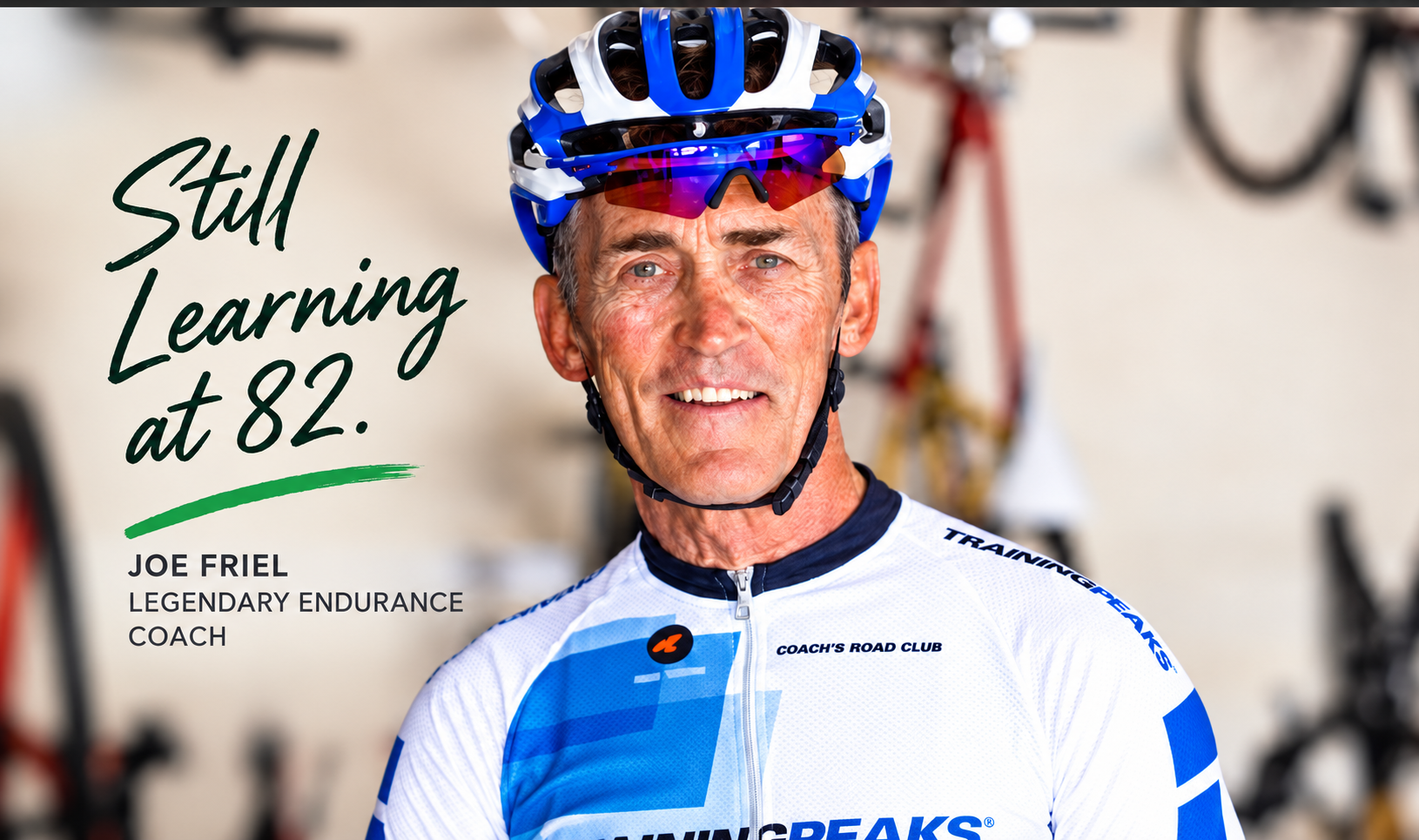
Creatine appears to help At the margins. Even Joe Friel, who is 82 now and has been on the podcast, he is one of the most supplement skeptical guests I have interviewed. Basically told me that he relies on food and takes almost nothing. When I specifically asked him about creatine though, he said the research looked quite convincing.
He still does not take it himself. and I think that is a useful lesson. Sometime something can have evidence behind it and still not be something every person has to take. [00:06:00] For me, it stays. Okay. Next, protein powder. Protein powder is slightly different because I barely think of it as a supplement.
It is really just convenient food. About ten years ago, I gave up meat and gradually moved towards a mostly plant-based diet. These days, I use pea protein almost every day. Could I get enough protein entirely from food? Probably, but I would have to think about it much more carefully. So pea protein makes that easier.
I aim for roughly zero point seven grams of protein per pound of body weight. That target partly came from a conversation I had with registered and renowned dietician EC Synkowski of Optimize Me. she thought that was plenty for someone like me who is active, strength training, trying to preserve muscle, but not trying to maximize bodybuilding style hypertrophy.
And [00:07:00] interestingly, that number lines up quite closely with the broader resistance training literature. A well-known meta-analysis found that increases in protein intake seem to stop adding further gains in fat-free mass at around one point eight grams per kilogram per day, which is roughly point seven three grams per pound.
Now, if you're listening to this and thinking, " What about whey, casein, soy, pea, essential amino acids? Those are usual subtopics. But for me, the bigger lesson is simple. Protein powder is there to help me reach a dietary target. It is not a magic muscle powder. You still need that resistance training stimulus. EC made that point explicitly when we spoke.
Eating more protein by itself does not cause you to suddenly grow lots of muscle. Again, the boring part matters more than the scoop Vitamin D. Vitamin D came into my routine for a [00:08:00] completely different reason. A few years ago, blood work showed that I was deficient. That surprised me. I spend a lot of time outdoors.
I climb, I ride. I live in California. I would have assumed that I was getting plenty of sunlight. Apparently, that assumption was not enough. So I started supplementing, and this is probably where my philosophy began to change. I did not start taking vitamin D because someone told me everybody over forty should take vitamin D.
I started because a test showed that I was low. When I later interviewed EC, I asked her about all the powders, green drinks, vitamins, and longevity pills that are constantly marketed. Her answer was quite conservative. Her view was that supplements make the most sense when there is a specific reason to use them.
She actually pointed to my vitamin D deficiency as a good example. [00:09:00] If you have a measurable deficiency, that is very different from taking some-something because a wellness influencer told everybody to take it. That does not mean everybody listening should now run out and get vitamin tested. It means I increasingly like having an answer to the question: what problem is this solving?
What about magnesium? Since we are talking about nutrient deficiencies, magnesium is another one people ask about constantly. I actually take magnesium glycinate. Magnesium is an essential mineral involved in hundreds of reactions in the body, including muscle and nerve function. But the fact that something is essential does not automatically mean that taking more of it gives you extra benefit.
If someone is deficient or has a particular medical reason, supplementation can make sense. But I would put magnesium in the same category as many [00:10:00] minerals and supplements. First ask yourself whether your diet or your individual situation gives you a reason to take it. I take it. I do not think of it as one of the dramatic pillars of my longevity plan. And this is where the episode easily can become Six hours long because the same questions come up around zinc, B vitamins, calcium, and iron.
They matter, but they are not universally beneficial just because they are essential nutrients. Okay, moving on. Urolithin A and Mitopure. The next one is much less familiar, Urolithin A. I take it in a product called Mitopure made by Timeline Longevity. So first, exactly what is Urolithin A? Certain compounds in foods like pomegranates and walnuts can be metabolized by gut bacteria into Urolithin A, but not everyone appears to produce meaningful amounts of it naturally.
[00:11:00] Researchers have become interested in it because of something called mitophagy. Mitochondria are structures inside our cells that produce energy. Like everything else in the body, mitochondria can become damaged over time. Mitophagy is part of the cellular process involved in identifying and clearing damaged myco- mitochondria.
You can think of it as a kind of mitochondria, mitochondrial housekeeping. And that is interesting in aging because mitochondrial function is connected to muscle function, energy, metabolism, and physical performance. There are now several trials in humans of Urolithin A. Some have shown improvements in measures of muscle endurance, strength, and mitochondrial biomarkers.
Not every outcome improves, so I would describe the science as promising rather than final. But I like that there is actual human research behind it. [00:12:00] I take Mitopure consistently. I also want to say something that may sound counterintuitive for a sponsored product. I do not take it and suddenly feel something dramatic.
There's no buzz. There's no obvious new energy that I feel. No workout where I think, "Wow, that was Urolithin A." But I'm not convinced that is the right test for every supplement. I do not feel vitamin D working either. If the target is a longer term biological process, subjective sensation may not tell you very much.
For me, the better questions are, is there a reasonable biological rationale? Is there human research? Is this relevant to what I care about. with urolithin A, I think the answer is yes, enough that I'm comfortable keeping it in my routine. And disclosure, Timeline is a sponsor of Ageless Athlete.
You will likely hear a Timeline message somewhere in [00:13:00] this episode, So I'm not going to repeat the sales pitch here. I use Mitopure myself, and I'm glad they are a partner because this is one of the areas I genuinely think is interesting. Omega-3s and fish oil, this is the next one.
It's a huge category I've not talked about much so far. That is omega-3 fatty acids. Fish oil is probably the form most people know. Omega-3s such as EPA and DHA are fats involved in cardiovascular, inflammatory, and neurological biology. And there is an important distinction here again. Eating fish and taking fish oil capsules are not necessarily equivalent interventions.
The evidence depends enormously on the population, the dose, the formulation, and what outcome you are trying to change. Some people clearly have medical reason to use prescription omega-3 products. For a [00:14:00] generally healthy person buying fish oil at a supplement store because it is good for the heart, the picture is more complicated.
Because I am mostly plant-based, this is a category I pay close attention to, but I would not put generic fish oil into the same confidence bucket as creatine. It is another one where the question should be, what specifically are you trying to accomplish? Okay, moving on. Glucosamine and chondroitin. We are now getting into the joint aisle.
I started trying glucosamine and chondroitin when I began seeing signs of arthritis and cartilage loss in my thirties. And if those words sound vaguely medical, but you have no idea what they are, here is my friendly version. Both are compounds associated with cartilage. Glucosamine is used in the building blocks of molecules that help make up cartilage.
Chondroitin is another [00:15:00] structural compound of cartilage and contributes to how cartilage handles compression. So the marketing logic is very intuitive. Cartilage is wearing down. These compounds are associated with cartilage. Take the compounds, help the cartilage. Unfortunately, biology does not always work like replenishing ink in a printer.
glucosamine and chondroitin for osteoarthritis has been mixed for years. Some studies, they show pain improvement. Others, they don't Different clinical guidelines have even reached different conclusions. I tried both. I did not notice anything meaningful, so I stopped. That does not prove they do nothing for no one.
That does not prove they do nothing for anyone. It means that for me, I did not see enough reason to keep paying for them moving on. Collagen. Collagen sits nearby conceptually. Collagen is the major structural protein in connective [00:16:00] tissues, skin, tendons, ligaments, cartilage, bone. When we take collagen, we are not shipping intact collagen directly to our knees or shoulder.
We digest it. It gets broken into peptides and amino acids. There is some research suggesting collagen supplementation may improve joint pain and function and may have roles in connective tissue support. The evidence is not strong enough for me to say everybody with a sore knee should take collagen, but it is not nothing either.
I tried it, and again, I cannot honestly tell you I noticed much. And this gets into one of the psychological traps of supplements. When something hurts, you desperately want a lever. I know I do. Strengthening around the joint takes time. Load management takes time. Rehab takes time, and sleep, that also takes time.
[00:17:00] Taking a powder takes twenty seconds. Sometimes a supplement may help. Sometimes it may mostly satisfy our need to feel that we are doing something. I try to be aware of that in myself now. Okay, let's move on. Peptides. Now we get into this category that I think causes the most confusion. Peptides. The word seems to be everywhere right now.
Longevity clinics, recovery clinics, bodybuilding forums, Instagram. And I think a lot of people hear peptide and have absolutely no idea what that means. The simplest explanation is this. A peptide is a short chain of amino acids. Proteins are also chains of amino acids but generally much larger and more complicated ones.
Peptides act often as signaling molecules. You can think of [00:18:00] them as small biological messages. Your body naturally makes many peptides. And this is important. Peptide medicine itself is not fringe. Insulin is a peptide hormone. Many modern medications are peptide based. So when someone says peptides, that tells you almost nothing about whether the substance is proven, experimental, safe or dangerous.
You have to ask which peptide. The two I'm currently experimenting with are BPC 157 and TB 500. BPC 157 is a synthetic 15 amino acid peptide that has become extremely popular in recovery conversations because animal and laboratory studies have suggested possible roles in tissue repair. TB 500 generally refers to a small synthetic fragment related [00:19:00] to thymosin beta 4, another peptide involved in biological processes around cell movement and wound repair.
People online talk about both as though they are established injury treatments. They are not. Human evidence remains quite limited, and the regulatory situation in the US has been unusually fluid this year. In July 2026, an FDA advisory committee narrowly recommended that BPC 157, along with TB 500, along with several other peptides, be considered for the 503A bulks list used for traditional pharmacy compounding.
But that committee recommendation was advisory It did not make these three peptides FDA-approved drugs, and it did not by itself create a final [00:20:00] authorization to compound them. FDA scientists have continued to raise concerns about the thin human safety and efficacy data and possible risks, including immunogenicity and impurities.
So when someone tells you that peptides are now FDA approved, that is not accurate. That is not where things stand. The fairest description is that these compounds are experimental and sitting inside a rapidly changing regulatory environment. I came to peptides through Marek Health. My experience with Marek actually started with comprehensive blood work.
I went through a much broader set of labs than I typically saw in routine care. I reviewed everything with a Marek health coach. I found that part genuinely useful because I came away understanding my health data much better. Marek is also [00:21:00] an affiliate partner of Ageless Athlete, and you may hear a separate Marek ad elsewhere in this episode, so I do not need to repeat the offer here.
What I can say is that I liked having the testing, coaching, and clinical process around the decision rather than simply ordering something from a random website. Why am I trying BPC-157 and TB500? Because I've had a frustrating year with my, with my joints, with my ankle and my hip and my shoulder, and because I'm curious, and because I'm willing to accept more uncertainty for a short experiment than I would for something I plan to take for, like, twenty years.
I'm in the middle of a roughly fifty-day course, and I will report back. But if I feel better at the end of it, I am going to try very hard not to say peptides healed me because time passed. I did rehab consistently. My training kept getting better. Symptoms [00:22:00] fluctuated. Placebo effects, they happen to be real.
One person can tell you what happened. One other person is much worse at telling you why Okay, let's move on. What about probiotics? This is another category where the name itself can be misleading. people say probiotic as though it were one intervention. It is not.
Different bacteria strains can have different effects completely. A strain studied for one gastrointestinal condition is not automatically useful for another. So should I take a probiotic is almost like asking, should I take medicine? Which one? For what? For most healthy people, I would be much more interested first in the overall quality and diversity of the diet, including fiber and fermented foods where appropriate, than in assuming a generic probiotic capsule is necessary.
But probiotics are a perfect example of [00:23:00] why supplement conversations become messy. The category name is too broad to tell you whether the intervention is useful. the same caution applies to things like zinc and B12. and some of the other usual suspects.
Zinc is essential. That does not mean more zinc is better. Too much over time can create other problems, including interfering with copper status. B12 is particularly relevant for people eating a vegan or heavily plant-based diet because reliable dietary sources are limited. That is a case where supplementation may be much more rational.
Again, the recurring principle is not supplements good, supplements bad. It is what is the reason? Okay, moving on. The successful athlete problem. One of the most useful things doing Ageless Athlete over the last few years has taught me is that exceptional [00:24:00] athletes are not automatically exceptional nutrition scientists.
I love asking my guests what they eat and what they take. Those answers are fascinating, but they are anecdotes. One of my guests, Susan Hunt, described taking colostrum and several vitamins and fatty acids that she associates with muscle and brain health. Susan is extremely active. But in that same conversation, she said that women over 40 basically cannot build muscle anymore and should focus on keeping what they have.
The broader resistance training literature does not support that. Older women can gain strength. They can gain muscle. Yes, they can do all of those things. So what should I do with Susan's supplement regimen? I listen, I stay curious, but I do not automatically turn that into a prescription.
An athlete is an expert in their own lived experience. A registered dietician is more qualified to interpret [00:25:00] nutrition research. A muscle physiologist may know far more about hypertrophy and aging. A clinician can take your own medical context into account. Ideally, I want to hear from all of them, and then I want to see where the stories overlap.
This is one reason I value EC Synkowski's perspective so much. Her advice is not particularly glamorous. Eat mostly real food, exercise, sleep, maintain a healthy body weight, pay attention to purpose and community, then worry about optimizing small nutritional details. She gave me an example that I still think about.
If you're sleeping five hours a night because you have a toddler, perhaps your biggest health problem is not that you have failed to find the perfect supplement. and-- That seems obvious, but it is incredibly easy to forget. The LinkedIn point I cannot stop thinking about. This takes me back to the discussion [00:26:00] that started after I published the essay.
One commenter said something that sharpened the entire argument for me. Maybe the people taking s- twelve supplements are healthy because they are the kind of people who also train. watch what they eat, sleep properly, and care deeply about their health. That is a classic causality problem.
We see an unusually healthy 75-year-old taking a supplement stack and think maybe the stack created the health. But maybe the stack is just one more visible sign of an unusually conscientious person. The supplement may matter, or it may be riding along with forty years of good habits. That is why I think anecdotal success stories are so seductive and so dangerous.
They may be completely true. They still do not tell us which variable deserves the credit. What I actually take today. So where do I land? Here is my [00:27:00] current rough hierarchy. Creatine, high confidence. Yeah, I take it. protein, high confidence when I need it. It helps me reach my potential target on a predominantly plant-based diet.
Vitamin D, high confidence for my particular situation. I had documented low vitamin D. Magnesium, I take it, but I do not regard it as magic. Mitopure Urolithin A, positive with developing evidence. I think the mitochondrial and muscle health research is interesting enough that I'm comfortable keeping it in my routine.
Collagen, possible benefit. I did not notice much personally, but the research is interesting enough that I would not dismiss it. glucosamine and chondroitin, I've tried them and I stopped. BPC-157 and TB-500, they are experimental. I'm trying them under professional guidance and with my eyes open about the uncertainty.
[00:28:00] Omega-3s, probiotics, zinc, B12, and other vitamins and minerals, quite context dependent. Some are hugely important if you have a specific need. That is different from everybody's needing to take them. And large generic stacks where I cannot explain what each product is solving, I am necessarily skeptical.
So my five question test. If you are over forty and somebody tells you that you need a new supplement, here are the five questions I increasingly ask. One, what problem I'm trying to solve? Muscle deficiency, joint pain, recovery, sleep, cardiovascular risk. If I cannot answer that, I pause. Two Do I actually have the problem?
That is where blood work, symptoms, diet, and medical context can matter. Three, what kind of evidence exists? [00:29:00] Cell study, mouse, tiny observational study, randomized human trial, systematic review. Those are not interchangeable. Four, what am I neglecting while I optimize this? This one matters a lot to me personally.
I could probably strength train more, I know that. But the things that make my life feel full are like these outdoor activities that I love. I strength train enough to try to keep myself balanced and durable. I do not want to optimize my longevity so aggressively that I remove the activities that make longevity worth having.
You get only one life. I want mine to contain a lot of these activities that I can't get enough of. So I want supplements and strength training to support that life, not replace it. And five, how will I know whether this worked? Sometimes that is easy. Blood work, strength, pain, performance. [00:30:00] Sometimes it is much harder.
If a supplement supposedly influences a long-term cellular process that you cannot feel and cannot easily measure, then the quality of the evidence becomes even more important. The boring answer is still the foundation. I am more interested in supplements at forty-eight than I was at twenty-eight, but I'm also more skeptical.
I do not think those ideas conflict. There are supplements I think are genuinely useful. There are emerging interventions I am excited enough to try. There are things I no longer spend money on, and there are products in my cabinet today that I may decide five years from now were not worth it. That is fine because one pattern keeps appearing across the strongest older people I interview.
Their supplement cabinets look quite different. Their foundational habits look much more similar. They move, they train, they eat reasonably [00:31:00] well, they sleep, they have friends and family. They have something to get up for. They keep showing up. Some take ten supplements, some take almost none. That should probably tell us something.
Supplements can support the foundation, they cannot become the foundation. And for me, the foundation is still pretty simple. It's about the same as some of those people I interview. Yeah. Do those activities that I love. Keep moving every day. Enough strength training to remain durable.
Mostly plant-based food because I feel good about not eating animals. Enough protein. Trying to sleep well. Paying attention when my blood work tells me something useful, and staying curious enough to occasionally experiment without confusing experimentation with uncertainty. So before I put the next bottle in the cabinet, I'm going to keep asking the same question: Why am I taking this?
If I have a good answer, great. If I don't, perhaps I don't need another [00:32:00] bottle. Okay, to close off, this episode actually started as an essay on my Substack, where I included links to the research and went deeper on what I personally take, including the experimental stuff. You can find Ageless Athlete Substack.
Just go to agelessathlete.substack.com. And I would genuinely like to know what I missed. Magnesium, fish oil, B12, probiotics, something more obscure. Send me the supplement you think deserves a deeper look, because I may do a second episode where I take the most common ones and go through the evidence one by one.
Thanks for listening. [00:33:00]