The Surprising Skill You Need To Live Past 100 - And It's Not Diet or Exercise | Allison Aubrey
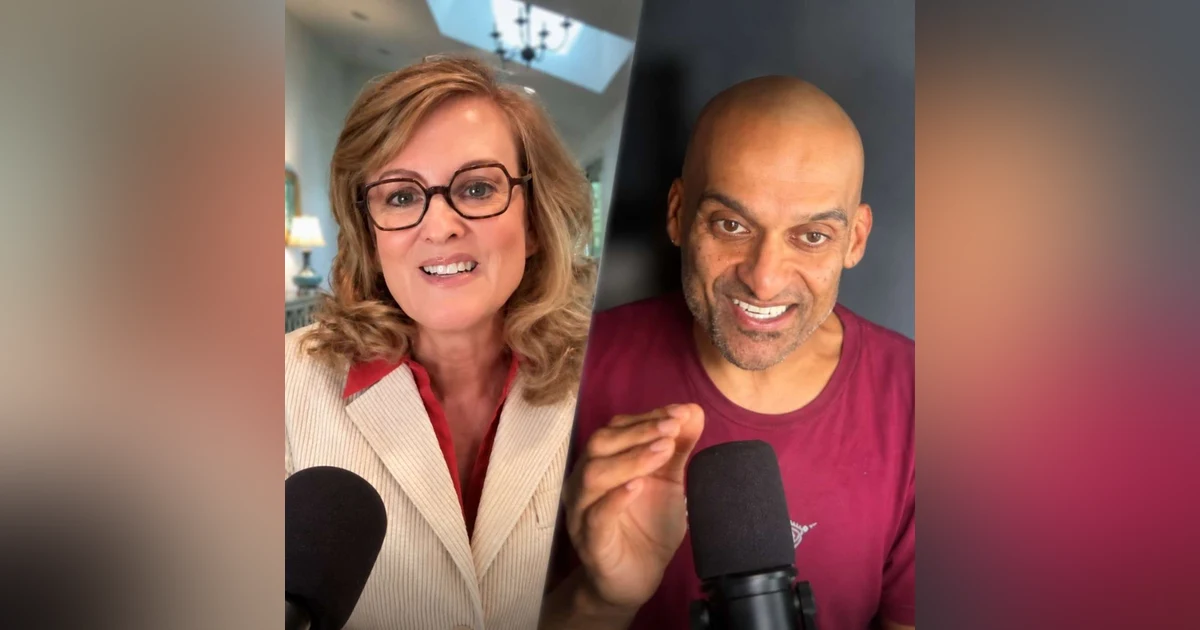


Allison Aubrey has spent more than two decades reporting on health and science for NPR. But when she put herself through a longevity assessment, some of the results caught even her off guard.
In this episode, we talk about what she learned from that experience, why being active and lean doesn’t necessarily mean you’re as prepared for aging as you think, and the health markers that may actually be worth paying attention to.
Then we get into the bigger stuff: strength, purpose, connection, reinvention, and the gap between knowing what to do and actually doing it.
And later, Allison shares what she learned from spending time with 32 centenarians — including one pattern that kept showing up in people who had made it past 100.
About Allison: Allison Aubrey is an NPR health and science correspondent and the author of the Book:Your Turn: How to Create a Midlife You Love. She also writes on Substack.
Brain Care Score — Mass General
Marek Health: Get a deeper look at your health with comprehensive bloodwork and personalized guidance. Ageless Athlete listeners get 10% off with code AGELESS at https://agelessathlete.short.gy/marek
Timeline: Support cellular renewal and mitochondrial function with Mitopure, featuring Urolithin A. Get up to 20% off at timeline.com/AGELESSATHLETE
🚀 Love the show? Here’s how to support it
If something you’ve heard here has stayed with you, made you smile, please consider supporting the show. 👉 https://buymeacoffee.com/agelessathlete
Ageless Athlete is a podcast about healthy aging for people who want to stay strong, active and capable for life. Conversations explore strength, endurance, mobility, recovery, VO2 max, muscle and bone health, and what it takes to keep doing the things you love as you get older.
Follow Ageless Athlete — How to Stay Strong, Curious & Capable for Life for new episodes each week.
32:43 - [Ad] Fit, Healthy & Happy Podcast
33:21 - (Cont.) The Surprising Skill You Need To Live Past 100 - And It's Not Diet or Exercise | Allison Aubrey
Ageless Athlete Recording - Alison Aubrey
===
[00:00:00] I spent a day with 32 centenarians
Alison: I was there to glean all of their insights and all of their secrets. And one by one by one by one, first of all, the minute I would say like, "Oh, do you have a secret to aging well?"
the people who make it to 100, at least the people who are 100 now, they unwittingly figured out all of these, resilience skills.
Kush: Alison Aubrey has spent more than two decades reporting on health and science for NPR, covering nutrition, exercise, brain health, aging, and longevity. She is also the author of the new book, Your Turn: How to Create a Midlife You Love. In this conversation, Alison gets very personal about what happened when she put herself through a longevity assessment and discovered something she wasn't expecting.
We talk about what those tests can actually tell you, what she changed after seeing her own results, and a free evidence-based tool she recommends for getting a clearer picture [00:01:00] of your health without stepping into a longevity clinic. We also get into muscle strength and why being active or lean doesn't necessarily mean you are as physically prepared for later life as you think.
Alison shares the changes she made in her own training and why the gap between knowing what to do and actually doing it may be one of the biggest obstacles in healthy aging. Then we go beyond exercise and nutrition. Alison talks about purpose, connection, reinvention, and what she calls the third turn of life, a period where the old scripts around work, family, and identity can start to loosen and something new can open up.
And later, return to this fundamental question: What do people who make it past hundreds seem to understand that the rest of us often miss? Alison spent time with thirty-two centenarians, and one pattern kept surfacing. [00:02:00] This becomes one of the most memorable parts of the conversation, so stick around for that.
So if you want practical ideas for staying strong, capable, connected, and engaged for as long as possible, this one is worth your time. And my friend, if you enjoy conversations like this, I also write a free weekly newsletter on training, longevity, resilience, and what it takes to stay capable across the decades. You can subscribe at agelessathlete.co/newsletter. You can also find this link in the show notes for this episode.
So yeah, just click over there and would love to have you join the newsletter. This is Alison Aubrey.
Alison: I want to start with something here, which is, Alyson, you went through this extensive longevity [00:03:00] assessment yourself.
Yes.
Kush: And the results surprised you.
Alison: Yes.
Kush: What did it tell you?
Alison: Okay. Well, let me back up. Two years ago, I accepted an assignment to cover the opening of the Potocsnak Longevity Institute at Northwestern University. And, um, in the lead-up to that open, the longtime media relations director called me, and she kind of buttered me up and complimented me, and she said, "Oh, we were thinking about who might be the best reporter to come report on the opening of this institute."
And she described that the research was going to focus on studying the difference between a person's biological age, which is their rate of aging, compared to their chronological age, which is the number of candles on your birthday cake when you're being honest. And so I thought, "Oh, wow, this is cool."
I, you know, floated it by my editor and by the editor of Morning Edition, and then people were excited, and [00:04:00] so I said yes. Oh, and I forgot to mention that they offered it as an exclusive, and when you're a journalist, when somebody tosses that word out of, exclusive, then you kind of get a little excited.
with that excitement, I kind of, like, rushed headlong into doing this story. I find myself at the Northwestern Memorial Hospital on one of the top floors sort of looking out to Lake Michigan. I'm, rolling up my sleeve to give blood, and I'm thinking, you know, "Giving blood in the name of science.
I'm giving blood in the name of storytelling and journalism." I was feeling very virtuous. And then I realized, "Oh, boy. I am unwittingly putting myself in the middle of this." And I'm, I... I was asking the question, "Am I ready to know what my, you know, biological age is?" I mean, I wasn't sure. I was a little bit scared.
you know, they put me through a battery of tests. I went inside a BOD Pod that can kind of assess body composition. There wasn't great news there despite having a very healthy body [00:05:00] weight. Turns out I was under-muscled, AKA weak, not very strong, compared to sort of what is ideal, and that was a wake-up.
I also learned a few things about sort of, uh, my heart rhythms and my caffeinated adrenaline-fueled lifestyle, and a little bit about how stressed out I was. So there was some good information to come out of it. I will say, weeks and weeks and weeks later, after they did this analysis on my blood to determine what is known as your Grim Age score, named after the Grim Reaper, uh, I did get a call from the director of the institute to give me the results of my biological age.
Kush: Okay, and, uh, what did you find out?
Alison: Well, I was fearful because I think in the course of the day of the research, I think I flipped out and was a little [00:06:00] overwhelmed trying to both report a story, record all of these interviews while I was being poked and prodded and assessed. And you know, at one point they gave me the MoCA test, which is a memory test that President Trump loves to brag about acing, and I think I was so discombobulated because I was like, I literally had like a recorder in one hand, and I was like being, tested, given this battery of tests on the other hand, and I'd had that sort of scary experience inside the Bod Pod.
I was like totally distracted, and I didn't do well on the MoCA test, and so I'm thinking... Oh, and I also didn't do well in the hearing test. Like FYI, my hearing is completely fine. But in that moment, I was sort of hearing like a loud buzz. I think I was just very overstimulated. And so I thought, "Okay, you know, I'm getting failing marks in the Bod Pod and on the MoCA test and on the hearing," and I was scared to get my biological age.
But turns out it was- You
Kush: know, sorry, I, I just have to, pause and say this, [00:07:00] that it is somewhat reassuring to learn that even a seasoned NPR journalist- ... can get a little nervous when being-
Alison: Well, yes. When someone is about to tell you, like, "Here's how well you're aging compared to your, like, your same-aged peers," you know?
Mm. But the good news is I did finally get those results, and it turned out, according to my Grim Age score, I was eight years younger biologically than my chronological age. Yeah. And that day, I kinda, it was like a g- it was like literally somebody handing me a gift, It was like, "Here you go," I mean, I know it's just an estimate and an analysis, but I was like, "Oh, yeah. Yeah, like, my best years are ahead of me. Yeah, I am younger than I, you know, was feeling before." So there was totally a psychological boost and almost like a reset.
Kush: Brilliant. Now that I think about it, if I [00:08:00] was also getting a test like that, it would actually be really scary because I think a lot of us tell ourselves stories of-
Alison: Yeah
Kush: where we might be on that whole, like, fitness longevity spectrum. But when a hard number is shared, again, it's only a hypothesis. it can seem very daunting. So Allison, you found out these things, but then I believe you also found out that you were under-muscled.
Alison: Yes.
Kush: Were you surprised?
Alison: Uh, yes and no.
so I was a runner for many, many, many years, and just, I didn't miss a day. That was sort of my, time to unwind, and really loved running. And, I actually tore my ACL in Colorado on the, at the, like at, at 11,000 feet. And, you know, had, I decided, I opted for having my ACL, reconstructed surgically because at that time I was still playing a lot of tennis and [00:09:00] running, and I did not wanna give up on those things.
And I remember when the surgeon came in and I was like sort of waking up from anesthesia after my ACL replacement, and he came in and he was like, the surgery went great." He's like, "But I just wanna tell you that you have a little arthritis in your knee." And I'm like coming out of anesthesia and I was "You mean like arthritis-arthritis?"
And he goes, yeah, I'm pretty sure there's just like one kind." Yeah. And I was like, "Oh, like I don't have any knee- ... never had any knee pain," and like, "What, me?" Like, and he's "You know, you just might wanna think about like replacing, uh, you might, you know, genetically you might be getting from all that running, there's like a, there can be wear and tear on the joints."
And there's scientific debate on whether that's true. I think it comes down to genes and other factors. He said, "But, you know, you might just wanna consider this." And then I checked in with my dad, who'd also been a lo- a runner, and, uh, went on to have some knee pain and some, and had to have a hip replacement.
And he was like, "You know, I think your doctor's right. If I were [00:10:00] you, I'd wind down the running and do something else." So I, I sort of took up biking and yoga. And, um, I am lean, and I take after my mom's body, like just like kind of s- like skinnier legs. And, um, I think our genotype is a little bit like under-muscled by nature.
And I definitely realized that I needed to do something to start building muscle because I had only kind of gotten the memo on aerobics in, for most of my life. And I think that's fairly typical of Gen X women, that this kind of, you know, the message or the memo on strength training just kind of came more recently, at least for me.
Kush: Let me ask this. you know, you were an athlete.
Alison: Yeah.
Kush: Maybe, maybe not a professional one, but you were- You have been a runner and then you started doing other things, and I'm guessing you probably did visit the gym or maybe, attempted some kind of- I
Alison: wasn't really [00:11:00] a gym person,
Kush: no ... what about, like, just simple body weight exercises?
I mean, could you do- No, I
Alison: did, so I did yoga ... push-ups
Kush: or pull-ups?
Alison: Yeah, yes, for sure. I could go down into Chaturanga and, I mean, I didn't do any li- weightlifting, but I, for sure I did resistance exercises as part of yoga. I think that what had gradually been happening is I, because I was in a really busy stretch of life, I have three kids, and, I mean, the oldest boys are sort of out the door.
They're in their 20s and adulting, but my youngest is 15. And so this is, when this all happened, I'm taking it back, like, eight years. So I would've had, two high school kids. you know, eight years ago, Lily would, would've been in, like, first grade, and I had a full-time job. And I was walking a lot, and I thought that was sort of enough, and I was doing gentle yoga.
I mean, oftentimes it was sort of like more like probably Yoga Nidra. And I think that I had, in the back of my mind, I realized I wasn't probably as strong as I need, needed to be, but that body composition scan was like, [00:12:00] "Oh,yes. Time to start strength training." Yeah. Around the same time, my mother took a terrible fall down a two stair, uh, to, two flights of stairs on a mahogany staircase, and she was, you know, bloodied up and she had a concussion.
And, uh, she didn't break anything luckily, and she made a very nice recovery luckily. She turned 82 yesterday. But what I realized is, people are always worried when you ask like, "Oh, what do you worry about as you age?" People always say, "I'm worried about losing my memory," and I completely understand that.
But what is the other reason that people end up having to go into assisted living or can no longer live alone without assistance? It's because they can't do the daily activities of living, and what does that come down to? It comes down to strength, and people don't even know the term sarcopenia or loss of strength.
We don't measure it in our healthcare system, and I really was clueless about it for a long time because I thought weight was the measurement, and on the scale I was fine. But when I, [00:13:00] had the body composition done, I was like, "Wow, okay. You know, game on. Let's start strength trai- training."
Kush: To just understand this test a little better, to know what you're being, measured against. Like, is this like a DEXA scan that's part of the, uh, uh, part of the testing that you underwent? And then when they do this test, What is the benchmark that they're using to determine that you have insufficient muscle?
Alison: Yeah. It's just a, a rough analysis of body composition, so it's sort of like a ratio that they're looking at. A Bod Pod is nowhere near, nowhere near as accurate as a DEXA scan. It can happen sort of like really quickly. It's a just a quick kind of, um, in real time assessment, and yes, you, you re- you bring up a good point.
Like a DEXA scan gives a lot more specific information. I also have w- you know, used a bioelectrical impedance scale, a BIA. I might be actually, may have just messed up the name of that. But, when I went on to start doing classes at [00:14:00] Orange Theory, they offer a body composition scan as like part of your membership, and that actually will give you a sort of like green, yellow, red categories for body weight, for your amount of muscle, and it's yet another indicator, another proxy of like sort of how muscled are you, how much of your composition is muscle.
Which I think is useful because if, pounds are your only measure, you don't know what those pounds are, are made of. So, you know, these body composition scans are all a way of sort of like, as one doctor put it to me, of like looking under the hood. Like, what are these pounds made of?
Kush: I, I agree with that.
Yes. I remember a long time ago when I was in my 20s, I went to the mall, and they had one of those machines where you stand up and put your-
Alison: Like
Kush: an InBody? Maybe that's what it was.
Alison: Yeah. And-
Kush: Well,
Alison: those are the... I mean, there's a bunch of brands of them. The one they have at Orangetheory is called the InBody, and that's what I- Okay
yes, that's how I... I've tracked changes [00:15:00] in my body composition. Yeah.
Kush: Let me ask you this. So-
Alison: Well, tell me what... Sorry, I interrupted you. You were telling me when you went to the mall, and you were a kid. No,
Kush: no, I was just saying, like, I went, I also went through, and this is, like, 20-plus years ago, and I remember going to one of the machines, which kind of spit it out, like, this machine was so primitive, I think it only looked at my height and my weight.
And it gave me- It was like
Alison: an electronic
Kush: BMI. I don't know what it was, but it was, like, primitive and, pretty false. But yes, the science has come a long ways, and there's so many... You know, you, we used to have that pinch test back in the day, you know, and you pinch- Yeah ... like, your ab- abdomen, but we have all these measures.
But Alyson, you've been reporting for a long time, and I think you've been talking about aging and longevity for a while as well.
Alison: Yes.
Kush: And so I'm curious, like, why is knowing so different than, you were reporting about this. Yeah. But you were still shocked that you were not doing this.
Alison: Well, I was doing some of it. I think we [00:16:00] all have what I call a knowledge-action gap, you know. Von Goertez said, "It's not the knowing, it's the doing." And wow, couldn't all of us, each of us, solve most of our problems by narrowing the knowledge-action gap. And I think, just pick a lifestyle habit that you know is important, whether it's eating well or exercise or sleeping well or minimizing alcohol or, you know, finding purpose and joy.
Like, all of the things that we know to be true, it's not the knowing that makes it possible. It's the doing. And I think for each of us, you know, sometimes there's a narrow gap between, you know, the knowing and the doing, the knowledge and the action. But sometimes there's, like, you know, you can drive a barbell through the knowledge-action gap.
And I think, as they say, awareness is the first step, so having that measurement. The minute you measure something, well, you have some information to work against. And I think that's why seeing that body composition score was [00:17:00] important to me because I kind of intuitively sensed, like, oh, I wasn't working out as hard as I once was.
And you know, yes, I, I, in this neighborhood I'm known as, like, a maniacal waver 'cause I'm always out walking. I'll do an interview and I'll walk a mile. And I'll do another interview and I'll walk another two miles. I'm constantly waving to everybody, and I walk a lot and thought that was enough. I needed to add that strength training.
Kush: I think you're correct that, in these days and times, we are inundated with self-help content, but there's indeed that, the gap. So it sounds like this was the wake-up call for you.
What changed after this?
Alison: Oh, well, I started working with a personal trainer first at the YMCA, and she helped me just get familiar with all of the equipment.
So I used to walk right through all of the weightlifting equ- equipment, and I'd go right to the elliptical, and I was like, "Ugh, yeah, that equipment, that just looks really boring," [00:18:00] or it just looked like, something I was not interested in. I literally didn't know how to use the equipment. So really just, you know, got some training on how to use the equipment, and then, like I said, I started doing some classes at Orange Theory.
And I looked into the evidence, which was, you know, how much time does it take to start, seeing s- meaningful differences in functional strength? And it doesn't take much. I mean, like, literally two or three times a week for, like, a half an hour, and you're gonna start seeing a difference. And you do, you start to feel it pretty quickly.
Now, men build muscle faster than women. In fact, Orange Theory gave me some of their data from one of the strength tr- training challenges they had one year a couple years ago. And over the course of, like, six or eight weeks, you can't expect to build too much measurable muscle, but you can directionality.
You know, you can see if you're gaining muscle. And in that data, it was very clear that it's easier for men to put on new [00:19:00] muscle than women. However, how much muscle you have isn't the only part of the story. It's sort of your functional strength. you know, how are those, you know, muscles and neurons working together, the neuromuscular connections that can get stronger over time that give you more functional strength.
So it's both of those things, and I started to see an improvement in both.
Kush: This thing you said a second ago, which is that you started noticing some changes in your, your everyday life. what did you start noticing?
Alison: Well, I hate to check bags when I go on an airplane. I always put it in the overhead, and so everything I own is in the overhead. I started to notice it was easier to lift my overhead, my bin into the overhead compartment, like a heavy suitcase.
you know, I don't know, just pulling in... I mean, groceries aren't heavy. Though, though they can be if you put s- put everything into one, like, big L.L.Bean bag. I just... The things you do in everyday life, I was noticing like, [00:20:00] "Oh, yeah, I'm getting stronger."
Kush: I love the example of, like, being able to...
That's what I tell my mom, that, "Hey, you need to keep up with your personal training because you don't wanna be asking people to help you put that annoying bag- Yeah ... in the overhead bin."
Alison: Yeah.
Kush: Alison, you also write very personally about menopause.
And I'm wondering that these, changes that you were going through, were they also connected to the, like the, the, the physical changes, the loss of muscle?
did you misunderstand what was happening to your own body?
Alison: No, I don't think I misunderstood. I just think there wasn't quite an awareness of how all of these things were connected or are connected, and there's still not enough research helping us connect all the, all the dots. I will say one thing that I write about in my book, Your Turn, is that, it's really easy to focus [00:21:00] on, physical changes.
I think it's a little bit harder to notice that, I needed an, an emotional reset too. I'd been on deadline for 25 years, you know, raising three kids. You know, toggl- I f- I write in the book that, you know, I felt like I was living in a moon bounce of controlled chaos, just jumping between daily deadlines and work duties, and daily deadlines and work duties.
And when you're always in hustle mode, you have a lo- I had a lot of anticipatory anxiety of "Oh, what's tomorrow's dead- am I gonna be able to make tomorrow's deadline? What fire am I gonna be putting out at home?" And I think when you're living in that way, in that kind of hustle mode, it's really easy to get burned out, and it's also really easy to sort of overlook symptoms that are linked to that.
I think in the book I write about having a whole bout of IBS and thinking like, for weeks thinking that it was some kind of foodborne illness, before finally realizing, even though I had, reported many, many times on the link between the two, [00:22:00] in my, you know, in, in myself I was like, "Oh, yeah, yeah, yeah, no, I'm not, I'm not stressed out.
I'm fine. I'm fine. This must be some kind of weird, foodborne illness thing," you know? And so a little part of me was in denial that I might be not handling the hustle mode as well as I thought I had, for the 25 years leading up to that. And I think when I took time off, when I took time off to write Your Turn, I took a leave from the newsroom, and I called it...
At first I was calling it a gap year, 'cause I love the concept, though I wasn't quite gone a year, so I started calling it my curiosity tour. And I was sort of like, okay, look, if, you know, if there is life beyond a newsroom, if there's life beyond parenting, beyond the paycheck, like, who's doing that stage of life well, and what do you need to do to sort of make a cross fade to a life of meaning and purpose?
And that's really what this whole book is about. Like, when I wrote Your Turn, the whole thing was- [00:23:00] W- where and how are people finding meaning and momentum in what I call the third turn of life? What are they doing? How did they do it? what are their stories, and what's the formula, if you will?
Kush: I have one last question about, about Talking About Muscle, which is you went through this, uh, age testing service, if I may.
Yes. Those of us who don't have access to such a service, like, do you have any advice for us on h- on how can we determine if we are three rules, if you're aging well? Hmm. If there are some markers we can, like, uh, tap into Yeah. Yeah. Love to, love to hear you on
Alison: that. Yeah. I would say one tool that is free to anyone with internet access is called the Brain Care Score.
It was developed by scientists at Mass General Hospital in Boston, particularly a doctor named Dr. Jonathan Rosand, who's a neurologist. I have done multiple [00:24:00] stories about the research behind the Brain Care Score. Now, when you're taking care of your brain, when you're doing things to promote good brain health, guess what?
You're also doing things to promote good heart health, and also doing things that can help protect against, pu- cancers. You're doing... Basically, what's good for the heart is good for the brain, is good for overall health, is what his body of research shows, and the body of research around the Brain Care Score.
So what I love about the Brain Care Score is that at a time when we are swimming in information about what you should be doing, sometimes we get conflicting messages, because there's lots of influencers and lots of opinions. The Brain Care Score does not, does not dwell in opinion. The Brain Care Score is evidence-based.
You answer a series of questions about your lifestyle habits, about socio- social emotional factors, like how much time you spend around others, do you have a sense of purpose? You fill in, you know, what is your body weight? What is your A1C, which is your blood sugar. What is your cholesterol? [00:25:00] And these ver...
And what is your blood pressure? Those four basic metrics c- which can determine a whole lot about your health and your risks of major diseases. And then you get this little prescription back of, okay, here's your score, and here are some ideas about how to improve your score. Now, the wonderful thing about the Brain Care Score is that there's research to show that a five-point higher Brain Care Score is linked to, like, a 50% lower risk of having a stroke, and lower risk of having late-life depression, and a lower risk of developing three of the most common cancers.
So this tool will tell you which lifestyle habit that you want to focus on. So say you take the Brain Care Score and you get zero points for in the, the category of alcohol. okay, cut your alcohol use down to, three or four drinks a week, and suddenly you've added a point. Or say you don't get enough points on the, on the diet part of the questionnaire.
double down on fruits and vegetables or one, or greens or just pick one. [00:26:00] That's a way to get a point. So I see the Brain Care Score as a way, as a kind of like do it yourself or gamification of getting to better health. It's not a doctor telling you, "You must do this. You must do that." It's you picking how you want to improve your lifestyle habits, because the evidence shows doing th- these things will actually and can actually make a difference
Kush: this test sounds badass.
the name is Brain Care, but is it covering, let's say, your brain and your mental makeup, or does
Alison: it go even like- No, no, no ... other aspects of- It's asking you how much do you exercise? You know, how much do you exercise? what is your diet? The questions are in all domains across health, and it's called a Brain Care Score because it was developed by neurologists, who of course are brain doctors.
But back to the point I was just making, if you take steps to protect your brain, those very same steps are protecting your cardiovascular system. They're, they might be reducing chronic inflammation. They might help you stave off common cancers that might be linked to lifestyle [00:27:00] habits. basically focusing on what's good for the brain is also, like, doing...
Those are the same exact strategies to reduce the risk of all the diseases that are most common as we age.
Kush: I love it. I'm gonna put links to the, to the- Yeah ... test, and I'm, I'm gonna do this test myself because this test truly sounds valuable.
Alison: Oh, yeah.
Kush: The name of your book-
Alison: Yes
Kush: Her Turn is fascinating What does that mean?
Alison: Sure. Uh, so two metaphors here. the book is Your Turn, and, um, I'll tell you two quick stories. So I grew up in Louisville, Kentucky, the home of the Kentucky Derby, and when I was 13, I went to Churchill Downs, for the Derby. I watched a horse that was in the back of the pack, and then in the third turn of the race, that horse, the jockey sort of found this surge of energy together and surged ahead to go on to win the race.
[00:28:00] Well, afterwards, I was talking to my grandfather and he said, "Oh, Allison, you always keep your eye on that third turn. That's where something unexpected happens. That's where something exciting happens." And I kinda looked at him quizzically. I mean, I was, like, 13, and I said, "Well, why? Why the third turn?" And he looked at me and he was like, "Well, when you can see the home stretch, a sense of urgency arises."
Well, as a 13-year-old, this did not settle in as a midlife metaphor, but when I went back to the Derby when I was 50 years old, his words came back to me, and I thought to myself, wow. It- that's when it crystallized. You know, if you think about it, at a time when it's possible to live a 100-year lifespan, like, by 2050 there'll be 3.7 million centenarians on this globe.
You know, if we could live to 150 is just the start of midlife. 50 to 75 you can think of as the third turn or the third quarter, if you will. And so I really [00:29:00] realized that I could use this as a midlife metaphor. you're at that third turn. You're at the beginning of that third quarter.
It's up to you to surge ahead, to find that energy. Like, society is not expecting it. You know, this might be the biggest surprise of all, to watch people surge ahead, you know, after 50. And you do it not because you're trying to please the cheering fans in the stand. You do it because it's time to, like, rip up the societal script, and it's time to write your own script, right?
To live by heart, to live by intuition. The other use of the word turn in my book is that I feel like we have been handed this script, this societal script, in, like, life in three chapters of, like, learn, earn, retire. Well, I hate the word retire. I don't hate the concept. I hate the term because listen to this word.
Retirement. Like, you could hear the [00:30:00] word tired in the word retirement. I don't like that. My mom just turned 82. She's n- anything but tired. She's always creating things and doing things and making things and showing up for people. And so I think, we needed to rewrite that idea of learn, earn, retire, and the way I have rewritten it is the concept of learn, earn Return, turn, right?
Turn again. Because I think we can make another turn. We can return to the child within. We can turn to the thing that we always wanted to do but maybe couldn't in the heat of the busy parenting years, you know? We never stop caregiving, we never stop working, but at this stage of life, I'm finding, you know, if you have an extra hour a week, that's time enough to go back to the hobby that you loved as a kid, or to do the thing that you never got to do because you were too busy, or to finally volunteer for that cause that you love that you've been thinking about.
So it's time to learn, earn, [00:31:00] and return because it's your turn
Kush: I'm two years shy of this third turn myself, so-
Alison: Okay ...
Kush: this, this idea particularly hits home can you share maybe three things that we need to be excited about-
Alison: Mm-hmm ...
Kush: this third turn that- Mm-hmm ... is either approaching all too quickly or we might already be in it. Mm-hmm. What might be those three things?
Alison: Well, I think the most exciting thing, and this is all about how you frame it, in my book, uh, which again is called Your Turn, just so people don't forget. in my book I make the case that the beginning of the third turn can feel like a second adolescence, right? my, uh, youngest child is 15, and about a year ago we were sitting right here at this kitchen counter and it was morning time and I was kind of like slurping my coffee and like this, and She's very annoyed by that, and [00:32:00] I'm very cheerful in the morning 'cause I'm a morning person, so I was like, "Good morning." And she was kind of giving me her teenage kinda like angsty, like I'm not ready to talk kind of vibe. And then I was like, you know, gave her a few minutes and I said, you know, "Good morning again."
And she just kinda said, "Don't look at me." And I felt a little stung by that until I realized, you know what, Allison, this is her job. Her job is to be pulling away. Her job is to be asking, you know, "What is my identity? Like who am I? What's happening to my body, and what is my purpose?" And as we sat here and I was looking at her right here, I realized like I could relate.
I was like, "Girl, you know, I feel the same thing. Like I've got hormone changes. Like I'm asking like who am I now? Like what's happening to my body, and what is my purpose now if I don't have to be mothering every minute or be on the job every minute?" And so you're asking three things to be excited about.
I think if you embrace [00:33:00] the concept of the second adolescence, that this is the start of you asking those important questions again. It's not easy. It actually takes courage. It's a lot easier to sort of cover up your sense of ennui by just, you know, buying new things or, you know, drinking fancy wine or, you know, just being on the hedonic treadmill of just, you know, the, you know, the pleasures that you can buy.
But in the end, that's not gonna hel- help you answer those questions of like who am I, like what's happening to my body, and what is my purpose now. If you face those questions head on, you will start to see excitement bubbling up because you'll be asking your heart and your intuition like, to lead you to the place where you're excited to do something new.
Like you're ready to parlay your skills and strengths into something new. So I would say number two is be excited to reinvent yourself. We all come to the stage of life with tons of skills and experience, right? And so say you don't- you're a doctor, you don't wanna be a doctor anymore. I actu- [00:34:00] literally this morning had a doctor tell me, "I've trained to do this my whole life.
I'm feeling a little burned out. I might wanna do something new and it's scary." Well, of course- Of course it's scary, because doing the thing that you've been trained to do is the status quo. It's your comfort zone, and it is always scary to let go. But if you do, if you're willing to take, you know, that first step on this liminal bridge from, you know, what you're leaving behind to what you're heading to, it's sort of like, being on a rope swing and you're afraid to let go, but you finally let go.
You jump into the water, because you gotta take that plunge. You gotta, you know, leave something behind in order to start something new. And I have found that the people who do that intentionally, they're telling me, "I'm living with joy. I'm living with adventure. I'm living with a sense of mid-life momentum."
Kush: So what I'm hearing is that I shouldn't, on my next birthday, go run to the Maserati dealership and buy myself a red sports car. I [00:35:00] should do some of this deeper examination.
Alison: Yeah. No, absolutely. I think that the midlife crisis, it stereotypically goes to, like, the red s- re- the red sports car, the younger lover, and, you know, all of the stereotypical things we say about midlife crisis, they all kind of skew, you know, in that kind of bro direction or what have you.
But what I am saying is, you know, if you want to buy the sports car, nothing wrong with the sports car. What I'm saying is, ask yourself those tough questions because there's freedom on the other side. I realized, and this is number three, you asked me three things to be excited about. The third thing is that when you make that turn, that return, so learn, earn, return, you can bring back some of the most joyful parts of you.
You know, when I think about the eight-year-old Allison, I was so carefree and blithe and, like, a little mercurial as well. Like, I would roam the woods and come home muddy, and I was completely, like, happy in my own skin. It's sort [00:36:00] of those years pre-judgment, pre, before you know what the world expects of you, and certainly, you know, before social media.
And what I have found is that if you intentionally take time to bring back the most playful version of you, that is freedom. It feels like I'm living by heart and living by intuition again because when you're too busy, when you're stressed out, when you're fearful of what's next, you can't access intuition.
Like, nothing cuts off intuition like fear, and when you let go of the fear and you jump, you, like, let go, you jump in, you commit to something new, you can feel it. You're living by heart. You're living by intuition again, and it feels like freedom.
Kush: Allison, from the third turn to the fourth turn, you have spent time with people who have made it past 100, so what does that make it?
Like, the fifth the fifth-
Alison: Yeah. ...
Kush: futuristic turn. what surprised you most about these [00:37:00] people who are living past 100?
Alison: I spent a day with 32 centenarians at a senior center not far from here in Prince George's County, Maryland.
And, um, you know, I was there to glean all of their insights and all of their secrets. And one by one by one by one, first of all, the minute I would say like, "Oh, do you have a secret to aging well?" Like, I would- without fail, people are like, "Oh, that's the most uninspired question. Can you ask a different question?"
and then I, I had just done this whole, like, series for NPR called Stress Less where, part of the series was to teach people these sort of seven skills for resilience and managing stress. And, you know, part of it was, like, learning to reframe a positive to a negative. So I was asking these centenarians like, "Oh," like, "how often do you use, like, reframing as a device to manage your stress?"
And they're like, "Re-who-ing?" Like, "We don't know the term reframing." And I was like, "Oh, do you use any, like, stress management tools?" And they're like, [00:38:00] "No, sweetie, we don't. We've never taken any stress management." You know, it was sort of like the people who make it to 100, at least the people who are 100 now, they unwittingly figured out all of these, you know, sort of resilience skills.
Maybe they come by them natively. Like, maybe they're lucky. I mean, they all said the predictable things that, you know, your grandmother would tell you, things like, "Roll with the punches." My longest-lived relative, Grandma Jean, like, I can literally remember we were on the back porch of my house, and my... It was her 88th birthday, and my mother said to her, "What's your secret, Grandma Jean?"
And she looked at my mom, and she said, "You gotta roll with the punches." And, you know, we love to quote Grandma Jean saying that, but literally that's kind of it, right? You know, you adapt. As physically you can't do things, you have to roll with that and constantly reframe. I interviewed Louise Aronson, who wrote the book Elderhood, and she told me the story of two patients, two women in their 80s.
Both had strokes. One became [00:39:00] very embarrassed by her physical, changes and the fact that she couldn't move as well or speak as well, so she became a shut-in. She cut, she cut off friends. She stopped going to activities. And she didn't do well, went downhill very quickly. The other one, uh, one day she missed an appointment, and so Louise called her and, and said, "Oh, I'm worried about you.
You missed your appointment." And she said, "Oh, Dr. Aronson, don't worry about me. I was at the opera," or, "I was at the theater. And I love it because when I go to the theater, people give me a hand. They help me. They can see I'm having trouble navigating steps, so they help me." And so she was welcoming the assistance.
She saw it as a sign of connection, of love. And so she reframed, you know, what she could no longer do physically as an opportunity to connect with people. She adapted, and that is sort of the recipe for thriving.
Kush: some people were able to just, you know, tap into maybe good fortune or just, habits that came easily to them.
But after spending a day with these people, did you come back with [00:40:00] a couple of things you resolved to start- Hmm ... adding or maybe even removing from your own lifestyle?
Alison: Mm. Yeah. one of the women said to me, "Well, I just don't turn on the TV anymore because it's all bad news, disasters, and advertisement for drugs," "for medicines."
And I thought, oh, you know, true that. It's a little bit hard to say don't ever listen to the news as somebody who's worked in a newsroom for 25 years.
Kush: Yes. Yes.
Alison: Yes. But one thing I will say is that you're not going to better understand the disaster of the day or the political division or moment of the day by hearing it three times.
Once is enough. And so limiting exposure to headlines, which can be triggering and, and negative, I think is something that I have, like, intentionally tried to do. And also when we get busy, what's the first thing that we let go? We let go if someone calls and says, "Oh, hey, we, you know, we're all getting [00:41:00] together to, you know, whatever.
Take a walk or go to a movie or play Mahjong or whatever. Can you come? Can you come tomorrow night?" And my set point is always like, "Oh, you know, eh, I can't. You know, I can't. I, you know, I've, I gotta do this, I gotta do that." And so intentionally learning to say yes and recognizing- Oh ... that, you know, friendship isn't some sort of, reward or some sort of nice thing on the side.
Connection and friendship is just integral, it's essential to aging well. Absolutely essential
Kush: Honestly, this is so important. Do you think that, that one principle, do you think that's possibly even more important than all the other lifestyle interventions that we get bombarded with? And even the ones we've just spoken about, which, you know, one's about building muscle, right?
Do you think this last one might even be just more, maybe unsexy, but more important?
Alison: I think that it is not a good [00:42:00] idea to try to rank order,healthy lifestyle habits or say, "Oh, this one is the best." Because if you say that, first of all, there's no science. You c- you can't t- you can't tease apart...
If someone's aging well, you, you can't say, "Oh, 12% of that is their diet, and another 12% is how they're exercising." There's no such study. There's no way to even d- do such a study, right? It's a composite of healthy lifestyles over time. It's a pattern of eating. It's a pattern of movement. And so I think that's actually where people go wrong, is saying, "Oh, what's the best one?"
Like, "What's the most important one?" I think some are really well-known. I mean, I wouldn't be telling you anything that you don't already know when I say that exercise, diet, sleeping well, and minimizing alcohol is important. I think the ones that are underappreciated are things like having a sense of purpose, having a sense of connection, and I write a lot about those things in my book.
One s- study that stands out, in particular is a study that was done about five years ago, from researchers at [00:43:00] UCLA. They took a group of women who had spent a lot of time alone in their apartments watching TV. In survey data, they could see that the women felt isolated, felt lonely.
They didn't feel a sense of connection. They took a blood draw of these women, and they measured a stress response in their white blood cells, and it showed that genes that, control inflammation were, were upregulated, dialed up. Genes that control the antiviral response, which of course you want your immune system to have, were dialed down.
Well, the interesting thing is they put these women, these women all agreed to volunteer in a school for a year. They were mentoring children. They were together. I imagine them, like, having lunch together, having a sense of camara- uh, of camaraderie, of having a sense of community, and helping, you know, students and, and being together.
So at the end of the school year, the scientists did another blood draw, and what they saw was sort of like the exact opposite. The genes that were important for inflammation were suddenly dialed down, downregulated, and the genes that control the antiviral [00:44:00] response- They were upregulated. scientists can measure a sense of connection, a sense of purpose in your dreams, in, in, in your white blood cells, in your immune cells, and I think that is a stunning piece of evidence to show us that what we probably know in our guts, that we feel better when we have that sense of connection, when we have a sense of purpose.
Kush: Coming to the end here, I have this last couple of questions I like to ask everybody. Yeah. And since, the first thing I wanna, wanna ask you is what do people misunderstand about aging?
Alison: That is a good question. I think that what people misunderstand about aging is that they have more agency than they know to optimize or, um, slow down or reduce the risk of the chronic diseases that kill most, most people.
you know, whether it's metabolic health, diabetes, [00:45:00] obesity,cancers, certain cancers that are linked to lifestyle habits, whether it's cardiovascular disease, which is definitely linked to lifestyle or, you know, dementia and, uh, you know, stroke. Believe it or not, the same lifestyle habits that can reduce the risk of dementia also reduce the risk of heart disease.
And if you follow these, if you follow the basic outlines of, you know, what's laid out in the Brain Care Score or what the American Heart Association lays out in, like, the Simple 7, you know, focusing on the basics, diet, exercise, controlling blood pressure, controlling blood sugar, all of those things, you actually will significantly reduce your risk of developing the diseases that end up killing most Americans prematurely.
Kush: Love it. And last question, what does being ageless mean to you personally?
Alison: It does not resonate with me. I'm gonna be completely honest. It doesn't resonate with [00:46:00] me. I think, um, when I think about how people describe aging, I heard somebody say, "I hope that we all die young at a very old age." The idea being like my great-grandmother, um, who was Irish, when she, she lived into her late, late 80s, and I think she may have been 89.
The morning that she died she had, like two poached eggs, some toast, some orange juice, a cup of coffee. She lived in a, like a center hall colonial with a lot of steps. She walked up the steps and collapsed on the top stair and died after having read the newspaper and had her nice breakfast. And I thought, "Wow," you know, she had n- she'd never spent a day in the hospital.
She was completely ambulatory. She had been visiting friends and family, you know, up until that very day, and she collapsed and died. And to me, that's sort of like, you know, l- that's, I think that's what she did. she sort of died young at an old age.
Kush: Yes. Yes. Spare me those, those [00:47:00] years in, in hospice.
So I've been lucky to receive an early copy of your book. Brilliant book. Thank you. I believe it coming- when is it coming out? Where can people find it?
Alison: Yes. Your Turn, it is going to be out on September the 8th, and it is available wherever you can buy a book. I also am the narrator of the audiobook, so check out the audiobook.
It's a fun way to take it in while you're walking or exercising. And really, I think what I should say is that I wrote this book for the reader. You know, I took all of the insights and wisdoms, and I put together this playbook, I want people to think of a three-step process for moving forward.
One, look inward. Look inward to sort of, excavate that eight-year-old you. Look inward to listen to your heart. Is there something nagging? Is there something you wanna try? Is there something that you left behind 25 years ago you'd like to bring back into your life? Is there a cause you wanna work for?
Well, that's the inward part. Next step, outward. Find other people [00:48:00] who are lit up by the same idea, who are interested in the same cause, solving the same problem, the same volunteer organization, uh, the same hobby, the same, instrument. Whatever it is you love to do, dance, sing, throw pottery, garden, any of that.
Find a, find other people because that's where you're gonna find community. Finding other people who are, interested in the same kind of things. And I say inward, outward, that's a good way to start moving forward.
Kush: Inward and outward. Excellent parting words.
Alison: Yeah.
Kush: Thank you so much.
Alison: Yeah.
Kush: I would- Absolute treat.
Alison: Yeah, I would say there are so many. What's wonderful about this stage of life, this, so whole sort of inward, outward, forward thing, it's something I iterated from a guy named Mark Friedman, and he designed a curriculum for a midlife learning program for a couple of universities. And this is an interesting
During this demographic shift, as there are fewer and fewer 18-year-olds who'll be entering college in the next 10 or 15 years, colleges are really starting [00:49:00] to think about how to bring midlife, midlifers back into the fold who are interested in lifelong learning. And what I think is these programs are wonderful.
What's also wonderful is that you can join with, a few like-minded people in your own community. You can use all of, like, the strategies and tools for self-excavation. And you can do it on your own in your own community with a few friends. So here's to moving forward in midlife.
Kush: [00:50:00] [00:51:00]