You’re Going to Die - Stop Postponing Your Life | Paul Pritchard, 59
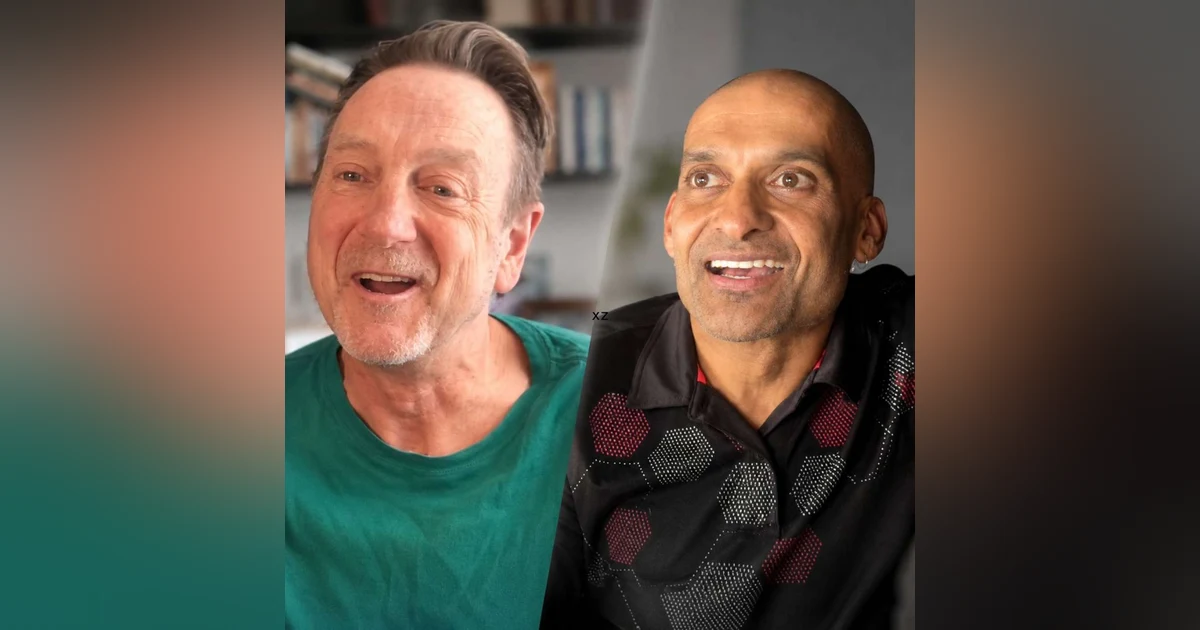


Paul Pritchard is one of the most significant figures in British climbing. He became one of Britain’s leading rock climbers and mountaineers, with major first ascents across the UK, Patagonia, Baffin Island, Yosemite, Kyrgyzstan and the Karakoram. His first ascent of the West Face of Mount Asgard in 1994 remains one of his defining achievements.
He was also the first author to have won the Boardman Tasker Prize for Mountain Literature twice — for Deep Play, and later, The Totem Pole.
In 1998, everything changed.
While climbing Tasmania’s Totem Pole, Paul was struck in the head by a falling rock, sustaining a near-fatal brain injury that left him with hemiplegia. He spent the next year in hospital and has described the decades since as his longest project: healing, adapting, and learning to live one moment at a time.
And yet today, Paul says he gives thanks to the Totem Pole every morning.
This is not simply a comeback story. It’s a conversation about mortality, fear, acceptance, freedom, identity, and what happens when the life you expected disappears.
We talk about why losing choices can sometimes make us freer, why fear doesn’t need to disappear before we act, how aging changes the need to prove ourselves, and Paul’s idea of the “dignity of risk.”
If none of us knows how much time we have, what are we still postponing?
REFERENCES
Paul's excellent books:: Deep Play | The Totem Pole | The Longest Climb | The Mountain Path on his website at https://www.paulpritchard.com.au/books
Paul's Instagram: @paulpritchard
Marek Health: Get a deeper look at your health with comprehensive bloodwork and personalized guidance. Ageless Athlete listeners get 10% off with code AGELESS at https://agelessathlete.short.gy/marek
Timeline: Support cellular renewal and mitochondrial function with Mitopure, featuring Urolithin A. Get up to 20% off at timeline.com/AGELESSATHLETE
🚀 Love the show? Here’s how to support it
If something you’ve heard here has stayed with you, made you smile, please consider supporting the show. 👉 https://buymeacoffee.com/agelessathlete
Ageless Athlete is a podcast about healthy aging for people who want to stay strong, active and capable for life. Conversations explore strength, endurance, mobility, recovery, VO2 max, muscle and bone health, and what it takes to keep doing the things you love as you get older.
Follow Ageless Athlete — How to Stay Strong, Curious & Capable for Life for new episodes each week.
42:07 - [Ad] Living a Life in Balance - PODCAST
42:53 - (Cont.) You’re Going to Die - Stop Postponing Your Life | Paul Pritchard, 59
Ageless Athlete Recording - Paul Pritchard
===
[00:00:00]
Paul: Well, I'm in Tasmania, in, this island at the, at the bottom of the world. And, it's a gorgeous day, It's midwinter still and
For breakfast, what I, I just had, yeah, lu- I always have last night's leftovers.
Kush: Yeah. Likewise. Yeah.
Paul: Yeah.
Kush: yeah, I can see the bright s- sun streaming. What does an ordinary day look like for you these days?
Paul: Well, I live in the countryside and I get up really early and I Because, because my ri-- I, I do my best writing [00:01:00] in the, uh, really early morning, and then by, by 10 o'clock, 11 o'clock, I am, I'm really knackered. and I, and I, and I like to have a rest, and then, and then in the afternoon I would g- I'll go out, I would go out, um, either hiking or cycling.
Yeah. Yes.
Kush: Beautiful. Beautiful, Paul. You know, you have been writing for a long time. What does writing give you that climbing cannot?
Paul: Um,
that's a hard question. I'm, I've never been asked that question. I mean, um,
for me When I, I was in hospital for a year, and [00:02:00] I'll, I'll get to that. But I thought that I would never climb again. And I'd just written an award-winning book which, which, um, called Deep Play, which I... realized that, wow, if I can't climb again, what the hell am I gonna do? And I, knew that people appreciated my writing, so I, thought, "Well, that's something that I can do."
And I became a write- a, a writer basically. Yes. Um, and so that's how I I can't really answer the, the que- the, the other question, but, um, but that's how I found writing. and I must say that because of my brain injury, I do have word-finding problems, and so, uh, and memory problems. [00:03:00] So this interview, you...
I might be one of the s- one of your stranger guests, I, I would say, because, because, uh, uh, people have to really bear with me to get w- to get what I mean. Mm.
Kush: Paul, it's all good. We have plenty of time and, uh- Yes. Anything and everything that you share is, is going to be precious. So I appreciate you sharing that, but, but please stay relaxed.
Let me ask you this. You know, you have had this long career, and you have... You started with climbing. You've been a mountaineer, an adventurer, and a celebrated writer Which of these identities [00:04:00] feels like the closest to you now?
Paul: Well, I think once you're a, a climber and you, then you You're always a climber.
It's like riding a bike. You, you, so
I still I still feel I, like I did in my 20s in terms of that, that attitude of, of never giving up and, I s- yeah, I still feel like a climber, so
That is definitely the What I would, the answer that I would give you to that, yes
Kush: Well, many people listening are not necessarily climbers. I think I relate to that as a climber myself.
Paul: Yeah, of course.
Kush: But I would love to know, you have gone [00:05:00] through these big life transformations, right? So what is it about climbing that keeps being the one closest to your sense of who you are?
Paul: Well, I think that w- with, with climbing, yeah, for, for the non-climbers out there, it's a, it's a meditation. As soon as you step off the ground, you're in danger of hurting yourself, and so you, you have to be present and in the moment. And if you do that day in, day out, it becomes this meditation, it becomes this practice that, that, um That is really powerful.
And I know you can get that from other sports or things, [00:06:00] maybe like even like playing chess, I'm not sure. Um, but But for me,
I spent almost 15, yeah, 15 years maybe climbing every day, um, before my, before my accident. And That shaped who I am and made me
More peaceful, more but also, way more determined and I
I think all those peak experiences that you have when you're climbing just can't help but, but shape you. The, the awe and the, and the wonder, So the, the, um...
[00:07:00] Oh, no, I'm trying to, I'm trying to think that-
The kind of, you know, the, the, the sublime, the r- romantic sublime, um, that you see when you're up there or when you're in absolute extremis. It, it's just wonderful and it, and, and it shapes you as a human Hmm. And when I, when I write, I, I try and capture that as well. And, and I, and, and that's something that is really, um Affects my writing as well.
Kush: Mm. Paul, you write beautifully, and I want to go back to some of your earlier life experiences. I used to believe that the [00:08:00] accident on the totem pole, that was the definitive event in your life, and it, it's, it likely still is. However, I was reading your beautiful book, "The Mountain Path"- Uh-huh ... and I had underestimated how important Gogart was in your life.
So you actually drowned that day, Paul As you write yourself. What do you remember about being dead?
Paul: Yeah. So I fell off at Gogarth, which is a cliff in North Wales, a sea cliff, and, and I fell 80 feet, uh, which was like, like, say almost 30 meters to the [00:09:00] ground
Well, to a, to, to a ledge and, uh, w- and I, I s- so I, I had all this protection in, but it all failed. And, and I I landed on this, on, on this ledge and, and then just meters above the sea, and then I toppled into the sea, and I got wedged under, under the, under the sea in a kind of gulch where... with my shoulders both broken and, and, um, my head underwater upside down.
And, And during that moment, mom- like 10 minutes, um, I
Well, did you, you asked what I remembered of be- of being dead, didn't you? I, I mean, who knows whether I actually died- That's
Kush: right. That's right. Yes ... uh,
Paul: uh, whether I actually died or not, I'm not sure. But what happened [00:10:00] was that I go- I went into this sublime place where, where I was in this garden, and there was- And it was really warm, and I remember there was hedges all around and bees buzzing and, and, and then, and, and the lights just started fading like a sunset.
And, and it went black
And I suddenly woke up wi- with, with my partner on top of me, um
uh, doing CPR, pushing on my chest and, and, and, um, he said that my lips were blue and I had no breath and no pulse. And I [00:11:00] spewed up loads of seawater and, and that's when the pa- the, that's when the agony of being alive kind of started again. And, and I, I felt like I needed to go back to that place. So that's what happened.
Uh, I was in, that was in, uh, what was that? 1992 or 3. Yeah
Kush: Wow, you're Yeah, the imagery is remarkable. You know, because when you recount it, it doesn't sound like it was this frightening experience. It sounds like something, something peaceful. And then Do you think that, It, did it take you a while to understand what that experience meant to you?
Paul: It took me ages to understand what it actually meant, you know, what it... I mean, and [00:12:00] now I see that actually
Everybody
is
searching for that feeling and is trying to, and is, I- is, is actually trying to
get back to that, to what I call, I just call it the one, kind of like the, the k- the, the, the, this
This feeling of, of kind of helplessness that, that, um
Um, um, maybe back to a womb-like state. And
And so that, that really informs my life now. I mean, that doesn't mean that I go and s- go and, like, try and kill myself. [00:13:00] That's not really what I mean, but, but... And I don't mean that everybody wants to kill themselves, but it, it, um, it's, it's, um-
They, they just want, I think that...
Well, maybe people want, want to stop trying so hard
Kush: That is fascinating. When you say people stop trying so hard, w- what do you mean by that?
Paul: Well, I've got this creaky chair. I don't know if you can hear. I'm
Kush: sorry. I can't, I can't. It's fine. No. Yeah.
Paul: I think maybe just trust in,
trust in the universe really, and, and, and, and not I'm not sure how to [00:14:00] call it, but, um, the, but I'm gonna call it the Western world, um
are the capitalist societies where, where it's just madness really. It's just, it's just
clamoring for,
for
Promotions and, and, and new cars and better houses and, and, and working, working. And it, I think that, I think that it's, it's a, it's absolutely crazy. And i- and if, if we can trust in the, that the universe is, will provide and
It, it will be, it'll be a
more harmonious world
Mm-hmm.
Kush: Interesting to hear you speak about[00:15:00]
the Western world because, well, I am, I am Eastern by birth, and I come from India. And at least the society I come from, people are just as paranoid about their mortality as anybody else I, I see out there.
Paul: Yeah. Yeah. That's why I struggled calling it the Western world, really. I don't really know what to call it, but I guess capitalist maybe.
I think, I
Kush: think you're right.
Paul: Yeah.
Kush: Yeah. Then that, that- Yeah ... that, that makes sense. Um-
Paul: Mm.
Kush: The Eastern world has many layers, and the Western world has many layers. But I think you're absolutely right. The, it's the, um, the, the capitalist society or the aspiration that I think is what you're talking about.
Paul: Yes. Yes.
Yes.
Kush: And, and Paul, you know, um, okay, moving forward a little bit.
Paul: Yes.
Kush: Now we go to Tasmania, [00:16:00] and the, the totem pole accident was very different. You survived, but the life that you knew was suddenly gone. What was the hardest to lose?
Paul: Yeah, so with the, with the Gogarth accident, uh, I was smashed myself up, but I, I, I was back on the rock within 10- within six months and, and, and fully, fully kind of climbing again.
I went to Maru, I went to, I went to, um, Trango Tower in Baffin Island. And, um, but in 1998 when I, when I At my massive brain injury on the, on the totem pole. Um, so the totem pole, I'll just, I'll just give you a bit of context, eh? Because the totem pole is in [00:17:00] Tasmania I'm from Britain, so I was just here on holiday.
Well, around the world tr- climbing trip, uh, in 1998, and I, and I, um
Well, we, we, me and my partner, Celia Bull, we, we went down to climb this thing, and she was at the halfway ledge. It's 65 meters high and four meters wide. It's so slender that it sways ever so slightly when you're stood on top of it. Um- And she was at the halfway ledge about 30 meters up when, and, and a rock dislodged off the totem pole and, and, and
battered me on the head, um, a bit like an ax kind of... It was the same shape as [00:18:00] a laptop computer, and it just, and it just, it just kinda cleaved my head open. And, and, um, I was upside down The normal way that you would deal with that situation if it wasn't above the sea was that you would just lower me to the ground.
But she couldn't do that because there, there was sea below me. So, so she had to... And I was only a meter above the sea upside down So she had to abseil down to me, get me upright in slings. I remember her saying to me, "You, um, you've taken a little rock on your head, but you've had worse." She's trying to, trying to, um, appease me.
Um, and then she climbed back up the rope to the, to the ledge, and then she hauled me up, up, this vertical face for [00:19:00] three hours. Um, 30 meters, but it took her three hours to haul me there 'cause she was 10 kilos lighter than me. And, um, but thank goodness she knew her hauling skills. Um, It's a bit like hauling a body up a block of flats, you know?
And then, and so then she got me onto the ledge. This was just me and her down there. It's 1998, so there's no mobile phones. So she had to get herself up, get herself off the totem pole and climb part of the cliffs opposite, and then seven kilometers for help back to the campsite where we'd come from, a, a place called Fortescue Bay, and that's where the ranger's station was, where you, where the, the, [00:20:00] she could use the telephone.
So I was on that ledge for a further seven hours. So, uh, uh, it was 10 hours in all s- since, and then the, the, the helicopter got to me
And, um,
and then a paramedic came down to me and Lured me into a waiting, well, upsell down with me again into a waiting, um
tin, tin boat that was acting as a lifeboat. And, and, but the swell was going up and down on the, on the, uh, against the totem pole. And so on the upsurge of the... He cut the rope, and we both fell into the boat. Um, so that's, that's the story of the totem pole in, in a nutshell.
Kush: It's quite the story. And, and thanks for, uh, [00:21:00] pointing out that this was, this was almost 30 years ago, before cell phones and rescues became readily available, and this place really is on the edge of the world.
Like, it's, it's this, it's dramatic. It's really... Yeah, this was no ordinary rescue. And if I may say, it is an absolute miracle that you're here with us because this could have also ended quite differently
Yeah. And, and, and Paul the, you know, the rock hit you in the head and you suf- you suffered deep brain trauma, but it also changed your body
Paul: Yes.
Kush: Can you talk about what part of the change was the most difficult to [00:22:00] reconcile with?
Paul: So I, I'm hemiplegic now, which means that half my body doesn't work. That's specific to brain injuries. So you might have heard of pa- paraplegia or quadriplegia, that's specific to spinal injuries really. Just for listeners who might not reali- might not know about hemiplegia.
So I've got a right hemi, which means I had a left hemisphere brain injury. and so I can't, so you... use my right arm and I I have a severe weakness in my leg. I was, I spent a year in hospital and learning how to walk again. and when I do walk, it's really just m- m- [00:23:00] mechanical. It ... I've just learnt how to walk on, on, on my bones real- really.
Um, I have got partial use of my, of, of my quad and, and my, and my calf. Um, yeah, so it is, it's quite complicated. And so
I have to try really hard now to go rock climbing or even go walk, like hill walking, bush walking we call it in, in Australia. so that's
I have to get really prepared and wi- with, um, with all sorts of armor and foot care. You know, my, my, my, my f- my, my, my foot is completely [00:24:00] paralyzed, so, so, um, I, I get bad blisters on my toes and stuff, so I have to, I just have to get really prepared, um, every time I go out. And That's, that's okay. I can still actually do, do these things.
And, but I'll tell you what I get just the same satisfaction and not just satisfaction, but, but, um, That feeling of, of, of, um, awe, I guess, that when, when I'm doing a
when I'm just doing a really easy climb, I s- I get that same feeling as I did when I was doing my, massively hard climbs that I was doing when I w- when I, when I was, uh, in my 20s on [00:25:00] top of... Uh, you know, I was kind of one of the, one of the, um I don't know, top climbers in Britain, shall we say?
And, um, to realize that it, that, that difficulty is subjective
Is, is, actually frees you. It frees, it frees me anyway of, of, of any kind of feeling of competitiveness. Yeah.
Kush: That is quite the realization.
Paul: Mm-hmm.
Kush: I am wondering what was the process for you to arrive at this, because you were this hard-charging elite climber in Britain. You were You were climbing the hardest routes.
You were bold, you were competitive, [00:26:00] you were ... Yeah, you were just this phenom, and then suddenly that capacity was taken away from you. So how did you manage to find that joy in the sport again?
Paul: Um,
My climbing life, as I said, going out every day, every day, 15 years really trained me in
Not just in determination,
in
Some kind of peacefulness, um, and patience. Well, actually, no. The, the accidents that I had also trained me [00:27:00] in, in impatience
and determination as well. And so I see my accidents as a
As a gift, really.
And, Yeah, as a gift. So that, that final accident 20, um, almost 30 years ago was a, you know, totally, totally upended my life. Don't get me wrong. But, um, it And it was really challenging at first And when I was in hospital, I, you know, I was having fits. I, I, we, I didn't mention the fact also that I, that I, that I became epileptic.
So, [00:28:00] so, and it was uncontrollable at first, so I was just, I was having like multiple seizures a day. and And it, it, so I had to go on seizure medication, uh, all sorts of seizure medications, which sometimes made me worse, and then they'd have to experiment. Um-
So, so basically, the reason I was talking about my accidents was because, uh, um, um, and my climbing life was because I had this, I, I've, I felt like I had this, That on all the other people that were in the hospit- on, in the rehab center with me. I had this determination and so when I I was walking a couple of paces further each, each week from my [00:29:00] wheelchair in the physio gym. And then when I walked 100 meters around the rehab center, that's when I realized, wow, you know, with some perseverance, I might be able to claw back some tiny semblance of this, of this exciting climber's life that, that I'd led before.
and so that's when I really
So I slowly got back to the mountains again with lots of help. I, I, I can't s- I can't say enough really just how much help I, I've, I've had and
and so
Seven years it took though. Seven years after my brain injury, I f- that's when I found myself on top of Kilimanjaro, [00:30:00] And that was a kind of turning point really, uh, because that was also a A pan-disability expedition. Me, you know, meaning all disabilities really coming together to reach a, a common goal. And that's something which, uh, really inspired me and, and, and, uh, and so my life is about organizing these expeditions now.
Some of that... s- a portion of my life. Yeah.
Kush: you went through this dark period, right? Right after the accident in the hospital when your body suddenly stopped responding the way it used to, and you talked about the epilepsy, which is really scary. But then there was this ray of light, and you were able to find some movement again, [00:31:00] and that may have given you hope that, yes, you could get back to maybe your former self.
Did you think that? Did you think that you would be able to reclaim your full- No ... physical... Okay.
Paul: Not at all. Not at all. So I had to really accept um, radically accept, in the, in the words of Marsha Lineham, um, what had happened to me. And, and that's how I go about my days now, really. I j- that's how I go about my life. I, ac- I accept everything, whether it be So not just the good stuff, but the bad stuff too. I just, I, I just think, "Well, that's the way it is, and that's, that's the, that's it." Um, the... That has been a great solace to me [00:32:00]
Kush: Well, I wanna understand this bit because I think this is important and think people will get a lot out of this, which is how did that process of acceptance come about, right? You were suddenly deprived of so much of your physical self. Could you talk to maybe, maybe two or three, two or three specific things you did that allowed you to get to this point of acceptance?
Paul: Well, I think that
climbing, if we do it mindfully So not competitively at all. And you said that you m- you made the comment that I, that I might, that I w- that I was maybe a competitive climber, but in fact, I don't think I ever was a competitive climber. I always
wanted [00:33:00] to better myself, but it was more about exploratory climbing that I was really fascinated by. And so,
so I think that
dying
made me realize that Everything is impermanent and that things change moment to moment to moment all the time. Everything changes. and so
So what else is there to do but to accept that that's the case?
Kush: But I'm gonna... Yes, I've, I've heard you talk about that. I'm gonna ask you this simplistic question, right?
Paul: Yes.
Kush: I have heard people talk about that, yes, the impermanence of things, that things change. Yes.
Paul: Yes.
Kush: But in your case, though, you know, your, [00:34:00] your brain trauma and the condition of your brain today and your he- your hemiplegia, those things seem to have settled So they may not be getting much better medically.
So to my naive mind, it seems like There is a permanence there. So enlighten us as to how this state is not permanent
Paul: No, there's no permanence. Um, my, my state I think is irrelevant to, to what we're talking about here. Um
Kush: No, I'm just trying to get to, I'm just trying to get to this idea, the, the, the nucleus of this idea, which is that I think all of us will do better if we were to [00:35:00] accept knowing that things are not permanent. But what I'm trying to, try- trying to understand is that if somebody hearing is, is... has some sort of permanent thing happen to them, they lose a beloved one-
Paul: Yes
Kush: or they have a long... an, some kind of long-term loss or some kind of permanent injury
To my naive ears, that sounds, that sounds settled. Like, that sounds like I will have to live with that loss for the rest, rest of my time.
Paul: Oh, yeah. Okay. So, so you're saying that, um, I'm gonna have to live with my lack, my lack of physicality and my lack of mental fortitude for the rest of my life?
Kush: That's what I'm...
Yes.
Paul: Yes. [00:36:00] Yes. And, and so you- that's where the acceptance comes in, isn't it? I mean, you, you've got to accept that or else you would, you would go absolutely crazy. So you've just got to accept that. And, um
And then
the impermanence is a, is, um, a
A different thing. It, it's, it's related, but it's, it is. If everything's impermanent,
then you have to accept the good things and the bad things that might happen to you
and that is, that is just,
I mean, that's just the way the universe... I c-
do you get what I'm [00:37:00] getting at? I
Kush: think so. I think I'm following. Uh, let me ask you, uh, something lighter.
Paul: Okay.
Kush: Is it, is it true that, that Jane, who later became your wife, had been one of your nurses after the accident?
Paul: Yes. So the woman that saved my life, absolute legend, Celia, she, she, um, we, we split up about five months, six months into, after, uh, into my stay in hospital. And um
One year after my accident, the BBC flew me down to Tasmania to make a film. And, and the, I had, I had to be helicoptered into position, uh, overlooking, overlooking the totem pole [00:38:00] and watch somebody climb it. Uh, but, but what... We also went and talked to some, some people in the hospital, including Jane, who, who, um
It was one of my nursing team and, um, um, and we got married and, um, and in the... You know, we, we, we fell in love and got married and, and, um, that, that, that relationship did not last, but we got two incredible children out of it. and so And that's how I came to be back in Tasmania now.
yes, 'cause a lot of people wonder, well, how, how come he's, he's a Brit and
he's- ...
he's, and he, and he's in Tasmania, the place that's done him so much harm. But in fact, it's not given, done me so much harm. It's been, um, the totem pole. I, I actually give thanks [00:39:00] to the totem pole, um, every morning, uh, when I wake up because it's, um, it's just been this incredible, Teaching, I guess, in my life.
Yeah.
Kush: Thanks for sharing that story indeed. And yes, I'm sure many people would like that answer on how did you end up back in Tasmania. Yeah. Given that it is, it is, uh, a little bit aways from your place of birth. Going back to the book, I keep going back to this, uh, paradox that I find-
Paul: Yeah
also,
Kush: which is, you know, you say that when many choices are taken away from us, we somehow become freer. So how can losing choice create freedom?
Paul: Oh, yeah. Okay. Um- s- I'm, I'm, I'm, I'm picturing [00:40:00] a supermarket f- h- aisle now and, and, and all the choices that you have for one item in a supermarket or, But if, if you take away that choice, which is what climbing teaches you, because when you climb up a
cliff, you either follow a crack or a certain line of holds, and you got to use them in a certain way, or you got to just follow the crack and, and you can't move left or right very easily. And so it teaches you that, that, that after, after many years of climbing every day, every day, it innately teaches you that-
That, um,
there is no choice [00:41:00] in this life. And
so
That frees us of the burden of choice, And so what, when I, when I go shopping, I, I, I pick up the first thing that I see. Um, and, and, um, but that, but that also
it frees us from like the burden of choice might mean also, I can't remember who coined that phrase, but um
it, it also applies to
prospective partners or, or, or careers or houses. It, and, and, and, and, and it does, it, it, it frees us
Kush: can you take us back to maybe one of those [00:42:00] days after the accident when you found that I was this high-performing climber, and now I can't climb E7s or E6s or E8s or whatever the grades might have been.
Take us back to one of those days and tell us how did that feel like in your body to confront that reality?
Paul: Okay, I'm gonna take you back to my first lead rock climb 11 years after my brain injury, and, it was in Arco in Italy, and
I set off. it was, um, 'cause, because it is so easy, easy climbs oft- are often really run out. They, they, they, they, they've not got many-
True,
true,
true ...
they've not got [00:43:00] any bolts, have they? If you, if they b- Well, in, in Italy it's all sport climbing, so, or in Arco And so there was, there was three bolts on the, on this kind of 40 meter pitch and, and I, and um, and I...
So there was eight meter run outs anyway
and I
I'm limping up there kind of like, like s- you know, there's normally three points of contact is what you would s- you would always have to have three points of contact. That's the kind of general rule of rock climbing. But, but with me, I've only, I've only got two points of contact, which is r- which means that I have to slap my way up any climb to, Even if it's really, really easy, I've still gotta climb it [00:44:00] so dynamically.
And, um, I remember being kind of five meters out from my last protection, which me- which means that I would fall five meters to the bolt, then five meters past the bolt, then, then with rope stretch, I was
I was terrified and there's a guy above me filming me and, and, and he, and he was saying he could hear my heart beating. and um, And then I, I think I, something happened. I just made this conscious decision, well, if you're gonna fall, you're gonna fall. There's nothing you can do about it and, and that freed me from, from fear in, in some, in some... That's to put it simply. and I, [00:45:00] I remember calming, really calming down and, and
climbing another three or four meters to the next bolt. Well up to the belay, not just in peace, but the
But it, the whole cliff went kind of, uh, the, my whole surroundings went, turned white and I felt like I was watching myself climb. And, and it, it was, um, exactly the same experience that I'd
that I was, that I had previously s- discovered on my, on my kind of, um
most ferocious climb, shall we say. Um, but this climb was only 2C or something. It was like, it was re- um, I don't know if, uh, Ameri- Eur- maybe American listeners, like kind of, um, you know, just [00:46:00] kind of fifth class really. But, um, but it, it was, um Just the most incredible experience. And that's really where I got the idea
of just how important lead climbing can be in, in, in, in, in kind of, um, as a means to, to, I don't know what you'd call it. Self... Well, courage. Yeah.
Kush: Paul, you know, to, to, to, to many of us it would seem that just, just living life restricted abilities is already courageous. But you had to go and rediscover that feeling on the sharp end to feel that sense of adventure you know, [00:47:00] you, you wrote, wrote about that, about that lead climb also in Arco, so this is a good segue. And you wrote that you were terrified But you also wrote that fear isn't something to overcome
Paul: Mm-hmm.
Kush: And, and why not? Like, most of us would think that, "Oh, gosh, if I'm feeling afraid of something, if I'm afraid of, like, the dark, you know, s- switch on the light.
If I'm afraid of failing in an, in, in an exam, then it can have this consequence." So why is it that one should not try to overcome that fear?
Paul: I think there's great gains to be made in accepting your fears.
Um, I know You might have heard of exposure therapy, where, where maybe a [00:48:00] spider, if you're scared of spiders, uh, you would look at a spider under, under a glass. Then you, and Um, and so That's one step, but that's a bit like top roping. and if, but I think to, to actually Confront your fears properly
need to... You don't need to do anything, do you? But, you know, but, um, it, it, but I do like to lead climb as a way of overcoming my fears. Not overcoming my fears, but accepting my fears. Mm.
Kush: Sure.
Paul: I just looked at a flash card here. It said about, um, Mark Twain said that, "Do the thing that you fear most and death of fear is certain." Um, and I mean, that's the... [00:49:00] I don't know how, I don't know, um, what Mark Twain was like at, at lead climbing, but
Kush: I can relate to this, that, that, um with climbing that when I lead climb, obviously where there's higher consequence, right? Than-
Paul: Yeah. Mm-hmm.
Kush: And again, to simplify things, let's say I'm trad climbing, leading, over sport climbing- Yeah ... and it's run out, and there is higher consequence.
Paul: Mm.
Kush: It does make me feel more alive. It does make me feel sharper. There is this sense of-
Paul: Yeah ...
Kush: sense of presence that I haven't been able to find in, in, in too many places.
Paul: Yeah.
Kush: Ha- have you? Have you been able to find that kind of presence in, in your practices outside of climbing?
Paul: No, no. I, I I've been told that, I've been told that it's pretty similar to [00:50:00] surfing, but I, being hemiplegic, I cannot surf and can't really swim. but I'm sure that I'm sure that there is, um, other avenues to, to it to get that feeling. I also think that
Just doing stuff well. Whatever it is, just do the... Whatever you do, just do it well. I, I, I really hold by that because not everybody can climb and not everybody wants to climb. It's, it's, it's weird really why you know, um, why we, why we want to climb. but I think that if you're a chef to cook great meals, and if you're a, if you're a
a, a bricklayer, just build the best wall, you know? Kinda, yeah. Just try. Try every day. Hmm. I think that's what I- [00:51:00] Sure.
Kush: Yeah ...
Paul: that's what I've learned from being disabled. Hmm
Kush: And, and, and that is?
Paul: No, that, that's what I've learned from being disabled. I've been, I've learned that wake up, wake up and try every day.
because, because life, life is
Impermanent. Life is, life is, you, you don't know when you're gonna go, and so why not try your best? Yeah.
Kush: good advice. Well, I wanna talk a little bit about aging and maybe that shift in identity And what has... because I host this podcast, I- it emboldens me to ask this question, which is- Yeah
what's your age?
Paul: 59.
Kush: Okay. 59 years young. What has [00:52:00] getting older taught you that the accident couldn't?
Paul: Nothing, I don't think. Um, I think, when I had my accident 29 years ago now, I suddenly became old in some ways. I became physically completely incapable. Um, I felt like, I felt like an old man. and that's kinda continued, and so, I think I'm a bit of a, bit of a Sisyphus in terms of I actually, That physical incapableness, if that's a word, um, actually leads me to struggle and, and the struggle of pushing that rock uphill every day
[00:53:00] Is, is really what life's about. You know, it's k-
that's what gives me meaning. Yeah.
Kush: And, and what I follow is that because that rock got exponentially larger since the accident-
Paul: Yes ...
Kush: the aspect of aging is
Almost bails
Paul: Yeah, it's irrelevant It's irrelevant My, my age is irrelevant. yeah, I don't, I, I don't even think about my age. It's, uh, yeah, not at all.
Kush: In some ways, does it
Because, you know, aging also, I mean, it changes us physically, but it also changes us mentally because we, I don't know, we have accumulated more experiences.
Paul: Yes.
Kush: has it changed maybe, this aspect of the need to prove oneself? [00:54:00] That's part of youth
Paul: I think that I had some of that
No, I definitely had a lot of that when I wa- whe- when, when I was climbing that... And I'm not sure where that came from. What, what I was, who I was proving myself to, I'm not sure. But I don't feel the need to prove myself to anyone or anything anymore. I mean, I, I've not, I haven't Maybe, maybe In my early 30s, just after my accident, I was still, I still had that, a residue of that. and that might have helped me to get... That might have actually helped me to, improve and to, I'm gonna show society that I, that I'm s- that I'm still, that I'm still a capable climber.
But, and, and, um, [00:55:00] and that might have got me up Kilimanjaro. With half a body. Um-
Kush: Sure ...
Paul: but, But I don't feel that, that need anymore. Uh, that's long gone. That doesn't mean that I don't, that I'm not interested in, in, in doing stuff that fascinates me, you know? Um, uh, which might be making films or, writing Writing about my e my experiences.
Kush: Paul, coming back to the present, are there any upcoming projects, trips that have got you excited?
Paul: I'm embarking on a, on a another adventure as we speak. but this one's a bit different. Um, I didn't want to fly for a year. and so I, I just thought that [00:56:00] with the global situation and, and, and, and, the carbon footprint, I just thought that it, I'd take a y- I'd take a rest from flying everywhere.
And ' As a, as a speaker, I know I'm I am, I do actually a lot of public speaking even though I, even though it might not sound like I can do it, I get really prepared for a speech. I... So I'm, I'm gonna take a, a while off that and, um, I've- I've set myself this challenge.
There's 15 mountains above 1,500 meters in, in Tasmania, and Tasmania's really wild. It's a really wild place, and so some of those are roped rock, rock climbing and they're all in the wilderness, very remote some of them. and I've done three of them since June. June's midwinter here, and so it's very cold and very [00:57:00] up in the mountains and, and very short days.
And And so I've got 12 to do, and, and I'm gonna go, uh, I'm gonna... It's gonna be a year project. some of them will take 10 days just to get in there and climb it and out of there. So yeah, it's gonna be, it's gonna be a mission.
Kush: Sounds like it. Well, we, we'll be cheering you on through it. Paul, you have written Many books.
If somebody is not familiar with your works, which book of yours would you recommend they start with?
Paul: Well, definitely the totem pole would be a, a good start because That was written in hospital, the whole book. it was either that, it was either write a book or go down [00:58:00] to the day room with the other clients and watch, watch The Bold and the Beautiful. Um, and so-
Kush: That's definitely, that's definitely like the '90s I think, or early 2000s, right?
Yeah.
Paul: Yeah. Yeah, no, that's like the '90s. Yeah. But, um, definitely the totem pole. It's, it's, uh, Very seat of your pants kind of ride. Yeah.
Kush: Sure.
Paul: Mm.
Kush: And Paul, do your, uh, do your kids climb?
Paul: My, uh, my kids definitely, they, they, they do climb. Yeah. And they're gonna j- they're gonna join me in September for a, for a, climb up a mountain.
But, but, but, you know, that's just really a walk, but they, but they're gonna have to make me safe, so they, they I've taught them shot roping. The, the... 'cause I used to be a gu- a mountain guide, so, so I, I've taught them [00:59:00] a bit of how to make me safe now, and, uh, that's actually really quite something to see.
And, um- How,
Kush: how old are they?
Paul: And now, yeah, I mean, they're 19. I've got a 19-year-old boy and a 23-year-old girl. Wow. Yes. Yeah.
Kush: Amazing.
Paul: Yeah. Have you got kids, Kush?
Kush: I don't have kids, no. I have a small dog. We call that a f- a, a, a, a fur baby over here.
Paul: Yeah.
Kush: I love it. Paul, um, just, uh, just closing off, um, and I like to ask this to everybody, w- what do you think society gets wrong about aging?
Paul: Well, I know that,
I know that
it's said that
[01:00:00] Society can be ageist, but with my, work with disabled people I just see so much ableism, which is quite related and so
I just think that
people shouldn't, should not, um, infantilize
people for being old or for being disabled, it doesn't mean that they're, doesn't mean that they have, that they have to be treated like children. And so
My latest film about walking the Larapinta Trail is all about, it, it focuses on the dignity of [01:01:00] risk. And that was a term that was
Coined for disability for, um, aged care and so allowing old people to take risks and, and I, I kind of translated that to, disability and, and because of my background as a climber I, I, I really need
to take and really need that risk all the time. And, and, um, and so I feel like I got something to add there. and so
I would say to that, uh, to answer that question, I would just say for society to allow people to take more risks