Still Racing at 82 — How to Train, Recover, and Stay Capable for Decades | Cherie Gruenfeld, 82
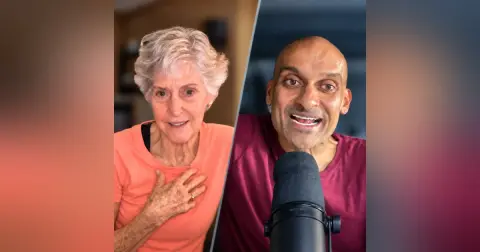


At 82, Cherie Gruenfeld is still racing IRONMAN. She’s a 14-time world champion and is considered a GOAT of the sport. Wildly, she didn’t even start running until 42 or triathlon until 48.
Her lesson after four decades of training: if you want to preserve strength, power, and muscle as you age, you can’t keep training the way you did when you were younger. We talk about what Cherie does differently now and, the mindset behind performing into your 80s
More about Cherie: https://cheriegruenfeld.com/. She also founded Exceeding Expectations, which uses triathlon, mentoring, and education to help at-risk kids build a different future. You can support their excellent work and donate here: Exceeding Expectations
***************
Train Smarter, Age Stronger with Matt Fitzgerald. Live Sep 23, 5 pm PST. FREE.
Signup: https://open.substack.com/live-stream/347022
***************
💜 Want to stay strong, mobile, and capable for decades?
Join the Ageless Athlete newsletter — one useful email a week on how to build and protect strength, endurance, mobility, recovery, and the physical capacity to keep doing what you love as you get older.
Join here → https://www.agelessathlete.co/newsletter/
Timeline: Support cellular renewal and mitochondrial function with Mitopure, featuring Urolithin A. Get up to 20% off at timeline.com/AGELESSATHLETE
🚀 Love the show? Here’s how to support it
If something you’ve heard here has stayed with you, made you smile, or helped you keep going, I’d be honored if you’d consider supporting the show. 👉 https://buymeacoffee.com/agelessathlete
Topics: longevity, fitness over 40, endurance training, aging athletes, recovery, injury prevention
Ageless Athlete is a podcast about healthy aging for people who want to stay strong, active and capable for life. Conversations explore strength, endurance, mobility, recovery, VO2 max, muscle and bone health, and what it takes to keep doing the things you love as you get older.
Follow Ageless Athlete — How to Stay Strong, Curious & Capable for Life for new episodes each week.
Ageless Athlete Recording - Cherie Gruenfeld
===
Kush: [00:00:00] Cheri, I would love to learn a little bit more about your routine these days. So you started with a swim. is that a typical Thursday, which is a workout in the morning followed by other things, or is this because you have a race coming up and that's why?
Well,
Cherie: y- yeah, it's not a typical Thursday for me, and it is because... And it's not just my race. I'm just doing this for fun because I have 18 kids that are doing a race in San Diego, uh, on Saturday. that means we have to go tomorrow on Friday down there, so I will not be able to do anything tomorrow.
And so I just figured that it was good, uh... And I didn't wanna do a lot today 'cause I still have s- a whole bunch of stuff to do to get ready today, so the swim just made some sense. But normally, on a Thursday, you would have found me out biking and, uh, running off the bike
Kush: I think I understand now you are getting a [00:01:00] workout in because over the weekend you will be administering other activities with these kids, and would love to go deeper into that later.
So yes, uh, I think getting the exercise now is important. Actually, what's interesting is, so you said normally today you would be cycling. Are your, weeks always so organized that you know which day you will be doing what?
Cherie: obviously I have a busy life and so I sometimes have to make changes and this kind of thing.
But basically, yes, I have a structure and I know what I do on Monday, Wednesday, and Fridays. I swim on Monday, Wednesday, and Fridays. I do bike and run, and bike and run on certain days, and I do gym workout with a trainer on certain days. And, um, so yeah, basically that's what I do. But then I make adj- adjustments for if there are races coming up.
I make adjustments if I [00:02:00] have stuff with the kids. I make adjustments if life gets in the way. and you know, right now I am not racing like I used to. I used to do a lot of racing, and now I've, I'm still racing, but I've, I've cut it back a lot. the schedule can more easily be moved around and adjusted because of, of that.
Kush: You just said that you've cut back on racing, but at the moment, is there a race that looms ahead?
Cherie: not a big race. I did a big race in June. a half Iron- half... We call it 70.3s, it's a half Ironman in Kona, and that was, for this year, that was my big race. And, uh, normally as a, when I was a little younger, before I reached this point, I would have another two or three half Ironmans during the year, and then earlier in my career, I would have an Ironman as well.[00:03:00]
But right now, the program with the kids has grown a lot, and that fills my time, and I realize that I'm just fine doing one or two big races a year. I have committed to next year doing the world championships in the 70.3s, and that means I will need to qualify, so I will do at least two big races next year.
But-
Kush: Sherrie, because- Because we were discussing your accomplishments in the sport, and I just want to make it easy for myself. I don't come from the triathlon world, and also many of our listeners. What's the simplest way to describe a triathlon?
Cherie: it's a swim, bike, and run. And any triathlon is a swim, bike, and run.
When you get to, different kinds of [00:04:00] triathlons, there is what's called a sprint triathlon, which is a swim, bike, and run short distances. There is an Olympic, which is the one that they do in the Olympics, and that's a little longer than a sprint, a swim, bike, and run. And then there is the half Ironman, which is, a 2.4 mi- or excuse me, a 1.2-mile swim, a 56-mile bike ride, and a half-marathon.
And then there is the Ironman, and that is a 2.4-mile swim, 112-mile bike ride, and a marathon. And that's what, when I first started this 34 years ago, I started... I wasn't a triathlete, but I saw, a magazine about Ironman in Kona, the Iron- and the big one in Kona. And I said, I didn't own a bike, but I said, "I wanna do that."
So Kona, which is the world championships, became my first Ironman, [00:05:00] and from that point on, that's what I did, and I did 28 Ironman races before I, at 78, did my last one, and now I'm doing the half Ironmans.
Kush: what makes this sport of Ironman so compelling to me as an outsider is that I've run in my, in my life, I cycle regularly, and yes, at some point I also used to swim.
But I think a triathlon or an, an Ironman is different than simply being a good swimmer, a runner, or a cyclist. So what makes it different?
Cherie: it is because it, uh, it doesn't favor the great swimmer, doesn't favor the great biker. It, in some cases, will favor the great runner because if you can run a great marathon at the end of a 2.4-mile [00:06:00] swim and 112-mile bike ride, you got a real good chance of winning.
But you have to go into it understanding a whole lot of different things than you do when you do a single sport because you can't afford to use up everything in the swim because somebody passes you, and you wanna keep up with them. So you ha- yeah, you really have to use your head the entire time that you're racing and know when it's time to charge and use some ex- extra energy and when it's time to back off.
That means you have to understand yourself. For example, my strength was run- is running, so I know that I don't have to be the first off the bike in order to win that race. I know that I can run and pick off people. But you gotta be careful of how many people you need to pick off or who it is that's in front of you.
How good of runners are they? So there's a lot more thinking. You know, people, I think, tend to look [00:07:00] at something like this, and they think, "Oh, you just gotta be ready to go for all day long." Well, that is true, but you gotta be thinking all day long, too.
Kush: especially in an Ironman, you are going to be doing these individual things in succession for so long and many things can change.
You know, let's say in the sport of running, I think a lot of people will understand that there is this, there is this benchmark for the everyday runner which might be doing a marathon in three hours, right?
Cherie: Mm-hmm.
Kush: The triathlon numbers to me, because again, it's not my sport, I don't know what...
So what is like a good time-
Cherie: Oh ...
Kush: in a, in an Ironman?
Cherie: That's a loaded question. Okay ... the, uh, pros are a whole different game, and those are now r- doing just unbelievable times. The men are [00:08:00] just over seven, and the women are just over eight. And, uh, when I started 34 years ago, no woman had come close to nine hours, and no man had broken the nine-hour, barrier.
And, Uh, now, a- and then you've gotta figure the athletes. If you've got a young athlete, they can do it in nine, uh, 10 hours, 11 hours easily. You take someone like me, I started out at 48 was my first Ironman, so I was never in that young category. But, I was able to do my first one at, in 12 and po- 12:20.
And then I got faster, I got up to 11 hours. I did one at 11:17. But at eight- at 82, which is what I am now, and in my last one when I was 78, I, I did it, uh, just [00:09:00] close to 16 hours.
Wow.
So yeah. It, it's all over the, the place w- where you come in. But I'll tell you, the w- if you were to watch the Ironman, the time to watch it is midnight.
That's the cutoff. And it's, the pros have come in, they've gone out to eat, they're all cleaned up. The young athletes have come in. And watching the people, it's, come in between 10 and 12, that's the real Ironman story. These are everyday people that have lives of working, raising kids, challenged athletes, people who have injuries, have, uh, been sick, some with cancer, some with, things that are gonna kill them, and they make it to that finish line.
And that's the thing. Every, every year I raced Ironman I would finish the race, I'd go home and quickly change my clothes, clean up, get something to eat, and come back to the finish line to be there to watch these people.
Kush: [00:10:00] Wow. Yeah. I can only imagine. Yeah, just, stories unfolding in front of your eyes At midnight or close to it, close to the finish line.
Cherie:
Kush: Sherri, you have had this 30-plus year career with Ironman, and we don't have time to go into details of all the things you've done, but you have had an absolutely magnificent career with consistency for so long, I want to understand what makes this sport so compelling from the inside.
So I'm gonna ask you this. If you were to jog your memory a bit, is there one moment from a race that you can still see quite clearly that you can share with us?
Cherie: I have a [00:11:00] number of stories, some of them about things that didn't come together, where I struggled, but those are the races I'm most proud of. There are times when I had worked really hard on accomplishing a goal and I did it, and the, you know, the race went perfectly.
There are times when there were just emotional things out on the course that made me realize that this is exactly where I need to be. So I got lots of stories.
Kush: Sure. I appreciate that. I, I think maybe we can start with one story where, you know, there's so much hard work that goes into this, and obviously there is so much that you have to endure during the race itself.
I would love to go into a moment where you felt gratitude, that even though you were pushing yourself so hard, you still felt like, "Wow, this is why I do it. I would not wanna be anywhere else."
Cherie: Yeah. I, I will tell you one of those times. w- as I discovered, I went into this as t- I'm just gonna do one and done, and then I found myself doing it every single year.[00:12:00]
And people always ask me, "How long are you gonna keep doing this?" Because I was not a young kid, And I s- I always had an answer, and that was, "As long as I'm enjoying the training, I will continue doing this. When I'm not enjoying the training, I'm out of there." indeed, I was, uh, 71 and I was training for the next Kona, and I was doing a 80-mile ride here in the desert when it was 118 degrees on a humid day And I stopped to get, a bo- a drink and, uh, at a fire station, and these guys came up to me and said, "What are you doing?
Nobody should be out on a day like this." And I said, "No, I'm fine. I only have 10 miles to get home. Not a problem." I got my water, I started riding, and I s- noticed that there's this truck behind me. So I pulled back to see what it was, and it was these fire guys in the truck, and they said, "Listen, we're just gonna follow you because it's just not safe out here", and they followed me all the way home.[00:13:00]
And during that 10 miles, I thought, "This is it. I'm not enjoying this. Here I am in 118 degrees and these guys are following me because it's not safe to be out here." And I made the commitment right then that if I could, next year in, that year in Kona, this was July, if I could in October have a race I was really proud of, I would walk away happily.
I did. I walked away happily, and for the next four years, I just, I did 70.3s and I was having a great time. Everything was fine. I turned 75 and I thought, "You know, that's kind of a landmark year. I think I'll go back one more time, try and set one more record." So I started training and, uh, everything was going very well, got all qualified, and I was all set actually to do the Double.
The Double is something that I had done a couple of times. You win the, the 70.3, the half Ironman World Championships in September, and then you win the [00:14:00] Kona Ironman Championships in October. So that's what I was shooting for. And in July, I was diagnosed with a medical issue. And for the first few weeks, I fought it because I thought, "It can't possibly be.
I'm feeling great. I'm ready to go to Ironman. It can't be true." they convinced me it was true. So I did a switch completely and I said, "Okay, my goals are different now." I gave up on those two races. My goal is to get this taken care of and not to lose my fitness during it, if there's any way I can do that.
And I did. I, I had the surgeries, I had treatments, and by December, or by January, I was ready to go back. Now it's January of 2020. COVID So there were no races in COVID. So I had missed my two, tw- 2019. 2020 I missed. [00:15:00] 2021, still no races. 2022, now I'm 78. I'm not 75 anymore, I'm 78. Right. That makes a difference.
But I thought, and I really didn't want to do the training, but I thought, "I started this, I'm gonna do it." So I trained, I got all set to go, and I went to the race. And that, and never in my 28 Ironman races that I had done had I ever had a problem that stopped me dead. I had had things where, you know, I was a little injured and, uh, things hurt. never did I have a problem that stopped me. did the swim and it was just great. I did the bike and it was very good. I got on the run and I was running really well, aiming for 15 hours, which I thought maybe I could do 15 hours, which would have been the record. And all of a sudden, out of nowhere, my back just spasmed.
Kush: [00:16:00] Ouch.
Cherie: Turned out what was happening was it was the first year back after COVID and they had announced to us that they didn't have enough volunteers to man an aid station on the run every mile. So they suggested, and I followed the suggestion, that you wear a, your, a belt or something and carry your own water.
And I did, but my belt was kinda old and it, as it got wet it was loosening up, and I could feel it banging on my back the whole run. But I didn't worry about it. with six miles to go, it, my back just said, "That's it." And I was completely hunched over. I tried everything. I tried pounding s- salt. People that saw that I was in trouble gave me anything that they had, and nothing helped.
So what made me proud of this time, this experience, was I never once thought, "I can't do this." I did think, "I don't know how I'm gonna do it," but I never thought I can't. [00:17:00] And I found a way that if there were palm trees on the side of the road and some light s- poles, and every time I would see one of those I would get to it and grab on and then pull myself up and get some relief for just a second, and then let go, and of course I would go down again.
And then I would walk a few steps. Anyway, I did that for six miles.
Kush: Hang on, hang on. Y- you, sorry, you... In the middle of the run you were climbing palm trees to get relief? I
Cherie: didn't climb them. I just re- went to them- Oh, you
Kush: just like rested
Cherie: on them ... pulled myself up. Yeah. Ah, okay. That was the only way I could get any relief from the pain was to get s- up straight.
Ah, right. And without holding onto something I couldn't st- get up straight. So I finished, and it was certainly a lot longer than I expected to. As it turned out, I still won. I had some competition and two of them dropped out, and one of them was having her own problems. I still won, but what made me happy with it was, like I [00:18:00] said, I've never faced anything like this before.
I didn't know if I could do it, and I discovered that I could. And, uh, it was embarrassing because I, you know, every time I finished and had the finish line photos and, and all of this, you know, you're coming in the finish line like this. And of course there was a lot of media there because I was the oldest woman to ever do this thing, and here I am kind of hunched over.
But I did have a big smile on my face. And like I said, I never once thoughtth- I can't do this, it's not possible. I never thought that. And so to this day I've had a lot of great races. That was not a great race, but it is the one I'm most proud of. And it certainly tells me why I do those things.
Kush: that is a great story.
And the reason I love it is because, you know, it wasn't just the fact that you had prepared and trained so meticulously that... You had, of course, but it [00:19:00] wasn't just that. You were able to bring your best performance given everything that preceded it. It was because you were thrown this curve ball.
Cherie: Yes.
Kush: yeah, I'm just curious, maybe it says something about you, uh, Cheri, that you have, you have learned over the years of just the training, the working hard and on both the track and outside, where you have just figured out ways to beat the unexpected and-
Cherie: Yeah, I mean, that's-
be
Kush: spontaneous ...
Cherie: that's what I was talking about before that, that you need to think your way through these races. you can't just bull your way through them. And, um, one of the things about me that I believe is that my body is an athletic body and it works well, but it's nothing special. But I do have a lot of mental strength, and in an endurance sport, mental strength is 50% or more, and in the last part of it, it's [00:20:00] almost 100% of any endurance race.
And I have it. I, I don't know where I got it, but I am mentally strong. And the nice thing about that is that as you age, you do lose strength. It happens to everybody. You're not as strong, therefore you're not as fast, but you don't have to lose mental strength. And if you've got mental strength, you can get through anything, one way or the other
Kush: I have to go there now that you, we're talking about mental strength. are there any, any, any practices, any tools or techniques- Oh ... that you have, you have leaned on that have helped you build this capacity over the years?
Cherie: Yeah. Probably so. I, I think that I do things kind of naturally when it comes to that, so I don't think about it too much.
But when I'm working with other people that do not necessarily have this built in, what I suggest to them is when you're out riding or running, and [00:21:00] you come to a point where you can go up the hill or you can go around the hill, go up the hill. If you come to a point where if the wind is blasting or you can get out of the wind by taking this route, go into the blasting route. just you, my philosophy about Ironman racing is I wanted to always have worked so hard to get there in the training that when I'm out on the course, no matter how tough it gets, I can always say to myself, "Yeah, this is tough, but I've done tougher." So
Kush: yeah, just as a, just going into one of those moments where, you know, your mental strength was tested, this was one moment when- Yeah
you faced the unexpected. Do you have, let's say you're at, you're towards the middle or the end of the race where everything is hurting, all of you desperately wants to stop. Do you have any mindfulness practices that allow you to keep going? [00:22:00] It could be maybe some mantra, it could be breathing, it could be something else.
Cherie: uh, that's a good question because like I, I've described, I just, there's no way that I would be on a course, no matter how bad it hurt, if I'm physically able, I, I'm gonna keep going. but, yeah, I guess mantras is one thing that's really good. People should, I, when I talk to people about,you know, coaching them, uh, what I suggest to them is that they have something in their mind that they're gonna tell themselves when it gets really rough. what I used to do i- in Kona is when you're, coming home and it's about f- four or five miles still, and it's pitch black on the highway that you're running at that point, and you're all by yourself, that I used to s- say to myself, "There's no place else I'd rather be right here at this moment."
And then that would bring a kind of a smile to my face because I would think, "Wait a minute, that's not right. [00:23:00] I'd rather be at the finish line." And that kind of just got me into another gear. you know, whatever it is that does it for you, find that and use it out there on the course.
I like that framing Yeah.
Kush: Shiri, so there's a number in your story that you just mentioned.
You started this a few decades ago The same age as I am today. So you started your triathlon career at 48.
Cherie:
Kush: And I wanna ask, did you have any idea what you were beginning?
Cherie: No. No. let me tell you how this whole, whole thing happened. I mean, I was in high school and college long before Title IX, which means, uh, I think most people know what that is. Title IX means that I had no o- girls had no opportunity to join in in [00:24:00] sports when they were in high school and in college.
And in fact, during my, when I was a young child, um, it was almost frowned on for girls to even think about doing anything that was athletic. So I had none of that really in my background, except I had two things that, that did something for me that in hindsight, I didn't know it at, it was happening at the time, but in hindsight, I realized it turned me into someone that was really primed to do something like athletics, and specifically Ironman.
I had parents that... And I raised with two brothers, and I had parents that, uh, we lived in a neighborhood that was mostly boys, and they, the boys would go and play their games, and I was the only girl, you know, and so they didn't want me in their games. And when I came home and would complain to my mother and father, they didn't say, "Oh, honey, we'll talk to your brothers about this."
They just said, "You wanna play with the boys? Just go play with the boys." [00:25:00] And I did, and I discovered that pretty soon they realized that I was pretty good to play with, and they would get me in the games. And the second thing was that, um, when I was in junior high, there was a fellow in my small hometown who started a badminton program for kids, and I didn't know anything about badminton.
I'd never seen a racket or a little shuttlecock. And, but I decided to go the one night, and I went and I was... They gave me a racket and I was just batting it around. And this coach who s- who set the program up was a loving guy, but very gruff. And he came over to me and he said, "We have a ladder, and the number one mixed doubles team on the ladder has been challenged tonight for their spot on the ladder, and the girl's not here, so I want you to step in and play."
And I looked at him like he was crazy and I said, "I don't even know the rules of this game." And he looked me square in the eyes and he said, "Just [00:26:00] get on the court. You'll figure it out." And I did. We won the game, and I went on to, to play with this guy from that point on and we won national championships.
And, and so both of those things taught me that, a- and, and gave me a philosophy that I've lived my life by, is that you don't have to know everything about what you're getting into. Just jump off the cliff and build your wings on the way down, and I have done that in my athletic life, in my professional life and in my personal life.
And you do that a few times and you s- and you're successful, and you realize, "I can do anything. If I can just get in the game, I can do anything." And I, uh, in later life, I realized that this had built a confidence in me that allowed me to do such things a- as at 48 say, "I wanna do an Ironman." Didn't even know, own a bike or know anything about it, and jumped right into it.
[00:27:00] So
Kush: that's, again, the power of tough love from your parents.
Cherie: Yeah.
Kush: Instead of mollycoddling you or asking you, like... Y- u- unfortunately, many parents of girls, even today, tell them to take the safe way. Your parents, many decades ago, took you... Yeah, obviously they knew you, what you were capable of, and then sh- sh- then the power of saying yes, right?
I'm just, I'm curious though, you can't just say yes. Okay, let me rephrase. Were there things that came your way that you also said no to? Because being able to, again, pursue this athletic career at such a high level requires you to be protective of your time and capacity. So what are some things that you have [00:28:00] said no to?
Because maybe they were tempting i- some ways, but they would have taken away your focus.
Cherie: you know, I don't know that there's anything that was really tempting to me. I mean, there have been other athletic endeavors that I've heard about and that I've thought about, but not enough to inspire me to go try it. and you're right, I have limited time, but I don't feel like I'm, it's, the, the other things I'm doing, particularly working with the kids, is taking over my life. I don't feel like it's taking too much time. and I think it's worthwhile enough that I'm willing to bend when I need to. So I don't really think I've ever come up with, against something where I said no. I, I have, maybe this is a case I had, would, didn't even think about it, but, the championships in the 70.3, the half Ironman, are going on tomorrow. They start tomorrow in Nice, France, and I said no to that one. [00:29:00] I'm not doing that, simply because at this age, I don't feel that it's wise to race on those technical downhills, uh, in Nice, France.
I think I could bully my way up the hills still, but, I, I have ridden those kinds of hills, but with a, when I'm just lollygagging and going very carefully and slowly and safely. You don't do that in a race. And so I said, "No, that's not something that I am willing to get involved in."
Kush: That sounds like a smart approach. Another thing I wanna ask you, Shari, maybe slightly contrary, is that you started doing these triathlons and you discovered this passion for it. And obviously you were achieving these highest levels. You were accomplishing things that nobody had done before. At the same [00:30:00] time, you spent so many decades pursued, completely immersed in this world. are there a couple of things you can point to, Shari, that helped you keep that passion going? Because the amount of work it takes to be able to do this at that level
Cherie: Well, you're right, it does take a lot of work, and it takes a lot of emotional strength and all of that kind of thing.
But, if you love it, if you enjoy the challenge... You know, when one of the things about Ironman racing that really hooked me was that I had been in the business world, for many years, in the high-tech world, my success in those positions depended so much on others around me, and I accepted that, but I was never fond of that.
And when I did my first Ironman, I thought, "This is my sport. This is really [00:31:00] for me because what I put in is what I can expect to get out." I'm not, I mean, I depend on a lot of other people for support, but on race day what I do is how it's gonna end, and I like that. I like that pressure of it's on your shoulders, baby.
Just go do it. So it's the perfect sport for me, so I had no thoughts of this is too much. I've, I've done it too long, and I wanna get out. It's, uh, I will stay with it until I can't
Kush: Even in those, uh, situations where even, you know, the, uh, the perfunctory aid station may not be available to you, you have to find a way to even-
Cherie: That's
Kush: right
compensate, compens- So I am guessing that, Sherri, you had this, you had this career outsi- outside running or racing where you were, you were complemented by a team of people and, [00:32:00] uh, they would help you achieve your objectives. Talking of your career, I'm curious, were you also working full time or working in a highly engaged capacity and training and executing is- executing these Ironman events, given how time-consuming both of those could be individually?
Cherie: Yeah. no. what I did, uh, you know, my first career was, uh, in the educational world and my degrees, my first two degrees are in education and then I moved into the high tech world and, uh, that's what I was doing when this came up and, I was managing the whole West Coast for, in sales and support of software it wa- and for a Boston-based company.
So I was traveling a lot and it was, it was really time-consuming. So when I had this notion that I wanted to do this Ironman, I [00:33:00] knew that I couldn't do it with the kind of work schedule I had. When I first... I, I don't think I mentioned this, but I started this whole thing, athletic thing first when I was 42.
I saw the first LA marathon on TV. I'd never run a step in my life and I thought, "That's what I'm gonna do." And so I started training and six months later I did my first marathon and I realized I had a little game in running and so I started running marathons. But that was easy with, with fitting into the work, uh, that I was doing. even when I traveled I could just take a pair of shoes and shorts and run and it was fine. But I knew that doing this Ironman thing, I, I couldn't do it like that and keep the same schedule. as it turned out, uh, I went to my husband. He is, he was the first one that, that showed me something about Ironman and said, "You really should try it", and kept pushing me to, to consider it, and finally got me to the point where I y- I did wanna do it.[00:34:00]
And then I said, "Can't do it because of the time." within a couple of months after that, he had left his work just temporarily to try his hand at writing a novel, and he sold it. So he came home with his first book contract and put it on the desk in front of me and said... Oh, 'cause I had said to him, "I would need to take some time off, you know, a, a, a leave from work in order to do this."
Right. So he put that on my desk in front of me and said, "Put your money where your mouth is. Take some time off and train and do this thing." So I went to my company and I said, "I need some time off", and we struggled a little bit and we came to a deal, and I took a few months off and, um, did my first Ironman.
And when I crossed the finish line of my first Ironman, I ran right into Lee, my husband's, arms and said, "I love this and I know how I can do it better the next time." And he [00:35:00] turned to my brother, who was standing with him, and he said, "This broad's never going back to work." And I figured I didn't go back to that high-tech world. I started coaching. After a while, I did some coaching and, and then I got to the nonprofit with the kids and all. So I've, I've been working ever since, but not, not for someone else and not in the, the kind of work that takes, I can name my own hours now. So it, uh, it worked out fine.
Kush: I would love to go into the rhythm of those, of those years when you were deeply immersed into the Ironman world. Do you remember your first race, Sherry, where you surprised yourself? maybe you broke a record and you were like, "Wow, I thought I was good, but I can't believe that I could do even this."[00:36:00]
Cherie: this may sound strange, but I didn't do anything. I didn't break any record, I didn't, uh, have anything special happen that I hadn't planned for, set as a goal, and worked on it, so that when I accomplished it, it was no surprise. I knew eventually I would get there. I had a goal, that took me five years to get there.
I had a goal of s- after my first couple of Ironman races, I realized that I could be, I should be able to go under 12. But the winds in Hawaii would always stop me, uh, on the bike. Mm-hmm. I had the right time for the swim, the right time for the run, the bike with the wind always got me. And it took me five y- oh, so finally I decided to go to Germany, where the conditions were not windy and that kind of thing, to see if I really had a sub-12 in me, and I went and I did [00:37:00] 11:17.
And I thought, "Okay, I got it." maybe that was a race that surprised me. I didn't think I would do 11:17, but, uh, I, that told me. I was going there to find out, do you really have a sub-12 in you? Then I went back to Kona, and it still took me a couple of years, and then finally we had a year where the winds weren't quite as bad, and I did it.
And that was a goal that I spent five years on. I always use that with my kids, because, you know, you don't always accomplish something you set out to right away, but you gotta... You either toss it away or keep working on it. So no, I, I don't think that I, I've done too much that has surprised me
Kush: Yes.
No, I think you, you spoke about this earlier as well, where you wanted your preparation to overwhelm the actual race itself. So you were, if anything, [00:38:00] over-prepared. I also wanna, I wanna tease another story out of you, Sherri, which is, again, when you look back was there a race or an event that actually did not go as well as you had planned, and there was something that you learned from it?
Cherie: certainly the only one that really comes to mind is the one I, I told you about with, uh, where I fe- the back gave out on me. But I will tell you another interesting one that kind of fits this, um, where I was surprised that things weren't going as I thought they would, and I had to deal with that. as I mentioned to you earlier, I at 71 said, "I, I really am ready to stop this," but I needed to do that one last race.
So I went into that one last race very prepared, but, with a lot riding on it because I didn't want to go back for another Ironman race, [00:39:00] and I knew that if I didn't win, that wouldn't be the race that I wanted to leave on. So there is a, was a woman that I had raced with for 10 years or so, and she'd never beat me, but, there, there were times when she would get off the bike before I did.
I would beat her on the swim, she would pass me on the bike, and then I always passed her by at least mile six when she was ahead of me. So I knew. I, I was very certain that if that happened, that I could do that. and she came. I learned later that this was her year, that she had gotten a coach and she was primed and ready to beat me.
And I talk like we're combating. We were good friends, but we did race each other. So anyway, we started this and, uh, I, like I said, I had a lot riding on this. I did not want to come back the next year. I got out of the swim before she did, got on the bike. By about mile [00:40:00] 40 she passed me on the bike, and I thought, "That's okay.
Not a problem." Got on the run and I got to the six mile point and didn't, hadn't seen her. And people were r- alongside the road were telling me that she was ahead or whatever. And when I got to about mile 15 I believe, you go down into the Energy Lab, and it's down a hill and it's pitch black, and then back up the hill.
And when I got to that point, Lee, my husband, was standing there and he said, "She's just ahead of you. Go get her." So I ran in and very dark, and she always changed her clothes between the bike and the run, so I didn't know what she was wearing or how to ... And but I saw a woman, and I passed her, and, you know, at that point you don't speak to each other.
So, I thought, "Okay, I've got this now. Now I just have to do this run like [00:41:00] I know I can do it to get home." Well, when I came out of the lab, well now I had just six miles to go, Lee said, "That wasn't her. You didn't pass her. She's further down the road." Ah. And so I went off, and in looking back on it, that would have been so easy for me to get tensed up and push too hard and blow it, and I didn't.
I just remained completely calm even though I knew how much I had riding on this. And I just kept going thinking, pick her off, pick her off." And with a mile and a half to go, I saw her, and I hurried up and passed her and ran to the finish line and beat her by three minutes. And afterwards I was, to go back to your have you done anything that surprised you, that may be the one. it surprised me that I had that in me, in all honesty, because I [00:42:00] had never had to race almost shoulder to shoulder with somebody all day, and that was the first time I did, and I did it right. And so, uh, that was, uh, I don't even remember the question that started this story, but, that was a, a good one.
Kush: it's a, it's a, it's a good story because I think it also points to this- competitive streak, if I may, that you have.
Cherie: Mm-hmm.
Kush: And I'm curious, your ability to pass that person, you know, kind of really come from behind, was that, would you say, if you had to pick one, would you say, would you attribute that again to the depth of your preparation?
Or the fact that you were really pushed to the extreme, but somehow that competitive streak somehow helped you just dig that, yeah, dig just one level deeper?
Cherie: I, it, it must have. It, uh, something must have kicked in t- with me. I know it did when, just before it, like I said, it, everything was [00:43:00] pitch black.
But at the top of the hill where I, she was, there was a streetlight. And so I could see a figure. I wouldn't have known it was her, but somebody on the side of the road just said very softly, "She's right up there." And I knew, uh, that I knew this person. I knew what they were t- that they were talking about her.
And yes, I did just kick in then. I really ran fast a- and passed her, and then I kept running fast all the way. And, uh, she said to me afterwards, she said, "My body w- my mind was ready to go with you, but my body just wouldn't do it." And I, I honestly felt very badly for her, and I told her this because sh- this what she knew, she felt with only a mile and a half to go, she had it.
This was her first time to beat me, and she thought she had it, and then there I came. But yeah, I think it was just something inside me just said, "Don't let this happen."
Kush: [00:44:00] Sherry, I wanna talk about how cleaning evolved over the decades for you and what it looks like today You have trained seriously across, again, these multiple eras of triathlons, of running.
And when did age first make you change the way you trained?
Cherie: if I heard you correctly, when did age make me change?
Kush: Yes.
Cherie: Um, you know, that's a really interesting question. In looking back, I honestly thought that there would be a, a real strong point that would... Something that would happen that would tell me, "Now you gotta change."
But it hasn't been that way. but the training has certainly had to change. There's no doubt about that. and I think it w- you know, the, the nice thing for me was that I [00:45:00] didn't come into this sport until I was in my almost 50, 48. And so I had, up until I was mid 60 almost, I was still improving. I was bettering my times for a lot of years when people were starting to go downhill. and that's just because I started late, but at some point, and I don't know exactly when it was, but I think it was after I stopped doing Ironman racing at 71, I realized that I needed to do a couple of things differently. I needed to build in more rest, and I needed to get really serious about s- uh, strength and train- strength and weight work.
Uh, I, I had always done some of it, but I wouldn't say I was really serious about it, but I knew it was time to really get serious about it. Not just for, because holding onto my athletic career, but for growing older. and so, and but I wanted to [00:46:00] also keep my intensity, in my workouts. I think that's more important than the endurance, long endurance. and so I've built my workouts from then on, like I, we mentioned in the early part of this, is it, it's very structured. I know what I'm gonna do and what kind of workouts I'm gonna have every single day. but they, they now build in a lot more rest, which... And sometimes that's a l- just basically afternoons rest.
I don't take a, a full day off. I never have, because I just get sluggish with a full day off. and I am religious about the weight work, the strength work. I work with a training-
Kush: Can I pause, can I pause you for a second? This is such an important point that you made, that you were in your early 70s, 71 I think-
Cherie: Mm-hmm
Kush: when you realized that you had to change the way you were training and add in more strength workWhy or how did you arrive at that realization?
Cherie: you know, it [00:47:00] wasn't rocket science. It was basically I, I ju- I just learned, you know, I read a lot and that kind of thing. And, the fact that I was getting older, I wasn't seeing any sign of getting decrepit or anything.
But you see a lot of older people whose world closes in on them because they're not able to stand up straight, they're not able to lift things, they're not able to walk up and down stairs, and I don't want that. And so to me it was just a natural thing. And, and then with the athletics, um, it's, it, it can't do anything except help.
The stronger you are, no matter what, the more it's gonna help you. And so if I... I figured if I wanted to stick with this, I needed an extra boost, and that would also give me an extra boost in as I grow into my 80s and hopefully my 90s.
Kush: yeah, that, that sounds like a, a clear and present danger when you see your peer, peer, peer group.[00:48:00]
Yeah. When you see them starting to suffer from signs of, signs of weakness, I would love to get into some of the specifics around how you changed. So tell us, let's say in a typical week, how much time were you spending, let's say, purely dedicated to your sport? And then you started changing that to added strength work.
So how did that look like?
Cherie: Um Yes. You know, I don't really know how to answer that. I, I do it three days a week. I have a trainer, and it's af- after. I scheduled it so that I can go swimming before or afterwards, and I usually do it on a swim day. And it just, I just fit it in fairly easily. It wasn't such a big deal.
Kush: Okay. So you stack your workouts. So you will [00:49:00] do your sport, you'll do your swimming thing, and then you will add in the, uh, the weight training bit. And
can you tell us just a little bit about what kind of weight training, strength training do you actually do? Because people listening might benefit. Are you... You know, people, as people get older, sometimes they are afraid of starting to work with weights
So I'm interested in learning on how you structure some of your strength workouts. What are the things that are important?
Cherie: what I do is what I recommend to everybody who's older and goes into strength training for the first time.
Don't do it yourself, because you will either do too much and hurt yourself, or you won't do enough to get anything out of it. I got a trainer who is very good, and she understands what I do, what kind of workouts I do, and what kind of racing I do. [00:50:00] And every day when I walk in the door, she says, "What'd you, what did you do yesterday training-wise?
What are you doing tomorrow training-wise? When's the next race?" So she is training me based on what I'm doing other places. I trust her completely, so if she says that you can lift or pull or whatever these weights, I know I can. Even though if I were on my own, I would say, "Oh, no, uh, I can't do that."
So you gotta have somebody that you trust, that is really good, that understands you and what your goals are, and put yourself in their hands
Kush: That makes complete sense. Get the right person who, uh, who's good at what they do, and then lean into their expertise You started strength training at s- at 71. Do you sometimes think you should have started even sooner?
Cherie: Sure. Yep. if I were, [00:51:00] uh, younger again, I surely would. Yeah. Like I said, I did a little bit of it, but, I used to...
I do ice baths, and I have to carry a 20-pound bag of ice up the stairs into the ice bath, and a lot of times I'd say, "That's my weight workout." And it was. It was a good one , but it wasn't enough. So yes, I would advise it to everybody. But for older people even, balance. Balance is where a lot of older people have troubles, and weight work will, will help that.
Strength work.
Kush: And then, Sherry, what would you say to people that, "Wait, I'm already, already too old- ... and what good is it gonna do to me now?"
Cherie: You're never too old to be who you might have been. It's never too late to be who you might have been. You're only old here, but... A- and you can let your... If you don't do something about it, your body will become old.
But, to me, it is such [00:52:00] a clear, reasonable thing. Why would anybody not be willing to take care of themselves with a little strength work, some walking, some, some work to keep their body in shape, some kind of shape, when they know that as they get older, they're gonna suffer if they don't?
It just, I don't understand why someone wouldn't take on the task of trying to k- keep fit.
Kush: Sherry, this might be- But who- ... a little bit difficult, but I'll still, I'll still, I'll still ask you this question, which is, can you speak to a couple of specific examples of how incorporating strength work into your lifestyle has changed the way you approach things, has allowed you to do certain things that maybe you feel you wouldn't have been able to.
And this could be, again, it could be in sport or it could be outside.
Cherie: let me just take a shot. [00:53:00] I, I don't know if this is relevant or not, but, we take the kids to a mud run every year, and it's not just your dad's mud run.
It is on the course where the Marines train and the local sheriffs train, and it is a really tough 5K mud run. And, as I started doing it with the kids, had absolutely no problems whatsoever. And then one year I started noticing y- you take a step into some big mud puddle and you sink, and then you gotta pull your leg out of this mud, and I realized it was getting harder and harder for me to do that.
And my balance when, when you're on that slippery mud, all of a sudden my balance wasn't quite as, as good as it had been before. And then the same thing on the climb. You had to climb a, a rope that's all slippery, you know, and you're climbing. Your feet are slipping and your arms are slipping. And I realized that I needed, if I wanted to keep doing this thing, I [00:54:00] needed some extra strength.
And, uh, it makes a difference. It makes a difference. I, I mean, it's still, parts of this are still much tougher than they used to be, but I can still do it
Kush: that's a really nice illustrative story. Uh, what about in your sport now, do you find that it has consciously helped you in some h- in some way to either improve the way you swim, bike, or run, or if not that, maybe allows you the capacity to keep doing those things longer?
Cherie: Yeah, I think it, it helps, uh, mentally. I have the confidence because I know I'm strong or, not as strong as I used to be, but I'm strong enough. And that, that does... And you know, I can go out for a bike ride and I can bike, and I realize that I'm, if I have an intense ride, I'm doing the same thing that I used to be able to do. not, five years ago or 10 years ago, but what I could do the last couple of [00:55:00] years. And at this age, that's a win. That's a real win. And I think a good part of it is that I'm just staying strong. Strong for an 82-year-old.
Kush: Awesome. , Those of us not watching on YouTube, Shari, you, you look strong. I wanted to ask you a little bit about recovery because, again, you know, you're not just... Some people might say that you're not just training for one sport, you're training for, like, three different sports. And you just pointed out the fact that, yes, you are often stacking your workouts because you have to get these things done, and then you have to add in the strength work on alongside that.
What have you learned about recovery?
Cherie: first of all, the recovery starts with me. and this is not new, this is what I've always done. Uh, starts at the end of the workout. If I have done a bike or a run workout, the next thing I do before I do anything is stretch, and I've got a regular stretch routine that I do [00:56:00] after the run, a regular stretch routine if I do...
If I, if I bike and then run, I wait till I finish the whole workout. but I do a, a good stretch routine. I also take an ice bath, like I mentioned. and then before I go to bed, I stretch again, a different stretch routine. and try and get plenty of sleep. Uh, most nights I'm able to get at least seven to eight hours of sleep.
And what I eat is important. If it goes in my mouth, it's, I want it to be either fuel or recovery, protein. all of those things help me recover.
Kush: Excellent. You shared a few things with us, and I would love to unpack a couple of them. I wanna start with this one, which is the ice baths.
Cherie: you see, uh, football players and that kind of thing, they just get in a big bucket of ice. m- my, I'm, you know, I don't do anything special. I, I use a bathtub and I run a, [00:57:00] the bathtub of cold water and then I keep, we keep 20 pound bags of free ice in the freezer down in the garage and I just pull that out, get a little strength workout as I'm going up my stairs, put it in the ice. And then I get a good book, something that I'm interested in reading, and I get in it up to here for- Up
Kush: to your waist is what you're saying.
Yeah. Okay.
Cherie: Yeah. Yeah. I'm, I'm just, I seem to leave the legs and if I have an injury or something up here, I will go ahead and lay down. But basically it's, it's just the legs that I'm doing. Yeah. And some- Sharon,
Kush: I have dabbled or I've tried doing those ice baths and the idea of trying to read a book while submerged in a bucket of ice, I mean, that just blows my mind, staying in that bucket in ice even on a hot day.
I mean- it all, it was all I could do to not come running out. So how did you come upon this recovery tool? Is it common amongst [00:58:00] triathletes?
Cherie: You know, some do. There's, once in a while you'll read something that says, "Oh, no, that's not good for you." But, a lot of triathletes do, and a lot of them have, the real fancy ones that they build into your home, or they have, they live in a place that has it, a regular ice bath thing.
But, for me, I d- I remember when I started, I've been doing it almost since the beginning, I think. you, when you get in, you scream and holler. it's terrible when you get in. But I find that I can, I can read for 10 minutes. It's only 10 minutes. You can do anything for 10 minutes.
Kush: Sure.
Sure. 10 minutes, I don't know. I don't know if you can do anything for 10 minutes. I think I lasted, like, all of, like, 30 seconds. Maybe if I d- did it more, I might get better at it, but... I'm gonna challenge you just a little bit, which is w- which are the greater benefits, the physical benefits or the psychological benefits?
Because I've heard people talk about taking ice baths, [00:59:00] and people say that, that if nothing else, it trains you to embrace really uncomfortable things
Cherie: you know, I don't think that, uh, it's making me any more able to, to do uncomfortable things. It, it's, for me, it's purely therapeutic for the legs. you know, I, I had- I don't handle cold water well at all.
I, I never have, but as I've gotten older it's gotten worse. And I was doing a championship race in New Zealand a couple of years ago, and the water was gonna be very, very cold. And so what I did there, you... Oh, you're gonna freak over this one. Okay. What I did there was I put on, a full wetsuit gear, but went into one of our pool we live in condos and, uh, some of the pools they don't heat during this, the wintertime.
And I would go, and it was like, it's barely 60, sometimes 58, 59, and I would get in there and swim around for, I started with five minutes. Got up, got finally worked [01:00:00] up to 30 minutes. But I believe when I got to New Zealand, which is where this race was, I don't think I could have done it if I hadn't done that training.
I did it for two months. Did it not every day of the week, but like three or four days a week. And it worked. It worked.
Kush: anything you've learned about how sleep is important, or what's the deal with that?
Cherie: Well, I'll tell you, uh, I've learned that sleep is very important. I do have troubles with sleeping. I, I have a hard time winding down, and I do what's, what we call in this household a sleep strategy. So at about 7:30 or 8:00 w- I start winding down, taking a... reading a book, and just kind of generally trying to get my mind to stop and that kind of thing. but I have a tough time sometimes.
My mind, I tend to put my head on the pillow and my mind just starts going with all the stuff I need
[01:01:00] to do. But... So I don't, I don't have any real tricks.
Kush: Okay. Any supplements that have helped you with sleep, or...?
Cherie: Uh, yeah. I use, gummies once in a while and, Ambien if I absolutely have to get a good night's sleep. And you know, there's sometimes when I'm fine, but... And I can't, I've tried desperately to figure out if you have a big workout, does that, do you not sleep well after that, or do you sleep really well? it's across the board. I have no idea. Sure.
Kush: Sure.
Cherie: Sherry, I want to take a moment and look backward from where you are now, and then imagine somebody listening who's 40 or 45, and they're active, and they want to still keep going three, four decades from today.
Kush: What are, say, three things [01:02:00] they need to be conscious of that they may not be thinking about?
Cherie: the old phrase is motion is lotion. You should always keep moving no matter what. Keep moving. a- as I said, it's never too late. Don't ever find yourself saying, "I'm too old to do this." It is never too late. You adjust what you have to, but you can keep going, keep doing it. Don't be afraid to try something new. That's probably what you did when you were growing from 20 to 40, and why stop? Keep trying new things. Those are the things that'll test you. Those are the things where you'll find something that you had no idea you had any interest in. It'll keep you engaged. Try new things
Kush: Motion is lotion, try new things. What's the, the third one you can throw in there?
Cherie: Uh, never be afraid? Never be afraid.
Kush: Was
Cherie: that it? [01:03:00]
Kush: Okay. Okay. I don't remember. And you know, if, if you were to turn, turn the lens back on you, obviously you have done many things right to be able to be where you are today in this great of a shape.
But do you think there could have been maybe one or two other things you could have still done differently when you were 40 or maybe 50 that could have helped you even more today?
Cherie: how would I know?
Kush: maybe, uh, if you look at others, other athletes or maybe even you look at science today, maybe they're like... So sometimes, you know, one doesn't learn about certain- Yeah ... interventions or certain, like, lifestyle things that- No ... come to light later. Or you made some choices and-
Cherie: I, I have said a, a number of times through my life that if I wished that I had been able to, [01:04:00] do, get into sports when I was younger.
And what sport would I have gotten into? I don't know, but it probably wouldn't have been triathlon. That wasn't even around. but what, you know, I, I wish that I had been able to do that. But I right away come back again and say, "My life would be very different if I had done that." And I have absolutely no regrets.
My life is as good as it gets right now. And if I had done something different when I was 40 or 50, it wouldn't have... I wouldn't have met my husband, I wouldn't have these kids, I wouldn't have been, have been a Hall of Fame, all these kinds of things. So no, I wouldn't change anything
Kush: Yeah, great answer Sheri, last part of the conversation, what I like to call the ageless section You have been a triathlete for such a large part of your life How much of your [01:05:00] identity today is still tied to being an athlete?
Cherie: I think that, yes, it is tied to my work on the playing field. But now, thankfully, it's also tied to my work with my nonprofit.
And, my feeling is that I love racing. I've done well at it. But if I win a race or I lose a race, it doesn't matter. Nothing changes in the grand scheme of things. But the work that I do with these kids, everything matters, and you do have the ability to affect a change. So I would hope that I would be known for that, as well as for the athletics.
And my couple of hall of fames that I'm in are because of both of those things, not just because I'm a- an athlete. So I'm very happy with that.
Kush: Great segue, Sherri- ... because, yes, for about [01:06:00] 25 years you have worked with young people through Exceeding Expectations. How did that become such an important part of your life?
Cherie: it's an interesting story and I'll try and keep it somewhat brief. I was in, uh, speaking, uh, to a bunch of bikers and after the talk s- somebody came up to me, a teacher, and said, "I'm a teacher in San Bernardino, and would you come to my school and talk to the kids?" And of course I said yes. So I went to the school and there were 200 fifth and sixth grade kids, and, I talked to them about setting goals and working hard on the goals and how good it felt when you accomplished a goal.
And then I showed them a little video of me doing an Ironman where I was trying to set a new record. And you know, you pa- take that many kids, put them in a school cafeteria and it can get pretty rowdy, but these kids were just great. And they cheered when they saw me cross [01:07:00] the finish line, and it was really fun.
So afterwards I said to the teacher who had invited me that there was a little triathlon coming up in a neighboring city, and if any kids wanted to try it, that I would be happy to get them ready for it. I envisioned a couple of kids who had bikes and parents. Well, the next day she had the kids together and told them about my offer and she said 200 hands shot up.
"What do you wanna do?" And so I said, "I'll come to the school on Saturday, I'll pick 12 kids, and we can go from there." So on Saturday, there weren't 200 kids that showed up, but there were a large, there was a large group and not a single adult in sight. Should've been my first clue. And, um, so I picked 12 kids and, uh, told the teacher that h- in my usual take charge way, I said, "Here's what we'll do.
We'll send a note home to the parents telling them that the kid's been selected," yada, yada, yada. And she looked at me like I was nuts and she said, "Next week you come down here, we'll go to where [01:08:00] these kids live." And that day my life changed because these kids... I always looked at poverty and need from the outside looking in, and on that day I went inside and looked out.
And the only word I could ever use to describe it is hopelessness if someone didn't help these kids, they didn't have a chance to ha- live any kind of life except the one they, they were living right then. So we started training them. I t- I borrowed bikes from my triathlete friends, and I got people to swim and, and run for them.
It was just little triathlons in the pool. And, um, the kids loved it, and after that they said, "Can we do it again?" I said, "Sure, but now you have to bike and run." Got them a swimmer. Next time they said, "We wanna do it again." And I said, "Now you'd have to do the whole thing." Well, these kids went crazy because they don't have swimming pools.
They don't have clubs where there's a pool. They don't swim. They live 60 miles from the ocean, and many of [01:09:00] them had never seen the ocean. So anyway, I said, "If you wanna do this triathlon, you can get in my arms, you can get on my back. I'll get you through the water, but you've gotta do it." And they did. And so that started, uh, it st- I just started training them and doing that.
But after a few months I had an experience with them that changed it into what it is today. I was talking... I had a group of kids I was taking home from some event, and I was talking to them about graduating from high school and going to college. And this little kid was sitting in the front seat next to me, and he turned to me and he said these exact words.
He said, "Sheree, why are you talking to us about that? That's for other kids. It's not for us." And they had every reason to believe that because of these 12 kids, not a single one had anyone in their family who had ever graduated from high school. Wow. So the expectation was that these kids would just drop out somewhere during the high school years, and that was it.
So I realized at [01:10:00] that point, we... They need to understand that education is their ticket out, and to understand that it is for them if they're willing to work for it. So that became Exceeding Expectations 25 years ago. We now have over 30 kids who graduated from college, two with master's degrees.
We've had, uh, s- a number of kids in the service. We have two, three, four small business owners. We currently have seven kids in college. and one of the best things is we now have a lot of parents that are intimately involved because they believe now that their kids can get an education and better their lives.
That's awesome. So it has been very successful and, one kid at a time. It's just a grassroots- Sure ... operation, one kid at a time, and it's supported by people that believe, like we do, if you help any one of these kids and families, we win. it's the greatest love of my life next to my [01:11:00] husband.
Kush: So going back to you, Sherry, what have those kids taught you that racing couldn't?
Cherie: Whoa. Wow. You know, that's a really good one. One of the things that I learned from them early on is where we, who have all these advantages, we worry about this, and we worry about that, and they tell us the water's gonna be cold, and we run and get wetsuits and this kind of thing.
These kids, you tell them, "You gotta swim in that water, and it's 50 degrees." "Okay," and they go in. Wow. They don't have any sense of s- entitlement whatsoever. They are just grateful for everything. And, um, it's nice to see. It's really nice to see that the ki- that in kids nowadays. And
Kush: it- Oh, sh- yeah, that's powerful.
No, I mean, that's powerful because, yes, you know, here we are debating the merits of, like, [01:12:00] one exercise protocol versus the other and, like, uh, y- willingly embracing discomfort or not. I mean, these are kids who don't have a choice. They don't have agency. Sherry, if people listening are moved and want to support Exceeding Expectations in some fashion, what's the best way to go about it?
Cherie: our website is EE, for Exceeding Expectations, eefoundation.org. And you can donate there. you can also send a check, but it's, uh, real easy just to donate on the, on the site.
Kush: Beautiful. We, we, we'll put links to that in the show notes. Oh. That's great. In the show notes so people can c- so if you're listening, yeah, you can go to the show notes right now and click on the link, and then you can support this wonderful cause and touch, touch these kids directly.
you are 82 now. You've had this long career in the corporate world followed by an even [01:13:00] more impressive career, many people would argue, in the racing world
Sherry, has anything about aging surprised you in a good way?
Cherie: y- I guess yes because 82 is a lot of years. And I still feel really young compared, I mean, I don't feel like I'm 50 or 60 but I, I'm feeling very, very good.
And, if I had let myself think about 82 when I was 60, I would think, you know, "You're gonna have some compromising to do by that point." And I really haven't so far. It... I certainly don't race like I used to but, you know, it's, it's just not holding me back in any major way. So far so good.
Kush: We have talked about many things today. Anything else that comes to mind we haven't spoken of which allows you to feel so good, and may I say, look so good at [01:14:00] 82?
Cherie: well, I'll tell you one f- final story that, that really makes me feel good every time I think about it. I was at a race, uh, it wasn't an Ironman but a, a smaller race.
But I was at a race and a woman came up to me, this is a few years ago, came up to me and she said, "You don't know me, but you were doing an Ironman and my son was doing that same Ironman and he met you. And he took a picture of you and sent it to me because I was in my mid-60s just sitting on the couch getting old, and now I'm a triathlete."
And, you know, that really s- uh, it just hit me like crazy, but it turned me around completely. I was right kind of at that point in my life, I was thinking, "You know, you're not racing as fast as you used to. Um, are you sure you really still wanna be here?" And then when that happened I thought, "If I serve no purpose whatsoever except to [01:15:00] inspire or motivate somebody, it doesn't get any better than that."
So that's my favorite story.
Kush: Oh, gosh. Yeah. Maybe my favorite, along with the kids maybe, yeah, maybe my second favorite story out of this, today's chat. Shari, what does society get wrong about aging?
Cherie: I don't know if this is wrong or not, but, I think that they look at the number, like 80, and they just make assumptions.
At 80 you're gonna be declining, and that doesn't have to be true. It can be. I mean, anything can happen at any time, but it doesn't have to be true. if you keep moving and take care of yourself, there's no reason why 80 needs to be a defining number that sends you down the drain. So and, you know, there's a lot of, lot of talk now [01:16:00] about aging well and that kind of thing.
And so, you know, I'm, I'm always happy to see that, but I think there's still a lot ... I d- I didn't feel like that when I was 70, but 80 is, that, that's a big number . Big number and you, you pick up anything, any feed on your phone every morning and you hear all the 80, 82, 83, it's the, didn't make it. They're gone.
So it doesn't have to be that way
Kush: Final question, Sherri. What does being ageless mean to you?
Cherie: it's what I'd like to be described as someday. Well, for the rest of my days.
Kush: And, uh, care elaborating a bit on that?
Cherie: Well, ageless just means that you don't show or act your age, and I would hope that I am certainly not acting.
I may be showing it, but I, I don't wanna act it


