He Was Dean Potter’s “Secret Weapon” — But This Was Never a Death Wish | Timmy O’Neill, 56
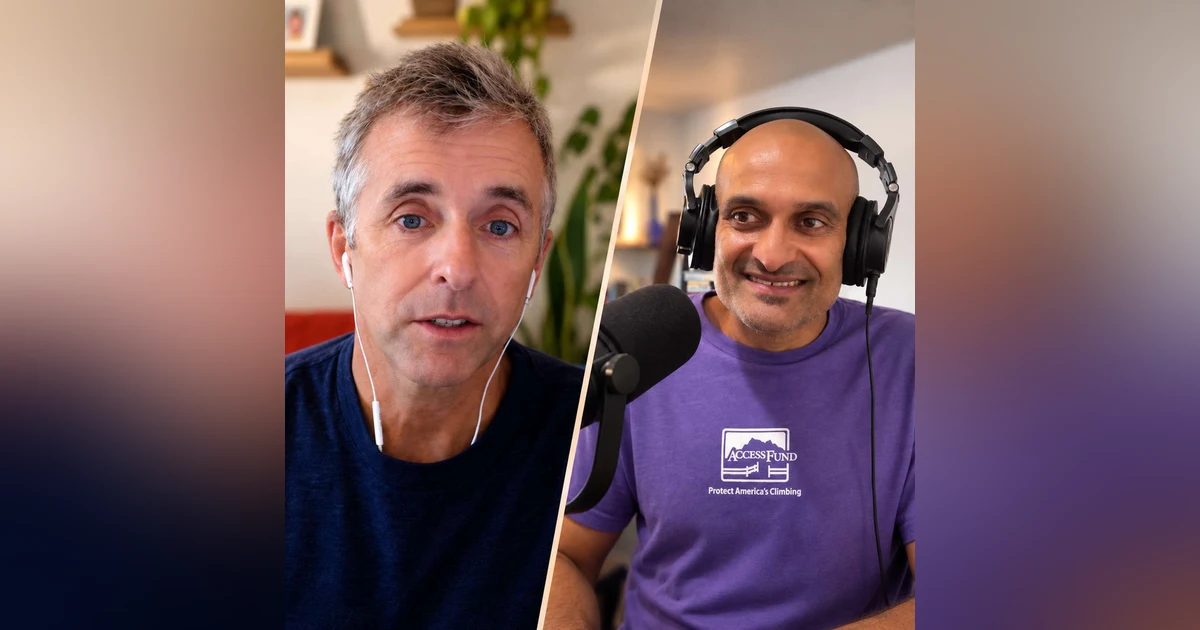
Dean Potter once called Timmy O’Neill his “secret weapon.” With Dean back in the spotlight through Dark Wizard, I went back to this conversation with Timmy — and realized how much of it deserves to be heard again. Timmy shares stories from their extraordinary years climbing together in Yosemite, but this conversation goes somewhere deeper: how our relationship with risk changes as we age, why Timmy fears not living more than dying, and his idea of cultivating a “life wish” — even if you’re no...


Dean Potter once called Timmy O’Neill his “secret weapon.”
With Dean back in the spotlight through Dark Wizard, I went back to this conversation with Timmy — and realized how much of it deserves to be heard again.
Timmy shares stories from their extraordinary years climbing together in Yosemite, but this conversation goes somewhere deeper: how our relationship with risk changes as we age, why Timmy fears not living more than dying, and his idea of cultivating a “life wish” — even if you’re not a climber or adventure athlete.
We also talk about aging, play, family, loss, adaptive climbing, and finding the things that make you feel truly alive. One of my favorites. Enjoy!
💜 Want to stay strong, mobile, and capable for decades?
Join the Ageless Athlete newsletter — one useful email a week on how to build and protect strength, endurance, mobility, recovery, and the physical capacity to keep doing what you love as you get older.
Join here → https://www.agelessathlete.co/newsletter/
Timeline: Support cellular renewal and mitochondrial function with Mitopure, featuring Urolithin A. Get up to 20% off at timeline.com/AGELESSATHLETE
🚀 Love the show? Here’s how to support it
If something you’ve heard here has stayed with you, made you smile, or helped you keep going, I’d be honored if you’d consider supporting the show. 👉 https://buymeacoffee.com/agelessathlete
Topics: longevity, fitness over 40, endurance training, aging athletes, recovery, injury prevention
Ageless Athlete is a podcast about healthy aging for people who want to stay strong, active and capable for life. Conversations explore strength, endurance, mobility, recovery, VO2 max, muscle and bone health, and what it takes to keep doing the things you love as you get older.
Follow Ageless Athlete — How to Stay Strong, Curious & Capable for Life for new episodes each week.
Ageless Athlete - Timmy O'Neill - Re-release
===
Kush: [00:00:00]
Timmysquadcaster-2a1d_1_08-20-2024_122046: I currently am sitting in my house in South Lake Tahoe in California and this morning I had coffee. I
Kush: what is your morning routine like? Are there any practices you find, uh, essential for setting a, uh, a productive tone for the day?
Timmysquadcaster-2a1d_1_08-20-2024_122046: guess it really just depends on the day, my life is about variety. So yesterday morning I got up really early in the dark to drive south to go and climb the Incredible Hulk on the east side of the Sierra. And then this morning I was awake early, but not as early as the morning before with my son, Cody, and he was talking and sort of crying in his crib.
So we went in and got him and then hung out with him. But yeah, I mean, I think for routine, the first thing I want to do is. Wake up alive, and then the rest is looking pretty [00:01:00] good.
Kush: Every day alive is a gift that I think we tend to forget pretty quickly as we rush to take on the day headlong. Actually, since this is a podcast about being ageless, I feel emboldened to ask, Timmy, how old are you?
Timmysquadcaster-2a1d_1_08-20-2024_122046: I'm 55. I was born in 1969 child of the 60s.
Kush: It's funny. , I remember, , a few years ago, we. met at this place right outside Yosemite, Parkland Slabs. You and Sarah and then my friend Christy and I, we were about to set out to do some climbing and somehow, I don't know how it, how this happened, but, uh, we were both trying to guess how old you were, Timmy.
And, uh, we were both stumped. We were like, man, Timmy could be anywhere [00:02:00] between 25 and 50. And which makes me think like something that I want to dive a little bit deeper into, but Timmy, you seem to have this, uh, some kind of eternal, uh, youthfulness, they're probably different things about you, the way you have grown up, your personality, and maybe some things you do intentionally wanted to understand a bit about your journey.
Timmy, how do you define yourself? Who are you and what do you do?
Timmysquadcaster-2a1d_1_08-20-2024_122046: I'm a human being first and foremost, and I'm a member of Really vast ecosystem with many other critters and creatures and I am an animal first and foremost, right? I I love to be outside Experiencing the natural world. I identify as a climber. Absolutely and have for the last 35 years I'm also a whitewater kayaker. I grew up [00:03:00] paddling rivers as a little boy and risk assessing So I am a risk taker And I love to take risks, physically, emotionally, psychologically, intellectually, spiritually, all of it. It has me feeling, uh, not very much only alive, but really present.
Kush: Timmy, you grew up in a city, which is perhaps not on the rock climbing map per se, Philadelphia. And I understand you were part of a large family. Can you share a story from your early years that speaks to how you may have discovered your talent for climbing, but also the drive to pursue it with this kind of focus?
Timmysquadcaster-2a1d_1_08-20-2024_122046: I grew up in an urban area, but almost all areas have trees in them. And so I grew up climbing trees. In my backyard was a large maple tree. And we were able to go 20, 30, 40, even higher. Feet in, in the tree, and then there were bigger [00:04:00] trees around where we lived. Like these giant sycamore trees and really tall evergreen trees, these pine trees. So as a little kid, I would join my siblings and the many neighbors in tree climbing. And then there was a place, the Fernwood Cemetery, that was part of our open space because urban areas are generally pretty cluttered and generally they're filled with buildings and parking lots and streets and people, but the cemetery was empty of people, buildings were just tombstones. So we would hang out there and it also bordered Cobbs Creek, this ragged, rough area. That was, urbanized and sort of ruined in a certain degree, but it still had a wild quality to it. But we would go to these places and hang out and hike around, build fires, but we would also climb tombstones there. And I remember early on, we were climbing the mausoleum and on the front of the [00:05:00] mausoleum, there were these reefs of bas relief. And I remember being able to climb up this reef that was quite tall, at least probably a couple stories off. The ground and then gaining the top cornice and then mantling it up, up and somebody, and I was the only one that was able to complete that particular sort of bildering problem.
And that was maybe I was in early high school.
Kush: usually you find people who have, mastered rock climbing . And then they get into this, maybe this one, uh, edge of the sport, climbing buildings. You were climbing buildings. in this case, perhaps this mausoleum before you actually started rock climbing.
And I'm curious, how did your family react to your, uh, penchant for, uh, clamoring up these things? I mean, was your, were your parents, concerned
Timmysquadcaster-2a1d_1_08-20-2024_122046: my father fostered it. [00:06:00] He said, go for it. We would go and hang out by the Delaware river in a place called Penn's Landing. And I remember distinctly there was a large sundial and the sundial was a large steel beam. Set at an angle that you could climb up and get to the top of, and it was at least probably 15 or even 20 feet above the ground, and we would take turns climbing up and then sliding down this beam, and that led me to climbing buildings and sculptures. all around Philadelphia and then all around the world. It's something I still, I'm always looking at. And kids all start as climbers, right? My little son, Cody, who's 19 months, he's about to climb out of his crib. Every little child is pulling themselves up immediately and then they want to pull themselves up even further. They see the steps, they want to climb up them. And of course, you know, we want to caution and keep them safe to a certain degree, [00:07:00] but I'm actually fostering Cody's climbing wholeheartedly. And I feel that I was a natural climber right away as most kids are. And then fortunately, I found actual rock climbing when I was 19 out in Montana.
Kush: just, a week ago or so, I was talking to a friend of mine, Josh, and we were talking about like how Dancing is also this innate human quality where babies have this instinctive, I think, ability to kind of move to music. And we forget that as adults. But you're making me realize that even climbing is some kind of, a primordial trait we have as living creatures.
And it's completely true. Like, a little infant. Once that, once that infant begins to discover their limbs and discover space and movement, one of the first thing that baby tries is to [00:08:00] crawl and then try to climb up things.
Timmysquadcaster-2a1d_1_08-20-2024_122046: and I also feel that most parents are like, Oh my, my child, they're amazing. They're going to be a dancer. They're going to be an artist. They're going to be a climber. They're going to be this unconventional, unusual thing, but then convention and the usual sort of limits that. And the aperture goes from being dilated to constricting down to a more normal life and more normal choices. But for myself, fortunately, I had so many siblings, I'm one of seven, that my parents didn't necessarily curate what we had to become. It was open and we were sort of raised without a lot of rules and regulations. And as I mentioned, as a little boy, I was whitewater kayaking at a very high level. So I became really comfortable to decision making in highly hazardous scenarios.
Kush: Your parents not only encouraged some of these pursuits, they [00:09:00] actively took you on adventures. You were part of a large family. Were there others in your, uh, brood of, uh, siblings who were equally, talented or had this, uh, zeal to pursue adventure and, athleticism?
Timmysquadcaster-2a1d_1_08-20-2024_122046: Yeah. All of us were raised in the same house with. Pretty much the same availability. And we all went kayaking and paddling, you know, canoeing. We did camping trips. We were wild in the woods. So we all had a similar upbringing. What changed for me is I left home. and went out to the Western U S and that fortuitous decision changed the trajectory of my life forever. I discovered a, not only an application of my life, but a whole group of people that application would occur with the climbing community. And I never looked back.
Kush: Tell me what [00:10:00] drove you to leave home there was adventure and there was climbing and kayaking in the East Coast as well. Was there something specific about this part of the country that pulled you so deeply?
Timmysquadcaster-2a1d_1_08-20-2024_122046: Yellowstone national park. When I was a little boy, my uncle Bill went to Yellowstone national park and he came back with photographs. And I remember looking through the photos as a child. And being mystified. Wow. Geysers. Wow. Bison. Elk. Look at these vast wildernesses, these prismatic springs. And then later I was looking at a National Geographic magazine. It was about the fires of 1988 in Yellowstone National Park. And there was a caption underneath of a photo that said, Park employee fleeing the old faithful location. And I went, park employee. You can work in a park. And as a kid, I would get, we would get magazines like Life [00:11:00] Magazine, and we would get National Geographic, Outside, and in the back of these magazines, there used to be opportunities to call these 1 800 numbers and get these pamphlets and catalogs, and I would order those and sort of travel indirectly to these places by looking at them and paging through. So then I got in touch with the park. And they go, no, this is the National Park Service. We're not giving you a job. Get in touch with the concessionaire. And then I called the concessionaire and they said, no, we can't give you a job over the phone, but we can almost guarantee you'll get one. When you arrive here. So I bought a 69 one way bus ticket from Philly to Gardner, Montana, and then got a job in a gift shop inside the park. And the job wasn't important. It was the backyard. It was the experiences that I would have. It was this ability to suddenly expand my horizons and the available [00:12:00] experiences to a much greater degree. And there was the fateful day of taking a rock climbing clinic in Bozeman, Montana. in Highlight Canyon at a place called Practice Rock. And that was it. I was like, wow, this is, this feels so right. This is exactly what I've been wanting to do in my life, which is problem solve in really wild locations, being very present and very focused and the sky was the limit.
Kush: You took that bus ticket and then you found your way to Yosemite. I would love to hear about how you actually rock climbing. You were already doing climbing, but at some point you started climbing some of these majestic formations in Yosemite
Timmysquadcaster-2a1d_1_08-20-2024_122046: I found it in Yellowstone and then I was like, wow, this is amazing. This is what I want to do. And I had a piece of webbing to create a Swiss seat. the person that I went climbing with purchased a [00:13:00] rope, but they gave up climbing right away. So I got that rope from my roommate and then had some equipment, a pair of shoes, a chalk bag, a figure of eight, a locking carabiner, just the basics. And I remember hitchhiking down from Yellowstone down to the Teton to a place called Black Tail Butte. And having these early Really catalyzing experiences around climbing that kept leading me back to it. And then someone goes, man, if you like climbing this much, you should go get a job in Yosemite. So that following summer, I went and got a job in the grocery store as a clerk and then saved on my paychecks and purchased a rack.
of cams because I had some equipment, but I didn't have the ability to go climbing because I needed someone to take me. That wasn't happening. It just was not, the connection wasn't there, the bridge to climbing. So I'm like, okay, I'll get the rack and I'll take my friends climbing. And that's what I did in Yosemite.
And then someone goes, dude, [00:14:00] You love climbing so much. Are you going to Joshua tree this winter? And I go, Joshua tree. What's that? And then I wound up taking a bus from Philly over to Southern California, hitchhiking from Yucca Valley up into the park. And I met all of these people from all over the world who are unlike any of the people I had ever met before in my life, but they were just like me. So I had found my tribe and I'm like, okay, this is it. And then I spent the next seven years traveling out of a backpack, climbing in the American West and Southwest.
Kush: Timmy. I want to ask about a couple of specific questions about actually both those places, Yosemite and Joshua tree. but I heard that you ended up living. In a cave, perhaps, in Josh for some time. curious, was that part of that early trip when you found [00:15:00] yourself in, in, in the park and you found maybe this, uh, band of brothers, this community that you immediately, felt at home with?
Timmysquadcaster-2a1d_1_08-20-2024_122046: I was going to move campsites and my tent blew away. I foolishly left it without weight in it and not tethered or staked to the ground and it literally blew away. They call Joshua Tree the poor man's Patagonia. So really strong winds, severe storms, harsh conditions. And so I found myself without a tent.
It was gone. So then I had, I had to move into the next available free shelter, which was a cave in one of the campsites and my fellow, uh, campsite. friend and nearby cave dweller was Chongo Chuck. So he was like living in a cave
with a foot treadle sewing machine, creating his, you know, famous climbing pants. And I was living in a cave and yeah, so it was just these early [00:16:00] experiences that really what they were about for me were, yeah, cutting my teeth as a climber, but also understanding how little I needed. To be happy, how little I needed to spend and therefore earn in order to be able to be on the road. And I was living in Joshua Tree for under 100 a month, right? that's incredibly liberating. And it helped me understand that perhaps the conventional, I wouldn't need to tender that and that's the life that I still live
Kush: I have camped in Joshua tree in the winter and,I have also had my little tent being buffeted by the elements. So maybe in the cave, actually, you were, uh, maybe more protected from like all the winds that can ravage what you rightly call, uh, maybe the, uh, North American version of, of Patagonia.
Timmysquadcaster-2a1d_1_08-20-2024_122046: and I got to share the cave with mice too. So I had like [00:17:00] roommates, cave mates,
Kush: not surprised to hear that. the mice were probably living there even before you, you moved in with them. perhaps they offered you tenancy temporary lodging
Timmysquadcaster-2a1d_1_08-20-2024_122046: and I provided them,
food in as my offer. We had it was like a jar of peanut butter plastic and they like ate through one side and then I would eat on the other side. So we were able to. It was mutually beneficial.
Kush: sounds like great, co living.
moving forward a little bit, you took those early introductions to climbing and perhaps you discovered, your own talents for the sport to a greater degree and We could talk about climate forever, but maybe just one or two. Highlights, let's say from your climbing career. I believe you had this, one of the earlier sets in Yosemite that you became well known for.
[00:18:00] You climbed three grade six walls in 24 hours yeah, a remarkable feat for its skill and the endurance it took. The bit of climbing that I've done in Yosemite, I have been, I've been lucky to finish one long climb in one day. which was even, which was not even close to, uh, maybe one doing one big wall. for those who might not be as familiar with rock climbing, and I believe you speak with audiences in climbing and beyond. Can you walk us, Tim, of what that experience was like? What did you climb and what drew you to take on, uh, that challenge.
Timmysquadcaster-2a1d_1_08-20-2024_122046: Well, let me just preface it by saying I was in Yosemite last month, and I had the opportunity to climb three formations in a 24 hour period again. So it's something that I really love to do. I [00:19:00] love covering ground. I love to be moving over terrain and assessing risk and objective hazards, but also just being able to, you know, Taking in the beauty and the grandeur and the impossibility of existence.
it's just my life set within this milieu of, you know, these towering granite formations and massive descents and covering ground and perhaps feeling exhausted at the end of it too. And that sort of reward, it draws me to this day. So 20 years ago plus. I was in Yosemite, and like a lot of the things in my life, I was invited to have an experience. My climbing partner, Dean Potter, at the time, had this idea to be the first to climb the three grade sixes that exist in Yosemite Valley, which is Mount Watkins, up in Tenaya Canyon, The Northwest face of Half Dome and El Capitan. [00:20:00] So we had, we did one triple before that where we climbed Half Dome's Northwest face and then got on a tandem bike and then rode over to another grade five formation, the Steck Salathe.
Free solo that, came down, rode the bike over to El Capitan and went up the nose all within 24 hours. And we're like, okay, that was difficult, but we did it. So now let's go for. The enchainment with Mount Watkins and we started early in the morning on the northwest face of Half Dome and climb this really beautiful 2000 foot face and about two hours and then you're on the summit of Half Dome so you have to descend, 5000 vertical feet down to the valley floor and then go up another canyon on foot and climb up another. You know, several thousand feet of climbing because the east face of Mount Watkins starts up quite high above. And then we got to the top, went out to [00:21:00] the road and then drove down to the nose of El Capitan and climbed that 3000 foot face in just under 24 hours.
Kush: Climbing any of those individual formations even once would be the highlight of most climbers careers. You and Dean went and did three of those in one day
and I think, I don't want this fact to be lost in people that you move, vertically up thousands and thousands of feet of stone, both sheer walls. facing the open sky, but also some of the constricting slots and chimneys that climbs like Stek Salite offer.
So I think, Yeah, it requires this huge variety of skills, but then also the level of endurance it takes to be able to finish the climb [00:22:00] and then get down in order to go up the next one. I mean, we're talking, I think, thousands of feet climbed and miles of hiking and descending over rocks and talus and boulders.
You guys certainly earned your meal and rest at the end of that day. One other thing I wanted to ask you since you did this with Dean who is iconic amongst climbing community and beyond, and sadly he's no longer with us.
In your partnership with Dean, Dean brought, what are the skills that you and Dean complemented, maybe even taught each other to be able to climb so well and sufficiently with this kind of success?
Timmysquadcaster-2a1d_1_08-20-2024_122046: I think for us, it was, I was an incredibly fast climber, and I still [00:23:00] prefer to climb quickly and to move over terrain as fluidly as possible. So that was something that I just did very naturally. And Dean and I climbed on Washington's column, the South Face, and that's a grade five. It's what's often considered to be a starter wall or a beginning big wall for people. And we went up and I didn't even know we were necessarily going to be speed climbing. That we would get to be timing it, but we got to the top of the climb and he's like, stops his watch and he goes, Oh, cool. We just set a new speed record on the South face. He's like, I found my secret weapon, like, which was me. And then it was able to be a realization for him that he now had a climbing partner. That he could have and use to achieve these goals that he had been dreaming of. I didn't necessarily go to Yosemite thinking, I'm going to leave my mark and do these things. For me, it was always, I'm going to [00:24:00] go to Yosemite and be in awe of this place and be in love with life and get an opportunity to test myself and challenge myself on these incredibly audacious walls and goals. And like I mentioned. Dean provided that opportunity for me to really push myself further and harder than I may have dreamed of possible, possibly doing without him.
Kush: you provided This partner that Dean was looking for to be able to accomplish these goals that he had set. And the little that I know about Dean Potter, he was incredibly goal oriented and he wanted to be able to do certain things in certain style and set milestones. Were you also as Goal oriented Timmy on being able to complete ABC things [00:25:00] in these styles or were you more driven by let's say the athleticism, the speed, the ability to really cover vast terrain
Timmysquadcaster-2a1d_1_08-20-2024_122046: Yeah,
that's, and that's what drives me today. I mean, yesterday I did my ninth. Seasonal Ascent of the Incredible Hulk in the Sierra, and I'll go and do another ascent hopefully in the next week or two. It was my goal to do 10 laps on the Hulk. Now I'm not going into the Hulk and trying to climb the hardest, most aesthetic, most elegant line. I'm looking to go in there and. Remind myself of what makes me feel so full and create such meaning in my life and it's doing these deep dives in these really beautiful settings where you get to challenge yourself physiologically, psychologically, in a way that [00:26:00] is again, fulfilling. And with Yosemite, I just went, as I mentioned, and I did a free solo of the Royal Arches and then a free solo of the Snake Dyke on Half Dome and, and then came down and did an ascent of the Staxalithae with a rope and covering that terrain. Um, I just feel so alive and so fulfilled and it's very personal, right? Like I'm going there by myself or two of those formations and it just allows me to use this limited life that we have because the brevity of life is never underscored more with the eternity of death. And when we encounter that. Like in June, I hosted a very dear friend's memorial service in Seattle who died while ski mountaineering. [00:27:00] And going into the Hulk yesterday is an answer to that void, right? It is, for me, a statement in my life that says, This is amazing. This is beautiful. I feel so good. And it's momentary. I'm not looking to create that in an eternal way. It's impermanent and imperfect, both that experience and life. I'm just looking to have the best time.
Kush: The climbs in Yosemite that you, you just talked about just the last month where you climbed all arches and others, you have likely done those climbs many, many times over the last few decades.
What pulls you to just do those climbs over and over again? You probably know,every pitch on that route, you have traversed it. And is there some sort of, record setting element in there too? Is it. Maybe this desire to keep [00:28:00] recapturing that vitality. What is it about, yeah, maybe even just coming back to the same clients
again and again.
Timmysquadcaster-2a1d_1_08-20-2024_122046: I'm a repeater in my life. I joke, the thing I repeat the most is breathing, right? So I love to do the same climbs because I'm familiar with them, but I also love them. like going back to the Hulk. Every time I walk in there, I'm in awe. And I go, wow, look how beautiful, what an incredible setting. And there's a climb called positive vibrations, which I've climbed four times this year. And I take different people up that, and I get to have a vicarious experience with their joy and their awe as well. Snake dike, for example, on the You go up the death slabs, you get to have this really sort of beautiful but difficult experience [00:29:00] as you go up and then I go up Bushido Gully, this really unusual free solo that has fifth class terrain, and then you wind up on top of the porcelain wall, and you can look over and down from the porcelain wall and see up Tenaya Canyon, and then you pop around and then you're at the base of Snake Dyke. And each time I go, it's a new experience. It may be the same climb on the same formation, but I'm a new person. It's a different time in my life. I'm there at a different time of the day, a different time of the season. Um, there is a newness inherent in it that allows me to feel a new sense of joy. And accomplishment to a certain degree, but there's not really conventional return on these deep investments that I've been doing for decades. There is one that serves my end, which is [00:30:00] to feel really alive and to feel really in love with the experience I'm currently having. And that's generally free soloing these same climbs. I
Kush: One question here I would, I think you would be such a good person to ask is, Half Dome, for example, attracts A lot of hikers, many people who hike up Half Dome and there are a select few who choose to do this obscure and seemingly,yeah, seemingly, uh, insane thing of trying to climb it vertically on the sheer face.
How would you describe your experience? sense of fulfillment, elation, whatnot, not better or worse, but maybe just different than somebody who has climbed up, not by climbing, but hiking up Half Dome.
Timmysquadcaster-2a1d_1_08-20-2024_122046: mean the cables that which you're speaking of allow people to
access the top of half dome and that is [00:31:00] dangerous undertaking As well. People die ascending and descending on the cables more frequently than climbers are dying on the northwest face or on snake dyke. No one goes there with the exception of those who jump off of it purposefully, perhaps in the saddest of ways, because they may die.
They go there because they feel very much alive Having this experience,it's a life wish that is propelling everyone to go and see the view. Or, have this experience, via Half Dome, via the Cables, or Snake Dyke, or the Northwest Space. We go to these places because we are drawn to them, because they answer an innate question in us all. Why are we here? What is life about? What is the point of it all? And you don't necessarily find an [00:32:00] answer that's so obvious and clear.
but you find an experience. You find a feeling. You create this connection to a place in a moment in time that has you feeling whole.
Kush: You employed an interesting term there, Timmy. You used the word life ish and I think I've heard you use that. I've heard of you speak of finding life ish instead of death ish because, yeah, when you go on big adventures with high risk of catastrophic injuries or worse, a lot of people might think that you might have a death ish.
Instead, you speak of this life ish.What do you mean by life ish?
Timmysquadcaster-2a1d_1_08-20-2024_122046: I think language is really powerful, right? We use language to define who we are. We use language [00:33:00] to help others understand ourselves and the way that we fit into the world. So when people say, Oh, they must have a death wish if they go and have these experiences in these places, that isn't the case for me.
I could say that, there's a much greater fear of not living than there is of dying and going to these places. There's a much greater risk for me, it feels, to stay away from climbing, paddling, and being able to have these pursuits in a lack of meaning and connection in my life. And I find that really important. You need to be self centered in life, right? Like everyone needs to be at the center of their existence, right? So if you're at the center of your existence, it's important that you can navigate from there. You don't drive from the passenger seat. [00:34:00] You drive from the driver's seat. And I think what's important about being self centered is having a center that allows space, ample space for family and friends and community around that center. So my center resides in these remote places, pursuing these wild ideas with equally wild people. On our terms.
Kush: Timmy, you go and speak with, interact with, and inspire many people outside the core climbing community, if you may. And I am curious for the everyday person, maybe even the everyday active athlete who may not be into remote adventuring, maybe not even do rock climbing or [00:35:00] adventure sports for that matter.
How can they find this life fish in their own lives?
Timmysquadcaster-2a1d_1_08-20-2024_122046: I think for me, climbing is about movement. More importantly, it's also about mindset because when you go in problem solve and have division of duties and create teams and you're involved with the sort of crux assessing around different objective aspects, you're learning so much. About that experience, but you can take that suite of tools, that mindset and apply it to anything in your life. So a life wish to me is about not, hey, let's have a party and just feel good. It's about let's purposely make decisions in our lives that lead us to our best version of ourselves. And for me, that's going to be climbing, as we've mentioned, but it's also going to be playing [00:36:00] music, deeply reading, having a sense of play that is eternal and so profound.
It informs almost everything I do. And my life wish then allows me to have a self center. That I can share, right? Catch and release. Like you caught it, now release it back into the world, right? if I'm living the best version of myself, and I'm so full of life and love, and that doesn't mean I'm not full of the other bad stuff. All the negative or opposites, right? It just means that I'm going to be purposefully seeking to have the best version of myself and the best mindset so I can show up in my life and in the lives of those around me in the best way.
Kush: To me, everybody can find a way to live more fully closer to their everyday existence, [00:37:00] but I think it is It requires a level of intention and, focus that I often struggle with, but I certainly feel that we have that capacity to do that. This staying on the subject of risk and adventure. This is a listener question from Lisa.
How has your approach Again, risk taking and expeditions evolved as you have gotten older, especially now that you are the father of a young boy.
Timmysquadcaster-2a1d_1_08-20-2024_122046: I mean, as my body has aged, my capacity to suffer isn't as great. My recovery isn't as fast. And I think that for me, I'm trying to age as gracefully With as much acceptance as possible as well, because it's inevitable that my body through the natural breakdown will preclude [00:38:00] a lot of what I'm still doing, and I have to be okay with that, because if I'm not, I'm going to become bitter. And bitter isn't my best self. So I still want to be out there and I still do get out there. Like I, I want to be traveling to these really remote locations to be engaged in this wild activities. As I mentioned, that drive is very much there and remains strong and is leading me to set up these trips and to do them. And having a kid definitely informs me that, you know, I want to be a father and remain alive. For Cody and I'm a husband and I want to be there for Sarah and again, that's my goal, right? I'm not going to these places because I may not be able to fulfill those roles I'm going to these places because it helps me fulfill those roles in a better way life is how you frame it It's the [00:39:00] perspective that you cultivate and that you curate and I go to many different people, whether it's conversations or online or reading or conversations like these to learn and to listen.
Kush: I feel it's, uh, this thing that you spoke about earlier about being self centered and one's responsibility to oneself, which then allows us to be more present. aware and giving to others that we can influence and we cannot do that if we don't allow us that chance to live more fully.
Timmy, I may have first seeing you in person, or let's just, let's just say my first vivid memory of you might have been when I saw you emcee an event, it might have been this rock trip event at the Red [00:40:00] River Gorge in the 2000s, or I could be wrong. It could have been a different one. it's been a long time, but your.
Your talent and your zest for public speaking, for engaging, for teasing out stories from others was, yeah, it was quite evident Your talent for dynamic storytelling, how did you discover that?
Timmysquadcaster-2a1d_1_08-20-2024_122046: I always say that it is a one of seven kids you had to be noticed to be fed or to have care into a certain degree and humor was a big part of our life growing up. To be ironic, to be sarcastic, to poke fun, to make fun. And early on when I became a professional climber, I did a slideshow. This was like the beginning of my public speaking. And I was in Neptune, not nearing in Boulder, Colorado. And I was doing an event with a dear friend, Annette Yuan, and she had asked me to come and speak on behalf of [00:41:00] this nonprofit and do a fundraiser. And I went and I spoke about a trip I took to Patagonia to climb and I talked about the absurdity of it all. I talked about the suffering and talked about the mishaps and really poked fun and lampooned the experience as opposed to a chest beating bravado and there I was and aren't I amazing. It was look at how absurd and idiotic. This entire pursuit is like, what are the choices that I've made in my life that have brought me to this result?
What was I thinking? And that lighter side clicked with me in a really meaningful and beautiful way that I've been able to develop for decades now. And that cuts both ways, right? Because yeah, it makes people laugh and it makes people pay attention and captivate them and it can be charming, but then it also undercuts your sort of professionalism or [00:42:00] people taking you serious, right? So I think, you know, if you act like a clown. People think you're a clown. So I have always done that growing up and it's the way I've approached climbing. Like I don't really read climbing literature. I don't watch climbing films. I don't talk about climbing too much. And I know this isn't necessarily a climbing podcast, but we've been predominantly talking about climbing for the last 45 minutes, but I feel the mindset once again, of climbing can be applied to everyone.
And to everything that these audacious climbs that people are doing, whether it's a free solo of El Capitan or some enchantment and some far flung mountain range, they should give everyone pause not to consider. Can I do that? But what am I capable of personally? That if this person can have this. Sense of [00:43:00] conviction and commitment and application in their life. What can I do in this single opportunity called now? Now that doesn't mean we have to do some crazy audacious thing, but it should give us pause to say this short, scant series of decades we have. What can I do within them that can be a meaningful use of my time on the planet? Just for me, right? Because these climbers that are doing These selfish acts, right? Again, they are for them, but what they represent about human spirit and human nature and human capacity can be applied to everyone. That's what I love trading in. I love trading in the power of the possible as it applies to me. And then it applies concentrically to the rings that I influence and interact with in my life.
Kush: And to me, not just through [00:44:00] your storytelling, but also through your active adventures, taking people of all abilities up in some of these audacious, rock climbs and other types of adventures, you seem to bring that message. Yeah, I'm curious. How
did you first learn that you had this gift to be able to open up the world of somebody else and share that gift of being able to live fully in these wild environments?
Timmysquadcaster-2a1d_1_08-20-2024_122046: my entrance into adaptive climbing was through my brother, Sean. In 1991, he was injured. He broke his spine, becoming paralyzed from the waist down. And soon after that happened, [00:45:00] I became aware of a guy named Mark Wellman, who had climbed El Capitan and Half Dome as a paraplegic. And paraplegia means you don't have the use of your lower extremities, your legs. Sean was confined to a wheelchair. For the rest of his life. So I offered him the ability to climb El Capitan. I gave him a gift certificate good for one climb of El Cap that he would eventually redeem much later. But because I started to do these climbs with him, we did an ascent of Devil's Tower soon after his paralysis, actually. Where he Jumar'd up the rope, right? Creating a climbing experience on his terms. And then we climbed Castleton Tower in Utah. We climbed the Tombstone also in Utah. And then eventually we would climb El Capitan three times together. We would climb in the Ruth Gorge in Alaska together. He would go on to actually lead climbs by creating a system of [00:46:00] pulleys and motion capture. And he would be able to lead a climb, rappel down, clean the gear and put a walking and climbing individual on belay and then give them information on how to use their feet in the crack. So it really just flipped the script on what is the expectations of somebody with disability? What are they supposed to do?
What are they capable of? And then what can that person actually provide? What insights, what skill sets, whether their, their physical, emotional, intellectual, et cetera. So my brother's injury, that catastrophe, that crisis became an opportunity for him to become a climber. And an opportunity for me to learn a lot about how a body can move through the world and why that body can move through the world. And because I did a deep dive with him, I immediately [00:47:00] started to get requests. Can you help me? I myself need this, or my brother needs this, or my friend needs this. And I make no mistake on the power of the body. The most powerful word is yes. In my life, that affirmation of mutual beneficence. Yes. Soprocity, right? I try to use that very powerful word. Yes. All the time. People say, can you help? I go, yes. What's the problem? Do you want to be involved? Yes. What's the offer? Right? So I lead with yes. And I feel it's unblocking the meridians of your soul. It's that powerful. And because I want to affirm and be involved with other people, it dilates the aperture of what is possible immediately and allows for a flow of information and positive enduring energy [00:48:00] that's so meaningful and important. It creates, again, a mindset that is That can be applied to any part of your life. And that doesn't mean there's not going to be failure and doubt and all the negative feelings. They're there. That's all just data, right? It's the destination that you're using the data points to drive towards. That's what's important. Who's in that center? Who's driving this thing? What are we focusing on? What are we purposely trying to create in our lives? And it's our best selves that has us showing up for us and those around us again in the best way and climbing and a life of climbing with individuals with different abilities. has underscored that to me in the most profound ways.
Kush: taking up a differently abled climber requires a level of strength and commitment far beyond going up with just yourself, [00:49:00] even if it's a free solo endeavor or going up with, let's say, other equally abled athletes. And I'm sensing that,
investment gives you back this return that you have taken in order to enrich your own life and live more fully and be present and from taking differently abled climbers You went on to do some other kinds of humanitarian work, Timmy. You have helped missions like Cure Blindness. And was there a similar catalyst for helping
discover the beauty of eyesight?
Timmysquadcaster-2a1d_1_08-20-2024_122046: I mean, climbing has opened up every door in my life. Climbing has provided every invitation and opportunity in my life. And I believe [00:50:00] that's because it creates within a person a really strong resilience and self reliance, you know, problem solving. It's all about problem solving. That's what climbing is. You're purposefully electing. This really difficult challenge across all the data points. You know, it could be cold, it could rain, you could be marooned, you could take a fall, there could be objective hazards that are beyond your control, in fact there are. So all of that speaks to a person who's going to be a hardy, character driven individual. So if you possess those traits, people are like, Oh, I want that person on my team. Oh, that person could become a really cool problem solver for me. And Oh, that person also seems positive and affirmative and they're ready to dig in and do a deep dive. So there's that part of it. Then there's a decision to be a caregiver, [00:51:00] right? Because if you care give, then that means that you're creating meaning in other people's lives. There's a great quote that the best way to become happy is to make other people happy. And there's a truth there in that if you're able to somebody's existence and then you're able to relieve suffering within that person, even if it's just a small amount through a smile or a handshake or a hug, let alone helping as part of a high volume cataract intervention in Sub Saharan Africa for thousands of patients. Which is work that you were talking about with Cure Blindness that I did for a decade. All of that speaks to the same thing. I have a very short duration on the planet. You know, a scant several decades. And in that time, I want to try and create the most positive, beautiful, meaningful life for me at the center. [00:52:00] And again, for those that I interact with concentrically, and I find myself wanting to be assured that I'm invited back and invited to dinner and celebrated amongst the successes with everybody, because you play a part in these successes. They're your own.
Kush: if you were to go back in time a couple of decades. What would be one piece of advice you would give to your younger self?
Timmysquadcaster-2a1d_1_08-20-2024_122046: I would have traded rock climbing to become a musician.
Kush: And would that be some of your freestyling type of music, or are we talking different instruments? Are we talking starting a band?
Timmysquadcaster-2a1d_1_08-20-2024_122046: I'm in a band right now. I'm in a couple of bands. One in South Lake
Tahoe and then another psychedelic surf rock trio called Par Avion that in this coming November, I'll do a series of events and play music. [00:53:00] And I, that's kind of tongue in cheek. Right? About instead of being a rock climber, be a rock musician, but I love the improvisational aspects of music, but also the rigor that goes into rehearsal and learning music, and then also the presence that is very much essential to listening and being in the moment so that you can have these envelopments where you're in the pocket. And the hair on the back of your neck is standing up because it feels so good, and everybody's having this unspoken yet musical conversation where we're locking in with one another. It just creates such a creative sense of joy in me that it's something that I still do, and something that I want to keep pursuing for decades to come.
Kush: coming to a corporeal version of finding balance. You, again, you do a few different things. [00:54:00] How are you able to include so many parts of you in your day to day, week to week, month to month?
Because now in addition to all these things, you also are a husband and a father. What are maybe some routines you have in juggling all these elements?
Timmysquadcaster-2a1d_1_08-20-2024_122046: it's interesting. Just today, I was realizing that I'm leaving on Friday to be offline going to Burning Man for 10 days and leading up to this I'm editing five minutes to put in front of this film called Soundscape that introduces the film. I'm also trying to do a writing project for Patagonia around their Worn Wear program. I'm also trying to create, working with an editor rather, for an article that I'm writing on grief and loss. That was triggered through the memorial service that I [00:55:00] hosted for my friend, Rob Copolillo. And then I'm trying to prep for Burning Man. And then just yesterday I went and climbed the Hulk for my ninth time this year.
And so I'm doing a lot. Because it feels incredible to be able to create essentially, right? Like, and then tomorrow night I'm going to rehearse with this band that I play with here in South Lake that I call D for Dad. And it's because there's four dads and we all get together once a week and rehearse these same songs and try and gain a proficiency and a fluidity and a fluency. Now, I could do less, but I don't want to. So I have to be careful about overwhelming myself and I have to go through with a mantra that says, Relax, it's all gonna be good. It's gonna work out. It always works out. And it does. I'm able to achieve the deadlines, [00:56:00] provide The input, uh, create and finish the product and keep living as strongly and as engaged, as I possibly can. And it feels good, but it's also difficult, right? Like climbing is really hard and can be really scary, but it. provides a return on the investment that far outweighs the difficulties. And so does music, and so does writing. And I love to read still time, right? If I could create more still time in my life, I would use it for reading more.
Kush: When we were exchanging messages to me, you, uh, you know, we were bouncing off these books that we have read and reading does require that. A long time, that period of focus, because like I listened [00:57:00] to a lot of podcasts, but I do them because I can be out there, uh, walking my dog or, uh, you know, doing some mundane activity, but when I'm reading, that is this world that I have to immerse myself in.
Why is reading? So why is it such a big part of who you are? I think you try to read a book a day, something on those lines.
Timmysquadcaster-2a1d_1_08-20-2024_122046: No, that would be rad if I did.
Kush: book a week. Sorry, I misspoke.
Timmysquadcaster-2a1d_1_08-20-2024_122046: If I could. I did read a book a week one time and it really what that taught me in that year was it was interesting because in order to read that much I had to be still a lot more than I was used to and I had to say no and disallow myself from going out and doing the things and being involved and being engaged and then I realized that I had to forgive myself for being still so much I could give [00:58:00] myself the permission to to do that. So if I am asking myself and then weighing the results of the decision myself, then it's a much shorter bridge to being able to answer what it is I'm asking. So reading is Like you said, it's a world that you immerse yourself in. A book is like an intellectual plane ticket where you can sit still and there's no TSA and there's no delay.
There's no rerouting. It's this metaphor for being able to go anywhere and be engaged in anything. Just by the simple act of sitting down and opening up and engaging on the page. And I love giving books. It's a huge part of who I am. I read a book and give it away. I don't want to collect books and have a library, per se.
Kush: I want to care give for the least amount of objects in my life. But I have a project. I call it Pick Post. I think I told you about it. Where I [00:59:00] send a person a text message of four titles and then they pick one and then I post it to them using U. S. Postal Service media rate, which for the listeners out there is much cheaper than regular first class mail. It's for things like pamphlets and books and things, media. The act of giving someone a book is saying, Hey, this is valuable. What you'll learn and experience in this will spiritually enlighten you and it will be fun and enjoyable. And here you go. And then I mail it to them and whether they read it or not, I don't know. And the act of them reading it is, should be important for them, but I can't have it be important for me, then I'll create expectations that then may result in me feeling frustrated, etc. So again, it's, for me, it's really about providing opportunities for myself and then for [01:00:00] others. I have a dear friend, Quinn Brett, and Quinn and I climbed the nose in a day to raise funds for Paradox Sports years ago. She would eventually be climbing El Capitan, be injured in a fall, and become paralyzed from the waist down. Right about at the same place on her spinal cord that my brother is injured. Quinn gave me this really valuable insight. And Quinn will go into A store and open the doors with her wheelchair and make her way through and somebody will come up and go, you're so inspiring and they're objectifying her and hallmarkifying her and it feels bad to have that happen to an individual. I know this because Quinn tells me. So now Quinn, instead of feeling bad and instead of getting pissed off or becoming embittered, she says, thank you. What do I inspire you to do? And that underscores fundamental [01:01:00] truth. In human life, in human nature, that we can feel something, but what we do with that feeling, that next purposeful part is so key. How we frame the perspective we create. The ideas that we conjure and curate, but then how we apply those in our lives. That's the fundamental, capital T truth, is if you feel inspired, how do you apply it? If you feel that you want to create a best version of yourself, what are the steps that you take to do that? And again, it's imperfect, it's impermanent, it's not exactly the science per se, it can be messy. And it's going to require and error. It's going to require a failure. And again, having what happens to you, not become you or what you choose to become. Yes, easy to look at somebody else's, uh, story and [01:02:00] compliment them. It's yet another to consciously take that into one's own life. On the subject of books, I, would gladly appreciate a book recommendation. And I'm wondering if you have maybe one or two books that you would recommend to readers. Are there a book or two that you would,pick
Timmysquadcaster-2a1d_1_08-20-2024_122046: my, my three favorite books are Sapiens by Yuval Noah Harari, Cosmos by Carl Sagan and Braiding Sweetgrass by Robin Wall Kimmerer. And all of those books are really about how to frame existence, how an individual can look at. themselves and see how they fit in to this greater web. And again, create a sense of awe and create a sense of wonder, but also create importantly, a sense of responsibility. And not a responsibility that has you feeling oppressed, but a [01:03:00] responsibility that should have you feeling a sense of enjoyment or a sense of a capacity that you could create. So those books I've all read more than once, but I have Endless book recommendations. My favorite bookstore here in South Lake Tahoe is the Goodwill. And it's because there are endless titles always cycling through and I'll go through maybe once every two weeks and I'll find these titles. Um, in fact, I found all of those books there. And then I have a collection of, you know, several dozen books at my house that are always available for people when they come and visit me or when I'm doing this pick, pick post project.
Kush:
Timmy, you are a keen reader. I am wondering if there is a book inside of you that may be coming out at some point soon. Yeah.
Timmysquadcaster-2a1d_1_08-20-2024_122046: Yeah. I've always felt that I want to write a book. Absolutely. I love what is [01:04:00] contained between two covers. And I think the, The act of sitting down and writing is beautiful. I love language. I love vocabulary. I mean, I'm always trying to create time in my life to read. And I love talking about books and finding out what people are reading.
It's a question that I ask people all the time. What are you reading? What are you turning the pages of? What are you listening to? Because so many people provide or prefer audiobooks in their life. And then there's all the different formats, whether it's, you know, e reader or audio or actual analog book. So yeah, I would love to write a book. Now there's just to be, uh, to sit down and put the ambition. There. That's what's missing.
Kush: I write a little journal and for me the act of journaling is sometimes a little difficult because I can't just stop at writing like six lines. Once I start writing, you know, then it takes like an hour because I'm just trying to like add more and more things. [01:05:00] And I'm trying to be a perfectionist, which is maybe not what journal writing should be.
But yeah, I mean, podcasts and maybe conversations such as this can only, uh, bring out certain parts of a person, but
somebody like you. who has had these adventures and deep experiences has
the ability to convey so much more through a book. So we will be,waiting for the time when Timmy, you write a book. So consider this a gentle nudge to on that writing
Timmysquadcaster-2a1d_1_08-20-2024_122046: need it. And I have the utmost respect and all for all the people that are out there writing books, many of my friends and contemporaries who have committed to and succeeded in the, in the project. And then again, that provides this
for me to, okay, what are you inspired to do? So putting [01:06:00] that bricklaying mentality and doing the hard work and sitting down.
Kush: Maybe one or two final questions before we end this conversation, Timmy, what could be perhaps one simple and mundane thing that you do every day?
That brings you outsized return.
Timmysquadcaster-2a1d_1_08-20-2024_122046: A simple mundane thing that I do every day that brings me an outsized perspective. outsized return. I would say showing up for Sarah and Cody, right? As best I can to be a pleasant, engaging, caregiving person, right? And if I can show up for these people that are the closest to me and create love in the world, then that can be an opportunity for me to practice that again, concentrically. Out to the engagements that I have across the board,
Kush: [01:07:00] And to me, final question, we live in a place where we wish sometimes that yes, one could live without money, that not possible. What might have been the best use of, let's say a hundred dollars? That you've had in recent memory.
Timmysquadcaster-2a1d_1_08-20-2024_122046: buying stamps from the U S postal service to put on to these envelopes that I send out to people, their gratitude letters, and I've been sending them for decades first to my parents for birthing me, raising me, and allowing me to be free. And then I have sent them consistently. In my life, generally hundreds of them a year. So, I just recently purchased, um, some slabs of the Ansel Adams stamps. I love stamps, and especially beautiful ones, [01:08:00] and Ansel Adams, of course, being this seminal iconic photographer who captured these images. So I can place this beautiful stamp on this envelope and inside is a gift, you know, like you can open this like a present. as you peel back the envelope and then open up this card. And then oftentimes I include a feather in there. I live in the woods and you often find feathers as you walk. Sometimes you might come upon a kill where a bird has been eaten and there'll be a series of feathers. People actually send me, give me feathers. And I put a feather in there because to me it, it's a symbol. Underscores, um, an inherent beauty that life possesses, and then the inherent loss that is also the other side of that coin.


