The Warren Buffett Rule For Compounding Fitness | Dan John, 69
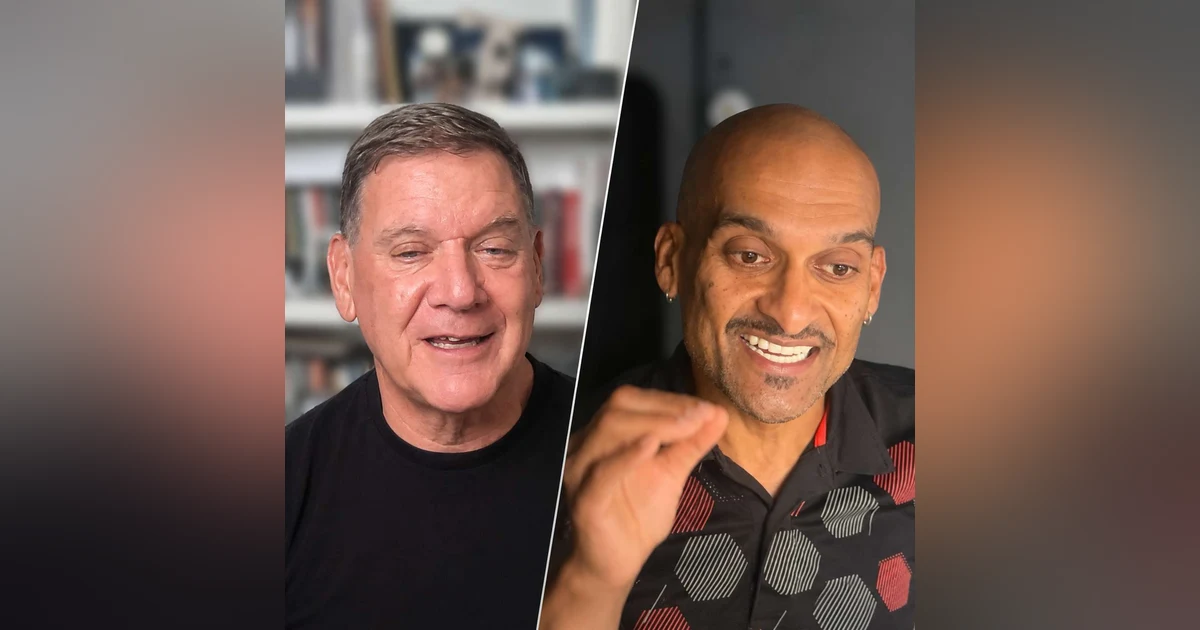

Dan John thinks about fitness the way Warren Buffett thinks about money. Start early. Be consistent. Let it compound. That idea runs through this conversation. Dan has been lifting for roughly six decades. At 68, he recently did 20 chin-ups—better than his previous lifetime best from 1974. This was my second conversation with Dan, recorded live with the Ageless Athlete community, and it went in a direction I really enjoyed. We talked about how training should change as we get older, why the y...


Dan John thinks about fitness the way Warren Buffett thinks about money.
Start early. Be consistent. Let it compound.
That idea runs through this conversation.
Dan has been lifting for roughly six decades. At 68, he recently did 20 chin-ups—better than his previous lifetime best from 1974.
This was my second conversation with Dan, recorded live with the Ageless Athlete community, and it went in a direction I really enjoyed. We talked about how training should change as we get older, why the years between 35 and 55 may matter more than most people realize, and what becomes worth protecting later in life.
Dan also shares the simple physical standards he still pays attention to, why he has a coach despite having coached people for decades, and why he has very little patience for magic pills, miracle supplements, or programs promising fast results. There's a lot of value for us all in this one!
References
Dan John University
https://danjohnuniversity.com
Instagram
https://www.instagram.com/coachdanjohn/
Marek Health: Deeper look at your health with comprehensive bloodwork and personalized guidance. 10% off with code AGELESS at https://agelessathlete.short.gy/marek
Timeline: Support cellular renewal and mitochondrial function with Mitopure, featuring Urolithin A. Up to 20% off at timeline.com/AGELESSATHLETE
Support The Show Love the show? Here’s how to support it https://buymeacoffee.com/agelessathlete
📺 Full video episodes on Youtube for free
Ageless Athlete is a podcast about healthy aging for people who want to stay strong, active and capable for life. Conversations explore strength, endurance, mobility, recovery, VO2 max, muscle and bone health, and what it takes to keep doing the things you love as you get older
How Should We Train As We Age - LIVE - Kush Khandelwal and Dan Joh
===
Dan: [00:00:00] I do chin-ups, and I broke my lifetime best. The best I'd ever done in chin-ups was in 1974. I did 14. This year, I did 20. At age 68, I did 20. So you wanna be as strong as you can be, So you can be 70 years old, but look and move like a 50-year-old, a 45-year-old because it's so clear.
Kush: Hello, everyone. Today I'm joined by Dan John, strength coach, former elite thrower, author, and someone who has now spent decades lifting and teaching how to lift weights.
So our question today is simple: As we get older, how strong should we actually be, and how should we train to preserve that strength without compromising the sports and activities we love?
Dan: Well, some real quick [00:01:00] facts.
Only one in 20 Americans exercise. You know, I spend time at senior centers here. I, you know, I'm a, I, I go to the Murray Senior Center quite often. very few people exercise. Uh, uh, statistics are basically one in 20. Uh, Brad Pilon mentioned a while ago, but people who go to gyms, but only one in 500 lift weights.
So I always tell people, "If you wanna be an elite, one-of-a-kind person, do two things. Floss your teeth and lift weights. That'll put you in the rarest of air." My dentist says only one in 20 people floss their teeth, so that's where I get that number. But, uh, there you go. Lift weights, floss your teeth, and you're, you're an outlier's outlier.
So the, the one thing I would like to get across first is that the habit of exercise is premium, especially as we age. And by, by God, I hope you heard the word habit. Uh, it has just gotta be something that's part of your life. a walk is fine. Uh, I know you ride your bike. Uh, by the way, I grew up playing [00:02:00] on Montara Beach.
I s- it was nice to see that picture of you there. I've played a thousand football games on that beach. but walking on the beach, riding your bike, uh, you know, whatever it is is great. I think that lifting weights provides something that... So in my perfect universe for your listeners, you would lift weights two, three, four times a week, but you'd always walk half an hour after every workout.
And on the other days, you would always have one at least 30 minutes of constant activity, and that can be your biking, your swimming, whatever it is. But the idea that you go steady for the 30 minutes, um, that comes from my doctor, Dr. Brunetti. When it comes to lifting weights, the truth is, listen, I still Olympic lift in meets.
You know, uh, on January 1st, I turn 70 as an athlete, which means there's a real good chance I'm gonna do well with, uh, 'cause there's not a lot of [00:03:00] guys my size 70 years old. I'm just saying I, so I feel pretty good about that. I Olympic lift. I have some friends who are in their 50s who still powerlift.
If all you have the ability to do, uh, post let's just say 55, that's usually the age I pick. Uh, 55 is when you really start to notice, life. That's when you start to, you know, just walking down a, a, a f- a flight of stairs is a, it can be, can be an eye-opener. After 55, I think resistance training is a must, and so is gentle, low intensity, steady state walking.
It's sometimes referred to as LISS. So, and the, the reason resistance is so important, there's a couple things going on. It's nice to hear in the last couple years, Kush, the amount of people discussing, bone density. Okay, so there's no question lifting weights helps with bone density. All right, good.
Uh, which can be an issue for someone who swims all the time, and may be an issue [00:04:00] for someone who bikes all the time. I don't know. I don't, again, I don't think we have a big enough cohort of people to study to say whether that's true or not, but if you're doing non-weightbearing exercise, you might not get the, the, the, the load, you know?
Second, post 55, two or three big things start to happen. The, the biggest one is the loss of lean body mass, and it's also accompanied... Well, I mean, I, I gotta tell you, I, I enjoy every night I watch BritBox and I sit down in a chair and I watch cozy mysteries. I love them. I, you know, Vera, Death in Paradise, uh, sh- uh, Shakespeare and Hathaway, I love them.
I like to sit down, but it's also getting, it's also, it's also feeding the monkey of losing my lean body mass. So even though I might not be eating enough calories to put on fat, the fact that I'm losing lean body mass, muscle, means I'm getting fatter by, by the [00:05:00] numbers. Okay? So bone density, the issues with lean body mass.
The third is joint mobility, and I define joint mobility as the free movement of your, a-around every joint, okay? So if you find yourself unable, and I've, I've broken this wrist rather badly in a, in a weightlifting accident one time, but I was told I'd never be able to do that, but I knew when it happened the importance of never losing joint mobility, okay?
And the fourth thing, which I remember reading this in 1998 when I was young and good-looking, Terry Todd was talking to the great Clarence Bass, who I hope you know, the, the guy's been bodybuilding longer than, most countries have been around in the, in the, probably most continents have been around in, in the world.
The two of them had a conversation. They talked about the loss of spring, and their idea of spring was to pop up on a sidewalk when you get out of a car to, uh, if you stumble, catch yourself, and that kind of thing. [00:06:00] I, I'll add the fifth one, too. Uh, I've, I've told you this before, but the most dangerous thing in my home is the floor, falls are very serious.
Very serious. Post-60, post-70, they become deadly. I'm at a place in my life now, if I fall, it is recommended by, uh, doctors that I get, uh... They, they look, they, they, they look inside the brain to make sure there's no bleeding. That's serious stuff. So for me, weightlifting is a kind of a five for five. It, uh, it takes care of those big ones.
So it's gonna help you with the bones, gonna help you with your muscles, it's helping your joints. It's gonna help you keep a little bit of pop so you can, you know, when you see your grandchildren, you can sprint after them or chase them down the airport, you know. And of course, the fifth one, you know, is maybe it helps with fall prevention.
If you link that with low intensity steady state training, it's called LISS. Uh, here, I'll give you a fancier word for it. Walking, [00:07:00] okay? Walking. if you combine those two things back to back, I think you can get most of the benefits. Listen, if all you have is a machine at the senior center and that's where you're gonna train, that's fine.
If it's calisthenics and you're gonna do, body weight squats, pushups, press-ups, wherever, depending on where you're from. Uh, if, if all you can do is isometrics, you know, uh, like out of the movie, uh, uh, Grease, great. Whatever it is, some kind of resistance training is where you want to be.
Kush: Dan, that's beautiful.
Well, for somebody who's in his 60th year of lifting weights, you still look young and handsome. Dan, , let's make it a little personal as we start off. What did you do for training today, and how did you decide that was what your body needed?
Dan: Well, m- m- my workout today?
Kush: Yes.
Dan: Oh, see, this...
See, once you get into the habit of doing things, then you can build a system for doing it. [00:08:00] So, well, it's funny. I, it's, in, like I told you, I'm gonna be meeting my group. this is my morning basket, okay? So in the morning, I pull this basket out, and it's got, Well, it's got my Kouros, perfume.
It's got, I brush my teeth. I measure my waistline every day. I put on my oil overlay. I put on... And what I do is I empty the basket and make sure I do all the things my skin doctor wants me to do. people who know me want me to put on deodorant. So what I've come up with for little things like the morning ritual, I have a system. I put all that stuff in one box, I put it on the counter, I go through the things. So I have a system for weightlifting and exercise.
Monday, Wednesday, Friday at 9:30, people from all over the world join me in my home gym to work out. Okay? We work out for, oh, anywhere from 40 minutes to, well, 30 to 45 minutes, and then we go [00:09:00] for a half an hour work- uh, walk as a group. This, this comes from Rusty Moore. He believes that weightlifting frees up free fatty acids, and then the walk a- after, like little Pac-Man, eats the free fatty acids.
Whether that's true or not, I don't know, but I love it. So Monday, Wednesday, Friday people show up at my gym. Tuesdays we go for a 10 to 12,000 walk as a group, 10,000 step walk as a group. Thursdays we do mobility as a group, uh, an hour of mobility work as a group. And Saturday and Sunday, is, you know, well, the, I still, I still walk every, those two days Basically, I have a very simple program, very, very simple.
I do a whole body-ish workout every day. Now, that's real easy if you do Olympic lifting, that's real easy if you do power lifting, that's real easy if you do kettlebells. My coach has me right now doing kind of a fun little thing where s- after all those years of Olympic lifting and [00:10:00] throwing and stuff, I, I wouldn't say I'm...
I, I just need to I need to rebalance a few things. Okay? So, I have an A workout. my A workout, I do Romanian de- I do a deadlift variation, I do a hanging bent knee leg raise, I do, uh, curls, and I do a little circuit of those. That warms me up and gets me going, okay? And then the actual workout today is incline bench presses because all those years of throwing, I need a little bit of love in here.
I do chin-ups, and I broke my lifetime best. The best I'd ever done in chin-ups was in 1974. I did 14. This year, I did 20. At age 68, I did 20. and then I have this little... I don't know if you know what parallettes are, but I do push-ups on the parallettes, okay, for high reps. And then I do this very safe shoulder, you know, I do like a, a T on the TRX for the back of my shoulders, 'cause of all those years of throwing, you end [00:11:00] up a little bit, you know, kind of like this, you know?
Kush: so this is your routine every single day?
Dan: No.
Kush: These sets- No ... of exercises?
Dan: And then the other e- day, on, on the B day, that's when I do, Well, my B day, okay, so my B day is I come in and I do a leg extension, tricep extensions, a ab wheel in a little warmup circuit.
Ab wheels are wonderful, man. Um, I do, uh, presses, and I do, Uh, I do presses and I do, uh, some extra hangs and chin-ups, but 'cause I'm trying to build my chin up, uh, back up. I'm, I'm not pushing it hard any day. So the thing I want you to realize about my workouts that my coach and I put together, that, that I go, week one I go A, B, A, week two I go B, A, B.
Okay? the numbers I use, uh, are, I have a formula. It's, it's all pretty simple, but the workouts are the same, but different. So [00:12:00] basically I'm working the whole body in, but on the one day I'm pressing this way, on the other day I'm pressing this way. And I also add-
Kush: Yeah, that's, that's great. So I'm gonna pause you for one thing that you said.
Firstly, congratulations on still achieving personal bests in your 70th year. Amazing. And you just said that you've been coaching people for decades. You have had a legion of clients all over the world. Mm-hmm. Mm-hmm. But you're telling me that even you have a coach. Why does somebody like you need a coach?
Dan: Yeah. Okay. And I see Franz is on here. He's another coach too. And, uh, you have a big influence. So let me just say something. An attorney that defends himself has an idiot for a client. A coach that coaches themself has an idiot for a client. Uh, I am, I have had, I have spent a lot of money. It's interesting 'cause a few times in my career, and I, I change, uh, [00:13:00] because of life and situations, I've, I've gone through, you know, I'm...
Well, my original coach, Dick Notmeyer, he died last year, last year in November. He was n- 95 years old. Funny thing about our last conversation, Kush, he was telling me about this new protein he found at, at, uh, Costco that he thought was better than any protein he'd ever used. It's that P- P-E-A, uh, it's called Orgain.
It's made from pea powder. And he goes, "It's delicious. It's got all this extra stuff." And I'm like, "Holy cow." He's 95 years old, still telling me, you know, still helping me out, and that's kind of, that's where I want to be, you know? That's what, that's what I want to do. So if you coach yourself, what, what begins to happen is, like, a guy like me who's really good at certain things, I'm gonna always do those certain things in training.
I'm gonna do the things I'm good at. But a coach will do this, cross the arms- [00:14:00] Yeah, that's great, but here's your weakness. Okay? So one, here's a funny weakness I have, Kush. Uh, I'm terrible at reps. If, if you want singles, doubles, and triples, a, a, a set of one, a set of two, a set of three, you want max on the platform, you want someone to knock down a wall one time, I'm your guy.
Once I get past six or seven reps, man, I, I flounder in the weight room. I, I gotta take so much load off. So for example, in my leg extensions, uh, my coach has me doing three sets of 30, you know, on the, the, the leg extension.
Kush: Sure.
Dan: I hate it. Once I hit 16, my legs are on fire. They burn. It makes my stomach, my, my tummy hurt.
I don't want to do any more. But knowing that that's my weakness, that's what we pursue. So one of the things a coach can do well, there's two sides to it. My coach gives me what I want. I want to do presses, okay? I [00:15:00] want, I want to have that, you know, there's certain things I want to do. But then the key to being a good coach is give people what they need.
And so, like in your case, say like you've never lifted weights at all, but you're, I know you're a cyclist and you do a lot of other things. I, I, I read your stuff. When, when I get you in the weight room, you might want to do, I don't know, say abs, and because you're a cyclist, uh, leg ex- leg extensions. And I'd be like, "Yeah, that's, that's a good point.
But tell you what, here's what you need to do. As a cyclist, you probably need to do more rows. You probably do, do some height, you know, build up those spinal erectors, get yourself tall. That's what you need. I'm gonna give you what you want, but I'm also gonna give you what you need." Okay?
Kush: Dan, that's great, and I will say that your, your friend is correct.
I also love Orgain pea protein, especially the chocolate fudge. I get it from, I get it from Whole Foods, but Costco would be a, a more, uh, a better financial [00:16:00] choice.
Dan: Yeah.
Kush: And 30 reps of any exercise is brutal. Yeah. Like after eight, after eight reps, my body, my mind, they're exhausted. I want to move on. So yes- Yeah
uh, those, those density sets, they are, they're crazy. I, I want to ask you, there's something you said in our last conversation stuck with me. You said that if you are over 22- Yeah ... and you're not being paid for your sport and still training, you are already an aging athlete. What needs to change once training is no longer our job?
Dan: Okay, so, a- a- and it's just like all, all aspects of life. I mean c- let's just go and this, we- we'll- I'll pop out for a second, then I'll pop in and answer the question. You know, you, you die a billionaire and not a single person goes to your funeral. You know, the, the Charles Dickens, you know, uh, A Christmas Carol moment, you [00:17:00] know?
Kush: Sure.
Dan: Yeah. So yeah, you made a lot of money, but you failed in so many other areas of life, okay? So for me, you have to almost use that paradigm to think about it. Okay, so once you hit, like, I like you, you s- 22 is a good number, you have to start to care about things like, uh, your waist measurement.
You have to care about things like, uh, um, your mobility. You have to care about, well, your, the content and quality of your sleep. You have to care about what you're shoveling down your throat all the time. a lot of young people write checks. I mean, for example, it's not a good idea to get on heroin.
Okay, now we all know that, and I, and I use that example because it's just so rough, but if you choose to do heroin, you kind of, y- or, or meth or whatever it is, you're, you decided to have a much different route through life than, than I did. Okay? Um, if you decide that [00:18:00] you're gonna drink a 12 pack of beer every single night, well, that's fine, but in five or six years, you're gonna pay some kind of price.
So what you need to do, and I'm not saying just live in moderation. That's not what I mean. I'm, what I mean is you gotta start understanding that the decisions you make have long-term impact. You know, one of the nice things about where I'm at in my life- In the 1980s, I taught economics in high school. Uh, and one of the nice things about teaching economics is that you're standing up every day telling people very good advice.
So I put away a lot of money, even though I was just a... You know, I was a school teacher and coach, you know? I wasn't exactly... I didn't exactly run a multi-billion dollar corporation, you know? But I put away money. Well, what's... So those decisions I made in 1981, '82, '83, '84 allow me now to, I mean, I don't know if I'll ever retire retire, because I don't know if a, a [00:19:00] throwing coach can ever retire.
Because literally when I was in Ireland, one of my former athletes emailed me and asked if I would, uh, help coach someone she knows that wants to be a thrower, too. So my former All-American is asking me to coach. So, you know, this... I'm in Ireland enjoying, you know, enjoying Dublin so much, getting myself prepped up to coach again.
y- I don't, I don't know if I could ever not coach, or I don't know if I could retire from this kind of thing. You know, I'd love it if 25 years from now we would watch this again, you and I, and say, "What lessons have you learned?" And I hope to God that I have a whole list of shit, of stuff to tell you.
Yeah. So when you're 24, you're, in a sense, you're writing checks to your future self. You're... And, and that is in the world of financial... One thing I believe in, the rules of finance and the rules of physical fitness, [00:20:00] physical fitness and financial fitness, they're, they're the same. in fact, uh, you know, I always love what Warren Buffett said about...
Art Devaney, someone asked him about how do you build muscle, and he said, "Lift weights, eat protein," and just stopped. Uh, Warren Buffett, how do you make m- money? "Save early, invest early, don't touch it." I mean... Yeah, I mean, every single listener is going, "Yeah, we know that." Yeah. Do it. And that's the key to this 24-year-old, 30-year-old.
It's time to do it, and you, you can't put it off much, much longer.
Kush: That is such a great analogy, Dan. I never thought of it that way. Because, yes, you know, the law of compounding The, the effort you put into your personal self, your physical self, your identity, and the efforts you put at work, at financial planning, the earlier they can begin and the more consistently they can continue, the more our [00:21:00] future selves will thank us.
Dan: Yeah.
Kush: Dan, uh, let me ask-
Dan: Thank, literally, thank you.
Kush: Literally.
Dan: But then I just-
Kush: Dan-
Dan: There, there's an author named Morgan Housel, Housel or something like that.
Kush: Oh, I know. And- Yeah, the financial guy.
Dan: And I love it 'cause he has a book called The Psychology of Money. It's, if he called it The Psychology of Fitness and just changed the things to, you know, five sets of five or, you know, or r- walk up a mountain, Every single thing, every chapter in that book is a fitness chapter. You, all you gotta just is just turn the title a little bit.
Kush: Amazing.
Dan: Yeah.
Kush: Amazing. Dan, you know what? This is an opportunity to make it a little, like, directly practical for the rest of us. So I've heard you divide life into roughly three stages.
Dan: Yeah.
Kush: 17 to 35.
Dan: Yeah.
Kush: 35 to 55 And I'm, cresting at the end of that. [00:22:00] And then 56 onward-
Dan: Mm-hmm ...
Kush: so I would love for you to educate us on what is the single most important physical investment?
Dan: Okay. Sure. Sure.
Kush: During each stage. So maybe one by one, starting with, because we have listeners across the spectrum, starting with 17 and 30, 17 to 35, what would be that investment?
Dan: Sure. First off, uh, thank you to Nick Raines of Fit Rings who gave me those numbers. Uh, he, he organized his program into, uh, his testing into those three numbers, and I looked at it. The second I looked at it, I was like, "That's brilliant." So thank you, Nick, okay? So the, the biggest thing about 17 to 35 is...
And, you know, I, I say this about fitness influencers all the time. You know, you're a 22-year-old and you have six-pack abs. Well, you better have damn six-pack abs when you're 22. What the hell are you doing? Hell, when I was that age, I could... God, my senior year in [00:23:00] college, I could drink a keg of beer, sleep one hour, lift weights for three hours, throw a discus for five hours, and do that three days in a row.
Now, at 69, 70, ain't ever happening again. So the first thing you gotta do, I think, in the first group is, is in a sense, don't fall off the wagon. Okay? Don't, uh, never say the phrase, "Hold my beer and watch this." Okay? Stay away. Do your best to not do anything too stupid. Now, I had a person in my forum give a great way to look at it.
They said in that first quadrant you should Olympic lift, the second one you should power lift, and 56 and above you should body build. And I looked at that and I was like, "You know, that's not bad." So, uh, if you're a kettlebeller, maybe 17 to 35 is a good time to work on the ballistic movements, the, the swing and the snatch and the clean, you know.
Um, it's a good time to, you know, it's a [00:24:00] really important time to get the systems in place. the habit makes you have the habit. one, one quick thing I did about a while ago, I retired from Friday nights. I don't do anything on Friday. I now treat Friday night as a week, just it's normal. I get up early on Saturday, I get a bunch of work done.
If I have to, you know, winterize my house, I do it Saturday morning at 7:00. Well, to me now, not retiring from Friday nights has allowed me to have Saturday morning to take care of a lot of things. That's a system. It's a habit and a system, okay? Um, a friend of mine, uh, Chris and Danielle, they have this idea.
It's called Analog After Eight, and they're trying to do that more and more every day. So at first it was Analog Wednesdays, then they try to go Analog Tuesdays. And it, you can't do it every day. You gotta watch those BritBox cozy mysteries. I get that. You know, you gotta watch Vera. [00:25:00] But after 8:00, no cell phones, no computer, no TV, and they both noted that they wake up the next day completely different.
So the most important thing from 17 to 35 is to establish the system and routines that are gonna hold on for the rest of your life, if you can do it. If you can... I, I'm gonna say iron. If you can buy iron, the upside of iron, that's barbells, kettlebells, good dumbbells, and I said good dumbbells. You get, 'cause dumbbells, cheap ones aren't great.
But if you can get yourself a barbell in that age, that's gonna last you. Your kids will use that, uh, barbell. Your grandkids will use that barbell. Good equipment. See if you can have it. Yeah, it might be a problem to, you know, take it from house to house to house, but if you can have the habit of training, that's the best thing, okay?
If you can, if you can do the more aggressive training [00:26:00] stuff, good. The Olympic lifts, the, the more ballistic kettlebell movements, great. When you hit the next round, this is when it's time, the most important investments you can probably make in your life Boy, if every listener, I, I'm telling you from the heart, at age 18 to 20, you should have lived at home, worked three full-time jobs, and taken, a- and lived off your mom and dad, and take every nickel and dime and invest it and never look at it again.
You'd be done by, oh gosh, by age... You could probably retire at age 40 if you did that. So that's the best financial... And no one's gonna do that. But the idea is get yourself the habit of working out financially the most important period of your life, probably your 20s. But physically, it's 35 to 55.
Kush: Let's go into that.
So what would be the-
Dan: Okay. So the- ...
Kush: most important-
Dan: So there's- Yeah ... a slope that goes like [00:27:00] this, okay? There's a slope that goes like this. So as you age, you get weaker and weaker and weaker and weaker, okay? That, that's, that comes from, uh, uh, Heidinger's book, Physiology of Strength, the English translation's from 1961.
The, the research is from before I was born. This is not cutting edge. This is stuff we know. Okay, so we're here, okay? This is you at 35, this is you at 55, and then woof. Little Danny John came in at 35 up here. Now that I'm 70, I am getting weaker. I can, I can show you the numbers. I struggled today for eight reps in the incline with 185.
I was so embarrassed. But- You know, I said to Mike, my training partner, "I wish I was as strong as I was in high school." But the idea is this, that strength gap, that's youth. So you wanna be as strong as you can be, uh, and [00:28:00] with keeping your mobility and try not to get, to try not to get fat. If you can stay up here, as you decline, a- as your strength declines, you're still way above the, the average normal person.
So you can be 70 years old, but look and move in, like a, like a 50-year-old, a 45-year-old because it's so clear. So you want to establish that strength gap. So basically you wanna get as strong as you can from 35 to 55. That's what you wanna do. you don't have to train like a powerlifter. You don't have to train like an Olympic lifter.
You probably... But the idea is you wanna get... What you wanna do is y- you wanna go to your reunions and look around. You wanna go to your family reunions, your high school reunion, look. By the way, high school reunion, I just went to my 50th, uh, about a year ago. It is a, it's a wonderful thing to-- There's great lessons to be [00:29:00] learned at your 50th.
Number one, don't do drugs in high school 'cause you don't make the 50th reunion. Try not-- Don't be stupid, you don't make it to your 50th. But one of the things we're talking about, a few of us, was just what a good thing it was that we continued... Some of my female classmates, they said, "Well, I don't lift weights."
But then they would talk about all these exercise things they do that they enjoy and are fun. Well, that's good. I'm gonna allow that to fit into this graph too. So 35 to 55 is your investment period on your later life for the standard of living. And then when you hit 56, man, that's when you finally should train like a bodybuilder, which is what I'm doing now.
So if you listen to the program my coach has me on, I'm training like a bodybuilder. I'm doing basically, I mean, really, um, it'll change again in a few months, but, I'm doing three whole body bodybuilding, whole body [00:30:00] bodybuilding workouts a week. I'm using bodybuilding reps, bodybuilding exercises. Not long from now, I'm gonna shift over, get myself ready for an Olympic lifting meet again, and things will change a little bit After 56, you should train like what most people think you should do in the weight room.
You should get those reps up. You should work... You know, when I was an Olympic lifter, I did two lifts in a workout, snatch and clean and jerk. There you go. Uh, I- that's it. That's, that's what you do. Well, at my age now, I do curls and tricep extensions, and I do, you know, I do this exercise and I do that ex- I do the little f- you know, the little flies and stuff because at my age, where I'm at now, bodybuilding is rewarded.
I wanna keep my lean body mass. I wanna actively, aggressively attack joint mobility and any imbalances s- because imbalances at, at my age really become [00:31:00] They, they have a lot more, uh, the, the torque on them. You could probably, you know, if you have imbalances as when you're 22 and you throw a ball or a rock real hard, uh, you might go, "Ooh, that hurt."
If I have imbalances at 69, 70 and I throw a rock real hard, uh, that little snapping sound probably means surgery, not just a couple of bad days with aspirin, okay?
Kush: Dan, I'm wondering, given that so many of us are aspiring to live longer and longer-
Dan: Yeah, yeah ...
Kush: I've had, I've had some, what I call superagers on my podcast-
Dan: Yeah ...
Kush: who are doing remarkable things in their 80s and beyond.
Dan: Yeah.
Kush: And, and yeah, so, that age seems to be creeping upward, which is a good thing.
Do you think there is room for adding a fourth bracket there above, above the, above the three that we just spoke about?
Dan: Yeah, it'll be [00:32:00] interesting- Yeah. Because it'll be interesting to see what it is. I mean, I'm wondering if it'll just be a, you know... I, I gotta tell you, my coach, Dick Notmeyer, I remember a couple years ago, g- you know, he's, he died last year.
He was telling me he could no longer lift and ride his bicycle every day. He had to lift or ride his bicycle. I think I agree with you. I do an assignment with my inner circle I like a lot, and I, I would ask every listener to do it. You, you go b- you look back on your life and you go, "What were the highlights from age one to 15, 16 to 30, 31 to 45, 46 to 60, 61 to 75?"
And I push mine all the way up to the 90s, and I said, "In my 90s, I'm gonna have a, a large, large, massive rumor about me and a supermodel." That's my goal for my late 90s, is to have supermodels still fighting over me. So that's my goal. [00:33:00] Okay, it, it's fun to say it, but you're right, and I'm already realizing that, I'm already realizing that, okay, I'm, I, I'm an outlier.
I mean, I floss my teeth, uh, again, I, and I lift weights. But we don't have a ton of great... We have role models in their 80s and 90s. We do. But it's, we don't have enough. So one of the things that we're gonna see, um, you know, I al- I always think it's kind of fun what the World Masters Championship, when they show a, a guy 100 years old run the 100 meters.
I, I think that's great. Well, but what if there was 20 guys in the event and they had to break it up into heats? Then we'd be able to go, "What worked and what didn't?" There was a guy, Charles Eugster, he was a, uh, a British guy. He died a couple years ago, but he wrote a really good book. He had never trained his whole life, but then late in his life, I think he was in his 80s, he started to [00:34:00] bodybuild and changed his life completely.
Completely changed his life. And one of the thoughts- One of the thoughts that I had was when this guy at age 80 completely flipped the switch on how he looked, how he felt, how he ate, how he slept, my number one thing is maybe not so much have a, a do this, but here, I don't, I don't want to necessarily have a list of when you're 80, you need to have, you gotta do this.
Mostly I just want to get people in their 80s to do this. It's the doing that's more important than that perfect program, okay? Oh, and, uh, we just got, we've got a couple celebrities, but we got Franz here. Um, we've got, uh, I, I think I know Chris Doyle, and then we got Andrew C. Gunn, who just wrote a great book on Percy, uh, Serity, uh, the great Australian track coach.
Hey, hey Andrew, good to see you. So go ahead, Andrew.
Kush: In fact, uh, in fact, I, I should quickly add, uh, folks who have been [00:35:00] joining, we might have room for one or two questions at the end. So if you have something burning that you want to ask us, ask Dan, please just punch those into the chat and we will try to take a question or two.
Dan, absolutely, you're absolutely right. Uh, we just, we don't want just like 10 people who are 100 doing that 100-meter dash and wowing us. We need to have so many people that they need to run heats, right? Yeah. So we, we don't want exceptionalism. We want We want density of people doing those things, there's so much that we can learn from them so we can get inspired that, hey, that's-- being able to do those things in your 90s and beyond is not just some sort of God's gift phenomena.
The rest of us should be able to access that. So I, I can't agree with you more on that. I thought I would ask you, uh, like, a personal question that could be relevant to many of us, which is, so I am forty-eight [00:36:00] today.
Dan: Oh, happy birthday.
Kush: Well, not today. I should say I'm forty-eight as of now. Um- Oh, yeah.
Dan: Okay ...
Kush: in my forty-ninth year. what should I stop wasting energy on?
Dan: Okay. Uh, yeah, the magic pill, the elixir, the, the hormones, the shot, the supplement, the, you know, chasing, you know, I go online now.
It's hard for me 'cause, you know, I even had a good talk with my daughter, uh, Lindsay. She's the one in North Carolina, and she was talking about peptides and all these things. Listen, there's no peptide in the world that's better than lifting weights and walking. There's no peptide in the world that's better than riding your bike, uh, to the store versus-- So get away, get away from the magic.
Um, yeah, I have nothing against if you're doing something to increase your, your sleep, you're, you're, you're, you're, you're wearing a eye mask or you're, you've got some kind of system to help you sleep. You're wearing super performance, uh, sleepwear. I'm fine with that, [00:37:00] as long as it's reasonable. And so first, first rule, get yourself away as fast as you can, thinking that you can go to a store and buy a pill, and the magic happens.
Okay? The second thing is I would say Coach Maan of Blessed Memory, I mean, famously said, "Little and often over the long haul." Anything that promises results in two to eight weeks Just kind of nod your head and say, "Nah." What you want-
Kush: Stop, stop following those influencers. Yes.
Dan: Yeah, yeah. You, I mean, it is- You know, I mean, I have a program where, where I've had a lot of people say, "You know, I can't believe it.
I've seen changes in eight weeks." And my follow-up to that is, "Well, please do it again for eight weeks. Don't change anything. Keep at it. Keep on keeping on." So the, the big thing, little and often over the long haul, the word I use a lot is nudge yourself a little bit better. Uh, some places talk about the 1% rule.
It's all good advice. [00:38:00] If, you know, when I'm doing this, the, the program I'm on right now, I can see that I'm gonna have to change a few things pretty soon. I, I use a, a very simple thing about variation, okay? Three words. No variation, mild variation, and wild variation. So no variation means you're gonna do the same thing over and over and over.
This is what I do. This is who I am. Uh, you might know some runners that get up every day and run three miles. Every day, I run three miles. And five years later, if they're still doing it, they run three miles. That's fine. I've done programs for a long time. My favorite kind of variation is mild variation.
That's where, in my world, you'd go from incline bench press to bench press to military. So six months of bench press, six months of incline, six months of military. in your world of bike, you know, you could do mountain biking and then get yourself in a century. You, you decide to race in a [00:39:00] century race, okay?
They're the same, but just a little bit different, okay? And then there's the other one called wild variation. That's what Tommy Kono, the great Olympic lifter did. He would spend eight to 12 weeks getting ready for an Olympic lifting meet. The Monday after, he became a bodybuilder until another Olympic lifting meet showed up on the horizon.
So Olympic lifter, bodybuilder, Olympic lifter, bodybuilder. You know, you could go from Olympic lifter to triathlete and go back and forth on that a few times. For me, though, I think the thing I, I would like you to hear is try to have some mild variation in everything you do. So n- and that's why I think it's so important that, you know, if you're a fitness enthusiast, in my world, you should know the Olympic lifts and power lifts with a barbell.
You should know the kettlebell world. You probably should know how to use a suspension trainer. You should probably really understand, the dumbbell world and circuit training and a few [00:40:00] other things, 'cause those are tools that you can s- pop into your life. You know, if you just, you know, I went on a vacation.
I, I... My father's family is from, uh, Vermont, so I drove across the United States a couple years ago with two 20 kilo kettlebells. And then that's when I really formulated the armor building formula by driving around. In the backseat, I strapped in these kettlebells, you know. And then another ti- uh, two years later, I was getting ready for an Olympic lifting meet, so I drove to Vermont with an Olympic barbell and bumper plates.
And if you saw anybody Olympic lifting anywhere at a rest stop on, uh, I-80 that summer, that was me. and the- But f- so for me, but the thing is, if you and I decided to go to some island and you said, "I need a workout," just with body weight, I could throw something together for us. So that would be something.
Make sure you have the habit of exercise, [00:41:00] then make sure you have the system. This is what I'm gonna do. And then with, I don't, I can't read your pocketbook, I don't have... But try to have enough tools that you can When things change, you have o- other options. Uh, it's raining here today. Uh, m- it might snow in the next few days.
I have different options for snowy days than I do for, uh, hot summer days. Absolutely. And that's what you wanna have.
Kush: Absolutely. Uh, Dan, you know, one thing that I believe I've heard you speak about are benchmarks for some foundational exercises-
Dan: Yeah ...
Kush: such as bench pressing your body weight- Yeah
deadlifting twice your body weight,
Dan: and then- Those come from Percy Cerutty, the Australian marathon coach.
Kush: Absolutely. Important to, uh, give that attribution. Yeah. And then I think one more was carrying your body weight.
Would you call these essential [00:42:00] standards or, you know, just, uh, some kind of reference points?
Dan: Yeah. I like what you said there, reference points. Let me tell you a couple other ones that I use. You should be able to stand on your foot, uh, one foot for 10 seconds. If you can't, I think you should go see a doctor. There's something wrong with you. Now, I have a great book on, uh, the, with a bunch of the Nordic numbers, you know, uh, Norway, uh, Sweden.
They've done a lot more studies. They've got, they've got a 45-second stand-on-one-foot test, eyes closed and all that. Um, another one is, uh, I think you should have your waistline half your height, okay? So, and, uh, and I'm very proud to say I'm there, and I, I like that. Uh, it's just a very simple standard, but I, every morning, uh, I get up and I, and I weigh in, and then I, uh, then I put down my, uh, my waistline measurement every single day.
It's just a simple test.
Kush: and- Sorry, what was the test again? Could you repeat that test?
Dan: So-
Kush: The waistline test ...
Dan: so every day, um, [00:43:00] every day I step on the scale and I write down my body weight, and then I tape, uh, take out a tape measure, um, this one here, and I do my waistline. And by the way, do it in centimeters, because centimeters are a lot easier to log and stay current on.
Inches-
Kush: Yeah, the metric system is simpler. Agreed.
Dan: Yeah.
Kush: So, so, so what,
Dan: what's
Kush: the standard there-
Dan: Um, and then,
Kush: and, and- ... with the, uh, with the waistline?
Dan: And then I have another one for you. You should be able to standing long jump. So I'm six foot tall. I should be able to standing long jump six feet, and try to hold onto that as long as you can.
It's not a super-duper number. It doesn't, it doesn't mean you're ready for the Olympics. It's just a, a good baseline to keep as long as you can have that. It's a very simple test. Uh, you could test yourself once a month. Uh, you, you could even leave the same exact marks out. You don't have to do anything fancy.
Uh, I also use the Brazilian get back up [00:44:00] test, uh, which I think is brilliant. Uh, I am still at an eight, which statistically means I'll be around another 20 years. statistically, I mean, things happen. But these are all simple tests. Uh, and then another one of course is I think you should be able to pick up your body weight and walk with it.
Uh, if you're using a trap bar, you pick it up. If you take one or two steps, that's walking with it, good for you. Um, the reason I like that is I think, I think being able to deadlift your body weight and move with your body weight gives us all kinds of information about what's going on.
Kush: And then these numbers, so by the way, these are like really great reference points, but the, the weights, benchmarks, do they change depending on age?
Well,
Dan: I,
Kush: I- Or, or are you saying that everybody should be able to do that irrespective of-
Dan: Well, there's another one I have where I, I think you should be able to hang straight arm for 30 seconds. And w- [00:45:00] first off, it's really good for your shoulder health. It's, it's a great grip test. But the other thing too, if a, a, a flood happens and you're hanging over a raging river, that gives me, that gives me time to help save you.
So, and then another one I have is I think you should be able to sit in the bottom of a squat for 30 seconds and then stand up. I think the hang, the squat and stand up, the standing long jump, the waistline, I would like to see someone do that as long as they can. As I-
Kush: Now-
Dan: On the
Kush: be- Those are brilliant.
But are you saying that somebody should also be able to, to, you know, squat the, the squat test and the deadlift test and the carry test at any age?
Dan: Well, the funny thing is though, I'm telling you, what's... And, and those, the people who are trainers who are, who are listening in, I know you're thinking that the 89-year-olds can't do it, but the truth is, it's the 29 and the [00:46:00] 39-year-olds who can't do it.
Um, I mean, I gotta tell you, the waistline measurement, you know, I have some former students of mine I've seen, and I, I s- really worry about their health. I, I, it's, pardon me. I worry about their health, and they're 40-year-olds. their waistlines are out of control. And, you know, when you're working with somebody who's relatively young in the weight room, and they're afraid to bend their knees and put their sink between their legs and sit at the bottom of a squat.
They're afraid of it or it wrecks their ankles and knees. It's like, okay, we... Now, listen, things happen. There's good reasons it can't happen, but one of the things we wanna always do is move towards better. We wanna move towards better. you know, it's not unusual to see a picture of s- you know, a senior center with people doing stuff in the yoga class that [00:47:00] is remarkable.
And so I think if they can do it in a yoga class, they can do it in my gym
Kush: Great. Awesome. You're absolutely right. Absolutely right. Then I thought we could, uh, just, uh, touch on one thing regarding power. So power often declines faster than strength.
Dan: Yeah.
Kush: how can someone over 50 safely preserve the ability to sprint, jump, throw-
Dan: Yeah ...
Kush: or move with some kind of explosive capacity without getting hurt?
Dan: one of the things I, I've discovered, and I'm not proud of this, is that, so I've, I've decided two days a week, uh, Saturday before I do my long walk, I do gait, G-A-I-T work, and I have different pieces of equipment.
I do different drills, and they're all based on getting me back to sprinting, okay? [00:48:00] when I get a chance to be in a place like on a sandy beach, Montara Beach or something like that, I sprint on beaches, uh, because I don't like the hit I get. I like to sprint up hills. So the thing is, you're absolutely light, right, but there's compromises to be made, okay?
So when I Olympic lift again this upcoming season, obviously I'm not gonna snatch 142.5 uh, the 314 pounds. That, I don't think I'll do that again. To save the planet, I might do it, but, uh, I don't, I don't think I'm gonna do it. Okay? So I have to change things. So there... What I would say very simply in the broadest I can say it is Sprinting's important, throwing's important, but what we need to do is make sure we are really spending time on these fundamentals, basics.
We are building up, we are taking our time, and then we make little compromises due to metal hips, metal [00:49:00] knees, uh, broken foot, a bad lower back from, life. So what you do is you, you, you do the basics, you do the fundamentals, and then you find a solution to your personal problem, which, which is holding you back
Kush: Amazing, Dan. I know you have to run. I just have one last question for you- Sure ... which is, at 70, do you believe some of your best athletic years can still be ahead of you?
Dan: In comparison to, in comparison to my cohort, absolutely. yeah, I, uh, when... Yeah. So we looked at some records. Uh, my co- uh, Dave Turner's my weightlifting coach.
We looked at some records and, uh, literally I could walk over and break some of the, uh, records, you know, with, the joke was, with a cigarette in my mouth and a tuxedo. So one of the things I'm s- gonna strive to do over the next few years is to, test the waters, enjoy life, make sure I'm [00:50:00] still the...
I wanna be a great grandfather and father, I wanna be a great neighbor, and I think in comparison to my past, there's some things I'll never be able to do again, but it doesn't mean I can't this, be the best this guy I can be. And like I wrote in an article years ago about my brother Gary, the night before my brother left for Vietnam, the Vietnam War, okay?
You got this. Yes. The night before my brother left for the Vietnam War, one of our neighbor girls was stood up by this guy for prom. So my brother went upstairs, put on a suit and said, "I'll take you to prom." When he walked out the door, I said, "I wanna be that guy." Yeah. "That's the guy I wanna be." And so since, since that happened, this is 1967, since that day, I've always thought I, I, I wanna be that guy.
You know, I wanna be the guy. So maybe I'll never lift again or [00:51:00] throw again, but I want my grandchildren to think, "He's that guy," my kids to think, "He's that guy." I want that, okay? I've made some mistakes, but I'm doing okay.