All We Need Is A Few Mice And Kim Kardashian To End Aging | Aubrey de Grey
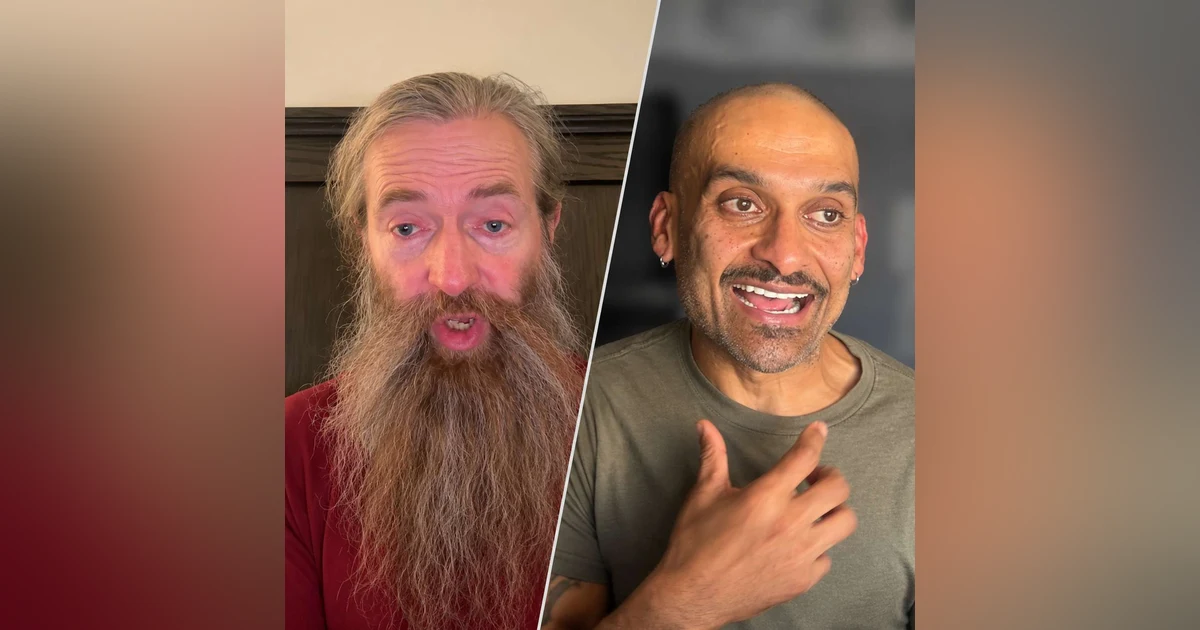

What do laboratory mice, Kim Kardashian and Joe Rogan have to do with the future of human aging? At 48, I'm not particularly interested in living forever. What I care deeply about is having another 30 or 40 years of vitality and joy, and being physically capable of pursuing the adventures I still dream about. That's why this conversation with Dr. Aubrey de Grey resonated so deeply with me. One of the pioneers of modern longevity science, Aubrey is the co-author of Ending Aging and co-founder ...


What do laboratory mice, Kim Kardashian and Joe Rogan have to do with the future of human aging?
At 48, I'm not particularly interested in living forever. What I care deeply about is having another 30 or 40 years of vitality and joy, and being physically capable of pursuing the adventures I still dream about.
That's why this conversation with Dr. Aubrey de Grey resonated so deeply with me.
One of the pioneers of modern longevity science, Aubrey is the co-author of Ending Aging and co-founder of the LEV Foundation. Long before longevity became fashionable, he was challenging our assumption that physical decline is an inevitable part of growing older.
Today, he believes we have a 50 percent chance of achieving longevity escape velocity by 2040. But what does that actually mean for those of us alive today?
As Aubrey puts it:
“I don't work on longevity. I work on health. Longevity is a side effect of health.”
Connect with Aubrey and support his research:
- LEV Foundation: https://www.levf.org/
A note to listeners: This conversation explores the frontiers of longevity science, where much of the research is still evolving. As always, I encourage you to listen with curiosity and an open mind. This episode is intended for educational purposes and is not a substitute for medical advice.
Marek Health: Deeper look at your health with comprehensive bloodwork and personalized guidance. 10% off with code AGELESS at https://agelessathlete.short.gy/marek
Support The Show Love the show? Here’s how to support it https://buymeacoffee.com/agelessathlete
📺 Full video episodes on Youtube for free
Ageless Athlete is a podcast about healthy aging for people who want to stay strong, active and capable for life. Conversations explore strength, endurance, mobility, recovery, VO2 max, muscle and bone health, and what it takes to keep doing the things you love as you get older
Ageless Athlete - Aubrey De Grey
===
[00:00:00]
Kush: Do you have a morning routine or practice that you care to share?
Aubrey de Grey: A little bit. first of all, I should mention that I do travel a lot,of course my morning routine, if I could have one, is disrupted by that. But when I'm home, uh, yeah, I guess my main aspect of my morning routine is I make a large mug of instant coffee and I go to my hot tub and stare at the sky for a while
Kush: Okay. Aubrey, there are people who are not familiar with your work.
Aubrey de Grey: Yep
Kush: what you do?
Aubrey de Grey: Oh, that's pretty easy. so I work on the biology of aging. I'm not in favor of aging. I think it's a shame that people get sick when they get old, and I would like to fix that. And so my work involves, doing research or overseeing research that will bring that about. In other words, that will develop medicines which stop people from getting sick when they get old.
I also do a great deal of advocacy work. I do [00:01:00] probably 100 podcasts a year. I do a, a great deal of public speaking and so on, in order to hasten that development by improving people's understanding of this work and thereby improving people's appreciation that it's a realistic goal, something that we can actually achieve in the foreseeable future
Kush: Let me begin with a really basic question. How do you define aging?
Aubrey de Grey: Well, that's a basic question in a way, but you're quite right to begin with it because it's a question that people have different answers to, which is crazy. I mean, it's been the number one preoccupation of the human race since the dawn of civilization, if not before, and yet you'll get different answers even from experts.
So yes, very correct to start there. I use the following definition of aging. I say that it's the combination of two processes. First of all, there's a process that starts before we're born even. It goes on throughout the whole of life, which is that the [00:02:00] body damages itself as a consequence of its normal operation.
And this, of course, is no different from aging of a car or an airplane or any simple man-made machine. Any machine with moving parts, whether it's alive or not, is going to, inflict damage on itself as a consequence of its normal operation, and the human body is no different. We make-- Th-there are various changes to the molecular and cellular structure and composition of the body that occur as side effects of our normal metabolism.
So that's the first process. The second process, again, is just like it is in a car or an airplane or whatever. It is that late in life, the total amount of damage that the body has done to itself starts to exceed what the body is built to tolerate. Up until that time, throughout early adulthood and so on, you know, it's fine.
Basically, the body is built to tolerate the amount of damage that it has, and so you have no significant decline in function, either physical or mental function. [00:03:00] But eventually, you've got more damage than that, and that's when things start to go downhill. And eventually, we've, we exhibit the, um, diseases and disabilities of late life, and eventually we die.
So that's all that aging is. It's the combination of those two processes, the lifelong accumulation of damage and the late-life decline in function that results from having too much of that damage
Kush: Aubrey, you are correct that, we have been preoccupied with aging for the longest time. it's somehow in the and foreground all at the same time. You have devoted your life's work towards aging, and you mentioned that a lot of your work also requires all this advocacy, including a voluminous number of podcast appearances. So to me, there seems to be a little bit of a, dichotomy here. So as, if humanity is this concerned about aging, why does it require so much campaigning from you
Aubrey de Grey: so right. [00:04:00] so right. It's a very big dichotomy. I normally call it the pro-aging trance. Essentially, what it comes down to is that almost everybody is so terrified of aging that the only way they cope is by tricking themselves into thinking that they're not terrified at all. And there are essentially two ways of doing that which kind of interlock with each other.
One way is to pretend that aging is somehow magic, that it's something that's off limits to medicine, which i-it can never, even in principle, be addressed by medical research and medical progress. And the other is that aging is some kind of blessing in disguise. You know, that somehow th- if we fixed it, we would have other problems that would be even worse than the problem of aging.
And both of these attitudes are completely irrational, but they are extremely hard to shift because, you know, we've had thousands of years to get very good at thinking in these ways in order to put aging out of our [00:05:00] minds and get on with our miserably short lives and make the best of it, rather than, you being, preoccupied by this terrible thing that's probably gonna happen to us in, in the distant future.
It kinda makes sense. I used to call it rational denial, because, you know, you don't wanna spend your life being preoccupied by something terrible. and it made perfect sense until I came along, basically, because until I came along, we didn't have a plan. We didn't have any idea how we would go about developing medicines that would bring aging under truly comprehensive medical control.
And if you don't have a plan, then of course you have no idea how soon the thing is gonna happen. So you might as well, you might as well assume that it's gonna happen, you know, only a thousand years from now, you know, after your, after your, after it's all ha- after you're gone. Um, so it was only when I came along and started pr- and presented an actual concrete plan, which has of course become progressively more concrete over the years, um, that this started to be irrational, that it started to make no sense to think this way, and it was necessary [00:06:00] to break out of the pro-aging trance and, treat this thing as, you know, a proper problem, the way we treated COVID like, um, seven years ago. and indeed, my favorite slogan these days is that we must start to treat aging as the new COVID. The difference, of course, is that COVID was a new problem, um, and, you know, we were not in favor of COVID. We decided to fix it quickly, and we did. whereas aging is an old problem. There isn't a... There was never a thing called the pro-COVID trance.
Kush: That's a very interesting framing, aging as the new COVID. COVID did get us humanity into a frenzy, and, managed to develop this and that vaccine, along with possibly other, biosocial interventions or changes, have led to some, least some, management of COVID. I know that I'm jumping ahead here.
Do you think such a vaccine for [00:07:00] aging-related decline is in-- is available to us in our foreseeable future?
Aubrey de Grey: Let's be a little bit careful about the use of the word vaxi because that has a technical meaning in medicine. But if we slightly broaden your terminology to say, is there a prospect of preventative medicine for aging that can be applied to people who are not yet exhibiting much age-related decline, and is that likely in the foreseeable future, then absolutely I say yes
Kush: Okay, great. we'll come back to that one. Aubrey, I wanna understand a little bit about how you this field
You didn't start your career studying aging. Was there a specific event or something else that made you realize that this was a problem you wanted to devote your life to?
Aubrey de Grey: Absolutely, there was. so I, so there was no specific event that told me that aging was a bad thing. I [00:08:00] just... Nobody ever told me it wasn't. It was obvious to me that it was a bad thing. Um, but what was not clear to me, what I had no idea of, was that other people thought differently. Um, I had totally assumed that biologists would be working on aging, and you, you didn't hear much, but hey, you know, really hard problems, so the progress was slow.
And so I chose, in my early years, to work on a different problem. the problem of work. The fact that people have to spend so much of their time doing stuff that they would not do unless they were being paid for it. Um,uh, so, you know, I decided to work on that because I started programming when I was 15 years old, and I found I was pretty good at it. So I thought, well, you know, what big problem for humanity can a good programmer, contribute to? And I thought, well, okay, yeah, let's work on that. You know, let's work on artificial intelligence research. So that's what I did. I did my undergrad degree in computer science. I worked in AI research for several years.
about seven years.
this was way back in the 1980s when, AI was... AI research was a completely different thing than we know it today. [00:09:00] But yeah, that's what I did. And during that time, I was going-- It was going pretty well. I was perfectly happy with how my research was proceeding.but during that time, I met and married a biologist. Um, and she was a lot older than me. She was already a full professor at UC San Diego, in fact, and she was in the UK on sabbatical. And through her, I, first of all, I accidentally learned a lot of biology. But second of all, I, um, gradually, after a couple of years, began to realize that she wasn't interested in aging.
And I would ask her why, and she would basically not give good answers. She would say, "Well, it's not my problem." and I would say, "Well, it kind of is. You know, you're gonna get old like the rest of us."and that would not convince her. So... and and I rapidly discovered that other biologists thought the same way, and there was hardly anybody working on aging, and the people who were working on it weren't doing it very well.
So I thought, well, that won't do. And I was in a fortunate position where I was able to switch fields, so I did
Kush: And Aubrey, okay, you found this, this huge problem, and you went on to have spent the last several decades [00:10:00] working on this. I thought I would jump ahead a little bit and ask you about, something which is, uh, more,clear and present to people listening, which is, uh, of us accept that as we get older, our bodies become weaker and less capable. How much of that decline is actually inevitable?
Aubrey de Grey: Well, um, yes, you're quite right. Most people accept it. That's what I was saying earlier about, uh, you know, thinking that it's some kind of magical, magically off limits to medicine. but, of course, when I say it's not off limits to medicine, what I mean is that none of it is inevitable. Plenty of it is inev- I mean, the aging is certainly inevitable in the absence of medicine.
In fact, it's inevitable in the presence of today's medicine. But I believe that medicines that are necessary to bring aging under comprehensive medical control are within reach, you know, in a in a ma- in a matter of a decade or two
Kush: [00:11:00] Okay. In a decade or two, So what exactly will those medicines or those interventions accomplish?
Aubrey de Grey: Damage repair, basically. So as I-- So if we go back to the definition of aging that I gave earlier, there's these two parts, right? And, so geriatric medicine, what we have today, directly trying to take people who are already sick and keep them going, you know, that's basically not only is it not ideal because people are already sick and they're not enjoying their lives as much as they used to, but also it's hopeless.
There's no way it can ever, achieve very much because the damage that is these d- this decline, these diseases and health conditions, is continuing to accumulate. So inevitably, anything that, you know, tries to address the consequences of the damage is going to become progressively less effective as time goes on. now, slowing aging down sounds good, slowing down the accumulation of damage. In other words, essentially making the body run more cleanly, if I go back to the analogy with a simple man-made machine. but there it turns out [00:12:00] that it's just non-starter, that the creation of damage is just too inextricably intertwined with all the things we need our bodies to do to keep us alive from one day to the next.
So you just can't appreciably slow down that process.so the big innovation that I came along with, the big eureka moment from twenty-five years ago now, that, we had a third option. Namely, rather than trying to slow down either of the two processes, we could kind of, separate them from each other. We could uncouple them so that, even though damage is being generated at the normal rate, it doesn't become abundant enough to make us sick. And what that means is preventative medicine. It essentially means preventative maintenance. Let's put it that way.so if we repair these various types of damage at the molecular and cellular level as fast as they are being created, then we will never reach the, amount of damage that makes us sick, and that, that is how we're going about this.
Kush: When I hear of preventative medicine or maybe [00:13:00] broadly preventative healthcare, my mind goes to these,goes to how society tends to... Or medical care in this country, in the US, tends to, distinguish between, reactive care versus preventive care. And I think rightly so, that people seem to be upset that our healthcare, for all kinds of reasons, is so focused on that reactive care. So now in, in the zeitgeist, when we hear about preventive care, we think about interventions such as, healthier eating, such as, manipulating one's environment to some degree, interventions such as exercise,
uh,
Aubrey de Grey: Mm-hmm.
Kush: family routines, those kind of ha- kind of habits. But I think you are talking about something maybe a little bit different
with preventive
Aubrey de Grey: You're so right. You're so right. There is a
Kush: let's hear...
Aubrey de Grey: difference between preventative care-- yeah, there's a huge difference between preventative care and preventative medicine. Prevention at the level of lifestyle and diet and so on, is something [00:14:00] that is a, is not a hard sell. People basically understand that these are things that are good ideas.
of course, it is a hard sell when you actually want people to implement these things because there's a, you know, a quality versus quantity trade-off there in the sense that there are plenty of things that people li- that a lot of people like to do that are bad for them, whether it's smoking, whether it's, you know, eating fast food, whatever. Um, and, so it's understandable that people are resistant to that kind of thing. Um, but the general principle that prevention is better than cure is not disputed. Everyone kind of goes along with it in principle. So then we have to ask, what's so different about preventative medicine? And the answer is very clear.
Preventative medicine is a really hard sell not becau- uh, even though it does not have the quality versus quantity trade-off that I talked about, the reason it's a hard sell is because people are really bad at reasoning about uncertainty. And so they [00:15:00] will always focus on the, um possible downside of something, fixate on it even, even when the probability of that downside is tiny.
So if you've got a microscopic chance that this or that medicine will make you sick when you're not yet sick, that kind of i-is front and center of one's mind at the expense of the enormously higher probability that the medicine will stop you from getting sick in the future. And, um, you know, um, it's just really hard to fix that.
So if we look at t-today's medicine, there are really very, very few medicines, successful ones, that are truly preventative, and they kind of always got in by the side door. So if we look at statins, for example, they started out being treatments for people who already had, uh, you know, diagnosed heart disease.
And it only happened very gradually and because, you know, a few people were in the right place at the right time, in terms of regulation, that things would move, things moved, into a more preventative state where they are now. Similarly, if you look at GLP-1s, [00:16:00] for example, you know, GLP-1s are clearly preventative for a number of age-related conditions, and there are clinical trials going on right now to, you know, to make that even more certain. Um, but the reason they're so popular is not because they're preventative at all. It's because they are treatments for something else that we don't call a disease, but that people don't want to have, namely obesity. Um, so, you know, prevent-prevention is a really hard sell, and the worst of it is, it's a hard sell in the medical community too. So, you know, thousands of years ago, um, there was this guy called Hippocrates, and he came up with this statement that said, "First, do no harm." Okay. No probabilities in there. Just first do no harm, right?which is synonymous with the statement, preventative medicine is a bad idea. You know? 'Cause you can only do harm if someone's not yet sick, because harm is defined as making somebody sick, giving someone a disease that they didn't yet have, right? Um, and, and you can't remove a disease from somebody who doesn't have any. You can't have a negative number of diseases, right? [00:17:00] so um,
Kush: Hang on.
Aubrey de Grey: so yeah,
Kush: sorry.
Aubrey de Grey: there's a-
Kush: so when, that's what was said, first do no harm. But i- isn't the corollary of that is do harm. I mean, I don't think that's correct, right? So the, Hippocrates is saying, don't do harm," but he was also ... I don't think he was saying, "Don't do good."
Aubrey de Grey: He was saying, "Don't try to do good if there is any chance that you might unintentionally do harm
Kush: Fair. Okay. yeah, I interrupted
Aubrey de Grey: No, no, that's-- okay. So basically, there's this prejudice in the medical profession, 'cause that statement, first do no harm, is the first thing you get taught in medical school, right? Um, there's enormous bias in the medical profession against preventative medicine, even though everybody knows that it's really what we want. Basically, what we want is to kind of skip the novelty and uncertainty aspect and have medicines go from not being used at all to having been used so much that their safety profile is completely clear, and there's no chance whatsoever of doing any harm with them. And of course, you can't do that. You know, everything is new for a while So if we come back to [00:18:00] COVID for a moment, um, of course, with COVID, what happened was, you know, humanity wasn't in favor of COVID and g-governments just treated it completely differently from how they treated everything else. They just completely swept aside and tore up all of the regulatory inertia and, you know, bureaucratic slowness that exists around, medicines generally and just got the hell on with the job.
And the result was that we got vaccines developed and globally distributed in less than a year. Now, I don't know if you know this, but, prior to COVID, the fastest that any vaccine for anything had ever been developed and globally distributed was ten years. So an entire digit was taken off the speed.
Now, of course, the result was a lot of corners were cut, and there have been side effects. Plenty of people have suffered from the side effects of these vaccines. No one's gonna dispute that. But the number of people who benefited, whose lives were saved, was vastly greater than the number [00:19:00] of people who were harmed.
So... And that's how medicine ought to be. There ought to be an actual quantitation of the risk-benefit ratio, and in general, that just doesn't happen. So when I say I want to us to make aging the new COVID, that's what I want. I want medicines to be developed at warp speed because they can
Kush: Aubrey, I wanna go back and talk about another foundational concept. What is longevity?
Aubrey de Grey: Good question. Um, not quite such a good question as what is aging, but nearly, because the word longevity has kind of taken over as the kind of, um, uh, the default word that everybody uses when they're working in any of these spaces. And that basically is because it means what you want it to mean. It means different things to different people.
It's kind of catchall, so it can sometimes mean health span, it can sometimes mean lifespan. It can sometimes be talking about an individual, sometimes it can be talking about a population. sometimes it can be talking about medicine, sometimes it can be talking about lifestyle. And [00:20:00] maybe that's kind of a good thing that we have this catchall word that just like-- because it means that when somebody does want to be precise and to be clear about what they're talking about, they have to say more.
They have to say, "Okay, I'm talking about the period of good health," or, "I'm talking about the period, the total length of life or the average life ex- li-lifespan population." so yeah, longevity is a kind of meaningless word because it means everything.
Kush: Okay. Yes. is this catch-all term. let's talk in terms of maybe some terms that people do actually use and might be more specific, might be not. So gonna,uh, initiate this, this thread, which is when it comes to human lifespan, over the last century, we've already had massive changes, of progress, and life expectancy today is vastly different than it was... I'm not sure what the, the, the turning point was, but going back, let's say, 100 years, we are-- we have moved vastly [00:21:00] beyond that. Given that we have made strides in our lifespan why is it important to or accelerate our focus on extending lifespan further?
Aubrey de Grey: Well, so first of all, let me answer that question by saying it's the wrong question. because I don't work on longevity. I work on health. Lifespan is a side effect of healthspan. If y- the healthier you are, the less likely you are to die overnight right? and today, the overwhelming majority of how people get sick is by having been born a long time ago.
It's because of aging. Of course, that was not true 200 years ago, 200 years ago, even in the wealthiest countries in the world, more than one-third of babies would die before the age of one. So whe- the, the, increase in average longevity that we have seen across the whole Western world, and of course also in the developing world now, [00:22:00] is entirely because we figured out how to address infectious we're first of all just figuring out that hygiene was a good idea, um, and then, you know, carrier control like mosquito nets, and of course, elementary, what we would think of today as elementary types of medicine like antibiotics and of course vaccines. Um, you can only do that... Y- you can only fix a problem once.
Once it's fixed, it's gone. And so now hardly anybody in the West dies of infections, ex- unless they're already so old that their immune system is, um, messed up because of aging. and in the developing world, as I mentioned, you know, the same is true, that everyone's catching up. You know, the average lifespan across the whole world is now, uh, some- about 74, if I remember rightly.
There's not a single country, even in sub-Saharan Africa, that has a life expectancy less than 50.you know, so aging is now the number one cause of sickness, even in the poorest countries in the world. yeah. So, um, when you ask the question, why should we continue? The answer is because we can, [00:23:00] and because when people get sick, it doesn't matter how long ago they were born, we still don't like it.
You know, people don't like to be sick themselves. People don't like their loved ones to be sick, whether or not they care about the side effect of people dying as a result.
Kush: I appreciate that nuance. I think a lot of people miss that, that the causes for morbidity in the past different than causes today, again, in the industrialized world out there. Yes, we are not dying of, infectious diseases or let's say more easily preventable causes. We are dying because of other factors that come into play. So coming now to the present Let's directly talk about the work that you've been doing. I-- or let's say you caught my eye when I heard this catchy term that's associated with you, Aubrey, which is escape velocity or LEV. What exactly does that mean?
Aubrey de Grey: So longevity escape velocity is a concept that [00:24:00] arises directly from my realization twenty-five years ago that, um, the most efficient, most promising way to deal with aging is by damage repair. Damage repair means reducing somebody's biological age, uh, reducing the amount of damage in their body. And, what that does is it buys time.
If you've got someone who's, let's say, sixty and you, repair even half the damage in their body, you might take them back to biologically forty, such that they won't be biologically-- Uh, they won't have the same amount of damage that they had originally until they're eighty. Um, so that's pretty good.
But it's particularly good in the sense that it buys time for the researchers like me, because in those twenty years, you know, that's a long time in medical research. There's a good chance that we will figure out enough improvements to our rejuvenation portfolio so that we will be able to fix some of the damage that we were unable to fix twenty years earlier. [00:25:00] And that means that when this person comes in, is eighty, they've got the same amount of damage they had when they were sixty. all the damage they've got, because we're gonna be doing these treatments as often as necessary, so essentially all of the damage they have in their bodies is gonna be damage that the treatments from twenty years ago didn't work on.
L-Let's call it the difficult damage. But now in those twenty years, we've figured out how to fix some of that difficult damage, so we can re-rejuvenate the same person and take them back to biologically sixty or fifty or forty again and, um, they won't be biologically sixty for the third time until they're, let's say, a hundred and ten or whatever.
So this is the-- this leads to this def-- this term longevity escape velocity, which is by analogy to gravitational escape velocity. It's the minimum rate at which scientists are going to need to improve the comprehensiveness of these rejuvenation treatments so as to stay one step ahead of the problem and keep the damage level of somebody who's always getting state-of-the-art treatments [00:26:00] down below that threshold that kicks off the functional decline
Kush: When we just spoke about infectious diseases and other causes of mortality,I just realized I, I- does that also cover, Abhridi, the other types of, ailments that seem to plague us, which particularly become, difficult to manage as people get older? So I'm talking about, I'm talking about things like cancer and things like heart issues and, diabetes. Does that also Where does that stand when it comes
to manage that?
Aubrey de Grey:
Kush: and then this, the work that you're doing, is that allied with that work? Or is this something that is different but equally important?
Aubrey de Grey: Excellent question. So it's a real, it's a real pity that society has chosen to give disease-like names to things like Alzheimer's disease, because these are not [00:27:00] diseases in the sense that infections are diseases. They are parts of aging that we have chosen to give disease-like names to. Almost all cancers are age-related, for sure.
They are part of aging. We should not be distinguishing them and saying there's some other thing, some magic thing called aging itself. That's the slippery slope towards, um, the idea that aging cannot be modified by medicine, even in principle. It's complete nonsense. All of these things are aspects of aging.
So the only real difference between what I and other people who work on the biology of aging are doing versus what typical medical practitioners are doing, is we are focusing on prevention. We are focusing on developing treatments that can be given to people before they exhibit these things that we call diseases of aging, so that they never get them at all.
and so it's just-- it's preventative medicine. That's what it is.
Kush: Okay, so what I'm hearing is that if your, your work and y- a- and your tribe's work, if that work hold and we are able to s- prevent, or I'm sorry, I'm using some [00:28:00] terms, prevent aging or slow down aging, those, those types of ailments that we call mental illnesses and cancers, we may be able to, if not entirely, get rid of them, but reduce their occurrence
Aubrey de Grey: I would say we will definitely be able to totally get rid of them. certainly, you know, resi- if we can reduce them, why not reduce them to zero? Because, you know, why wouldn't we? I mean, as I say, aging is not something that's magically off limits to medicine. We should be able to reduce our, risk of exhibiting any of these conditions to the same level that it is in young adults, which is indeed zero
Kush: okay, great. you spoke about this, multi-pronged approach towards,slowing down aging. Can you, enlighten us to what are the more promising elements of that approach towards LEV?
Aubrey de Grey: Sure. so first of all, absolutely right. The approach that I have been pursuing all this time is multi-pronged, [00:29:00] and it's kind of a contradiction in terms to say, well, something is multi-pronged, but there are some components that are more promising than others. That's kind of nonsense because anything that's mult-- Any, any divide and conquer approach to anything, you need all the bits. Um, so, uh, in fact, that is kind of what has, um, dictated my approach over the past 25 years while I've been overseeing an, medical research in this area and leading various, uh, nonprofit, um, charities doing this work. I have said, "Well, okay, we've got to get all these things working." And I look, and I see that some of them are more difficult than others.
And, sure enough, some of them are more p- more fashionable than others. People tend to work on the low-hanging fruit in order-- whether it's in order to make money quickly or whether it's in order to get lots of publications and get your next grant application funded. Not good, really. Both in academia and in industry, there's a huge bias towards the easier stuff.
And the more difficult stuff has to be done as well, and it falls by the wayside. So I've chosen to excuse me. [00:30:00] to lead organizations that are funded entirely by philanthropy precisely in order to avoid that thing. All I need to do is get people to trust that I know my shit and that I have, you know, a humanitarian goal that is valuable, and they'll write me a check. Um, and you know, I mean, I definitely haven't been able to bring in anywhere near as much money as I would have really needed to make financial resources not the rate limiter this. but I've brought in a lot more than anybody else has, so I can feel fairly proud of that, I guess. Um, but yeah, there's a long way to go.
And at this point, there's really two types of neglected area The area that I... the thing... The type that I used to focus on in my first two organizations, in the Thiel Foundation and Science Research Foundation, was the most difficult components of this whole portfolio, the diff- the types of damage that are more difficult to repair.
And so we had a number, a, a, a whole range of projects, [00:31:00] of research projects that we were working on in parallel that were kind of open-ended, trying to get these things working. that has certainly been quite successful, and a number of those projects have eventually, spun out as startup companies that are moving forward.
Some of them are in clinical trials now, so that's great. But then there's another thing that we have to take into account here. For any divide and conquer approach to anything in any branch of technology, um, you've got essentially two phases. You develop the components, and then you put them together, right?
and you get your overall result. Now, in engineering, by and large, the second part is the easy part. Once the components work, you can be pretty sure that the overall assembly is going to do the job. but in medicine, it's not like that at all because, of course, in medicine, what we're trying to do is manipulate a living organism, a system that we have a very, very poor understanding of.
And so you can expect surprises, bad surprises at that second stepso I've been desperate to get to the second step as quickly as possible, and now I'm finally there. In my current organization, LEV [00:32:00] Foundation, that's what we do. We take things that already work a bit in mice, and we stick them all together in the same mice at the same time, and the idea is to look for-- to, to develop an additive benefit. Um, the main way in which we measure benefit is straight up lifespan. It turns out that you can get a modest amount of, life extension in mice even if you start in middle age when the mice are already, let's say, one and a half years old. They normally live to about two and a half. Um, you can, uh, get a couple of months life extension in a wide variety of different ways, and so we are focused on putting these things together in the same mice to get a bigger benefit.
We believe that once we get enough benefit, that will be so exciting to, first of all, to the expert community and then to the general public, that we can genuinely turn aging into the new COVID
Kush: Where are we now with, with this, lifespan extension work with mice? What's the delta between getting to that critical [00:33:00] mass that you spoke about and today?
Aubrey de Grey: Where we are now, yeah. Yeah. So, um
The best way to answer that question is to talk about where we are today in a bit more detail. Um, there's a, there's an intervention that you can do in mice called calorie restriction. You basically just feed them less than what they would like, and that makes them live longer. And this was discovered a century ago, and it's been studied, a great deal, of course.
And we have some idea about how it works. But the point is, it does work. Um, now, people like eating, so, uh, you know, it doesn't seem like it would be a terribly attractive way to go forward with humans. Um, and for that reason, people were very interested in the idea of finding drugs that would, if you like, trick the body into thinking it's on calorie restriction when it isn't.
And sure enough, it turns out those drugs exist. Um, and the best ones, there's one called rapamycin that's quite well known, work almost as well as calorie restriction itself. Bingo. Fantastic. [00:34:00] Except for one bit-- little catch, which is that calorie restriction does not work worth a damn in long-lived species like humans. Um, very, very little effect. And of course, that means that the mimetics also... Th-th-these, these drugs also don't work worth a damn. So-
Kush: this, all of the science and the answer just comes back to this health trend around intermittent fasting
Aubrey de Grey: Yeah, nope. so, uh, so, I mean, I'm not against these things, whether it's intermittent fasting, whether it's the mimetics. They probably do extend health span a bit, but they are definitely not the Holy Grail. They will definitely not get anyone to live to 150 or anything like that. um, so, we need th- we need things that don't work that way.
We need things that work by damage repair. And those things, if they work in mice, they do have a chance of working in humans as well to the same extent. So that's what we're all after. Now, at the moment, we don't have anything in mice that beats calorie restriction. [00:35:00] And if you think about it, that's really quite embarrassing because we've-- as I say, we've had calorie restriction for a century.
We've known for at least half a century that if you start calorie restriction in mice, mi- in middle age, you can get about four months of life extension, and you can't get more than four months with anything else that we've developed ever since. Scientists don't like...
to say that because they don't like...
You know, it's not a good way to get your next grant application funded if you say you've made no progress for half a century. Um, so-- But the fact is it's, true, and every- everyone, it's the dirty little secret within gerontology. So if we can fix that, if we-- The, , the flip side of that dirty secret is that if we can fix that, if we can get eight months or 12 months by other methods, like by throwing a lot of things together in the same mice at the same time that are not calorie restriction mimetics, then, you know, suddenly everyone's going to immediately agree that we're in a completely different universe, and they're gonna start talking the way I've been talking since forever.
And in particular, they're gonna be willing to come out and talk about [00:36:00] timeframes for making real progress against aging and reaching longevity escape velocity in humans
Kush: Let me understand this. So you just said that some of these in-interventions in mice, they don't seem to apply to longer-lived species, and then we just spoke that, yes, the intermittent fasting thing, it's found that, yes, in humans it might improve health span, but not necessarily the number of years. what gives us confidence that even if you're able to extend the life of mice meaningfully from let's, I don't know, I don't know how the typical, strain of mice that you study lives, but let's say from, two years to two and a half years, that same thing will also, or similar things will also work for humans?
Aubrey de Grey: Yeah, very good question. so the simple answer is we know why calorie restriction works so much less well in long-lived species than in short-lived species. There's a very simple evolutionary, explanation. It simply comes down to the weather. In fact, when I [00:37:00] first described the answer to this question 20 odd years ago in a paper, I called it the unfortunate influence of the weather on the rate of aging.
Now, what aspect of the weather was I referring to? Simply the frequency of famines, and in particular, the relationship between the frequency of the famine and the length of the famine. Long famines don't happen so often as short famines, and that really matters for evolution, because what evolution does is it adapts, it optimizes our genome to the environmental-- to the variety of vi- environmental circumstances that we find ourselves in, right?
But it only does so for environmental circumstances that happen reasonably often. If something only happens every million years, it's just not important enough to evolution, so the, the machinery doesn't evolve. So we've ended up in-- Well, all species end up in a situation where they are optimized to [00:38:00] cope with famines that are six months long, or a year long, but not to famines that are 10 years long.
And that's all you need as an explanation for why calorie restriction works less well. Now, if we then look at alternatives to calorie restriction, if we look at damage repair, whether it's stem cell therapies, gene therapies for whatever, things like that, this-- that, that whole logic is completely not, not-- doesn't apply because it's got nothing to do with the environment anymore
Kush: I see. So got it. e-evolution stops or comes in the way when it , comes to extending human life with eating less, and it will take a long time to change that. Evolution takes a long time. But these other interventions, they may hold more promise,
Much more
Aubrey de Grey: much
Kush: okay, so I know we don't have a ton of time, but are there one or two interventions here that you think the rest of us should pay more attention to, which may come to market soon or may
promise
Aubrey de Grey: Certainly, But Certainly. So I mentioned [00:39:00] earlier some of the things that, my various research groups worked on over the years are now already in clinical trials. And indeed, there are some that have been worked on by other people that are in clinical trials. So let me just pick out a couple of, conspicuous examples.
One of them is Parkinson's disease. So obviously, that's the second most common type of neurodegeneration in aging.the underlying m-microscopic molecular and cellular cause of Parkinson's has been known for a very long time. It is simply the loss, the cell death of one type of neuron called a dopaminergic neuron.
And you have only a few of these neurons in the brain. They're all in one particular place called the substantia nigra. people have known this for a long time. They die,just basically because they do this thing making this neurotransmitter molecule called dopamine, and the chemistry of dopamine synthesis is toxic. So they kill themselves by that, doing their job. And they die at a much more rapid rate than other neurons in the brain. So, um, the natural thing to do is stem cell therapy, right? You stick cells in [00:40:00] that are kind of precursor cells for dopaminergic neurons, and they divide and differentiate to replace neurons that, are dying.
We have to do this because in the brain, you know, neurons do not have their own natural stem cells. You don't have natural, replacement of cells that die, of neurons that die. so people tried this 30 years ago or more, and it occasionally worked even back then.they had to-- they didn't know anything about how to manipulate stem cells in the lab back then before injecting them, so they had to kind of do hit and miss with cells isolated from what looked like roughly the right part of the brain of aborted fetuses.
This was a cl-clinical trial that happened in Sweden. Mostly, it didn't work at all because they just didn't get lucky with the right kind of cell. Occasionally, it did work, and when it worked, it worked spectacularly. People were completely cured of Parkinson's for like ten or 15 years.um, so, you know, people tried again, and they couldn't get it to work.
But now we know a huge amount about how to manipulate stem cells in the lab, so everyone's much more optimistic. And there are literally five clinical trials going on around the world right now doing exactly this, and everyone's very optimistic. [00:41:00] Another example, atherosclerosis. That's the number one killer in the Western world, right? Um, it's caused-- It's, again, the cause had been known for decades. It's just the accumulation in the major arteries, in the walls of the major arteries of, um, oxidized cholesterol. You have normal cholesterol is an essential molecule in the body. The s- the body knows e-absolutely how to, process it, how to move it around and so on.
Everything's great. But sometimes, cholesterol gets chemically modified into an oxidized form And the body doesn't know how to deal with that, and it's toxic. So this oxidized form, even though it's present at relatively low abundance, it causes atherosclerosis. And one of my research groups was able to develop a method for extracting and removing this stuff from the artery And, and again, that's now in clinical trials in Australia. So, uh, yeah. So, you know, we're getting there
Kush: Okay, great. yeah, two examples that people can relate to. Okay, so let me ask a simplistic question again. So I have heard you talk about [00:42:00] a timeline by when we might reach that. I think, I've heard you s-say that maybe the late 2030s. Are we still tracking to the
Aubrey de Grey: Yeah
Kush: where we might achieve LEV?
Aubrey de Grey: I believe we are. Now, of course, I always make very sure that, to emphasize that this is a probabilistic prediction, that I think there's at least a 5% chance that we won't get to LEV for 100 years. but I think we've got a 50% chance of getting there by 2040, yes
Kush: so it sounds like may involve like this multi-intervention approach. And okay, so It may not be as simple as taking, one drug or one injection or one type of therapy. It might be a combination. what will it look like? let's say we jump ahead to the future and we have this now, this thing ready now.
It's passed clinical trials. What will the average person need to then do to outlive aging?
Aubrey de Grey: chances are that the answer to that question will [00:43:00] change over time.
At first, there may be, for example, surgery that's necessary and that eventually is not necessary because the same thing can be achieved in less invasive ways. But by and large, I think we can say that most of these treatments will be delivered by injection, uh, by, uh, by in, you know, into the bloodstream. from the point of view of the recipient, the patient,that's pretty simple, even if the treatment itself is not simple. So I often like to use the analogy with the MMR vaccine. Um, now of course, we all know the MMR vaccine is not a vaccine. It's three vaccines, one for mumps, one for, one for measles, one rubella, that happen all to be delivered in the same syringe, right?
so I could totally imagine a s- situation in which we have 300 things in the same syringe, you know, a bunch of stem cell therapies, a bunch of gene therapies, and so on. Um, but it all seems quite, uh, just like one thing from the point of view of the patient
Kush: okay, so let's say we have this thing... So the, the late 2030s timeline, does that also include, this, the, the time it would take for clinical trials? And I'm also curious, what [00:44:00] does clinical trials really mean in this context? Does it mean that... people would not have aged so much, right?
So will it be
Aubrey de Grey: Mm-hmm.
Kush: somebody's
Aubrey de Grey: Yeah
Kush: their rate of s- cellular aging to see if it has measurably, slowed down?
Aubrey de Grey: Again, absolutely excellent question. You're very good at asking the right questions. so clinical trials as we know them today are a huge barrier to all of this. And indeed, when people-- when I give my timeframes of twelve to fifteen years from now for developing all of this, people often say, "Well, that's obviously ridiculous.
It takes fifteen years just to get one drug through cl- through the FDA." Um, so absolutely, my timeframes rely on the assumption that we will completely tear up everything we think we know about how to do clinical trials, just as we did with COVID. That's why I often use this analogy of making aging the new COVID.Um, yeah, we are definitely going to have to move society into a mindset where aging is a serious problem [00:45:00] that we are determined to fix as soon as possible, even if there are side effects. Um, and that completely changes the way That clinical trials are done
Kush: That sounds like a heavy lift, Au- Aubrey. Based on what you just talked about, what we just talked about earlier, given yes, given this age-old,fear, age-old
what aging is,
Aubrey de Grey: okay,
Kush: maybe
Aubrey de Grey: that's right. He didn't, he didn't have any legs
Kush: of,COVID-like, radical event we can conjure up to get
Aubrey de Grey: Well, but what-- You are 100% right. It is a very heavy lift. So the question is, why do I think we can achieve it? Now, um In order to answer that question, again, I have to go back maybe 20 years. 20 years ago, I was saying that there was one person in the world that we need to recruit into the longevity army, and then our job will be done, and her name is Oprah Winfrey.
I said this because, I said this because fact is, you know, when Oprah gets onto, on, on, [00:46:00] on camera and says, "Buy this book," everybody does. Now, I have no idea why, but it's an empirical fact. So I mean, Oprah's not as influential now as she was back then, but of course, we've got successors. We've got Joe Rogan, we've got MrBeast, we've got Kim Kardashians, and so on, right?
These are people, I mean, they're called influencers for a reason, right? Because people do what they say. And, um, and so my goal is to get them to come out and do a, do an Oprah on aging. Now, why do I think that is realistic? Well, first reason is that all of these people are already fascinated.
Well, not only that, but they're already fascinated by the topic, and they don't mind people knowing it. You know, Rogan's had me on his show twice. He's had David Sinclair on his show four times, I think. Um, you know, uh, Kardashians are, are out on Facebook talking about, you know, biological age clocks. Um, You know, MrBeast, same thing.
You know, so this is great. So the only thing that needs to happen is that those people need to take the extra step to go from [00:47:00] exhibiting interest in all of this and having people like me on their shows, to demanding a war on aging, to going out and telling the public, "Right, now is the time to save some lives, boys and girls."So what would it take for them to do that? Okay. And I think I know the answer to that question. What do influencers want? They want one thing. They wanna stay influential, just like politicians wanna get reelected, right? So, They don't wanna, make fools of themselves. They don't wanna, take a position and put their capital behind something that is crazy.
So they have to be told by their, you know, um, teams that the expert opinion on this matter is such that now's the time for them to go and get ahead of it, you know, and and start,and start, advocating rather than just being interested. And that's where the mice come in. 'Cause, you know, the public are, the public don't give a damn about mice, right?
Uh, they, I mean, they give more of a damn about mice than they do [00:48:00] about fruit flies, right? Because, you know, at least mice have legs and fur and stuff, and they squeak, right? Um, they can identify with them a little bit, right? Um- But they don't really care. And of course, Rogan doesn't care about mice either. But the people that Rogan gets on his show care a lot about mice. So, um, that's the point. the-- If I can do what I wanna do, namely double or treble the amount by which we can extend mouse lifespan relative to where we are now with four months from calorie restriction. if I can do that, my colleagues, who are all friends of mine, of course, in the expert community, will be willing to come out and do exactly what I've been doing for 20 odd years and giving timeframe predictions.
Probabilistic ones, of course, but still timeframe predictions about how long it's gonna take. They don't have to be the same as my predictions. The numbers do not have to be the same. They just have to be some number from each person, because then someone like Rogan can look at this and say, "Well, right, you know, let's improve this."
You know, one day of shortening-- of hastening of the [00:49:00] war on aging saves 110,000 lives. That's 30 fucking World Trade Centers, right? That's fairly easy to get behind if you think it's a realistic goal. So, um, and it doesn't matter which day right? Whether it's a day from, 15 years in the future or 50 years in the future.
So that's what I want. And the thing is, these are, it's a small number of people we're talking about,right? I mean, there's there's several hundred people that would be entitled to call themselves experts on the biology of aging. But out of those several hundred, there's like 10 who do what I do and do hell of a lot of, podcasts and stuff.
like if we have a threshold of, let's say, you do a general audience podcast or lecture more than once a month, right? Then there's literally 10 of us. And we're all good friends. We all know each other's positions very well. So it's totally doable. And all I need to do is get these mice.
Kush: Aubrey, honestly, this is giving me perspective appreciation for [00:50:00] the manifesto, this campaign that you have in front of you, because on one hand you have to work on the science, which I'm thinking is the most challenging part. But right next to it is just maybe as, almost as difficult, which is influencing these influencers to buy into, to maybe shift their narrative, shift their thinking to buy into what you're doing. Because this is not just a weekly book that Oprah is going to endorse or a daily post that Kim Kardashian is gonna put up. - if they're gonna put their muscle behind it, they also have to be bought in this is going to affect them personally so foundationally. just, as a personal anecdote, I was pushed beyond my own skepticism to try one of the newer peptides out there to see if they could help me combat some physical,physical stressors that I'm going through with some injuries. m- and many of these have been touted by the same type of influencers multiple times, [00:51:00] including the fact that they have tried them themselves and have found appreciable results. So I went against my own, against my own common sense, and I went and went through this, protocol And I'm almost done with my 50-day cycle, and I am disappointed to report that they did not make any noticeable difference So I can only imagine that even after you have some of these influencers bought in, it might still be the Sisyphean task to get the world. But hey, I, yeah, no,I'm coming from a place of, of admiration and hope
Aubrey de Grey: No, no, no.Well, thank,thank you. But, uh, but no, the, it's not quite as bad as you're saying because, absolutely if one can see immediate or nearly immediate benefits from something, then absolutely that's a much easier sell. But that just goes back to what I was saying earlier about preventative medicine in general being a really hard sell because you're not-- you haven't got anything to fix.
Now, the, the gerontology community has recognized this for a long [00:52:00] time, and the result is that there has been a big push, which is still continuing, to identify ways to test people better for example, it may not necessarily be that something allow-- something accelerates your recovery from some injury that you already had, but they may nevertheless shorten the time of recovery, so accelerate the recovery from an injury that you get after you took the medicines.
Now, thing is, you can't really do a clinical trial on that. You can't, like, hurt someone on purpose because, you know, there are ethical around that. but still, that's why thing matter because people, do-- there are lots of early adopters out there who do this or that thing, and do accidentally, get injured and they-- and you can ask, you know, how long did it take for them to so we can get this information. And of course, it's the same thing for the influencers. If the influencers go out there and say, "Listen, I know you may not be sick yet, but preventative medicine is a good thing, same as prevention in general is a good thing." I mean, we've already got that in the community.[00:53:00]
Uh, you may have heard of somebody called Liz Parrish, who, uh, a-acquired a bit of a platform by being... By subjecting herself to a couple of gene therapies a decade or so ago. Um, she has made the most spectacularly effective use of that platform, by, you know, being an advocate who, essentially sell-- uh, gives my message, but gives it in her own style, which is very different from mine.
You know, very much more of a heartstring-pulling style. and she's fantastic. you know, I am a huge fan of Liz. Um, uh, but the point is, um, she's... You know, she was in her 40s when she did this, and she didn't have anything wrong with her. And yes, I mean, it's a good thing that she still doesn't have anything wrong with her.
The, um, treatments did not do her any harm, but the point is they didn't do her any good either because she didn't have any good to be done. Um, but she is still able to go out there and give persuasively the message that, you know, this is the kind of thing that may do you good in the future.
Kush: Aubrey, to also understand this, which is that, many of the [00:54:00] people following the show and just the world at large, people let's say in their 40s, 50s. I think of 40s as the decade when people start having their reckoning with aging, right? And then they start listening to these conversations. yeah, just, broad term. But we have these populations who want to stay physically active for decades, right? me, this arbitrary number of like, 100, 110, 120, whatever number out there or beyond, it's theoretically interesting, but f- I'm more interested in preserving and enhancing the quality of life, even for me today at 48. So what could this type of, quote unquote "rejuvenation medicine" mean for our physical capability? So is there hope to even improve not just the number of years, but like the quality of those years?
Aubrey de Grey: So like I said, I don't work on longevity. I work on health. Longevity is a side effect of health. So absolutely. N-none of this quote unquote bullshit. The fact is this is rejuvenation, right? We are talking about taking [00:55:00] someone who is already going downhill, though they haven't necessarily got sick yet,and restoring them to how they were in early adulthood.
Not just in how they look, but also how they feel and how they function mentally and physically. That is what we are talking about. Just in the same way that a vintage car, you know, works absolutely as well as the day it was built, despite the fact that it was designed to last only a tenth as long as it has lasted
Kush: Sure. one, one more question on LEV, so fascinating. What might be the right age bracket for one to be in, if one is able to benefit from LEV whenever, let's say it appears, let's say again, in, let's say by 2040, if this thing was to appear and be commercially available, what's the, the maximum number of, number of birthday candles somebody can have to be able to benefit
Aubrey de Grey: Right. Yeah. Okay. So of course, we are h- talking here about biological age, not about chronological age.
And this is, to give another answer to your previous question, actually. Let's be clear. People do not care about the past. [00:56:00] People care about the future. People care about how healthy they are going to continue to be.
One's chronological age is a statement about the past. It's about how long ago you were born, right? It's nothing-- It's irrelevant. Doesn't matter how long ago somebody was born, they still don't wanna get sick, right? They still want-- don't wanna go downhill. So then to ask you, to answer your question, um, really it's better to think about how many years you've got left in you.
Some people are biologically younger at age 60 than others, right? the people who live naturally to 110, there are not very many such people, but they exist. you know, they were biologically 60 when they were 80 or 85, right? So it's like, it's what state you're in that will determine your ability to benefit from these rejuvenation therapies.
If you're at death's door, then probably not. Though, that will, even that will only be true temporarily because, of course, as the treatments improve, we'll be able to, you know, haul people back from closer and closer to death's door. Um, [00:57:00] and that's certainly, that's certainly the expectation. Initially, though, let's talk about biologically 60.
So that means the state of health that the average 60-year-old is in
Kush: Okay. okay, just so people are clear, simple terms, what's the difference between one's chronological years and one's biological years?
Aubrey de Grey: Right. So one's chronological years is obvious. It's how long ago you were born. You know, there's a thing called a birth certificate, right? Biological age means the state you're in. Let's call it the amount of damage in your body. So you're biologically 60 if you have the amount of damage in your body that is average for a 60-year-old
Kush: I haven't gotten don't have any read on my b- biological age. I think in some respects just, o- observationally.
Sorry?
Aubrey de Grey: fix that. y-you should fix... Y-you should fix that. That's not good. I mean, so, um, people ask me a lot about Bryan Johnson inevitably, right?I believe he's very much a net positive for the movement. A lot of people think he's completely fucking crazy, but, a lot of people also are inspired by him, and [00:58:00] he does a lot of good.
One of the most important things that he does is he says, "Don't do what you just told me you do." In other words, don't just neglect your measurement of your biological age. You should be measuring as much as you can. I mean, he spends two million dollars a year. I'm not saying do that, but two thousand dollars a year is fine.
You can get a great deal of information for that. you know, just by getting getting, getting a, some blood work done at Quest or wherever. it's, it costs almost nothing. and you find out a lot about what your problems are and what the problems are, what the problems are not. You know, 'cause everybody is different is the point.
Getting your genome sequenced, you know, it costs less than a thousand dollars, and you only need to do it once in your life because it doesn't change, right? I got my genome sequenced. I found out that I have a gene variant that predisposes me to have high homocysteine. Homocysteine is a molecule in the blood that you don't really want to have elevated.and, it turns out there's a, there's a well-known, uh, thing to do about that. You just take a particular variant of vitamin B12 called methylcobalamin, and it compensates for the [00:59:00] reduced activity of the enzyme encoded by this one gene. So, you know, I used to take zero supplement, vitamins, now I take one.
I mean, how hard is that? Cost me almost nothing, and, here I am. Everyone should be doing that kind of thing. Everyone should get their genome sequenced. Everyone should get their blood done once a year to see what state they're in, and of course, use whatever methods, whether it's a human being or whether it's AI, to figure out what the actual information means.
Kush: Aubrey, 100% behind you. I advocate for getting oneself tested regularly all the time on this platform. the one thing that I haven't gotten into, which is, some of these, again, influencers talking about getting a number on one's biological age
Aubrey de Grey: Yeah, okay. Yeah, so you're right to be skeptical about that. when I say that the definition of biological age is you have the amount of damage in your body that the average person h- of that age has, that's a definition, but it's not actually a particularly actionable definition because you can't measure the amount of damage in your body just [01:00:00] like that.
You can only measure different types of damage in different types of way, and sometimes you-- some-- and most of those measurements are very indirect. They're kind of proxies for real damage. So, you're quite right that the whole idea of a single number is in, as in, it, it, you know, has, has pros and cons.
It's better than not having a number, but it's not so good as having lots of different numbers for different tissues and so on. So yeah.
Kush: say
Aubrey de Grey: Yeah, that's it.
Kush: you know, when we talk about, that that turning point when th- when, the therapies that working on, they become available, and once biological age is,is in the right,bracket, in the right age bracket. So it sounds like there's no number to that age.
It sounds to me that what you're postulating is that people's health markers, which, exposed by their blood testing, exposed by their genome sequencing, those need to indicate one's ability to benefit from these, from the rejuvenation [01:01:00] LEV
Aubrey de Grey: Right. but that's kind of the op- that's kind of theopposite...of the op- it it's kind of the converse of what I'm saying because one's ability to benefit is determined by how young one is. So in other words, a 20-year-old will not benefit just because they've got a relatively negligible amount of damage in their body, so there's nothing to fix, in the same way that you don't take a brand new into the gara- in the shop, you know, the following day. Um, uh, if you're further along, if you're, i- if you've got serious diseases of aging, uh, you know, Alzheimer's or whatever, that's not to say you won't benefit from these treatments. What it is to say is that you won't benefit so much from those treatments when given on their own. However, people who are in that later stage of aging can very probably benefit from these treatments when given in conjunction with the sort of treatments we have today, um, that treat the diseases.
Now, those treatments basically don't work today because the damage, the [01:02:00] stuff that I'm working on, is still accumulating because we don't have treatments to repair it. But if you do two things together, then you can indeed... That's why, that's what I was talking about when I was saying in due course we will be able to bring people back from progressively closer to the brink
Kush: no, I think that deeply resonates because i- it sound- sounds like it's more than just a binary, bin- because
Aubrey de Grey: Oh yeah
Kush: one, one may not get treatments to be able to let's say, live a theoretical infinite number of years, one can still improve both quality of life and the number of candles. Aubrey, you have been in this world for decades.
You're deeply immersed in this world, right? And yes, these treatments are not available today, but what are some other simpler, more familiar lifestyle interventions, changes that you advocate for?
Aubrey de Grey: So I've got two things to say about that. First of all, I'm a PhD, not an MD, right? So I do research. I don't really consider myself an expert on what we can do today, whether with medicine or with lifestyle. There are plenty of other people who are, and that's fine. But [01:03:00] the second thing you know, there are two ways to extend your healthy life.
One is to do the kinds of things that you were just asking about with w- with stuff that's available today, whether it's lifestyle, whether it's medicines like GLPs or whatever. And the other way is to write me a large check so as to hasten the development of things that don't yet exist
Kush: Beautiful. people listening who believe in the work that Aubrey and Aubrey's team doing, if one is able... Yes, we will have links, Aubrey, to your foundation in the show notes.
Yes, p- please,
Aubrey de Grey: Thank you
Kush: at the minimum please follow Aubrey's work, and if you can, then please, be generous with other ways to help. Aubrey,
Kush:
Aubrey de Grey: I, I shou- I shou- I should I should make clear, first of all, small checks are we-welcome um, everybody can do something. It's so easy to hear me speaking like this and say, "Oh, you know, I don't have any money. I can't help." But everybody can help in their own ways. You're helping right now by having me on your show, right?
you know, anyone [01:04:00] who... Uh, like if you're a biologist, you can choose an area to work in that is impactful in this space. you're,Anyone can do advocacy, whether it's with their friends, their family, their, you know, their colleagues. Raising the understanding of this whole crusade is critical.
So everybody can do something. And everybody who doesn't know, what they could do,write to me. that's easy to do. You can do it from our from our website. you know, and I'm very well-behaved with email. I, uh, I tell people, I give people advice every day
Kush: Aubrey, what you've shared has been enormously clarifying in helping us at a minimum understand what aging is and separating different concepts that, that lead to so much noise. Or let's say, uh, not concepts, just the noise, and distilling some of that um, in, in a, in an easy to follow way. you know Bryan Johnson well, right? And Bryan advocates
Aubrey de Grey: I did.
Kush: or prescribes these, these, all of these different things that you're familiar with. What part of Bryan's endorsements get behind?
And what you choose, what Oh, I [01:05:00] don't
can ignore
Aubrey de Grey: well, I've already given one thing that I really get behind, which is measure as much as you can. Um, you know, that's really important. Second thing I would get behind is sleep, but not, not in quite the same way. um, this really comes back to what I was saying earlier about how everybo- everyone's metabolism is different, which means you can't, you can't decide what supplements to take or what peptides to take or anything like that just by reading a book.
You've got to know your own metabolism. So Brian cared about sleep a lot, and he talks about it a lot, and he's damn right that everyone's got to get enough sleep. which really, you know, calls into question why people have kids really because that's the most reliable way to not get enough sleep. um, but, um, you know, I, I, I could talk about kids for a long time. But anyway, the point is, Brian himself found that disrupting his sleep schedule was bad for his biomarkers. So he had a policy for quite a while, and he kind of slightly relaxed it now, but only slightly, [01:06:00] of never taking a flight that went across more than two time zones,
Kush: I remember
Aubrey de Grey: right?
Kush: Yeah
Aubrey de Grey: Now, that, that's pretty extreme, and I want to say is that is something that I believe does not apply to most people. Most people, they definitely need to get enough sleep o- on average, but a bit of disruption to their sleep schedule is fine. I'm a rather extreme example of that. I just don't get jet lag at all.
I fly long distance all the time. You know, and, and it doesn't bother me whatsoever. I just sleep when I'm tired, and that's that. Um, so, you know, I think, I think Brian goes a bit too far in his advocacy for sleep schedule. but the idea... the general idea of sleep, I'm totally behind.
Kush: Got it. So yes, um, the testing you support and the sleep you support, and uh, avoiding the
Aubrey de Grey: And honestly, I'm not, yeah, and honestly, I'm not particularly up to date on the details of his blueprint protocol
Kush: principally.uh, last couple of questions, Aubrey. a- and these are questions I like to ask everybody on the show. The first is, [01:07:00] what does society get wrong about aging?
Aubrey de Grey: I mean, that would take the next half hour, but I mean, I've g- I've, um, I, I've addressed a number of things already. first of all, society thinks that aging is inevitable and off limits to medicine. Second of all, they think that aging is some kind of blessing in disguise. Thirdly, they can't even define it.
You know, I mean, you name it. society gets everything wrong about aging
Kush: Okay, fair. Yes, and, and, yes, we have spoken about that in, in different ways through this conversation. Uh, and then last question: what does the term ageless mean to you personally?
Aubrey de Grey: Yeah, that's a popular word these days. well, I would like it to mean non-increase in biological age. In other words, staying in the same state of health however long ago one was born