#18 Built by Habit — Endurance, Consistency, and Respecting Limits
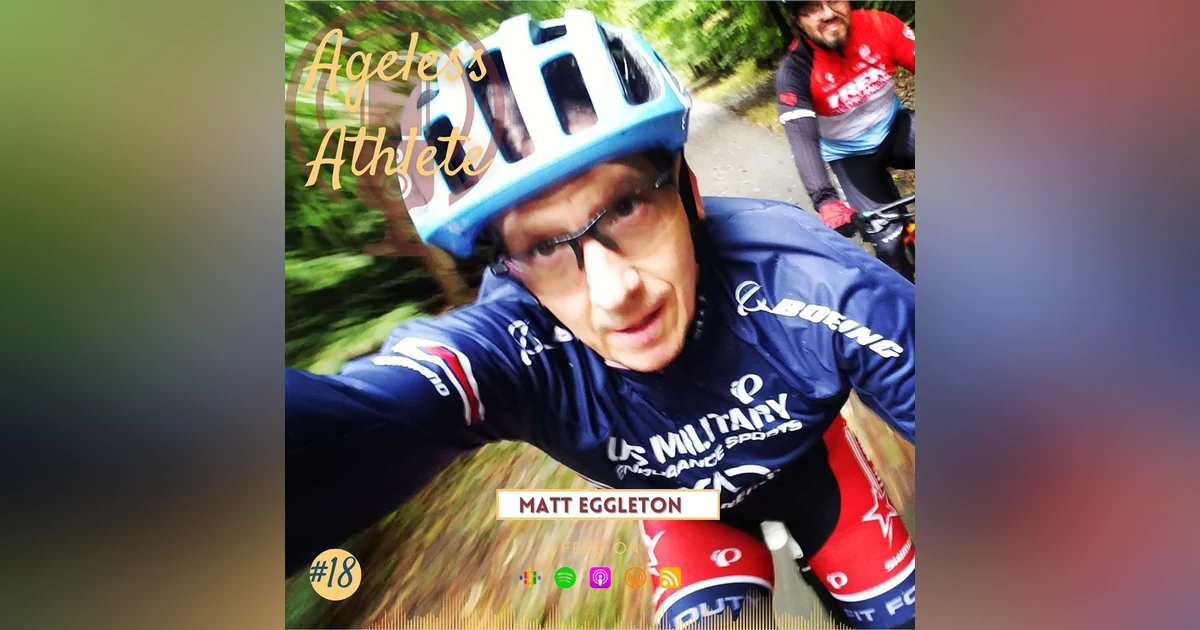

"It's not selfish to honor your ability 💪. While I can, I have an obligation to use my gifts and make my mark 🏆. Someday I won't be able to, so I'll make the most of the time I have ⏳." Matt Eggleton, a former US Air Force veteran and accomplished endurance athlete, challenges age stereotypes by dominating the world of mountain biking. Despite discovering the sport in his 40s, Matt's dedication and discipline have propelled him to achieve impressive results in competitive races across the ...


"It's not selfish to honor your ability 💪. While I can, I have an obligation to use my gifts and make my mark 🏆. Someday I won't be able to, so I'll make the most of the time I have ⏳."
Matt Eggleton, a former US Air Force veteran and accomplished endurance athlete, challenges age stereotypes by dominating the world of mountain biking. Despite discovering the sport in his 40s, Matt's dedication and discipline have propelled him to achieve impressive results in competitive races across the country. He's a 2x winner of the Stokesville Stoopid 50 (Smart 40, Master Men 50+) category, a 4th place finisher in the 2019 National Ultra Endurance (NUE) MTB Series Masters Division, and the Overall Winner of the 2019 Tour de Gravelly Masters Division.
We cover:
- Training regimens for mountain biking?
- Power of habit stacking
- Obligation to honor ones gifts
- Safety….“Only spend on a helmet what your head’s worth” 🤩
- Is yoga worthless for enduro sports? 🧘🏾
References:
Matt’s website: https://www.eggleton.net/
Matt’s Instagram: https://www.instagram.com/matt.eggleton/
---
🚀 Love the show? Here’s how to support it
If something you’ve heard here has stayed with you, made you smile, or helped you keep going, I’d be honored if you’d consider supporting the show. 👉 https://buymeacoffee.com/agelessathlete
📰 Subscribe to the Ageless Athlete newsletter !
1-2x a month, no spam. We share behind-the-scenes reflections, longevity tips, and athlete wisdom you won’t find anywhere else. You can sign up at https://www.agelessathlete.co/newsletter/ 📩
29:48 - [Ad] Resilience Podcast Series
30:12 - (Cont.) Built by Habit — Endurance, Consistency, and Respecting Limits | Matt Eggleton, 60
1:12 Folks welcome back to the ageless athlete podcast. This is a host Krish Condell. Well, Broadcasting from San Francisco, California. Bringing you stories each defining genre, defining adventure athletes. Doing extra ordinary things in the outdoors. It is gorgeous out. I did my physio this morning. Stretched. And can't wait to get outside in a couple of hours. Are you ready to be inspired? Today we have an ageless Mount biking, phenom. Matt Eggleston. At 59 years, young, Matt is defined age stereotypes by sending it harder than ever.
1:55 On the gnarliest, downhill and Enduro courses. But here's the surprising part. He did not even start mountain biking until his forties. From bracing, the pure stoke of very new phase two cultivating mindset, the laughs and the face of suppose H limitations. Throughout our talk. Matt do from his military discipline to drop wisdom on the mindset, training and habits for achieving mastery lead real life. We will tap into his deep develop, visit him on. Everything. From Mon biking, safety to training. At an elite level, despite the late start to habit stacking for continued self-improvement.
2:38 To savoring each moment in the wondrous outdoors. And hate. What's harder. Uh, running marathon or a modern bike marathon. Do unit. Whether you are a diehard Strader, or just looking to get more active maths, hard won insights, like spark your inner flame. And motivate you to get after it. Lace up those boots and get stoked. It's time for an inspiring download from the ageless. Mountain biking, phenom, Matt Egerton. I really appreciate you tuning in France. If you like the show. Please subscribe so we can. Continue to bring the goodness right to your Favorite podcast.
3:28 Matt, great to have you on the show. To start off, can you please tell us where are you right now? Where are you from? And, uh, what did you have for breakfast today? Hey, Kush. all right, Matt Eggleton. I live in Alexandria, Virginia, just outside D. C. in the D. C. metro area. This morning I had the same thing that I have almost every single morning for probably the past seven or eight years. I have some form of oatmeal. So today's oatmeal was a third cup of organic rolled oats with half a banana and a handful of blueberries and a little dab of maple syrup and a cup of coffee.
4:09 With a scoop of collagen. got it, I have a very similar breakfast myself. I'll sometimes, instead of the maple sort of thing, I'll, uh, add some kind of nut butter Yeah. Yeah. All of us need a good breakfast to fuel our day. So let's jump right in. Now you have tackled some pretty brutal endurance races. What's the craziest thing you have experienced out on the course? gosh, I think, you know, crazy things. I might have to come back to this if something later on, uh, sparks, but I think that the craziest thing is, you know, I've been in several races where I have mentally quit multiple times in the race.
4:59 And then ended up finishing and doing very well. for example, in a hundred mile mountain bike race, you might have five or six aid stations and I'll get, Not even to the first aid station and I'll say today's just not my day I'm not feeling it. I'm not feeling motivated. I don't know why I do this to myself and I said, okay I'm just gonna get to the first aid station and you know and then I'll ask for a ride back or something and then I get to the first aid station and Take a breath. Okay I'll go to the next one, and then I'll go to the next one. So there are, I can think of probably 10 races or more, but this is probably half the time this happens, where it's a mental challenge, more so than a physical challenge.
5:50 Um, and so I think that's probably a familiar scenario for people who do ultra endurance, uh, racing. Um, But it's it's what makes it especially interesting and especially rewarding when you complete it. I'm just learning about the, the, the world of ultra endurance mountain biking. I've, I've heard about it for many years and I'm, I'm completely fascinated. Would love to. Learn a little bit about what is the mountain bike race world all about, what are perhaps the different kinds of races out there in terms of, uh, distances, categories, which ones might be the most sought after, and then, yeah, also what is a, a normal mountain bike race versus let's say, uh, Weather.
6:48 endurance race versus an ultra endurance race. Yeah. Okay. Um, so I would say there's probably three, Yeah. Three primary forms of mountain bike racing. Well, I should say three primary forms of endurance mountain bike racing. Of course you have outside of that, you have, uh, you know, like downhill racing, we call it gravity sports. So it'd be like downhill racing or, um, uh, Enduro where you do a downhill and then you shuttle to the next downhill and then you do another, and it's, Timed like those downhill sections are timed in between the shuttles, uh, but in what I would say traditional mountain bike racing, you have what's called, uh, cross country, uh, Olympic style cross country generally is an hour, hour and a half long, uh, mountain bike race.
7:43 So you're, you're on red line the whole time, just pinning it, uh, full gas. For an hour, hour and a half, something like that. And that's, those are exciting. I mean, in fact, that is an Olympic sport. And so, um, one of the people that I would consider a friend and a mentor, uh, Tinker Juarez was at the very first, um, Olympics in Atlanta when, uh, the mountain biking was, was introduced as a Olympic sport besides, um, Olympic cross country, then you would have what we call, um, marathons. All right. So. Olympic XCO, Marathons XCM.
8:24 Those are generally 50 miles, a hundred K, something like that. Um, each of these becomes. Kind of a gateway drug to the next. Okay. So people often enter, you know, these hour long events. They can visualize themselves doing that, you know, mountain bike marathon of 50 to 100 K is, you know, going to be a good bit longer, maybe, Four, five, six hours, depending on, you know, the, uh, the amount of elevation. And so you might have somewhere between 6, 000 feet of climbing to as much as maybe 9, 000 feet of climbing in a hundred K race.
9:07 after that generally is, upper echelon would be the a hundred mile racing. And, uh, that's was really, really popular in the, um, like say 2010 to about 2020 COVID, uh, that took all racing. And in fact, all outdoor sports, I think really took a big hit from COVID. Um, but there's, it has recovered to some, uh, and there's still a lot of hundred mile mountain bike races, uh, every year, uh, primarily here in North America, And then there, there are some like epic events. There are some stage races where you might be out like, uh, like Tour de France is a stage race, right?
9:49 like that. Yeah, Uh, explainer helps us, uh, helps me and others get a little bit of, to speak into this, uh, into this world of mind biking, racing. What is the type of racing, Matt, that you specialize in? Are you more of an all rounder, but my sense is you go for like the, the long, gnarly ones and, and maybe how did you find yourself there? this is a progression that a lot of people experience but how I got into it pretty much the same way most people get into it. my daughter, uh, bought a bike, uh, with her own money, saved up her own money.
10:31 Bought herself a mountain bike, uh, thought it was cool, wanted to do it, uh, rode around the neighborhood, some local trails, and then encouraged me to join her. I had been a cycling commuter years prior, so I was, you know, I'd kind of stopped doing that and taken up other pursuits, but it was a great opportunity to spend time with her, so of course I did. I really fell in love with it very quickly and like everyth Like a lot of us adventure sports, people became obsessed with it. And while I was learning as much as I can and be on every internet forum group that I could find. And, you know, but then, uh, not long after that, maybe three or four years, she went off to college.
12:12 We found ourselves as empty nesters. I had all this extra free free time, right? Because I'm not shuttling her to her activities. And, uh, I just filled the gap with, with cycling and then training and signing up for my first event. And I was living in Germany when, uh, in Stuttgart, Germany, when I just finally decided I'm going to Being my first mountain bike race, uh, did that. So not only was I, you know, exploring a new sport, but I'm exploring a new sport where the whole registration and everything is in a different language, but, you know, navigated my way into that.
12:57 And, uh, And did my first two mountain bike marathons while I lived there also. And so that was, again, it was kind of a gateway into, um, when I knew I'd be coming back to the States and I, through YouTube and whatever, had discovered that there is this whole community back in the States for when I moved back, I want to get involved in. And that's exactly what I've done. Little did you know that when you introduced that, uh, bicycle to your daughter, that, in this, uh, brilliant turn of events. yeah, It will come back to you It's a big part of my life. I mean, it really, and I, I mean, it's a big part of my identity.
13:37 You know, I made a post about that yesterday. I signed up for one of our, you know, very prominent races and I, the post was it's because it's what I do. This, this is what I do. You know, I, I sign up for things that are scary and hard. I mean, I, I've done this race many times before. I know I can do it, but. It's very, very difficult. It's, uh, it takes a real commitment to prepare for it, especially if you want to do fairly well or do better than you did last time. Great. Many nuggets out of that, that I want to tap into later. One thing immediately is, uh, it's just your journey as you progress through the world of mountain biking.
14:23 I mountain bike a little bit myself. Uh, I don't aspire to race competitively, at least. What happened first? Did you start mountain biking recreationally? And at some point you realized you had the talent or is it that you were competitive in other sports in your life? And this was like some sort of, uh, uh, coming together of worlds. Uh, where does this begin? Mm uh, because I would, I would be very quick to point out. I don't necessarily come with a lot of talent. Uh, I, I did not, uh, I wasn't very lucky in the, you know, gene lottery.
15:08 you know, uh, any success I've had is, I think. through, uh, you know, determination, um, maybe even persistence. yeah, I was competitive even as a kid, I was always competitive playing street hockey out front. I grew up in Western New York in Buffalo. You know, so, um, basically football and hockey culture. Um, uh, so played a lot of those kind of sports, uh, growing up. uh, again, it wasn't, Particularly good at any of them, but they really always interested me. And I think I was more of a frustrated athlete than anything else. competed in some other, uh, endeavors in, in between then in cycling.
15:52 But, uh, I found that if I worked hard, I guess, again, this is, would have been the first couple of years. I found that if I rode regularly. And if I kind of put a little bit of structure and rhythm and routine into this, that I could, that I was quickly, um, quickly becoming more capable than some of the people I was writing with, you know, just again, through frequency of writing three or four times a week. and it's like anything you practice, the more you do it, the more you're going to get better at it. Right. I've found success, a little bit of, pride, a little ego boost, right.
16:34 And, um, and started to formulate and integrate this into my identity. so that, right. We, we pursue things that, where we feel we're, we've been rewarded to some degree, right. If you get to your first gold star, I want another gold star. I want another, you know, and so I, uh. A little bit of success resulted in, you know, more interest, which resulted in a little more success and more interest. One of my favorite maxims is success breeds success. sure. And it's kind of like my favorite class in high school was history. And it was because I had this great history teacher and I had little, I think, interest initially, but she was just so encouraging and she kept complimenting me on, uh, how well I was doing at class.
17:22 Somehow I just became really interested in history and I ended up like doing really well with the subject. So for sure, it's, it's good to feel one is getting some rewards to keep pushing us to the next milestone. How old were you, Matt, when you started mountain biking? So that's a fair, that's a good point, is I would definitely a late adopter. Right. So I was in my forties, I guess. yeah, I would've been, so this, it really took off for me in like 2009 or 10. I'd have been well into my 40s, maybe, you know, 44, 45, yeah, I just grinding away since, and again, no end in sight. can't envision not participating in this.
18:03 So. Matt, I can just see the fire in your eyes as you. Said the last thing! And how old are you now? So I'm 58. I'll be 59 this season. As cyclists, we often refer to our, my race age. My race age is 59. 45. you started biking your mid 40s. And it's funny how since I started this show, I am meeting more and more, let's say, remarkable seasoned athletes who, contrary to first impressions, Started their, their sports journey at, uh, at a later age by conventional, standards.
18:52 The thing that is, I think, badass about what you're doing is, as somebody who's dabbled in mountain biking, I know how difficult of a sport it can be. It is an enthralling sport. And I remember taking a little class. I hired somebody to teach me some basic, uh, basic, uh, Skills, jumps, whatnot. This is, I started this over COVID and he was this young buck, you know, maybe, uh, in his late teens. I just found him on some forum and he was trying to be patient and helping me learn how to navigate this, uh, in my opinion, uh, blue black, uh, type of, uh, downhill and it was scary and it was hard and I realized I don't have A particularly extreme bent of mind, even though yes, in some ways I do conventionally extreme sports.
19:49 I was talking to him and then I talked to other people and I, I started thinking that this is one of the sports like gymnastics. You have to acquire those technical skills and the muscle memory and some of those fundamentals early, but you are, you are, uh, breaking my thinking here. so if I were coaching you through that blue black trail, I would just take you through it three times a week, every week for 10 weeks. You know, it, just as you become more and more familiar with it, it's less and less scary. I was in a race this past Sunday there's a, what I think is a fairly technical downhill section, um, with, uh, a lot of loose rock.
20:33 Uh, and if you didn't know what you were doing, you can get hurt really bad. Um, and the first time I rode that was during a race, which is just nuts to ride it blind on a race day. And it scared the, it scared the dickens out of me. And I ended up like walking down most of it. And other people that I knew that I was. equally skilled or experienced with when they came, you know, bombing through there. And the difference was they'd been down it multiple times before. And so I think for me, the development of those skills and, uh, overcoming of fear is, Is, uh, just through not necessarily repetition, but through experience, just doing it and things like it more and experiencing it over and over and making it become familiar.
21:31 Uh, and, uh, right. We're scared of things we don't understand or we haven't seen before. And the more you become familiar with it, the less scary it is. And this hearing me say this to myself out loud is. Kind of coaching me to, you know, it, I have this constant reminder that I need to ride technical terrain more frequently so that I am more familiar with it, more comfortable with it. Uh, and I think like a lot of people, I end up, um, uh, resorting to what's most convenient. And, you know, that's just breaking out the road bike and going down the cycling path and, you know, going over to the park and whipping around four times and coming home.
22:14 When, in fact, What'll make me a better mountain biker is to ride my mountain bike more. And so it sounds so simple, but, familiarity, I think the key. it is indeed true that, some of this becomes self fulfilling prophecy. As we get older, people tell us, or we start thinking that we shouldn't be doing something because we're older and we can acquire those skills. And then the less you attempt those skills, the harder it's going to become for us to get good at them. So I certainly do want to tap into some of your learnings as a coach now, but going back to some of your beginnings, Matt, did you find a coach for yourself or were you self taught?
22:57 I would say I was mentored, um, by some very, very patient people. Um, and you know, the difference between a mentor and a coach is that, you know, a mentor will share what they have learned, um, whereas a coach will help you discover. I come from a very formal coaching background before outside of athletic coaching. I come from a leadership and performance coaching background. I do this at work as part of my job as well. when I say coaching, I think of it in the leading somebody through the discovery process and problem solving process. I had some really solid.
23:40 Mentors and very patient people who were willing to teach me and go through that learning and, uh, familiarity, um, with me and, uh, early in my, my mountain biking. Um, and again, I think it was, it was slow, right? It was just a lot of just riding the bike on gravel paths in Germany, which are everywhere, you know, the. A lot of Europe is just laced with these, you know, uh, fire roads and how they manage the forests. Right? you know, let me circle back on another point that you made. You discover how folks in their 40s start picking up sports on this.
24:22 I really believe this has to do with. often becoming empty nesters or children becoming more independent and it frees up a lot of time, people in their forties, fifties. I think have a little more flexibility in their schedule. I got a couple more dollars in their pocket to a little, a little bit more disposable income. these are now my talking points that I try to put on to race directors all the time that you really need to have more categories for 40 plus 50 plus 60 plus 70 plus, because you put those categories there, people will want to come. And you don't need to give them prize money. You just need to give them the opportunity to, uh, to have this experience.
25:08 Again, it might be simply there's, three women that show up in the 50 to 60 category. Great. Let's give them the opportunity to experience that, stand on the podium, take the picture, they post it on their social media. And what a rewarding experience that is. And, far too often, that opportunity is not there, I went off on a rant. It, it was not off tangent. You are right, right, uh, where the, the meat of this show is, which is about inspiring us to continue doing these things and to chase dreams.
25:48 which others may not think, uh, makes sense. ageism, I think, is certainly a part of society. Absolutely. that perhaps things are changing now because maybe, maybe in more mainstream sports, you do see athletes continue to excel at a later age. In some of our niche sports, it's maybe slower to come, but there are people setting an example, people such as yourself and others. I just think that, you know, People will see athletes do well in their 30s and 40s, but the recognition and the acceptance like opening up categories for like the 50s, 60s, 70s, I think those are yet to come, but, but hopefully those things are coming.
26:33 Going back into your race career, Matt. So let's see, you started, picked up biking, became obsessed in your mid 40s. so now you're maybe about 15 years or so into mountain biking. Love for you to share some of your, uh, apex moments as a mountain biker, whether it's racing, absolutely new racing, but maybe even outside of racing. okay. So my, uh, first mountain bike marathon was a milestone for me because I, you know, completed the first one I attempted. I was, um, And sorry, is the marathon again, is it, uh, in the same vein as, uh, as, as like running that?
27:14 Is it like 26 miles? There's a lot of online debate. What is harder? A running marathon or a mountain bike marathon? You know, it's all I, I might argue that a mountain bike marathon is, is far more difficult because it takes far more attention and far more focus for probably twice as long. a runner would say, well, you know, uh, running a marathon is very difficult on your body. You know, anything, once you pass that mile 20 point, it's just, now it's extreme mental challenge, extreme difficult, uh, on your body and it's a test of will. I think those are the same in our sport as well.
27:54 they're different. but mountain bike marathon is typically 50 miles to a hundred K. So I did my first one, in Munich, uh, Germany. And then I did another one that same year. So now I did two in one year. Then that would've been 2013 or 14. And then I did a couple more, and then I, next thing I know, I, I've done maybe like eight a year, and this is now 2017 or so. and in fact in 2016, I did my first a hundred mile mountain bike craze. but apex accomplishments generally happened in 2019.
28:37 I had a very successful year. Finish. I compete in this series called the National Ultra Endurance Mountain Bike Race Series, and it's a series of about 10 events across North America.
29:48 Uh, this year there's one in Spain as well that's included in this series, for years, it was if you, take your best four finishes of that series. And then you were, you know, ranked. And so in 2019, I finished third nationally in the master's category, which was 50 and up and I'm very pleased with myself with, with that, uh, result. I also won a gravel race out in Montana that same year. that was an interesting race and probably as difficult as any mountain bike race I've ever done because. It was a 57 mile race, but the first 40 miles of it is one single climb. So it's a 40 mile climb.
30:30 Then I think, yeah, then it was 12 miles to descend that same amount of elevation. And then it was five miles on the flat. So it was 40, 40, 12, five. So yeah, 40 going up, 12 going down and five to finish. So 57 miles. It's called the tour to gravelly. It's out of Ennis, Montana. It's part of the greater Yellowstone adventure series. So not only did I win the master's category, but I won, won the overall, I was the first one to cross the finish line. So that, uh, that was really, really exciting. 2019 was, was my banner year. and like we talked about earlier, Success, pre success.
31:13 I was all geared up, full go, all chips in for 2020. you know, I had made all kinds of logistics plans. I had bought a lot of new equipment. I had, uh, really prepared myself, uh, mentally very well and, coming into the 2020 season. And then, uh, I went to my cycling camp out in Tucson. I had a great experience out there in March. And. Maybe within three days of coming back from that cycling camp, the world just turned upside down. Very nice. Congratulations. yeah, Thanks. Mountain biking, again, is such an interesting sport.
31:54 I'm trying to put myself in in the picture of a mountain bike racer. Like I said, I'm on bike a little bit myself, very recreationally. And it's such a technically demanding sport. When I do some other, let's say, when I go maybe for a run or a road bike, I will have my, my headphones on and listen to music and podcasts. I found that I could not do that at all. You have to be so focused. So now you're racing In these, insanely long courses, like the one you described, and even longer, you have to keep your focus on, you have to, you know, look out for, your physical needs. Also for bikers around you, how do you manage the couple of things I want to ask you about, uh, the situation.
32:41 So one is managing some of the physical risk comes with mountain biking. I wonder, are you scouting some of these trails? Are you figuring out, you know, where you should navigate, how you should navigate? That's one thing. Secondly, I want to ask you, you are not the trail yourself. are crashes normal? Like, are you crashing people? You, how do you avoid those things? Some of, yeah, if you get my drift, that's kind of what I want to understand is like, what happens with managing some of these aspects? if some of my cycling friends see this deal, they'll say, oh, yes, he crashes because uh, for years, I, I crashed almost every ride I would ever, ever went on.
33:22 and in fact, I think there were years where I had at least one crash in every single race. now knock on wood, I haven't had any significant crashes this year, but I definitely became familiar with the emergency room, you know, uh, a lot of broken ribs, um, and I had a really bad, uh, concussion. Well, I've had two really bad concussions in the past 10 years. Um, again, I think it comes, uh, through preparation and familiarity. And that. Develops confidence because like you said, we are weaving through the forest. Um, and every single tree is reaching out and trying to grab your handlebar.
34:05 You know, um, every every rock is trying to slip its way underneath your rear wheel to kick it out. Um, every route is slippery or trying to grab your pedal. I've had that happen where you're, you're, you're, you're pedaling and. A route that's up off the ground will just grab that puddle. And it's like, uh, it's like a plane landing on an aircraft carrier. It just arrests you and you'll just. You'll just fly right over the bike. Um, yes, there are people and there are occasionally, you know, a little bumping or rubbing, you know, with, with single track trail is typically very narrow.
34:48 that said There's a lot of courtesy in mountain biking. There's a lot of, um, etiquette, it'll come naturally. If anybody's thinking about pursuing this and then, Oh, I don't really know what the etiquette rules are. It'll come natural. You just want to be courteous. So what happens to me very frequently is someone will come up on a long descent and say, Hey, can I get by? You know, yes, just a moment, you know, let me find a wide turn and I'll go extra wide. You take the right, I'll get in on the left. And so, there's not a lot of that in, especially in the, the longer events. In the, the shorter events, there's maybe a little bit more, well, a lot more aggression.
35:29 And there's a little bit more of like, maybe leaning into somebody next to you and, and things like that, which, again, through experience, it's, Um, you just become comfortable with, to, to your points about, uh, like danger or risk of injury and all that, I guess I, I don't, I don't find it much different than many of the other things we pursue, you know, I, I, we live in a dangerous world, right? We get in a car and drive 80, you know, 70 miles per hour down the highway all the time, and we don't think anything of it, you know, but we know that's one of the most common ways people are killed all across our country. Right.
36:09 Uh, you know, we eat food that we don't know where it came from, you know, very, um, and people get ill from. I think you have to kind of, um, categorize and weigh the risk, um, and, and then calculate. It, you know, is, is this risk I'm not willing to take. And I think experience definitely reduces that as you become more familiar with what the risk is and how to manage it. uh, but you had, uh, another point about concentration. I find that there's a lot of transferable skills, uh, between the work I do, uh, in the office.
36:53 You know, managing, whether it be managing budgets, managing people, managing projects and deadlines and things like that, as well as just having all those things going on simultaneously, you know, in a mountain bike race, I have many things going on simultaneously. I'm trying to apply a certain level of power, you know, wattage, uh, you know, in, into my pedals at some given point, I want to keep an eye on my pace. I want to keep an eye on where my competitors are, uh, you know, people that I'm targeting to compete with. I want to keep an eye on my surroundings, you know, like, is there someone coming up on me?
37:36 Am I coming up on somebody? So you're managing several things simultaneously. And I think of the, these skills, or again, I've used this word a hundred times already today, familiarity, it becomes, that, that chaos becomes familiar, you, you learn to prioritize and to. Sing, single out what you need to focus on in this moment, um, and let, let the rest of it kind of trust yourself and, and stay in that flow. Incredible indeed, how with practice and discipline, one can make very difficult things seem reasonable.
38:17 this. Three dimensional world that is mountain biking indeed that, you know, all kinds of hazards, but which also make for a very compelling experience. let me, let me interject one thing and try to soak in some of the beauty and wonderment of being outside. Yeah, I want to actually double down on that in a second. One kind of a bit of a pedestrian question here is with some of my mountain biking friends, you know, this, this question comes up about protective gear we should have on our recreation rides. I will go out with a simple, you know, MIPS helmet, I think. And then sometimes I'll wear pads, sometimes I won't wear pads.
39:02 I want to ask you what kind of protective gear do you have when you do this riding? What kind of protective gear did you either embrace or discard as you progressed through stages? MIPS helmet, very important for those that aren't familiar. MIPS, is a, technology within a helmet that is like a shell inside a shell. So, When your head hits the ground and twists, the helmet will twist and your head doesn't necessarily. the helmet costs 200 or more, only spend on a helmet what you think your head is worth, right? that's, that's a no brainer. You gotta have a MIPS helmet if, I think if you're, if you're going to.
39:45 Be pursuing mountain biking seriously. other protective gear gloves, I'd really think is absolutely mandatory. Um, and it has to do with crashing more than anything else. Um, anybody that's crashed a mountain bike with bare hands will, will tell you, you want to have gloves on. That's generally it for me. now when I go out like I say, scouting a new course, there are some, for example, the USA cycling mountain bike marathon national championship in 2021 and 22 was on a course, not too far from here in Maryland, uh, Gamble state park, very technical terrain, very dangerous. during the national championships, several people got injured very seriously, way more technical, challenging than I so I went out with, uh, knee pads and elbow pads, you know, um, the first several times, uh, that I wanted to learn my way through the course, learn the lines I wanted to take, and become familiar with it.
40:48 The first time I raced it in 2021, I did wear, um, knee pads and elbow pads, and I think I was the only one. And I'm like, okay, so, so this is what gives me the confidence to, to ride as fast as I can, as hard as I can, as long as I can. And then in the second year, uh, I, I, I had shed them by that point. Um, I didn't have knee pads or elbow pads, but I think for anybody starting out in you're learning a new course and trail. Knee pads, elbow pads, absolutely make sense. you will fall again. You, it's just part of the deal. It's, um, it's like saying, you know, you're not going to fall playing soccer.
41:29 You're not going to fall playing football. You're going to fall. It's part of, it's essentially part of the sport. Um, doing it smartly. minimizing it and, are important aspects of it, but it's, it's going to happen. So, yeah, helmet, knee pads, elbows, elbow pads, gloves. and then proper shoe, I think is important also. I see a lot of beginners not wear a good shoe. And when I say good shoe, meaning with a stiff sole and that's not so much protective gear, that's more about, um, just a pedaling efficiency as to have a very stiff sole, if you go out there and you're running shoes, you know, with a very flexible sole, uh, you're not going to transfer power efficiently into the pedals.
42:15 something like a skate, skateboarder shoe, you know, or the old school Chuck Converse, you know, uh, or Converse Chuck Taylors, uh, something like that with that stiff sole is even a better beginner shoe than a running shoe, silly as that sounds. Yeah, I have, uh, these climbing approach shoes made by 510 and I think 510 also makes, uh, smart biking shoes and I looked at those shoes and I'm like, you know, they're really similar. So I just do double duty with my, with my approach They probably, yeah, fine. So, where I am, I think they're totally fine. What about a full face helmet? As compared to what you read.
42:56 I'm guessing for racing days, it probably doesn't make sense. for, yeah, you know, I don't really know the full logic of, like many sports, you just kind of have what's the norm, and it's just not the norm in our sport to wear a full face helmet in downhill racing, for sure. Where you're really likely to get hurt bad, um, then, then, yeah, uh, I think this might also be a function of. You know, breathing and, uh, whether you, you run the risk of, your eye protection getting foggy.
43:37 Oh, that's another safety eye protection period that no matter what, I, there are a few folks that will ride without eye protection of some kind, but, um, but I've graduated to the point to where I generally ride with contacts, but I'll still wear eye protection. But getting back to full face helmet, there are some, you know, they have even some that are convertible where like the bottom part snaps off and I have a friend that, that wears those and I, uh, you know, he'll, he has it kind of like tucked in his pack or something, you know, and then for a real nasty long descent, he'll, he'll put that on that gives him the confidence, you know, that he can maybe, you know, be, uh, slightly more aggressive.
44:22 Okay. Whatever you can do to instill confidence is a positive thing, right? So, and feeling safe is going to instill confidence. Yeah, can't, can't say those words, uh, you know, too many times. Whatever one needs to feel confident and feel safe. And maybe, uh, uh, on the side of being conservative is, is probably a good idea. Now, this, this thing that you briefly mentioned it, which I'm really excited to ask you about is it is such a demanding sport on the body and the mind and the training and the grueling intensity of like the super long, Enduro races, you know, what is it that keeps you coming back for more?
45:18 And, and, you know, yeah, after all that training, hundreds of hours of like work, what do you get out of it? You, you talked about the, you know, the nature element. So we'd love for you to talk about that as well. anybody that studies wellness recognizes being outside is super important, right? just breathing outdoor air is important. Getting some sunshine on your face is important. putting yourself in, a new environment, uh, or a relaxing environment, unplugging that's all goodness, right? All that said, I don't necessarily do this for the purpose of getting outside.
45:58 I think it's a, it's a bonus. Um, I will go back to the competitive thing that not something. Um, it's just within me. That's just part of what who I am. but what brings me back every year, I think is largely the people largely FOMO fear of missing out. but I think the biggest thing is. honoring my ability, uh, and capability. And I have, I'm able to do this, therefore I'm going to do it. Um, there will be a point where I'm not able to do this anymore. and that day could be, that could happen this year, you know, that could happen next year.
46:43 but while I'm able to do it, I need to, I feel a need. Again, to, to honor that ability and that, um, that good fortune that I've gotten to this point in my life and have some resources to enable me, uh, so I, yeah, I feel, um, an obligation to myself and to the others who have helped me get to where I am to, to follow through with this, to continue to follow through with it. Until I can't anymore. it's, uh, almost an unselfish honoring, even though one of the external people is myself.
47:27 One of the people that I'm honoring is, is, is myself. And I'm not even sure how to unpack that. Respect It does actually make sense. You have this calling and there is this, this need to respect that calling. You of it. Yeah. Yeah. It's a respect for, I talk about this in my coaching all the time is respect. for yourself is, is, is the root of any degree of, of confidence and success, you know, is, is based on respect. We spoke about your racing journey a bit yourself. Yes.
48:07 And, uh, besides racing for yourself, you are also a coach, you coach other, uh, athletes. Do you think you are more talented as a coach or as an athlete? I think you mentioned you bring a background of training from your, uh, regular career. And I'm guessing those aspects help your, coaching in some way. And then do the two in front of the other. to your athletic performance and your coaching. Yes to all that. Um, so let me, let me tackle the talent one first.
48:48 I definitely think I'm a more talented coach than a talented athlete. And I think a lot of that comes from some of the things you mentioned earlier is, I am curious and introspective. And I genuinely want people to succeed. You know, I want you to succeed. I want anybody who lives near you to succeed. I want, I want all of us to succeed. and I do see it as my responsibility. to, in whatever way I can, as much as possible. I think I'm more, more talented as a coach. It is becoming an increasing percentage of my life every year.
49:31 There's only one pie and there's, you know, multiple different slices and the, the size of each slice changes every year. Right. I do spend more time on coaching and preparing for my coaching sessions, um, each year, um, I'm spending more time with that as well as developing training plans that are available, that make available circle back to the original part of that question. because I find myself as an athlete making, mistakes that I think, most coaches would pick up on immediately. generally overtraining, is my most common athletic, mistake.
50:12 training for the wrong reasons. Um, you know, not necessarily training to get better, but training so that I can crew more miles per week, and kind of, again, put the gold stars together than really what is best for my body. maybe not get the rest that I need. maybe put too many things on my plate that, uh, you know, a coach would. would. recognize. So, um, so yeah, I think my coaching then helps me regulate my athletic pursuit, my cycling, maybe it's too late, but I often find myself making errors and then correct, um, and adjust.
51:00 for sure the, um, my experience, having raced in a lot of places, you know, a lot of different formats helps in the coaching as well. But I think, I have a, a lot of my work experience helps in the coaching also is because I, you know, I've, I've been a supervisor of dozens and dozens of people, you know, maybe 100 people over the years. And I, work on problem solving with them all the time. And you, uh, you have to listen, you have to engage, you have to treat each, um, uh, circumstance as a unique.
51:43 issue. And so I generally think I do a pretty good job of, of focusing on, on the issue at hand and, and being creative in resolving it. there are many aspects of what's going on in my work life, my coaching life, my athletic pursuit, my family life. I think they all inform each other. the, the trick is to optimize, right? And the challenge, I should say, the game is to how to, how to get them all to synchronize just right. Um, so that they're all mutually support, so they're all supportive of each other. And this is, the big challenge that I end up coaching a lot of people through at work is the work life balance challenge.
52:29 And, you know, and I think. I like to reframe it as just life balance. You have many things in your life to balance and to synchronize. And I use this meaning like gears. You have many things to get lined up, uh, with each other so that they can be, uh, supportive of each other. a lot of this comes through developing habits and routines. using, different people have different methods. I like, structure and calendars and lists and, you know, and, um, what we, what we call habit stacking. Do you know what that is? Where you have maybe a habit and then you, you associate it with another habit and what you're trying to develop.
53:12 those kinds of things, are all part of my life, but in, in different aspects, Thanks for elaborating on that. Habit stacking and structure. Those are, those become important when one is trying to juggle many things. What are some things you've learned in your own training as well as training others on what works well and what does not work well, especially for. older athletes. For example, you mentioned overtraining. So that is, that could be one thing. You mentioned the importance of structure just diving a little bit deeper into the actual training, even to the point of understanding what is the balance between training on the bicycle versus training off the bicycle we often focus on the training when the training is a means to the end, right, we don't spend enough time, formulating exactly what the end is, I have adopted this formula of envision, plan, prepare, execute.
54:17 And so the envision part I think is the most important part. And it's, envisioning what you want to be or envisioning the outcome that you want to pursue. And as part of that exercise, I ask people to close their eyes, think about that goal, think about that. And think about the next day after they've accomplished it. and what do they feel? Where do they feel it in their body? How does that make them feel? And then we hold on to that for a little bit. And so again, this, this works at work as well. You know, I want to, I want to get promoted.
55:01 I want to balance my budget. I want to reconcile my books. I want to resolve this conflict with my boss. each of those objectives It pursued as an end that next day, once you've resolved this, how does that feel? that helps you gauge what you're willing to do to get there. if the feeling is, well, you know, maybe that wasn't such a big deal that I resolved that, then that helps inform what you're willing to do to get there, but if it's going to be a life changing. a very, very satisfying result that we want to emphasize the importance of achieving that.
55:43 then ask yourself, what are you willing to do to get there? You know, and then we start developing a plan to get to what we've envisioned. when, once we develop that plan, then we have to prepare along the way. And that in, in that preparation is training ourselves, equipping ourselves. and, uh, simulating some of that experience. And then you go ahead and step off and execute that plan. And it, it becomes self executable once, once you, again, you have practiced and trained and equipped yourself to pursue this.
56:23 So that, that structured approach of envision, plan, prepare, execute, I think is applicable. To any, most, any goal oriented pursuit. And again, in cycling, like any other sport, we've, we spent so much of our time focused on the training methods. And we can talk about that in a minute. but really having a clear understanding of what you're trying to do will help inform what you need to put in place to get there. that matrix that you laid out. envision.
57:04 plan, prepare, execute. Absolutely. maybe we can do a tiny bit of role playing. Sure. So let's say somebody comes to you and they want to participate as a, as a new mountain biker in a 50 mile mountain bike race. How would you begin with laying down their training plan? The mountain bike race could be, let's say, give it like six months. down the line. So again, I would start with why is this important to you? and you know, why, why, why do you want to do this?
57:46 And, uh, you know, I don't, I don't know how much you want to role play here, I love mountain biking and the idea of experiencing a race and seeing what I'm capable of could be really fascinating for me to explore. And I love having these long term goals and working towards them, but ultimately it comes back to the love of mountain biking, the love of a challenge. And what it allows me to, so maybe I think people in the running world do this a lot, you know, they join like, uh, let's do a marathon club and they would prepare for marathon together. And for me, mountain biking is fascinating.
58:27 And, uh, that's where we begin from. Yeah. So there, and interestingly, there are opportunities to train as a group for the, so like a mountain, like a running club, there are, there are smaller clubs, not, not, not as common as there used to be, but that would train together it was interesting to hear you say, I've got six months to prepare for it. Um, because, you know, what you've done is immediately put a limitation on, you know, the time we have to plan and prepare I, I wouldn't say that that's a problem other than Let's explore what, what we can really get done during that time and be open to the idea that if this goes well for you this year, you might want to do it again next year or six months after.
59:17 And so in fact, what you experience at this rate, six months from now might be even a greater experience if you then a year from now, Have a personal record, you know, so that you, you do better even. with an endurance sports, uh, I think you'll find that, uh, it's often a multiple year, um, pursuit to achieve, I don't want to say to achieve your goal, but to achieve some level of satisfaction, it depends on the goal, it really depends on the goal and what it means to the person and how important it is.
59:58 it, and it's, it generally falls back to the why, you know, why, why, why is this important to you? Uh, and again, I don't, I don't, I don't ever try to put somebody on the spot or make them uncomfortable, but it's, it's, it's important to me. I'm asking that of the person so that they can hear themselves say it. It's not because it matters to me. It's not going to impact, you know, my life other than it helps inform how I help prepare you. you. Telling yourself by telling me you hear yourself explain why this is important to you. That's enormously reinforcing, you know, that, that ties, all that back together and, and really, speaks to your ego, speaks to your identity, of who you are and what you're capable of.
1:00:47 And that's super, super important. I really appreciate that. I think being able to clarify that for oneself, because something, Like this could be quite audacious for somebody who's a beginner and getting into it for the Wrong reasons or let's say getting into it for reasons that are not very clear to oneself Can probably not be as successful in achieving whatever outcome one is hoping for. So let's say that we are able to go through that process and we, and then we come up with all of that and whatever the articulation might be.
1:01:30 One thing about the training, which I think you talked about earlier, which is a little bit maybe different than let's say a road race or a slightly less technical. Some of the stuff can, a lot of coaches are able to operate online these days. Somebody who is still learning how to navigate, slightly technical trails, much less try to race down them. You mentioned earlier, Hey, you would go with me and, you know, you would accompany me until, and help. Is your coaching online entirely, or are you also working with people in person? And let's say, would you take somebody?
1:02:12 A remote, client, if they are still learning the technical nuances of the sport. what I specialize in and I think I am most valuable to clients is in coaching them through the, the goal development and the, and the training plan, which can almost all be done remotely, the actual skills development, I would recommend finding someone who specializes in that. Um, similarly, Without question, this generally will get into the discussion of nutrition. Similarly, I would, I would recommend, you know, I can offer you some, some things that I think are important, and some, training, approaches that, you know, providing nutrition and hydration during training and on race day, some things that I think are, are important, but if you're trying to pair this pursuit with losing weight and whatever, you know, I think that's where you want to.
1:03:15 You want to look for, uh, someone who specializes in that. And I know this then starts to unravel into, Hey, I need nine specialized, you know, uh, practitioners to help me with my goal, which really was just about having a good time on a mountain bike. That's part of that discovery and exploration again about what it is we're trying to do while we're trying to do it. And I want to be clear, I, I don't think I would ever discourage anybody from pursuing it. I, what I think we want to do is. Is really gauge what it is, and how realistic it is. And if, I'm thinking it's maybe not as realistic in the timeline, then I'm going to share that with you.
1:03:58 And we will talk about maybe modifying the goal in some way. You know, maybe you're not doing the a hundred mile race. Maybe you do the a hundred K race, or maybe you do the, you know, hour and a half race. and something smaller and or maybe you do some type of mountain bike adventure instead of a race, you know, but I mean, it would be again, I don't and I wouldn't even necessarily try to talk you out of anything. I think what I would end up doing is, helping lead you to your own discovery of what, what you're capable of on a, on a timeline. Yeah, absolutely. But again, I want to, um, you know, I want to circle back on the, uh, getting to specialize and having seven people, you know, you can do this with one coach.
1:04:50 Um, I think if you want to have one coach who is going to take you out, um, And hey, follow me through this line and all that, then you definitely want to find somebody local, like local, local, you know, like probably like within 20 miles or so, I guess that's really my, my only point. And there are really, you'd be surprised how many folks really are available. Um, it might become frustrating to, you know, do I just Google cycling coach? that might be the way to start, but there's generally, uh, there's a network to work within and someone might know somebody and, Hey, I know somebody in San Francisco, or I know somebody that knows somebody in San Francisco, or I know a group that you can reach out to.
1:05:39 like finding the right specialist for anything, there's, there's some hit and miss along the way. And it, and it does take, um, some determined exploration, but this finding somebody that's compatible with you, that, is interested in helping you achieve your goal is, is not an impossible task in itself. There, there, there are resources out there. Articulating that goal and the reasons, I think it becomes, begins with that step. And maybe second is like that bit of, uh, self assessment. of what one needs to get to those goals. And it could be to reaching out to a remote expert, like yourself, if you, if you happen to be remote, or it could be somebody else more local.
1:06:27 And I think you're right that, uh, at least close to most urban cities, there are people out there who can help. I found This person I was alluding to through, I think it was a Facebook group and there's certainly a bit of trial and error to ultimately find the right partner in one's journey like there is with most endeavors. Moving on a little bit, we touched upon nutrition for a second. I know, again, that while it's not your specialty, You obviously follow nutritional guidance for yourself. So wondering what is your diet, what do you like to fuel yourself with?
1:07:09 Supplements. unless I'm, I think of it maybe with a small d and it, you know, it's, It's my way of eating or my way of fueling. I guess I'm a creature of habit. Uh, so I generally have, as I mentioned earlier, the, the, the same breakfast almost every morning and then adapt it to, if I have a normal work day, I'll have, you know, This much oatmeal with one or two things on top. If I'm Saturday morning and I'm going out on a big ride, I might have this much oatmeal, right? You know, or if it's race day, I'm going to add some fats in there or something.
1:07:52 and then I have almost the same lunch most every day and which is really just a ham sandwich, a bunch of chopped carrots and a small bag of nuts that I prepare, which are. almonds and walnuts. I generally have a banana in the, about one o'clock in the afternoon. then I'm on the trainer usually by four and, uh, or, or on a bike, somewhere by four most work days. I'm taking, you know, one of the, uh, powdered, uh, nutrition, fuels. Uh, generally I'm a, I'm a liquid fuel only, um, during training and racing.
1:08:35 Uh, I really don't eat any solid food. everybody's a little different. but I would generally recommend pushing people towards that methodology, um, if possible, if they can, if they can, uh, train themselves to, to go liquid only during long events. There, there's many benefits to it. that's about it. I don't, uh, I don't need a lot of sweets. Pardon? I do, you know, um, I don't talk about this much to a lot of people, but I do, uh, collagen, uh, I think at yeah, yeah, so I take, I take collagen. This was kind of, you know, I don't know if it's, uh, uh, a placebo or not, but I'm telling you, it, uh, my shoulders feel better.
1:09:18 I think a lot of cyclists, not just mountain bikers, a lot of cyclists struggle with shoulder health of all things. You wouldn't think it, but a lot of it just has your body position. You put a lot of weight. Uh, uh, through transfers of your torso through your shoulder, in mountain biking. Of course, there's a lot of vibration and a lot of control. And so some people struggle with wrists. I generally struggle with, with shoulders. I've had a few shoulder injuries as a result of crashes and all that, um, tears and all that, I find that the, uh, the collagen. relieves a lot of, it's not so much pain relief.
1:09:59 It's just kind of, I feel more flexible and, and it maybe took 30 days or so, but this has been about two years that I've been doing this. It's just one little scoop every day. other supplements is I do, I do subscribe to, it's called Thorne, T H O R N E, and it's a, uh, it's a daily vitamin regimen where it's, it's two, two, two capsules, three capsules in the morning and three capsules in the evening, and evening one has a little bit of melatonin in it, you know, to kind aid with sleep, but it's, uh, thorn research I think is the, the product. again, I get that through subscription through Amazon and it's, it's one of those things I do without, I'm kind of mindless about it.
1:10:44 I don't even think about it. Is it, is it worth it? Is it not worth it? I don't know. I just do it. I think the times I've missed it, I've not felt myself. So I just continue to do it and the cost is not prohibitive. I think it's about 60 a month and saying that out loud does sound expensive, but, but I, I just becomes absorbed into my monthly expenses. and I, I've been taking that for, since I think 2018 or 19. And then dinner is usually pretty, pretty modest. It's usually, uh, some type of, uh, chicken or pork and, a vegetable and then a starch like rice.
1:11:24 Uh, and so, yeah, a lot of rice, a lot of vegetables. a lot of chicken, a lot of pork, not so much red meat. not a lot of sauces, things like that. I'll steal a french fry from my wife now and then, but generally I'm not eating, you know, a bag of french fries. I'll have a flat pizza now and then, but I'm not a You know, a big pizza eater. I have not been in a Burger King, McDonald's, Wendy's, or anything like that in at least 10 years, I did end up going through an Arby's about a year ago. And it was not a good, I just felt horrible afterwards. And I think it's just, uh, it's not necessarily a, like a, uh, Uh, a choice of good, bad, uh, it's just something I decided I, I didn't need or want anymore in my life, so I don't, you know, I, preparing my meals takes a little extra time, but it, I think it's well worth it, and I try to, try to eat as clean as possible, I just feel, feel better doing it that way, but I'm curious, is there an aspect of my diet that you're, uh, that I, that I've left out?
1:12:40 think is the other big thing. Um, a lot, a lot of water, a lot of water, so pretty much as much as I can. Get in me. Um, so I have a water bottle within arm's reach 24 seven. I love drinking water all the time. And. About preparing one's own meals. Yeah, I think I also do a lot of that and it's not because there is somebody telling me to do that. I think I just feel more, more in control. And I also feel that if I eat a greasy meal late at night, I just feel awful after that. So I think a lot of it is just me Let me, let me riff off that point about control in that.
1:13:22 I think it really, it's reducing anxiety or reducing risk, uh, more than necessarily for me being in control. It's if, for example, if I went to work without a lunch. you know, in the morning, like hoping that I would find lunch somewhere. Now I've added a task, you know, I've added this, I must go hunt and, and find, you know, something to eat. And so not only do I have to find something to eat, but I have to find something to eat that fits within what, now I have to think about what I want. And so it adds a whole lot of stress and anxiety. And just the thinking about having to do that is it's going to enter my thoughts.
1:14:06 And every meeting I have from eight o'clock until noon. So I'm going to be thinking about where's my next meal coming from. And I know where my next meal is coming from. It's in my lunch bag. It's on my desk. I think it reduces. Anxiety and stress to prepare your own. I agree. Some people would call that predictability boring. I find that reassuring. Ah, comforting. Yeah. Absolutely. Um, quickly, just changing topics, mobility and cross training. I find as, as many others, as we get older, our body changes and We have to train and listen to by differently.
1:14:51 Any kind of mobility and bodywork practices that you have embraced, you have changed. It could be foam rolling. It could be stretching. It could be yoga. It could be lifting weights. What do you do Matt to keep yourself in shape when you are on the bicycle? I do lift regularly. I lift usually at least once if not twice a week. And that's primarily lower body. Squats and deadlifts, Do you go heavy, heavy weights? Do you go for like, you know, the whole push, pull, hinge, uh, spectrum? Uh, uh, I'm not working upper, you know, I will tell you, you know, publicly, I don't do upper body, but I do, I do now and then, you know, uh, do a set of curls or, uh, you know, a little, uh, I'll put, I'll pull the bench press out, you know, uh, cause I have, I've set up a little gym in the basement, but generally it really is on, uh, the, the weight, the strength training, I will call it that is.
1:15:54 I have a couple different workouts that I do. It's, I have like an A workout and a B workout, right? And so in the A1 it's, uh, it's deadlift and lunges. a little bit of pushups and things like that. But, and then the B1 is, is, is squats with the lunges again. Um, I'm not doing what I probably should be doing some, some jumping, you know, box jumps, things like that. I do recognize that that probably should be in my routine, but I really do have low ceilings in my basement. So I don't want, I don't want to, you know, experiment with that. I probably should. you know, it's probably a gap or a blind spot for me. the other thing that I think, uh, I'm a, I'm an advocate of is walking.
1:16:36 And, uh, this really has to do with, using the muscles and connective tissue in your legs that you don't frequently use when cycling. So if you're not going to be walking as part of your job, and, and I generally work in an office environment and I don't walk as off as much as say, like my wife, who's a teacher, who's constantly walking, I have to do it, uh, like deliberately. So. My rest day, you know, my religious rest day is, is generally Mondays. And what I'll often do is cheat my rest day by walking. So I'll go on like a, uh, you know, like a 5k walk around the neighborhood or something like that.
1:17:20 And I find that that. really supplements the cycling work really well. And in fact, for, for the folks I coach, I do put that in during the last two weeks before a race, to do some walking, because inevitably in mountain biking, there is what we call hike a bike, where the course just gets too steep to pedal efficiently. And you are going to move your bike faster across this terrain by walking it than attempting to pedal it. And so, um, whether that be picking it up or pushing it or whatever, uh, you're going to get it from A to B faster by walking it than you are by pedaling, stopping, getting back on, getting back off, uh, and all that.
1:18:05 So in the hamstrings, and, uh, again, all that connective tissue around your knee, doing some walking, and ideally on trail, because that's, that's really good for, developing all that connective tissue around your knees and hips and ankles. Um, but if you can't around the sidewalk where I live, which are just as uneven as any other trail, is as valuable for you, you know, as, as possible. Walking on hiking on a trail. So yeah, I think walking is super important again. It's something that I integrate. It's something I prescribe For the folks that can do it now. I do have clients that have you know, lower back trouble and whatever.
1:18:49 And they're like, eh, you know, walking, it just irritates my back. And I'm like, cycling doesn't like, no. And I'm like, okay. if they don't want to do it, if they don't, if they can't see themselves doing it, then, then, we would work around that somehow. What about mobility and massage and I asked it because Yeah, I mean, you know, you were in that position I know. so there's a lot of people that swear by stretching, you know, now I don't stretch. Um, you know, there, I guess if I'm feeling tight, I'll stretch. I used to have a lot of problem with like a sciatica. And so I did this, you know, um, What do you, leg over leg, and then you hamstring stretch, and you would, you would, if you had it in your right, you would put your left over your right and stretch, and that would stretch out the, that lower right part.
1:19:38 And I used to struggle with that, but for some reason I don't have that problem anymore. Maybe it's the collagen, I don't know, but, but for whatever reason, I don't, I don't have that sciatic pain anymore. You know what I do, uh, and I should have mentioned this earlier, is I do a two minute plank every other day. So this, this is, One of those, uh, habit stacking things that I have, is part of my getting ready for bed every other day as I do a two minute plank. So I think that has probably helped to some degree, uh, that lower back and core. Um, and I don't, why two minutes? Why every other day? I don't know. It's just. The habit I've fallen into and it seems to be sufficient more, probably better, less might be better.
1:20:23 I don't know. It's what I do. but yeah, stretching not so much. Um, when I had real bad shoulder problems, I used to do hangs from a pull up bar and installed a pull up bar in the rafters in my basement and would do, you know, a couple of 32nd hangs off of that. And, um, Would offer relief, but all it's really doing is pulling your shoulder joint a point, you know Part pulls the humerus away, you know, and so the relief is temporary And you know eventually it kind of settles back in and would be a problem because there's I have like a lot of people I have a little osteoarthritis developing on the ball the human So that nips away at the cartilage in there and, again, that just might, I don't, I don't know what the relationship is between the collagen and that not hanging anymore, but I don't hang much anymore, but it was stressful yoga and on my, my daughter's worried about yoga.
1:21:21 I have done it with her a couple of times. it was enjoyable, it's a, for me, it's a time sink and, you know, that's something that's, that's time I could be sleeping. sleeping, I think is for me more important than that. I think sleep is the X factor that is often overlooked in any training plan, because you get stronger during your recovery, right? Not during your training. And the, the best way to recover is to sleep. There's no substitute for Sleep certainlyy is often ignored Sure. Yeah, yeah. just, just some final questions as we wrap up here, you know, you have raced competitively for many years, done many kinds of races, any big goal that you have coming up that, uh, you are fired up about?
1:22:15 The answer to that was, should be. Yes, of course. I have, you know, this is my A race. So, I think the approach in putting together this year's schedule is always A race. You know, earlier you asked, what keeps you motivated? Why do you keep coming back? Why, um, and I was asking myself a lot of the same questions. So I talked about it with my wife and do I really want to pursue this race series year after year after year? What, what I've got, you know, for example, I don't know if you can see, I've got these three growlers right here. They're from a mountain bike race in Ohio. That, um, that I did the mount, the Mohican 100. I'm like, do I need a fourth growler?
1:22:56 I don't, I don't know. Maybe I don't need a fourth one. You know, I've, I've, I've done that race like, seven times. When you do the a hundred mile version, you get the growler. When you do the a hundred K version, you get the pike glass. I got cupboards full of paint glasses. Uh, you know, do I need that? that reward. And I, you know, decided, no, I don't need that reward. Well, what reward do I need? Uh, I want to add some new experiences. So this year, I'm doing a race, in Butte, Montana that I've not done before, mountain bike race. the long race is the Butte 100, it's a hundred mile mountain bike race. the marathon version is the 50 miler. I'm going to do the 50 miler this year.
1:23:38 And if everything goes wonderfully, then maybe I'll pursue the 100 miler next year. Again, this goes back to the, Hey, what is your goal? And what might be a stretch goal a year from now? I'm going to do the, the Butte 50 this year. Uh, that's in July. That's probably my, the one that I'm anticipating the most and the one that really kind of geeks me out and, um, you know, watching all the YouTube videos and learning as much as I can about the other one is, our, I don't want to say local, our regional big meeting of the tribal, you know, of the group of, uh, of our people.
1:24:21 It's called the Shenandoah mountain 100. It's in Harrisonburg, Virginia, and it, it draws folks in from probably 20 or more states. for years and years and years, it really became a, a destination mountain bike event. And it's, it's one of those that has, stood the test of time. I think it's the 24th or 25th, running of it this year. In fact, this is the shirt, the Shenandoah Mountain 100. It's just one of those I have to do. It's, it's important. It's, it's important to our community. It's just, it's part of my identity. This is what I do every Labor Day weekend. I go to the Shenandoah Mountain 100. It's, it's again, it's the, it's, um, it's the gathering of our people.
1:25:08 so those are the two big ones, Butte 50 and the Shenandoah Mountain one. Yes, I get geeked out thinking about both of them. Many people for their annual, uh, holiday weekend, go to a cabin by the lake, you know, and, uh, maybe go for a hike, but you are going to do this a hundred K year after year. That is certainly inspiring Yeah. couple of fun, final questions before we wrap it up, any habits or routines in the last say five years that have had. The most impact on your life. it's probably been longer than five years.
1:25:48 It's probably been 10 years or so, but I think, using a calendar sounds so old school, but it's for me, it is extraordinarily helpful. the calendar I use is not the Google calendar or whatever is I use training peaks. It's a software where you plan out your workouts. So. And you, you, you lay out your, your training plan over a calendar. And it's also the, the software platform that's used for, selling training plans as well as, um, developing them and executing them.
1:26:28 You know, when you complete the workout, the box turns green. And if you, if you complete the workout, partially it turns yellow. If you don't do the workout, it turns red, you know, okay. But. I end up using that TrainingPeaks software as my calendar. So, so like I put our appointment today on my TrainingPeaks calendar. So essentially this meeting is part of my training plan. my doctor's appointments are part of my training plan. My commitments to go to my wife's concerts as a music teacher, a part of my training plan.
1:27:09 And so training plan is really just a different word for my life schedule and it all becomes this interconnected thing. and I just happen to use training peaks as my calendar, but it's, it helps me integrate, and align and prioritize all the things that I want to include in my life. It is love and the devotion to your sport, where your default is not, let's say your regular calendar and the training layered on it's the other way around, perhaps Yeah, it is.
1:27:51 very So it's, It's. it's, weird because at work, you know, you're, beholden to your Outlook calendar, you know, or whether it or Google calendar, whatever. I'll have to bring up on another screen. I have to have my Training Peaks calendar because that's, that's, you know. That's the no kidding ground truth calendar that runs my life. no, I don't put my work appointment, my work day appointments, you know, on my training peaks calendar, but when I need to know, will I be in town that day or is, you know, am I taking that Friday off to travel, I consult my training peaks calendar and then trans that's again, that's the ground truth.
1:28:32 And then transfer that onto my work Outlook calendar to share with, you know, my colleagues or whatever. Does the calendar also integrate with, let's say your, your training devices, Yes. Yes. Yeah. As well as, um, Whoop, uh, Garmin, Whoop, Fitbit, all the, you know, I stand on the Fitbit scale every morning and it beams my weight up to the training peaks. Um, yeah, it's all those interconnected Internet of Things, are then captured and cataloged and archived and researchable and studyable, you know, in training.
1:29:18 In some ways, I learnt so much in this conversation, but in some ways, this might be like a top three, uh, knowledge nugget, which is honestly like, fundamentally focus on what's important and if this is indeed that important, make sure that that is the bottom layer over which other things should, uh, stack up on and Matt, maybe just one final question. Okay. I don't know how you devour, uh, your inspiration if it's, uh, from, from other sources, maybe you see, see movies or you read books, but is there any other, any, any good movie or a good book that you, uh, consumed recently that you would recommend?
1:30:01 when I have free time, let's, um, between coaching sessions or like, you know, I had about a half an hour before we got on today. I find myself on YouTube. Um, and of course, so YouTube has its algorithms that present to you with. What it thinks you think are important in your life. And so generally my YouTube, uh, feed is cycling stuff, uh, pro football, maybe some watches, you know, these, these kind of parts of, you know, my curiosities, you know, um, uh, so I do end up spending a lot of time. Uh, watching YouTube videos, which on cycling, which are half research, half entertainment, half learning.
1:30:49 there's what I would turn people on to a few cycling podcasts that I find especially valuable if, if, uh, if you, if you're open to Sure. Please mention them Okay. So, uh, there's a, an endurance cyclist named Dylan Johnson who does, uh, science based, uh, training and, uh, he's a fascinating, uh, guy. He grew up in the D. C. metro area and now lives in, in Western North Carolina. He's a really incredible, uh, mountain bike and gravel racer. That has some really cool content. I recommend his podcast.
1:31:30 Um, I'm a dedicated subscriber to that. One that I've recently, uh, discovered in the only spoken, I don't really don't have much of a relationship, uh, with the guy, but it, it, he, I find him inspiring is a podcast called the stable cyclist. S. T. A. B. L. E. And it is, the topic really is, uh, an intersection of mental health and cycling. I think for many of us, especially since COVID, we're learning a lot about ourselves and our mental health, that we hadn't really explored before.
1:32:10 I think that's. It's an area where we have a lot to learn and I think we have a lot to, a lot to learn and then adopt, Wonderful. Yes. Mental health is often not given enough attention. And talking of YouTube, uh, we are also launching a YouTube channel adjacent to this podcast. So, uh, we'll hopefully have this, uh, this delightful, uh, conversation with you up on YouTube as well. It's been wonderful to have you on the show. Thank you for sharing so much with, us today.
1:32:54 You're welcome. I've really enjoyed it. It's, I think, uh, I probably benefited as, as much as, uh, anybody else's and, anybody that, gets something valuable out of this, I'm glad I could help you. Thank you so much for coming on. Have a lovely, uh, evening. What an incredibly inspiring chat with Matt Eggleston. At 59 and not starting mountain biking until his forties, Matt embodies the ageless athlete. Which is fired up energy and his consistency in sending it harder than ever. Throughout our talk.
1:33:34 Matt do from his military discipline to drop wisdom on the mindset, training and habits for achieving mastery lead real life. We tap into his knowledge and workout regimens, habit, stacking, and cultivating an appreciation for the outdoors. With each heart, one ride. I hope Matt ability to laugh in the face of perceived limitations. Motivated you to get out there and pursue your wildest dreams. No matter your age or stage. The greatest adventures await by taking the first step. Huge. Thanks to Matt for these inspirational truth bombs. Let's chase our passions with the same zest.
1:34:17 For living fully. Finally, if you enjoyed this episode, I would so appreciate if you would subscribe. And. I will continue to keep delivering more incredible stories of age to find our athletes. I'll do the next time. My friends. Get outside, stay adventurous. State ageless.