#20 Defining Adventure — Risk, Identity, and Possibility in a Crowded World
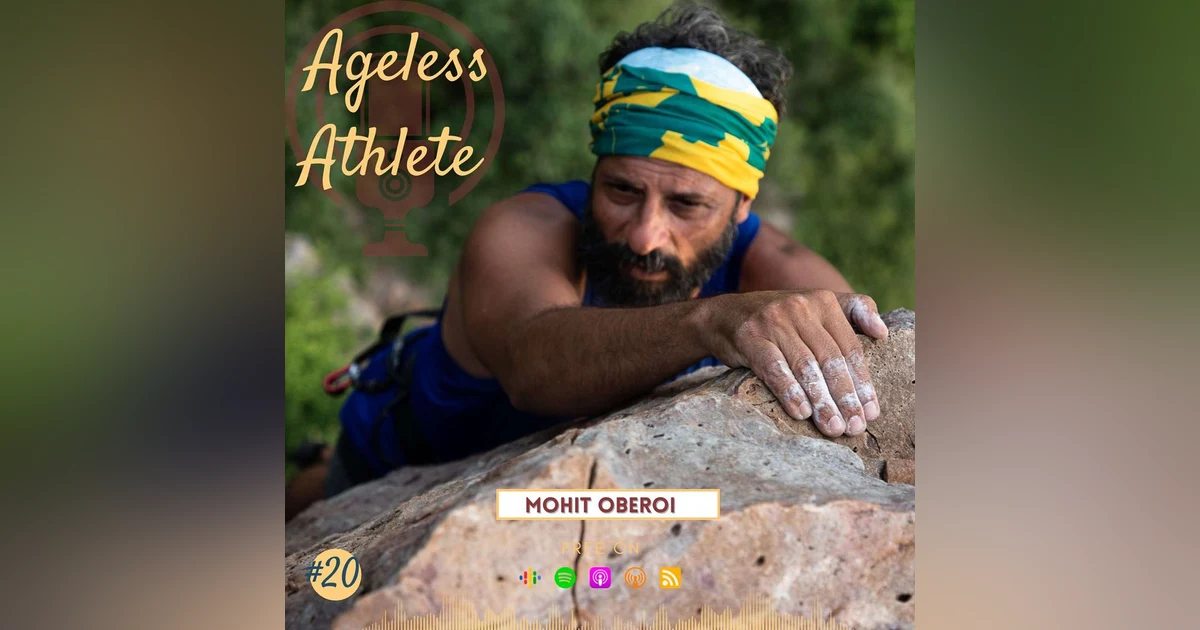

"Oh those early days. We started with a clothesline and carabiners, venturing onto cliffs with no adult supervision. Looking back, it's a miracle we survived" 🧗🏾😅 Today, we travel to India 🇮🇳 to meet Mohit Oberoi, a man who turned his passion for adventure into a way of life. Mohit shows a side of that country that may surprise you. Growing up in the 80s, Mo and his friends were climbing pioneers, questing up cliffs outside Delhi with homemade gear because the sport simply wasn't est...


"Oh those early days. We started with a clothesline and carabiners, venturing onto cliffs with no adult supervision. Looking back, it's a miracle we survived" 🧗🏾😅
Today, we travel to India 🇮🇳 to meet Mohit Oberoi, a man who turned his passion for adventure into a way of life. Mohit shows a side of that country that may surprise you.
Growing up in the 80s, Mo and his friends were climbing pioneers, questing up cliffs outside Delhi with homemade gear because the sport simply wasn't established. But Mo didn't stop there! Ironman triathlons? Check. 💪 Swim the English Channel? Done. 🏊♂️ Ultra-runs across the Himalayas? You bet. 🏃♂️ With the spirit of a new learner, Mo learns new sports, and goes on to take them to their apex.
His story isn't all smooth sailing – there have been injuries and setbacks. 🤕 Mo gets right back up, learns from his mistakes, and keeps going.
Welcome to the world of Mo.
Today's episode is sponsored by RecPak! RecPak is a nutritionally complete instant meal for outdoor adventurers.
Click this link for a 25% discount . Use 'AGELESS25' at checkout.
References:
Indian Mountaineering Foundation: https://indmount.org/
The Nose, El Capitan, Yosemite National Park: https://www.nps.gov/yose/planyourvisit/climbing_elcap.htm
Climbing Gyms in Delhi: https://www.google.com/search?q=climbing+gyms+delhi
Channel Swimming Association: https://www.channelswimmingassociation.com/
Swimming to Antarctica by Lynne Cox: https://www.lynnecox.com/books/swimming-to-antarctica
---
🚀 Love the show? Here’s how to support it
If something you’ve heard here has stayed with you, made you smile, or helped you keep going, I’d be honored if you’d consider supporting the show. 👉 https://buymeacoffee.com/agelessathlete
📰 Subscribe to the Ageless Athlete newsletter !
1-2x a month, no spam. We share behind-the-scenes reflections, longevity tips, and athlete wisdom you won’t find anywhere else. You can sign up at https://www.agelessathlete.co/newsletter/ 📩
34:27 - [Ad] Resilience Podcast Series
34:51 - (Cont.) He Started with a Clothesline and Carabiners — Then Took On the World | Mohit Oberoi, 58
1:12 Folks welcome back to each this athlete, excited to share that I climbed outside this past weekend. For the first time in eight months. Went to Sonora place near Yosemite and did some sport climbing amongst these overhanging basalt cliffs. This was the longest. I think I may have gone without. Climbing outside. In the past decade. I'm still injured. The body still feels a bit broken. But I feel I'm mending along. Slowly, but surely. Today, my adventure seeking and dream chasing friends? Get ready to be inspired by a story that proves anything is possible.
1:56 No matter where you come from. Today on aging athlete via taking you to India. A land of vibrant culture. And breathtaking landscapes. To meet Mohit. Oberoi a man who carved his own path in the world of adventure sports. This episode is very special to me. As it allowed me to travel back to India, the country of my roots. And bring on somebody who has long been a source of inspiration for this young kid, Greg, up in Delhi. Dreaming of the mountains. Now you might think of India and picture bustling cities. Or ancient temples, but for Mohit Oberoi, or Mo, amongst friends.
2:41 It was a playground of unexplored potential. Growing up in a country where adventure sports were not exactly mainstream. More and his friends. Practically pioneered the climbing scene. Scaling cliffs with homemade gear and a whole lot of determination. Mo's thirst for adventure. Doesn't stop at the cliffs. He went on to compete in various iron man triathlons, perhaps one of the first people from India to do so he did become also the first Indian to sell across the English channel. Yes, that English channel. And also Gren.
3:21 Ultra marathons. That would make. Many season athletes Veep. He has completed some epic, fast backing trips, scaling. And in chaining summits across the Himalayas, we will talk about some of them. More is living proof that you don't need fancy facilities. Or a well-trodden path to achieve the extraordinary. And let's be real folks. Most journey. Hasn't been all sunshine and rainbows. His face challenges. And many moments of doubt. But that's what makes his story so damn inspiring. He embraces vulnerability.
4:02 Learn from his mistakes. And keep pushing forward with a smile on his face. With the curiosity of a beginner. He is the ultimate vulnerable adult learner. A team that we explored in the last podcast as well. So get ready to be amazed by the world of mouth. we'll hear about his early days as a climbing pioneer in India. His transition to other enduring sports. We will discover how he feels his body and mind for those. And what keeps them motivated to keep exploring. And of course we learn about the importance of community. Positive support and believing in yourself. Even when the odds seem daunting.
4:44 We also talk about how he's raised. India's perhaps India's first climbing family. Besides him. Himself. Annie, his wife lives. His sons. A ball and I'll be my new art crushers sending double digit bullet problems. All across the Himalayas and in the south of India. Today's episode of the ageless Atlee podcast is sponsored by rec pack rat pack. Is a nutritionally complete instant meal for outdoor adventurers that saves space, weight and time in any environment.
5:24 It has been designed because typical outdoor meals take a long time to prepare and cannot be eaten on the move. And snacks like energy bars are not nutritionally, balanced and complete. It has been designed by top sports nutritionists and is made with high quality ingredients, including oats coconut oil. And minerals. RackPacks 700 calorie, four 20 gram protein light with meal sits in your pocket and keeps you fueled and focus on. A outdoor activity. Do you use, you can just add water and drink it on the move. And neck back, keep me fueled when I go out on some of. My long multi-pitch climbs that I have planned and Yosemite and the CRS the summer.
6:09 I'll be strapped to the side of a wall and cannot fire up. My Jetboil. You can get a 25% discount on RackPack by entering the code ageless 25 on their website card. You can find the link and code in the show notes. So let's. Start the show. This is aged athlete and most story is a powerful reminder. That adventure knows no bounds. Hey Mo. great to have you on the show. I already know that this is going to be one of my, uh, favorite, episodes.
6:52 for a few reasons, one is you are in my mind, a true multi sport athlete. You do so many different, diverse, interesting things. And also you are practicing these sports often in India, in a country I grew up. So I sometimes think I get to live my, uh, my outdoor dreams vicariously with you, to start off. Let's start with climbing. That is how you and I initially connected and, correct me, but I think climbing in many ways might Still be your favorite sport. To start off, I want to ask you to take us back a few years ago when you visited California to climb in Yosemite and as you were driving down the valley floor you looked up and you saw El Capitan and I saw your face light up.
7:47 Please describe what did you see and what you were feeling at that time. Yeah. Thanks Ishu for having me on the show and yeah, I mean, it was the first thing was thanks to you that, uh, I could make this El Cap or the Yosemite dream come true, which is coming, to a place. It was more of a pilgrimage to me, to be honest, because I'd seen photos of El Cap since I was in the teens from the Mountain Magazine and Climbing Magazine photos of starting from the first ascent of Zenyatta Mondatta to Randy Leavitt jumping, climbing El Cap and jumping off. So it is something which is, it was there lying dormant for three decades.
8:27 And as we crossed the tunnel and entered Yosemite and mixed emotions, right? One was a dream come true that I was finally here at this cliff which I had dreamed of almost for three decades. And the second was of course of awe that how the hell are we going to try and climb this now? So the mixed emotions, but it was, it was just, it was great. It was brilliant. that is a great recollection indeed and I hear you on the The flood of emotions, you know, you, you see El Cap and it looks amazing. And then you realize that you have this daunting project ahead of you to attempt to, get to the top. That is quite something. And we will get back to your El Cap trip later in the conversation.
9:11 But to, ask you a little bit about, what are these different sports that you do? And did climbing become an integral part of your life? to be honest, I'm a adventurer at heart. I think that's what I've concluded. I need an adventure. so climbing is something I started off, uh, in my teens. it was always an adventure to go out. It was not about performance. It was not about grades or anything. It was about having, having this adventure, having an Epic outside, you know, having these mega days out. of course, initially it was very, uh, short multi pitch climbs, but then we were always on the track climbing and, uh, almost no bouldering then, but, it was an integral part of my upbringing.
9:56 And then, of course, I branched out little later into other sports, mainly running or, uh, swimming or, uh, trail running or mountaineering. these, of course, followed climbing where I wanted to get into bigger adventures. But I always feel, uh, you're absolutely correct. I'm a climber at heart. I keep doing these sports off and on, but then I always swing back to climbing as my, as my go to sport. that's correct. Mo, what were your origins into climbing? If I recall, I'm a few years shy of you, but when I was growing up, climbing was not a prominent sport in Delhi, in India. What were your beginnings as an adventurer and as a rock climber?
10:39 So we started in school, uh, issue. Basically we went hiking a couple of times and there were these, that time there were these very dedicated bunch of people used to run clubs. And these were hiking clubs and they would dabble in a little bit into rock climbing and mountaineering. And they had this thing called the training camp, uh, for children or adults. And, did a couple of small hikes with them, day hikes. And then I, Join them for a climbing course in which they will teach you very, the days we used to tie a bowline around your waist and there were days of the waist belay. So these were like very basic with pitons, and there was no camming devices on wires or anything.
11:20 I'm talking about late seventies, early eighties, 81, 82. And there was about hip belay and repelling with stomach repelling or delphi seat repelling, what you call now. So these are very basic. basic kind of climbing things. That's what the start of the art was then probably, uh, in India, at least. that triggered off my interest for climbing, rock climbing, because I found that to be the next step for my days of hiking. when I started off, I did a course. uh, I found a magazine run by the Indian Marketing Foundation, which had an article about rock climbing around Delhi. And I was like, okay, if someone can go, why don't I go and visit this place, which is actually near the Qutub Minar, which is very close in Central Delhi, close to Central Delhi.
12:01 I mean, I would say suburbs then, but now it's almost center of Delhi now. And there was a stack of rocks, which are in a park. And I decided to go there and, uh, start climbing on our own with, uh, with, with a clothesline, which was brought, uh, like a thick 10mm floor line, which, and some carabiners and some, uh, there were no harnesses then. So you made your own sling harnesses. and some rudimentary carabiners and that's and just started a journey of self discovery basically and then so on and so forth and one then met a community and then and then carried on to you know higher rocks or bigger ranges so that was early beginning and it was the late 70s early 80s so my first climbing trip on my own I would say was probably self support was in 1982.
12:47 Where I actually went on on my own without any guides and I don't know how and when I look back I just don't understand how we even survived. I don't know what all we were doing there I guess we did whatever we could but we did survive those days And a bit of a miracle, but yeah looking back. I mean, it was just amazing Amazing time of discovery of ourselves and of the rocks and what we could do making decisions, you know, without any adult supervision, uh, because it was just two friends, we were in the same, same class and we had just done a course and we decided to go on our own with our own gear. Coming of age is always a profound, uh, stage in, growing up for all of us, but when you have something as, interesting and as outlying as, uh, climbing thrown in, it makes for, a rather rich childhood indeed.
13:37 And, you survived. That era of wearing, harnesses made up of, home developed, climbing rope types of, uh, apparatuses to the point where you are today. But again, going back to the time you found this club and you You ended up in this band of brothers, if I may, and you started going off venturing into the mountains and also crags that you were developing closer to home. I'm wondering what was the setting like? Within your family and your community, were there other people doing these kinds of adventuring things around you? Was your family aware that you were, out there scaling, cliffs?
14:19 yeah, describe to us, your community and your, uh, your family and your friends, perceived of, these things that you were doing. uh, see, my mother was an educator, she was running a school and she obviously knew the values of children involved in some kind of a sport, whether it was conventional sports like football or basketball or tennis or whatever, or doing outdoor sports. In fact, the school used to, her own school, which she started. would go on on outdoor trips. She was encouraged that. She always felt that children had to indulge in some kind of sporting activity outside the classrooms and do things. So event came naturally.
15:00 When I start took up the sport, it came very, I don't know what she felt in, within herself, but she was very, very, um, forthcoming and she was not. In fact, support us, uh, and my sisters and us also to go and indulge in these kind of sports. I, I also wonder sometimes what would they think what was happening? I don't know. I don't think they were well aware that we was trying to run out 20, 30 feet climbs and, you know, we could have ground falls and everything else. But I think one thing they were clear is that we were obviously doing something, which was, uh, which is something essential, uh, which a child should be doing for their upbringing. I mean, of course they don't understand the extreme parts, which, I mean, obviously they didn't expect that I would be, trying to lead some five nines with the ground fault potential and all that.
15:49 I mean, that gets complicated things, right? But I didn't even mention that to them because that was something you didn't talk about at home. You did have a great day out and you were happy and you had a smile on your face and that was enough. They were very accepting on that, even going on expeditions. And you know, we were living at a time where there was no internet and there was no even phone connections in Delhi then. In India, where there was just. once you left the home and that was it. You came back after you, you said you will be back on certain date after 25 days and you showed up and there was no, there was no connect. or you didn't connect with them. Maybe a letter from, sent from a base camp through a porter saying, Just tell them you're fine or just mention it, which used to generally arrive after we had reached back.
17:26 So it was, there was, it was very forthcoming. The family part was very, very supportive, I must say. And of course, my parents then, and now my wife, of course, very supportive of whatever adventures we're doing. And I think that's very important. Second part is about the community and the people I met, uh, initially, I think I'm extremely lucky and I keep saying that I'm extremely lucky that I met people, uh, who were of the same mindset. some of them were much older to me. Most of them are older to me. They were like eight or 10 years senior to me, and I'm still connected with them. And they were very, very protective of me. And they were very, very, you know, they encouraged me to do sometimes I feel they encouraged me to do all the hard leads. which, uh, they didn't want to do.
18:08 This is only later on, I thought, but that helped me to, uh, actually hone my skills as a climber get my skills up as a climber. So I think I was extremely lucky. I will say that I started very early and I started with the right people and the right support from the family also, where there was no question asked. If I wanted to go for a month of hiking of school days. That was no problem. I would, you know, it was accepted. It was good. So many things come together to help us pursue our passions. Obviously, talent and drive is a big part of that, but so is support from one's family and community. Your parents, kind of like my parents, have been very supportive of some of these, uh, different things that we do.
18:55 parents, uh, saw me climbing outside, I think for the first time a few years ago, It was quite a revelatory moment for them because it's one thing to imagine conceptualize some of these trips that I'm doing, but to actually see me at the end of a rope up in the mountains in Turkey, where we were, and see me having a good time and doing things which Sometimes seem a little crazy, but when you see that happen in front of you and you see the whole process of, of, uh, tying into a rope, climbing up, and then you see other people around at the crag as well, and people who seem, you know, just normal human beings with, offer normal lives and aspirations.
19:39 I think it serves to normalize the sport in the eyes. So I'm very grateful that my family was able to see me climb. I think it's also surprising how many people I speak with whose families have actually never seen them climb. I mean, it's great that your, your family, they supported you, but I'm wondering if they ever joined you, your sisters or your parents, if they ever joined you for any of these, uh, climbing or mountain trips, either as, as spectators or even as co participants. yeah, my mother did, we did one or two hikes together, uh, day hikes when she was leading a school group as a principal of her own school.
20:22 She had own school children going up and she actually hiked with them. And I was part of that. So that was amazing. when I think back, I look back it was a few times when she came she actually offered to let, when I had no transport and no partners in Delhi, once a couple of times, actually not once many times, she would actually offer to drive us in the, in the school van. Uh, and she would not drive, but the driver would drive and she would say, hi, take the school van. And I do remember her coming once or twice and I trained the driver of the van, who was an ex army guy to actually belay me. So he would go from the side and actually throw the rope down and he would belay me on top. So when I look back, I thought it sounds completely, completely bizarre.
21:04 When I think about it now, she would be there reading a book. Or something, and she would just be there, but he would actually belay me, and I would actually spend a few weekends, uh, with, with my ex-army driver of the school who would help me. So, it was so encouraging. And I think now that, which parent would do that would say, okay, we go on a Sunday to Old Rocks, which is the climbing area, and she would just hang out while the school bus driver would actually belay me up some climbs. And he, he, he was obviously did not. I mean, I taught him rudimentary stuff, right? But he, I guess it worked. it did happen a couple of times like that, but not, not after that much, I mean, that was the initial time. And then I, I'm, I'm trying to think back what she would have been thinking.
21:44 Like, did I know what I was doing as a 15 year old or not? I don't think I was even 15 then maybe at like 12, 13 year old that actually trained the bus driver to belay me. And is that safe? Is that, is that not? I have zero idea when I think back now, man. I don't know what she was, she didn't, she didn't even, she didn't say anything. I remember now that she would just not say anything at all. She'd be there. And this happened not a couple of weekends, not too many times, but that's still, still a bit. That's the only time probably. And I also remember, yes, one crazy incident when I went with this, independent group of people to the Hodge, which is the nearest climbing area in Delhi. And I was supposed to train them to climb and I was helping them out again as a 14 year old.
22:29 I don't know how I, how was I qualified to teach people how to climb? I have zero idea, but, uh, obviously I was asked to teach some people, some school kids and the school, their school kids, past guys had to leave. And I remember seeing this new line I had seen, which I wanted to do, which is like a really gnarly off with, which no one had done before. And I was stayed back with my partner and say, let's climb this. But he says, the bus is leaving. So I was like, it doesn't matter. Let them go. And they were saying, should we go? And he said like, yeah, please leave. And I don't know how this happened. And then my parents showed up there. I think they knew that I was there on the weekend and my dad and mom land up there. and it's quite a crazy coincidence. The bus is leaving and they land up there and they say, where is Mohit?
23:11 And I'm like, and the, and the thing is I'm stuck right above this last crux in an off-width for the last half an hour. I look down and I see my dad wearing his, uh, I mean, he was just. Standing and looking up like 70 feet up and looking at me and just finding what I'm doing. And I looked at him and I was like, and I think, uh, within the next two minutes, I think I was on top. So I think, uh, and they gave us a lift back home and nothing was said, nothing was sort of shared, but it was like, I don't know what they were thinking, but it was a very bizarre incident. I was trying to recall the other day. Uh, so things like that happened, I guess, when there's no communication, there's no phones or WhatsApp.
23:53 I mean, things just worked, right? They showed up. I was not supposed to know. I mean, we didn't know that they want to show up and I don't know how they show up. climbing area, which they'd never been there before. And, uh, yeah, we managed to do the first ascent. That was a climb called Chariot Sophia, which is a 5. 7, still rated pretty gnarly, shitty off width, which no one climbs now anymore. But yeah, things like that happened, I guess. Wow. Your, uh, parents from being, let's say passive supporters often became somewhat active co-participants, And again, if you're lucky, our parents will place this faith in us and allow us and support us to do things which they themselves may not understand completely, but they will stand behind us and let us do sometimes outrageous things that, that when you look back at, makes one shake off.
24:48 Once, uh, had a bit of incredulity, coming back the early climbing days. When you were, doing first ascents around Delhi, and you ended up writing this guidebook for the premier climbing area outside Delhi called Hajj. And we'll put a link in the show notes if anybody wants to ever visit Delhi and, and check out the climbing area, they can refer to your book. Mohit, you took that early entry into climbing to ultimately becoming really good. and training and joining the Indian climbing team and representing the Indian climbing team. So describe to us how did climbing and adventuring become an athletic sport for you.
25:36 How were you training to get good at it? And how did you end up being part of the, uh, Indian team? And how did that, performance go? To, answer your first part of the question, Kush so climbing became a passion, became a, completely obsessive kind of, emotion, through my teens, because that is something which is, I leaned on for whatever, it was something for me to go to. So I really worked hard I was so interested in it. I would do it on a couple of times a week. And then you got, obviously got inspired by these three, three month old magazines, which come abroad from abroad, what was happening. And you would get inspired. And of course I had this, older people who were older means older friends who were already climbing.
26:21 and they were trying to push boundaries. There was strong ethical debates on, you know, ground up, trad climbing is what we were doing. Then there was no bouldering because I mean, there was little bouldering. There was bouldering, but remember we didn't have any pads, so there were no bouldering pads. You had to boulder, you didn't want to fall, or you would have, if it was a high ball, you would top rope or finally top rope and then lead it, or sorry, solo it or try and lead it. So there was a strong ethical, uh, rules where we, when we reform for ourselves, which is the basis of our climbing. so I seriously started getting into in 1984 when I was 15 years old, we made a trip down to South India, which was in 1986, where we climbed, uh, my longest route, which was, 800 feet high, I'll say about.
27:02 Three oh meters, in South India, first ascent was done by a couple of friends from Delhi. We went down. So other thing was to now venture out to other cliffs, not just being around in Delhi, but to actually go and start. remember there were no climbing walls, but I do remember, I mean, I, uh, I think I've not spoken about, but I found this old, in a climbing magazine about how. This person had made a climbing wall stuck with araldite rocks on its boundary wall. And I actually made a small traverse for myself, sticking some rocks, flattening them on one side and then sticking them with araldite, you know, like a super glue along the walls of my house and started, so I started getting and saw pictures of John backer and, uh, I think it was life magazine.
27:47 Way back in 85, 86, where it's, you know, he was training in Yosemite and soloing and stuff. so that just inspired us to push harder grades, to actually think that we need to train to get, you know, start training, physical training. That'd be important. photos of Tony and Nero and, Ron Fawcett was a British climber, Jerry Moffett, people like that. And because there were not many role models like that in India. So we were looking at people from magazines abroad and, and books like climb, which is, a Colorado blaze climbing book and to start training, starting my journey to do harder and harder track climbs. I got an opportunity. To travel to the uk, which was when I was 18. There was a British climber who was visiting India, and I took him out Boulder and he was saying, why don't you come for the youth meet?
28:31 And I think he was that time working with the British Market, Purdue Council as one of the officers. And he said, I, so I said, I don't know man. I mean, I don't know how it's gonna happen. And he said, no, there's a youth meet in UK and we can send you an invite and, and you come. Okay, and it's too far fetched a plan, you know, for a, for an 17 year old to think that that could ever happen. Uh, but I remember coming back from an expedition to the mountains in Bhagirathi, where we spent 30 days up in the hills, in the mountains. We almost reached 6, 000 meters. It's another story. with my friend of mine, I came back and I found this invite letter from the British Mountain Council. And I was like, they're inviting me to this British meet where the youth from various 35 countries were supposed to congregate and they were going to host them for 10 days of lining in, uh, Wales.
29:20 But then the whole thing about how do I get there? I don't have a ticket. I don't have money to go there. And it was, it's, it's all. things colliding in the universe. You know, I spoke to a friend of mine and he was, he was a journalist. Uh, and I was like, man, I don't know how that's going to happen. He was like, Oh, we can figure out something. And he was an older guy, you know, it was maybe in his early thirties. he was doing a story about someone, and then he actually to this industrialist. He was doing a story about him. And then he, as he must've mentioned that this shot, this young person is a great climber or, you know, he's a budding climber, not a great climber. And he would, he's been invited and you think you can sponsor him. I don't know how it happened. Kush that I got a ticket. He said, yeah, we'd spend, buy his ticket to go to the UK. And, uh, actually I got a plane ticket sponsored to go and attend the youth meet in way back in 1988 and I landed up I was in UK.
30:08 I got a ticket and I got a visa and then I reached there and that was a complete eye opener because were talking to these really young people who were climbing cutting edge stuff. from the UK, from the US, from Czech Republic, Swiss, French, German. That was the most crazy thing for 10 days. And then I spent another three weeks there because I got invited to various other places by other British climbers, young people. Again, they all come to my house. We go climb in the Peak District or we go climb in the Lake District. And I ended up spending another four four weeks, touring the other places, tri climbing the UK. It was an eye opener for me completely. The world of really hard trad climbing. so I wanted to go back definitely in 1989.
30:49 I was finishing college and I was like, I need to, I'm desperate to get back. And, uh, and I did whatever I could. And as a 17, 18 year old, I went knocking on all doors to get sponsors to fly on this unconventional sport, which people say, is there going to be a competition? Is there going to do this? And you know, I don't know how this happened. Someone told me, man, give them the story of an Olympic dream. That's where people talk to you about sponsorship. And I, and I don't know whether I was trying to calm them then or what it was a real, but I kept saying. Climbing is going to be an Olympic sport and I am trying to train for the Olympics and that mantra I don't know what else. So I am happy that is not something I was just trying to con people into giving me money.
31:32 I kept saying there's gonna be an Olympic sport They're gonna be climbing competitions and blah blah blah and that caught people's attention Even though it was not then but they were saying it's going to become I did manage to even get a ticket from Air India to go back into the UK in 1989. and I got some cash sponsorship from Hindustan Lever, which is, uh, part of the FNB industry. and they were like, okay. I mean, I don't know how, maybe there's just thought like an 18 year old knocking on someone's doors, is brave enough. So I think, uh, to even try and get this money, you should probably, we should give him this money. it is, uh, when I think back, I was like, what was I thinking? Just walking in various offices, spend a month in Bombay. I went back to Bombay because I was told that Bombay is where the head office is.
32:15 And that's where you should go and try and get money. So I just called, I didn't know anyone. I would just walk in and start talking about it, give them a proposal and say, look, I've been invited by the BMC. I want to climb the last year. And this is going to be a big thing. Big sport and I want to be part of this big sport. Of course. I had my lines practiced and somewhere it worked I don't know how someone came to me right now I don't know how and I got actually a ticket and some money To go climb in 88 89 and I went to the uk and I climbed again for three four weeks I'd already had friends from last year previous year so I could spend more time climbing big district in various places and from there My sister was in the US. So she was like, man, you reached here all the way.
32:57 she was working then. She had just got a job. So she must have saved some money and she's like, why don't I get you a ticket across to the US? And I actually went across to the East Coast to the Shawangunks and I flew down. I missed college all those three months. I was not in college. I was in Delhi. I was supposed to be in college, but I just went to the Shawangunks. I lived, uh, in three weeks near the Uber Falls where there were hardly any people there on the weekdays. I made some friends there and and then I had this plan of, okay, now the next trip is Colorado and yo, and it was way back and, and just become a life of, uh, climbing bump and, uh, and especially when you didn't have cell phones and Instagram, no one know to contact you, right?
34:32 Unless you are to call them back. So your family and friends and all could not reach to you. So I fixed this, actually, this happened and I fixed this ride to, uh, with someone who was gonna Colorado from the Gunks, and we were supposed to share the petrol money and all that. And I went partying the night before, got completely drunk, did not reach back to the campsite, and the person left, of course, and I did not get the ride to Colorado into the big dream in the west I had. So I always say that, that ride changed my life. Because I, if I had taken the ride, maybe I would not have come back. And then there was, of course, like, you know, there was no, there was no connection. So you could actually disappear without, you know, for a few months or a year before someone influenced you, means your family or whoever else.
35:15 But that ride did not happen. I reached back late to the campsite. I was completely hung over, just slept the whole day. And of course the person had left. that ride got missed and I said, change my life. Maybe, I don't know for the better or worse or whatever. and then, of course, training back in India, competition, sport climbing, I went to France for a while, on the next trip, sport climbing, was just getting introduced in the early 90s then. I'm talking about, 90, 89, 90. And then, you know, there was competition climbing, Badunikia happened. the world cup circuit had just started in 91 some of the people in the big leagues in the Indian mountaineering foundation were handling the sport then. got invited to send a team to Japan. And then, uh, the person who was the head of affairs knew that I was very active and I'd gone abroad and I had much more exposure than anyone else.
36:02 And they said, look, man, let's, there's no time for sponsor for, for qualifications or anything, and there's no walls to climb on. Why don't we get this bunch of three, four people to go and at least taste what the sport is. And when they come back with certain knowledge is when we can actually start the sport climbing movement in India. And that's how I got on the team in 1991 to Japan. for a World Cup competition, which he, Yuji Hirayama, won his first, World Cup competition at the age of 19. It was an amazing, epic, epic it is certainly so interesting how little things can shape one's life journey. You were there at a campsite in the U. S. and you did not get to Come over to the West and check out climbing in Colorado and California because of one night of, fun partying and, uh, circle back a few decades later, life pulled you back towards, the granite walls of the valley you took that early inspiration and the exposure, you brought it back to India and, uh, You started training in right earnest.
37:07 You found other climbers. I'm wondering what was the rest of your life like? Because the script growing up in India is typically, you know, one is expected to follow a certain path find a career of sorts and, you know, join the mainstream, but you buck the trend somehow and you put all your passion and energy into becoming the best climber you could be. But at some point you managed to take climbing and craft some kind of career out of that We'd love for you to talk about how did you fare with bucking the trend? Was your family supportive of you going out and competing?
37:51 Were you also working on a regular career on the side? And then ultimately, how did You end up taking climbing into something that became a, profession for you. there was always that, pressure from what am I going to do now? I mean, I should be having a career. I should be, so I, one thing was very clear. The other parts to this kind of a journey as a climber would have been to start taking out people climbing, right? Or start climbing courses or start, you know, But, you know, starting working in the trekking industry or mountaineering guiding or something, but this is something I took a very early decision to say, I did start something on the outdoor school, which was basically, I said, I would start taking children out for climbing and dodge and teach them how to climb.
38:36 And we run climbing courses. And I did take that journey. I started that in college itself. I did that a few times. And to be honest, I took a very informed decision when I did a few of these that this is not what I want to do because it became more like a job and I started hating that. And I was like, this is my life's passion. And if I'm not going to enjoy this, I am not going to start taking people out. So this was even though. it would mean that I would not be getting my money or, you know, this is not my career path. Taking out people, courses out climbing, bunch hoods of like 30 40 children out climbing was just wearing me out. And, uh, I was not enjoying my own climbing. I was, so maybe at an early age of 20 or 21, you think this is something which I've still not done.
39:21 I would do it with family and friends and just take them out otherwise, but I would not want to take climbing courses out or even be in the trekking industries where I'm, you know, guiding them. there was pressure to do a job, to work. And I took up, I got an offer from a school to teach geography and physical education and pitch climbing, even though I was not a trained teacher. And I got this opportunity and I actually became a teacher for like a year and a half. And, uh, we had a blast, actually. I took so many of these people climbing. And some of these kids I taught way back then, even, you know, just that two years of teaching, I still climb with them. They became my climbing partners. Now, of course, some of them are professors and they're doing other stuff and running companies and whatever.
40:02 But then my mind started turning to when I did the competition in Japan about climbing, on a climbing wall, I was like, you know, we need to have walls in India, right? Otherwise, how are we going to do competitions? Because we can't train on rock and then go and compete on walls. I mean, that's not, that's not how it's going to work. So I decided, well, let's build a wall for ourselves. And my journey to build a wall was in, again, my mother's school. And she was like, why are you thinking of building walls? I started trying to market this concept to people and say, there's a climbing wall and also at selfless regions to train, uh, so I could train on these walls. And, uh, what happened is that she said, Why are you talking about building elsewhere? Why don't you build in our school?
40:42 The children will climb, you can climb. And, uh, you know, it'll be, you know, exposure to the whole country. so I built my first climbing wall in actually, in the school, which is run by my mother. we took it from there. I built this wall, which is not very rudimentary now by any standards. And, uh, we even held a climbing competition, which was, uh, which is a national sport climbing competition. We invited people from all over the country to come and climb on, on a wall and actually hold a competition. And you won't believe this. The first competition, we even had the great Steve McCure. who's a UK climber so well known now, and he was visiting Delhi. He saw this poster in his, in his small hippie hangout, uh, hostel where he was staying about a climbing competition.
41:27 He actually came and won the, what is the international category? And he actually mentions that in the book and he has a photo of the old climbing wall in his, in his, in his book. so this is very interesting. then once I built the wall, I started getting some inquiries from the military to build walls. So the army got interested about building walls. And then I started building, I started my journey in the climbing wall builder. And even though I was not into engineering or any other construction work, but then I got, this is my passion, right? To construct, get that activity going, get the walls going. So I learned how to build walls and learn what the materials were required and the engineering part and And started my journey to become, uh, so outdoor school actually became wall builders So we would actually conceptualize the idea, build the walls, train people how to use them I never operated the walls because that was something which I didn't want to do ever, right?
42:20 I didn't want to teach people on regular basis as work. So we would build, operate and transfer. they would then operate the wall. And that's how my journey for climbing wall building started as a, in India. And also similarly, simultaneously climbing competition started in India with that first competition we held in 1993 in December. So the journey of sport climbing started with that. You took, your personal pursuit into climbing and you took that into pioneering the growth of, uh, climbing as an industry in India. And I can't think of, uh, better stories where, um, passion meets purpose and you put all your energies into this one basket and it's, paid off for you in, in so many ways.
43:06 And also it's paid off for the community of climbing in India, where we have people who have learned. to climb in the walls that you developed in the facilities that you helped create through competitions and whatnot. And in, in so many interesting ways, one in particular, it's come back full circle where now you know, not to be facetious, but you might be, you are India's first climbing family. Your wife climbs, your kids climb, and both your kids are, uh, talented and, and strong climbers. Love for you to tell us how you met your wife.
43:49 I believe there was a climbing connection. please take us, uh, through that piece. Thanks for your kind words. I met Annie, in way back in 89. there were hardly any women climbers then, actually, our first meeting was also at Dodge, which is a climbing area, which I used to, uh, frequent a lot. And I think she came through her own university climbing club. one of our friends introduced us there. And then of course, uh, there was no love at first sight kind of business here. We, uh, it was more about, she had the same passion for the outdoors because she was born in Bhutan in the wild, in a forest, and she lived a life in Sikkim, her parents were teachers in Sikkim, headmaster, her dad was a headmaster in Sikkim, so she enjoyed the outdoors, which I think our connect was more from the outdoors, being outside, and I think we started frequented, uh, frequenting, going together a lot more then.
44:43 that's how this journey started with her. from 89, we started climbing together and making trips out and, uh, also her parents being education. We were part of the family with more educators. it was a common connector. It's not just about teaching, it's about climbing. and of course our kids, uh, Abhimanyu and Iqbal, uh, because there was so much talk on family dinners. Every day was about climbing or outdoors mainly. So we introduced them. There was no pressure for them. I think we didn't put any pressure for them to climb. I think it was more about, enjoying the outdoors. I think that's very important, for the kids to actually be comfortable being outside. means whether it's camping or hiking and we would do our annual family hiking trip.
45:25 Even when they were eight, nine years old, climbing small hills or going for a multi day four or five day hike in the Himalayas. I think they've caught the bug of climbing later on just after the teens they've now just, almost as passionate as, uh, as we were when we were that age. So we're very fortunate that they've, uh, taken this path. uh, I hope, they enjoy this journey and that they don't want to drop this. That's fine with us also. We are not, we're not so hellbent that they should be climbers. I think we were never both like that with them. We wouldn't push them on that at all, but we did show them the path to the outdoors. I mean, we, In the sense that this is where real joys of life are. This is something you should cherish.
46:07 And, uh, I think climbing was, uh, was a natural progression for them to take up. we are very happy that we're still fit to enjoy being outside with them. We can still go out health wise. We are still, we're still able to go out and move with them if not climb at their level, but at least, at least be around and be able to climb, uh, do a few things around with them. That's very fortunate. I hope we can keep doing that for a while. You showed, your kids the path, you open the doors for them. And, without you actively pushing them into it, somehow at some point, that early exposure and the trips to the mountains rubbed off on them they now climb in full earnest and in some ways might be this golden period maybe in your lives as a family where you and your wife both are still active, passionate.
46:58 adventurers and climbers and you can do trips together with you, your wife and your kids and go climb in different parts of India and overseas. Absolutely fantastic that, you have managed to create climbing as career and as a lifestyle. Moving on a little bit in terms of community and culture, at some point Mo you became involved in other sports. as I said earlier, I think of you as the consummate multi sport adventurer. You took your roots in climbing and you went on to create a small legacy in other sports.
47:44 You swam across the English Channel. You one of the first Ironman triathletes. Coming out of India. And these days you are doing these epic fast packing and ultra runs all over the Himalayas. How didd you take climbing and how did you diversify into these other sports? Somewhere around the mid, around 2004 or five, I think somewhere I had felt a loss in my own community in the sense. A lot of my friends had moved on. They had either gone abroad or they stopped climbing.
48:25 They had families or they had children and they were not really actively climbing. And my connect with the younger generations who were coming up then was not very, I was not really connected with them for whatever reason. I don't think that I found any of them who were really connected with me in terms of the adventure part of it. Um, Because competition climbing had emerged, I think they were more focused on plastic, climbing walls, not going to the rocks so much, not getting into big adventures. Somehow I got lost in that quest to find, uh, suitable partners. Of course, my kids were too young then and he was busy with her schoolwork. I just kind of, Lost that buzz around climbing because, you know, climbing is also about community about companionship, about friends, journey You also need people around you, but it's not like climbing where you spend a lot of time with, with mates, right?
49:19 Or people you tie into a rope with. It's, it's a lot about trust. It's all about building a relationship. It's about having fun at the rocks. Some of that got lost. And I actually lost my way in climbing. So I moved on, I met a few other people, but I was still active. I wanted to be active. And it was not a deliberate attempt, you know, life, you close one door and then another door opens. And I met some friends who were. Uh, a friend who was into running and swimming and I connected with these a couple of peoples in Delhi around who went to triathlon. I never heard of triathlon. One of our friends, uh, he was an expat who came down, two of them came down to Delhi. They were living, uh, their wives were working in the embassy.
49:59 they had done the Ironman triathlon and way back in 2005, hardly any people in India had heard, even heard of it. I think one odd person had probably completed it as a student while being in the university abroad. it was new for me. It was new adventures. So one of the things I really enjoy being is being a beginner. I don't mind standing at a start line and say, Hey, I don't know the sport and tell me about it. This is something which I think is, is, is something which is, uh, is, uh, my strength. I don't care if someone says, because it's not like, I don't know this. Let me learn how to do this. So I started my journey to swim. I was a very poor swimmer.
50:39 I'm still, I'm not that good, but then I started my journey to learn how to swim, uh, and started my journey in the triathlon. Let's see where it takes me. It was thrilling. It was new, not like climbing because climbing has its own adventures, but then I had this new found friends who were real fun. They were very encouraging. Uh, we had a blast together where we would go cycling, we go up in mountain biking in the Himalayas. I did some long mountain biking trips with them to, from Manali to Leo, the highest passes in the world. We did some mountain biking races together. this Ironman triathlon quest came up and it seemed a little insane in the beginning, but then, you know, when you have a community around you, when you have friends who are.
51:23 who are on the same passion, on the same high energy. shift and things move. And I managed to do my first Ironman in a first 70. 3 in 2009, and then Ironman 211. basically I was not missing climbing to be honest, because that was, I was having so much fun within this community. I started ultra trail running. Uh, running was a new thing for me. Again, I'd done some running before half marathons, but Long endurance sports is something which I enjoy doing, because I like, I figured that I like being outside. I wanted to spend the day out. So, as it was longer the day, the better for me. if you would spend 12 hours running around in the bush, I would have you to do that or moving around the mountains.
52:06 So all that kind of started manifesting into one into the other because I had spent enough time climbing in my early days, I still had a base of climbing, right? of course I was not as good as earlier, but it doesn't matter because it comes back to you pretty soon. Uh, so I, I started dabbling back into climbing later on. I mean, recently, a few years ago. So, uh, so I was, I was very happy to learn other things nuances about open water swimming, about ultra trail running, about triathlons. did a few mountaineering expeditions, which I had done earlier. So all that sort of, it was a great thrill to keep moving back and forth. I really enjoyed this, this, combination that I could do what I wanted.
52:49 If I was not feeling so great about one sport, I would just move to the other. And obviously I'm not, to be honest, Kush, I'm average or below average at these sports. I'm not highly competitive at some great level or anything, but then at least I enjoyed whatever base level I can practice it and it's, it's been super for that. I'm grateful that I could actually move, do other things and do a combination of things whenever, however opportunity I would get and, I have a much wider community now, where I can, when I feel like trail running, I have a trail running friends to go with, if I have to swim, I have a swimming friends to go with. That's been great. You know, it's been, uh, it's been fun. do that.
53:29 I love what you said about, finding joy in being a beginner. I found that true in my life as well, where, uh, sometimes climbing has become less important and I've picked up other things and it's often because I also find joy in In growth and progress and sometimes that excitement in one thing fades and something else comes up and I'm able to find reward in learning and finding something new about myself through that sport. You didn't just discover these new things and dabble in them. You took them to some new frontiers.
54:11 For example, so many different things you've done, but for example, So you went and swam across the English channel, which I think is something so cool and different.How was s the experience of projecting that venture? Were there other people out there with similar aspirations as you? And also, do you think your training and lessons in becoming one of India's best climbers at that time help you prepare for swimming across the, uh, the channel? Kush, my journey for swimming actually started with triathlons.
54:56 Like I said, I wanted to do the Ironman triathlon. India is not, is not completely swimming friendly country that way. There are not many people swimming as much, maybe in the U S or abroad where you have coaches and systems and squads and swim squads. And in Delhi the pools close Six months a year they shut because we don't have heated pools. We don't, there's a big challenge to be stuck in India, uh, as you would know, to pursue these things. So one has to be an extra, either on an extra passionate drive, find ways to do, you know, like, like for channel for open water swimming, we found a lake close to Delhi. Fortunately, I mean, this is just God sent is, is, is a huge open water lake. So I used to say my pool is never closed.
55:38 you know, I can swim throughout the year because otherwise you can only swim six months a year in Delhi if you go to a pool. Uh, so that started my journey for open water swimming because I really liked not being in the box, literally, pun unintended, you know, of swimming pool, but being out in the wild water. And my inspiration for a lot of these journeys And adventures come from earlier used to come by from books. Now it comes from podcasts and other things. I will read a lot of books. I read this book about uh, swimming to Antarctica of Lynn Cox, who was a legend and open water swimming in California based. And I read about her journeys and how they, she would swim in the, to cross the Catalina channel and train as a 13 year old, 12 year old.
56:23 So inspired me. I was like, And I want to do this. This is, this is so cool. And, uh, I don't think I was, to be honest, I was not the right candidate to be crossing in the English channel, but then, uh, I did it as a, so I want to do as a solo, which is how it's, you know, the real way of doing it. But then I was like, a friend of mine suggested, why don't you do it as a relay swim initially, and then do a solo and, and like things conspire, right. In the universe to make things happen I found this, uh, international relay team, which has been led by this legendary Chloe McAddle. She's the queen of the channel, done 41 crossings of the English channel. She's from Australia and she was leading a national team which I joined and I trained for a year.
57:09 And to be honest, I was quite, as the day approached closer, there were a lot of challenges. One is the cold water challenge of the English channel, which we don't find in India because in Delhi, the water is cold only in the winter. for like two months. Cold means 15 degrees and less, which is what, 60 Fahrenheit. But then, uh, as the summer progresses and the channel only warms up in June and July. And again, like I said, one thing is swimming and the other thing is you have a whole subsport called the channel swimming because there's so many nuances around channel swimming. You don't have the neat tide or you have a spring tide. What is the best time to go? Who's your channel pilot? How are you going to swim? What time you have to go?
57:50 What is the cold water training? So. Fortunately, I found my body physiology adapted very well with, with cold water, which I discovered, or maybe it was just my head. I don't know. I think, through the winter I could swim without a swimsuit because you don't have a, you don't, the channel rule says that you don't swim without a, you have to do it like a normal at a spring day, kind of with a small swimsuit and with a single cap. with no other protective gear. So that was a whole learning experience again about channel swimming, you know, which is called the Everest of open water swimming. this time I was very nervous because I felt my preparation was not up to there because I was never really a swimmer swimmer, right?
58:30 This is some sport I've taken up now and I've decided to go to the pinnacle of, of that sport. the so called pinnacle. Uh, so I was quite nervous. and, uh, for the first time I had a few sleepless nights. Normally I don't get that anxiety, but because I felt this is completely out of my comfort zone. but you absolutely bang on. my lessons from climbing, I find that because you can climb, you can do track climbing and be, you know, do some, uh, multi pitch or single pitch track climbing. It works. There's no spot which compares to that. If you can manage your head doing first ascent, ground up, trad climbing, you can manage a lot of these other sports, uh, just mentally.
59:12 So for me, that lessons coming out of climbing has been very valuable. because, uh, that has helped me to prepare for, you know, in triathlon, if I do the Ironman triathlon, it's not life threatening anyway, right? I you can stop, you can just bail out if you want to, and you're not, you're not, you're not going to die. When you try climbing ground up, 60 feet, your gear rips, or you took a bad decision, you could actually hit the ground. So keeping that, my early days of climbing has probably helped me find that some of these other sports are not, are manageable. I'm not saying easy, but I'm saying they're manageable. So, uh, I, I always compare it to, Climbing, uh, triad on, on, uh, you know, could be bad rock or could be, could be unprotected gear.
1:00:00 And the decisions you make there are very, uh, basically life lessons, right? and that's how I think I can manage to do some of the other sports, even ultra running, you know, the maximum what happens, you get tired, you just stop, right? I mean, there's nothing. crazy going on, unless you are on some bridge which you get stormed on or, but then again, those decisions you take there. So certainly climbing, has helped to push boundaries in some of these spots. I read, uh, Lynn Cox's book on swimming across Antarctica as well, maybe over, uh, 15 years ago or so, but I did not aspire to do anything like that. Mo where do you find the drive and the dedication to realize these?
1:00:47 audacious goals. Is it something about your personality? Maybe if I was to go back and ask your parents about Mo being a young kid, was there something about you that sets you apart a little bit where you could go from, let's say, not even knowing how to swim in a country quite far away from the English channel to actually learning, preparing, and completing that kind of goal. What is it do you think about you that, helps you realize these things?
1:01:28 I just get very excited when I get some of these goals. They just kind of have this. I just get very into, I don't know what happens. I, I, I, firstly, I'm a very goal oriented person. in my mind, I create this goal. I don't know, maybe I keep thinking of over and over again, or maybe over the years, I think over it. It's not like it happens over a period, like over a few weeks or months, maybe it does. And I, once I think about it, it keeps rotating in my head I just get this. excitement within myself, then why this experience would be so exciting and the journey or the, or the experience or the learning, which I will have will be very rewarding. maybe it's that because I'm always have some goal in mind, whatever happens, even now I have got like multiple goals for the whole year already.
1:02:14 One is not even started and I'm talking about the third or the fourth goal, what I'm going to do after this, and. I take them pretty seriously. When I plan these, I'm very keen that I'm, and I find a sense of, I don't know, once I do this goal, I don't, I sometimes don't even feel like talking about it. I rarely talk about it to people or write about it too much, or even, you know, because I think it's, it's, it's not like it's a tick mark. It's, it's basically, I've, I've experienced it. It's over. How do I, There's always the next going on in my head. I don't know how that, what drives it. I think it's just excitement, new experiences, new learnings, something like that.
1:02:55 Because I, as a child, I mean, I wouldn't get excited about things. I was not an overachiever or anything. It's a very ordinary, in terms of academics and everything else. But in terms of outdoors, I get super excited because I think I just like being outdoors. And then just the excitement of working towards this goal is another, towards the journey towards these goals is more important, of course, because you learn so much, you do so much, you plan, And I get this, and frighteningly, I get sometimes, like my wife would say, I'll get this crazy tunnel vision that I would not even, I mean, sometimes I feel it's crazy that I just think over and over and over and over about this, only this massive, it's not even, you know, just this thing, which is probably going to happen six months from now.
1:03:42 So. Uh, which can be quite irritating, I'm sure for other people around, uh, but, uh, but yeah, I mean, I don't know how to explain it. I think it's just the fun of doing stuff, maybe. It's so badass. You were preparing and accomplishing these outstanding projects. I am guessing that you did not have many contemporaries. Like you, who were pursuing these different kinds of. large projects in the outdoors. do you think you were finding other people to train with for doing things like these iron man trips or swimming across the English channel back in the day?
1:04:31 And then I will tack on. A second question, which is perhaps there were people out there who may have started on some of these, uh, projects with you, but didn't see them through to the end of the day. What are a couple of things that you did or do differently that have allowed you to succeed? And continue at a high level where perhaps your contemporaries have not done because like I said, they're not many people like you who are pursuing these large audacious goals with your level of performance and intensity.
1:05:13 Kush, once I conceive some kind of goal in my head, some kind of a project, I get obsessive about it. I think that is something which happens to be, I think about it all the time, I plan, I'm plotting, I'm, that's part of my personality, probably, it's just that I'm working towards it, whether people are with me, not with me, and I also find that people join up, the universe collides, right? If you want something really bad, colludes to get things together, I mean, I believe that, that happens, you meet people who help you on that journey. I think if you believe in something really, a lot, then you will end up with people who are going to be helping you towards going there. And a lot of positive people come across.
1:05:55 And I find if you surround yourself with positive, you connect with positive energy. And I think that helps, that really helps connecting with positive people. You know, people don't start your journey by saying, oh, you can't do this, or, this is bullshit. You don't even how to swim. You don't even know how to do this. How are you gonna do that? I think I, I automatically connect with very positive people, uh, or they come across in my goals, or I see them as positive energy. I think that energy helps to sort of propel yourself. If you, if I, like, I called you, I'm gonna go and climb L Cap. I'm like, oh, I'm gonna drive you there. Or what else can I do help you out? I'm just giving an example. this is positive energy, right? You know, people are saying, oh, how you can't climb this? What are you gonna do?
1:06:35 What's the point of coming is a waste of money. I'm just giving you an example here. So what, like even the English, I mean, I. No man, you can do it even though there's poor training ground in Delhi where we can't bicycle more than a couple of hours without getting bashed around in the traffic or we don't have a pool to swim in. We found a lake, right? We found ways to do things. So I think meeting positive people also propels you in the journey. and even if I wanted to do my walk across the Himalayas, I always had these friends and who came together or I had met people who got driven in the wake of this excitement.
1:07:16 They actually started helping out. So this is not something you do alone. This is something you drive your energy and then you hit positive. Positive vibes. And then, take them forward to conclude whatever you're doing. At least give it a good shot because I don't put crazy pressure on myself to do something. I'm not, you know, this is do or die. This is it. No, it's, it's, we give it a good shot. We give it a good attempt. so I think planning well and then meeting positive people around a positive community around whatever, I think it's a very big factor, Kush, to, to make things happen. I think that's, that's something I think opens, In each and every case, whatever project I pick up, I am, always along the path where I meet positive people and they kind of help put this energy, you know, it multiplies your energy into getting these projects done.
1:08:10 So I think that could be a big factor playing in, actually making some things happen. one puts positive energy out in the world and through, you know, these karmic forces, those energies. Come back if one's intentions are authentic and they come from the heart, that question I had about some things you're doing. which might be different, which have allowed you to succeed. Is it also Mohit the way you have organized your life and your career? Because yes, you have a career and you support your family. How has designing your life appropriately allowed you and continues to allow you to pursue these Honestly, very resource and time intensive goals.
1:09:03 one very big factor is, Annie, my wife is a very big support on this. she understands when I, you know, I don't, I'm not trying to hide any goals with her. I tell her this is what's going to happen. This is what I want to do. I mean, she's a positive energy that she's saying, yeah, I mean, she's not even saying yes or no. She's know, she already knows it's going to happen. know, she'll make it happen. So that becomes like I said, a positive force to make it happen. And then, there is no resistance you know, I don't have to fight that part at all. And there is an adjustment to, okay, I'm going to be out for 40 days. And. How are we going to work around that? there's already a plan being set around that. When is a good time to go when to not harm other interests, you know, looking after the family or any other thing could happen.
1:09:46 So that, that I think helps, uh, so a good life partner, helping you on the quest to achieve what you want to do is very important, uh, Kush, because without that, I think half the battle is lost or half the battle is won. That's, that's super support. And, uh, I appreciate that a lot. once that happens, then you can always work the work part around and depends what your priorities are and see how, what is the best time to, it's not a rash thing that you just take off and let everything drop on the way. And then of course that'll become a mess then. So you obviously have to time your goals or your time, your time, time it well. So it doesn't has a minimum impact on other things.
1:10:28 which is happening in your life. So when you pick those goals, you should see what is, what is the right time. Is it going to six months from now, two months from now, 11 months from now, or whenever, so that you are in preparation. Plus you are able to minimize the impact of your disappearing for this time on other factors, which are going to happen. So I think that, through discussion, through thinking and being a little, having a little very clear understanding, anticipating of what the next month or six months or one year is going to be like, of course, I mean, anything is not perfect, but then you need to, of course, have a trade off and see what is the minimum impact it's going to cause for your disappearing.
1:11:09 so that's how that's why I try and work that out. Setting upp the right structures, indeed is that, sometimes unseen and, invisible layer that helps us continue to, uh, progress towards our, uh, goals. And I think that is obviously true with you, with your outdoor goals, but I think it is, yes, it is certainly true. in life as well. Changing tracks a little bit, wanted to get a deeper look into how you train and prepare for some of these goals. it might help us if we take an upcoming goal of yours. So I know that you have spoken of doing this attempting this t known time FKT Ultra along with Suri, where you are planning on, uh, tagging the seven summits and the Himalayas covering a long distance.
1:12:06 So if you can quickly tell us what that goal is and then how are you preparing yourself for it? This was conceived last year when my friends, two other friends who live in, uh, the local area where I'm going to run and walk with them. we've been talking about it and we timed it for this year. basically, when it's going to be ultra trail running, then I shift my focus on that goal. Like a few months, then only I have goals, which are generally for, you know, I prepare depending how big the goal is between four or six months. I don't keep it for very long. not a year generally, but six months, I would then shift my sport.
1:12:49 If I'm inclining, if I have a running goal. I will change it six months or four months before just running more working towards that and drop the other sports, not completely, but put them on the back burner. So maybe climb once a week or once, twice a week and run four times a week and weight lift four times a week or five times a week or three times a week to prepare for that goal. So I would put those other sports in back burner, work on the sport, which I'm planning my goal for, if it's going to be a swim, then I will change it to swimming. depending how long the swim is going to be. you do six weeks or four weeks because I already have a base for most of these sports. So for me to shift, I don't have to keep doing it all through the year.
1:13:31 I can actually drop a sport, keep it off, back burner for six months. Uh, running is something I'm maintaining now just for health and fitness, uh, as a base sport, uh, drop my mileage due when I'm doing other stuff. to a few 30 kilometers or 40 kilometers a week. So that just to base maintain base fitness, but if I'm going to practice for the ultra run now I've already started working last three almost two months or three months 12 weeks Uh, I think I find is sufficient for me to pull through this kind of an effort So that's what I would do. So it's like a periodic cycling, right? I would prioritize it, right? Prioritizing the sport my goal is going to be for and work on it.
1:14:13 Say six months or four months, depending on how much or how big the goal is. after this, I'm going off to cycling in Sri Lanka for But that's more of a leisure thing for about, oh, 500 kilometers across the country, but that's not, again, I haven't cycled much for very long, but it's not going to be a big, like we're not going to cycle aggressive distances. So I know my base fitness for cycling because I've done it over the years so much, quite a lot. I I'm confident that it'll not be a problem. No, maybe the first day in the saddle is going to be a bit sore, but after that it'll be, uh, I'll be fine. So now I've developed that little confidence. I hope it's not over confidence, but it's confidence enough to say if I've put in certain time in the certain sport, I'll be able to get to this level, to achieve and conclude that goal.
1:14:57 so, uh, the seven summit stacking is an FKT, which we very interesting. We have to do a lot of root findings, a lot of new terrain, uh, could be some urban areas. We go through some roads, but it's, it's super exciting. There's a big question mark on how we gonna link up. and the exciting part is so close to Delhi. I'm going to be doing over the weekend. It's not that I have to take time off. I'm going to the Easter weekend and we run it over Easter weekend. And I like these small, short goals, which short periods of time I can disappear. but get a bang for the buck by, by doing these smaller, uh, smaller days out, but long, long, but smaller days out of home. Absolutely.
1:15:38 The foundation of preparation and of multiple seasons engaged in, let's say climbing or running or. maybe bicycling coming up for you. those add up and maybe that's maybe one benefit of getting older is one doesn't have to build that base. fitness over and over. It stays with, with us, getting the brass tacks a little bit, love to hear how you specifically prepare for this project in terms of how much mileage you're putting in a week. What does, let's say a typical day in your life look like?
1:16:21 What are you eating to make sure you're fueled for both the training as well as the, uh, time when you're actually going to be running. One of my memories from my trip in Delhi last year and, uh, spending time with you was we went to the climbing gym in Delhi and, uh, we put in a morning climbing session. It was a fun, robust session. We put in a few hours bouldering and then you dropped me back. But then right after that, you were heading off.
1:17:01 So I was quite, impressed because I was already sore from that morning's climbing and I was happy to go home and, uh, maybe, uh, eat something, maybe stretch, maybe take a nap, but then you were just moving on. Do the next thing. And it was only, yeah, it was only early afternoon. So I'm guessing you are able to combine multiple activities, not just in one week, but within a day. So yeah, please give us a sense of your day to day preparation and your diet and some of your maintenance to be fit and ready., Kush, I do put in some long days sometimes On Sunday, which is two days ago, I would spend the whole day out.
1:17:49 I ran in the morning with my wife, Annie, five miles. Then I drove to the lake where we ran another, uh, four miles, swam for about two kilometers. Then ran back four miles and then, I thought I would put in some climbing, which I did not do. was a whole day spent out basically. because that's something you're replicating what I would do when I would be on this, uh, FKT attempt. I'd be out for 10, 12 hours, right? during the day I would carry some bars or maybe prepare the breakfast or carry, some kind of nutrition during the day. So it's kind of. not the same intensity, even though I'm doing different sports, but what I would do is mimic a whole day out, where I'm just having fun.
1:18:31 You know, we swam, we ran, we ran twice a day, almost, uh, and, uh, twice in that day, double, double, uh, workouts, through trail running. And then, so this is something I enjoy doing, actually mixing up the sports. Some days I would run, 10 miles and then go climb in the afternoon and then follow it with the swim. This is not every day, but on a weekend like a Sunday, I would just enjoy doing that kind of stuff on a normal week, weekday, I would put in my running mileage, maybe 40 miles a week. And then, but I did make the very conscious effort this time last six weeks to actually lift weights. So I think weight training at this age, and I, I know earlier, podcast, which you've talked some serious proper athletes have talked about, I think that is something which is, important as we aging is to actually build muscle, strengthen the muscle.
1:19:24 So strength training is something I'm going to prioritize, along with anything else I do. And everyone talks about it and I believe in it too, because I see the difference when I don't. and I do some of the trail runs. This time I experimented actually on myself, which is experimental just to experiment. I did, uh, 60 kilometers. train run in January. And before that, I'd spend eight weeks with, you know, 40, 50 mile weeks, uh, straight for eight weeks, but I didn't lift any weights just to experiment how that would work. And I felt I did not feel as strong after that run as I would have. I did win an earlier runs, but I'd actually put in less miles of running, but also included my weight training sessions, just, just, I just wanted to see how that works.
1:20:11 And I could see that by. finish at the end of the 60 kilometer run was not as strong or I did not feel as good as I did when I put in the weight training. So that, that's another case or another person telling you that strength training is important prioritize as we age. I think that's very important. I don't think it's only about age. I think even for younger athletes, I think drop, dropping the mileage, putting the strength actually made, I felt much stronger. This is what I prioritize for my run, even this week. So this weekend I was like, I must put in the weight training and the mileage can actually be a little less. It's, it's not, it's still going to pull me through. Mo, that is certainly insightful and sounds like you have used both external learnings and also your own experiences to inform your training.
1:21:02 You are able to calibrate what you do, how you do it in order to be prepared. I am wondering if you've ever had Any big setbacks or injuries that were difficult to come back from? That is one question. The second question I thought I would add on is between that spectrum of talent and hard work, where do you think you lie? Are you able to continue performing at this high level because you believe you're gifted?
1:21:42 Or do you think it's by the sheer dint of, hard work? Kush, the, to answer your first part of the question is that, basically, yes, that's true. That one is working a little more or differently now as one would, I was doing it maybe 10, 15 years ago. I feel I'm getting actually stronger. then I was off fitter and I was maybe 15 years ago. if I train something well, because I think I'm training more wisely now. I'm recovering better as a young person. Even I see my sons, they would just climb like mad and not recover at all. Now, I think I'm more patient with my recovery part. If I need recovery days, I take that extra recovery days because that's why when you get stronger, right?
1:22:27 So I am Feeling much better than what I was doing a few years ago Maybe 10 years ago because of training a little more wisely i'm using my head a little more Much more I would think which also includes that I'm included a few things like I'm working with a physio who I regularly visit once in four to five weeks, even if I don't have an issue I would go back because this is something I did not do I had a debilitating Elbow tendonitis what is called golfer's elbow when I was climbing about 20 years ago And that completely stopped me from even climbing because it was so painful that in that time, there was very low information as you would know about elbow and climbing injuries, climbing related injuries.
1:23:12 Now you have a host of information and podcasts and doctors and research. 20 years ago, 25 years ago, there was, Just some articles written here and there and one had to manage. I, even ended up taking cortisone injections, which was wrong. It brought back the injury right away. So that stopped me for a few, for a bit, uh, which was elbow tendonitis. But now I've had some issues like Achilles tendonitis. two years ago when I was running, but I've been working with a very good physio. Uh, I go to him four or five times once in four or five weeks and we work through the injuries. I'm managing to solve that problem before it becomes too much. Right now I'm battling a bit of a irritated rotator cuff because of, because I was climbing and swimming a lot.
1:23:57 last winter, a couple of months ago, I was close to the sea. So I was putting in a few miles of swimming a day and that is not. Sunni and climbing don't go very well together in terms of shoulder stability. This is what I think, at least long distance swimming. that is irritating me now working with that on it. So moment I'm constantly working on putting the niggles, away, not stopping me from completely doing something. if I have a problem with my shoulder or something, I would just switch to cycling. or I would switch to running more let the physio happen with my shoulder so that doesn't get taxed rather than beating up my shoulder by climbing again and again or go stand up paddle boarding or kayaking or something which is going to hurt the shoulder more.
1:24:39 So that switch I'm willing to make. I'm willing to compromise and say, okay, my shoulder's hurting, don't climb so much, do the physio, do something else. And I'm happy with that because I'm happy doing any activity. So it doesn't really, the switch is not such a compromise. I don't, I don't find it a compromise. Of course you find that, Oh, I was supposed to do this project this winter and it's not happened, blah, blah, blah, whatever is sad. I mean, I should be climbing that. But I don't mind that anymore. The fact I'm grateful that I can actually make the switch and happy that I can at least do that, uh, keeps me grounded. I don't, I don't, I think these are, these are minor problems.
1:25:19 So, uh, making the switch acceptance that yes, this activity will have to be my project. Red point project for this winter is not going to happen this winter because of my shoulder or maybe make it worse if I'm trying to do it, uh, is not such an upsetting thing anymore. Earlier, I would probably brood over it and be not care about it or keep throwing myself at it. But now I don't, I make the switch pretty, pretty fast, uh, and, and, and enjoy the process actually of doing other stuff. So I think that, that is helping out in terms of, uh, uh, that, you know, keeping the regularity of your physio going. keeping a check on the body is probably what's because I'm aiming here is what is longevity, right?
1:26:06 What is my goal right now is longevity is how I can keep an active lifestyle for as much as I can do. Uh, so that's the game. That's the, that's the end game. Actually, really, I would have to agree. Yes, the end game absolutely is staying healthy. Yeah, it's not just living longer, but also living healthfully where We are able to continue doing things that we love and I can see that you're accomplishing that in two significant ways. One is being aware of what's going on with your body and your mind and seeing specialists.
1:26:53 As you need to look after things before they become, you know, nightmares. And the second is you have consciously, over the years, added diversity to your disciplines. Where if, let's say somebody just rock climbs and gets a hurt finger or an elbow, or a shoulder issue, one is, uh, relegated to, uh, to the bench and has to stop what they're doing. You on the other hand have other, uh, activities that you can jump into activities that you are equally inspired by and you have goals with, and I think maybe having that diversity not only allows you to switch between different sports to allow your body to heal, but maybe also refreshes your mindset in a way where you take some time off running or, or maybe climbing.
1:27:55 And when you get back to it. I think the excitement certainly helps. I think, I know it helps me when I am on a long break from climbing these days. I think the break actually helps me refresh my body, of course, but also my mind as well, where I think. I'm starting to get excited by even simple trips to climb easier grades, but just get back on the outside and enjoy moving on the rock again. And some of those basic things, those gifts of climbing that I forget, because sometimes Like all of us, I started obsessing about performance and grades and, uh, taking a break has me get back to, uh, those grassroots moving on more.
1:28:44 What is maybe one thing you are not good at and, uh, wish you were. I think I'm not, uh, very good at prioritizing things I want to do. And I keep, uh, I need to prioritize, uh, certain things, which, which. is what I want to get better at is to prioritize, uh, not just work, but just my, whatever my goals are. Sometimes I keep, uh, I don't prioritize it well, and that's, that's something that you'd want to do. And, uh, of course, there's some, another thing, which in terms of sport, purely in sport, if you're asking, I want to be a better swimmer. I think my technique is so horrible, and I've been working on years and years, trying to better my technique on swimming, I just feel I should get better at that.
1:29:31 That's something I, I think would help me to achieve my, uh, some long, uh, longstanding goals. And that's, that's something I would want to do. So, We procrastinate things that we don't enjoy doing. I certainly have a list of things that I need to get around to, but I can't. easily seem to. And then, yeah, I think it goes on to your humility that you have these swimming related, records to your credit, but the journey to get better, uh, that journey, uh, is limitless. More in the last five or so years, what New belief, behavior, or habit has most improved your life.
1:30:18 Kush, one of the things I've last five years, especially has been, is to prioritize, a healthy and active life. I think more than, uh, my, career path or trying to earn more money or trying to get more material gains or anything if I, would want to get is now actually to spend time with friends, value those relationships with family, value those bonds we've done, maintain those bonds, much more than what I would want it, which I would do earlier. And of course, uh, keep a quest for an active life while prioritizing those relationships also. So it's not that we're dropping, just trying to tick off these goals.
1:31:03 if you might want to call it a tick, at the cost of relationships. Relationships matter as much or much more than achieving any of these goals I've set out to do. You are in your 50s now, and I want to know exactly how old are you, but do you think you are aging well? So born in 1968, Kush, when anyone asks me how old am I, I'm saying born in 68. So they need to do the calculation and the maths. whatever that is. I think so. And, uh, are you aging well? Are you prepared for the next couple of decades?
1:31:47 to be honest, I don't even know I'm going to survive next couple of decades. I don't plan that long. I plan for the next goal and not for the years. I feel I have an active life. I'm able to, uh, do whatever I want to do at least whatever my desire in doing outdoor sports, uh, in terms of activities is good. It's progressing well. In terms of decades, I don't know. I, I live pretty much by my next goal. I don't, I don't look so much in the future. So my goals in the next, whatever my outdoor goals in the next four months or six months is what I, I'm happy to just go by that and not worry about the years after or forget decades.
1:32:31 I mean, that's, that's too long for me to plan. So take it step by step. and just keep moving. Yeah. That's, that's, that's the mantra for now. Any, uh, regrets or I should say, biggest sacrifices to achieve this life? Not really, not really in terms of regrets, no regrets. I mean, one did whatever was best in those circumstances, I think. So in terms of, you know, I could have done that or I could have done this or X, Y, Z is meaningless because I'm sure at that time, whatever decision was taken, it was taken keeping in mind, uh, what are the best, what are the circumstances? I have zero regrets in the, in that terms.
1:33:12 And I don't, I don't know what, what one means by sacrifice to be, to be honest. I mean, uh, everything is a cost to the other, right? But then you feel that if it's a balanced, way you've dealt with, then it's fine. Of course, I feel that sometimes I could have done my, my part of my business better, or I could have grown it to a large extent, but then this is a decision I've taken right to prioritize my. Outdoor projects more than, and family more than my business pursuits. So that's, again, I wouldn't call it a sacrifice. I would say we took the best decision possible at that point of time. And that's what, that's all it matters really, rather than looking back and saying, I could have done this or that, but that cannot change anyway.
1:33:58 When we recently hung out at Suruf Fest in Ladakh, and I know that when you generally go climbing or doing these sports, you're surrounded by a lot of youngsters who are also doing these sports. And when some of these, Young athletes come to you and they ask you on some things they should be doing so they can achieve some of the successes that you have. What is one piece of advice that you pass on to them? piece of advice I always say is maybe that's something which they, maybe need to reflect. They probably reflect on data or they don't understand at that point.
1:34:40 I'm not sure is whatever you're doing is do it with the right intention. You know, your intention is to enjoy climbing, is to push your limits while you're being in the outdoors and enjoying these great outdoors and keep that as your larger goal than just pushing grades or just trying to climb this problem or that problem or that project. So if one has that larger picture in mind, you can end up not only doing your projects, but actually doing a lot more with yourself. when I say this to someone, this might not seem very, uh, not seem like a very, concrete or some magic pill I'm trying to give them, which is probably what they expect.
1:35:23 it is something I'm sure some people reflect on data and like one, I hope they reflect on it and see what I meant by that. So this is my advice to them is have the best time, do whatever is possible, and while keeping your intentions very clear, why are you doing that? So this is, this is what I tell them. Super, super. When you look back at some of these things you have done, obviously you inspire a lot of people, myself included more in so many ways. What or who inspires you to keep pushing yourself? I get inspired a whole lot of people. I get actually inspired by all kinds of my contemporaries.
1:36:07 I got inspired by people in the past, people I wouldn't have known. Books I've read, podcasts I hear. So my inspirations come from all kinds of people who are doing badass stuff. I mean, uh, uh, it's not some one person or one, Figure, you know, if I, if I read an Ernest Shackleton book, which I read probably 13, 25 years ago, it probably inspires me. If I read a Lynne Cox book, just swim in the Antarctic and it inspired me. So I keep picking up inspirations by what other people do. It could be random people, could be random books. Not random people, but people who achieve big things. Uh, so my inspiration, I constantly keep getting inspired by even young athletes now who are doing boulders or anything else.
1:36:48 So my inspirations are all these people. It's not just one particular person or one particular climber or swimmer or runner or, you know, like Koti Dovalta is doing a lot of stuff in ultra running now. I get inspired by her, but I also get inspired by the Tarahumara runners who are You know, we're running years ago. And I think connecting with this positive energies is what, uh, where I get my inspiration from. Thank you Mo. When are we seeing you next in California for your, uh, next attempt on, uh, climbing the nose in, uh, Yosemite? Kush, I hope, I hope to be there next May, May of 2025.
1:37:30 Uh, it's probably going to be the year which, uh, I want to get Annie over also. So that's why I'm waiting for her visa to be done. She can also come and, uh, maybe we can drink a celebratory beer on the Acap Meadows, yeah, after it's all done or not done. It doesn't matter. It's the same thing. At least we tried. I cannot wait to see you back here again and, uh, absolutely, uh, being able to enjoy our bodies and our lives and get to climb and recreate in these wild and beautiful places. I think that is the, uh, Absolutely. Absolutely true. Well, thank you for, uh, the time today, Mo. I know it's late your time, so I'll let you get, get to, uh, your time resting.
1:38:15 Great. Thank you, Kush. And, uh, I've heard some of your earlier podcasts I said, who inspires me, some of your people who are on your podcast inspire me. Great stuff. I think keep up the good work. I think you're doing an amazing job. Okay. Cheers. Good night. much appreciated. Yeah, you have it folks. Most incredible journey of exploration and pushing boundaries. From his early days as a young climber in India. To running iron man triathlons to swimming across the English channel and to. His current, uh, exploits with fast backing and ultra running across the Himalayas.
1:39:02 Most story is. Powerful example of what's possible when we embrace challenges and dedicate ourselves to learning continuously. One thing that really resonated with me. Was Mohit account of training for the English channel, swim in the lakes near Delhi. He did not let the lack of ideal conditions or facilities holding back. He adapted improvised and made it happen. That's the kind of resourcefulness and determination. We can all learn from. What resonated with you? I would love to hear that. Please DM me or comment. Let's not also forget most openness about his struggles and setbacks, his vividness to share those experiences.
1:39:48 It reminds us that it does okay. To be vulnerable, to make mistakes. But to keep learning and growing. Throughout life. So as you wrap up this episode, I hope you are feeling inspired. To embrace you. On challenges. Try new things. And push the boundaries. Remember, it's not too late. To start something two. rediscover a forgotten passion. Thank you for joining us again on April athlete. Please be sure to subscribe. And share this episode with anyone who might need a little inspiration. If you haven't already, please also check out our new YouTube channel, where you can see all of these.
1:40:33 Create podcast interviews. Live. Until next time. Keep exploring. Keep pushing your limits and. Staginess.