#22 Movement Without Expiration - Dancing With Gravity at Any Age
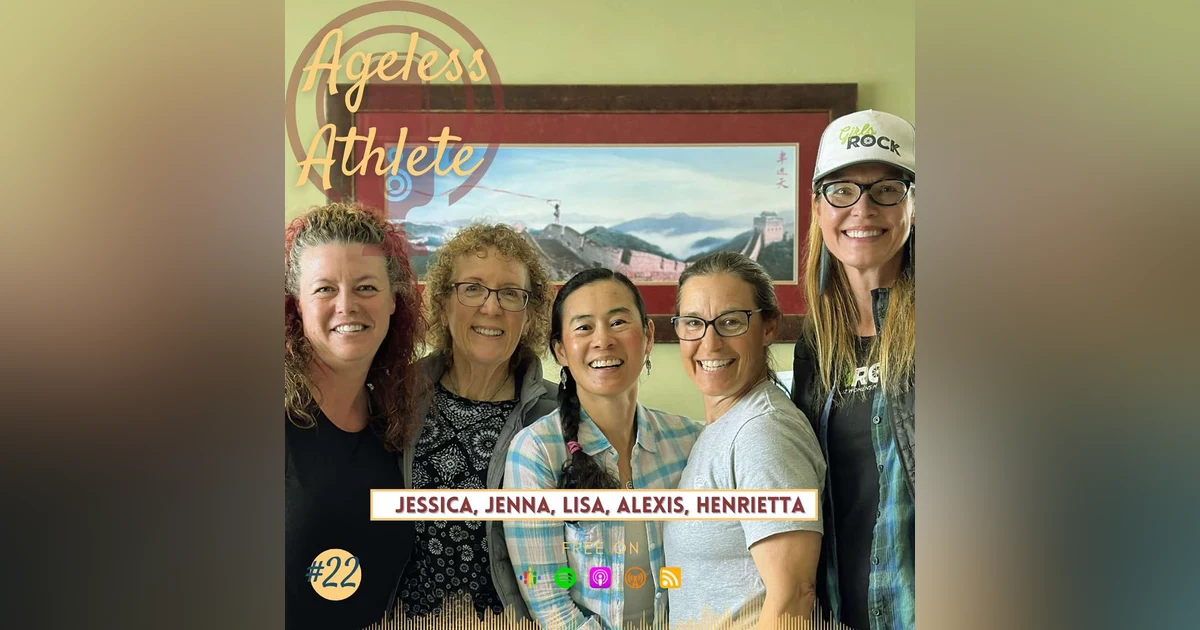

“I'm not a 70-year-old woman on the trail, I'm a free spirit dancing with gravity.” - Henrietta Stern, mountain biking icon 🚵🏽♀️ 💜 This week, we’re breaking the mold with not one, but FIVE remarkable guests – all powerhouse women from the San Francisco Bay Area mountain biking scene. Meet Jessica, Jenna, Henrietta, Lisa, and Alexis – a group of community entrepreneurs, passionate riders, certified instructors, and social leaders who are changing the face of mountain biking. I was enthr...


“I'm not a 70-year-old woman on the trail, I'm a free spirit dancing with gravity.” - Henrietta Stern, mountain biking icon 🚵🏽♀️ 💜
This week, we’re breaking the mold with not one, but FIVE remarkable guests – all powerhouse women from the San Francisco Bay Area mountain biking scene.
Meet Jessica, Jenna, Henrietta, Lisa, and Alexis – a group of community entrepreneurs, passionate riders, certified instructors, and social leaders who are changing the face of mountain biking. I was enthralled with their stories of resilience and transformation, shared with wit, joy and candor, and so will you! 🙌🏽
We uncover how they -
- Navigated cultural expectations and overcame physical setbacks to pursue their passion
- Discovered the power of female camaraderie and built a supportive community on and off the trails
- Became advocates for inclusivity, expanding access to mountain biking for people of all ages and backgrounds.
Listen for:
-The importance of finding joy in movement and connecting with nature. ��
-How to overcome fear and build confidence through proper training and supportive community.
-Tips for staying physically and mentally strong to enjoy an active lifestyle at any age.
Resources & Organizations Mentioned:
Girls Rock MTB: https://www.girlsrock-mtb.com/
MORCA (Monterey Off-Road Cycling Association): https://morcamtb.org/
Ninja MTB: https://ridelikeaninja.com/
San Jose Composite NICA Team: https://www.sanjosemtb.org/
Silicon Valley Mountain Bikers: https://www.svmtb.org/
Sea Otter Classic: https://www.seaotterclassic.com/
National Interscholastic Cycling Association (NICA): https://nationalmtb.org/
Fort Ord Recreation Trails (FORT) Friends: http://www.fortordfriends.org/
Little Bellas: https://littlebellas.com/
Bike Instructor Certification Program (BICP): https://www.bicp.org/
City of Santa Cruz Parks & Rec: https://www.cityofsantacruz.com/government/city-departments/parks-recreation
Connect with our guests:
Jessica Tseng: Instagram: @theladiej
Jenna Graham: Instagram: @bcgraham2021
Lisa Birch: Instagram: @didsomeonesay2wheels
Alexis Morgan: Instagram: @lexibsc
---
🚀 Love the show? Here’s how to support it
If something you’ve heard here has stayed with you, made you smile, or helped you keep going, I’d be honored if you’d consider supporting the show. 👉 https://buymeacoffee.com/agelessathlete
📰 Subscribe to the Ageless Athlete newsletter !
1-2x a month, no spam. We share behind-the-scenes reflections, longevity tips, and athlete wisdom you won’t find anywhere else. You can sign up at https://www.agelessathlete.co/newsletter/ 📩
33:50 - [Ad] Resilience Podcast Series
34:14 - (Cont.) 5 Women Who Refused to Slow Down — How They Found Strength, Community, and Confidence Outdoors
1:13 Welcome back to each just athlete. I'm your host Kush can deal well, and I am so stoked for today's episode. Why. Well, because you're breaking the mold. Instead of one or maybe two guests. I am joined by a powerhouse group of five. Incredible women from the San Francisco bay area. Mountain biking scene. These women are transforming the face of mind, biking in California. Friends. If you have been with me so far, I am so grateful for you for continuing to tune in. If you have listened to this show for three episodes or more.
1:55 I would so love it. If you would leave a review on apple podcasts Or wherever else you find your podcasts. If you have just joined us. Would love for you to keep coming back to the show. This is not your average interview. These women, they gathered up in Santa Cruz and the field up on generous and famous frittatas To make time to speak with me today. They are so excited to share their passion for mountain biking and incredible community. They have built together. Get ready to meet. First Jessica, a former tech leader who created in Silicon valley for the Redwood forest to empower them through my making.
2:38 She coaches, mountain biking teams. And she races, Enduro and downhill. Jessica is a total rockstar and I am so grateful to her for introducing me to the rest of this group. Jenna. He is a battalion chief. The 25 years in a bay area fire department. She has been writing for 35 years. Coach's for ninja man biking and even placed in her age group at the Sierra classic. Did I mention she's also a pilot. Uh, rock Labrot and an adaptive instructor. She's an audit on badass. Henry is 70. She didn't start mind biking until she was 50.
3:21 Wow. Now she's a certified instructor. She leads rides for girls rock. And marker. And continues to raise Enduro. Well, yeah. She proves it's never too late to shred. Lisa is president of Mirka Mirka. is Monterey off-road cycling association. And a certified instructor who grew up riding dirt bikes, and now shares a love for two wheels with countless others. And finally. We have Alexis. Who is the president and co-founder of cause rock. And organization dedicated to creating a welcoming and supportive space for women in mind, biking.
4:02 Veeva. Dive in. To the inspiring stories of transformation. Resilience and breaking down barriers, you will hear of how the navigated cultural expectations. Overcame physical setbacks and discovered the power of female comradery on and off the trail. They will explain how they changing their traditionally male dominated sport by creating supportive spaces for women of all ages and backgrounds to learn, grow, and thrive. They will also share the secrets for staying fit. Fueled. And mentally strong, no matter what life throws their way. Plus, we will uncover the magic of organizations like gastroc and Mirka.
4:47 Shining a light on the dedication to inclusivity and expanding access to this incredible sport. So well, It doesn't matter if you're a seasoned Strader or just curious about exploring the world of mountain biking. Get ready for the really fun conversation felt wet. Lots of laughs inspiration. Some. Great stories. And breathtaking scenery. You might even find yourself inspired to head the trans yourself. Let's roll. Hi.
5:28 We are recording with the ageless athlete podcast this morning. Normally I speak to one or two people today. I am blessed and fortunate to have, not one, not two, but five incredible mountain biking athletes on the show. Just to start off it, if you guys can please tell me your names. tell me where you're from and also share what you had for breakfast this morning. right. Um, we can start with him. I'm laughing. Uh, my name's Henrietta Stern. I'm from Pacific Grove, California.
6:08 I had a little pre breakfast of oatmeal and a smoothie, but the main event was a delicious frittata made by Jenna. my name's Jessica. I'm from San Jose, California. And I did have a pre breakfast as well. Um, I had a little bit of granola with slices of banana in it with milk. Um, and Jenna's awesome frittata. Alexis Morgan, I'm from Santa Cruz and I had virtually the same breakfast as Jessica. Blueberries as well and frittata for my brunch. Yes.
6:48 I'm Lisa from Salinas, California and I had my own version of Nut and seed and coconut cereal this morning, and then the frittata, the infamous frittata. Good morning, I'm Jenna, I live in Aptos, California, and, uh, yeah, kind of going with the flow. I had to have a little something before I hit the trail this morning, and then frittata with the group. She's the infamous maker of the frittata. Alright, I'm so glad you guys could be together. I am really missing out on me, me not being there in person myself. And, uh, thanks also for sharing this little sneak peek into, let's say your, uh, nutrition strategies.
7:38 There's a pre breakfast involved and then there's this proper breakfast. Uh, hopefully, you know, this, uh, this recording will be more fun and, and not, not a grueling, uh, grueling race where you, uh, will need to, uh, refuel again during, during the conversation. Let's start with you, Jessica. Jessica, thank you again for bringing this great group together. Before you became a mountain biking athlete full time and all the other things you do, you left this place we, we met at, where we worked together in, uh, in the tech industry in Silicon Valley.
8:19 And now you've made it, made it a mission to, uh, empower women through mountain biking full time. Can you share a bit more about what you do and what made you take up this transition. uh huh, sure, yeah. Um, yeah, so Kush, I had the pleasure of working with you and at Airbnb, um, yeah, it was, uh, I worked in the corporate world for 20 plus years, left it at the end of last year to, to do this mission of mine full time, which is empowering women through mountain biking. all of us here, we mountain bike, and it's something we're extremely passionate about. Um, it is something that can be challenging, mountain biking.
9:02 And this sport is very intimidating for females. So, I'm a mountain bike coach, and I've taught both men and women. And, um, women are more thoughtful when they mountain bike, um, when they approach things. and they can be more fearful of getting hurt and tackling something that might look scary. Um, and so, um, you know, my mission is to empower women through mountain biking. Um, a lot of times I talk to women that have never mountain biked before, and they look at me in their first sentence as always, well, I don't want to break my bones. Um, and I can tell you, that, you know, we, we love what we do and we're not here to break our bones. Um, our entire mission really is to inspire confidence in girls and women through mountain biking and to build a community around this.
9:49 So, um, I won't lie. This is a pretty tough sport. But what I love about this sport is, is that it teaches people grit. Perseverance and courage. Um, I can tell you, I'm inspired every day when I take girls and women on the trail. Um, they see a feature they're nervous about, um, and then they try and try it, and then they overcome this fear and they successfully tackle it. thanks for clarifying this right away that, you did not undertake the sport to break bones, but you did it to, uh, go out in the outdoors and test your mettle and all of that. Any other common misconceptions you want to clear right away about the sport of mountain biking?
10:31 Absolutely. Um, misconceptions, um, well, I mean, Um, I guess when you say misconceptions, I mean, it's a really fun sport. Um, mountain biking can be, you know, a variety of different terrains. for example, you know, sometimes a trail, can be really mild or flat, um, and, you know, when, when, uh, sometimes a terrain can be pretty technical. So, um, for example, here in Silicon Valley in the Santa Cruz area, um, you know, we can ride through grassy fields or redwood forests. Um, you know, we're climbing hills, sometimes we're descending over technical routes and rocks, um, the terrain can sometimes be, um, you know, steep, it can be gnarly, um, sometimes it can get really, really narrow, um, and what we call single track.
11:23 Um, and what we're doing is a lot of times we're descending over these obstacles and features with speed. Um, so I'd say, you know, it kind of describes our sport, um, a little bit, you know, it can be mild or it can be pretty technical. Sometimes it can be scary to people. and what's super great about this sport is we're out there together. enjoying the outdoors. Enjoying these hills, enjoying the forest, and just, um, you know, watching each other tackle these challenging, uh, obstacles on the trail and being successful at it. Yes. You're out there riding these beautiful trails. we're lucky to have so many of them in the San Francisco Bay Area.
12:04 What is your favorite trail here? my favorite trail, it's actually closed right now, but, uh, on the weekdays, um, but my favorite trail is probably, um, what we call Sokol Demonstration Forest, um, out there, um, there, there's a variety of trails, um, there's one trail that's pretty world famous, it's called the Flow Trail, um, a lot of it is human made, um, and it's very flowy, it's a downhill trail, you have to climb, um, Pretty hard to get up there and then it kind of flows through the forest among the trees and it's a single track. Um, and it's just an absolutely beautiful trail. Um, my favorite trail out there is probably Braille, which is next to the flow trail.
12:46 Um, it's technical. It's steep. It's got roots and I just love climbing that trail because it's natural. it's out there. It's beautiful. It's hard. And it's also just a ton of fun. I've been hearing about the Floor Trail for many years. Uh, one of these days, I hope to make it down there and, uh, Yeah, maybe, uh, I'd be lucky to have one of you join me on that ride, Absolutely. I'm a minority male, uh, I'm an Asian male and I often do these sports where. Traditionally, they have been dominated by, let's say, uh, white men. It's changing for, for the better. Seeing women out there whether I'm climbing or, or surfing or whatnot, again, that is changing, but still the representation is not quite there.
13:34 You are an Asian female, which I think is even more rare to find, uh, women, minority women out there, uh, doing these, uh, sports. how do you navigate some of the cultural, uh, norms and expectations, with some of your upbringing, with what is expected from you, perhaps, what your family expects from you, um, what your community expects from you, and how do you kind of manage those, expectations people have? And, uh, what has been your experience? Yeah, um, I have to say, um, yeah, I've never considered myself a sporty person. Um, when I was growing up, I actually never did sports in high school or college.
14:19 Um, and I only started mountain biking later in life. Um, I grew up in LA, in Los Angeles, and in a very traditional Chinese family. Um, you know, my traditional mom taught me not to get too much sun. Don't get hurt. Don't climb trees, you know, sit with your legs closed, walk like. So, um, yeah. So when my husband introduced me in a mountain biking, I just felt so empowered. Um, and it really made me feel tough. So, every time I rode over roots and rocks that I was scared of, I felt really good. Um, so I wanted to share that inspiration with other women.
15:55 So now I'm a mountain bike coach for kids and adults. Um, and I'm on the board of several mountain biking organizations. Um, and my mission is to inspire more girls and women into this sport. I started racing in my 40s and started teaching mountain biking, um, in my, in my late 40s. and, uh, started racing in my early forties and, um, started teaching in my late forties, and I'm turning 50 this year, and there aren't a lot of older women racing in downhill or enduro, um, which is what I've been doing, um, this year. And I think it's really important to continue to see female faces out there on the race course, whether they're Asian or not. You know, just seeing women in the sport is great.
16:35 and I have to say, um, so, so a great, uh, mountain biker once told me a quote that mountain biking is a great equalizer. And I absolutely love that quote because it doesn't matter what you look like or what you do out there. or your level of fitness. Um, we all get together and we have so much fun on the trails and we make these lasting friendships and just, we just meet extraordinary women and we support each other. So I just absolutely love that sport because of that reason. Great answer. finally, Jessica, you left a perfectly good career. One that we shared a little tenure Yeah. to take up this cause full time. What was maybe one key reason why you did that?
17:18 I have to say my mom probably wouldn't have approved of me doing that. My traditional mom, but you know, I've been thinking about this for a while and yes, you're right. I mean, yeah, I was, you know, being Paid pretty well and managed a large team. And I've been thinking about this for a long time and, you know, I'm hitting my 50, hitting 50 this year. And, uh, you know, I thought I should try it, you know, why not just do it? I mean, this is something I really believe in. Um, you know, while I was working in the corporate world at Airbnb, I had started. Teaching already. Um, and I've been, you know, with girls rock for about nine years or so.
18:00 And so I kind of knew what I was walking into, but it was also just, um, you know, saying goodbye to something pretty big in my life that took up, I don't know, a huge part of my life walking away from the corporate world and, you know, doing mountain biking full time. Um, but yeah, I mean, since I've left the corporate world and taken this up, I'd say I have no regrets at all. I absolutely love what I'm doing and I'm just inspired every day by what I do. You are evidently touching and influencing people in a very fundamental way. And this is a great segue to hear a little bit about Girls Rock, this organization that you just mentioned. So maybe turning this over to Alexis, can you tell us first, who are and why did you found Girls Rock.
18:49 And what does Girls Rock do today? so my name is Alexis Morgan and I live in Santa Cruz. I was not technically the founder of Girls Rock. My friend, Jessica Klodnicki founded it when she was running Bell Helmets. And the idea was that she would She wanted to get women together to ride bikes, uh, and she was just starting out in her own mountain biking journey and had discovered it and wanted to get more women out there because she thought, um, it would be a way for her to learn how to mountain bike.
19:31 she was right and she continues to mountain bike today, but she had to move away for work. And so when she moved away, she handed off the keys to the organization to myself and to a woman named Julianne Klein. And together with a bunch of women who were involved in the group already, we decided, really the way to keep this going, When people, you know, inevitably move on and have other things to do is to create a non profit so they would have another life, um, beyond us. And that's what we did in 2017. And So the whole purpose of Girls Rock is to provide rides and resources to women and female identifying people.
20:21 and we, our core offering is a monthly social no drop ride that's free. Uh, it's hosted by various, businesses and Santa Cruz. And what we do is we meet at the host and it's usually a restaurant, a brewery or a wine tasting room. And we meet there in the morning, we break out into smaller groups by ride level, and then we go out to the trails and we have a great time. And when we come back to our cars, we usually stick around for a bit and socialize. So that's what we do, and we've been doing that for 10 years in June, so we're really excited that it keeps going.
21:07 Well, early congratulations on your upcoming anniversary. I was doing a little bit of research this weekend for our chat this morning, and I happened to chance upon this lovely little video of a group of you guys going out for a ride. And, the energy and the excitement was contagious. I am wondering If you've had a couple of moments recently where you felt, aha, this is why I do what I do. It could be where perhaps you felt transformed personally, or it could be, one of your students or fellow writers go through this big elevating change.
21:58 Would love for you to share. so many moments where I'm reminded of, uh, why we do what we do. Um, I can't even count the number of times I've said to myself, well, that was totally worth it. And usually the scenario involves me guiding a group of women and there's somebody Who's very quiet and they're in the back and they said they were not sure that this was right for them and then by the end of the ride they're smiling and they're giving people high fives and they are totally engaged.
22:43 And, um, participating with, uh, with the rest of the group. So I just, I like to see people brought along and realize that, yes, this is for them. Uh, the sport isn't necessarily about, getting rad and going fast Be loud and gnarly, um, it, it's perfectly fine to just ride, uh, off road in the dirt and enjoy the trees and the blue sky and hear the birds and be that kind of rider too. So, Hang on. So can, can just anybody like show up if they are female identified and they are interested in mountain biking?
23:27 What is like the, uh, like if somebody is listening to this podcast, it gets inspired. Can they just go to your website, sign up for a ride? Uh, do they need to have a mountain bike with them? Do they need to pay something? Like how does, how does just an average person, uh, engage with It's completely free to register and show up. Uh, we do ask that you bring a mountain bike, uh, but we do point people to area shops and brands that demo bikes, so you don't have to own it, just bring it. Um, to the ride and you'll be fine. So, uh, your mountain bike, your helmets, and, uh, some water, and we provide basically the rest, a guide to make sure that you get home safely, and, um, we'll make sure you have a good time out there on the trails.
24:15 Sounds very enticing. I, I'm sure like when I started mountain biking, this was such a big question, Mark, like how do, how do I get started? You know, I was just asking questions around and I finally ponied up the money and this was during COVID. I got myself a mountain bike and, you know, took some steps and. It was always a little scary, you know, going out and learning things on my own. So the fact that you provide this platform and this community where people can just, uh, come in and learn from others, I think it's a gift. So it's a gift to the community. Another organization that is very cool in our midst, it's called Morca. we have the founder of Morka here. Lisa, are you the founder of Morka?
24:57 What's your engagement with Morka? What is Morka and who, who are you? so Mark is the Monterey Off Road Cycling Association. I'm not the founder. I'm the current president in my 3rd year. I think I'm the first female president. I'm looking over at Henrietta because she's been on the board for a couple of decades. and the year that I joined, we went to a majority of women at that time on the board. So four out of seven, I think we're currently at three out of seven, but it changed the dynamics quite a bit in terms of representation. And the organization that's in Monterey County and there's probably three things that we spend our time on.
25:39 It's a fully nonprofit volunteer led organization, excuse me. And 1 of them, this is a culture of mountain biking is to be a community and nature minded and to give back. So we actually groom, maintain, repair and create trails. With full cooperation and blessing of the land managers, and we represent the mountain biking community in the area when we have the input from them right for that. So, many, many, many volunteer hours throughout every week go to trail maintenance and trail work. And that's maybe one of the things that I think people who don't mountain bike don't realize because a lot of times when we're working in trail systems, they're multi use trail systems, like they are in our local area, right?
26:29 It's for hiking, it's for equestrians, um, runners, as well as biking. It's all multi use and we're not doing it so that just bikes can be on the trail. It's got to be open to everyone on the trail. And so we're also promoting a culture of You know, like mutually greet people and welcome them and, uh, oftentimes when the, when the land managers want help with trail systems and local stuff, you don't see hiker groups showing up to help that you don't see equestrian groups showing up to help that they don't rally around in a community. The way in mountain bikers will show up and give their blood, sweat and tears and their free time to maintain trails for everyone to be on.
27:12 I know Alexis has sore forearms today from working on creating a new trail this past weekend. Um, so that's one of the main things we do in the Monterey County. We also lead free rides monthly, and we break it out by beginner, intermediate, and advanced groups. And it's the same concept as Girls Rock, except that it's co ed. But we have the leader, and we have the sweep. We make sure to cater toward keeping the group together. Everybody's got to have fun. Everybody's got to feel safe. They've got to come back in 1 piece. In fact, not just come back in 1 piece, but come back, looking forward to signing up for the next 1. That's the ultimate goal. Um, so that's the 2nd thing we focus on. And then the 3rd thing is really on exploring new opportunities for relationships with local land managers so that we can expand access to some of these.
28:00 Public lands or even private lands, um, just based on good reputation and good partnership with land managers and with the community. so many good gems you share that I want to pick on a little bit. One of the points I can agree more is I, feel that the adventure sports communities, the niche ones, we have to work double as hard to claim our space and not just claim our space, but maybe extend that handshake. even further out to demonstrate that the work we're doing to protect access and maintain these systems, they improve things for everybody, not just for these, uh, obscure, uh, you know, thrill seekers, as sometimes, uh, these, these sports are labeled as.
28:49 One is of course, thank you for, for all the things you do. One thing I noticed is, for example, I live in San Francisco and I, I like to ride around here a little bit. I find that Marin County, just north of us, which is ostensibly the, uh, the birthplace of mountain biking has so many single tracks that are closed, right? We, we find that, you know, you can hike there. You can even ride your horses there. But you can't ride mountain bike. So I'm wondering why, why did that happen and what are organizations such as yours doing to maybe reclaim, uh, trails that are either closed off or not available to mountain bikers and bring them back into play.
29:36 it to others, but at a high level, um, there are at least two main kind of challenges when it comes to mountain bike access. One of those is The speed differential, meaning when a mountain biker comes down a trail and suddenly comes upon a hiker, that speed difference can be quite startling. Right? And so if you don't have a really good etiquette, uh, that we advocate, like having a bell that people can hear you coming and that bell doesn't mean you hear me. So get out of the way. That bell just means I don't want to scare you. And when I do come up to you, I'm going to pass you slowly.
30:16 I'm going to say hi. I'm going to be nice. Right? So some of that comes down to culture. Horses are, you know, prey animals. Uh, they're flight based. And so everything scares them. And that also comes down to etiquette. When you approach a horse on a bike, don't assume that the horse is comfortable with a bicycle and look to the rider to tell you what to do. Right? And so a lot of these organizations like Morica. And Girls Rock and many others educate the writing community on how to be a good and responsible partner in the community so that you don't scare and even unintentionally scare or endanger someone else. So that's 1 thing.
30:57 And we make a lot of inroads with land managers when we have official policies that we're sharing and socializing and putting out there. And not just that, but we ourselves are ambassadors for. for listening. Um, the other thing is that mountain biking can, I mean, really hike, I would argue horses as well, um, contribute, can contribute to a lot of erosion, depending on how the trail system was built. Okay. And so it can be quite challenging if, especially if you're not a mountain biker and you don't really understand. Um, what does and doesn't cause erosion on a trail from a bicycle any more than, say, a hiker or an equestrian?
31:40 I think mountain bikers or mountain bikes get a bad rap for some of that, that they don't necessarily cause. So that also comes not with just, hey, we have a bad reputation, let me change your mind. That comes with going and being the first one to reach your hand forward, right? And joining the conservation groups and preservation groups for nature. and being a part of the solution and, you know, standing out front with that. and I do see minds slowly being changed. I just, uh, you know, like. The Bureau of Land Management just made a policy where, depending on, you know, the local land manager, e bikes are allowed, certain classes of e bikes are allowed, which was something that, you know, was considered both of those challenges. One is the extra potential speed of an e bike and also the extra weight of an e bike, potentially causing more erosion, right?
32:27 A lot of these maybe are misconceptions. They come down to how the rider uses them, how the individual uses them. So it comes down to education and relationship building in a lot of cases, but I'm sure not in all cases. And Alexis and Henrietta have like probably more history on it than I do. you know, these trails, to Lisa's point, are very multi use. And so a lot of times, you know, there are different user groups that have different misconceptions, right, among different groups.
33:50 And so Silicon Valley Mountain Bikers is actually going to be doing an event in June, where mountain bikers are going to work with equestrians. We're going to have horses out there and we're going to be handing out bike bells. And so the idea is that mountain bikers can work with equestrians. Um, you know, we can provide bike bells to mountain bikers so that they can, you know, have a, you know, nice ring when they're coming down the hill and equestrians can be aware, right, that a mountain biker is coming. And just some etiquette and some tips to mountain bikers that, you know, a human's voice is actually very calming to a horse. So, um, you know, to educate mountain bikers to let them know when you're coming down the trail and you see a horse, Um, you know, if you just speak, you know, instead of the horse seeing.
34:36 You as a machine with a helmet on a machine, if they hear your voice, Calms them. And you know, this kind of working together mountain bikers along with equestrians will, um, I think will do a lot for the community. Sure, I think what you're doing is so important because the education goes both ways, you know, it's not just educating other user groups, lane managers, it's also educating us ourselves on how we need to exercise proper etiquette and you're right, horses are skittish. Lisa, going back to you, another thing that I wanted to ask you is something pretty important. You talked about how once you joined the board and maybe at that time or over the, over time recently, the, the gender Dynamic shifted, right?
35:27 So now maybe the representation of a female identifying writers. improved for your org. How has that shifted the work that you do and how has that shifted the relationships you have with, uh, again, these organizations, land managers, et cetera, that allow us to keep playing. Yeah, I'm, I might let Henrietta add some things on, but it, it certainly. has made a difference in terms of, at least on the board, um, personality wise, the way women collaborate can be different from the way men collaborate.
36:09 And so I do feel like I observed more kind of creative collaboration. Um, and in working with land managers and other organizations now, I find that We're working more directly with some of the women in those organizations, like some of the major rangers in the Fort Ord National Monument, um, our relationships with Girls Rock, for instance, things that I don't think we're nearly as prominent. They were more of a 1 board member had a relationship, but now it's more of the organization has these bigger relationships. And then, in terms of attracting writing community.
36:51 I noticed that it went from probably mostly women only in the beginner group to now I usually have at least half my group and intermediate is women. I usually see women joining the advanced group. That's quite common. So I think the representation matters and helps as well as far as growing the community. And, yeah, I, I would like to see personally more diversity in terms of ethnicity, you know, um, more underserved communities coming forward and joining and being part and having a voice at the table. I see that as definitely something that more guys working on.
37:32 I know that something girls rock works on that. It matters a lot to have that diversity and inclusion in the community. So I, I do see a shift in the tides, at least at I'll just add to that and kudos to Lisa, she's an excellent project manager as her, um, her job, but she's also a wonderful project manager as a board member and someone who really is, has enabled us to reach out to certain groups that were a little leery of Morca. Because of certain personalities are viewed as sort of this male dominated and in a small group of guys sort of in charge, now she has reached out in a variety of different ways, to other groups, some of which are more of people of color, uh, women's groups, that type of thing.
38:18 So. You know, kudos to Lisa for really changing some of those dynamics. Also, if I might add just to the other question you asked, Morca as well as another group I'm involved with called Fort Friends, Fort Ord Recreation Trails Friends. Morca and Fort Friends co sponsors the Safe Passages Program, and that is something that the Bureau of Land Management started, but it is, um, encourages people to have good trail etiquette Encourages people to view a video of how, whether you're a, uh, if you're an equestrian, if you're a mountain biker, if you're a hiker, what are the do's and don'ts on the trail and encourages a, sort of a mindset of mutual respect and consideration.
39:01 And we co sponsor this by anyone who takes a little quiz, watches a video and takes a little quiz. has a, uh, free opportunity to become part of a monthly drawing where the winner gets a 50 gift certificate to REI. So, Morca and Fort Friends co sponsor that by paying 300 each to the program to, to, um, have the 12 months of the 50 gift certificates for people who learn about safe passages. So, everyone feels safe and secure and having fun on the trails. Henry, thanks for, thanks for sharing that. Uh, we will definitely include information about this program in the show notes for this.
39:43 So more and more people are, uh, Made aware and maybe apply for this program and, I think getting the word out is so important and. The work that you and Lisa and others do, it's evident how powerful that work is in, in, in a three dimensional way. You know, uh, going back to you, Lisa, uh, switching gears kind of narrowing down the focus from your work as an advocate and, uh, as a community builder to, to your journey as an athlete. I believe you grew up writing. dirt bikes Yes. and skateboards. Yes.
40:24 Yeah. Awesome. Awesome. what I was going to ask is, those are not spaces, you know, where we again, tend to see them play and more so, you know, again, maybe going back a couple of decades, was it a big deal for you to discover this world of women mountain bikers? Yeah. So that was, that was a very different moment for me discovering women mountain bikers because I definitely grew up not ever doing organized sports. They were always solo sports. They were always go out on my skateboard. And I had two brothers that were a year and a half younger than I. And so we were often to trio, and riding a lot of dirt bikes, doing a lot of motorcycling, and they were all solo sports.
41:10 And they were generally in male dominated spaces. Pretty much every sport I've done has been male dominated. And I'm used to it. I grew up with brothers. I grew up with lots of, you know, that was what my family was. That's what our friends were. And the first girls rock ride that I did, it was, it's very unlike me to sign up for some large event with a lot of people in one shot. I'm an introvert. I'm, I'm not shy at all, but I am an introvert. So I'm, Not going to go for large crowds. It's not going to be my go to, but I really wanted to, how am I going to learn the trail system? How am I going to even know what's out there?
41:51 And one of the things I'd already learned from Morca rides as a, you know, just an attendee was I learn a lot just by being around other riders. You learn etiquette that you don't know by just reading or figuring it out online. So when I went to this first girls rock ride, I was like, there's a, there's a lot of reasons for me to do this. Let's show up. And yes, it's a very large crowd because it seems like it's more than a hundred riders oftentimes when we're there, especially pre pandemic. and I'm tend to be quiet and don't open up quickly. Um, but I'm there to ride and that's what I'm used to doing. Right. I'm there to do my sport. Um, They couldn't help but like melt that outer shell on the ride like much as I tried to be like I'm here to ride Right.
42:36 It was like hey, you know, what what kind of bike is that or I like your helmet or so and I was just kind Of like, okay, you're all so nice You know like halfway through the ride I'm finding myself chit chatting with them and friendly and going home with a couple of numbers of them people, which like the numbers on my phone were like maybe 10 and they are family members, you know? and so I really, at the end of that ride on the drive home was like, Wow, I have not been in a space like this before, ever, and it made a huge impact on me so much so that by the time you guys came around and did your January ride in Fort Ord, I signed up to be a guide because I was like, I know the trail system.
43:19 I can help that way. And if I could make any difference, have any other women have the same experience where they show up and realize. This is supportive. It's uplifting. It's friendly. It's infectious. No matter how grumpy you are, you're probably going to smile. Um, and you're just going to want to come back again. So yeah, I immediately wanted to volunteer and be part of it because that was such a different experience for me. And I just wanted to put in a plug for what Alexis does for these rides, um, you know, Lisa mentioned, you know, over a hundred women or close to a hundred women show for each ride and these rides are all completely volunteer run. So, um, what that means is, you know, from set up to taking people out on the trails, everybody's a volunteer and we do this every month.
44:03 Lisa, thank you for sharing that. I was getting goosebumps hearing your story and the part about being a volunteer. I think it cannot be overstated. I think sometimes when we do something without the expectation of a reciprocal return, it touches us deeply. And we yeah, we give in a way that. I think infects the person who's receiving it. And I think they in turn try to do their best with the gift that they get, they're getting Alexis. Let me ask you this. So in addition to what Lisa just shared, how important is the support of women in creating a positive and encouraging environment for other women for learning and growing?
44:54 and growing in this sometimes scary, sometimes obscure world of mountain biking. my personal experience, I've noticed that women tend to be more comfortable and more forthcoming, um, more extroverted, more vocal when they're in a single gender atmosphere. when I was in high school, I decided to go to a girl's school, so I voluntarily did that on my own and it was a great experience. I observed that, uh, the girls.
45:34 Seemed more likely to speak up in class to volunteer to be the one solving the problems and math class, to be presenting in history class and so on. And so when, as I've gotten older, I've sought out, um, all women, uh, spaces when possible. And so I was really happy to be part of. Girls rock. When my friend started these, um, all women's rides, I thought how refreshing, you know, I'm going to get to meet women who were riding at my level and I won't have to be chasing, uh, these boys around the trails. And that's exactly what happened.
46:14 So I think you're, you're just more likely to find people who are riding at your level and therefore you're more likely to have more fun. And I think that women tend to be supportive of one another when they're trying to tackle features. and they give each other the time and space to do that. Uh, they are, they like to communicate with one another and, uh, ask questions. So it's really just provides more opportunity for learning and makes people have a very positive experience. Such an excellent point where, yes, where if you level the playing field, then somebody who might be a minority in a different, in the same space can suddenly find their vocal cords.
47:05 and, uh, you know, grow in confidence and grow in courage. Any cool story that you can think of where you found this new mountain biker come to your organization and transform from, let's say, you know, a little mouse into a tiger. I have a couple of favorite examples. Um, Fife, who's not here, but who's part of the class of instructors that, uh, these ladies, um, all became certified together. Uh, she started with our group when she was a graduate student and she hadn't mountain biked, but she was a climber.
47:48 So outdoorsy, but, um, new to mountain biking. And I remember her showing up and, you know, barely owning, um, a bike. I think maybe she was borrowing a bike and now look at her just, you know, a few short years later, she's, uh, able to instruct people on fundamentals. Uh, Emma from, um, Santa Cruz mountain trail stewardship is another example like that. Same thing. She's showing up. Hadn't been mountain biking for now. She is involved at the highest level of that organization, um, working full time to expand trail access in our area.
48:30 So, I'm really happy to have, um, to see these women grow into those positions. And I think that, um, our group was pretty instrumental in that. This is a theme that I hope we have time to explore a bit further on some of these. character, and maybe even career building aspects of mountain biking. Talking of career, we have somebody here, I believe, who besides being an extraordinary mountain biker is also a firefighter. Hi, Kush. Jenna. Hi, Jenna. Yes. Uh, please tell us who you are and what do you do?
49:12 I am an avid mountain biker, but I have also spent 24 plus years working in the local Bay Area Fire Department through all ranks. I started as a firefighter EMT, shortly thereafter got a paramedic license, and six years later I became an engineer paramedic, so I was driving the fire engines and trucks. Uh, 16 years into my career, I became a fire captain, and then a few years ago I promoted from captain to battalion chief. So I run the EMS and training division for, for this fire department. Wow. That is amazing are there any parallels between your experience as a firefighter?
49:59 and your passion for mountain biking. I do believe that there's a lot of crossover, just the perseverance that's required, the determination. Um, for me, I have spent a lot of time teaching and coaching a whole bunch of different things from, uh, rock climbing. I do that too. I know that's one of your favorites. Um, from climbing to adaptive snow sports to field hockey, soccer, Um, and a lot of, a lot of teaching in fire service. I'm currently run the training division, but in every rank that I was in, I have spent a lot of time teaching those, those around me, just, I, it's part of a passion. I come from a long.
50:39 lineage of teachers. My mom's a teacher, my grandma, my uncle, whatever. So I just ended up with the best of both worlds by having this awesome career in the fire service where I get paid to help people. It's ridiculous. it really is just fortunate to have that honor and privilege. Um, and then it translates into mountain biking. I spent a lot of years riding by myself. Um, it's this thing that I've been doing since I was 14. I've done a lot of other stuff from division one field hockey to, um, all those other sports that I mentioned. Um, and then when I moved to Aptos in 2020, I saw that Girls Rock had a bike mechanic trailside clinic going on and I signed up and I was so excited because it was COVID, right?
51:22 So they weren't doing the rides initially, and then they were doing the rides. With restrictions, you know, masks and how to have your vaccination and, and that kind of stuff. But the first thing that I got to do was the trail side mechanic clinic. And even partway through that day, um, I realized that I had some things to give there too. So I started helping the lead instructor and, um, you know, helping to teach some of the other students in the class. Cause, uh, let's see if I started when I was 14 and I hit, hit 50 years old last week. Um, so I've been riding for 35 years and you have a lot of incidents on the trail where necessity is the mother of invention and you better learn how to fix your chain and you better figure out how to, how to make a bike go without a derailleur on it.
52:07 And, you know, some of the fixed flat tires and all the, all the other things. So it's, it's make it happen. Sometimes you just have to make it happen. And that's what firefighters do. We roll around in those big red things, the engine, the truck, and there's a whole bunch of tools on it and medical gear. Um, so I've, I've joked a lot about being a guide with girls rock, who's always lost. Cause I don't, I don't usually lead. I usually sweep I'm in the back and I, I say that Alexis lets me do it because I have a first aid kit and I have tools and I know how to use them both. I love that answer and almost a little unexpected in a way because I did not think about The aspect of being resourceful and knowing how to, fix your, more than fix your own flat, fix your own bike has in parallel with being able to be resourceful with, you know, with firefighting.
53:03 I know nothing about firefighting, but I can see that you have to deal with some of the most unexpected of situations, you know, from something maybe as, you know, I don't know, ho hum, as rescuing a cat stuck on a tree. To situations which are, you know, let's say way more, uh, serious with human life and that ability to be ready is such an asset and, you know, again, talking of, you know, Just tactics, being able to know how to fix one's bicycle is so important. I mean, I can, you know, fix my flat and I can, you know, lube my chain.
53:46 But one of the things that's keeping me from planning this bike packing trip to Guatemala is that I haven't yet learned some of the more involved kinds of things with like, you know, Repairing brakes and changing chains and you know finding things on the side of the road to fix my bike up in the mountains. But anyway, another thing I want to talk to you about is again maybe this is Because you as an athlete, you are not sitting at a desk like some of us, you know, when you're not on the trails, you are, you know, you are dousing fires. So what have been maybe some of your hard won strategies to staying fit?
54:29 To staying healthy and for being able to stay fueled so you can give your best whether at work or whether on an epic ride. I will start with food, um, because in the fire service, since you said you don't know anything about the fire department, um, in fire service, uh, we're kind of a secondary family and cooking meals is something that has transformed over the years that I've been in. When I started, we often had two loaves of bread and two bottles of soda and two pitchers of juice. And, um, we had oftentimes pretty heavy meals, but in the last 24 years, we've really transitioned.
55:12 There's water on the table and sometimes like, uh, oh, some of the, like LaCroix or the, we call them work beers because you can't have beer at work. Um, but the like, waters and some of those kinds of things, electrolytes. Much more lean meats and lots of vegetables and that kind of thing. And, and we do that typically very much as a, as a family, but, uh, we'll rotate who's cooking and everybody puts in their, their money for the meal. And one crew will go to the grocery store and shop together. We often get a question of why does everybody have to come together? How come you can't just send one? And that's because we'll put our groceries down and. Run to the rig and respond to a 911 call if one comes in while we're taking care of that task.
55:57 Uh, so we take it pretty seriously, um, feeding the crews and having adequate nutrition and making sure that we are consuming things that are good for us, that fuel us for the incidents that we run on. And we put out fires, we run medical, medical calls, hazmat incidents, confined space, lots of auto accidents, um, and you have to be just, you have to be ready to go at, at any given time. Um, so eating the right things to keep your body and mind ready, ready for that space and place. actually on that note, this is a question I would love to kind of pick everybody's brain on if, if they have had any, uh, important lesson to share.
56:38 So yeah, so the nutrition, the food is good. Um, any supplements that have helped you or have helped others. And then finally, yeah. Any, any, um, mobility or cross training regimen that you advocate, uh, to stay again in good shape. I wouldn't say that I'm necessarily an expert on supplements. Um, I definitely am a big fan of good quality, nutritious food. and trying to get the vast majority of my nutrition through, through that, um, exercise, I, I was very heavily involved in CrossFit for a number of years, and, uh, I come in a five, two buck and a quarter package, um, and it's quite unlikely, and sometimes people even have a hard time believing what they're seeing when I pop, when Off of a fire apparatus in my full gear.
57:28 And they're like, really, this is, this is nuts. This, this person is pretty compact. Um, and in order to be able to do that, the high intensity, constantly varied, functional fitness in CrossFit is just a brand. There's a lot of different ways to get that, that kind of thing that, um, Moving weight because fire gear is very heavy. When I put on my fire gear, the boots, the structure gear, the helmet and the SCBA is almost 70 pounds of gear and then you pick up tools and equipment. So, chainsaw, rescue saw, or a ladder, um, typical chainsaw or rescue saw is approximately 30 pounds. Uh, 24 foot extension ladder off of a fire engine is 71 pounds.
58:10 Um, so you really have to be able to move inside your gear and carry equipment in order to carry out the objectives at any fire scene. Um, you you mentioned that I'm not typically at a desk, but I am currently in a position where I'm at a desk. So I have to be a little bit more intentional about my fitness off duty. So the mountain biking is actually really excellent for, um, having the kind of strength and stamina that's, that's needed for the job as well. Yeah. But I do supplement that with weight training and some rowing on rainy, muddy days here. I can either go to Fort Ord with Lisa or I can hop on my rowing machine and, and get some, uh, additional strength training, fitness.
58:51 And then of course the mobility is a really big issue. So my best way of finding that, um, Mobility piece is to do a little bit of yoga, and I think we have that in common too, I think that you have, I, that definitely is a great way to help the body recover and stretch out and find the, the mobility that somewhat decreases when you're throwing around heavy weights. Yeah. you know, I, I agree. Like many of, maybe some of us on the call. Yeah. I also sit at my desk a lot when I'm doing this podcast. So it's important to, uh, to be intentional about the cross training and the mobility and any other like high intensity exercises.
59:36 Moving on to being able to continue doing sports and athletics and stay healthy, I want to ask Henry this question. Henry, you have been an athlete for the greater part of your life, right? You, I think you have been surfing and you've been snowboarding. And I am guessing that you've had your fair share of injuries and setbacks. What's been the most significant setback that you have had to fight back from? I'm an emotional person, so just let me cry for a second.
1:00:17 Oh, I was. I'm, first of all, I'm not a national ranked, even though I did win nationals one year at the beginning, but, um, I'm not a national ranked athlete, like many of the people who've been on your podcast, but I was a pretty good cross country racer for several years, and I'd win local races, I'd win sea otter classic, which is a pretty big regional race, actually people come from all over the country. So I was, you know, a very good climber. Kind of a, a scaredy cat going downhill, but I did one year in 2010. I won sea otter the next year I was dead last. and I was dead last because I didn't realize it that I had been dealing with atrial fibrillation for several months and couldn't quite understand why some weeks I'm just on fire and other weeks I could barely make it up the hill.
1:01:09 And it turns out I was carted away in an ambulance at the finish line of that 2011 Sea Otter Classic. not able, you know, with a very Irregular heart and passing out and not being able to even get up. Um, there's a funny story. I, you can edit this out, but I have to say it just because I think these folks will get a laugh. I'm on the ground. We had just taken, we meaning many folks in our Morca group had taken wilderness first aid and my one excitable friend is, um, trying to find a pulse to make sure I'm okay. And I, I can't find a pulse, you know, and, and I remember laying there I am conscious.
1:01:50 I'm speaking. Do not start CPR. Anyway, That's crazy. Yeah. they carted away, you know, in an ambulance and up in the hospital and that started a whole saga of You know, medications, feeling very, um, depressed, very suicidal in that my whole identity and world and social life and everything that was wrapped around riding mountain bikes and stuff at that time was gone. And I remember hearing a guy as they were sort of carting me off in the ambulance saying, oh, her racing career is over. And I remember thinking, no, it isn't. But he was right. It was at least that type of racing.
1:02:32 In many tears, two heart surgeries later, um, you know, coming back slowly. I did start racing again at the, and this was when I was 57. This hap, this happened when I was 65. I thought, you know, I can do Enduro because at that time I had taken more clinics. I had gotten more proficient going downhill. And the Enduro racing is, you know, roughly 15 miles, maybe lots of different hills and Dales, but you're not, Racing the entire time you're only raced racing the four mostly downhill time segments and you can take your time going from point A to B to C to D. And so I just fell in love with that immediately, especially the second, um, At least this past year.
1:03:14 The second, you have a downhill, the classic downhill course at the Sea Otter Classic. Dual slalom, which is built just for those four days. And then a few trails at the Fort Ord National Monument are the course and then a long ride back. But again, you're not racing back. You're just getting back. So that really evolved into doing that. ever since, since I was 65, I don't travel all around the world and the country and whatever to do it. It's, but it also has just opened up such a wonderful world of traveling and going to Downeyville and Mount Huff and Lake Tahoe and all these wonderful places where now I'm a relatively slow climber. I do have to be aware of my heart rate, but I'm a much more proficient Downhiller.
1:03:58 And um, it just brings me a tremendous amount of joy to do that. And just this year, to celebrate my 70th birthday, because I volunteer a lot at Sea Otter, I haven't been able to race the dual slalom, but I said I'm not volunteering as much, and I raced the dual slalom, which I just absolutely love, and had a lot of fun, and Jenna and I were with it. in that together. We actually had to race for the bronze medal and she won. What a beautiful and powerful story, Henry. And I was actually also marveling that you were able to share, uh, you were recounting this medical catastrophe that you went through and you were smiling and, and.
1:04:40 You know, just almost giggling the whole time. I think it just shows your, your ability to take maybe what has come your way with this level of poise and demeanor. One thing I want to make sure I understand is you said earlier that you were maybe not as proficient at going downhill. You were maybe better at climbing up hills. Then this episode happened and it changed, let's say your physicality. And you then started taking part in races and events where you had to specialize in going downhill.
1:05:24 Is that, is that correct? Because I'm trying to understand, did you have to reorient your, modern biking so you could cope with this? Medical event. Mm I won't say I, it, your question makes it sounds like I became this downhill racer and that's not the case, but I did become a much more proficient Downhill, or maybe not racing, but just being able to go in areas such as various places in Utah for my 65th birthday, a bucket list event was doing the, um, not the whole enchilada, but the porcupine, uh, What is that called? Porcupine Rim Trail, which is, has a lot of very technical sections and it's a big deal.
1:06:08 I wasn't able to do the whole enchilada because the snow level was 8, 000 feet at that time and the whole enchilada goes to 11, 000. So the shuttle only allowed us to go up, but that was a really big deal. I remember hooting and hollering at the end of that. And that has some very technical sections of, you know, coming through that final little, you know. tunnel. It's like, I'm 65 years old and I just did this and just feeling very happy. But the way I was able to do that was taking clinics and, with my quote unquote racing career over the cross country racing, I actually saw sort of a healer type lady. And she said, what is the gift in this? And my response is this is not a gift at all. I've lost, you know, what I like to do. I've lost my social group.
1:06:49 I've lost this. I've lost that, you know, it was not a gift. But then I started thinking about maybe now I can enjoy, instead of being in training mode, and I have to do a certain ride in mm level of effort, I can literally go out and smell the flowers. I can start aiding beginner groups. I can start giving back to the community. I feel I'm kind of a natural teacher. but to be a halfway decent teacher, I needed to get better skills. So I know that I'm properly making suggestions and recommendations to people. That has evolved. And I wanted to do a kudos to.
1:07:29 Alexis and Girls Rock. They are the ones who really helped co fund all of us taking this, the BICP certified mountain bike instructor course. They've also had a ride guide seminars and, um, first aid clinics and really helping us become not just folks who are taking women out for rides, but folks who know what we're doing. When we're taking women out for rides, and it's been especially wonderful to become a certified instructor, um, learning. I had a few bad habits and really, um, being able to pass on that knowledge. So, I just wanted to add that on to some of your previous questions that Girls Rock has invested in its guides and its volunteers by really enabling us to be, um, you know, literally it.
1:08:19 at some levels of pro level. Um, so that's really neat. So going back in terms of those challenges, um, I just had to literally pivot in terms of how am I going to, um, use my mountain biking skills and how am I going to become a better mountain biker. Because I can't just sort of power up the hill the way I used to, I have to have better technique. So I have to really up my technical skills. And, um, I remember just recently Lisa and I were on this one little trail segment. It had some really tricky little uphill. Roots and things and I made it up it. I was just so thrilled. Um, and I did that partly because of technique, not that I've become this, you know, real strong person, but, you know, the technique really makes a difference, um, and helping to make up for the fact that I just don't have the raw muscle power to just power up something.
1:09:12 So that's pretty cool too. That was great. want to make it super clear to the listeners that this is Henry at 70, and on April 1st, we're out in Soquel Demonstration Forest, riding the flow trail, and she's hucking off of jumps behind me on the trail, like, like a teenager would. So she speaks as, She doesn't have power and strength, but this woman actually climbs hills very well. And she is, she has a mastery of technique in her downhilling that is astonishing for any age, not, not just a 70 year old woman. She's a powerhouse. So I don't want that to be lost on any of the listeners or you.
1:09:56 Mm. Thank you for jumping in there and, uh, Jenna and, uh, yeah. Making that point, abundantly clear that yes, you know, you are a. power of force, Henry, and sorry, just to go back to that point again, it sounds like you found almost some kind of liberation in your medical event where you were freed up from like, let's say the, uh, the pressure of competition to go back and, and thrive in the fundamentals of the sport again, where now, you know, so I just take a funny analogy, you know, you.
1:10:41 And in the surfing world, there is this thing called free surfing where, you know, you kind of take a break from competition and you, then you go travel, you surf on your schedule, you know, you're not worried about like turns and things you're doing. It sounds like that's almost what happened to you. You're like, wait a second, there are all these beautiful places around the world that you want to go mountain biking and they suddenly opened up to you. So I'm not going to say that what happened to you was something, you One would wish upon anybody else, but I think there's like a really strong lesson here, which is sometimes, you know, when like life closes one door, you know, it opens up, uh, you know, another door. what message do you have Henry for older women, maybe older men also, who might be hesitant to try mountain biking or let's say other similar physically demanding And sometimes, yeah, risk producing activities.
1:11:39 Probably the most important thing is the Take a clinic with a knowledgeable instructor because especially as a beginner and an older beginner where certain mistakes can break your bones and you really don't want that. Um, we've been teaching our, our women's fundamental skills for the last almost year now through Girls Rock and the city of Santa Cruz. And we've seen what the, the thing I like to say is two things. One, um, you can teach an old dog new tricks because I am an I am constantly learning new refinements to technique just through working with Lisa the last few months on, we're co teaching, uh, the part two of our, our series, just wonderful refinements and, and, like, wow, I didn't realize that.
1:12:28 And it just opened up a whole new world in terms of a technique called the rear wheel lift, for example. So that's really important is, uh, find a, a private coach, find a clinic. And learn how to do it properly. Um, the other aspect is from fear to fun. If one does take a clinic and learn it properly, and we've seen this over and over again, thinking of one particular person who is very fearful, took a part, what are part one basic fundamental clinics. And, um, And just like, Oh my God, this is so fun. Why didn't I do this years ago? And she was going through a divorce. Her, we teased that her bike is her new boyfriend and she rides every day.
1:13:09 And she's just, her whole life has been so enriched and enlivened. And this is someone in her fifties, um, you know, by. By learning the mountain bike and learning the mountain bike properly that she isn't holding on to the bike and it's taking her for a ride that you're dancing with gravity. You're dancing with the laws of physics. I guess your dance partner and you learn to become the lead. Not not the one being taken for a ride. You are directing that bike and you dance together and make beautiful music. And in terms of one of your questions is for me. And your thing is called the ageless athlete. When I'm on my bike, like on the flow trail and what Jenna was describing, I'm not Henrietta, an age 70 woman.
1:13:54 I'm just this spirit. I'm this, this out of body experience almost where I did grow up surfing. So coming off these berms, it's like banking off a wave. I'm like a little dolphin, you know, going over these spires I just become a spirit and it's that feeling that it's worth the two hours of climbing to get there, you know, and hot and whatever to, to have that, that out of body experience where we're not limited by our, our identities as you know, gender and age and whatever, we're just become one with the trail and it's beautiful. Your words move me the same way they are going to move people listening to you talk.
1:14:35 Your metaphors are powerful. And so is your energy and enthusiasm for the sport. We are nearing the end of this conversation. I had one last question. general to ask you guys, any of you can, um, take the mic, which is, you guys have been athletes for a long, long time. You have been mountain biking. You've also been doing other sports as well. Whenever you do something for a long time, you know, you hit. mental plateaus. I've hit those myself. So any, any strategies that you have found and learned from that have helped you or have helped others you know about, shake yourself up from those mental plateaus.
1:15:21 And get back into, get back on the trail with the, uh, enthusiasm of Henry and the rest of you. Something that I came across when I was in the middle of my grad school program was a program called Mindful Badge, which was a trauma informed mindfulness, program, um, 48 hour immersion. And prior to going to that, I had. I've been the kid in grad school. I was like when I opened, like, are you kidding me? This is crazy. Like, why are we wasting all this time? Um, but after having, like going to some place specifically to actually study and learn about mindfulness, I realized how powerful it is, even if it's as short as just taking a few deep breaths before you start something.
1:16:10 Um, re reigning in that wandering mind and it can be. Powerful, whether it's calming yourself down before an emergency response, you're rolling out the door on an apparatus and you're going to a cardiac arrest or a big fire or something where you don't know what you're anticipating, or you're about to do a new feature on a trail, or you're about to get up in front of a group of people and teach them something, you know, taking a few deep breaths and, and really breathing into, you know, Uh, your, your power as an individual to impact others is a way that I have, that I have learned. So I'm, I'm grateful for that experience because I've learned to translate it not only from my professional work, but into a lot of other things that I do on the, on the side.
1:17:00 Yeah, I'd say for me, um, you know, becoming a mountain bike instructor has really helped me kind of overcome these mental plateaus. I think as Jenna mentioned, you know, sometimes on the trail, there are technical features that seem scary and when you teach somebody how to tackle these things, it's kind of teaching people, you know, I mean, there's a parallel to life, right? Um, you know, life, sometimes there are things in life that are scary. you know, you, you look at this feature, you know, I, you know, In my mind, I'd break down how am I going to show somebody a technique, right? You're breaking down, you know, how do you tackle If you have a plan to how to tackle something scary, whether it be in life or mountain biking, and just breaking it down, um, you know, looking at it, figuring out, having a plan how to tackle it.
1:17:52 Um, and the repetition, thinking about it, preparing yourself on how you're going to tackle it and being able to successfully tackle it. Being around people that are there to support you, um, watching, watching somebody tackle it, that confidence is absolutely infectious. So, um, I think sometimes I reach a plateau. I watched Jenna clear it. And you know, I'm like, Hey, Jenna did it. I can do that. So, you know, I think just surrounding yourself with people who push the envelope, um, helps me, um, push through those mental platforms.
1:18:35 That makes so much sense. Yeah. Structure, repetition, and then, uh, you know, some good old peer pressure can Can move mountains or can take you over the mountain, uh, whatever the case might be. Jenna, that point you made about I think mindfulness or yeah, like any specific ways you do your, uh, you know, your breathing exercises. is it like something like you're following an app and you're doing a certain number of breaths? are you doing some sort of breath holds, some diaphragmatic, uh, exercises there? Like, how do you do that? Like if somebody was to learn there are some excellent apps out there.
1:19:16 Headspace, Insight Timer, Calm. There's a, there's a bunch of different things that people can access easily via their smartphone that are very helpful. And for me, my mind is so crazy that guided meditations are really important. And I tend to choose some that are very short, you know, five or 10 minutes of a guided meditation. And I probably squeeze it in a few times a week, but if I am even just in an intense or stressful kind of environment or whatever is going on, then a simple like box breath of where you're, you take a nice deep breath in over four seconds, hold it for four seconds, exhale over four seconds and repeat that.
1:20:00 That'll clear the mind and prepare the body well to do a lot of different things. Yes. I do a little bit of, uh, meditation myself and, uh, um, I will admit that I don't always look forward to it, but I always enjoy the, uh, the headspace it puts me in afterwards. Closing questions, you guys, mountain biking takes us to these incredible places all over the world. And you guys obviously love the sport and are so good at it. So I have two questions for same questions, but for each of you, first question, What is a dream mountain bike ride you can't wait to go on at some point in the not too distant future?
1:20:50 It could be anywhere. The second is one word which captures why you are so obsessed with mountain biking. I'll answer the easy low hanging fruit here. I'll say it's joy is the one word that captures, and it's the comradery and the, the places we go. Um, I do have a trip planned in August, uh, to Mendocino to a demonstration forest up there that I'm really looking forward to. for me, the word is flow that embodies what makes me want to get out there and ride my bike. I'm also going on that retreat to Mendocino.
1:21:32 It's a multi day, um, thing where we stay in a rustic cabin and then we ride in the Redwoods. So I'm really looking forward to that. And I'd like to ride in Norway. I've been there and I wasn't mountain bike. Well, I was mountain biking, but I did not mountain bike while I was there. And that was a missed opportunity. That it looks pretty incredible. I'm an instigator on that trip to Mendocino. So yeah, it's a beautiful, magical place to be and to be riding your bike. And I'd say community is my word. Um, because that mountain biking is amazing. The movement, experiencing the movements in your body and being in that flow state, all that is amazing.
1:22:19 But then being able to talk about it later with your buddies and revel in those moments is the best part. I'd say for me, the word is empowerment. Um, and, uh, really every ride with these ladies is a dream ride. It really is. So I can't think of anything else. I was going to say flow, but oh no, great minds, great minds think alike. So how about, um, how about freedom or free flow as a, as a hybrid of the two, because that's really how I feel. Um, in terms of a dream, I too, I'm going to the Mendocino retreat, but also I, I would really love to take a clinic in Sedona.
1:23:06 And work on some of those real technical, rolly, rocky features and that kind of environment. I've been there twice, but only for like a couple hours in the morning. And so I'd really love to do more of a weekend type thing and experience that environment. I mean, there's so many, there's so much beauty. I want to go to Tahoe. I want to do those big granite rocks. You know, I want to, it's just so much, we're so lucky. We in California, especially. You know, that within, you know, an 18 hour drive in whatever direction you've got Oregon, which I'm going to next month and, um, you know, we have Mendocino, we have the whole Southwest, this just, we're so lucky.
1:23:50 Yes, we only have one lifetime though. That's maybe the only drawback. There's so many amazing places to explore. It's been a wondrous conversation. I feel I could have each of you in an individual podcast because you have so much enthusiasm, knowledge, and inspiration to share. Thank you so much, each of you, for coming on Ageless Athlete today. Thank you. Thank you. And actually learned stuff about us that I didn't even know. I've had people tell me that they have learned things about themselves. Because, I don't know.
1:24:34 Wow. I am still feeling the goosebumps from the shot. The energy and passion these women have for mind biking and for each other. It is so contagious. I was particularly moved by Henrietta's story of overcoming a life. Altering medical event to rediscover her love for riding in a whole new way. Her perspective and finding liberation and joy. After setback is such a powerful reminder that it is really never too late to redefine what is possible. Indeed. And I think we can all learn something from all of their unwavering dedication to empowering women through my biking.
1:25:17 Breaking down culture. Cultural norms and creating a supportive community where everyone feels welcome and inspired. I hope you're feeling as stoked as I am to hit the trails. After hearing these far-flung stories. Remember to check out the show notes for the links to gastroc more. And all the other organizations mentioned today. Thanks again for listening in to this episode of, is this athlete. A huge, thank you to Jessica. Jenna Henrietta, Lisa. And Alexis for sharing their stories, their wisdom, and their infectious enthusiasm for recreating in the beautiful wild.
1:26:00 Outdoors through my biking. Until next time, keep exploring. Keep pushing your limits. And keep chasing those joyful moments on and off the trail. my friends.