#3 Between Two Worlds — Dual Athlete, and Choosing a Bigger Mission
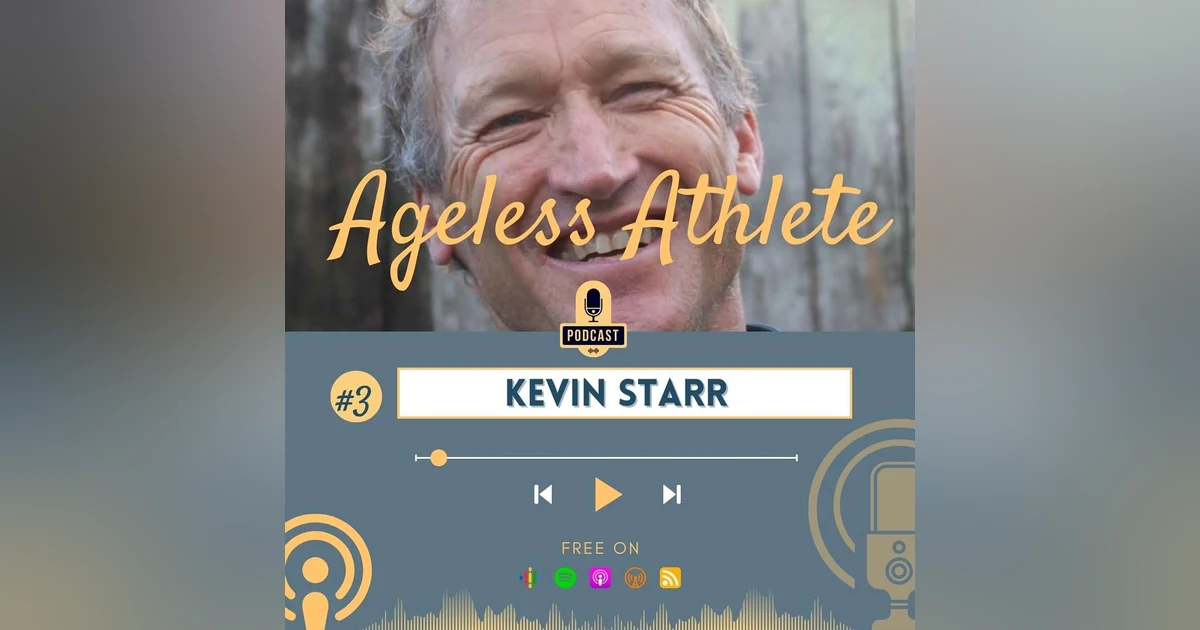


Rare privilege of meeting with Dr Kevin Starr, accomplished rock climber, big wave surfer and social enterprise CEO. Growing up in San Diego, Kevin fell in love with both the mountains and the ocean, started hiking and climbing around California, and went on to accomplish daring alpine ascents in the Karakorams, Peru and beyond. Moving to San Francisco, Kevin found a good mentor and also started learning how to tackle big waves like the Mavericks outside Half Moon Bay. Along the way he left a perfectly good medical career to grow the Mulago foundation that helps global social entrepreneurs design for impact at scale. Listen in for how Kevin juggles a career as the CEO of Mulago, along with continuing to excel in the outdoors, all while keeping his mind and body in great shape. (And did I just invent the term 'jugglery')
---
🚀 Love the show? Here’s how to support it
If something you’ve heard here has stayed with you, made you smile, or helped you keep going, I’d be honored if you’d consider supporting the show. 👉 https://buymeacoffee.com/agelessathlete
📰 Subscribe to the Ageless Athlete newsletter !
1-2x a month, no spam. We share behind-the-scenes reflections, longevity tips, and athlete wisdom you won’t find anywhere else. You can sign up at https://www.agelessathlete.co/newsletter/ 📩
19:22 - [Ad] Resilience Podcast Series
19:46 - (Cont.) #3 Between Two Worlds — Dual Athlete, and Choosing a Bigger Mission | Kevin Starr
1:17 Friends, welcome back. Welcome back to the Ageless Athlete Podcast, where we tap into secrets and stories of age defying, high performing athletes. Today on the show, I have the rare privilege of meeting with Dr. Kevin Starr, accomplished rock climber, big wave surfer, and social enterprise CEO. Growing up in San Diego, Kevin fell in love with both the mountains and the ocean. Started hiking and climbing around California and went on to accomplish daring alpine ascents in the Himalayas, Peru and beyond.
2:03 Moving to San Francisco. Kevin found a good mentor and also started learning how to tackle big waves in San Francisco and around. Along the way he left a perfectly good medical career to grow the Mulago Foundation helping social entrepreneurs globally designed for impact at scale. I can't wait to uncover how Kevin juggles a career as the CEO of Mulago, along with continuing to excel in the outdoors, while keeping his mind and body in great shape.
2:49 Kevin, hey, um, how's it going this, uh, this Friday, uh, foggy afternoon? Well, it seems like it's a La Nina year and the fog is in here at the beach and, um, We always hoped that by mid September we're done with it, but might as well, might as well love it. Yeah, yeah, well, uh, at least today it doesn't seem to be. I think it's a bit overcast, uh, at Ocean Beach, but, uh, but I think by now the fog has, has mostly burnt off, and I think it's somewhat for teachers that we had in this conversation, and, uh, the surf season is underway.
3:30 And, uh, for those of us who are not watching this, uh, watching the video, there is this beautiful, uh, frame art of, uh, this, uh, this big wave, uh, breaking in your, uh, background, if I may ask where is this piece of art from? It's, um, it's the YMAS Shorebreak. Ah. You can see how shallow it is at the base of the picture. Sure, sure. Um. And, uh, did you get it right from the artist and in Hawaii? No, no, I got it from Ikea.
4:11 That's a dirty secret that I think I just told a bunch of people. But it's like it costs a ton to get a picture blown up like this, but I would blow up a picture like this. And I'm literally getting, you know, silverware some shit in And I see this from way across the room. So it's been up there forever. That's funny. And I bet, I don't know how many laughs you've had, uh, sharing this, uh, you know, sharing your better secret with, uh, other admirers. Yeah, Well, that's, I'm only, only, I'm only sharing with you'cause I'm trying to get some, some, uh.
4:53 Candor cred here. Okay, right. So far, you know, Two minutes into the conversation. Yes. Uh, the candor, uh, points are coming your way, but hey, uh, Kevin, great to be connected. Uh, it's certainly been several years. Met at the gym last and I think we also met once at ocean beach, which I think about the same time. I think it was a weekend morning and it was one of those days where the waves were not very big, but I was, uh, I think I was struggling to get out. And I think you and others were like, I think you would either finish the surf or, um, or we're coming back, uh, or maybe we'll, we're going out at that time.
5:38 Are you still, uh, writing her out, uh, at surf and ocean beach or, uh, do you. Gravity to other places. No, I'm a regular when I'm not on the beach with an injury. Okay. Fair. And I think a lot of us can, uh, can probably, uh, share some of those sentiments. Um, Hey, just taking a quick step back, Kevin, would you mind sharing a little bit about what you do and, uh, the different dimensions you are involved in? Yeah, I mean, most of my energy these days goes into my work at a foundation called Milago, and I'm the CEO, and what we do is we try to find people with solutions to poverty that we think could go really big, and then we teach them about design and strategy, And then we fund them and advise them over years.
6:39 And as long as we see that they're making big, serious progress toward exponential scale, like kids lives saved or kids literate or farmers making more money or whatever it might be. We're mostly in Sub Saharan Africa and the poor parts of Asia, but I've got about 12 people on the team. We spend about 25 million a year, and we work with a lot of funders who follow our portfolio. So, all in all, we're helping move a lot of money now. That's, uh, that's incredible, Kevin.
7:21 And I know you've been doing this for some time now, but that was, I believe, not your, uh, original calling. So, uh, would you mind just sharing very quickly, uh, how did you end up in this space? Well, when I was in med school at UCSF, I, um, started a project in the Peruvian Andes. I'd been, I'd spent two seasons climbing in the Cordillera Blanca and Cordillera Huayhuash. And, um, I started a, uh, project to train local health workers, community health workers in Peru by bringing a group of doctors and medical students down and going on tours through the mountain range to visit their towns and, and teach and learn.
8:08 And, um, I had a mentor named Reiner Arnhold, who was a very accomplished pediatrician who'd worked all over the world, and he was in his late 60s, and by 1993, because of the Peruvian Civil War, we'd moved the project to Bolivia, the Bolivian amputees, and Reiner suddenly, on one of the hikes, dropped dead.
9:28 He had a massive stroke, and in the aftermath of that, I get to know his family, And they'd been in banking for generations, and it turned out my friend Reiner, who was kind of a dirtbag like the rest of us, um, had 50 million. And his family said, let's start a foundation and Kevin, you know, his work, well, would you help? And then long story short, it just got more and more interesting and took over more and more of my life, um, to the point where, you know, I just kind of tapered down, down, down with medicine and up, up, up with that. And, um, I think my last patient I really saw formally was 9 years ago.
10:16 That's quite a story, uh, Kevin and, uh. One is, uh, I guess obviously in hindsight, uh, uh, Reinhold's family picked probably the right person. Unlikely. Uh, I mean, uh, Maybe you did not fit the resume of somebody who would do that, but it looks like they fit the perfect person to carry his work forward. And then the second thing is that, uh, is something I wanted to come to later in this conversation is, uh, is kind of, uh, Finding that common thread between the outdoors and the work you do. So I think you just, uh, you just kind of shared the genesis of that.
10:58 Um, where can people go to learn more about the Mulago foundation and the work that you do? Um, we built a website that I think does a pretty good job of communicating what we do and who we do it with. And it's just MulagoFoundation. org, Mulago spelled N U L A G O. And, um, people have any critique, I'd love to hear it. That's right. Perfect. People are ready to go now. Now, uh, coming, uh, coming to a little bit of, uh, sort of your, uh, story with, uh, the outdoors.
11:39 Uh, one is, I would love to hear a little bit about, uh, the outdoor, uh, activities that you have, uh, been, uh, engaged in over the last, uh, few decades. I know you from the lens of climbing and, uh, surfing. So we'd love to hear a little bit about both of those activities, uh, how you got started with them. And then also maybe some of your, uh, making a long question even longer, maybe some of your, uh, prouder moments with both. Wow. Well, one, I'll, I'll just talk about getting started and then you can repeat the proudest and only question if you want.
12:22 Sure. Um, I've, oh, I grew up in San Diego and I've always loved the mountains and the ocean. And I think I was never able to choose between them. So I ended up finding some way to experience both. And, um, my dad took me up. I first typed up Mount Whitney when I was 11. And my dad would take, he wasn't a client or anything, but he would take me to what back then, you know, people would get slideshows and you'd go watch, you know, what's his name, Whitaker. Um, give a slideshow on climbing Everest.
13:03 And I went to the one that was, I can't even remember who it was. Um, but it was about Taiji Peak in the Karakoram and I was like 15 or something. And I thought there's nothing that would be better than doing that. And then light took over and I didn't. I didn't really, I learned, started learning to rock climb at college at UC San Francisco. And I had a really good Yosemite climber named Jim Elias kind of took me under his wing. And, uh, by the end of college, I was kind of competent.
13:47 And then I, during med school, we used to go, we used to go up to the weekend and we'd study in the, in the, um. At night until they kicked us out and then go climb as long as we could get away within the day. Um, and then after residency, I started doing right before med school. Um, it was funny, I broke my ankle really badly on a, on a fist cracked called fist to cuffs. And, and Joshua Trippe. It's like this 10 B, 10 C, um, overhanging fist crack, and I shattered my talus, or actually just broke it, like it was twisted and broken.
14:34 Ouch. And, and then, um, so I had this big surgery, and then this long recovery, and then they told me, you know, don't do anything that hurts. Well, everything hurts. And so I was doing less and less and less and getting more and more depressed. And then I met this orthopod who said, no, no, no, no, no. Don't, it will stop you when it hurts. Just do it as much as you want. Do as much as you want. And that was like getting out of jail. And that summer I first went to Peru and we climbed Pan. And I must have hiked a hundred miles with backpacks on.
15:17 And I actually, my ankle started to hurt less and when they did the surgery, they said, we're going to have to fuse this, this joint, this talus joint or subtalar joint, um, by your time you're 40 and I'm 63. And it's just going, it's a little stiff sometimes, but it works just fine. I can't dorsiflex by as much as I would like to, which, which has, uh, relevance around surfing, but it's not, it's, it's not disabling. Did that, uh, I guess, uh, uh, Dallas. stiffness also hinder you from going back to that same crack in Yasha tree.
16:02 And, uh, finally, I guess completing it, uh, because you have to, you know, use your feet to jam those cracks often. And I know from experience, uh, when you're twisting your, you know, crack labbing forces us into these, like really, uh, let's call them orthopedic Nightmarish, uh, body positions where you're twisting and pulling yourself in contorted ways. No, it doesn't really seem to matter. My wife and I were in, we're in Joshua tree last winter. And just for fun, we did a little pilgrimage to fisticuffs.
16:42 I thought, Hey, no, that's the thing. Um, and, and no, it kind of speaks to like, I don't want, I love long. A lot of long routes in the mountains, that's what I love to do. And, um, I want to, you know, use sport climbing and, and short one pitch climbs and that sort of thing to try to get better. But I sure as hell don't want to get hurt doing that. So I'm going to treat that really gently and, you know, maybe fisticuffs would be worth doing now, but I don't know, just seems to have bad juju. If I want to prove something, I don't want to prove that I don't need to prove.
17:24 Got it. Got it. Yeah. One has to, uh, one has to be selective about one's, uh, one's battles. Um, in what you just said, I picked up a few different things about your climbing history. You spoke off being inspired by, let's say climbs in the Himalayas. I heard about Mount Everest. I heard about the Karakorams. I heard about obviously some of your, uh. You know, some of, some of the cracks closer to you, Joshua tree. And then I also heard about Yosemite. So over, over the decades, uh, I, uh, having, having climbed, I'm guessing in, in those places and more, any particular moments stand out, uh, uh, that you, you either very proud of, or they, uh, they, they make for, uh, just achievements that you will, uh, always take with you.
18:18 Well, um, the high point of my mountain career was, I guess, uh, was, was Triangle Tower back in 94, and, um, I went with, uh, Willie Benegas and, um, Eric Brand to try a new route on, try the first route on the North Face.
19:44 And, um, it ended up taking, uh, 18 days to get up and three days to get down. So it was 21 days on the wall and it was a, it was a, just an utterly extraordinary experience. And I wouldn't do it again. Amazing. It was just so much work and I like, I think if I like one thing best of all, it's fast and light alpine climbing. Um, and this was anything but just right. It was an extraordinary experience just being, it was like being in space for three weeks.
20:29 And we finally got up this morning and, um, and still getting off anything that big is still itself an epic. Isn't Triangle Tower like, uh, the biggest big wall in the world even now? No, I think Great Triangle is. Okay. Great triangle. Great triangle is unimaginably broad and high. I, it's, it's triangle tower. I mean, I tell people that triangle tower is a ZFL cap sat on top of the Mont Blanc. Because you have to do a Alpine sort of snow and ice climb, mostly snow, some rock to get up to the base and then.
21:18 And then you got a car and a big wall. Yeah. Yeah. And I'm guessing this was done expedition style. Like, uh, you said over three weeks. So were you taking a big team? Well, it was, no, it was capsule style. So once you left the ground, you didn't come back down. And so you had like 800 feet of rope, a thousand feet of rope. And you would run that up as far as you can coming up and down every day. And then you'd move the camp up. And we only had to, we only had to do two camps if I remember right. Cause you could only camp where you had some snow and there ain't much snow on that place.
22:00 Sure, sure. Yeah, it's so steep. Yeah, that wall, this on the tiny bit, I know about it. It's relentlessly steep, which means that, you know, you are, uh, it's overhanging. It's actually overhanging. It's kind of amazing. Or ice will come up the top and it would be like watching a helicopter about to crash, you know, 50, a hundred feet out in the air on its way down. That's incredible. Any other things that you, uh, care to, uh, share about climbs closer to home? Well, um, another, you know, Willie and I met up in, in the valley some years later, and Willie Banegas is in his way, I think, one of the best climbers in the world.
22:50 And, um, we just hadn't seen each other for a while, we'd just spent three days climbing, and, you know, Because Willie was pushing me. It's like, we just did this warm up one day on the East Batra Sub Metal and then the next day we did the East Batra Sub Metal Cap, and the next day we did, uh, Half Dome, Bardikar in 14 hours. And that was, that was a high point. I never approached anything like it since. Wow, it sounds like a heck of a long weekend. Three every year and all like kind of leading up to the other. I mean, yeah, but by today's standards, it was like baby steps.
23:37 But for me back then with a good friend, it was wonderful. Yeah, I know. I, I not quite, uh, not quite the same clients, but I remember one weekend where I had, uh, another really strong, uh, friend visiting me from Germany. And, uh, I think over three days, I think we did, I think we did. Um, I know we did the rostrum on the second day and I think we did something easier on the third day. No, Royal arches one day, rostrum second day. Uh, and then I think a hard day of cragging the third day.
24:19 And the fourth day he wanted to do, go and do Astroman and I basically folded my hand and said, no, I can't, this body is not going to listen to me in a, in a smaller way. I can empathize. In retrospect, I am sort of in a, in a small way proud of those few days of like being able to keep up with like a young whippersnapper and um, and then also, yeah, I think it was, it was fun to kind of. Push myself to, uh, as you know, as, as a weekend cragger and as somebody who's not, uh, who's not really, uh, you know, a track time or really, uh, to push myself. It's one thing you said, which was kind of interesting, Kevin, you said, you know, that you want to use, you know, I guess, uh, yeah, shorter class to train yourself for, for like bigger, uh, let's say just bigger on scale adventures outside because you don't want to get hurt.
25:12 Right. And it's interesting how I have the other perspective, which is, uh, uh, I am, I guess, currently more focused from a background is more like short, but thanks for climbing and some bouldering. And for me, I am, I've scaled back a bit on like Alpine and Chad, uh, climbing because I don't want to get hurt doing those things. Keep me from thing. Doing like more, let's say, um, doing other things with climbing. So it's, it's interesting how we both come from like these, uh, opposite, uh, I, uh, Alpine climbing is probably more likely to kill you and maybe less likely to hurt.
25:55 Fair, fair. Yes, yes, yes, exactly. And, uh, that's right. You know, it's, it's going to be like one hell of a, one hell of a way to go. Um, um, so just switching gears a little bit. You also surf, and I know you've, uh, been doing that for a while, did that story begin with your, uh, with your, uh, childhood in San Diego? Is that where you learned to surf? And, uh, has that kind of, uh, Yeah, well, you know, Southern California is about cars and I lived inland and I didn't have a car till I was 17.
26:35 So I couldn't really get to the beach. Um, you know, as much as one could to really get, get into and get at surfing. And so then when I had a car, I started going up to like Big Rock and La Jolla. And that was a really cool way that it was a new boarding scene. Steve Liss and all those guys, you know, very influenced by By George Green on and, um, and so I started me boring, you know, cause that's just a tight little barely wave and the boardings seem like the learning curve was shorter and naturally the impatient, lazy.
27:16 So, I started me boarding, which is the biggest. I'm lucky that that's the biggest single regret of my life. Uh, because then I went up to UC Santa Cruz College and I kept kneeboarding. I had a really, so much fun on the, on the North coast, but by the end of university, I was kind of getting really intrigued with big waves and you can't surf big waves on a knee board. And, uh, and so I ended up going to med school at UC San Francisco, and honestly, I didn't even know there were good wives here.
27:57 It was just the one use. I couldn't, I couldn't afford to go anything outside of California. I didn't want to, and it was the one that was, I was in, I was in love with Northern California one time and it was the, the one med school that was near the ocean in Northern California. So I wanted to go there. And then, then I had a first year, my first year advisor in medical school was Mark Reneker. Most people know him as Doc Reneker. And so he got me out into Ocean Beach and then was kind of my mentor and trying to learn how to stand up surf and surf big waves at the same time.
28:38 I mean, in retrospect, Ocean Beach is a terrible place to learn how to surf. I didn't mind the beating. Don't tell me about it. Tell me about it. 12 years in and still trying to, uh, master the basics. Yeah. I mean, some people called me stupid because I just, I would go out and days, I probably had no business going out and I could stick with it until I got out. And weirdly, I got better at writing bigger waves because you kind of have more time to get set. Um, but still, you know, Ocean Beach, how many waves do you get out in a, how many waves do you get in an Ocean Beach section? You take half an hour to get out, and then some days you seem to find the rhythm, and you get into the double digits, but mostly, no, I should say mostly I don't.
29:31 There are people who I just watch that are just machines. Uh, I'm not that, but you just don't get that many waves at Ocean Beach compared to, you know, if you, if you sucked it up and were surfing in a Santa Cruz reef, you just get so many more waves. Sure. No, I think that's, um, um, I think that's, that is so true. Um, even for people who are quite dedicated, I think. I think it's, it's hard to, hard to predict with any reliability, how a particular session might go on a proper, uh, proper day in the season because ocean, yeah, ocean beach can be, you know, very temperamental.
30:18 It can be, uh, it can be, you know, the, sort of the great decider of how you might do on a particular day. And I did not know this, uh, Kevin, that you were part of, uh, you know, doc's, uh, doc Renick's school of, uh, prodigies, uh, by the way, I am talking to, uh, I managed to, uh, get a hold of him. So I am going to be hopefully having him on this, uh, on the, on the show later on, uh, the season. So I, I look forward to that combination because I've never surfed or met Doc in person, but I was inspired by, uh, the New Yorker article from, you know, many moons ago.
31:00 And it's great to hear that. Yeah. You have surfed with, uh, with, uh, with Doc, uh, you know, when we're learning. Ocean Beach, and I think you still continue to surf with him to the day. Well, Steve, he is, um, he's not really inspiring, uh, figure to the older surfer, because he's eight years older than me, and, and he can still paddle better. He'd still get out, I think, on days, you know, everybody keeps track of the one or two days in the season when they just don't get out. And I think, I suspect in a given season, my total is still higher. That's amazing. So yeah, he's just inspiring.
31:42 I'm glad you're going to talk to him. I think you'll learn a lot more talking to him than you do to me. Different, different things from different people, uh, given that, uh, Kevin, given that, you know, you do, uh, you, you pour so much energy into your work and, uh, and also into, uh, into climbing and into surfing. I mean, these are like extremely, you know, time taking activities and, and most people would be proud of just, uh, succeeding in just one of them. And you are, you know, you are doing things with all three of them. How are you able to, uh, To keep them in balance, any things you've learned over the years, any, any practices you follow to the day?
32:27 Um, I read, I read a, uh, I don't really read the Harvard Business Review that much, but I just happened to see it sitting around the office once. And I read an article and I didn't really read much past the title because I felt like sometimes I didn't. The title was, there is no work life balance, there's only choice. And I, I tell my, my founders, my social entrepreneurs. I use that all the time because work life balance is some kind of abstract thing and choices are real and so you can say I'm gonna surf this season and I know what it takes to surf ocean beach um Well enough, which, which means get out and, um, and it's fickle.
33:25 And so you got to have a certain level of flexibility and you make that choice. That's I'm going to do that. And I'm also going to have a job and I'm going to work my ass off at it. But if you don't make some choices, I'm going to spend this time with my family. I'm going to spend this time surfing. If you love your work, your work's going to seep down to all the cracks and, and that's actually pretty awesome unless you don't like your work. But if you want to, if you want to do these other things, you have to make a choice to do it. And so I don't try to balance my life and work sometimes my life. My work utterly takes over every fiber of my being and every second of my available time.
34:12 And then sometimes in surf season, uh, I don't even want to admit how little time it'll take. Um, same as in the summer. I want to be in the mountains as much as possible in the summer. Carve that out so that my work isn't suffering. But I'm gonna do that. And I'm gonna do it every year, year in and year out. Oops, I think you might be on mute. Kevin, yes, uh, amazing. No, I think those might be words to live by, yes. There isn't, um There isn't, uh, I think balance is maybe only temporal and, and, you know, choices, uh, matter more.
35:01 And I think one smart choice that I can see you have made is, uh, is building a home right by the water. So you don't have to spend time, uh, you know, admiring the ocean from a camera or from photos. You can actually be there. Um, any other, um, intentional, uh, things you have done in your life. Uh, like one thing you mentioned is, uh, maybe, uh, training your, your team in a certain way. Maybe you can talk more about that. Maybe some other choices that you have made and also Kevin, any trade offs there? Any what? Any trade offs? Trade offs, because again, you know, you're executing, uh, uh, at a high level across, uh, across disciplines.
35:49 Well, you don't, you don't have a, a counterfactual, my assumptions always been that you take a career hit from doing this other stuff. Um, I know people who I don't, I don't know have, and, and Mark Reniker has chosen a way of doing medicine that is so compatible with the surfing that I think that he has, um, Yeah. Managed to do both spectacularly well, have a, have a wife and surfing and how I've extort do extraordinary work. Um, I have a more conventional, uh, work day because I have a team that I want to work with.
36:35 And the one choice I, I guess it's a choice is that I'm going to do that thing. I'm going to really assiduously do that thing of hiring people that are smarter. So I get a team that can do stuff. Um, Maybe as good as I can do or better than I can do, and it's the team that's going to outlast me anyway, so it's in my interest now and later to build that team. I don't, I mean this thing, the logo went really slowly. At the beginning, and now it's really taken off, but it went slowly because, uh, I did ER medicine when I finished because I wanted big chunks of time off.
37:26 And if you work rural ERs, you can write your own ticket. And so I got to spend a lot of time doing these things as I started to build Milagro and as I had a medical career and I could build it really slowly. And normally if someone came to me as a founder and said, I'm going to do this thing that's going to change the world, but I'm going to do it really slowly. I'd say, well, You know, come back when you're ready to go all out, but I had the luxury. I didn't even know what I was building. I had no long term vision, but I do know that if you, if you want to spend a ton of time outdoors, but, but I won't have a career that is not based in the outdoors, that career is going to take a hit.
38:21 And again, it's choices, right? Absolutely. Yeah. Um, absolutely choices. And, you know, there are different ways to look at it. Uh, I think me personally, um, um, I, I took some time, I've taken time, chunks of time in my career to pursue climbing, to pursue surfing. And I, I think I realized that I personally don't have any talent to do those things full time. So for me, To be able to stay motivated and actually, actually be motivated for climbing and surfing. I have to have like a more conventional career around. You know, doing things behind the desk and working with people. So I think for me, that balance seems to, obviously you are taking hits, but in some ways it's also kind of coming together because, because one thing keeps me motivated to, uh, to engage and, uh, succeed in, uh, in the other.
39:16 I think doing just one thing makes it a little bit, uh, My, I, I just couldn't, I could, that wasn't complicated enough for me. So I'm married a wonderful French woman. And have to be back there a lot and my job also requires a ton of travel and travel kills you like it's really hard to stay fit when traveling and I actually tell the people where I'm going, I'm going to have a couple hours each day for some exercise, even if we're in the in rural Zambia. And so, uh, and it's not always managed.
39:57 And the problem for me is I'm, there are some people who would be looking for it. Oh God, I can't wait till my run. And for me, it's like, okay, I carved out the time how I got to go run. Cause I actually hate working out in all its forms. And I do it because it makes me able to do the things I'd love better and longer. But God, I hate it. I get it. No, I think it's for me again. Yeah. Exercise is kind of means. To an end, and I think the sports that I engage in, I think I think of them as play. Um, so Kevin, um, yeah, I do two things I wanted to ask you of that one is, are you able to combine any of your work trips to some of these places around the world?
40:43 I know that, you know, you're funded, for example, if he's looked into funding entrepreneurs in places, even such as Pakistan. Where the, uh, triangle is. So one question I have is, um, if you have successfully been able to combine, uh, any trips where you've been able to, you know, climb mountains or surf with the work you're doing, um, let's start with that question first. Um, do and more in the past than I have in present, and I hope I do it more in the future, which is to say, let's see, I went to Tibet six times, and I didn't do any big climbs there, but I got to see and get close to a lot of mountains.
41:30 And the one trip to India, I ended up doing some climbing in the Garwa and I used to keep a surfboard in Liberia. It still is somewhere there. There's just, there's some awesome waves there. Not huge, but some really incredible. Uh, points in, in, um, Liberia and South Africa, I've got surfing friends there. So we have some stuff in South Africa. And so, so whenever I can, but the, the thing that is funny is when I first did Lago, I didn't really know what a great program was and what a great solution was and how to assess a great leader.
42:16 And now we go where the best ideas and the best leaders are, and they may be in Nigeria and Nigeria is no, no picnic for a climber or surfer to go to. It's hot and flat and, um, but the people, the energy there, the exuberance, the entrepreneurship, and the, the, the generation of ideas, you got to go there if you do my kind of work. And it's going to have a billion people and by the way, like 2050 or something. So, you know, I tend to, and now, now I've got a team where like, we all have to do our share of traveling.
42:58 And yeah, I mean, like two of them said, we're going to Indonesia this fall. And I'm like, wait a second. I want to go to Indonesia. So they went to Indonesia and they didn't surf. Maybe Kevin, I need to come join your team as like an intern, just so I can, uh, be, be selfish about, uh, this, this, some of this upcoming, uh, travel you, your team has. Kevin, given the other, the other thing, the other thing I'll just mention is that sometimes you don't know, like I just went to Malawi. I'd never been to Malawi before. Malawi has huge granite walls that top out at 10, 000 feet on the border with Zimbabwe.
43:46 And then apparently there's this whole area of really nice granite domes in the north of the country, and I just wasn't tapped in and didn't know that, and now I'm like, I mean, I was leaving and I was, I was talking to people back home. I was talking to my assistant. Can you extend this? Can I extend this? Can we put the other part of the trip back? I got to go see this. But we couldn't, so I'll, I'll, I'll have to go back. Fair, fair. Um, well, at least you got a little teaser of, uh, what's out there, maybe for a future trip or at least to share with others who might end up listening to this and, uh, end up in Malawi at the same time. Kevin, given, given your hectic, uh, You know, your hectic routines.
44:30 Um, and you know, one of the things I'm trying to understand by talking to people such as yourself is any, any routines that you follow, you know, it could be things like certain exercises, working with coaches, things that you've learned over the years, help you stay in some shape. that when you actually go back to surf or go back to climbing after, you know, hectic travel, you're able to, uh, jumpstart, uh, back in. Um, well, more and more I'm able to keep, like, not lose too much ground on a trip.
45:11 And then, um, I can just do something every day. You know, like, my office is on Russian Hill. I'm on Ocean Beach. I ride my bike as fast as I can there and back. Um, I'll go, if I got no alternative, I'll go run up and down the dune, you know, 30 times. I'll surf. I'll rehabilitate whatever current injury I have. And, you know, now I'm realizing that, like, I'm going to be doing shoulder exercises until I'm dead. So, those have to happen every day. Yeah, stretches, those exercises, you know, stabilizing the scapula that has to happen every day now and core strength is going to help avoid injury.
45:58 So some of that has to happen every day and every day for me is different. Like sometimes I might have to talk to somebody in Zimbabwe at six o'clock in the morning and that day is going to look very different than the day before. So. You know, my life is chaos, right? And so it's just kind of like, look at the schedule, where do I have a break? And I try to tell my team and my assistant, I want a three hour break every day during surf season somewhere. And the bummer is when Ocean Beach goes off in the morning and you. Carved that out in the afternoon and oh, well, yeah, but, um, but I make sure there's time to do something every day, even if it's go up the street and get on my neighbor's rowing machine or watch something on Netflix.
46:50 Um, and that's the best I can do. I'm, I'm not. I'm not a very organized person. I'm not a very disciplined person. I'm just super motivated to get to do these things. I mean, I'm fundamentally lazy. The best way to do things is to do the thing. So it's first season. Ocean beach. I do not need other exercises after paddling out on 10 foot ocean beach. Yeah. Yeah. No, I, I, I'm with you. I think, uh, I think, um, the desire to do these things, I think that is paramount. And I think everything else kind of follows like what you talked about, you know, doing, doing rehab.
47:32 I I've seen that myself. I actually stopped surfing for a year and a half because I thought I had one shoulder for the garner. I'm 44 and I injured the shoulder climbing at a crack in Yosemite many years ago. My author told me that short of a full shoulder replacement, uh, you know, a few years down, I, I shouldn't use it for, uh, these kinds of sports and long story short, I found a great, uh, I found that was bullshit. Yeah, that was bullshit. So I got, and then what's the other thing that I did in my case was I've had, uh, I finally like I've had a timing coach. The last few years and took me through this assessment and they told me that I basically have a very big shoulder.
48:16 So the rehab that they had me doing to get stronger for climbing, got my shoulders stronger and mobile enough that in a recent trip and a trip last month to the, to the Dominican Republic, which I went to do something else. I actually paddled out, you know, tentatively. And then I. And then I surfed every day of the 10 days I was there and I was like, wow, I'm like, I, I see you. I, I really started believing that, you know, that adage where it's really, you have to listen to your body and you have to like, you know, look beyond what the medical experts might tell you.
48:59 Having said that, any coaches or therapists or any such professionals that you want to give a shout out to in this call? Um, well, I have an orthopedist Dave Eck and he's a surfer, really good surfer. And so he thinks a lot about shoulders and surfing. And so he's been, he's been both a great source of advice, but also, uh, also, um, you know, treatment and when they needed it.
49:41 And, um, but actually it's so interesting you bring that up. I'm looking for, um, really good coaching. Now, I've had some good, um, I can't even remember their names. I had some, two years ago, I had some people help me with some really good work on shoulders. But honestly, I think it was pretty generic. I just needed somebody to give me some well known stuff so I know I was going to be reporting back into them. But I wish like hell I had sort of discovered coaching a long time ago because I've been doing, you know, that Cirque athlete guide you run into him on online.
50:25 What's the name again? I can't even remember his name. He has a program. Oh, Cirque Mastery. No, Cirque athlete. Um, okay. There's probably a lot of guys, but the. I realized, for example, is this the guy who's based out in Moray? No, I went to that guy who does paddling coaching. Oh, yeah. I did you hear about him from Josh Weezy? Because I heard about it from Josh Weezy. Yeah, and I went to see him and he was wonderful. And what I learned, I mean, I learned two things that made a huge difference. I learned that I'd been reaching too far, basically pushing water down instead of pushing myself forward.
51:11 And you hear that and you're like, well, I've been an idiot. And then I was, I was probably. At least on some of my boards sitting too far back and pushing water forward as I pound and when he got me, he got me, uh, got my way forward into the board to point. It felt like, wow, this is too far. But in fact. He kind of showed me that, wow, this board's a lot flatter. And he also said, showed me how to, you know, I needed to keep my head down because that brought the front of the board up and I was pushing water again. And I realized that probably some of my shoulder arthritis has had to do with that dumb thing of Reaching way forward, thinking you're cranking, but some of your stroke is just pushing down and think of what that does, what kind of pressure that puts on your shoulder for, well, I, you know, 3000 strokes in a huge session.
52:08 So I just, and, and then, and then I realized, okay, my, my takeoff is, is sort of deteriorating and it never was, it's always been the sketchiest part of my circuit. And you just learned to take off back in the day by kind of watching some people and you would hop up on the beach some, and then you would try it. And so then I found this, this surf athlete guy. I wish I could remember his name because I should give him credit. Um, and he has this program called the perfect pop up and he gives you all of these mobility things to do and exercise things, but he's mostly teaching you the motion and probably some people, some surfers have seen that video from Slater's surf ranch, where he does slo mo and all these pros take off.
52:59 I have seen that video. I've, I have, I didn't know that that was that, uh, individual, but yes, I have seen that particular video. I worship that video. And, um. And it was hilarious, this guy, okay, here's how, here's the dumb way to do many people at this pop ups and it was as if somebody videoed me and then I saw that the, you know, and sort of two step, but first way, elegant way to pop up and I'm trying to learn, I'm trying to learn the pop up all over again, like tear it down to the bearings and rebuild it and it's, It's super fun, but it's shocking after all this time, how hard it is to something I'm getting good at in my living room to 200 yards that way.
53:53 And Kevin, just so people understand, you know, um, so by the way, uh, the pop up is also my weakest link. And I've only been at it for like a decade and you've been doing this for several decades now, surfing that is. And I think the point I want to, I want to come across is that it's never too late. to re examine what might be a permanent habit, what might be something that we think is sheer proofed, and find an opportunity to deconstruct and to improve it.
54:34 So without geeking out on this too much, Man, you and I need to get together after this and talk about pop ups and talk about shoulder arthritis because you have a kindred spirit in me. I would love to learn, love to learn what you've been doing and I can share whatever couple of things that, uh, that, uh, that I've been doing. Um, uh, one thing, yeah, one thing that I wanted to kind of look at is, you know, taking, uh, taking another step is, um, Habits, right? Um, you spoke about some of these habits you have about being diligent with your rehab and looking at any, any other, let's say beliefs or behaviors in the last decade, you think has had the most profound impact on, uh, you?
55:29 Um, yeah, some we should have in a private conversation, but, um. I think one of the main things is just taking sleep yet again more seriously, and I'm not an awesome sleeper by nature, and then there's jet lag, and I've gotten really disciplined about my jet lag routine. And I have, uh, I have, um, gotten more disciplined, uh, you know, that thing of sleep on the side of midnight is often more valuable and just taking serious sleep more seriously and making sure I have an eight, eight, eight hour cargo carving out for that.
56:20 I think it seemed to feel best with about seven and a half, and then I have to carve out eight if I want to hit it and some nights I still can't sleep. Occasionally, and it's a work in progress and I do have a routine around it and I don't look at, don't look at devices, you know, uh, for at least the last half hour before I go to bed, if not, not better on and, uh, you know, cold, cool and quiet and comfortable. And zero light, because again and again, the research shows that any little bit of light decreases the quality.
57:02 So I've been taking sleep stuff really seriously. Super cool. Um, I'm probably, yeah, I can't stand trying to do My life does not make eating any certain way super difficult. And, um, again, I'm lazy. Don't, don't want to spend a bunch of time preparing food. And, um, you know, I don't always order in the restaurant. I order what's tasty. And so, yeah, I mean, I feel like, I feel like I could, I, there's a lot I could do about diet that I haven't. I was actually going to ask you about that, uh, Kevin, um, any, any, um, any food routines, uh, any, I know you travel a lot, so I'm sure to, to some degree it's hard for you to manage your diet, but other than that, like you, you take any supplements?
57:59 Are you, you avoid certain foods? I do. So I seem to always be trying to heal something. I take magnesium and vitamin D. Um, and again, you know, I've been looking at, at, uh. Paul Metformin, and Resveratrol, and NMN, some of these things would have some good data behind them in terms of the longevity research, and I'm, you know, part of me gets discouraged, like, oh God, I'd be carding all that stuff all over the world. Um, I'm, I'm, I'm gonna, I'm gonna go ahead with that.
58:43 I'm gonna give God a go, because there's good data behind it. The guy who wrote Lifespan, he's got his name, David Sinclair maybe? I don't know. David, yeah, he's a serious, you know, he's a serious scientist and kind of, why not? I don't want to regret it later and you know, one of the things he says, it's never too late to start. Um, I've got. You know, I've got these two stepdaughters that are, are super close to and they're, they're taking up climbing and surfing respectively, and I'd like to be doing this stuff with them as long as I can. And, you know, my stepdaughter and her boyfriend are getting better at climbing really fast.
59:25 So have a couple of rope guns in the family pretty soon. We love going together. So whatever I can do to keep doing that, so I might even stop eating ice cream and cheese if I have to. That would be, uh, the ultimate sacrifice, uh, but for a good cause, but the, you know, the other thing is, um, just staying happy and two of the things that really helped you stay happy or meaningful work and relationships. And I put, I've always put a lot into work that luckily for me is super meaningful.
1:00:06 Um, and I've always had good. Good relationships, but I'm actually putting that much more effort into them, not in some kind of mechanical way to get it happier, but just, you just realize they're important in all kinds of levels. And that's been a little bit of a tough one, climbing, because maybe there's some listeners. I love Baupin climbing most, and I love long routes in the Sierra most. And I'm super picky about, um, who I go with, you know, obviously you got to be safe and, you know, if they're better than me, you can do harder routes.
1:00:47 If I'm better, we can do whatever routes I can do. But mostly I want to, I want to be, uh, Have a better friend when we get back. Yeah, I know, Kevin, you know, you're, you're preaching to the choir, like, as I get old, I also get a little prickly about, uh, people I climb with, especially again, when it comes to doing longer trips to, uh, to more involved climbs, because as I shared with somebody the other day, you know, when I was, Getting into climbing, the stroke of just being able to do routes I love was enough for me to tolerate really anybody on the other end of the rope.
1:01:33 But now when I go climbing, like I want the whole thing to be a rich experience, the planning, the anticipations, the co planning, the drive to the crag, the shared meal after, and of course the actual climbing, like I want the whole thing to be an amazing experience. And if, if I think I'm not going to get, uh, that to some degree, I would almost not wanna go on that climbing trip because, you know, time is precious. And I think, I think My richest friendships have come from the world of climbing and, uh, and yeah, I think, uh, people in my world, like people such as yourself, uh, and others, uh, I think are inspirations and I would only want to deepen those further and, and take those, uh, take those ahead.
1:02:30 Yeah, a hundred percent. And I, you know, the last I'm hoping to find some good partners, you know, I have my longtime partner. Michael Reaser and we've climbed Peru and the Alps a lot and Sierra and you know he's, he's just had a baby or his wife had a baby and he's getting into paragliding which is a really smart thing to do here in this neighborhood because you can Do it when we're surfing is shitty. And, um, and, uh, he's a busy guy too, but I, I, I am looking actively looking for. Alpine partners that want to do long moderates and just love the whole mountain experience because, um, and I've really enjoyed this, but the last decade has been mostly climbing long stuff myself, you know, the North Ridge of K'ness, the West Ridge of K'ness, East Glide of Whitney, the North Ridge of Lone Pine Peak.
1:03:32 Um, and kind of tired of that, for sure, for sure. Um, Kevin, um, here's a, here's a, uh, uh, you know, you've had all these great friendships over the years. What might be, what might be great gift? That you have given somebody in, in that, in that, um, in that realm, any realm, any realm.
1:04:15 Well, I mean, I probably, you know, the most rewarding experiences from that regard of giving have been with these, the most wonderful people on earth, these people who founded organizations that are going to have tremendous impact in the world. And there's a lot of them that I've had. Mentoring relationships that went well beyond my sort of job description and it's unbelievably satisfying because they're in it and it's like most things that I do it's, it's pretty selfish and that it's, it's its own reward, but I think that I think that I've given a lot of them have told me later about support I gave them when perhaps.
1:04:57 Others weren't. And, and they needed somebody to have shape to them for sure. Um, and I think I never pushed my stepdaughters to do these things, but I see them, I know, I know I played a role in them, taking them up and like so many, I see all the positive effects it has in their lives. Beautiful I, I also see I also see the career that the youngest one is gonna take, and I give it thumbs up. Nice. Nice. What about, uh, maybe the corollary, which is maybe what's a great gift that you have received that, uh, has made an impact on you?
1:05:49 Well, uh, you know, Mark Miniker became my, was, was set up to be my mentor in medicine. Um, and that ended up, you know, we hit it off. And so I ended up bailing on medicine. medical school, which I, I basically I couldn't stand, I couldn't sit through stuff, and just going to his clinic and kind of learning by, in a closely supervised way of doing. And, you know, he didn't have to teach me how to surf big waves. That was a real, that was a, that was a huge gift.
1:06:30 And, um, and, um, and interestingly, Mark is an inveterate explorer. And as soon as well suits got, got better and better, he started exploring really cold water places. And I love exploring and I don't mind coal. And, um, you know, we've ended up, he and a married band of others have ended up, you know, going around Iceland and going to Antarctica and going all over the Aleutians and the Alaskan panhandle. Um. That was a gift because I went to a bunch of places I never would have gone otherwise. And so many people have taught me stuff that, you know, taking the time to teach me stuff in the mountains and, and the water.
1:07:16 Um, and I've had some astonishing mentors in my, in my, um, early work life. So I've got a lot and I hope I've, I hope I've given a fraction as much. I love that answer. Yeah, it's the gifts that, that you have received and the gifts that you've given, you know, those are not one time. And those have been both the gift and the recipients have been carefully selected and curated, which means that those could not have been given to just anybody.
1:08:01 Kevin, what is, um, you know, you've had a world of experiences with your travels, with the work that you do. Can you think of perhaps a failure, but a failure that has taught you much? I would say, um, there's not some big resounding single failure, but there's just been this low level. Non acute sense of failure and most sense that I've just never gotten good at either one of these things I love as I would like to and But it's a kind of failure that isn't it's not so terrible because for me it's accompanied by the Probably complete delusion that you know what this next year.
1:08:58 I'll be a little better You know because like this like like um And, and I do see that as to failure. Like, um, you know, there's some song by the presidents, a band from years ago. And it's like, we're not, the song's called, we're not going to make it. And the lyrics are, cause we don't have the talent and we didn't put in the time. And it, it kind of is that, right? I don't, I'm not particularly talented as a climber or surfer. My, my climbing, my best talent is to absorb pain. And that's probably my best talent as a surfer, but I'm not particularly, I'm not particularly good at either one.
1:09:43 And I, I know enough now that to know ways in which I could have made some different decisions. I could have got, I could have looked for and gotten coaching help. I could have worked out harder. Um, and. You know, uh, I could have hung out less on, on some climbing trips and climbed more, but, but then that's balanced off by this, this weird, weird, very constructive delusion I have that I think this year is going to be better. In fact, if I get my top up, if I could buy takeoff Doug and I could have the best year ever, maybe I'll actually work on my finger strength this year.
1:10:34 And if I did that and my fingers got a lot stronger, maybe I could climb as well as or better than I've ever climbed. And that, that, um, I see that as a real positive. Because, you know, again, what, uh, Last year, last year, last year, I felt like I was getting there. And in January, we're just getting this amazing run of Ocean Beach Surge. And I was starting to make every one and, and then I, my board and I went on a big, big, powerful day, my board and I went in opposite directions and I was wearing one of those thick reashes that doesn't break and it pulled just wrong and it tore my medial collateral ligament and my ENOC was January 10 was the last day I, I surfed until a little while ago and okay, so this year will be the best year ever.
1:11:31 Um. And you might as well, Kevin. Hey, um, what you, you know, uh, you call it being delusional. I think the rest of the world calls it, um, optimism. And, uh, I think I'm an internal optimist like yourselves. Uh, even though, yes. I think I'm actually more delusional than, than I, I really should, uh, should go back and think about that. Uh, but no, I think that's, that's completely true. I mean, Hey, even if we don't succeed in everything we set out to do, I think just having goals is, uh, it's 50%, you know, um, of the whole thing, um, talking of talking of.
1:12:17 Talking of getting better in the future and, uh, talking of, uh, having some of these hopes and dreams. Here's, here's, uh, another question for you. Do you like your future or your past more? Um, future. Okay. I mean, there's much that I love in my past and there's periods of my past I wish I could do differently, but I mean, I feel consistently like in my work, I'm seeing some of my med school classes. Uh, classmates are retiring and I feel like I'm just hitting the stride.
1:12:58 And so, yeah, I'm, I'm, um, I gotta say aging is out my mind a lot because not because I can't remain like, uh, delusional in this constructive way, but more that I just know there's, there is a certain amount of time that is my future. And. I'm going to have to accept some stuff coming forward and I want to do so gracefully, but, um, God, the possibilities are still really bright and, and I might serve better tomorrow than I did yesterday.
1:13:42 And, uh, why not? Why not give it a go? I love that. Um, Kevin, we're nearing the end of our time here. And I know that there is still some time for a sunset surf. So I, I just want to ask you some quick, uh, fun, rapid fire type of questions, and then we can call it, uh, call it an evening. What is a favorite meal that you could eat the rest of your life? Some form of Japanese, you know, uh, just pretty basic miso and sushi and sashimi and, and, uh, I did dashi and I could.
1:14:29 I, I, I am a person who could probably eat the same thing every night. Fair. You know, I, I turned, uh, uh, vegetarian a few years ago. I think my, uh, my biggest weakness remains, uh, good Japanese food, particularly good sushi. What is a, what, I don't know if you want to watch movies, but if you, if you do, what's a favorite movie that you could see again and again? Um, the movie, uh, my favorite movie probably of all time is Fargo. The Coen brothers. I just love the Coen brothers. And I love, you know, it's, it's, it's always a little bit over the top and it's exaggerated, but as a picture of human foibles and human nature.
1:15:21 Um, I just love, I love those guys, and I love that particular one. With more thought I might come up with something different, but it's always the thing that pops to mind. That's a really good one. What's a, what's a music show? I don't know, again, if you go to concerts, but is there a particular concert that you went to that, uh, you will always, uh, remember? Um, I go to a lot of jazz and, uh, and I love SF Jazz Center, um, just cause how hard they're, they're working to keep jazz alive and cause the acoustics are perfect.
1:16:11 And I went there once to hear Stanley Clark, this legendary bass, he's older than me. And he just had this, this drummer, Mike Mitchell with him. And I remember he was On keyboards, but it was just like watching the sky past the torch is both the drummer and the piano player. This guy, Mike Mitchell on drums. He's like the future. And so you are watching this beautifully disgraceful kind of Passing in the torch of one of the, the original people who took jazz bass electric and the, the utter future of, of jazz and this intentional, um, handover and I just, it sticks in my head more than any music experience I've had in years.
1:17:04 Sounds like a, yeah, sounds like a beautiful experience and just the last question before we call it, uh, if you were to meet, uh, the, uh, 30 year old, uh, Kevin Starr, would you tell that person to do something differently? Uh, yeah, I tell myself to do a bunch of things differently. Um, one thing is I would say to myself, uh, Date anybody longer than six months until, and if you don't feel like you want to marry him.
1:17:52 Um, I tell myself to take the thing that I really love and find a good coach for each of them. Um, and I would remind myself not to hang out with anybody who did not consistently, not all the time, but consistently leave me feeling better at goodbye than I did as hello. That's a, uh, that's a really, uh, poignant one. Yeah. Yeah. That, that, that's, that's very thoughtful. Any, uh, final words, Kevin, before we, uh, before we part?
1:18:38 Well, I think I've made this point enough, but, um, You know, why not be optimistic and delusional, if it helps? Yes. Yes. Yes. I might actually have to christen this show, this particular episode, the, the, the optimistic and the delusional, um, FTW. Yeah. Yeah. Um, Kevin, thank you so much for coming on the show. And I know the, uh, The ocean beach, uh, just the surf scene is just beginning and I'm just getting back to it. And, uh, when the beaches, uh, is, uh, it's still not massive.
1:19:20 Uh, yeah, I would love to, uh, paddle out with you. Oh, absolutely. Thanks so much. This is super fun. You're doing a good thing here. Thanks a lot. Goodbye. Wow. What a great conversation. Many things stood out to me. Balance in our lives is perhaps a myth. There are only choices. Kevin manages to deftly weave in athletic pursuits during his world travels to far flung corners of the globe. He shared some great tips on being flexible with a choice of exercise as well as listening to both one's body and the mind when healing from injuries.
1:20:13 Kevin's zeal to pursue a life of purpose while also pushing that reach of human exploration is infectious. Finally, words that stuck out to me were To spend time with people who consistently make us feel better at a goodbye than they do at hello. Funny, huh? Offline, Kevin wanted me to extend gratitude to his wife, who is happily supportive of his sports, as well as Halifetico, his 82 year old body worker who has helped him tremendously.
1:21:01 Thanks for tuning in friends. If you enjoyed the show, please subscribe, like, and share with others. And don't forget to leave a review rating. Until next time, stay ageless.