#4 Games Within the Game — Mastery, Humor, and Climbing for Life
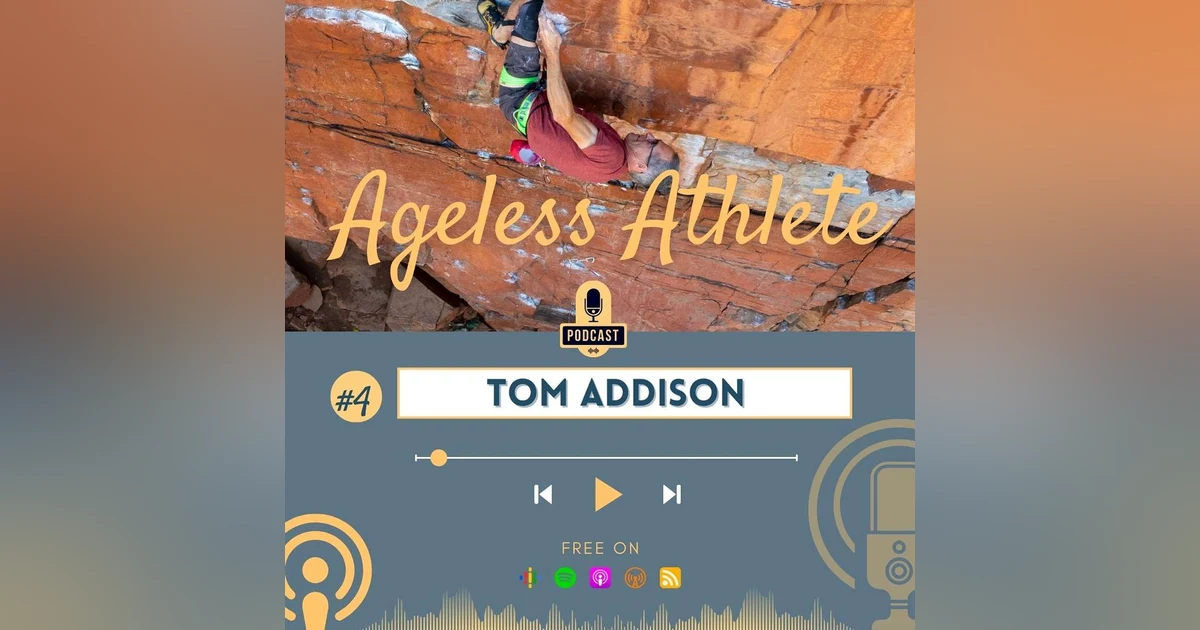


Get ready to hang with the one and only Tom Addison from Northern California; low-key but outperforming with a lifetime of big wall ascents and a knack for crushing sport climbing up to 5.14. But hold on, there's more to Tom than just climbing—he's opened up countless first ascents across the country and fought tirelessly to preserve public lands. In today's episode, we're diving into Tom's stories, extracting nuggets of wisdom you can apply to your own adventures. From training tricks and overcoming injuries to the joy and wisdom of building a climbing community, we cover it all. Don't miss his key takeaways on resilience, improvement at any age, and the secret to lifelong power training. Plus, he's got a wit sharper than a carabiner! Until next time, keep defying gravity and stay ageless! 🧗♂️✨
References:
Tom’s Instagram
Kush's Instagram
Ageless Athlete Instagram
Advocacy:
Access Fund: A national organization related to climbing advocacy. It is suggested that climbers can find ways to protect climbing areas, participate in existing projects, contribute to the organization, and find resources on their website.
American Safe Climbing Association. Arranging hardware replacement work for climber safety.
Bay Area Climbing Coalition. Place to find local climbing projects that need help in Northern California
Bookshelf:
Covenant for Water by Abraham Verghese (I read Cutting for Stone, loved it, so this one is next for me)
Podcast Chapters:
00:19 Introduction and Welcome
00:40 Introducing Guest: Tom Addison
00:53 Tom's Climbing Achievements and Advocacy
02:04 Catching Up with Tom
02:19 Discussing Climbing Locations
06:44 Tom's Climbing Journey
08:21 Influences and Mentors
14:29 The Climbing Community
15:20 Tom's First Ascents and Advocacy
24:35 Challenges and Triumphs in Climbing
45:37 Early Career and Passion for Climbing
46:42 Transitioning to Retirement and Side Hustles
47:14 Balancing Climbing and Other Life Obligations
48:24 The Importance of a Balanced Lifestyle
50:22 Diet and Nutrition Habits
55:04 The Role of Genetics and Lifestyle in Climbing Success
57:22 The Impact of Training and Persistence
01:12:53 The Joy of Reading and Learning
01:16:00 Getting Involved in Environmental Advocacy
01:20:07 Final Thoughts and Takeaways
---
🚀 Love the show? Here’s how to support it
If something you’ve heard here has stayed with you, made you smile, or helped you keep going, I’d be honored if you’d consider supporting the show. 👉 https://buymeacoffee.com/agelessathlete
📰 Subscribe to the Ageless Athlete newsletter !
1-2x a month, no spam. We share behind-the-scenes reflections, longevity tips, and athlete wisdom you won’t find anywhere else. You can sign up at https://www.agelessathlete.co/newsletter/ 📩
24:30 - [Ad] Resilience Podcast Series
24:54 - (Cont.) Games Within the Game — Mastery, Humor, and Climbing for Life | Tom Addison
1:26 Friends, welcome back to the Ageless Athlete Podcast. This is your host, Kush from my bunker in the Mission District, San Francisco. Thank you for your fantastic response to the launch. If you enjoy. This show, please do rate us online as it helps others find the show. Delighted today to have Tom Addison from San Francisco on the show. Tom is 61 and under the radar, super achieving rock climber with multiple credits to his name. Tom crushes on all types of climbing with a lifetime of pig wall ascents as well as sport climbing grades up to 514.
2:11 But Tom also gives back with a plomb. He has opened up a monumental number of first ascents across the country for all of us to enjoy. That's not all. Tom has been tirelessly advocating for preservation of public lands and for climbing access for decades. In fact, if you have climbed anywhere in the San Francisco area, chances are you have benefited from Tom's environmental efforts. I'm eager to dive into these juicy stories with Tom and take away some nuggets that we can apply to our own lives.
2:52 But of course, we'll talk about all the other regular stuff. Training, progression, injuries, and how building community can be so vital to one's goals. Tom, hey! How are you? I'm well. I went rock climbing yesterday, so life is good. Excellent. Life is always good when one is able to Rock climb. The last couple of times I think, or maybe the last time we tried to connect over this, once you were in Turkey, another time you were in South Africa.
3:40 So can I ask, where the climbing was and where do we find you today? Yesterday I was climbing locally. I was climbing at a cliff called Jailhouse in the foothills near Sonora. And today I am home. Various things to do today, but yeah, just climbing locally yesterday. Excellent. And if I remember correctly, this is indeed a jailhouse season, though sometimes we have.
4:21 The rainy weather that can, that can interrupt. Yeah, for sure. Jail is nice in that it's got a real long season for a cliff and the winter conditions can be excellent depending on the route you're trying to do. Things can be wet. Winter is good temperatures. That's great. Sometimes stuff is wet, but that's always good to get outside regardless if conditions are perfect or not. It's been, it's been a few years since I've been out that way and I understand you have been climbing there, establishing roots there for many years.
5:10 Don't want to dwell on this too much, but what is the story Tom behind? This, the name of this, uh, local climbing area called, uh, Jailhouse. Oh, well, there's a prison, the Jamestown Correctional Facility. It's a state prison, a medium security prison, and it's really quite close to the cliff. And so the guy who first started climbing there, a guy named Dave Schultz, who super nice guy, probably well known for his roots in Yosemite, doing a lot of. Like wall linkups, speed linkups, some pretty impressive free climbing.
5:56 He just came up with that moniker just because it's, there's a prison nearby. Got it. And isn't that true that a lot of the names of the routes there are named after prison like expressions? Oh yeah, no, that's definitely true. I'd say that's, yeah, I'm not sure if that's a good thing. People have different feelings about Correctional facilities, and I think there's a lot of problems with our justice system in this country, but yeah, most of the names do are reflective of that sort of prison theme. That's for sure.
6:38 My, I haven't spent a ton of time there, just a couple of seasons, but one of the names that jumps to mind, a route that I did, maybe. 14 odd years ago was called Soap on a Rope, and I did not understand that, that name until some time had passed. Maybe we'll spare the listeners. Yeah, I've always thought that was a pretty obnoxious name, but yeah, but it's a cliff that's got some climbing that's close to the Bay Area.
7:19 For somebody like me, it's kind of a lifetime cliff because they're are plenty of routes there that are challenging for me. And so while I've climbed there a lot, I still have, uh, plenty of things to do there. And so that's nice to have someplace nearby where you can push yourself and get out to reasonably easily. Yeah. Fantastic. Step, taking a step back, Tom, would love to hear a little bit about how you got started into the outdoors and.
8:02 And what pulled you into rock climbing, particularly? Well, I certainly was enthusiastic about doing stuff outside, probably starting in junior high school or something, I guess, and did a lot of backpacking and canoeing and kayaking and things like that, and knew that I wanted to try climbing.
9:25 And so, when I went to college, I started climbing in 1980 and there was an outing club program there with people going climbing and I was like, wow, this is really fun. This is super enjoyable and learn to do things like rock climbing and ice climbing and that sort of set of activities. Yeah, and I've kind of been doing, I've been climbing a lot really since 1980. It's certainly been something I've really enjoyed and continue to just love to do.
10:09 Any early mentors or influences that may have shaped your climbing? I was really impressed at the 80s when we were climbing at an area in New York called the Gunks to see a fellow named Fritz Wiesner who was one of the leading climbers in the world and probably the 40s and the 50s, maybe this, yeah, probably really the 40s and the 50s and we would see him out and I think at that point he was probably in his 80s and he was soloing Uh, Easy Roots at the Gunks, and I was super impressed by this friendly, short little guy who was out having a ton of fun, so that's something that stands out.
11:05 I remember in 1982, watching a guy named John Backer, who I would argue was the best climber in the world at the time, watching his soloing routine at Josh and going out and seeing what he would do in the morning before. Most of us lackers that even had breakfast, let alone gotten out of the tent. So it's always impressive to see people who climb really well or do anything really well with, with real grace. And certainly John Backer was in that category.
11:47 So I remember being very impressed with him, I think first, probably in 1982. And then, subsequently, for a number of years as I got to know him, yeah, maybe that's what I'd say. Yeah, I can't imagine a few things more inspiring than watching. In the world of climbing, then watching John Backer at the peak of his powers, and climbing in some of his favorite, well known places. I have a tiny memory of John Backer myself, which is sometime in the mid 2000s, being out at Bishop, bouldering at, I believe, the Happys, on a very windy day, when there were very few people there.
12:42 And I Showed up with a couple of friends. I mean the kind of day where the crash pads were flying, as you're trying to hold them down. And there was this, this, this guy, maybe on the other side of this one boulder, and he simply had, he didn't have a crash pad, he had a little, uh, I think a towel of sorts and he would set the towel down meticulously and then climb about the towel and climb back down. And I think he wasn't actually doing very hard grades, but yeah, something about his flow seemed, uh, um, arresting the way he moved.
13:24 And I did not know that at the time, but I think maybe a couple of days later I realized that that was indeed, uh, John Bakker. So yeah, I consider that. as a lucky, uh, happenstance that I got to see, uh, jump back a climb. That man could rock climb. That's for sure. Yeah. Yeah. It's very strong. Any of these. Luminaries from those days that you actually had the occasion to, to climb with. Oh, well, Kush, things used to be quite different in climbing. The world of people who were actually climbing a lot was much smaller.
14:10 And so we ended up all, you knew everyone. So yeah, I mean, I've, I've had the opportunity to, to climb with John. That's true for a lot of people. I mean, I've, guys like Jerry Moffat and Ben Moon and G. Betribeau, I mean, and Todd Skinner. I mean, these were all people who you hung out with and saw and climbed with. So, the world used to be a lot smaller in climbing, and so we all kind of knew each other.
14:51 And, I think that it seems a little different today, just because there's so many more people climbing. But one of the, the fun things about climbing is that, We're all playing on the same court, so you end up seeing everyone. And that's, that certainly continues, I think, to be true today, but yeah, I think anybody who's my age, who's really old and ancient like me, you end up seeing a lot of folks and climbing with folks just because the world was smaller.
15:34 Certainly how, what held today about the, about the coziness, so to speak, of the community A few days ago holds true to, to, to some degree today as well. And I think a lot of us, a lot of the climbing folks would agree that is one of their favorite things besides the actual sport where one can show up at a specific crag in season. almost anywhere in the world and be, uh, be greeted with a friendly face from, uh, from a different place.
16:18 So, you know, you have to love that about a niche, maybe not so niche anymore, but a smaller sport and the places that Climbing allows you to visit. Yeah, I mean, certainly one of the best things about climbing is the community and a sense of shared community. And it doesn't, the fact, I mean, it's irrelevant if the people are well known or not, but the, it's a friendly, inclusive, welcoming community, I think, generally. And that really is true across the world, wherever you end up or find yourself.
17:02 And that's a wonderful thing about the activity, I think. Dom, you've been climbing for several decades and climbing quite prodigiously. I also believe that you have established many first ascents all over the place. Any particular area stand out where you've had the most fun putting up routes and wondering if you had a story or two to share about any, any particularly memorable FAs? Oh, well, I do. And I do enjoy. Establishing routes really is, I would suggest that it's kind of a, not a particularly useful activity if you want to improve as a climber, but it's a lot of fun.
17:56 I've established over 2, 000 new pitches in my life, I think in 19 different states. Whoa! So I have routes kind of all over the country and it's always fun. People I don't really know will travel somewhere like a wild iris or the city of rocks or cliffs in Massachusetts or New Hampshire and reach out to me and say oh, hey, I did this route of yours It was really fun and that's better dating. But yeah, I do enjoy doing new routes.
18:38 I'm always psyched about new routes I've got projects that I'm working on now that I'm super looking forward to When the snow melts, trying to get back and climb, but I would say in general doing new routes is kind of a silly thing. It's not particularly good for your climbing. I think we would all be much better climbers if you're putting up routes, if you didn't put up routes and climbed other people's routes, but it's a fun game to play. It's just another sort of game within climbing that certainly I enjoyed, enjoy and have enjoyed for, yeah, for quite a long time.
19:25 I can imagine. I mean, not just imagine, but I know that climbing being as all absorbing and as time intensive as is, one needs different things to, to stay motivated and sometimes maybe pushing the, the performance pyramid could be, is valid and, but then sometimes also to be able to, uh, seek out new areas and possibilities for, uh, for new routes is also part of the, part of the pallet. There's tons of games. Yeah, there's tons of different games to play in climbing and I think a lot of them are really fun.
20:06 Um, and it is helpful to play more than one game, um, that keep you motivated and psyched, but generally being motivated has never been my problem. I, uh, I quite enjoy climbing and that's been a constant for Yeah, for 40, 44 years or something now. So that, that doesn't seem to change, but it is fun to, uh, to travel new places, to see new areas, to try different styles of climbing. All that stuff is really enjoyable, or it has been for me. Along with doing first ascents in all kinds of places, one thing that It goes hand in hand is making sure that the land and the facilities that allow us to go climb stay available and accessible.
21:01 And we have also been quite engaged with advocacy work with the public lands and with climbing coalitions. One of the things that we had the pleasure of doing, actually something you led recently, that I had the The delight of joining was we were helping build a trail to one of our local climbing areas out in Sonora. One thing I'm, I'm, I'm wondering is what is one thing that climbers have done well over the last few decades?
21:42 They have really kind of gotten the act together with being able to, able to secure access. And one thing where we are still struggling and we could, we could do better. And I'll add one more question to this and then give you time, which is if one had to begin the climbing. Access movement today, and there are people listening to this from other parts of the world where the access movement isn't as mature as it is in the U. S. Maybe what could be one piece of advice you would give them that, hey, let's say you are in India for that matter, and you were to begin some advocacy work to, to help, I mean, how would you go about and what would be the right thing to do?
22:31 Ooh, that's, I'm not sure I'm So qualified to say, but I do think the strength of the climbing community is that it's a shared community. And so I think we're at our best when we come together collectively to try to protect the areas that we all love and that we recreate. And I think we're at our worst when we Let divisions within the tribe of climbers come to the floor.
23:12 There are some real challenges that we face as climbers at being able to keep using, uh, the places that we do. Look currently at the situation with this proposed, the fixed anchor regulations.
24:26 If you're not familiar with that, I'd encourage everybody who's listening to go to the accessfund. org homepage and to weigh in on that. We'll post something in the show notes, so people can get more educated on what's happening. Very important, I would agree. But I always think that as a community, we're at our best when we remember that we have shared interests in common. And, uh, when we Go astray is where we tend to forget that. And we squabble internally about the style of climbing, how the bolts were placed, when people do things like alter the rock, all the sorts of things that have the potential to hurt ourselves.
25:22 And our reputation as climbers with folks like land managers. So, how do you get stuff like the Access Fund, or the ASCA, sort of going and organized? Usually it comes down to motivated people, but what you need is you need buy in from the community and support from the community. I certainly hope that if you're a climber, you realize that there are folks out there working on your behalf. These are wonderful organizations. Man, I encourage us all to be part of, of those organizations, but also to think about in your own life and at your own cliff.
26:06 What could we do to improve things? What could we do to improve our collective experience to make sure that people 20 years or 100 years from now will be able to climb these same crags that we get to enjoy and just, just essentially be responsible members of our shared climbing tribe? One thing that I sometimes wonder, uh, is, uh, within the, within us climbers, we hold these, these styles of climbing in high reverence.
26:46 Certain types of climbs, let's say sport climbing, they require many balls. But traditional climbing may require a couple, but maybe no balls. And I think within us, for us, these things become very important because We live these realities and go climbing, but sometimes when we communicate these to the outside, to people we are negotiating with, I feel we don't abstract out these nuances enough, where to the outside person, a person, a climb is just a climb, and a bolt is just a bolt, and maybe, maybe we need to find like a unified voice which can communicate it.
27:34 these issues in a more, in a simpler language. I mean, another thing that I find sometimes amusing is how we get caught up on, on style and what's, what's, what's, what's free climbing and what's free soloing and what's like aided climbing. And I just feel like whoever came up with these names, whenever they did, they should have maybe just come up with simpler names. Maybe one name could be. Just regular climbing, which the rest of us do. And one could be a free soloing, which some, some small niche of people engage in.
28:17 And I think there's a need for like, maybe, I think the need to simplify and avoid jargon, like communicating. Yeah, I mean, I think often as climbers, we tend to fixate on details that are maybe not as significant or even important to folks outside our community. I mean, one of the ways that we. Historically have gotten in trouble is when there is a schism within the climbing community and rather than solve that issue internally and talk to each other and have a dialogue and come to some resolution internally is when we go outside to external land managers and say, Oh, my little brother hit me, mom.
29:11 That usually doesn't solve the problem, doesn't solve it well. And there are a lot of examples, for example, locally, the Pinnacles. There was a guy who was doing roots in a style that was not appreciated by some of the locals. And actually, both of these two people are now dead. But a sort of strong traditional voice in climbing, a guy named Tom Higgins, who I knew both through climbing, but also professionally. Rather than address the issue internally, he's We went to the land manager, in this case, the federal land manager at Pinnacles, and the result, I think, did not help us as a climbing community at all, because their response is that they don't care about the distinctions of style, which they see as trivial.
30:11 They're the sort of easy response for land managers to just close an area, or to just prohibit certain kinds of climbing, like say something like no bolts, regardless of how the bolts are placed, or not placed. And so I think it's always best and smartest if we can, as a community, try to resolve our issues internally rather than asking somebody else to adjudicate differences for us. And time again, whether it's someplace like Pinnacles 25 years ago, or whether it's someplace like Tensleep Canyon much more recently, just a few years ago, it's usually best if we can communicate internally, talk to each other, essentially just be Neuro civilized human adults and come to some resolution internally rather than going outside the climbing community.
31:13 Absolutely, Tom, absolutely. We need to be, yeah, we need to unite before we, or at least we should not be. Washing our dirty laundry in front of land managers. I do want to acknowledge and thank you, Tom. Thank you for the amazing work that you've done that at least I have personally benefited from and other people in San Francisco, which is a jailhouse for one, which is the first time I started hearing about the work that you have done to ease access and then other areas in Sonora. So thank you for your continued.
31:54 Continued support there and yeah, please continue engaging some of the rest of us who are not quite as Alert and prodigious as you are. So thank you for doing that. Oh, that's very kind. I wanted to, uh, absolutely. Thank you. You have climbed, you've been climbing Dom and been doing first ascents over the last several decades. And I think you are far too humble to likely say this yourself, but you've also been climbing at a fairly high level. Even in light of today's higher standards of performance, I believe you, uh, you still climb into 514s and which is a lofty grade in the, I would say elite grade in, in, in sport climbing.
32:50 And then also are able to OnSite and Redpoint, also high levels. I would love to actually hear about maybe a couple of Recent climbs or recent ascents that you might be a bit proud of to, to, to kick this off. Well, I guess I'd say that people today are pretty darn strong and I'm really not so strong, but I tend to be persistent. I mean, my projects, my kids today warm up on. So, yeah, I do think that persistence really can get, help you get a lot done.
33:37 What am I psyched about? I'm really psyched on something that I've got bolted on the granite in the Sierra right now. It's, it's a one pitch bolted sport route. It's kind of kicking my butt. 15 bolts long. Probably, it's probably not 14a. It's probably not 13c. It's probably like 13d or 8b. really psyched to get back on that when the snow melts. But yeah, I mean, it's fun to have goals. It's fun, always fun to try to push yourself.
34:18 I don't really think it matters what that level is, as long as like you're pushing yourself. Like that's really, it's kind of the same, whether it's, you know, you're trying to, uh, on site 13a or trying to on site like 11c it's really pretty much the same thing and you get the same satisfaction out of it but it is it's certainly fun to try to push yourself at least it's been I quite enjoy that. All climbing is fun, really. It doesn't, regardless of the difficulty level, it can be super fun just to go out and have mellow cruiser days.
35:01 Do some volume, do some mileage, do some volume. And it's also super fun to try to push yourself to break into a new grade. I'm trying to do that here in my old age. Will I be successful? Probably not. But you know, I'm still trying to climb harder than I have before. Stuff like that will keep you entertained for quite a while. Tend to keep you out of trouble generally. Or maybe that's getting into trouble. I'm not quite sure what the difference is. Uh, for sure. I think, uh, I mean, as humans, we are, uh, conditioned to, to seek progress and seek improvement, whatever our chosen discipline might be.
35:52 And yes, I also love this about timing that one is usually only competing with, with oneself unless it's actually a competition or you're trying to get ahead of your, ahead of your friend at the cliff. The numbers just help us quantify progress. Otherwise, sometimes it's hard to know if one has actually gotten better or, for sure, or one just thinks, uh, one just, one just believes so without having data to stand behind it. Given that you have been. Improving over, over the last few decades, and I'm speaking, maybe I'm speaking on your behalf, I'm guessing, yes, you're still pushing thresholds, you still get trying to be a better climber than you were yesterday.
36:41 How do you, how are you able to sustain this kind of progress? And maybe a bit of a blunt question here, but are there some things Tom that you found that you are doing or have done where let's say Your peers or people that you used to climb with are not able to catch on to and maybe they either dropped out of the sport or at least don't pursue the sport with that kind of passion, so to speak. So maybe a couple of things that you feel have allowed you to continue performing well.
37:25 Well, I think it helps to be persistent for sure. Showing up is, is kind of. You're not going to send if you don't go to the cliff. You're not going to clip the chains if you don't get on the route. I mean, in general, certainly the vast majority of people who I started climbing with back in 1980, most of those folks don't climb today. It takes a real, sort of, amount of time and effort to keep pushing, to keep going to the gym, to keep trying to To improve, and I think if you don't enjoy that process, it's hard to keep pushing.
38:16 I think I'm lucky, in some ways I'm very simple minded. Like, going to the climbing gym is fun for me. Um, trying to improve my pathetically weak fingers, like, I enjoy that. And so I think that helps a lot, if you enjoy what you're doing. And I think the key to enjoying it is really who you're climbing with, who you're spending time with. Are you spending time with quality people who you really enjoy being at the cliff with or traveling to all these countries around the world with? Are you around people who are also pushing themselves?
38:57 Or are you hanging out with folks who really want to go home and watch the latest episode of the? Netflix drama that they're watching or whatever, but I think a lot of it, maybe I'm just simple minded. I don't, it's really fun to go climbing and to train and to try to get better. And so it's not, it takes time. I don't want to minimize like to keep showing up and go to the gym when you've got like all sorts of other obligations, family obligations.
39:46 Parental obligations, work obligations, but yeah, let's say there's a lot worse vices to have I'd say yeah Certainly and I agree that showing up and doing the work and some days one is Very motivated some days or maybe some seasons and then some days when it's feels like a drag I find that at least for me what you said about Keeping the right company goes a long way where yeah, even if somebody even those days or those weeks or whatever where either I am For whatever reason I'm not at my best maybe psychologically or physiologically being in the company of of good friends Usually gets me out, and a good metaphor there, yes, with good friends one can usually go and do just about anything, and going climbing even at the gym feels more satisfying than let's say going to a neighborhood watering hole and having a drink.
41:04 So, I think those two things, uh. Uh, certainly true. Any other, let's say, things that have allowed you to succeed? So to illustrate, like, I, I found myself getting increasingly more injured. So, so these days I am on the bench because of Stupid shoulder injury. Have you had any, let's say any sort of any physical debilities or any other kind of failures through your climbing career that you've had to really put the work into, into overcoming?
41:47 Oh, yeah. I mean, for sure. I think if you climb for any length of time, I, you'll have major injuries. Oh my goodness. Yeah. I mean, I've, oh, I think 21 years ago. I was really close to sending a route that it was a new route. I hadn't climbed that grade before. It was quite hard for me. And I fell trying to put the rope in the anchor. Well, the next day going to play soccer, I got my soccer cleats stuck in the front spoke of my bike, hammered my shoulder. It took me multiple years to actually get healthy enough to do that route.
42:35 I tore apart my left wrist. And in sort of ways that are kind of mysterious, just pulling on a hole toward the main ligament that holds everything together. Four hand surgeons told me I'd never climb again. And I had some experimental reconstructive surgery, and now I've got a wrist with all sorts of metal hardware in it. What, maybe 14 months ago or thereabouts, I had an injury in my other wrist. I just had surgery in March.
43:19 The hand surgeon wasn't clear if I'd be able to come back. Sort of from that, I've still got, one of my hands is always now discolored compared to the other. It's a little bit swollen, and some of the fingers are slightly numb. So I think if you climb a lot, you'll always have injuries. The question is, will you try to rehab yourself? Will you spend the time to come back from the, um, find clever people to help you? Whether that's surgeons or physical therapists or some sort of alternative? Practitioners.
43:59 It's always harder when you take a bunch of time off, like a year or multiple years. There was one point that I built the house that we live in, and because I'm cheap and I'm hiring somebody to build the house really wasn't an option. And I didn't climb outside for three years. If you're motivated and you're psyched, like you can come back from, I think, a heck of a lot of things. I mean, I've been pretty lucky. I've had some injuries that certainly medical people thought would be the ending of a climbing career, but I've been able to, uh, and so you end up trying to climb around some of your injuries, and maybe there are things that I can't do.
45:00 I think these days I need a knee replacement. So like, really big drop knees, for example, and one of my knees are probably not such an option or the smartest thing, but the beauty of climbing is that it's, There's so many, sort of so many facets performing well that you can be lagging in some areas and still try to compensate with some other sort of things that contribute to your overall climbing performance. I think we're all, everybody, everybody's unique. Everybody's got their strength and their limitations. The key is trying to take what you've got and maximize.
45:44 your potential. And generally, I always think that our potential is typically much higher than we think that it is, or that we realize that it can be. Yes, yes, yes. I think humans are infinitely capable. And I mean, that's really what this show is about that I'm trying to. Trying to uncover any kind of cross training that you do, Tom, are you active and pursue any other kind of sports to just kind of balance balance out? Oh, well, I certainly played soccer for most of my adult life.
46:29 I'm in my 60s now. I, I was having knee issues. Probably it was in my 40s, I guess, and several orthopedists told me I had to stop immediately. I needed knee replacement then, and I still haven't had it. So, don't play soccer anymore, I don't run anymore, and those were things that I did. multiple times a week. I'm allowed to ride a bike. That's not bad for my knees. So I definitely ride a bike a lot. Um, I can't run. I'm allowed to walk. So I'll go on long walks, but if I can't make it to the, get some sort of exercise in and it's the end of the day, I'll even go like walk on a treadmill, but I certainly lift.
47:23 Um, do a bunch of strength training and strength training for climbing, but I do, I do like to ride a bike. I find that quite enjoyable. Frankly, I actually preferred planks, not running, but riding a bike is fun. I definitely ride a bike now and ride a bike probably what people would consider a fair bit. Don't hate me for, for not loving bicycling as much. I like climbing more, but I find biking to be an enjoyable, low impact activity. That I can also do out of the house, out of the door and back with less time than it would take to just get to the climbing area.
48:08 Uh, while you were climbing so much and climbing in different places, what kind of career did you have and did you have to make any kind of compromises with the work that you did to be able to again, again, fully partake in a high maintenance sport that is climbing? So, I've spent, I've spent all my sort of professional career doing environmental work. I worked for the U. S. Environmental Protection Agency, out of college, worked in New England, moved back to California, went to grad school out here, and worked for the EPA.
48:52 But for my, primarily I worked on air quality issues. I lobbied for clean air at the state capitol in Sacramento for Close to 30 years and I love that job. It was a lot of fun. I still miss it. I retired from that job, but it was a pretty busy job. There were weeks where you'd work 80 hours a week, 100 hours a week. And so. It was hard to really focus as much time on climbing as I might have wanted if I had more time to goof off.
49:35 But it was also a really fun job that I quite enjoyed, so I don't really, that wasn't a bad thing at all. These days, I'm essentially retired, but I do have a number of side hustles. I've got about four different sort of jobs that I do these days, but I certainly can climb more. Since I left that professional day job, now I'm working, but I'm working for myself. And so I'm really free to be a scallywag. And if I want to go climbing, I'll try to go climbing.
50:16 But I think everybody has obligations in life, whether they're working outside the home, inside the home, that's the nature of being, being a human. I've always thought that it was super helpful to have a busy professional career. I love climbing so much. If I just climbed full time and I have a bunch of friends. Who were able to do that, but I've always thought that if I just climbed full time it would tend to lose a little bit of its magic for me. I love ice cream.
50:58 When I was younger, we'd do a wall in the valley and we'd come down and we would always, first thing we'd do is we'd go eat a half gallon each of, uh, your favorite ice cream flavor after you've done a wall because you tend to be pretty hungry. Quite a while, but if I ate ice cream a half gallon, like every day. Mm-Hmm. I don't think that'd probably be the best thing for me. I'd probably get a little tired of it. Mm-Hmm. So I've actually always thought that it's really helpful to have a balance in your personal life of sort of your passions, your and your professional wise.
51:39 And I think I, there's a lot of folks who really, I think, just want to climb or they think that's a road to happiness or contentment. And for some, people are very different. For some people, I think it can be, but I've also seen a lot of friends that end up leaving the sport who have just been doing that sport. And I don't think that's universal with climbing. I think that's true of You know, a lot of things in life, but everybody's different and everybody's got to find a good path for themselves.
52:20 And there are many paths to the Buddha. I'm not sure that we're all going to be walking the same path together, but if people are thoughtful and thinking about their climbing and its relationship to other things in their life, I think that's a good place to start. Certainly. And from a distance, I have certainly observed the little that I know about your endeavors outside of climbing. Uh, you do engage in, in some interesting activities and, and talking to food. I know that you are, uh, somewhat of a, I don't know what the right expression is, but I think the word you're searching for is fruit geek, maybe a fruit geek.
53:12 Fruit geek. Yes. I was using the word fruit lobbyist. Because I think you're more than just a fruit nerd, I think you are espousing the cause of fruit trees and eating fruits. So one is like, two things, one is, I was going to ask you about your diet a little bit. Are you a fruitarian? Oh Lord. No, I'm omnivorous. You talked about eating ice cream. So I don't know if you still eat ice cream. Oh, I'm omnivorous in my diet. Yeah, I think we'd be missing some pretty key macronutrients if we were just eating fruit, but I do enjoy growing strange fruit.
53:57 I've got a little business farming, selling strange fruits, doing consultation, horticultural consultation. And advice for folks in my diet. I'm really quite omnivorous, I think, and I try to eat. What most people would consider a healthy diet, but I don't, I'm definitely not somebody who stresses a lot about diet and worries about the specifics or the details of diet. I'm not somebody who's take supplements or has gone down unusual.
54:43 sort of rabbit holes around diet, but I, I think I'm probably pretty lucky. I can eat a lot of healthy food and enjoy it. And I don't have to be particularly regulating of what I eat. So I, I consider myself lucky that way, I think. On the subject of fruit, Geekery, completely random. I have a friend. from another community who's, who's a fairly outspoken vegan.
55:25 She does some activism and I think she. also has a couple of fruit trees. So randomly we talked about growing fruit and somehow I remembered your name and I mentioned your name and again she doesn't climb at all, but she had heard of you. So who knows, maybe at some point you had helped grow her a fruit garden. Back to the question of diet, for the most part I would agree that as long as one practices Generally healthy eating habits and lives an active lifestyle, so manages the calorie intake and calorie burn.
56:08 One is able to manage well. I find that in my case, there's certain types of foods that I don't have as much of an appetite for. So for example, I just don't like eating very greasy foods. Once in a while seems great. Otherwise, I just don't like heavy meals, heavy very sugary desserts as much as I did. Any kind of sort of active modifications you have made to your diet, like to avoid certain things, you mentioned you don't take any supplements. Is that no supplements? I guess that's actually a little bit of a lie because I recently started taking D3D.
56:52 But, yeah, I really might try to get my nutrition from eating a balanced diet, whole foods. Um, but I am not somebody who avoids desserts. Um, I will say that I think probably most of my life, I was probably somewhat protein deficient, probably. And so I try to certainly for maybe the last five years consume more protein than I did historically. But I really think there's a lot of different folks of different dietary needs and restrictions and I think it's important to think about our diet in terms of sort of societal consequences, but I am really very omnivorous and much less diet focused than a lot of people are.
58:03 Yeah, that's what I'd say. Sure. And yeah, it sounds like it works well for you, given that a lot of us, as we get older, we have to make conscious changes to a diet and maybe add, remove foods, add supplements, do you think, what do you attribute, let's say, some of your success with, with your diet or being able to continue with maybe a more laissez faire approach to your diet and also actually extending that to even your training and your physical abilities, do you think they're choices you made early in your life perhaps that have allowed you to Continue, uh, evolving the way you have.
58:57 Do you think there was some, some genetic help there? Was there like sports in your family that maybe some of that might have transferred over to? Yeah, no, that's an interesting question. I think genetically, I'm actually quite bad at climbing. I had no natural aptitude as a climber, and I don't think I'm particularly genetically suited to being a climber. I think I'm very much a slow twitch athlete, not a fast twitch athlete. I can go ride my bike, uh, a hundred miles, like off the couch.
59:39 And that's not so hard, but I'm naturally a slow sprinter. I have very weak fingers. For my climbing, the people I climb with, everybody has stronger fingers than me. I did some lattice assessment. Lattice said that my max grade should be 11C. I do climb harder than that. So I don't think I'm well suited to being a climber genetically, particularly. I've got minus three ape index, but.
1:00:21 I think I've got one thing that really helps. I can beat my head against the wall pretty well, and I really loves exercising and working out. And so I end up riding my bike more miles in a week or getting more exercise in a week than like, probably. I'm very much towards one end of the spectrum that way. And so that sort of lets me be maybe a little more casual about what I eat. Um, and I also think I'm lucky in that I'm not somebody who gains, I'm not, my weight doesn't really fluctuate.
1:01:05 My weight's kind of just been the same for, Since I stopped growing, but I, yeah, I'm lucky in that I really enjoy exercise in the sports that I do. I get a lot of joy out of those things that I, I think that's a good thing for being able to keep enjoying them. And then also to keep pushing yourself. I think injury is the sort of biggest issue with trying to push yourself in any sport as you age.
1:01:46 I have not been lucky that way. I mean, I've had multiple injuries that really various medical folks say I shouldn't be climbing at this point. I shouldn't be capable of climbing at this point, but I'm always super motivated to keep on climbing, and so I've somehow found a way to keep it, to keep doing that, and I'll try to do that for the rest of my life. I'm certainly past the stage where I should be able to be allowing to be climbing harder grades at this point in my life, but I'm Weirdly that hasn't that hasn't really been the case.
1:02:33 I mean at 57 I climbed 514, which I'd never done before in my life again at 59 A lot of it is just motivation really. So I, yeah, well, I don't, it's hard for me to say, but I feel very fortunate in that I've been able to have found this wonderful activity and to keep playing it. Um, you know, well past the age when we're supposed to stop playing games and start being serious. Tom, how old are you now? I'm 60. I was born in 62.
1:03:14 I am 61. I think that's right. Sure. So you just passed. You just crossed 60. And your Hardest Ascent came four years ago, which honestly is mad inspiring. And it makes me think of a couple of things. And maybe I'm oversimplifying a little bit, which is, one is focus goes a long way. I think you said that in, in different words. Second, perhaps you cannot rush a good thing where I've seen this maybe with a couple of people where they.
1:03:57 peaked early, maybe again in terms of performance grades, and somehow they lost the fire to, to climb as much because they felt they had achieved their hardest. And, uh, I think that if one enjoys the process and enjoys climbing at every grade, And all these myriad activities around climbing, which is sometimes beyond the climbing itself, which is doing some things such as doing first ascents and all the adventure and labor that brings doing advocacy work and the actual climbing then somehow within the broad experience of climbing, it actually balances the climbing also because there's so many things to get joy from.
1:04:42 And then the other thing you mentioned about developing or finding oneself in a lifestyle that incorporates movement. That also hits home with me because I sometimes get asked these questions. Hey, how does, What's your fitness routine or what is your how do you eat? And my answers are often similar which is Find things to do which are fun for you where the the health benefits on are almost Incidental. Oh, that's key. Yes.
1:05:22 You start having once you start having fun with those things then you're gonna be motivated to to go out and bike or run or dance or what have you and You will build that into your system where you won't have to go out of your comfort zone to exercise. I think that's exactly right. Yeah. I mean, you want to derive joy from the things that you do. Life is short, so don't spend it on things that you don't love doing. And that's certainly true of. Things that have completely ancillary health benefits. Yeah. Do stuff you love.
1:06:04 Yeah, for sure. Awesome. Yeah. Taking a slight pivot here. what is one habit that you have? I mean, you have all these good habits, right? But, you know, I'm sure, maybe you're perfect, but maybe you're not perfect. So what is one habit that you have that you would like, uh, to break out of? And then perhaps one habit which you are kind of proud of that you would pass on to, uh, to others. I would say one habit is I have bad puns. I'm not sure if I want to break out of that or not, but I probably have fewer habits than Anand does.
1:06:49 Um, Let's think, uh, more seriously, um, in terms of like climbing habits, um, it's always good to keep mixing it up. I think it might, there's such great training information available today. I think that's one of the keys to being able to keep improving over time. There's so much more good info today that we have than we used to have. And that really does make a huge difference if you pay attention to it. I think I tend to, in my sort of climbing for training routines, tend to get a little Stuck in the same things and do the same things too long, rather than switching up routines after you start, after you've seen the major benefits, it's easy to try to get the incremental, like half of 1 percent on as the improvement curve flattens out, and it's smarter to move to some of the other curves where you're much lower down and could see more improvement.
1:08:02 I think one good habit that I've got is, is showing up, you know, I'm going to try to keep showing up as long as I can, whether that's at the gym for a finger session, trying to address my sort of notoriously weak fingers, or whether that's showing up at the club, or whether that's trying to show up on climbing community causes that I care about. So I don't know, maybe that's, I don't know. Hopefully that's some sort of an answer. I'm not always this thoughtful. Yeah, no, I think, totally.
1:08:44 I mean, can't, can't highlight the importance of showing up. Is any new behavior though, let's say in the last five years, that has had the most impact on your life? In terms of my climbing life, I'd say like the boards are super useful, whether it's a kilter, a tension, a moon. Our local touchstone board, I think that being able to climb and train on the boards I think has been hugely beneficial for me. It's fun, it directly addresses some of my sort of limitations in climbing, some of my weaknesses.
1:09:34 But just in general, this sort of better information about training has been really helpful for me in the last five years that I think I've significantly improved my training game in that time. All of these podcasts, all of these clever people who are putting out helpful information that the rest of us can benefit from. Maybe that's something I would say that most of my climbing life, since we started, I mean, of course, I'm old enough that I learned to climb before climbing gyms. That's an understatement. Well, well before, um, but then once climbing gyms happened.
1:10:18 I would go to the gym regularly, less with training in mind and more with just having fun with friends. And I still do that. That's actually really enjoyable to do, but I used to climb a lot more on plastic on a rope. And it really, probably in the last five years, I've almost entirely stopped doing that as it doesn't really help my sort of goals of improving. I do it. Socially for fun to do stuff with friends, but certainly from a climbing improvement perspective for me personally Tends to be somebody whose fingers are always the weak link I boulder like your grandmother basically and so spending time bouldering on Plastic especially on the boards is quite beneficial to me That's something in the last five years that's changed.
1:11:21 Yeah, certainly. Do you happen to have a set up at your house? Or do you still go to a commercial gym? Touchstone has always been very kind to me. I think they're a wonderful company, and I enjoy using Touchstone facilities. I mean, I've got a, I've got a hangboard at home. I've got the ability to do some finger training at home. In the pandemic, we built an adjustable angle room board at a friend's house, but that board is no more. And so it's relatively easy for me to get to, to a touchstone facility.
1:12:05 There's a lot, there's quite a few reasonably close by. And so mostly I do train at a commercial climbing gym, whether that's weights or finger training or, or just climbing, except climbing outside, I climb a ton outside. Yeah. Yeah. I think that. That makes sense. And I think maybe just in terms of variety, because you're able to get outside and climb off and on, on the rope, climb roots, maybe that helps you also stay engaged and get benefits from the other end of the spectrum by climbing shorter, harder types of boulder problems on a system board.
1:12:51 I found a lot of benefit to that myself. I'm currently, I guess I'm currently injured. Actually, I've been told that I. I may never climb again with my shoulder. I'm really trying to prove the doctor's wrong. Absolutely. So once, yeah, once I get motion and strength back with all this ridiculous rehab they're making me do, I hope to not just get back to climbing, but hopefully get back to some of the training. We are nearing the end of a conversation. Maybe just a couple of fun questions. What is perhaps, uh, a gift that you have received that, uh, you are the most thankful of?
1:13:35 Oh, has benefited you the most and maybe what's one gift that you might've given others. Again, maybe in the last couple of years, few years. Gosh, here is something entertaining. I've got something called a grim reacher. It's basically, uh, a little extendable stick clip, uh, but it's super lightweight. weight, you can take it on roots and it can let you top rope stuff rather than keep. Falling off and actually discover what that hold is that you're going for.
1:14:20 And so that's something that I'm think I'm probably gonna produce in volume for folks. But a buddy of mine who I've been, who I taught the climb in 1981, we were going back and forth on different designs. He had a nice little final touch, so I'm quite appreciative. of that little device, the Grim Reacher, but mostly I'm just thankful that I'm able at this point in my life to still get outside and to still enjoy climbing. I feel super fortunate that way and yeah, really very lucky and also in a place in my life where I'm not working two jobs at the same like crazy hours or stuff just to just survive these days.
1:15:17 I'm able to, to have the time to get outside. That's, that's, I'm incredibly lucky and fortunate that way. I went climbing yesterday. Yesterday was a work day. What about something else that engages you in your personal life when it comes to leisure or learning or entertainment? Are you, do you read books, Tom? Do you? Do you watch, watch movies, shows? Oh, I'm pretty bad about watching shows and movies.
1:15:58 I watch almost no television or sort of shows like that, really. Many months I don't watch anything like that, but I read a lot. I always have a lot of fiction. I read a fair bit of non fiction and I enjoy the heck out of that. I always have a book that I'm super enthusiastic about. I'm sad right now because I'm finishing. Abraham Verghese's latest novel, The Covenant of Water, and I'm getting towards the end of that. It was such a delightful book when that's over, but that's always the case.
1:16:40 Kind of. I'm always pretty enthusiastic about whatever I'm reading. Whenever I speak with, with environmentalists or tree lovers. One book that I always like to talk about is Overstory. I wonder if you, uh, if you enjoyed that book. I did. I quite enjoyed it. Yeah. I mean, I think a lot about plants and trees because of, I got this whole weird sort of other life separate than climbing that sort of really never overlaps around trees and plants and things. But yeah, I, I thought that was quite a good book and I certainly enjoyed it.
1:17:23 Yeah, absolutely. Excellent, Tom. Tom, it's been, it's been a delightful conversation. I would like to. Let you go, but before you go, if people want to learn a little bit more about, let's say you're climbing, where can they, actually both, you're climbing, where can they find information on that, or also if they want to learn about some of the work you do as an environmentalist, is there a source you can I confess I'm not the most sort of active person on the social media stuff, but I do have an Instagram presence. I'm at El Cerrito Tom on Instagram, and so that's, people can certainly get in touch with me there.
1:18:12 I got a lot of messages there and respond to things there. So yeah, I guess that's probably about the best that I could offer. I think on behalf of all the climbers, I think we are. Thankful for two things here, at least two things, which is one is to, for you to continue to inspire us with your, your climbing and your first sense and your performance. And then secondly, the trailblazing. advocacy work that, that you've been doing. And I know that there's never a shortage of advocacy and environmental work in climbing.
1:18:54 So for many of us who would like to know, Hey, how do we get started? We love climbing. We love these areas, but we are lazy or we need, like, we need to be spoon fed and told what to do. What would be some simple. things, simple steps to get involved with helping protect climbing beyond just paying for memberships to the coalitions. Yeah, that's a good question. You're very kind, Kush. In terms of becoming involved, there is no shortage of hardware replacement work that the ASCA sponsors, the American Safe Climbing Association, an organization that was founded locally in San Francisco by Chris Mack.
1:19:44 And you can participate in that work either at the more advanced level by pulling bolts and replacing them, but you can also participate in that work by things that are much easier to do, like swapping out more and lower off hardware, for example. Um, and the ASCA has got a great website. In terms of access fund work, I really think that if you're a climber, it's really important to contribute to those organizations and to belong. And part of that is not just writing an annual membership check, it's participating in.
1:20:25 Projects that need help locally and local climbing coalitions are a great way of finding out what work needs to be done and the access fund itself, the national organization is. a great way and has a host of resources on their website on things that are very topical and timely right now. Comment period the end of the month for the national proposal on fixed anchors in wilderness. I think those are some great places to start accessfund. org and asca.
1:21:05 org or american safeclimbing. org. Absolutely. Those are great. And, uh, since I personally enjoyed doing that bit of trail, trail building work recently, any such projects that are upcoming in the next quarter that people can learn about? Or can they just follow you on your, on your Instagram? A better place really is, I think, through Locally, the Bay Area Climbers Coalition, which will appoint people to all sorts of local trail days, work parties.
1:21:46 So yeah, I think there's three, three places online that are a host of information for folks who want to help. I'd encourage people that participate in. All those three organizations. It's a fun way of meeting other climbers and doing something to give back to the community. And you'll typically meet a bunch of folks who may know about some amazing cliffs that you'd like to go climb at. So thanks for all your kind words and Maybe I would just say keep on rocking in the free world.
1:22:30 Okay, that's a good place, a good message to leave you with. I can see that you couldn't help that, but that's an excellent note to end this conversation with. It's still midday. We still have daylight. So. I'm off for a bike ride. I hope so. A lunch bike ride. I hope you get out and get some sunshine yourself. Again, thank you for letting me keep you this long, Tom. It's been, it's been a pleasure. Okay, cheers. See you at the cliffs. All right, right on. Take care. Damn. Well, I don't believe Tom for a second. He's definitely talented or at least talented enough to completely love what he does and pursue joy in all aspects of his life.
1:23:17 The key things I take away, do not give up. Despite what the docs or anybody may tell you, you know yourself. Improvement is possible for all of us. Tom Climed is hardest at 57. Train, but make it fun. And you can train for power lifelong. So do not give up on pushing those power limits. Find or continue in engaging in sports that are fun. You will keep doing them even when you are low. Lastly, community and good friends.
1:23:59 They help a lot. Find ways to give back. I also enjoyed Tom's wit. Yes, he does have good habits, maybe more than your average nun. More about him, his climbing and his witticisms can be found on his Instagram. At El Cerrito Tom. We'll post the link in the show notes. Until next time, stay ageless.