#42 Winning Later in Life — What True Resilience Really Looks Like
"It wasn’t about what I couldn’t do; it was about what I could do. After my injury, I was focused on recovery and doing whatever was possible—like swimming every day. It’s all about the attitude you bring to the situation." 🚵🏽 Mountain biking legend **David Wiens**, is not only celebrated for his six consecutive wins at the Leadville Trail 100 MTB but also for his integrity and resilience. As David approaches his 60th birthday, he reflects on his remarkable career, staying consistent, overc...


"It wasn’t about what I couldn’t do; it was about what I could do. After my injury, I was focused on recovery and doing whatever was possible—like swimming every day. It’s all about the attitude you bring to the situation." 🚵🏽
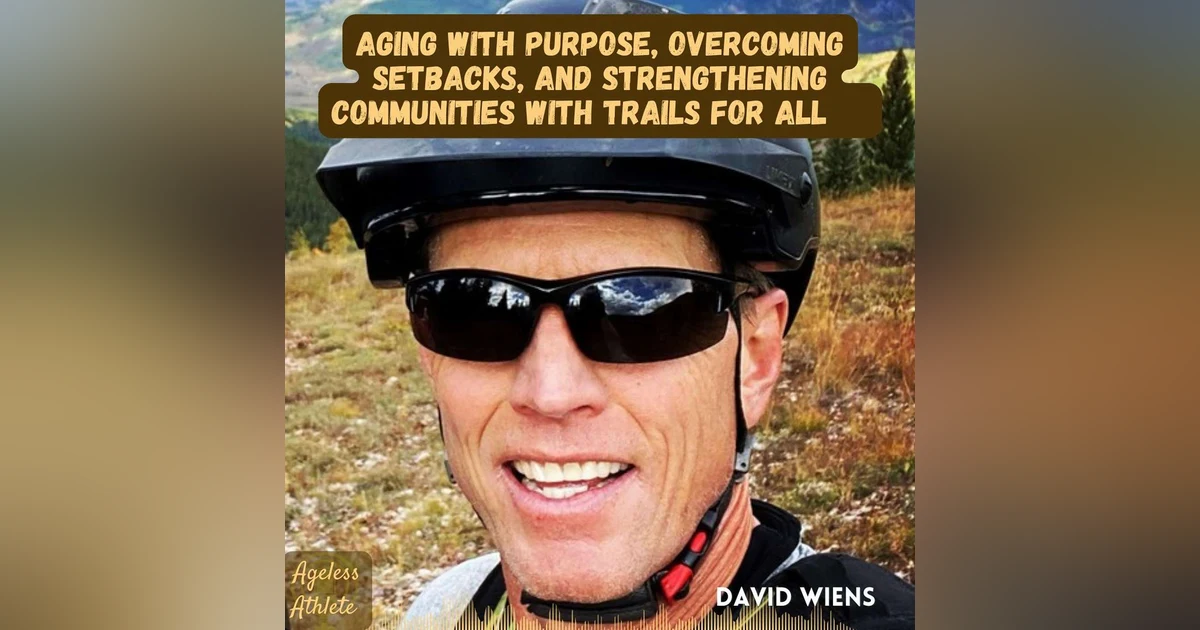
Mountain biking legend **David Wiens**, is not only celebrated for his six consecutive wins at the Leadville Trail 100 MTB but also for his integrity and resilience. As David approaches his 60th birthday, he reflects on his remarkable career, staying consistent, overcoming critical injuries, and building trails not just for mountain bikers, but for all users.
Throughout this conversation, we explore his mindset on training, how he stays motivated, the magic of the outdoors, and how he overcame injuries to come back even stronger.
### **Key Takeaways:**
1. **Mindset Fuels Success**: David emphasizes that mental toughness, focus, and resilience are as critical as physical preparation when it comes to competing at the highest level.
2. **Strengthening Communities" In his leadership role with the IMBA (International Mountain Biking Assoc), David has helped build outdoor trails all over the country, for all recreational users.
3. **Injury Recovery is a Learning Process**: After facing injuries, David highlights the importance of listening to your body and using setbacks as an opportunity to come back stronger.
4. **The Outdoors as a Source of Renewal**: For David, mountain biking is more than just a sport—being outside, connected to nature, brings him joy, peace, and the motivation to keep pushing his boundaries.
### **References:**
- Learn more about David Wiens' role as Executive Director at the [International Mountain Bicycling Association (IMBA)](https://www.imba.com).
- Check out David Wiens' **Mountain Bike Hall of Fame** profile [here](https://mmbhof.org/david-wiens).
- Explore the history of the Leadville Trail 100 MTB race [here](https://www.leadvilleraceseries.com/mtb/leadvilletrail100mtb/).
- Read more about the impact of doping in cycling during the Lance Armstrong era [here](https://en.wikipedia.org/wiki/Doping_in_sport).
### **Sponsors:**
A special thanks to David's sponsors, whose gear and support have been crucial to his success:
- [Canyon Bicycles](https://www.canyon.com)
- [Ergon Bicycle Ergonomics](https://www.ergonbike.com)
- [Topeak](https://www.topeak.com)
- [Shimano](https://www.shimano.com)
- [Fox Suspension](https://www.ridefox.com)
- [DT Swiss Wheels](https://www.dtswiss.com)
- [Maxxis Tires](https://www.maxxis.com)
- [Sportful Apparel](https://www.sportful.com)
- [Limar Helmets](https://www.limar.com)
- [GU Energy](https://www.guenergy.com)
This episode is packed with wisdom, insights, and inspiration for anyone looking to thrive in their sport—or life—at any age!
---
🚀 Love the show? Here’s how to support it
If something you’ve heard here has stayed with you, made you smile, or helped you keep going, I’d be honored if you’d consider supporting the show. 👉 https://buymeacoffee.com/agelessathlete
📰 Subscribe to the Ageless Athlete newsletter !
1-2x a month, no spam. We share behind-the-scenes reflections, longevity tips, and athlete wisdom you won’t find anywhere else. You can sign up at https://www.agelessathlete.co/newsletter/ 📩
41:38 - [Ad] Resilience Podcast Series
42:02 - (Cont.) He Won Leadville 6 Times—And Beat Lance Armstrong | David Wiens, 60
Ageless Athlete - David Wiens
===
David: [00:00:00] I am in Gunnison, Colorado, and this morning for breakfast, I had a bowl of cereal, a banana, and a peach and some juice.
Kush: Sure, sounds healthy, sounds tasty with uh, some summer fruit. And David, you are in Gunnison, which I know Gunnison is famous for outdoor recreation, but I also heard that it may be the coldest city. the lower 48. I see the sun behind
Kush: you, but is that reputation,
David: it is. It's one of the colder places in the lower 48. along with International Falls, Minnesota, and the way they usually, um, do that is they just take the average low temperature throughout the year and we get into the forties typically at night. In fact, now we're dipping into the thirties, but even in the summertime, it might be, you know, mid forties, uh, which is unusual for a lot of parts of the country.
David: But we certainly can get into some [00:01:00] very cold temperatures, minus 20, minus 30. Even minus 40 occasionally in the wintertime. It feels like that warm air pushes through our valley and it heads up the Continental Divide and it doesn't quite make it over to go east and it just slips right back down and settles into Gunnison.
David: Uh, there's a few other valleys in the high country that are cold like this, but yeah, we We definitely have a cold climate, but it's what we call a dry cold. And usually the sun is out when, when it's stormy here, it's not that cold. So if it's cloudy, it's probably warm in the winter time. If it's high pressure and full sun and bluebird, that's when it can be really cold.
Kush: Well, I have spent some time in Colorado in the summertime, but have not been there in the winter. I'm curious though, Does that kind of climate actually contribute to the high quality of the outdoor recreation? For example, like [00:02:00] you also partake in, in winter sports. And I think, I think you, you, you have been doing that. for a long time. Does it actually contribute to, let's say, really high quality snow and powder in the winter, as well as somehow also help create beautiful trails, beautiful opportunities for recreation in the other months?
David: Yeah, absolutely. We've got, um, you know, Colorado, Utah, the Intermountain West has really light, fluffy powder. So our snow conditions for skiing and snowboarding are excellent if we have a good snow year. And then again, if we have a good snow year, that runoff goes into our rivers and creates around Crested Butte, which is just, you know, 28 miles north of me and Gunnison.
David: Amazing wildflowers. Um,
David: it can, you know, it's certainly, you know, when, when, when, as we've seen in the West [00:03:00] often, if it's really dry, forest fires can happen and that's not good for outdoor recreation. From a perspective, you might lose an area and also just the smoke from adjacent fires. And sometimes even, you know, hundreds of miles away, you're impacted by the smoke from, from forest fires.
David: Um, you know, the winter conditions can, can certainly help summer, but, um, you know, there's, it's, it's a bit of a stretch, but when, uh, in the mountains, when we have a great winter and we have for the last couple, you know, a lot of snow, the skiing gets really good, the coverage, we talk about the coverage on the mountain, because there's lots of rocks on the mountain.
David: In a low snow year, you might have a lot more rocks sticking up, or at Crested Butte, we have steeper terrain that they may not get to open because there's just not enough snow, so we're always, um, you know, very happy when there's a lot of snow, but Primarily the, the Colorado River Basin is such an important river basin in the entire West that most of that snow is in the high country of Colorado, [00:04:00] Wyoming, Utah, um, New Mexico, and we need to have big winters, uh, you know, for that water supply for, for the people and for the agriculture, for food, for so many things.
Kush: That is so correct. Cold climates, just like summer climates, are important for all our ecosystems to thrive. And fortunately, they open, they also open up opportunities for wondrous recreation.
David: Yeah, and one, one thing I would, I would say to that is,
David: Um, a lot of people that like, you know, they fancy themselves and I'm, I'm one of them sort of an all season mountain athlete, if you will. And that means in the wintertime, um, the bike might get put away. Used to put the bike away completely and I wouldn't ride at all.
David: I don't, I never ride an indoor bike. I just don't do it. Haven't done it for, actually when I was hurt, um, I, I did, I did a little bit of it just to, to, to get the range of motion, but I can't stand riding indoors. So it's [00:05:00] skiing and it's not just riding chairlifts. It's Nordic skiing, it's ski touring, it's backcountry skiing, all different kinds of skiing.
David: Um, snowboarding obviously is a sport. There's people up here who are way into ice skating on natural lakes. I don't do that myself. I have done it. Um, but then, you know, fat biking has really taken off around Gunnison because of our cold climate. Our fat bike riding in the winter is just phenomenal. So I will actually throw my leg over a bicycle now and then in the winter time.
David: Uh, to go, to go fat biking, uh, at a place nearby called Hartman Rock. So, um, it gives you a mental break, um, from maybe your, your main, you know, spring, summer, fall sport, whether it's, you know, running or, or cycling or whatever. And it also changes up, you know, how you use your body too. And so as a cyclist, I do, I spin circles with my legs a lot.
David: I don't do so much with my upper body. Uh, and in the wintertime, all of a sudden with skiing, you know, with skate skiing, for example, you know, you're getting the whole upper body involved in. With touring, you know, you got your [00:06:00] poles and, and, you know, you definitely involve some different and, and, um, changed muscle groups.
David: And then again, you know, the, the mental break is, is pretty nice. We're excited to get on our bikes when we get on them in March or April, because we haven't ridden for so long, especially on, on dirt or, or other surfaces that weren't snow or ice.
Kush: David, I find this fascinating. You have been biking at the very highest levels and you are able to completely put away your bike for long durations in the winter while you recreate, cross train, etc. with your skis and your ski poles. Because a lot of people would believe that somebody like yourself, in order to maintain your peak shape, you would need to be joined at the hip with your bike around the year. find that this is a team that seems to play out with high level athletes in other sports as well. [00:07:00] I recently had this amazing trail running, trail running couple, Tim and Diana Fitzpatrick. They, you know, they do ultra runs and, uh, The entire winter they are up in Tahoe, ski patrolling. So they also take the entire winter off and they indulge in a very different activity. And it sounds like one is able to give the mind and body a break, but then continue to stay in shape and, and bring back that fitness. back to either the running shoes or the mountain bike when the season begins again. I, I find that really interesting. I think there's, there's like a lesson here for the rest of us, which is like, you know, one doesn't need to obsess over, uh, one sport, like the whole year round, one can actually take a break, walk away and come back and still get back to peak fitness. But David, [00:08:00] uh, we'll get into some of that stuff a little bit. later, but I want to actually, uh, go back a little bit to the beginnings because many people on this pod, they may not have heard about your, uh. career as much. Every athlete has that first spark. you take us back to your early years? What first drew you to the outdoors? I know you grew up, I believe, in Colorado, but every person who grows up in a modern state doesn't automatically gravitate to the outdoor sport. So what was that? spark that helped you discover mountain biking.
David: Well, you know, I grew up in suburban Denver. So in the, in the suburbs of Denver, my parents both came from family farms, but you know, from an early age, they took us into the outdoors. even though they didn't do it as children. Um, you know, we went camping, we went fishing, they took us skiing. We weren't, you know, super avid skiers.
David: We were [00:09:00] very much, you know, kind of weekend warrior type skiers, but they exposed my brother, Brian and I, he's three years older, um, to a lot of the outdoors. And so there, there was always that. And then, um, we also, when I was six, we did a river trip on the Yampa river, um, with another family, which was kind of cool.
David: And that, I think that got in my head a little bit. And then, you know, at around the age 14, I remember, um, a buddy and I, we took these little vinyl rubber rafts that you could get from, you know, Kmart or Walmart. And we took them on a little river near, near us in, in suburban Denver called Clear Creek. And there were little rapids.
David: And, you know, we would, you know, we were shooting the rapids in these, these boats. And that really, um, piqued my interest in river sports. So, I think, you know, one of the first sports I really got into, And I was about 14 where it was, you know, running rivers and that was rafting. Initially rafting led to kayaking and, uh, at the same time I was, um, you know, I, I was, my brother [00:10:00] got me a job in a, uh, a ski shop.
David: And so I was already a skier and he was a very avid skier from, from an early age. I wasn't as much, but then I really got into skiing too. So. Really through high school, I was all about whitewater kayaking and skiing. And I was, I was, I was definitely smitten with ski racing for a while and tried my hand at, at, uh, ski racing, but I, I come to it quite late and, um, you know, ski racing was a very well established sport.
David: And, you know, if you weren't, you know, on running gates from the time you were six or seven, you probably weren't going to be that good. And that was certainly the case for me. Um, but at the same time, I always, uh, loved riding my bike. And, um, I, but for me, I wasn't competing. I didn't do BMX, I didn't race on the road.
David: Uh, competing on my bicycle wasn't really what it was about for me. It was about freedom. The bike allowed me to, to go places, go to my friend's house, go to the store. Uh, I even went golfing one time. I took my [00:11:00] dad's golf clubs and I, I rigged him, rigged him up so I could tow 'em behind my bike. Uh, to the golf course.
David: I loved being able to transport myself to places under my own power. Um, so while I was skiing and kayaking, I certainly saw the mountain bike. And it was a pretty new thing, a specialized stump jumper. There were very few of them. Um, and I, I, for a while I called it the elusive toy. It was, you know, I couldn't, I couldn't afford one.
David: I had my quiver skis, I had the kayak, uh, and all that gear, but I didn't have enough money to spend on a stump jumper at the time was I think eight or 900, which, you know, that was a, that was a ton of money for me at that time. But eventually, uh, I was able to get a bike and, um, started mountain biking and, and Gunnison had a great racing scene when I first started riding, um, in 19, you know, 86, right around there.
David: And some of my friends were, were going to bike races and, and people took me to some, you know, guys took me to a few bike races and, and, um, [00:12:00] you know, I was really, I was really hooked in pretty quickly because I had forgotten how much I enjoyed competition. Yeah. And then that, that just dovetailed in with, with, you know, the, the training, which I didn't even really know what training was that I just knew, okay, if you're going to be a bike racer, you should ride your bike all the time so that when you get to the races, you know, you, you know, you can do better.
David: Uh, so then I lived in this place, Gunnison, where at the time there was no trail forks, there was no MTB project. It was, this was just sort of, you know, the wild west and I had a few maps and the maps didn't really have bike trails on so I explored this whole area. Crested Butte had a little bit, was a little bit more defined at that point because some folks had been riding up there for a few years.
David: but it was, it was all about exploring and being outside and, and, and being physical in the outdoors. So, I mean, that was, that was sort of the, the path toward, um, to, to mountain biking and obviously skiing stuck around. Uh, I haven't done as much of the, the whitewater, um, in recent years, [00:13:00] but here and there I'll, I'll get my, I still have all my gear.
David: I never get rid of any of my gear because I'm like, you never know when you're going to want to, um, go kayaking again or, or whatever. So, and, uh, now all my stuff is, is pretty dated, that's for sure.
Kush: Funny you said that. I have, uh, snowboarding gear from 2009, I think. I haven't gone snowboarding again, but back in my mind, I'm like, I might need that stuff. I should, I should hold onto it. Thanks for sharing that background. Two things I want to ask you. One is you mentioned that your parents were not let's say, outer athletes. But they seem to encourage you and your sibling going out. In fact, you went to the store and you got, basic infillable rafts and you were shooting down rapids. parents would be kind of scared of their, of their kids trying, you know, I don't know, doing that. Were your parents aware that, [00:14:00] uh, you and your brother were up to that kind of, let's say, uh, river mischief? And I know I, I'm guessing this is, you know, pre cell phones, pre social media. And was it one of those like, uh, you know, what they don't know can't hurt them? Or did they actually, uh, encourage somehow that, hey. Our kids are natural athletes and we should encourage them in these sports, which seems scary and seem difficult, but maybe, maybe that's how they will realize the gifts.
David: I think they, they probably recognize that there was, there was a dangerous element. Um, but there's a little bit of, of, you know, that they're, they're a bit naive. I mean, they sent me out on my bicycle without a helmet. You didn't even have, didn't have helmets back in those days and I was riding all over the place.
David: So there was that. But, um, the one word that I've, that my parents have used to describe me as stubborn, and I think they just knew that there was nothing they could do if I wanted something. Yeah. And I wanted to do something and [00:15:00] especially if it was something relatively wholesome, you know, there wasn't much that they, they could do about it.
David: And, and it's funny, you talk about social media and the internet, but the thing about the rivers was I read every book available at the time on rivers. And that was about five books. It didn't take long. Um, and I was, you know, okay, this is, that was the body of information that was available. Um, and, and I did get into rafting first.
David: So at 16 years old, you know, I had a 14 foot raft and a rowing frame and all this equipment. And my parents, I think they're just kind of like, um, you know, cause it wasn't common then at that time, you know, the late mid to late seventies, um, to be that involved in river sports, for example, uh, more so with skiers and ski racing, if you're from a family that, that chased that kind of thing.
David: Um, but ours didn't, but, uh, I think they've worried about me always. Um, Um, and my brother too. Um, but they recognize that it, it, it, it's so important to us and [00:16:00] it's so important to, you know, our wellbeing that we do these things that, um, you know, they kind of, kind of, they kind of throw their hands up and you're right.
David: That was a time when there were no cell phones, there was no internet, there was no communication. I would go with a group of guys to Mexico to run a river that had never been run before. And they're just, you know, well, David's, you know, gone for a week or 10 days and I guess if he makes it, we'll hear back from him at some point.
David: it was a different time and now we've got inReach devices and all kinds of, uh, of things like that. And, and, you know, we can check in constantly, even out in the back country. Oh, I've got a cell signal. I'm going to text my wife and let her know everything's cool at this moment. Uh, it's changed the dynamic a lot.
David: You can push a button. and you might be rescued. Whereas there was a time when there was no button to push. And I always, I think back to those times a lot. and I'm not going to say, you know, hearken for them, but it was a, it was a time. We were very fortunate to live [00:17:00] that and not live in the, the hyper electronic, hyper connected world that we live in now.
Kush: David, thank you for taking us back to that era. I am a little bit younger than you, but there's a couple of things I remember. As a rock climber, if one is over the age of 40, one would have. Absolutely read these two books, which were prevalent in climbing training, you know, in the early 2000s, like freedom of the hills. And there was a book called performance rock climbing. So,
David: I have freedom of the
Kush: know, nowadays, Oh, there you go. So yeah, with the proliferation of both social media and all these other ways, which we can absorb content, you know, self publishing books has become so much easier. And like you said, like, I don't, Nobody wants to go back to that era, but for sure there is a certain fondness with the community and the, and the bit of the unknown that one has to face when one goes out [00:18:00] and one doesn't have access to, yeah, to, to, to rescue services with our devices.
Kush: It, it, it, It's amazing. I just feel fortunate that I've had the privilege of having lived to some degree through both of those eras. Like there was that era, you know, and then there's this era where you're right. Uh, I was just sending a text message to a friend of mine who was actually on this podcast, Catherine, who's doing another, like a remote kayak trip through, uh, the Vancouver islands. And she has an in reach and she's like, Hey, okay, this is my, this is my number. And. Send me a message because, you know, I'll probably get lonely up there and I sent her a message and I got a reply right back. So it's like, it's, yeah, it's just, it's funny how technology has come such a long ways. One other thing I wanted to ask you is you talked about ski racing and sound like you made, um, some kind of a conscious decision that you had not been able to start ski racing [00:19:00] early enough, even though perhaps you had the desire and the talent, but yet you did end up going The distance with mountain biking was there, and I'm thinking that today these sports are so specialized that even in mountain biking, like anything else, you really have to start at a very young age. So in that time, was there already, already, maybe some distinction between these two sports where the mountain biking you could still succeed if you started a bit later, but let's say in ski racing, you were maybe too old.
David: Yeah, absolutely. Uh, at that time, you know, 1982, 83, 84 ski racing was well established and the level of the athlete, while it's not what it is today, was, was very high. And I remember when I had six first had success in mountain biking at the highest level. I, to me, I always [00:20:00] put that on a much lower tier than if I would have had success in ski racing.
David: Because the depth of the word. in the sport just wasn't there. It was, it was brand new. I mean, I wasn't like at the very beginning of mountain bike racing, but I was pretty darn close. And so any sport that, that kind of comes out like that, isn't it, you know, not to, to, to belittle us or our era, but it's only going to have, you know, athletes who are so good take my natural talent now.
David: And put, make it be 25 years old and stick it in today's, um, mountain biking or, or, or off road cycling environment. I might not make it, um, because the level is so, is so much higher now and the depth is so much higher. I mean, there's so many more athletes that are vying for those top spots. Whereas, you know, in, in my era, especially the, the late eighties and it, and the depth came in really quickly.
David: Once the Europeans caught on. They're like, Oh, this is, this is racing bikes. We know how to do this. We do cyclocross. We [00:21:00] do, we ride on cobbles. This isn't, this isn't rocket science for us. And there's, you know, millions of us who do it. So the depth in, in, in mountain biking certainly increased quickly. And we saw that, um, you know, myself and some of my contemporaries from North America, we kind of got pinched out of racing the world cup pretty quickly just because it became so competitive.
David: Um, but. Yeah, it's, it's the net, what I call the natural evolution of a sport, um, that it starts, you know, tennis when it first, you know, the original, you look back at those original tennis players and you're like, those, those guys aren't that good football. Uh, it's, it's the same. I mean, sports evolve over time and I got into mountain biking at the, at the ground level.
David: So I was very fortunate. I was lucky I was in the right place at the right time. I was in Gunnison, Colorado. The sport basically existed. internationally in Colorado and California. I mean, that was about it. I mean, there was the odd racer from Utah or, or Massachusetts, but primarily it was, you know, Tinker and Tomac were out [00:22:00] in California at that time.
David: And Ned Overend and me and some of the other guys were here in Colorado and we would race all over the country, but, um, you know, it was, it was a small, a small crew. So that certainly contributed to my ability. Uh, to break into the sport at that time.
Kush: Within the sport of mountain biking, what are you best known for? How do you describe yourself to the average person out there, David?
David: Well, I'll describe myself as just someone who loves to ride my bike and explore. but I'm, I'm most well known for the Leadville, the Leadville Trail 100 because that race, um, went from being a very obscure race that not many people knew about. Um, to a race that a lot of people outside of mainstream cycling knew about, um, because of, of Lance Armstrong taking an interest in it, uh, around 2007, 2008.
David: Um, but as far as competitively, I think I'm, [00:23:00] I mean, I'm proud of those. Those were, those were pretty fun. Those were really fun times. Um, to watch how that, how that went from being, you know, pretty low key to, to, you know, slightly more intense to what now is, is just over the top intense. It's so cool to see what's happened to Leadville.
David: I mean, it doesn't even, uh, I can't even find the Leadville that I know in the Leadville that I see today as far as the, the competition, it's at such a high level and there's so much depth. But, um, I'm, I'm really probably more proud of that early era of mountain biking. That you talked about with Tinker because that was just such a special time.
David: This new type of bicycle had come along and, you know, people had started riding it. And of course, whenever people ride things, they, if they find a way to compete somehow, and that's where racing came in and racing is such a black and white activity. Um, and, um, you know, that it was fun to, to, to, when I first started racing, if someone said, you're going to go race your bike in Europe and eventually [00:24:00] you're going to race it in China and Japan, New Zealand and Australia.
David: Um, and hungry. I would have said, you know, no way. And sure enough, within a couple of years, the world cup pops up and we start racing world cups. And, uh, you know, our, our sponsor Diamondback started sending us all over to, to race because people were interested in, in seeing this, this new activity, this new sport.
David: Um, so, I mean, that was the, the part I think that was probably the most fun and the most interesting, the cast of characters. From that time, the other competitors, the support staff, everybody was, I mean, we were just, this just, and I see it today with the lifetime fitness, um, series that it's the same cast of characters that travels around and they're all friends.
David: They, they try to grind each other into pace out on the race course. But then they're, then they're, they're buddies off the bike and, um, you know, that was the same thing that, that early mountain biking was like that. Uh, and it was, I feel so, so lucky to have been able to be a part of that. Leadville was a more [00:25:00] solitary pursuit for me.
David: Uh, at that time I was kind of done racing and, and I'd race, I'd do one race a year. I'd do Leadville. And, um, I'd go there and, you know, generally my wife Susan supported me. And it wasn't, uh, I wasn't part of a team that went there and interacted. Uh, I had the most interaction with the race organizers, Ken and Marilee, guy named Josh Colley, um, Kimo Seymour.
David: Some of these folks, uh, Rebecca Rush, the, you know, those were some of the, the fun, um, folks that I remember from that era, but it wasn't as, as much of a community for me that I was, I was, I was more intimate with the community of early mountain bike racing. Than the Leadville community. Uh, I mean, I, there, I'm a big part of that community, it's family, but I didn't know the people as well.
David: Um, then there were so many of 'em. There were literally, you know, you go to that race and there's, you know, a couple thousand people. Um, and, um, so anyway, that, that's sort of, um, you know, the way I think back on, on the mountain biking that I've done and, and, [00:26:00] um, you know, what parts of it. But again, at the end of the day, what part.
David: Are you most proud of? It's like I'm most proud that I can throw my leg over a bike, you know, right after this call if I want to and go out and ride, um, and have an experience either by myself or with my wife or maybe I don't ride with other people a lot. I think a lot of athletes ride alone a lot because that's part of training and I'm very, very content to do that.
David: Um, but just being out there. I, and I just thank my lucky stars every time when I'm out there. I was yesterday. I'm out on this trail and I'm, I'm, I'm just like, this is so awesome. This is so incredible. And it has nothing to do with posting on social media or other people, or it's just you and your experience with the trail and the natural world.
David: And it's the same, I'm sure in rock climbing, surfing, um, you know, whatever activity it is that, that someone could have. Um, Um, by their, by themselves or with others where they're just going, this is just, you know, I'm, I'm really fortunate.
Kush: We are indeed really [00:27:00] fortunate. And it has to really be all about that intrinsic motivation. None of these sports, uh, will allow us to, you know, become very rich. I mean, sure one can make a living. One can get maybe, you know, mildly famous amongst, uh, amongst a community of other, uh, you know, geeks and, and, and diehards, but none of them will actually, uh, allow us. Too many more extrinsic things. So one really has to love doing them for the sake of doing them. David, you specialized, or you become, became well known for, for, the Leadville race, and you've done a bunch of other things, you know, including racing all over the world, and you've done a And you're humble because you've also done a lot of things around the sport and advocacy, [00:28:00] but I want to zoom out for a second around the largest sport of mountain biking per se.
Kush: And I think maybe this question is, is this question hits me because we've just had the Olympics and mountain biking was introduced to the mainstream by the Olympics, let's say, uh, in 1996. And Your races like Leadville, I feel are like a different beast entirely. So for those of us who have watched Olympic mountain biking, how does it, how does an endurance race like Leadville compared to what they see on the TV screens in the Olympics? Do you think the challenges of long distance mountain biking are understood by the general public?
David: honestly, I don't, I think if, if someone's not a cyclist and they see the [00:29:00] Olympic coverage and then maybe they saw, you know, Lifetime Fitness puts together great videos from the Leadville races, they're going to see those. And I think they'll look at them much the same because if you don't have a discerning eye, you don't notice necessarily that the Olympic race is a 90 minute race and those athletes are going, you know, so incredibly hard for 90 minutes.
David: but then now at Leadville, you know, the way that they keep, you know, breaking the record, those athletes are going, obviously you can't go as hard for, you know, five or six hours as you can for 90 minutes, but they're still, you know, the old cycling term on the rivet, um, from start to finish in those races.
David: But no, the average, I think the average person, they don't, they're not going to understand the nuances just like, I don't understand the nuances so much when I see Formula One and NASCAR and things like that. I see cars racing and it's, it's interesting and it's exciting. Um, but I hopefully what, [00:30:00] what some of them see is I want to do that.
David: I want to, I want to, I want to ride a mountain bike, not necessarily race a mountain bike, but that looks like a fun thing to do. It's obviously good for my physical fitness. They probably have no idea how great it is for their head. To have a sport, again, whether it's climbing, surfing, mountain biking, whatever it is, how you initially might get hooked into it, because it'll be fun and it'll help you with your fitness.
David: Um, but then you realize how important it is to take your mind off of every day, the every day, and make it focus on something because you have to be focused to do this activity. 'cause if your mind wanders a little bit, you know, you're, you're not gonna be able to catch the wave. You're, you're gonna crash, you're gonna fall off the wall, whatever it is.
David: and then hopefully they, they find a good entrance into the sport because that can be really difficult. I think a lot of folks out there have thought about a lot of the outdoor sports and said, I want to do that. I want to, [00:31:00] I want to go climbing, surfing, whatever. And then if you don't have a good, a good on ramp to the sport and you have a bad experience, There's a good chance you're not going to stick with it and you might bail, and I know this is certainly the case in mountain biking, and I feel like we've lost a lot of mountain bikers over the years that could have potentially come into our sport, because they got, they got taken on a hard trail right away, a trail that wasn't really good for them.
David: Um, you know, one of the things that we have, and you mentioned advocacy, is we don't have a lot of, of, of beginner family friendly trails for mountain bikes. Um, trails generally were built by mountain bikers and we built two kinds of trails, hard and harder. And some people are, are athletic and, and aggressive, and they can, they, they, they can make that work.
David: Other people, it just doesn't work for 'em. And they're like, you know what, this isn't fun at all. Um, the bicy, the bicycles are much better now. That's helpful. We're, we're, and I, and I've been involved in trail advocacy really my entire career as soon as I got a mountain bike. [00:32:00] I started looking around and going, you know, there's not a lot of trails here.
David: I wonder if we can do something about that. And, you know, I've been, you know, um, part of bringing more trails to my area and other areas too. Um, and not just for mountain biking, for trail running and, and, and walking and dog walking and all of that. trails are so, are so valuable, but when I think of, when people think of the mountain bike industry, they think of the manufacturers of the equipment.
David: But to me, the mountain biking industry is equal parts manufacturers of mountain bikes and mountain biking equipment and trails because it takes those two pieces equally to create mountain biking. If you have a fantastic bike, but you don't have trails, it's not going to really do you any good. And likewise, if you have a great mountain biking trail and you don't have a bike, it's not going to work.
David: So, um, I'd love to get people to start thinking more about the bicycle industry, including the trail building industry, because there's a big industry now. There's a lot of folks out there with expertise in planning, design, construction, maintenance [00:33:00] of amazing trails. And, you know, at EMBA that's what, what we're trying to do is help communities all across the country.
David: EMBA is the International Mountain Bicycling Association, IMBA. Um, help communities realize great trails for, um, their citizens and sometimes for visitors. You know, tourism is a part of that too. but, I just think that, um, You know, going back to your original thought of the Olympic mountain bike race or, or Leadville, um, it's hard to discern, um, between those two for the average person, but hopefully the takeaway for many of them is I'd like to give that a try and, uh, hopefully we can, we can keep them in the sport and, you know.
David: climbing, surfing, skiing, mountain biking, cycling, you know, gravel, gravel road. These are sports we can do until we're quite old. You know, I, I liked playing football as a kid, American football. It was, it was super fun. And then I got to play flag football [00:34:00] as an older adult, and it was really fun. But as soon as I got to 45, I couldn't do it anymore.
David: It didn't, we weren't tackling or anything like that. It was just the sprinting and the cutting. is so difficult. I think basketball is kind of like that. Um, but cycling and some of these other sports, once you have the skills, you can really take those sports deep into your, your golden years. And it adds a lot of value, uh, you know, to our lives.
David: And, and, uh, I think that's really important. And it's one more reason for people, you know, to start doing something in the outdoors, acquire that skillset because, you know, you don't just become an accomplished Um, outdoor athlete overnight. It takes a little bit of time and then, but to, to be what I call solid, if you're a solid, you know, skier, solid mountain biker, solid, you know, whatever.
David: Um, that means that you have the skills to go out and have a really good time experience some amazing places because unlike a tennis court or an ice rink, [00:35:00] these activities happen in all of these amazing locations all around the world. Um, and certainly in our country and in your region where you live.
David: Um, it's a pretty, a pretty special way to, to see some, some absolutely amazing things.
Kush: I love what you said, uh, David, that, uh, the takeaway for somebody, the, the ideal takeaway for somebody who watches a gnarly outdoor sport go down in the Olympics. It could be, uh, you know, a mountain bike race. It could be somebody even, uh, it could be like a swimming event. It could be a snowboarding event. It would be not so much to try and replicate that, but to go and. Grab a mountain bike, maybe go rent one and find out what a trail is. Find out where a trail can be found in their vicinity and go and give it a shot. I think that is really, I think the dream outcome of, of, [00:36:00] of participating in the Olympics or any, let's say, televised spectator sport. But one thing you also said, which I want to get your take on it. What you said was when somebody goes and takes that bicycle and goes out on the trail, it has. some kind of healing powers. It allows that person to find this joy, this sense of, uh, awe. And I, I also believe that is completely true, but I want to ask you for that average person out there who may not even be a regular Exerciser may not even meet, let's say, you know, indices for, for good health. Why is going outside in some ways and recreating outside even more important than going to, in my mind, a fitness facility and [00:37:00] lifting weights? What is it about recreating in the outside that is so much more profound?
David: it would have to be just being in the outdoors. Um, in and of itself, just the air, the light, um, depending on the time of day that you go out, the light can be completely different. If you live in an area where there are, are, is veg, is vegetation, there are trees, if there are mountains, um, feeling, feeling the air through, you know, through your, your hair.
David: If you're. you know, doing anything with any sort of movement. Um, if it's a little stormy outside, you know how it is. You're, you have this heightened sense of, of, of wonder when it's a little bit stormy. And if you go into a gym, um, it's a great workout, but it's pretty static. Uh, there's going to be different people you're going to come across, but you're not going to have, you know, different aromas that you're going to have in the outdoors.
David: Like here after rainstorm, the [00:38:00] sage brush has a completely different aroma than when it's dry. And Um, you know, we, we talk, we talk about, you know, the visuals of, of the light. And I love riding in the afternoon and the evening when the light gets low and, and, and just different times of the year. Like November sunlight is so much different than any other, every, every time of the year has a unique sunlight because of the position of the sun.
David: And the more you do these things, you start to notice. Um, little nuances like that and then you add into that, you know, the smells and I'm constantly aware of and what a smell will often do is it'll take you back to a, to a different time in your life immediately that you couldn't, you couldn't conjure that up in any other way other than like, Oh, that, wow, that reminds me of 15 or 20 years ago because it was a wet musty forest smell or, you know, whatever the, the, the saltwater of the ocean.
David: Um, And then just the, you know, coming back from a ride and seeing the moon come up at [00:39:00] dusk. Those are things you don't see in a fitness center. And you don't, you don't get that, that giddy sort of sense of feeling small in a big, in a, in a big expanse. Uh, anyway, I don't know if that it's, it's really, it's hard, it's hard to describe.
David: It's hard to describe.
Kush: That's great. No, for sure. Like I used to lift a lot of weights in my twenties and I can't really, I don't really think about those sessions in that sweaty gym with any kind of, uh, fondness. I'm, I'm glad I, I'm glad I, I did that. I think it was good for my overall fitness, but I certainly can remember my, my very first climbing session.
Kush: I can remember my very first bike surfing session. I can remember my, my. First mountain biking session when I was a scaredy cat and I had to get off my bike many times, but I remember like so many things about those sessions. I like to think of playing in the outdoors in some way [00:40:00] as, as moving meditation.
Kush: I mean, it could be, it could be just a simple hike, but I think there's also that element where, Being outside because of the dynamic nature of it presents us with some risk, some need to be very mindful, you know, one can be doing, let's say, I don't know, I don't know why I'm riffing on Jim for a second, but one can be lifting weights and it can become kind of mindless, you know, doing those arm curls or whatever, but when one is out there on a mountain bike and one has to be so aware of what's going on, like every element, because, because I think that, that, that challenge and the beauty helps us stay present. I want to talk about Leadville for a second. What makes the Leadville race so iconic in mountain biking? And what's been your history with it?
David: What makes Leadville so iconic? Um, I believe are [00:41:00] at least three things. One is the elevation. You know, it gets, it goes over 12, 000 feet. It starts at 10, 200 feet. So it's, it's incredibly high. You can't find another event that's, that's as high, um, almost anywhere. Um, that it's a hundred miles.
Kush: sorry, and I think, I think to remind the everyday person out there, often when you even go drive, To a, to something as high as over 10, 000, one is advised to acclimate. So like just existing in that air requires one to want to acclimate and one can get sick just because one doesn't get oxygen in that rarefied atmosphere. So you are out there racing your heart out for a hundred miles. Sorry, I had to interrupt
David: Yeah, yeah. No, the elevation is a big one. Leadville, the iconic, um, you know, old mining town [00:42:00] is unique and it's just a very special place. Uh, the founders of the race, Ken and Marilee, um, you know, they've positioned the race as not being a race for professionals. It's a race for people. It's a race for everybody.
David: They want to get everybody across the finish line. And now the professional race, since I've, you know, uh, was doing it has become, you know, very much, um, in focus and very, uh, much of a big part of the race. But you talk to Ken and Marilee, they'll still tell you, you know, the, the winners of the race are no more important than these people who are just trying to, to make a cutoff.
David: And that's a really, you know, and that was the heart and soul of that race for a long time before it became wildly popular. You know, there was always, you know, well over a thousand folks from all across the country. Ken would always say, every state is represented and Arkansas. [00:43:00] He had some quip about it.
David: Um, but you'd have these folks and, you know, to your point about the elevation, they'd come from Florida, from Dallas, from, you know, all these places that were at sea level or barely above, and they don't have time to come acclimate for three weeks. They're going to come up, you know, with their family, you know, maybe a couple of days before the race and, and, and do this great challenge.
David: So, um, you know, that's, that's really, I think, uh, a lot of, of, of, of what has made Leadville, um, pretty amazing. On the pro, the pro racing side of it, seeing the record continue to, to, to drop is, is really interesting and exciting for people to see the quality and the depth of the field, both men's and women's.
David: Um, at the pro level is really interesting. So it has evolved in a number of ways and some people will lament that evolution and kind of hearken for the old days. But what I always tell people like that is, if you go out on that course, that's never [00:44:00] changed. St. Kevin's climb, powerline descent, climb up to Columbine, that, that stuff is all as it has been for, you know, since they, since the race started.
David: And this year I think was the 30th. 30th running of the Leadville Trail 100 mountain bike. So, um, it has a bright future. It's not going anywhere. It's as close to a one day classic as we have in the United States. Um, and it's so cool that it's bringing road cyclists, gravel cyclists, mountain bikers together.
David: Uh, Eskimo athlete John Gaston, he gets second or third every year. Uh, and I don't know that he does any other bike races. It's really, uh, really fun to see. But it's really cool. Um, it's, it's been fun to watch how, uh, the Leadville race has, has grown and evolved and, um, that I can turn my TV on now and I can get a recap of the race.
David: Uh, that's also pretty cool. Cause there was a time when, you know, there was, there was nothing, uh, nothing.
Kush: It's a famous [00:45:00] race. And. You have helped, let's say, shepherd it into mainstream spotlight. I want to take us, I want you to help take us into what it feels like to actually be in Leadville doing that race. And I am using this little analogy where I do a tiny bit of biking, both road and mountain, and I am afraid of, uh, biking in a pack, even on the reliable flat gravel roads we have here in, in North California, just being in a pack just next to other cyclists in close proximity, uh, kind of seems terrifying to me, especially when one is going down, let's say US one on the coast. But when you are, In a mountain bike race like that, you have all of [00:46:00] that. Plus you have this crazy terrain full of rocks and branches, and you're racing your heart out going as fast as possible. So how do you prepare for something like that? How do you stay composed? How do you stay safe? And more than, yeah, anything else, how are you able to bring out your best in that, in that incredible environment?
David: Well, for me, I'm not a big fan of, of pack riding. Um, I didn't grow up, you know, road racing. There's a lot of riders out there, um, that feel really comfortable riding in those packs. It can be fast and crazy. And they're just, they're just. Completely content. I always have been terrified of that part. So depending on the race, the, the, the start is always very important to me to get through that part because very quickly in mountain bike racing, it starts to stretch out and it's not near as, as crazy.
David: Leadville, uh, just [00:47:00] happens to be a downhill paved start and it's cold. Usually it's about in the high thirties, low forties. Um, you've got a very generally inexperienced field. Now there's corrals now, so there's a pro corral and obviously that's not an inexperienced group, but as they let each of those groups go and they used to just let everybody go at once and you're, you're flying before you know it down the hill, Making turns, intersections where they're controlled, but you're still, you know, everyone has to make a turn and then, uh, a hard 90 degree turn to the left across some railroad tracks and a quick 90 degree turn to the right onto dirt.
David: And then, and then you're, you're, you're narrowed up and it strings out and it's, it's going to become a little bit less intense. It's flat. You're not going to be going as fast. Um, but I'm sure a lot of people, um, have a lot of trepidation about the start of Leadville. And then. Maybe they've taken care of this with the, um, the corral starts, but what used to happen further back was that St.
David: Keven's the first steep climb. It would [00:48:00] just, it would just jam up and bottleneck and people were actually just stopped waiting because you got to kind of wait for, and we used to experience that in world cup racing when they didn't really know how to put courses together and they would start 250 people at once and send us all through like a single stone gate that only one person could walk through.
David: I mean, I remember this happening and you look over and there's people climbing the fence and, and you know, course tape on their helmet running up the hill. Um, crazy, crazy times. But, um, you know, I think that's one of the things that people, and you know what, some of the folks that are brand new in there may not even have thought it through to the point to even understand that that's all going to happen.
David: If someone just said, Hey, you should do this race. And, and they did, they got in somehow and they're like, Oh, great. I'm going to go there. Other people will do their research and they'll know, okay, this is going to be. Interesting or they'll ride the start before the race and go, okay, this is going to be interesting in a big group.
David: I'll tell you a story. One of the years I didn't race after I was done doing my races, I watched the start. I was just maybe [00:49:00] an eighth or a quarter of a mile from the starting line and they said go. And this is when the entire pack would go. And I'm on the sidewalk. And now there's a no parking sign next to me out a steel sign post with a steel sign and all of a sudden this thing just starts Quivering because of the the physics of the all these bike riders on the pavement.
David: I was blown away I was like, oh that is crazy But anyway, Leadville like all races does string out to a certain extent Um, but you've got some groups that stay together and there's pack tactics going on and, and, and some people, you know, if you're not experienced, you know, drafting is super scary and you don't want to overlap wheels.
David: And if someone makes a sudden move and your wheels are overlapped, things can happen. And, um, you know, there's certainly crashes out there. And, but again, that's what makes it, you mentioned it earlier, that, that little bit of risk or, or a lot of risk in some cases. makes it really special. Um, especially when you're done, especially when you finish something like that.
David: [00:50:00] Cause you could be out there going, this is terrible. I hate this. This is scary. Uh, this is hard. I'm never going to do this again. And then you finish and then you still feel that way. And then all of a sudden, two weeks later, you're like, I'm going back. That was so great. I can't wait to do that again. And then you find yourself right back there going, what am I thinking?
Kush: No, I love that about, uh, type two activities, uh, you know, you, you dread like those big days in the mountains and, uh, there's fear, there's trepidation, there are those. Yeah, there's all of that. And then obviously this pain and suffering, but then, you know, once you're done, you're like, gosh, I want that. I want that again.
Kush: I want more of that. So
David: Yeah. It's a real thing.
Kush: again, yeah, it's a real thing. you've been, um, a champion for the sport, you know, through all your successes with Leadville and outside, you've also been a champion off the trail with [00:51:00] your work. with bike advocacy through IMBA that was just mentioned. What first inspired you to take on advocacy in trail building? And, and then like, how did that become such an integral part of your career?
David: Yeah. You know, it, it started as soon as I started racing. Um, I was interested in racing and I was going to try to be the best racer I could be. But then racing just didn't take all that much time. Um, I didn't even know what training was to start with. So I was just going out and riding my bike. Um, we were our own mechanics.
David: We didn't have mechanics, we didn't have any support. So, you know, we did all of our own bike work, but it still didn't take that much time. And I just looked at where I lived in the areas of public lands that we had And there wasn't a lot of, of, of single track trail. So that's how the advocacy around Gunnison got started.[00:52:00]
David: And immediately in the, already in the late eighties, I was involved in, in the trail advocacy here and creating, um, more and better trails for riding. And, you know, eventually I started the local organization because we didn't have, uh, A local advocacy group, uh, Crested Butte does have one and did have one in the late eighties.
David: The Crested Butte Mountain Bike Association, they're the oldest mountain biking, uh, advocacy group on the planet. Uh, Gunnison didn't have that. Occasionally, the folks from Crested Butte would come down and help us out, but they, they, we just didn't have it down here. And finally, at some point, I said, I think our trails were really starting to fall into disrepair, uh, between, you know, rain and, and use.
David: They just, they, they were big ruts and people weren't riding them anymore. And I said, we've got to start something and we've got to start maintaining our trails. So I started an organization called Gunnison Trails, and we started maintaining trails. Um, and then we started educating trail users, and then [00:53:00] we started working on new trails.
David: So that were the three pillars of our mission. Maintain, educate, and build. ~And, um, you know, we've got a system to the northeast of town now called the Signal Peak Trail System. And there's a big trail build, uh, going on there a week from Saturday. Uh, we're finishing up, uh, a brand new system that took 11 years from, from idea to first shovel in the ground was 11 years of red tape and, you know, just process with, you know, local land managers and, and folks like that.~
David: ~So it really can be a difficult process to get trails on the ground and you really have to stick to it. Um, but now around Gunnison, I think we're pretty fortunate. We've got fantastic writing here, probably. Close to 100 miles of single track around Gunnison, Crested Butte, which is, you know, world, world class is right up the road.~
David: ~Monarch Pass, uh, is, is to the, to the east on Highway 50, all kinds of amazing riding up in that direction. So, um, yeah, to, to me, it just went, you know, some of the, some of the, my contemporaries were more interested in, in the bicycles and they got involved in, uh, Testing and performance of bicycle components and what not.~
David: ~And for me, I got pulled in the trail direction. And so, while I have a lot of experience in advocacy, there are so many folks out there that have just a wealth of knowledge and experience in trail building, trail planning, trail design, that I don't even know a fraction of what some of those folks know.~
David: ~But, um, you know, what, what,~ What I try to do now with EMBA is we just try to be that resource for, you know, that 11 years it took to get trails on the ground here. That can be shorter or longer depending on where you're at. And some people don't really understand how to go about, you know, taking that process on.
David: Uh, and that's really one of the things we really specialize with at EMBA is helping communities through that cycle from, all the way through to finished and maintained trails on the ground. And there's a lot in there. You have to have access. You have to have the permission of the land owners to put the trails on the ground.
David: You need a plan. We used to never plan trails. We would just build a trail here, build a trail there. And now we're kind of saddled with some of these networks that don't function near as well as they can. Now, if we get the opportunity, We'll do a complete comprehensive plan of an area first and we won't just talk about mountain biking either.
David: We'll talk about hiking, trail running, um, dog walking, I mean people walk [00:54:00] their dogs every day, twice a day, sometimes three times a day, rain or shine. Dog walkers are, are, are huge trail users. Um, equestrian use is a thing in some places. Now we've got e bikes, uh, there's traditional motorized use. Harbin Rocks is a traditional motorized area.
David: Some of the area of Monarch Pass and Crested Butte are also traditionally motorized. So, there's a lot of different elements and what we're trying to do at the end of the day is make sure that everybody that goes out on a trail, regardless of how they use that trail, walking, trail running, mountain biking, whatever, they have a great experience.
David: And some of the uses are slightly incompatible. And as mountain bikers, our biggest challenges are we're super quiet and we're pretty fast. Uh, particularly on the downhills, and we sneak up on people and we sneak up on wildlife, and those are, those are things that we need to, to consider and to think about.
David: Uh, how we interact with the natural world, how we interact with other trail users, how we interact with each other, and there's, there's, [00:55:00] uh, you know, we've got, um, tools in the toolkit to, to help us with that. Directional trails, uh, trails that are specific to certain uses, um, if we want to have directional mountain biking trails, then we better be ready to offer some trails where mountain bikes aren't allowed, so that hikers and, and trail runners And in some places, equestrians can, can kind of relax a little bit, and maybe you've seen it when you're riding, um, but you'll, you, you know, we surprise hikers a lot, or you'll see, you'll see a family getting ready to go for a hike on a mountain bike, and they're like, okay kids, you gotta listen really carefully for the mountain bikers, and if you hear a mountain bike coming, you gotta get off the trail!
David: Um, you know, so, those are, you know, those are real, real things, and we need to, in my opinion, Always be thinking about them and think about how we can make sure that everybody has a great experience on trails because they're so valuable to our health and wellness, um, that if, you know, you're talking about the person that may watch the Olympic mountain bike race, but they're, they're [00:56:00] sedentary.
David: Even if that person said, you know what? I think I'm just going to start walking three times a week. And there's some brand new trails. I just heard about, you know, right over here in my neighborhood and they get outside and they, they walk a, you know, a mile loop three times a week. Think about how much healthier they're going to be.
David: Think about their mindset, how it's going to shift just by being out there. And the things they'll think about, the things they'll see, um, those are game changers in people's lives and so at EMBA, and we're not the only ones, a lot of folks out there really see trails as being hugely valuable to people.
David: And communities and something that no community should be without, ~uh, if they, if they have a, uh, an area of land or landscape where they can't have trails, particularly for, for dog walking, walking, trail running and mountain biking. Those are your, your, that's trail based recreation and fitness, um, right there.~
David: ~Um, so, you know, that's EMBA is help communities all across the country and, and really all across the world. Realize great trails, uh, for their citizens and visitors because at the end of the day, we think it, it, it makes people happier, healthier, and more prosperous,~
Kush: The work that has gone into building trails, maintaining access, and furthering the cause of outdoor recreation via IMBA and maybe other organizations, I think is inspiring, not, not just to the [00:57:00] average recreational user, but I think to, other outdoor sporting groups as well. I see this in the world of climbing where these two groups that I think exist also in mountain biking, you have, let's say, land managers and land owners who are providing access.
Kush: And then you have land users, and you have mountain bikers and other people who are using these systems, these trails. ~Are there any specific strategies, David, that you feel have been valuable and have helped you succeed that other conservation groups, access organizations can learn from? Because I sometimes think that in the world of climbing, maybe even surfing to some degree, We haven't been as successful at bringing around land owners and access givers because we haven't been able to educate them on why they should allow access and allow us to do certain things like, you know, put poles on walls, for example, to make things safer. And one thing I immediately noticed is that Maybe your approach is more inclusive because in just what you, in what you just said, so many times you talk about other land users, hikers, uh, dog walkers, equestrian, uh, groups, and how important it is to preserve their right to be safe and use the trail the way that they would like to. And so maybe that's one aspect of it. Bye bye. Yeah. Are there things that you have done successfully, which have sometimes been hard one, which can inspire and educate other outdoor sport access groups to learn from?~
David: ~you know, not knowing, um, you know, exactly how they've gone about doing what they do and, and, you know, maybe they're some of them are more sophisticated than we are, but you know, you, you talked about that expanding the tent, not just, you know, thinking about us and mountain biking, what we want to do, but really thinking about all of the other users is, has been, you know, Uh, really important.~
David: ~Um, Listening, especially initially, can be really important. Uh, I know everyone, so we'll have a meeting and someone's like, Okay, so what are we going to go in there with? And I'm going to say, we're going to go in there with our ears open. And we're going to ask these folks what's important to them. And, you know, what, what's on their mind.~
David: ~about this particular topic and others to really get a good understanding. Oftentimes I think we go in and we just sort of tell people what, what we think we're going to do or what we want to do. And oftentimes that automatically puts, puts people on their heels. Whereas if you go in, um, in a lot more open fashion and really listening to them, but listening to them and also hearing them, because it's easy to say, Hey, what's, what's important to you.~
David: ~And by the way, here's what we want to do. It's okay. So based on that, what we just heard that, that informs us that we might need to make a few adjustments here and there. And, uh, so it's just having a better understanding. And really trying to foster that genuine relationship between the players is important.~
David: ~So you get to know one another almost personally, um, before you really start to, to, to say, conduct business, if that's possible. Um, that can be really tricky as positions turn over and you've got this great relationship with somebody in a certain place. And, And then they take a job somewhere else and all of a sudden someone new is in there and you, sometimes that takes you all the way back to square one.~
David: ~Um, but those are some of the things that we think about, um, going in there and then, you know, being as cooperative and as collaborative, um, win win. Sometimes people really get into it. A win lose mindset, like we're going to, we're going to win this and we're, you know, we're going to beat our chests and, and, you know, we demand this.~
David: ~And if, if they're, if they have any sort of power and influence, sometimes they can make that happen. But we know that when there's a winner and a loser, somebody isn't, isn't really, you know, they walk away, you know, not stoked about the outcome and that can ultimately come back and have other sorts of negative implications for whatever.~
David: ~Um, you know, progress, you know, may or may not have taken place. So, win win is always, um, important, I think. Uh, not always, but often. And, that can, that can often mean compromise. Uh, a lot of times, we don't want to compromise. We know what we want, we want to, we want to get it, and we think it's the right thing.~
David: ~But rarely, especially when you're working with land managers, do you, do you walk in wanting this, and you walk out getting that. You'll almost always walk out with quite a bit less, but hopefully you've listened and that's what really happened to me as my journey in advocacy is my vision was constantly pried wider and wider and wider and I started looking at a lot of, a lot of different things that I wasn't looking at initially when I was really myopically focused on mountain biking.~
David: ~again, there, there might be some organizations out there that could take a nugget or two from that, but. hopefully a lot of them are, are aware of, of some of those techniques and, and others too that, you know, there's going to be some organizations out there that, um, you know, that we pale in comparison to, uh, as far as how, how high functioning they are.~
David: ~So I certainly wouldn't say that we've got it dialed because we have plenty of challenges in our world. Um, but we're constantly trying to get better. And I think that's part of it. It's a good communication though. Good, honest communication because trust is everything. With land managers, land owners, as soon as you undermine trust at all, you might as well just walk away because you're probably not going to get back in there.~
Kush: ~Absolutely. Two things that stand out and what you said, one is, one is finding empathy and, uh, listening, not just hearing. And the second is where possible looking for Win win solutions. I'm just curious if you ever go into or if you ever used to go into some of those meetings with landowners, but maybe a couple of spare mountain bikes in your truck and kind of, you know, busted them out to just give them a taste of what it actually is. Feels like because it's one of those things that's much harder and let's say rock climbing because people sometimes have a phobia of Trying to climb a wall, but do you think I did you think that's allowed you to get people on the fence? Which is hey, if you have a landowner who already appreciates what mountain biking is I mean you have basically half won the battle.~
David: ~Yeah, you know, and I've seen that happen here, uh, in our local BLM office. There was a really tough land manager and, um, he finally agreed to go for a mountain bike ride. And, um, he ended up, he ended up crashing. He didn't get hurt, but he took a tumble. And I think that kind of, you know, you know, and this is back when the bikes weren't very good and everything.~
David: ~Um, but then while we were out there, all of a sudden here came four mountain bikers and they were middle aged men from all around the country. They'd been college roommates. And so I think that this land manager had in his mind that mountain bikers were these daredevil, young, you know, kind of dirt bags.~
David: ~And here were these, these four, you know, weekend warrior professionals, you know, little bit portly, a couple of them overweight. And I think, you know, he, he remarked, he goes, no, that isn't what I was thinking. I go, that's really a, a very typical group of mountain bikers. Um, and then some other ones that came along were some of the younger, um, seasonal workers at the BLM.~
David: ~Who got put on trail crews and they were doing trail maintenance, uh, out there, but they weren't mountain bikers. And uh, all of a sudden, you know, within a few months or, or a year or two, they were, they were avid mountain bikers. You know, they had really taken to it. And our, um, you know, our land manager now that we deal with primarily at the BLM.~
David: ~He's a huge mountain biker. Um, and he, he, he loves it, but he is also a trail runner and a hunter and does a variety of things, but he really enjoys mountain biking. And I have seen this phenomenon where, um, and a and a, a woman did a trail day. I, uh, we we're doing trail work and, you know, she was, she came out as a volunteer and I was leading the trail work.~
David: ~And I said, um, so are you a mountain biker? And she goes. Well, I ride a mountain bike, but I don't identify as a mountain biker, and I thought that was really interesting. Um, and I think my brother, my brother rides a mountain bike, but he doesn't identify as a mountain biker. He doesn't go to pink bike. He doesn't obsess over the latest gear.~
David: ~He just has a bike. He knows he likes to ride it. He knows where he likes to ride it. And I think there's, there might be more of those kind of, of mountain bikers than there are of, you know, the ones that we hear from all the time that are so. we love them and I'm one of them. We're obsessed with the sport.~
David: ~You know, we know everything about it and we're constantly involved, but there's a lot of folks out there where it's just another thing they do, you know, and, and they love to do it, but they're not necessarily, um, you know, they'll, they'll, they'll, they'll put their bike away and then they'll get back to whatever it is that, you know, they do.~
Kush: ~If people, if one goes to convince somebody to a cause, and if one exhibits, let's say, common attributes with that person, I think one is, you I guess that's what they call like cultural alignment. So that's a great story of how you managed to perhaps, uh, win around this lane manager, because you maybe changed their opinion on what it means to be a mountain biker. That these are not like renegades out there trying to do crazy things, but these are just everyday people trying to have a good time outside. One other thing also that I feel mountain biking has been so successful, successful with. is cultivating this culture of grassroots volunteering. Jeremiah Bishop used these monikers, which I love.~
Kush: ~He called them trail elves and trail angels. And I think there are also lessons for other outdoor sports, for mountain biking, where it takes a humongous amount of effort to build and maintain mountain biking trails. It would not happen without these people. Unpaid hours of love. How have you guys been successful at building this grassroots movement? Again, not to keep talking about climbing, but I see this struggle in climbing as well, where honestly I'm in my forties now. And it's only in the last few years that I got involved with a little bit of conservation work. But in my 20s and 30s, it was mostly, Hey, go to the climbing area, go climb, end of the day, walk back up, get in your car and leave. And the idea of even paying a small fee to use that area for a few hours just seemed anathema. Why should we pay for this? So now when I think back, I'm like, Oh my God, we were so dumb and selfish. But I think this attitude still exists where climbers will. Want to use a facility without giving back. And, um, yeah, I, I, please educate us on some of the lessons that we can take from mind biking.~
David: ~Well, I think, you know, you'll always have that. Um, but from the beginning, And it really happened where suddenly mountain bikes weren't allowed on certain trails when they first came out, like Mount Tam, uh, across from where we are in San Francisco, mountain bikes aren't allowed, and so they started seeing bikes being banned from trails in different places across the country, and that's when advocacy really was born out of, out of access, um, we need access, and then there weren't mountain biking specific trails, so the only trails we were going to get to ride were existing trails, so we had to be allowed onto trails that were currently being used primarily for hiking.~
David: ~And we had to earn that access and IMBA and a number of local organizations, and they primarily started in California, um, really started that work. And then they realized very quickly that we can have a better relationship with land managers. If we help them, and one way we can help them is by helping them to maintain trails, because there's always been, you know, a lack of resources to maintain trails.~
David: ~And so very quickly then, EMBA created the Trail Care Crew. This is way before my time. And, uh, the, uh, you know, two people would drive around the country in Subarus teaching people sustainable trail building and sustainable trail maintenance techniques. And at the same time, Here's something that, that, that to really think about for mountain bikers.~
David: ~The trail is our experience hikers. It isn't, that isn't the case. Trail runners a little bit, but not much. The trail is our experience and you can have an, an amazing trail in a landfill and mountain bikers would still ride it because the trail is so good. Now you take that same trail and you put it in an amazing landscape and it's even that much better.~
David: ~But so what happened is as soon as mountain bikes made their appearance. There were certain folks out there that started to really think, um, deeply about trails and technically and the trail development started to change and where the Forest Service used to build a trail at a grade and then put water bars on it every so often and then those water bars fail over time and pretty soon that entire trail is running with water and is a huge rut, some mountain biker along the way said, Hey, rolling grade construction, we're never going to go down for very long and we're going to naturally go back up.~
David: ~And we're going to continue to do that. So that's why a lot of trails now always have that. It's called a grade reversal and it drains water naturally. And there's no one section of trail that's very long that's ever running with water. So little things like that were a product of early mountain bikers who had a keen interest in trails.~
David: ~Um, you know, I for, for how trails could be improved. So then mountain biker started improving trails. And of course then, and this has never happened since the thirties, when there were make work projects around the United States during the depression, Hey, let's build trails in the mountains so that we can put these people to work.~
David: ~Mountain biker started going, Hey, wait, we want to build trails because there aren't any trails here, or there aren't enough trails here, or the trails that are here, aren't the kind we like to ride. So then mountain biker started building trails. And they told the communities, we're going to do this all for free.~
David: ~We're going to plan the trail system. We're going to build the trail system and we're going to maintain the trail system all with volunteers. And that's really how EMBA got its start. And, you know, probably close to 400 local organizations around the country. Half of those are, are EMBA affiliated. Half of them are not.~
David: ~I mean, that was their M. O. Um, for years. Now, we've got this trail building industry that has spawned in the last 10 or 15 years. They're building with machines. They're building highly technical trails with berms and jumps and rolls. In addition to typical classic sort of cross country single track, um, those trails are expensive.~
David: ~They're really difficult for volunteers to like you and me with a rake and a shovel, what are we going to do on a big jump trail? Not a whole lot. So we're, we're, we're, we're at least suggesting a transition from all volunteer everything to more paid and professional elements, including planning and design, construction and maintenance.~
David: ~It doesn't mean there's not a place for stewardship. There still is. And there always will be, but now the stewardship could take, um, it could be some different, different ways, not just grabbing a tool and going out and, and, and working on your local volunteer crew. We're still going to do that. I'm going to go do a volunteer day on our trails a week from Saturday.~
David: ~Um, that's still happening. But one thing that we're trying to do is say to the communities, Hey, on all of your community surveys, trails are always at the top of the number one desired amenity. by people. It's your swimming pool, your pickleball courts, your ball fields. Those all have much narrower appeal, but trails appeal really to everybody from parents with kids in jogger strollers to senior citizens, mountain bikers, walkers, trail runners, everybody in between.~
David: ~Why should that be the domain of volunteers when You have professionals building the ice rink. You've got professionals main, no, that's not a volunteer mowing the lawn at the ball field. That's not a volunteer, you know, dumping chemicals into the swimming pool. Those are, those are paid people. Why? So~
Kush: ~don't think you would want volunteers messing around with chemicals in a swimming pool.~
David: ~no,~
Kush: ~That sounds a little~
David: ~but at the same time, there, there is a difference now between what volunteers can build and what professionals can build.~
David: ~Granted, there's some great organizations that can really harness Their volunteer capacity and do some amazing things, but that's the exception, not the rule. So as we try to at least move trails into that, that, that hard infrastructure category that needs a line item in budgets, it needs a line item for maintenance and you're creating jobs.~
David: ~Uh, we, we run a crew here of depending on, on, you know, our funding every year, it could be five or it could be 10. people that we pay for, you know, 10 weeks in the summer, then they're out doing trail work. They're building new, they're, they're maintaining, but we still have our volunteer trail work Tuesdays happening as well.~
David: ~So that stewardship piece never goes away, but it's being supplemented in a community like Gunnison. We're, you know, 5, 000 people. We can't maintain close to a hundred miles of trail here with volunteers. There's just no way. So we have to, you know, find the funding and create, and you're seeing these, these professional trail maintenance crews popping up, uh, all around the country and there's finally starting to be more money available for maintenance.~
David: ~There was a time in Colorado when the local Colorado parks and wildlife grant wouldn't fund maintenance, um, which is crazy when you think about it. Now they're, they're happy to fund maintenance crews and they're seeing the benefits of it and it's better experiences for everybody.~
Kush: ~Amazing. All of this is so fascinating, David. And really, uh, congratulations to, to all these organizations. And maybe to you personally for the work you have done over the decades, helping make all these amazing careers possible. Thank you. ~Coming back to you now and, uh, zooming into perhaps your life and your career, you have been mountain biking, I'm guessing for like five decades now, like half a century, probably crazy if you think about it. At the same time, you have evolved out of, let's say, competitive racing. You have shepherded organizations. [00:58:00] You've also started a family. How have you made a living through all of these years? Mountain biking is a, is a time consuming sport per se. Have you had a parallel, let's say, career of sorts, or have you been able to a livelihood through the sport that you love?
David: Yeah. Um, mountain biking. Um, paid the bills, uh, through 2004, um, just being a professional racer. And that was just the time. Um, there's still, there's still, you know, a handful of, of folks that aren't at the highest level, um, that are making money, but back then it was the, the factory team that the Tinker talked about, you know, you'd have, you know, primarily one sponsor and it was a bike industry sponsor.
David: And, you know, they paid you a salary and, and, you know, that, that was right through 2004, and that was a. Like you said, you know, it wasn't getting rich, wasn't, you know, going out [00:59:00] and buying apartment buildings. Um, but it was, uh, it was a good living and, um, my wife did the same thing until through 1996. And then, uh, we started a family and then she went back to work as a nurse.
David: Um, so we were a double income, you know, pretty typical double income family. And then from 2006 to 2000 and for about 10 years in there. I had, you know, just a basket of things that I was doing and it was, it was Gunnison Trails, uh, the local organization. And one of the things that the folks at EMBA taught me right away is they said, Dave, our best local organizations have at least a part time paid executive director.
David: So that became my marching orders with starting Gunnison Trails is to make it a paid position. So I started the organization in 2006. In 2008, I started a mountain bike race here in Gunnison called the Original Growler. Well, the original growler quickly grew into something that kicked out a net of 40, 000 or 50, 000 a year.
David: So all of a [01:00:00] sudden, I was able to go from bankrolling this organization myself for a couple of years to paying myself 500 a month, which wasn't a lot. Eventually, by the time I left, I was getting, you know, a part time salary of 25, 000 or 30, 000 a year. Then I was also working part time for the university, Western Colorado University.
David: I was the director of the, uh, and the creator of their mountain sports program, which is, you know, competitive mountain biking, trail running, all different disciplines of skiing. We have rock climbing now. It's a really cool, um, outdoor mountain sports program. Um, and I was also doing some work for Lifetime Fitness around the Leadville race series.
David: Uh, and then I've had a relationship with Ergon. Um, bicycle ergonomics in the bicycle industry. So I had this, you know, this sort of package, uh, of, of professional pieces that I, that I put together, uh, as a contractor and, um, made that work for, for 10 years and [01:01:00] then started with EMBA in 2017. And, and I've been, uh, I've been there ever since.
David: So, um, I went to school, I came to school in Gunnison, so I could, I could be chipping away at a degree and paddle my kayak and ski. Um, Eventually that turned to mountain biking. Uh, the year I graduated was the year I signed my first pro contract. Uh, so that was, that was cool. But what I wanted to do, um, if I were going to join the real world workforce was make skiing and kayaking films.
David: Because at that time there was Warren Miller and a filmmaker named Greg Stump. And that was, that was about it. And now of course there's, there's tons of those filmmakers. So I might've been in the right place at the right time for that. Had I been, uh, you know, any good at it, the, the jury was out on, on that part of it.
David: But, um, that didn't happen because mountain biking came along and, and I was really, um, happy and felt fortunate to get to, to do that. I met my wife through mountain biking. I [01:02:00] mean, our whole family, everything I have really came from, from, you know, being a, a professional mountain bike racer. Um, you know, back in those early days.
David: So no, uh, no laments or regrets on, on my career choice. Um, and, uh, I'm still enjoying what I do and, and, uh, I think there's a lot more, uh, a lot more out in front of me as well.
Kush: Well, let's say the loss that the world of filmmaking has. Because you were not out there making films has maybe been made up by your contributions to the world of outdoor sports and outdoor sports, advocacy, conservation, and even education. What I love about, like how you said you were able to cobble together these different things, but they carry the strong central theme where there were synergies between everything that you did because the work you were doing in, in one [01:03:00] area informed the other and maybe made your work in education richer because you were out there doing other things. And I think it takes a certain level of. Talent, will and enterprise to be able to build a career out of, out of sports. Once, let's say, well, one is like one has to be the very best to be a paid professional, right? That's one. You know, mainstream sports, one can probably do that even in the lower leagues, but in, in, in, in our world, in our outer sports, one has to be the very best.
Kush: And then once the era of being a paid pro is over, one has to be creative in many ways. And yeah, congratulations on being able to build this, this, uh, mosaic of, uh, of a career that you have. We just talked about how long you have been. Mount biking for David, and anytime one does a sport [01:04:00] for that long, you know, one can have both physical and mental, verbs to use one of your terms. Have you found some of these bumps in your career as well? Let's start with like the psychological ones. Have there been times when maybe you woke up one day and you weren't psyched to go out and, uh, you Rip the trails. How have you, how have you been able to overcome such some of these mental, uh, blocks?
David: Well, that one in particular, um, what I always try to do if I don't feel like going out and riding is recognizing that this came from experience that oftentimes getting out the door is the hardest part. And sometimes you just don't want to go, you don't want to go and you make yourself go and you get out there and you realize you feel real good and you have a great, you have a great day or you don't, you [01:05:00] continue to feel like a slug.
David: And Susan and I have that all the time. And, and you just, you just go through the motions, but. Um, I think this relates back to, uh, a habit I formed when I first started racing was taking all of my race numbers and pinning them up on this wall in this, in this spare room of my house. And, you know, the one, the, the, the big important race that I won went right in with the races where I did terribly or were mediocre or whatever.
David: And sort of the idea there was, you know, it, it, it takes all of those, um, you know, you, you, you need to do, you need to have all of those days. To create, um, you know, whatever it is that you're chasing, it's not going to be the podium every single time you go out there. In fact, it's gonna be a lot less of the podium than those days where, uh, a World Cup race my second year where I was pretty sure I had arrived and I was, you know, gonna dominate.
David: In this sport. And I had such a pathetic race that when I finally crossed the finish line, they were taking the finish line down . They'd already given [01:06:00] away the prizes and people were gone. And they're disassembling the structure and I come across the finish line. Um, you know, and, and to me that's always been part of it is you gotta take it all because it all, it's all part of the, the experience.
David: that you have, um, on the training front. And I don't, I haven't been training recently, but I did, you know, I trained obviously when I was racing across countries and then when Leadville got serious, you know, the last three or four years, I, I dusted off my training and I started training again, but I always wrote my training down in pencil and I was very quick to, to change things up within my week.
David: Like if I had said, I'm going to do a six hour ride on this day, if it didn't feel right or circumstances weren't, weren't quite right to do it, I wouldn't fret about it and go, Oh, I've got to do this. It'd be more like, well, you know, I can move it here and do this and, and, and just make those adjustments on the fly and be okay with them because I feel like the whole training thing is, is kind of a, a bit of a, as much as, as a lot of coaches [01:07:00] would like to tell us, it's just like this, I don't really believe it is, especially for someone with a mindset like mine.
David: Um, I think it's, you know, you can move pieces around and still have a great day. Um, You can have everything just right and have a terrible day. Um, so that's how it would relate to, to, um, to actually specific training. So I tell people, in my opinion, there are no absolutes. I think in our world, sometimes you get people saying, Oh, you have to, you know, do this with your nutrition or you have to do this with your training or.
David: The day before a race you have to do this and then some people hear that and they think I didn't do that and then they set themselves up for, for, you know, potential failure. So I tell people there are no absolutes. Don't ever let somebody tell you that you need to line up no matter what you've been doing.
David: You need to be realistic. If you haven't been training, chances are you're not going to win the race. You need to line up kind of thinking that you can, that you can, that you're going to have a great day. And to do anything other [01:08:00] than that is doing yourself a disservice and you're setting yourself up to, to fail when you didn't necessarily need to, because sometimes our mind can convince our body that it's not a good day and that that's the, that's the worst thing.
David: So every time I line up, no matter how I feel, if I've had a horrible week of training leading up to a race, I'm still like, I might, I might win this thing. You just never know. And sometimes I went out and I felt great and I had that, that day. Other times not, but. You know what? Then you just keep, you just keep looking ahead.
Kush: Getting out the door sometimes is the hardest thing. Yes. That is
David: And how good do you feel when you, when you come back in the door after, after almost not going out and getting on the couch with a bag of chips instead you forced yourself out there and then you had one of those magical days and you came back and you were like, yes,
Kush: I like to joke that one of my favorite things after a big day outside is to simply come back, open the car door, sink my butt [01:09:00] down, a couple of sips of my leftover coffee from the morning and, and find that buried bag of chips and have a couple of chips. And yeah, like, yeah, I think we are all aligned on our, earning a bit of creature comfort. It's, it's, it's the best thing. David, you are about to turn 60, like you told me earlier. So happy early birthday.
David: you.
Kush: And you're also just about to go on another epic bike race. How has your physical training evolved again over the decades? What are the things. You do today. One thing that we spoke about is the importance of giving your body rest, not for a day, a week, a month, but maybe an entire season and taking part in a very different sport. Outside of that, what are some other things that the rest of us can learn [01:10:00] from in being able to continue training as we get older? Yeah.
David: um, when, when I hear that question is where I am in my life and what my goals are and As far as training and how that might relate to competition. I haven't competed a lot recently in the last couple of years. but if, if excellence in a competition is important to you, then you need to train a certain way.
David: And then you need to be more careful with everything you do, uh, including rest. That's not me. My goals are to be outside, um, doing what I love to do as much as possible. Knowing that that doesn't always lead to better performance. But what I'm in it for isn't necessarily to get, you know, 1st or 8th or 10th or 12th.
David: It's to enjoy that journey leading up to it. And the journey leading up [01:11:00] to it is, is, is me being able to not really worry about doing the kind of, of um, outdoor activities that I want to do. And I want to do them as much as I can. And I probably do more than I should, uh, for, for optimal performance, but optimal, optimal performance has, has, has dropped down as far as a priority back when I was racing cross country.
David: And when I was lining up for those eight Leadvilles, I was all about optimal performance. So my training reflected that. Now I just want to be pretty good, uh, if I can improve to myself that I can, you know, have a race smart. last and ride pretty well. And, um, that's really how I've approached racing the last, say, five years.
David: And it is with more of a focus on what I want to do as far as preparation. And that's probably a lot less, um, or no [01:12:00] intervals. You know, I'm not going out and doing 20 40s. I'm not doing, you know, four minutes on, you know, two minutes off. All that, all that kind of stuff, which I love doing that. That was fun.
David: I mean, I love to train because training is like, is like going to the bank and depositing, making a deposit, uh, because you get to take that, that money out on race day. And when you line up on the line, if you've, if you've, if you've confident that you've put in the good training, you have that much more confidence when you're on the starting line.
David: But anymore, um, for me, it's, I want to be outside, I want to be doing the rides I want to do. I want to ride to the way I feel that day. Um, I kind of tend to ride. At this one pace all the time. If a, if a coach were to analyze me, he or she would probably say you ride in zone three or zone four almost all the time.
David: And that's not good for you. I'm like, yeah, but that's just, that's sort of my default. I call it my default pace. That's just, that's just how I ride. And, and, um, you know, it's probably a little harder than it should be, but not as hard as it, it should be if I'm trying to actually train at [01:13:00] times. but at this point in my career, I don't care.
David: the race that I'm going to do on Saturday, the Vapor Trail 125 is so long, um, for me at this point in my career that I didn't feel like there was anything I could do that could prepare me for it other than to ride as much as I could, uh, did a couple bikepacking trips. And I'm just going to go out there and pace myself really well.
David: It's it starts at 10 PM. So I'm not going to sleep the night before. I'm gonna have to ride with lights on. I'm not really big on riding with lights. And, um, it's just going to be, but for me, the appeal was the challenge. I did the very first vapor trail in 2005. I think it was a different course. Then I was younger.
David: I was doing a lot of endurance racing. Um, it's going to be a lot different now, exactly, uh, almost 20 years later, because. I am a lot older. I'm, I'm not gonna have near as, as I won't be, as, I won't be, you know, gunning for the wind. I'll be gunning to not turn my lights back on [01:14:00] later in the day. Um, but it, it's just, it, it still has given my summer that much more sort of motivation, having that carrot out there.
David: ~, and I had a gravel race at the end of June, uh, called the Cow Town Classic, a really a low key gravel race. That was super fun. I had that carrot for a while and you know, now after this, I don't know what my carrot will be cause I don't have something out there other than ski season. Um, I'm going to get back into skiing.~
David: ~Um, I bought my ski pass, so I'm looking forward to that. But, um, you know, I think that, you know, knowing what you want out of the competition is really important because then that can help inform how you should train for it. And just because you're competing doesn't mean you have to. Have this systematic written down training that you execute.~
David: ~I mean, that's fun too. I do enjoy doing that. I probably won't ever do it again in my life, but I did enjoy that. Now I just enjoy going out there and I'm still thinking in my mind though, okay, there's this style of writing, which is, you know, punchy climbs. Then there's long gradual climbs, flats. You know, there's all these different elements that I hope Uh, put pushing your bike.~
David: ~This race is going to have a bunch of these passes. You can't ride. You've got to push up these huge Hills. So I've been quite spent quite a bit of my time riding, uh, or pushing my bike up unrideable Hills so that when I get to those places in the race, I'm confident I don't go, Oh man, I haven't been pushing my bike or I haven't ridden these steep, punchy climbs.~
David: ~Um, hopefully every part of the course that I come across, I've at least I can tell myself, yeah, you've, you've worked on that. You've been doing that. Yeah.~
Kush: Nothing beats having. that carrot, that project, that goal, and having that in front somewhere, maybe even sometimes, I don't know, publicly announcing it to just, uh, set that intention that creates that, uh, bit of pressure, healthy pressure. Uh, one thing I did want to ask you, David about, again, looking at your career, both on and off the bike, you competed at the highest levels in endurance sports and mountain bike, mountain biking from what I know has remained relatively clear of the doping controversies that have touched other sports like road cycling. You [01:15:00] were competing with or competing with and alongside big names like Lance Armstrong and Floyd Landers, and I think you even like beat them, in the past. How did you navigate that era and what are your thoughts on maintaining fairness and integrity in outdoor sports?
David: Uh, I think it's a huge, a huge deal, um, to maintain that integrity and to know that, that, you know, everybody is, is clean on the start line and, um, you know, prior to, to Leadville, um, my time at Leadville, and I don't think there was any, any doping going on then, but the 90s, um, were known as the EPO era in cycling.
David: And mountain biking was not immune to that. And if you go back and you research, um, some of the mountain biking world champions from the 1990s, [01:16:00] you'll, you'll come up with some, some folks who, who tested positive, uh, for EPO, um, and maybe some other things. So, you know, most of
Kush: Sorry, what's EPO?
David: um, it's a, um, it enhances your red blood cells.
David: So be like, uh, like, so then once they had a test for EPO, the athletes started to do, um, blood transfusions.
Kush: uh,
David: So it's, it was a, a, a synthetic way, I guess, to essentially do that. But, um, those of us that, that, that like the Americans, like the original mountain bikers, because we, I think we all feel like the late eighties and the very early nineties were clean, clean, clean, clean.
David: And then as soon as, um, you know, the sport kind of went over to Europe. And, you know, nothing against Europe, but that's where the road cycling doping culture was, um, you know, just acute. And it found its way into mountain biking, and you can see that by just doing a [01:17:00] little bit of research. Um, you'll come up with these names of, uh, folks that either gave their title to the second place rider, um, which happened, or, you know, riders that were subsequently tested positive in later races that maybe didn't lose their, their titles.
David: but that was at the same time that we were kind of getting pushed out of the sport too. And you know, a lot of us, we felt like, you know, maybe that's what it was. And I don't think doping was, um, huge in mountain bike racing, but there certainly were some, some, some of the names at the very top that, that were, were, you know, um, proven to have been doping.
David: And that changes the dynamics throughout the field. So, you know, that was in, in, in some ways that's where you saw a lot of us Americans pull back and stop racing World Cups in the 90s because we could continue to race what was called the Norman National Series and it was high level racing and we felt that it was, it was, you know, pretty clean.
David: Um, they don't have tests for a lot of this stuff and I don't know what's happening now. I don't really [01:18:00] follow cycling, um, anymore, but you hear, you know, here and there you'll hear a little something. And so. I hope it's all clean. I hope all of sport is clean because so many young kids aspire to, to, to, you know, be successful in sports at the highest level, regardless of what sport it is.
David: And to know that, um, you know, oftentimes, or in some situations it's not fair and you would need to do these, these things to compete. You know, that's, that's, that's really,
David: it's not a great, uh, situation. So. The doping's a tough one. Um, you know, and certainly, you know, we went through it, um, in our era.
David: And, um, yeah, I mean, a lot of that stuff is relatively public from the 2000s. And there was the Festina scandal that really started it on the road. And that actually has some, you know, some strands that go down into mountain biking. Um, and, you know, it, It is what it is, but it's a, it's a bummer.
David: And I [01:19:00] think anytime you have suspicion and money, you have, you have the ingredients for cheating. You know, it's, it's, it's pretty simple from that, from that perspective, whether cycling or, or whatever, if you can make a lot of money or maintain the money that you're making now, and you have any sort of suspicion or like, you know, what's he doing, what's she doing.
David: Um, then that, then you can, you know, rationalize it for yourself. ~Um, but the, the difference in mountain biking, I think on the road, you heard about these, these programs like you'd, a rider would get on a team and didn't, you know, all right, I'm on this team. This is great. And then they take you in a room.~
David: ~They say, okay, so here's what we need you to do. And that put that rider in a really. Um, awkward, awkward position, um, especially if they were, if their, if their ideal was that this is going to be clean in mountain biking back in those days, you didn't have those, those types of teams. It was an individual choice.~
David: ~The writers were making. And so the writers, um, would have had to gone out and seek out, um, the expertise and the knowledge and the materials to know how to, uh, put together, uh, you know, some sort of a doping program. And I don't know, I don't know where it would be these days. Not a ~
Kush: Yeah. Yeah. Appreciate your thoughts there. Nobody gets into these sports, I think, other than the sheer love of doing these sports. But, uh, sometimes sometimes money and maybe other external pressures, uh, can, add corruption to, to the, uh, noblest of ambitions. It's a tough one.
David: But the good news [01:20:00] is, the good, the good news is, um, you know, that world aside, uh, whether it exists or not, if we're just in it for ourselves and for the benefits that it gives us, which 99. 9 percent of us are, we're just,
David: we're just happy. We can go, you know, ride or surf or ski, you know, Or whatever. And if we, if we like to compete, you know, we jump in there and do that a little bit.
David: And, you know, that, that whole world of, of doping is, I think it's, it's definitely, you know, several steps removed from the core activity and the core benefit that, that all of these sports have for people.
Kush: A hundred percent. Absolutely. No, I think, yeah, no, I think nobody listening should, uh, go away thinking that. The sport itself is tainted. It's, it's more that, more that all of us use this again, because of, yeah, all of us these days, I think we do derive some inspiration from the, from these races, from [01:21:00] these big events, from these icons of the sport. it is just one of those facets that, uh, is helpful to know about that. There are these, you know, like anything in life, there's like, there can be a dark
Kush: side with all the other positivity out there. Uh, we're moving to the end of our conversation. Maybe just a couple of, uh, questions David, a bit about nutrition, right?
Kush: do you, uh, how do you like to feel yourself for, uh, big day on your bike, maybe a couple of days leading into it. And then the day of the bike itself. I sense that along with some of your other time honed strategies of training and performance, you probably have found what works the best for you. Would love for you to share. How do you maintain your nutrition?
David: Yeah. So, uh, our diet, I talk about that because ours is, is my wife, Susan and I [01:22:00] is. It's just a well balanced, well rounded diet. We're not on any, you know, diet. We eat a little bit of everything. We eat fruits and vegetables. She doesn't like to eat as much meat. Um, I don't eat as much red meat, but I do like a burger or a steak now and then.
David: ~In fact, I had a steak last night. Um,~ we'll eat chicken, we eat quite a bit of fish, uh, we like salmon, um, lots of fresh vegetables, lots of salad, um, and you know what, that's the time consuming part is prepping, um, prepping veggies is, is hugely time consuming, and that's why I think a lot of people don't do it, um, but, you know, typical for me before race, um, I'm, I like pancakes, uh, I'll do French toast, so there's usually an egg or two involved, there's usually some, some whole grain or even white flour type of stuff involved.
David: Um, There's always a banana in there. ~Um, I'll, I'll, I'll, I~ mean, I'm a traditional pasta before race guy. I don't eat meat the night before race. It just, and my wife does, uh, or would, and always encourages our son who does a little bit of racing to do that. I don't, I just have like a [01:23:00] veg, a veggie based, um, pasta and some salad.
David: Um, pizza will work in a pinch. Um, just from experience. I want to, I want to know that. I could actually just about anything and hopefully do okay because sometimes you can't get what you want and you, you have to eat something weird or different and that shouldn't, that shouldn't throw you off. Um, if everything has to be just so, then that, that leaves you vulnerable to times when you can't find certain things.
David: So, uh, we like sweets, you know, my, my sweet tooth is cookies, ice cream, uh, you know, cake now and then Susan will make a wicked carrot cake or zucchini bread with chocolate chips in it. Um, and you know, we, and in chips, I, I eat, I don't eat tons of junk food. We don't eat fast food. Um, but we, we eat a little bit of everything and, um, you know, try to try to eat in moderation as much as possible and not snack.
David: I try not to snack because snacking is when you work around the house. I don't know if you have that [01:24:00] situation, but the refrigerator and the pantry are always right there and then I'll go bikepacking and I'll, I'll, I'll look, I'll think my caloric intake on this bikepacking trip is way less than I eat when I'm at home working around the office.
David: Because I don't have access to all that food nor because I'm riding my bike between meals. I'm not even thinking about it It's really strange. But You know, we exercise to eat to a certain point to a certain point I think some people that exercise a lot have that sort of you know eating is one of the one of those pleasures of life and we don't want it to be such a torturous experience that we can't, you know, enjoy what we like to eat.
David: So pretty, pretty well rounded, not a lot of rules, but overall I think our diet is, is, is pretty healthy.
Kush: Sounds well rounded. What do you eat or what do you plan to eat when you are on this gnarly sounding Weibo trail race this weekend? Are you going to carry a bunch of bars, uh, hydration drinks?
David: Yeah. You know, [01:25:00] I'll, I'll have a hydration drink. Um, use the, the goo Roctane is what I've been using now for years and I'll, I'll have that mixed up in my bottles. Now, um, the thing about these long races is you're never sure what you're going to get in the aid stations and I'm going to rely on the aid stations.
David: I really, I like. You know, Susan's like, you want me to support you out there? I'm like, no, that's the last thing you want to do. I know is, is drive around and support me in a race. And I kind of like the idea of just being completely self contained. I'm going to have a few of the things to start with, but you don't want to carry a bunch of extra weight.
David: And then I'm going to lean on the aid stations. And if they're serving peanut butter and jelly sandwiches, I'm going to eat that. If I get into the aid station first thing in the morning and they've got pancakes or Egg burritos. That's what I'm going to eat. I'm going to not eat too much. Um, but, um, then I'll always have a, uh, a Bobo bar.
David: That's what I've, I've had lately in my pocket and I'll carry the same Bobo bar and I won't eat it unless I need it. But if I blow out there on a training ride or something, then I'll eat it. And, [01:26:00] um, I've been pretty good success, um, eating those bars in some of the races that I've, that I've done over the last four or five years.
David: Um, but I'm more of a, a real food. Guide during these longer races. So if there's a turkey sandwich up there at the top of Monarch pass, when I hit it around, you know, 10 AM or noon, I'll have a few bites of that and just try to keep that, that fuel going and then stay on top of the, the hydration. And, um, I'll fill my bottles with whatever, whatever they have there.
David: Um, I'll be able to do one drop bag, so I'll have my own stuff there, but it's so long that I'm going to have to lean on the aid stations and being confident that, you know, I'm not going to worry about, you know, what I can or can't get. Um, at those aid stations. I think that's, that's a helpful mindset to have for me.
David: Um, it's just, you know, I'm going to, I'm going to take it as it comes and, and I'm going to be somewhat planned out, but I don't have an alarm set. I don't count calories. I don't do any of that. I just, I go by feel. Um, I've never used an SR, a [01:27:00] power meter. I have no idea when people are talking about Watts.
David: I'm like, yeah, I don't know. I don't know a thing about that.
Kush: That's funny because when I speak with other bicycles, they're always talking about like wattage and I've, I feel a little ignorant, but it's funny that, you know, you have,
David: Not a clue. I mean, I know that the higher number is better. I did 400 watts.
Kush: Of course. Of course, of course. Like, yeah, of course. I know that, you know, if you're driving a stick shift and you are over driving sixth gear, that's yeah.
Kush: That's, you know, going to be at a higher RPM and at a higher, uh, speed. We, uh, over time, are you okay going over a few more
Kush: minutes, David? I apologize. We ran over a little bit. A couple of, uh, final questions, fun questions before we, uh, and, and, and this call, um, David, what has perhaps been the most, uh, significant habit or [01:28:00] behavior in the last several years, which has had an impact? on your well being.
David: Um, for me, and this, this goes back, uh, as far as I can remember is, is just having a positive attitude, attitude and outlook. And, you know, no matter what happens, just always trying to spin it in a positive way. And I, I think I'm, I'm fortunate and blessed in that, um, you know, I, I trend positive, um, automatically, and that's a big benefit.
David: And, and I don't know that everybody necessarily, their brains are wired that way. Some people might be, you know, wired more to pessimism than optimism, but I feel like I'm, I'm wired to optimism. And I also, you know, focus on it as sort of a mindset that. no matter what happens, you know, how can I make this positive?
David: ~And that runs through pretty much, you know, it helps in pretty much everything that, that I encounter in my life, whether it's, you know, sport or family or work, um, you know, whatever it is, is, is always trying to, to find the positive, look for the positive and, and be as positive as possible. ~And, um, I don't like to [01:29:00] complain and, um, I really, try to teach these values to our kids.
David: Um, you know, don't complain about something, do something about it. I think that's, that's really, um, the attribute that, uh, is the most important to me and one that I'll really try to continue because it's hard sometimes and you know that you get, you know, you get a little bit down and now, now we're getting older.
David: I mean, it's, it's, it's, it's, we know that aging is a difficult process and there's going to be lots of challenges and in hanging onto that positive mindset is always going to be, um, a challenge and probably get more challenging. Um, you know, the longer we live, but I just heard a, uh, uh, an interview on NPR.
David: This woman's, you know, they're talking to octogenarians and she was 103 and you know, what, what is it? What's your secret? She goes, I just have always had a real positive attitude and you know, no matter what happened, I try to put a smile on my face and I just, you know, that just validated it for me that, you know, this isn't, this is a good way to [01:30:00] live if you can.
Kush: Mindset is really everything. I mean, it's easier said than done for
Kush: sure, because we all find ourselves, uh, in those drafts. You mentioned before we started recording that you had a, uh, a traumatic physical injury last year, which may have affected, which affected you physically for sure, but which may have affected maybe your outlook and your mindset and maybe your prospects. going into the future. I'm curious if you had to dig into your mindset, this, this, this outlook that you spoke of and how that may have enabled you to, get over those, those, those physical and those mental demons and get back into shape.
David: Yeah. Um, you know, the, you use the words dig in and I don't feel like I really needed to dig into it. What's [01:31:00] really interesting about an injury like that. And it was a badly broken femur skein and it was, you know, in eight or 10 pieces down low, not a nice clean break up in the middle, mid shaft as they call it.
David: But, you know, Um, and it was, you know, common muted, which means it was, you know, very broken and split all the way up toward my hip. Uh, anyway, a 15 inch plate and 16 screws. and, but, but, but once, once that happens, then at least for me, it becomes, um, my reality. And so getting back from that reality was, was what my marching orders were.
David: And I don't ever remember being despondent. I remember being bummed. I remember breaking down and, you know, kind of welling up and crying in front of Susan one time, um, just because it was, you know, I'd never been hurt. And, you know, I, I, uh, loved to be, you know, athletic and outdoors and active so much that it was, it was kind of hard.
David: And I was training for, you know, all these ski mo, [01:32:00] ski mountaineering races. And it was just like that, like, and I was fit. I was really at the top of my game being 58 years old, whatever that means at 58. Um, you know, I was skiing well for, for my ability and, and going up hills well and, and all that. Um, and just like that, you know, it's, it's a, it's a whole totally different landscape.
David: but I remember just sort of, it wasn't what, wasn't what I couldn't do, it was what I could do. And what I could do initially wasn't a whole lot, uh, read books and you gotta let that thing heal up. Um, but as soon as the doc said I could, I'm in the swimming pool. And I'm swimming and I swam every day for, I didn't, I didn't miss a day until they had to clean the pool and it was closed for two days.
David: Um, when I would, when I did start to travel a little bit, I would find a pool wherever I went. I swam in Bentonville, I swam in Durango, I swam in Denver, and I was just religious in the pool. And I'm not a swimmer. I did a little swim team when I was a kid, so I know how to swim. Um, but it was, it was really important for me.
David: [01:33:00] So I took that time that I would have been outdoors skiing and hiking and mountain biking and, and all that. And I just put it into my physical therapy and that meant some funky mundane exercises indoors with a, with an elastic band and a medicine ball and on a table. And, you know, I can hardly even think back to those times of, of when I was confined to one floor of the house.
David: Um, but I feel like, and I need to double check with Susan because she lived it, um, like I had a pretty good attitude. I was pretty, I was pretty good overall. And now, honestly, I feel like if I didn't know it had been broken and someone told me that I had broken it, I wouldn't, I would say, really? Uh, I, the, the doc put it, I got the, I got that, that hardware removed.
David: The plate is out. It's around here somewhere. The screws. Um, that I was very happy to get that out of there. I didn't want that stuff to be in there. Once it heals, it doesn't need to be in there. And that was last February. Um, [01:34:00] and I feel good. I did a long bike packing trip. Um, you know, I did a gravel race.
David: I'm riding just like I always did. Um, I'm going to, I bought a ski pass this winter. I'm going to ski. So, you know, again, mindset, attitude, looking on the positive side, because first of all, I got hurt. in a very privileged way, up skiing. Okay. You know, if you get, you know, there's other people that are getting injured in ways that are much more tragic.
David: That is not tragic. That's just, you know, yeah, you were out there, you know, having fun and you got hurt. Um, and you know, we also have the, you know, the means to, I can still work, you know, the, the, the next day I opened my laptop, I can still work. So I wasn't impacted. In a lot of ways, I was very fortunate all the way around.
David: And I really tried to focus on all of that. And as an athlete, just to be an athlete is a privilege. Um, so it's, it's kind of a privilege to be hurt as an athlete too. Um, because not everybody gets that opportunity, right? So[01:35:00]
Kush: yeah, yeah. And
David: I was just going to say that, that part of my thinking on signing up for the vapor trail, which is this Saturday was, okay, you've had, you had this injury. Um, this will be a kind of a good test for you. Something to look for, something to keep you. Keep you focused and, um, you know, you're going to turn 60 during the race.
David: That's also ironic and interesting. Um, and now, I mean, these last couple of days, I'll go from being super psyched to, to, to, to kind of scared or really scared because it's, it's all that stuff. Riding at night. It's going to be cold. You're in the middle of nowhere. Um, it, you know, what if I, what if my hands quit working?
David: Because, you know, as I get older, You know, your things that we used to take for granted, like holding onto the bike for that long, hands go numb, things like that. ~Um, you know, will I even,~ will I even be able to do this thing? Uh, so, and those kinds of fears are actually, I think, really healthy. And they're part of what, what, you know, make the experience whole.
David: And in [01:36:00] the end, with, you know, hopefully, you know, a decent outcome. And a decent outcome will be me just reaching the finish line in Salida. we'll make it, you know, a little more meaningful to me. It's, it's, it's all, it's all for me,
Kush: Well riding 1 25 miles where the majority of it takes place in the dark. By oneself, I mean, that would be, I think, epic for anybody at any age, So Yeah, I think all of us would, uh, would understand and appreciate your excitement and your apprehension. We wish you the best of luck, David. If people want to follow you and know what you're up to, how can they do that?
David: so I'm on Instagram and I think, I think it's Dave underscore Wien's W I E N S. It's not W E I, but W I E N S. Um, and I don't, I'm not a prolific, um, poster, uh, on social media, but I, I put stuff up now and then it [01:37:00] seems like the stuff that I get the best reaction to is when I find an old photo. And I scan it from, from the old days of mountain biking and I stick it up there.
David: Um, people tend to like that, or if I somehow have a picture of me and John Tomac together or me and Tinker, those two get, get hundreds of likes because of the popularity of those two individuals. Um, but yeah, um, following is a, is a little bit of a stretch, but I, I post now and then, and, um, that's about the best way.
David: Otherwise, um, you know, follow our work at, at EMBA, at IMBA. And, um, yeah. You know, we're trying to do, uh, do what we can for, uh, for trails around the U. S. and beyond. But, ~Kush, thank you very much for having me on. It's an honor and ~
Kush: ~Absolutely. We'll put those links on the show notes, David. Thank you so much for taking the time today again, happy early birthday. Good luck for this weekend.~
David: ~Thanks, Kush.~
Kush: ~David, thanks a lot. Sorry we went over, you had so much, uh, I don't know,~
David: ~Yeah, no, it's all good.~
Kush: ~so much wisdom to share.~
David: ~You bet. No, I'm happy, happy to do it. ~I love what you're doing. ~I, you know, that, that ~you're, uh, motivating all of these people to not give up and not, you know, to somehow, you know, get it through their head that they're too old is, you know, having the platform that you have and all of the, the, the different spectrum of, of, of older athletes that you're having on.
David: And just, just the name of the podcast is, I think it's, it's super [01:38:00] important and really valuable. And I know it's, it's impacting a lot of people. Then the people going, you know what? I can do that. And I'm going to do that. And I'm going to keep doing that. So thank you for, for what you do.
Kush: ~No, uh, your, your words, thank you so much. Your words mean so much, uh, especially coming from you, you know, as a, As a, as an athlete yourself. Um, yeah, uh, once, uh, I'm ready to release, uh, a little bit later, uh, this month or next, uh, usually I. Create like a, an Instagram post to get the word out. When I do that, uh, I'll send you a collaboration request so your followers can also, uh, uh, listen to all these things you had to share. And yeah. Um, yeah, I think amazing. Yeah, no, I'll, I'll, I'll keep you posted where we go. Actually, uh, because I am not as well versed in the, uh, uh, in the In the universe of mountain biking, if you know of any, uh, you know, prominent, uh, athletes who could be great, just like Jeremiah was kind enough to, uh, introduce us,~
Kush: ~uh, anybody you can think of who might be. And I would love to also have some women, for some reason I haven't had, uh, uh, any trailblazing. I think you mentioned Rebecca Rush, I think she's, she's, Rebecca's kind of interesting because she, she used to be a rock climber, like back in the day, queen of pain,~
David: ~no, Rebecca would be great. Um, and I haven't talked to her for a while, but we're, um, you know, we're friends for sure. And, um, I, I will, I'll, I'll check around a little bit and, um, definitely something that, um, there's some folks that I can think of because they're, they're all from my era. Yeah.~
Kush: ~yeah, you're fascinating, unique paths. To bring us to where you are today.~
David: ~Yeah. No, ~
Kush: ~Thanks a lot, David. I'll let you get on to your afternoon training~
David: ~Okay. Thank you very much. We'll stay in touch and I'll get you the headshots and all the things from that PDF too.~
Kush: ~Wonderful. That sounds~
Kush: ~excellent. Thank you so~
David: ~Bye.~
Kush: ~Take care. Bye.~
~~


