The Uncomfortable Skill Most People Avoid — The One That Sets You Free | Beth Rodden
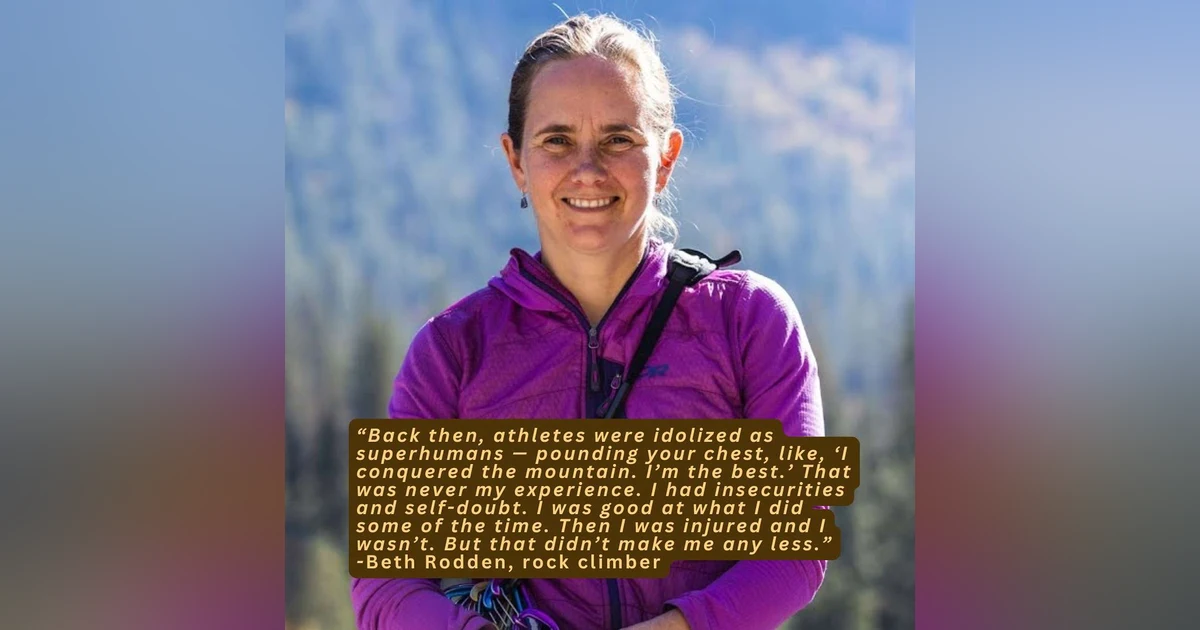


Beth Rodden is one of the most influential climbers of her generation—known for major Yosemite free climbing, multiple free ascents on El Capitan, and routes that helped push standards forward.
I came into this conversation expecting more about training, aging, and climbing goals. Instead, Beth took us somewhere rarer: the inner work behind the highlight reel. She speaks with a kind of directness that’s almost unfamiliar—about self-doubt, insecurity, injury, and what it feels like to be seen as “strong” while still living a very human life.
This episode is about the essential skill most people avoid: telling the truth clearly, dropping the performance, and letting your real experience be part of the story—not just the version that looks good from the outside.
Kyrgyzstan context (mentioned later in the episode): In 2000, Beth was kidnapped at gunpoint in Kyrgyzstan with Tommy Caldwell and two other climbers and held for six days before escaping.
In this episode, we talk about:
- The “superhuman” myth in climbing—and why it never matched Beth’s lived experience
- Self-doubt and excellence living in the same body
- Injury, identity shifts, and what happens when you can’t rely on performance
- How honesty changes relationships (and what it costs)
- Why Beth’s story resonates beyond climbing
Beth's authenticity is rare in this world. Don't miss this one!
Don't miss Beth's memoir - A Light Through the Cracks. Highly recommended !
Beth on Instagram.
🎥 Longevity insights + behind-the-scenes.
Ageless Athlete on Substack - 1-2x / month. No spam.
🎥 Want the full experience?
YouTube — full-length video. free.
📍More clips + behind-the-scenes
Ageless Athlete on Instagram - follow along.
🚀 Love the show? Here’s how to support it
If something you’ve heard here has stayed with you, made you smile, or helped you keep going, I’d be honored if you’d consider supporting the show. 👉 https://buymeacoffee.com/agelessathlete
Topics: longevity, fitness over 40, endurance training, aging athletes, recovery, injury prevention
37:11 - [Ad] Resilience Podcast Series
37:35 - (Cont.) The Uncomfortable Skill Most People Avoid — The One That Sets You Free | Beth Rodden
Ageless Athlete Recording - Beth Rodden
===
Beth: [00:00:00] Uh, I'm in Yosemite and I had, these gummies that I make for breakfast. It's like these fruit collagen gelatin gummies.
Kush: I have asked this question over 130 times. That must have...
This is the most unusual breakfast I've heard of yet.
Beth: we're always on the go, you know, for, um, rush- rushing out for school time. And so I always grab my tea and some of these gummies and eat them in the car on, on our way to school.
Kush: Gummies have h- honestly just e- enough calories to sustain you through the day?
Beth: I mean, I have lunch. Uh, yeah, they're pretty... I mean, you probably think of, like, a Shot Blok, but I should say they're, like... I make these things where I blend up fruit with honey and lemon juice and collagen and gelatin, and then I eat, like, a pretty good amount of them. So it's kind of like a smoothie, but-
Kush: Ah
Beth: you know, gel- gelatinized. So-
Kush: Yeah. Amazing. Well, I will not ask you to reveal your, all your secrets [00:01:00] here. But that does sound like a very unique breakfast, and I'm intrigued. I mean, there's so many ways to start the morning with something healthy and, uh, yeah, if you can make it convenient like you said, eating on the go, and you can get all your nutrients quickly, then, that sounds like a, like a great way to get started.
Um. Yeah. And Beth, you are in Yosemite, and a lot of your story happens in Yosemite, and I would love to dig into that. But before that, yeah, I'm dying to ask. I have heard you have been secretly coaching Hollywood.
Beth: Oh. I did. I had a, I had a stint,in LA where I coached, um, the actor Charlize Theron on how to, uh, how to climb for, her recent film that came out a couple weeks ago, called Apex.
So, and, and she was a climber in the film. So it was, it was like a, a dream job though, because she's just a [00:02:00] delight, and I get, I got to share, you know, like, my passion and what I do for my, you know, all my spare time and work and all that sort of thing with somebody that really wanted to learn how to, how to climb.
So that was, it was, um, it was a delight.
Kush: That sounds amazing. I mean, it sounds a little bit, different than what I would have expected. I have watched a few of those old time Hollywood movies which feature climbing, and I haven't had a chance to watch Apex yet. So what was it like to teach this Hollywood star What were you asked to do for Charlize?
Beth: so I just got an email through my website one day, from the production company, and they asked if I was interested. At first, I was like, "Oh, this is spam." this isn't real life, but they just basically said, "Charlize needs to learn how to climb for this film."
and so she doesn't come [00:03:00] from a background of climbing, but she comes from a background of dance, so she's like, she's very good body awareness. Plus, she's just, she's very good at her job, so she takes learning things really seriously. You know, I've like worked with a lot of people, but never anyone before whose like job it was to learn how to climb, but not necessarily just learn how to climb, but like look how they know how to climb hard.
Like we couldn't... You know, she's so busy and sh- you know, that type of thing that it's not like I could have six months with her where I think she could actually be climbing 5.12 in six months. But it's like we had this month and I was like, "Okay, well, we need to get to the point where you're comfortable climbing and you look like you are like a 5.12 or 5.13 climber."
and she totally crushed it. she's like, really good at what she does. she's got, I think from dance, she knows how to move her body. and honestly, yeah, like every day, like the amount of progress she made, I was just blown away. I was [00:04:00] like, wow, this is incredible.
Like, she really could, if she had the time that we all have the time today g- dedicate to climbing, she'd, be fantastic.
Kush: Beth, you have been in the public eye for a little while. Mm-hmm. And from what I gather, you do a few different things. You know, you, are a sponsored top level athlete.
You manage a family. You've written this book An amazing book. But I did not know that you were also a coach. So was this like a unicorn thing? Or do you actually take coaching clients? Because who knows, people listening
Beth: Yeah.
Kush: Might be interested.
Beth: No, it's sweet. yeah, you know, I have people ask me often, "Can you coach me?"
Or, "Would you coach my daughter?" Or something like that, especially since the book came out, you know, it's... I think it's a different perspective than a lot of, professional athletes have. so but I just, I really don't have the time right now,in my current p- life, um, [00:05:00] and capacity, and especially living in Yosemite and with school.
I think, you know, most parents can understand that, you know, school kind of pins you down for nine months a year in a certain place. but like before becoming a mom and even, in the summers, you know, probably quite a bit pre-COVID and a little bit post-COVID, I did do a series of, um, clinics at Touchstone.
for two or three months I would, teach quite a few women's clinics. and so I do love teaching. Like, I love working with people, especially in climbing. It's pretty fun. I like the collaboration. You know, I'm not like one of those authoritative "You have to do this." I'm always, like, trying to work with the person.
and you know, my dad was, um, for his whole career, he was a, a school, a public school teacher, so maybe it's kinda in my genes. I don't know. but yeah, this was like, you know, a book-ended month, that I worked with Charlize. and I think if it was like, you know, if Netflix was like, "Hey, we want you to coach all of our movies," or something like that, and l- moved to [00:06:00] LA, I'd, you know, I'd say no, but you know, for this time, I was like, "Okay, well, I can book end a month," and I came home every weekend and did that type of thing.
So yeah.
Kush: Were you surprised when Charlize or her team reached out to you for this project?
Beth: Oh, yeah. Yeah. I was,totally, I didn't believe it. I'm glad they did 'cause it was a true pleasure to do. And, you know, I, I didn't know what to expect, at all.
I, I had no idea. I'm not in the Hollywood scene, so I think I probably got really lucky in that Charlize is awesome and, a true genuine person. Um, who knows if everybody's like that in Hollywood, but she certainly is. So yeah, I got lucky.
Kush: Amazing.
Beth: Yeah.
Kush: and so you have some coaching background, but were you surprised that you got that invitation?
Yeah, um- Was it something about you that they were like, "Oh my God, we just have to have Beth for this"?
Beth: You know, it's interesting. The production company did say they made like a little presentation on a handful of climbers and presented it to [00:07:00] Charlize's team. and her- I don't know if it was Charlize or Charlize's team, I never asked, picked me, and I have no idea.
I can only like guess on like maybe it's 'cause we're like a similar age. Like she has kids right around our son's age. she's also had quite a, a big trauma in her background, and so maybe that's another reason why. I, I didn't, you know, know. I was like, "I'm just gonna form a relationship- ... and friendship with her," like just from...
You know, I didn't wanna be like, "Why did you pick me?" or whatnot. so yeah, perhaps that's it. I have no idea. I can only imagine like if I was starting a new sport, you know, I'm 46, would I want some like 19-year-old teaching me? Probably not. You know? Like they'd probably run me through the ringer and I'd get injured and like not have any fun and not be able to relate to them.
So maybe that's why. I, I don't know. You know, I'd probably try and pick somebody like around my, my age and like understanding and that type of thing. But yeah, I have no idea. But maybe it would be fun to learn from a 19-year-old. I have no idea. Yeah.
Kush: Yeah. I feel like All kinds of people can teach us all [00:08:00] kind of things, but you, sometimes you have to be a little strategic about, you know, what parts do you want to take and what parts are less compelling.
And Bet, I'm, I'm guessing you have experienced some of the prior Hollywood depictions of climbing. And I don't know about you, but yeah, as a climber, like, a lot of that stuff makes me cringe. Like, I can't sit through some of that stuff even if some friend of mine recommends that we watch this. I'm like, "Oh my God, this is, like, just so awful."
So I'm guessing you were surprised, maybe even in some ways, flattered or delighted that, you know, they reached out to you. But was a part of you a little bit skeptical that, this sport that has given you so much would not be shown in its true light- Yeah, 'cause- ... and you would have your name next to it?
Beth: Uh, I mean, I don't know about, like, my name next to it, 'cause you know, I wasn't, like, part of the production crew or anything. But I was very pleasantly surprised. You know, I was like, I was hired in the beginning to coach Charlize, [00:09:00] right? And I was like, "Okay, that's something, like, that's something I can do," right?
but I was pleasantly surprised that then the producers wanted me also to, like, walk the director around Yosemite and kind of show him, like, what big wall climbing was like and, and I was, got so lucky with the director, Balt, and the director of photography, Larry. Like, they totally wanted to know about climbing, right?
They didn't want to be like sensationalizing stuff. Like, "Oh, what if they fell from this ledge to this ledge?" You know, they were like, "Okay, so if you're clipped in and, you know, we wanted to show something like this, how, what are some synthe- sy- uh, systems you could, like, use that would maybe fail or that wouldn't fail?"
And so they were, like, in the weeds with me. and, you know, after, like, a couple days of that and, like, a handful of days on the phone with everybody, um, I was like oh, they're, like, really trying here, right? Like, they're, like, trying to make this as realistic as possible. yeah, it really surprised me and I was- I thought...
And, you know, [00:10:00] honestly, having now watched the movie, I was like, oh, they, they kinda nailed it, right? it's not some wild, out-of-the-world thing that can happen on a wall. You know, you're like, well, that bolt would never spontaneously pop. Or, I mean, maybe a bolt could spon... You know, they didn't do any of, like, crazy things, you know, like with Vertical Limit when they're, like, running across-
the crevasse and they, like, stick their ice axes in. You know, they just didn't do anything like that. They, like, they wanted to know, like, how things could happen, and I was like, and they really listened, and so that was pretty cool. And so with my name attached, I don't know, I've kind of, like, maybe been in the public eye enough, like, I've detached myself from what people- I, I, well, I can't really say, like, completely, but, like, I actively try to not, like, care what random people think of me because everybody's gonna have opinion.
Not that I'm, like, immune from it, but way less than so when I was, like, in my 20s where it was really upsetting.
Kush: Yeah, there, there are some benefits to having all that experience-
Beth: ...
Kush: behind you. And so this is [00:11:00] really cool that, beyond just coaching Charlize in a, in a, in a gym-
Beth: Mm-hmm ...
Kush: you were able to showcase, actual climbing in Yosemite.
Like, how was- That experience, like, I mean, how was it to be able to take this crew along kind of your stomping grounds?
Beth: Yeah. It was awesome. I mean, it was great. Like, you know, we hiked up to the base of the Leaning Tower, which, like, isn't a trivial hike. I mean, to climbers it's, pretty straightforward and easy, but for people that don't walk and scramble in towers a lot, you know, it's not easy.
and you know, we hiked all, like, all, just all around to look at all different formations and they, so they could kinda understand. And, you know, they saw people on the wall, so how small they were. it was pr- it was fun. And I think it, what made it fun was the crew, right? Like, it could've been not fun experience at all, if, like, they weren't interested or, you know, they were trying to portray something that climbing really wasn't.
like that type of thing. But [00:12:00] in general they were just so excited. You know, like, like most of people that come to Yosemite for the first time, they're kind of like, you know, in awe-struck, but then also, like, in the weeds, trying to understand, like, how climbing these things works. Like, why you don't climb in the blazing sun if it's hot or, like, you know, you can't climb it in the winter unless you wanna be alpine climbing.
You know, like, that type of thing. So they really understood, and it was cool.
Kush: I'm curious, do you think a movie like this could have been made even 10 years ago?
Beth: I, you know, I don't have enough experience with Hollywood. I had a bit of experience with Hollywood, um, when The Kyrgyzstan Story was optioned a couple times, and so that was, what are we, 2026 now? That was 25 years ago.
but it never got to the point where we were, like, looking at the script or anything like that. You know, it was more just, like, they were trying to find a writer. so I'm not certain if... Like, I [00:13:00] think if I worked with Hollywood all the time, I'd, I'd have a, you know, a use case s- to be like, "Oh yeah, like this was an anomaly and it was just because of the crew they had on there, and they really wanted to nail it."
Or I'd be like, "Oh no, like, things are shifting and they really wanna get it right." I guess I just don't know well enough 'cause I'm like, well this was my one time with it in 25 years, and even 25 years ago it wasn't even, like, as, far along as this was, so I have no idea. Like, maybe it's shifting or maybe, this combination of people just kinda nailed it, and who knows?
Kush: And this was such a novel experience for you as well, and I'm curious, are there maybe some things, maybe her approach- Or humility perhaps. I mean, any of those things you took away from on- Mm-hmm
how to just be, maybe be a different human.
Beth: Oh, man, she's pretty incredible, right? and she's just got a lot going on, right? she's got two kids, a [00:14:00] tween and a teen. You know, I have a tween, and so... And I only have one, so right there I'm like, "Wow, how do you do it with two?" you know, she has her own production company.
She- it's just like she's got a lot going on and, and yet somehow she's, at least when I was with her, she was very present, right? She was, like, there. and so, and she just so genuine and takes an interest in you and takes an interest in what, you know, she's learning. so I don't, I mean, I don't know.
She- how to be a badass is maybe how to, what I took away from her. But she's pretty, pretty remarkable person.
Kush: That sounds amazing. Yeah. Just zooming out for a moment here. When you are teaching a brand-new climber, Beth, like, what do you pay attention to first?
Beth: Mm. I think I don't come into it... Like, I don't have, like, a curriculum, right?
I don't come in and I'm like, "Okay, this is what we're learning." I like to go in and I like to watch them climb [00:15:00] first, and just see how their natural climbing, like, how their body moves, like, i- intuitively. And then I like to be able to be like, "Okay, so here's, like, how we can add on to what you're already doing," 'cause I think humans are pretty natural climbers anyways.
and so, you know, some people might be, like, extremely good with h- their feet. Like Charlize is really good on her feet. again, I don't know if it's from a dance background, probably. Um, but she's really good, like, with balance and, how to position her body. And then, you know, I've worked with other people who are, like, just incredibly, like, strong in the upper body, and so they pull themselves up all the time.
And so it's like how do you adapt somebody's natural, climbing ability to then, you know- kind of like simplistically get it down to the basics and then build on what they already have. and so that's why it's kinda fun. Like, I don't come in and be like, "Okay, everybody has to be able to do this many [00:16:00] pull-ups, and today we're gonna do this many foot drills."
It's more like, "All right, let's figure this out together," and, usually it works and people, are climbing a lot better by the end of the time that we work together.
Kush: And, you have this huge background in climbing outdoors and these days a lot of people just climb in gyms and stick with gyms, but were you able to take Charlie's outside climbing at all?
Beth: No, it never worked out just schedule and timing wise. Um, but when they were shooting, you know, they shot in Australia and that was, a lot of that was on, actual cliffs and things like that. And I think some of it maybe they built a little bit of a set for, but I don't, I don't know which parts.
But a lot of it they were like, you know, way in the est- Australian outback.
Kush: were you called upon at all, like, when the movie was actually being made, "Hey, Beth, we end the situation outdoors on rock, and how do we navigate this?"
Beth: Yeah, so I mean, I got texts and videos, of Charlie's climbing when they were there. and just like, "How does this look?" You know, I was like, [00:17:00] "Oh, you look great," like a pro. but never, like, when they were in pr- post-production or anything like that. So yeah.
Kush: Okay. Great, great. Yeah. Sounds like a, a masterfully executed effort on all sides.
Beth: Yeah, no- And it- ... it was, it was great ...
Kush: it's amazing. And Yosemite gets, uh... I think it gets thrust into the public eye with climbing every few years. There would be some movie that breaks out and, people will hear about this movie and then suddenly Yosemite and climbing will get talked about.
But I feel like it's gone next level may- maybe in the last, couple of years, and now we have this documentary called Dark Wizard featuring- Mm ... Dean Potter. Have you seen that yet?
Beth: I haven't seen it. I really wanna see it though. Um, it's definitely- Okay ... definitely on my list, but I haven't seen it yet.
Kush: All right, cool. I, yeah, okay, great. It would be interesting to hear about your perspective. [00:18:00] But I did wanna talk for a moment about, get your perspective on that era in Yosemite, and when you think about that time, What are some of your sharpest memories on what h- what used to happen back then- Mm
within the world of climbing, and what might have shifted in- Maybe taking out some of the more harmful elements, maybe bringing in more positivity. Do you think that Culture has changed
Beth: In Yosemite specifically or in climbing in general?
Kush: Let's just talk about Yosemite.
Beth: Yeah, I mean, God, when I think back to like the early 2000s, here living out of my car, just climbing, that type of thing, it's like a very simplistic time in my mind, right?
It's like literally the only thing were climbing goals, right? and either living out of the [00:19:00] the back of my two-door Honda Civic, you know, eating canned soup for dinner and canned peaches for breakfast and that type of thing. It ju- it was just like really simple, right? and I think free climbing was kind of just getting going then, right?
Obviously like Lynn had freed The Nose, uh, in '94, so and I don't... And like Todd and Paul had freed the Salathe earlier than that. So I don't wanna say like I was on the forefront of free climbing, but I feel like the free climbing wave was just getting going, right? and that like the Hubers were putting up new routes.
Like Tommy was freeing everything. Tommy and I were freeing stuff, like Dean and Steph, and like it was kind of like that crew, you know? But it wasn't... there were more aid climbers back then than free climbers, whereas now I definitely think that ratio has switched, right? There's like free climbing on El Cap.
You know, like the Freerider is so popular, where the Freerider wasn't even a route until partway through my tenure in Yosemite, right? So it's a pretty big difference. so it just seems like a simple time, right? Where you [00:20:00] like, you know, freewheelin' and like go and climbin' and, you know, doin' this thing, but, but not even knowing that you're kind of like on the forefront of this pretty, new and soon-to-be very popular thing of free climbing walls or free climbing routes in Yosemite.
'cause you're just like, just a kid and just like doin' your thing. So I feel like, yeah, when I look back I'm like it was a simplistic time. but I also feel like for me internally I put a ton of pressure on myself, right? To really succeed. Like I really wanted to be great at climbing. I really wanted to le- not necessarily, I don't feel like I thought I wanted to leave a mark, but you know, I just wanted to, I had a lot of goals and I wanted to accomplish them.
And usually when I thought of goals I thought of things that would be really noteworthy and kind of like push the sport forward. and so I definitely put a bunch of pressure on myself. so yeah, I just... But I'm also like God, the 20s are probably complicated for everybody. Everybody's trying to figure [00:21:00] out who they are and what they wanna do and how they're doin' it.
So I don't think about it in, in a disparaging way. For me, yeah, if I could have taken off pressure for myself, if I could have had a healthier relationship with, my body and body image and things like that, it probably would've been way better. But also hindsight's always 20/20, so I think it's kinda hard to go back and, like, puppet string your life to the, be the perfect thing, you know?
We're all a sum of, of what we've lived
Kush: Beth, I have been climbing for over 20 years, and I feel that I have loosely followed your accomplishments, and I'm trying to remember the exact time maybe when you hit my consciousness. It could have been when you were part of the team that free climbed the Nose, or it could have been when maybe you climbed Meltdown, I don't know.
But maybe my most distinct memory is that [00:22:00] I chanced upon your blog back in the day, which I wanted to go back and read again as I was preparing for this conversation, and I could not find it. So is, does that blog still exist, Beth? Because that blog, your writing was so different and refreshing. Aw.
Beth: Aw, thank you.
Gosh, you know, I've had so many people in the last, I don't know, handful of years be like, "Where is your blog?" "I would, I wanna read your blog." and you know what? somewhere in the early depths of motherhood, like Russian hackers got ahold of my blog and started, like inserting all these, like porn links- What?
and things like that. Yeah, and so people would message me, and they're like, "Your link has all these, like porn" And so I, I had like zero capacity to like fix it, and so I was just like, "I just have to take it down because I'm, like barely sleeping and I don't have any capacity to do anything." So, my, uh, path of least resistance was to take the blog down instead of trying to f- Geez[00:23:00]
instead of trying to just fix it and do that sort of thing. sadly, I mean, I th- I'm certain I have all the entries, right? 'Cause I wrote them. but yeah, so maybe when my son's out of the house and I have free space, I'll like put up the ode to the blog of, you know, my 25-year-old writings at that point.
But, um, yeah, sadly, I took it down. I had no capacity to, to try and fix it.
Kush: what struck me about uh, your writing in your blog, Beth, and maybe it could be part of what I am going through with my relationship to the sport in my upper 40s now a different person than I was 20 years ago, is that how willing you were to be honest about, like the messy parts.
And I think one of the entries I might remember is that, again, here I am thinking that I'm reading somebody who's at the very top of climbing, and you are about [00:24:00] struggling on five tens, like easy climbs Maybe even below, yeah, below what would be considered your warmups-
Beth: Yeah ...
Kush: back in the day. like, why did you choose to share like that?
Beth: Um, because I feel like
I think I was in this position where I was like, "Why, why should I be ashamed of this?" Right? Like, I felt so much shame. Like, I didn't go out and climb... I mean, obviously, like, I climbed in public because, like, I climb, at crags, but I would, like, go in the most obscure times or, you know, like, wake up at 5:00 AM and get it in before anybody, 'cause I was so embarrassed of where I was, right?
Like, I was like, "This is so embarrassing." Like, I'm, you know, supposed to be at the top, people are gonna rate my sponsors, I'm gonna get fired, like, all that type of thing. and then at some point I was like, " Gosh," like, "what if I don't need to feel this alone?" You know? Like, what if I share? And, like, obviously [00:25:00] all pro athletes at some point are gonna come down from the top.
Like, it's just, you can't be the best forever. It's, you know, like... And honestly, it's a career path that's, like, very short-lived in the grand scheme of things. It's like, it's, your, your peak is very early in life compared to normal people's careers. so yeah, I just started sharing about it because I wanted-- I wish I could have read about it, you know?
I wish I could have read about somebody that I looked up to and, but, like, I idolized going through being a human. You know? It was like, definitely back then I feel like people were just idolized as these superhumans, you know? And maybe that's what you're s- talking about, like, with these, you know, documentaries on, on Yosemite climbing, you know?
It's very, like, pounding your chest and, like, I conquered the mountain and, I'm the best and I was like, "Wow, that's really not my experience," you know? I have all these insecurities and self-doubt and, you know, I'm really I'm, good at what I do [00:26:00] some of the time, and now I'm injured and I'm not and, but that doesn't make me any less, you know?
Which I felt like was very, you know, at least was a very rampant dialogue in my head, but that dialogue was started because of, I think, the climbing community at that time.
Kush: Beth, you write beautifully, so candidly, and I think, like you said, not just in climbing but all around, like, pro athletes or just even everyday athletes, we go through this point where we are not-- maybe we are failing in our own expectations of ourselves, and that can make us recede into ourselves, uh, even more.
we don't wanna talk about it. We want to kinda just be a fly on the wall or... Yeah, because it's just such-- it's part of our identity. And from what I am learning about you, you- you are not that open in [00:27:00] person. Mm. So how did you find this in your personality- Mm, good- ... to start talking about things in writing?
Beth: That's a good question. Yeah, I'm definitely an introvert, right? Like, I'm a very... in my in-person interactions, like I'm super open with the, the people that I'm close with, like my family and, and my close friends. But in general, like if somebody comes up to me in a climbing gym, I'll probably have my headphones in and I'll smile and, but then I'll just wanna like kinda do my thing, right?
Like, and it's not that I don't enjoy meeting new people, it just, it tires me out because I, I think I like to be so authentically myself that it... I'm like, "Oh, I gotta establish this new relationship," and all that sort of thing. So yeah, I'm definitely like a pretty darn private person in, in real life.
I think that I've always enjoyed human connection though, right? Like I always, that's how... And I always find that with [00:28:00] stories. And so like I love learning about people and their stories. Like if I would, was to meet you in person and I like had the time and energy and capacity, like I'd just be asking questions, 'Cause I find that really, really interesting and I really like hearing about people and, and um, and their stories. And so I think with writing- It's also, it's like I can do it on my own time, you know, if that makes sense, like when I have the energy. And, especially for posting, like to blogs or now Instagram or whatever, like it takes me a long time.
Like, I, like, really think. I think about things a lot before I put words to them on the page. and so but I also like that process. I also like that creative process, and it reminds me kind of climbing, right? Like when you start a climb, like you're never gonna have all the pieces fit together in the beginning.
And so that's how a lot of times, like, my brain works with, you know, putting [00:29:00] thoughts down on, on the page, and I kinda like working with puzzles and things like that. And so I think it's, it's just like a creative outlet for me. interestingly, like I do these, um, talks, right? Like these corporate talks.
and I really like them, right? But I am pretty pooped afterwards 'cause I'm an introvert, right? And I go up there and I have to, like, tell a story on stage and, like, answer questions, but I l- love the process beforehand 'cause it's like, okay, well, here's the general idea of, like, what I wanna say. 'Cause usually they have, like, some sort of, idea.
You know, they're like, "Oh, we're doing this women's retreat for our company," or, "We're doing this, corporate summit and this is our, theme." And so I love, like, taking an idea and, like, really, like, molding it and getting to the end point where I have this, 30 to 60-minute talk that, you know, I've practiced and I do.
So I feel like kinda writing is, like, kind of that same thing, right? It's like a creative outlet to tell a story. [00:30:00] And, yeah. And I don't know why. some people are good at a lot of stuff and that I, I don't n- necessarily think I'm very good at that, but I do enjoy it, and I think it's always fun when you enjoy something to work hard at it.
Kush: That is so fascinating, Beth, because here you are this private person, or I shouldn't even say private, but let's just say introverted person, self-described. in your writing, and I'm guessing in your talks, you go deep. Like, you prepare yourself. You know, you give these talks All the focus.
while I've not been in those talks myself, I'm curious. I've gone to events where climbers have given talks, and often the questions are somewhat predictable. And I'm guessing you go to these events where people may not climb very much. And part of me thinks that, yes, some questions could be predictable, right?
Like, you know, those classic questions, "How [00:31:00] did the rope go up there?" Or like, "How do you..." But are there questions that you get that surprise you, that you're like, "Wow, people are- people wanna understand this," and it's different?
Beth: Oh, totally. Yeah. yeah, because I think, you know, usually I get hired because there's a climber at the company, right?
And so they recommend me or whatever, but it's never like I'm going to a room of climbers, you know? I- it's a room of people who usually know nothing about climbing. and yeah, because I think- I give a different type of talk than, like, the highlight reel, Not like the highlight reel, here's how you can achieve ex- success too.
You know, I'm, like, vulnerable and I talk about, all the things... You know, I talk about things, like I go deep like I did in my book or like I do on social media, you know? I'm not like one of those, you know, people that just, just does the, you know, success or the podiums or [00:32:00] whatever, yeah, people, people totally ask.
You know, and a lot of times if it's, like, a woman's summit or something like that,there's a question I did, one not too, recently ago that was, you know, how did you... I, 'cause I talk about my divorce, right? And so it's like Tommy and I were so intertwined, and so it's like how did I, like, slowly extricate myself and feel like I also could achieve success and I was worthy in that way by myself,
and so it's like that type of thing for women that are maybe going through a divorce or maybe, like, dealing with something similar, like not feeling worthy in their job or, or whatnot. So it's, I- that's one of the reasons why I love them because it's like, one, I would never meet these people.
Like, they're on totally different paths than I am. two, I think because of the way that I talk about things and my experience, then they feel comfortable then relating their experiences, which is what I was saying earlier, which is, like, what I always enjoy [00:33:00] about human connection is the stories that, you know, like crossover.
And so that's why I really like them 'cause I'm like, "Oh, like, I would never, one, meet you, and I would never, two, like, feel like we were connected, but here we are. Like, we're sitting and, like, having this conversation in this room full of other people that are maybe feeling a similar thing."
Kush: That is amazing, and I can sense how Those talks kind of give back to you also in some way because you find this relatability with other people that, again, if you are just in the climbing bubble, are not always easy to find because people assume these things about our identities within climbing.
One other thing I have thought about from that era of your climbing and your writing is that, yes, I can't claim to have read, like, even though I used to geek out on so much climbing media and writing, but, like, we did not have Instagram back then. Like, we did not know about private lives of all these pro [00:34:00] climbers.
But I did read your blog. And also that was a different era of being a professional climber, especially as a female, if I may gently add. And here you are, you talk about how on one hand this was such a clear and present danger, right? As a professional climber, I mean, your livelihood depended on your ability to be able to perform, -- But then you went on to write about when you were not, quote-unquote, performing at a high level" in your climbing.
So did that scare you? Did you have to kind of battle some demons and, "Hey, I want these things because people wanna hear this, and I wanna share this, but this could also be maybe a little bit scary for my, my career prospects"?
Beth: Definitely. Yeah, I feel like, uh, there-- especially when I felt like a bit challenged in the post I was writing or the blog I was writing or [00:35:00] whatnot, it was always like it wasn't an easy, like, send or publish, you know, push of the button.
but honestly, a lot of times if I was nervous to write about something and make it public, then that maybe kind of gave me the push that I should put it out there, right? oh, this is challenging this kind of like architecture of thought that you've been subscribing to for so long. And so maybe that's good to challenge it because, you know, while there were things about that architecture, there's still obviously like a lot of demons and shadow and things that lived in the shadows that, we should be challenging in the climbing, in the climbing world right now.
Kush: we should be, but you kind of took upon that baton yourself again in those early days. So I think you continued on with, from what I gather, with maybe your main sponsors, and you still are a sponsored climber. But do you [00:36:00] think there was something about the way you presented themselves which made your sponsors think about this, which is like, "Hey, we have been measuring our athletes based on these grades or these other things."
And again, pre-Instagram, yeah, before people started building these followings online. So do you think you also maybe helped, shape your sponsor's view on what counts as, uh, what counts as success and why we should continue working with Beth?
Beth: Yeah, that's a great question. I definitely feel, yeah, it's interesting 'cause during the peak of my athletic career, there was no social media, right?
It was kind of like you were sponsored because you were pushing the sport forward. Like, that was just... And, like, the magazines did the publicity for you, and you got in the magazines because you were doing things that were actually pushing the sport forward. It wasn't, like, any self-marketing. in fact, like, self-promotion was, like, very frowned upon back then, even by sponsors.
so I [00:37:00] definitely think, you know, everybody talks about the evils of social media and, you know, I'm not, I'm definitely, like, not a natural at social media. But I do think, with the blog b- kind of prior to Instagram and things like that, and then with the, coming of Instagram, it's given companies a different way to see what's resonating with their consumers, right?
And their customers. 'Cause it's like if I write a post, I haven't climbed 5.14 in I have no idea how long, and 5.14 isn't even that rad anymore you know, like, for a professional climber. So but I think they can see that I am resonating with folks, right? Like, people are, interacting and responding to what I'm saying some of the time.
And at some point that's gonna change, right? Like, even writers, I mean, I guess, like, the most amazing writers like Brené Brown and that type of thing, they, they continue to make things that are relevant. but at some point, [00:38:00] you know, I'm gonna be like, maybe I have nothing to say anymore, and that's great.
You know? Like, I don't know. I don't have, like, a business plan or anything like that. So I think, yeah, I think social media and... has given a different avenue for s- for athletes ac- you know, not just in climbing, right? Like, you can... Or even, like, creative people, right? Like artists that couldn't get into galleries can now show their art on social media or, or the internet.
I feel like I have a love-hate relationship with social media. like I do like connect, again, like those talks, like I like connecting with people that I would never connect with, right? and I do like the community that I have on my page. I think it's, like, a pretty darn supportive great place.
but you can hear about how quickly things can go south. yeah, I don't know. It's an interesting question. I feel like for me- I'm just gonna try and keep doing stuff that feels right to me. And at some point, that probably won't resonate with the public and/or my sponsors, [00:39:00] and I feel like that's also okay, right?
Like-
Kush: Yeah. ...
Beth: at some point it, it, that, it, that's fine. Like, you know, everybody m- grows and changes, and at some point that's okay.
Kush: I mean, it's clear, it's clear, Beth, that, you know, you, you l- you like the process of sharing and writing. Yeah. and you have learnt and matured in that craft, and it's one of those, like, "Hey, I'm gonna put this out there, and I am strong enough in my writing and my convictions, and let's see what the reaction is."
But I think what I think was still distinctive about that time in your writing was I feel like you were blazing a trail in some way. Mm. Because, yes, now it's ... Sorry, but it's almost fashionable to be, quote-unquote, uh, vulnerable and honest, you know, in your social media, presentations. But, like, you were bucking the trend.
And then, okay, moving on, Beth. There, there are many people listening who don't come from the world of climbing. And you know, you have
[00:40:00] this, um, transformative story in Kyrgyzstan at the, in your early years in climbing, and I know you have shared that story likely more than, more often than you care to repeat. So I don't wanna camp out there, but when you think about that experience now, what would you like people to understand on how it shaped you?
Beth: Mm. That's a good question. Um-
I mean, I was so young when it happened. I had just turned 20, right? And I know, like, as a 20-year-old, you're like, "I know everything. I can live by myself," you know? Like, "I've got the world figured out." But I feel like It definitely led me for a very formidable time of my life to be very closed, right? and very, in fear of the world, I guess, if that makes sense.
and, and that kind of like dictated [00:41:00] like a lot of my views of of like how I kind of should live my life or how, like what the right way to live my life. And I think when I thought-- when I say the right way, I meant, I, I probably meant, but I couldn't put words to, like the safe way, the, the thing that like I won't get in trouble again type of thing.
and it wasn't until, f- over fifteen years later that like I started to kind of question that like box that I had like built myself into. and that was like a really hard thing to open up. And so I think Kyrgyzstan, it like, it probably closed me for a long time, but then it also like allowed me to maybe try and, take off those layers, a little bit.
And I don't think I've ever... Like, I don't, like I don't feel like I can be like, "Check, I'm healed," right? Because I feel like there's events that happen in the world and in life that, are triggers still for me for Kyrgyzstan. Like COVID was very hard for me because it was like the first time since therapy that I [00:42:00] was like, "Ah, the world's really unsafe again."
And so it brought like all these things back. and so I feel like that's a great question. How is it-- You know, I think it's, it's just, it's like I said, I can't undo it. I'd-- And at this point, like at a, for a long time, I was like, "Oh, I wish that never happened to me." But at this point I'm like, well, I am who I am because of all of these experiences, and clearly Kyrgyzstan was one of those experiences.
Like, do I wish I could have been who I am without that? Sure. But that's like a unrealistic thing, you know? so I feel like, yeah, Kyrgyzstan, it was, it was a really impactful, hard, terrible thing to happen to a twenty-year-old, uh, to anybody, especially me. You know, I feel like at that point my eyes were like wide open to the world and, that kind of was like, oh wow, the world is a really dangerous, scary place.
and I don't think I'm like wide open to the world now, but I feel like I'm much more like [00:43:00] willing to experience things that for, you know, those fifteen years I definitely wasn't, or I definitely wasn't even willing to think about.
Kush: Bet yes, it's been a couple of decades, but I'm sure there are parts of that experience you still remember quite vividly You came out of the experience, fortunately, fortunately you came back, as intact in, in many ways. Yeah. Yeah. But you were also, also so clearly hurt by it. You were changed by it, and you had to put so much work into moving past it, and looks like you still are in some ways.
But I'm curious, if you had to go back to that, 20, 21-year-old self, fresh- freshly back from that episode and trying to find your way back in yourself, your identity and this world, are there any words that you would- Hmm ... tell that person that, "Hey, Beth, this is what this is, and this is what this is [00:44:00] not"?
Beth: Yeah, no, I think, you know, at that time, the climbing community was so full of, like, bravado and, like, honestly, like, cheating death was almost more celebrated than, you know, any athletic accomplishment. So it was, like, very celebrated what happened to us, which just felt weird. You know, no- and nobody was like, "Are you okay?
Should- do you wanna go to therapy?" I mean, therapy in 2000 wasn't even, like, mainstream in normal society, let alone in the climbing community, which was, like, super, chauvinistic, macho, you know, just, like, all that sort of thing. So, no one said that. So I probably would've, like... Although, who knows if my 20-year-old self would've listened to anything, too.
You know, I think if I could go and at least just say, "Take your time. Are you okay?" Like, ask if I was okay. hardly anybody asked if we were okay. It was just, like, celebrated, like, "Yeah, that was rad. That was sick." so I feel like, yeah, I'd probably ask if I was okay. Yeah. But again- That- ... you know, 19 and [00:45:00] 20-year-olds, like, they don't take much advice.
Kush: Wow, Beth. No, that is... Sorry, but that is sad, even though it's so revealing that, yes, the culture back then, and maybe the vestiges of that culture that still live on, is where, yes, I can imagine, you know, you came- come back home from this wild, exotic place. You come back in one piece. who cares if you...
Yeah, who cares what happened to you inside? People sort of feel that you have done something so different, and maybe almost look at that as some kind of feather in your cap. And- Exactly ... it's crazy that, that people did not actually even want to ask you how you came out of that- Yeah, I mean, are you still shocked when you think of that?
You're like, wow, your pe- people kinda took all these other meanings out of that story, but-
Beth: Yeah, no, n- I mean, definitely now when I'm sitting here 2026, I'm like, [00:46:00] wow. But I also have to remember back then, you know? Like, I didn't know any, like, none of my... I didn't know anybody in school that was in therapy, u- unless, like, something really bad was going on, right?
Or I didn't even know, like, parents' friends or... I- like, therapy was, like, for people who were really sick, you know, or really having, like, some really hard thing going on. and so I do have to put myself back in that position and be like, oh, right, we as a community just didn't have that capacity at the time.
and I'm not, like, excusing it in any way, because I also feel like there was just no room for it at the time, you know? Like, literally, you know, people would, like, go on expeditions and, like, summit a mountain and lose a body part, and their friends would die, no one would, would check in on them.
You know? They were just, like, expected to, like, write an article for the climbing magazine and, move on- ... and then plan your next trip. Oh, gosh. And so you're just kind of like, there was just [00:47:00] no, there was no room for it then. and now you're kind of like, oh, God, like, yeah, let's make sure we take care of people.
But, it's like, it's hard to, it's, h- hindsight's hard. So yeah. Yeah.
Kush: Yeah. certainly. You know, we are going through this time of, of a mental health crisis in this country. And yes, obviously you went through therapy because you just spoke about it. Can you think of maybe one or two other things that, that you undertook that have been instrumental in your healing journey?
Beth: That's a great question. I feel like being open, uh, I'm open with the people that are, are around me with, like my fears or whatnot, you know? So I'm trying to think like- You know, I used to be like, again, I used to be ashamed of a lot of the things that I felt or thought. so like for instance with COVID, like I was terrified of like being around anybody [00:48:00] or, you know, I had stockpiled food and like I was ashamed of it.
And so like if people, you know, once people came out of COVID, you know, they were like, "Oh, would you like to come over for dinner?" Instead of being like kind of dancing a- around it, being like, I'd love to see you guys. Can we do it outside 'cause I'm still like really freaked out by this," you know? And so like being able to like name why I'm having a hard time instead of just like dancing around it or sucking it up and then like resenting myself or people or whatever, just being a little bit more, more open, uh, with people.
I think that's been a big help, honestly. 'Cause then I just feel like so much more like I can be myself and like then not worry that like, oh, what do they think of me because I'm worried about this or, or things like that. And like for instance, like, I don't really like traveling without my family, but it's a big part of my job.
And so just being able to be open with my husband or like my friends and like, "I'm really nervous about this trip 'cause I have to fly [00:49:00] without my family" or, "I'm going alone and I'm scared," instead of just being like, "I got this," you know, like, "No problem." just being able- It just feels, it feels so much like lighter and less stressful and relaxing to, to just tell the truth and people can take what they want from it and, pretty soon you'll see who you really want in your life, So that's been super helpful.
Kush: That's great, Beth, and I agree that being open is, helps when one- Yes. And I personally happen to be certainly on the extroverted side of the spectrum. But you are a private person, like you said.
So did you have to coach yourself, teach yourself on how to be open, how to share these things which you were sharing on papers sometimes, but now sounds like you were actually needing to have conversations with people who were close to you because there were these things inside of you that needed to be [00:50:00] discussed and understood.
Beth: Yeah. I think, I think it's like kind of a similar process to sharing on paper or on the internet, in that- It feels scary at first to do, but then, I kind of just tell myself, "Well, like, what's the worst thing that can happen? They say no, or they don't wanna hang out with you anymore, and maybe that's a good thing 'cause you probably don't wanna hang out with them anymore."
You know, like, so I think, yeah, there's like, obviously like a dialogue inside of my head, about whether I should do this or it feels safe or whatnot. But, um, but I think that dialogue's like similar to when I write, I write it all down, it's kind of like that dialogue's like there when I decide to put it out in the public or not.
Kush: And Okay, so there's something for us to learn. Like, when you decide that you want to start sharing, did you first begin by, let's say... Because, you know, I've done that, and again, I'm more open, but I will sometimes write [00:51:00] a note to this person. Mm. So would you do something? Because you also write, so would you communicate with writing or would you have a sit-down?
Yeah. Um, I don't feel like I'm good, like, having a sit-down and having a hard conversation. Like, that's just not my style. yeah, like I'll text people, I'll have a conversation while we're, like, on a hike, or even over the phone or, like, you know, a lot of times it's just something s- simple. You know, I'm not like, "We need to change this whole thing for me," but it's like s- something simple, like with COVID or whatever, I'm like, "I only wanna eat outside," right?
Beth: Like, I just, I don't, uh, es- especially, like, my dad was really sick at that time, and I'm just like, I just don't wanna... And I hate being sick, I just don't wanna deal with it. like I still wear a mask when I, like, fly and things like that. and at some events I still wear a mask. And yeah, like, I went to Banff a coup- last year for my book, and then I had this, like, hundreds of people in a line to have me sign a book, [00:52:00] and I was, like, going to see my 101-year-old grandmother the next day.
And so I, like, wore a mask and I was, like, pretty nervous about it. I remember talking to Eva about it, my f- and I was like, "Oh, people are gonna think I'm weird." And then I was like, I... And then, you know, we're talking about it, and she's like, it's, you should do what you want." And I was like, "Yeah, that's true.
Like, I'm never gonna see any of these people again. If they don't want my signature because I'm wearing a mask, then that's fine," I was like, or most people, like, that I would want in my life would understand. I don't care if people wear a mask, you know? Like, I don't care if people dress a certain way or, or that sort of thing.
So yeah, I think to your original question, though, like, is it scary? Like, it could ruin a friendship or it could... Yeah, it's definitely scary, but I think I've gotten to the point where if, like, if telling my truth, something that, like, will really help me be more authentically myself in a situation, makes it so they don't wanna hang out with me, I'm like, "Well, that's a pretty clear example.
Like, I don't really need to hang [00:53:00] out with that person then," you know? I'm like, I've got a lot of people in my li- like, I feel like I'm, I don't do a good enough job keeping up with the people already in my life, you know? I'm just like- So they made, they made my job easy 'cause I don't, I have one less person I have to deal with.
Kush: I can also see how telling the truth It can be empowering also because maybe it gives us back agency because, you know, we put this thing out there and then other people can either decide to embrace it or not. Talking about sharing the truth, Beth, I finished reading your memoir, A Light Through the Cracks, and it had been on my bookshelf for a while, but I think, uh, preparing for this interview was such a great nudge.
And to be completely honest, I ex- I've read a lot of climbing books, and I expected, you know, another well-written book about climbing by a well-known climber, but I was honestly surprised [00:54:00] at how I devoured the parts which were actually not even, you know, those climbing specific, sections of the book because-
Beth: Mm-hmm
Kush: normally I would devour. I'm like, "Hey, wait a second. I've heard about, Beth's climb up the Nose, and Beth's takedown of the Meltdown, and I just wanna read those details." But I was like, "Oh my God, I wanna finish this part so I can see what happens next." So I wanna talk about that book for a few minutes.
Who did you write this book for?
Beth: Hmm. That's a good question. Uh, one of my editors asked that, right before he was, like, trying to figure out if he was gonna take this project on. Um, and I had to think about it for a while 'cause I was like, "Oh, that's a great question." And I think I came to the conclusion that I wrote...
The book is for, like, different versions of myself, right? D- for through different times of my life, like the teenager or the, 20-year-old or the newly divorced [00:55:00] person or the new mom or whatever. because I think it's rare to find, to read stories like that, that, that are from high-level athletes or achievers that are, like, show the, the depths of it.
Like, one of the books that I, that I love, you know, that I had read, like, a decade before even doing this was, um, Andre Agassi's book, Open. and it was so good, and I was like, "Oh, that's the book that I needed when I was a teenager" or "That's the book that I needed blah, blah, blah," you know, whenever. because you can, like, read and in, like, two pages you read, like, how his hair is falling out and that's, like, impacting his, you know, ego and how he hates Michael Chang and how hard he trains-
and, like, all this, like, all these things. And I'm like, of course because, like, humans are multitudes and complex and, like, why do we only show this, like, I came, I saw, I conquered, you know, type of thing? And so I feel like- That was a book, and I could list other books too, but I, [00:56:00] that was definitely a book from an athlete that I was like, "Oh, this is cool."
Like, it's not just like why Andre Agassi was the best, even though he was, and you learned that as well. You know, you learned why he was the best, but you also learned all these other things about him.
Kush: That is indeed a, a great book. And you're right, you know, because again, Agassi's persona, this, flamboyant tennis star, and talking about hair, he has that, if I remember correctly, you know, like, you know, the, the dyed punk hairstyle, which again, you know, shook Wimbledon back in the day.
But, but he talks about hair falling out, so that is, that makes a lot of sense that, yes, there are some people who have written books about their path, their journey, ugly warts, blemishes, the, everything goes behind it.
But fortunately, your publisher saw the light and the book came into our hands. And talking about the light, so the title itself is complex. A Light, it's a beautiful [00:57:00] title, but I feel it carries layers of meaning. So can you share how this title came about?
Beth: Yeah, I mean, one of the early editors that I was working with, early on, uh, it was that Leonard Co- Cohen song, like Cracks Are How the Light Gets In, I don't know if that's the title of his song, but that was- she mentioned that for, forever ago, and I really liked it. and then the publisher was like, "Oh, it's maybe a little too long," or what, so, like, it was a play on, on that, theme of the Leonard Cohen song. so yeah, that's how it happened.
And, you know, like, a lot of y- you know, books are, have the one-liner or things like that and, it was a play on, you know, I'm a crack climber. I made, like, my name doing hard cracks, and so it's a play on that. but then also, like, the fractures in life that, you know, a lot of people don't talk about, like divorce and, a lot of eating stuff and all that type of thing.
[00:58:00] some, those can be cracks as well, and cracks are how the light gets through, so.
Kush: Yes, there-
Beth: So that, that's how it is, like, A Light Through the Cracks came from that.
Kush: yeah, some evocative double meanings-
Beth: Yes ...
Kush: in that, in that phrase.
Beth: Yeah.
Kush: so you wrote this book and in some ways I feel like perhaps your early writing was maybe just training wheels-
for this book because you, I feel like you go next level in that book, and your ability to be so open and candid and again, just marveling at your writing.
Yeah, what gave you permission, Beth, to be that, that clear? Because you knew when the book came out that people would react to it in this different set of ways.
Beth: I think that's just who I am, right? I think it would've felt, like I was being untrue to myself had I [00:59:00] glossed over things, right? Like, it would've been easier to gloss over things and just, like, write that. But then I'm kind of like, it wouldn't have felt authentic to who I am as a person, right?
Like, I'm just not that friend who's like, "Oh, it's blue skies today, and look at the wind, and how pretty is that?" I'm like, "How are you doing? Oh, I didn't sleep last night either. Like, man, perimenopause is a bummer. Like, well..." You know, it's like, like I'm that person to get into it, and I feel like that's how I connect.
And so I feel like I would've been robbing myself of a unique opportunity that I had to be able to put this book out there, right? And I think that there's a million books that are surface level out there, and I just didn't... Like, I did, like, I thought if I ever did a book, I didn't, I definitely didn't want it to be surface level.
And so I feel like it, permission to myself, like, it di- it didn't feel like a stretch at all to [01:00:00] me. Like, it just felt like this is me. Like, you can... And I'm also, not, I'm not sad if people don't like it. Like, I don't like all books. I don't like all movies. I don't like all art, pieces of art, you know?
And that, I think that's totally fine. Like, it's not for everybody. Not everybody's gonna like the same music or the same book or movie or whatever, you know? We all have our tastes. And so, I, it's nice to hear when people relate to it and, and like it, but I'm also, like, not, I'm not losing sleep or sad if people are like, "No, it wasn't for me," or, "I didn't finish it."
I'm like, "Oh, that's fine." Like, I don't finish a lot of books. So-
Kush: 100%. yes. a book in, in many ways is just like a, like just any other product. Or like, like the music thing is a good analogy, you know? It could be a great piece of music, but it can't... maybe it truly is not a great piece of music if it appeals to everybody.
Then it's- Yeah ... it's likely not, right?
Beth: Yeah. Yeah, not, yeah, exactly. Not [01:01:00] everybody's gonna like everything. and that's, and I think that's, like, a really important thing. Like, I, I definitely had to detach myself. just because this person didn't like my book doesn't mean they, they're not gonna like me or whatever.
And, or maybe that's okay. if they don't like, I think that's okay, too.
Kush: Bet, I want to spend maybe a minute on just your life in that time, what you have talked about in the book, and it's so
You were performing at the highest level. Can you share with us a bit about that inner voice and how that was maybe a little different than-
Beth: Yeah ...
Kush: what people saw on the surface?
Beth: Yeah. No, totally. I think I was very driven, and I think I was not kind to myself when trying to achieve goals.
but I think also at that time, especially for a woman to, be at the top of climbing, you had to be, have a certain [01:02:00] personality look, you know. So I was like, s- smiled all the time, like, said the right things, please and thank you, you know, that type of thing. but yeah, I was super driven. I was not kind to myself.
I'd beat myself up inside and out to, to achieve goals, because I attached, most of my worthiness to those goals. And so, um, if I couldn't succeed them, I, I definitely thought that, I was a not a great human. And, yeah, and so I think that that is something that has taken a long time to change, right?
and I'm, again, just like therapy, I don't feel like I've checked the box of like, I have a great inner voice, you know? But it's like, it's different. It's like quieter and more muted, or maybe I have tools or sometimes I don't. Sometimes I like get into a hard space, and that's, that's okay, too. - I don't know the inner workings of all top athletes' minds, but mine was, uh, uh, driven to the point of, Yeah, I think the best way to say it is like, I didn't feel [01:03:00] worthy if I didn't accomplish a goal.
Kush: Yes. I mean, on the outside, you were at this pinnacle of performance, of success, p- a place where a lot of people would envy, but you were also working through these other facets Okay, describe to us, Beth, so we can understand the contrast.
What was that outside exterior that you had created?
Beth: Yeah, I think the outside exterior create, thing that I had created was, " This is amazing. I'm living my dream life. Look at me, like, I get paid to rock climb." It's not like I got paid very much to rock climb, but, it's like I get to do what I love and, and this is amazing.
which is all still true, right? Like, it, it was still amazing, but the inner side was like, "You have to go do that climb. You probably shouldn't eat lunch so you can be light enough. Like, you have to train another hour on top of your four hours you've already trained." You know, like t- stuff like that.
[01:04:00] Whereas, like, the other... It just was, like, a lot lighter of a personality. You know? Like, I'm lucky. Like, I'm living my... the most amazing charmed life, uh, and not like, oh, here's, like, all the things that I'm putting myself through to get there. Like, I would say, yeah, like, I love training, and I train all the time, and like, you know, that type of thing.
But I would never say, like, "Oh, and I feel terrible about myself because I didn't do my project today," or something like that.
Kush: So what was it that you were hoping that you would finally feel if you climbed well enough? this, it seems like it, it was this moving target in some way.
Beth: I feel like I, I was always thinking like this will be the thing that I feel like I can kind of relax and I've checked the box and I'll feel like satiated, if that makes sense.
but every time, it's like that never happened. The climb was never like the thing that just like filled my cup. you know, I always felt like there, that I had to do more and because I feel like that's type of... I mean, maybe like a [01:05:00] different type of athlete that h- has like seasons and competitions are like, "I'm gonna retire at the end of this season."
I don't know. Probably still then it's hard. So I don't actually know what I was thinking or what I was looking for except for like, I feel like at some point, I wanted to, I felt like this will be the thing that I finally feel good enough about,
Kush: And Beth, from your vantage point, why do you think high performers so often tie their self-worth to output?
Hmm.
Beth: I mean, I can't talk for other people, but it's just like an, it's a pretty simple equation, right? It's, like, very, externally validating, and so you don't have to do, like, any of the inner work, right? You're just like, you're like, "Oh, I climbed 5.14. I got a raise. I got a spot in the movie.
Check. I feel great. Everybody tells me I feel like I'm great." I don't actually need to, like, ask myself, "Am I actually feeling great? Is this what I really wanna... Is this really fulfilling to me?" So I think [01:06:00] it's just, like, it's a more simplistic way to be externally validated, right? It's like I'm, I was just gonna use the example, it's like you win the NBA championship, so it's like, you should- you're the best. And I'm like, although winning the NBA championship, they're probably feeling pretty good about themselves. But I don't know. It just- I think it's an, a, it's just, it's a lot easier to have people tell you you're great and you're wonderful and you've, you're doing great things than having to actually feel that and believe that, At least for me. I can't speak for anybody else, obviously.
Yes, certainly
Kush: So I wanna ask one more question here, which was, can you talk about one of the things you did back, again, over the years that have helped you build that self-worth in, in, in a real way?
Beth: That's a great, I, I- that's a great thing. I think one thing that I still try to do a lot i- is like a reframing, right? 'Cause it's very easy for [01:07:00] me to fall onto the, path of how I used to be. Like, "Oh, well I climbed for four hours, that means like I- I'm gonna be sore and I'm gonna feel good about myself, and like I got a good workout in, I'm feeling worthy," right?
Where sometimes like I can't do that anymore, or like I, I have a week where I don't get to climb as much as I want to. And then so instead of being like, "Ugh, you're lazy and you, you didn't, you weren't able to climb as much, and like you should feel bad about yourself," I try and focus on like what I did, right?
And so it's like, oh, I actually helped my mom, and like clean out this room from my dad, and that's really important and I'm never gonna regret looking back on that and not, and doing that. Or it's like, oh, or I, like I got to sit and watch our son at his game, you know? And in 10 years he probably won't invite me to his game anymore, and so like- And so it's like, it's like that type of reframing that like I used [01:08:00] to only think one way.
It's like you have to walk this line of like fitness and eating perfectly and doing all the things. And I'm sure I could still live that way, but I'd probably be a pretty miserable person to be around. Um, because now I prefer to be like, "Oh, yeah, I, I actually didn't climb that well today. so instead like I took our dog for a hike and it was
I got to see these wildflowers," or ... And it sounds corny, right? To do that. But I think at some point, like it, the reframing becomes much more natural. And so then I start to like be like, "Oh yeah, I didn't get to do that, but I, got to go on a walk with my girlfriend instead. And like we talked about this and I felt more connected to her, and that's also equally as important."
Or, "Yeah, you didn't wake up early today and go for your run, but you got to sleep in and like, you know, enjoy you know, breakfast in bed or something." You know, it's like just trying to like- See other things as being equally as important [01:09:00] and meaningful in life rather than just the success and achievement path.
Kush: I can totally see that. you know, just having one yardstick is such a difficult proposition, and as, yeah, just as another average athlete, I can sense how difficult it is to not always look at that yardstick which has been such a strong part of your identity, and then be able to disperse that into different things one can measure in some ways and enjoy.
last part of the conversation, I know we have to end soon. Beth, I heard you say recently or h- or read that your 40s are your best decade. I- is that correct?
Beth: I think so far it's, it's my least angsty decade, knock on wood. Although I still have like four more years, so we'll see- ... if it is. But so far, like it just, I just feel a lot more comfortable in my skin so far.
Kush: Okay. Okay. I, I love it. so what has gotten [01:10:00] simpler with age?
Beth: Simpler. Oof. I think just like not caring as much about little things, right? Like, I just, like I said, you know, like if a friend doesn't, can't hear that, like this thing makes me nervous so then they get more distant from me, I'm just like, "Okay."
Like, "That's fine." Like, we can just have a m- more distant relationship, whereas definitely in my 20s and early 30s I would've been like, "Oh my God," like, "What do I... I gotta fix this and I gotta do this," and like try and like orchestrate my life around doing that, and now I'm just like, "I don't care." Like I just, I don't have the capacity or the need to wanna please everybody, Like-
Kush: Sure ...
Beth: I think, I think your view just becomes a little bit more focused.
Kush: And Beth, if you had to distill what holds up across those decades, you know, from like those angsty 20s to the less angsty 40s, if there was one rule, what would that rule be?
Beth: To get me from angsty to [01:11:00] less angsty?
Kush: Uh, what holds up.
what is this one principle that-
Beth: Oh ...
Kush: carries forward through all these years?
Beth: Hmm. That's a good question. Like a quality in me, huh?
I feel like I'm a pretty driven but also compassionate person. And so I feel like that kind of gets you through a lot of things, right? Definitely driven in my 20s and 30s, and still driven, just driven in different ways. And then-
Kush: Sure ...
Beth: oof. Yeah, I don't know. That's a good question. I don't know if there's one thing. Okay. I feel like I'm a- Okay ... a myriad of things.
Kush: Okay, last couple of questions. But when you look forward to the next couple of decades, I have just two quick questions.
What excites you? That's the first one.
Beth: Oof, hopefully I make it. I feel like I hope- Okay ... I hope I have my health. Yeah, health and yeah, that's I think a big thing.
Kush: And what scares you?
Beth: what scares me for the next couple decades?
That's a great question. [01:12:00] I think a, a lot of things scare me. I hope we just can be kinder to each other as humans. I think human interaction strife is, it's hard.
Kush: Beth, you have written this wonderful book, which I recommend to everybody listening, A Light Through the Cracks. Where can people get this book so it provides the most benefit to you?
Beth: Oh, um, as far as me, it, it doesn't really matter. It, it's, it's wherever books are sold usually. But, um- Okay ... I always love to support the independent bookstores. So if your independent bookstore doesn't have it, um, they could definitely order it, and I always try and support the bookstores if you can.
Kush: And I was trying to find an audio version of the book, but I don't know- Yeah ... if I found one. Is there one out there?
Beth: Yeah, it's on Audible. Yeah.
Kush: Okay. Okay.
Beth: And I- Great. Great ... I read it, so if, if you want 11 hours of Beth in your head, go ahead.
Kush: I looked on Spotify because sometimes these days people look on Spotify, but Audible is the place to be.
Beth: Yes.
Kush: Beth, final question, which [01:13:00] is, what question do you wish people asked you more often?
Beth: Hmm, what question do I wish people asked me more often? That's a great- Oh, do you want me to make you dinner? It's like the hardest thing in my life is I- figuring out what to make for dinner every night. So- You know, I, I, I- If you can bring me dinner, that's great.
Kush: I do hope my mom ... My mom will sometimes, uh, listen to my podcast. I hope my mom listens to this because that is honestly the toughest question I get asked when I visit her because I'm like, "Mom, I don't know at 11:00 AM what I would want at 7:00 PM."
Beth: Totally. It's-
Kush: Bet- Yeah. If somebody can figure out- It's been a joy having
Beth: you- Oh, I was just gonna say, if somebody can figure out what I need to make for dinner every night, that would be great.
Kush: Yeah. Yeah. It's the hardest thing. Hardest thing. Yeah. Bet, it's been such a pleasure having you on the podcast. I know you have to run, but I'm so glad we were able to do this. Thank you so much.
Beth: Yeah, it's been really fun. Thank you so much. I'm honored that you had me.
-