Anti Decline Mindset — Playbook to Stay Capable | Mike Wardian, 52
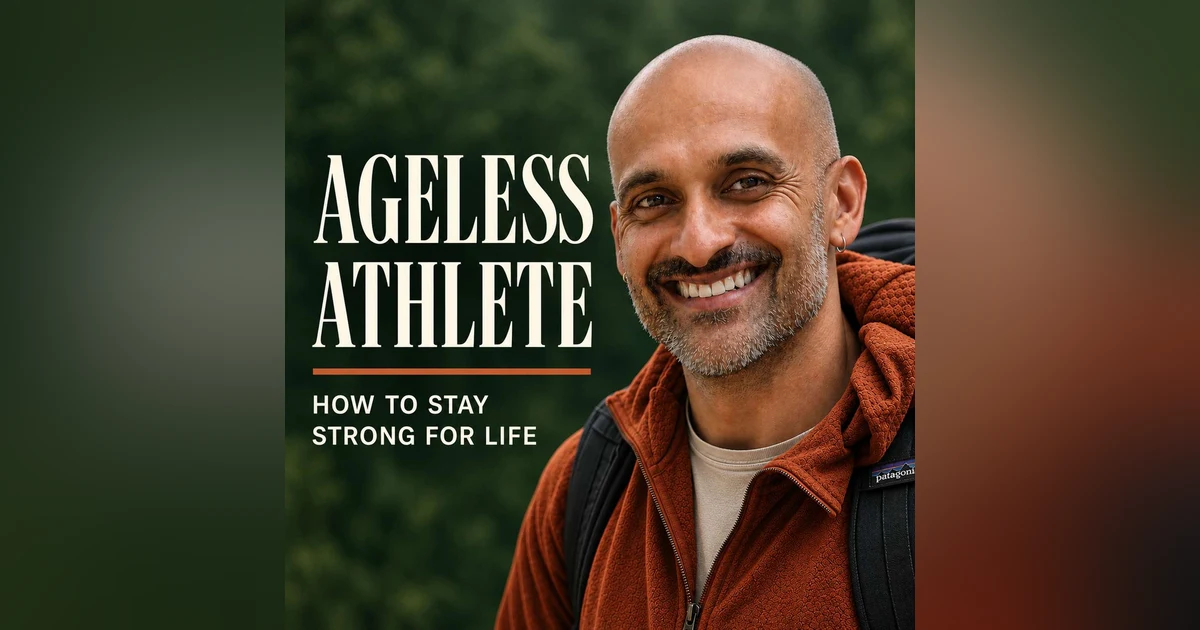


Some guests make you want to train harder. Mike Wardian makes you want to live wider — and stop postponing the things that matter.
Mike is 52, a runner, adventurer, and lifelong “yes” person. What stood out here wasn’t a race résumé. It was how he builds a life where training fits inside the day, curiosity stays lit, and progress keeps happening even when time is tight.
Mike’s story has that real-life Forrest Gump energy — he ran 3,200 miles across America on Running Home. But the reason he belongs on this show is the off-camera stuff: burpees while the toast cooks, workouts folded into errands, and the willingness to be a beginner again — whether that’s pickleball, chess, or whatever comes next.
I’m grateful to Mike for the clarity and humanity he brought to this episode — ambition without bravado, urgency without panic.
In this episode, we explore
- “Tomorrow isn’t guaranteed” philosophy
- Training inside real life constraints
- The 4-part playbook: mindset / planning / strength / integration
- Humility as a longevity skill
- Starting > gear, hacks, perfection
Links:
- Mike on Instagram: https://www.instagram.com/mikewardian/
- Mike’s website: www.mikewardian.com
Mike’s partners (mentioned):
Gear: Teva (https://teva.com) • Suunto (https://suunto.com) • Injinji (https://injinji.com) • T8 (https://t8.run) • Bakline (https://bakline.nyc)
Fuel: Big Spoon Roasters (https://bigspoonroasters.com) • Squirrel’s Nut Butter (https://squirrelsnutbutter.com) • South Block (https://southblock.com)
Health: MedStar (https://medstarhealth.org)
🎥 Longevity insights + behind-the-scenes.
Ageless Athlete on Substack - 1-2x / month. No spam.
🎥 Want the full experience?
YouTube — full-length video. free.
📍More clips + behind-the-scenes
Ageless Athlete on Instagram - follow along.
🚀 Love the show? Here’s how to support it
If something you’ve heard here has stayed with you, made you smile, or helped you keep going, I’d be honored if you’d consider supporting the show. 👉 https://buymeacoffee.com/agelessathlete
Topics: longevity, fitness over 40, endurance training, aging athletes, recovery, injury prevention
39:01 - [Ad] Resilience Podcast Series
39:25 - (Cont.) Anti Decline Mindset — Playbook to Stay Capable | Mike Wardian, 52
Ageless Athlete Recording - Mike Wardian
===
[00:00:00]
Kush: I'm in Arlington, Virginia, right outside Washington, DC, and I had, a bourbon pecan, sandwich with, uh, fresh blueberries.
Bourbon pecan sandwich. How does one make a bourbon pecan sandwich?
Mike: Uh, it's through a company I work with called Big Spoon Roasters. They make, artisan nut butters, and so they've already made the bourbon pecan. Uh, you just I use some Great Harvest protein bread. And you just spread it on there, and then, add fresh blueberries.
It takes about 30 seconds. Oh, actually, I toasted it, so it takes about two minutes. but yeah, it's great. It's a good way to start the day.
Kush: It's sounds delicious. I'm a big fan of nut butters, big part of my diet, but, uh, somehow these, uh, somehow pecan has avoided me so far, so I'll have to , track this one down and make it part of my breakfast routine at some point.
Mike, is this your- Pre-training regimen in the morning, or do you [00:01:00] already get out and get some miles in or do something else and this helps you replenish?
Mike: Uh, actually that was after my second workout of the day. So I did a, um, hour-long workout with my personal trainer I work with, Jesse Fuller. Uh, so it's like strength and mobility.
Uh, then I came home, uh, grabbed our dog, Bash, and then we went and ran. I run people's dogs. That's one of my jobs. Uh, so I picked up our, uh, client, uh, Stevie, and we went for, uh, like a five-and-a-half mile run, uh, through the, trails, uh, around where I live. so that was really great. So it was, uh, Stevie, Bash, and I.
Uh, and then I got back, and then I had some water and breakfast.
Kush: I know that it can, it can take a lot of, planning and creativity to make one's dreams work, but I have not heard of an elite athlete who's walking other people's dogs.
I, I just have to say that. Yep. [00:02:00] So what is that about? Is this, a fun thing that you do, or are you actually, is this part of, , your, , let's say compensation
Mike: strategy? Uh, n- no. I mean, I think it's, yeah, it's both. I think it's, one of my favorite jobs I've ever had. I really enjoy, the chance to, , exercise other people's dogs, especially, everybody's happy, man.
he's so stoked to see me. I get to get a extra run in. yeah, I don't know. I love it. funny, I was on, uh, a thing earlier this year where I ran seven, uh, marathons and seven 50Ks in seven days on seven continents. Wow. And one of competitors was like, "Hold on. Wait.
You, you walk other people's dogs?" I was like, "No, I run their dogs." But,but yeah. He was like, "Wait, you work at a ship brokerage, you're a professional athlete, you coach people." you play chess at a high level and you, uh, you run people's dogs. And I'm like, "Yeah, I do." And I,I don't know, man.
I, I have no... Yeah, no shame in that I really enjoy it. It's just, something I like, and, yeah, there's no reason not to do it. And,it's just great how happy the [00:03:00] dogs are, how happy the people are, and how happy it makes me,yeah, I love it.
Kush: Mike, this is so great because, yes, I love dogs as well, so this way one gets to spend time with dogs, and one gets to also do what's important as part of one's routine. I think in your routine it's probably getting a certain number of miles as part of your training program.
Speaker 5: Yeah.
Kush: I think this just presents, a philosophical, lifestyle- Man, which is, find ways to get one's workout integrated with one's activities. Yeah, I mean, like- Because you have to get your... Yeah.
Mike: Yeah. I mean, when I was working downtown, I would either run or bike to work.
And so, I'd get in five or six miles each way, and, uh, I know that,Nick Thompson, who's the CEO of The Athletic, like he runs to and from work and you just have to be efficient. you've got a lot of stuff going on and, that while my, my breakfast was making, I'd do 100 burpees a day.
I knocked out 10 burpees while, my [00:04:00] toast was getting made, right? So just being efficient with your time. Like when my... I just got a new car, and every time I take it to a supercharger, like I'll just do 100 burpees, like while it's charging, just because that's a good use of time, right?
So yeah, I think if you can be, yeah, if you can be good with your, with your time, then it'll be good with you.
Kush: Mike, I just got back from a conference on longevity in Berkeley, and there are some, there's some serious science there and people talking about all these other interventions that they are creating or learning about.
I'm thinking maybe this is like such a, such a vital intervention. Like I do pull-ups while my water is heating up in the morning. As I am, as I'm waiting, I just knock out a set of pull-up. That, I mean, that's it. that's it. if one can just keep making one's time efficient while one is doing other things, then one doesn't have to carve out like three extra hours a day to go to the gym if time is precious.
Mike: 100%, dude.
[00:05:00] Mike, if someone had never heard of you, and yes, there are people from different domains on the podcast and even broader than your lifestyle and your work, I'm curious if there is a story from your life that captures the essence of who Mike might be as a person, as a human?
Mike: I think I'm like an adventurer. in, in my own head, that's the way I would say it. I... It's with, uh, primarily at the moment, it's with a focus on marathons and ultramarathons and, kind of exploring the world, through running and ultra running. But, but in the near future, I'm going to be shifting over and doing, still be doing the running and ultra running, but adding in like ocean rowing.
So I think I'm a seeker at the moment. So I'm seeking, what's possible and, Especially for myself. I'm curious about, , exploring and inspiring people, and so far that's worked out really well for me. Like I've been able to achieve a lot of things. I've, I had a lot of success, but I've also, had a lot of [00:06:00] failure that I've been able to learn from and grow.
And,I think as a person and as an athlete, you have to continue to evolve and,I'm looking forward to, what that process looks like. Especially,we're on an aging podcast. I am 52. I just turned 52 this year. And so, the things that, I was all fired up about, , 10 or 15 years ago are not the same things that, that get me excited, now.
But, uh, it doesn't mean I'm any less, any less interested in seeing what's out there for me.
Kush: I love what you said about being a seeker and being curious, And as we get older, sometimes this is one quality that sometimes diminishes, that, that thrill of- That's true ... learning something new.
And, I think there's a lot that you can teach us, Mike. What is maybe one thing that has helped you keep that curiosity flame burning?
Mike: Uh, I mean, I think my wife says I have ADHD, so I don't know if it's that. [00:07:00] But I think, more realistically, it's probably, that I'm never, I'm never one to say no.
Like I, I think I'm more open to saying yes to experiences and yes to, uh, opportunities, and I'm not afraid to not be the best at stuff right away. So, I'm patient and I'm curious, and I think that h- helps me a lot. Like I, I'm happy, coming in on the ground floor and working my way up. I did that with running.
I didn't know anything about running when I started. the first time I went to a track workout and they said "Hey, we're doing 800s," I was like, "I don't even know what that is. Just tell me how many laps to do." And so, building, building up that knowledge and base and then, being able to, know what you need to know, and being very humble in the beginning and, continuing to be humble I think is a good trait.
there's always more to learn. There's always ways to improve. there's new things that are happening in whatever sport you're choosing or whatever, thing that you're [00:08:00] curious about. And so, it may be- Bird watching, it may be chess, it may be bocce, it may be, learning more about the industry that I work in.
it may be, politics. there's no end to the things that, is out there to learn. And as long as I think you're willing to, be humble and work hard, good things are gonna happen. And I think that, I kind of try to make sure I remember that as I go into things and I get frustrated.
I really am into pickleball, and I'm just, stuck. and that happens, That happened in running, that happens in life, that happens in, in, in things, and you just gotta keep, ... Or at least for me, I gotta keep grinding at it and working at it. And the more you do, the better you get.
Kush: I mean, it's just, a lot of times it's just reps, Mike, it's every few minutes you drop something that just, uh, breaks my brain a little bit. You do all these things and you're also trying to, get good at pickleball. That is one thing- Yeah, well- ... I did not expect. I'm,
Mike: yeah, I'm relatively good.
it's just I'm [00:09:00] stuck. There's different levels. I don't know if you play tennis or pickleball. So I'm kind of stuck at the 4.0 to 4.5 level, and it's just, frustrating 'cause I go and do all these things and then I come back and I see my friends continuing to level up. And, you can't be frustrated.
They're doing all the right things, and, I'm not putting in the time. And so, I just need to make the time , and, , that's one of the reasons I'm trying to limit some of the things I'm doing is I w- you know, I wanna keep improving and things, and there's only so many ways you can divide the
we all get 24 hours, but you gotta figure out how you're gonna divide that time up.
Kush: Mike, it's amazing. we get older, and I think a lot of us become less willing to try new things, right? Because just this ... Yeah, we become afraid of failure because we might have proven yourself in a different domain.
And okay, so let's say if this was a Rich Roll podcast, I would, I'll pretend for a second I am Rich Roll, and I'll [00:10:00] ask you this question, which is like, Mike, what is your relationship with your ego?
Mike: I mean, I definitely have an ego. I mean, I love winning. I love, being competitive, but I'm also, willing to be humble about,that- It's nice.
you don't have to win everything to still get a benefit of taking part, so like I think that's one of the things I've learned as I've grown. Like before I always used to really want to win and ha- it became like it was paramount. Whereas now if I don't win, that's fine.
but I'm gonna try to learn something from the experience. Like it may be, uh, I learned that I didn't fuel properly. I may learn that like the pace was too hot. I didn't do enough, , preparation. I didn't take care of myself in the right way. Um, like I can get faster at the transition. So uh, the whole time I'm gaining experience and knowledge that I'm gonna be able to use, later in life.
And so one of the, one of the best things that [00:11:00] ever happened to me is I did the Barkley Marathons and, I didn't complete a single lap. Like I got timed out, but it was the first time I was out there for over 12 hours completely on my own in a race. And so then like I knew "Hey, I can be out in the woods with no idea where I am, with no, no, no ability to get more water, uh, no ability to get more food, and be completely fine."
And so then that allowed me to go do, set the FKT on the Appalachian Trail through Shenandoah National Park because I was like, if I'm out there for Barkley getting slammed and getting crushed, , then I can be out by myself in Shenandoah. And so it was a setback at the time and I was sad I didn't do as well as I did, but I was able to gain a lot of knowledge that I've been able to use the rest of my life.
And so yeah, that's a good sacrifice. That's a good return on investment.
Kush: Mike, like most of us will start or take on like a big challenge, and [00:12:00] we will prepare for it. And the goal is to meet, some mainstream definition of success, which is, hey, either we're gonna complete this big run or this big climb or this big project at work, and we're gonna prepare for it.
And yes, you're right. One can be accepting of different outcomes, but one is preparing. But it sound, sounds, it sounds like you almost methodically prepare for lessons you might obtain at any level of success. Like you have, I feel like you have this learner's
Mike: mindset Yeah, I mean, I think some people have called it, a growth mindset, but, yeah, it's definitely, what am I gonna gain from this?
How am I gonna extract, information that's gonna be useful? What can I retain? sometimes it's oh, I don't wanna do that again. it's not always good information. But, I think it's like for kids, trying to figure out, what you wanna do. I [00:13:00] think, it's almost as beneficial to say, "What don't I wanna do?"
I've ha- I had so many jobs when I was younger, and I was like, "If I could not have this job when I'm older, that would be great," because I've already done that job, and I've seen, , where that's gonna go, and I don't necessarily wanna do that if I can help it. And so, knowing what you don't wanna do allows you to kind of really hone in and focus on what you w- do wanna do.
And I think, it's the same with, like you were saying,in, in work there, there are, y- there's only, y- you only wanna have successful outcomes. But in most other things,success is defined in a lot of different ways. And if I can, learn something again, like I said, and,get something, beneficial out of the experience, one way or the other, that's what I'm looking for.
Kush: Growth mindset. yeah, if more of us could adopt that, I think more of us would be happier and more curious as we got older. did you have any process, Mike, did you [00:14:00] have any moments, let's say, when you realized that maybe a prior mindset was not helping you progress, and you were intentional about building this mindset?
Mike: Yeah, , I actually started, pretty young. I, um, started interning, in the company that I work for and own now. Uh, I was a, um, a summer uh, intern there, and I just saw how the, uh, the guys Keith and Fred, so it's, um, Keith Powell and Fred Hayden, just the way that they approached life.
And I think it was, really, uh, transformational for me just to see, like, , how focused they were, but also, in shipping, there's so many things beyond your control, but how quickly they, analyzed the situation, accepted reality, never cast blame, and then took, um, the appropriate action.
And I think- growing up, like I, I saw [00:15:00] that, , modeled, uh, through them. Uh, and then also I think my parents did a good job of modeling that for me. but I really, took that to heart, like watching those guys operate, in the business world. and then, I mean, I think like the nice thing about the events I do is there's not a lot of subjective, feedback, right?
I played, uh, lacrosse growing up yeah, I was one of the, players that had a lot of, um, interaction in the game, but there are games where, maybe you get taken out of the game and you still win the game, right? But in running, it's like the time is the time and there's nobody else like that, uh, you can rely on,to get you through it, right?
So I mean, of course that's not true because there's like pacers and there's the aid stations and there's uh, coaches and resources around you. But at the end of the day, your time is your time and, uh, your finish is your finish. And it's... it comes down to did you do the work?
Did you make the right decisions? And those decisions are [00:16:00] like very binary. It's yes, no. do I eat? Do I not eat? Do I change my shoes? Do I not change my shoes? Do I put on lube? Do I not put on lube? And like each of those actions has like a, corresponding positive or negative benefit to your situation.
And you have to continually make those choices, especially as you're racing, um, and you're maybe not able to control the pace as much as you want depending on where you are in the race. And so that, I think that's great. I think that's what makes you, have to adapt and, be able to overcome, right?
And so like sometimes e- everything goes your way and other times it doesn't, and that's just the way it works.
Kush: Mike, one more question on this theme, which is, you were exposed to these constructive lessons early in your life through... It doesn't get earlier than modeling behaviors in your family and then going on to work and you were a keen learner.
[00:17:00] But if you think back, do you think even you are surprised at how deeply you have internalized those lessons and the places that's, it has taken you?
Mike: I mean, I feel like, yeah, it's, I think it's cool to see, just, what perseverance and resilience can bring you because, I'm definitely not one of the smartest people I know.
Um, I'm definitely, not naturally gifted athlete. But,the cool thing is, I'm like, I don't know if you ever read the book Animal Farm, but there's, a horse in it, right? And, um, I'm the guy, like, when they say,"We're gonna rebuild the windmill," and he's "I'll just work harder," and he actually works himself to death, which is sad.
But,I'm the guy who's I didn't read all the classic books, so I'm gonna, make sure that I read them on my own, right? And so, yeah, I'm not naturally gifted at pretty much anything, but I'm willing to work hard, and I think, that's a good characteristic. just being willing to, continually try to improve,gets you a long way it turns out.
So, um, [00:18:00] yeah, I think that's been, uh, really good and, and I've had great people and support along the way, and I think that's something that,doesn't get enough, enough, time is that, I've had good mentors, and I've had, uh, great relationships with sponsors.
I've had a lot of opportunities and,any time I get an opportunity, I try to make the most of it.
Kush: Again, yes, like all of that makes sense. And if I can ask a slightly contrarian question, like you are executing on all these things that you're learning about yourself and have been, but if you were to look in the mirror and look at yourself from the outside, are there maybe one or two things in your own development that you feel you're still struggling with, like you have not been able to unlock?
Mike: the things that I haven't been able to unlock is I've been wanting to write a book for a long time, and, I just keep feeling like it's not the right time, or I haven't made the time. And,I think there's this quote, "The thing that, uh, you need to do most is the [00:19:00] thing that you're avoiding the most," or something.
And I'd say,like a long-term project like, uh, writing a book is, something that,, I haven't done, and I need to, , make the time to do. And so, being able to follow through on something like that. But I'd say for the most part, I'm still like-- I still feel like there's so much more to do that, do that when I slow down a little bit or, , I have more time, But, really locking in on, a long-term project like that, but then I have, these long, goals, like the PCT where I'll be out for, 60 to 70 days, right? And that's very dialed, right? I've got spreadsheets and I've got, weekly meetings with sponsors and,people in place and reservations made.
And so, I follow through on those type of things. But, there are some things that, that I've been meaning to do that I ha- I haven't, that get pushed aside and,that's one of those things. So, that's something that I think that, I could do more of, uh, better, but besides that, I'd say, What is something else that I could do [00:20:00] better? I don't know. I feel like I try to do everything pretty well. I mean, I feel like,I could do better and, I get very into certain things. I, play a lot of chess. I feel like I'm addicted to my phone, like pretty much everybody else, and so, spending more time off your phone would be great.
Speaker 4: Yeah.
Mike: that would be one. But I feel like I'm, like, using my phone to,read. I love to read, so, I'm crushing books. I'm, like, listening to podcasts. I'm, like, listening to music. I'm, like, posting, So, yeah, maybe less, less digital, less digital stuff, but for the most part, I feel like I'm doing a, as good a job as I can in most aspects of my life and,there's- there's always ways to be better.
Kush: You are indeed, uh, doing a lot of things, Mike, and I have to remind myself that I'm talking to, one person here, and not, multiple people who are, like, executing across domains. When we were chatting earlier, we talked about this podcast that you started, which [00:21:00] I thought is actually really good. I listened to a couple of episodes.
but you have decided to move on from the project, and I'm wondering, do you sometimes think that every once in a while you take on too many things, and you can't- Oh, yeah ... do justice? Yeah,
Mike: I, yeah, I mean, I think,that's my buddy, just tried to run a trail, uh, the other day, and he didn't make it the whole way.
He made it,75% of the way. He had, 11 miles to go,and he wasn't able to finish it. And, he was a little bummed and, like- If you're not, if you're not doing, something that's hard and you're not sure, uh, the outcome,then I don't think you're trying hard enough. And so and my co-host and I, before we started the podcast, we were like, I remember a Tim Ferriss, uh, thing.
Like I think when he started his podcast, he's "Okay, I'll do six episodes and then I'll see if I like it." And then of course, like
Speaker 5: he
Mike: went on to make a million podcasts and became super famous, right? But I was like, "Okay, well if he did six, like maybe we [00:22:00] do six and see how it was."
And I was like, "Oh, we did the six." And I was like, "Oh, this is really cool." I love that we're like getting to talk to cool people. Uh, we're learning stuff. the same stuff I like, You have a podcast, you know how cool it is. You get to talk to like people that you wouldn't normally meet.
and you get to learn, what makes them tick or,what drives them or what they had for breakfast or whatever. but it's also it takes a lot of like prep and time and I would say our-- my co-host Hillary did most of everything. It was just like, it was just like too much at the time for me right now, like just with, uh, life getting busy and,this is a important, like our kids are only here for a little bit of time and it's taking time away from, me being able to spend time with them in the way that I want.
And,it's taking time away from some of the other things I'm doing and, it's just, it's just not the right time. And so that's why I decided I can, I can-- that's one thing that I can control that, that, I don't think the, [00:23:00] uh, juice was worth the squeeze at the moment.
But, at some point, like I love doing it. I love the chance to like, it's just going-- I, in my mind, it's like going for a run with somebody and you get to learn, like it strips away a lot of the pretense and a lot of the boundaries that are put up, uh, when you're in, um, different, situations with people.
it, it feels very authentic and raw and I love that about the podcast format. and so I think eventually I would like to do it again. It's just right now it's just too busy, especially like with everything I have going in the next couple years and, yeah. So that's why.
Kush: until then, we are fortunate to be able to talk you into coming onto our podcast because- Yeah
we can still have these conversations. It's just that you're not beholden to having to produce one at a certain- Yes ... at a certain frequency. And Mike, maybe that's, this is also like a little teachable moment, which is, I think it is important to [00:24:00] say yes and to start new things, but also know that sometimes one has to stop doing certain things and understand what the cost is and not keep doing certain things even if it's not proving to be worthwhile.
I think many of us will still be, we are amazed and we are very curious as to how do you make all this planning come together. You dropped a few nuggets on some projects that you are both involved in today, and you're about to begin, right? You have this, you have your jobs in plural, you have your training, you have your hobbies, and you're about to undertake a massive project running the PTT later this year.
So can you give us a little peek into some time planning, some life hacks which allow you to not only execute on what's on your plate today, but [00:25:00] also stay loyal to your family, recognize what's important, like being with your kids, and then also keep trying new things like pickleball, like a podcast.
Mike: Yeah, like bocce, like planning races. Like I'm, uh, I'm right now planning a Dewey Beach Hundred Miler. I put it on last year. It's gonna happen on June 20th. So uh, just had a meeting with a guy who's gonna, uh, help me named Chris. my buddy, Phil and I are putting on the Taco Bell DC 50K. We already have like over 680 runners signed up.
So yeah, there's just a lot going on. And I'd say like the biggest thing is I wake up early, so that's the thing no one wants to do, but that's the thing that works for me. So today I started my first workout at 5:30 in the morning. Started my second workout, so I worked from 5:30 until 6:30, got home at 7:00, did a little work, picked up my dog, went and ran the other dog.
So got my run in. and [00:26:00] then I had a couple calls for some of the races. I'm doing my, regular job as a shipping broker, owner of a business. So that's like a 24 hour a day,messages are coming in all over. yeah, so I think it's being open to like- what you wanna do, and then finding ways.
And it's just about making the time, right? So, you make the time to do the things you wanna do and prioritize that time. And, I find, for me, for working out, getting it done early, uh, seems to work best. but like I said, I was doing burpees while I was making breakfast. Uh, I'll do some more burpees here,in between calls and in between emails.
, Calling your mom or calling your brother.
And,I just try to do all the things and, do them as well as I can.
Kush: But for one thing, I mean, you must have some gift for multitasking. I can barely hold a conversation fluidly if I'm trying to navigate, intense traffic,
Mike: Is there a way, Mike, that you plan your calendar, not just for a [00:27:00] day where you're trying to accomplish things, but these big things? I see the PCT coming up, and then I also happen to notice that you're planning to row across the Atlantic next year.
Kush: Correct, yes. And a lot of us, we plan our schedules around, a weekly basis, and then we'll throw in some, milestones. there could be a wedding, there could be a vacation. but what have you learned about being able to plan for big goals which span multiple years? is there, something that we can learn from your approach?
Mike: . Yeah, man. I think the biggest thing about that is, getting it on the calendar, locking out the time. I think, uh, also leaving some flexibility in your calendar. I've, Earlier in my career I would schedule, every single weekend, and I think, it is nice to leave some, flexibility in your calendar.
But, have the big things that are 100% something you wanna do, locked in. [00:28:00] and then I think, making a commitment, right? So, paying you know, instead of, waiting till the last minute, actually, do the sunk cost, right? So, drop the money, sign up, so that there is a pain involved in withdrawing.
and then start, planning it out. I mean, it's kind of like any th- any big project, right? you have little, milestones as you go. So it's like I want to, uh, for the rowing across the Atlantic, I need to, buy my boat, figure out when I wanna get it delivered, plan my, uh...
I have to do 240 hours on the water in my boat, so, like, when's that gonna happen? And so, I already know, uh, October of this year I'm gonna go to the UK and do my shore-based training. March of 2027 the boat'll get delivered. Uh, I'll take receipt of it. I'll go over to the UK, do, three weeks of training.
on the boat, learn about it, go back in July, do three more weeks of training. That'll be like mastery of the craft. I'll [00:29:00] load it full of food in August. so it's yeah. And then I'll start the row in December of 2027. And so, I mean, I think it's just like any really big thing is, it's be- becoming, financially independent or graduating from college or high school.
It's I gotta take calculus. I gotta,take bio. I, if you wanna make it into grad school, you gotta take the GMT or,law school, you gotta take the LSAT. So, knowing what you have to do is, the first step, and then putting it on the calendar and figuring, working back from that date.
It's kind of like planning for a marathon or a 5K or, climbing Everest or something. It's like you gotta do these things in this order. and then, being able to,adapt that based on real life.
Kush: Well, that certainly resonates because when one has put in the money, bought some tickets, and committed, I think that acts as a forcing function.
And at the very least, when one plans something with the [00:30:00] community, with others, uh, I think a lot of us realize that, when you sign up for, a group run or a group class, I think there's an expectation that is set. But one other thing that I'm curious about is y- you have sponsors, but you also have to work in other things to earn your keep, right?
And they may not always run to that schedule that you have committed to with these big projects that are gonna take you away from your normal cycle and from your normal home. How are you able to continue working, Mike? Because, you're gonna be on the PCT, and I don't know if you're gonna have access everywhere, or you're gonna be on, rowing on a boat.
I think the dogs are not gonna get run. I can see that. Yeah. But how will you respond to things which would be otherwise part of your life? maybe it's your family thing, maybe your wife needs you for something. Maybe the kids have, PTA meetings. Maybe your work [00:31:00] in the shipping industry requires you.
give us a little bit of insight into how do you manage to not dig a hole for yourself?
Mike: Yeah, I mean, I think a lot of people, when they do these projects, they kind of quit their, um, normal life, and then they just,go and do the project. And, uh, so I tried to set it up so that I can,take the opportunity to do these big projects, but then have the infrastructure in place to be able to, step in and out of, uh, those, uh, obligations as, um, as needed.
So I have a great team, uh, in our office, uh, Keith Powell and Mark Cody. and those guys, uh, do a great job when, I'm not accessible. But when I did the run across the country in 2022 in 60 days, like there were mornings where, deadlines and so I would delay my run or stop my run in the middle and, work on a project if it needed to get done or we needed extra [00:32:00] hands.
when I was on the Appalachian Trail, I took seven days off trail to like work and then I got back on trail and finished in 60 days. And so if work is how we live. And so like work is, uh, the most important thing. And that's why a lot of times like I can't go after the record across the country or I can't go after the FKT of the Appalachian Trail and I'm not going after the FKT on the Pacific Crest Trail.
I'm going to, run hard and do big miles and do like cool side quests. And, but I rented a RV that has Starlink. So if I have to come home and, uh, do a spreadsheet or, help with something, then, I'm there to be, uh, as involved as I need to be. And so I've done that and before the UTMB, I'm in some cafe in, Chamonix, like trying to get a, a ship fixed or, um, a container to where it needs to go.
And, uh, on the AT I'd get to a top of a ridge and I'd get like 15 emails about something, [00:33:00] right? Or a bunch of texts and that's just the way my life is. And, and I don't mind that at all. I mean, I think you need to do what you need to do to get the work done. And, I'm lucky that I have great, clients that, know that I love to do these things.
And,they like, they, they've been so on board that they've supported a couple of these journeys. And so I think I'm lucky that,I have great support from, the people we work with and our clients. and so that's, how it works on that end. And as far as like family stuff, like my wife, Jennifer is like a hero.
Like she takes a lot, it's a lot of extra work for her when I'm gone on these projects, but, but she knows that's what,fills my soul, right? And so um, she's willing to, you know- Do these things so that,I come back a better person and more present and, better for the family when I am here.
And, they come out as much as they can, and, uh, they visit me on, at different points along these big projects and I hope they're planning to do that again. And, yeah, [00:34:00] we just make it a family thing. And, yeah. the dogs,I've told my clients that I won't be here for the d- For the dogs, it'll be harder, for sure.
but yeah. for the other things, the nice thing is, it's pretty cool that, technology allows us to, um, be almost anywhere in the world, as I mean, you mentioned that you're, like, living out of a truck, and you can still, have... If you have Wi-Fi and, internet access, you can do pretty much anything you need to do wherever you are.
And I, I carry two phones around, so, so I can get the work done and make sure that I, am there when people need me.
Kush: Absolutely. And for... I could not live my life without Starlink. It's, yeah. I've been driving up and down North America in a van the last couple of years, and I could not go climbing and all of that stuff if I did not have that.
But I'm not doing too much else, and you are doing a number of things. So I mean, you're reinventing the term digital nomad because- ... you are able to continue [00:35:00] working, not just, let's say, after the adventure is over. You are able to do that even when you're in the middle of things because you have crafted this lifestyle.
Was it a conscious set of moves, Mike, when you started your career, when you started a family, and you realized, because you're obviously a very self-aware person, that, hey, these could be some of the projects, goals that I would want to get enmeshed in and take on, so let me start some of that planning now?
the job that I got, the way I, spent time with my family in the early years. was it a gradual process, or was it, more early on, more intentional with some choices?
Mike: Yeah. I mean, I think I've always, uh, tried to bring our... I think our kids have already been to 34 countries.
I've brought them with me, from the very beginning. So, they've been on all seven [00:36:00] continents, and they're, 19 and 17. And so, we've made it a point to bring them as much as possible and make this part of like their life. And so, yeah, it's something like I've wanted to share with them.
And as far as like how to make it work, like I yeah, I have a long term mindset about a lot of things. And so for example, when I was very first starting out at the company I work for, I think I got one week of vacation, one week of vacation a year. And so I saved up my vacation for three years to be able to do Marathon de Saab the first time I went to Marathon de Saab.
And I think I was making like, I don't know, like minimum wage. Basically, I was I started as a secretary. , I saved up enough money to buy the plane ticket from D.C. to Morocco. I had a white T-shirt [00:37:00] as like my kit. And like I didn't even have I didn't even have gaiters.
I just took like plastic bags and I ended up like first American and like 25th overall. And, like some but it was like I knew I wanted to do this race. And so for three years, I like saved up the money to be able to do it. And it's the same like when I was younger, I saved up to buy a bike. And like it's this.
Yeah, I definitely approach things with a longer term like this might take a while, but that's not going to distract me from what I want to do. And so when I wanted to do the run across the country the first time, I hired my buddy who works for us now and trained him for two years to be able to do what I do.
And so when I needed to fly out to San Francisco, I completely trusted my buddy Mark to be able to step in for me where needed and [00:38:00] that I could jump in and out of our clients in the business as needed. And so yeah, I think like knowing that what you want to do and then figuring out how you're going to accomplish it, that's just like planning for a race.
That's it's not any different than planning a wedding or anything like that. It's that this is what you're trying to achieve and then you just figure out how to make it happen.
Kush: most people who have gotten married, they usually come back and say, that took so much work.
One reason I wanna stay with this partner is because I don't wanna have to go through that again,"
Speaker 4: because- That is true ... because-
Kush: That is true. Yes.
Mike: yes. But you are- But I think it also, I think it's also your first test as, your first real test as a couple also. because, y- you have to learn, oh, that flower arrangements really are important to this person, or, I didn't know that you cared about, what song gets played, or, uh, your parents are gonna sit on, this bench and, or whatever it is.
Kush: and, [00:39:00] most of the stuff doesn't matter, but it is a good test, right? And, uh, you s- you figure out, like, how you work together and how you communicate. yeah. So I mean, I think that's... Yeah. it's a different analogy, but it's the same principle. It's yeah. Well, it sounds like you and your wife certainly went through the process together, and you came out having learned a lot about each other, and I'm guessing that's part of, that learning about each other is part of, what keeps you guys going through these, this very rich life.
And one thing which is certainly like a resident theme, Mike, through everything you do, is that you have found a way to physically move through the world, right? And I believe that, you started running with this one goal, I think back in the day, to run [00:40:00] Boston, and- That's true. Yeah ... and it sounds like that was a key moment.
So I wonder if there was a point where it's flipped from "Hey, I am training for Boston," to, " This is how I'm gonna move through the world. this is just the beginning."
Mike: I don't think I thought of it that way at the time. I think I was like, "Oh, I wanna do that and then I'll be done," and then I realized you had to qualify.
So I, I ran a qualifier, which I was surprised. I didn't know that was gonna be a hard thing and that some people spend a long time trying to achieve that. And now it's even harder because, you gotta, like- You gotta run like 20 minutes faster than the time. Yeah. So what's crazy is like I might never have been an, a pro athlete had it been now, right?
Because I would've been like, "Oh, I'll never qualify for Boston." so I mean, I guess maybe it was lucky I did it when it [00:41:00] was a little bit more, straightforward to get in. but yeah, I just thought I'd do it once and then, I got hooked. And then I was like, "Ooh, I wanna have that feeling as much as possible."
And I think now I've done 206 marathons, like 154 ultra-marathons or something. And it turns out, I actually, I've, I put this in my last recap to, uh, to, to my sponsors, but I've won 55 marathons. So I've won like 26% of the marathons I've d- uh, done, which is funny because, I've done like the Olympic trials, which I'm not gonna win, or like Boston Marathon 25 times or something.
And so yeah. So it's been cool to just going from "Oh, I just wanna do this thing once" to having the opportunity to actually win a couple marathons here and there, and, um, get a chance to compete for Team USA and, get a chance to be a pro athlete. Like I, I was really excited to be a lacrosse player and play in college and play in high school and, and to be able to continue to [00:42:00] get to do these things and, yeah,and see the world, under my own power is just, uh, unbelievably exciting.
Kush: Mike, have you somehow secretly found the fountain of youth? Because, hang on. So you're 52. Yep. I don't see any white hair. I don't see much white hair. Oh, dude, there is.
Speaker 5: You just
Kush: accidentally showed me
Mike: something. Yeah. Okay, little bit. Okay, little bit. There, there's some grays there. Well, especially like I just got it cut for, uh, Mother's Day.
Like my wife is "Oh, sh-" I only cut my beard like twice a year, and so it's just been Mother's Day. So yeah, so it's a little bit more kempt, but when it gets a little wilder, you, there's even more. Okay, fair. Uh, and I do- Yeah ... have a couple up here, man. they're in there. I don't see many- But- ... but
Kush: I'll take your word.
I'll take your word that- yeah ... you are the age you say you are. But you are not just out there participating in a variety of things, Mike. You are performing at the highest levels. You're winning things. [00:43:00] You're setting records, FKTs, things that no human has done before. So how do you get this energy?
I do maybe one and a half sports, and I come home end of the day and I'm like, "Oh, God, I just wanna put my feet up and look at my phone," or I wanna answer emails or, just numb out. But you are just- doing so much at this top level. How do you get the energy?
Mike: I think just being excited for life, man.
I just wanna, suck the mar- Like, I think there's, this, cool quote, it's "You wanna, suck the marrow out of life," but I think, that really applies to me. I wanna, have, peak experiences as much as I can. And, I feel like I get those through these adventures, through these challenges.
I love, seeing what's possible, and, that might be an FKT. we're going to Greece. it's a family trip, but I already, looked up some places I can do some FKTs in the morning before everyone wakes up and, Uh, or, maybe the kids wanna join me. Pierce is a, Pierce is a runner now [00:44:00] too, so, we've done a marathon together.
That was, like, one of those,heart-filling moments where you're just like, "Oh, this is amazing." so yeah. So I mean, I think,I... Yeah, I wanna do as many things as I can while I can. I don't think, anything's guaranteed, right? I think a lot of people put off doing what they want until some future time, thinking that they're gonna have the time and energy and motivation and resources to be able to do it.
And,some of the things you have to put off. Like I said, sometimes you have to, save up for the thing you wanna do, or you have to bank time, or you have to, um, make sacrifices. But, um, some of the stuff is,there's a time that you're gonna have a opportunity, um, and if you do, say yes to those opportunities and take advantage of them while you can because tomorrow's not guaranteed.
And I think, if you don't live your life like that, you're gonna be full of regret.
Kush: Mike, because we are still trying to find ways through which we can, yes, stay excited [00:45:00] about things, look for ways to kind of nourish that excitement, one thing that can also happen is, I talk to all these athletes, and they will set goals, and It's a process, but it starts with setting a goal. Starting s- having a dream, and then putting in the blocks. I personally believe selfishly that, hey, movement can solve so many things, but people often don't know where to begin.
And- Yeah ... I'm just wondering, if you have , any tips on, , how does one find that purpose, that thing that excites you?
Mike: Yeah, I mean, I think we, we just did a run for one of my sponsors, MedStar Health, and it was, uh, one of the things we kept saying is movement is medicine, and I think that's true.
I think it leads to a lot of good outcomes the more you move your body. and it doesn't... for me, uh, like I love to run, but, somebody else, it could be cycling, it could be jazzercise, it could be, kettlebells, it could be, weight vests, it could be [00:46:00] swimming, it could be what... pickleball.
It could be, basketball. I mean, it doesn't really matter what it is and your body doesn't really care, I don't think. As long as you're doing something, uh, I think is better than doing nothing. Uh, and even, if you are kind of limited in what you can do, if you've ever done Pilates, I will tell you, you don't have to do big movements to get a big bang for your buck.
So, there are a lot of things, a lot of ways to move, uh, and there's no one right way to do it. I think just trying to- trying a lot of different things and being open to being, like this isn't for me, or I don't wanna do this right now. I think, like quitting stuff is not a bad thing while you're trying to figure out what your thing is.
Uh, and again, it can change over the course of the year. maybe swimming's what you do in the summer because you like, getting out of the heat and being in the water, and skiing's what you do in the winter. So it's I don't know, finding s- ways to move that, uh, you enjoy, I think is one of the keys to, for me, happiness, and I think it's, [00:47:00] uh, been shown to help other people.
Uh, but the biggest thing is to just start. you don't need like the right equipment. there's so many things where I've put off, like doing something because I'm like, "Oh, I need the latest and greatest whatever," and I'd say you're mostly gonna be fine. you can trail run in road shoes, you can road run in trail shoes, you can cycle without the coolest cleats on the market.
there's, Yeah. There... Eventually, there's benefits to all the things because, I'm a sponsored athlete, I know how great it is to have the latest and greatest everything, and the prototypes and the carbon and the, uh, the, hydro gels and, it's whatevers. But for most people, like that 2% gain or 3% gain is n- is not as great as just starting.
so I would say pick something, find some friends, hold yourself accountable, and just start. And it could be I'm gonna take my dog for a longer walk than I normally [00:48:00] do. Or it could be I'm gonna add... a lot of people around me now, are walking around in their weight vests and that's amazing.
I do that too. Like- But just, starting is the biggest thing. And like- Yeah ... that's like once, once you're in motion, it's like that, what, there's that law of inertia or whatever, like a object in motion stays in motion or whatever. And, a object that is not in motion doesn't. But yeah, I would say s- just start and be content, on moving and, don't even make a time goal.
it could be five minutes at start, and five minutes leads to 10 minutes, 10 minutes leads to 20 minutes. And 20 minutes might be, like, where you're at, And that might be all you wanna do and,that's gonna be... Like I think, the minimum effective dose is just, any type of movement, but like I don't know how much more benefit you're getting from going out and doing two hours as you're doing 30 minutes.
Like for me, I'm trying to accomplish like a lot of specific things, but for most people, just to be healthy, like just moving your body is [00:49:00] enough.
Kush: Mike, you mentioned earlier you went through a personal training session, and I'm wondering- This morning, yeah. Yeah. And you obviously have, Mike, you obviously have some physical gifts and maybe mental gifts as well, but I'm wondering if you have a coach or a trainer who helps you actually plan for these bigger objectives, plan structure out, plan workouts.
Because, yes, like as accomplished as one is, having the right person on your side can make a difference. So can you talk a little bit about whether you have somebody who's maybe the mastermind along with you in helping plan these things, and g- making sure that you stay in the right shape for the right event?
Mike: Yeah. I mean, I'm basically the in charge of all of that kind of stuff. I have like my buddy Jesse, who like- Uh, if I wanna, get stronger at pull-ups or something, he's a personal trainer and physical therapist and,[00:50:00] he will execute like that, for sure. Or like today, uh, before I got there, I was like, "Uh, my right knee is a little twingy and my hamstring," so we did a lot of stuff that, really focused on that for this session.
so yeah, he's great with that. it's, Fuller Runs Far on Instagram. He's amazing. he comes up with, super creative workouts, uh, that just, absolutely punish me. And then when I'm not working with him, I'm working with my... he's my best friend, but he's also,training me.
But he's, uh, my buddy, Tom Merhoffer, and I go over to his house, and he's got this, sick gym. Uh, and he'll, I'm really focused on burpees for, the last year. Um, and so, a lot of our workouts will have some component of burpees in them. but, at different points, we worked on,getting my bench up or, he wants to work on, we're doing a bike race or something.
And so, it'll just kind of meld to what we wanna do. so that's really fun, and I usually do that, four or five days a week, and then I'm working with Jesse, two days a week, most [00:51:00] weeks, depending on when I'm here. And then when I'm not, I'm doing stuff on my own. So I'm doing, dead bugs, bird dogs, bridges.
and then now I've added the burpees in. And I've just noticed, that's the great thing about burpees is, they go with you wherever you are. So, uh, you don't need a, you don't need a fancy gym. And I think, that's the biggest thing, if I can impress on people in this whole conversation, is, just it...
There's, a saying, KISS, keep it simple, stupid. But, I think, a lot of our training, we can overcomplicate it and, and there's reasons for that. But for general, if you move and you do some kind of, strength work, you're gonna be pretty good. And so, I think,we can talk about all this stuff, but, some type of movement and some kind of strength stuff, and, you're gonna be better than, than you were when you started.
Kush: Super helpful. And I know that whenever we finish, I'm gonna, shut down my computer or put it away, and I'm gonna try to bang out a few burpees because you've inspired me to get back to my COVID routine of, uh, doing a lot of burpees.
on the subject of training, rich [00:52:00] topic, can't cover everything now, but one other thing I wanna ask you is about some things you might have learned about preventing And taking care of injuries, right? We get older, start feeling more fragile, and things start happening.
body starts reacting in a way that it has not before. So what have you learned?
Mike: Uh, I think the biggest thing I've learned as I've aged as an athlete is,I used to be like very, structured on uh, today I'm running 10 miles no matter what. and if my leg was gonna fall off, I was gonna run 10 miles.
And, and that, that worked for a really long time until it didn't. And like now I think I'm much more willing to be like, "Hey, instead of that 10 miles, I might, ride the bike, or I might, go for a hike, or I might make it five miles and not do the tempo push, uh, that I was gonna do." And so like I think I'm much more [00:53:00] adaptable to like how my body's feeling and what the day is giving me, rather than this is what the schedule says, this is what I'm gonna do.
And I think like when I'm coaching people, like I am very, willing to s- change the schedule, whereas when I was younger, I was less, willing to do that. and really like the delta between the younger self and now i- is se- i- there's a little bit, but like the drop-off in performance I don't notice that much.
And so so like I feel like there's benefits to like having very rigid scheduling, uh, around certain things, but I also think like I was doing a lot of stuff just because I wanted to hit a certain number rather than the goal is just to be healthy. and I, like luckily I'm like a really resilient athlete.
I can handle volume. I really enjoy volume. if it was up to me, I'd be running like 200 miles a week like every week. but [00:54:00] also that just means like you're not doing all the other things that I'm enjoying and that I think are keeping me healthy. And so like I think that, can lead... If you're doing so many things very strictly without, uh, kind of recognizing the cues from your body, that's where you can like risk injury.
whereas if you're a little bit more flexible. And so I'd say the biggest thing is it's, it seems cliché, and I've heard it for years, but like knowing how to listen to your body and knowing like sometimes it's a real thing, sometimes it's not, and like knowing the difference is very key and like sometimes you don't know and that's part of it, right?
And like you gotta be okay with that. if you're doing these things, like injuries are going to happen. You're gonna overstep. You're gonna put extra stress on different body parts. And a lot of times like it just takes a little bit of like rest and like preventive maintenance to overcome whatever you did.
But yeah, you're gonna go too far, and that means [00:55:00] like you're right at the edge and that's okay. And sometimes you step over and,you don't get the... You don't get what... You're, you get what's coming to you. But that's okay, and then you know where that edge is, and then you can kind of push up against it and expand it as you grow, and that's fine too.
Kush: One just has to put in the time and learn about what one's edge is. And yes, it takes some trial and error to learn about one's body and... But Mike, I can see that you could change your run or stop short because you suddenly realize that what is just a niggle could be worse. But you have also gone on and done these and completed these, big runs.
Running across America, running across different continents. Was there a time you think you might have pushed it too far and maybe paid a price?
Mike: I would say I was very under control, on the [00:56:00] run across the country. Like I averaged 52 miles a day, and that felt very, safe. Uh, the last day I ran 106 miles and had no issues, and I feel like, I could have done bigger miles.
But that's the thing, like you don't know until you do it, right? Like I'd never run more than 10 days in a row. So I might be great on day 15, but I get to day 20 and like I'm completely crushed, and I'm in Kansas. that doesn't work. Like especially like we had talked about this earlier, I have set my life up to be able to do these things, but I don't get redos.
So if I mess up the run across the country, it's not like I go back the next year and get to do it again. that's like a one-time pass. That's a one-time thing. So uh, and the same with the Appalachian Trail. Like maybe I could have done bigger miles, but like I don't know like- Supposedly, like Virginia is easy, and that's like a h- fourth of the trail.
But like I got to Virginia, and I will tell you, it was not easy. There was not a [00:57:00] day on the Appalachian Trail that was easy. they were saying like, "Oh, this section's harder than this section." Every section was hard. Every day was hard. Every, uh, every hour was hard. there was no easy days. but had I like pushed too hard early, like there's no coming back also, like when you're on a adventure like that.
And so, like you have to balance like your ambition with what you're capable of, and like that I think is a really cool thing. and like the nice thing about, running is you do get clues and feedback, but like some of the stuff you don't know until you're there. and you have to...
I think that's the biggest thing is you have to be very honest, like with yourself and what your capabilities are. And if you're not, that's when you get into trouble. And so, I try to be very, uh, honest with what my capabilities are and like what my energy levels are, and I think I let that dictate like what I'm trying to achieve and my goals for whatever workout it is I'm doing.
Kush: Mike, I had [00:58:00] Marshall Ulrich on my podcast, and he was- I know Marshall. Yeah. we're friends. I've broken some of his
Mike: records.
Kush: Amazing. Yes, you have. You have. And he wrote this really, uh, vulnerable book, and he spoke about it. I talked
Mike: to him about running across the country or?
Kush: Yeah, I did. I did. Yeah, it came up- Yeah ... and that was how I first heard about him, and that's maybe one of the reasons I wanted him on the pod. And he talks about likely irreversible damage to his body, his legs because he just pushed it, he refused to quit. And that was, in a way, a different era before, let's say, we had technology and we had more evolved, uh, techniques.
are you able to leverage technology or some other tools also along with all the self-learning, are you using like monitors, uh, heart rate, like Whoop, w- like some of these things which again, help towards that education [00:59:00] that, "Hey, wait a second, I think I can keep pushing it, but you know, my devices are saying, wait a sec, if you go past this, you might like not be able to recover."
Mike: Yeah, I mean, I think that was one of the things that, that delayed me going across the country for so long is, I heard from people like Marshall, people like, uh, Pete Kostelnick, who has the world record, the, for the Transcon. yeah, uh, I talked to maybe, I don't know, 10 or 15 people, uh, Richard Donovan, who's run across the country and, I think it depends.
I was nervous. I heard, "It's gonna take... It's, you'll never be the same athlete you were if push yourself this hard." and I think sometimes, you have to just do it to see, right? uh, they said that about when I first started doing marathons. "You can't do more than one marathon a year, or maybe two."
And I did,uh, some years I'd do up to, 40 marathons in a year or something. So, or, um, not 40, maybe 15 or [01:00:00] 20 marathons, but, 50 events in a year. So, what's, what's detrimental to somebody might not be to somebody else, right? And so, I've found for me, I can handle, a, these type of projects, with my body and with my life every couple years.
And so, that's when I have, a, a really big project. and then that gives me time to recover, come back. Uh, I was really curious after I ran across the country how long it would take to, get my legs back and, I would say that recovery took almost a full year from when I finished, to be able to feel fast again, to, have, motivation to, run hard.
but that was a sacrifice I was willing because I wanted that experience, right? I wanted to know what it was like to cross a continent. I wanted to, know what it was like to be, doing something hard every day for 60 days, or 61 days. I wanted, I was willing to make that sacrifice to, to get the outcome that I was looking for.
and then when I did the Appalachian [01:01:00] Trail, the recovery was even faster. And so I'm actually curious, if I do the PCT, if the recovery'll be, like, a couple weeks, maybe, just doing, a hard, 100 or something, right? Or,I've done some, a 400K in China and, the recovery from that was, like, pretty quick because, I went pretty slow.
And so, depending on, how deep you have to push, I think that has a lot to do with, like, how your recovery is. But,, knowing your body that well to say, like- You know, I'm right on the edge. if I go anyf- it's I don't know if you've ever done a marathon where you're like, "I'm run..."
w- whatever the pace is. you're like, "I can hold this pace all day, but if you make me go two seconds faster, this is over," right? And so, and I think that's the same with these longer events is, I can do 50 miles a day, but if you ask me to do 62 miles every day,it is...
The difference between those,that's an extra, three or four hours, right? And so, uh, knowing yourself well enough to say, "Hey, this is where I need to stop," I think, leads yourself, lends itself to [01:02:00] letting you do these bigger projects.
Kush: what you said about planning your projects as well makes a ton of sense because, not stacking, multiple, for example, multiple, long endurance running events in your calendar.
spacing them out so that you're not running across America and then running across something else in the same year. So I think that is awesome.
Mike: Yeah. My last- But that being said, I think it would be cool. I've seen, the Triple Crown people doing it, like, all in the same year. They do, the AT, the Continental Divide, and the PCT all in the same year, and I feel like that's, that would be a cool project at some point, right?
because,having done a couple of them, to just see, "Oh, can I... Now that I have that base, can I add to that," right? And so, yeah. the, I don't know. That- Sure ... that I think would be cool. Or like we were saying, I think, like, how cool would it be to run all seven continents on the same year, right?
So, uh, you run across Australia, you run [01:03:00] across Europe, you run across the US. Uh, I don't know if you could do it timing-wise, but I'm pretty sure you would be, it would be close. I haven't actually planned it out, but I was just thinking about it while we were talking.
Kush: Yeah, no, it, it boggles the mind, but you're right.
what, one thought yesterday was not possible today is becoming possible, and then today, again, same for the future. Just a la- last couple of questions, and this is what I call the ageless section. when you look forward, Mike, to the next decade, the next 15 years in the future or so, is there something that you're afraid of?
Mike: Uh, yeah, I'm afraid of, yeah, I mean, I'm afraid of a lot of things. I'm afraid of, uh, my health, it deteriorating. I think, that's something, I doing everything in my power to make sure it doesn't happen, trying to stay, fit and healthy. But, that doesn't mean,that there's not cancer in my future or, uh, illness or accident [01:04:00] or, I don't know, misfortune.
So,
Speaker 5: yeah,
Mike: that's scary. But,I mean, you can only c- control what you can control, right? And so, I'm controlling the things I can control in the best possible way, and then,the rest of the stuff happens as it happens, And so I'm not worried about that, uh, other than, keep doing this.
I have, a little saying. It's keep doing the small things and the big things, kinda take care of themselves, right? So, keep doing things the right way and you get the result that, hopefully that you're working towards. yeah.
Kush: Mike, what do you think society gets wrong about aging?
Mike: Uh, I think the biggest things society gets wrong about aging is that,that it impacts on what you're able to do. there's so many people out doing incredible things that are older and, uh, I remember when I was younger, I was like, I'd look at somebody in their 40s or 50s, and I'd be like, "Oh, those people are, not still chasing their dreams or doing, what they wanna [01:05:00] do."
And I think, it's, there's a funny quote I think I've heard is, "Old age is always 20 years older than you, and, young is, 20 years younger than you." And it's, it, I feel like there's some truth in that. It's I don't feel old. I don't act old. and I think as long as you, have a healthy mindset and, are still striving, there's so much that still can be accomplished.
So, don't give up. don't, don't think it's not possible just because, uh, you're older than some number that somebody tells you. let your will guide you.
Kush: That quote is great. I can see myself already thinking like that. Mike, just final question, fun question.
When you finish one of your big races, or it could be, let's say, a practice super long paddle for your big adventure next year, like something that's super long, super hard, and that leaves you hungry What is that one meal that you crave?
Mike: [01:06:00] Oh, it's, uh, it's kinda lame, but I like, I love, bougie,juices.
So uh, like cold pressed, uh, beet juice or like orange, like fresh squeezed orange juice. if people watch my documentary of running across the country, my dad goes out and finds me, fresh squeezed juice. So yeah, something like indulgent like that, where it's like really fresh, uh, fruit or veg is, uh, is, what I love.
And then, but sometimes it's also oh, I just want like a veggie burger with, french fries. So it really depends on, if I lost a lot of salt and like how my stomach's doing. but yeah, for the most part it's like a really bougie, bougie fruit, like smoothie type thing. Uh- Bougie but, tasty and nutritious.
yeah. Yeah, exactly. Yeah. It's like one of those, what's theirs? That, West Coast,Erwan like smoothie that's 25 bucks or something. yes. I have not heard of that, but now I'm curious. Yeah. It's- Mike- ... it's crazy.
Kush: Mike, uh- But, And- Go ahead. Go [01:07:00] ahead. Go ahead, please.
Mike: Well, I say, in, in where, in the DC area, I work with a awesome company called South Block, and so they make like sweet like acai bowls and like they have like fresh juices and that's the kind of stuff that it just, tastes
Kush: so good.
Especially when you're dehydrated and hot and wanting something- Yeah ... cold and tasty. Mike, just, uh, before we go, we will put links to your website and your Instagram up on the show notes, but is there a way listeners to the show can support you and support your adventures and expeditions? Yeah. I mean, I think
Mike: that's it, man.
If you just, uh, like I'm not, I don't have a GoFundMe or anything like that. it's just uh, following along, like being a part of the community. I think,hopefully people find what I'm doing inspiring and, um, motivating and, I love like sharing that with, uh, everybody out there and, uh, I handle all like my [01:08:00] social media myself.
And so if you DM me or, uh, send me an email, like that'll come to me. And so like I'm happy to, chat. Uh, I had somebody today asking from Italy for a singlet from me for their brother who's uh, an athlete with disabilities and so s- whatever you need, I'm here to help.
Kush: Amazing, Mike. such a pleasure having you on the podcast. Thank you for your generosity.
Mike: Yeah, man. Thanks for your time, and I'm glad we were able to make it happen, and, , good luck in everything you're doing.