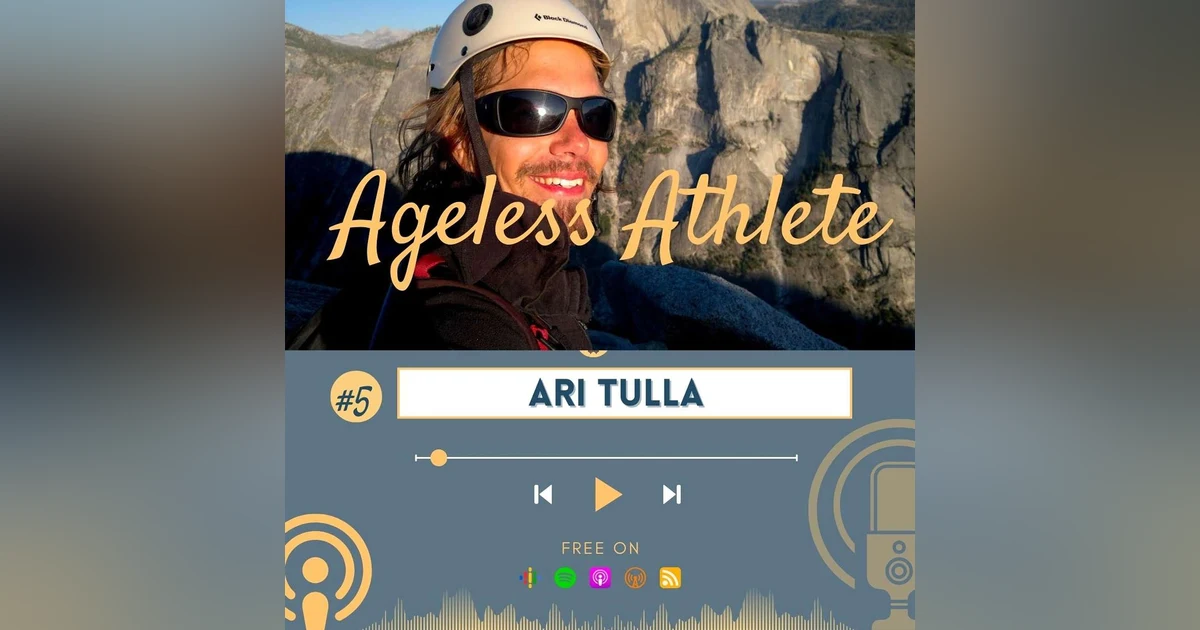
#5 Ari Tulla - Endurance Sports for Longevity vs Intensity, Water Fasting, Tracking Sleep and Personalized Supplements for All


Love the show, hate the show? Send us a text message!
This week, we delve into the world of water fasting and its potential as a secret weapon, along with the surprising impact of even the occasional drink on sleep quality (we've all been there, right?). Our guest is none other than Ari Tulla, a Finnish entrepreneur, biohacker and outdoorsman who loves climbing, cycling and surfing. Ari is not your average athlete – he meticulously tracks all his data and explores cutting-edge ideas in smart nutrition.
Ari's brainchild, Elo Health, takes a deep dive into biometric data to provide personalized nutrition guidance. Notable elite athletes like Tommy Caldwell and Dean Karnazes have already embraced Elo, and Ari's ultimate dream is to bring top-tier nutrition to the everyday person.
Join us as we uncover Ari's insights into medicine, nutrition, and sports science, and learn how his passion for these fields has translated into the creation of Elo Health. Whether you're an elite athlete or just someone striving for optimal health, this episode is packed with valuable information.
If you enjoy the show, be sure to give us a follow to help spread the word. Stay cool, stay real, and keep up the good work, friends! 🤘🎧
Key References:
Ari Tulla's website
Elo Health
Kush Khandelwal
Ageless Athlete Website
Other References:
https://www.cdc.gov/obesity/data/adult.html
https://www.beckershospitalreview.com/public-health/us-life-expectancy-decreased-for-third-year-in-a-row-cdc-says.html
https://www.health.harvard.edu/blog/intermittent-fasting-surprising-update-2018062914156
Power of Now book
Function Health
Episode Chapters:
00:00 Introduction to the Podcast and Guest
00:33 Guest's Background and Journey
01:35 Discussion on Outdoor Adventures and Experiences
02:04 Insights into the Guest's Personal Life
02:41 Exploring the Guest's Professional Setup
04:31 Deep Dive into the Guest's Career and Entrepreneurship
07:57 Balancing Career, Sports, and Personal Life
10:46 The Importance of Sleep and Nutrition in Performance
13:04 The Role of Technology in Health and Fitness
17:20 The Impact of Lifestyle Choices on Health and Longevity
40:12 The Impact of Diet on Lifespan
40:28 The Dangers of Processed Foods
41:23 The Power of Whole Foods
42:02 Personal Health Journey and Dietary Changes
42:57 Daily Dietary Routine
44:35 Balancing Diet and Lifestyle
50:59 The Role of Food in Healing
58:00 The Importance of Pers
▶️ YouTube
🟢 Spotify
🎵Apple Music
Oh yes, on social media:
📸Instagram
🔵Facebook
Blogroll
💧Substack Blog
Comments, questions, who do you want to invite to the show?! Write to me kush@agelessathlete.co
45:36 - [Ad] Resilience Podcast Series
46:00 - (Cont.) How Much Is Too Much— Water Fasting And Alcohol Intake For Athletes | Ari Tulla
0:03 Friends, welcome back to the ageless athlete podcast, where we uncover stories and tease out secrets of outperforming athletes in our quest to stay ageless. This is your host, Kush Khandelwal from our bunker in the Mission District, San Francisco. Thank you for your fantastic response to the launch. If you enjoyed the show, please do rate us and subscribe to us online as it helps others find the show. A different kind of guest today. We have Ari Tulla, a Finnish outdoor athlete and a creator and visionary of smart nutrition and quantified health services.
0:46 Ari is an avid adventurer. He climbs, surfs, and skis, but also innovates at the intersection of medicine, nutrition, health, and sports performance. His company, Elo Health, leverages personal biometric data to give you fine tuned supplement guidance. backed by science. While his company partners with elite athletes such as climber Tommy Caldwell and ultra runner Dean Karnazes, his dream is to bring high end nutrition accessible to the average person. Tune in to find out why water fasting may be good for you and why even one drink can affect your sleep quality.
1:35 Hey Ari, how are ya? I think for once, uh, we are in the same time zone. I know you do a lot of traveling over, uh, different seasons, but I think we are both, uh, on west coast time, uh, in California. I see, I see some sunlight perhaps, uh, streaming into your room. Yeah. Hey, great to be here. Thanks, Kush, I'm in, uh, I'm back in home in San Francisco and, um, yeah, crazy, crazy New Year's start. Um, happy to be alive and, and back in, in California. I spent a new year in, um, in Finland in all the way in Lapland. And, uh, that was kinda interesting. First time the kids and the whole family we went to there, uh, had extended family with us as well.
2:16 So, uh, very dark, no sunlight at all for two weeks and, um, and very, uh, cold at times. You know, something like minus 20 far and a. Well, that is certainly a world away from, uh, from us here in California where we sometimes complain when the temperature, uh, you know, dips below 50 degree, uh, Fahrenheit. So, uh, so welcome back and, and for those of us who are not watching this on video, what I immediately love about, uh, about your setup here, one, is you have a very professional looking, uh, uh, looking recording room. And number two, you have these, um, montages of, uh, outdoor sports, uh, behind you, uh, mind sharing.
3:03 What do we see on the wall behind you? Yeah, I, there's a couple of my, my son's drawings and then, uh, there's also Alex, uh, ho and in the first time when he was climbing a a half dome, um, and that was the le that, you know, he was, uh, feeling kind of shaky. It's an easy le you know, to go. And, and this photo was done later, you know, uh, SMY and Alex went there to take the photo, just that, that wasn't climbing even, but, you know, and he was laughing at the whole thing. But, you know, it's a great photo. It was the year, year photo of the year for Nazi I think for, for one year. And then lemme throw one more. It's kind of cool. This is, I got this, uh, a few weeks ago, so this kind of fun, it's, uh, Mm.
3:48 we, we started to work with, uh, with Tommy Caldwell. So, uh, they sent me like a gift, uh, photo from, from the photo suit. So that's pretty cool. Yeah. Yeah. Your, your, uh, the wall behind you, uh, you know. Shares, uh, stories for those of us who are clued in. And yeah, the Holl one, I think it made the Nagio cover, and I think it also spawned, uh, this whole trend of people taking photos of, uh, themselves, you know, standing on ledges. I I really hope nobody, uh, suffered any, uh, any, any critical accidents, uh, trying to imitate and, and create like Instagram memes. But, uh, but anyway, moving on.
4:28 Um, Ari, uh, good to have you on the show again. Uh, mind telling us a little bit about yourself, um, where you're from, what do you do, and then, uh, what brings you into the world of the outdoors? Yeah, perfect. So, um, Ari is my name. I'm from, uh, from Finland. Um, been living in the Bay Area for, in San Francisco for about 15, 16 years now. So I feel like a very Californian, very San Fcan, if that's the word. And, um, I, I have like two things I did in my, my youth. I, I was very deep focused in, um, in playing with computers and, um, and getting in that world.
5:09 Um, got my first PC 0 8 6, I think, uh, when I was six years old in early eighties. And, um, and then, you know, I also started to play sports very young age. So I was doing hockey, ice hockey mainly, and, and did Nordic skiing, Finnish baseball. Oh. Oh, sorry. That's a very unique, maybe it's a Finnish baseball is the word, but you know, it's like a very different type of baseball and, but, you know, spend my, my youth in those two endeavors and, and always had a hope to be like a pro athlete in my youth. And, and I think I realized in like high school that maybe I'm a bit too small, um, not maybe have the ability to read the floor or the ice like you need in know hockey.
5:52 And, uh, that was the time when, you know, hockey players were getting bigger. I'm, I'm a six foot, um, and not the small, smallest guy. But when you look at the guys who play now in NHL, I mean, they're, they're far bigger and, and, um, you know, somehow I then, you know, decided that, you know, the team sports and, you know, kind of the organized sports are there. And um, and then I went to study and, um, got into a startup on a first day in college. That was in 98. So building websites and, and doing stuff like that in the web 1.0. So that was kind the beginning for me to becoming an entrepreneur and to build companies. So I got in very, very early. And, um, and in college also I met my, my best man, you know, who was a, he's a great athlete still today.
6:36 Uh, he's a triathlete and, and does swim running, for example, at the top, you know, 20 people in the world. And, um, and he talked me into doing some like endurance races and stuff like that in college. And very different than hockey when you run and climb and canoe and bike for days in a row. And, uh, I wasn't very good at it, but, you know, it, it gave me this sort of idea that, you know, it might be fun to do something like that later. And, um, and then I accidentally, um, were moving a place with my, my girlfriend, uh, now wife. Um, and behind our, our apartment there was a few guys, you know, they were carrying stuff like, what's going on? They were carrying them into a water tower.
7:18 And that water tower was converted into the first climbing swim in Finland. And that was, uh, 90, 99, 98 I think. So I got to very early into the indoor climbing and climbing and, and bouldering and, and then later, you know, big walls and stuff like that. So climbing kind of became my, my thing. Uh, but yeah, long story short, I I, I was working the tech and got in the Bay Area with, with Nokia and, um, I was running a small unit here for them in the gaming side. And, and then, you know, I started, um, you know, three healthcare companies after that first 2000, uh, 10. And now, you know, latest one is in, in nutrition called EL Health. Amazing. From the backyard, climbing gyms in Finland to running tech companies in San Francisco and alongside doing different sports.
8:07 Sometimes I think of you as a hybrid athlete. You practice your sports with passion and you put equal zeal into your career. A little bit more also into your current lifestyle. As you said, so yourself Ari, you surf, you climb, anything that particularly stand out? Maybe in the last couple of years has there been a focus to your outdoor goals? Yeah, I think it's interesting because, you know, I, I was pretty regimen cemented, you know, uh, hockey in Finland is a lot like, um, you would play.
8:48 You know, football in the US or whatever, like very serious stuff, you know, where you train, you know, maybe twice a day even. You have very regimented way to prep for the season, to summer, everything. Um, a lot of quantification and, uh, when I've been, um, now, you know, doing things more as a, as a hobby and for the fun, I haven't been very regimented. And it's funny because I'm a, I'm a quite regimented in the, in the work. Like I have a, you know, I've been running companies for more than 20 years. And, um, and you have to be organized. You have to be focused and quantifying everything. And I like to quantify my health in many ways. So I'm, I'm a very active in that kind of biohacker, if you like that word, or, you know, quantify self group.
9:32 Uh, been there for a long time, almost 20 years as well. Uh, but for the sports, I, I don't know. I mean, I just tend to always be a bit, uh, sloppy. Like, I mean, I don't have a, like a power meter in my bike, I mean, on my pedals. Um, I don't, I don't really track. I don't, I don't put down, I put down my training quantities roughly, but I don't really like plan them too much ahead. So I have a rough plan maybe, you know, for a week. But, you know, often I do different things. Um, and often I do things alone, like, you know, cycling now quite a bit, maybe most time perspective climbing. I usually do it alone because, I mean, it's just having in another or group setting will be then more difficult to move the times if I need to move the times.
10:15 And I try to really balance it in a way that you're gonna have your, um, life, uh, organized. So if you look at my calendar. I have, uh, like five colors today. My, my, my calendar, for example, and it's kind of funny that, you know, you have, um, you know, there's, in a work you might have like, you know, salesy stuff as a CEO. You have, you know, fundraising stuff, you have hiring stuff, and then you have normal work. So I have four colors for those and I try to balance them out in a proper way. Then I have my. My, like a workout, my, my, my sport related things in a certain color. Then I have my family stuff often in another color, and then I have my investment stuff we do, uh, on another color.
10:57 So that's kind of the, the, the kind of, and then I look at often like a month and I look at is my life in balance? Am I living the life in the right way? And if not, then I can rebalance it. Uh, but it's funny because, you know, in a way when I trained and like, you know, climbing, I, I done times like when I had like, uh, do certain reps and certain things and I never really, uh, stayed with it. And even like, uh, cycling, I did a lot of cycling over the, over the covid talk about like, I don't know, 15,000, 20,000 miles. And, um, but I didn't have like a, like a plan, like I need to do hill rep reps. And I've been getting a bit better at cycling, but I could have probably become really pretty good if I would've been regimented in a way. The train.
11:37 So I think your point is like, really the outdoor to me is the, is the key piece almost like being able to be outside, uh, be able to be, you know, doing things you like, maybe listening a, a book or at the same time or whatnot. That's, I mean, and it's literally like, for me, it's like the vent for the, uh, stress and everything that, you know, you, you gotta work pretty hard. Um, you have, you know, small children, so every time you go, you know, it's like it has to give you something. If the training takes energy away from you, then I think you're gonna be, you're gonna burn the candle too, too, too far. Got it. I, I, I got, I, I got a couple of things there. One is, uh, you know, despite your, uh, somewhat modesty, I think you are able to manage multiple fronts with, uh, alum.
12:25 But then also the outdoors means a lot to you. You know, you, you put your time into the training part, but, uh, but like a lot of us outdoor, uh, obsessives, I think you get a lot of energy from being outside. Uh, yeah. Any particular outdoor, uh, accomplishments in your sports that you, uh, you get some pride in? Well, I think, you know, the climbing for me has always been the, um, it's been something that I was kinda spending quite a bit time outside and, and, you know, not, not necessarily trying to climb the hardest, you know, crack or the hardest, you know, route. Um. But, you know, to, to kind of get better and, and progressively. And then of course climbing is a very multifaceted, you know, you climb a semi, you climb a, a crack in, uh, in Yosemite it's very different than climbing a sport, climbing in Sana or in Lumas, for example.
13:17 So other ones are more like climbing inside and, and you know, the, the, the drought climbing in Yosemite has nothing to do with climbing at the tomb. You know, could, like, if you go from the, the tomb in the, into the cran and you're not gonna get more than a couple feet up and then you are done because it's so difficult, the taming technique and, and so forth. And, um, and it's just a tricky one because, you know, you, you cannot do it for a long time. I, I've done it now for almost 25 years. I, I think, and a lot of that outside, I. So you now have this feeling that when you do more bouldering now, or maybe do sport climbing, it'll be very difficult to go back into the big walls now. And I hope I can, you know, probably go back if my, my kids wanna climb later, they're still too young.
14:01 Um, but to climb with them. But there's this kind of, this scare aspect I think with climbing that the older you get, I think the more easier you're scared. And we can talk about the surfing, you know, the same aspect there. Um, but with climbing, I think, um, I, you know, being able to climb, you know, good parts of the, you know, LCAP and, and you know, some of those other ones has been really pretty cool. And, you know, most people don't go there because it's a lot of work and, and very difficult, the whole hauling part. And if you come up, you know, from down up, oh, sorry, up, you're going up, down, and then you climb up. That's also pretty brutal because, you know, you need to kind of come down a couple ropes and then climb and you're a little like, you know, half a mile up on the wall. It's pretty intimidating.
14:42 And, and of course the hiking, also hiking up there is like. I mean, it's literally like four hour hike. People don't talk about that when they do like these linkups, but you know, you're gonna walk a long way up and down when you, when you go to the top of hotel cap, for example, or half dome even, even worse. Um, but you know, I mean, I had a really, you know, lucky thing in a way that, and nothing has happened to me except like couple finger things, but, um, seven, eight years ago, my, my, my good friend, you know, he almost died with me on, on the wall in Yoan. And that was kinda the moment when, um, you know, we had a, we had our first, you know, baby coming. And it felt like, you know, it's this worth it, you know, that, you know, you could die. And it was just a stupid, you know, thing that we were, you know, on an easy route, uh, climbing up.
15:25 And, uh, he picked the wrong, um, crack and then it ended and then, you know, he slipped. It was a bit wet and came down, you know, a couple pea came out and then he came head first into a lets, uh, next to me and I was able to kinda save his head, but he broke his back and pelvis and was unc unconscious with there. And we had to call Joar the, yosem, the rescue to climb up there and they climbed literally up like, I don't know, almost a thousand feet. And then we had to helicopter rescue him. So it was like literally like soothing on arrow to a tree and getting the, you know, the, the thing there and the helicopter out. And it was, uh, it was not fun. And I mean, you had plenty of time, you know, three hours time to wait for the people to climb up to you.
16:06 When you have your partner is, you know, unconscious next to you, and you were like, lucky I was roped in the, because you don't always rope yourself on a tree or anything on a big wall. Uh, so if, if not, we might have both go down and that's just, you know, moment that you think, like, is this worth it? Uh, to do the big walls? And we, you know, if you do it and you live there or you, you can do it so many hours that you, you know, it cold. But when you do it, like from San Francisco, you drive there and you do it. mean, you're not, you're not on your game. You're not a hundred percent. And, uh, your rope technique is good, but you know, you, you don't, you're not like native with it because you don't do it every day. Uh, so that was the moment when I decided that, look, I might not be, I don't, I might not wanna do like a, like a difficult, you know, long, big walls, uh, middle of nowhere.
16:54 What, uh, route were you on, on? Was it something on lcap? I think that's what you said. No, this was, uh, this was like next, next to it, like, um, uh, it was like a, like a next to royal Arts. We were, we were doing like a linkup to go all the way up Uh up there. So the, you know, there's this big link up when you do royal artists and then you can go to the, um, uh, the oh. I think it's famous, uh, slab route. yeah, yeah. Top of that. we were heading there and it, it's a really long day. It's a 30, 30 plus pitch day, so you have to kind of go pretty quickly. You know, I, I will have to agree that, um, on, on a couple of things that I point, I, I, uh, I gleaned from that, uh, great story by the way.
17:39 Uh, one is that, uh, yes. Core gym skills don't transfer to a big wall. Traditional climbing, you know, one has to, uh, put the time into climbing big walls. If one has to get good and comfortable at climbing big walls. And being a vegan warrior, uh, is, uh, maybe not the best diet. I've done that over the last 15 years myself, and one has to be relentless, uh, in that training to be able to be comfortable. And then, yeah, secondly. I, I, I mean, our goals shift. You know, what might be my goal when I was 25 and I thought life was, uh, limitless is different than my goals at 45.
18:20 And one has to be a bit, uh, more strategic about, uh, risk-taking and goals and other things in life that one wants to, uh, wants to accomplish. One thing I have certainly noticed, uh, in you, the time that I've known you, is, uh, is your ability to manage all these different fronts. You know, like you pointed out, you know, you are, uh, yeah. Uh, active, active career parents of two, uh, young kids, and you do all these, um, you know, time intensive, uh, sports, any secrets, uh, wait. I can see that you're highly, uh, highly calendared. You color code your calendar.
19:02 I, I, I, I, I live on my calendar, but I don't color code it maybe to the degree you do, but then I also notice something interesting Ari. Uh. Last year we went on a long, uh, you know, long by my standards, uh, long bicycle, uh, gravel ride up in Marin. It was fun. I actually have been biking a lot more, uh, recently, so maybe I'll do a slightly better, uh, To go up again. Yes, yes. I'm, I'm, sign me up. Uh, one thing I noticed, which was the whole time, um, we were out there, it was a long day, morning to afternoon, and I felt you were quite present in the bike ride. Like I did not notice you open your phone and check for messages and as somebody who is, you know, running a, a growing company and probably has many things that they can attend to, I felt you were very present the whole day.
19:54 And, uh, uh. Yeah, just wondering, uh, uh, I mean, any, uh, any tips you might wanna share on how you are able to, uh, be so present and, uh, be in the moment of whichever activity? Because, and I'm sure, I'm sure that when you're actually working, you're also fully present and are putting your time into, uh, what you're doing at that time. So any things that the rest of us can, uh, can learn from. I, that's a good observation. I mean, I, I think for me, I. Um, it, it maybe comes after at, you know, the fourth time you read Les Power of Now, and you maybe you finally the point of it.
20:34 And, and, uh, but yeah, I, I try to be, and I think I'm, I'm quite good at overall to be focused on things like when I work, I, I don't need like a two hour ramp up to be productive. I, I can be quite quick at it. And, um, and then when I do different things, like it's my time, then I don't wanna, you know, give the time away because there's always so many people who try to take your time from you, and that's the only thing you really have. That's the only asset that's yours. And it's so easy. I think Calendly is a, a very difficult, uh, beast. Uh, if people use Calendly in a way to do pick time for mm-Hmm because, you then you don't have control.
21:17 Like, I mean, I. I think the, one of the key pieces is that, you know, I have done that has been really helpful that I think I, I've been telling many people to do and test and try and it's this concept that, you know, six, seven years ago I decided to make Wednesdays my days. And, um, I paid a blocked Wednesday off. And, um, no, there's no meetings ever on Wednesdays. And, uh, I haven't had like, really any meetings on Wednesdays for five years. And, uh, before the kids were small, I was taking them on hikes and stuff. It was a morning with, you know, my son first, and then with my daughter every Wednesday for like three, four hours and now they're in school. So it became my time.
21:58 And now I, in Wednesday mornings I go surf. I go, you know, spike ride or both even. And, and then I work the afternoon maybe in a coffee or my office in downtown. Or very building, or then I go do something else. So that Wednesday has really, because it breaks the week really nicely, and you know, like Tuesday and Monday kind of crap at times. Like, I mean, I literally had, like yesterday or or Tuesday I had, uh, 13 meetings and that's like unbelievably rough because you're back to back all the Wow. And, um, and, and, and today, I mean, I mean, I had a funny day. I mean, I started today at four in the morning. I, I had to do a couple things. I mean, we have a, a crisis going on in a way.
22:39 Then I'm doing an interview with TV on seven in the morning. Then I did. Um, eight 30 to 11 I was doing, uh, uh, interviews with PIC Media, like was the, you know, was Tunnel, New York Times and others. Uh, so we are all, all new products. I mean, that was the morning. So sometimes, you know, you have these crazy days, um, but you know, you know that you have something booked in a calendar like, you know, go for a bike ride in the morning or go for something. You, you just not do it. And I think if you really can, you know, block that time and then you need to of course make your loved ones to understand that you need that time. And, you know, we've been together with my wife like, you know, 25 plus years. So I mean, I think we know each other pretty well and I need that time and, and sometimes it becomes like a selfish thing that, you know, you feel that, can I take that time because you know, it's my time, but you just need to make, you know, it's not selfishness'cause it's about your long term, you know, sustainability.
23:33 And, um, but also then focusing on the, on like, because if you are an entrepreneur and you know, I now be building companies for a long time. It sucks. I mean, as a life always, because, you know, you, you, need to give something away. You, you can't work eight hours a you know, a day. If you are building companies, sometimes you have to work a lot more. So something has to go and, you know, it's either you give, you know, away your family or your friends or your hobbies or all of them. And the people who give all of them away, a hundred percent of them burnout. um, you know, I've done this now all 20 years and, and it's been grinding a lot, but, you know, only way to survive the game is to, you know, find a way that is the fit for you.
24:17 And for me, it is to fit that. You know, I, I spend, you know, maybe 12 hours a week, uh, trading and outside And, and that keeps me sane. And, and that value is insane. And I mean, I think my investors are happy campers that, you know, I take one day, half a day off every week because, you know, that gives me, you know, doing better work. Protecting one's time and time is indeed. Uh. One's, uh, biggest asset as, uh, some wine, some vice person said one day. And, uh, in this day of, uh, devices being always on my, my time outside, uh, I think just like yours, uh, is, is ever the more precious.
25:00 And, uh, and I think, yeah, I think I appreciate being outside also, because usually my devices are not on me or, uh, or they're off me. And maybe that's one reason. Uh, so far I have, uh, you know, refused to, uh, get an Apple watch and I feel next time I'm in a, in a surf line up and somebody's, uh, phone goes off, you know, I'm, I'm gonna blow my lid But funny because, you know, I wanna hear is, and you know this, I mean, last thing I wanna hear is like, when I'm out there in the water, hearing somebody's phone ring and somebody answering their, uh, their, uh, I don't know, their DoorDash driver.
25:42 But you know, I I, I'm, I'm very wired, like, you know, and it's part of my, my myself at the moment, um, to be kind of understand what you can do with the tech related to your health. And I do have a Apple watch when I, when I surf and, you know, it's more like, you know, my body will be found at least if I have that with me. So that's the good news, right? Um, the sharks might eat, you know, the, the rest of the body, but maybe they'll leave the hand so somebody can find my, my body. Um, but there's the benefit of, um, I think to have the, the data collection ambiently because, you know, it can give you kind of this sort of a gamification aspect if you wanna be more, you know, tracking or, because the fact is, like if you, if you track things and you, you train properly, the outcomes are unbelievable.
26:27 Like, maybe not in like climbing, but if you do endurance, uh, and cycling is so easy, you get this wt, you know, you get the. You know, the trainer in a, in a Caras or your office, and then you do the regimented, you know, things you're gonna get really quickly, much faster. Maybe not, you know, like really, really fast. But it, it, the impact I did for a moment and the impact is like, you know, you add like 40 vats of power, uh, fairly quickly. And that was surprising to me because it, it's just so well known how to train somebody to be a better cyclist. And cycling is very simple. like one thing you don't need to learn a huge technique, uh, like you have to, even running is maybe more complicated.
27:09 You, you need to run right. And you need to learn to be, but I think the, the one aspect of this time management and everything is, you know, yes. I mean the balance is really like you need to. Exercise. I mean, that, that can be a really, and it's a very powerful thing. I mean, muscle is really powerful vehicle to stay healthy. Having muscle at the older age is a really critical thing to be able to be mobile when you go to, you know, 70, 80 years old. But what I think about a lot, and I spend a lot, ton of time is sleep. And to me, sleep is like a really, like, I mean, is as important or if not more important to focus on, you know, having the recovery. Because if you do activities you need to also recover.
27:51 And then of course food is a key piece of that. But people always ask me like, what is the most important, how many days can you go without sleep? sure. No, I, um, I've read some, uh, some of the stuff on Quantified Health. I'm, I'm not quite a, a convert yet. I'm, um, almost a Luddite, so to speak, with, uh, my reluctance to, uh, adopt. But I think I'm, I'm slowly, uh, coming, uh, uh, slowly getting, uh, uh, transformed. I think I might start it, uh, wearing one of these devices myself. But this is excellent segue, Ari, because, uh, um, I think one, one thing that I notice about you is, uh.
28:35 Uh, I think you, you know, you, you, you, you dog food, you know your own, uh, own products, I think, and also, uh, uh, services that you, uh, encourage others to develop. Um, I'm curious, uh, just the specific thing around, uh, uh, quantified information about, uh, performance, about diet, about sleep, and then also about, uh, correlating that with your, uh, own sports performance. Uh, you already hinted at it, but could you maybe elaborate a bit more on, uh, what specific improvements have you, uh, have you noticed?
29:17 And, uh, if you have any, um, sort of immediate takeaways that, um, benefit from Yeah, I think, um, I think for me, the, like I said, the sleep is, um, is a very key piece of this. So I was pointing out, you can, you can stay awake for three or four days and then you die three or four days without sleep, you're gonna die or go, go crazy. You can stay without food for 30 days, you're not gonna feel great, but if you get water salt, you're gonna be 30 days, you're not gonna die.
29:58 And if you don't get water, of course you're not gonna, you're gonna die quickly. I. Many people live their life to a hundred and never exercise. So in a way, like what is the balance act of, you know, these things? So the sleep is a really key and, um, sleep has this impact of, you know, helping us to recover. So I really think that, you know, a lot of people who think about this, um, from the perspective, what to do for sleep, you can do a lot. Um, and for me it's always been like if you go sleep earlier, you will be. slept and it's that simple. So Apple, um, I have a couple friends in Apple who were working on the sleep side and they did this big study like Apple style big study, and they found out that, you know, only thing that is currently to help people sleep better is to go sleep earlier between 10 and 11.
30:52 Nothing else really impacted that much, so that's interesting point. And then of course when you sleep, you know, you should be sleeping in a, you know, in a dark environment that you know is rather cool. And, you know, people are buying now like eight sleep mattress that are cooling down that can help, um, you know, having a good mattress, having a good pillow. I do earplugs. I've been using them for a long time and it's hard for me to now sleep without earplugs, but I sleep like 5% better with earplugs. It's pretty interesting, but that's a fact. Um, and I can quant, I have quantified my sleep for like, I don't know, 10 years. I was lucky to invest in a company called Aura, uh, early on. And, you know, I've been using the Ring for, for very beginning then some people do like, you know, food, sleep supplementation.
31:37 But my key always has been that if you eat late before you go sleep, you're not gonna sleep so well. So I don't never eat after 7:00 PM Um, alcohol of course is a killer. I, I stopped drinking completely, um, almost a year ago now, and I hadn't, you know, drunk a lot. But, you know, it's just gonna happen. Uh, and um, it's easy now or interesting when you don't drink that you, when you go to parties or whatever, you can go with a car if you go. And funny thing is that, you know, I went to some cocktails in an event here a few weeks ago and then I went to climb after the cocktails. I never done it before because I always had like a one beer. I don't wanna go train after one beer. It's like a mental thing. Uh, so that was interesting. And um, and then I think, you know, these ideas that people talk about a lot, like, uh, hot sauna.
32:20 Before sleep. That's maybe a bit impractical. I mean, I have a so in the backyard, but you know, for most people it's kind of not, not easy to do, but having a hot sour before you go to sleep, that clearly helps. Uh, I mean, stretching stuff, all these things like, you know, massage the blue lights, those are really good ones. And then I think one thing that, you know, I, I realized when people are stressed out and sometimes you have a hard time falling asleep, there's this idea that, you know, I, I learned, I dunno, many years ago already, it's called deep sigh. Uh, so what you do, you basically pre in all the way, and done, you do like a one more deep sigh and you do that few times and it really relaxes your body in a way that you fall asleep.
33:05 And, and then I think from big one for me has always been that climbing to me is like a problem solving bouldering, especially. And every night I try to solve a boulder problem in my head, and that's how I go sleep. Then next day you like can go do that problem. There's a really interesting, like ment and that's very much like meditation. Um, if you think about what it, what it does to you. Uh, but those are kinda some of the things on sleep that I've been doing for a long time. And I have a pretty dialed process. And I, I do sleep usually really well and I try to go sleep at like before 11 if I can. Uh, if I go at midnight, like yesterday I went midnight and woke at four in the morning. Like not, not optimal. I feel pretty, pretty slow today.
33:46 Um, but I think there's so much people could kind of, you know, think about sleep and, and get immediate performance on the other hand, on the other side And then the nutritionist of course that the other piece that, you know, I'm, I'm very deep now because, you know, I'm building a company in this space and I've been talking to a ton of people who, you know, one of our, our advisors who we have at Ello. Um, Danielly is a, a coachs for Warriors and, uh, uh, kings in basketball, also for the Canadian Olympic team and couple of the, um, the pro cycling teams into France. And, and see it's really good when you talk about nutrition and, you know, what can you do?
34:27 And I think we are learning a lot about like, like their super performance. Like, like we have now, the triathletes in Norway, they're trying to break the seven hour mark in triathlon. That's unbelievable speed. Think about like seven hours for like marathon and, you know, 180 k bike and then, you know, swim. You have to be fast. Not just a, triathlon, like an Iron Man, right. This is a full, this is the full Monty we are talking about. This is full, full Ironman. Yeah. that is, uh, because it's like the fueling for that unbelievable. How can you even get enough, you know, fuel in and, but they basically realized that, you know, they, they are so dialed now that these guys can go like.
35:08 They go almost full speed, seven hours. Like, it, it's pretty, and, and how do we can learn from those things? And, and for me, I mean, cycling has been really cool because I mean, I, I usually did like a, you know, an hour or two hour thing and now you try to do these bigger things and, and, and last year I was trying to do this big bike ride that, uh, I failed my, my knee, knee buckled. But you know, I was trying to do 500 k bike ride and uh, like 500 kilometers in 36 hours and, and climb 10 kilometers uphill. So literally like all the hills in the Bay area around a big loop. And I got to almost 300 KI think, before my knee, knee buckled.
35:50 And I'd never done that long climbing in a, in a one go. Um, but that was the fueling, like you had to think like, what are you gonna eat? How are you gonna fuel? Because if you have no fuel, you're gonna stop. There's no way. Um, so that, that was kind of geeky and interesting to me to, to learn. And I was using our coats in Ello and our give me guidance how to do it. And I don't think I could have done half of it, uh, without, uh, and I was feeling great when I had to end because my knee was just hurting too badly. Uh, I'll go back doing it again and trying it, but, you know, uh, those are kind of fun things. Like, can you do something 30 hours in a row without sleep? Sure. No, those are, uh, some really impressive, uh, goals, uh, re slash uh, slash accomplishments.
36:36 Uh, you know, even doing, uh, uh, what is 60% of, uh, uh, uh, you know, an absolutely, uh, you know, massive bike ride is, uh, still something to be very proud of. And yeah, it sounds like you, you do on a, on a regular basis, uh, or maybe on a, on a continuing basis, uh, take advantage of, uh, these tools, uh, advancements, uh, at, uh, at your disposal. And I think many of those are available to the everyday athlete as well. Can you, uh, speak a little bit also to. To diet, sleep, a huge component. Uh, second component I think you spoke about is, uh, being able to measure and track and then calibrate and share.
37:22 And I think the third, uh, perhaps is food. And, uh, I've heard you say this somewhere that, uh, you know, food, uh, is, is medicine, uh, would love for you to, uh, unpack that. Uh, and then also again relate that particularly to, uh, to us, uh, you know, outdoor CE folks who already tend to eat a little bit healthier than the average person. Yeah, so food is Medicine is, is a tagline for my, my company. And it, it's also a tagline for, um, you know, the old, um, old thinker and a doctor, uh, hypocrite who lived, you know, maybe two and 2000 years So he might have said that, you know, food is time medicine.
38:07 We don't, we didn't have a Twitter at the time, so we don't, we can't really go make sure he did it, but, you know, let's give him that and, um. So I, I think food is interesting today because we have a massive problem today in our society. So 80% of people today are overweight. And not only that, but we have almost half the people in the US who are obese. Obese means like, you know, BMI is, you know, 29 30. And, And, that is causing now a lot of, you know, side effects. Like, you know, in Covid we had more people dying in the US than anywhere else. Um, we have, uh, you know, Repart, you know, rate of, uh, chronic conditions like type two diabetes, heart disease, and, and others.
38:50 Uh, cancer, you know, people often now, uh, link, uh, Alzheimer's and dementia into the same grouping. They call it type three diabetes. and all of these things are creeping up. Nothing is like plateauing going down. Um, there's this crazy craft that, you know, I use when, when I talk to investors and media, our life expectance in the US has cropped three years in the last five years. So we lost three years in the last five years, first time ever since the second and the first world war And this is country in the world. We are, uh, speaking off.
39:30 Not only that, but we spend double or more in healthcare per person than any other country. So it's a very interesting craft and I mean, it always gets people to talk because you can see every other country is going creeping up and we are now dropping down like, what the hell? And then the other craft that I, I talk a lot about is that you have, think about what is, what makes a healthcare system good. You have life expectancy and cost. I. Mm-Hmm. US is like on the other page, I had to add like another page in the craft to get us price because we're so far apart and we are not even, we are top 60 today in life expectancy 60, not like six. And we are now, I think we are 10 years lower for men than Japan.
40:12 If you take the US men, I mean, we live 10 years less, think about 10 years, a long time. I mean, that's 13% of your life, you know, and they, they don't average live that much longer. And now we have presidents who are kind of, should be dead already in, in the US averages. It's kinda interesting. Um, but the point is that, you know, these are all real problems and they are, the main CPR today is the food we eat. We have. Food that is basically, you know, this concoction created for us that is highly processed, um, very, you know, smartly tricking our brain with the, you know, fat and salt and acid and, you know, sugar.
40:52 And we add sugar and everything with sugar is like, you know, as addictive as heroin almost for rat list. So we have this problem that, you know, we eat this food and it, it's good. I mean, we like it, it tastes good, but it makes us unhealthy and we are feeding it to kids already, like from five up in school. So that is the problem that, you know, even if you're eating kind of healthy, um, there's still stuff creeping in your diet that you know is, is pretty bad. So the idea is like, how do we, how do we get out of this mess? How do we get out of this cycle? And, uh, I mean, only way really is to eat whole foods. Not, not buy from whole Foods, but eat this real food. Make your food from the real stuff, not, not from, you know, the stuff that you know is already made by somebody else.
41:37 And, and then often when you eat out restaurant food, we often end up eating in the cities, you know, many times a week out. And you kind of never know what you're eating. I think we need better work on like identifying the good foods. Like you can go to a salad bar, some, you know, big name salad base and they have a pretty unhealthy salad, um, that you can do much better at home, for example. And of course the local farms and everything. So for me it's, it's been really this epiphany, you know, since my, my wife had a, had a health issue 20 years ago. She had a thyroid tumor that was taken out and it led into a lot of this autoimmune. Hormonal imbalances.
42:18 And, and we spent about a decade of trying to find a healing factor for her. We used in know, western eastern medicine and food in there helped a lot, uh, to lower the inflammation in the body and heal the body, let the body heal itself and at the same time, and we kinda went to this low carb type of diet with very little wheat or no wheat, no little meat. Now we do eat meat, but you know, we had no meat. And then no, no extra carbs or sugar at all. And that diet was what we adopted. It's 15 years ago. So while ago, and it really has helped us to, you know, perform at a better level mentally and physically. And that helps me, I think, to recover. So how I eat normally is my breakfast is basically a protein, uh, sake with, you know, like blueberries and avocado and, and maybe yogurt or, and of course I use the LA protein block there, uh, or then I can do like a, you know, omelet with, uh, with spinach and, and maybe some stuff like that.
43:16 And that's a low no carb, no low, low glycemic breakfast. My, my glucose is not spiking at all. And I, if I don't train, then I might not do it at all. And eat lunch. lunch. is always a salad, always. And, uh, and then dinner. I don't care. I mean, dinner is whatever the kids wanna have or whatever is fun or whatever. You got the new place, eat outside or whatever. But if you eat the, the breakfast and the lunch, right? And then you do the, you know, the dinner as you do, um, and then you don't eat after 7:00 PM and you don't drink alcohol. I mean, that's a pretty good, you know, way to do it. And you don't need to be like a purist at all. And then of course, when you train, I try to, you know, I mean, if, if you do bike rides, you have to gonna have some, you know, liquid energy with you.
43:58 Like I, I don't like a little more tens and stuff like that. Try to be kind of eating real food rather than, you know, these, you know, capsules or tablets or, uh, cells. And, and then of course, recovery perspective. I always try to get protein after, like a harder workout recovery. And that has worked pretty well. That was something new I started to do when we got the LOR protein out. Um, I've been, uh, I've been pretty, you know, fundamental every time I take protein to recover and it, it feels that I'm, I'm recovering well and I'm gaining more muscle. That's a bit of a problem for climbing because you gain weight and then of course your bowel weight raise gets more difficult. Um, alright, uh, uh, super interesting, uh, about, uh, again, um, the attention we need to pay to a diet.
44:44 Some things I, I want to, um, you know, lean in on one is you said no booze right now. I also hear many people say, for example, that moderation is, is key in life balance moderation. So for, for example, somebody like me, you know, I'm not, um, I'm not a teetotaler. I drink, uh, you know, I would say an average of three beers a week. That's my usual output. And sometimes I drink a beer when I, you know, go salsa dancing and I feel like I burn that out really quickly. Um, so I think what you spoke of is, you know, giving up alcohol completely even again for, uh, for eclectic types.
45:29 The second I heard also things like, uh, eliminating carbs or going to low carbs. So what I wanna ask, and I, you know, this is such a departure from I think my, uh, my youth, you know, spent at the crack, uh, eating endless, uh, peanut butter, uh, jelly sandwiches, which I thought back in the day gave me fuel, which is, which is, which is fine then, but I know that that can be improved on. So I'm just trying to understand like, what is the, what is the, is the right, let's say practical, uh, uh, approach for, for most of us who maybe are not willing to give up the occasional beer, who do want to have that bagel once in a while for breakfast and who are not always able to, you know, prepare their, uh, you know, their meals at home.
46:16 Again, it's ideal, but sometimes. We are not able to do that, and we have to go out and eat, you know, with coworkers or whatnot at lunch. So any, any middle path also that you can, uh, you can advocate. Yeah, I don't think, you know, going off the script at times it doesn't really matter. I, I think the alcohol has a little impact if you, if you don't go like a bender or you don't have like a bottle of wine because it's, I mean, we open a bottle of wine often and, you know, my wife has a wine glass, I have two glasses and that has a big impact in my sleep. And I'm, I kinda like wine. I mean, I was drinking a lot of wine for many years and I mean, it became a bit of like a hobby, but when you kind of stop it, to me it was easier to kind of just say no.
46:59 Like I said, it's kind of cool to go to event when you don't need to drink or you, you don't drink. So it's like easier thing. And I, I kinda like that. Maybe I reverse myself in a few years, but you know, now it feels kinda kind of funny to do it that way. Um, and you know, being from Finland where people expect that, you know, people drink a lot and it's like a thing in a way, um, which is kind of not, hasn't been my thing, but, you know, people have that association to, to the, to the country in a way. Um, and, but I mean, overall I think, you know, the but be to be kind of smart about it, I think that's key because I was a, I was a vegetarian for a long time, almost decade. And, and then I was a vegan for some time and it was super easy when I was, you know, I was running a bigger company and you were very busy.
47:42 Like you, you literally have like other people owning you. Like you go from like a car to a car, to a plane, to a car. And you, you don't know where you are. And then you get to meeting with some people and then you go to another meeting and you know, somebody tells you what to say and then they do your presentation. So that was my life for a couple years. And, and then I was like, well, I need to, it's tough, like I have no decisions to be made and I don't wanna make like, silly stuff. So I, I was eating restaurant like twice a day, traveling a lot. So I, I went and, um, basically, you know, started, uh, to eat vegan food because they only had like two options in menu and it gave my life easier. At least. The, the vegan options are pretty, usually pretty, okay. They're not bad, so you end up eating like something very simple and that kept me healthy.
48:25 And you know, some of the people in the same team, they gained like, you know, 20 pounds, 30 pounds. We couldn't really move. Like you're little, like just, you know, you've been handled around and I don't know, that's not the life I, I wish for myself, but that's kinda like, I think like a rock stars probably have that life. It kind of sucks. Um, so I think, you know, it's just a, this sort of a, being smart about it and you can eat out in so many different ways. Um, you can have the burrito, you can make the burrito healthy. You can go to Chipotle and great food, or you can do Chipotle and have like, crap that is really bad for you. Um, but I think, you know, like for the, kind of the, the training aspect of this that, you know, how do you, when do you train also is I think, important here because, you know, some people train at night, of course, then sleep might be more difficult.
49:13 They might have time. Some people train very early in the morning. I'm a, I'm a bit skeptical about the idea that, you know, new Yorkers do that. They wake up four in the morning to run. think that's a good idea. Uh, hey, coming from the man who, uh, woke up at, uh, 4:00 AM uh, That was a rare instance. I had to do it. I had this crazy thing going on. I I never normally do that. I wake up at six in the morning. you know, this is a funny, uh, funny segue. Uh, I was recently in, um, I. In Delhi, in India. I was there for a couple of months, uh, time with family and doing some other things. And, uh, if you know anything about India, traffic, uh, in India is absolutely nuts. Like if you think, uh, cycling in, uh, in big cities in the US is dangerous, you know, you have, yeah, it's, you've nothing on, uh, cycling in, uh, in, in, uh, in bustling, uh, Delhi or, uh, Mumbai, uh, daytime.
50:05 So, uh, I met up with a couple of friends and they have turned into Avid, uh, bicyclist and I can only marvel at their, uh, at their motivation where, uh, they wake up at three and they're on the road at 4:00 AM which is before apparently this window, before the school buses and the trucks start flying and they, uh, bike in numbers when they can. And their bicycles are, are often completely lit up. So I'm talking about like, you know, looking at almost like a Christmas tree, you know, on the road because, because it's basically objective hazards all around you. So, so that might be one exception to that rule of like, uh, being a bit bit, um, extreme with your waking up and exercising, because maybe in some places the only time you can be safe and cycling is maybe before, uh, is several hours before the sun comes up.
50:59 Uh, another thing that you, uh, you spoke of, uh, Ari, is uh, uh, you know, uh, really, really great to hear that, um, that your wife Anu was able to combat and get ahead of our, uh, autoimmune, uh, issues. And, uh, and knock on wood, now that she's healthy again and looks like you, uh, you know, you really put, uh, the effort and time into diagnosing and treating and looks like food was a major, uh, I'm, I'm, wondering if you have, uh. Uh, any more, uh, insights into how, you know, foods can also help us, uh, combat slow down or even reverse like other kinds of chronic, uh, things.
51:45 So it's just case in point. I, I, was recently diagnosed with, um, bad osteoarthritis in my left shoulder. It really sucks, which means that overhead sports, you know, surfing, climbing, et cetera, are off limits for me for the time being. And I've also been looking hard at, uh, how to, how to cure, uh, outside of, you know, surgical options. So any information or advice you might have on people who are struggling with like, uh, these kind of limiting conditions as athletes as we get older. Do you think the, like food and a diet has the power to not just, let's say slow down aging and improve performance, but also to maybe, uh, reverse and, uh, and cure, uh, these debilities.
52:32 I think that brings to the, take a step back, previous, it takes to the point that, um, you have a, a world where more and more people are now looking at life and, and things from the perspective of, uh, why do I do this? Am I doing this to be faster? Am I doing this to be better? Or am I doing this to live longer, better life? We have a huge strength now. Uh, more and more people are looking at this whole idea of exercise and activity and, you know, outdoor to do it in a way that it, it will live, it will give them more good years in their life. And that's a very new way of thinking about it. And it's a very healthy, because I think we both know that, you know, if you're gonna go all in.
53:16 On anything like, you know, my, my 500 uh, K bike ride will likely lower my life expectance and not increase it. So if you go too far, like many men who bike, they go and they start doing like way too much and they're just burned out of that. So I, I think it's a very good idea. Like think about like, what are you doing, why you do it, and because you can probably turn out a practice that actually will give you more energy always and give you more years at the back of the envelope. Because we, I'm, I'm afraid of, you know, getting hurt myself. Like I really, I like the stuff. I like going surfing every week. I like cycling.
53:57 I, I love climbing. I mean, I hate when I'm sick. Like today I'm a little bit, you know, down and I was, I was traveling a lot over the, over the new year. So I got, I mean, I, I don't know, I got every possible buck I get and I getting a fever, but you know, the whole family was sick and now I'm a little bit, you know, feeling as well. But the point about the food. It's really, really interesting, this foodist medicine that, you know, we are in the middle of Ella. Uh, there's so much stuff happening now that we're learning, like for example, the kind of the an anti-inflammatory diet. It really works like, you know, the type of diet we used at my household is now being used for a LS to reverse it. It's now been used for, you know, mental health, like, um, different diseases like bipolar disease to don it down.
54:45 You know, fasting is being used for cancer treatment to make your cells more alert when you get chemotherapy or RA radiation therapy. Those are all things that are now happening in thousands of people. So it's really interesting. And I think the big thing that I, I, I really am excited about is the, is the Virta Health, uh, which is a company using keto diet to reverse type two diabetes. I think they have over 50,000 people that they have reversed now with diet Wow. diabetes five years ago was irreversible condition and now they have reversed it with keto diet. I mean, that's unbelievable in numbers of 50 plus thousand and many doctors are using it now because they don't tend to be the most healthy people often.
55:33 And that idea that, you know, we can control inflammation in a body. And that inflammation is causing a lot of the issues, like, you know, you know, even has an impact likely, uh, in your case, partially because if you have inflammation, it'll gonna eat to the bones, it'll cause, you know, this fragility. And then of course, you know, the nutrition overall. Like at Ello we a lot of testing to people like, you know, blood testing and, you know, other things. Um, we take a lot of the data from the wearable devices. Uh, we have done some, you know, sampling and DNA testing and so forth, but, you know, to learn from people. Uh, and we have some set of people, we've done like a really thorough, like 200 biomarkers to see what they are, who they are, and we always find something surprising.
56:15 And I think I would recommend everybody when they turn 40 or something to go and, you know, do one of these complete tests. I mean, at LO today we do 15 biomarkers. Nice. But there are, you know, labs you can do way more. Uh, one is called function. Um, they are a new company that they have a wait list, but they do like a really, uh, good panel for 500 bucks. And I did it recently and I didn't really find anything new. But, um, I had a couple friends who did it and they were like, wow. I mean, I learned a lot. I have done not tracking for decade already. But the point is that you can basically find out things that are impactful. And there are certain things like A or p, uh, lp, small, A, those are some of the biomarkers that are really good indicators like heart disease.
57:00 And if you have a high number, you know, you need to do something. And we need those wake up calls. 'cause you, you might look healthy, you might feel okay, but you might have some underlining issues that you don't know. And some people have often like, you know, um, big issues with like the iron, with the vitamin D, uh, vitamin B. Those are simple things and you, you fix them and you get more energy. You, you get better, you know, balance in your, in your body, uh, because our diet is just so hard to do, right? Because a lot of the food is so depleted today. You know, you know, 20 years ago, 30 years ago, you bought a potato. It's like a small potato now it's like a head size. Of course there's less nutrients, you know, if you make them that big.
57:41 Yeah. Uh, uh, you know, ex excellent points about, uh, really, uh, thinking about, uh, what. Constitutes a diet. And then also really understanding, you know, one's own, uh, physiology. And I think getting that, uh, full blood panel, I think is a, is an excellent idea to even understand, you know, what RV dealing with. I want to learn, help us learn a little bit more about this fascinating company that you've built, Ari at Ello. But just before that I do want to ask you one other question, which is connected to Ello, which is, uh. Recently, you know, you unveiled, uh, some really interesting collaborations. The ones that I know about.
58:22 I know you're partnered with, uh, Dean Kanas, who's, uh, you know, a celebrated ultra runner, uh, and Tommy Caldwell, who we spoke about, uh, just a few minutes ago. And, uh, and they could be others as well. And, you know, these are inspiring athletes, uh, for, for all of us. And what I'm wondering is, uh, any information, any insights that you are gleaning from these, uh, extraordinary, uh, performers that, uh, the masses can learn from? Are they, are there like, uh, uh, some quick wins? You know, when you work with them and you find that these guys are, uh, able to do what they do that the rest of us can like learn and apply?
59:05 Yeah, good question. And, uh, I started, uh, to record, uh, like video podcast with, uh, with some of these people. So we did, uh, like a two hour, um, two and a half hour thing with, uh, with Tommy. And exactly the point was to ask about, you know, his life, but you know, more like what is he doing today? And, um, I mean, many of these people are, um. I think the dean is maybe a bit more, he has a nutrition decrease, so he is very deep into it. Um, but many of them I think are, are like very natural in a way that they are just doing stuff and, um, they don't have like a plan or they don't even have a coat.
59:46 Like Tommy doesn't have a coats at all. So it's interesting that he's doing his own planning, his own regimenting completely. And um, it's, I think the key learning for me is that, you know, they, they're pretty sensible. I think they, you know, they eat balanced diet, but, but I don't think they really have done a lot like, you know, like I think Tommy wasn't taking like protein powder. As he sued, you know, at that age, at he's 45 as well. And um, and then I think, you know, he has, he had never done a blood test, so we did a, like a full blood test for him. We'll get the results in a moment to help him. Um, but, you know, they are extraordinary performers, even that they are not really fully optimized. So that's just giving you an idea that, you know, different sports are different.
1:00:28 Like you, you, we, we then work with people like, um, you know, one of our investors and, you know, ambassador team members as well is, so Thomas, he is, um, one of the crate in, uh, in football. Uh, he's a hall of famer in, uh, from NFL. And you know, he was a big guy. He was like a, you know, 300 pound, uh, lineman. And he played, I think he played 16 years without missing a game. Only person I think, ever to do that. And how do you do that at that size and never miss a game? It's almost unbelievable. I mean, no, nobody else ever has done that. So he was like very, very focused on food and, and he has a great story. It's almost like a unbelievable story that he stopped playing a few years ago.
1:01:11 And then he became this fittest guy in the country. He's a lineman and he lost almost, I think 70 pounds. And he was in this sort of a, you know, uh, reality TV contest. And he won the whole thing. I. He looks unbelievable. He looks like so ripped and you know, he can, he's like, create that lead. And he, he never was that big. He had to eat excess amount, seven, 8,000 calories every day for 16 years to be that big and he hated it. So that was a, that will be interesting discussion with him when we get to get to do the, the podcast because, you know, that is so extreme. I mean, it's way different than, you know, think about eating 8,000 calories every day to stay 300 pounds and you train, I dunno, three hours a day.
1:01:54 And, you know, you have to be, you have to do reps like, you know, I think they squat like, uh, 500 day they bend Yeah. You have to be a big guy in every, every way. It reminds me also what I used to hear about, you know, the, the Michael Phelps diet, which is, uh, after like, uh, like any, any training session, he would, uh, you know, he would cough to medium-sized pizzas, you know, without even, you know, um, without even like, uh, blinking. Um, Ari, uh, yeah, a little bit more about, uh, what is lo and, uh, you know, how can lo help us? Yeah. So yeah, what we do, we, we have this concept that, um, you know, the underlining kind of idea is like, can, can we make food in the medicine?
1:02:40 And that's of course the hope and how can we help that big idea to be real in a, in a tiny steps. The other point, we, we think about every day, and we call our products, they are smart. So we, we kind of invented this idea called smart nutrition. Um, we have smart protein, we have smart supplements, we have smart gummies. I. And, uh, we are trying to get, uh, this word out there. So back in the days, long time ago, I was working for Nokia and uh, we launched the first smartphone before iPhone and Android, uh, the Nokia N95. And we called the device mobile computer, not smartphone. And I think, you know, that was a mistake.
1:03:21 We know that now. And now I think what we wanna do at ELO is to create these products that are smart, that are basically, you know, they're made for you, they're personalized, they are also, uh, precise based on science and really, you know, built on the latest knowledge we have about human health. Then they're proactive. So the idea is that can we make them also better over time? You know, think about like, food could be better tasting the more you have it, or every time you get it, you get the right type of food. Or in a supplement space, you know, as an example, simple example, when you go winter, you are in a northern hemisphere. You get, let's say more vitamin D automatically if you need that. Or we can, you know, give you, like, you know, if you get cream tea extract, for example, your supplement pills, we give it for three months and then take, take it away because you, you shouldn't have that every day of the year.
1:04:10 So those are simple things. We do. We also, you know, ask you about medication. If you're taking, you know, a, B and C medication, we automatically eliminate the nutrients that are interfering with your medications. So today you can buy three products. Um, you can buy, you know, supplements in a form of, uh, pills and, and then gummies. And then you can buy, uh, a protein powder that is optimized you based in your workouts. And then after every workout we notify you how much you need. Like when I go for a. You know, bike ride, I get a notification after my ride. I need to have one half scoops of protein to optimize my recovery and the timing as well. Uh, but I think the gummies is really the most kind of exciting thing today because, you know, we, we wanted to build, and when you build the product, and I've been doing tech for a long time, and you always need to build the product's 10 times better, not a little bit better, but 10 times.
1:05:01 So we were like, how do you build a supplement experience that, you know, 120 million people take supplement pills like vitamin D and multivitamin every day? And many people take the wrong things at the wrong dose at the wrong time. So we were like, how do we make it better? So we built this sort of, this gummy that is 3D printed for you to go. So it's a vegan, organic gummy that we, we 3D print into these molds. Only for you. And we have 400 million combinations today. Uh, so we have sold a lot of gummies already and we have never sold the same gum to, to one person. They're all different so far. It's pretty cool. And, um, and you can get, get that based on a, on an assessment.
1:05:41 We wanted to make the process easy. So in the beginning you had to do a blood test, uh, to get our supplements. We did enough blood testing and questionnaires that we learned a pattern with ai and now we can predict what you need. We get 80% there. So you do an assessment, takes about four minutes, then you get your gummies, and every quarter you can then change the flavor, optimize them. And if you want, you can also customize the gummies in a way that the gummy has seven layers. It's seven pills. So today, if you take, you know, vitamin D and you take, let's say Asda, or maybe you take, uh, a multivitamin, you can add those layers into your gummy and then you don't need to buy them again.
1:06:22 So you have to save money. Gummies cost about 59 bucks a month, and if you buy few pill bottles, that's probably gonna be more. So it's been really fun to, you know, build these products. And the whole idea in the long term is that can we then take these ideas that we are now giving for the kind of athletes, uh, or the high performing people like us here? And can we take them to the healthcare? Can we take them to, you know, different places where people can. You know, benefit of the fact that you know these autistic, you know, hardest environment with the people who really care about this stuff, and can we then help even more the people who may be overweight or obese and so forth.
1:07:02 Uh, incredible. Uh, you know, that, that's like, uh, personalized, uh, nutrition, like the next level. I mean, one is you can be prescribed. By your medical, uh, professional to go and start, uh, uh, you know, taking some kind of supplements. But then the second is, uh, one can actually have, uh, your, uh, supplements tailored to your, uh, your needs. And, uh, and where can, uh, people already go to, uh, either, um, learn more about, uh, the products and, and also sign up, which I say I think that the price point seems, uh, quite reasonable given, uh, given the fact that every single gummy is, uh, is, uh, personalized, uh, to, to the customer.
1:07:54 Yeah, no, it, it's, it's actually, I mean, we worked hard on getting the price point to be reasonable because it's just, um, it's tough if, you know, if the price too high then people can't buy. Um, you can go to lolo.health and um, you can find the products there and you can follow lo at, um, lo.health in Instagram. And you can follow me at Ari doula on, uh, LinkedIn. I'm pretty active on LinkedIn overall. We will put those, uh, links in the show notes, and we are running, uh, into the end of our show. Uh, just a few, uh, you know, few fun questions to, uh, oh, uh, to, uh, you know, talk about before we wrap up. Um, there are many things that you're doing well today.
1:08:35 Uh, any, anything that you wanna talk about which, uh, you wish you were better at? Yeah, I think, I think, you know, set setting, I think goals, um, and being maybe more focused would be, would be good because, you know, it's, um, you, you try to be, you know, doing the right things, the right time, but often you, you still are gonna messy and that's what life is. But, um, but I think it would be really great to, to, maybe have, um, um, some long-term goals. And I, I think I need that. So I, I'm, I'm looking at now, like I do every year I do, uh, a thing called Miss Sogi, and that's kind of the idea in Japan that you can go and do something hard one time a year so you feel alive.
1:09:24 So the monks went under like this cold waterfall and they stayed there under, they almost die. And, um, my oggi this year, last year was the bike ride, 500 k. I've done multiple different type of things like I've been, I. Doing like a waiting in the river. I've been, you know, doing things like, you know, going on on lcap, um, you know, doing like, you know, hikes that are a hundred miles and, uh, every year different. But that to me is really fun. Like have a goal to kind of do and go. And, and now at this day I wanted to do maybe a bit more competition. So I was thinking like, you know, do some cycling. I just signed up to one in Marin Duro here in the Bay Area in a month and a half, two months.
1:10:07 Probably gonna do like one big travell ride, like a maybe 200 miler. Um, just to get like a feel that, you know, there's a, there's something to wait and some a comp. So I think I need like a, maybe a couple things, um, to, to get into calendar. So, uh, to give motivation. Uh, it's all about not having the motivation, but having like this sort of feel that, you know, you wanna do things and maybe extra push and then kind of feel that you can, you so yourself that you know you can still do it. So that's maybe one, one thing that I need to do, do better I, I mean, to me it seems it seems like you're already doing those things, but yes. Of, of course, I'm sure there is, uh, there is room for improvement, uh, um, yeah, everywhere.
1:10:49 Um. Ari, in the last, uh, again, in the last, uh, few years, is there, has there been a, a belief, uh, a behavior or a habit, uh, that comes to mind that has, uh, most, uh, your life? Hmm, that's a good question. Um, I, I think, you know, I, I, I think one thing that has really impacted me, um, has been the fasting Hmm. and, um, I started maybe, maybe four or five years ago, and my idea is to, you know, do a four five day fast once a quarter.
1:11:31 And I haven't done it every quarter, but I've been trying to be pretty consistent. And, and that has been very eye-opening because when you do it, it's very hard to do first time. And the second, maybe third, but once you have done it 10 times, you know what it is. And you are fine without food. And then you can do innovative fasting, no problem. You can do a day fast, no problem. Because the, the thing is that when you be fasted for three days, um, you don't need to eat anymore. So the third time I did it, I went seven days because I felt so good. And of course, it's not very healthy. You're gonna start to, you know, burn muscle and stuff like that. But the fasting is a very interesting thing. And there's a fundamental health benefit, I think, for longevity, like helping you to rejuvenate your stem cells, uh, helping you lean the senescent cells, the dead cells in your body.
1:12:23 And, um, and I, I think everything that we read today and learn means that fasting might be one of the best things you can do. I don't mean. 12 hour fasting or 50 16 hour fasting. But I mean, like really fasting multiple days and the benefits really kick in after this second or third day. Yeah. Yeah. Um, I have. Uh, I have attempted, uh, to start a couple of fasts myself. And one thing that's always, uh, uh, stopped me, and I think this might be just my lazy self, is, uh, hey, I would like to fast, uh, this week, but then I need to put in this time towards my climbing training. And, and then I have the surf session schedule.
1:13:03 So, are you able to continue doing your sports re while you're on a fast? You, you can probably go surf, I think. Um, but I don't, I, I don't think you can do, you know, on the second day you can, but third, fourth day, I don't think I go climb. Uh, you can't definitely go bike, right? You are, you are just too weak. And that's a, that's a real problem. Uh, so I try to. Put them in a calendar long in advance and clean up, you know, some stuff. It's almost like if you work really hard, that's a great time to fast. Yeah. And maybe, maybe the fasting can be also like, uh, that time could be like a muscle recovery time, you know, rest is good if one does it, uh, in an intelligent way. Um, Ari, just one last question, uh, before we, uh, wrap up here.
1:13:46 Um, if there was, uh, a giant billboard somewhere where you could print any message, uh, you wanna say to others, uh, what would you like to say? I, I, I think, um, the, the trust to it is a, is a very good mantra because you, you have so many people who are, you know, still at older age, they are procrastinating, they're not doing the things they wanna do, they talk about it. And, um, I always tend to opt in doing things. And, uh, it, it has paid off dividend greatly, and I've done it for a long time, and now it's the second nature Today.
1:14:26 I, I tend to always opt into action and, um, that's the only way to get things done and build companies and, you know, have a life that is really interesting. And at that point, often also saying yes has been really good. But I think now more and more I say no because it's just, uh, there's too many people asking, uh, for the time. So you have to say no. But, uh, but the point that, you know, if you do things, you just go and do it. Don't procrastinate and focus on, you know, action instead of inaction. Awesome. I mean, yeah, badass. Uh, I will say that, uh, we should have Chad GPT, uh, rephrase that as something else, or, you know, the night lawyers are gonna.
1:15:09 You know, come crack you down for a copyright violation. Alright, it's been a fantastic conversation. Maybe we'll have you again in a year or so and see how things are going for now. Uh, thanks so much. I think there is still some, some daylight left, so I hope you get some of that before uh, your day's over. Thanks again for coming on the show. Hey thank you so much, it was fun The future of nutrition and of sports science makes me giddy with excitement. We are just beginning to tap into the possibilities that lie ahead for helping us improve not just lifespan, but our quality of life overall.
1:15:49 The challenge of course is going to be for adoption and scale, but I'm glad that folks like Ari and others are helping pave the way. Thanks for listening, and please follow and subscribe to the show. Until next time, stay ageless.