#6 Charging In His 70s — Curiosity, Career, and a Life Built Around the Ocean
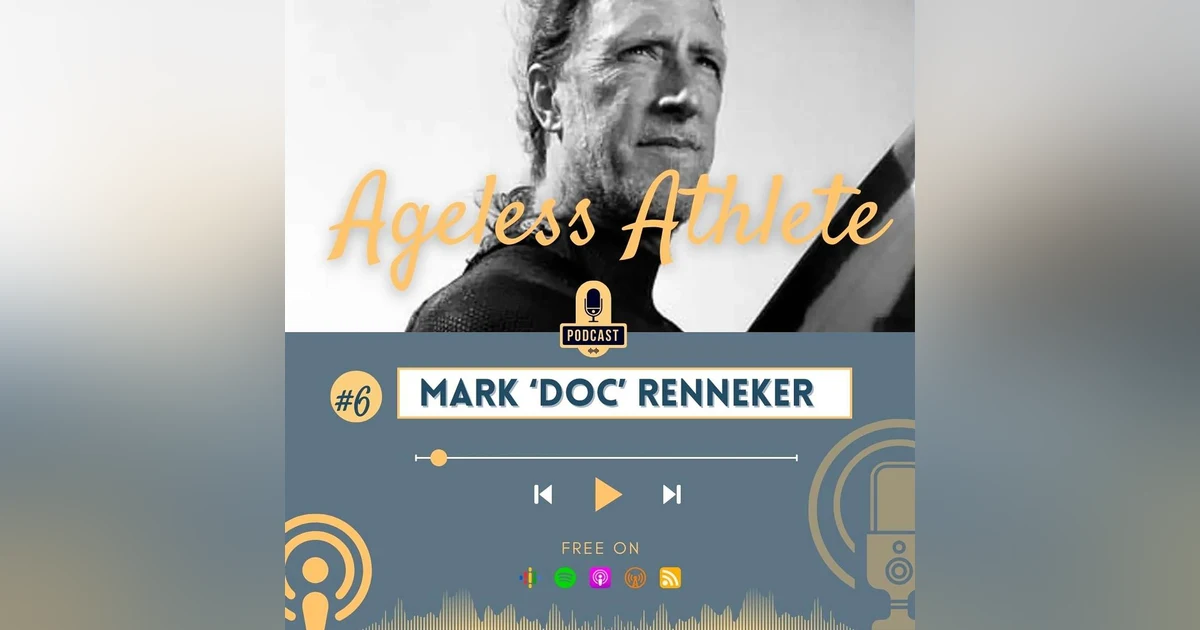


Join in this exceedingly rare conversation with Dr. Mark Renneker, a distinguished figure in the realm of big wave surfing hailing from San Francisco. With a surfing tenure spanning nearly six decades, Dr. Renneker has secured his legacy as both a surfing pioneer and a medical doctor at the University of California, San Francisco.
Renowned for his notable achievements, including being the first to surf the treacherous Potato Patch outside the Golden Gate Bridge, and amongst the first to lead expeditions to surf in remote locations such as the Arctic, Antarctic, Iceland, Norway, Greenland, and Alaska, 'Doc' Renneker joins us to share insights into his extraordinary life.
In this episode, we meticulously explore the facets that have contributed to Dr. Renneker's enduring success, addressing aspects such as life balance, dietary practices, training regimens, and the nuanced risk-taking inherent in tackling some of the world's most formidable waves.
Acknowledgments are extended to Josh Wiese and Kevin Starr for their role in facilitating Dr. Renneker's participation in this episode. To our esteemed audience, if you find enjoyed the show, share with a friend.
References:
Playing Doc’s Games. The eponymous New Yorker article by William Finnegan that made me a lifelong fan of Mark Renneker
Surf Encyclopedia Bio of Mark Some classic surf videos of Mark
Direct Lab. Where Mark gets his bloodwork done
---
🚀 Love the show? Here’s how to support it
If something you’ve heard here has stayed with you, made you smile, or helped you keep going, I’d be honored if you’d consider supporting the show. 👉 https://buymeacoffee.com/agelessathlete
📰 Subscribe to the Ageless Athlete newsletter !
1-2x a month, no spam. We share behind-the-scenes reflections, longevity tips, and athlete wisdom you won’t find anywhere else. You can sign up at https://www.agelessathlete.co/newsletter/ 📩
38:04 - [Ad] Resilience Podcast Series
38:28 - (Cont.) Charging In His 70s — Curiosity, Career, and a Life Built Around the Ocean | Mark 'Doc' Renneker, 73
1:12 Friends welcome back to the issues athlete podcast, where we tap into secret and stories of each to find high performing athletes. Uh, rainy weekend here in San Francisco, and I enjoyed spending the day putting this episode together. Broken only by soggy walks outside with my dog. Roger. Once in a while you get exceedingly lucky and you get to meet your heroes. And poke them with defensible questions. Dr. Mark Raenuka is a legendary big wave surfer icon from San Francisco. I learned to surf in the breaks around the city, myself. And could barely contain my excitement when mark greet to meet with me.
1:55 Mark is 70 years young. Started surfing at 11 and he has been exploring waves up and down the California coast for almost 60. Remarkable years. As a surf pioneer, mark holds many records to his name. But alongside he juggled a career as a medical doctor and advocate He was. Forcing foremost. Maybe the only person who have served.
3:21 Hi, Mark. Good to have you here in person. Glad to be with you, Kush. Excellent. I see that it is nighttime, in San Francisco, uh, with fall approaching. you feel ready I was ready for this fall season, all through the summer, and just kept hoping to see the first glimpse of fall weather and fall swells, and truth be told, here we are, October 20th, and we've only had a glimmer just in the past two days. And otherwise it's, um, chalk it up up to global warming or what, but it's concerning. and the worst of it was that the water got so warm, Mm hmm.
4:03 over 60 degrees here in San Francisco's beginning back in August. Um, and there's this plankton bloom we call the Red Tide and me and a lot of other surfers are intensely. Reactive to it, uh, allergic, and boy, you'll see any number of folks out of water with, um, any number of sort of sinus and nose and ear and eye problems. I saw a guy out in the water just two days ago. He had this goof, goofy apparatus. It was like a clip on his nostrils and he had some little thread or something that was going to keep this thing.
4:44 Clipped onto his nose. And I said, is that because of the red tide? He goes, that's right. And I said, does that work? That thing you have on? And he said, I think it does. And I said, well, did you ever try just every time you're going to punch through or you're going to have your head underwater, just breathing out through your nostrils. And so the water can't come in. He said, Oh, uh, but at any rate, uh, Yeah, it's, it's, it's, uh, this is not beginning, um, in a really strongly positive way. Normally, by the end of September, we would have had a couple of days at Mavericks, a couple of solid double overhead days here at Ocean Beach, and instead, you know, yesterday, the day before, you know, maybe there was a handful of waves that were maybe double overhead and, but for the most part, not.
5:39 It's still, you know, Was classically Ocean Beach. Like yesterday, four of us, four good friends all started paddling together up by Rivera. It was a 40 minute paddle out. And, you know, if one were counting how many times you had to throw your board away or dive under or duck dive or whatever. You know, it's in the hundreds. Uh, and one of the four didn't even make it. He finally just said, I'm out of here. And, uh, and you know what, of that whole session and the rides I got included, the most memorable part was the paddle out.
6:22 And if you, if there's something sort of the great equalizer here at Ocean Beach, but also the bar that you have to keep yourself healthy and strong enough for. It's to paddle out. And even in the summer, it can be a rough paddle out, but, you know, famously at Ocean Beach, the fall winter is what brings so many surfers to their knees and they think they're the greatest surfer in the world. And they may well be. It doesn't mean that you're going to get out. And so you have to use a fair bit of cunning. One of the guys who I paddled out with, he is currently under treatment for an advanced melanoma Wow.
7:04 and he made it out and, um, When we got out there, I sort of sort of jokingly sort of paddled up to him as if I was like a making a film from a drug company or something and wanted to know, you know, do I think that his, the drug that he's on, it's called Keytruda. Do I think that that contributed to his being able to get out? And he said, well, yes, I do think so. And we had sort of a joke about that, but I said, seriously, Tom, um, to get out on a day like today, or even on bigger days, it takes a certain willfulness. And do you feel that the will to get out on a day like today is somewhat similar to the will you've had to have?
7:48 To go through the cancer treatments and he said, absolutely, absolutely. So it is, there is a parallelism. I think, um, he's somewhat unique really to Ocean Beach because most of the surfing world. There's nothing like this, you know, for, for me, always, it was easy to go to the North shore and you could, you could paddle out without getting your hair wet It's a whole different deal you know what, this is such an interesting, uh, subject that, uh, I've thought about a lot, in the last 10 years or so that I've been learning and surfing at Ocean Beach. Um, just so people understand where we are and what we do here, I would love to get a quick bio of yourself.
8:33 Mark, how old are you? Where do you live? What do you do for work? yeah, And uh, Good enough. Good enough. So I'm 70 years old and I grew up in West Los Angeles and at age 11 with some friends, we did a junior lifeguard program right by Santa Monica pier. And that was when I first began surfing and I ended up, um, going to UC Santa Cruz as an undergrad and, uh, where I did my pre med and mhm, got into UC San Francisco here for medical school and that was in 1975 and was immediately astonished to see how big the surf was up here compared to Santa Cruz, which I thought was pretty big surf and, Once I'd gotten to Santa Cruz, I was never intending to ever go back to Southern California, which has generally pretty small and very crowded surf.
9:33 And, you know, for me, it was like heaven to find San Francisco and all through medical school, I was never intending to even be a physician, really. I just wanted the education. I was more interested in actually the field of education. And through the passage of, uh, getting into medical school, I'd already been to like eight different colleges. Uh, or places of institutes, if you will, and had a number of important role models. Um, a guy named Gregory Bateson, who was a legendary cultural anthropologist, a guy named Ivan Illich, who was sort of a defrocked priest. Um, and both of them having great, I don't know, great inspiration for me in terms of education and the power of that.
10:19 And I was intending to actually go and work with a guy named Paulo Freire, who mhm, This whole notion of critical consciousness and ways to sort of educate people. And so my dream always was to use medicine as a way to, um, create change mhm, rather than as it were to sort of dole out medicines or, or do operations or that kind of thing. And it just so happened that when I was finishing medical school, I had an experience on in family medicine with a guy named, uh, Ron Goldschmidt and through him began to learn about. This sort of the actual application of something I learned from Bateson in terms of, um, the work of Milton Erickson, who was a amazing based on, on change, a change agent, but using hypnosis, really, and, um, and I just loved what I was doing there.
11:15 And that was at SF General. And I just, so I applied to residency. It's the only place I even applied in family medicine at SF General and did all that. And, uh, yeah. And when I finished, I was, I did inner city family medicine again, just sort of this whole idea of trying to work with people who, where you can really make profound change and along the way began realizing that it was advocacy that I was most interested in. And I started my own advocacy practice based on a television show of the time called the medical. I call it the medical equalizer, but there was a show called the equalizer. And it was made into movies and that kind of thing, but it was this idea of, you know, um, I'm going to say rescuing people, but pairing up with people to when they're feel like, uh, sort of everything is stacked against them.
12:06 So I began doing that with patients who feel that the medical system had failed them utterly, or had given up on them, or were actually obstructionistic. And I devised a way of working with people never by zoom, uh, but by phone, this was way back before people even talked about telephone medicine as something you could do, but I began doing it, you know, in 1989, 90. And, um, part of the, the, the sort of benefits of that was that mostly the people I would be speaking with, they were from all around the country around the world. They'd find their way to me through an underground of people I'd already helped.
12:50 Um, and. But they generally, the time to talk would be in the evening when they were done dealing with doctor appointments and whatever crazy stuff that they had to do with their lives. And also when more of their family members could be on the line and we would do like group calls. So I always, um, was protecting my time for surf and I never was in the closet about being a hardcore surfer and a big wave rider. And the patients loved that and it was fine with them if, if for whatever reason we did have a call set up and I needed to, because there was a big swell or I needed to go to surf a swell somewhere, they were fine with it.
13:32 Okay, yeah, that's great. You go surf and, you know, let's reschedule it. It was never an issue. And, um, so I've been doing that work as the quote medical equalizer or what I call medical advocacy. I've been doing that for about 30 years and I have a house right here on the beach and next to the house is another house that I have for just an office to do this hmm. Sure. And I do a lot of teaching of medical advocacy to medical students and other physicians who want to study with me. Got it. Got it. Yeah. One of the things I wanted to, uh, explore a bit is how you've managed to, uh, organize your life so you can, uh, give surfing the time that surfing needs.
14:20 As well as give your career the time that, uh, your patients and your profession needs. And I think I'm getting one clue right there, which is, which is the work you have done with, uh, patient advocacy and being able to, able to work with your patients to move times around. By, by sharing with, uh, your, uh, your clientele, your, uh, your, your, uh, other life, your passion for surfing, it sounds like, uh, sounds like there's been, uh, adequate empathy on, on that front. Uh, I'm curious, um, you know, now we have enough media out there and people see, uh, maybe people see surfing of all types.
15:05 But generally when I have talked about surfing, even in the last dozen years that I've been surfing, people's impressions of surf are still kind of locked into what they might have seen from movies, the, image of that surfer and, Waikiki beach in Hawaii, on a perfectly, beautiful day. Have you been? Able to communicate how, surfing in San Francisco might be a bit different than, uh, the popular stereotype. that's one. The second how would you describe Mark to the average person, how that is different? What makes, uh, surfing in San Francisco, interesting and, and different So to the first question, there really isn't, when you're talking about stereotypes, it's usually maybe the stereotype that you hold yourself as virtually a chip on your own shoulder.
15:58 And I've seen far too many professionals, lawyers, physicians, physicists, who, because they were a surfer, they were literally in the closet or slightly ashamed of it, even. And. So, um, In the same way that people have stereotypes, perhaps about what a physician should be, you know, in a white coat and like something that you saw, you see on television or in a movie, but in truth, the same diversity that you'll see in medicine, you'll see in surfing. And yeah, there really are some stereotypes. Typical characters who become that way. Largely, they're the high visibility ones who are sponsored surfers who, you know, they're just, they've got a gig and they got to perform and go to work and, um, present whatever is the company's, uh, what they're trying to sell.
16:53 And I've, uh, developed literally a. Almost an anaphylaxis to those characters. I mean, I, you know, through these years of sort of combining medicine and surfing, I've gotten to know kind of most of the, you know, the name people in the surfing world. And some of them are fantastic. And some of them, they're just doing it for a paycheck. And, and some of them hardly seem to enjoy surfing. Um, and then they love to be when, uh, they can be a free surfer, they call it. And I remember one famous guy who said, he said, Well, now my sponsors are letting me be a free surfer.
17:34 And I said, Do you see the contradiction of what you're saying? They're letting you be a free surfer? What's that about? So, um, the unique thing in San Francisco is that if you love, I don't mean to be pretentious, but if you love culture, that usually means being close to a city. And, you know, I have A great affinity for jazz. I love seeing live jazz and I must go to two or three shows a month and have for a long time and I, and I thrive on, on movies. I see a lot of movies. And in terms of keeping the balance, I remember I used to have an index of, I'd go down in the San Francisco Chronicle, they don't even have these lists anymore, but it'd be all the theaters and what they're showing, and I would do a tally of how many of the movies I'd seen.
18:26 And I decided that if I hadn't seen at least 20 of the movies, and the total number would average around, in town there might be a total of about 70, 75 movies, but if I hadn't seen at least 20 of them, it meant that I was working too hard.
19:39 Then the other me, the other measure I, I began to use was, yeah, you know, you can make money in medicine for sure. There's, you know, you can take on more gigs and push for, you know, charging more and all that kind of thing. But what I came to realize was the real power is you in terms of buying free time. In other words that I have, it's, I'm lucky to be a physician and I can make a lot of money if I need to, but it also means I can create. A lot of free time and so I've set it up so that I don't generally ever have an appointment before about 5 PM and because the summer surface so crappy here.
20:20 I will, you know, do more work during the day and more appointments during the day and I just work a lot more hours and then I literally downshift in my schedule big time starting right around now and I'll keep that up through the big wave season which for us goes right through February. it sounds like you've been able to create that schedule and hone it over the years to where you kind of have. Some you have that, balance and the flexibility. yeah, curious, um, to the layperson, how would you, uh, how would you describe or compare, CF and disco surf to maybe other kinds of surf?
21:01 And I'm not, I'm not trying to put all other kinds of surf in one bucket, but if you were to, to make that distinction, how would you go about it? you know, some people approach surfing from a quantitative perspective, how many waves they can catch. for instance, uh, surfing in San Francisco is more of a qualitative experience. And big wave surfing in general is more of a qualitative experience. So that, you know, on a big day out here in San Francisco, A, you feel Like you've accomplished a lot just having made it outside and be if you end up catching more than two or three waves That's you caught a lot of waves that day. And so a lot of people who would stand and watch surfers for instance You know, they're sort of puzzle how little time we actually spend riding waves, but how much time we have to spend Sort of working out all the angles as it were to figure out where to sit and where to take off and how not to wipe out and And the higher you go up the ladder of big wave surfing, always the fewer the waves you'll be catching.
22:07 So on big days at Mavericks, uh, you know, Mavericks doesn't even start breaking until it's at least triple overhead. So let's say 15, 18 foot faces, um, you know, very few people catch many waves. Even when, even when there's nobody out, I mean, you know, I surf a lot by myself at Mavericks included. And, um, yeah, you, you're not. You're not doing it for how many you catch and you might even be out there for three or four hours and catch one wave. And from a sort of a spiritual tradition, um, it's just about perfect. What makes it perfect? It's, it's the oneness of it. It's the, um, the fact that you have, you have, you, you imagine that you have some measure of control over it all, but for the most part, you don't, other than by your own experience and fitness and cunning.
23:02 And a lot of it is cunning. But having to put aside, it's like people who now will say, well, I'm done with this COVID pandemic. I'm just going to live my life regularly. The foolishness of that, to imagine that you can proclaim that and that there's any reality to that. And the same with somebody who's going to like conquer the surf or, you know, take surf lessons. And then I got a coach and then I got, and then they, you know, this and that and blah, blah, blah, blah. And we watch these people come to Mavericks thinking they're these conquering heroes because they've done that elsewhere and maybe in other aspects of their life.
23:43 And they're just reduced to rubble. Sure, Mark, how long have you been surfing Ocean Beach and Mavericks? And maybe if you can just give a quick idea of how you've seen the surf culture, uh, evolve over that time? So I started when I came up here to start medical school, and I was looking around for a place to live. And it was, you know, offshore it's this time of year and sunny and they were good surf and there was nobody else even in the water and I was getting some great waves and there was one guy who weighs up the beach and I paddled up to where he was and said, you know, what do you call this spot right here?
24:24 And he said, Oh, this is called pillbox and that's called purple cow. And he's all these things he starts saying, he goes, are you new here? And I said, yeah, I just moved up here to start medical school. And he paddled over right up next to me and he put out his hand. And he said, Dan suey third year and so, uh, and I, so it was like, yeah, that was more important than any white coat ceremony sort of for the initiation of becoming sort of in this, uh, this group and right away. I all the surfboards I'd had from. You know, LA area and Santa Cruz were useless up here. And I gradually began to realize I had to get bigger guns, bigger, longer boards, which you couldn't even get here.
25:09 I mean, there weren't. Shapers for the most part, and even in Santa Cruz, they didn't have big boards. So for whatever reason, I began going to the North Shore when the surf here would get crappy, which is usually in February, and there they'd still have big waves, and most of the pros had left town, and they often would leave behind their big guns. So I would just buy a pile of them and fly them back home, five or six boards even. And the problem here was, um, we were just breaking boards all the time because of how powerful the surf is. And also is when leases were really pretty primitive. I mean, the leases would just break willy nilly. my goal was really to surf a place that breaks about three to four miles out called the potato patch.
25:54 Which I had seen the first time I, in anatomy lab on the 14th floor of the medical school, you could see the potato patch breaking. It would just blow my mind. And these were waves that were 50 foot faces, something like that. I mean, really, and some of the waves would, would go on for like a minute. And, um, so And, And, Mark. This is just, if you don't mind describing this place, it's, it's a fascinating, uh, natural phenomena, right? Believe It's outside the Golden Gate Bridge. if you just think of like a river mouth, where the sand is, comes out the river and deposits sandbars, that's really what San Francisco Bay is, it's this one big river mouth and all the sand goes out and in a horseshoe crown that stretches from the north on the rune side all the way down here, comes in kind of closer here, down by Tarabel Street, And, um, and on the outer realm of it is where the shipping channel has to be dredged to for the big ships to come in.
26:53 it's about four fathoms deep. So about 24 feet deep and the only way to access it. Originally, I tried with my friend who had a power boat and I ended up worrying more about the guy in the boat and then I just, I didn't like doing that. And, so then I just began trying to paddle out to it. And after a number of experiments figured out that on an outgoing tide, I could just jump in up by the cliff house. And literally ride the current all the way out without paddling, even it was hilarious. You could just sit on your board and it just takes you two to three knots an hour. I mean, it was, it was easy. You just had to time it for when the tide stopped outgoing because otherwise you couldn't stay in position out there.
27:36 But on some of those days where I wouldn't even catch a wave, you know, I might have literally paddled or covered maybe 10 or 12 miles. And I always liked paddling. Paddling seemed to me a delight and sometimes, you know, the current would help too, but, and then finally, um, and I would do this with friends in the, in the beginning, and again, I hate to say this, but they would kind of chicken out or lose heart or, you know, and I would say, no, no, we got to get about another mile or two further out. We're just on the inside here. And they would go, no, I don't know. And then the Coast Guard would send out one of their rescue boats because there was some reports and, I don't know. They'd, they'd, those guys, you've seen them on the big days where they bust through the waves and make a quite a, quite a show for people.
28:21 But, and then they would, they would look over and they'd go, Oh, it's you doc. Oh, okay. No problem. And then they would just disappear. And finally, I ended up doing it by myself and caught a wave. Uh, this was about 2005. Um, that, you know, solid 25 foot wave. And it wrote it for about a minute. And with no photographers, no other people there, and, and that was just the way I like it. That's beautiful. the few times when I have been fortunate to be out in the water, uh, by myself and catch a wave like that, uh, not a wave like that, but a wave, uh, you know, much more, humble in its, uh, dimensions.
29:03 it's still been, uh, an outstanding, moment for me. So I think I can, I can only imagine what it must be like to, uh, to be out there. Um, and having not only caught that wave, but put in the effort and time to earn that wave, uh, which I think is a big part of what surfing is. Well, for me, though, I must say a lot of it has been, again, really interwoven with the same process that I use in medicine of seemingly something, uh, unsolvable. Someone with an advanced, you know, metastatic cancer or something. So what's the way out of it? What's the way, what can you do differently? And, um.
29:44 Or additionally, and so it's a lot of research. And so these places that I'll go and surf, it's incremental in the study that I engage in often a lot of cartography and, you know, bathymetrics and, you know, ocean, oceanic kind of inquiries and talking to people who know areas. Whether they be fishermen or whether they be researchers, um, to get a better handle on it. And so I've taken that level of, of exploration or inquiry uh, into not just the local area here, but I've been systematically exploring the Arctic and the Antarctic and the sub Arctic, sub Antarctic areas.
30:35 And have organized and led first expeditions to surf Antarctica, Iceland, Northern Norway, Svalbard, Greenland, um. All of Alaska and what I'm most excited about now is I'm putting together a trip to explore all the way to the end of the Aleutian Islands. That'll, it'll be like a month long trip next August. Holy smokes. That sounds incredible. uh, amongst all those trips and, all the memorable, uh, surf sessions over the decades, uh, including the one where you caught that eponymous wave at, uh, the Potato Patch, any other, like, highlights of proud moments, maybe a couple that stand out that you would like to share?
31:23 I have a way that I surf some hours north from here. I have a little 10 by 12 foot cabin, no electricity on a cliff over a surf break. And then it looks out over way out in the ocean and the outer reef spot that I first surfed in 85, 86, and it remains my favorite big wave spot in the world. And I've managed to keep it a secret for the most part and not let what befell Mavericks happen to it. And so I've had experiences out there that, uh, just would blow anyone's mind. And usually surfing alone about a mile from shore.
32:07 And the one that most comes to mind actually is, again, the lessons of hubris are critical to me. And so I had paddled out alone on a 10. 9 brand new board that Jeff Clark made me. And it was, you know, 20 to 25 foot, something like that. So that would be like four to six times overhead. And, um, Wow. when I do this on my own to these outer reef spots, I promise myself I'll only take three waves. And the first wave will, I'll just, it'll be an easy one. Uh, you know, I'm not gonna say shoulder hop, but sort of. And the goal is to try and do it without getting my hair wet. Okay. it's not like Ocean Beach, where you got to dive through the whitewater.
32:49 These are places you can access through relatively calm water. It's just, it can take 45 minutes or an hour to paddle out. But, and then the third wave would be the only one that I would really Take a chance and sort of sit deeper, uh, maybe a bigger wave, whatever. And so I'd already caught my first two waves Mm and then this fog bank appeared and it would happen like so fast. It was like a bad special effect in a movie or something, but literally. No visibility. And, um, I don't know, 50 feet, something like that. And, and so I have my lineups out there based on way on shore sort of areas that I triangulate and figure out where I am and to where the wave would break.
33:37 But I also know the kelp bed pretty well and the boils pretty well. And I said, okay, I know where I'm sitting. I'm just gonna, I'll just wait for the fog to lift because I really want to get that third wave. I really want to get that third wave. And, you know, it was kind of. Amazing, because as soon as I sort of had convinced myself that I would get a third wave, this giant wave broke outside of me. Just, I didn't even see it coming. We're talking huge, huge wave. Throw your board away, dive as deep as you can, the leash breaks, Oh, goodness. It's one of those things where it's, it's so violent that it sort of launches you back up from the depths like a torpedo shooting out of the water or something.
34:22 And I go, Oh man, this is, this will be a challenge. And I just looked at my watch. It was 347. I remember exactly and I thought there's time it was dead of winter, so it was going to turn dark at five Mm and I wasn't really worried about swimming in. I've practiced swimming and out there before. It's really tricky to swim in. You have to swim in through these rocks and we call it the keyhole and it's it. It's formidable. But really what I was worried was to find my new board. Um, and I have a pretty good idea where the boards go from having this having happened before, but never in the dense fog.
35:04 And part of it was that you had to stay with where the waves were breaking, because that's where the board would go, which meant that you had to let these still giant waves just I want you and I did all of the above, and was swimming around out in the ocean again, about a mile offshore, looking for my board in the fog and never found it. Okay. And then finally swam in and my car was parked pretty far away. And so I'm running along the road with, with my broken leash and now the sun's come out. Now I can see everything and all I want to do is get binoculars so I can look for it. And some guy driving by who recognizes me, he says, doc, what are you doing?
35:46 And I said, I just lost my port and he goes, you were fucking out there and I said, yeah, I said, could you help me find my board and he said, yeah, yeah, great. So he's got binoculars too. And so we stood on the cliff and just watched and watched and watched never found the board turned dark. And that was the end of the day. Godly. That's quite a story. That was not what I expected. Quite the adventure you had out there and did not expect the ending. And, uh, it brings together so many elements of surfing. That many of us experienced, you just have experienced that on a much.
36:28 More intense and grander scale. But it brings together the highs and the lows and the cheeses and the losses. And the elements. Out in nature. Oh, and sorry about that board. A brand new board from Jeff Clark. Indeed. Sounds quite special. I had a board, one of my favorite boards. It's still one of my favorite words. I still write it. The day parmenter made me, it was an eight foot fish that he made me for Mavericks worked fantastically well at Mavericks. one day, The leash broke and I swam and swam and swam and looked for it and never found it let the, harbor master know if, that if anybody with a fishing boat or whatever found a board, you know, sort of purple, red one, you know, to call me a month goes by, he calls, I think, I think we've got your board.
38:19 And I said, what? And he goes, yeah, wonderful. The captains, you know, he found this board floating out in the ocean He just wants to, you know, make sure that, it's yours and I said, well, and I described some as it were sort of like in, you know, police procedural, identifying, tattoos or scars. I said, yeah, there's a ding here and there's a blah, blah, blah, and this and that. He goes, yeah, it sounds like you're bored. And I said, well, what do I have to do to get it back? He goes, well, you know, the rules about recovery at sea. And I said, Oh, that's fine. If he wants some money, I'm happy to pay him. I really love that board. And he, I said, how much does he want? He goes, a C note.
39:00 I said, a C note. Did he say a C note? And he said, yep. And I don't know if Kush would even know what a C note is. Well, it's gangster slang for a hundred dollar bill. Oh, century note. Got it. yeah. And, but, but I said to him, I said, God, this guy is no authentic captain. And he, he said, yeah, just bring me a C note. So I had to go, like, go to the bank, get a C note, went down there and got my board back. That's hilarious. That's, uh, I mean, it could have been a C note wrapped around a bottle of rum or something to make it even more, could have, yeah, yeah. that's, that's, that's crazy.
39:40 Um, Marek, you've been, you know, you've been surfing at, at, uh, you've been surfing for such a long time at, at such a high level. Um, how do you keep your body, your, you know, how do you stay in shape? Do you have, uh, do you cross train? Do you have any other rituals? any dietary habits that you have refined over the years? Mm-Hmm. Yeah, and it's been just like everything else in surfing and medicine. It's been incremental. So I've been surfing for, what, 60 years, started when I was, you know, 10 or 11, thereabouts. And, um, what I didn't want was to do anything that would interfere with surfing.
40:24 So I was a hardcore skateboarder, you know, pretty radical skateboarder. But I kept getting injured, and then I couldn't surf, and I hated that. So I gave up that. I gave up skiing. mm Um, I used to do rock climbing and surfers generally make good rock climbers. The problem is that if you fall surfing, it's no big deal. The water is soft, but I had some, I had some good falls and I thought this is stupid. I'm not going to do that. I won't be able to surf. And so that was like one rule of thumb. The second was, um, I had learned yoga early on and always kept up some practice of yoga or certain poses that I knew would help me not have sort of stiffness or loss of flexibility.
41:14 Um, and also I began, um, working with different people like a cranial osteopath. In other words, a, a treating manual medicine specialist And with my stated goal being, I want you to keep me able to surf as I get older. And so just a standing appointment once a month, and it's just proactive. It's just looking for restrictions or issues that if left unattended or un, uh, worked on could really add up to a problem. And, and then amidst that, then invariably there are injuries that happen.
41:57 And I have about four different people of different specialties. One is an Atlas orthogonal chiropractor who only adjusts just the Atlas. Another is a brilliant, brilliant, um, you would call it a sort of a muscle. Specialist, but he, um, did a lot of dance medicine and took care of Baryshnikov and, had developed a lot of his own style of working with people to, know, look for restrictions, you know, at different segments of the spine and the hip and ankles and all of that. Um, and I've worked with him a lot to help sort of.
42:37 Reverse or improves like a scoliosis that I've had, um, and work with things of ergonomics and posture. Um, so it's been, I've had acupuncturists, um, uh, and these are people who, um, have helped me, I would say, age well and understand and, and mainly work with people who are motivated like I am, you know, you know, dancers and athletes and, and the like. And without that, yeah. Um, yeah, I, not to say that it's victim blaming, but I can't tell you how many friends I have who've had hip replacements and knee replacements and how many shoulder surgeries and neck fusions.
43:23 And you just see it gradually take its toll for what, what they can do in surfing as they've gotten older. And my role model has always been, uh, Jerry Lopez. mm And Jerry, I knew from, uh, I was in a movie with him called Rotting Giants in 2004, sure. and, um, and he wrote a forward for a book I did on surfer's health called, Surf Survival, Mm-Hmm? now in its second edition, but the essence of him. Of Lopez's teachings, if you will, is surf today to surf tomorrow, so it's pretty obvious. So you see these guys come out.
44:05 They're just crashing burn artists on big days at Mavericks, and they get hurt. They just get hurt and, you know, my goal is to literally never fall, not not wipe out once. I remember I went an entire winter without a single wipe out. What that means is you don't catch all the waves you want. It means that, you know, if you don't think there's at least a 90 percent probability of making the wave. Not to go. It also means getting really good equipment. I know this is a big deal in other sports, maybe more so than in surfing, but, um, I've always had, uh, wonderful shapers to work with and to, uh, make me a lot of experimental boards and interesting designs and, you know, even just two days ago, I got to ride, uh, a board that just blew my mind it's what's called an edge board.
44:56 I never felt such a board. under my feet before. And it was, it's quite invigorating to, suddenly, you know, think that you've seen it all and seen every idea and here's something completely new. That's amazing. Wow. and and in terms of nutrition, you know, all through medical school and even for a long time thereafter, I used to have a hamburger every day Okay. and I have found that I could do study, medicine or, you know, for medical school. Best sort of sitting at a restaurant. I used to go to Bill's place over on Clements street. I'd sit in the back there and they just loved taking care of me, the medical student, and they would bring me all kinds of treats and things.
45:36 I was never good at like studying in the library or something like that. at some point I did herniate a disc. And one of the things that I began to explore was, okay, maybe I'll become, you know, vegetarian or pescarian. And that was, um, in about 1990, I've been essentially that since I gave up, chicken and pork and turkey and, you know, all the red meats for sure, and it's interesting that one time I slipped, as it were, was in the Antarctica trip, the captain and, owned an island in the Falklands where he would raise his own lambs and he had all this frozen lamb and, you know, there is something wonderful about lamb.
46:18 There just is, you know, uh, and, um, so I got ill from eating, lamb again after about two days and that was in the year 2000 when we did that trip. I haven't had red meat since. Sure. Got it. Pescatarian, uh, almost completely vegetarian. Any supplements Yeah, yeah, actually, there are. I'm a believer in N Acetylcysteine or NAC, which when you swallow it, it's a prodrug for what's called glutathione. Glutathione is the chemical that a huge number of cells in your body produce as a way of cleansing the organs. to give you an example, NAC, if you you go mushroom collecting with the next rain, up Up the coast, you know, and you, you pick the wrong mushroom and eat it and your liver is being destroyed and you're, you know, orange is a pumpkin.
47:11 And you present to the emergency room, the very first therapy they would give you would be intravenous NAC, in other words, to save, to save your, to save your liver. So NAC is something that cleanses the organs, including the kidneys, including lungs, including the heart, including the brain. I've always taken additional amounts of vitamin D, you know, on the order of about like 5, 000, 5, 000 units a day. Um, I've always liked magnesium, it takes some extra magnesium, and then a friend of mine who's a nutritional oncologist, um, who is in the Chicago area, and he's a surfer also, he actually went on the Antarctica trip, and he and I surf Lake Michigan and places like that together.
47:55 But he has these supplements that he's put together that are sort of a gamish of, you know, 15 or 20 things that would sort of be everything you might find at Whole Foods, and I've always taken some of that. Okay. Oh, a little bit of curcumin, a little bit of fish oil, but not too much. If these things cause you to bleed, I did find for a while I was taking sort of preventative low dose or, you know, uh, baby aspirin, but boy, you know, I just found, I mean, even like punching through a lip, you know, I would get these little, you know, ecchymosis, little, you know, sort of bleeds under the skin on my face.
48:36 It just, so I cut that out. I don't take any supplements. I'm 44. And I sometimes don't, don't even know where to get started. It seems there's so much variety and so many types. And then there also, you know, the, uh, snake oil, uh, sales people out there peddling their own, motley potions. I will have to put in more research the research gets very easy there's a branch of integrative medicine called functional medicine. the principle of it is that you look for biomarkers. And if you want a not shotgun, with supplements so biomarkers would be, yeah, looking at micronutrient levels in the blood, looking at vitamin levels in the blood, looking at inflammatory markers, coagulation markers, immune function.
49:25 All of these things are easily done and what's really interesting now in the field of health is that there's a lot of direct to consumer ability of ordering all the lab tests that you otherwise would have to depend on physicians for. So you can go to like directlab. com and you can order virtually anything that a physician would order. And if you want to, you know, play around and look online under, what I would call terrain panel. So you want to look at. Uh, not the disease qualities of one's body, but the terrain, meaning the healthy part of your body and you look at the worth of normal levels would be for you, you name it, magnesium or, C reactive protein or, uh, you know, things of that nature and, or, and then, or all the different antioxidants and, and all that, and then you would, um, Say, oh, gosh, I'm like, I'm below normal.
50:23 I don't know why that is, but I'll start taking such and such, you know, more zinc, and then in three months, I'll recheck that on that dose of zinc and see if I'm hitting the level that I want some optimal level, ideally on the upper range of normal. And at least then. Yeah, you're not shotgunning, you're actually working with your own physiology from a standpoint of knowledge. yeah, no, that is very sanguine advice. Uh, somebody else recommended, uh, functional medicine to me for just the same, I think the same sort of concerns I had about shooting in the dark. And I think, thank you for reinforcing that. Well, and the other thing to say in the field of sports medicine, again, they tend to be, evidence based, but they tend to be more data driven.
51:09 And so, yeah, you can get a lot of good data in terms of exercise physiology and sports medicine, or in terms of physiatry or physical therapy, degrees of motion, even just resting tension in the body, these can be measured and that's what the elite athletes are working with, whether they be swimmers or, uh, rock climbers or what have you, they, a lot of them, you know, they get to that level by at some point kind of going into, as it were, the, the biomarkers or the science of that, which they're endeavoring to do all those guys on, on the warriors, yes, yes, they know their numbers.
51:51 Oh, wow. Okay. Okay. Okay. Got and all the rest of us are farting around. haha got it mean, no, there's no doubt that, uh, that, uh, those, those sports that have a lot of money in them, those sports have, certainly embraced a lot of science and I think sports like ours, and also obviously I'm not like. An athlete of that caliber. I think the rest of us kind of have to just take that lead and learn from people who have, who are doing those things and not, not, you know, not reinvent, the proverbial, so no, I think you're right. Now, the goal is to reinvent the wheel. In other words, to learn something often is to, for you to learn it The first time.
52:36 else may have learned it, but for whatever reason it never transferred into your realm. You can, you can cognitively or intellectually understand it, but, um. And I think it does help when you, uh, even maybe this is the ultimate purpose of your series is, trying on these other strategies of other people and see what fits for you. And that's, of course, that's how we all go through life. I think that's exactly right. I think it starts with like, uh, the cognition and then maybe moves on to, uh, you know, the willingness to take a chance and put the, uh, resources towards it and then ultimately figure out through, uh, Experimentation, what is, what isn't that works the best and then kind of customize it few things you excel at.
53:27 What is one thing that you wish you were, uh, you were good at that. You're not. there was a guy from Australia who would come to Mavericks every year named Tony Ray. Tony Ray could paddle faster than anyone I had ever seen. And I really. But watch him and watch how he would use his arms and the how deep he would put his hands into the water and how thick his board was. And, and it isn't that I, obsess about paddling faster, but in answer to your question, I would like to paddle faster. And it is. And also. What I see among my peers, meaning surfers of my age, is that they begin to not be able to paddle as fast, and consequently, they end up taking off later, and they end up falling, or not being able to stand on their board properly, because the principal deficit being paddling speed.
54:29 So a lot of, you can make up for in terms of loss of speed. Of going to lower rocker planes, so flatter boards, so like a fish fundamentally is a flatter rocker plane, and they just paddle a hell of a lot better. They just do. I consciously worked with that as something to improve upon, if you will. Got it. And I don't think you're any slouch when it comes to battling, but I can see that when you look at all your other gifts. With the, with the sport, maybe that's the one that you would like to, No, but also I would tell you, honestly, it is the one that I would notice as I've gotten older. The paddling speed just drops off a little bit. I can sprint paddle the same, yeah, but in doing my, some of these sort of, uh, heroic paddles, if you will, you know, these hour long paddles or whatever, they take longer, And if I'm paddling with a younger friend or someone who's a great paddler, like Grant Washburn, who I surf with a lot, another big wave rider, Grant, he just paddles faster than all of and how much faster?
55:31 I don't know, 5%, 10 percent maybe, but in big wave surfing, that's everything. sure, percentage increments make a big difference. no, I think it adds up over a long session, a long battle, that little bit of extra speed and, uh, capacity probably has a Huge, huge impact on one's performance. maybe In the last, maybe five or 10 years, any new behavior, any new habit you find has most, improved your life? I would say I just have an ever improving bullshit detector. I don't suffer fools gladly.
56:13 I just don't. I don't waste a lot of time with people who, I don't know what they, this can be a glib answer when people would say, what are you afraid of? What I'm afraid of is superficiality. I like depth. I like complexity. I like the unknown. But if it's just whatever, small talk, you know, in this sense, I, I prefer, prefer my own company actually, or, or friends I have who are really rigorous and engaged. how does that translate to, uh, any new maybe behavior? You know, yeah, it does, it, um. A degree of intolerance. You know, uh, I, I've not to say that there's a long line of people wanting to, engage me as a person, it's a month's long wait to work with me, it's like a six month wait at this point, it's, it's embarrassing even, uh, especially for people with life threatening illness, but, but I don't, um, it's hard, you I don't, I didn't make it very hard for you to get in touch with me just because you, you know, we had, I had a friend in common, but, I don't have a website.
57:21 I don't make it easy for people to get to me. I just don't. The Biden Ballard writers and people want to do articles and stuff. Mhm. I don't bother with them at all. I've learned the hard way that way. I mean, I just, it isn't what it is. I'm not interested in that. Fair. your proposal. I liked the idea of, as it were. What it is to, uh, age gracefully or to, to be healthy as you get older as a surfer. Yes. Great. That's a, that's a wonderful topic. think it is. And I think, uh, I think this conversation shall hopefully benefit a lot of people in, in a material way.
58:03 here's another, uh, another kind of interesting question. do you love your, uh, your future or your past more? Well, the future doesn't exist. And the past, as we're learning this more or less a matter of interpretation or opinion or sort of the Rashomon effect. So all there is, is the present. And so. Um, you know, I, I don't worry about my past, really. I, I, I've kept a log or a journal basically since I was 16. And I do, I do have a lot of writings, if you will. but, I'm all about what's happening right now.
58:45 That's, uh, that's a great answer. now is, the only dimension we have, uh, in front of us that we have the, highest ability to influence. Well, that and I mean, really, when you study spiritual traditions, they all arrive at that same viewpoint. It's only about the now. Yeah, you're supposed to take lessons from the past. but it's to the degree to which you can apply them. It has to do with, to yourself, not to others. Do you have a meditation practice, Mark? Surfing. there was one great book written by a guy named Kent Pearson, who was an Australian sociologist, and I was interested in his work.
59:25 He had died, and at one point I went specifically to see his widow in Australia because I wanted to see his papers. I was really interested in his writings, and what he did was he did studies of trying to understand why people surf. These were in depth studies, I mean, PhD level. Australians take this stuff seriously. And, it wasn't even in as many words as this. It was, what's the principal reason why you serve? And it was to do with its meditative properties. and again, all that. time that we spent sitting around out there in the water that strange feeling of things sort of washing away that you had been tussling with in your mind and trying to figure out with the problems with whomever and whatever and the affording this and that and bills and the future, the future, um, you know, the future only becomes this.
1:00:22 Really, really wonderful childish thing of believing that there's going to be a great way that's going to come to you in the next few moments. And that is its own meditation. Fair enough I would agree that, ultimately for me, and I think for many of us, I think. sports assume a meditation quality when we find that flow and allows us to, uh, be that much more present, and that heightened perception and all of those things that, come to that state. And I think that's probably what I enjoy the most about them. One of the ways I proceed in my medical advocacy practice is I only take on one new case a week these, I don't treat them.
1:01:03 I don't prescribe things to them. I, you know, I help them figure out things that they can do set them up to sort of embark on a different course with their illness. And so I often, in my dreams even, Mm hmm. also when I'm out in the water, the solution to a case will come to me. What I'm not specifically looking for it, Fair. Yeah. and that becomes, uh, something that I can't. Deliberately create in the water, but it happens when I don't know, there's maybe it's pretty inconsistent and there's just some ray of light over some body of kelp or something.
1:01:44 And then boom, there it is. And I know exactly what I need to do on a given case. I don't have to write it down or anything else. It's so evident. I'll remember it. that's happened so many times and what it. Yeah. When it doesn't happen is when I've taken on too many cases, too much work, these problems of others that I'm trying to help them solve, they become something encumbering to me. then sometimes for many people who surf, they're trying to leave the land, you know, on the beach as it were. I've actually, in the balance, if you will, tried to make it so that it. I don't mind carrying some of the people I'm trying to help with me.
1:02:27 When I go out, especially on these fairly complex, difficult expeditions to the outer realm or what have you, because so often what I'm going through is what they're going through, trying to make something happen in the most unlikely conditions imaginable. In 20 and 30 foot surf, there's nobody else who even wanted to go out. They didn't even want to deal with it. And it can be, you know, horrific winds or something. And I'm just trying to figure out, is it possible to go out and actually get a ride? Sure, I'm going to do a crazy segue here, a question I want to ask you that, surfing the waters at Ocean Beach, probably more than most people out there.
1:03:14 even myself in my, whatever, decade long span at the beach, I've seen some pretty interesting. Marine life, when I tell people that I've seen dolphins out there just that part, I think dolphins and the occasional whale out there. I people get pretty astonished. So curious what has been some of the most interesting wildlife that you might have seen, in the water. And if you have also ever seen the, the men in the, in the gray suit. So to speak. I have, I've had one encounter with, a great white, at a sort of remote spot south of here. Again, right in peak great white season.
1:03:55 And, um, it was profound. It was close to me and it was telling me I'm here. It was this, it came up out of the water about 15 feet away from me but it first appeared as just a dome of water being lifted and when it was about 2 feet high. Then I saw pectoral fin just slicing through it, and it was elegant. It was elegant how it slides through, and then the head emerged on the other end of the dome, literally with the eye looking at me. And it was this, you know, it was checking me out, uh, it was territorial, the place where we were is, uh, you know, it's a, it's a seal rookery, so, so what do you expect, dumb shit, you know, but in all these years I've been surfing there, I've never had such an encounter right away it was okay, ever more for about that June through end of September, early October.
1:04:48 I'm not going to surf there again, and I've held to that pretty rigorously. The other most profound experience was I was out with one friend on a big day at Mavericks, and it was getting into the spring, so February, March, something like that, and this friend says, Doc, there's a whale going to ram us. And it's coming up from the south. it's a giant gray whale, whatever, 60 feet or something. it's not doing the diving thing underneath or porpoising kind of thing. It's just streaming across the surface. And it's, I don't know, 75 feet away or something heading right at us as a set came.
1:05:29 Oh, I was exactly in position to take off and I, and I just wanted to get out of the way. And so I took off on this wave and I'm on like a 10 and a half foot board or something. And as I'm dropping in, the whale's back was in the trough in front of me. And so I had to fade deep around the whale, which I made, I made, I made, I made the fade. I made the bottom turn, rode the wave, came back out. And my friend is sitting there white because the whale, after it had done that, it had been breached through the back of the wave.
1:06:09 And came down landing exploding right next to him just feet from him and then just kept on his way. gosh. That's, uh, that's, that's a remarkable, uh, thing to happen in the water. And, sounds like both of you came out unscathed, uh, Oh, yeah, like frequently re recreate the memory of it. Yeah, yeah, yeah, you remember that time. Oh, yeah. Oh, yeah. That's awesome. Mark, just some fun questions. talked about your food habits before, but, uh, if you had to, you know, eat one meal for the rest of your life, what would that be? That's easy, I've done three long trips to Japan, especially to the Northern Island Hokkaido, found some amazing big waves there.
1:06:58 I could eat Japanese food three meals a day and be utterly happy. it's funny. Uh, when I spoke to our common friend, Kevin Starr recently, uh, guess what his, uh, response was. Similar, Yes. Hey, Mark. I know you love movies. Uh, what's a favorite movie you could watch again and again? you know, I worship Buster Keaton and I never tire of watching Keaton's films and, uh, During the pandemic, even it was probably the thing I missed the most. We're seeing those kinds of repertory or silent films and special showings and, I love Kurosawa's films from Japan and, and I miss those too.
1:07:42 for better or for worse, just love really bad, dumb movies. And I've always, I've always loved horror films. Always. And fortunately, there's no shortage of good, bad horror films, so I put in a fair bit of time with, with them, Excellent. There was a big billboard out there and, uh, you wanted to leave a message for people out there, what would it say? huh? Okay. I mean, the master, Jordan Peele is the master now of, the short title, he hasn't done one called, huh, but he'll get, he'll get there. Sure. I mean, and, and and part of that reflects, I can't help but, of come down to earth on.
1:08:27 It's disappointing the issues of truth in America, when I hear The bullshit, if you will. My reply is, is, huh? It's like, what, huh? No. I it. or Jordan Peele would say nope. Same difference. okay. So Billboard one would be her, and maybe if there was a choice for a second one, that would be Nope, and I, I love But nope, nope's already taken. that's his that's have to be like, the most original, exclusive one. Maybe just the one, you know, one that resonates with you. I think on that, that note of note, It's been most excellent, conversation.
1:09:08 Alrighty, Kush, Wow, how inspiring is mark? Denesha is skilled. And meticulous in his approach in seeking adventure of the highest caliber. At 70, he is chasing monster waves. With the best of them. With an approach honed over decades. Of hard work and awareness. My jaw is still dropped from some fun stories. I came out inspired and wanting to double down on my own physio before the next season arrives. Thanks for tuning in France. Hope you enjoyed this chat as much as I did. Please give us a follow Until next time stay.
1:09:50 ASIS.