#60 Reversing Time: Aging Is Your Superpower To Break Through Limits
"We can be younger by tomorrow—iit's about how we choose to move, think, and approach life with intention. Every day is an opportunity to grow stronger, more resilient, and more connected to what truly matters." 🙌🏾 Lisa Smith-Batchen is a living legend in the world of endurance sports. Lisa’s achievements are awe-inspiring—she’s the only woman to complete the grueling 584-mile Badwater Quad, running from the depths of Death Valley to the summit of Mt. Whitney and back, twice. But what makes L...


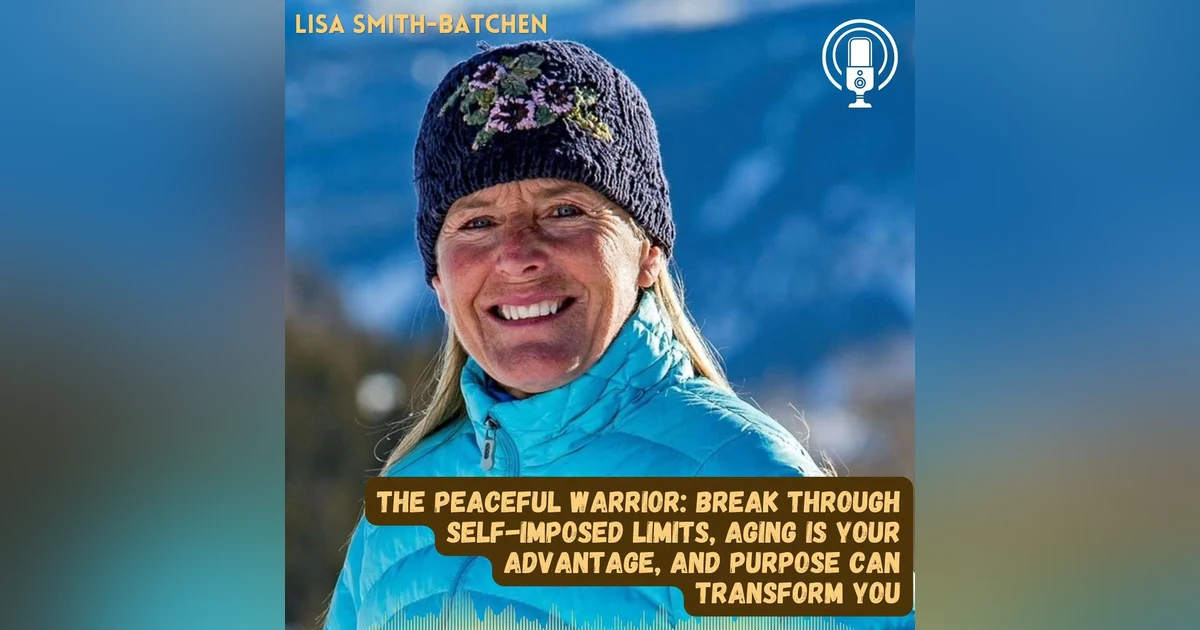
"We can be younger by tomorrow—iit's about how we choose to move, think, and approach life with intention. Every day is an opportunity to grow stronger, more resilient, and more connected to what truly matters." 🙌🏾
Lisa Smith-Batchen is a living legend in the world of endurance sports. Lisa’s achievements are awe-inspiring—she’s the only woman to complete the grueling 584-mile Badwater Quad, running from the depths of Death Valley to the summit of Mt. Whitney and back, twice. But what makes Lisa’s story truly extraordinary isn’t just her physical feats—it’s her unshakable purpose. Lisa has used her endurance challenges to raise millions of dollars for clean water, orphan care, and mental health advocacy.
Lisa shares how her age has become her greatest advantage, why purpose is the ultimate endurance test, and how even the “too slow” girl in high school can rewrite her story with grit, joy, and relentless determination. Whether you’re an athlete, a dreamer, or simply someone looking for inspiration to tackle life’s challenges, Lisa’s story will inspire and empower you.
What You’ll Learn in This Episode:
- Why Aging Is Your Superpower:
Lisa explains how wisdom, perspective, and stress management improve with age, enabling her to achieve feats she couldn’t in her youth. - How to Overcome Self-Doubt and Mental Barriers:
Learn Lisa’s strategies for silencing the inner critic and pushing forward, even when the goal feels impossible. - The Power of Purpose:
Lisa shares how aligning her running with causes like clean water and mental health transformed her life and gave her challenges deeper meaning. - Adapting as You Age:
Why you don’t have to stop doing what you love—just adapt your approach to find joy in every stage of life. - Building Resilience Through Discomfort:
From hallucinating a roadrunner in Death Valley to enduring extreme physical pain, Lisa reveals how embracing discomfort leads to self-discovery and growth.
References:
- Lisa’s advocacy for clean water and mental health: AddictToAthlete
- Lisa’s coaching services and community: Dreamchasers
---
🚀 Love the show? Here’s how to support it
If something you’ve heard here has stayed with you, made you smile, or helped you keep going, I’d be honored if you’d consider supporting the show. 👉 https://buymeacoffee.com/agelessathlete
📰 Subscribe to the Ageless Athlete newsletter !
1-2x a month, no spam. We share behind-the-scenes reflections, longevity tips, and athlete wisdom you won’t find anywhere else. You can sign up at https://www.agelessathlete.co/newsletter/ 📩
18:40 - [Ad] Resilience Podcast Series
19:04 - (Cont.) Why Some People Get Better With Age | Lisa Smith-Batchen, 64
Ageless Athlete - Lisa Smith Batchen
===
[00:00:00]
squadcaster-3120_1_01-17-2025_130409: I am in our home in Jackson, Wyoming. And for breakfast, I had two eggs with a whole avocado.
Kush: Beautiful place to start a beautiful morning. And I had everything you had for breakfast, except I added some rice and some, some chipotle salsa because I happen to be in Mexico.
squadcaster-3120_1_01-17-2025_130409: That's very fitting.
Kush: Awesome. Is that like a typical breakfast for you or something different because maybe it's Friday?
squadcaster-3120_1_01-17-2025_130409: sometimes I skip breakfast, believe it or not. Sometimes it's more a cup of coffee, a cup of tea. I know that it's not good for you to not have breakfast, but a big grazer as far as eating,
Kush: are you eating breakfast after, let's say some training in the morning?
squadcaster-3120_1_01-17-2025_130409: So this morning?
I actually did eat breakfast [00:01:00] after about five miles um, and then I went back out again. I'm kind of trying to stick to my own goal, It's, I don't really like being outside in the dark in the super cold anymore, but today I had to take my husband to the airport at 5 in the morning, so I thought, you know, you're up, let's just keep rolling.
Kush: And Jackson, Wyoming is a special place. I was in your neck of the woods last summer. I was in Lander, Wyoming last July. Well, for summer, beautiful, pleasant, but right now in Jackson, Wyoming, the weather is quite different, which for people who are not aware, can you describe to us how it is right now and how did it feel when you [00:02:00] stepped out for this morning's run?
squadcaster-3120_1_01-17-2025_130409: A cold, very chilly And dark. This morning it was about 6 degrees, um, and we say it's a dry cold. but it was, the sky was beautiful, the stars were out, the moon was still shining bright, and I would, you know, describe it as crisp and beautiful, we are expecting in the next few days a cold front to come in, they're calling it the Arctic freeze, by Monday it's supposed to be negative 15, which is really unusual for here. Um, I would say there's not many days in the winter where if you have the right clothing and you're dressed appropriately that you can't go outside and be active. you know, whether it's Nordic skiing, skate skiing, snowshoeing, you know, running, snow biking, it's an incredibly active [00:03:00] community.
Kush: And for those of us who who use different measurements for temperature. I, I believe you are using these measurements in Fahrenheit. I don't know if I've ever been in, even in six degrees Fahrenheit, which in Celsius is negative, who knows what. It's way below the temperature that water freezes.
When you talk about a cold front top of this, it boggles the mind. So the fact that The fact that you are out there before the sun comes out in the dark in those temperatures Leaves the rest of us with little excuse to not start our mornings with something Somewhat vigorous outside
squadcaster-3120_1_01-17-2025_130409: Well, it's easy to find an excuse, it's, and I do find excuses, believe me, if I open the door and I'm like, Oh, you know, it is part [00:04:00] of the aging where the aging process of not loving the freezing cold or having to be so resilient to go out in the terrible weather anymore. Um, I just don't really enjoy working out indoors. Um, I'm just, I love being outside, so I try to suck it up as much as possible to be outside and, you know, and know that no matter what or what you're doing, you will get warmer. you know, and you just have to start somewhere. I have some tricks that I do to get ready to go outside in the freezing cold that really help. Ha!
Kush: love to know
squadcaster-3120_1_01-17-2025_130409: tricks, but I put my clothes in the dryer. I put the clothes in the dryer and they get nice and warm and toasty you put them on. Um, instead of carrying like a bottle of water, I carry hot tea. that I'm sipping, you know, [00:05:00] warmer water and definitely seems to help for me. I just feel like that's something to consider. before you're going out into the cold is that, you know, be warm and stay warm.
Kush: this clothes in the dryer. That sounds Amazing.
squadcaster-3120_1_01-17-2025_130409: know it's a
Kush: And I will agree that,
squadcaster-3120_1_01-17-2025_130409: is
Kush: to be, uh, self aware of one's needs maybe be somewhat like, uh, methodical about, combating those needs. So instead of coming up with blanket excuses, just really breaking it down and be like, Hey, you know, I like the feeling of, uh, warmth on me.
to help me prepare if that's what it takes. And the cost is only running your dryer for a few minutes or turning on hot water. I think that sounds very justified. me, before we go too far ahead, for those of us who don't know who you are, Lisa, can you tell us who are you and what do you do?
squadcaster-3120_1_01-17-2025_130409: What do I [00:06:00] do? I'm sort of a jack of all trades, master of none, still working on trying to master a few. I am a coach, an endurance coach. all kinds of, um, sports. All kinds of ages. youngest student I coach right now is 18 and my oldest is 94. So I have a wide variety of, of coaching. Um, I'm a life coach, I'm an executive coach. I teach classes based on functional fitness. I just love the nurturing of people and seeing people accomplish something that they never thought they could do?
That next to my family brings me the greatest joy.
Kush: Lisa, while having that spectrum [00:07:00] of age in your students, I heard age of six and another one who's 94.
squadcaster-3120_1_01-17-2025_130409: She will be 94.
Kush: Let me ask you. Yeah. Wow. That's, that's, that's incredible. Let me, let me ask you, what are maybe two things those two students have in common? and two things which are very different about them despite their age.
squadcaster-3120_1_01-17-2025_130409: One thing that they have in common is they have the greatest attitude of trying to see what they're capable of. Find out what they're capable of at the age that they are. And really realizing that age is not a limiting factor, um, if you set yourself up for success. So they both have that. and they're both growing and [00:08:00] learning still in the same way. And secondly, you know, obviously being a teenager and being 94, there, there is some differences in the mobility, the flexibility, and just the overall longevity of how you should approach the sport that you're trying to do. the matter of fact, they're both skiers, They're both skiers, and they both still ski. they're both skiing, but the approach is just different. The length of time that you can be out there at 94 might be 2 hours versus spending 10 hours. you get, you're still doing what you love to do, but you just have to do it a little differently and maybe a little less time.
Kush: I'm awed that, uh, you have, sorry, you have this 94 year old student. [00:09:00] What specifically are you helping this person with?
squadcaster-3120_1_01-17-2025_130409: she, I do twice a week with?
her, we do functional fitness and it's a Zoom class that I teach and she takes my classes where we work on mobility, we work on strength, cardio, stability, balance, we kind of do it all. She has had a knee that's bothered her for a long time and has been told you probably shouldn't ski anymore. Well, she's not having that, neither am I, because that brings her such joy to get out and ski. So, she is still skiing, and we work together, you know, to keep her and to get her stronger. She's stronger this year than she was two years ago.
Kush: Amazing. Well, I'm inspired by you and by inspired by, This, this [00:10:00] athlete that you're working with, uh, you know, many of us, I am 46 now. And, uh, I was just out for a long day of climbing yesterday and I was being bothered by again, my, my creaky knees on the, uh, descent down. And, uh, You know, next time that happens, I'm going to think about, uh, your student.
squadcaster-3120_1_01-17-2025_130409: absolutely think about my student. I mean There's many of them. There, I mean, that's just one. There's just, you know, there's many of them and it's, it's why I love what you're doing with, you know, your podcast and really hope that more and more as we're aging, you know, I'm 64. happy to say I wake up in the morning and I have nothing that hurts. And I believe it's the way that I train. You know, because of that. And I think that. more and more people, you know, as, as aging, it's like we can be younger by [00:11:00] tomorrow. We don't have to be older tomorrow. We can be younger. And it's really a
Kush: Oh my goodness.
squadcaster-3120_1_01-17-2025_130409: of how you go about it.
Kush: My goodness. You're blowing my mind. I love this so much. Yes. Younger
squadcaster-3120_1_01-17-2025_130409: tomorrow.
Kush: tomorrow. Younger tomorrow and pain free. in the morning and not have any age related stiffness when we get up. I, I can't wait to, um, you know, uh, pick your, pick your brain a little bit on some of the things you've learned and can coach us on.
But before that, um, for those of us not watching this on video, Lisa, I love this hat you're wearing.
squadcaster-3120_1_01-17-2025_130409: Right.
Kush: and, uh, bright colors and it has this bright, uh, you know, four letter love written on it. And I thought this would be, uh, some, this would be a question I wanted to ask you. So I've, I've [00:12:00] heard you being, um, described or maybe self described as a peaceful warrior.
And I find that, uh, phrase so compelling. Uh, so yeah, is that true? I, I, do you call yourself a peaceful warrior?
squadcaster-3120_1_01-17-2025_130409: I think I became a peaceful warrior. I don't think that I started out as one. I think it's a, it's a growth process of, I feel like I did the Bad Water Quad. know if you know that is, you know, back and forth times across Death Valley. And I felt such a transformation in my own life and in myself where I gained such great wisdom, where peace was truly, I felt like I was being a warrior?
because it was a very difficult and very challenging, um, event myself to do. [00:13:00] But I also immense peace with just moving methodically and the learning, the wisdom, um, and it ultimately comes down to love, right? That's, that's ultimately what. feel life is about and longevity. They kind of go together. Love and longevity, longevity and love. So yeah, I feel like I grew into a peaceful, being very peaceful person and trying to spread, uh, you know, peace and hope and love.
And it's, it's, definitely a learned, it's a learned traits. that you, anyone can gather and experience. For me, it came through endurance being on my feet and time, with myself. I just, I call it like, you know, the [00:14:00] greatest self discovery of one's true self.
Kush: Wow. Yeah, no, I mean that term, you know, it's, um, it suggests like calmness, but then also like strength. So like, It's this duality that I've, um, I love. So it came about over your learnings and maybe it struck home after you completed this, let's say mythical crossing this race, you know, which is, uh, yeah, maybe, maybe for a second, uh, describe to us these, uh, this, uh, this, I don't know, this history making run that you did, and then how did this
run, then eventually lead to you learning this about yourself.[00:15:00]
squadcaster-3120_1_01-17-2025_130409: Well, it wasn't a race. That's, it wasn't a race. I call these like, you know, journeys of self discovery. Really, I don't race anymore. I haven't raced for quite a while. Um, I feel like I did enough racing and it became where I just love to create and do my own. you know, I'd certainly admire and appreciate all anybody who does want to race because it is so worth it for sure.
I'm not putting that past. and you know, don't say that I had said you shouldn't race. but the Badwater Quad was definitely one of the hardest, um, physical things I ever did myself where it, you start at the lowest point Death Valley, which is minus 282 feet below sea level. You travel on foot across Death Valley to the summit of Mount Whitney, [00:16:00] which is 146 miles. And so Mount Whitney is over 14, 000 feet. And you go from the lowest to the highest, the highest to the lowest, and then you repeat it again. And that I'm still the only woman who's ever, you know, done it or finished it or accomplished it. I'm really of that. just because I know how hard it was. it was really, really hard and I hope other women get out there and do it. I know one has tried and almost and, you know, we can try. It doesn't matter what your age is. You might go a little slower, but who cares, right? So during that whole process, it was over 10 days, like 11 days. You just beat, you know, every obstacle known in your path from sandstorms to heat and [00:17:00] darkness and hallucinations and just so much that you go through as a personal choice. You know, yeah, you're suffering, but that's by choice. You know, I'm not suffering, um, like somebody who's very sick. I'm suffering at my own choice, my own will. you really learn to dig deep on how going to improve that. How are you going to improve that for yourself and keep going? of the learning to embrace your pain or your to continue really comes from within. And you have to find a way dig deep to allow that to happen.
Kush: Lisa, let's say almost 600 miles from like the lowest points [00:18:00] to the highest points of the U. S. They seem, let's say, unfathomable to a lot of us, including me, who is not a runner.
I'm going to be a a devil's advocate for a second here and ask you like a slightly contrarian question, which is in this world we live in, you know, there is, again, there is suffering widespread, um, undesired suffering at a huge scale, right? All kinds of suffering that, that is out there that people want to get out of.
The suffering that you went through was self inflicted. So what is the point of that?
squadcaster-3120_1_01-17-2025_130409: The point of it, that's a very good question. The point of it is truly to embrace one's self. [00:19:00] You know, really, you're learning so much about yourself and about life and about other people and your surroundings and obstacles that are thrown in your path and how to work through them. Um, I feel like it's helped me. Immensely in other areas of my life, realizing that we're so much stronger think we are. We're so much more capable than we think we are. We're all like big balls of clay can be, be molded. I mean, you can be molded one way or the other. way that you're molding your big ball of clay yourself is up to you. I feel like it's when I've, you know, write my books, it's when I do all these things. I haven't written any books yet, but I've certainly written them in my head, in my mind. Um, the, the, the core of challenging [00:20:00] ourselves, I think that we are all meant to do that. And it doesn't have to be physically. It does not have to be a physical challenge.
There are all kinds of ways to challenge yourself through. through sewing or you know there's whatever it is that you choose to challenge yourself to do. I want to read a hundred books in a year or whatever it is. I mean put your whole self into it and hold yourself accountable because the only person that you're is you. You know, you make your decision. I made my decision that that's what I wanted to do for that. you Um, I did it, I, I raised money for, clean water wells, the, I called it a project. You know, bad water for good water. the, when I put a purpose behind it with some passion. there's always a greater sense of [00:21:00] the suffering changes. When I think of somebody who's holding a glass of dirty brown water and that's all they have to drink, that, that?
breaks my heart. I can do something with my being an athlete to help others, that's helps the suffering because they're suffering a whole lot worse than I am. Mine's temporary. At the end of the 11 days, I got to sit down and suffering is, is gone. It's gone because not only you work through it, sure, you might be sore and your feet might hurt and you might be tired, but at the end of the day, you're, you're sleeping on a bed and eating good food and drinking clean water. And it, uh, really kind of put it in perspective to me. I'll just tell you one, when I did the last mile, okay, I had one mile left to [00:22:00] go and it was exhausting. I wasn't ready to finish. I wanted to keep going. I wanted to keep going because I thought like, geez, I felt so at peace with like just moving on my feet. My good friend, Vincent, who was on my crew. brought me a bottle of water and said, I think this, that this'll be enough to get you to the finish. I mean, it's 125 degrees and
Kush: Oh,
squadcaster-3120_1_01-17-2025_130409: go by yourself. You're going downhill Badwater Basin minus 282, you know, feet. And I'm so emotional, very, um, and we had just found out that somebody had died out there in Death Valley walking out into the desert because he didn't have enough water. So here I am [00:23:00] walking with
Kush: wow.
squadcaster-3120_1_01-17-2025_130409: moving to the finish of this 586 miles, thinking that this bottle of water was my lifeline. This bottle of water, the, the whole process, the whole sense of all of it came down to that bottle of water and the gift of clean water. if I didn't have that water, you know, there's no way I could have done what I did. So it's just like sensible, like thinking like, wow, this piece came over me of how fortunate we are have clean water. and that bottle of water could have saved that guy's life. It was very, it's, I know it's hard to understand, but it was so emotional for me to think of like those, putting that all together.[00:24:00]
Kush: I can imagine Lisa because, like, I guess, you know, many, Many things in life. I mean, it's all about timing and this epiphany like came to you at this most Raw moment.
squadcaster-3120_1_01-17-2025_130409: raw, a raw, raw moment.
Kush: Yeah, I mean it got you it hit you and you know, you were at this most, uh, vulnerable point And you took that learning, though, and I think many of us, we often have that and we will overlook them and waste them. Instead, you took that and then you went on to dedicate a good part of your career towards, towards, uh, raising funds [00:25:00] to be able to provide clean water to many of the world's thirsty.
squadcaster-3120_1_01-17-2025_130409: A lot of, a lot of the I mean, over many years, it's, know, truly, winning races never really made me happy. That was not, know, it just was like, oh, big deal. I mean, honestly, it never made me happy. The true happiness and joy for me as an athlete came when I knew what I was doing was helping other people. and raising money for all different kinds of causes, all different, various of things. It just gave me a really great purpose part of my why, you know, otherwise I felt, you know, geez, leaving my kids going out at four in the morning or whatever it did. It just, and when the going got tough in any event [00:26:00] to think of somebody else that we're helping because we're doing this. groups of people, or whatever it might be, just became such a passionate part of my why I do these things.
Kush: Lisa, I know this is so powerful because, you know, in these kinds of, uh, let's say, outdoor and obscure endeavors that we part, we take part in, we, you know, we are not becoming billionaires, we're doing it because the, the why, the why becomes so important. And you shared just now that it was that like, um, pivotal moment with that bottle of water, that person like, uh, starving or yeah, whatever, not getting water.
And then you and your last mile. And so I'm wondering, was that like this turning point where you kind of shifted your [00:27:00] Your purpose to raising, raising, yeah, shifting your purpose. Or was it like, let's say more transitional? I'm trying to get a sense of like, in your career, at what point did, did this purpose become more important than let's say the podium finish?
squadcaster-3120_1_01-17-2025_130409: purpose became more important, um, when I met my dear friend, Sister Mary Beth Lloyd, is a nun. and you should interview her because she's in her 70s and she's still quite an athlete. we would run together. She would run in her black habit and I you know, ran. You know, when I was doing triathlons and everything it was, and this is long, many, many years ago, she was like, you know, what are you getting out of this, winning these races?
And sometimes I'd go on a Saturday and race and on a Sunday, I'd race. And it never made me happy. [00:28:00] became the mission director, um, for, and created AIDS Orphans Rising, where was her pivoted my life into, you know, since all this racing isn't really making you happy, why don't you use it to help other people, like me, and help, you know, all these kids, and it just, you sparked an interest like I'd never thought of that, never thought of it. it became such an integral, you know, a big part of, of what I, how I love to go about doing things was that realized your passion to a great purpose and the purpose and the passion really go together. And I'm still very passionate about continuing to raise funds. for various different causes.
And the causes change [00:29:00] over the years. Your passions change for things that you're passionate about. I'm very passionate now about mental health and sobriety and all kinds of things because, you know, I've had personal challenges in my own family and I realize there's such a need. There's so much need in so many different areas. like you said, there's a lot of people suffering. There's a lot of suffering going on. for me, my, my shift always kind of changing of where I want to help, and how I want to help. it always stays within the helping of people, what the age. whether it's somebody who's has no water or has no food or. you know, is living on the streets because they're homeless or an alcoholic who needs help. There's, there's so much we can all do to [00:30:00] help even one person.
Kush: I love it all. And before we move on, Lisa, are there any causes today that you are championing where listeners could also join and help it?
squadcaster-3120_1_01-17-2025_130409: Yeah, I mean, right now I am, I'm very passionate about a, an organization called Addict to Athlete and it started in Utah and Coach Blue is the head coach of Addict to Athlete. And it?
is amazing to be able to take, an addict, an alcoholic, no matter what the age is whatever you're addicted to. There's a lot of addiction. There's a lot of depression, anxiety, and all kinds of where this program works. So I took their program [00:31:00] and I became a sober coach where I can. I like to help coach people that are in recovery. And they have a program where you can, you need to help getting into sober living or getting into treatment or getting a therapist, um, you know, most often insurance doesn't help people or there's a lot of people who don't have insurance, there is help available. definitely help available and Trying, getting people from that situation being doing something that's active really beautiful gift to give somebody because being active is mind changing for many who suffer. Addictathlete. [00:32:00] com
Kush: where people can learn about the work and then maybe even donate or help with?
squadcaster-3120_1_01-17-2025_130409: Addictathlete. com. Yeah. Yep. I'm still,
Kush: Perfect.
squadcaster-3120_1_01-17-2025_130409: we're working on some things to do some big adventures and try to raise awareness. Um, my, the project is called Rise Up. Rise Up.
Kush: Okay.
squadcaster-3120_1_01-17-2025_130409: the ground. Some of us hit rock bottom. I mean, I
Kush: Sure. Yeah. Yeah.
squadcaster-3120_1_01-17-2025_130409: bottom. People can rise up, but it's very difficult to do it on your own. You know, help is available. It's, uh, you know, it's a crisis right now. I think the mental health and addiction and, know, even being addicted to your phone. There's just [00:33:00] Let's get people back being active and back into nature. We
Kush: actually really, this, this, uh, this work resonates with me in a way where I strongly believe that Yes, you know, people suffer from all kinds of ailments and there are a lot of conventional treatments and I sometimes, I mean, I'm no mental, mental or substance abuse expert, but I sometimes think that just taking the substance away, you know, doesn't do the trick for most people.
It's maybe taking the damaging substance away. and replacing something with something else, which is, let's say equally addictive in a good way
and also all consuming because
you take away,
I don't know, like, like somebody who's addicted to, let's say, cigarette smoking, right? [00:34:00] And you introduce them to like running or let's say rock climbing.
Then what happens is over time, they'll find out that, well, if I continue smoking, I'm starting to love to run or to climb and I can't be as, I can't be as good at it. and I want to be good at it. Plus, I'm now surrounded by other people who are also not cigarette smokers. They are not doing that. So maybe that allows, uh, you know, just, uh, just like, uh, altering that person's path.
Instead of just taking that, taking the ailing thing away, just redirecting that energy, that time into something that much more bountiful. Sure. Absolutely. Well, I,
squadcaster-3120_1_01-17-2025_130409: Redirecting, you know, giving other options, choices. I mean, we, we're in charge of our choices our efforts. And [00:35:00] the effort and the choices go hand in hand. Um, but it's always good to have to help you stay accountable. help, know, cheer you on. And realize that we all fall short at times, but, know, you fall down, you get back up.
Kush: Love it. Well, folks, uh, Addict2Athlete. com. Please check it out. Before we move on, I do want to, um, you know, have you take us a little bit into, um, into the depth of one of your big runs. Let's just stick with the Badwater, uh, quad that you did, you know, 600 miles through extreme elevations, extreme temperatures.
A lot of us, yeah, a lot of us would, would enjoy hearing a bit [00:36:00] more about what that felt like. And I thought one thing I would ask you about is, um, so you have, Um, I think you have spoken about like, even like, experiencing like, um, like hallucinations, right? And I think I remember reading that you were hallucinating that a roadrunner was accompanying you.
And I find that both, um, You know, both funny, but then also deeply human. So, um, so can you talk about what was that? Like, actually, most people may not even know what a roadrunner is. So can you take us back to that moment, Lisa?
squadcaster-3120_1_01-17-2025_130409: moment I was extremely, um, sleep deprived, very sleep deprived and heat exhaustion there is a place in Death Valley called Panamint Springs and [00:37:00] on their sign is a big roadrunner. They have this painting of a roadrunner. Well, that roadrunner jumped off the sign into the road and started running and saying, Catch me if you can. I mean,
Kush: ~So hang on. So roadrunner, I think it's a kind of bird, right?~
squadcaster-3120_1_01-17-2025_130409: was like a pretend bird. wasn't a real, there was
Kush: Okay.
squadcaster-3120_1_01-17-2025_130409: bird.
Kush: Right. You, you, you, you saw that sign and in your altered, altered mental state, you, you taught that this jumped out of the sign and joined you.
squadcaster-3120_1_01-17-2025_130409: jumped out of the sign into the road and was telling me, Catch me if you can. and you know, I was, I was talking to it, you know, I was actually talking to it. I mean, I knew I was hallucinating and I knew it wasn't real, felt real. It felt real. And you know, it went on for a while. went on for a while till you're sitting, till you sit, actually sit out and rest. But it's, it's [00:38:00] incredible what can happen to you under extreme physical, you know, circumstances. Yeah, it's funny. Thank God it was funny, right? It was funny and I thought like wolves were chasing me and there's, you know, there's all kinds of things happening to you out there that just really isn't real, um, because you're super tired and you're sleep deprived and, so yeah, the roadrunner and I kept yelling at it, going, get out of my way, beep, beep. You know, I was like, beep, beep, the roadrunner, beep, beep. It was hysterical, but, um, to me it was real. It's real, but you also know it isn't. You know what I mean? Like, it's kind of one of those things. You're in it, but you can't get out of it, but you're in it. And it's so hard to explain unless you've experienced something like it. I [00:39:00] know you know, a lot of endurance athletes who have done things like that, know, have experienced. I mean, I've got a friend, Mark Macy, who told me that he thought he saw a naked woman rollerblading through Death Valley, you know, was chasing after her. And I mean, of course, there's no, out there rollerblading.
Kush: ~Wow. You know, it's funny. I. I'm actually, uh, interviewing Travis Macy ~
squadcaster-3120_1_01-17-2025_130409: ~Oh, ~
Kush: ~just a few days, coincidentally, and we're going to talk about, uh, you know, his, his career and also his father's journey. And uh, yeah, I'll, I'll make a note of this~
squadcaster-3120_1_01-17-2025_130409: ~Well, his father, Mark, and I raced together years ago. We did the first Eco Challenge in 1995 together. um, he is one of my favorite people. He and Marshall Ulrich, we were together then. We've friends ever since. I was fortunate to see Mark Macy. Just last year, I went to the race that Mark, uh, Marshall Ulrich is putting on now, Route 66, and us original eco challenge stray dog team was together. um, it was a really beautiful time. ~
Kush: ~beautiful, ~
squadcaster-3120_1_01-17-2025_130409: ~beautiful. ~
Kush: One other thing I thought I would ask you, which some of us can possibly learn from is, you know, again, maybe just sticking with, um, athletics and running for a second is
squadcaster-3120_1_01-17-2025_130409: Sure.
Kush: You know, it could be somebody who is trying to do a long swim or is on the side of a wall trying to complete a long climb and the, the end seems really far, right?
And I'm just curious, ~like, how do you,~ um, ~how do you coach yourself? Because I'm sure like, you know, being human, ~
squadcaster-3120_1_01-17-2025_130409: ~You ~
Kush: ~sometimes, sometimes that aspect of like a, like a super long run can also feel daunting.~
squadcaster-3120_1_01-17-2025_130409: ~You froze up there for a minute. ~
Kush: ~Yeah, let me, let me repeat that question. So, ~
squadcaster-3120_1_01-17-2025_130409: ~thank you ~
Kush: ~you know, here's, it's, um, maybe, uh, a little bit of, uh, some, some coaching advice from you, which is, and I think it applies, uh, in athletics, but maybe even outside the world of, uh, sports where we are, let's say, on the side of a rock face trying to finish this climb or at the beginning of a long swim or something similar.~
How do you tell yourself or coach yourself to keep proceeding when you have, [00:40:00] let's say, hundreds of miles left and you're feeling tired? You being human, I'm sure you also sometimes feel daunted. What are some tricks you have found to be successful?
squadcaster-3120_1_01-17-2025_130409: That's such a good question. I have with most all of my students that we, I don't care who you are, you, you go through such phases you know, being happy and feeling great and then you feel terrible and then you great again and then you feel not so good and your right foot hurts and then your left foot hurts and, you The, the process of being able to adapt your mental fortitude it truly comes down to being the mental part of it because your mind will do what your body permit. Arthur Lyddiard said that, right, [00:41:00] to, you know, your mind will play so many tricks on you. There's like, I'll say. On this shoulder is the monkey saying, Lisa, it's okay. You don't have to finish. Don't worry. Nobody cares. Like, you know, the kids you're raising money for will be fine. And like, you know, it's okay if you don't want to finish. And then the other side, other one over here is saying, no, no, no. Will the real Lisa please stand up? Like tell the monkeys on your shoulders to go take a hike. Like those that that's not your goal. always, like, sit down, some time to re think your goal, okay? It's, you know, uh, I can't go on, I don't want to go on, I can't finish, I don't want to do this anymore, I should be at home with my kids, I should be doing this, I should be doing that, and I should have never signed up for this, I mean, all of this [00:42:00] process is very normal. And that's when you're tired. you're tired and you're feeling really miserable, um, you are going to be miserable. And you have to learn how to adapt to being uncomfortable. And being uncomfortable means, know, stepping into the challenge that you set for yourself. You know, and when I plan these, you know, nobody's making me do this. paying me to do this. all self planned. So I'll always say, hey, you know, if I signed up for a race, nobody made me do it, nobody's making me sign up for it. But, I'll take you back a little bit that there are reasons we don't finish things that we started. But I don't believe start things they would like to finish [00:43:00] planning ahead of time not to finish. I think that there are reasons why people don't finish things. And I don't like the word DNF, did not finish. I think that that's, know, a sad statement. I use M T R C. Made the right choice. Make the right choice. Sometimes you have to not finish for reasons. you know, you broke your foot. You, you, you can't carry on.
You, I mean, there are reasons why we don't finish things, but there are more people and more reasons to finish to not finish. And, know, just because you don't feel like carrying on, that's a personal choice. That's a personal choice. But I always feel like you sit down, you think about why you're [00:44:00] out there. And, after a little bit of time passes by, you feel better. You get up and you try again. You get up and you try again. And the getting up and trying again leads you every step towards the finish of what you started. But you go into these knowing you're going to be uncomfortable. It's not all going to be, you know, bells and roses. it's going to be flippin miserable, but you will get through it. And when you're in these things, when you're in these journeys or these adventures, whether it's a 5K or a marathon or whatever it might be, it's the, when you're in it and it's hurting, it's the hardest thing you've ever done. I'll say, right now, this is the hardest thing I've ever done, because I'm in it, right now. But I've done harder. You have done harder. [00:45:00] And you may experience harder. But right now, it's hard. And you will get through it. You will rise above it.
Kush: Yeah, no, that's powerful. And I, I love this reframing of DNF or do not finish because that just has like this negative, like, uh,
squadcaster-3120_1_01-17-2025_130409: It's so
Kush: ~you know, blank kind of, ~
~kind of thing to it. It's like, ~
squadcaster-3120_1_01-17-2025_130409: like,
loser, loser. No,
you're not. If you start something and sadly, you're not able to finish it. That happens to all of us, by the way. Everybody I know. you do something, the greater risk you have of not completing it. So the club. Join the club. Don't go home feeling, you know, with your tail between your legs.
And there's reasons why we have to stop things. And I call that make the right choice.
Kush: yeah,
squadcaster-3120_1_01-17-2025_130409: live, live to
do it another day.
Kush: yeah, no. And I [00:46:00] think that that hints to this, uh, greater role that, uh, you know, self compassion needs to play in all our lives. I mean, you know, we seem to all be tuned by the forces. around us to always be trying to live up to like some idea and then in the process we forget who we are. And I try to tell myself that, you know, after I've had a tough day doing something, whatever it could be that, you know, I do not suck.
I'm still, I'm still great. However, some, something's happened there and I still came out with some learnings. There were still wins there. So even in a, in a, in this DNF situation, there are always learnings if you look for them.
squadcaster-3120_1_01-17-2025_130409: Always. I mean, in anything, we're constantly learning. And the reason we continue to be adventurous continue is because of the learning. I mean, I yearn [00:47:00] to continue to learn. you know, there's, I don't think I could ever learn everything that there is to learn.
Kush: Yeah. Let me ask you this, Lisa, you have this wide, uh, spectrum of, uh, clients that you have coached. Could you share maybe one or two stories of transformation?
squadcaster-3120_1_01-17-2025_130409: Absolutely. Boy, one just recently, um, her name is Tara. And last year I got invited to go put on a fitness retreat on an Indian reservation in, um, Arizona. I'm going back this year. But Tara me up we actually went to the Route 66 starting line of the race because it was during that time, November, that I went. And Tara, at that time, was [00:48:00] very overweight. Um, she was over 250 pounds, and maybe like 5'2 And as we stood at the starting line of the Route 66 race with Marshall Awryk and Mark Macy, and we did the first mile together, everybody did the first mile together, Tara said to me, next year I want to do this. And I said, okay. Let's go. How can I help you? And it started there. And one year to the day, Tara lost a hundred and forty pounds. And she completed the Route 66, 140 miles on foot.
Kush: Whoa.
squadcaster-3120_1_01-17-2025_130409: Yes. transformation. She made up her mind. We, you know, continued to work together with plans, nutrition, and [00:49:00] hydration, and the loss of weight. But also, could barely go a mile. She went 140 miles across in
Kush: Holy cow.
squadcaster-3120_1_01-17-2025_130409: Yeah, this
was just last November. So from one year, lost the, she lost all of the weight and completed her journey. That she stood there watching other people do it and said, I want to do this too. And she did.
Kush: That is, yeah, I, I'm, I'm speechless. So in one year she lost a hundred plus pounds. And she completed the Route 66 100 plus mile race.
~ So, okay, no, so what I'm saying is, um, my mind is blown. So are you saying in one year, she lost over a hundred pounds? In one year, ~
squadcaster-3120_1_01-17-2025_130409: one, 140 pounds.
Kush: 140 pounds and she went from, let's say, maybe not being an endurance athlete to completing a hundred mile plus race.
squadcaster-3120_1_01-17-2025_130409: 140 mile [00:50:00] race. Yes. So she lost 140 and covered 140. Um,
Kush: So,
squadcaster-3120_1_01-17-2025_130409: yeah,
Kush: so
squadcaster-3120_1_01-17-2025_130409: amazing.
Kush: be an entirely standalone podcast on this person's journey, but can you maybe just share one thing that this person did? Just one thing that, uh, was so, so powerful.
squadcaster-3120_1_01-17-2025_130409: Well, she, she was an endurance athlete when she was younger and through various reasons in life she gained all this weight and became unfit and unhealthy. in your, her diet, her nutrition, and everything else of the part of life. she had a lot of medical issues and it was mostly due to being unfit and being overweight. So the greatest thing that I can see is that Tara made a decision that [00:51:00] she wanted to change what she was doing and how she was doing it. she asked for help. She asked for me to coach her, and I agreed, and was so honored, and I knew she could do it because she set her mind to it, and every day, you know, I would know what she was doing, she would tell me what she was doing, and taking pictures, I mean, of herself, of, it's just, the, the change of her attitude, the change of her purpose behind her work, herself, well being, really the longevity of her life. To continue on to get to 250 and 260 not going to lead to a long healthy life. She will lead a long healthy life now because she was willing to make the change. And she's young. She's in her 40s. [00:52:00] know, she's young. So it's kind of sky's the limit for her. Now, I mean, she's on a mission, and I'm actually going to see her next week.
I can't wait. you know, that the teamwork makes the dream work. But, ultimately, like, as a coach, I take percent credit. Maybe
less. Maybe less. If the student follows the plan, if the student trusts the work that they're doing, they will be successful. will succeed. And, you know, my coaching way, my coaching philosophy is unique in itself.
There's many, many coaches out there and every coach I think is You know, but my way of coaching, I'm an old pioneer kind of coach, old school, comes from really uniquely working with each individual of how am I going to help you get the best out of [00:53:00] yourself and hold you accountable and help you.
That's it. Everybody is so different. coach anybody the same. Completely uniquely different. There is no, there is no written agenda that works the same for everybody in my way of coaching. that's why I feel like with longevity, you know, that's my younger by tomorrow. And I love the aging population.
We're all aging. but you can decide if you want to age or if you don't, you know, you can be younger by tomorrow. It just depends on mindset and how you go about it. no way I'm ever going to run a six minute mile again at 64 years old, mostly because I don't want to, you know, I don't need to do that. seriously hit my potential [00:54:00] as as fast as I can
go. I don't know if I've hit my potential for as long as I can go. You know what I mean? And I don't care if I'm walking. I can walk five miles an hour all day long. It doesn't matter. You're moving. So you may, you may age and not be as fast, but it doesn't mean that you can't still do what you love to do. You might just have to slow it down a little bit and you might just have to do a little bit less of it. Cross training, you know, there is. many ways. I know I'm getting off track here, but it's like, used to be er. I'm a used to be. I hear this all the
Kush: yeah,
squadcaster-3120_1_01-17-2025_130409: I used to be.
I used to be. I used to be. And I'm like, you used to be what? I used to be a runner. I used to be a tennis player. I used to be. I said, you still are all of that. You can still play tennis. You can still, you know, like, why do we give up? We don't have to [00:55:00] give up the things that we love to do that brought us great joy. We just have to kind of change the way we do it.
Kush: yeah, this is such an important topic and mindset, one that I am grappling with. Many people listening to this podcast also are, are faced with, which is, yes, there is, um, when we start with a new sport, um, we start Or when we start with a lot of things, let's say at our, um, at our physical prime, you know, we see gains and that progress is so satisfying.
And then you find you hit like some kind of physical peak and let's, like you said, you know, maybe that six minute mile pace is no longer possible. Like, what are some of those strategies? How do we shift that? mindset where we don't stop doing what we're doing. [00:56:00] We continue to get, squeeze out that joy out of our sport, even though the numbers look different.
squadcaster-3120_1_01-17-2025_130409: Take the numbers right out of it. I mean, take the numbers out of it. It's truly it's acceptance. know, we're all, you know, next I'm going to be 65 and 66 God willing. You know, we, we didn't, we never know
Kush: Sorry. Okay. Let's take the numbers out of it. However, let's Whatever, I mean, as humans, you know, we, we, we quantify ourselves in some way where I used to be able to lift my arm this high. Now I can only raise it this high. I used to like, we, we are always, um, you know, we are comparing ourselves, right. To some benchmark we have.
squadcaster-3120_1_01-17-2025_130409: absolutely.
Kush: So just telling ourselves that those benchmarks don't matter, I mean, that, [00:57:00] that's like saying, hey, cigarette smokers, stop smoking a cigarette. It doesn't, doesn't work.
squadcaster-3120_1_01-17-2025_130409: Maybe I need to rephrase
Kush: Okay.
squadcaster-3120_1_01-17-2025_130409: the way I said.
When I said take the numbers out, I mean like, Sure, I used to be able to run a 6 minute mile, now I can run an 11 minute mile. I take the numbers out because then I don't time anymore. You know, if I have an hour, maybe I go out for an hour. I don't care if it's a six minute mile or an 11 minute mile. I just go for the joy of it. Because if I keep those benchmarks, I keep those numbers, it becomes very frustrating. I used to be able to do that. Now, oh my god, I feel like I'm running a seven minute mile, but it's really a ten minute mile and your mind is working on you. You Saying, you suck, you suck, you can't do that anymore, and I'm like, me, I don't care anymore.
Like, when you, when you take the, [00:58:00] benchmark out, that you have to care so much about it, right? you can do it truly for the joy, sure, it's great to keep statistics and all of those things if you're racing and you want to improve. But you can also improve as an age grouper. You can improve as, you know, however you might want to improve.
So, let me back up again. not, I'm saying like, I take that out of there, out of that equation, because it only brings frustration. And coming to acceptance that we slow down. whether we want to or not. We slow down. We see like, oh, I can't run a three hour marathon anymore, but maybe I can do a five hour marathon. And you become satisfied with that. But not everybody does. [00:59:00] And I feel like it, it takes coming to acceptance the growth of an athlete, or the growth of where you're, you know, yourself where you are. Allow
Kush: Let me,
squadcaster-3120_1_01-17-2025_130409: where you're at.
Kush: yeah, you know, that acceptance can sometimes be a bit more elusive. And I feel like myself, like I'm trying to chase both, you know, I'm trying to still continue improving, let's say as a rock climber. Yeah. At the same time, I also want to learn how to accept that maybe there are some aspects of the sport, some grades, something maybe that I may not be able to surpass.
So any strategies there where one can still keep pushing. But also find contentment.
squadcaster-3120_1_01-17-2025_130409: Yes. very well said pushing and finding contentment [01:00:00] with accepting that. Sure. Keep trying, keep trying and trying. And that's what allows us to improve acceptance part comes with. know, do I want to get injured? Do I want to hurt myself? Do, I would rather be able to wake up in the morning and have nothing that hurts and with, uh, less is more with quality attitude.
Less training with quality equals feeling better. Then more, more, more. I have to do more. I have to do more in order to improve. which maybe create, creates injury and too much fatigue. I think there is a fine balance of grace that comes within each of us how do you want to live longevity? You know, my choice is I want to live my longevity, being able [01:01:00] to do the sports I love for as long as I can. And when I stop loving them, I'll move on to something else. And I think that we, we do stop, I stopped loving downhill skiing. my friends here are like, let's go ski. I don't ski anymore. Why not? I just stopped having fun. You know, I would rather be on Nordic skis or snowshoes or be free with it.
But you know, putting on skis and sitting on a chairlift, it, it just became not fun. So, you know, coming to realizations that there are so many things we can keep learning. I find that my coming to acceptance was easy for me. I'm, I'm very shocked to say that, that it was easy. It was easy for me to give up racing. It was like, not having fun racing anymore. You know, I didn't want to work that hard [01:02:00] anymore to race, but I like to work hard, you know, climbing up. big hills, you know, things like that. Or I don't care if I'm in the back of the pack taking one of my 80 year old clients up. Like I feel like I find joy in other ways to enjoy the sports I love to do. Um, I know that several people when they can't race anymore, they, they don't carry on with the sports. And I've, you know, that maybe they were so good at. I get that too, that if you're not at the top anymore, you don't want to race, you don't want to do it anymore. There's, you know, there's all kinds of perspectives.
Kush: This path that you have, created for yourself, Lisa, I feel like that's, so, uh, inspiring for us where you have maybe taken, let's say this, uh, strong focus on, you know, being the best runner you could be, being a competitive runner. [01:03:00] Do now.
Not being a competitive runner, but being a runner, but also helping others run by cultivating this community, by giving back in these deep life changing ways. I sense that's been profound in, your ability to continue cherishing the sport.
squadcaster-3120_1_01-17-2025_130409: Well said. Yes, I would absolutely agree with you. Um, there's such joy in, in running and sport.
you know, that, you know, I love to ride bikes and, and cross country ski and swim and all those things, but my greatest joy does come from running. it's like the greatest therapist, the greatest friend that I've ever had, you know, to, talk with and to share, you know, it's just, [01:04:00] there's so much that goes with it any individual that experiences that. People experience it with swimming. They experience it in, you know, all different sports on bikes and however you might experience. you find that joy. it, it still brings me joy. I hope it always will. I don't mind if I'm just gonna have to walk. I mean, it's just like being on my feet is, is very, I just love
Kush: Yeah,
squadcaster-3120_1_01-17-2025_130409: Really,
Kush: sure.
squadcaster-3120_1_01-17-2025_130409: love it. You love climbing. I just love it.
And so you, you know, you find a way or you make one. You find a way. You might not be able to climb as high or climb as technical, but. going to always climb. Um, you hope to, right? And, and if you're not, maybe you're teaching somebody else. And that, that the joy of like what you were able to do, it on to somebody
Kush: Yeah.[01:05:00]
squadcaster-3120_1_01-17-2025_130409: is, is a
brilliant, you know, part of a
Kush: Yeah, yeah,
exactly. Love it. Love it. I want to move to this part of the conversation I like to call being ageless, but being part of that also means, you know, going back to maybe some of your beginnings as a runner, as an athlete. And I, believe that, uh, you were told that you were too slow in high school and then, you know, you went on to do all the things that you have done.
So I want to understand, uh, do
you think your success is because of, uh, you know, innate talents , innate genetics that came to the fore later in life? Or do you think it's all because of, uh, just sheer grit and love of the sport or it's somewhere in that spectrum?
squadcaster-3120_1_01-17-2025_130409: [01:06:00] I am going to say that it's sheer grit. And love for the sport. I work so hard, like work really, really, like I'm not a natural runner. You know, I'm probably better on a bike than I am running. So I work really, really hard. I had to work really, really hard to, to get to a level of where I was. I mean, where I was and the level that people are at now, I mean, there's no comparison, you know, but we're. talking like you're always trying to break a record or do whatever when you're, when you're in that age or when you're at it. Like what I see now and the evolution of the sport, the evolution of nutrition and shoes and everything, it's such a beautiful gift for people, you know? Back in the day, boy, we had to work really hard, you know?
We only had like red [01:07:00] Gatorade and. you know, the shoes were terrible and everything else that went along with it. But I think mine really is grit. It's grit and mental fortitude, that I know being told that I was too slow and I wasn't any good ~and I didn't make the team, ~you know, definitely set me off. And when I finally realized I could run, it was like because I was mad. You know, I was mad and uh, I'm going to beat you and I'm going to show you and, you know, I was running mad and, you know, I think issues, things like that, that I was running away. I was running away from things instead of running to, or running for a purpose. And it wasn't until I started running for a purpose doing triathlons and things for a purpose. I found joy. [01:08:00] And it's still all very purposeful.
Kush: yeah, I think, I think that part of your story is, is clearly evident, but maybe, uh, any, let's say, corporeal, Strategies that are part of your success as a runner. Like, I love that a little early thing you shared about the, the warming your clothes, you know, in the, in the dryer.
I mean, that sounds, yeah, that's just a little thing, but obviously the, The work you were putting in those years, you know, to distinguish yourself. Were there maybe a couple of similar things, maybe of obviously different scale, but your habits, discipline, that we can, we can learn from
squadcaster-3120_1_01-17-2025_130409: habits really, you know, holding yourself accountable, like, you know, setting your goals. What are your goals? What are your passions? What are your [01:09:00] dreams? the name of, I started dream chasers a long time ago. Like, I realized how many people didn't like, they say, like, what do you, what do you want to do? Like, it doesn't have to be a sport. Like, what do you want to do? I don't know what I want to do. You know, a dream, chase it down. Like, literally, like, what is your dream? A dream is a goal, a dream is an ambition, or a dream is something that you see but you don't think you can do it, or you, you just It's just there and I'm just dreaming about doing it. Well, you can do it. You can do it. Your dreams have to become, you know, work them out in a positive way with action and fortitude and set up a plan of how are you going to chase this dream down? for me, chasing it down was literal. Chase. Run. [01:10:00] chasing is running. So I'm running and I'm chasing my dream. And that's how I started Dream Chasers how I, you know, you have to have a dream. And how are we going to help you chase this dream down? You don't have to run, but we have to chase it by setting up a plan. You know, there's always something that you can
Kush: even more, uh,
squadcaster-3120_1_01-17-2025_130409: you chase that
Kush: foundational question, you know, sometimes we hit these blocks in life where we stop dreaming, right? Like, uh, and I think that's maybe a big cause of the mental health crisis that we see everywhere is people seem to like not have something to go after. Any reflections on like, how can we, how can we find that dream for ourselves?
squadcaster-3120_1_01-17-2025_130409: There always is a dream or a thought or something that you want to do. I think it's if you are [01:11:00] struggling, you know, with depression or feeling like you're hopeless or helpless and have no dreams. We kind of have to go back to the basics of life, the fundamentals part of life. Who are you? And what do you want to do with your life? And start with one, one thing, you know, whatever it might be. One thing. I want to write a letter. to clean my house. Like those are accomplishments. So a dream, an accomplishment us move forward in a dream. Oh, I did that. Maybe I can do this. I did that. So maybe I can do this. And the answer is you can do that. You can do that. You might not be the first person to get there, and you might be the last, but who cares? Who cares? This is a [01:12:00] personal choice. Like Tara. Who cares if she was last? I don't know if she was last. It doesn't really matter. It doesn't matter. I mean, setting up something that is so Indescribable to most people, and most people would say there's no way she could do that.
No way you could do that. Well, you know what? She did. She did. And that, don't ever let anybody tell you you cannot do something. And that you're not capable of doing something. I'm here to tell you, you are.
Kush: Yeah, yeah, maybe, maybe, you know, um, there is no dream that is,
Lisa: No dream too
Kush: yeah, No
yeah,
squadcaster-3120_1_01-17-2025_130409: no, dream too small, no dream too big. Um, but, perspective. Perspective. I mean, there's a [01:13:00] lot of hopelessness out there. And if we can help people find one thing that they want to do, thing that makes them feel good about themselves, that's a great place to start.
Kush: yeah, yeah, for sure. When we started this chat, Lisa, you mentioned that, uh, you know, uh, knock on wood, you are waking up pain free every day. Right. And, uh, yeah, curious, curious, maybe if you can share some of your physical practices, perhaps, which allow you to have the mobility and the strength, the vitality that you possess.
squadcaster-3120_1_01-17-2025_130409: Absolutely. Well, I really believe that one of the greatest keys to longevity is movement. You know, we've got to keep moving however it might be. I move a lot. [01:14:00] I move my body a lot. I'm with, with my own exercise, but I'm a massage therapist. I think that nutrition, Physical activity, whatever it might be, it all deserves equal, you know, an equal part of your life. You know, what you're eating, you're drinking, sleep, like every bit of it is important, as is important as moving your body. Lifting weights, protein, are very key things to like.
Kush: ~I'm not sure if there's, um, you know, a typical day for you because you're doing so many things, but maybe, maybe if you can walk us through maybe, maybe a typical week or similar where you can describe to us, like, what is the stretching you're doing? How much running are you doing? Uh, body work that you're getting, weights you're lifting.~
~What can we, yeah, give us a glimpse into your routine.~
Lisa: I'll give you an example of, I set a goal for myself, an intention, I could call it as well, for the month of January to cover an average of 10 miles a day on my feet. So, today's what, day 17. [01:15:00] Before our call, I got the 10 miles in. Now, I got out of running shape because I was doing a lot of hiking and you know, summer here and biking and things like that.
So I got out of running shape. So I decided that I would start walking, power walking. I can walk four to five miles an hour. Power walking, that's how I start to get myself back into running shape. So I walk myself back into running shape. I don't just go out the door and run anymore because, you know, of age.
And I know how to get myself back into where I want to be, um, and also with pain free. So today's day 17, 18 of. January I've, I'm on target over 10 miles a day and so covering 10 miles a day on my feet. Three, I [01:16:00] stretch every day, every day, at least 20, 30 minutes. Yeah, I lift weights three days a week. Two of those days I actually teach zoom classes where I have several people who take my classes and those are focused on.
Balance, mobility, stability, cardio, and strength work. So I get to work out while I'm also teaching. But then I also do another session on my own. More than anything, I, being strong is super important. So I, like I told you, I graze as far as eating. I kind of eat all day long. Um, sometimes we sit down at dinner and have dinner together, but I kind of prefer to just like graze, eat when you're hungry, like, and take your time when you eat and eat slow and enjoy your food.
[01:17:00] So I'm always the last one done eating if we're out, um, because it's just like, I like to eat slow and take my time and, um, don't rush through it. Take your time. It's a big deal. Um, you know, so I'm busy with coaching and I spend at least eight hours a day coaching, you know, a lot of it's online. I see people in person at their homes for personal training, massage therapy.
I do volunteer work at our, um, aging facility here. So, yeah, I stay busy. Which I love. I love to be busy and I'm not too busy. You know, I don't coach too many people. I really, I just still, you know, we're always trying to create balance. Every one of us. ~ ~
Kush: ~Sure. Lisa, I don't know if you are taking new clients, but if people wanted to learn about your. coaching services. How do they do that?~
~I love that name. And are you taking clients now if people want to avail?~
~No. Agreed.~
~Awesome, Lisa. Uh, maybe a couple of fun questions to round out. What is perhaps one run or trail that you could go back to every day?~
~Uh,~
~how about a, again, a, a, a run that, uh, you haven't gotten around to yet, but it's on your bucket list.~
~Absolutely.~
~Sure. Sure. When you, when you look back into the last few years, Lisa, what may be a significant, um, behavior or habit that has made the most impact on you?~
~So hang on. So you're saying like this following through is a new habit?~
~Okay. Well, I was just thinking something new that has influenced.~
~Sure. Great. Yeah. Maybe one last question. Um, another fun one, you know, in the last, um, Yeah. In recent memory, what may have, uh, been the best use of say. A hundred dollars doesn't have to be the exact amount, but which brought you the most joy.~
~Yeah.~
~Who did you give it to?~
~Wow. I mean, I, I obviously I don't cover the mileage you do, but I, I don't think I've ever found anything even close to that in my entire life, you know? Sure.~
~Wow. I love it. And then, yeah, final question, Lisa, if there was a big billboard on the side of the highway. And you could leave any message for people to read. What would you like it to say?~
~Yeah, no, I mean, you're wearing a hat, you know, that speaks out your, uh, your message. So that is powerful. And, uh, carries, uh, carries weight.~
~Awesome. Lisa, it was so great to have you on Asias Athlete today. Thank you.~
~Thanks a lot.~
~~


