#7 At 77, Not Done Yet — Consistency, Curiosity, and Small Wins
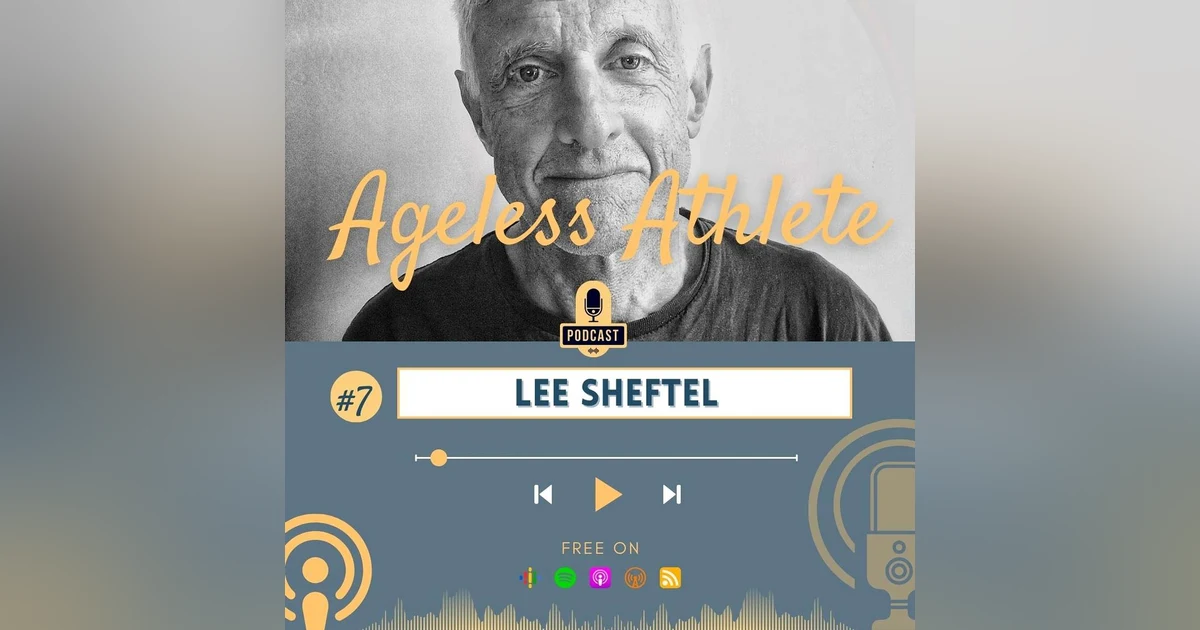


🚀 A dynamo of focus and tenacity – Lee Sheftel is 77 and has been crushing it since forever. At almost 60, achieving 5.14, a 99.9% percentile grade in rock climbing, completing the Grand Teton traverse at 70 – Lee's rewriting the book on aging with power. But here's the kicker – he's not your typical climbing prodigy. Lee spills the beans on his secret training sauce, from biohacking his diet, to experimenting with performance enhancers. Oh, and did I mention he's a piano virtuoso too? 🎹
Join us as we unravel Lee's extraordinary journey and discover:
- 🔄 Lee’s routines and habits that allowed him to keep progressing in his 50s and even his 60s
- ⚡ Continuing to train for power, contrary to accepted wisdom
- 🥗 Different diets (raw vegan, anyone?) and what worked, what didn’t?
- 🏋️♂️ Mobility, exercise, and physical rehab that has helped Lee bounce back from career-ending injuries
- 💊 Controversial enhancing supplements and whether they helped
- 🔍 And finally, radical acceptance - accepting the outcome but continuing the fight
Tune in to be inspired and informed! 🎧
---
🚀 Love the show? Here’s how to support it
If something you’ve heard here has stayed with you, made you smile, or helped you keep going, I’d be honored if you’d consider supporting the show. 👉 https://buymeacoffee.com/agelessathlete
📰 Subscribe to the Ageless Athlete newsletter !
1-2x a month, no spam. We share behind-the-scenes reflections, longevity tips, and athlete wisdom you won’t find anywhere else. You can sign up at https://www.agelessathlete.co/newsletter/ 📩
20:01 - [Ad] Resilience Podcast Series
20:25 - (Cont.) Not Done Yet — Consistency, Curiosity, and Small Wins | Lee Sheftel, 77
1:08 Friends, welcome back to the Ageless Athlete Podcast, where we uncover stories and tease out secrets of badass athletes in a quest to stay ageless. I'm your host, Kush Khandelwal, bringing you the energy from my mission district bunker in San Francisco. Huge shout out to our listeners. You rock. Today, brace yourself for a very special guest. A dynamo of will and tenacity, Lee Sheftal is 77 and has been crushing it since forever. Climbing 514 at 59. Conquering the Grand Teton Traverse at 70. Lee's rewriting the book on aging gracefully.
1:51 But here's the kicker. He's not just a climbing sensation. Lee spills the beans on his secret training sauce. From biohacking his diet to experimenting with performance enhancers. Oh, and did I mention he's a piano virtuoso too? So get ready for a great episode packed with inspiration, perspiration, and a few surprises. Let's roll! And hey, if you're vibing with the energy, share it with a friend who needs a dose of this awesomeness. Hi, Lee. it's a pleasure to connect, quick intros. I am in San Francisco this afternoon. Uh, where are you located?
2:34 Carbondale, Colorado. Excellent. right in, uh, the middle of, fantastic, rock climbing and, and the outdoors, in the Rockies. Would love to kick off with a, quick intro. Where did you grow up? what do you do? How old are you? and what did you have for breakfast today? so I'll start with the breakfast. I typically don't eat breakfast. I eat, well, kind of, I kind of eat a, I guess you could call it a brunch because, I pretty much adhere to intermittent fasting, keep my weight down so I don't eat for at least 15 hours after I eat dinner. So that means that I don't start eating until around, the earliest I'll ever eat is around 10 30 or 11 o'clock in the morning.
3:19 I grew up in Long Island, New York, a town called Roslyn. throughout my teenage years I was into sports, but I had no idea what climbing was or anything about climbing. I was into football, baseball, pretty much every sport that was available at the time. I did like the outdoors. I went to camp for about four years. Where I did a lot of outdoor activities. my profession wasn't always this, but it has been for about 40, let me think, since 1980, so about 45 years, I've been a, uh, a tax tax professional. I do income taxes for a living. Great. Uh, and how old are you?
3:59 Uh, Lee? I am 77 years old right now. Great. Uh, seven, seven years young. Hmm. Thanks for the background, uh, to add to it. Uh, what's your, uh, background with, sports where did you begin? Rock climbing. Let's see. I would say that I be, became very attracted to the outdoors almost immediately after I got out of college. So that would've been back in 1968. And so from 1968 until about 1978, I predominantly hiked, well, hiking. I did some sort of like, uh, scrambling, mountaineering type of stuff, but nothing with ropes or anything like that.
4:44 And I got introduced to rock climbing in around 1978. the reason why I got into it, actually is very interesting because at my time, my, my girlfriend at the time, uh, we were taking a four month trip in my, uh, camper, and Hmm. we were in Boulder. And we decided to climb it. Climb up the flat irons, or actually on the side of the flat irons. And I ended up just me, but not her. I wandered out on, on one of the flat irons, I think it was the first flat iron. I just wandered out on the face. I don't know why I even did. I did that. I just started. Next thing I knew, I was actually in fifth class climbing and I didn't know how climb really.
5:32 And it was probably, I'm guessing about 5, 6, 5 7 climbing, and I was terrified and I thought I was gonna die. if you live in Boulder, that's like a popular, uh, the Flat Irons, I think at least one of the scrambles on it is, uh, often done, uh, free solo style. Like people don't use ropes and it's like a kind of a fun activity these days. I, I noticed some people later that day that were rope climbing. I think they were being guided and I was like, oh, it's interesting. People use ropes. but anyway, after I managed obviously not to die and got off that first flat iron, I decided that that was, I liked the idea of climbing, but I don't wanna ever do that again.
6:15 So I hired a 18-year-old kid that a friend of mine told me about to teach me. can't remember his name, Okay. it's been too long ago. Anyway, he took me out climbing in Santa Barbara and. He taught me how to, you know, how to tie into a rope and how to climb. And I think we did top roping. And at the end of the day, he asked me, so what do I think? I said, I, I don't know where this is, has been all my life. Mm-Hmm, So at that point on, I pursued the sport, fairly religiously. sure, sounds like there was some, uh, fascination, some fear, some intrigue the first time you, uh, you began the sport.
6:59 But I think, uh, soon after, maybe like the rest of us, uh, became an enduring obsession. I guess, uh, 35 odd years later, you're still, climbing. I wanna talk a little bit about your, uh, your history with climbing. And one thing I wanna, point out is, uh, you climbed, you know, the lofty grade of, uh, five 14, I think at the age of, uh, 59 or so. do you think you still might be the, uh, the oldest person to have climbed, uh, this grade And then also to a non climber? Uh, how would you describe, like the five 14 grade?
7:42 Maybe to somebody who understands running or a different sport. Uh, how difficult of a grade is five 14 well, you know, I mean, these days, uh. Uh, five 14 is not that an amma that amazing of a grade because people now for the last 15, 20 years have been just training in gyms and, um, I mean, there were gyms back when I did it when I was 59, but that was 18 years ago, and the training methods were not as sophisticated either, and people weren't starting as young either. So, you know, five 14 is, is a, a hard grade. It's hard for most people for 99.9% of the climbers out there.
8:25 but there's different types. So probably just like there's different type of races for runners, for example, climbing. a particular grade like five 14 or any grade for that matter, can be very power oriented, can be really short. I've tried a number of them. mm-Hmm back in New Mexico, I actually got on five 14 and, um, it was so short and so powerful that there was no way I could do the moves. There wasn't even, I couldn't, I realized that if I was gonna do a five 14 or, or any, anything, or even five thirteens, that they're gonna have to be oriented, which is what my strength has always been. Is endurance climbing, not necessarily power climbing.
9:07 For sure. I understand that. Uh, you also ran quite a bit or were a runner, so to speak. Before, uh, you begun climbing. Did you also run with the same aplomb and then did you, did you continue running? I entered some competitions, but I've never been very good at it. I'm, or very fast. Anyway, so basically. Uh, almost my entire time I was a runner. I did it for, for being fit and recreational and I enjoyed running in the mountains. yeah, but I, didn't really compete that much. Sure.
9:47 going back to, uh, some of the milestones and climbing that you, take some pride and, uh, would love to hear about maybe some things you, uh, that brought you, uh, you know, a sense of accomplishment that also took you, uh, a lot of hard work when I started to really get into climbing, back when I, even when I was in Santa Fe, I. Which has been 25 years since I've been there.
11:08 And I lived in this house there for five years. So starting 30 years ago, I've always had a home wall. I And then when I moved to Carbondale, the first thing I did was build a, a climbing wall in my garage. Especially then, including now, there wasn't any training facilities actually back then. There weren't any. So, um, I had to make my own training facility or I had to go outside and climb. And yes, I put in a lot, a lot of hard training and hard work mm-Hmm. accomplish my goals. And I, you know, I would train specifically to do certain routes in a specific way.
11:49 over the years I have had. a couple of coaches. Having a home facility and indoor climbing wall right in your garage, I would have to concur can be an absolute game changer. One day, I would love to have one. Also. Any other accomplishments that you are proud of? Flea besides obviously sending the, uh, greater five 14. Well, there's a lot of roots and rifle that I found to be quite challenging, actually, probably the hardest, effort that I've ever put into a route. Mostly because I was not very experienced at the grade, at the time. So my first 13 D route.
12:32 mm-Hmm mm-Hmm. at that point I had only done 13 C I've done, at that point, I think I had already climbed maybe two 13 Cs, maybe three, I can't remember. those didn't really take me that long to do. Mm-Hmm. Um. I mean, actually it turns out that in Rifle, some of the 13 Bs, B as in boy, took me longer than the 13 Cs. I've always told that to a lot of people, Hmm. just probably'cause of the Hmm. climbing. But anyway, this first 13 D that I tried in, um, rifle or anywhere is called the Bride of Frankenstein. And it's fairly short.
13:12 It's not super long, but it attracted me because it's, I could do all the moves pretty quickly and the challenge is putting'em all together. And the problem that I had with that route is that I tell everybody that I had zero strategy. I didn't really have a strategy, I just started getting on the route, seeing how well they did. So I'm guessing I probably have the world's record for how many times I could. One, fall the route and still not have done it. So what I was doing is warming up on the exactly the same roots. It didn't matter how I felt. It didn't matter what the weather was like. mm-Hmm.
13:53 it could be really hot. It could be really cold. It didn't make any difference. I did the exact same warmups and I go to the root and I tried it two or three times in a day. well, I wasn't getting anywhere. I just kept one falling the route and not getting anywhere. And finally it dawned on me that I ever wanna send this route, I need to come up with a strategy. So that's what I did. Sure. So what I did was, is I put up a route in my garage that was similar, but not, and I told myself that until I can do this route in my garage, which is pretty hard, it's a hard route. I finally did it and then I said, now I have to do it at least three times with only a five minute rest in between, mm-Hmm mm-Hmm and I will not get back on the real route that I'm trying to do on the BRI mm-Hmm.
14:40 until I accomplish that. So I finally accomplished that and I went back on the route, and the second day I got back on the route I did it. I learned that I need to have a strategy Sure. your replica training, uh, paid off Well, so I also did a similar strategy. I had a different strategy for, I mean, some people think this route is 14 a also in rifle. I mean, a lot of these route in rifle that are rated, I mean, a lot of people think they're probably not somewhere else in the world, 14 a Anyway. But the hardest route I ever did is, isn't rifle, uh, rifle, like known as the land of, uh, 13 Ds. You know that these rods that, that should have been, uh, upgraded to 14 a are are sandbagged and are stuck at that 13 D grade.
15:25 That's 13 d and that's the hardest route I have done in rifle. Yeah, no, I, I can see that, uh, you are a, a strategist and I think with climbing, you know, people are Famously lackadaisical. about their approach. And, uh, people will say, Hey, you know, I'm just gonna get on this route and I will try, try, try it until I send it. But I think, um, I think you are the contrarian, which is, Hey, this is the, uh, this is the amount of time I'm gonna give myself, and I'm gonna prepare myself with all of this training so that when I actually get back on this route, I actually have a reasonable chance of meeting my objective.
16:07 Well, I felt completely different after that, that that training that I did getting more power because this one crux that I had a hard time with before. On the first seven sessions or so, I'd get on that route. I get up to the crux and even on the dog, Mm-Hmm maybe I could do that. Those that move one outta three times, that's not a good because considering that it's probably mid five 13 just to get to that move and there is any really great rest right before it. So I realized that helped my power. But when I got back on the route after training for it, I knew right away I could, I can do this route because it felt completely different.
16:51 Wow. Yeah. Yeah. The before and after effect, pre-training to, uh, to post-training. Uh. That's great. Uh, uh, yeah, that's, that's great summation. I am, uh, I'm curious, uh, Lee, you know, you were, uh, embarking to try these, uh, hard roots and, you know, you have some of these first to your name. Were there naysayers? I'm sure there were, you know, there were probably people who, who thought that, you know, you could not be climbing this hard, or maybe there wasn't actually a precedent of people in their fifties, you know, sending thirties and five fourteens. So wondering if there was something, some kind of like belief you had, uh, some conviction that, uh, you know, I don't care, uh, what other people are saying, or, or if there isn't like a, uh, a precedent here, I believe in myself and I know that I can achieve, uh, some of these, uh.
17:49 Uh, climbing goals even if they haven't been done mean about my age? Yeah. Well, okay, so I was a late starter. I didn't even start climbing until I was 33 years old. So, and I didn't really think about age until I got close to 50. So probably around your age. And I was like, okay, here I am. I'm getting close to 50. I wonder if all of a sudden I'm not gonna be able to climb hard anymore. So those things, those thoughts did occur to me. at the time, I didn't have anybody to look up to that were, that was older than me, that was climbing as hard as I was claiming. But I decided that, well, let's, I don't, I'm not, why don't I just not think about my age?
18:37 Who knows what's possible? Let's see what happens. Well, soon as I turned 50 and into my fifties, I noticed that probably because I didn't start until I was 33. And then I, you know, I hadn't really trained very much. I just climbed. So I was just a, I was not a sport climber until I was about, oh God, let me think.
19:54 That was like the mid eighties. So, Mm-Hmm so I'd only been climbing for about seven years, or eight years when I started mm-Hmm mm-Hmm I was only 40, 41. Before that, I was doing nothing but track climbing. So, you know, I did a lot of trad climbing maybe that what might, might have helped me, in the future for sport climbing is that when I went tra climbing, you know, the, the, the conventional wisdom was that you don't fall all Yeah. especially on bolts, because back then the bolts were not reliable. There were, star drills. There wasn't, you know, there were shitty bolts.
20:36 And so when sport climbing came around. I, that's made sure that it didn't fall. Whenever I was track climbing, I did some big, pretty big track climbs, climbed El Cap, I've then the west face of El Cap. I climbed the rostrum, I climbed Astro Man, did all these long tra climb. I built up a lot of endurance. And then, then when I first started sport climbing, I was afraid to fall even on the, obviously the same bolts. And my a really good friend of mine, used to make fun of me all the time. Used to go, I used to say, well, fell there and go, no, you didn't. You, you not, I've never seen you fall, Lee. You just, you just take, and so I would battle the pump as hard as I could, and I think that helped me build endurance.
21:23 And then finally I got over the, obviously the fear of falling on bolts. And so. Back in the mid eighties and late eighties, that's when I really got into sport climbing'cause it also fit my lifestyle better. 'cause that's when I started my, I started my business. This, this that I have now that I still do Yeah. It required me to be around and I couldn't go traveling all over the place and doing these tra climbs and be, you know, I wanted to build up my, my business. So sport climbing came along and that just fit my lifestyle at that time. Lee, uh, it's funny, uh, you know, you started tra and went to sport.
22:06 I started climbing sport back in the East coast, you know, at the, uh, at the New River Gorge and the Red River Gorge. So when I came to, I love the Red River Gorge. I have been to the Red River Gorge at least 15 times Sure. No, I, I don't think anybody, uh, even the most, uh, you know, died in the world. Track climbers will go to the red and, and not love the red. It's just, uh, it's such a. Such a playground. So I started climbing and when I came to California I was maybe, uh, you know, extremely stoked on sport climbing, and then came to San Francisco and the best kind of climbing was trad. So I was a reluctant, uh, tra climber.
22:46 And I've done like some of the routes that you just mentioned, and I had the opposite problem where I got so used to, uh, you know, falling on bolts that when I got to tra I had a hard time, um, not taking the same approach, which is like I would take falls on, on gear. And as a, as a new learner, I think that sometimes terrified my partners where, uh, instead of hanging on, hanging on gear and, sorry. have any gear pull on you? I have, you know, when I first started, I did have a big fall before I even learned before I, I made some really bad, uh, gumby mistakes before I even learned to place, uh, gear properly. Uh, uh, I did have a, uh, like a kind of, uh, a dramatic accident, which I came out fairly un skated.
23:34 Once that happened, I, I went back to the books and, uh, learned how to basically climb tro in a safe, proper way. And since then, I don't think I really had any, um, any gear come off. Uh, and I think I also became a little bit more careful about not always, uh, you know, whipping, uh, on, on gear. But, uh, I don't think I have ever had, uh, any, uh, significant, uh, gear. But, uh, coming back to, coming back to you, just continuing on the, the climbing trajectory. So you were climbing maybe at your physical best, let's say, uh, upper fifties maybe now, uh, over the last, uh, let's say two decades and leading up to now.
24:16 So today, so to speak, what's your level of, uh, level of climbing and how do you train? Okay, so my level of climbing right now is none. And the reason for that is, is because as a lot of people that I know me, um, about a little over two months ago, I, I needed to have major back surgery. Oh. I am still in the recovery process. It's been, let me see what is, today is the 19th, so I had November 7th I had my surgery. So I'm about almost two and a half months out. I have a follow up in about two and a half weeks. I.
24:56 With Okay. office. And at that point I'm hoping that they'll give me the go ahead to start training again for climbing back on the age thing. To give you a little more of a history is that when I thought I was gonna get weaker at 50 and right at that time period, that's when I moved up here up to Carbondale. Actually a couple of that, I think I was 53 and I noticed that I was getting stronger, not weaker,'cause I started to train more, um, methodically mm-Hmm. and which I had never really done that that much. And so I was training more methodically, training, power, campus boarding, stuff like that.
25:40 And I noticed I was getting stronger and better. So a lot of the, a lot of it also has to do with getting better too. So I think that. Yeah. One thing I, I realized as I got older and then like I told you, I got, I had, I started changing my strategy and I think an advantage of, of older athletes, depending on are, I mean, some people figure this out when they're in 20 years old, but most, most of the time not, is um, you learn more about conserving energy. You learn more about training what works for you, which doesn't work for you. You work on your technique, you work, you, you have more patience on a route mm-Hmm of figuring it out.
26:22 Whereas typically when you're younger, you just, just go for it and you don't necessarily have necessarily a training method or anything. So I think that's an advantage of being older. Older. But at any rate. I can, for, for whatever reason, I got better and stronger in my fifties. And so I, I would say I, I probably peaked at 58, 59, 60. I was climbing my heart out but then sure. at 60 years old or so, I was 2006 and seven, so I guess I was 60. I had both my hips replaced because severe hip arthritis, and so didn't climb very much for quite a while.
27:11 Mm-Hmm I did. They, they were about seven months apart. So the first hip surgery I was, it was climbing season and I obviously, I couldn't climb for a few months. And the second hip. It was ski season, so again, I couldn't ski until months later. But after that hip replacement, I got back at 60. I was at that point, I was 61 or 62. I did a third, I did a couple 13 seas after the hip surgery. So that's the, that's the highest grade I've done after my hip surgeries and I, but I did notice at 65 that I wasn't quite as strong as I used to be.
27:51 I was still able to climb up until, say, see, 65. I was still climbing mid five thirteens, Mm-Hmm. it took me longer to do'em. Sure. when I hit 70, that was seven years ago, I had to have my first back surgery. And after that. Sure. I don't believe, I think I have not broken back into 13, 5, 13 again after 70. So last summer when I was very incapacitated because of my, I had spinal stenosis, severe nerve pain, down my legs. I couldn't even walk anymore. Oh wow. Um, and I got to the point where I couldn't climb anymore, and that's when I decided I needed to have surgery.
28:36 But at that point, even though I was fairly compromised, I was still climbing five 12. So that was my level when I quit. And my plan right now is if I can get back into it again, I'm hoping to be able to climb some five twelves. Again, Sure. I don't know about climbing harder than that, but again, my attitude is anything's possible. So it, I'm not gonna, h is just the number. You know, if you tie yourself to your age, then you know, you're, you're actually defeating yourself. certainly. The other thing, I wanted to mention that I feel like, which is not a, not climbing per se, was I decided for my 70th birthday, I was going, I don't, I think you know who, who inspired me at the time was, um, Alex Honnold and, uh, oh, what's his name?
29:27 I can't think of his name right now. But anyway, Alex and um, and this other guy who's very famous, I just, his name is just escaping me right now. Uh, sport sport climber or track climber or Adam, no. maybe, or Uh, American, Tommy Caldwell. Tommy and, Alex went down to somewhere in South America and did the first traverse of a very serious traverse. Oh, the Fitz, uh, Fitz Traverse in Patagonia, And so that inspired me not to do that. But, Mm and I also had read, um, an article about the Tetons and the Teton Traverse.
30:07 So I decided that for my 70th birthday, my present to myself was gonna be, I was gonna train the year before to be able to do the Teton Traverse. So in August of, well, seven years ago now, I did the Teton Traverse. And I, according to the Rangers, I'm the oldest guy to have done that. Nobody has done my age has, and, and I was, it was harder in a way than I thought it would be. Well, it was very exposed and you can't rope up for some of these pitches. I, we roped up for some of it. I went with this guy that I knew who used to be a guide up there, and we did it together and it was super exciting to be able to do it.
30:50 sure, sure. That's, that's impressive. You did many things right, Lee, obviously, you know, you were. You were embracing, uh, cutting edge training methods. You were quite strategic, you know, you were a planner with your climbing, any things you, think you could have done differently to make, for even better outcomes? Maybe it could be with your training, it could be with your, uh, with your diet perhaps, or, or anything else with your lifestyle that could have yet been improved upon. Over what I've already been doing. Like if you, if you were to go back, uh, let's say 20 years, uh, 25 years, tell your younger self, uh, that, Hey, why don't you start doing A, B, C or stop doing X, Y, Z, what would that have looked like?
31:41 Well, okay. Like I said, I didn't really have much of a strategy up until I was about 53 or 54 years old. I just threw myself at roots. And so, yeah, I, I think what I would do differently now is, is, um, I would've trained more specifically on my wall in my house. I would've probably built a, a campus board for myself. 'cause I think that that's very beneficial as well as hang boards. But, you know, back Mm-hmm. Well, even them when they were around, I didn't necessarily use them very much. Um, I also did some stupid things actually injured myself pretty badly.
32:23 My finger injury from overuse, because I started, this was before hang boards, I used to hang from my fingers on door jambs with weights hanging from me, and my hurting and I thought that that was a good thing. fingers were hurting well. And then I took tons of ibuprofen on a climbing trip that was a two week climbing trip so that I could get through it. And I just figured, well, no big deal. I'll probably be sore after the climbing trip, but I'll probably be fine in a couple weeks. I was very wrong about that. I was very injured. It took me six months for my fingers to heal, and that was quite a while ago. Um, I think there's one rooted rifle that I wished I would've stuck with.
33:08 I know that I it and I gave up on it, and I, I was, I wouldn't say I was close to doing it, but I was doing well, really well on it. But there was, you know, if, there's one thing that always, uh, discouraged me, it was power moves. So if I got shut down on a power move and I couldn't do it, and I couldn't figure it out, and even after I trained for it, I would kind of give up on it. I noticed that there were other people who climb, um, similar to me. Not necessarily their necessarily better or worse or anything. They just stick with it. They just figure it out continue to work on the crux.
33:49 And I remember that you know who Emily Harrington is, right? So she was working on this one ment rifle, and she worked on it for quite a while, and she had worked it out really, really well. But she could never get through the Boulder problem at the bottom, and neither could I. And I had already had given up on the route a few years before and she kept working on it, training for it. She wanted to do the route and she eventually did it. And so that's one thing. Even though I have a lot of patience, I think I should have had more patience when it came to powerful roots Got it. Well, sure, yeah, you were probably still maybe in the 90th percentile when it came to patience and persistence, but, uh, there is always room for, uh, for more for working harder and being, being more, uh, more persistent.
34:43 well, gonna say, so diet wise, I've always been very, um, strict about my diet, so I don't know if I would do anything different. I was about to actually, uh, ask you, uh, to kinda talk about some things, uh, ancillary to the actual climbing that have helped you or hurt you. And I wanted to ask about, uh, your diet, what's worked, what's not worked, and then also if you, uh, uh, if you supplement your diet with, uh, other things. I do and I have. So I have experimented over the years with all different type types of diets, so here's my thing about diet for one thing, one diet does not fit everybody.
35:31 Everybody has different, uh, genetics, different things that work for them and work don't. So the biggest, biggest thing about diet is to figure out what works for you. I've had some people say that if they eat vegan, for example. They just feel low energy all the time. And I don't know whether that's psychological or whether it's genetic or whether it's true, you know, or, or what it is. All I know is for me, at one point I was a strict food vegan four years. Oh wow. Oh wow. That's, yeah, For those of us who dunno, could you describe the, that's the most radical diet I've ever been on is raw food.
36:14 Vegan. For four years I did ate no cooked food, nothing but nuts, seeds, veggies, salads, whatever. And then I, at one point I was just a vegetarian. I didn't want to eat meat. Then I became a pescatarian and ate fish. I then, I married a woman who's very much a meat eater, and then eventually I just started eating meat. And so personal experience with diet is as, as long as you eat well, for me anyway, it doesn't make any difference. I, feel like my energy level is, fine no matter what I eat, as long as I don't eat garbage or overeat.
36:57 So I also eat, I wouldn't say a hundred percent organic, but as much as I can, I eat organic as much as possible. Fruits, veggies, meat. Um, the meat that I eat is, I will not eat inorganic meat. just won't do it. Except on very rare occasions, you know, you go out to dinner somewhere at a restaurant. I just find that, diet wise, I just, I make sure I eat really well. everybody's different again. So like when I'm climbing, for example, some people like to eat a, like a lunch. They like to eat a sandwich Yeah. and eat a big lunch. And, um, people have asked me, well, we you doing all these climbing, don't you feel like you should eat? No, I eat a little bit.
37:38 I'll eat a a ba a bar, or some small bowl of fruit or something like that. But feel like if I eat a big meal or any kind of normal lunch, like a sandwich or something, I can't even climb anymore. I, I can't climb hard. It's, it just bogs me. Yeah. are different, so I don't, I wouldn't say that one. Yeah. No, I think I'm the same way. Uh, I like to graze when I'm climbing and, uh, you know, it's just like you, like, like little snacks to the day. And, uh, I know that, uh, if I bring a packed lunch and even if I tell myself that I'm, I'm, I'm gonna only eat portions at a time, I don't have any self-control.
38:19 So if there is a, if I bring a, you know, like burrito or a sandwich with me, I'm probably gonna scarf, scarf through the whole thing and then, uh, I'll feel like a slug for the next few hours. So I think, uh, I think a lot of us would do well to subscribe by that, uh, hey, you know, eat, healthy breakfast before you go climbing. And then, uh, you know, just eat enough to have to have sufficient, energy outputs through the climbing day. And then one can replenish, Well, one thing I do is pretty much routine that I do is. Like I told you, I don't really eat much in the morning, and eventually when I do eat, I make a smoothie, so, and I put stuff in my smoothie, so we get to the supplementation stuff.
39:08 I put protein powder in my smoothie. Mm-Hmm. Okay. I'm pretty, pretty much convinced that, you know, we need to eat protein. do you take like whey or, or vegan pea protein. I've been on using pea protein for now. A couple years before that I was doing whey protein and I just decided that I like pea protein better. and my smoothies are just fruit, some yogurt. orange juice, frozen blueberries pineapple, that's it. And then I add, uh, some other powders, glutamine for recovery. I don't know how well that stuff works really. So I've done a lot of experimentation with some more serious stuff, and I didn't find that they did anything for me.
39:54 when you say serious stuff, what is some of that stuff Testosterone, Oh, So now the oral, but I've actually, for a brief period of time, I was do, uh, this one, Health Professional was convincing me that I should do injectable testosterone. Why, why do you think they advised, was it like a health condition or performance goals Supposedly according inject yourself to testosterone when you get older, it keeps your, a lot of things going stronger. You libido, whatever. But the only thing that I noticed, which were two bad things and nothing good, the way, I didn't get any stronger.
40:35 I was using it for a couple years. My wife told me that I got angrier, which was not pleasant for her. And the other thing that happened, which is even worse, is that, um, my PSA levels Ah, oh, Hmm. the prostate.specific antigen that stands for. Prostate specific antigen. So your PSA levels, means you, you're supposed to be typically under four level of four. And I went up at one point to a level of nine and, and, the, uh, I had to go to a urologist. And urologist was, was telling me that, um, I can't remember what he told me I needed to do, but at the time I was thinking, well, maybe it's the testosterone.
41:24 So I stopped doing the testosterone and this has already been like a number of years ago and my PSA levels dropped all the way back down to normal. Oh wow. So the testosterone, uh, contributed to the, uh, PSA level rise. Yeah, I also at one point tried some HGH human growth hormone. Oh, Yeah. didn't know that was, uh, isn't that like a band, uh, banned substance Well, it's banned for, uh, for competition athletes, but you get a prescription for it, probably from somebody. Hmm. also some people smuggle it in from South America or whatever.
42:04 I don't know where they get it, but, but they told me that, the amount that I was taking was not strong enough to really do anything. And, um, it's very expensive. So injectable testosterone is not that expensive. HGH is very expensive. So anyway, I tried that. The other thing I've tried that a lot of people use, and again, I don't find that it does anything for me, matter of fact, it has a negative effect, but some people swear by is creatine. okay. And so I tried that and I find it had a negative effect. So a lot of these performance enhancing drugs, I don't find they do much of anything.
42:44 So I just stopped taking, create and, uh, seems to be widely embraced these days. Actually, I take Creatin sometimes. I used to lift, it's been a long time. Then I used to take more creatin and now I take Creatin now, and I do know that I get slightly more, uh, ripped when I take Creatin, but then I stopped taking it and I just, yeah, I think all of that water weight, uh, just kind of drains back down. So I, I, I can't really say if it has performance, uh, with climbing Yeah, see, I, I can't really say any of that stuff that I've taken over the years and helps my performance. The only thing I can say that really helps is when I keep my weight down.
43:25 I've never had much of a weight problem, but I do now because after the screwed up my appetite and I started eating. Like I, I'm not doing it now, but I was just eating all kinds of stuff. That overdoing it. There was good food, but just overdoing it. probably put on about 10 pounds. And anyway, I have found that over the years, that when I lose weight, even, even three or four pounds, I can feel the difference in my climbing. sure. Yeah, that's four pounds less that you have to carry up with you. That makes a difference. Moving on Lee, You know, you have dedicated, you know, the last several decades to climbing and then also training and, uh, fine tuning your performance.
44:10 you also maybe move to a place which allows you to climb very consistently. that kind of dedication, you know, doesn't come without sacrifice. Anything That comes to mind where, uh, you know, you've made sacrifices to allow you to, uh, pursue your goals. I think that about 10 or 15 years ago, and before that, I didn't put my, Energy into, uh, fostering or, growing my personal relationships with some of my relatives, some of my friends, cetera. But then about 10, 15 years ago or so, I changed, I was more interested in, spending more time with family, with friends some other pursuits too.
44:53 Yes, spending time with, uh, family and with close relations can be enormously satisfying. I believe, uh, you are, talented, uh, pianist. I. Is that one of those things that, uh, you've gotten back into? Yeah, I, I, I play a lot of piano. I have a grand piano in my home. I practice religiously. So again, I approach the piano like I do climbing. I'm pretty goal oriented, probably why I, I'm somewhat successful in what I, in the things that I pursue. I just apply myself however way I can. I have a piano instructor So when I try, and again, as usual, people have asked me this.
45:36 I have a piano group of friends that I go, that I hang out with, and one of them recently asked me, like, Lee, why do you always pick these really ridiculously hard pieces? I go, well, I, I guess'cause I'm goal oriented. I mean, I, I, I say, why can't I play like, the professionals I have compromised hands. I've got arthritis in my fingers. I've got, um, a condition, which I'm thinking about right now because of my back surgery. I don't wanna deal with it, but I have, uh, what a condition called dupuytren in my hands, which cause my fingers, one of my fingers to curl in, which is not very good for playing piano, but I work around it.
46:17 sure. yeah, I like the challenge of picking up, playing really hard pieces I got really bad, uh, inside te elbow tendonitis for a while and everybody giving me all these methods for trying to get rid of using rubber bands and using these various, physical therapy type things and nothing really worked. And then I got a grand piano and I noticed after playing for about a month, Mm-Hmm. tendonitis went away. And I like, wait, how did that happen? you think about it, a piano, you're doing antagonistic movements all the time. You're picking up your fingers then you play piano. And I got, was really into it.
46:58 I practiced for an hour to two hours a day, and then I noticed after a month that my old baton just went away. And ever since, never came back. That's crazy. let's say very, very cutting edge. left field, uh, finger rehab exercise. Lee, in the last, uh, several years, has there been any kind of new belief or behavior that has, uh. Or habit that has improved your life? Anything outside of what we've talked about already? I can't say that I've mastered it or anything, but I think I'm learning is the, uh, ideology of acceptance. I have to accept certain things. part of me, of course, as we discussed, is that age is just a number.
47:39 Um, you never know how well you can do if you don't really apply yourself, but sometimes you just have to accept. I have to accept that at this point in my climbing career, for example, I'm never gonna climb a five 14 again. Now, I wouldn't rule it out, but I would say it's, it's ruled out. I have to accept certain things, there's a fine line between acceptance where you are, but it's the same time non-acceptance. I don't know if that makes any sense. No, I get it. It's, it's, uh, it's acceptance, but you are not resigned to it. you will accept the outcome, but you will keep fighting against it. right. But it's, at some point you can't fight to the point where you're gonna hurt yourself either mentally or physically.
48:25 I've been working on that. But also the thing that I'd say that I've done, now that I think about it, Up until, I would say maybe like, you're probably right in the last seven years, eight years, something like that. Maybe 10 I focus more on, on flexibility physical therapy. I mean, I used to just like, don't mean to stretch that much. I, I'm fine no, I'm not fine. flexibility's important. I work with a physical trainer, not just physical therapy, but I have a, a woman here who has a, who's a dear friend of mine and she has an athletic training facility. And over the years I've been working with her. She's a physical trainer. I've realized that, a lot of people that get older realize that they're losing some flexibility or maybe they need to put more energy into their, uh, ability to, bend, to move, to move more efficiently, I am doing that now, like mobility training and all the physio and honestly, uh, It came non-optional, where, simple movements, uh, which one took for granted, you know, even 10 years ago in my mid thirties, early thirties, you know, were not that simple anymore.
49:32 I think all of us should be doing mobility work, and the sooner we do it, the better. And seeking out specialists who actually can, analyze our movements, our anatomy and prescribe, a plan to, uh, work on our weakest links. Badass. never too late to, uh, start mobility. I, I, I keep telling my mom that my mom is, uh, a couple of years shy of you and, uh, I'm like, mom, you know, if you don't do these mobility things now, they're gonna be, limiting your lifestyle very soon. you know, whether it's, climbing goals or it's just simple lifestyle goals, I think mobility and, and, uh, physiotherapy, uh, is so critical to, uh, maintaining a quality of life. we are nearing the end of a time. Just some fun questions.
50:13 what's the best gift that you have received The best gift that you have, you have given I don't know if it's a gift, but I think the best gift I've received is, uh, my spouse, my wife, for many, many years. I felt like I never really met a woman who I really wanted to spend that much time with. I. And when I met her it just clicked. And I think that was a, that's a gift from, from the world. The best gift I've ever given, I think was, at least most people have told me that. my mom is no longer with us, but taking care of my mom when she needed me. I moved her up here with me I built an add-on apartment for her on my house.
50:55 that was my gift to her to live with me. I took care of her for a year and a half. life-changing gift. Are you like a book reader watch, TV or, uh. Things on the, uh, internet, if you read books, uh, curious. Any, any good book that you have read recently or are reading up until about, oh, I don't know, probably 10 years ago or maybe 15, I didn't read hardly any books or anything. I was addicted to doing crossword puzzles and I would read climbing magazine, rocking Ice Magazine, more or less keep up with politics, And then starting at about 15 years ago, I started reading I've been an avid reader ever since. And so I read, read a lot of books.
51:36 Okay. any good book you would recommend, uh, to the listeners? I'm attracted to nonfiction and political books or other that are real. I don't, I don't like fiction particularly, unless it's historical novels or something like that. So one very interesting book that I just read, which is a brand new book pretty much that came out, was a book called Oath and Honor by Liz Cheney. Oh, oh, I heard about that book Yes. Liz Cheney's And she was right there in the insurrection on January 6th. and what she has to say. It was a, it's a remarkable book. So I, if you're into that sort of thing, I would highly recommend that book.
52:20 The other book that I read recently that was, recommended to me, which has nothing to do with politics, and actually it was Michael Kennedy. You know who Michael Kennedy is. I think so. So anyway, Michael lives here. used to own, climbing magazine years ago. Anyway, he lives here he's a good friend of mine. he recommended the book that Katie Brown wrote. Yeah, I didn't read the book, but I remember hearing Katie Brown It talks about her like Christian upbringing and, uh, all those things. the big, thing she talks about is the relationship she had with her mother and climbing and how badly she felt about herself and how conflicted she was during her upbringing, which she felt was very unhealthy.
53:10 And what's interesting about the book is she really, really bears her soul in this book. And she's very, I have met her once and other people that have have met her said the same thing, that she's very shy, she doesn't feel comfortable talking much about a life in public. Yet she felt extremely comfortable talking about herself in depth book. And so I, I read that about a month ago, and that was a very, very interesting book. I think when I first, uh, heard, heard about that book, made a mental note and, uh, thanks for the reminder. yeah, Liz Cheney's book and Katie Brown's book, uh, I mean, Katie Brown. I remember when I first went to the Red, you know, Katie Brown, uh, was famous because, uh, she had done like the youngest, uh, fa of, uh, youngest onsite of a five as a female, or the only on site, which then got downgraded, but I think, yeah, she was the only female to have onsighted at that grade.
54:07 Omaha Beach is the route, actually worked on that route a little bit at the mother, Lord. Okay. Yeah, but the problem was is that the weather was not conducive and I felt like I didn't wanna spend my entire vacation trying to do this one route that was far away from where I lived. but I'm actually astounded that she unsighted that route. Yeah. And Lee, final question. If there was a gigantic billboard where could add any message that you wanted, what would you say on that message for others? Okay. Well this is getting to be a little bit political, if that's okay.
54:49 Go ahead. Go ahead. Say whatever you want. Um, our home is in danger. Home is in Okay. The earth is in danger. It is actually, the earth is not in danger. We're in danger It's a book about why civilizations fail. Okay. It's a, I, I think I might have read that book. It's a, it's a, it's a bit of a heavy It's a long book. that's right. Yeah. I read that a decade ago collapse, I think. Is that the name of the book? I think it's collapse. So it's all about how cultures collapse and why they collapse. the book outlines five reasons and almost all cultures, if you violate like three of those reasons or more you will not prevail.
55:37 However, I would say the message on the billboard would have to be something to the effect of we need to support leaders, we need to support things and changing our lives however we can do. That will accept the science of global climate change. Sure. Lee, it's been a fantastic conversation. I know the weekend is calling. I don't want to keep you, uh, any longer. But, uh, thanks so much for, uh, coming on today. And, uh, you know, you inspire us, you inspire me. appreciate it Thank you. As we wrap up this awe inspiring episode with Lee, I can't predict if he will conquer another 514, but one thing's for sure, he'll keep setting those sky high goals and crafting plans with grit and determination.
56:31 Age or injuries, these are just numbers to Lee. He stays endlessly curious, going climbing with the gusto of a teenager, all while juggling other hobbies that feed his thirst for progress. Reflecting on Lee's journey, I see a mirror image of myself. Beyond the sheer thrill of pushing my limits and climbing, there is a yearning for that elusive state of flow and constant growth. I often don't like to try hard, but when I find that perfect activity and give it my best, the rewards are nothing short of astonishing and deeply satisfying. Huge thanks for tuning in, friends.
57:13 Share the ageless vibes with a buddy. And until our next adventure together, stay ageless, stay adventurous.