She's Training for Her 100th Birthday | Carol Simpson, 82, Rock Climber
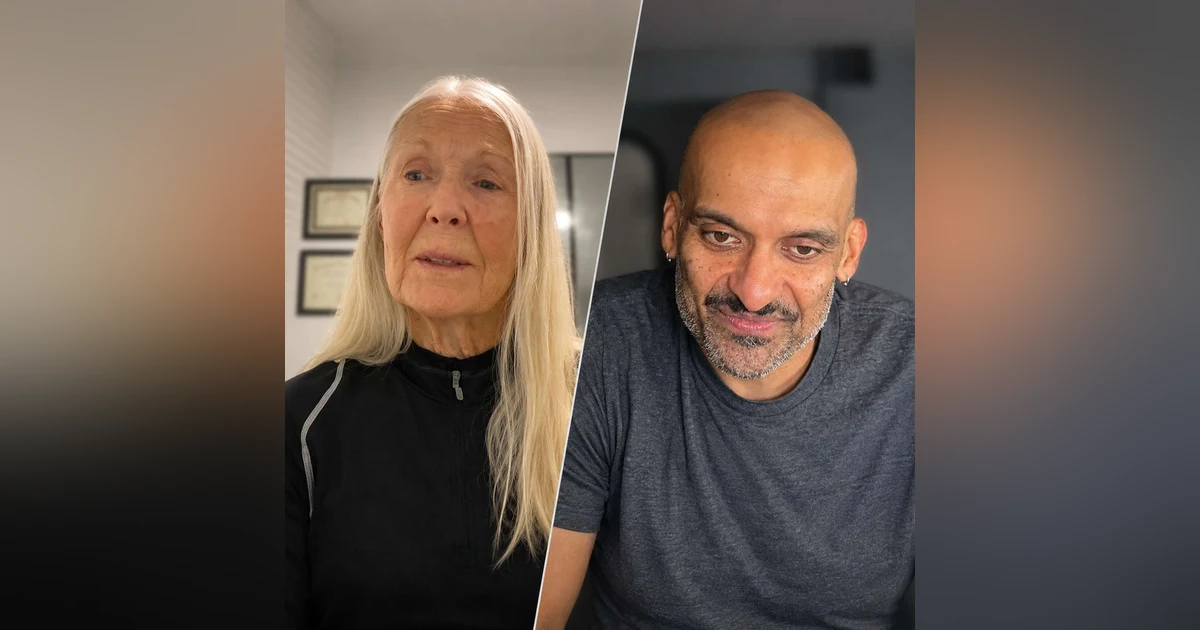


At 82, Carol Simpson is training for her 100th birthday—and she has some unconventional ideas about growing older.
Carol discovered rock climbing at 42, became an accomplished athlete and climbing guide, and has continued pushing her limits despite heart problems, a traumatic brain injury, and years of lost strength.
Today, she's rebuilding her fitness, chasing ambitious goals, and refusing to let age define what's possible.
In this episode, we explore:
- How Carol stays motivated to improve at 82.
- Her daily habits for strength, balance, mobility, and independence.
- What nearly six decades of yoga have taught her.
- How she recovered from serious health setbacks.
- Why she advises against 55+ communities
- What her relationship with a partner 20 years younger has taught her about companionship.
- And why she enjoys her beer a day habit without guilt!
A conversation about resilience, reinvention, and keeping your world—and your ambitions—alive as you grow older.
Marek Health: Deeper look at your health with comprehensive bloodwork and personalized guidance. 10% off with code AGELESS at https://agelessathlete.short.gy/marek
Support The Show Love the show? Here’s how to support it https://buymeacoffee.com/agelessathlete
Through Their StrideThrough Their Stride is a Texas-born running podcast sharing inspiring stories from...
Listen on: Apple Podcasts Spotify
📖 The Ageless Athlete Newsletter: Practical lessons from experts, habits worth stealing, and my own reflections on staying strong at 48. Subscribe free.
📺 Full video episodes on Youtube for free
📸 Ageless Athlete on Instagram
Ageless Athlete is a podcast about healthy aging for people who want to stay strong, active and capable for life. Conversations explore strength, endurance, mobility, recovery, VO2 max, muscle and bone health, and what it takes to keep doing the things you love as you get older
24:01 - [Ad] Through Their Stride
24:40 - (Cont.)
Ageless Athlete - Carol Simpson
===
k: [00:00:00] Carol, for those of us who don't know you yet-
c: Yeah
k: how would you describe yourself these days?
c: these days I've been very tired, but it's only because I've started on a new program with a physical therapist climber trainer who's, the dream. uh, he just appeared in my life, and he's the perfect person, and he's put me on this really awesome program, but it's hard work.
And so, yeah, every, every night I go to bed really tired except on my rest days, which today is a rest day, and thank goodness for those. So yeah, I'm just working hard. I want to continue to improve my climbing. that might sound funny for someone your age or even younger, but why not, [00:01:00] right? I'm retired.
What else have I got to do besides improve my life, my health, my fun, all the things in life that we enjoy.
k: Carol, so you have a trainer-
c: Yeah ...
k: to help you with your climbing. Most people listening, they would think that somebody in their 80s would get a physical therapist. It would be for dealing with, uh- Injuries
dealing with injuries or dealing with being able to continue executing normal daily functions. And here you are- Yes ... here you are, you have a trainer to help you with climbing.
c: Right.
k: That's awesome.
c: And I am a trainer. I'm a certified personal trainer, but that doesn't mean I'm the best one for me, right?
I think doctors go to doctors. They don't diagnose themselves, so it's really helpful. And it, it doesn't really cost that [00:02:00] much money. I mean, people think it's really, really expensive, but it's like insur- life insurance or insurance. How much is your health worth, right? And I'm m- more than willing to spend my money on my health rather than new clothes and new stuff.
k: Carol, hosting this podcast makes me a little bit, uh, rude sometimes. Can I ask you your age?
c: Oh, that's not rude, and it, it shouldn't be. I'm 82. I turned 82 last Thursday, November 14th. I think that's correct. Wow. But
k: yeah, I'm- Happy, happy birthday.
c: Thank
k: you. 80, 82 years young.
Can I ask you, can I ask you what are your climbing goals that you have this trainer for?
c: Well, there's a lot of backstory here because I've been through a lot of, health issues, [00:03:00] and I am actually... This is sort of like my comeback now. So my goals are right now, and I don't- my short-term goals are to comfortably climb to lead 5.10, 5.11 outside. In the gym, of course. But, that's my goals right now, and I'm, I'm getting there.
I've made progress. eventually, I'd like to lead twel- 5.12 again.
k: Amazing.
c: You know, it's all about numbers. No, it's not really, but the numbers are a metric. That's all they are. And, you know, when I led 5.12, I was a lot stronger than I am now, but I'm a lot mentally stronger now than I was then.
So I've got a shot.
k: Yeah. One of the reasons I am so excited to have you on the show is that many of us in our 40s [00:04:00] and 50s, we wonder how many good athletic years we have left, and then I come across somebody like you, who is in her 80s and is still actively training- Yes ... and s- and pursuing goals, which would honestly put you in the very top range- Right
for rock climbers. And- Yes ... across- and not for your age, but across the spectrum. Let me ask you this. Do you remember what you imagined being 80 would feel like when you were 40?
c: No. I just, where are my role models, right? I mean, it was my mom and dad, my grandparents, they were sedentary. They, uh, getting all kinds of issue at your age, you know, they were dealing with chronic health issues and I just, it [00:05:00] was just, um, motivational to me to not wanna be there.
I guess I never really... I don't know how you feel about this, but I just never really felt like, that I couldn't do something. You know what I mean? It's like it's not that I don't feel- that I feel like I can do this, it's that I don't feel like I can't, if that makes any sense at all.
k: Sure. Sure.
c: It just really doesn't enter my mind.
k: Sure. You know, I would love to, dive a little deeper into your-
c: Oh, go
k: for it ... training, into your training- Ah, yeah ... because I think there is much that we can learn. So, firstly, how did you come up with these goals for climbing that you have?
c: Well, I didn't sit down and think about it. They're just part of me, you know?
Just part of me.
k: Okay. So then what did you feel was lacking or what were things you could not [00:06:00] do by yourself that made you realize that you wanted to work with a trainer? Have you always had trainers for climbing or is this a new thing?
c: Never, and the funny thing is I started climbing in 1987, and there weren't any...
Well, there may have been climbing gyms, but I didn't know about any. I wouldn't- we never trained. We just climbed, We just did not have the gyms and all that. So we climbed, and we had fun, and we got fit without knowing it because we were having so much fun, and that's what I like to do. I like to really...
I mean, I d- the, the thing about physical therapy, it's so tedious, and it drives me nuts because I get bored with it. But with- Right ... uh, lifting weights and that sort of thing, that doesn't bore me. I don't know really why, but because it is repetitive, except that I try to lift heavier and fewer reps.
[00:07:00] Heavier and fewer reps. That's the latest that all of the gurus are saying, all of the influencers are talking about, and it's true. heavy reps sh- short number of reps, heavy weights.
k: Okay, so I can see that there are a couple of parts to your training. One might be- Yes ... your climbing specific training, right?
Yeah. And then you also have this, we can call it cross-training. We can call it general body conditioning. I would love to understand firstly,
Were there some things that you asked him to help you with?
c: Having climbed for going on 40 years,
I was having so many problems trying to figure out how to work out because I can't do the things that I used to do. I used to run, I used to ski, I used [00:08:00] to, to... I mean, I did so many things.
But as you get older, you just have to forget about those things and key in on the one, the few things that you're good at, that you love, that you enjoy. For me, it's climbing and yoga. And I don't know which one is first, but they're both... If I can just climb and practice yoga the rest of my life, I'll be happy.
I don't need to ski, I don't need to ride my bike 100 miles and all the stuff, you know, that I used to do. Uh, I don't need it anymore. I just want the things I love, the things that produce dopamine in your brain.
k: This is fascinating. Carol, when did you start feeling that you were losing the ability to do these things?
c: It doesn't happen... I mean, it happens so slowly. It's like, uh, it's like [00:09:00] life. I mean, everything happens so slowly that you can't really put a, a number on it or how long ago it was. for me, actually, though, it was, I was going crazy and doing all kinds of stuff, and then I got slammed with a, a diagnosis of AFib, which is genetic.
I re- I inherited it from my father. I had a gene testing, which they're doing now, and that's exactly what caused the AFib. Even though my lifestyle was pretty ideal, I still got it, and we still get stuff. But the thing is, you take what you get, and you work with it as best you can. What else can you do is...
You know?
k: Sure. when did you get that diagnosis?
c: It was in 2000 and... Well-
k: Okay
c: And that set me [00:10:00] back 'cause I kept having to have ablations they're called, which they cauterize your blood vessels, like your, your heart actually, your atria- your right atrium. And,it's a little bit... It'll knock you on your heels a little bit.
but I just, I went right back to yoga. I didn't go right back to climbing, but yoga I could do. So again, you do what you can do, you know? And I tell my siblings, if, if, really being good at getting up out of your chair is all you can do, just do it, you know? Do it and get really good at it. And then at the point where...
It reaches a point where it's not hard anymore. And, uh, going back to the original question you asked about, about, when did I start asking for help, was because as you age, you don't have the energy resources [00:11:00] that you had when you were young. So if I worked out in the gym, the next day I couldn't climb.
You could probably do that. You can work out in the gym, climb the next day, and go running the next day. I don't know. I could when I was your age, but I can't do that anymore. So I was trying to figure out how to get my strength training, how to get my climbing. the yoga's no problem because you can do that with everything.
It's just amazing. But how to do everything and be able to do everything with enough rest.
k: I'm 48 now, and I used to be able to work out heavy- Me too ... and then climb the next day, and then- work out heavy again and maybe climb the same day. Yeah. And I find that I'm not able to do that at 48.
So- [00:12:00]
c: Right ...
k: I am... Yeah, no, I, I think I don't have... Yeah, I don't have, uh, the accumulated wisdom that you have, but I have started noticing the things. Just starting your wisdom, yeah. I've started noticing those things, and part of the reason why I started the show is to learn from people like you. So, so okay, so 2012, I think, you got the AFib, diagnosis.
Diagnosis,
c: yeah.
k: And I wanna ask about that, but before that, so until 69,
let's say, were you still able to do these things to your level of ambition?
describe, your lifestyle
c: Before?
k: In that decade, yes.
c: Yes. I was a rock climbing guide. I started a, actually the first female-owned guide service in the US up in Oregon at Smith Rock, and I was [00:13:00] guiding well into my 60s. I went to a Bikram yoga teacher training, which is nine weeks of torture. It was like boot camp, and I was 64 when I was in that training.
I was the oldest person there, of course. I'm kinda used to that now. And, there were- How
k: much, how much, uh, younger... what was the difference between you and the next
c: person? I think there were some guys who were in their 70s, but there weren't any women. Oh, there may have been some. There may have been one little Japanese woman who was a little pistol, but, yeah, very few, and most of them were in their 20s, maybe early 30s, but they were young.
And, the room w- it was two 90-minute classes, and I don't know if you've ever had a Bikram class, but-
k: No, I was just gonna say, uh, Carol, I had a season of Bikram in my life.
c: Oh, good.
k: Yeah, I... This was again, uh, I [00:14:00] think early 2010s.
c: Uh-huh.
k: And the only thing I would say is that... Okay, so I think, yes, the more I did Bikram, maybe by the 10th or 12th session, it got a little bit less torturous.
c: Yes.
k: But it was still very difficult.
c: Very hard.
k: And one reason I remember I stopped it is because it would leave me so drained It would leave me too tired to go climbing, and yet you're telling me that you were doing, what, two sessions every day.
c: 90-minute sessions, and when Bikram taught, it was two hours.
But The thing is, you had two 90-minute classes a day, plus posture clinic, plus lectures, plus, anatomy quizzes, and it was just boot camp, is the only way you can describe it. And I ne- in the room, you think you're being tortured?
The teacher training, they just [00:15:00] torture you intentionally to see what you're made of. They bring you down to your core, your base. And for some people it's not pretty. But people, young 20-something muscular guys were being carried out of the room because it was 130 degrees in there. And it was in Acapulco, so the humidity w- a- and during the rainy season, the humidity was hideous.
But I didn't ever leave that room, ever. And, that t- that for me was just,I didn't know what was ahead in my future, but it just kept me going. It just kept me doing what I was doing, 'cause I was guiding. A- and guiding is hard work. Don't let anybody fool you, 'cause you're carrying all the gear and you're hiking down in and you're dealing with people belaying you who just learned how to belay, and all those things.
[00:16:00] yeah, and I did that into my, well into my 60s. So- You know, and but I can't regret the fact that I got the AFib because it just is. It's reality. So I just, like I said, I took what I had and I tried my best to work with it.
Yeah.
k: I think you were this, total athlete in your 60s.
You are, like, doing intense yoga, you're guiding with- you're c- you're absolutely correct. being a climber is one level of, one level of adventure, activity, and fitness, but then I think being a climbing guide is, like- That's
c: another level ...
k: it's like a, yeah. It's like a whole different level. So you do that in your 60s.
What changed? Like, when did you find out there was maybe something happening to you and you sought out medical opinion, and you found this thing, this ir- I- irregularity?
c: Yeah. Well, I I was at a [00:17:00] Bikram Yoga seminar in Dallas, and, my heart started palpitating and pounding and it was really scary, and my friend and roommate drove me to the ER and that's when they told me, "You have AFib."
So that, it all sort of came to a screeching halt at that point.
k: Wow. And okay, so what is AFib?
c: It's a- it stands for atrial fibrillation, and a- the atria are t- the atria and the ventricles, there's the right atrium and the left atrium, the left ventricle, right ventricle. they all work in concert with each other, of course, but in AFib, your atrium starts just going randomly.
It starts kind of shaking, you know. It's not a regular beat. So it throws everything off. [00:18:00] And, um, I had a bunch of,ablations, and those, like I explained to you, and those seemed to help somewhat. Um, but I really, to me, my health- And I think it's, it- I don't know. Is it innate? are we...
Do I get, did I get that gene, you know, where I, I wanna work out, I wanna do all this stuff? Is that a gene? I don't know, Right. But I know I was a... Like I told Steven on The Nugget, I was a tom- they used to call us tomboys when I was a kid. I had a big brother. I used to like to play baseball and football and all the fun stuff, and built tree houses, uh, you know.
And, uh, as I heard, the woman, the, uh, Ironman woman, Cheri... Is that her name? Sh- is that how you say it? Cheri Good- Cheri ...
k: Cheri Goodfellow.
c: yeah. She said exactly the [00:19:00] truth, and it's so good to hear some- another woman say that she was there before Title IX.
When I was in high school, girls were not encouraged to play sports, and the only ones that did were the really big, unpopular girls , which i- is not good when you're a, just a regular girl and you want somebody to look up to. But, you know, it just wasn't done, and it's hard for women today to, to realize that, to picture that, because they're doing everything, and sometimes, the women climbers are getting up there.
I don't know if they're as good as the men yet, but some are better at... Like Hazel Findlay, I bet you can climb slabs better than any guy. I love seeing it. I love seeing it. Uh, I'm getting off. I'm digressing, but when I was guiding, I started women's groups before they were doing women's groups.
Now everybody's doing them. But they're amazing, because [00:20:00] women are women climb differently than men, and you see it in the gym. If you work out in a gym, and I'm sure you do, i- the women will... are sit- And John always laughs at this, because the women talk a lot. They will do a 5.12c, and then they'll sit and talk for 10 or 15 minutes.
And men don't do that. Men go from one to the next, and it's just different. And wom- women, uh, uh, climb differently, totally differently. And, there's no, bullying kind of thing. It's more nurturing.
k: Yeah.
c: Like, "Oh, you can do this. you got this." You know, that sort of thing. And I loved it.
I just loved seeing women-
k: No, I agree, and I feel that, uh, only in the last few years have I started really appreciating- The skills that I can borrow, [00:21:00] steal all of that from my- That's a lot ... climbing partners.
c: Yes.
k: Yeah. this could be a whole other conversation on like- Yeah,
c: I
k: know. It could
how the sexes can learn from each other and how, honestly, to be honest, like how men can learn so much from women because... But anyway, so I wanna- Yeah ... okay, so I just wanna, I, we can go in a couple of directions. So I wanna stick with the,the, the AFib and the more presence. So you got this diagnosis and I'm sure you were probably a little shocked, a little upset because, you know, you are this pretty naturally fit athlete in their 60s, right?
You have this, yeah, this super great lifestyle and you got this
what, what happened after that? Were you asked to change your lifestyle? Was there, was there a medical intervention? What was the aftermath?
c: of course it was a shock. but I believe that my lifestyle [00:22:00] prior to the diagnosis allowed me to handle it. and that's what my doctor told me.
I went to a doctor in, um, at Stanford, and he was brilliant. And he said, "It's a good thing you had the lifestyle that you did, because this could have really set you back, if not ended you," you know? So that was further encouragement to keep doing what I do and, yeah, it-
k: Did they ask you to... That is great.
Did they ask you to change anything, limit anything? Because, uh, because can you actually cure yourself of AFib, or can you only manage it?
c: you, they, that's a, that's an interesting question, because you can... I haven't had it in years. It went away. I haven't had it in years. But, I still have to take an anticoagulant [00:23:00] to keep my blood from clotting, because they say, and maybe they, they'll change that at some point in the future, but now they say you have to keep taking the anticoagulant, which is, it's just a pill, Yeah. I don't care. People are always, I'm such and such years old and I don't take any pills." good for you, but hey, I take pills and I'm still really healthy, so I'm not apologizing for that.
k: Sounds, sounds like, sounds like, you know, the level of activity that honestly some people might call extreme, right?
Yeah. But that, that type of fitness, activity, and if I may say resilience- Yeah ... helped you meet this unexpected medical diagnosis. And I think there's a lesson right there,
like, somebody who's listening in their 40s and 50s, what might be the lesson for them?
c: Get off the couch. I mean, when I first started climbing, I was 42, and everybody was so excited to tell me [00:24:00] how I'm s- too old to climb, you know? And it was... It angered me because I felt like if I'm doing it, I'm not too old to do it, right?
I mean, if I was too old to do it, I wouldn't be able to do it. And I have heard that ever since I first started climbing, for the last 40 years, and I'm sick and tired of it. And now if somebody says something like that, I'll come right back and challenge them, because people don't have to get old. I... When I was running the guide service, I would answer the phone to book guidings, and these people would say, "Well, I wanna book a guiding for my kids.
we're t- we're in our 40s. We're too old for that." But it, you know, and I was in my 50s answering the phone and laughing- ... internally because it's pathetic. You know, it's an excuse to just be lazy and sit around and watch TV, [00:25:00] you know? But you can't. The quality of your life depends on what you put into it.
And if you're gonna just give up and think you're too old when you're in your 40s, what if you live to be 90? That's 50 years. Think about it that way. Everybody talks about, how long you live. What if you live to be 102 but you are completely unable to walk or feed yourself or when you're 70? That's how many years of that? And so the idea is that lifespan here, the health span should be as close to the lifespan as possible so that if there has to be any downtime in your life, it's as short as you can possibly make it.
k: Carol, I am just visualizing that scene at your guiding office. You have- Oh, yeah ... you have people [00:26:00] younger than you who are sending their kids because they- Yeah ... themselves feel that they can't take up this activity. I have this, uh, theory and I- slightly different question for you, which is that, you know, you and I both, right?
I also discovered rock climbing- in my 20s, and I was not an athletic kid growing up. Yeah. But I think it's given me this, you know, just like you, given me this passion, this joy, this... And it's given me honestly a reason to continue to s- stay fit, to do all the things. Yes.
c: Yes.
k: So do you think that if you had not discovered rock climbing, or yoga for that matter, which is also I think in some ways maybe similar, it is...
Do you think you would have pursued your passion for fitness with the same kind of rigor?
c: I think I would have, no matter what it was, because that's what I [00:27:00] did. When I started, when I discovered athletic activity in my late 20s, I started playing tennis, that's when I got the bug, and... But I'm not the kind of person who can do anything halfway.
I have to do whole heart, all in. And when I was running, I was running miles and miles and miles, and running in races. And, and then when I was cycling, I was doing centuries, which are 100 meter bike rides, 100 mile bike rides. And touring like down the coast of Florida, we rode from St. Augustine to Key West.
That, that's the kind of passion I put into stuff. And when I got to climbing, I mean, but everything else dropped by the wayside.
k: Right. Right.
c: I was an avid skier as well, so.
k: I
Okay. So if you were to, yeah, go back in time, right?
c: To-
k: You grew up in the South in the, in the [00:28:00] 1950s, and you got married at 19.
c: That's
k: right. And became a mom.
c: I did
k: what my- What did you- ... dad wanted
c: me to do
k: What did you imagine the rest of your life would look like at that point?
c: I don't know. I was a, what they call now a tradwife. I didn't know I was a tradwife, but that's what I was, because I did everything, uh, around the house.
And I, you know, it's interesting. I'll have to put some thought into that for my own personal peace of mind, because I really don't- I don't know. sometimes when you're really young, you don't ever think you're gonna not be young. I don't know. I'm not the kind... My daughter's that way. She has her whole life planned and has since she was two.
She- Wow ... she wanted, she wanted to grow up, go [00:29:00] to college, graduate, get married, get a dog, and then have kids, and that's exactly what she did. So I was- Kath,
k: for sure, like- ...
c: definitely
k: a planner ... y- your daughter inherited some of your, uh, some of your, uh, your life planning or maybe just your goal-orientedness.
Okay, so you then went back to school in your 30s-
c: Yes ...
k: and you- With two kids
c: as a single
k: mom ... two kids. Wow. Wow. What were those days like?
c: They were hell and they were heaven. I mean, I, that's the only way I can describe it, that it's very hard. I was struggling to try to get a decent career where I could make some money and, and I remember when I first, got my first apartment, uh, and I couldn't get a car loan unless I got my dad to sign on it, but that was 1974, and that's the way it was.[00:30:00]
And I tell my young friends that today, and they don't believe it. I mean, they, they have trouble believing it, but it's the truth.
k: those sound, this, this sound like years of a lot of hard work.
c: Yes. Okay.
k: Well- And, uh, hard work and struggle, and then you started exploring different athletic pursuits, which you spoke of- Yes ... a few minutes ago.
And then you discovered- Yeah ... climbing at 42. Yeah, quite, a period of discovery for you.
c: It was amazing. I was on a ski, chairlift at a ski slope with a friend, and I didn't know, but he was a climber. And when he said he was a rock climber, I remember thinking, "What the hell is that?" Because I didn't know what a rock climber was.
I'd never heard of people climbing rocks, ever, at 42. Isn't that incredible?
k: But th- And, and again, this is, like, 40 years ago, before- Yeah ... [00:31:00] people, before cli- climbing media invaded the mainstream, right?
c: Before the climbing crags got so crowded. And that's another thing, but that's another story. But, yeah, I, I- he told me about it.
I said, "Oh, I, I would like to try that." so I did. I met him out there with his friend, and they were really young. They were just kids. And I, I was really scared. He went and put a top rope up on a 5.9, and, he climbed it. he put the thing up. He climbed it, then his friend started up it and was really not cut out for it, so he backed off.
And then of course, that added to my anxiety. I was nervous enough as it was. And so I got on the climb, and it remarkably, I kept going up, and I was surprising myself. And I was shaking all over, and got to the [00:32:00] top, and that's when it happened, as I said on... Yeah. That's when it happened, when I said, "This is what I wanna do."
And there's so many reasons why, and I think the number one reason is because I felt powerful, and I have never felt powerful before that in my life.
k: Wow. Wow.
c: And this is what I mean by that feeling of power. Uh, it, it, you know, you did something really hard and really strenuous and challenging, but you did it.
And growing up, you know, a shy kid in the '50s in the Deep South, I had no self-esteem. You know, just none. And, boy, that's when it, I started getting my self-esteem, you know? Because I, I was like, oh my gosh, this is... I never knew that it was possible. And that's why I love to talk to young, specifically women, only [00:33:00] because I am one, about it, because I've seen that happen over the years.
I've seen women come in and be all scared, and nobody ever led, and I was the only one that led. and by the end of our little trips that we did, they were all leading. But they would- Wow ... they would defer to the guys. It would, uh, be always, do you wanna lead this, honey?" "No, you go ahead." like that.
But now, John and I at one point were fighting over who gets to lead, the climb. So we Roshambo.
k: Sure. What did climbing give you, Carol, that you hadn't found elsewhere in your life?
c: Number one, the feeling of power. number two, just self-esteem. a sense of accomplishment. really realizing that I can do it [00:34:00] Which these days doesn't sound quite as much as it was then, because then Trust me, women were not doing it.
Because we would go to the New and the Red. I lived in DC when I met John, and we would go to the New River Gorge and-
k: Yep, yep ...
c: as and the Red River Gorge. Well, not the Red, 'cause it was developed later, but, we'd go to Seneca. And that's really where I learned to climb, at Seneca, and boy- Sure ... I learned to-
k: Proper old school.
Yes ...
c: And I would go, and I would do things that the guys couldn't do. Wow. And that just didn't happen then. It didn't happen then. It happens now. But I climbed, I led, uh, Crack of Dawn, which is only a 10, but at Seneca, a 10 is serious business.
And I was the o- only woman that I knew, or knew of, that had climbed it. Uh, and [00:35:00] that enforces, just reinforces your sense of, self-esteem, of self-confidence.
k: You were likely, I'm guessing, one of the few or maybe the only person at the, at the crag on most days.
c: Yes. Oh, yes
k: And so you were one of the only people at the crag, and you were the person who was leading often
c: That's what I was going to say, the caveat.
I was leading. I was the only person, woman leading at the c- at the crag. There were lots of guys who had their girlfriends following them up stuff, But, the leading was... And I didn't, I was so... I don't know whether I blame it on just, ignorance is bliss, but I, being with an e- John's an engineer, and he analyzes bolts as he goes up and anchors.
I never look at them, because it doesn't mean [00:36:00] anything to me. I'm right brain. I'm an artist. I don't think that way. So I was just leading everything without any worry or, or it, it was just natural for me
k: to lead. Sure. Sure. I mean, I can sense just by talking to you that climbing came naturally to you.
c: Yes.
k: And then climbing and you poured yourself into it, and then, climbing also opened, opened its doors, let you in.
c: Yes.
k: uh, just as a fun aside, I would love to go, uh, I... So I've been climbing for over 20 years, but I feel like you got to experience a, a very different era of the sport.
c: Yes.
k: If I were to go back in time and join you on a climbing trip in, let's say, 1989- Right ... what would that experience have been like?
c: Um, well, I [00:37:00] don't know. Uh, hopefully my passion would be infectious and you would catch it. But, that was the year, '89 was the year I went to Italy and climbed over in the Dolomites and at Arco. I can't even count on both fingers how many women I saw on that whole trip,leading.
Well, leading, maybe less than one hand. But, And there were... I mean, Lynn Hill was there, Bobby Bensman. W- they were, but they're in their 60s now. Yeah. And you know what? They're climbing 13s.
k: That's right.
c: And think about your generation. You're in a younger generation than that. Think about, I mean, you could be climbing in your 90s just, working up 5.13Cs.
k: Yeah. That is certainly the, uh, the aspiration. Besides the gender dynamic, which- It's huge ... I can only imagine [00:38:00] how-
c: It's huge ...
k: how overwhelming, let's start over.
Say, h- how, how large of a factor that was. What other parts of that era, Cal, stand out, which people of this generation may not realize?
c: Well, I've mentioned a few, like the, get married when you're 19 and have two kids by the time you're 22, which was,the acceptable thing to do for a nice young woman in the South.
And, um- okay.
k: Here goes Maybe from the climbing perspective. Maybe from, like, the climbing era. Like, were there things about climbing trips back then, or about just the, the general environment that was-
c: Well- ...
k: very different? Yeah.
c: It's good and bad, like everything, yin and yang, you know? And the, uh, the bad stuff, I'll get [00:39:00] that over with first, is hanging out with a bunch of guys.
It can be traumatizing. not every guy, but I mean, I hung out with the cool guys, and they were just... The- I was one of the guys, so they didn't hold back, and they talked about, I don't even wanna get into it, but women. They talked about women in a derogatory way, in a sexuality way, and not as human beings or...
It's, that's so different now than it was then, especially after Me Too. And, y- you know, I don't think they do that anymore. I don't know. But I hope not. but that was a negative thing, but the positives were being one of the guys was kinda cool in a way, you know? Just to be, feel accepted by those, those strong, hard-climbing guys.
And, [00:40:00] just once again, we'll go back to that word power. I felt powerful. Women have their center of gravity in their hips, as you know. Maybe. I don't know if you know. But-
k: Sure ...
c: men, men are in their shoulders. So we're better at- slab climbing. We're better at things that is a lower center of gravity, mantling.
And I remember specifically one day I was with a group of guys, there were maybe eight of them and me, and they all went up and they backed off of the climb at the mantle. And I got up there, and I just went up that mantle because it was easy, and it just felt great. You know, it felt really good to be, to do something that none of them could do.
And I was an old lady according to them, because I was in my, uh, late 40s. I was your age.
k: Carol, uh, one other thing I was thinking of is [00:41:00] that, uh, you know, I'm in my 40s now, and my family accepts and understands the fact that I climb.
c: Right.
k: But again, you were doing it, one, before climbing entered the popular media.
c: Right.
k: And sorry, but you're also a female.
c: Yes, I'm not sorry.
k: Did, did your... did your family, your siblings, what did they think of this-
c: That I was- ... part of your life? ... crazy That's all. There's nobody in my family that ever even dreamed about that sport, and then I started doing it, and, I, I d- I kind of like to follow my own heart.
That's very trite, but my heart said, "This is great stuff. I love it." And I made sure to learn everything I could learn about it so that I could be safe, because that's the dreadful part, and I've seen over the last [00:42:00] 40 years too many really bad things happen, and it's generally because people are new a- and people don't understand, or these days it's people come from the gym to the outside, and there's a whole lot of difference that they don't understand.
And I just made sure that I, that I learned whatever I could about it and understood, what it... Yes, it's a risk, but it's a- an educated risk because you know to trust the systems and rely upon them. yeah, I became, uh, the queen of cracks, as John used to call me, because I was killer on cracks. And the reason I like cracks, um, once again I'm digressing, but I do that.
But I would- I love cracks because you can put your gear in where you want it.
k: Yeah.
c: And if a 6'1" guy puts up a route, it's not gonna happen. But if I'm in [00:43:00] a crack, I can put that thing right where I want it, and then I feel safe.
k: Carol, I believe you climbed your first 5.12 in your 50s. 50- And, uh-
c: 53. Yeah.
k: 53.
Amazing. And-
That great is still only achieved by at the very top of the sport.
c:
k: I think what people should remember listening is that it's not that you are just climbing, right? Again, unfortunately, the, you know, the, expectation of people for others in their, in your age group and beyond is that they are still looking after themselves.
That itself is Oh ... some kind of like, accomplishment, right? But you are, you are not just looking after yourself, you are rock climbing. And you are climbing today and aspiring to a grade that people in their 20s and 30s and 40s are trying to [00:44:00] do, right? And, yeah, your excitement for the sport and your motivation is so palpable.
c: Oh, good.
k: Where does this motivation come from?
c: Passion I did it. I fell in love with it. It took over my life. I stopped doing the workouts that I used to do. I stopped skiing. I was an avid skier, and I was a pretty good skier, but I never did it. And I, I just dropped everything. I... My whole life, I started a guide service.
So from then on, I mean, that was my life. Climbing has been my life. I consider it still to be my life. a- and I don't see any reason not to-
k: Okay, let's say, I'm just so fascinated. Let's say for whatever reason, God forbid, that you could not climb anymore. [00:45:00] God forbid. Would you still be this motivated to keep pushing yourself?
c: Yoga.
k: Okay. Got it. Fair
c: enough. I've got a backup plan. I'm not
k: gonna, I'm not gonna try to take both things away . That would be
c: too cruel. That's my bla- backup plan. Because I have, uh, role models, yoga role models in their 80s, 90s, but I don't, I don't have climbing role models. I ju- I don't have any.
If anybody's out there listening to this, and you're in your 80s and still climbing a- at a, at least an intermediate level, I wanna hear from you, please.
k: Sure. No, if, if you're listening, yeah, please get in touch with us. Carol, what... The thing is like, as I get older, there are days sometimes when I have to negotiate with myself to do- Yes
20 minutes of mobility work.
c: Yes.
k: And then I'm hearing about all the things that you do- Are there [00:46:00] days when you don't feel like doing any of it?
c: Oh my gosh, yes. Today is my rest day. I'm not doing anything today. I'm sitting
k: here talking to you. Okay, but that is a planned rest day. That's a, because you probably pushed yourself yesterday.
c: Oh my gosh, yes. I could barely move. but yeah, I, there are days when I wake up and I just don't feel like doing anything. I mean, that's a human thing. And so you just do so- you at least go for a walk. you can... I have in, before been like that and I just walked. We live on three levels and our townhouse is three floors, and I'll just walk around the house, up and down the stairs, just walk.
You know, just to move, because the human body is designed to move, as I'm sure you've heard a thousand times. But what I have that you... No, what I didn't have that you have, what works for me now is exactly what I'm doing right now with you, [00:47:00] talking about this You know, putting into words these feelings.
Ageless Athlete, I mean, that's a brilliant name for this podcast because it, uh, it, uh, is so appealing for anybody
k: Carol, you mentioned yesterday was like a, a training day. Uh-huh. The type of day where today you have to recover from. Can you describe yesterday for us, right from when you start, you woke up in the morning, what did that day... What was the day all about?
c: Well, the problem was, and he's trying to acclimate me to be able to work out and then climb, consecutively, con- consecutive days.
And, but I worked out the day before yesterday, and that means I did all the... I did RDLs and kettlebell squats- Yeah,
k: I would love to zoom in a little bit. What was that program? What was [00:48:00] that workout like? So RDLs, w- what exercises were you doing?
c: Body balls, kettlebell squats.
k: Okay. Okay.
c: And planks and all the... Ugh, I don't know the names of these climbs, of these workouts, because they are not the same as they were when I was a trainer. But where you're up in a, like, a bridge pose. Do you know what that is? Bridge.
k: Yes. Yes, yes. Okay.
c: And then you lift your leg slowly, each leg.
I mean, it's that kind of thing to where it's just, it's working muscles that I really haven't worked before. I And also, oh, the StairMaster. oh my gosh. Have you worked out on a StairMaster?
k: It's hard. Yeah.
c: It's so hard. Yes. The first time I did it, he told me to do three minutes, and oh, sweetie, I was dying. But yeah, I did that, and then the next, uh, day, Monday, we went to [00:49:00] climb, and I did my treadmill workout, and then I went to climb, and I climbed- So
k: hang on. So before the climbing session, you did a workout on the treadmill?
c: The day... Well- I, that's my warm up. That's what he asked me
k: to do Oh, the warm- okay, got it. Yeah. So you warmed up on the treadmill. Got it.
c: The, the day I did the workout- Yes ... and then the next day I did the climbing, he just says, "Do the treadmill and then afterwards do the StairMaster, and in between climb."
He's not specifically telling me what to climb, but I climbed a 5.7 and I was pumped senseless. And I couldn't, I just didn't feel like doing anything else. And I actually texted him and asked him, if that's normal and what should I do about it. Should I keep pushing or should I just leave it alone?
And that's what I did. I ended up just leaving it, and I'll do better next time,
k: [00:50:00] Got it. So yes, you probably had one of those days that afflicts all of us sometimes where- Yes ... you're just-
c: Yeah, high gravity
k: day ... powered down.
c: yes. High gravity.
k: Yes.
c: No pedals.
k: yes,
c: But yeah- And- ... that, that happened this week
k: okay. Okay, I heard about three days. You- Yeah ... lifted weights, worked out one day. S- next day you warmed up, you climbed. Today is your rest day. And if we were to zoom out, what would a typical cycle be like? Like, in, in a week, for example, would you
c: be- Monday we- Monday, climb.
Tuesday, rest. Wednesday, climb. Three days a week, Monday, Wednesday, Friday. So Wednesday climb, Thursday weights. Friday climb, and that's hard, 'cause that's three days in a row-
k: Yes ...
c: and then rest. That's what he's got me on right now.
k: Okay. Okay
c: And I, I don't feel like I'm succeeding, but he's cheering me on.
He's like, "Come on, you got this. Keep going. [00:51:00] It- it's like this for everybody in the beginning."
k: Are there any specific weaknesses that you're working on, either in the weight room or in climbing?
c: Well, yeah, my strength, 'cause that's what I lost when I had... you haven't heard the whole sorted story with the health stuff, because I lost, uh, I was given a sleep medication to help me go to sleep, and it affected me really poorly.
I got up in the middle of the night to go to the bathroom, and on the way back I started getting w- wheezy and spinning, and I s- and I felt like I had to throw up, and I just fainted. So I hit, I fell on the floor on my occipital bone and, had a concussion and a tra- a traumatic brain injury, TBI.
k: Oh, my goodness.
c: Yeah. So I'm just [00:52:00] saying that you might have health issues, and you probably will, 'cause we all do, but don't let that stop you
k: And sorry, when did that happen again? The fall
c: and- It was '18.
k: Okay. So,
c: okay. So I'd already been sidelined with the AFib. I was just- Oh, wow ... kinda starting to get ready to start training again, and then I got that, and boom, it was over.
And to this day, I still have consequences of that, because there's nothing to, that's nothing to sneeze at. So I developed sarcopenia, which is a loss of muscle mass, because I wasn't active anymore. I mean, I was just not doing anything, and I- I couldn't. yeah, uh, and John is the most incredible person, and he...
Because we lived in Lone Pine, California at the time. Do you know where that is? Yeah, because you lived-
k: pretty well, yeah, I've been- [00:53:00]
c: Yeah ...
k: near Beachside.
c: Near Beach- I spent a
k: lot on Beachside, yeah. Yeah.
c: And I ha- I hated Lone Pine so much. It was so ghetto, and I just wasn't used to it, and I'm a big city person.
And, and, I was there for seven years, and I consider that my downtime.
k: Wow.
c: but he said he did a lot of research online and came up with Salt Lake, because the front, I could throw a stone and hit the parking lot of the front, which is one of the biggest climbing gyms in the country.
k: Yes.
c: And he- Oh,
k: so you- you moved, you moved right by the climbing gym to make it very convenient to be able to- That's
c: John's idea. He gets all credit for that, 'cause he wanted- Yeah ... 'cause he knows me after- Yeah ... all these years together, and he knew that that would spark me somehow [00:54:00] to get off my butt and get working again, and it did.
And that was all it took to get me... So I'm still not anywhere near I- where I was before all that happened, but I'm not giving up. I'm- I'm getting stronger.
k: So what sounds like, sounds like that period in Lone Pine, there was the f- physical setback.
c: Yes.
k: Right? But sounds like there was also a difficult period mentally.
c: Yes.
k: Because you were- Big time ... you were severely hurt, and you were, quote-unquote, "stuck in a place" where perhaps you did not have the kind of, um- Social stimulation, the community.
c:
k: it must have been a difficult period because-
c: Very much
k: you get so much from exercise and from being with people, and then this shift happened.
c: [00:55:00] I wasn't getting my fuel that I needed.
k: So what, Was there any other catalyst that helped you get back on this road now? Because sounds like, on one l- you know, from A4 to the injury, like that's maybe hitting like rock bottom, right?
And now you're again trying to climb 512, like this is this... So what was the catalyst that-
c: I would say it was 512. Yes. That's a really good question because it sparked this memory.
I had access to good medical care, and I started working in Long Pine. I never-- After I had that concussion, never did nobody do-- I went to a neurologist, and he gave me a 20-minute, touch your nose kind of test. Close your eyes and touch your nose. Have you ever seen that? Anyway, it's a
k: 20- Yeah.
Yeah. Yeah.
c: He told me that just not to have any more concussions because it would probably be fatal [00:56:00] That's what he told me. Oh, wow. So I got to Salt Lake. I went to Intermountain, which is a huge hospital system here, and I was set up with a therapist for the, a brain therapist. They, they're called speech therapists, but they work with your brain.
And, I got set up with a balance therapist, and I had awesome care, and that was to me... I, if I s- was still in Lone Pine, I'd still, I would just be doing nothing, you know, or whatever I could do. There was e- not even a yoga studio there, So I opened one myself. I started my own yoga studio, and it's still going today, which I'm really happy about.
and that was distracting. It put my mind on something else, So it's like, I read something about, uh, this woman who does the [00:57:00] crosswords in The New York Times. She doesn't anymore, but she used to. that she said she does crosswords because when she's doing crosswords, she can't think of her troubles.
And it's the same when I had my yoga studio, I couldn't think of my troubles. I had a job to do. I had to open that studio and do all that stuff that's required. So y- you know, finding, I guess finding something like that is important to people.
k: I heard an expression somewhere, s- a long time ago, I was in Ireland, and I heard this expression that sometimes you have to c- create your luck.
And Gal, I, I feel like you exemplify that. Like, you are... I mean, you, you wanted a distraction, and you went ahead and started a yoga studio. I, I, I just find that a little-
c: Well, I only did because I wanted, I wanted yoga.
k: Yeah. Yeah.
c: No, I mean- It was- I mean- But, yeah, I, [00:58:00] I think I'm a, I'm a proactive person.
not just sitting back waiting for somebody to come and help you. you wanna get stronger, get a trainer. You wanna do yoga, open a studio. to me, it's just natural. And maybe just thinking more that way '
What I wanted to point out was your number one way to avoid Alzheimer's is to be the architect of your brain The captain of your ship. The, you're in control here ' cause it's your life, right?
k: Yeah, you're not the victim, right?
c: You're not the victim. You're the perpetrator, which in some cases is good.
But that's what he was saying. And number two in his list of important things to avoid Alzheimer's, exercise. And he explained, uh, how that works with the brain and it's a chemical biological reaction.
k: You've been doing [00:59:00] yoga for...
c: Since 1968.
k: Okay, so like going on six decades. How has your yoga practice changed over time?
c: Oh, you're so good at this. Okay. The reason I am doing what I do right now is because I practiced yoga. Number one, I am completely in touch with my body. If something's off, I just know it. You know? I, I, I just do. And here's another story. What
k: would be an example of something being off?
c: Okay, this is a perfect story here.
It's another medical thing. I, this summer... no, back up. In 2017, I started noticing, that I seemed to be more tired and more... There was something off, something really off. And, yeah, I had the other stuff, but this was different. This was, it was just a [01:00:00] feeling. How can you describe a feeling? And it was just bad.
So I went to the doctor in Vegas and, she put me on all kinds of stuff to see if she could figure out what it was. And I was reading and I ran across an article, from a woman who said that she had hyperparathyroidism, and then she pointed out a website on it. So I went on the website, and there were 20 symptoms of hyperparathyroidism, and I had 16 of them.
The one, the doctor told me that I was fine and to go home and quit worrying and stressing. And then I went back to her and I said, "Wait, something's bad, something's wrong." She sent me to a, a, a specialist, and the specialist said, "You're fine. There's nothing wrong with your parathyroid." You know, that's a [01:01:00] gland behind the thyroid which consists of four different little glands.
And so I went home, and I was still not happy, and John and I did some research. We found the top hospital in the country for, endocrine stuff is the Mayo Clinic. So we flew from Lone Pine to the Mayo Clinic, and that's where I got my diagnosis. Wow. The doctor diagnosed me with a blood test. He said, "You've got hyperparathyroidism.
You need surgery." So I went down to Santa Monica, got surgery, and it reoccurred this, right before we went to Europe, and I knew it reoccurred because I knew what it was. It's that mind-body connection that you have when you practice mind-body connection, right? You get good at it.
k: Wow.
c: And, so I had another surgery in July of this year.
and [01:02:00] this time I went to the experts. They're in Tampa, Florida. If you ever have parathyroid issues, Tampa, Florida, West Tampa Hospital, they are incredible, and they got rid of it, and it will not come back, and... But you have to be proactive. You have to make a pest of yourself, and I've gotten really good at that, although I don't make many friends of doctors doing that.
but yeah, just believe your body when it's telling you something because it, it speaks to you with pain and with uncomfortable feelings. That's how the body speaks to you. You have to learn to listen.
k: Yeah. That's remarkable, honestly. I mean, you're blowing my mind a bit because these decades of doing yoga have taught you to scan and listen to your body.
c: Yes. Yes.
k: And I have two things to ask you here. So- People who don't do yoga, [01:03:00] right?
c: Well,
k: you can do- We have, we have to give allowance to those people who don't have a yoga practice. If you don't do yoga, any other ways you can think of, Carol, that people can learn to scan? Because you're right, it is difficult to manage one's health conditions when one gets older because there are different things happening sometimes.
c: Yes.
k: And, and our health, health system is sadly really difficult to negotiate. You have to become an advocate for yourself, like you have. So any tips for people on how they can learn to scan their bodies?
c: m- meditation is number one, and anybody can meditate. And that's something, I'd like to mention is when I went to that therapist for, uh, I'll call her a brain therapist, she said that...
And she was 30. She said, "I do something every day that I want you to start doing. I call them brain breaks." She [01:04:00] schedules them in her schedule on her computer: brain break, five minutes. Because the more sensory overload you get, the more brain break you're g- brain breaks you're gonna need. And it's sit down somewhere quiet where there's no other people.
You can sit there, you can listen to a meditation or they're on the app Calm or, uh, there's a couple- Yes ... that have meditation. I like to listen to them. Uh, Sam Harris does some really great meditations on his, his site. And, Five minutes, That's all you need. And it's like a, it's like brushing your teeth,
it's cleansing. So that, or even, I even believe that things like Tai Chi and, and any movement things, I think that you, you're establishing a, a, a brain connect, brain, mind-body connection there. so yeah, I highly recommend any of those things.
but I have to mention [01:05:00] the other important things are not just strength.
c: You, I don't care how many pull-ups you can do, if you don't have agility, mobility, flexibility, you're hosed. Because that's when you start looking like an old person. When you walk, your joints get stiffer and the, the, the, they're not fluid anymore, and they're not easy. And you know, people, I see people younger than me walking, and it's, looks like a chore, And they're not even on walkers, they just can't be upright. So-
k: And you think that's a combination of, do you think that's just agility, mobility, or is that a combination of both, like muscle loss and poor eating habits?
c: Well, yeah, it's all big, big picture. But, um- But I just look for the little things that you can do to keep the big picture looking better.
k: Yeah. the other thing I wanted to ask you is that you've had this lifelong practice [01:06:00] of yoga and even though, let's say you were a late starter with climbing, you have been active and you've made up for that like many times over. But there are people listening who are, again, in their 60s and 70s, right?
And they have not had a yoga practice. They- Right ... may not have a support.
c: They haven't practiced it. Yeah.
k: So I, and you know, it's, it can be, it can feel very daunting to begin that. Of
c: course. Of course.
k: Right?
c: Of
k: course. Especially, especially let's say you have these niggles, you know? It could be, it could be bigger injuries or, ailments or it could be small things.
Of course. Any advice for those people if they, again, for example, if they wanna pick up yoga, but they can't... You know, they have some condition and they can't do simple things.
c: Chair yoga. Can they do chair yoga? Okay.
k: Okay. They, they
c: have yoga... I actually was talk- I haven't met him, but I was talking to a woman who owns a studio, [01:07:00] and she said her husband is a paraplegic, but he does yoga every day.
So if he can't ... He doesn't have the use of his legs, but he has the use of his upper body. Whatever you've got left, that's what you've gotta use.
k: So- So are there resources you can point to? Yes. I mean, you know, there's so much noise and they're just ... I'm sure you Google, you can just find too many things there.
Are there some resources that you think can be more helpful towards starting their practice?
c: Yes. I absolutely believe, and there's a lot of people... I would say go to a yoga class, but a lot of people don't like to do that 'cause they, they think they're no good and everybody'd be judging them, which is so silly because nobody's judging them.
Um, or they shouldn't be. They should be looking at themselves and what they're doing. But, YouTube is an amazing resource for yoga. There's a woman, a young woman named Adrian, and she, everybody loves [01:08:00] her. I mean, she's got a wonderful personality, and she always has her dog there with her when she's working, when she's doing her yoga.
And she's very basic and very g- and there, there's just an enormous number of people out there doing yoga classes right now on YouTube. And they're telling you that you don't have a teacher- Telling you specifically what you need to do, but she's still throwing out cues that you can understand. but I do, every night I've been doing, a yin yoga class because that's so helpful to help you sleep.
It's also, yin is, uh... Have you heard of yin yoga?
k: Yeah. I remember, uh, going to yin yoga a couple of times. And again, b- let's say, back in my, back in the early years, earlier years- ... where I j- I just remember getting a little, uh, uh, what's the word? Like a little, impatient because [01:09:00] I had to hold those poses.
And then I only realized, wow, those poses were so hard. When you have to hold them for like several minutes, it is so painful.
c: It is. I think all yoga poses are painful when you first start, but after a while they get, like everything, they get less painful. Like I'm hoping with my workouts they'll get less painful.
k: What you do is you use props.
c: Ah. And I know Bikram does ... Bik- Bikram is against props, but I don't care. Iyengar is a prop guy, and he was the gold ... His is the gold standard of yoga. I'm sorry.
k: yeah.
c: But he uses props in, like a bolster or blocks or things like that to help you get into the posture, and then eventually you won't need them.
But just, uh, your original question about what can I do, I never worked out, I've never done anything and I'm in my 60s or [01:10:00] 70s. You can do whatever you can do. If it means walking around your house, start there. Start, as I said earlier, start getting up out of the chair. Start learning to stand up from the floor.
Because people in Asia, and I've spent time in Asia, and they don't have issues like we do because we sit in chairs all the time. They squat or sit on the floor, and people in their 90s get right up from the floor. Here, half the people can't get up off the floor. It, it-
k: Good segue. Good segue. so you, again, like I can see you are a fierce advocate for independence, for maintaining one's independence, maintaining- Yeah
that level of mobility. what are some specific movements that you practice because you don't want to lose that ability to keep [01:11:00] doing them?
c: Um, specific? Uh, well, I do, I do so many. That's why-
k: So I like maybe... Okay, so let's say exploring balance, getting off the floor. what are some of those things that you feel are sacrosanct? So
c: I do, I do the balance every day, and the Bikram balance postures are part of... They're just a part of me.
I mean, if... I'll just go in and do the bal- uh, the, do the standing postures and not do any other, because the balance, once you lose that balance, my God. I've been working on my balance ever since 2018, and I'm still not where I wanna be. But I'm doing... I can stand on one leg for a minute because I do that every night.
You know, the whole thing about the two, two-minute toothbrush. You do extended- You do
k: that?
c: Yes.
k: Okay. Yeah. I do that. Any, any other such things that you [01:12:00] do as part of your daily, uh, cycle? So what are the two-minute toothbrush and what else do you do?
c: Oh, the daily cycle? Well,
well, when you bend over to pick something up, don't bend over and pick something up. Squat and pick it up. That's just a little thing. But the legs are the first things to go muscular-wise. The legs go, and when they go, they are hard to get back. Those are the biggest muscles you've got. That brings up the DEXA body thing, DEXA fit, DEXA body, DEXA scan.
I do those every six months, and I have, since 2025, I've gained three pounds of muscle. And- Wow ... at 82, but it's not impossible. It's highly possible. I can tell you. I'll show you my DEXA, DEXA scan. But, and I've lost fat, but I don't really need to lose fat, but it just happens when you're gaining muscle. [01:13:00] But the muscles, those are your, that's your metabolism.
I mean, that is you. Once those are gone, it's just too late. There, there is a woman, you need to interview her. Her name, I wrote it down 'cause it's hard. Fi- Fiatrone. Dr. Fiatrone. She's a gerontologist in Australia, and I listened to a podcast of hers. Boy, did that get me going. She's working with people in their 80s and 90s in nursing homes.
So she goes in, and the first thing she said that they found out was two-thirds of them are malnourished First of all-
k: Wow ...
c: because they don't feed them. It's, they're malnourished.
k: Oh, wow.
c: So the first thing you do is get them to eat properly. And then she was doing blind, a [01:14:00] double-blind, placebo test, whatever the official word is, and the ones that were on the placebo lost muscle mass.
The ones that were doing the workout program with weights, they were gaining muscle mass, even in their 90s. So that shouldn't be remarkable. It should be just the acceptable, the, the norm. That's what I always say to people, "I should be the norm. I'm not an exception. I should be the norm." Just like Sharice- Yes, yes
did the, the norm. And that just tells you that it's possible, right? I mean-
k: Yes ...
c: and I'm- yes, yes ... kind of waiting for, I have a friend who's nine- 90 next year, and she lives in Lone Pine. I love her to death. She helped me get through that Lone Pine era. But sh- I taught her to climb when she was 84.
k: Wow.
And
c: she was leading sixes and sevens No, she's now 90. She's still [01:15:00] climbing.
k: She started climbing at 84?
c: 84.
k: I mean, maybe even more than her physical prowess, I have to... Yeah, I just have to bow my head to her, her mentality.
c: Yes. And that's what... I- it's not pull-ups you need. You're strong. I can tell by looking at you.
It's the mental work. That's 90%, if not more than 90% of it is I can. You know, remember when Obama said, "Yes, we can"?
k: yes.
c: yeah, I, I just think I'm on the cusp of a wave, a big tsunami of, fit, healthy people in their later years. Yeah. What we used to call the, what, the declining years. They can be the inclining years.
k: I love it. you know, you have learnt all these things over the years. Yeah. You have incorporated them. I'm just curious, like, if you were to go back in time to, let's say, the Carol of, [01:16:00] uh, 50.
c: 15?
k: Right. Five, zero.
c: Oh, 50. 50,
k: yeah. Yeah. So, like, three decades ago, Three things. that, what would you want Carol of 50 One is stop doing. Second, start doing.
Thirdly Keep doing, as is
c: Oh. Okay. Start doing this first or stop doing?
Either one. Start, stop or... Okay. I would say never take Trazodone, 'cause that's what caused my concussion, that drug.
k: Oh.
c: That's what caused me to faint.
k: Okay. So
c: never take Trazodone, Carol. And, um, as far as things that I need to stop doing, oh, I think I used to ta- tip a few too many beers.
k: Oh, really? You don't seem like that kind of person, but I believe you.
c: My [01:17:00] dear, I was a wine drinker, very sophisticated, until I started climbing.
I had never drank beer in my life till I started climbing, and now I love beer. But I, I drank oftentimes too much, and I learned that lesson, The beauty- If I list the advantages of getting older, one is you can't drink as much. I can- I drink one beer, and that's all. I can't, I don't want any more
k: Like, one beer a night?
One beer per meal?
c: That is my thing. I drink one beer every day. Oh, wow. I told the doc- I told the doctor that. He's like, "Well, I'm not gonna tell people to do that." But it satisfies me, And I love beer, so it, it does both things. I- it gives me that little relaxed feeling that I get with beer. It tastes good.
Um, but then it doesn't really affect me [01:18:00] because it's not enough. So it's just less, those little things that you can maybe just do a little bit, like-
k: Okay ...
c: we have a chocolate every night, you know, and that's our splurge. We have a chocolate.
k: I have to really admire and honestly advocate your path because I think that people spend too much time listening to those wellne- wellness influencers who tell them to stop doing-
c: Oh.
k: Completely stop doing, like all these little things that give us some sensual pleasure. you know- Mm-hmm ... the, the chocolate, the sweets, the beer. The beer. But so people that, people may, may stop doing those things, but they don't do all these other things that you are educating us about, which is- Right
which is the hard work at the gym, which is the, goal setting, which is all these trips that you go on. So you can't just stop indulging [01:19:00] yourself. That's not gonna give us, uh-
c: I
k: think
c: I don't, I don't believe you should stop indulging yourself if you enjoy it, but learn to control it.
k: yes, yes.
Cal, we are a little bit over time. Are you able to go on for a little bit longer?
c: Do you- We are. Yeah, I could. It's my rest day. I'm having fun.
k: Okay, okay. Okay, great, great. I promise to not keep you for too long, but this time- Oh, I understand ... this has been such a treat. so One last question is you talked about a couple of things that you would, either stop doing or, or maybe do in moderation. What is maybe one thing you would double down on that you were doing back when you were 50?
c: That I would do more? Or do-
k: Yeah. Yeah
c: Boy, um, I was so young then.
I thought I was old. That's the first thing. You're not old. You're 47. Do you realize how young that is? And that's what I say to people in the over 50 yoga group, "Get into the other class unless [01:20:00] you've got a disability, because just because you're over 50 doesn't mean you can't do the yoga." So yeah, I just,that's one remark that I would have.
k: Okay. Yeah. Okay. Let's see, uh, still there's so many things I want to ask you, and we don't have enough time.
c: That's okay.
k: Carol, so, okay, just a little bit of a segue here. And I want to ask you about your personal life for a moment.
c: Okay.
k: And, you know, you have been with your partner, John, who's come up in the conversation a couple of times, and I find it interesting that, So I believe John is almost 20 years- That I'm so much
c: older?
k: Yeah, that you... And I, I think I find it interesting that when a man's partner is 20 years younger- It's nothing, right? ... we barely bat, we barely bat an eyelid. But that reverse still seems to be somewhat [01:21:00] unusual.
c: It is. And guess why? Because it's a patriarchy, my dear.
And-
k: So let me ask you this. Okay, so how much does that, is, does any of that age difference register in your day to day?
c: No, because he's an old 61. Because he's very conservative and very... He's, like I said, he's an engineer, so he's very practical and both feet on the ground and, and I'm just, ugh, I don't know what I...
I'm just sort of flying through life, and he is just more precise about things. And I've learned so much. Okay, that's something I do not want to overlook, is the importance of having young friends. And that is, I cannot emphasize that enough. Do not move to a place that's 55 and older, because we live in a [01:22:00] place where there's babies, and there's young people, there's climbers, there's older people, there's...
And I learn from younger people as they learn from me. And that's, 'cause, you know, back in the day, families just used to stay together, so you had all the generations, they were all there in the village, right? And now we're all spread out. But I just love my 20-something friends, and I got a lot of them, and 30-something, you know, 40-something, whatever.
It doesn't matter. As long as you... I mean, we're all, most of us here are climbers, Most, all of my young friends are climbers. I don't have any young friends that aren't. And they look up to me because they say, "Oh, I can still climb when I'm in my 80s. Yay." And I look up to them because of all their...
Y- you got a sampling of my digital prowess, and I learn things like that from [01:23:00] them. a- and other things, you know, just how, what life is like today when you have a baby and, 'Cause I've got this new little baby in my life, and he's 15 months old. His name is Wolfgang. And I just, i- it just makes me so happy to be around him and his mom and dad.
And we socialize, you know. We go to dinner together and it's the way it ought to be
k: I think what I'm hearing from you loud and clear is that, perhaps we should not Think about moving to that older age community
c: Yes. Think about not doing that.
k: Okay. And, uh, Carol, I'm, I'm curious. okay, so, uh, last thing I wanna ask you is, about your relationship.
c: Oh, yeah. Back to John. Um,
k: what is the secret? What is the secret to this beautiful- Oh,
c: the fact that he's younger and not my age, because guys my age They're still in the old patriarchy. I mean, it's still a patriarchy, but they're still [01:24:00] in the old mindset, or at least the ones I've met. And most of them are, like, they're tired, they don't wanna do this, and they, you know, it's just, I don't wanna be dragged down by somebody.
John inspires me. He's got massive energy, and he's... W- when I'm down and feeling like not doing anything, he's the one that gets me up.
k: And- And I mean, I would say that e- even John seems special, because honestly, to keep up with you- Well, he's awesome ... you know, I, it wouldn't, I, I don't think most 60-year-olds can keep up with you, Carol, if I can say that.
Like, you would need somebody-
c: I, I agree, But he can, because he's been with me for 30 some odd years, going on 40 years, actually. uh, yeah, he keeps me young, and he's very proud of me. He doesn't care about... He hates... I- don't get me started on this, but I will say one thing, is that the [01:25:00] way women wear gobs of makeup and get their faces done and my face is not done.
I've got wrinkles. I'm proud of every one of these wrinkles. I've earned them, and I, this is what 82 looks like, and it feels great to me. It feels great. So if you wanna know what it's like to be 82-
k: Yeah ...
c: it feels great, but you gotta work at it. You gotta work at it.
k: Yeah. Carol, last part of the conversation- that I like to call the ageless section.
c: Ah.
k: At 82 today, what do you still dream of doing?
c: Climbing Mount Everest. No. I actually, at 81, I believe it was, I had not, I had been,not able, I was able, but, uh, my mind kept me from traveling, 'cause I thought I couldn't take it with the jet lag and all that stuff, and I was really dubious [01:26:00] about traveling.
Finally, I just, this last year, 2024, I decided I was just gonna travel. I don't know what it is, but my mind was, "I'm gonna travel because I can do it." And I started traveling. We've been to Mexico. Since then, we've been to Mexico and to- Germany and to Greece and to the Netherlands and to the new and to the red, and I've been traveling a bit.
k: Wow.
c: And awesome. I love traveling. Jet lag sucks. I hate it. And someday I'll figure out how to get rid of that, but let me know if you have any tricks.
k: Yeah. No, yeah, travel is incredible, you know, at any- Time ... decade of life. Any decade of life.
c: Yeah, it's- and you wanna be able to travel when you're in your 80s.
Yes. Yes.
k: Yes.
c: You do. The simplest stuff in your- Yes, yes ... and you wanna be able- Yes ... to put your [01:27:00] luggage in the overhead bin without help. That's another goal that I had. That I wanna do. there's things that you wanna do. I'm training for my 100th birthday.
k: Ah. What do you want to do for your 100th birthday?
c: I want to have friends around, young and old. I want to celebrate my life. I want to feel... I mean, I, I don't think I'm gonna feel as good as I do now, but who knows? Who knows? I haven't been there yet, right? yeah, I wanna be like these people you see, they are interviewed, who are on the, in the blue zone, who, you know those people, who eat-
k: Do you want to be rock climbing on your hu- You know, like some of us rock climbers, it's fun to plan a trip to coincide with a birthday.
Do you think you-
c: My friend Tom, who is gonna be, he, he's 36, [01:28:00] does this, where he does 36 boulder problems on his birthdays, yeah, et cetera. And I said, "Well, wait till you get to be my age, you get to do 82 of them." But I bet he will be able to, I really do. Um, I don't know what I'll do when I'm 100 but I, I know that I'll be doing what I wanna do.
k: Yes. yes. And then Cal, what do you think society gets wrong about aging?
c: Oh, everything. Everything, Kush, everything. It kills me. First of all, when people...
c: stop putting limits on people that are your limits. They're not their limits, they're your limits. I make my own limits, and I try not to have any.
But people walk around and they say, "Well, you're too old for that. You're too... You're still doing that at your age?" People say that to [01:29:00] me. It's rude, first of all. Uh, yes I am. but it's, yeah, it's, everything. okay, women are not allowed to age. You're all distinguished and you're in your late 40s so you, you look distinguished, right?
' Cause you're a dude. But women, they just, they start looking, thinking they look old. That's when they start getting Botox and face lifts, and that shouldn't be a thing. I mean, uh, the thing about, I like about being 82 is I am in the percentile of climbers in my age group. And that feels good, right?
k: Carol, last question, which is- Yes ... what does the term ageless mean to you personally?
c: Ageless. Well, that's how I feel. it means not [01:30:00] putting limits on yourself, ' cause you do it yourself. You're the one, you're the architect. You design the building. Don't put limits on yourself. Don't... I mean, I can't say that I won't climb when I'm 100. I can't say that, 'cause that's a limit And what you, comes out of your mouth goes into your brain.
And if you say, "I'm too old," your brain takes a note So just I don't ever say anything about being old. I don't call myself old. I don't, 'cause I don't feel old. I don't think I'm old. old is derogatory. When you call somebody old, that old lady, that old man, it's derogatory, and it's our society that's caused that I just think there should be, various designations of oldness.
c: 'cause there's people that are doing things that 30-year-olds can't do. 'right? can you get up off the floor without using your hands? I [01:31:00] can, but only because I practice it
k: Carol, this is another nugget of wisdom from you, which is we internalize things that we say aloud.
c: Yes.
k: And if we call ourselves old, we start...
Or we, if we start saying that we can't do something, then we likely won't.
c: We
k: start believing it. But if we say we will... Yeah, but the opposite. If we say we can do something, which is keep climbing at 100, even if you don't, at least there's a sliver- In case ... of a chance- There is a- ... because we allow ourselves Yeah.
We allow ourselves that possibility.
c: And that keeps you going, right? Oh, I mean, if you say you can, the old saying, or if you say you can't, you're right both times.