#11 Aging Joyfully — Craft, Choice, and Playing the Long Game
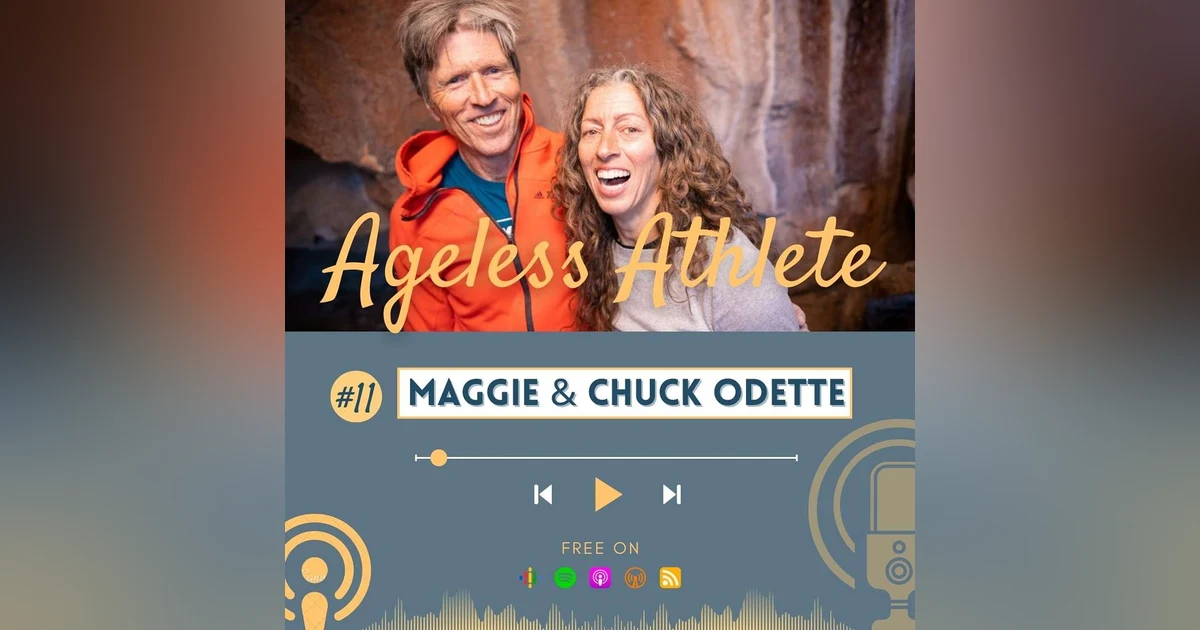

“One more 5.14 before I die” In today's episode, we head into the epic ️ mountains of Nuevo León, Mexico 🇲🇽 to meet two incredible rock climbers, Maggie and Chuck Odette! This sport climbing power couple has been quietly pushing the limits of their sport while building a beautiful and loving relationship with each other and the remote communities they visit. From the cozy living room of their camper van , Maggie (54) and Chuck (68) share: Inspiring stories of chasing dreams at any age ✨I...


“One more 5.14 before I die”
In today's episode, we head into the epic ️ mountains of Nuevo León, Mexico 🇲🇽 to meet two incredible rock climbers, Maggie and Chuck Odette!
This sport climbing power couple has been quietly pushing the limits of their sport while building a beautiful and loving relationship with each other and the remote communities they visit.
From the cozy living room of their camper van , Maggie (54) and Chuck (68) share:
- Inspiring stories of chasing dreams at any age ✨
- Insights into mindful lifestyle choices for a long and healthy life
- Tips on diligent preparation and training techniques ️♀️️♂️
- How to maintain vibrant relationships while on the road
- Embracing life's adventures with purpose
And what's AARP in climbing lingo? 😂
References:
Maggie’s Instagram https://www.instagram.com/maggieodette/
Chuck’s Instagram https://www.instagram.com/chuck.odette/
Zone Diet Books by Dr. Barry Sears | Nutrition & Cookbooks: zoneliving.com/collections/books
PhysAdvantage supplements by Eric Horst https://physivantage.com/
Who Moved My Cheese? https://www.goodreads.com/en/book/show/4894
International Climbers Festival in Lander https://www.climbersfestival.org/
Access Fund https://www.accessfund.org/
Nobody movie https://www.imdb.com/title/tt7888964/
---
🚀 Love the show? Here’s how to support it
If something you’ve heard here has stayed with you, made you smile, or helped you keep going, I’d be honored if you’d consider supporting the show. 👉 https://buymeacoffee.com/agelessathlete
📰 Subscribe to the Ageless Athlete newsletter !
1-2x a month, no spam. We share behind-the-scenes reflections, longevity tips, and athlete wisdom you won’t find anywhere else. You can sign up at https://www.agelessathlete.co/newsletter/ 📩
29:17 - [Ad] Resilience Podcast Series
29:41 - (Cont.) “One More Before I Die” — Still Chasing Big Goals at 68 and 54 | Chuck & Maggie Odette
1:12 Welcome back friends. This is your host. Kush can deal. Well with the each list athlete podcast. Maybe tap into stories and secrets off. peak performance. And today's show. We traveled to the remote mountains of Nueva Leon. Mexico. Where we visit two trailblazing rock climbers. Who have been quietly pushing the frontiers of the sport. And doing so while forming a wonderful and loving relationship with each other. As well as the beautiful yet remote communities, the visit. I'm so grateful for them for coming on the show from the living room of the caravan. And I'm sure they had to hustle to find the best wifi.
1:55 To make this possible, given the remoteness of their location. Maggie and Chuck Odette. 54 and 68 respectively. Are a Testament to pursuing. Passion over competitiveness. And embracing climbing as a lifelong learning journey. They both climbed five, 14 and 99.5%. I'll create an rock-climbing. And have so much wisdom to share with the. Emphasis on diligent preparation. And mindful lifestyle choices. They share insights into maintaining health, strength and vitality in older age. From a holistic perspective. Including the importance of nutrition.
2:37 And body maintenance. This is also for you climbing. And traveling couples. Check-in Maggie used to run a couples climbing clinic and have some fun nuggets to keep your relationships. Vibrant yet purposeful while being on the road. Excited to dive into this. Conversation and share all the fun things that came out of this. If you enjoy the show, please drop me a note and let me know. What you think. I'm at. Kush at each list, athlete dot go, or just drop me a DM on my social media handles. Hello. Chuck and Maggie, or should I say.
3:18 Hola. Since you guys are in, in Mexico, curious, what brings you to Mexico? Where in Mexico are you? we're in El Salto. which is, slightly south of Monterey, Mexico. and what brought us here is the, the survivable winter weather. rarely do you see freezing temperatures and the daytime temps are 60s Fahrenheit typically on the average this time of year. that's what we were after, somewhere we could survive the winter. Although we've had some 80 degree days. Yeah. Yeah. 80 degree days are great for, catching sun and, doing yoga, outside, and, colder days are, better for, good friction and for, climbing hard.
4:07 Typically. Yeah. Yeah. Excellent. And sounds like you are here in the winter. And, El Salto in Mexico makes for good winter climbing, and I'm guessing this is part of your, seasonal migration, so to speak, as you, as you travel to different, different climbing areas based on conditions. Yes. Yeah, definitely. We, we don't like to freeze. And we also don't like to fry. Yeah, we definitely travel. we follow the weather, I guess would be the way to put it. I think that sounds like a good balance. And I think every once in a while, you know, one has to, climb in suboptimal conditions where it might be a bit warm or, it might be a bit cold.
4:50 What kind of climbing are you guys doing in, El Salto? And is that your favorite style of, the sport? this is our first time here. We've never been here before, so it was an experimental trip, to figure out if one, we like it, and two, if it's something we want to do in future winters. the climbing is, limestone, sport climbing, and, it's, honestly, it's better if you're more of a technical climber. Because most of the terrain is, vertical to gently overhanging. there are a couple caves, but they're pretty limited in the number of routes.
5:34 and, we've spent most of our time in the four months that we've been here in, in the couple of caves that are here. And, so we pretty much climbed just about everything we can climb or everything we want to climb in the four months, so whether or not it'll be a future stop will be, is something we'll have to think about. Four months sounds like a juicy, long tenure to spend in in the remote mountains of Monterrey, Mexico. I was. in the same place, a few years ago, I think right before COVID and, I combined a trip to El Salto with, uh, Potrero Chico. And while, yes, I absolutely adored El Salto and not just for the climbing, but also the vibe and the community and, the beauty and the culture of the place.
6:25 I. It couldn't last beyond three weeks. And it could be also because as much as I like to think that I may still have some of that dirt back climber in me, I do spend the majority of my time in, in a big city in San Francisco. So yes, I'll have to build that stamina and, come back to, because unlike you guys, While you guys are finishing business over there. I mostly have unfinished business. So I have projects to get back to. And I think I might've seen maybe one client that you guys might've done one of your many clients. I think there was that, there was, there's a really steep climb in, the Tekelode cave. I forget the name. It's this classic 12 C and I spent maybe Nosferatu.
7:07 Nosferatus. Yeah. congratulations on sending that amongst all of the other, things. Taking a quick step back, we'd love to know where are you guys from and, how old are you and, what did you have for, breakfast today? who goes first? I'll go first. I am from Michigan originally. I am 54 years old. And I've been climbing since I was 28, so what is that? 26 years now. It was February. Yeah, 26 years I've been climbing. and what did we have for breakfast? We had eggs. We had eggs for breakfast.
7:48 Not very exciting. Lots of huevos in Mexico. Lots of huevos in Mexico. eggs may not Always be exciting, but they are a good standby and, I'm often also eating, a lot of eggs. You have been following this, I would say this nomadic climbing lifestyle if I may for some time. Would love to hear a little bit more about how did you guys get started with climbing full time? And what were you doing before you were climbing full time? Do you want Chuck to tell you how old he is first? Because he's really old. Actually, you're right. I forgot that part of the question.
8:29 Yes, sure. Yo soy sesenta y ocho años. Sesenta y ocho años. Eres muy joven, en anos de perros Yeah, yeah. I also came from Michigan. but, ironically, neither Maggie or I ever met while we were both in Michigan. Growing up anyway. you were like a grown up when I was a kid. Funnily enough, I also spent a little bit of time in Michigan, a tiny bit, and I didn't meet you guys either.
9:11 Okay, great. you guys are Michigan natives and, at some point you became climbers and at some point you started living the climbing dream, climbing full time. At what point did you guys figure out just climbing and living a normal life was not maybe enough or you were looking for something more and you decided to switch to climbing full time? Oh, that's the advantage of getting really old is you have this thing called retirement. So we geared everything toward that moment to make it happen as early as we could. For me, it was 59 and a half and that made baggie for 45.
9:57 So we just banked as much money as we could and saved like mad for, the last, I don't know, maybe four or five years. so we cut back on climbing. we still climbed and trained, but we cut back on our climbing and worked hard and saved even harder. And, the company I was working for, which was Petzl had a pretty good retirement program. And I invested heavily in that, and by the time I hit 59 and a half, I felt like we could, go to the road full time, and we did. Yeah. Yeah, we, I lived in Michigan still until I was 40, almost 40.
10:38 we met later in life, and both have had, lifetimes of climbing, basically, before we met one another. Yeah. at, the Rocktoberfest event in the Red River Gorge in 2007, which was also, it coincided with the Petzl rock trip. That particular year. so he was there for work and I was there just because living in Michigan, the red is your home crag, six hours is nothing to drive for a weekend. And, and we met in 2007, but we didn't actually enter into a relationship until 2009. And by that time you were, what, 51 or 52?
11:23 somewhere in there. yeah, and I was 39, I think. we had a lot of time to think about the role that we wanted climbing to play in our lives before we ever met each other. And then when we did, one of the first conversations we had was he asked me how I would feel about going on a really long road trip. And I said, Yeah, I'd love it. And he said, No, really, how would you really feel about it? life would not be like, so easy all the time. And would you be okay with that? and, but it was, I think it was a good foundational beginning to this relationship, because it's worked out pretty well. Absolutely.
12:03 this was a bonus because you answered another question that I was going to come to, which is, which is how you guys met, but before, before I, I get there. So let's say, so you guys were living in different places and maybe, living a lifestyle, which is closer to the Monday to Friday lifestyle. And at some point, Chuck, you retired from what you were doing full time, but Maggie, that. Were you also retiring from what you were doing or was it a more conscious, conscious change where you were like, Hey, whatever I'm doing with my day to day is, not what I'm seeking for the next stage of my life. And you decided to, get on the same, path as, as Chuck. so I had, when we met just a couple of years before we met, I had actually already made a major lifestyle change because I didn't feel like I was getting the opportunity to climb often enough.
12:52 So I had a really good job, full time job in management and, I quit that job.
14:00 and started working part time at the climbing gym and a yoga studio, both two part time jobs. Okay. so that I had a little bit more freedom in my schedule. Well, and so that the work I was doing was more closely aligned with what I love to do. so when we met that those were the jobs that I had and I actually was in the background in my mind trying to plan how to move, leave Michigan and move somewhere. In the Southwest, but I didn't really have a fully formulated plan yet, so that, seed was already there, but when he retired, we, I moved to Utah in 2009, so we could be together, and so he retired in 2015, so we did have some, that many years of planning together when it came down to it, so I don't know if that answers your question.
14:59 understood because, because for you, for Chuck, it was, let's say a more, definitive event. And for you, Maggie sounds like you had consciously been, been moving your lifestyle to do the things that you cared more about. Which is right. Which is moving into doing something which was closer to, to, to climbing and then gradually shifting to a point where you could, shift to, to climbing full-time. Yeah. And you already spoke about how you guys met and another, tiny bit of coincidence. My last time climbing at the Red was also at that same event, so I was already living in California, but I took a couple of over stoked friends from here and Came down to Slade to attend that same thing.
15:52 That's a rock trip. It was funny quite the fun event I mean we had all these I guess iconic Climbers come from all over. It was really fun to, partake. And yeah, great to know that you guys are out there, uh, finding chemistry within, uh, all of that, all of that, uh, wonderful climbing, talking a little bit about, uh, your climbing itself. You guys mentioned when you started climbing, were you guys always sporty and athletic and do you think you guys are naturally. gifted as climbers. I'm wondering, how did you discover the sport and what kept you going with the sport?
16:36 by today's standards, I think we both started way too late to be gifted. the young kids today are develop, developing the kinesthetic sense for climbing at almost as soon as they're walking. And for us, it was both as adults. So developing that kinesthetic process takes quite a bit longer and, my start came, through a, through an alpine background. So I took an outdoor recreation class in college and as part of that class, I did a ropes course and that rope course led me to investigate this idea of maybe going out west and actually experiencing actual mountaineering and learning how to do it safely and properly because there were no gyms back then.
17:24 And, so I took a Paul Petzl course in the Tetons and spent six weeks there. learning how not to kill myself in the mountains. And, that led to eventually more alpine objectives throughout that early adulthood. And eventually I figured out that I liked, through the help of a friend who was an avid rock climber, I liked the rock climbing pitches the most. and hated the slogging and the long hikes and the snow crossings and the ice climbing and objective dangers. I just like to climb rock and this friend told me about the city of rocks and basically said you can drive a car right up to the base of a rock and get out and start rock climbing and I made him.
18:11 Take me to this place and show me this, show me these rocks and from then on I became more and more hooked on the idea of just rock climbing, the physicality and so on. But you were always an athlete too. Yeah, I mean I had a competitive sports background in high school and college with baseball, football, all the usual Michigan sports, baseball, football, swimming. You went to college on a baseball scholarship. Yeah. One sided sport. Not quite, doesn't quite translate to climbing so well, but the training ethic and the whole idea behind being regimented about, diet and exercise and whatever else training you can do to support that final outcome.
18:57 Chuck, I am with you on the, on climbing being the highlight and, the main course and, all of the effort that it takes to the crag being the effort. I feel I'm a bit of a misfit here in California because climbing mountains and track climbing and a bit of Alpine, that is the name of the game. And, to me, I've always been mostly just motivated with the idea of the climbing itself. And then I'm like, Hey, if I want to go hiking, then I can go on a hike. And, and you, Maggie, what is your, story of coming into, climbing? I have a little bit more of a modern story. I basically was on a trip, for work, a trip to Sedona, Arizona.
19:41 I was in Arizona for work and I went to Sedona while I was there and saw people climbing there just from the road. I was driving and I saw people climbing and thought, Oh man, that looks really cool. I want to try that. And when I came back to Michigan, I told my mom, about my trip and for my birthday that year, my 28th birthday, she got me a starter package at a climbing gym. so my first climbing experience was in a gym. but that quickly. quickly changed. after I think I'd gone to the gym three times when I hooked up with a group of people to go to the Red for a weekend, and then in my background before that, I was always into endurance or endurance sports.
20:26 I was a runner from the age of seven distance runner. I was also into mountain biking and a little bit of skiing and in Michigan water sports, you have to water ski. So lots of water skiing. but I was always just really mediocre at all of them. I did them all, but in a really mediocre fashion. And I didn't get good at better at climbing for a long time too. One thing I am trying to explore in this podcast is, some of us who discover, these sports that we love later in life are able to perhaps pour more love and get the most out of them.
21:10 Bye. Bye. more back because perhaps we did not get exposed or get spoon fed climbing as toddlers and there is more of that, hey, I don't take this thing for granted because I've had to earn it. And I'm wondering if that has been part of your experience as you continue to climb and excel as perhaps more seasoned athletes. And also, if that is part of your drive to keep, training and performing. yeah, it's, I think, for us or for me particularly, it's having started climbing later.
21:51 particularly just rock climbing or sport climbing later in life. it, I pursued it more as a love or passion, as opposed to a lot of young climbers tend to be very competitive and gauge their performance based on what other kids their age are doing. And, as an adult, you're past that. you're, especially an older adult, you've got, you've, you're well past that. You've, you In fact, we have a pretty good, a friend put it so succinctly simply by saying that, just about the time you think you're all that, someone comes along and flashes your project. and you just hope she's more than 12 years old.
22:33 so all ego, ego goes out the window at that point. and that's one of the advantages of being a senior climber, I think, is we do it for the passion as opposed to the Because everyone else is doing it or because we want to be competitive at it. we just want, we just love being out there and experiencing that movement, that environment, that outdoor environment, and this lifestyle that it leads to. all those things come together, I think. Talking of lifestyle, what are some of the other, let's say fringe benefits? of being able to climb full time? we're free to take the weekends off from climbing.
23:14 So we don't go to the crag on the very most crowded days. There's that. We're able to design our schedule a little bit more easily or a lot more easily than when we were working. That's for sure. Get to rest more, which is critical as an aging athlete. So you can schedule, we schedule three days a week for climbing, Monday, Wednesday and Friday. So we get actually more rest than we do time on the actual rock climbing aspect. Yeah. And, I think, it also, we have that ability to, sleep in, go to bed early, sleep in if we want, have an extra rest day if we need it.
23:57 we don't, we're not tied to any schedule per se. we don't have a work, a work, schedule that we have to be somewhere at a certain time. so it's truly a leisurely pursuit. Also, climbing days. We do have a schedule. It's not like we just wake up and get to the crack whenever we get there. We definitely have a, a routine and a regimen that we try to stick with. Yeah, climbing days, we definitely have objectives. we're not, it's not random or haphazard. We're not lazy. We generally have goals and objectives we're leaning towards something we want to do another 513 plus or another 14 minus or ultimately that's, we're always looking to push limits on those days.
24:49 Absolutely. And we'll get a little bit into, the training and, the structure, because I'm really curious to, dive into that. But one thing I was just thinking of when you were talking about, some of that flexibility and the time to be able to, to, to sleep better, to take rest days and all of that, it actually made me think of how you alluded to, being a child athlete. And I was thinking, when you were a kid. That's the other life stage when you get access to a lot of sleep, a lot of, free time and a lot of, let's say flexibility to, to follow your, sport. And that's funny now that you guys are retired, you're circling back to that type of lifestyle where you can focus on this thing, single mindedly.
25:31 Yeah. Definitely. Yeah. And one, one other component is that we pretty much narrowed it down to what we're passionate about. So these other peripheral things that we used to think we wanted to do or dabble with are no longer part of the, program really. we just, we're focused on climbing because that's what we love Yes. Just, one, one of the last questions on the topic of just your, your chosen lifestyle is if somebody was to contemplate, doing what you're doing, which is, not just, climb full-time, but also climb full-time on the road and travel to quote unquote exotic places like Monterey, Mexico, what could be maybe one of the things that you could advise them on maybe the things you did well with embracing this lifestyle or maybe one.
26:18 or two things you would do differently to set yourself up a little bit better? the first thing that comes to mind is, we treat our climbing trips and planning like visualizing a red point of a hard project. we actually try in our minds before we make the trek to somewhere like Monterey, and in a place we know very little about, we do a lot of research. we do, we actually visualize being there, what we need as far as Like we came here with almost four months worth of food stored in our van, and, all the things we knew we could get across the border we brought.
26:58 so we planned things out. money, we had to set aside a specific amount of money for All the expenses of border crossing and paying for additional insurance and so on. And, the autopista, traveling on the autopista and, camp fees here to have a safe place to, to have our camper and know that it'll be safe when we go to the crag for the day. all those things we planned on and prepared for. And, and, so I think. preparation of our automobile, things like that, that people really, we see a lot of young climbers who, in fact, right now in the campground we're in, which is very small.
27:41 There are two vehicles parked here, people who came down and their vehicles died and now they can't leave. They don't. Or they've left and their vehicle's still here. I think that the two things that, that, or the two or three things that people do. or like we do that I think are necessary for road tripping are, proper planning, proper capitalization. that's one of the biggest things we see on as far as failures under capitalization, not planning ahead on how much money they need. Okay, good.
29:10 the comfort level of our living situation. we, they really prioritized when we went on the road from day one that, we need to have a good, a bed is very important. We need to have, our shelter situation, where we need to tow our, I guess this gets back to the vehicle thing, but we need a reliable vehicle that we pay attention to and maintain well to tow our home. and yeah. we're like here we had 70 mile an hour winds when we first got here in our first month, and in some pretty, pretty severe weather. So you have to prepare for that.
29:52 And we see people in tents that are. pretty disappointed when there's three or four days of bad weather in a row. We're too old for that. Yeah. Proper shelter is a key thing in road tripping. Being on the road full time. Got it. Got it. Noted that, you have been in, And, El Salto for four months by choice and not because your, your vehicle died down. You're still waiting for, AAA. and yes, I can agree more, the value of a good night's sleep. And how that is essential to be able to function and be energized. So that's a good investment. Any other ways in which you have been able to sustain spending this time in Mexico?
30:37 outside of climbing? Are you guys doing any other kind of, pursuit, either recreationally? I know, there's been some Spanish, immersion, Because I know that being on the road for a long time, and climbing is one of those sports where most days you go to the crag, you're not sending, you're, you're, butting your head against the wall and you're trying hard and every once in a while you get progress. So sometimes when one is not finding all of that progress at the wall itself, one has to find ways to stay energized and motivated and wondering if you have tapped into some. routines to be able to, to stay, energized? I think maybe, no, we study Spanish like maybe an hour a day almost.
31:22 And then I actually knit a lot. I knit sweaters and things. but he actually watches a lot of left wing YouTube videos. So there's that. and then we do yoga on rest days, but honestly, we're not the kind of people who really get bored easily. Just being alive is like exciting and it's not boring. So yeah, we have a dog we play with. I do yoga on rest days, pretty much every rest day.
32:03 I practice martial arts, which I enjoy. and then, when wifi, which is often, we're in remote places where we don't have the phone signal or wifi. we have a huge library of books, so we'll read a lot. I'll read a lot. Yeah, we both read a lot when we don't have internet. Yeah, and the Spanish thing, I wish I would have started it sooner. once, once we arrived here and I realized how difficult it is to communicate in rural Mexico. and you mentioned this before about, getting immersed in the culture as well and, having good local experiences with Indigenous people.
32:47 I think that's important every place we go, to, have that understanding and at least be cordial and to be able to communicate. And I was surprised at how difficult that it was. And I wish I had started sooner. It's starting to feel better now. I'm starting to understand more and communicate, a little bit better. and that's fun. Another fun part about traveling to new places is getting those new experiences with the people around you. Places like Alabama. We speak that language. That was a cultural experience in itself. Yeah. Yeah. We spent a winter there once and that was, it was amazing.
33:27 It was eye opening. Yeah, but we didn't need Duolingo there. But my liberal leanings were a little bit interesting. And we took it as a, we viewed it more as an educational opportunity to share our thoughts in a mindful manner, knowing full well that the people that were around the overwhelming majority were very conservative. But if we could just show them that we were compassionate and that we weren't. there to do harm to anyone, and that we had these different views, but we could still communicate, maybe share ideas, and yeah. I have two quick reflections on that I started climbing in the southeast of the U.
34:08 S., and I have, spent time climbing in Alabama. I think one, one of my early climbing trips was in a town called Gadsden. I think it's, single pit sandstone climbing, maybe an, yeah, and, fortunately or what, or not, that was early in my, stay in the U S and I think I was politically quite ignorant. So as a brown man, if I faced any racism there, I was, blissfully ignorant. And to be honest, I don't know if I actually faced any racism itself, because I think maybe my demeanor was just off excitement and curiosity. So maybe I would disarm people.
34:49 And, and my second is I love this about something like climbing where You don't just, stop in a town like that to buy gas and chips, you actually go and spend time there and you spend hours, days, weeks, and in your case, entire seasons. And that allows us to sink into the local milieu and understand people at a much deeper level getting back to climbing a little bit, you guys, climb, an astoundingly high level. You guys are both 514 climbers, which is like maybe the half percent or one percent of, climbers out there. What are some of your, prouder accomplishments?
35:30 And those need not be just the highest grades you've climbed, but what are maybe some memorable, sins or, things that you guys smile whenever you think about them? I think killer bees. So for me, one of those would be not again, as people always say, not the hardest grade we've climbed. But, for me, I think climbing the street in the hurricane called killer bees. and mainly because I think it was probably the first really. Hard route that we worked together, because, and it probably means more for me than it does for Charlie because for most of the time we've climbed together, he has outclimbed me by a lot, like grade wise, it took me, it's taken me a long time to catch up with him.
36:19 So that was like, I think the first time that we, that there was a project level route for both of us. that we worked simultaneously And it took me a season and a half basically. So it was a long process which is, that always makes them memorable regardless. What about you? I would say probably the most memorable accomplishment was climbing the Cassine Ridge on Denali, back in my Alpine days. And, but in the fortune thing was though, it ended up in a good experience and a successful experience. It was, and it was a big objective.
37:00 it also opened my eyes enough to realize that I wasn't immortal and that I could very well have died on this. this expedition. very fortunate that I didn't. it was one of those things where, it could have ended, it could have ended my life. And I got out of it and survived. Summited and vowed that I was going to rock climb more after that point, that, that I wanted to live to see a hundred years old. I was only 34 when I did the Cassine. And, so that was probably one of the most memorable overall things, but I would say.
37:43 as far as actual rock climbing that I enjoy now, when I was, 64, 4 years ago, I did, the line, a line in Maple Canyon, in the pipe dream called T-Rex, which I consider the king line of the cave. it, it was a goal when I first saw it that I always wanted to, try and climb. And, and it happens to be one of the hardest ones I've ever done. and it did it at age 64. that's pretty memorable. Yeah. Badass, from both of you. what I glean is, for you, Maggie, it was, that line that you did, Killer Bees, it was, it was a combination of a line of two things.
38:23 One is, one is that it took you a lot of work. And anytime you put a lot of work into something, that, Just becomes more cherished. And second, that you guys got to climb it together, which, and then, and for you, Chuck, It's funny, earlier we talked about hating long hikes to the crag and here you are with one of your more memorable climbing trips being a big alpine expedition. Yeah, but yeah, I think it's similar for me. I seem to prefer sport climbing, but some of my, Some of my most profound memories are trips to Tuolumne, in Yosemite, and then, trips, monitoring trips to like places like Bolivia because I think also because those things are really hard for me.
39:07 I think I'm not gifted. So because I have to dig deeper to do scary, difficult things. I think it's, they suddenly become more rewarding. What are some of your, goals now with climbing? you're in, El Salto now. Have you been pursuing hard projects? Has it been lots of, On siting and quick red points and, and then also as you are, as you're in the middle of this trip, how are you able to, keep yourself fit and, motivated and make sure that you continue to, sustain your reserves of power and, those kinds of things. first of all, this is, normally this time of year would be bouldering somewhat because of the short days, shorter days and, and also the need to rebuild the power, then we'll need to do harder sport routes, when, during the better seasons.
40:02 so normally we'd be in Waco or Southern Utah or. Somewhere we can boulder and train and it's gotten to the point where my body is not holding up well in that environment. In other words, I'm getting punished. bouldering. we decided this year to do the trip to Monterey and just rock climb. and we didn't really have any specific projects. We wanted to just experience as much of the area as we could. Not necessarily on siting, but finding, mini projects. Ones that we can do hopefully in a shorter amount of time, that aren't at our complete limit, but pushing that limit.
40:43 And, and we've been able to do that pretty successfully here. and do supplemental training as well, pull ups and hangboard stuff and ring push ups and, we have varied routines that we do. And, so that helps us get that fitness level up. we don't take the winter climbing too seriously, in other words, because days are shorter, conditions can vary a lot. And not always to our liking. we can't rely on them, in other words. it's just more kind of a fun, mini project phase. Yeah, we definitely step it back in the winter, usually. a lot, one thing about climbing here is a lot of the routes that we've gotten on have pretty defined cruxes.
41:29 So for me, like I look at that as like my bouldering, I'm going to do this route. It's easy to hear. And then I have to turn it on and do this powerful boulder problem. And that's the part I'm going to focus on because that's what's going to help me the most for my future goals. yeah. Makes sense. we've had one other season like this where we just rock climbed, and it was during COVID. when we went to our moat area in Arizona and climbed. And, it ended up working out pretty well. We had a good year after that season. Yeah, we didn't get hurt was the main thing. Yeah. The main thing in the winter is not to get hurt. Or discouraged. Yeah. Yeah, but I feel like we're in maintenance mode here more than anything, which is okay.
42:14 So we've got a couple of months to, um, kind of shrink, climb our way back into hard route shape before we approach our summer goals. Great. And, sure. and to what you said, Maggie, one, usually people say bouldering is a better way to train for power, but can one can also choose certain routes, maybe routes that have cruxes that are hard for oneself and, and try to, keep your reserves up and, unlock those kinds of moves and which could be, I don't know, somewhat of a reasonable proxy for not being able to, to boulder as much. Yeah. What are some of those, goals that you have for, for this year, you guys with climbing and, to add to that, what's going to be my next question, what are some of your other goals broadly for the next, few years, things that you are motivated by and would like to accomplish?
43:06 I would like to do, and I've been, it's a theme that I've had going for the last couple of years, but I'd like to do one more 514 before I die. I've been saving one or two. I've never done a 514, but, you guys talking to people like you, I think ignites, that little bit of, fire in me to, to go and work up to a 514 someday. Yeah, totally possible. Totally possible. Yeah. but, yeah, it's, and to do that, we're going back to Maple Canyon this summer. And, we've opted to camp host. there for the summer season, which guarantees us five months of staying in the canyon and, with a little bit of volunteer work that's not too grueling.
43:50 and, I have a project there that's been easily over a decade long project. I voted off a long time ago that I was too old to be able to do this particular route and, Now I think it's possible for me if I approach it with, some of the things I've learned over the past couple of years about, how to become less attached and more focused on resting. and, I think I can do this project that, as it's repelled me, literally kicked me off. injured me on a couple serious, semi serious injuries, after being really close to red pointing.
44:34 So I've, like I said, I've written it off now. I think that I need to, just get it done. So my hope is to get on this thing this summer and I've got five months to try to get it done. It's only 13D, but it has two extensions that I've done off of harder starts. or a slightly harder start, and, but suits, suited me better because it was more power endurance. This route is more powerful, and it has a really powerful crux that, that is always giving me trouble. And, if I can get through that, it opens up these two other extensions for two potential 14As. it's possible.
45:14 If I can, I always qualify if I can stay healthy. that, I can still do one. It sounds like you're right on your way. And because you, the, the crack super well, the style and you have done the latter half or latter halves of the route, so to speak, except the, the 13 D bits. So once you unlock that, it might net you not one, but two different 514, then that would be, that would be amazing. And what about you? What about you, Maggie? at that same crag, I have, there's a 13C that I saved for one of the last routes for me to do there because it's a different style than most of the rest of the routes in there.
45:57 It's definitely, big moves, I'm not big, and, very sustained, big moves, hard crops. So I think it's actually harder for me than, some of the other routes there that are harder grades. It doesn't have as many really good rests on it. I'm really good at resting. We both are. That's our, if we were going to have a quote unquote climbing superpower, that would be it. Resting on route. But this route doesn't have as many opportunities to do that. So I have that one that I'd like to do. And I'd like to, I was one hanging it when we were there a couple years ago. So I have the beta, it's just a matter of actually making it happen.
46:38 And then, There's another route in there that's like my dream route. It's called Divine Fury. it's a 14b that I honestly don't know if I'll be able to do it, but that not knowing if I can do something is usually what makes me want to try. So I'm gonna try. We'll see. And hopefully Charlie will do his thing super fast and be done with that rig and then come climb on divine with me too. That's great. Sounds like you guys both have exciting projects and aspirations to keep you going through a hard, cruel winter. Not to get too cheesy.
47:18 We talked a little bit about, how you train for power in the, in the winter and how you have some routines with doing yoga. How are some of the other ways with which you train and are you guys self coached? Do you have, do you work with a coach and any, any other routines you think which have been exceptionally, useful to you to, to keep up your climbing training? he's my coach. we don't, our training is not what anyone would call conventional. I think, we do things from time to time. We do some things, at the end of climbing days, sometimes we'll come back and do some supplemental stuff, but really basic like pull ups and then like pushups and opposition stuff.
48:07 We will, when we're not in a red point phase, we'll sometimes do some, a little bit of hangboarding, but not what most. People say they do when they talk about hangboarding these days. it's not some long drawn out regimen. we just do a little bit here and there. we do have blood flow restriction bands and we'll use those. Sometimes we go through phases of using those. I actually think with our lifestyle, those are really a great tool because we are climbing three days a week, but then I still feel like we can use the blood flow restriction, and do some hangs and some other exercises maybe on a Saturday or even sometimes, on a Tuesday, even though we're climbing Monday and Wednesday, but with the blood flow restriction, I feel like the recovery is.
49:00 So much better. we're not in a full on performance phase. I think we can get away with that. yeah, I don't know. What do you I think it's just a matter of doing mostly climbing. Yeah. and trying to focus the climbing. the training is the climbing and then resting and let it sink in, let it recover. The supplemental stuff we do afterwards, it's only because we feel like our day's been short or we didn't get the full workout that we want to do to crowding at the crag or weather or whatever reason we'll come back and do supplemental stuff and it's usually pretty varied.
49:41 we don't have a specific routine. it's, to me, it's more like a crossfit routine, so you're not really, you're anything to break down muscle mass when you're my age, that, so protein, ingesting protein and hydrating well, and then recovering well, is, You get this gradual improvement and it's really gradual. it's like super minute, but it, it is definitely progressing gradually, through performance and rest. And if you try to force it any other way, bodies my age just don't respond. They, my goal is to try to maintain as much muscle mass as I can at this day, this age, and, and make it applicable toward climbing.
50:31 That's the best I can hope for. I don't know anybody that can train me. I get, I read a lot of amazing ideas that I wish I would have known. 20, 30 years ago, or even 10 years ago, that just aren't applicable now. I see kids, younger climbers doing these amazing things to, to get fit for climbing. And I wish I could do those things, but if I did those things, I wouldn't be able to climb for a month. so it's, It's self, yeah, it's definitely self taught. I don't have anyone to coach me on this per se. Yeah. there's only a couple older climbers out there that are still, performing well. yeah, like Bill Ramsey, and He's younger.
51:12 He's actually younger, but still, it, it's applicable in a way. and Lee Sheftel who is a decade older than I am. I can garner Some ideas from him, but that's far and few. Absolutely. whichever ways you guys have learned and maybe you particularly, Chuck, on being able to coach yourself and, understand how your body responds to different kinds of stimuli seem to be working. One thing that you touched on, which I thought I would ask. a little bit more about if you were to jog back in time, let's say 20 years, or maybe 25 years. Is there something you think you should have started doing or stopped doing, which might have helped you improve upon your already stellar, uh, timing performance?
52:05 I think I probably would have bouldered more, And spent, three or four months of a winter bouldering and training specifically power. I think that's, I did that in the gym because living in northern Utah, your rock climbing season is over in late fall and doesn't start again until early spring. So you're forced into the gym or into training mode. and in, in essentially bouldering, in on plastic if it's available. but I definitely would have spent, more time focused on the training aspect. Got it. So maybe, maybe bouldered more or continue bouldering as a part of your training.
52:48 What about like things like hangboarding? And, do you think if you had done some of that supplemental stuff? over the years that could have helped? I don't think I would have just because I, a couple of things. I think my, one is I have piano playing fingers. They're, I don't know that I could make them sausage fingers like a lot of really good crimp climbers can or people that can hang on hang boards really well. The, probably more reason why I should have been doing that, but I just hate it. It's not something I enjoy. Yeah. I used to do a lot of campus training. So campus sport, I love that because it was a little bit more engaging and, a little more fun to me.
53:33 I can make it a game and not as boring as just hanging on something, which to me is anti climbing. But also we both started late enough that we were beyond that point of developing that base tendon strength that you can work on up till you're like 25 or whatever it is. So I feel like anytime along the way, that we've dedicated to training finger strength just is what it is. We were, we're not able, like that baseline tendon strength, we would just have to be hanging constantly to maintain.
54:15 Doing more of it when we were 30 really wouldn't make a difference for today, if that makes sense. having said that, you guys, from what I have read, made rapid progress, even though you guys started climbing later. You guys went from climbing, maybe 12s and 13s to climbing 514s in some, in a very impressive span of time, any specific things you think helped you attain that, progression quickly? I think for me, there were two things that really kicked it into gear. number one was just the total focus on it instead of having all these peripheral sports and wanting to pursue mountain objectives and wanting to be able to run long distances and pedal my bike, all those things I once I got those out of my system in focus, specifically on climbing, that was, one big moment of change.
55:19 The other one was nutrition. just, I had a really good friend who was, had gone through medical school and opted not to become a doctor. he was in his residency and decided he wanted to pursue more climbing and less education and less time being a medical doctor. and he became a good mentor to me, he was older, one of the few people that were older than me, climbing, and he, I was talking about the supplement, creatine, and I knew this person would know, so I asked him specifically about it, and he said, no, just forget about that, just focus on nutrition, and I said, This is in the mid 90s.
56:02 It goes, just focus on nutrition. you can change your entire genetic makeup with nutrition. You can, and he recommended the book, Enter the Zone, which is balanced macronutrient diet. And, and he started explaining it to me. And this is a guy who rarely even talks to anyone. He's very, subdued and quiet and meditative. And he just. for a solid hour was in my ear about this. and so I went right out and bought the book and started practicing the diet and got almost immediate results. my climbing went up exponentially. My capacity for training went up exponentially and recovery, happened a lot more quickly.
56:45 and to this day, I still practice a balanced macronutrient diet for the most part. But now you take creatine too. Yeah, I also take it. Can I get the name of that book again so I'll have it in the show notes if people want to, it's it was published in the early 90s by Dr. Barry Sears. Enter the Zone. And it's called Enter the Zone. You can find it in secondhand bookshops everywhere. It was during that bookshop. That period of time when there were a lot of fat, trendy diets, most of which were detrimental to most of them cause heart attacks. And it was really unfortunate that it came out when it did. But the great part was that Barry Sears was a biochemist.
57:27 So he approached diet and nutrition from a biochemical aspect and the breakdown in the body of what. Yeah. How carbohydrates and proteins and fats work. And it was also during that time that everybody was doing low fat diets, thinking that somehow was going to make them better athletes. And there are newer versions of the, they've updated, new books that are based on the same science. And it's really when it comes down to it, it's a hormone balancing diet. so what does, the diet that you guys. practice today that allows you to reach, peak performance. you mentioned you take some creatine.
58:07 So yeah, I would love to hear about, and from both of you, supplementation that helps you guys and then, the core blocks of your, food today. we do things differently than one another now. For a little bit, we were the same, but I'm a 54 year old woman and he's a 68 year old man, so I've been going through a lot of changes the last few years, and I've had to do a lot of experimentation, and I think I finally have settled in, and I'm not that far off from where the balanced macronutrient intake that he eats. But I definitely, focus more on fat on climbing days for energy.
58:49 And I probably eat a little higher carbohydrate. He does, but still the focus is on trying to make sure I get enough protein. and we both do, some low dose creatine. we, use, full disclosure, PhysAdvantage supplements. Eric Horst's company, we are on, the masters. Team, for the brand. and we both daily use the supercharged collagen. from Dvantage. So we're doing, taking collagen, hydrolyzed collagen with vitamin C. and then what else? Performance wise, we, use the physio advantage indirect, the bee route in Citraline malate, product. It's a drink that's just, helps with oxygen uptake in the muscles.
59:33 and then. we also a few years back started using beta alanine. and that was on the advice of a friend who's super into research and science and performance science. and that is something that I think really has had a positive effect for both of us. For sure. Physiadvantage also makes a supplement called Crush. That, is a capsule that you can take actually out the crack, about 20 to 30 minutes before you start climbing. So we'll warm up. And then, just before we get on the project, if, you can take a Crush Capsule, they recommend two, I usually only take one, and it's, it has, one of the ingredients is caffeine.
1:00:19 The main ingredient. And, but it also has, other supplements in it that help avoid the jitters that you get from a, like a typical high caffeine dose. Yeah. So you're not, you don't feel jittery but you feel that kind of, extra surge. little snap. Yeah, comes in handy. A lot of times I'll take it at the end of the day too, if I don't, to maybe if I want to give it one more go, and I feel like I could or should, I'll take a creatine or a crush capsule prior to, to, and usually wait 20 minutes, and then I feel like going. Yeah. Yeah. Yeah.
1:01:00 And then we do regular daily, like kind of the Predictable ones. Glucosamine, fish oil, vitamin C. I take some herbal adaptogens as a post menopausal woman. that kind of help with my energy levels and hormone balance as far as that's concerned. we take a lot of stuff, to be honest, we do. Also, our diet isn't the most varied diet out there. We don't eat a ton of, vegetables and fruits and things, so a lot of the micronutrients we're getting from our supplements rather than from our food, which I know somebody listening is going to be like, Ew, but that's just what we do.
1:01:40 It's not like we're seeking organic, although there's, there's, that's probably a good idea. And I would recommend it. Low meat diets, if you're going to eat meat, lean meat, like chicken breast or salmon is ideal. Tilapia, we eat a lot of tilapia. We eat a lot of tuna. And I feel better on fat than, than I do on carbohydrates is something I discovered. in the balanced macronutrient aspect, I lean more toward fat than carbohydrate to make up the, the fuel for the fuel that I need. I find like almonds and fish oil and, What is it?
1:02:20 avocados, things like that, that I, that are high fat tend to fuel mes that's a fruit We eat a fruit I also ingest 150 grams of protein a day, so Yeah. Which is, and I do about a hundred, which is double the what? The FDA, my, it's, it, I think it's really critical to fi stave off sarcopenia, in later age. Try to keep as much of the muscle mass as you can. I think it's critical. Certainly. And, your climbing performance speaks for itself. And, for those of us not watching this on video, I will say that, your hair looks great. So, whatever the, the diet is contributing to your climbing and overall health and fitness, it's certainly not hurting, knock on wood, your great hair.
1:03:11 So follow, Chuck and Maggie's diet for, for beautiful hair. I think the protein and the collagen. Yeah, the collagen is whoo! And having, having some good genetics, too. There's that. Yes. There's that. It's funny. Have you guys ever had blood work done to identify what are some of the things that you guys, do you guys do that on a regular basis to ensure, I do my annual physical about every five to 10 years. And then I have blood work done at that time. I just had a physical. With blood work two years ago. Yeah, we're not like tracking Nutrients in our yeah, we're not those people.
1:03:56 Yeah, I think biofeedback is probably what we base most of our choices on More than anything, every time I see the doctor, it's just keep doing whatever you're doing, just keep doing that. Sure. you guys are also pushing frontiers. Maybe you chuck where people, didn't know what was possible. So I think people are probably simply exalting at, your performance levels. And, partly I think they don't really know what else you could be doing because they're like, he's already climbing at the 0. 5 percentile and, is excelling.
1:04:40 and he is in his upper sixties, so we don't know what he could be doing more. And also in a sport, which is very niche, this is not maybe running. Or something else where there's been so much more science with being able to keep people, performing. Yeah, I agree. It's, it's, but I, it's. I can't imagine doing anything else. I'm still, every day I get up, I want to go, I'm passionate about rock climbing. And even on my rest days when I'm not climbing, I'm thinking about climbing or a climb that I'm specifically working on. And I still have that desire and that passion. So I don't know that I would have had it for anything else.
1:05:22 and I feel lucky that I've, stumbled across this, this climbing thing. All, all is, pretty badass as far as I'm concerned, inspiring in all kinds of ways. Just moving, tracks a little bit. In the last few years, what new belief, or behavior has improved your life and would love an answer from both of you. Oh, okay. for me, I think it's actually something that actually came up yesterday at the crack. as I mentioned earlier, as a 54 year old woman, things have changed a lot in the last few years. And, and that includes, things that I'd never I don't want to say it's the changes have been really fascinating.
1:06:06 and my body is very different than it once was, and it's very different than it was just a few years ago, actually. And, yesterday it came up, there were a bunch of like young girls at the crack, and I was just like, Oh. I'm not young anymore, But then, the thing that I've learned in the past few years popped up into my head and it was, it really doesn't, can I say fucking, it really doesn't fucking matter. I can do what I can do with the body that I have. And that to me is amazing. And, It really, it's not that it doesn't come up as a woman, the way we're raised in this weird society where we all compare ourselves to each other and whatnot.
1:06:51 And it's really easy to fall into that looking around and thinking, Oh, my body doesn't look like that anymore when it may be used to. and it's quite liberating and fun, actually. When you really realize that looking like that doesn't mean anything at all and what matters is the function and the joy that being able to move your body in certain ways and to be able to do things that take strength and take, technique and finesse and all those other, things that aren't strength that come from years of climbing and learning, and knowing that you're still learning more of those things.
1:07:44 that is, that's probably the biggest thing for me, just that Knowledge that, aesthetics are their own thing that I can put way over to the side and just think, that person looks amazing, but I can do amazing things. There needs to be, like an affirmation poster made up which says something like that. Looking amazing versus doing amazing. And just to add to what I said earlier, you guys both look amazing. So I'm guessing that the, so the answer, the question is Maggie is this, belief that you have found confidence in is being able to find joy and.
1:08:35 Confidence in who you are and what you're able to do and get away from a lot of the, uh, peer comparison that, uh, all of us at some point or the other, we fall victim to. I know I do all the time. Yeah, and I actually think that what I'm trying to say, and maybe not articulating it very well, is more that It's not a pure comparison anymore, I'm at the crag and I'm 54 years old and the other women who are there generally the other day are in their 20s. And so it's just not even it's not relevant.
1:09:18 So I don't need to give. It's not that I don't need to give the giving mental energy to something like that is just such a waste of time because it's not relevant. It doesn't matter. what Matt, what should matter to me and what does matter to me is that I feel healthy and I, have a high level of mobility. and I. I'm able to try really hard and the body that I have now works really well. and I just being able to acknowledge that and give it the respect that it deserves, I that, yeah, you articulate it very clearly.
1:10:05 I completely get it, which is, yeah, there's no reason to focus on things that are not energy positive. Yeah. And, and that's great. what about you, Chuck? Beliefs or habits in the last few years that have had, that have enhanced your life? along the same direction as Maggie. I see these young kids, amazing, early start to climbing, already have the kinesthetic sense to, to climb rock and, they have zero body fat. and I look at that and I go, I wouldn't trade my situation for that situation.
1:10:47 For any amount of money in the world, I wouldn't go back. I wouldn't be that 20 year old or that even 30 year old or whatever they might be, um, in chain, in, in, in trade the knowledge. in the life experiences that I've had along the way. So I guess it gives me, what I've learned is I have this more relaxed attitude about it. So it's less about, the, what anyone else is doing or what anyone else thinks is important or should be the way. I've already got my path. I'm very happy with that path, and though I'm willing to look at what other people are doing and if it's something that I think is pretty amazing and wanna be part of, I might dabble in it.
1:11:37 But at the same token, I'm pretty happy with the way things are going. so I, I'm just, I like the path I'm on. I'm gonna stick to it. the one thing I've added that I think is. fun being an older climber is when I see someone struggling and if they're receptive, if they're honestly, if they, they ask, what do you do here? how do I get, how do I climb like that? Or how do I do these moves on this climb that I just saw you on? I'm more, I'm excited to help them out. I'm really. And Maggie's the same way too. And I've become more I think it's, I think it's important for older experienced climbers to share their, that experience to make it better for others.
1:12:23 and I've become more and more that way. and less focused on just myself. More on the community aspect, to the point of even, even making it safer. It's we see that frequently. That's one of the, probably one of our biggest pet peeves is people doing stupid things or risking themselves in stupid ways. And like a simple thing, like a stick clip, we watch people here because they've traveled somewhere by plane. They don't have a stick clip and they're. looking up at a first bolt that's way off the deck and they go, wow, this rock is really polished and slippery and these holes are they moved. It's hey, I've got a stick left. Do you want me to stick that for you?
1:13:06 and they see us doing that. So they know that, we're playing it safe. The locals don't. they're pretty set in their ways about leaving the ground and being sketchy. Yeah, but their health insurance works here. Yeah, that's true. Their health insurance works. And they also know the moves. They've done it a million times. Probably on top rope the first time. the other thing too that we, that I've, we've started doing more is, studying and keeping a close eye on gear. fixed protection. we're, we've, pretty much every place we go now, we have all the equipment and we have the knowledge. So if we see something that's bad, we fix it. particularly on the routes where we're climbing or in the area we're climbing, we'll, we'll revolt an entire route or an entire wall or just certain anchors, depending on how bad they are.
1:13:56 and then when we're done, we'll show them to people. we'll show them exactly what's wrong with it, why we've replaced it, and, what our recommendations are for the future and make, create this awareness. that's the direction I see my future and more of a climbing. I should say, he used to be really grumpy and anti social. So talking to people about these things is definitely a change. Engaging with other humans at the crag. Other than me. It wasn't so much that I was grumpy or anti social. It was just that, that I had I was focused. I was just, I was centrally focused.
1:14:37 Which comes across as grumpy and antisocial to other people. And I, a lot of times I found other people to be a distraction. and it's something that I've learned to understand is part of the process now, because It's not going to change. so I've got to adapt. it used to be with my climbing, I could go places and not see anyone for days. that's my start in climbing. And then even if I went to a crag, a popular crag, you knew everybody that was there. all three other people. And now it's become so popular and in our planet, there's so many people now and you're, you have to be able to cope and deal with the fact that you're going to be on any given day, surrounded by lots of other people with different ideas and on how life is to be pursued and how climbing is to be pursued.
1:15:34 And though that idea may not coincide with what my idea is, I have to at least be accepting. and ideally, I have to, we have taken upon ourselves to be, to be leaders by more example. rather than bringing a boom box to the crag and blasting our music for everyone to hear. we tend to show them that you can rock climb without that. and have civil conversations about it, and we're seeing things like that, shenanigans like that more and more. Yeah. Drones flying, that kind of Without asking, without prepping, without Saying, Hey, does anybody mind if a drone flies over?
1:16:16 Yeah. Yeah. and red point. Yeah. Things like that. As you're trying to, take those deep breaths and try to focus and meditate and block out, uh, external things, you know, you'll hear the, the mellifluous sounds of a drone right behind you. I really appreciate that answer. And it also gives me a second to introspect because I'm 45 and I started climbing two decades ago. And I also started climbing in the, in the East coast and at the New River Gorge where I'm sure it's a bit busier, but it's nowhere as busy as Cracks in the West and as the red and I already find myself getting a little grumpy and judgy because yes, the lot of gym to crack people there and the people who you know, quote unquote bring the party to the crack and time with headphones and all of that and I try to check myself that One of the reasons I found joy in climbing is interacting with and bonding with people through this shared passion.
1:17:30 when I do meet people like that at the crag, just reminding myself that we're all there because We love climbing, we love the outdoors, and try to keep that front and center in my interaction with them rather than, rather than the things that I may not find as, uplifting with their presence. I certainly found Chuck. And then secondly, this is, I did not expect this. As part of the answer, but I sound like you guys do a significant bit of, route maintenance, drag maintenance, and thank you for doing that. Thank you for being, good stewards. obviously you guys are humble and, just came out accidentally. Do you guys also do any kind of other advocacy work with, the access fund or any groups you might want to give a shout out to?
1:18:18 And are you guys also. Beyond just, replenishment, are you also developing new routes? Because I know that is really tankless, tiring work. Yeah, we're definitely, we're members of the access fund. And usually what we do is also, how they have the joint memberships with local climbing coalitions. We'll usually, each pick one of our destinations throughout the year. and join, do our joint membership with whatever area that is. and route development you should talk about. Yeah, the route, I've done a lot of route development in the past. and it is. it is hard work.
1:18:58 It's expensive. It's, time intensive. And as you alluded to very often, thankless. I thank you. Why did you put the bolt there? that's the rule of climbing or complain first and whatever else. Yeah. Yeah. And I don't think it's that great. Yeah. Whatever grade you've given it. But you've put up, what, two new routes this year, in 2023? Twenty Last, this past year you put up two new routes. Yeah. Yeah. So now if I find something that, that catches my eye, I'll put it up. and we still do that, but mostly it's maintenance now.
1:19:39 I think there's a lot of climbing out there that it needs to be fixed. So we've gone through this thing of mass development, and we do need to develop more because the climbing community is growing, and to keep Jeep climbers happy, we need to spread them out a little if we can. at the same token, we can't neglect the routes that were put up 20, 30, years ago, sport routes that were, didn't necessarily have all stainless steel or, ideally everything should be glue ins now. And, so I'm trying to show people how to do that. we Also do clinics, for a couple events a year, one of them we do consistently is the International Climbers Festival in Lander.
1:20:23 We do that every year. And we have a couple really popular clinics that we do, and this year we're morphing one into, Well, the one is called AARP, uh, Advanced Age Redpointing. AARP. Advanced Age Redpointing. I love that. So that was really good. And you can be any age. we love anyone. But we do get some. We get some older climbers, 72. Yeah. Yeah. 60s, 70s. And the average age is usually around 60 for the clinic. And that's fun. and then, we did, we used, we were doing one called the honeymoon's over and it was a couple's clinic.
1:21:05 But we kept getting couples that pretty much had it dialed already. They didn't need the clinic. They really didn't need it. The couples who did not have it dialed could not agree on coming to the same clinic. So they never showed up. We wouldn't admit that they, yeah. The ones that should have been there. Yeah. so we're changing that one to, live to climb another day. So gear inspection, fixed gear inspection, PPE, personal protection equipment, and then also fixed gear. we're, we'll address stick clipping and how to, safely haul up a stick clip on route. because we see so many people haul up a stick clip without backing themselves up and just, things that people just don't think about.
1:21:48 And then also how to actually, replace, even just replacing a perma draw. It's amazing how many people don't know how to do that. And for that reason are very uncomfortable attempting to do so just things like that, like everyday crag maintenance kind of things. We're finding, people will climb on a route and leave their draws on it, and then other people will climb on that route, just your standard nylon draw with aluminum carabiners, and that route might stay a project for three or four months. And those aluminum carabiners will wear out or the fabric will fray because it rubs across rock and no one looks at that.
1:22:29 Hanging out there in the sun. They just assume if it's up there it's safe to clip. Yeah. Because that's what they do at the gym or whatever. we, the first thing we always do is inspect the gear on a project and fix things before we Get, totally invested in it. That's how he's lived so long. Thank you for, doing that work and sharing your hard earned wisdom and knowledge. Because certainly as climbing grows as a sport, there is a lot of information and courses and training on people and teaching people how to, hang board better, or even become generally stronger climbers, but. When it comes to crag hygiene, when it comes to all these little, bits of information that will keep both the crags and the climbers healthy on the long term.
1:23:18 I think there is a gap there. So appreciations to you guys for stepping up and helping teach the rest of us how to, make all of those things better. Coming to the end of the conversation, kept you guys long enough. Just one or two fun questions. You mentioned the honeymoon, clinic and I didn't mean to ask you if you had a couple of, quick parting words of wisdom for couples wanting to travel and climb or do another activity together because, passion and shared activities takes you this far, but then there are other things that help keep the, magic going.
1:24:02 What would, I think we're really lucky in that we have a shared passion for not only the same style of climbing, but the same style of routes that we climb. And, the fact that we climb at the same level is incredible. we're incredibly lucky. It wouldn't have to be that way. We could, it wasn't always that way. Yeah. but I think those things help, and if, obviously that's not possible in most cases, I think most relationships there's a disparity there or a difference of some kind, and we, like in the very beginning, our marriage vows, part of, one, one of our big sayings or big philosophies was that we're the joining of two solitudes.
1:24:49 Maggie has her own personal ideas about things and beliefs and though they might be Similar, I have my own ideas about certain things and certain beliefs and, and I respect hers. She respects mine. We realize that we are two different people, but at the same token, because we are two independent, different people, we can fully rely on each other when we need to. So it's the complete opposite of what I call a dominant, non dominant couple. We're, we're both totally independent. We could, right now, today, survive without the other person.
1:25:31 And that's what gives us strength. I think it's a side effect of having survived without each other for a huge chunk of our lives before we met. we met when we were older. So we definitely, have very developed personalities, individual personalities, by the time we met. So Any, and maybe looking at you, Maggie, for this one, any significant part of your personalities that you have to, let's say, subdue in order to make this union work. Absolutely. there are some things about us that are different, but some things that are very similar. And one of the similarities is that naturally we are both extremely OCD, generally type A people.
1:26:16 but there's a slight imbalance there where, Charlie is more OCD than I am. and I'm enough less OCD that I have been able to consciously pull back and let go of some of that on my part. Like he really won't like if I put something in a cabinet, he won't look in the cabinet behind the front row to find what he's looking for. So all of his things I have in the front of the cabinets and my things behind because it's just not that important to me, but I know it's really important to him.
1:27:06 yeah, I read this book years ago called Who Moved My Cheese? Yeah. I read that book, yes. It's, they often give it off as like management, business. yeah, it's more, it is more geared towards it, but it's letting go of that micromanaging aspect of things. And. And just I've just decided that some things just aren't that important to me because I know they're so important to him, even though they're not made, they're not big things, they're just little things that don't really change the outcome or quality of our lives. So I just go with it. There's another book on those lines that I like to reread every few years.
1:27:47 It's called Don't Sweat the Small Stuff. Excellent book. Yeah. it's good. It's good for me. I'm not as OCD as I was. I think it's helped. Anything from you Chuck on that one? only I get to drive. Oh yeah, he drives and he also makes all of our meals except lunch. He makes every breakfast and dinner. That is 66%. 66% is you Maggie. Then, unless you eat out. Yeah, every, I drive like once a year just to make sure I remember how. Okay. Fair enough. We need to divide. Uh, Duties and responsibilities. They are shared, but they don't need to be symmetrical.
1:28:30 Yeah, that's true. Very true. Very true. Talking of meals, I think it's getting close to dinner time for you guys. Just maybe two fun questions. What was the best 10? I would have said 100 if you were in the US, but since you're in Mexico, what were the 10 that you, remember spending in the last, several months? Best 10? Have we spent 10? Yeah. Okay. groceries, gas, beer for a Alejandro and all that. Yeah. Beer. We bought beer for some friends. Okay. we don't really indulge in luxury or Yeah, we're pretty simple. we haven't given it to him yet when we're leaving next week.
1:29:14 And, it's the host and the owner. Here. And they drink Tecate, which is, you probably know is just water, but it's cheap. And, so we bought some really good Mexican brew. And that was about 10 bucks. hopefully they will enjoy imbibing it just as much as you enjoyed, Taking it out. Any favorite book or movie that, you would share with others? Nobody. Oh, yeah. Nobody was a good movie. Yeah, we saw the, the movie Nobody.
1:29:56 Okay. It was like the last like newer movie that we've seen. We have a lot of old movies that we watch a lot, but yeah, that was like the best newer one. What's his name, Bob Odenkirk? Yeah, Bob Odenkirk. Ah, yeah. Yeah. Yeah. Bob Odenkirk is the guy in that, really good, Better Call Saul. I think it's Oh, I think so, yeah. Okay. Really good actor. Yeah, and you can't really you can't really tell what people much about nobody because it ruins it So you just have to see it. Sure Make a note of that one and then yeah final question if going back to food if you had to eat one meal for The rest of your life.
1:30:43 What would that be have to be salmon? Yeah, I would Say pizza, but Charlie's pizza, he makes a really good healthy pizza, not really a pizza. It's like a pizza esque kind of a thing. Charlie, how would, Chuck, how would you cook your salmon? And, Maggie, what would you like on that pizza? How do you cook your salmon? I, we bake in a pan because all we have is a, gas range, propane range. but I, we've gotten, I've gotten really good at baking in pans. Yeah, really good. So I bake salmon in a pan. Yeah, that's also how he makes the pizza, but he makes it with, two like low carb tortillas with cheese in between them and then hot salsa for the sauce.
1:31:32 Chicken, olives on top, and then more shredded cheese on top, and he bakes it in the pan. And it's so delicious. So delicious. Sounds very yummy. Yeah. I always want to, but I only get one. Okay. I will have to, think about the kind of beer I'll have to bring for you guys to be treated to a slice of this, decadent, pizza. It's been a wonderful conversation. Thank you so much for joining today. Thank you. Wow. I am so delighted with this conversation. This was my first time interviewing two guests together.
1:32:15 But checking Maggie immediately put me at ease. With the down to it personalities. An easy demeanor. We talked about so many cool things. I loved their singular love and passion for the sport. Something I hope to carry forward. Over the next couple of decades. I'm grateful for the candor and sharing the relationship with each other as well as their own bodies. As they get older. And they're remarkable. Appreciation for where they are today. Loved there, easy vet as well. A R P. Or advanced age red pointing.
1:32:56 I'm writing this one down. They also talked about the importance of making choices. If you want world-class excellence, you have to make hard choices of things you may have to give up. I'm odd and inspired with this power. Couple. Hope you are too. Thanks for tuning in France. If you enjoy the show. If you hate the show. Let me know. Kush at ages, athlete.co. Our DME on social media. Thank you. Tuning out until next time, stay adventurous, stay inspired, stay each lists. This is Kush Condell. Well from ages athlete, podcast