#33 Still Racing — Longevity, Grit, and the Refusal to Slow Down
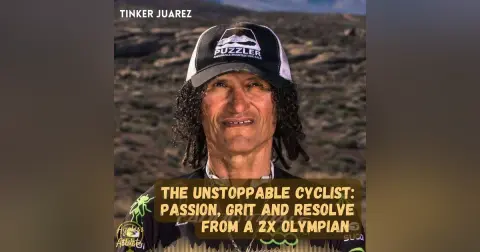
"Even at 63, I train like I'm still in my prime. The key is to stay consistent and never lose that hunger." 🔥 Tinker Juarez turned 63 this year, and has been mountain bike racing competitively since the age of 13. He continues to compete against and beat bikers half his age . He is a three-time cross-country champion and a four-time national champion in the 24-hour solo category. In 1996 and 2000, Tinker had the honor of representing the United States in the Olympics when mountain biking was...


"Even at 63, I train like I'm still in my prime. The key is to stay consistent and never lose that hunger." 🔥
Tinker Juarez turned 63 this year, and has been mountain bike racing competitively since the age of 13. He continues to compete against and beat bikers half his age . He is a three-time cross-country champion and a four-time national champion in the 24-hour solo category. In 1996 and 2000, Tinker had the honor of representing the United States in the Olympics when mountain biking was first introduced as an Olympic sport. 🇺🇸
Tinker is globally one of the most recognized faces in mountain bike racing. One only needs to hear the roar from the crowd when he's called up to the starting line, or hear the cheers for Tinker from fans along the course, to understand how popular a figure he still is. 🎉
So, why should you listen in? This is a rare opportunity to gain insights from a cycling icon whose career spans over five decades. Whether you're an aspiring cyclist, a seasoned athlete, or simply looking for inspiration to stay active and achieve your goals, Tinker's journey offers invaluable lessons. Stay tuned until the end - he shares practical tips on staying safe on busy urban roads while on your bike.
This episode is brought to you courtesy of Good Detour Indian Backpacking meals. For a limited time, get their delicious products for a 20% off discount with code 'AGELESSATHLETE' 🍛 https://thegooddetour.com/AGELESSATHLETE
You can buy some of Tinker's merchandise here: https://www.trailmanos.com/collections/tinker-juarez-collection 👕
Tinker's Instagram https://www.instagram.com/tinker.juarez/ 📸
Tinker also wants to thank his sponsors:
https://www.instagram.com/stottsbicycles/
https://www.instagram.com/cannondalemountain/
https://www.instagram.com/odigrips/
🙏
---
🚀 Love the show? Here’s how to support it
If something you’ve heard here has stayed with you, made you smile, or helped you keep going, I’d be honored if you’d consider supporting the show. 👉 https://buymeacoffee.com/agelessathlete
📰 Subscribe to the Ageless Athlete newsletter !
1-2x a month, no spam. We share behind-the-scenes reflections, longevity tips, and athlete wisdom you won’t find anywhere else. You can sign up at https://www.agelessathlete.co/newsletter/ 📩
29:03 - [Ad] Resilience Podcast Series
29:27 - (Cont.) At 63, He’s Still Beating Riders Half His Age — A Lifetime of Racing and Refusing to Slow Down | Tinker Juarez
Ageless Athlete - Tinker Juarez
===
Kush: [00:00:00] Who I came to the ageless athlete podcast. I'm your host Kush Condell. Well, I am mostly a rock climber and a key. New surfer these days, but I also love to dabble in a couple of other, uh, outdoor sports. One of those more immersive ones is mine biking. I love my little mountain bike rides, uh, in California. the adventure and the 12. And, uh, today we have an incredibly special guest. Uh, Doherty legend in the world of mine biking. Tinker Juarez. Thinker whose career in competitive cycling began with BMX racing in the early seventies has become a monumental figure in the sport.
He has achieved phenomenal success across multiple citing disciplines. In the career that spans. Over five decades. His BMX. Milestones [00:01:00] include becoming a top professional writer and owning numerous titles before transitioning to mind biking.
His accomplishments. Are nothing short of amazing. He is three dimes nor bike champion. Four times. Champion in the 24-hour solar category. And then in 96 and 2000 tinker had the honor of representing us in the Olympics when mountain biking was first introduced as an Olympic sport. His prowess. Doesn't stop there. Think of ventured into ultra endurance racing, where he continued to Excel.
Notably, he finished third in the grueling 2006 race across America. We will talk about this a little bit. This is like 3000 miles of cycling in 10 days. So imagine, yeah. Imagine like 200 miles of cycling a day. Uh, yeah, boggles the mind. What sets tinker apart is not just in longevity in the sport, but his [00:02:00] limitless drive to stay at the top. Even at 63 years young, he continues to inspire. With this rigorous training regimen. We will uncover his secrets to maintaining peak physical condition, his strategies for mental resilience and the passion that fuels his iconic status. Dinko shares stories from his, illustrious career. Including his Olympic experiences and the evolution of mind biking. We'll explore what makes him such an enduring athlete and the lessons he's learned along the way. Stay. The very end for sure, because he also offers dips for training. And busy cities and he also shares what. Little things we can do to stay safe on the roads out there. This is a real opportunity to get insights from a cycling icon whose career spans. So long longer than I've been alive. Whether you are aspiring cyclist. A seasoned athlete are simply [00:03:00] looking for inspiration to stay active and achieve your goals. Tinker's journey offers. Invaluable lessons so thanks again for tuning in and, uh, Here we go with this enlightened composition with a true master after sport.
Tinker: ~Um, ~ well, right now I'm at my house in Whittier, California, my normal routine is I usually have, coffee in the morning. like a slice of bagel some kind of fruit, you know, either bananas or, something to put on my, uh, bagel. and some orange juice, not too heavy because I normally have a big dinner and I eat kind of late.
and I figured that that food right there kind of holds me over the next day. So I'm not really that hungry during the morning, and then I don't like to really eat too much because I'd like to go out and try to train with an empty stomach.
Kush: For sure, you know, I also sometimes calibrate daily life into my meals. Sometimes, you know, I eat late and in the morning I [00:04:00] still have nutrition in me to go out and do some training.
But then sometimes it doesn't happen like that. So one just has to, merge the demands of daily living into one's training and performance routine
Tinker: yeah, yeah.
Kush: Tinker, tell us who are you and what do you do?
Tinker: I've been a cyclist my whole career, my whole life. I started, uh, I started racing BMX in, uh, 1973. never stopped riding. Uh, I never, actually stopped riding my bike. So I raced BMX and then I got into mountain biking. So, uh, cycling has just been in my, my, my blood since I was, Since I was 13, pretty much.
Kush: And how old are you now?
Tinker: I'm 63.
Kush: 63 years young.
Tinker: Yeah, I'm 63. ~yeah, and I started riding my bike at, I mean,~ I was riding my bike competitively at age 13. ~I, I started in the sport at BMX, which was a new sport. you know, I, I stuck with it and I just, I, you know, I love the competition. yeah, yeah. So that's kind of what I did in my, uh, ~I started in this sport that was, [00:05:00] uh, BMX and, uh, and did it for 15 years.
Uh,
Kush: congratulations on five decades of competitive, competitive cycling. Five decades of consistency in anything in life is, truly remarkable. Your nickname Tinker has a unique ring to it. Uh, is there a story behind it?
Tinker: not much of a story. Um, just when we were racing, when I started BMX, everybody, the friends that I hung out with that after school, we used to meet at a park and at this park, it was called Holyfield. And there was a, a big dirt hill. And we, uh, created it into like a, like a BMX park, sort of speaking.
We made a track on it. We used to, we just made jumps around it. everybody kind of had a name. And so the nickname, my real name is David. yeah, people started, uh, they, they started calling me tinker because of, uh, maybe cause I was tinkering [00:06:00] around my bike, always, always doing something with my bike, kind of, you know, became my, uh, my, my real name at that point, ~ ~
Kush: ~this is, uh, uh, an opportune time in a way for me to, uh, meet with, let's say someone like you, who's been at the top of the sport for so long. ~The Olympics are going on as we record. Right.
You competed, I believe in 96 and 2000, I think 96 was perhaps the first year mountain biking made it to The Olympics.
Tinker: Right.
Kush: Yeah. Uh, can you share what it felt like to represent your country back then as maybe a pioneering sport?
and a pioneer.
Tinker: when I was doing BMX, I mean, mountain biking, and I started in 1996. as I, you know, was moving up in the rankings or whatever, I, uh, I was writing for, uh, Climb Bicycles in around 1993. And, uh, in 94, um, I [00:07:00] got on Monk, I mean Cannondale and Cannondale started this big team and they, they asked me to ride for the team and, uh, it was Volvo Cannondale you know, I was really, uh, you know, racing out of, you know, my best, that was actually my best career was between 90.
93 to 2000. I've had, you know, really some, some good results and stuff. So, when we heard about the mountain bike getting entered, introduced to the Olympics, you know, I definitely was, you know, excited. As every, every mountain biker. I had a chance to make the team. So I, I was racing really good.
I was national, I was normal national number one, you know, I was really at my peak at that moment. So, so, uh, to make it in the U S team, it was, you know, super big honor for me, you know, representing your country, uh, you know, I was racing a long time before the Olympics, To, get a chance at my, at that time to make the Olympic team [00:08:00] was a, was a great feeling, you know, because there was only two Americans that actually made it, made it to the team in 96.
I'm
not
Kush: the sport in the Olympics, has the format maybe evolved over the last, uh, almost 30 years? The reason I ask is I rock climb. And this is the second year that the Olympics are featuring rock climbing and they have changed the format. So like from like, let's say one medal each for men and women.
Now they have two medals that they've divided the, the contest into, uh, two or three different kinds of climbing. So has mountain biking also changed in the, uh, Olympics? Uh, do you track that stuff? Does it get you excited?
Tinker: It's still the same except The races are just shorter, faster, more, uh, a little bit more technical. They've, they've kind of made man made trails now
where they have more challenging rock [00:09:00] gardens, more drop offs, more jumps and things like that. So it is, definitely a different kind of a sport as far as what I used to do it.
I mean, we used to go out for about two hours. Now mountain bike racing is about an hour and a half. like, I just watched the Olympics this year, well, just a couple of days ago and they did like eight laps and I think their racing time was probably around, I don't know, I'm sure the winning time, but I could guarantee it was about an hour, hour 30.
Maybe, you know, maybe it's a little bit longer, but not much longer. it's definitely a big change in the, and, and the way they, the way the mountain biking is, you know, just more, uh, technical, more, uh, quicker laps, meaning you have to just, you have to be recovering a lot faster and you gotta have, you know, you're have the right equipment for the, for these types of tracks now, I mean, You know, now you're more riders are using full suspension instead of hardtails.
[00:10:00] that's a big difference. Uh, you know, it was back in, when I was racing, you could ride a hardtail, but now if you ride a hardtail, you know, on the tracks that they make them, you could probably crash or flat,
you know, a lot of things, you know, it's just a much slower bike on, on the, you know, the typical courses that they make nowadays.
It's not, it's not like, um, they're not smooth. They're just, you know, a lot more, uh, a lot more challenging and more exciting to watch.
Kush: the racing seems to have evolved with both the technical demands expected, but then also the changing nature of modern consumption. Uh, things have to be kept up with, let's say, I don't know, the attention economy, if you may,
like,
You want to be able to create like the right kind of content. So people out there are watching it on their, on their platform, whether it's television or social media, uh, yeah, uh, it, it makes sense.
Maybe it, [00:11:00] it has evolved the same way at the sports side, but it's still fascinating to hear about how it has specifically evolved.
for the sport of mountain biking. Going back a little bit though, uh, Tinker, um, I'm curious, were you a natural athlete when you started, uh, started with BMX? Did you come from a family of, athletes and mountain bikers? are there any specific points where you realized you had the talent for the sport? take us through
those
early years.
Tinker: question. Uh, no, I don't re Uh, the background of my family, there's no cycling at all. As a kid growing up, I, I enjoyed, I enjoyed, uh, riding my, my BMX bike. so yeah, so that was, uh, something that I love doing.
I, when I was in high school, I did track, I ran some track and things like that. but the bottom line, the sport that I loved most was, uh, BMX or I did it for 15 years you know, my family [00:12:00] definitely was a big support and getting me to all the races every weekend when I was a kid I used to race at least three times a week in the BMX days.
And that's quite normal. I mean, kids nowadays race a lot in BMX, you know, the races are short they're over in a minute, you know, like a minute. I don't know how long the races are, but they're over quick. yeah, so for me to, um, to get into, to, uh, mountain biking, it was all about just, you know, working on my endurance.
I wasn't into riding a road bike at the time as a kid. I was just a BMX. And I rode that for, uh, you know, every day after school, but I never thought about owning a rope, a ten speed back then. But as I got into mountain biking, you know, my endurance, I realized that the sport was, you know, needed some, uh, I needed to get some miles underneath my legs, so to speak.
And the competition I was racing against were guys that were [00:13:00] racing, uh, you know, are, are from the road. So, um, right away I realized that, you know, these guys, you know, ride their road bikes and they put a lot of, a lot of time on their, on their, on their bike. So, um, that, that just made me, uh, realize, made me want to get on a, you know, ride a 10 speed and start putting in the miles.
you know, I had the skills from the BMX. So my BMX skills helped me get into mountain biking. It definitely helped my, uh, , just my confidence in riding trails, turning, climbing, being smooth, you know, jumping over things and all that, you know, the, the BMX for the 15 years of racing definitely helped me in all that.
So, uh, riding against the road guys, they were definitely, uh, Didn't have the skills of knowing how to turn and jump and and rice, you know technical trails So that I had an advantage in them and they had an advantage on me. So Just [00:14:00] by the endurance. So I just had to kind of try to balance it out.
Kush: You know, I do a tiny amount of road biking. I've been doing that for many years. And then, uh, a few years ago I picked up a mountain bike. So I had like the opposite, uh, path to you where, uh, yes, I can sit on my mountain bike and I, I mean, sit on my road bike and I can go for a few hours. When I started mountain biking, it was also scary, like starting it in my forties. And maybe I'm just a, I don't know, a timid cat, but, uh, I can, I can imagine like the, like you acquired a lot of those, uh, fundamental skills at an early age, you know, all those technical skills while the other people who are coming from a different background, they had to, you know, kind of learn their way a bit more carefully
and
things which were so natural for you perhaps for, uh, took, took, took more perseverance and, and, and, and intention from people who came in from a different background.
Tinker: Right, right. Yeah, I mean Like for instance, [00:15:00] this, the gravel that's just kind of exploded in the sport. Um, guys had, you know, ride road, you know, they get on a gravel bike and they're on dirt and it's, it's totally a different technique all the way around. So, so I have, I even had a slight advantage in that just because when I, I know how to ride smooth.
And with the skinny tires, guys, they're a little bit more scary about going into turns, going into it really fast at a high speed. so yeah, my skills came back in with the mountain bike skills and, uh, and things like that. So, um, but it didn't, it didn't take long for the roadies to get good on gravel bikes.
it did require some practice riding on the dirt for sure.
Kush: From, let's say, technical, uh, explosive BMX biking, you have gone on to perhaps specialize in ultra endurance mountain biking. let me first ask you, what is ultra endurance mountain [00:16:00] biking, uh, Tinker. And then, yeah, why did you, uh. end up at, uh, this type of mountain biking as your specialty.
Tinker: you know, mountain biking, I've always loved endurance, you know, riding, riding my bike, the longer I'm on my bike, the better I feel on my bike. So that's my comfort zone. Um, when I started into mountain biking, it was really all about, uh, cross country was just shorter and it was faster.
And so as I got a little bit older and the competition got a lot, a little bit faster, I was lucky that the sport started growing into, uh, where longer distance were starting to get popular. Like marathons, 40, 50 miles riding on a mountain bike. That started feeling, that started working for me because, I just enjoy being on my bike and, uh, the longer I could be on it, the better I, I, I feel, you know, I feel more at home as far as that goes riding my bike.
So yeah, Endurance has always been good for me. I was [00:17:00] never really a crazy downhiller. I was never really You know like a freestyle guy or any of that that never really was my kind of my type of thing I it's you know, it's cool to watch but um, you know, I'd rather go uphills than go downhills You know, it's my favorite
thing, you know, my choice if I had if I had any choice I would rather be going up that hill instead of trying to go down as fast as I can You
Kush: To me, and sometimes it seems Like two ends of the spectrum of bicycling. Like you have your roots as an explosive BMX biking, and now you do these super long, epic rides, which go on for hours and hours and hours. Kush, do you think your natural talent though, lies more in the endurance end of things, or perhaps in the more technical end of things?
Tinker: , I've always felt like I have much, uh, just, uh, you know, the [00:18:00] endurance in me is a lot better than any other, you know, as far as it comes down to riding my bike. I mean, I've done a lot of 24 hour races. and at one point you just get tired of them and you get burned out at a point in your career.
And then I did, you know, Ram Race Across America. I did that once. I'm glad I, you know, I wanted to do it and I did it. But after I did it, it was, there was never a chance to get how to do it again. It just really, uh, was just, Tore me up took a took a little while to get back to feeling normal again, but I enjoyed the challenge, you know, so When it comes to challenging, you know riding far and long, I'm always looking forward to it
Kush: What is, hang on, what is race across America? Are you literally riding your mountain bike or your bicycle across from one end of the country?
Tinker: Right, right, it's you know, the Ram is basically it's a Ram race [00:19:00] across America is called the Ram it's, it's on the road bike, but when I was doing the long distance on my mountain bike, and I go, man, I need to step it up. And so when I thought about the Ram, I, I seen it on TV. And I said, yeah, that, that looks like it should be good for me.
So I gave it a shot. I had a good crew, probably had like eight people to help out. And we started at, uh, Oceanside in California and we raced all the way to Atlanta, Georgia So it was like 3, 000 miles and, uh, over 3, 000 miles. you know, it's a, it's a big event.
And, uh, I gave it a try and I survived and I made it, I think I got like third place. So I was happy with my results. Um, it wasn't my kind of racing because what ended up happening is that, you know, it's all about, trying to ride without [00:20:00] sleeping. So if you could ride your bike and keep on going, the less you could sleep and the more you could ride, the better your chances of winning a race.
And, uh, as a long distance rider, My whole life, it's always been important to have good rest. Sleep is number one in a ram. Sleep was not, if the less you sleep, the more you ride, the better chance you have of winning the race. And that just really wasn't, you know, my type of thing. so I needed a little sleep I got a couple hours of sleep every night and still was able to, it was mandatory at the time to sleep.
You had to sleep about three hours max. so that was the reason why I ended up, uh, doing that race, but now they, you could do the ride without resting or sleeping. And so now guys that are doing the races are doing it at. I think just under eight days, something like that to solo writers.
Yeah. And that's, [00:21:00] that's incredible.
Kush: Wow.
That's insane. How long did it take you?
Tinker: At the time I did, it was like 10 days. I think it was just under 10 and a half, days is what I
think.
that was because they, we had to stop and rest and all that.
Now that the ram has changed, you could go on and ride as long as you want and stop when, as long as you want. So it's, um, yes, it's totally changed, but I, I did do it a couple of years ago, um, as a team, an eight person team. And I thought, you know, this, this is not going to be bad.
Yeah. So I was able to, uh, to rest, you know, with eight riders, you get a good amount of rest and you get to see, You know, at least this, uh, you're riding across the country. So you get to see, uh, a lot of the stuff that you didn't see when you're
doing a
solo.
Kush: The solo thing. I'm still trying to get my head wrap around [00:22:00] the idea of doing 3000 miles in 10 days or 11 days, you are riding 300 miles a day.
You know, most,
Tinker: No,
Kush: I mean, most people,
most people would do like a hundred mile long ride, and that would be like a, like a capstone of there. They're recreational cycling.
You were doing
300 miles every day for
11 days with maybe a few hours of sleep. I mean, did you ever fall asleep while you were on the road?
Tinker: no, no. But I definitely felt tired. That's for sure. My legs were not moving. They were barely moving and I was barely moving. It was really a pretty painful just to go slow. When you can't go any faster than what you're going. So it just seemed like the counting the hours were just, you know, it seemed like it was taking forever.
So, um, yeah, it was tough. It was really tough. but yeah, when you're saying about 300, uh, 300 miles a day. Now my trainees, [00:23:00] uh, a week is like 350, 350 miles a week. So it's, uh, it's crazy to think that doing it in one day, 300 miles, but um, you know, every day for that long.
Yeah,
Kush: your weekly training regimen sounds very intimidating as well. But yeah, doing that in one day, uh, yeah, just boggles,
just boggles the mind.
Uh, beyond that, just, you know, trying to get more into some of your, your racing career, you have done so many things, so many races, Olympics to all kinds of, world championships under your belt. Are there maybe one or two races that you, or races or accomplishments that you
are particularly proud of? And tell us about those, uh, Tinker.
Tinker: yeah, there's a lot of titles that I, I'm, you know, a lot of titles I'm pretty happy with or I'm very happy with Ashley. I'm blessed and thankful. [00:24:00] You know, it was always, uh, one of the, the toughest one is, uh, when you're an Olympian and you're racing in the Olympics and you're trying to race for the, going for the medal, I mean, not meddling was tough, but after a few years, just, you know, having that, uh, that title of being an Olympian, it's really, uh, it really kind of now means a lot more than, you know, just meddling.
I mean, yeah. I'm really, really just thankful to be able to say I'm an Olympian, two time Olympian and you know, and um, so yeah, I try to, uh, think about all the Americans, you know, since the Olympic, how many Americans have more than two Olympians and I think there's probably right now only one American man that's three time Olympian, but has never medaled.
And there's, there hasn't been any medals yet in the men's in the Olympics. And in the women's there's been two medals so far in the Olympics since 96. [00:25:00] And this year we, you know, it was great to see an American women get silver medal. And, uh, and that was, I think 1996, there was a bronze medal in Atlanta city or Atlanta, Georgia.
and it's taken this long to see a woman finally, get ahead of her and, and got the best now, best American in the Olympics is silver. Um, so we've, we came a long ways, but it's showing that how hard it is to make a medal in the Olympics. but also, yeah, also to being a, um, Silver medalist as a world champion was a big deal for me.
Uh, that was in 94 in, uh, Vail, Colorado. you know, my best year was in 94. I was silver medal. I was U S national Olymp, uh, U S national champion. yeah, yeah. And I think I was also, but I don't think that was a 94. I think [00:26:00] it was 95. I was a Pan American gold medal. there's a lot of titles that are really important, but they're just, they just stick with you.
And it's, you know, when you think back, it just gives you that little motivation every day, you know, just when you have a chance just to think about it and it's just, you know, you're just thankful that you've done it
and, you know, and you're still doing
what
you love to
do.
Kush: That's right, most people who have had your kinds of titles are probably not, uh, racing competitively anymore. And you are somehow still at the top, still training hard and going at it race after race. Tinker, you turned
professional quite early in your career.
I think in your teens perhaps, right? So to me that, wow, that sounds,
Tinker: I actually, I,
was, yeah,
at age 15, [00:27:00] and the reason I turned at age 15 is because when I raced
BMX from 73 to 75, I was already, you know, up in the expert category, at expert level, and I was racing at a, you know, at age 15, I was winning a lot of races, they, they started a pro class, and so I, I decided to just turn pro at age 15.
And I was the youngest at the time. So it was quite a, it was, you know, it was, it was a good move because I was, like I said, I was re I really raised four years in BMX and to turn, um, and yeah, to turn pro at age 15 at the youngest, uh, it was, yeah, it was a big jump, but I never
regretted it.
Kush: this may be a dumb question, but, uh, what does turning pro in the world of mountain biking mean? is it, is it, did you get a sponsor right away who were paying you, let's say a
monthly salary? What, what, what, yeah, what is
turning [00:28:00] pro
Tinker: yeah, pretty much when you're at a pro level, you, you get, if you, you get sponsored by a team and normally the team knows you're at, you know, at the high level as a pro. So you get a salary and, uh, the salary helps you, you know, take care of your training, your expenses and things like that. And so, um, yeah, salary is, you know, as important as a pro because, you know, you, you, now you got to do it, you know, it's almost like a full time job.
You know, you don't ride 48 hours or 40 hours a week, but you still got to put in a lot of hours
to stay in shape and to keep, you know, stay at the level
as a
pro.
Kush: most 15 year olds, even back then, I'm guessing were likely getting ready for high school, maybe. Maybe plans of going to college and here you are turning pro. So I want to like, understand a little bit more about that part of your
life.
Firstly, firstly, yeah. [00:29:00] So like, were you still going, were you still studying at the same time as turning pro? And then I'm curious, like what did, I'm sure your family was quite proud of you for being recognized, but how did they take you, take
the shift that you were making with your life and your, uh, your,
career?
Tinker: yeah, when I was at high school, I was, yeah, at age 15. And, uh, you know, I didn't really have a chance to make any plans of what I was going to do after high school. so as I was making money, I thought, well, this is a good job. And I'm young and I was, you know, I didn't have to, I did have a few small jobs, you know, when I was in high school.
but it wasn't, uh, they weren't fun jobs, you know, there was nothing, you know, exciting about it. So. So I thought, you know, as long as I can make money, I'm going to continue to do this even after I graduate. So, um, so yeah, I, I really didn't study to be anything, you know, I didn't have any [00:30:00] future plans.
~And I was just, you know,~ I was so hooked into my biking that I didn't really even have a chance to think about that. Once, you know, once I was. Cycling, you know, full time. my mom and dad were supportive, you know, they were happy with what I was doing. they pretty much just let me, uh, choose what I wanted to do.
And so, yeah, racing my bike and I was able to, uh, pay the bills and do what I love. That was, you know, that was, you know, a dream for me as a
BMX kid.
Kush: Taking a quick minute to announce. The sponsor of today's show is an amazing brand of Indian inspired. Find backpack meals. From good D door. I discovered them when I was at outside festival earlier this year. I tried some of these flavors. That they had, and I was immediately hooked.
They took me back to, uh, eating food. Uh, at my family's house in India. You can find links on the show [00:31:00] notes you can go to the website. And, uh, you can use the code ageless athlete to get a great discount. My favorite flavors. Might be the, uh, bunnies crumble. And then the rice, my rice, and then also for dessert, they had this delicious moon got Hava. Hard to believe that, uh, those were a backpack meals.
So yeah. Give them a shout back for sure.
it's certainly amazing to have. a supportive family who can nurture, uh, let's say off the beaten path types of, uh, dreams. Were your parents concerned at all though? Like, did you have like, I don't know, family money or something else? Were they concerned that, uh, maybe 15 years down the road, like, uh, how would,
you know, how would David, uh, continue to make a living and, uh, succeed?
Tinker: I was already at probably eight or nine years already racing BMX. you know, I didn't [00:32:00] really have a chance to think about what happens, you know, what's going to happen if I don't have a team, you know, I just knew that as long as I, you know, kept on doing, uh, kept on racing good and racing at a high level and sponsors were there to, you know, to support me, I didn't really see any point of, uh, stressing about it I didn't let the future stress me out.
I just kind of lived life at the moment and I think that was kind of the way it was a lot easier than worrying about things. if I had to work, I had to work I wasn't going to be able to work and make. The kind of money that I was making in the BMX, I'd probably be making a lot less.
So I figured, you know what, this is a good paying job. I'd rather just keep on improving and keep on trying to better myself every year. And, and, and, you know, and see what it's going to take to, uh, maybe to get a bigger sponsor or whatever. So those are the kinds of goals that I had. Just holding onto the [00:33:00] sponsors as long as you can, making them happy, giving them treating the people fair, you know, and, and just, you know, trying to have a good time you know, spreading out the spreading out the word how, you know, how great the
sport is.
Kush: You had this conviction, and then you had, uh, the ability to really follow that passion and, uh, Yeah. And you've been doing it ever since. Uh, wanted to speak a little bit about perhaps the evolution of the sport. You have been right in the thick of it for, again, for like 50 years. Have you seen, let's say the popularity of the sport?
Like, Like, and the talent go through the roof from, I'm wondering was, was BMX and mountain biking so much more niche like 50 years ago, and now when you go out riding, do you see a lot of diversity? Do you see a lot of age ranges when you're in races? Do you find that [00:34:00] maybe the people who are, let's say winning races, maybe they're older then maybe the time when you started racing, how have you seen some of these things?
Shift thinker over the decades.
Tinker: well, one of the things I was lucky as I was growing up in the sport, uh, this every, you know, just seeing how the bikes have changed. The bikes have just gotten, you know, each year, it just. They're finding things to make the bikes better and faster and lighter. you know, that's kept me excited because every year I got something new and, you know, new for the, to test out and ride.
And, um, so yeah, so that was, you know, made it, made cycling, you know, excited because you get to ride these lighter equipment. It means that you get a chance to, uh, go faster and, and, and, you know, and become a better racer. you know, the way the sport was growing, I just mountain biking was just a, it was just a great sport that [00:35:00] people could do, you know, besides on the road, they could go out and they, you know, go out, out the dirt and the mountains and ride their mountain bike. probably why, you know, mountain biking was so good, got so popular because there's, you know, so many places to ride mountain bikes. You know, in the mountains. And, um, and so, yeah, so I think that was, uh, and, and then the, you know, the way the bikes have just gotten so much lighter and better and safer you know, it just made the sport
really, um, you know, grow in that way.
Kush: Yeah, I, the sport certainly
seems a lot more accessible. There are better and better bikes perhaps, uh, available at a cheaper price points. And trails seem to have exploded all over the place. I mean, uh, other people I speak with, I, I, I understand that. Yes, there are active trade, like in Jeremiah Bishop's words, they are like trail. Angels and trail elves in these communities all over the world [00:36:00] now who are working to develop these trails. And I think that's probably bought. Done a lot to demystify the sport and made it accessible for the, the average person. Wanted to also see how the talent pool and longevity of the sport has improved.
Like you are still competing. When you see people who are winning races today have. Has a typical age of that person. Has that also shifted? You know, we see that in other sports, for example, right. For example, in popular sports, like, like tennis, you know, people are, you know, winning like Wimbledon and like. Like, you know, the grand slams of the event at the age of late thirties, like federal is, but 20 years ago, that was inconceivable. You know, people winning, you know, the, the us open or whatnot, they were like in the early twenties. So has that also happened with mountain biking
where people are winning and staying in like top shape for a
lot longer?
Tinker: [00:37:00] yeah, that's a good question. I'm kind of, I'm kind of throwing off on that one,
but um, I think, you know, one of the good things about it is that, you know, the younger riders that are now starting, that are getting into the sport, are going really good. As you know, a lot of things have changed, uh, you know, now they have high school, high school mountain biking and things like that.
And I think that, you know, the NICA thing and this, this stuff that's happening at the school where kids could race their, uh, compete their bikes. It's really, uh, really helping the sport bring out some really good talent, young talent. And I think now, you know, there's a lot of kids that are really young that are going really fast.
And I think that's great because, you know, European has been, uh, dominating the sport for a long time. And mountain biking and cycling probably the big reason is because, you know, cycling is, is so much bigger in [00:38:00] Europe, you know, than any other sport. I mean, cycling is, you know, a big sport in Europe, where in U.
S. it's not a big sport. you know, it's kind of a bummer, but, I think cycling is just, you know, stayed at a big level because, um, I don't know, it's, it, because there are, Their cities and their countries, they allow them, there's no laws or anything, you know, keeping them from riding a bike or keep racing, you know, there's a lot of restrictions in, in us racing where, you know, there's, there's too many, too many laws where you can't even race your bike, which is kind of sad. Road cycling, especially, you know, if you see where they race at they they don't have any laws where they can't race their bikes You know, normally I I you can see cars stopped in a highway And just to wait till the race goes by and then after they go by and it's clear, then they let the traffic go on by. That would not be allowed [00:39:00] here in the U. S., ~you know, because, you know, it's just, there's, the laws are really just messed up and they won't allow that. So, um,~ cycling will, it's always going to be big in Europe. you know, that's why they're just much more, uh, dominated in the sport, and now mountain biking is bigger there is, you know, and sponsors are bigger
there and it's just tougher to get sponsors here to get you to get paid.
So, you know, If there's somehow we
could change that where, you know, sponsors could start, you know, paying
riders here, you know, we can maybe start seeing, you know,
faster Americans,
kush--he-him-_2_08-01-2024_125120: That's a very interesting perspective. It actually makes sense in a different way. Uh, I'm wondering that perhaps one reason why. Europeans are dominating the sport of cycling is because there are so many more people in general cycling in Europe. So many more average people are going to work on a bicycle, going to school on a bicycle, doing errands on a bicycle.
I am a bike. commuter in San Francisco and San Francisco is ahead of [00:40:00] many places when it comes to enabling access to roads for cycling. At the same time, even here, I feel scared. You know, I am on my bike path and there are often cars which are parallel parked blocking my path, or sometimes I feel Cars behind me are going to run me over.
And then that, this is still like, say I'm just going in LA and LA at least has some areas where you can bike safely, but then the rest of this country, I would feel very scared of going cycling in, in most of this country. So I'm wondering, yeah, if there is just this national consciousness that we lack when it comes to.
Things like cycling that they have in Europe. And because of that, perhaps, uh, yeah, the best riders just, uh, come on top just because so many more people are, uh, on their bicycles all over, uh, all over Europe.
Tinker: Yeah, that's true. Um, I mean, people are scared to ride here is because of the, there's so many people in cars. And, uh, [00:41:00] every day I go out, I, I always pray just to make sure I'm going to make it back home. my writing, I've always done kind of the similar loops that I normally ride. I know what roads that are dangerous and what roads that are less dangerous. And I just think that if you just try to be as safe as you can riding in the U S you, you know, you'll, you know, you shouldn't get runned over. You shouldn't get hit. you know, it's just that people are just. They don't really care about cyclists as they, they would in Europe, you know, we have too many people paying attention on their phones, not paying attention to what's, you know, what's on the road. so unfortunately, you know, we have to take, you know, riders like me and other riders, we have to just. You know, try to pick the right time. Timing is everything sometimes. I'm lucky because I get to do this and uh, I get to ride when people are normally at work. And I try to ride in the, between like 10 and 3 [00:42:00] in that window.
So I know people are still at work. But if you have to ride, normal people have to ride after work. That's when it gets really dangerous because people want to get home, people are in a hurry, people don't really care about cyclists, I mean, that's why I, I think gravel is picked up because it gives now these people more, they feel more safe there and they, they, they get to ride on the, uh, trails and they, and they get to do what they love is compete. And, uh, and a lot of roadies, they, they stop writing because the road is just too dangerous for, uh, for training on the road. And, uh, and now that gravel has, uh, you know, Give it a second chance for a lot of roadies. And I think that's great. I mean, it's great to see, see, you know, a lot of people back onto the, back into gravel scene because, you know, because they get to do what they love to do is ride their bike. I love riding on the road and I, [00:43:00] you know, I, I take a risk every day. But it's my choice and it's my job and that's just what I have, you know, I
just got to just focus on where Where it is that I like to that. I feel the most comfortable writing and uh, rather it's not exciting or not At least I know I could probably make
it
home every day and that's you know, that's
kind of my goal.
kush--he-him-_2_08-01-2024_125120: I love, uh, gravel riding for the same reasons. It takes me, it takes me away from cars. You're putting in hundreds of miles on your bicycle every day. Besides just choosing the right time. To be on the road, you know,
when there's less traffic, are there any specific things you do, uh, uh, tinker that we can learn from to stay safe on the roads out there on a bicycles?
Tinker: It's strange, I use a mirror on my bike as a professional, you think of guys wearing a mirror or using flashing lights and all this, those, those are kind of dorky people, you know, you kind of make [00:44:00] fun of them, but those days are gone. If you want to live and you want to be safe. you need a couple of things that rather it looks kind of kooky or funny or, you know, or not so cool. That's, that's okay. I don't care, but at least I get to, uh, at least I feel like I could come home every day and be safe. And using mirror on my bike has been the best thing that I think. It's the cheapest investment you could ever, you could buy on a bicycle. And it's the most safest thing. I always just say, try to drive a car without a mirror and see how, you know, see how much you use that mirror. You know, when you don't have a
mirror in the car, I mean, You need that mirror in your car.
You need that mirror on your bike. And I honestly love, I, I would ride if, if, if I didn't have a mirror in my bike, as soon as I pull out of the driveway, I would turn around and I would get a mirror on my bike because, you know, that is, that is the number one [00:45:00] thing that I feel that I feel so much more confidence because I know what's coming from behind me. and yeah, so the mirror on my bike is, it's the best tool that I find, the most safest tool out there. And, um, and also, you know, also the blinking light too is also, you know, another important thing too. So, having those two things are, you know, and then also, uh, trying to bright, a little bit with brighter colors help out too.
If you want to ride the road, You're going to
find anything and everything
to be
safe as you can. And, and to me, those three things, a mirror, flashing lights, and bright colors is a secret for me to, you know, to ride
every day on the road.
kush--he-him-_2_08-01-2024_125120: uh, every once in a while, I'll see some cyclists on the
road at night, who's, let's say decorated, like. A Christmas tree and with all the lights, and I mean, I'm like, you know, power to them. And now you are only reinforcing that if a [00:46:00] you know, if a two ex Olympian is out there with a, with a rear view mirror on their bike, then the rest of us can, also adopt these, uh, safe.
biking practices that may, may seem dorky, but will keep us safe in this world dominated by cars. Oh, what about a bell? Do you have a bell on your bike?
Tinker: A bell? No, actually,
uh, I, you know, because I ride the road so much, the bell is really not too important because. You know, um, I go around cyclists. I just kind of say something, you know, I'll yell out, I'm coming. But when you're off roading, I think it is important to have a bell because, you know, you're always coming around blind corners and there's always going to be a hiker and hikers don't like bikers.
And, and, you know, I can, I can understand that because I could see a lot of cyclists. they go around turns like they're, they own the turn and there's nobody that's going to be on this, on the same trail. And I can see why, you know, [00:47:00] hikers gets, you know, scared about cyclists. So I think it should be a law where you should have to have a bell on your bike on the trails, ~uh, just because, you know, it wars, you know, the war is a person ahead of you and, uh, when I ride, I'm just more safer when I ride.~
So I'm not the crazy guy that's going to go flying around a turn. I go
around a turn knowing that there might be somebody there, so I go around it slower. I'm not in a race, I'm just training. I'm planning on having a bell. I'm not trying to, you know, think that I'm just cool without one. I do go around sometimes a turn and I forget to say something or I try to go around a turn and I'm not, you know, I might go a little bit too fast, so I'd rather be safe than sorry. Uh, I haven't hit anybody and I, I plan not to ever try to hit anybody. So, um, yeah, I think a bell is a key thing and, uh, I definitely will
have one in the future on my mountain bike. But on the road, um, I really don't really see it important.
I, I, um, you know, it's easier, you know, you're
quieter and you're not going to
scare somebody and normally I don't [00:48:00] mind yelling out
something, you know, you know,
right up coming
by or
whatever.
kush--he-him-_2_08-01-2024_125120: good advice over there, uh, Tinker both on trails and also other multi use areas like I crossed the Golden Gate Bridge when I go cycling and there's So, many tourists taking photos and I wish I had a bell. I'm going to go get a bell for my next ride.
Tinker: yeah. I mean it's it's a cool thing to have. I mean, it's you know,
it's just share I mean you want people to love cyclists. You don't want them to hate
cyclists
So the best way to do is just to be you know more cautious You know more friendly to the people that are out
there walking
too,
kush--he-him-_2_08-01-2024_125120: Good advice there. Yes. If people don't hate us, then they will be more likely to embrace. More cycling on the road,
Tinker: right?
kush--he-him-_2_08-01-2024_125120: moving on a little bit and talking a little bit more about your career on how you've been able to sustain a career with [00:49:00] being a full time cyclist in a sport that traditionally doesn't pay like the big bucks.
Are you still. a professional writer. I actually noticed recently that you had started something like a, like a GoFundMe for being able to raise money. So, uh, yeah, curious. Talk to us about like, how do you make a living and why are you having to raise funds?
Tinker: well, okay So I had I was on a team this year that I signed a contract and I was supposed to get you know some salary a month. I was supposed to get paid a month You And I was supposed to get all this, you know, bikes and, and all this stuff. So I was counting on this money to support my racing and, you know, pay for my traveling, pay for my, you know, my expenses.
You know, I do about, you know, 15 to 20 races a year. you know, I was planning, you know, I have plans of doing these races. And once I realized that this team was, you know, bad news [00:50:00] and just, you know, really didn't, you know, was lying about everything pretty much. Cause you know, every time I was questioning about my money and bikes and on and on, there was always an excuse after an excuse. They could never answer my questions. So I just said, you know what? These guys are are not going to do anything for you, man You got to just get out of this bad situation so yeah, I got out of it and I ended up having now, you know I I had was counting on the money to pay for my Expenses to go to races so I didn't really You know, I didn't want to just like I could continue riding my bike, but you know But people want to see me continue to race and I thought well, you know, anyway You know i'm gonna need to get some kind of help. So I thought to go find me and The fans, when they heard about me this bad news with the team They thought, Hey, you know, you know, what can we do? They wanted to help out. And so they brought up this GoFundMe [00:51:00] and I thought, Hey, you know, that might be a good, good start. so I did, cause I want to race and I want to finish off this year and hopefully next year I could get a team where I could maybe get some money so I could continue to race, you know, it's not, I could still ride my bike, but you know, as far as racing, racing is not cheap. you know, and I could race local races, but people like to see me race, you know, you know, worldwide, I won the national, I mean, I won the world championship in masters, but I won in Australia, you know, that costs a lot of money to go there and I traveled to Spain and things like that.
And, uh, without a sponsor, you know, you, it's, it's becomes. You need to make money to be able to, you know, so to, to do these races. And so that's why I started the GoFundMe I'm going to be able to, to make it this year, you know, get by, I'm going to continue no matter what it's going to take, I'm not going to stop racing and I'm hoping to be able to get a [00:52:00] sponsor that will pay some money.
I don't need to get a lot of money. I just need to be able to get help. to continue my training, to continue my, you know, my lifestyle as far as racing my bike. I mean, I would hate, I mean, I don't need to make money. And if I don't make money, then I won't be able to race the way I want to race full time. And, uh, and that's the reason why I'm, you know, even though I'm part, you know, I'm not a professional, like I used to be a full time professional. I figured that I put in enough time and to become a legend, sort of speak as everybody, you know, sees me. I think, you know, it's mainly just going and giving back to the sport.
So if I could go to the races, people love to still see me ride my bike. So I would think that, you know, being in this, you know, done this sport for almost close to 60 years, you know, people, Love to have me come to the races. So, so I'm figuring, you know, asking, you know, getting still paid like a pro, [00:53:00] you know, I, I don't see why it shouldn't be, uh, why it shouldn't be able to, uh, get paid doing it because I've done it my whole career mainly I want to go out do races, compete and, and sign autographs. And, and show people that you can still
do it at my age. And, and, and that's number one thing. I mean, people are blown away to see me competing at a level that I'm at and to
still see me racing
is it
gives them motivation.
It gives
them hope too.
kush--he-him-_2_08-01-2024_125120: Tinker, you are one of the most recognizable faces of mountain biking in the world. And you are hugely inspiring to people all over the world. I think not just mountain bikers, but to just the everyday person out there looking to chase their dreams. We will be sure to put the link to the the fundraising and the show notes.
So yes, let's get, let's get more people
rallied
so you can continue traveling the world and inspiring, uh, other people. [00:54:00] Uh, let's talk a little bit about your training. you know, we already spoke about like the countless miles you're putting in day after day. what about like your, your like, uh, things like your diet?
are you having to shift what you eat today to what you perhaps consumed, uh, even a decade or two decades ago. Like, have you, do you have any, any specific like strategies to stay nutritionally, uh, fueled for your kind of, big training loads?
Tinker: ~So, um, So you're basically asking me, what do I, how do I train or what do I do for training? ~
kush--he-him-_2_08-01-2024_125120: ~I'm asking you, what have you learned about your diet? Like what, what kind of food are you eating day after day? So you can support your, uh, Workload. ~
Tinker: ~Well,~ I'm not really into any special diet or anything like that. I was as as a professional at the, you know, at my at my peak time I was a little bit more, I was more careful what I eat, things like that. But now I eat normal, just regular, you know, every day. I mean, you know, I try to eat as healthy as I can every day.
I mean fish, you know. During the week, uh, I'll have fish, I'll have, you know, I'll have some meat, I'll have pasta, I'll have [00:55:00] just, you know, pretty much, you know, normal food, chicken and things like that, and, you know, vegetables and things like that, um, now that I'm at my age, I don't, you know, the, the dieting is not, is not that important to me. I mean, I, you know, I, you know, I want to try to enjoy my training. I want to enjoy eating and I want to, what I try to do is as long as I train every day, I like to eat what I want to eat. I don't want to have to, uh, eat less or eat different because I'm not riding enough. One of the reasons why I like training is because I like to eat. And if you like to eat and you still think you can eat like you're in high school. Then you can better keep writing, you know, or you're gonna, you know, it's gonna you're gonna pick up that weight really quick You know, our weight doesn't come off like we used to do when we were younger I still like to eat, you know like a normal dinner and not have to cut down and certain food because You know, I'm at an age where I can't eat hamburgers, or I can't eat burritos, or I can't [00:56:00] eat all this fun food, or pasta, or pizza, or, you know, I can't have a sandwich without a bread.
I want to have, I want to be able to eat all this stuff, to eat like that, and I want to have beer, I want to drink, I want to have You know, these kind of stuff. I wanna, I don't wanna be so stressed out that, you know, racing is really just checking over my whole life in a big way. ~So I wanna try to enjoy, at this age, be able to eat what I want and, and, you know, and go at a, you know, go at a good condition. I, I don't wanna look, you know, like I'm, you know, like, like Mr. Hawk or anything. I want to, you know, I don't want to look either like a big heavy guy, uh, but I'm a normal guy and I want to show that you could be a normal weight guy and still go fast. And so yeah, so eating, it's always been, you know, my, one of my favorite things, you know, I love to eat and as an American, we all love to eat. That's why we have Places, you know, you know,~ you know, I think what we have to do is to to cut down and people's getting overweight is to stop all the Restaurants it blows them at a certain hour at night.
So people won't be continue eating. But um, yeah, it's just an American lifestyle You know, we love our food and we love to eat so the only way I'm going to be able to enjoy it is to be able to You know, I'm blessed. I could be able to ride every day. And so it keeps me motivated to keep my weight at a certain, you know, at a certain weight. yeah, so it just keeps me, um, keeps me wanting to ride my bike. Um, as far as my training, [00:57:00] I try, I can't train like I, I mean, I'm starting to feel the, the burn, the, the, the fatigue. The, you know, my speed is not the same as it used to been, but that's, because of your age. But I'm
still not going to try to slow down and cut down, you know, cut down my training in half. I'll try to cut, you know, I might have to slow down in miles, but I'm still going to try to
continue to train as close as I was. I might not be as fast,
but
I'll still try. Try to train the
same as I used to,
kush--he-him-_2_08-01-2024_125120: What about things like, so, you know, as we get older, we find that our bodies are getting stiffer. You know, we wake up in the morning and, uh, we can't just suddenly bust out like 20 pull ups or go for a sprint. Right. So those things happen to us. Have
Tinker: you know,
kush--he-him-_2_08-01-2024_125120: you adopted any kinds of mobility or cross training to again, stay limber and be able to move like the way you [00:58:00] want to?
Tinker: yeah, I mean everything has definitely slowing down I mean it is harder for me to it takes me a while to get fired up to go get on my bike So that's why I kind of do my routine in the morning, which is not a whole lot I just take care of the stuff out in the garage brothers just cleaning, you know, cleaning my cars getting you know, whatever I started actually started doing weightlifting more, consists, I mean, more, I'm more focused on doing my weightlifting now, even during the season. I mean, I try to do it no less, at least twice a week. I mean, it's, I got to squeeze it in here now. just because I know for sure you do lose your strength and, and, you know, so, and the only way I'm going to be able to try to keep my strength up is To keep my, my endurance going and all that is by just doing some, you know, basic weight training. five different exercises and weights. I do bench, I do curls, I do, a few things on my legs. [00:59:00] I spend at least a good hour and weights. and then I'll do, uh, then I'll go out and do my ride, by 11, by 11 o'clock and stuff like that. So. You know, if I do waste, normally I'll do my,
my cycling.
After my weight training and it does feel a little, uh, it took a little while to get used to it, you know Feeling to after you do weights and going around your bikes your bike your bike your body feels a little
heavier
kush--he-him-_2_08-01-2024_125120: Mm hmm.
Tinker: as bad, but you know, I just figure you know It's it's just important for me to try to keep my strength up I'm, not trying to bulk up or anything. I'm just trying to keep my my
muscles, Tuned up sort of speak keep them tuned not not do anything heavy just You know, try to do, uh, more
reps than anything yeah, so weight training has definitely been my newest thing that I've
added into my, uh, into
my training, you know, during my
week of, uh, riding.
kush--he-him-_2_08-01-2024_125120: Absolutely. I hear [01:00:00] that consistently across a lot of the older athletes that I speak with. The one thing different about you is you do
your weight training before, let's say your sport specific training, which is going riding as a, as a rock climber. I am advised to optimize. My
climbing first, because I know that if I lift, like, if I do a bunch of like, uh, deadlifts or, uh, bench presses before I go for like a climbing training session, I will not have any power
I go climbing. So, so like,
I don't know, do you ever have that? Or maybe you've just
been riding for so
long.
Tinker: that's it. No, that's a good point. I mean, Rock climbing definitely is, you're using your arms, you need your arms to be rested. You know,
um, you need to, you have to have that power in your arms. I could see as a rock climber, it would definitely make climbing a lot, you know, stiffer and harder. And so I would, I, I think in that sport and [01:01:00] your sport, it would definitely be something to do afterwards, but it's cycling and I'm, I'm on my bike and I'm sitting down I'm not using my upper body as much as I'm using my legs. So it's not really, uh, that important for me to worry about my, weight training as far as, you know, you know, doing it before or after. it just took a while to get it. I did feel a little bit slower when I rode my bike, but as I got used to the routine, I started feeling, I started seeing a little bit of the improvement. I started noticing, oh, wow, I'm pedaling a little bit stronger. You know, it could be a mental thing or whatever, but it definitely gives you better focus on your training when you, uh, when you start to notice the, the difference, what weight are doing. And, um, so yeah, so now that I'm doing it, I don't want to stop because it's like anything.
Once you start to feel like you're seeing the, the, the help that it's giving you in your sport, you, you don't [01:02:00] want to stop doing it. So that's kind of where I'm at now. I don't want to skip, you know, two days is really, I almost want to do three days now, but I think now two days is fine. As long as I try to stick with it two days a week, I'm
happy with it,
kush--he-him-_2_08-01-2024_125120: got it. What about, uh, stretching and mobility? A lot of people, again, like I said, like I can't, you know, I can't go down into a split. Well, I will never be able to do a split, but I definitely feel stiffer, you know, and I do certain things. Do you do any stretching either before or after
cycling?
Tinker: uh, good question. You know, my son is really on me about not stretching. He is. He's, he's a wrestler. He's been, you know, been into wrestling now for about two years, three years, and stretching is number one thing, and he's stocked. He can't believe that I don't stretch. He thinks that I should stretch, but I listen to him for all his good advice, but honestly, I, [01:03:00] I'm not going to really change because stretching for me is not that important. I'm probably only speaking for myself, but I know for other athletes, stretching is probably the number one thing, and I'm just lucky that I don't have to do it. I find that, um, just moving around, doing what I do outside, I'm not just staying still.
I'm stretching around, I'm moving my arms, I'm moving my legs.
So I am staying pretty active before I go out and ride. So I am loosening up in some ways. And I think even with the weightlifting, I think the way I'm moving, using my
arms and stuff,
to me, it's like stretching, you know, I don't stretch. Maybe I should have, but I've never really felt
that I
really needed it.
kush--he-him-_2_08-01-2024_125120: Well, you have found ways to stay limber with all the other things that you do. Wanted to speak a little bit about the mental side of. being able to keep a long career of cycling. I know that sometimes if I [01:04:00] have a long training afternoon ahead of me and I've been climbing for a long time,
every once in a while, you know, I hit a block and I just don't want to go and put in the hours.
Have you hit those kinds of blocks? Yourself, you know, you have like a long, like, ride plan and you just don't have the, uh, the oomph to go out and charge.
Curious, how, how do you get past those kinds of things?
Tinker: Well, you know, this year was a tough year because of the team. I was promised a lot with my team. I was actually even promised to have a signature bike. So having all these promises and a contract and, and everything just, Everything was become a big lie. It really did drain me. It really took a lot of, uh, a lot of, uh, confidence out of me.
My training started slacking and I, I didn't have that, that hunger. I started just, I was, my mind was more upset than happy than [01:05:00] enjoying what I'm supposed to be doing. So it was, I was noticing that it was really bringing me down in that way. I almost had to, a few local races. I didn't want to go because the motivation that I needed, the confidence I needed was not there. And I could hide it because that's just how I am. But honestly, it just didn't feel right. And I didn't like the way I was feeling. So, When things are not going good, you definitely lose that motivation, that drive that you need, that confidence to give you, to make writing fun and everything. I tried to, that's why I had to get off this team because I just realized that I'm I'm really getting, I'm getting, you know, I'm starting to go backwards.
You know, my confidence is down, my, you know, my focus is, you know, I feel like I'm just making up this feeling. Which is you're really not a good feeling, you know, so I was really losing that spark that I needed, you know Even somebody said they they read [01:06:00] something go. I'll take her I noticed that you're you're you're writing you're you're you're writing has gotten your your confidence is back up because you're writing is you're you're writing much more positive And that's just kind of interesting that people could tell when you're down and when you're up just by your writing or how you're talking. when I left the team, I was definitely bummed out, upset, not happy. And then I was, you know, I had nothing going my way, you know, to finish off the season, but I got a, I got a text, a message from Cannondale. And I was blown away that Canada, I thought that was history, you know, four years ago. And then they told me that they would love to give me some bikes. It wasn't a sponsorship. It was just give me bikes. And now right there, just. automatically made a 360 complete mind change to me in a big way. And also, I started feeling more confidence. I started God, I just felt like I just got, [01:07:00] you know, sponsored again. And it was just basically give the bikes and, you know, so it just takes, it doesn't take a lot for me to get my, My motivation up when things go right and the way it should go Then I feel really good to go out and ride every day and feel confidence that I you know that You know people believe in me. My sponsors believe in me and You know and there's hope at the end of the road So, um, so yeah, so now I have good motivation because I, you know, I got bikes from Cannondale and it, it doesn't mean that they're going to sponsor me, but they just said, Hey, here's spikes. I hope this will help you out. And so that was great. And that's all it took just that little bit just to keep me going. ~yeah. But you know, when things go good, You know, you want to ride and you want to continue to give what you've been giving your whole career. And so, yeah, that's what you know, normally, you know, what keeps me going.~
~It's just the positive Makes me go, you know makes me want to keep on riding because people believe in me It makes me want to write to people And you know fans still follow me ~
~after all this time when they heard I was back with Canada They were like blown away. They were as ~
~happy as I was more ~
~happier than me actually You They were so happy.~
~And, uh, so ~
~that right there, just bringing all the positive things just continue to give me more ~
~energy. And it just continues to make me want to continue ~
~to~
~ride my bike every day.~
kush--he-him-_2_08-01-2024_125120: I can see the strong relationship you have with your fans, Tinker, and I can see how that would keep nudging you, pushing you, motivating you to push yourself. Put in the work [01:08:00] that it takes to be a professional rider going to, uh, compete in these, uh, epic races all over
as you continue to age, how do you see your role also in the biking community evolving, right?
Like you were this hot rod charger, maybe. Just a couple of decades ago. what is your role now? You think like, what message do you,
do you hope to convey to inspire others?
Tinker: you know, I think the best thing is that I still meet people that are my, are younger than me, but not that much, uh, like in their forties and things like that. And, uh, people are just happy to still see me doing what I'm doing. They always tell me stories about When they used to race mountain bikes when they were younger, they used to look up to me And then you know, so that right there is just a big push right there I mean, you know having people that are 10 years younger than me still They gave me the [01:09:00] motivation to, uh, to, you know, to keep on pushing. you know, as long as I'm in the sport, as I think I'm doing something positive because there's people that are, not as old as me, but are in their forties and fifties that are happy to still see me doing it because they say that gives them motivation that they can still do it too. And I think that's right there is a key thing. Is that people think that they're 40, that they're, they're too old. Now they see me, they, they, they say they look up to me because I'm doing it at 63 and that gives them motivation to keep doing it at their age at 40. So I think that's a key positive thing. And this, you know, the sport, you know, being in a sport for so long, I'm so thankful that I could still raise world championships, you know, At a, you know, at a master's level, and so I think that's really a great thing, too. You know, when I was younger, there was never a master's, a master's category. Now that I've been in the sport since, you know, for [01:10:00] so long, I'm able to still race, and now I can still race for
a world championship, and there's a master's world championship, so I think that's a great, a great thing that this sport has done, you know, has grown, to be able to, uh, still race, and still be able to race for
some big titles.
kush--he-him-_2_08-01-2024_125120: Brilliant Tinker. That's exactly the kind of message we hope to convey with, with this podcast. A couple of, uh, maybe a couple of final questions before we end. ~any significant, let's say habit. or behavior that has helped you in the last few years.~
Tinker: ~I didn't understand that ~
kush--he-him-_2_08-01-2024_125120: ~Let ~
~me ~
~repeat that.~
~Um, ~any significant
habit or behavior that you have developed that has helped you, that has made a big impact in you in the last
few
years?
Tinker: okay. That's a tricky question. So, you're asking, has my way of thinking or change or my attitude
kush--he-him-_2_08-01-2024_125120: something, let's say you started doing, maybe you picked up a new
habit, You spoke about
weightlifting. That's maybe one habit. Anything else that [01:11:00] comes to
mind where you have started doing something or something has shifted in your perspective that has had a big impact?
Tinker: not really. You know, honestly, not really. I mean, My, my life, my style is now is that I made this life, this, this plan to race my bike my whole life and I'm going to continue to race until I can ride my bike. that's my goal. And so my goal is that as long as I could continue to race my bike, I'm going to do it as long as I can. And, you know, if I could get support from, you know, sponsors. And everything I'm gonna do my best to help them out because they're
helping me out, you know, I'm gonna push their brand I'm gonna
push their name Yeah, I just Yeah, just continue to do it and
you know
as long as I can
kush--he-him-_2_08-01-2024_125120: Tinker, in recent memory, what has been the best use of, let's say, 100 [01:12:00] that you have spent.
Tinker: ~Yeah, ask it I asked me that again I ~
kush--he-him-_2_08-01-2024_125120: ~what has, what has been like the best hundred dollars ~
~or some, or something like that, that you have, ~
~uh, that has given you the most ~
~benefit?~
Tinker: ~what has the best hundred dollars ~
kush--he-him-_2_08-01-2024_125120: ~what has been,~
~let's say the best use of a hundred dollars. ~
~Recently that you, maybe it could be something that you, you purchased something that you bought ~
~that you're like, ~
~wow, this is, this is really good use of this little bit of money.~
Tinker: ~Oh, okay, okay. ~Well, 100 is not a lot nowadays as far as when it comes to bicycle stuff because there's everything is so expensive on bikes, probably the best investment for me for 100 would be just using that money to go enter into a race,
you know, you know, because Racing is not cheap either, but at least you can
have fun doing it, and, enjoy
doing what you've been doing your whole life is racing, so, you know, if I had 100,
I could definitely pick a good race to go to
and use that for, you know.
kush--he-him-_2_08-01-2024_125120: Awesome. For sure. It's the experience of the race and money spent on a good experience is
never wasted. What is the greatest gift thinker you think you have received? And perhaps what is the greatest gift maybe
you have given somebody else?
Tinker: I guess the greatest gift that I got is to be able [01:13:00] to do what I, you know, ride my bike as long as I have and to be able to have the drive to do it every day. I mean, you know, I don't know what, what makes me do what I do, except that I love what I do. So, you know, to have the drive to put, you know, go out and ride, you know, 50, 40 to 60, 70 miles a, you know, a day.
you know, for me, that's, you know, it's only gifted us that I figure is from God, you know, God gave me a gift to be able to be able to do what I love
to do and to be able to spread this love to other people and showing that, you know, this sport is a really good sport. It's a fun sport. It's a healthy sport.
you know, it's a great way of meeting people. It's a, yeah, it's just does so many wonderful things for me. the
other question, I'm not sure
what it was.
kush--he-him-_2_08-01-2024_125120: What is the greatest gift you think you have given somebody else?
Tinker: the same, you know, just to give the passion to be able to, you know, what [01:14:00] I've always heard over and over is, man, they say, ~It's because of you, ~you know, it's because of you, I'm riding my bike, you know, and I think them, you know, because what I've done, what they see what I could do, it's motivated them to ride a bike too. So I think the vote, you know, for them
to hear that, You know, who knows what their choice would have been if they did, you know, if I wouldn't, you know, that, does that mean that they were just never going to ride a bike and they were
just going to get,
you know, uh, you know, get unhealthy and not fit?
So. I think the good, the good advice is that I gave, you know, motivation for people to keep writing
and
stay
healthy.
kush--he-him-_2_08-01-2024_125120: ~Tinker, you have this legion of fans the world over. What has been maybe, let's say, a testimonial or a message from a fan that has been the most profound? When has maybe somebody, a fan come back and say, Oh my God, Tinker, you changed my life. Have you had those moments? ~
Tinker: ~Um, Yeah, I sort of I I yeah, i'm not trying to figure out how I could answer. That's kind of a hard question to answer Um, yeah, i'm not really sure how to answer that. I know that like I said, it's motivation, you know, I've what I've done You know has really changed a lot of people's life. You know, they said that If it wasn't for you, I wouldn't have ever gotten into cycling. And I think that's just hearing that, you know, it's a great, that's a, that's what my goal is to try to get ~
~people into cycling. And, uh, you know, that's what I try to do, you know, if anything, you know, just to say, Hey, you know, this is a great, you don't have to race a bike, just go out and ride your bike. And, you know, it's a, it's a ~
~good help for, you know, I'm, I'm 63. I don't, I don't feel like I'm going to slow down. And I feel like ~
~I could continue till I'm 73, who~
~knows, you know,~
kush--he-him-_2_08-01-2024_125120: Awesome. And then, yeah, maybe a final question, Tinker. you know, you live in LA, a city of, of big freeways and there are, you know, these big billboards all over, uh, all over LA. If there was a giant billboard and you could leave any message
for the world out there, what would that [01:15:00] message be?
Tinker: never stop believing. No, you know, never give up. Never stop believing. believe in, you know, believe in God. I mean, for me, God has been, you know, my power for my whole life. I believe that if it wasn't for God, I would never been, be where I'm at today. So I think God, you know, definitely been my power, my motivation.
~And my strength every day, you know, that's, you know ~
~why I'm here. He's, you know, he's gave me You know, he gave me this reason to be here. ~
~And so yeah, so that's my reason. It's just to be ~
~able to uh, You know just never stop believing in you know in the man upstairs, man I mean, he's he guys he can ~
~give you anything you want as long as you believe in him.~
Never stop believing is a profound message indeed.
Yeah, thank you. You're awesome, man. You did, I, I was really, I was nervous about what I was going to, you know, what kind of questions, but you did an awesome job.
Thank you for all the cool questions.
Kush: Thanks a lot.
Thank you for tuning into this episode off the issues athlete podcast. With your host because you can do it well. Today. Uh, yeah, I'm inspired. And, uh, just so. Stoke that he could have tinker on the show today. We hope you found this chat as fun as I did. Dinka shared [01:16:00] some surprising and invaluable lessons. Adaptability. Thinkers seamless transitions from BMX to mountain biking.
And I'll try and do is raising highlight the importance of being versatile and open to new challenges. Consistency and longevity. Despite the evolution of the sport thinker has maintained a rigorous training regimen. Underscoring the benefits of dedication and consistency over the years. Mental resilience. Tinkers ability to stay motivated. Even through challenges like teen sponsorship issues is a yeah, it's a lesson in the power of, uh, Persevering despite setbacks. Passion over perfection tinkers balance approach to diet and cleaning emphasizes enjoying the journey rather than obsessing over perfection. Uh, refreshing and motivating outlook. Finally. [01:17:00] Community and support. The support received from fans and the cycling community, especially through go fund me, highlights the importance of a strong support system.
Yeah. These are some of the, I would say. More surprising lessons. Though. I am. Stoked to who go outside on my bike right now. And, uh, yeah, but you know what? I need to go, uh, and get a mirror first, right next to my bell. Anyway, we hope these lessons inspire you to pursue your passions with the same vigor and excitement that tinker has demonstrated. Check out the show notes for links to Tinker's Instagram and his fundraising efforts, and more information on his journey.
If you enjoyed this episode. I would love it. If you could just leave a little rating. It would mean a lot as it helps get the show out to more listeners. Thank you again for joining us. Until next time. Keep [01:18:00] pushing your limits, stay inspired. Get out, enjoy the outdoors. Stay motivated and stay useless. We'll see you here next week.


