#43 Lynn Hill — The Greatest Female Rock Climber in History, on Legacy, Letting Go, and What Comes Next
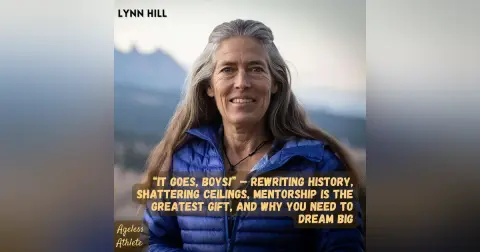


Imagine standing at the base of El Capitan in the early 1990s. The Nose, one of the most famous and daunting climbing routes in the world, stretches nearly 3,000 feet above you. At this time, no one—not even the best climbers in the world—has free climbed it. Enter Lynn Hill. In 1993, she not only becomes the first person to free climb *The Nose*, but she does it in a single day, a feat that redefined what was possible in climbing. This wasn’t just a physical achievement; it was a moment that shattered gender barriers, set new standards, and echoed throughout the entire world of outdoor sports.
In this episode, we take you into that pivotal moment and beyond. We’ll relive Lynn’s historic ascent and explore what it meant to be at the cutting edge of climbing during a time when sponsorship was rare, the sport was still developing in the U.S., and women in climbing were a minority. Lynn didn’t just ascend rock faces—she broke through cultural and gender barriers in a male-dominated sport.
But this conversation isn’t just about Lynn’s remarkable climbs. As we dig deeper, we uncover the mindset, the discipline, and the sheer determination that made her one of the most influential climbers of all time. Lynn shares what it was like to grow up in the sport, what kept her pushing limits when others might have doubted her, and how she still maintains that passion 50 years into her climbing career.
Lynn has made a fantastic 'Fundamentals of Climbing' video series for beginners and experienced climbers alike! Highly recommended. Find it here: Fundamentals of Climbing with Lynn Hill' 🙌🏽
CALL TO ACTION:
- Lynn is deeply involved in giving back to the climbing community and protecting the outdoor spaces she loves. If you’d like to contribute to her ongoing efforts at creating a community in Hueco Tanks, TX, you can reach out to her via lynn@lynnhillclimbing.com for more info. The Hueco Tanks project will support climbing initiatives, environmental conservation, and mentorship programs for young climbers.
-
More on Lynn at:
https://lynnhillclimbing.com/
https://www.instagram.com/_linacolina_/
---
🚀 Love the show? Here’s how to support it
If something you’ve heard here has stayed with you, made you smile, or helped you keep going, I’d be honored if you’d consider supporting the show. 👉 https://buymeacoffee.com/agelessathlete
📰 Subscribe to the Ageless Athlete newsletter !
1-2x a month, no spam. We share behind-the-scenes reflections, longevity tips, and athlete wisdom you won’t find anywhere else. You can sign up at https://www.agelessathlete.co/newsletter/ 📩
44:54 - [Ad] Resilience Podcast Series
45:18 - (Cont.) She Changed the Limits of Human Performance | Lynn Hill, 62
Ageless Athlete - Lynn Hill
===
Lynn Hill: [00:00:00] I am in Boulder, Colorado, at my house, and this morning I had some that I thought was more like muesli. And, um, a maple yogurt, you know, the, the brown cow.
Kush: Ah, Sounds simple yet, uh, nutritious.
Kush: I resort to the muesli type of breakfast often. I think muesli, I like muesli a bit more because it has either no sugar or much less sugar than more popular kinds of granola. Lin, you, We're just traveling and, uh, I think you are back home now after, uh, some other trips.
Kush: And I would love to dig into some of your, uh, trips and some of the things you've been doing this year. But before that, we'd love to know who are you and what do you do, which believe it or not, may, may be less [00:01:00] familiar to some of the listeners out there because they all don't come from the climbing community.
Lynn Hill: Right. So, I actually studied biology in college, thinking that I would become a physical therapist. And at that time I lived in upstate New York and I was going to go to Columbia, but I feel like the outdoor industry kidnapped me at the same time, um, kidnapped me because they kind there was a lure out into the world of competition and uh, then it, then it, It was not really possible to make a living at the beginning because companies, especially us companies said we don't sponsor athletes. Um, it was not a thing. The Europeans were getting sponsorship because that was just normal for sports and they're big sports fans. Like, you know, any soccer game or football people come with a lot of enthusiasm and so climbing. is a pretty important sport over in Europe and there's climbing [00:02:00] everywhere and the Alps is just so prominent in their culture that, um, they embraced climbing right away.
Lynn Hill: And so it took a little bit longer for us to develop climbing here in the States and sponsorship came very slowly and, and not very big. I would say it's still not big. For other than, you know, people like Alex Honnold and Chris Sharman, Sasha DeJulian, and a few people. Um, but, you know, there's a lot of ways to enter the industry now with the artificial climbing walls, which didn't exist also when I first went to Europe. So, um, I decided that, Instead of becoming a physical therapist, which a lot of people could do even though it was very competitive to get in to the program. And at that time you didn't have to have a PhD or you didn't have to be a doctor of physical therapy. But I still have an interest in the human body and I did a lot of studying on my own just because I like to understand the function of the body.
Lynn Hill: And, [00:03:00] and it helps for understanding how the muscles work and, and, you know, somewhat the nutritional side and just to. be educated. I think is it's good if you have an opportunity. Why not? so I'm glad that I got my degree, even though I'd never used it. And, uh, I never really worked in that field directly, but I think that climbing is an activity that, um, I would say is, is in the health field in a way because it's exercise and it makes you feel good.
Lynn Hill: And, uh, I think it's the best sport. Of course, um, I'm a little biased, but I just think that the. The way that you use your body and climbing and the fitness that you have and the strength to weight ratio is all very healthy. And, uh, studies show that people that are on the lighter side live longer because your body functions better when you give it what it needs and only what it needs and not too much.
Lynn Hill: Um, we have a real problem with [00:04:00] obesity in this country and, and also a disconnect with nature, which is. Strange. People come home and they, they just stay in their houses and they plug into technology or, or whatever, you know? So the world has changed a lot in, in the time that I started climbing till now.
Lynn Hill: And next year will mark 50 years of climbing for me. you asked about what do I do? So at first I got some money through, um, winning the competitions. So, and, and then the competitor, the organizers, because it was all new, they would invite me and pay my expenses to come. So that was great. Um, and I didn't really need that much money and you know, I just climbed and obviously didn't spend a lot on fancy cars and things like that.
Lynn Hill: I just spent money on climbing. Um, over the years though, as you know, it became necessary to have a career. Um, I. [00:05:00] It's not by accident, but I was asked to do a lot of speaking things like right now, a lot of interviews. So I've become better at speaking. It's not something that I feel like I was natural at or necessarily drawn to, but it was requested of me.
Lynn Hill: And if I want to be a value in this world, then I have to develop those skills that are being, you know, asked of me. So writing was another one. Um, I hated writing essays in college just because it just seems like so much work. And, um, and now, you know, part of my work is writing and, um, and producing video in a small way.
Lynn Hill: I'm not a video producer at all, but I've put together sequences. I put together the film of Climbing the Nose, a version of my own, and I put together some sequences.
Lynn Hill: Or, [00:06:00] you know, the small sponsorships that I got, I could make money doing speaking engagements, which I still do. And it's expanded because climbing is a metaphor for companies like banks and, you know, for women. There's a lot of work these days for that sort of thing. And, um, and also my house that I'm sitting in here. Um, I, I live here with my son who's 21. He's, um, sort of transitioning into a career, um, studying computer science and that sort of thing. Um, he's done a few years of college, but it's expensive living here in Boulder, so he lives at my house, and the main part of my house I rent on Airbnb. That helps pay the bills because, uh, yeah, Boulder, Colorado is kind of like where you live in San Francisco.
Lynn Hill: It's, it's expensive. So, um, that's pretty much it. The, uh, the other thing that I do is, and what I like really the most, is working with people and climbing with people. And, [00:07:00] I really like working with intermediate level people because I can give them the most value. Um, they haven't thought about climbing as much as I have.
Lynn Hill: And, I can give them simple tips that are really useful for them. And, um, so I started, um, as a guide many years ago, um, back before there was really any certification for guiding. But over the years, of course, um, when my son was two, um, I got my wilderness first responder certification. That was a 10 day course.
Lynn Hill: Um, then you do a test. Then I also did the American Mountain Guiding Association course. That was another 10 days plus a, I think it was a week long course, uh, for testing. So, um, that was quite an investment in this coaching, um, and guiding. And, um, I really enjoy doing climbing camps, and I'm leaving in a couple weeks to go out to Joshua Tree. I work with a company called Cliffhanger out there, and they've been [00:08:00] working out in Joshua Tree for many years. And, uh, we've been doing camps, I think it's been, Probably about seven years every year. I've done at least one, sometimes two camps ~and it's really fun. It's very limited. It's ten people and they come and, um, we only spend like from Friday evening.~
Lynn Hill: ~It's meet and greet. We have dinner together. I do a presentation. The next day we get up and do yoga, then we go climbing all day, come back and eat food, do another presentation, more historical one, and the first one is a presentation about technique, which is another thing. I said I did a little video production, um, and that was one of the hardest jobs besides writing a book.~
Lynn Hill: ~Um, it was, it's called The Fundamentals of Climbing. and it is about climbing techniques and really what defines climbing technique with respect to alignment. And, um, I talk about it in order of slab, vertical, then when you get to vertical, you have corners, arets, um, and then overhanging, which involves the most physically demanding, complicated movements with leg swings and momentum. And so I just lay out all the different techniques that are used. Um, there's a lot of terminology that. Non climbers would have never heard of, uh, double clutch or, you know, it's just what's a knee bar. What's you know? What's a toe hook and so I show why we use them and what they they are useful for and so it's the first time I think that anyone's ever taken a comprehensive look at climbing technique in all the different aspects how you You know, I the first thing is contact vector How do you hang on to a hold?~
Lynn Hill: ~How do you step on a hold? And it's very simple. It's physics. It's perpendicular to the angle or shape of the hold. That's the best way to create leverage off of a hold. So that's where it begins. Then I talked about line vectors. I talk about the planes, like the plane of your torso and how that is relative to the plane of the face, like on a slab. Your body is upright, but your hands and feet are reaching forward. As it's more vertical, you're more upright. Of course, if it's an actual vertical face, you're still falling out away from it. You can't be over your feet unless you're on a slab, you know, in balance. Then on an overhang, it's opposite.~
Lynn Hill: ~You're hanging mostly off of your arms and your feet are now connected to the rock. In that sort of configuration. So, um, that was a lot of work. It took me about 15 year, no, probably it was a little less than that. I started in 2008 and it's all filmed outdoors. Um, there's a few scenes on a artificial wall just because, but I decided that. It was more aesthetic to look at people climbing on rock and the techniques are more useful to show on rock. And so, um, it took me, you know, several years to put that together because I had to define it. I had to come up with a structure. I had to define everything. In the fewest words possible because you're watching something and it goes quickly and you need to, to have your brain functioning at, you know, that level of when you're watching it, what are the words that you're putting in?~
Lynn Hill: ~So anyway, it was a very challenging job to do and, uh, I'm glad it's done now and I can use it to show people at my climbing camps. Um,~ and the trip I just came back from was Waco Tanks, and I bought a piece of property there in 2006, and it was just a piece of land, and I had to do a lot of the clearing of the land, well I didn't do it, I hired somebody to do that, and put in a septic tank, and now we have a bathroom, two toilets, um, and I have an airstream that was It's kind of renovated by climbers on rest days when it was down there. And so it's, it's now very comfortable. We have electricity, water is, is, uh, a bit of an issue, not just down in Waco, but in the world in general, just water, but, um, it's trucked in and of course the price keeps going up. Um, so, uh, There's water in a big tank and, and I try to be conservative about using water anyway just [00:09:00] because our planet is getting really dry, especially in certain parts of the world.
Kush: Indeed, the, you know, uh, a reasonable loss for the profession of physiotherapy was perhaps the greatest gift to the world of climbing
Lynn Hill: Yeah,
Kush: when they, and you're funny, you know, when they kidnapped you, they, uh, I suppose they unleashed it. All this talent that you have and the passion that you built over time and helped you achieve these goals in climbing, Lynn, and have, uh, been able to inspire generations of climbers to come. I will admit that I am Mildly saw struck when I first started climbing a couple of decades ago. I believe I had a poster of, uh, you, you know, that iconic picture of you, uh, looking top down. [00:10:00] I don't know what pitch that was on El Cap, but you were somewhere on there. And,
Kush: uh,
Lynn Hill: know which one I was in what's called the g glowing spot in a, in a dihedral in a corner, and I'm stretched out. Yeah, I remember that photo. Hein, Zach took that photo and that just came together randomly. He happened to be in the
Kush: Oh, wow.
Lynn Hill: up the, the trail, I mean, well, maybe didn't run up the whole thing.
Lynn Hill: It's a long way to get to the top of El Cap, and he arrived there ready to take pictures. I was planning on taking a rest aid, but instead we went and, and got. Pictures and, and it worked out, you know, I'm glad that we have some documented because even when I did the nose that was, you know, 30 plus years, well, 30 years ago. And, um, and the nose in a day, the nose, the first is pre ascent was the year before. So that would have been 31 years ago. But yeah, this year marks the 30th anniversary of. the first percent in a day. And so there was no, um, stuff like what we're [00:11:00] doing now with the podcasts. there was really not much emailing going on back then.
Lynn Hill: I think, uh, the internet really gained popularity in the early 90s just after that. Um, so I, I did that in 93 and 94. So yeah, it was kind of early days of that sort of thing. Social media really didn't
Lynn Hill: exist at
Kush: Sure. You know, uh, just, uh, staying with your, your early years for a moment, you studied biology, decided to, or had thought about going into of physiotherapy. One of my favorite climbers, Art, is a physiotherapist. And I think he has this innate way of understanding the world. Movement. So he, he's a climber.
Kush: He's also a proficient acro yogi and he's able to move. And sometimes you want to talk about movement, which I think comes from his, [00:12:00] again, his excellence as a physiotherapist and the training you went through. yeah, I'm curious, even though you, you redirected your efforts into becoming a climber.
Kush: I wonder if you had some inherent Talent for understanding physical biodynamics,
Kush: which allowed you to be able to again, reach a level and maybe tap into your, limits to be able to perform the way you have.
Lynn Hill: Well, I think for the changing corners, on the nose, it's a very smooth face and there, there really are no real distinctive holds. There's a few pin scars, which I used, but, um, the actual face and the rock was so smooth, but Um, it's kind of like what they've done with the volumes in competition these days, and that was even mentioned by one of the British climbers who retired from competition climbing and said, I'm going to come to Yosemite and free the [00:13:00] nose, and he had not really much experience, and he and his buddy, Did succeed, but what he said, I thought was quite interesting that the changing corners is like a comp route, they try to make it really complex and you know, you're you're just using what I was talking about the perpendicular faces in this dihedral.
Lynn Hill: So if you don't get the forces, right? You're going to slip off. It only takes a couple of millimeters of being off in the way that you direct your force,
Kush: and you know, not just, uh, that I never thought of that, but yeah, not just a, let's say an old school conclude, you know, with crimps and, powerful movement on a, on a steep wall. You're talking about like a modern day gymnastic boulder problem, right? Where you are pushing and pulling against really big flat surfaces and applying so much compression that, wow, that, that, that is, that is so, so true.
Lynn Hill: So I did take what you're talking about, this idea of looking at the rock, and to me [00:14:00] it's a puzzle, and I'm looking at the shapes and forms of the rock, and I'm trying to create opposition. That's the whole point. You can't go upward unless you create opposition between your points of contact on the rock.
Lynn Hill: Usually it's in static climbing. This is one of the definitions I find kind of funny because we don't have static climbing. Climbing means you're moving. Static meaning that you're you're not jumping and it's not like a fast, uh, movement that requires momentum. when you're using just three points of contact in a normal static climbing kind of slower old school style, you have either two hands and one foot as you're stepping up to the next hold, or one hand and two feet as you're reaching to the next hold.
Lynn Hill: So it's, it's a series of triangles. and the harder and harder climbs, they're not very, um, distinctive triangles. Maybe the triangle gets sort of spread out, like, um, they're, they're not efficient, so it takes a lot more body tension, and, and so difficult [00:15:00] climbs generally have smaller holds, bigger reaches, and, and not ideal, um, positions of where those contact points are.
Lynn Hill: That's what makes the difficulty generally speaking. And of course the angle, if it's super overhanging, it's going to be a lot more strenuous than a slab. Although I would argue that slabs are not in vogue these days because everybody's focusing on the steep stuff, but the slab climbing. requires so much more precision and it's kind of heady and insecure feeling so you really do have to be almost more precise on a slab even though it may not be as physical than you do on modern day steep stuff.
Kush: Absolutely. And. Yeah, it is so cool on how you're able to help me visualize, but then also, yeah, compare and contrast the movement that you went through while doing the, first ascent of the nose. And.
Kush: [00:16:00] describe first free ascent, sorry, first free ascent and then later the first free one day ascent. And you're able to bring down maybe some of the, um, moves on one of its most difficult pitches to somebody who may never be up there and experience that themselves. I think that picture of yours and, you know, the, uh, the emotion that, that picture evokes, kudos to, obviously to your climbing, but also to Hein Zak who has, who captured you, also captured some, some of the most iconic imagery that came out of that era of climbing. of LCAP and Yosemite for sure.
Kush: I want to actually ask you this question because like I said, there are many listeners to this podcast who may not be as well versed with big wall climbing or even climbing per se. So they may have difficulty understanding what is [00:17:00] it that you actually accomplished, which turned the world of climbing on its head and is still talked about with a lot of reverence. I was telling my girlfriend last night about that, about the fact that I was Uh, speaking with you today, she is, uh, relatively new, but an excited climber.
Kush: She's been doing it for maybe a year and a half, and I was trying to explain to her, you know, what, uh, free climbing is and what aid climbing is and how, what you were doing is in some ways similar, but also different than let's say some single pitch climbing that we were doing recently at a sport crag.
Kush: So would
Kush: you
Lynn Hill: let me let me first of all explain so free climbing It's just rock climbing or, or if you're on an indoor wall, it's just climbing, right? They, they confuse everybody with this free climbing thing because it's [00:18:00] not without a rope. Free soloing is without a rope. Free climbing is just climbing. Aid climbing is when you use your equipment to get up.
Lynn Hill: You're not really actually climbing up the rock, you're using your equipment. So it's pretty simple. Free climbing is rock climbing, or if you're indoor climbing, it's just climbing. And if you fall, that's considered aid. If you hang on the protection, um, halfway up, you didn't actually get credit for doing that route.
Lynn Hill: So it's a pretty simple definition. Go from ground to top. Without a fall. You can fall many times in your practice, like a gymnast would, they practice each of the moves and then they connect all the moves in one routine. And they try to hit it perfectly to get the best score. That's who wins in gymnastics.
Lynn Hill: Well, for us, it's a little simpler. You can climb it any style in your personal dimensions that you want, as long as you are climbing and not using the aid. of your equipment to get to the top. [00:19:00] So, um, redpointing was a term that they used a long time ago when, when you, you've worked out the moves on the climb or worked the route, um, and then you put it together.
Lynn Hill: But redpointing back in the day was when you had Um, your equipment and cracks like on El Cap, you have a lot of cracks and you have to carry a lot of heavy gear. And so, in order to get credit for free climbing each of those pitches, you had to bring the gear, place it as you're climbing, and clip your rope in. Now, on a lot of cliffs, a lot of the modern day urban crags, let's say, the ones that people can, Get to pretty easily the popular ones. There are single pitch routes instead of a big wall. A big wall is, you know, El Cap is close to 3, 000 feet. So, um, a pitch is just a rope length, you know. So most of the cliffs don't go up past one, one rope length. And so people will work on, even if it's a crack, they'll figure out all the moves and they'll leave the gear in the crack so that all they have to [00:20:00] do is actually climb it. And the gear's already in place and they just clip their rope in. And obviously you want a rope because I'm not, I don't have a death wish.
Lynn Hill: I don't want to die if I fall. Um, I would never consider free soloing El Capitan like, uh, Alex Honnold did in that film, Free Solo. It, it still made my hands sweat just watching him. And I knew he survived. I just, it was just so. insane to do that kind of
Lynn Hill: level of
Lynn Hill: climbing three,
Lynn Hill: almost 3000 feet off the ground.
Lynn Hill: He's kicking his foot out to this very insecure thing where
Lynn Hill: it's kind of like a door. We call this barn door and climbing where if you go past a certain point, you're going to swing off and fall off. And, um,
Lynn Hill: you're dealing with very small, margins of error. You know, he, he could not miss that move or he would have died. So, um, obviously a big wall is more complicated because you have to bring a lot of different types of equipment. If you're [00:21:00] sleeping on the wall, you need to bring, food, water, sleeping bag. Um, if you want to cook something, you have to bring a stove like a jet boil. You can hang from your portal edge portal edge is like a hanging cot. And, um, so you've got to bring a haul bag and you've got to figure out how you're going to haul it up with a hauling system. Um, and rope. rope management, you know, how not to get your ropes all tangled. And, you know, there's a lot to the efficiency on a big wall. And it's not like you just have a simple roadmap and it goes straight up.
Lynn Hill: Sometimes you have to do what's called a pendulum and swing from your rope to get from one crack system to another, because one crack system stops and you can't, Really easily get past there. So you go to the next one and that's how these roots were pioneered And so most people follow roots that have already been established especially in places like Yosemite on El Cap. There's a lot of routes [00:22:00] already, and people want to, you know, be a part of that history, and go and see what those places were like, and, and visualize, you know, the people that did the first descents in the golden era of Yosemite climbing. Because they didn't have the, equipment that we have today. And so, you know, they were dealing with these big heavy pitons and hammers that they had to hammer in.
Lynn Hill: And obviously you can't make fast progress with not only all the weight, but you have to have two hands free to hammer in a piton. And in free climbing, we have devices that you can hang on with one hand, take it off your, take your piece of equipment and you evaluate what size crack it is and what protection you need. You, you, and, and that's another. Organizational thing you have to organize your equipment on your harness or on a sling around your shoulder in the order that you're going to need it so that it's easy to reach. And so you, you hang on with one hand, you put your protection in and you clip in. And so that's called [00:23:00] traditional climbing versus sport climbing.
Lynn Hill: Uh, sport climbing is where you clip into bolts that are already pre placed. No, you don't have to worry about placing the protection in the rock because someone decided where it needed to be, where you can hang there, take your carabiner, it's called a quickdraw. You, you clip your quickdraw into the bolt and then you clip your rope into the, the carabiner on the bottom of the quickdraw. Um, so sport climbing has enabled people to climb the most outrageous faces that don't have cracks. And so, some of the hardest routes in the world. Probably the majority of them are sport climbs and, now with the competitions that you see in the Olympics, the style of climbing on artificial walls is a whole nother style. I would say that watching the bouldering in the Olympics or on the World Cups, if you watch them, it's fascinating to me. but it's more like parkour. they're they're doing, um, it's beyond gymnastics. They're doing [00:24:00] parkour.
Kush: Yeah.
Lynn Hill: On these walls. And they're not just hanging onto something that looks like, you know, the roots that we climbed that had edges that were natural edges on the rock or, or pockets.
Lynn Hill: Like in limestone, you have these solution pockets that are, you can get your fingers behind them, which means that you can be on the most outrageously overhanging faces and, and have an incu hold that will enable you to hang on on this kind of steep face. So, you know that that was something that I. was initiated into when I did the competitions because I was invited to France at first, well Italy and France, and there's cliffs everywhere near the comp so before and after the competitions we would go climbing on the limestone and that was So different than anything that
Lynn Hill: we had at the
Lynn Hill: time here
Lynn Hill: in America, ~but now we have a lot more development.~
Lynn Hill: ~We do have limestone that's been developed. ~
Kush: ~Mm-Hmm. ~
Lynn Hill: ~there's a place near here. Well, it's not that close. It's it's a three and a half hour drive to go to rifle. Or Shelf Road, those are two limestone areas. But even where I live here in Boulder, there's several different types of rock. There's granite in Boulder Canyon, and they call the Flatirons and Eldorado Canyon sandstone, but it's, it's not the typical sandstone. It looks more like, uh, conglomerate rock, where you have these little pebbles that stick out, or crystals, they could be crystal. But, um, You, you can get knobs or you can have cracks and, and some of the faces are really steep, um, in the flat irons and, and they're really beautiful too. They have nice green lichen and the rock itself is sometimes this beautiful red kind of green. almost, uh, magenta, red, and a lot of pine trees. So it's, it's a very beautiful place to climb, but, um, it's, you got to do a lot of hiking to get out there.~
Kush: sure. Lynn, thank you for walking us through the basics of climbing. I am sensing you've had [00:25:00] to explain this many, many times over your long career. I sometimes wish that I could go back in time and come up with better terminology on what is climbing. I sometimes like to think that, you know, the, the type of timing we do with ropes, when we have free climbing is maybe more akin to, let's say regular climbing.
Kush: And then, aid climbing is this really one, let's say more obscure niche. And then free solo climbing is an even more, Outlier type of climbing, but because these terms were invented by climbers for mostly other climbers, they can be confusing to the world at large. So
Kush: appreciate you walking us through not just, uh, not just about these terms, but also what the world of climbing It [00:26:00] opens up the places, the stones, the landscapes, sticking with your free ascent of the nose.
Kush: It's just so hard to not spend a few minutes on it because like I said, many of us who grew up in that era climbing and even people who have started climbing more recently, they learned about that, uh, as part of their early, education
Lynn Hill: Mm hmm.
Kush: and. I think that allows people to be inspired. Can you help us understand, Lin, did you do that was so particularly remarkable groundbreaking for its time?
Lynn Hill: So At that time period, there was not a lot of interest in sport climbing by a lot of the traditionalists here in this country. When I went to France and discovered [00:27:00] the competitions and the limestone, my whole world opened up because it was something I really enjoyed. And I knew that it was kind of controversial. in America. So one of the first cliffs that was developed with bolts was in Smith Rocks. And, and when we say old school crag, it has a lot of meaning. But what it means in, in the case of Smith Rocks is they tried to make the bolts really far apart. So that they were a little bit scary so that the traditionalist wouldn't call you a lightweight or whatever because you had bolts, you know, it's, they, they conceived, you know, sport climbing as something that was too safe or something, you know, Oh, yeah, that you're not risking anything. So, you know, sometimes like this one. Um, the latest rage, you have to stand out for, for the first bolt and climb up a little bit just to get to the first bolt and if you fall, it's a, it's quite a fall. It's like 35 feet to the ground, you know, because you go down this hillside. So people now have stick clips and they, you know, [00:28:00] have found ways around it.
Lynn Hill: But the point being here is that. I discovered sport climbing knowing that a lot of the people and in the areas that I'd grown up climbing in Southern California, Yosemite, um, that they didn't have that same viewpoint. They didn't have that experience of knowing what you could actually do on, you know, cutting edge level climbs.
Lynn Hill: So back there or back then I did my first 514 in France because we didn't have 514 in America. So. people didn't understand what was possible. So I feel like my experiences over there in Europe, learning how to compete on, you know, when they call your name, you go out and compete. So you have to be ready and you have to be vulnerable and willing to put yourself on the line.
Lynn Hill: You have to be willing. I don't like the word fail, but you might fall and you have to accept. But whatever you did, you tried your hardest and don't get too distracted. In [00:29:00] fact, I was actually encouraged by the crowd clapping. It made me climb better, I think. I mean, it's nerve wracking to be performing in front of people, but you get used to that too. So when you're on the big stage of climbing in Yosemite, you could feel nervousness about, you know, your performance. So that I think was helpful as well as obviously knowing how to climb hard routes by 14. Like I said, the difficulty has to do with the size of the holds, the distance between the holds and how awkward the climbing is and overall how strenuous it is.
Lynn Hill: And so I was able to combine my background and as a traditionalist, as a traditional style climber, and the sport climbing, and put that together on things like the Changing Corners. and the last pitch, which is kind of an interesting, more, you know, um, physical overhanging kind of climbing. And so you have to [00:30:00] have the ability to crack climb and rope management, all the logistics of hauling your gear and everything else. And you have to be able to climb at a high level, about 2, 500 feet off the ground. The Great Roof is almost 2, 000 feet off the ground. So you also have to be efficient. You can't waste energy. Even if you're strong, I've seen a lot of people that are, they're super strong and they, they're actually their own worst enemy because they don't know how to relax, they'll just, and they'll try too hard and, and then they're just pumped, they're gassed, you know, after only a few moves, I saw that with people like, you know, even Ben Moon, who's the inventor of the moon board, he's a super strong climber, always has been, and still is actually, um, but he would get nervous and you could see he just like overpowered.
Lynn Hill: Moves that he didn't have to try that hard on, but you know, people's physiology, as you know, we discussed earlier, um, understanding muscle types. I now understand, of course, that [00:31:00] he has more fast push muscle fiber and he's set up for powerful climbs. He's not an endurance guy, whereas that's the opposite.
Lynn Hill: I am more of an endurance climber and an endurance athlete. I did other sports, you know, before I got into climbing, like as a kid I was a swimmer and, um, in order to win prize money for something that wasn't really climbing related, but I got invited by a famous woman climber named Beverly Johnson, who was one of my role models in Yosemite, and she invited me to join her.
Lynn Hill: to this televised competition, and I realized that they had some running events in it. And I was not a runner. I was a rock climber. Rock climbers don't do anything but hike. I mean, we put packs on our back and hike up hills, but it's a lot different than running. So I, you know, learned about running and how to train, you know, for endurance and, and how to peak before a competition and all that kind of stuff.
Lynn Hill: So that was useful. Um, so I put basically [00:32:00] all of my skills of climbing for, I think at that point it was 20 some years. And, um, the route that I chose was probably the most famous big wall climb in the world. El Cavitan is the biggest formation in Yosemite and it's right there. You can walk to the base in 20 minutes. Um, so, you know, the tourists will drive down the road and just usually look, or they'll stop and park and walk out into the meadow and use binoculars or just look at the specs of climbers on the wall. for me, growing up, especially in California, Yosemite was, Always just a special place. It's one of the most beautiful natural wonders that I've seen in the world and I loved going on camping trips and, you know, I loved the nature of just being outside and camping, but when I came to Yosemite through that Wawona Tunnel the first time and just, you see El Cap for the first time, it was just mind blowing.
Lynn Hill: It has a great significance in our [00:33:00] history and also just the whole story of the development of the gear and the vision, the golden era climbers, you know, that was a big, big thing to try to do a first ascent up that wall because nobody was able to really rescue them then. I mean, if they got stuck because they were in uncharted territory, like maybe they got stuck and they couldn't get back down or, you know, who's going to rescue them? Maybe the handful of climbers that were their friends were the only people that could conceivably rescue them. But fortunately climbers are very, um, inventive and they've, found ways of managing themselves and bringing the gear up with all the equipment that they had. Sometimes, you know, those hemp ropes that weren't all that good, not like our nice nylon, you know, stretchy ropes.
Lynn Hill: They, um, They had to leave a lot of gear on the wall just to get their supplies up. And, um, and they figured it out. [00:34:00] So I think it's amazing to consider that history. And, uh, a lot of the climbers of my generation who were more focused on being able to free climb the big walls or free climb anything, it actually wasn't such a big, uh, push to, to free climb big walls back then.
Lynn Hill: But, um, the nose was an obvious challenge that people would like to do. You know, some of the locals like John Backer, Ron Kauk, um, even European climbers came over to try to do it. Many people tried to free climb the nose but couldn't do it. You know, it's intimidating. And so, I, I think it's very psychological as well. Cause, you know, it's different if you go to a 100, 200 foot cliff versus, you know, you know, something that's 3000 feet. It starts feeling, you know, much different for a challenge. And so, I feel like I was also fortunate that I was able to focus on climbing [00:35:00] as my full time, you know, career, so to speak, but, um, passion more than anything. And, um, you have to have the time and the willingness to put a lot of work into it. And, and also, um, not succeed. And, and you have to be willing to accept that too. And if I had gone into this project saying I must do it, I probably wouldn't have been successful. You know, my approach was I'm going to try my hardest.
Lynn Hill: It's a valiant effort. I'm going to do what I can. And it didn't work the first time. I had to come back a second time. Um, I got stopped at the changing corners. I didn't realize how hard that was going to be. And I went away from the valley. I went to, you know, Idaho where my mom and, um, her husband had a place and had a little vacation.
Lynn Hill: I thought, you know what? That pitch is going to go free. I know it's, it's got to. So I went, I called my friend, Brooke Sandel. who had put some time into figuring out that key [00:36:00] section. And he found a variation that, you know, you can do a variation on that pitch. It goes to the left of the corner. but I, I figured this corner should have the angles and the opposition possibilities.
Lynn Hill: And I was right, it did. And actually, I'm unusually small. I, I've been shrinking a little bit. I, I never made it to 5'2 but I'm, I'm now about 5'1 and so a person that's 5'1 um, can fit inside the corner and basically use the, the pin scars. If you're taller, most, you know, normal sized people can use the arete and put their feet on the other side of the wall, which At a weird angle, so it feels very slippery.
Lynn Hill: You can't really push flat against the wall, so you're, you
Lynn Hill: have to really be careful about how you place your feet. But in any case, when people said that, oh, Lenny could do it because she had such small fingers. They were referring to the crack underneath the great roof, which is [00:37:00] thin. True. But if you're small, you can't reach as far. It's really awkward when you have something that's underneath a roof that you have to have your feet against the face in front of you, and you're pulling out almost more than anything else on, on these little tiny openings in the crack. So being small or being tall, you have to find your own way. And so it's not, you know, what your body size is that's going to determine it. It's how creative you are. In being able to use your body in the best way. Sure.
Kush: Lynn, I want to ask you a couple of things about how you prepared for this call. It feels like you had this sense of confidence in yourself combined with quiet determination,
Kush: plus
Lynn Hill: Mm
Kush: this reverence [00:38:00] and awe of Yosemite, the El Capitan, the most striking face or feature of El Capitan, which is certainly, you know, the nose, which is, it just catches your eye, which are perhaps what drove you to try to free climb it.
Kush: And it also seems that you brought in a lot of your innate gifts with athletics. with I believe your background in gymnastics and your ability to succeed in sport climbing and you were able to put all of those things together. You mentioned you had Beverly Johnson as a role model. One thing I wanted to ask is, and I see this, I've seen this over the years, where
Kush: climbing I think is a very inclusive sport. However, [00:39:00] men and women sometimes have to find their own ways And these days, at least at Cliffs in North America, you often see all genders being represented quite equally, may I say, but back then, please correct me. Seems like you were in this cohort of people, people like Ron Koch and others who were mostly men.
Lynn Hill: hmm.
Kush: And here you are and forgive me, but you were this slight female and hoping to accomplish something that the others We're trying what had not succeeded in and I'm curious one is the um, the support you got from the community and also on any other, let's say [00:40:00] fears, demons that you had to also accomplish. But because again, you were hoping to. Do something that nobody had done before, male or female. One other thing I want to just throw out there, which I've heard you speak before, which is, you know, how, let's say some particular body attributes you had allowed you to succeed where.
Kush: let's say other people, bigger men had not. And in my mind, it seems like there is some diminishing of your talent and hard work because, well, you don't hear, you don't hear of Adam Ondra's long neck being his secret weapon when he went on to climb the world's first 15D. And you don't hear about, Chris Sharma's tall stature, which allowed him to climb biography.
Kush: So [00:41:00] I'm just wondering, how do you react to that? So yeah, first part, like we'd love to hear about like how the support came from your fellow climbers as you were hoping to kind of step over them in a way to become the first, uh, free climber off the nose and then secondly, and how you take to this attribution of this incredible ascent to something
Kush: that you had others did not.
Kush: Sure.
Lynn Hill: by, um, quoting from a Boreal ad. I was with John Backer, and after I did the first free ascent of the nose in 1993, he said, Oh, let's go back. And, and we'll, we'll just hike into the top, which is not an easy hike. It's long and we'll take some pictures. so he took that famous picture, looking down El Cap, um, you know, on the nose. I'm, you know, in a sort of squatty position. It's like one of these [00:42:00] overhanging bulges. And, um, we were joking and, and, um, the ad said someday, some guy's going to free the nose. And then at the bottom, my quote is it goes boys. And so that was supposed to be a little jab at the fact that the assumption was it would be a man. And, and so here I am, a woman saying, hey guys, it goes, it's possible. And so that was something that a lot of people, climbers, particularly non climbers, don't really get this goes part. You know, they don't know that it goes means that it goes free. It means it's free. It's possible to do. and for me, that was really important because Yosemite was important to me.
Lynn Hill: It's important to a lot of people. It's just an amazing place. And there were not very many women that did first ascents or first free ascents at all in the valley. And, you know, even in, uh, Galen Rowell's [00:43:00] book, one of, in, in introduction, he said, I, you know, I make no apologies here, there's, you know, very few women because there simply were no women doing significant ascents in Yosemite during that time period. Um, the vertical world, world of Yosemite, I think it was the book that I'm referring to. So, um, I was pretty disappointed. People like Beverly Johnson, who I mentioned earlier, she was my role model because she did do some significant things. She did a one or a 10 day solo of the dihedral wall all by herself. Leading, she had to rappel down, get all of her gear back out of the cracks, then haul of her, all of her gear. She did it all herself. She also did a first ascent with Charlie Porter, um, called the Grape Race. And that was a first ascent, and she wasn't in the book. So, um, I think that that was part of the culture back then.
Lynn Hill: It was a guy's world and, um, and I [00:44:00] think that that didn't help the development for women. So I felt like I could be somebody that would help shine the light on the fact that, Hey, this is a great sport for women. and it's proven to be the case. If you look at the level of climbing now, even on the boulders, which you would think would be favoring men because of the power involved and, and being taller probably helps for certain types of boulder problems.
Lynn Hill: But actually, um, some of the hardest boulder problems in the world are done by people that are like five, seven, Maybe five, eight, but they usually have like a plus four ape index or something super long arms. Um, but you know, strength of weight, um, the grace that women have, um, the strategy, that's a mental thing.
Lynn Hill: So neither gender or any gender would own that. It's just, you know, it's open for interpretation, like, you know, a piece of art, you know, it's, it's a personal thing. So, [00:45:00] um, I think that it was, That was a big motivation for me to prove that a woman could do something, um, at that time, because I knew that our limits were in our heads.
Lynn Hill: I knew that there was a lot further to go in climbing and that we were, we were at a pretty high level. It all felt hard to me, like 514 was still felt really hard, felt pretty maximum, but I knew that people one day would warm up on 513. I remember thinking that about 20 years ago. I thought, These holds are big. There's no reason why 5. 13 should be that hard. And, sure enough, now, you know, that's easy for people that are, you know, like the Adamondras and, you know, Chris Sharma. They could pretty much warm up on 5. 13. And, you know, it's not hard for them. Um, so it's all just, you know, how you you know, view things and the story that you tell yourself that's most important. So I told myself a good story and I, I, [00:46:00] I believed it. And I thought that this climb was, was somehow my fate. And, um, and I could try harder cause I knew I wasn't doing it just for me. I was doing it for something bigger. I could try harder and I could, I could try to the very end, you know? So my preparation was. I did do some running. I ran pretty fast for like an hour. Um, not every day, you know, cause I was climbing also. And I would do big climbing days, although never as big as actually the number of pitches on El Cap. So, um, it's, yeah, I, I did like 30 pitches. Well, 20, no, 20 pitches usually. Um, but they were harder pitches and I tried to do everything on site and not waste any energy. You know, just follow the flow and soft grip, you know, don't over grip, just kind of just be graceful. And, um, I did a couple of routes to prepare for that. Um, some, [00:47:00] I did one first free ascent in, um, the Verdun Gorge in France called Mingus. And, uh, you know, my friend who, I went back to El Cap in 2018 and 2019 with Nina Caprez. And she went back to the Verdun and did that route and she wrote an essay I think for Arcteryx for one of their blogs and she was very impressed by that, um, because I did it on site and I did the first pre assent on site. I was supposed to go with Patrick Edlonger but he backed out at the last minute, probably because he, you know. Felt like it was going to be hard for him and it, and and this is funny because my little fingers might've been good for that because there was a small, I don't know if it was a pocket or something, but he's, he had very thick fingers. He definitely couldn't have used what I did. And, uh, I went back with my friend Pietro Del Pra, who's, he's like six foot one or two. His fingers are also, you know, climbers get thick fingers because your tendons grow from all the stresses of [00:48:00] climbing, hanging off of finger pockets and small edges, and he couldn't do that move at all. Uh, the crux pitch is pretty low down on the route and he just couldn't do it. He couldn't make it work for him.
Lynn Hill: So I was like, wow, that's pretty. Interesting. Cause when I was in that mindset, I was just fully engaged in what I was doing and I had no perspective of how hard it was. And so when I went back to the nose in 2018 and 2019 with Nina, I realized how hard the root actually is.
Kush: as a, as a younger person, man. And also what you said, which, you know, struck with me where you talked about hoping to go out there and do something, not just for yourself, but for a greater cause. [00:49:00] And it seems to me that , when one so deeply believes in something often can manifest itself. I just think that most of us are not able to ever dream that big.
Kush: and maybe everything conspired around you at that time to allow you to think so grand and, and literally give yourself permission to go out there and achieve this goal. Moving on a little bit, Lin, You know, when you and I were, exchanging emails, trying to schedule this conversation, one of our exchanges was when you were just in Paris, you were there watching this beautiful event take place and watch the world's best climbers compete on a global [00:50:00] stage.
Kush: So this is only the second time we've had climbing in the Olympics. Not too long ago, you were at the top of the sport and also excelling in competition climbing. What was it like to witness climbing take place in the Olympics? And I'm just curious, as you were watching, the event takes place, it was so well done.
Kush: did it feel like to have shaped? This evolution of the sport and how far it has come.
Lynn Hill: Well, to be honest, I didn't feel that relevant there personally. I mean there was a event called the, the Golden Reunion. That was something, yeah, that was, that was Part of why I went there was just to see old friends, and that was very satisfying. Seeing people like Yuji Hirayama, and, uh, saw Ben Moon, he showed up.
Lynn Hill: [00:51:00] Chris Sharma, who I've seen several times in Europe, I somehow had crossed paths with him. ~so that~
Lynn Hill: ~part I felt,~
Kush: tell us more about this golden reunion. Was it like a, like a master's level friendly competition?
Kush: What was that?
Lynn Hill: It was just a, it was basically just a, you know, They had some drinks and some finger food, you know, like appetizer kind of things. And so it was a party and, and there were a lot of people from the IFSC, the organization. And so it was just a party to celebrate, Hey, you guys were the first ones, your, your generation. I mean, Chris came by a little bit later, you know, he's quite a bit younger than me. Um, but you know, he's still been around for a long time and, and a part of that whole development. And, So we, we helped with the evolution of it with our feedback and just our experiences and, and so that I felt relevant in.
Lynn Hill: But going to the Olympics, you know, some people might have recognized me in the audience. certainly my old friends, uh, like Catherine Destivelle, who got [00:52:00] the, the honor of the, they, they did this three gong thing to start the, the event that, you know, in her case, it was the women's final. so I mean, yeah, some people would recognize us, the people that have been following climbing for a long time, but, It feels like this artificial climbing wall, competition scene is its own thing in a way. And, uh, they might know, you know, as a fact that I, I did compete back then, but it's, it's such a different thing. What I did, you know, the old school climbing versus what they're doing today. Um, And, you know, they're, I'm sure they're, they would be very nice, you know, I saw Shanna Coxsey and she was there and she's, she's very nice person to talk to and she's invited me to England to do, um, An event, um, climbing event, just, you know, for people at a gym to learn and do workshops and, and I did a speaking event there.
Lynn Hill: So, [00:53:00] um, I think there's a, there is a definite respect by people who actually understand the evolution and the history of the sport. but just being there and watching what was going on, I just felt like, wow, this is a whole different game. It's, it's, uh, it's an extension of what we did, but, um, yeah, it's, it's.
Lynn Hill: definitely, um, on another level. Sure.
Kush: It seems, yeah, it seems that even from my little, uh, humble everyday climbers perspective, what one sees today in competition climbing, particularly with bouldering, more than sport climbing, seems otherworldly. I am still, yeah, I mean, I still love watching it all. It seems like, the, the discipline and the training and the practice that, uh, people put in towards that kind of performance is very specialized, but I'm sensing that, you [00:54:00] know, you were watching this event take place and, Sure, when you were competing, it was a different event, more niche, but it was still part of this history that would not have, it would not have happened had you and Catherine and like all of those people not laid the foundations.
Kush: So, well, then again, I mean, you know, uh, Thank you for putting this foundation in place because the world would not have had Climbing in the Olympics had that not happened.
Lynn Hill: I would have preferred to be more involved in some, kind of commentating or explaining a little bit to the public, but the format wasn't really set up for that. And the IOC, the International Olympic Committee, they don't really understand climbing. They, they think that speed climbing is the thing because it's fast and it's, it's easy to understand.
Lynn Hill: It's whoever gets the top. And the other, I guess, bouldering and rope [00:55:00] climbing. is not so obvious to them. Um, so I think that they could have used a little bit more explanation, but there wasn't a lot of time. It was really just, the event was about watching these people perform. And there was a couple of people, um, I think there was one commentator there that would give a little bit of background about the climbers, but I think it's still early in, the history as an Olympic sport.
Lynn Hill: So in the future, I would hope to have some, people that understand who the people are, a little bit of their background. Let's understand who these people are and what they've done to train. And, um, you know, just little
Lynn Hill: clips, video clips. you know, since I was there live, I didn't have the luxury of seeing like whatever they did, um, you know, in the post production of it.
Lynn Hill: And they might've done more of that, you know, like here's, whatever, um, Toby Roberts, Robertson, what did he do? You know, I've seen some videos now, but I would have liked, as a spectator at the Olympics, to see more of [00:56:00] the people and, and have more explanation of why a move was hard and more, more visual.
Lynn Hill: Like if you were in the audience, the cameras weren't showing closeups of their face and the holds, they could have done a
Lynn Hill: better job, but I think they will. Just like, you know, when I first started competitions way back when they didn't even know how to organize the event at all. I think it's going to get more and more interesting.
Lynn Hill: And, uh, I think people will really appreciate it. I think it's on the same level of interest, especially for me, uh, as gymnastics. I mean, gymnastics is awesome too. I think that's one of the most watched. Sports on the Olympics or in the Olympics, so I think it's climbing has a great future in that realm as well as for the everyday people that you know are recreational climbers they go on trips whenever they can and weekends or whatever time they have to go and It's a whole different experience, but that's a an area [00:57:00] that's growing as well Mm
Kush: yeah, regardless of some of these let's say presentation hiccups that could be, and I'm sure will be improved upon over time. It is still, there's still a bit of pride and if nothing else, I mean, I can talk with my family now more of
Kush: friends who don't understand climbing and you know, they will be like, yes, okay, you're right.
Kush: It's not as crazy and as, uh, You know, a funnier sport if it managed to find its home in the Olympics as well. Lynn, you spoke about, uh, you know, some of your, uh, creative, let's say, talents with writing and speaking. I read Climbing free again in my early, you know, halcyon days as a wannabe climber and yeah, yeah, deeply inspired, loved every bit of the book.
Kush: The first part of the book though, you open up the [00:58:00] story. So to be honest, I've forgotten most of the book, right? But I believe beginning of the book, you speak of this accident that you had while climbing, that you managed to survive. and leave mostly unscathed. And I think post accident, just, a few weeks later, you were, I think again, back to your prior best.
Lynn Hill: Mm.
Lynn Hill: I at least, a month One
Kush: Okay. Okay. Okay. Okay. A month,
Lynn Hill: No,
Lynn Hill: actually maybe six weeks because I dislocated my elbow.
Kush: Oh, Oh, Oh, wow. Okay. So the tree, you fell on the street, you took an 80 foot fall because this figure eight ~wasn't died ~
Lynn Hill: ~No, I'll tell~ you I'll explain it Okay, I
Kush: let me let me
Lynn Hill: I was approached by somebody who just seen me at a competition in Munich and she was asking all me these Many questions and [00:59:00] I knowed I was gonna tie Uh, a bowline, not, in my harness, and I noticed my shoes were off to the side, maybe 20 feet away, and it was the first climb in the, in the late afternoon, we were not even going to climb, but, oh yeah, might as well do a few pitches before I was going to take my partner to the hot, uh, to the airport, so I had a, a lightweight jacket on, I go over to get my shoes, I put my shoes on, And then I come back to the base of the climb and it's a top rope and I decide that I'm going to keep my jacket on because it's easy for me. So I just wipe my shoes off and I start climbing. But when I, I started to tie the knot, when I went over to walk my, over to get my shoes, all I did was put the rope through my harness. I didn't have any figure eight or anything on the rope. It was just through my harness, but the jacket was
Lynn Hill: covering my
Kush: of course.
Lynn Hill: So I didn't see it, my partner didn't see it. and it, because it was a top rope, the rope went up with me, [01:00:00] as I climbed, I got to the top, and he was talking to the same person that was distracting me when I was tying my knot, or should have been tying my knot. And so I decided to pull and snug the rope myself. And all that did was pull the rope out of my harness. And I looked over my shoulder. The only thing I remember about this was the leaves of the tree. So my instincts were to roll over and grab a tree branch for deer life. And that's how I dislocated my elbow, but that saved my life.
Kush: oh wow.
Lynn Hill: where I landed was It's a miracle that I didn't have more injuries. Because there were a couple of rocks nearby and tree roots, which did cut my, um, the top of my pectoralis muscle, but, um, it's, it's not that bad. And, you know, the dislocation, it might have changed the tissue in my elbow a little bit, but it's, it's not that significant. So I got off scot free. Well, pretty, pretty close to. [01:01:00] Um, but they did have to, um, lift me to the top of the cliff and they helicoptered me to a hospital in Marseilles. They did some CAT scans. Um, they obviously reset my elbow and I stayed there for three days and then I, I went home you know, I had black eyes and you know, I just, I didn't look great, but you know, I fell 72 feet to the
Kush: Yeah, that's that's nuts.
Lynn Hill: So, yeah, very lucky and it almost feels like a story that happened to someone else, but it happened to me.
Kush: Wow. Yeah.
Lynn Hill: So,
Lynn Hill: buddy check. Everybody should check their knot before they leave the ground, just like an airline pilot will go through their whole systems. Um, and then your partner should also check. So that's, that's the, the Lynn Hill lesson for people out there is to check your knot.
Kush: Check your not.
Lynn Hill: And harnesses these days are automatically double backed, but there used to be, That problem too. If you didn't check your [01:02:00] harness, if you only put it through one buckle and didn't pass it through, you know, to lock it in, it could slide out and fall. you gotta check. Also, your, your belayer should have the, the Grigri or, or the device that they're using set up properly. Grigri, you just have to make sure it's in the right, you know, I'm the climber, you're the
Lynn Hill: hand. Um, yeah.
Kush: yeah, all of that.
Lynn Hill: yeah. Those basic things are very important, obviously. So, that was in 1989. I call it my second birthday, May 9th, 1989. And, uh, and I did recover relatively quickly, but, um, you know, I had to have a cast for two weeks, um, because they didn't want me to move my elbow to aggravate that joint because it can develop scar tissue. And there I had to make some decisions because some people said, Oh, no, use it right away. And other people said, No, don't use it right away. So I had to kind of listen to my own, uh, intuition about that, um, as far as who [01:03:00] was right. And, uh, you know, did a lot of, um, therapy to try to stimulate my hands and my elbow and get everything working well again.
Kush: even the most experienced climbers can sometimes make, uh,
Lynn Hill: Yeah.
Kush: the most obvious, simple, unforced errors.
Lynn Hill: Especially when you're distracted.
Kush: yeah, yeah. I sometimes think that. So I've, I've, I've been dropped twice, for example, while climbing
Lynn Hill: All the way to the ground.
Kush: all the way. But you know, uh, friction assisted falls where I fell, I fell in the gym. I fell in the gym and hit the ground, but because the Grigri slowed the rope down and that wasn't very high.
Kush: And so it was more a psychological shock. And I think the reason I got dropped was because the gym offers distractions in a way
Kush: that being in [01:04:00] nature usually does not.
Kush: So you're, you're, right on. It's, uh, you know, people trying to multitask and not being mentally present when they are doing things, which can be simple, but, uh, consequential
Lynn Hill: Well, I, I notice a lot of people in gyms or even at the cliffs, they leave huge amounts of slack. You don't need that much slack out.
Lynn Hill: If somebody falls, you're gonna hit the ground if you're
Lynn Hill: 30 feet up with the amount of slack people leave.
Lynn Hill: So I leave almost no slack, and
Lynn Hill: when I'm ready to give slack, I do it really quick.
Lynn Hill: You know, I have it, my system's down because I'm a light person, if somebody heavier than me falls, I'm going to go flying up, so I stand closer to the wall, so I don't get smacked into the wall, and I don't give out too much slack, and I don't short rope, people can get the slack that they need when they're clipping, but I wait until they're ready to clip. Okay, so if you're pulling out rope to clip, I'm going to give you slack, but not before then.
Kush: [01:05:00] Yeah, no, a hundred percent. I mean, it sounds like, yeah, I mean maybe you're on accident early on and then, and then over the years just gaining more experience, you know, you have built this, your sheer proofed techniques in being able to climb safely that, Others need to as well. And hopefully people learn that before they have something dramatic happen and they have to learn these things the hard way. it's just one of those things. then moving on a little bit, I, there's so much, uh, so many stories. I see one last thing I wanted to ask you about your career in climbing. You went and climbed first, the center of the nose, and maybe I'm not aware of this. Or did you then go on to do a lot of other big wall free [01:06:00] assets,
Kush: which were,
Lynn Hill: yes I did.
Kush: Okay.
Lynn Hill: the first. um, all free ascent uh, the Perestroika crack in Kyrgyzstan. it's a big wall. It's like, I don't know, it's 2, 000 something feet. I did the first ascent, um, and it was the hardest first ascent ever put up by a team of women, still to this day. Um, I saw a post today that Sasha wrote, um, saying that she did the hardest female ascent of a big wall, and I'm like, yeah, but. You didn't do the first ascent of it. So, um, that's a whole different thing. But she, her friend, uh, Matilda from Sweden, and, uh, Brett Harrington, although Brett didn't free every pitch, but they, she did, she contributed a lot to that expedition, but, um, that is a very hard route. It's a 514B, first done by, uh, the Poe brothers, Spanish
Kush: Uh, acre and,
Lynn Hill: Icor,
Kush: yeah, yeah,
Lynn Hill: yeah. And so, That was in [01:07:00] Madagascar. Um, that was, uh, they, we called it Bravo L'Effit and, um, and it's 513 D pretty challenging climb. Uh, it starts out lower angle and then it gets steeper and, and the crux pitch is 8B, 8B or 513 D. And, um, uh, what else? I did, um, first ascents in Vietnam. From the ground or water up. So we'd go out in a little boat and climb off the boat and, and have a sky hook and hook the pack with our rope. So that would
Lynn Hill: hang above the water and the rope was in the pack. And so we'd lead, self belayed in that case with a special system and an adapted Grigri on my chest. And, and that was pretty scary.
Lynn Hill: Actually. One time they dropped me off on this wall and, um, The route's called Dragon Lady. It's out in the middle of Halong Bay. And they, they went to, you know, [01:08:00] another formation somewhere else. I couldn't see them. And then they just came back to pick me up at the end of the day. So if I was hanging upside down unconscious, I would have probably died.
Lynn Hill: But I didn't. I was very, you know, as careful as I could be. But, you know, bolting ground up is, is a whole different game. You know, it's not like you get to start from the top and just put the bolts in. You're starting from the bottom and on limestone you climb and you place a hook and in Madagascar It was even harder because sometimes I mean, there's no pockets on Granite like that.
Lynn Hill: There's just edges and sometimes they're loose And and so you put an edge on and it could pop off. So it's it's a little bit Taxing mentally as well as physically Um, and then Sasha and I did, uh, a new route, um, last year in, uh, the Flatirons.
Kush: Yeah.
Lynn Hill: It's called the Queen Line, and,
Lynn Hill: uh, it's three pitches, uh, and it's, again, it was complicated [01:09:00] because it goes up and it traverses.
Lynn Hill: The last pitch is overhanging and traversing. And so, you know, bolting it was kind of a, a whole nother
Kush: I bet. Yeah.
Lynn Hill: Yeah.
Kush: I'm glad you, uh, brought this point about. Some of your, uh, big efforts where you teamed up with other climbers. Some of the stories that I've heard about those ascents more are with you and sometimes younger climbers. Sasha Julian is one of them,
Kush: Nina Caprez, and I could be totally wrong here, but I feel like many years ago, you may have also teamed up with Katie Brown
Lynn Hill: Yes, I
Kush: for, for another, uh, uh, big wall adventure.
Lynn Hill: Mm hmm.
Kush: And I'm sensing when you are doing this climb with. Some of these women who are much younger than you, there is a lot that [01:10:00] these climbers who are equally accomplished in their own right, but they're also learning from you. And the learning could be, you know, all kinds of things. It could be right from like big wall technique to maybe things like, I don't know, longevity and passion for the sport.
Kush: So would love to hear from you on, yeah, what are some of those things that you feel you are teaching them that the rest of us can also learn from?
Lynn Hill: Well when you say longevity, I think that's a really good point because I love to climb and I Don't ever expect to not climb, you know, maybe if I'm super old, you know I won't be climbing anything too extreme. But you know, look at Fred Becky He was always getting
Lynn Hill: out there and
Lynn Hill: climbing and he was you know at the end.
Lynn Hill: It was really hard for him to do that but I think to climb and to be healthy make good decisions, take good care of your body, um, [01:11:00] and, and stay motivated. You know, sometimes you get caught in a rut maybe with work or some distractions and things that you have to manage, but it's important to make, Time also.
Lynn Hill: And, and think about like the next trip in those moments and say, okay, but I know that in whatever X period of time, I'm gonna go to this place I've never been, or I'm gonna do this climb. Could be even in your own backyard. Um, literally like, you know. with the climb that I did with Sasha. It was because she invited me to go to Mexico and it wasn't the right time. My son was graduating from high school and my stepfather was sick. And, um, and my mother was very stressed. So I said, no, but let's do something in our own backyard. I think that's underestimated by people. They think that to have an amazing experience, they have to go somewhere exotic and, and that's cool to go someplace like, you know, go to Greece or go to Kyrgyzstan or Madagascar. Yeah. I mean, that was an [01:12:00] opportunity back in the days, you know, where there was a show being produced about it. So. You know, I didn't have to pay for it, obviously. so that was an opportunity to, to go and, and explore a place that it would have been a lot more complicated to do all on my own. And it was, you know, all women's expedition that was cool. And, um, I think it was a really interesting challenge for all of us because, you know, uh, Beth Rodden was on that trip and it was before she, you know, had done any real trad climbing. She'd hardly done any multi pitch climbing. She'd done one five nine plus in Smith Rocks that was multi pitch before this trip to Madagascar, and essentially no trad climbing. But after Madagascar, she was motivated, and that's why she ended up going to Yosemite. Meeting Tommy Caldwell and, and then her history, uh, took off from there. and I read her, her new book, um, oh gosh, The Light Through the Cracks, I [01:13:00] think I
Kush: Yep.
Lynn Hill: get that.
Kush: Yep.
Lynn Hill: It was interesting
Lynn Hill: how she talked about her life and, and just the perceptions that people had of her, her and Tommy and, and And, you know, people put pressure on you to be what they think you are. And so she kind of just went along with it. It sounded like in some of the stories that she wrote. But I'm, I'm really happy for her. She seems like she is, is happy with her family now. And, you know, she does what she wants and, and is enjoying her life. So I think she surprisingly is more into bouldering than the big walls. But I can understand with a
Lynn Hill: kid, it
Lynn Hill: becomes easier to go bouldering for logistics, especially if you want to take your kid along and you have friends that can kind of watch the kid while you're doing a boulder problem. So it's, it's a lifestyle that works better for a young family.
Kush: Lynn, you know, you offered mentorship. in a way as well to these [01:14:00] young athletes. I am curious what were some of those things perhaps that you were also getting back besides obviously the partnership, the camaraderie and the laughs and all of that, were there things, these missions that were allowing you in succeeding as a climber, as an individual, as a, yeah, just as a person.
Kush: Sure.
Lynn Hill: Absolutely. I think that if you're in sort of a teaching role, you're learning as much as what you're teaching to another person. Um, and it. We're both learning and exploring or whoever's in the, you know, could be more than one person. And, um, there's always human dynamics, how you deal with challenge, how you reflect on that later and how that makes you feel about the next time you're in a situation like that. That's where you learn the most. Like if you've had, a [01:15:00] disappointment, you, you kind of view it over your mind, like, you know, your, your quote, failures, or maybe Your disappointment that you fell at a certain point. You can learn from that and, um, and break down the experience and. I think that that's really valuable, but also just from the ego standpoint, just how you accept yourself and how you, balance out the relationships.
Lynn Hill: Like, I think it's really important to have give and take in life in general. Um, you can't always be on the taking side, you know, people that have too much, they, um, don't necessarily give back as much because they don't have to. And, um, I think that that makes them unhappy people. So if you're in a situation where you have too much power, too much of anything, um, I think it can be detrimental to your personal growth because I think it's really important to have challenges that make you try harder and, and look at [01:16:00] yourself critically and look at yourself.
Lynn Hill: Um, and, you know, see yourself like as though you're watching a movie and you're watching that character that's yourself in the role. Did you perform well? Did you act nicely? Did you act selfishly? Did you steal all the food in base camp and hide it and hoard it? Or, you know, were you the one that was offering the food? To the other person. So those are just human things, but you know, climbing, the act of climbing is one thing, the experience of climbing is more entirely integrated with all these other aspects. So I think that for me, climbing has been, a way to learn about myself and the world and other people and try to be a better person and try to. Be more humble and gracious and, um, giving back in some way.
Kush: [01:17:00] Absolutely, I can't agree more in those situations when I'm called to help a person learn how to climb, maybe go out with some newbie climbers. And it's funny, I was speaking with Heidi Woods recently. And as you know, Heidi also runs these, uh, trips and, and, uh, one of the questions I was asking Heidi was something similar, which is, which is, uh, how she stays, uh, inspired and impassioned with climbing.
Kush: And, and she says, what she told me was like, These trips when she's guiding and teaching sometimes, yes, of course, it's just like relentless work, but it's a gift back to herself because the energy and the zest and things that her, uh, her cohort brings, keep her, uh,
Lynn Hill: Yeah.
Kush: the flame, flame alive and keep [01:18:00] the, uh, the magic going.
Kush: On the, on that note, Lynn, you have been climbing now for five decades. Like you said, congrats again on, uh, on this consistency. When one does anything for a long time, you know, one goes through, yeah, just, uh, peaks and valleys and As one gets older, one can sometimes no longer perform at that level that one, one could, when one was at their peak.
Kush: So I'm curious, what has allowed you, what have been some of, let's say, your hard won strategies on being able to stay mentally sharp, excited, and ready to go for your, uh, next climbing trip?
Lynn Hill: I think a lot of it's based on relationships and who you climb with. So having good people around that you are friends with, that you have dinner with, that you go do other things [01:19:00] with. that's super important. Also changing it up a little bit. Um, going to different places, maybe, um, Novelty is always good for keeping you, um, fresh and keeping your motivation high. and as far as the aging thing, and yeah, certainly I was stronger in some ways, in most ways, I guess, but not in all ways. I think that, uh, psychologically, maybe I have some advantages. that I didn't have when I was younger, uh, I have more patience and more acceptance. Um, even like, you know, if I can't do a certain move and I think that I should be able to because maybe at one time that sort of a move wouldn't have been as hard. I just put it in perspective and um, accept that this is what is right now. I'm trying my hardest. I don't have to complete this move or climb in order to feel like I'm a good person. I'm out here [01:20:00] doing it. That's the most important and I'm having a good time. It's still the same experience of trying something and Learning about the movement and eventually, you know figuring it out or or just if you're on site climbing That experience is still the same doesn't really matter if maybe I might have been a little bit stronger When I was in my 30s, obviously, so I think it's just the expectation that people place on themselves and they judge themselves in a way that's not very healthy, uh, because, you know, it's, who cares?
Lynn Hill: Nobody really cares about what you're doing. You do.
Kush: I, I appreciate those points you have about, uh, keeping in check, you know, who is doing the caring. And like you said, it's usually just ourselves
Lynn Hill: Yeah
Kush: who are doing that activity, who are responsible for it, who get [01:21:00] joy or despair, whatever, uh, the emotion, I think we are in control of that.
Kush: , I'm sure over the years you've often gone back to maybe some clients that you've done before, right? And your performance has probably changed on them. And do you ever find yourself comparing yourself or comparing your current performance when, let's say you unsighted a route, you know, without even thinking, or you warmed up on something and now you go back to it and maybe it is slightly harder.
Kush: Do you, Find yourself comparing your current level to your past level and if that happens, how do you bring yourself back to the moment? Yeah
Lynn Hill: called it 5. 11 and I remember looking at a photograph of it and thinking, yeah, my recollection of it was not like it was 511. It was more like 512. It felt like. So when I got back up there, I, I remembered that it was hard again [01:22:00] because it was, it was really physical and I actually fell on it.
Lynn Hill: And I don't remember back in the day if I did it on site or if I just, you know, kind of sussed it out. Um, I shouldn't have fallen because, you know, I just got a little bit confused about, you know, where the hold was because you're going over a roof and there's a smaller hold and a bigger hold and bigger hold was a little bit out of reach and I should have done something different with my foot but anyway I fell on it and I was like darn I shouldn't have fallen on that but it was a hard move and uh, And it wasn't 5.
Lynn Hill: 11. Um, so yeah, I mean, I, in any situation where I could have done a better job, I think about it and like, what did I have wrong? Was I just tired that day? Was I distracted? You know, and it was. It's true. I was a little bit tired from all the work I was doing out on my property and climbing the day before and whatever, but still, it's not a big deal at the same time.
Lynn Hill: It's not something that I hold on to as like, Oh my God, I, [01:23:00] you know, I feel so bad. No, it's not. It's not that. It's just an observation. And I try to just stay focused on the positive aspects of climbing and not like comparing myself or competing with other people that's, you know, it's not as productive as just, you know, appreciating what you're doing and, and trying hard and, and recognizing when you are distracted and you know, what, what went on in your mind, because that is where the learning takes place for me.
Kush: Yeah, I mean again it's one of those lessons that I feel I have to learn over and over again that It's really like, yeah, the biggest battles I have to fight in my own mind to overcome my own, uh, fears and doubts. But at the same time, physical preparation is so important. And Lin, you have stayed so consistent with your [01:24:00] climbing.
Kush: I think I remember a few years ago, again, I think you were at Waco. I think it made the news. It's you. Did a pretty hard boulder problem. I don't know if it was, uh, an answer. Shablak, yes, Shablak, like a, like a V11 or something. It's, it's, it's a cool name. It kind of, maybe it's a foreign language, but that name kind of stays with you.
Kush: What are some of the things, Lin, that you do today to keep yourself in shape? You know, how has that training also evolved? Over the years. Wait. Yeah. Just, uh, how you exercise, how you look after your body, how you eat, what have you found to be the most useful to you?
Lynn Hill: Okay. So we'll start with, what do I do for training? I do some yoga, some hot Ashtanga yoga. My
Lynn Hill: friend, Olivia Hsu, she's really good at that. And she's also a good climber. And so I climb with her and train with her. And I think that's [01:25:00] helped, in a competition many years ago, I sprained my ankle and, um, I think I tore the ligament completely. And so I have to be careful not to roll it when I place my, if it's not completely straight, if it's cocked to the side and it's downward sloping, like on an uneven ground, I can roll it, but I haven't rolled it in a long time and I'm actually getting a lot better with the functionality of it. And, um, and when you have an injury in the ankle, it affects everything, like your hip gets tight because you protect that part of your body.
Lynn Hill: So, um, that's been a really good new activity, relatively new. It's been a couple of years now, I guess, that I've been doing that. Um. And then I also, because I'm an endurance climber, I decided that, um, my weakness is power. So, I, I spend time on
Kush: don't know about that. You went and climbed. We just talked about, you went and climbed like she blank, like every 11.
Kush: It's just a few years ago.
Lynn Hill: no, that was [01:26:00] in 2008, and I, I don't think I can do it again. And that I've gone up there and
Lynn Hill: looked at it and went, Oh my God, how did I do this? But, uh, yeah, so that is a really hard boulder problem. I don't know how much the boulder problems change over time because they get greasier. Um, sometimes things break. I don't really know. The climb seems pretty much like it was, but there's one edge that just, I remembered it feeling better than when I grab it now, it's like, Oh my gosh. So, um, yeah. So power is important to me and I really enjoy climbing on the kilter board. so that's been good. The harder problems are just, you know, bigger spans and, um, and it's sort of a dynamic style.
Lynn Hill: It's very punchy. You gotta, Do moves that you, you know, I, I am not used to doing so much on rock
Lynn Hill: climbs except for maybe on crux moves on route. So, um, it's a focused training on that kind of power and dynamic jumping and, [01:27:00] um, precision of, you know, latching the hold exactly the right way. Um, and then how your legs swing out and place them back on the wall. Sometimes I do, you know, rope climbs in the gym, but less often than, you know, the bouldering style at this point. but I also like going to places like Rifle, which is Kind of it's powerful, but it's their roots. They're sometimes pretty long roots. So you have to have endurance for that and Rope climbing is my form of training for that. I also have a dog so I take him out every day You know twice a day. He's actually waiting for me now. He's he's a little hungry and probably wants to go for a walk But that gets me out. It's it's also good socially because I've met a lot of my neighbors by having a dog. So that's been a good lifestyle thing, but it's also heartbreaking when I have to leave because, you know, it was supposed to be my son's dog, but it's actually my dog at this point.
Kush: [01:28:00] I've heard that story a few times.
Lynn Hill: Yeah. I'm sure you have. Yeah. So, um, yeah. So those are the basic things that I do, um, for my physical training. Um, in the winter I'll, I'll do, um, skate skiing. That's really good cardio. Um, I try to go as fast as I possibly can hang on for, uh, between an hour and a half and two hours usually. It's a really good workout.
Lynn Hill: Plus, it's a little bit higher altitude than where I'm at now. I'm at 5, 500 feet here, and I think, um, Eldora, where I go, generally is, um, a couple thousand feet higher or something. So, it's good exercise. it's good for your heart and lungs, for sure. the acceptance of the, the effort, too, for your mental side. What were you going to say?
Kush: No, I was just going to say, uh, yeah, sounds like a very balanced and diverse program as well,
Kush: because you [01:29:00] are physically challenging yourself in different disciplines, which probably also keeps the. excitement going, you know, when one is just doing that. I found that I also basically just stopped rope climbing at the gym, unless I really get, uh, cajoled to join some friends because one just gets tired of putting in the time and I also love the kilter board at the local gym here because if nothing else, it's just, uh, an efficient use of my time.
Kush: I can go there in a couple of hours. I feel like, yeah, I'm spanked. I've done a
Lynn Hill: Oh, yeah.
Kush: and I feel, yeah, I just feel like I've provided some stimulus to my body in a way.
Lynn Hill: And it's more social, I think.
Kush: It's more social. Yes. Yes. I'm sitting a lot. I'm doing that thing, which I, I don't know, as a, as a sport climber and track climber, mostly I think that, I don't learn how to rest to be able to [01:30:00] recover and then try hard.
Kush: So if there are other people around that kind of forces that rest on me so that when I actually get on board, I'm just like that much fresher. I actually met Olivia Su and climbed with her at the Red like maybe like Almost two decades ago.
Kush: And I remember one, one day when, I don't know what happened, maybe it rained as it does, you know, in the East coast, occasionally, even in season, Olivia went and hid herself in her cabin while the rest of us probably went to the lake or something.
Kush: And she went in that cabin and she just, you know, Two hours of yoga. So I can, yeah, sounds like you are working with the, the right kind of, uh, yoga practitioner who also climbs and
Kush: And knows the benefits that yoga provides to climbers, but just for longevity.
Lynn Hill: yes, and I hang out with her and Botsy, her husband, and their son, [01:31:00] Walker, and they also have, um, her, her husband has a son already from a different marriage, uh, that's 15, and he's a great big brother, and so, you know, sometimes we'll go out bouldering, and the big brother will take care of Walker, or if we go to Rifle, You know, one of us adults will kind of hang out with Walker and build little things in the sand and dig and, you know, keep the boy entertained. It's fun.
Kush: I know that, uh, Lynn, you have to, yeah, you have to get on, uh, do you have time for maybe a couple of, uh, more questions
Lynn Hill: I was going to answer your other, your other question about, um, nutrition.
Lynn Hill: And so, I don't really have a lot to say about that. I like to eat, you know, fresh, organic if I can. Um, especially if it's a meat and I tend not to eat too much red meat, but, you know, sometimes, why not? but it's not only just for the planet, which is one argument, um, but it's also for my particular body.
Lynn Hill: I have [01:32:00] the, uh, misfortune of having high cholesterol. And, um, that was, you know, something that my family, especially on my father's side, um, you know, it's a genetic trait. I have a really high HDL, which is the good fat, supposedly, um, so that's a good ratio, you know, good to bad fat. So, I, I also try to avoid, Things with, you know, too much fat. Um, but I do like eggs, and, um, Unfortunately, I also like cheese. Uh, dairy might not be the best, but, um, You know, not, not too much of it, But, like, I did have some yogurt this morning, And, um, you know, I think everything in moderation. And, um, You know, not, I try not to overeat and I kind of like this idea of intermittent fasting meaning that you, you wait to eat in the morning till, I don't know, today it was pretty late, um, probably 11 or 1130 maybe. I was just busy. Sometimes I'll eat [01:33:00] earlier, especially if I'm going to go out on a long day. I have to eat something before I go. But if not, um, you know, if I can plan it, my, my activities in a way that. I can eat, you know, after like 11 or 1130 in the morning. That gives my body that, um, I think it's what 18 hours or 16 hours of time of fasting.
Lynn Hill: So you eat your last meal, not too late at night, and you eat your first meal a little bit later in the morning. And so your, your main consumption is, Kind of in the middle of the day when your body's most active in and utilizing it. So I think that makes sense Studies have shown that that's good for longevity, too.
Kush: I try some of the same things and I think maybe also with getting older, just eating late at night doesn't feel
Kush: good. I hate waking up in the morning, you know, feeling, uh, all bloated
Lynn Hill: I Don't like going to bed feelings full. That's that's the bigger problem the [01:34:00] morning late after I don't know if I feel it so much But going to
Kush: agree. The whole thing, the whole
Kush: thing, the whole thing sucks. Do you, do you still have, you, you've accomplished so much and you, um, you still have any goals left with climbing or
Kush: around climbing?
Lynn Hill: I don't know if that's something that I could answer very easily. No, um,
Kush: Are just life goals, life goals that are, you care to share, uh, you're doing some interesting projects these days, maybe love to hear a little bit about them and, uh, listeners could be interested in, uh, in understanding what are some of those things
Lynn Hill: I like to design things. I have some ideas that I haven't really had the time or money to throw into it because if I were to develop something, um, you have to put a lot of money into it or get partners and, and that's complicated. So, um, there's one idea that I have that, um, has to do with climbing panels.
Lynn Hill: And, and that's something I've kind of left on the side for now because Waco is [01:35:00] taking a lot of my time. but I, I have a very, um, inventive mind in the sense that if there's something that I know doesn't work as well as I think it should, I try to optimize. That's kind of the way my brain works. I try to find a way to make it better.
Lynn Hill: So, Just anything, you know, just any need I have a lot of ideas and I haven't really done a lot with them because again I've been busy, you know I've had a son to raise and you know, all these things that I'm doing, you know the climbing camps and coaching yesterday I coached this ten year old boy who was so strong.
Lynn Hill: I couldn't even keep up with him He's on you know, the elite team, you know, but
Kush: 10. Okay.
Lynn Hill: ten. Yeah He was very
Lynn Hill: cute. Yeah. And so, um, yeah, I've, I've got a climbing wall in my backyard that I use as a prototype for that idea that I mentioned. And, um, let's see. [01:36:00] Um, well, I'm, I'm going to go to Switzerland and climb in the Radicon with Bapsi.
Kush: Oh,
Lynn Hill: Next
Lynn Hill: June, we're gonna go soon, but she's gonna be in Yosemite. So it's not gonna work out now. Plus it was kind of last minute she works with this German TV program called Servus and They want to do something with me and Vapsi. It's a good story to tell and The Radikon is this beautiful limestone very steep
Kush: Sure.
Lynn Hill: We're not going to try to break any records or anything.
Lynn Hill: But the idea is the journey and and the relationship So I think that's what they're going to focus on. So I like doing things like that, um, the Camp and Joshua tree. Um, it's always, um, each group is different, but it seems to have a similar feel that at the end of the weekend, when we download, you know, we all get in a circle, we talk about what we learned, what we appreciated, you know, there's one question, everybody around the group. And people [01:37:00] cry. They, they just get so emotionally and they're, they're, they're going through stuff, you know, like the, you know, last year, three of them, their mothers just had passed away. So they're, they're processing things that don't have anything to do with climbing, but somehow being in this location with people that, um, they feel connected to in this very special way, gets them into this mental state, uh, almost a spiritual level that, um, I find really gratifying.
Lynn Hill: And obviously they do too. So keeping that, uh, focus to develop, um, my ability to cultivate these experiences for people is, is a challenge that I think is a worthy one.
Kush: can anybody join these courses, Len,
Lynn Hill: they're private. I
Kush: listeners want to?
Lynn Hill: well, I don't organize it in Joshua Tree. That's cliffhanger guides. And this camp
Lynn Hill: is only 10
Lynn Hill: people. I think we have one, we have an 11th person that was a scholarship for a woman and, um, I believe they picked, [01:38:00] uh, the brown girls climb person, but I'm not really sure. Um,
Lynn Hill: so we're, we're introducing also diversity, but it was my initial focus was like single moms, um, or moms. and we got a lot of applicants for that. It was, you know, they, they gave their whole reason why they wanted to come and, and how they would carry the message on to other people. So I think that's a really cool thing to do is invite somebody, um, who wouldn't otherwise be able to come. And I want to do the same sort of thing in Waco Tanks eventually, as well as do, um, like groups, like teams, like the ABC team, where this kid that I mentioned that I climbed with, ABC is Robin Erbersfeld's, uh, team, and, uh, and they have some really strong kids, and, and it's really amazing when you put them all together, and they climb together, and that creates a synergy and, and an elevation of everybody's level. Um, so I think that having A place where they can all come and experience that on [01:39:00] the real rock instead of just in the gyms. But I asked
Lynn Hill: this 10-year-old, I said, well, what do you prefer, indoor or outdoor climbing? And he said, well, for rope climbing I like outdoors, but for, for bouldering, I like indoor better. So I thought that was quite interesting and maybe it
Kush: I mean, it's interesting also, maybe funny, no? Because Sounds like, well, to be honest, that's how I like it too, but maybe
Kush: that's also, you know, maybe how you like it because it sounds like indoors you are on, you know, on a system board and then outside, you know, you're planning to go to the radicon and do some, you know, some, some big things
Lynn Hill: endurance is usually not my problem, but I mean, obviously if you're not climbing outdoors at all, and then you just go outside and try a challenging climb, you're going to probably get more pumped and you're not, when you shake out, you're not getting it all back. Um, so, you know, keeping up some outdoor rope climbing is definitely important.
Lynn Hill: So,
Kush: [01:40:00] and for people who don't know, you know, Robin's company, I think ABC climbing has produced it. At least a couple of
Kush: Olympians,
Lynn Hill: all three, all three of the
Kush: three of them. That's incredible. That is so, yeah, so whatever Robin is teaching there with assistance from people like you is, uh, is working wonders.
Lynn Hill: Yeah.
Kush: you for contributing also to America's newfound Olympic glory in this sport of climbing. A couple of final questions, Lynn, before we let you go. I know your dog is probably jonesing for an evening walk. We spoke about your, some of your routines and your lifestyle. I'm curious, what may be, let's say, one mundane or seemingly ordinary thing that you do every day?
Kush: That brings you outsized returns.
Lynn Hill: Well, I [01:41:00] guess the dog would be the thing I do every morning. Um, but maybe you're talking about something different. I'm not really sure
Lynn Hill: how to
Kush: no, that, that,
Lynn Hill: yeah,
Kush: that could be something. Yeah.
Lynn Hill: that brings me around the neighborhood and I end up having conversations with, um, people building houses, people, you know, that have lived here for a long time. I'm a curious person and a very social person that way. Like my mother. Probably was a good example for me because she was very curious and asked strangers questions and, and I, I realize now as an adult that not very many people do that. I don't know why. But I'm not shy to ask somebody that I don't know a question. I find that to be, um, very normal. And, and when I walk down the alley, There are some people that don't even look at you as though we're in a big city, and I find that shocking. You know, every time I'm walking down the alley, if somebody's walking by, I'm going to look at them, and not just look at them, but I'm going to look at [01:42:00] them in the eyes, and I'm going to say hello. It's a very, uh, natural thing to do, but I find that Sometimes people are either too stressed out or they're just in their own head and they, they forget these things. So, um, maybe that's something significant, you know, to, um, get people to realize that, we're, you know, human community and we need each other.
Lynn Hill: And even if you don't want to even look at me as I walk by, um, maybe you're missing something.
Kush: Lin, I, I have, I'm, I'm a single dog dad as well. I adopted, uh, or no, I F, I started fostering a dog over COVID and you know how those fosters go, ended up keeping, keeping this, uh, this dog. And, That's my way of learning about my neighbors, because, uh, you know, having a, uh, a cute friendly dog, either mine or theirs, sparks, you know, sparks interest, sparks a [01:43:00] conversation.
Kush: And Lynn, maybe a slightly more serious question, but, uh, what may have been the greatest gift? you have received and maybe one that you have given others.
Lynn Hill: Um, well, I think the greatest gift that I received in terms of the climbing world is, is just having that opportunity to focus on climbing and
Kush: Sorry. It doesn't have to be the climbing world. It can just be,
Lynn Hill: like being a mother, for example.
Lynn Hill: Yeah. That,
Lynn Hill: that has a mixed blessing though. I think it's one of the hardest things I've ever done. but I don't, you know, I would, it would be weird to see my life without my son in it. And so, um, You know, he's been a teacher in a way of, of looking at like a reflection of yourself and, and also how he is different and how I can be a guide for him. you know, I have to [01:44:00] remind myself that, you know, this is his life. I can do as much as I can to support him, but it's up to him. to make those choices.
Lynn Hill: So, um, just having that perspective of what it's like to be a kid growing up in his time period, Gen Z versus mine. I'm a baby boomer. our worlds could not be more opposite and the values of those worlds definitely are so completely different. And I always looked at my, well, I thought about when I would have a kid, Oh yeah, I'm going to be this cool mom and I'll take them climbing and do all these things.
Lynn Hill: I had these ideas. But it turns out my son doesn't even climb and he, he likes to play music. He did do parkour and actually he was quite good at that. And the tumbling they call tricking. Um, he's, he could be a very good climber because he could jump and, you know, he's got spring in his legs. Um, and he's got more power than me actually probably has more potential on that [01:45:00] physical level.
Lynn Hill: But if you don't have the, the passion for it and the determination, It doesn't really matter. So, you know, that's been the greatest lesson is just understanding how to be a guide for your son that you obviously, I mean, your kid, because you, you have a lot invested you, you, I bore him out of my body and, and, you know, brought him into this world and raised him and, uh, And yet, he is his own person and, you know, he enjoys music and not climbing.
Kush: And Lin, what about, uh, the greatest gift that you have received yourself?
Lynn Hill: um, well that to me is a receiving gift, I guess. That was more like, uh, well no, the first thing that I said was about, you know, You know, having, um, this opportunity to be in the position that I was at, at that time in history to be able to be, you know, like, I [01:46:00] talked to my friend Mari Gingery all the time about this, like, we lived the best time as climbers because we went to these places when they were pristine, there were very few people, we knew, we pretty much all knew each other, there were, you know, some people we didn't know, but it was a small community. So it was an intimate kind of social scene and the rules and the restrictions didn't exist and we had the opportunity to do so many beautiful first ascents. And first free sense that that was probably the biggest gift to be there before climbing got so popular.
Kush: Certainly. Well, it's also, I don't know, there were some things which were certainly more pristine, but at the same time, there were some things I'm sure which were more challenging, for example, in today's world, you know, one can learn so much about sport, about techniques, about training, access to gyms. [01:47:00] And I think those tools are there.
Kush: It's up to us how to let them be creators or destroyers. It's really the individual for sure. I agree that there was less choice. And there is, there is, um, beauty and otherwise, and that in, in, in the nineties and before in timing or in, in, in life. And in today's world, again, the same thing, you know, there is so much choice, which can be beautiful, but it can also be corrosive.
Lynn Hill: well,
Lynn Hill: actually figuring it out for yourself and, and having to discover it or, you know, the joy of discovering it was part of that. You know, I, I really appreciate having to be, um, inventive. And, you know, we didn't have all the gear that we have today. So we had to be, really good at calculating our risks.
Lynn Hill: You know, is this gear going to be good enough for what we're about to climb? You know, [01:48:00] so there was a lot more adventure and a lot more problem solving that people don't have because you can Google it, or you can look up something and you can get the
Lynn Hill: beta and, and I actually kind of like not having the beta. I prefer just figuring it
Lynn Hill: out myself.
Kush: Yeah. I know. And sometimes I feel like when the beta is taken away from me, it is a more fulfilling experience because,
Lynn Hill: because you're
Lynn Hill: searching
Kush: even though, yeah, yeah, exactly. Lin, where can people find you if they want to learn more about who you are? And there are listeners to this podcast, like I said, who are Maybe more the mainstream, a lot of everyday athletes who are inspired by the power of the outdoors.
Kush: And I'm wondering, is there a way that the listeners can help you? You have been inspiring us for generations. How can listeners [01:49:00] be of help to you?
Lynn Hill: Well, um, I have a website, lynnhillclimbing. com, and you can write a message to me, lyn at lynhillclimbing. com. if anyone wants to help out with the Waco project, that'd be great. I'm still Still in the process of, you know, making the foundation, which is going to happen tomorrow morning at, you know, seven o'clock in the morning.
Lynn Hill: They're pouring the, the cement forest lab. Um, and I've been personally financing this project and I can't do it all at once. So to get it done faster, you know, A grant of some sort would be great. Um, and my sister, who's an accountant is trying to put all the paperwork together. Um, she's already done this once before for a similar sort of organization.
Lynn Hill: It was mountain biking related, but she said, you should just do a nonprofit. Then, um, and then you can get grant money to finish the house.
Kush: is there a website about this project, Lin, that people
Lynn Hill: [01:50:00] just
Lynn Hill: my
Kush: more about?
Lynn Hill: not, not yet.
Kush: So if
Kush: people want to, okay,
Lynn Hill: can just contact me if they
Kush: okay. Wonderful. So if people want to contribute and learn more
Kush: about the project, they can just email you at Lin, at Lin. I'll ask you to repeat that one more time, please.
Lynn Hill: LYNN. soLynn@lynnhillclimbing.com.
Kush: Super. Yeah. also make sure to put these links in the show notes and, uh, over social media. So people know how to be able to do that. And then, yeah, just a final question. If there was this giant billboard on a busy freeway and you could leave Any message you
Lynn Hill: Oh boy. This is
Kush: for the
Kush: world to read, what would you like it to say?
Lynn Hill: Be kind and do your part. [01:51:00] You know, like when I walk down the alley, I pick up trash every single day, micro trash at the cliffs, anywhere I go. So, like, be a good person. Just be kind to others. Say hello to them if you're walking by. Pick up the trash. Don't just walk by it. Do your part. And do your part could be also, um, You know, everybody has different strengths and weaknesses.
Lynn Hill: We're all amazing humans. We're survivors through the evolution of time. And so. Whatever your work is that you do to earn a living, you know, that, do it as well as you can. And, um, and hopefully, you know, there's a passion associated with whatever you do, even if, you know, it's a, a job that's not that exciting.
Lynn Hill: Maybe it's your colleagues that you, or the people that you work with that makes it an interesting experience. But try to have fun in whatever you do. Even The stuff that may not be fun. Um, and that, that has to do with, again, the story you tell yourself. [01:52:00] Maybe you can listen to music or something if it's a really boring task. I would say just have a positive attitude about, um, every day's adventure and opportunity as well. That's not, that's hard to put on a billboard, all of that. But,
Kush: Sure. No, no, I I love all of that, but if I could cherry pick One of those things you said into something which is so powerful, emphatic and action oriented that I think I personally will read and be inspired by it. I think it is just that pick up the trash. I just love that. Pick up the trash because if you just do that every day and then all of the, you know, the, the, the psychological benefits that provides, you know, obviously the, the fact that the world is cleaner, but then also some of that stuff that happens in your brains as you go out there doing something positive, I think that has a far reaching consequences.
Kush: It was [01:53:00] an honor. It was a joy to have you on the podcast today. And thank you so much for coming on and inspiring us.
Lynn Hill: thank you, Kush. It was a pleasure to talk to you and good luck with all of your climbs and, and hopefully we'll meet in person in one of these beautiful areas that we love to climb in.
Kush: I would love that. And, uh, my first time in Rekha was over two decades ago, like one year into climbing. I didn't know what I was doing, but I would love to return and, uh, visit, uh, this foundation that you are, uh, setting up.
Lynn Hill: Yes. Well, I'd love to see you out in Waco.


