#76 Four Times Across the English Channel: What One Impossible Swim Can Teach You About Identity, Grit, and Starting Over
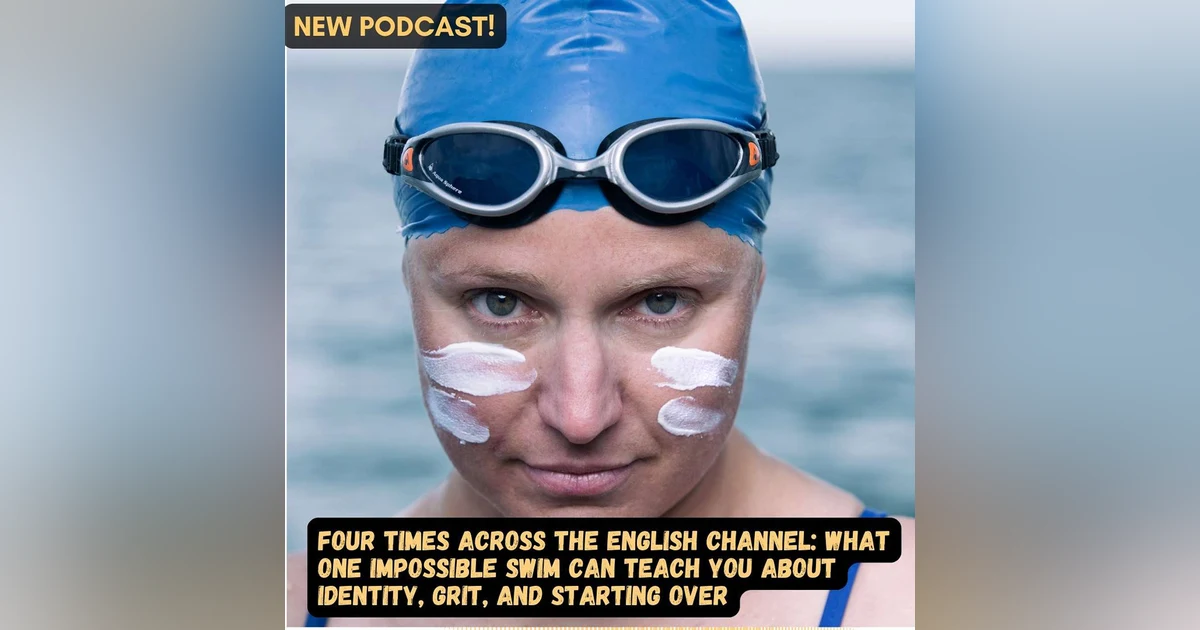


At midnight, Sarah Thomas stepped off the coast of England into darkness—swimming into history as the first person to complete a four-way crossing of the English Channel, nonstop. That alone would be astonishing. But what makes her story unforgettable is what came before: a breast cancer diagnosis, grueling treatment, and the slow, painful journey of rebuilding trust in a body that no longer felt like hers.
In this powerful episode, Sarah opens up about more than just world-record swims. She reflects on how to start over after loss, how movement can become a form of healing, and what it really means to “still float”—physically, emotionally, and spiritually. Whether you're an athlete, a survivor, or simply navigating your own midlife turning point, her story is a quiet masterclass in resilience, reinvention, and grace.
🔑 Key Themes & Takeaways
- Rebuilding After Crisis: Why Sarah’s swim wasn’t about proving strength—it was about rediscovering identity in a different body.
- Grit ≠ Perfection: How embracing her limits post-cancer helped her redefine success, and why being “less than 100%” doesn’t mean giving up.
- Movement as Healing: The power of returning to the water—emotionally and physically—as a space of control, anonymity, and joy.
- Longevity Lessons: What Sarah’s approach to endurance can teach us about aging well, training smart, and honoring the long arc of performance.
- The English Channel as a Metaphor: How a swim so steeped in history became her proving ground for something deeper: presence, surrender, and quiet strength.
- Start Small, Stay Present: Why big goals demand micro-focus—and how thinking one stroke at a time can carry you through life’s hardest miles.
🔗 References & Resources
- 🌐 Sarah Thomas’s Website: sarahthomasswims.com
- 📺 TEDx Talk – “Go Big”: Watch on YouTube
- 📚 Ocean’s Seven Challenge (Wikipedia): Learn More
- 📰 TIME Magazine – “Sarah Thomas Swims English Channel Four Times Nonstop After Surviving Cancer”: Read Article
- 🎖️ WOWSA Hall of Fame Inductee: World Open Water Swimming Association Profile
- 📍 Lake Champlain 104-Mile Record Swim: Coverage by Marathon Swimmers Federation
---
🚀 Love the show? Here’s how to support it
If something you’ve heard here has stayed with you, made you smile, or helped you keep going, I’d be honored if you’d consider supporting the show. 👉 https://buymeacoffee.com/agelessathlete
📰 Subscribe to the Ageless Athlete newsletter !
1-2x a month, no spam. We share behind-the-scenes reflections, longevity tips, and athlete wisdom you won’t find anywhere else. You can sign up at https://www.agelessathlete.co/newsletter/ 📩
01:00:49 - [Ad] Resilience Podcast Series
01:01:13 - (Cont.) What One Impossible Swim Can Teach You About Identity, Grit, and Starting Over | Sarah Thomas
Ageless Athlete Recording - Sarah Thomas
===
[00:00:00]
Sarah: I am currently at home. Um, I live outside of Denver, Colorado, kind of in a mountain suburb, if you will. At my house is at 9,000 feet, so kind of high up and I, for breakfast, I had, um, scrambled eggs, um, with some potatoes in them.
Kush: What is that suburb
Sarah: Yeah, it's called Conifer, but no one's ever heard of it because we're just, we're tiny.
Kush: I have been to Colorado a, a fair bit and I've spent some time in Denver. As we were just chatting before this, I, I did not realize that you could be in suburban Denver and be like at 9,000 feet.
Sarah: We are, I'm about probably 45 minutes from downtown. Um, okay. So not too far. It takes me about 30 minutes to go swim anywhere. So that's a little bit of a hike, but not really far, um, from Denver. And yeah, it feels like we're in the middle of nowhere sometimes, which is nice.
Kush: for some reason I have this idea [00:01:00] in my head, and I'm not a swimmer, but I do live by the water.
I, I, I'm from San Francisco and I think of, uh, I think of open water swimming, and I associate that with like oceans. So when I first learned that you lived in the beautiful mountains, but inland in Colorado, I was a little bit surprised. is, is this like the, the right place for you to be training and, uh, keeping up with high end swimming?
You know, it
Sarah: definitely
Kush: creates
Sarah: some. Struggles, right? You gotta fight for it a little bit more. We don't have a ton of access to water, but we make due. there's plenty of really pretty lakes. I have access to cold water. I have alt access to like high altitude training and just Colorado in general is a home to a lot of athletes.
So it's actually nice. There's a pretty big open water swimming community here, so it's nice to have training partners and like-minded people just [00:02:00] kind of who understand what you're doing. So I think it works out and I really do love the mountains, so I get to have a little bit of all of it.
Kush: That sounds amazing.
And I like that perspective that where you are is certainly, uh, such a hub for all kinds of outdoor sports. And even if open water swimming is not, let's say the biggest sport out there, but just being. In a community of other athletes who understand what it means and takes to perform at a high level in the outdoors.
I think that must be, yeah, that just must be just nice to be surrounded by.
Sarah: Yeah. I feel like over the years I just have learned so much from people who do all kinds of different sports, especially when I was just first setting off into this marathon [00:03:00] swimming journey. It was so cool to be able to talk to just other endurance athletes, whether they're runners or climbers or cyclists.
There's so many parallels just from like how you train, um, how you should do your nutrition. Like all of that crosses over across disciplines, and it was so nice to have access to so many different. Incredible athletes to like, just ask questions to, um, 'cause especially as I was pushing boundaries in marathon swimming, there wasn't a lot of people in the swimming world to ask questions to.
So it was really cool to have all of those different types of people. And it's fun to see what other people do for fun because you, like, sometimes you get to in your own lane and you talk to people who, like, they show up at the pond to go for a swim, but they've got like cuts and scrapes all up and down their knees because they were doing like some crazy rock climbing the day before.
And you're like, you know what? That's really cool. So I, I just love it. You know, Colorado is definitely an athletic state, um, and it's fun to be around those, [00:04:00] those types of people.
Kush: I love this because yes, that is what the ethos of this podcast of, uh, learning from, you know, people such as yourself and bringing your insights to.
To other disciplines mm-hmm. In the outdoors. So yeah, can't wait to dig a little bit deeper into that. But for those of us who may not know who you are, Sarah,
Sarah: who are
Kush: you and what do you do?
Sarah: I never know where to start. So, I basically, um, super high level, I'm an open water marathon swimmer, so I do a lot of really long distance, open water swimming.
I do it all without a wetsuit, so just me and my swim cap and goggles. And I just love to see how far I can go. Basically. Um, started off relatively small and short and kind of have built my way up to some really [00:05:00] extraordinarily long distances in open water. Um, I'm probably. Most well known for being the first and only person to swim the English channel four times nonstop.
So I swam from England to France, back to England, back to France, and then back to England all in one go. no one has ever even tried to do that. So I'm the only person who's done that took me, I think about 54 hours in the English channel, um, which is a really long time to be in the water. but in addition to that, I've done a lot of other super long swims.
My longest, um, was a lake swim, um, and I swam 104 miles in 67 hours.
Kush: thanks for that great intro. You have surpassed so much and accomplished, maybe things that most people didn't or couldn't even imagine Sarah with. Not just swimming, but, but sports. And just [00:06:00] performance overall.
And swimming has taken you to all these different places. I, I noticed that you were traveling recently when we were, uh, exchanging, coordination, times. Was that related to another swimming event that took you away?
Sarah: Yeah, it did. We just got back from three weeks, um, a week. We spent a week in Croatia doing, um, basically a swim camp through a company called Swim Trek.
Super fun. Got to. Do a lot of open water swimming in the beautiful water of Croatia with a huge, not a huge group. There was about 14 of us, I think. Um, and it was all people who are kind of training for like English channel swims. So super fun to be able to connect with athletes who are maybe a little bit newer on their journey than I am.
Um, but to also just get some like really beautiful ocean swimming in. Um, but that was like the appetizer to the real reason for the trip. [00:07:00] so the second part of our travels, we went to, um, Spain so that I could swim across the Strait of Gibraltar. Um, the Straight of Gibraltar is a relatively short marathon swim.
It's about 15 K. Um, it took a, you know, it usually takes people somewhere, you know, three and a half, four or five ish hours. So kinda short in the realm of swims that I'm doing. But the straight of Gibraltar is a significant swim because it's part of the Ocean Seven Challenge. Um, and the Ocean Seven Challenge basically, um, is a group of seven swims similar to the seven summits where you're challenged to do, um, a marathon swim, um, kind of in different bodies of water around the world.
Um, I wouldn't say that we can hit all seven continents because you don't really do a marathon swim in Antarctica. Um, but it's a good collection of swims that are fun and challenging. Um, and the straight of Gibraltar was my sixth of the seven.
Kush: [00:08:00] Wow. Well. I'm fascinated. Um, a a few things I would like to unpack here.
first things first. So I'm imagining this, uh, open water swim camp and you mentioned it is for people, maybe this one specifically for, was for people who are preparing to, swim across the English channel. Mm-hmm. And given that, given that that particular, uh, endeavor is behind you, uh, I'm guessing, were you engaged in a coaching or the training capacity for this particular camp?
Sarah: So they just invited me to come as a guest swimmer to, not necessarily coach, but maybe inspire, um, and just work with some of the swimmers there. Um, swim Trek is set up with some really, I. Incredible coaches already. And so it was nice just to be able to add my knowledge to some of the existing coaches that they [00:09:00] have.
Kush: what makes, an open water swim camp, maybe distinct from another kind of, training effort where somebody is, in this case, likely trying to become, uh, a better swimmer. What, what makes this camp, maybe, uh. Like I I, for, for example, like I didn't even know that this was such an established thing where there were camps set up to prepare people for, uh, these specific open water swims.
Sarah: So I will say Swim Trek has a variety of camps. So some of them are just really fun ones where you just swim, you know, one k um, in warm water and it's just more like a swim vacation. so those would be fun too, I think. 'cause they go to like really fun. Like tropical places typically. So they have those kinds, but then they also have a few that are dedicated to people who are trying to do long distance.
~So this was a long distance training camp that we went to and you know, you can do a lot of the stuff that they had us doing at home, but it's nicer to do it with a group of people. And so it was fun because each day basically we just got on a boat. They took us to a new spot and assigned how long we were gonna be swimming.~
~So there was a variety of people at different speeds, but we were just kind of swimming in loots. And so it didn't matter what speed you were, you just kind of did your own, your own swim. And it was just set up structured. Like nicely where, you know, day one there was just a short, just get to know, you get to, you know, feel the water swim.~
~And then day two we did a two hour swim in the morning and a one hour swim in the afternoon. And then it all built up so that people could do a six hour swim. Um, in order to swim the English channel, you have to do a six hour qualifier in water that's basically below 61 degrees or 15 C. And so the point of this swim was to give, or this training camp was to give people an opportunity to do their six hour qualifier swim for the English channel.~
Kush: Amazing. [00:10:00] And these are people preparing to swim the English channel. I, I feel like we should actually just spend a second on that one. Okay. And I know we will get into that in more detail later, but there are so many bodies of. Water. Mm-hmm. I mean, the, the, the earth is comprised mostly of water. Right, right, this English channel swim, it's mythical. Mm-hmm. It's people who are not swimmers. They can sometimes understand that. So yeah. Can you just give us little, um, 1 0 1 on what is the English channel swim and what has made it just again, this incredible, thing to accomplish?
Sarah: so the English Channel, I have no way to describe it except that it's just a magical swim.
and kind of like you described, if you talk to [00:11:00] people who know nothing about open water swimming. Um, and you tell them that you do long distances, they will ask you two questions when they're like, oh. So first of all, they wanna know if you have swam the English channel. Um, 'cause everyone knows about the English Channel.
And then the second one is they will ask you if you have sw, um, from Alcatraz. and I don't know why, but those two swims are like intricately, like connected, swimming from Alcatraz. It's like a two mile swim, right? And they time it with the current, it takes people like under an hour, but for some reason Alcatraz is like the same level as the English Channel.
So I have no idea why, but it always just like cracks me up. Um, I had to swim Alcatraz a couple years ago just to like be able to tell people that like, yeah, I'm a real swimmer. I've done the English channel and Alcatraz. I don't know, it's why it's, I, it makes me laugh every time. but the English channel, there's just such a long.[00:12:00]
History associated with it. Um, I actually think this year, um, we're celebrating 150 years of the first ever English channel and then we're also celebrating, I know for sure the a hundred year anniversary of the first woman who ever swam the English Channel. So even, you know, from 150 years ago, it was just one of the very first prominent challenges and it took years and years of people trying to swim this body of water that is super complicated.
It's super cold. And you know, I think when you're sitting on the shores of England or France and you're just kind of looking out across the ocean, it looks swimmable, right? It's basically 21 or so miles across the channel and on a clear day it looks close. Um, but once you get out in the middle, there's super strong currents.
It's. The weather is really variable, so wind can just come up from nowhere. Squalls can come up from nowhere. and especially back when people [00:13:00] first started to attempt to swim, the English channel didn't have a real understanding of what the currents were doing. So you could start, start off and swim for 10 hours and, you know, still be only a couple miles from France or England, depending on where you started from.
So there's just such a history of this being a really hard and challenging swim. Um, and I think that just kind of adds to it. Um, I will say I. A lot of the rules that traditional open water swimming follows to this day are based off of the first swims in the English Channel. So, um, captain Matthew Webb was the first person to complete the swim, and he did it with no official, like no artificial aids or buoyancy.
You know, some people had kind of like floated across in balloons. You know, there was some really interesting ways that people had like claimed across the English channel. So when Captain Webb did it, he was the first person to like actually swim it. So no neoprene, [00:14:00] no ways to keep warm. Um, and all you can really do is have a boat to guide you.
And so that is kind of the foundation of all of marathon swimming, even to this day. Um, where we just swim in a, you know, a swim cap goggles, a regular textile swimsuit. You know, there are, I think. People who are out there doing adventure swims, which are super cool and they're doing things in wetsuits or stage swims, but you know, the rules of the English channel are like, you have to start in point A and get out in point B and no one can touch you.
And it's just like this really pure, just magical thing that you can do. It really is just you, this swimmer against this massive body of water. And I just think the English Channel being the first one that really was established and just the stories around it, and I dunno, um, when you're a little kid and you're a swimmer, like that's what you dream of, right?
You tell people you're gonna swim the English channel one day. and it's really cool to see that in little kids and then to be a [00:15:00] grownup now and be like, Hey, I did that. Right. You know, something I said I was gonna do when I was 10, 11 years old. Like, guess what? I did it. and I don't even think, sorry, I'm rambling a little bit, but, uh, even when I like started to swim the English channel.
That my first one was back in 2012. I don't even think I really understood it right. It was just like this box to check, you know, there's a challenge called the Triple Crown and where you swim from Catalina Island, um, about 20 miles from Catalina back to la And then, um, the second one is you swim around the island of Manhattan and then the third of the Triple Crown is English channel.
And so I think when I was like going through those at the beginning of my career, I was just checking boxes, right? I'm like, okay, I'm gonna swim Catalina, I'm gonna swim around Manhattan and I'm gonna swim the English Channel. And it took actually doing the English channel and there is just something in those waters that's just magical.
And if you talk to other swimmers who have have done it, they'll [00:16:00] all tell you the same thing. and just, you know, you're in that water and just the history of all the other swimmers around you, you know, it's one of the busiest shipping lanes in the world. You know, it's just, there's, there's so much that goes into it.
And. When you get out on the other side in France, it's like, wow. Um, and it's just this magical feeling. And I think that accounts for, like, there's people who have gone back, you know, dozens of times because they keep failing, right? And they keep coming back. Or people who have had a successful swim and they keep going back to do it again and again and again because it is, it's just magical and it's so hard to describe it to anyone unless you've, you've done it and you've been there and it's just, it's a, it's a special swim about, you know, I've swim in really incredible, beautiful places that I love almost as much as the English channel, but it's just a special body of water, a special history, a special group of people.
Kush: Thank you, Sarah. No, I think your, [00:17:00] passion and. Your articulation. I think it really comes through. Like, I, I can just sense like, uh, yeah, I can sense being transported into that world for a second. And yes, maybe to somebody who doesn't understand it, it may just look like another big body of water which separates, uh, these two really big countries.
But it has this place in the lore of, um, just let's say human accomplishment, right? And maybe when you are stepping off the shores, you likely feel that, you know, I am going to be, uh, you know, fluttering my feet.
Sarah: Mm-hmm.
Kush: Uh, where. Maybe giants before me have, uh, have swam before. So I guess it is this like, iconic piece of history.
Some people might say that maybe in the world of, uh, albinism it could be Mount Everest or something else. Yeah. So, no, I think that, distinction, uh, [00:18:00] stance. I wanted to ask you again, like, like just a, a basic question, and I think you hinted at this, which is, for example, one thing that, distinguishes open water swimming is the idea of currents, which you don't find in, let's say a concrete box in an indoor pool.
Mm-hmm. Um, any other, sort of notable distinctions that you would like listeners to know about on what makes open swimming different, which may not be obvious to the naked eye?
Sarah: Man, I always tell people that pool swimming, um, is to like running like on a treadmill, right? So, or on a track where you're just kind of stuck in place.
The conditions are not variable. Um, there's a purpose for it, right? And you can still find joy and all of that in pool swimming, just like you can from running on a treadmill. [00:19:00] Um, you know, it's exercise, moving your body, getting the job done. but when you compare, you know, swimming to running open water, swimming to me is like trail running, right?
Where you're just out in the elements. There's hills, there's wind, there's sky, there's animals. There's just so much more to take into account and that just makes it feel much more free and much more challenging because it does suddenly go from you feeling like maybe you own the water in the swimming pool.
To all of a sudden the water owns you and you're there at its mercy. Um, and if you're not careful, if you're not smart, if you're not paying attention, the water can take over. Just the way, you know, if a trail runner isn't paying attention to lightning or hail or cliffs or you know, fallen trees, you know, they're at the mercy of nature.
And I just feel like that freedom that you get from just being more in nature and looking at sky and [00:20:00] feeling waves and, you know, watching fish go, go, go under you, like, it just, it brings so much more to me anyway, to the act of swimming than just, you know, back and forth in the chlorine box, staring at a, a black line in the pool and looking at band-aids floating by below you.
Kush: There's also the analogy, you know, we have from the world of, I guess climbing where it's the indoor gym versus the outdoors.
Sarah: Mm-hmm. Mm-hmm.
Kush: Um, are you like, like an open water snob era? Like I know, I know in climbing there are people who, you know, who refuse to climb inside because, well, climbing was meant to be in the outdoors, so, uh, yeah.
Like what, what's your take on that?
Sarah: I mean, I wish I had the luxury of being an open water snob, but as we started off talking about, I live in Denver, so, um, you know, most of the year I am in the pool. Um, I train in a tiny three lane, 25 yard pool that has too much [00:21:00] chlorine and it's way too hot. And, I do it because I have to, You know, it lets me live in a place that I love to live in. But, um, no, Denver pretty much only has indoor pools, so I don't get to be too, too picky. Um, I wish I had that luxury if I lived in Florida or Arizona. They have some really beautiful outdoor pools. Um, it's nice to visit, but No, here in Denver, you know, I get, I'm indoors a lot.
Kush: Well, you know, fair enough. But sometimes when one doesn't have, let's say, access to one's, true passion, like everyone's doorstep, it, it maybe creates this, you know, deeper motivation. Maybe keeps you frothing the time, you know, for the time you actually go to, to, to trips such as the one you were just on.
Yep. And, uh, correct me if I have any facts wrong, but I wanted to talk about Your [00:22:00] discovery in yourself of the love you have for swimming, and I believe that you were swimming in Oklahoma in open water bodies as a child. Is that how you discovered the sports and is that why you have had this, let's say, consistent love for, for being in the open water?
Sarah: That's a good question. So, I always like to tell this story, but my mom always had me in swim lessons as a kid, so I kind of feel like I've always known how to swim. But, um, the summer that I was six, something just like clicked. So I'm doing my swim lessons and the swim team is like coming in.
After my swim lessons. And so I'm like six years old and I start begging to be on the swim team. 'cause it just looked like so much fun. And so my dad told me like, Hey, if you do good in your swim lessons this summer, I'll sign you up for the summer team [00:23:00] next summer. And I'm telling you, so at the, you know, age of seven, I'm on this like summer league swim team.
I'm, I'm not, and never was like this, like superstar, speedy pool swimmer. But I just loved it, you know? And so I, I do have just a, a childhood just built around being in the water. Um, so on, you know, on a swim team when I was 10, my mom, um, asked if I wanted to be on a year round swim team. And I was like, this is the coolest thing.
You could ever offer to me is to let me swim year round. Um, and then my parents did have a lake house in Oklahoma and so we spent a lot of time in the summers just being, you know, on the water in the lake. Now I say I grew up in Texas and so it just never occurred to me to do open water swimming. it just wasn't as much of a, a thing back then.
obviously I'm older than the internet and so, you know, now I think kids have this huge advantage because they know about open water swim. So you can live in a landlocked [00:24:00] state and be far from open water opportunities, but coaches know about open water swims and can identify that in kids now. And we just didn't, didn't have that back then.
Um, and growing up in Texas, the lakes in Texas, Texas aren't exactly lakes that you're like, I really wanna go swim there. You know, they're kind of murky. There's, who knows what kind of snakes in there. So it just doesn't occur to you to like. Hey, I'm gonna go swim three miles in the lake today. so it really wasn't until I moved to Colorado that I like truly discovered open water swimming.
And so I had joined a master's swim team, um, when I moved to Denver and it was just like trying to get back in shape. You know, I swam in college and, you know, had kind of put myself on the retired inactive list after I graduated from college. Um, and then just kind of found that I really missed the water a lot.
And so I'm on this master's team and almost immediately a couple of my new teammates were like, Sarah, you've gotta get into open water swimming. You'd be so good at it. And I was like, I [00:25:00] don't know what you mean, like open water swimming. And so after about a year, they convinced me to sign up for this 10 K race.
I signed up for it like. Super terrified about swimming 10 K in the lake. You know, I've done that a million times in the pool, but like when you're in a lake, you can't put your feet down on the ground. You can't get out, you know, and so I was just super, I was scared about it the first time I did it, and then I'm like halfway through this 10 K race and I am having like, the greatest time of my life, you know, like I'm freezing.
but like, just everything about it was just incredible. And I remember walking out at the end of that first race and just like, I was literally in tears because I had had so much fun. Like, it was like probably one of my favorite swimming experiences of my life. Um, and I'm like, I was 25, so you know, I'm not a spring chicken at that point.
And I've had this huge swimming pool career up [00:26:00] to this point, and all of a sudden it's like, oh my gosh, I. This open water stuff, this is what I should have been doing. This is like my people, this is where I belong. Like I am in love with this sport. and so things just kind of escalated from that swim on.
and it was, you know, it was the swim, but it was also the introduction to the open water swim community where people are just awesome mm-hmm. In the open water swimming world. And so it was an opportunity to like meet people. and it was, it was like circling back to my childhood dream because now all of a sudden I'm actually meeting people who have like done things like swimming the English channel, and it goes from like this vague childhood, you know, I'm gonna swim the English channel to like, oh my gosh, I'm meeting people who have actually done it and then.
When you're spending time with people who have done the thing, it makes you start to believe that like, maybe I can do the thing too. [00:27:00] You know? And so I always tell people that first 10 K, um, in so many ways, like changed my life. I have no idea where I would be if I didn't do that first race because it just opened up so many doors of possibility that I didn't even know I was missing out on.
Kush: That is such a cool reflection because Yes. Sounds like that, you know, that that 10 K open water swim was, transformational for you, the experience of being, uh, just again, in that body of water feeling Yeah. Just the natural swells, you know, like both literal and metaphorical around you and just mm-hmm.
Body move. Mm-hmm. But this other unique thing you shared was the community bit. And I really feel that this is this really amazing element in the world of, uh, these niche outdoor sports bond around the sport because it becomes a [00:28:00] lifestyle. And then also because, uh, the number of people doing it are maybe lesser.
You get to interact with your heroes mm-hmm. And be inspired and learn from them.
Mm-hmm. But again, uh, just sticking with your early years a little bit, Sarah, I wanted to understand. About where your talent from for the sport came from. You were in early swimming lessons because your mom decided that was the right thing for you. did you try other sports and then maybe realize that, well, wait a second, I am better at the sport, or just some other like, reason why you were going to swim lessons at this age of six and not going to, I don't know, gymnastics, ballet or something else?
Sarah: yeah, we did all the sports. Um, okay. I am terrible at all of the other sports. [00:29:00] So, I did ballet, I did gymnastics, um, did basketball, volleyball, kind of all the way up through middle school. I. Definitely dabbled in a lot of everything else. I was also in band. I played clarinet in the band, so, you know, I did nice, I did a lot, a lot of stuff.
Um, but kind of going into high school, I kind of had to pick, you know, do I wanna be in band? Do I wanna do another sport or do I wanna just focus on swimming? So once I got to high school, it was kind of pretty clear, like no one pushed me into that. Like it was my choice as a kid to be like, I love swimming, I wanna stick with swimming.
that's where my passion and my true enjoyment lies. So, kind of starting about my freshman year of high school. So I was what, 14? that was really my primary, my primary focus. Um, usually I'm terrible runner, so, you know, sports that involve running are like never gonna be a good match for me. so, you [00:30:00] know, swimming was the easy, the easy choice.
Kush: Well, great thing that you found swimming or maybe maybe swimming found you.
Sarah: Mm-hmm.
Kush: But I'm guessing it wasn't just, just only talent. Uh, there was likely a lot of hard work and Yes. Discipline that went into it. Yeah. I'm, I'm guessing, yeah, lots of, lots of early morning wake up and lots of time in the pool.
Mm-hmm. I'm curious, so that focus and, and work ethic that you had in the pool, did that show up in other parts of your life as well? Like, like school, for example? Sure.
Sarah: I always tell people I am moderately talented, um, in swimming, but I made up for it in really hard work, and I would say the same went for school.
I always still, m I'm pretty average intelligence, but I worked really hard in school. I made really great grades. [00:31:00] I graduated fourth in my high school class. You know, I had a pretty high, I think a three eight or three nine GPA in college, you know, like I did, you know, I make good grades because I worked hard at it.
And I think that all kind of transitions over into like, work. Um, I, you know, I work a full-time job, so, you know, having to balance all the swimming in school stuff when I was a kid, I have to balance it all now as a grownup, um, with my job. Um, and I'm, I'm a recruiter, so I am always trying to like, find people and help them find jobs.
And I will say like, it was so cliche when I was a kid, but, we were always told that. Employers love to see college athletes like on a resume. And now that I'm in that job to hire people, I love seeing college athletes on resumes because I know that you had to, you had to do a little extra, right? You had to balance a little bit more.
You had to be more disciplined and better at time management and all of that. [00:32:00] And you can just tell, I talked to so many people, and you can just tell the people who were, you know, on a team or did something extra in college other than just like, went to school because you, you just sound different.
You talk different. You have a maturity level that's different. and so, yeah, I always tell people, you gotta make your kids do something extra, not just school, because it does, like, it builds so much more just discipline and focus that people who don't have extra stuff, they, they miss out.
Kush: maybe for folks listening to this and if you happen to be applying for, for work now or in the future, maybe the advice from a professional recruiter here is to not hide. Not hide your extra talents, not hide. Yeah. Some of those, uh, cool things you might be doing or have done, in this case in the world of athletics.
Because yeah, I think if people have shown the [00:33:00] capacity to work hard and to just keep showing up day after day, that likely is going to also, you know, transfer to most vocations. People are going to, going to take up. Yeah. okay. One last question. So when you were. When you were young and you were trying these different sports, and then swimming kind of stuck with you because you were, you know, just kind of good at it and you worked hard at it and you fell in love with it.
And it's one of those things when you, when you enjoy the process, you kind of start becoming pretty good. At any point during those early years, did you ever think that this sport would become such a, such an identity for you?
No. Um, you know what I, what did [00:34:00] you wanna be?
Sarah: What
Kush: did you wanna be as
Sarah: a kid? You know, I never knew the answer to that. I was never one of those kids that had, you know, I, I work for a vet company. Um, and so now when I talk to people, like I'll say 90% of veterinarians, when you ask them like. Why did you get into this?
It, they'll answer you. I always wanted to be a vet, you know, I always loved animals. I always knew this was my calling from the beginning. Um, that's true. I'm a recruiter now. I never had a calling to be a recruiter. Yes. Um, so I didn't know what I wanted to do. Um, I knew, I mean, swimming was like, just something I did for fun.
I knew that I was never gonna be like an Olympic swimmer. I knew that I was never gonna get paid to swim. You know, like, so I just kind of worked hard, studied hard, and I was like, I'll figure it out when I get there, basically. and you know, I did, when I graduated from college, I [00:35:00] said, I'm done swimming.
Right. Like, I'm ready to let it go. It's, you know, it gave me an opportunity. You know, to be on a college team, you know, help get me through college. In a lot of ways it's given me discipline, you know, like I'm ready just to drop it and just take all the life lessons I've learned from it and move on to the next chapter in my life.
and I was away from swimming for maybe two years and I think a lot of us find this, um, like if you talk to a lot of adult swimmers, they'll say, yeah, like, I took a break and then I just had to come back to it. 'cause the water just kind of calls you at some point. So I did, you know, I came back to it because like, I found, I just, I don't love cycling.
I don't love running. You know, I tried like Zumba and kickboxing and, you know, Colorado has so much to offer and it's like, you know, at the end of the day I just, I'd rather be in the water. Like, that's what gets me to move my body. that's what gets me out of bed in the mornings when it's 5:00 AM and dark, like.[00:36:00]
I just need to be in the water. That's what, that's just what does it for me. You know? That's where I find my happiness and my joy. And then, um, even, even then, I, I wouldn't have told you that swimming was my, like identity, but then like as this open water stuff has grown, and I've kind of truly discovered like my true, like, passion and love, right?
Is just open water swimming. I will say that like, I feel very like, entwined with that like identity of like, yeah, I am, I'm a wife, you know, I love dogs. I, you know, I'm an employee, I'm a sister, I'm a daughter. You know, like I'm all of these things. But I'm also pretty high on top of the list. I'm an open water swimmer.
there was a time when I like joked like, oh yeah, I could, I could drop it. I don't need it. Um, I'd be fine without open water swimming. and then. When I was diagnosed with breast cancer and I was forced out [00:37:00] of the water for long periods of time during like treatment, I kind of like had the realization of like, Nope, I do actually need the water.
I need it to feel happiness and joy. And you know, it doesn't have to be long distances. It doesn't have to be anything crazy, but like, I am a swimmer and I need the water to like, to be complete in my soul. Um, so I don't make jokes anymore about, um, being able to walk away from swimming because I'll be a hundred years old and still finding joy in the water, whatever that looks like at a hundred years old.
Kush: I love everything that you said. And yes, you know, most of us who are maybe even professional athletes, they can have different labels with which we identify ourselves, but maybe. Label or the identity
we cannot walk away from, or [00:38:00] maybe the one that we hold on to just that much tighter when faced with the crisis. And it's for, sometimes it takes that moment of reckoning to really understand who we are and, you know, maybe what's our calling? Mm-hmm. Sarah, sticking with you. This Yeah. Fun, fun segue, uh, just sticking with your journey here.
You did that 10 K swim. Right. And then all of a sudden, like these, uh, balls went off and you're like, oh my God. You know, this is something that I've been missing and this is something that I'm grateful I discovered, even though I was quote unquote in a master's uh, competition. By the way, I'm just shocked.
Like you're 25 and that's called like master's level swimming is, did I hear that correctly?
Sarah: Yeah. So, um, for people [00:39:00] who are like not familiar with how it, like swimming is structured basically, um, once you like, kind of finish up. Competitive swimming, whether it's like age group swimming or college swimming, just kind of the next like group of swim teams that you can join.
They're called Masters Swim teams, and it's just, it's really basically just a swim team for anyone over the age of 18. Um, and so there's tons of teams around the, the US and it's people of all ages, all ability levels. Um, but it does give you an opportunity to swim and train with people, um, which is always nicer than being alone.
So, um, the, the master's part just really kind of means adult, um, swimming,
Kush: I appreciate the clarification. It's just a, uh, a term that's used in, um, in the world of, world of competitive swimming, um mm-hmm. Being a master's athlete doesn't mean that, you know, you are like, you are just an older person.
It, it's not [00:40:00] exactly the same thing. Yeah. let's talk about the turning point. Maybe we are, uh, yeah. Jumping ahead by some years and at some point, yeah, I mean, you've, you discovered open water swimming, you totally fell in love with it and you started, peaking over time. You were setting distance records and then came the breast cancer diagnosis.
I imagine it must have been absolutely shattering, right?
Sarah: Mm-hmm.
Kush: When was this period? Like, can you just kinda take us to that moment?
Sarah: Yeah,
Kush: so I was
Sarah: 35, um, so still young. I had just completed my Lake Champlain swim, so I was months. Out of, you know, I was [00:41:00] like, it was like three months later, I, so I had just finished 104 miles, 67 hours of swimming, you know, a record that still stands for the longest swim that's ever been done.
I was feeling like, at the top of my game, right? Like, I was feeling strong, you know, I had never physically felt better in my entire life. Um, I'd already booked my upcoming English channel four way swim. so I was just like ready to like, take on the world I just on my own, found a lump in my breast and, um, kind of put off going to the doctor just thinking like, I'm 35, I'm totally healthy.
no family history of cancer of really any kind. it can't be anything. It'll, it'll just go away. and then it went to my doctor finally, and she. Like, really, like almost immediately was like, you need to be worried about this. you need to go like, have a mammogram right away. Um, later on my oncologist told me that my primary care doctor [00:42:00] probably saved my life in some ways because at my age a lot of doctors would've just dismissed it the way that I had.
Um, so I went, I had my mammogram. Um, the radiologist looked at it like while I was still there and she was like, we need to do a biopsy immediately. And she kind of told me point blank, like, I've been doing this for, you know, 30 years and I can just tell by looking at the shape of this lump that it's most likely breast cancer.
And like, you need to prepare yourself that this biopsy is gonna come back positive. I had gone to that appointment alone, I had no idea that they were gonna tell me anything other than like, we'll get back to you, we'll call you. and so one of like the hardest moments of my life, I, I did alone because I had no idea what was coming at me.
Um, I really, some people kind of criticized the radiologist for telling me that I had cancer [00:43:00] basically without the results. But I love a really straight up answer and like information. So I am personally very appreciative that she just told it to me straight. cause she was encouraging. She said, you know, we found it, it looks like we got it early.
And she said, you did your job. Now we're gonna take care of you and do our job. but still, I, you know, I was laying on my back in an exam room with a needle poking out of me when she's like talking to me through this, you know? And I remember just tears, you know, just falling out of my eyes. Thinking like, this can't be real, right?
Like, I am, I'm too young for this. Like, why is this, why is this happening to me? Like, what did I do? and then, you know, it, it, it's just, I can't even, it's almost like there's really no words to describe what that moment feels like unless you've actually lived through it. Um, but I remember like, you know, I had to call my husband, you know, and like, I finish [00:44:00] up the appointment, you know, I'm in my truck and just like sobbing hysterically and you know, he's a hundred miles away at work and I've gotta call him and be like, I need you to come home right now like I am.
I don't know how we're gonna get through this. truly probably the first month after that was one of the hardest months that I've lived through. Because you don't know at the beginning, right? You have no idea. What's gonna happen? You don't know what your prognosis is, you don't know what treatment's gonna look like.
I mean, I went from like never stepping foot in a doctor's office, you know, like my annual exams, you know, like to, all of a sudden I have oncologists and surgeons and you know, tests and blood work and it's just like this whirlwind of stuff and you don't know where it's gonna end it. None of it makes sense.
You don't speak [00:45:00] the language yet. You don't know the doctors yet. Some doctors have really great bedside manner and they wanna talk to you and explain it. All other doctors are just cold and callous and you walk out thinking like, oh my gosh, I'm gonna die. Um, and so it's, it, it's just like the most terrifying experience that I would never wish upon another soul in this world, because no one deserves that.
No one should have to go through that. Um, and it's scary, you know? And I'm lucky my husband is like the most incredible human on, on the planet. Um, and he wanted to be there for all of it and was supportive through all of it. Family is amazing. So I had just like this huge network of support to get through it, but that doesn't change that it's lonely and it's terrifying.
Kush: Yeah. This was, well, there was this life that you had pre-diagnosis and then mm-hmm. That life kind of ended once you Yeah. Gone [00:46:00] once you got this. Yeah. Yeah. It sounds like a very difficult time.
Sarah: Mm-hmm.
Kush: What was your relationship to swimming at that time and then at what point? Sarah, like, I, I think, I think all of us.
I just so fascinated that you didn't retreat, you kind of doubled down. Mm-hmm. I'm guessing it wasn't quite as simple as that. So can you just talk a little bit about how, like the, the role that swimming plate in your life as you were going through this mayhem? Mm-hmm.
Sarah: Yeah. So I feel like from the beginning I was in this like constant battle with my doctors of like, when can I swim?
How [00:47:00] much can I swim? What am I allowed to do? And they were all super encouraging of like. Swim as much as you want to swim. And so I swam quite a bit through, through chemo. obviously I wasn't setting records, I wasn't doing anything crazy, but it made me feel better in so many ways. Um, I mean, top of the line emotionally, it made me feel better, um, because I could, I could put on a swim cap and just go swim laps in the pool and nobody would know what was going on with me, right?
And it was like a moment of like peace where I could just feel like I was myself and I didn't have to answer questions. I didn't look funny. You know, I could just go and be me in a way that I couldn't do when I was not in the pool. And so swimming I will through like, especially during chemo, was like just this huge blessing, where I could [00:48:00] truly just find.
Find peace.
I could put my swim cap on, just go for a swim. I was anonymous. No one knew what was going on unless they were a friend. I didn't have to think about cancer. I could just swim. Um, and I don't know truly what I would've done without being able to just at least have, you know, an hour, um, a few times a week where I could just step away from the chaos and go to where it was familiar and peaceful and calm.
I will like a core memory, um, is the first one that I was able to get in after I'd gone through some of my initial biopsies and tests. I had to be out of the water for like eight weeks just from being poked and prodded and having a port placed and all of that. So I had to kinda step away. And then, um, by the time I was able to get back in, I'd already been doing chemo for about a month.
I, I had already lost all my hair and I [00:49:00] was just terrified, um, as to what I. It was gonna feel like to get back in the water. Um, I actually had a couple friends come meet me 'cause I was just like really scared to go to the pool. and then I just remember just like kind of slipping into the water and just standing there for a moment before pushing off the wall and just swimming.
And I made it about half a length and then I just felt the weight of everything just kind of drop off and it was like, oh, I still know how to float. And I hadn't even realized that. I was like afraid that I wouldn't even be able to swim anymore. And just realizing like, I still float. It was just like this turning point moment of all of it where I'm like, I'm gonna be okay because no matter what, I still float.
And so like I swam not very long. I. And I was exhausted after probably 30 minutes, but just having that moment to be like, I'm gonna be okay. I [00:50:00] float. really helped me I think, through the rest of my treatment. And so like I did try to swim as much as I could possibly swim without pushing it. And there was a couple times I overdid it, my husband had to drive me home.
Um, so I kind of learned some limits and boundaries about what my body was capable of. But you know, my doctors and nurses were pretty confident that just how active I stayed during chemo actually really helped me manage all the chemo symptoms. So I wasn't like super duper sick. I had pretty decent energy levels.
Like obviously it's chemo and you feel like garbage. Um, but I think swimming really helped me just because I was in such a better emotional state than if I had just like dropped everything out. I did, I swam as much as I could during chemo. Um, it was a little more tricky, um, after my surgery and then when we got into radiation, 'cause I had terrible burns.
but kind of as I am progressing through my cancer treatments, I start to talk to my doctors like, [00:51:00] Hey, I have a really big swim planned, uh, in September of 2019, right? So we're in the middle of 2018. When I'm going through my treatments, I'm like, I've got this big swim and it's gonna take place in about 18 months.
And like, do you think I'll be able to do this? And they're looking at me like, I am a psycho, right? They're like, what? Like, you have cancer? and I just. I couldn't put it out of my mind. Right, because as we kind of went through, um, kind of as I got through chemo, like my body responded really well to chemo, it like shrunk the tumor to nothing.
So when they did my surgery, like they could tell that chemo had like knocked it all out. So I kinda, you know, when I had finished chemo in May of 2018, pretty good since that I was gonna be okay. Right. I still had a long way to go with treatment, but like now I can kind of start thinking about the future a little bit more.
And that's where like, I think having [00:52:00] the swimming goal out there, kind of helped push me through because I'll say I did um, 25 rounds of radiation, so like five weeks of radiation and it, it made me sicker than chemo did. And I am pretty certain that if I hadn't had like big plans and goals for the future, I might have just have given into it.
So, you know, I'm talking to my doctors. We definitely made surgical decisions based off of like my upcoming swimming goals. You know, like my doctors were amazing. They worked with me so much because they could see that like, Hey, this woman is insane and she needs this. so just kind of as I'm progressing.
So I finished my radiation treatment in like late August of 2018. Um, two weeks after I finished radiation. I got the all clear from my surgeon 'cause I had terrible burns like in my armpit. Um. But I got the all [00:53:00] clear from my surgeon to do that 10 K race, um, that I had started with. And so like, people were like, Sarah, you are not ready to swim at 10 K yet.
And I'm like, I kind of have to. And so, you know, it's, it was like this full circle moment where it's like my very first big marathon swim that kind of changed my life and now I'm coming back to it, um, two weeks after I'm finishing cancer treatment. And it was slow. It was the slowest time I'd ever done on that course.
And it didn't even matter because it was just like my moment to be like, all right, I win. You know, like cancer tried to destroy me, but this is my moment to be like, I got it right. Like, I can still be me, I can still do this. I have a long way to go. but like I win, um, cancer didn't beat me and so I.
That like I, there's a picture of me walking out of the water at the end of that swim and I've got like my arms over my head. And like that moment in my life is probably just as [00:54:00] impactful as that very first swim, you know, 11 years prior. where like swimming has just, I mean, to go back to like, is it my identity?
Yeah. Swimming has just carried me. There's so many hard moments of my life and it's just always been there in whatever form it can give me. Right? I don't have to be the fastest or the strongest or anything, you know, I can just be free in the water. and just enjoying the feeling of floating. and so, I don't know.
That is a long, rambling answer for you. But, you know, without swimming, I don't know how my cancer treatment would've gone. Like, it really did propel me forward and give me just like the mental strength, I think, to keep moving and keep focused. The future and then, um, kind of to progress the story more than you may be asked.
But, um, it was about, I don't know, two or three days after I finished that swim, um, [00:55:00] my English channel boat captain emailed me, because you have to pay a deposit for a swim a year in advance. And so, you know, he'd been following me on Facebook, like he knew what I had gone through. And so he's sending me this email and he was like, young lady, I, which is so flattering because, you know, I was not feeling like a young lady at that time.
But you know, this email is, you know, young lady, I hate to ask you this. I know what you've been going through, but are you still planning to come next year? And I think it took me, you know, all of like an hour to like, really am I gonna be ready? I have a year. Like, I literally have a year. I just finished cancer treatment weeks ago.
I still have burns. Am I gonna be ready for this like, monumental challenge? You know, when I had originally booked the English Channel four way swim two years prior, it had felt more like a, like a given, right? Like I had come off [00:56:00] a 104 mile swim that took me 67 hours. This English channel swim was not gonna take as long.
It's 80 miles as the crow flies. Like no big deal. Like I wasn't even like all that nervous about it before my cancer diagnosis. And now I'm a year out and it's no longer this like guarantee in any way. And I had to really do some soul searching and say like, I've been talking about this, I've been pushing for it, but like now it's real.
Now I have to put money down on it. Am I gonna be ready in a year? And I emailed them back and I was like, I'm gonna be ready. I'll see you next September. Wow. There was a lot that happened, happened in that year. Um, it was a really hard, hard year. Not gonna lie. Um, but we got ready in a year.
Kush: conviction, uh, maybe, some leap of faith.
Yeah. Just conviction. [00:57:00] Sarah, like where do you, where do you get that, you know, like this was a different Sarah than the one who had finished this, I think the longest swim ever by like a human. And, but now this is a different person now, and you were having to relearn mm-hmm. To some degree and adapt to your new body.
how did you arrive at this conviction that. Yes, I have gone through something that's changed me. Mm-hmm. But this thing still might be within my grasp.
Sarah: Yeah. so many things. I mean, yes, I had to rebuild everything. Um, my swim stroke is different. I had a mastectomy with some like reconstruction, so like that changed a lot.
radiation makes your muscles tighten [00:58:00] up. So I mean, there was just so much about my body that was different. I remember talking to a friend not too long after this, and you know, he looked me in the eye and he said, you know what, Sarah, I think you're good enough. You only need to be at 80% and you're gonna be able to do this.
And so I don't know if he knew how much I was gonna internalize that piece of advice, but I did. I told myself, you know, like. You know what? I think he's right. 80% is all I need to be. Um, I, and I just kind of accepted the fact I was never gonna be a hundred percent ever again. Like there's, there's nothing I can do in my life to get me back to a hundred percent.
My body is forever changed. Um, I, you know, I have the reminder, I have the scars. You know, like, if I look in the mirror, I can see that my body will never be a hundred percent. But also, like for me, I don't know that I've ever had a true, like, sense of failure, right? Whenever I [00:59:00] step into an ocean or a swim, I know that there's a good chance that I might not make it.
Um, and that's okay. 'cause for me it's always been about like the journey and the effort. And so, you know, that sense of conviction I think comes from yeah, it's a leap of faith. You have to have a ton of courage, but also like. I'm not afraid to try it and to fail, like I don't wanna fail. Um, but I don't have that fear of like, oh man, you know, how terrible will it be if I start this?
And I don't make it like that doesn't occur to me. Like, if it happens, it's cool, it's fine. I know that I gave my best. So I think that gives you so much more freedom to just push forward through things that are scary or hard when you're not afraid of the outcome. 'cause I do that journey I think is more important to me than the, than the finished product.
And then kind of thirdly, I will say I had to learn a lot of grace. Um, you know, as [01:00:00] much as I can talk about knowing that I'm not a hundred percent. Like when you start feeling it and start seeing it and know that you're not as strong, you're not as fast. You have to give yourself grace in those moments.
And I had to learn that like through the whole year. Like it was like hard lesson after hard lesson, after hard lesson of like what my body's limits are, where I could push, where I couldn't push anymore. Um, things that used to be easy were no longer easy. And it again, like that journey was so I important to me.
one, I had a kind of a test swim planned in the middle of all this. So in March of 2019, I went to the Cook Strait, which is, um, between the north and south island of New Zealand. it was six months after I had finished everything and the six months before the English channel swim, cook straight is generally speaking, a relatively short-ish swim.
It should have taken me under 10 hours. Um, the water's kind of cold. There's jellyfish, there's all kinds of fun [01:01:00] things that make it interesting. but I went into that swim like. I needed to like, test myself mentally. And I remember, you know, like, I need to know if I've still got it. Um, and I remember the first couple hours of the swim I'm thinking like, I don't know if I got it.
You know, and just really had so many doubts as to like, do I still wanna do this? Is this still what I'm passionate about? You know, I had some like really hard questions that popped up in that swim. there was another woman who was also swimming at the same time with a different boat. She's a much faster swimmer than I am.
Um, the currents that day were awful. Um, the wind was wild. Um, I've never been like seasick in a swim before. And I swallowed so much water that I like projectile vomited for the first time ever in a swim. And that water just like knocked me around. And this other woman. She got out after 12 hours, um, because it was just too much.
Like we should have both been finished at 12 hours and we were like barely passed halfway. [01:02:00] And she was, you know, she called it, she was like, get me outta here. I'm gonna come back another day. And I remember like, this is where I need to be strong. Like this is gonna show me if I'm ready for what's coming next.
And I did. I pushed through that swim, took me like, I remember 14, 15 hours. It should have been a nine hour swim. And I just remember just hammering it like the sun went down. I wasn't expecting to swim in the dark, you know, like just everything that could have happened on that swim. It that swim threw it at me.
I think to this day, I think I have like the third or fourth slowest time across the coach straight. You know, like, um, at some point most people just get out or they get pulled because they're like, you're never gonna make it. And, uh, I'm grateful for my pilot because he didn't tell me I had to quit. Um, and he just let me like hammer it and they pulled me into the rib at the end and I just remember I'm laughing, you know, I'm hysterically laughing at like, that [01:03:00] was crazy.
That was one of the craziest swims I've done. I fought for it. I pushed through so much and like it made me like realize like, I still do want this. I still got it. Um, and I look back at that swim because I think previous, you know, previous Sarah, you know, not cancer survivor, Sarah. She maybe, maybe would've done what the other woman did and just said, you know, get me outta here.
I'll come back another day. but I needed it more, right? I wanted it a little bit more. It meant more. And I think that mental aspect makes up for what I'm now lacking in physical aspects, right? Like suddenly it takes on more meaning, um, there's more purpose behind it. It's not just this thing I'm doing for fun.
That's kind of cool. Um, it's like proving to myself that like, I don't have to be a hundred percent. I can still be me and make up, you know, my whole being. even if I'm not exactly the same as I was before, [01:04:00] that is so badass. And sorry, I'm
Kush: like, I'm rambling so much at you for running. No, I, no, Sarah, I'm just, yeah.
I'm just riveted and I mean, I'm almost speechless that. That you turned your cancer experience into? Almost like a superpower. I dunno if I'd go that far. Okay. Okay, fine. But it does seem like, you found a way to, turn that, to channel that into this kind of fortitude. And I'm not saying that Yes.
There's not like a one-to-one relationship that Yes, you went, you go through a very difficult medical situation and all of a sudden, you know, but I, but I mean, a number of things came together, but it seems like [01:05:00] yes, you did find a way to take that experience and, and then yeah, just turn that into this, uh, fuel.
Sarah: yeah, I think some of it when you like look at it, right, like I got lucky. lots of people don't come through cancer treatment the way that I did. So I know like every day I wake up and I know I got lucky. Um, and I think with that comes a sense of gratitude, right? And so, I mean, I'm not gonna say that I don't get angry and frustrated and mad about some of the situations and things that I like have to deal with now that I never had to deal with.
But at the end of the day, I'm still here and I still have an opportunity to do the things that I love. And it's almost an obligation to the people who. Didn't have that opportunity. and I can't like, waste it, you know, like, I still can, [01:06:00] so I still should almost in honor of the people who can't. Um, and I think that's where some of that drive comes from because I am, I'm lucky and I'm, and I'm grateful for this like second chance opportunity.
Kush: No, that is deep. And yes, for sure. I mean, there is still much to be, thankful for. kind of wanna get a sense of what the preparation, , Sarah, back home in Colorado as you are getting ready to fly. To Europe to do the swim. Like I'm sure you were like, there were so many things that were going on, you know, you were still, you know, I don't know, outside of swimming and outside of, uh, the cancer treatment, you were still living your life.
You were being, you know, maybe you were still working, you were still raising a family. Paint us [01:07:00] a picture of what that period was like and again, what maybe a week or a, a day would look like for you.
Sarah: so I do work full-time. Um, I actually work pretty full-time through all my cancer treatment, so, that doesn't, that's always like a piece of it.
You have to keep in mind. I'm working at least 40 hours a week, at my job. and that time I had a super, kind of crazy busy job, without a lot of like flexibility. So, you know, everything is time management. Making things work. I will say, um, I don't have kids so that, you know, it's a, a sad piece of my story.
Um, but it also does gimme a little bit more flexibility. I think sometimes that, you know, it would be even harder to juggle it if you had, you know, young kids or something. But, but going into, you know, training, you know, it's almost like a part-time job of, you know, I'm training, you know, [01:08:00] somewhere between 20 and 30 hours a week.
A lot of it's on the weekends. So, you know, I'm up in the morning before work, doing a training session, you know, working a full day and then going back to the pool and, you know, maybe doing another training session in the evening. And then, you know, on the weekends it's just long, long weekend swims. Um, and it's exhausting and it can be really lonely because there's not a lot of people who wanna be training as much that I'm, as I'm training.
So always trying to, you know, how can I find some company where I'm like swimming circles for maybe 12 hours in the lake on Saturday? even if someone doesn't wanna come the whole time, can someone come for an hour, maybe two? and just trying to make it as fun, as fun as possible. But it's intense, right?
You're just tired all the time. You eat everything in sight because you're just constantly firing. So you're, you know, trying to find time to eat is probably harder than you might imagine. so yeah, it's just this. [01:09:00] Really intense buildup. Um, for the English Channel swim, I did have, you know, two previous super long swims and I just kind of followed the same training plan, from those first two swims and applied it to the English channel and just, you know, a lot of swimming, you know, basically to put it like in super simple terms, swim as much as you can possibly swim.
Every free moment is spent swimming. There's not time for a lot else, which is a huge sacrifice for my husband. he has to pick up an awful lot of slack when I'm just exhausted and underwater all the time.
Kush: Sarah? Yes. obviously incredible amount of hard work, plus you are now working with a different body and maybe blunt choice of words, but maybe like a. Maybe a diminished body, right? Like you don't have everything, all your physical capacities, and [01:10:00] like somebody else said, you know, 80% if you can just do that.
Yeah. And you had now, paid up that deposit to your, uh, swim captain. Yeah. So you were, you were like signed up. Did you, did you have any points of regret in that buildup period? And you were like, oh my God. Like, maybe a couple of dark moments where, because, because let's say somebody was completely healthy and preparing for something so, so audacious, you know, swimming across the English channel like four times, just doing it once is a lifetime achievement.
You're trying to do it four times. Somebody completely able might also break down and say, oh my God, what did I sign up for? You know, this, this, this preparation, the intensity, the, all of it just [01:11:00] seemed so overwhelming. Mm-hmm. It was, doc was about maybe a couple, maybe if you had a moment or two of like, sorry, but despair and then how did you break out of that?
Sarah: Sure. I mean, I think anytime I've done a big training block, there's that moment of like, oh my gosh, this is a stupid idea. What am I doing? You know, you do, you sacrifice so much for it, and it does, it eats at you, right? Because it is, I mean, to some degree it's a selfish endeavor, right? You're saying like, I wanna do this for me.
Um, there's no like, other purpose other than like, I'm inspired to do this, but like, it doesn't mean anything. I'm not curing cancer. I'm not, you know what I mean? What like true value to my life does it bring other than like, I feel it in my soul that this is something I wanna do. but there are times when it is dark and you are lonely and you're exhausted.
Um, and [01:12:00] that's where like I just feel like your community is what helps pull you through that. Like, I'd come home from training sessions and just be in tears. Um, and I remember just like sobbing to my husband one time and just saying like, I don't know if I can do this. I'm not as fast as I used to be.
I'm so tired. And he looked at me and he was like, Sarah, you just had cancer. Like, give yourself a break. And I was like, oh good idea. So I think that was a lesson for me to learn of like, Hey, cut yourself some slack, give yourself some grace and just get back out there and do it again tomorrow. I think I am practiced in like, just that discipline, I must say.
You know, even balancing school and swimming in high school, you would get that right because you're just so exhausted and tired. So I think I do have a lifetime of like, pushing through those dark moments. so that kind of, at this point in [01:13:00] life, like I can recognize it for what it is. Like this is a moment.
I just have to, you know, go to bed tonight and wake up tomorrow and we're gonna start over fresh. but also like, yeah, it's good to have people around you who are like, we got you, you know, we believe in you. Like, get out there and do it. You know, it's, I don't know what I would do without like the family support, the friend support, the swimming community support.
I think that all, that all helps propel you through some of those dark times too.
Kush: Sure. Yeah. I guess it's also all the, um, it's your own. Personal preparation in the pool, but it's also this other preparation by building a support system of people who also believed in you. And then, you know, when sometimes when people believe in you, believe in us this strongly, it kind of makes us start [01:14:00] believing in ourselves again.
Also because yeah, because if you trust somebody's words and those words can have this, uh, profound effect on us. Fast forwarding now to
the race itself. I shouldn't say the race, the swim itself. You are now at the shores waiting to jump in the water. Uh. I wanna ask you,
that moment when you were about to step in, Sarah, what was going through your mind? You had done Epic swim before, but you hadn't done after this period that you had just gone through. Can you share with us what was going through your mind as you were about to take your first steps? Describe to us that [01:15:00] scene.
Sarah: I don't have like a super profound answer for you because truly in that moment, you know, it's a moment that I've been in before and I wouldn't have started to swim if I didn't have belief that I was capable. Right? Like, you always know that there's a chance in any I.
Open water swim that there's gonna be failure. But I wouldn't have been standing there if I didn't feel like I had a chance. So truly in that moment, right, the the way it works is, you know, you take a boat ride over to the beach where you start, you get greased up on the boat, then you jump off the boat and swim to shore, one to two minutes, swim to shore, and then you kind of stand on the beach.
we were starting at midnight, right? So it's pitch black. and so I can't really see anything other than just kind of the, the lights of the boat. and you do, you, you stand there and then when you are ready, you raise your arm up in the air, the [01:16:00] boat blows its air horn at you and then you step into the water and start swimming.
And so like, that's something I've done before. Um, that's a, a moment I've lived in before and truly in that moment. All you should be thinking about is, okay, I'm gonna step off this beach and now I'm gonna swim back to the boat, right? And then I'm gonna swim until my first feed happens, which is, you know, an hour later.
And then I'm just gonna take it 30 minutes at a time until we're done. You know? And that's, I learned the hard way. Like if you think about anything else more than I am just gonna step off the shore and I'm gonna start swimming to the boat. If you think about like, I'm gonna be swimming for two days, I'm not gonna get to sleep for two more nights.
Like, I might get sick, I'm gonna be cold, I'm gonna be wet. Like, if you start thinking about all of those [01:17:00] factors, you won't finish, you're not gonna be successful. Like you literally in a swim like this, you have to be 100% present in the moment. You can't be thinking about the past. You can't be thinking about the future, you have to be right now, because the future is very daunting.
Right. Um, it's terrifying. So you can't think about it. So truly, you know, in that moment you're thinking about, I'm taking my first strokes and that's all.
Kush: Absolutely, yes. I guess it is to be present in that moment. And maybe just even the darkness helps, you know, because it like shrinks down your feel of vision. You know, you're not distracted by much else except maybe the, the, the flickering light of that boat ahead of you, and you have to kinda use that to [01:18:00] follow course.
We didn't get into this earlier, but the English channel of course, is this, Big thing in the world of open water swimming, but what is but why four times? What is that whole thing that you decided to do it four times?
Sarah: Well, it had never been done, so, okay. That kind of appealed to me. So five people had done an English channel three way.
it was actually in 2016, I was crewing for a friend, so I was, he was swimming the channel and I was sitting on his escort boat, you know, helping with feeds and encouragement and pay swimming and all of that. And it was just like this beautiful day. And I remember just sitting on the edge of the boat, my feet were kind of hanging over, getting splashed by the waves.
And I remember just kind of like looking to England and then kind of looking to France and like thinking, hey, that's not that far. The summer of 2016, I was in the middle of training [01:19:00] for my first big long swim. Um, so I was training for an 80 mile, not my first big long swim, but like my first record breaking swim.
So I was training for, um, my Lake Powell swim where I was looking to swim 80 miles in Lake Powell. Um, and 80 miles would be the record for the longest, like current neutral swim ever. So I was in the middle of training for that, um, and sitting on this boat in the English channel, and all of a sudden I'm like, you know, like Powell's 80 miles, the English channel's 80 miles.
maybe if that Lake Powell swim goes good. I should consider coming back here and doing something special here. So that's kind of where the like inkling of that idea came from was just like, truly, I'm sitting on a boat and just like looking in England and France and thinking like, yeah, that looks like fun.
I think I could do that. and so I did. I, so I'm like Powell in a, in October of that year and it went great. Um, I came out of Lake Powell being like, yeah, I [01:20:00] can do anything. and so then kind of simultaneously, um, training and planning my Lake Champlain swim, but also I had a, like a window for this English channel swim.
So I kind of did Lake Powell and then like went straight into like, okay, I can, if I did this in Lake Powell, I can for sure go to the English channel and do a four-way. I can swim a hundred miles. Like let's bring it. and that's kind of where the whole like concept of the idea came from.
Kush: I got it. Okay. Yeah. So there was a buildup there. You had done the successive things and, uh, this idea appealed to you. I still think that, it seems so daunting, you know, to me, like, again, I'm not like, let's say an Indias athlete, but let's say from the world of climbing, if I'm looking to do like a, a, a big day with, let's say a multi-pitch or a big one objective, the idea of getting to the top and taking my climbing [01:21:00] shoes off, which at that point are like really uncomfortable, is very appealing.
You, on the other hand, would get to the other end and then send back, and then you do that twice over. Yeah. And it would just take that much, uh, I don't know. Will to be able to that four times.
Sarah: let me add this. I, you know, I didn't tell this earlier, but we were talking about my childhood. so I was always like a super average pool swimmer, right?
Like, just, I worked really hard. I loved the water, but I was average. Um, and I remember, I don't know, it was probably 11 or 12. Um, and my overhearing like my mom talking to one of my swim coaches, um, and her, and he was telling her like, yeah, I have a good work ethic. Um, and if I worked hard, I had a lot of potential to achieve.
I. Almost whatever I wanted. Um, and I remember [01:22:00] going home and asking my mom like, what does potential mean? And she said, well, that means, you know, you can do so many things if you put in the work to do it. And so I think even from a young age, I just had this desire to like fulfill my potential, right?
And so I, I knew even though I was an average pool swimmer, like I worked hard 'cause it was an effort to just like make sure I was the best that I could be. Maybe it wasn't like better than you, it wasn't better than, you know, anyone else, but it was better than me. So I think I just grew up with this feeling of like, whatever my best looks like, that's what I need to be achieving.
And so as I'm like starting to do these longer swims, you know, when I did the English Channel for the first time in 2012, I swam across, I'm standing in France and it's like this beautiful sunset. This like super special moment. And I will never forget, I'm standing on this beach in France and I'm looking back in England and I'm thinking like, [01:23:00] I can do more.
There's more left in me. And so I think this chase for longer swims is just trying to find out like, where's my limit? Um, what does more look like for me? And I think when you look at it that way of like, man, I did this 80 mile swim. No one else has ever swam that far before, but like I haven't maxed out my potential yet.
and so I think that's where like you keep wanting to find that next step. You know, I've never been done. I will say I was done after my a hundred mile swim, right? Like that was a limit, you know? And I don't necessarily know that I need to push past a hundred miles. I'm happy with that. That took all that, I had everything in me to finish that swim.
So that gives you like, just a sense of peace. And so now it's like I can just do whatever I want. I know that I've pushed, I've met my potential. There's so many fun swims out there, what else can I potentially achieve? And that's where something like the four-way English channel comes [01:24:00] into play, it's like, this is a really cool swim that's within my wheelhouse, that's within my potential.
and I always tell people like, if you can do something, you should, because there's no limit to what we can achieve other than like what we set our minds on. and I do feel like I maybe more so than other people, don't put a limit on what I believe I can achieve in the water. Um, and that just opens so much, so much for you when your mind is open to like.
I can do that. Like that's not a limit. You know, I've done several swims over these years where people were like, that's an impossible swim. in 2013, my friend Craig and I swam down a back across Lake Tahoe. people had tried that swim and nearly died trying to do that swim. They said it was impossible.
Like people were like, there's no way you can do a double leg Tahoe. And I was like, what's so hard about that? Like it's, yeah, it's colder water, but it's not super cold. It's altitude similar to Denver. Like I can go do that. Um, and so I think [01:25:00] I've just got all of these swims where I've practiced turning, um, I've practiced doing things that people had said were impossible.
So by the time you get to the English channel, you can push away all that noise. You know, people telling me like, it's impossible. You're a cancer survivor. Like, who do you think you are? You know, you've only swung the English channel one time. Like you can't do this. You know, like. You can just push all that out.
Like they don't matter. You know what matters is like, I know what I've achieved, I know what I believe and I know what I can dream of.
Kush: I think this is such a, uh, core human, gift in a way, which is to have the curiosity to find what our limits are to those of us who are not. Swimmers, maybe not even athletes. How can those people find [01:26:00] what their limits are and, and how can that really, uh, I don't know, enhance the quality of their life?
Sarah: I do. I, I talk to people about this, right? Because it doesn't have to be swimming. It can be anything. You know, for some people, like their jobs are their passion, um, teachers, you know, like, think about the lives that you're impacting as a teacher. Um, maybe it's just like knitting, you know, like I just think that as a human, we all have something within us that we love that brings us joy, right?
And, um, maybe your goal isn't to like max out your potential, but I do think. That you should be finding your joy in whatever form that looks like that's meaningful to you. And I can't tell you what that is. I can't discover that for you. Right. I didn't discover my like, [01:27:00] true passion and joy. I was 25. Um, and I would still say I'm still still searching for some of it.
You know what I mean? But I think we all have something in us that brings us joy and you shouldn't ignore it. I think we, some of us, we get so busy in like work and raising kids or just like the day to day, we forget to focus on the thing that brings us joy. And I think all of us would be better if we took an hour a day, you know, or 30 minutes a day.
put that passion into the thing that brings us joy. and so I don't think you have to like break world records or, Swim yourself until you can't think anymore. You know, as long as you're finding those moments where you can, um, to focus on yourself and do the things that bring you like true joy and true happiness.
Um, I think we'd all be better off if we did a little bit more of that. [01:28:00] I,
Kush: what about people, Sarah who, who actually have not discovered that passion? Mm-hmm. You know, we are going through, I don't know, some kind of mental health crisis in this country and in this world. And I think maybe a part of that is because people, people don't know where to turn to, And yeah. Uh, it is great if one already has that in some way and one can maybe just, um, you know, dig away the dirt and get back to pursuing that. I. That thing that they have. But if you don't have that, and I, I think you also, you coach people and you also I think speak at events and I'm, I'm just curious, uh, what would you tell people on how to find that, that dream?
Sure. Where should they start with? Yeah,
Sarah: and it's hard. Um, [01:29:00] I have a pretty good amount of like mental health struggles within my family. So I feel like that question like really strikes close to home for me because, you know, I have people that I love very much who have a hard time finding that joy. and knowing, you know, knowing how to even start, um, because there is despair and, and sadness and, you know, I.
Every emotion that kind of gets in your way of finding that. Um, and I'll say number one, you, you know, it always helps if you have like an an actual real mental health professional, um, by your side, um, because they'll probably help you more than I can. But, you know, I think part of it is just giving yourself the room and the, the peace and the space to just try right it.
You don't have to, you know, be [01:30:00] swimming the English channel four times on day one. Right. Day one is just like walking into the swimming pool and swimming one length and it no matter where you're at, you know, you can always. Swim the equivalent of one length of the pool. Right? so if that's just, you know, picking up a pencil and drawing a sketch, if that's going outside and walking around the block or, you know, whatever it is that gets you moving forward to step number one, and then feeling like you can accomplish step number one, and then, then that gives you the freedom and ability to go to step number two and then maybe three or four and just wherever that takes you.
But I know sometimes the hardest part is just finding step one, and sometimes you have to repeat step one a million times. But my, my belief is that there's always, there's always something, right? There's something within each of us that it makes us individuals, it makes us unique. Um, and that can bring us, bring us [01:31:00] joy.
and I can't find it for you, but hopefully you have the. Just the, the mental strength and the ability to start with step one. Um, because that's where, that's where it all starts, is with just that first step of beginning.
Kush: That first step is, is crucial indeed. The other thing that I am sensing from you very strongly is that you also find this joy and this, gratitude in the process.
You know, like you can't just think that I'm gonna be swimming for 80 hours. You have to, uh, enjoy each stroke, each kick of your legs. Any, any words of wisdom for people on how they can find just that joy where they can stop worrying about the, the finish line and they can, they can find [01:32:00] fulfillment in just the act of doing.
Sarah: Right. And I think that's where, you know, I kind of mentioned earlier, it's just being present in the moment. I do think we get so caught up in past mistakes and past errors and past struggles, and then sometimes we get too focused on the end, you know, the finish line, what I need to accomplish, what do I need to achieve?
But like, really what matters is like what you're doing right now, like today matters more than yesterday, more than tomorrow. Um, and I think in life it's easy to get overwhelmed with like, what's the purpose of life? You know, what do I need to be doing? because it's so big, right? Life is so massive. Um, and yeah, all that stuff I think about and, you know, you think about your legacy and what you're, what you're doing and achieving, but at the end of the day, I love sitting on the couch with my dogs and holding my husband's hand.
You know, it's those simple things that matter. More so than that, that big [01:33:00] daunting of like, what is the meaning of my life? Um, 'cause I do, I think finding joy and happiness, that to me is, is is the most important thing. And I find that in swimming. I also find that in snuggling with my beagle Lucy. You know, like there's multiple ways that you can, you can find that.
and again, it's different for everyone. And sometimes you gotta try a lot of different things before you discover what like, truly brings you that peace. And then I think that's kind of the joy of life is like, what did I try? What, what's new? You know, what did I find? You know, maybe I found some things I hate that are not for me, but like, I found I really love beagles.
So, you know, like there's just, I don't know. It's, it's hard. Um, and I do, I know that I am, I. I'm lucky that I found swimming when I was seven years old, um, that it's given me so many incredible gifts. I've had times when I haven't been swimming and I have to find that joy [01:34:00] in other places. Um, and you can, it's there.
Kush: My dog must have overheard you because he just walked over and, uh, you know, just lied down on my feet.
Sarah: Yeah.
Kush: Doug looks,
Sarah: Doug's come to me. They know that I
Kush: love them. Yeah, yeah, yeah. I'm sure if my dog could, he would like teleport himself Right to your, uh, your house awesome.
So, no, I think, yeah, thanks for your very thoughtful answer there. Mm-hmm. Much to much to learn from. ~So now you have, uh, finished. Six of the Ocean Challenge. Ocean Seven Challenge. Yep. What is, uh, yeah, I, I would normally just ask, Hey, what's, what's the next Big swim? But I'm guessing this might be part of that calendar that you have for future goals.~
Sarah: ~Um, you know, it's on there. Um, the seventh one is a swim across the Subaru Strait, which is in Japan. Um, we actually went two summers ago. Um, the weather was not good. Um, so I didn't even get to like, start the swim. So kind of been there. Um, I've, the Ocean Sevens project has been kind of a, just a slow back burner thing.~
~I feel like when you're around enough, you kind of start checking off some of them. So I'll get to Japan eventually. It's not my like, top, top priority. Uh, but this fall I do, I have a, a, a trio of really long swims in Switzerland that, um, we're gonna, we're gonna take on, um. So some fun training ahead of me.~
~Um, we just got back from Spain, so I'm taking this week to decompress a little bit. Um, and then I'll be hitting the pool in the lakes here pretty hard this summer. ~
Kush: ~Amazing. Well, Sarah, all the very best for all these upcoming, uh, big swims. We'll be following your, uh, journey quite closely. Thank you so much for your time today, and again, yeah, for your, uh, deep and uh, thoughtful answers.~
Sarah: ~Well, thanks for, thanks for letting me ramble on giving me some space to, to share. Um, I know I don't have all of the answers, but it's nice to talk about some thoughts and beyond just the, the simple things.~
~Oops, I cannot hear you.~
~I can't hear you all of a sudden.~
~That was really weird. There you are. Uh, ~
Kush: ~nope. Yeah, something just went, went off with my micro just went off in my microphone for a second. Can I,~ if I can ask you one fine question, and I don't mean to, uh, you know, create controversy here, but it seems that, and I could be wrong, I don't know enough about all the aspects of the sport, but it seems like women seem to dominate the sport in some ways.
Sarah: Mm-hmm.
Kush: And I'm curious, is there some like, uh, some, uh. [01:35:00] Attributes that women have that make you guys just somewhat superior, you know, besides your love of the sport and your hard work. Is there something else? Yeah, do that.
Sarah: Yeah. I get,
Kush: um, I have
Sarah: a, I have a few, um, philosophies around that. Um, I do, um, in general, I do think women have some type of physiology that allows us to like, be more comfortable for marathon swimming.
Um, and like I, I, there has to be something physical because women do completely, not completely dominate, but we have a bigger presence in swimming. Um, more so than if you looked at other sports. Um, I do think if you look at like endurance cycling, endurance running, um, there are women that are like, I. I just think the longer the distance gets, women tend to equalize more with men.
So like if you look at like endurance running, [01:36:00] like, I'm a huge fan of Courtney do water. Um, and she destroys the guys all the time, right? Like, so there is something I think just about women's bodies and super endurance sports where something switches between, um, where you just need brute strength, um, and your body, our, you know, our bodies adapt to endurance.
Um, I think the longer it gets, the more women and men equalize. Um, I also think that women have been allowed to participate in swimming longer than women have been allowed to participate in say, the sport of running. Right? You know, I mentioned earlier Gertrude utterly was the first woman to swim the English channel.
Um, a hundred years ago, um, women were taught how to swim because if we didn't know how to swim, we would die. Um, whereas like. Running, you know, women weren't allowed to participate in marathons, you know, until the seventies. So I do think, um, just the history of women in swimming is so [01:37:00] much longer. Um, we've caught up a little bit.
Um, and so I am super curious, you know, what the next 50 years of running and cycling look like for women as they're, you know, I just think the more history you have in a sport and more knowledge and with generational acceptance, it allows women to succeed more. And so I'm curious when, just to see what happens with other sports when women have been given more time, um, to catch up.
Um, and I do think there's super amazing research going on about how women are. Our bodies, how our bodies are different than men, and what that means for training and nutrition and, you know, ways that women in the future will be able to train differently. Um, not just, you know, doing what the men are doing, but finding ways to like really fine tune what female bodies need in order to, to perform.
So I, and I just think, I think there's great things for women to come in [01:38:00] other sports that we're so lucky to already maybe be experiencing in open water swimming. Um, I dunno, that's kind of my No, that was so good.
Kush: No, that was so good. And I, I, I just feel like, you know, men watch out because Yeah. Uh, you know, uh, for so long Yes.
You know, in, in so many, not just sports, in so many avenues in life. Right, right. The, the opportunity was not present. But now that, you know, the doors are breaking down, uh, yeah. Give it 50 years, a hundred years, maybe even less. Yeah. And it would be amazing, uh, to see, yeah, yeah. I hope it, I hope it's less,
Sarah: but um,
Kush: yeah.
Sarah: You know, think things take time. But yeah, I just think, you know, when you, I mean, like you said, if you look at society as a whole for so long, women were just held back behind men and, you know, you're seeing that in so many different ways. Um, and I do, I've always felt lucky that open water swimming is such a great community.
Um, for the most part, the, the [01:39:00] guys aren't threatened by the girls. Um, it feels like, you know, a really nice supportive community. And I know that, um, I'm lucky because that doesn't always happen in other sports. So, um, and I think you see that 'cause women are really encouraged just as much as men in this one.
Um, and I feel lucky
Kush: for that. Another thing which you said, which was so apt is, is women have had to train maybe. Using the same modalities and systems and whatnot that men have to, uh, that men have put together and designed for men. And, uh, I think, I think we will see that changing as well. And then yes, when you have, you know, more appropriate training studies, all of that, then uh, it's gonna be, I think just another, like Rocket boost.
Yeah, I think so. Yep. A lot of good stuff to come. ~Yeah. Thank you so much, uh, for your time today and for, again, for your, uh, deep insights. ~
Sarah: ~Yeah, ~
Kush: ~you bet. Happy to chat. Awesome. Awesome. I'll stop, uh, I'll stop recording.~


